
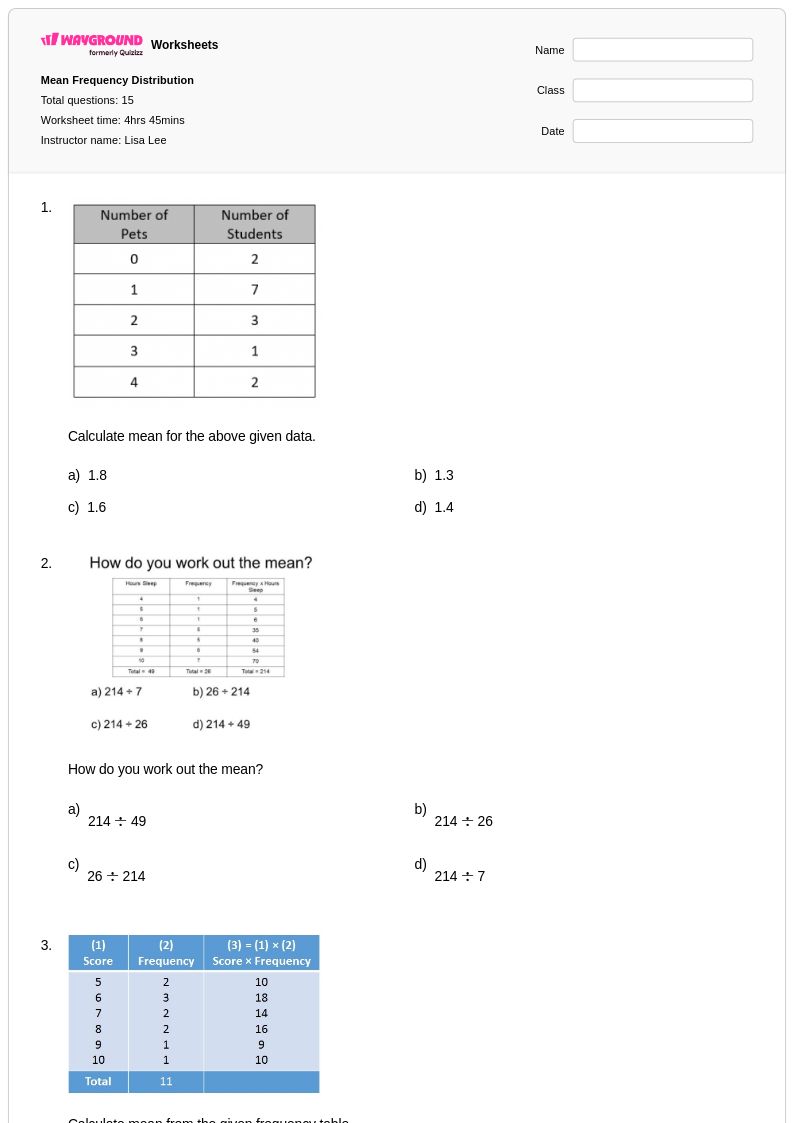
15 Q
6th
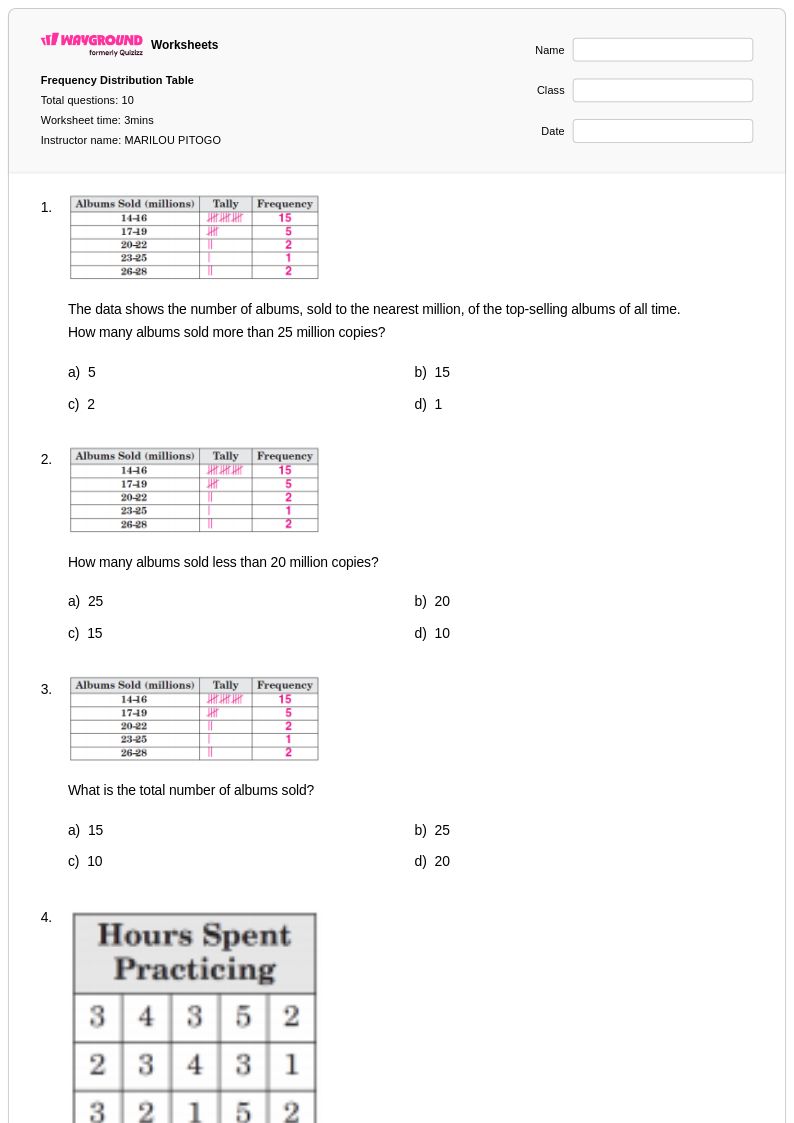
10 Q
6th - 7th
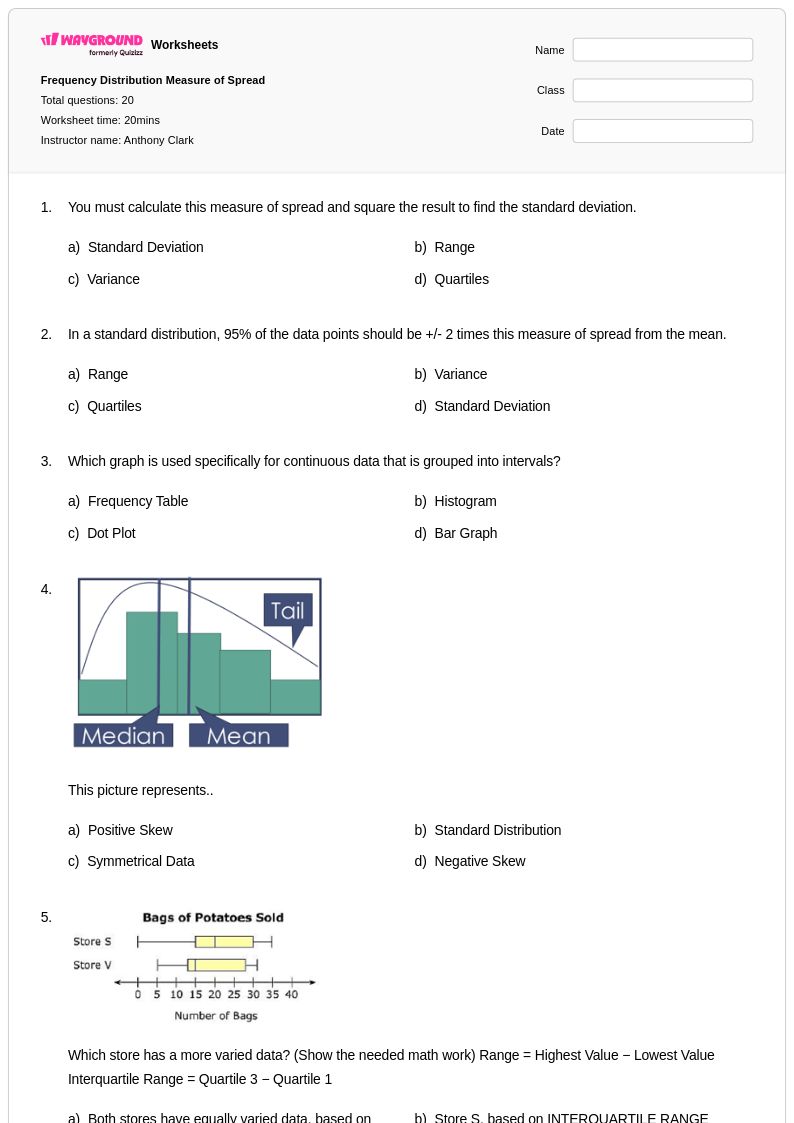
20 Q
6th - Uni
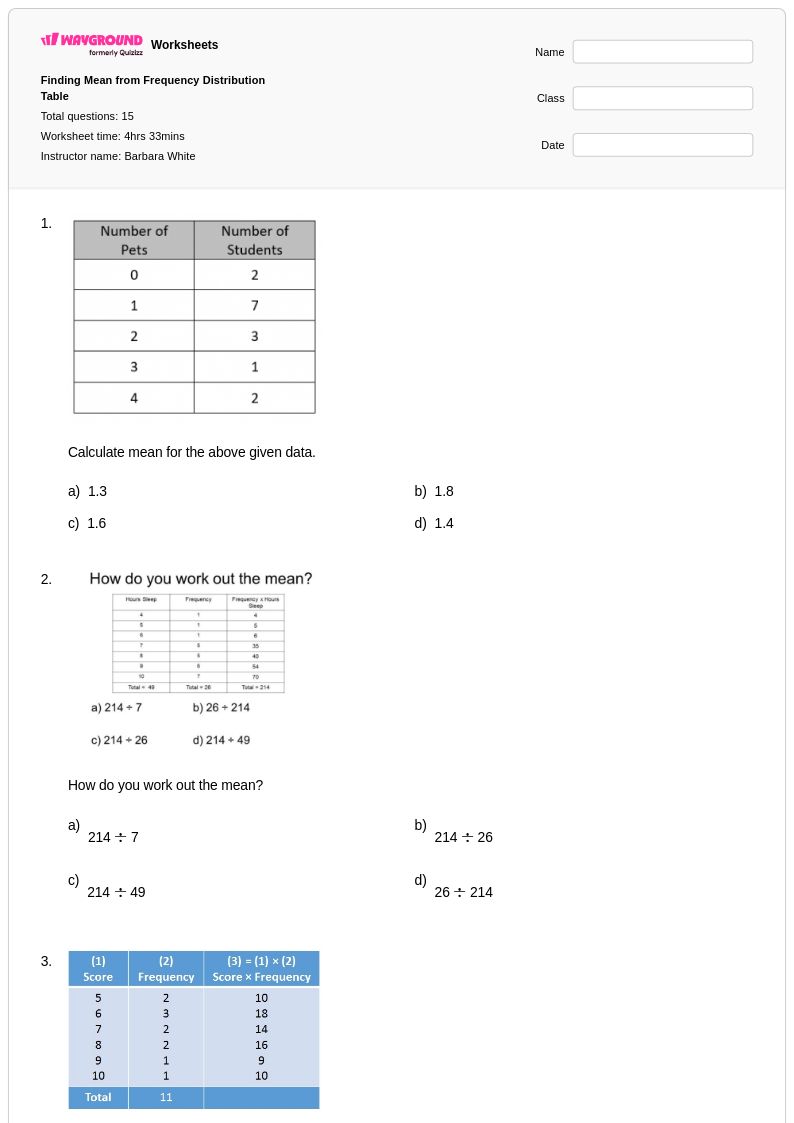
15 Q
6th
5 Q
6th - 7th
20 Q
6th - Uni
15 Q
6th
10 Q
6th
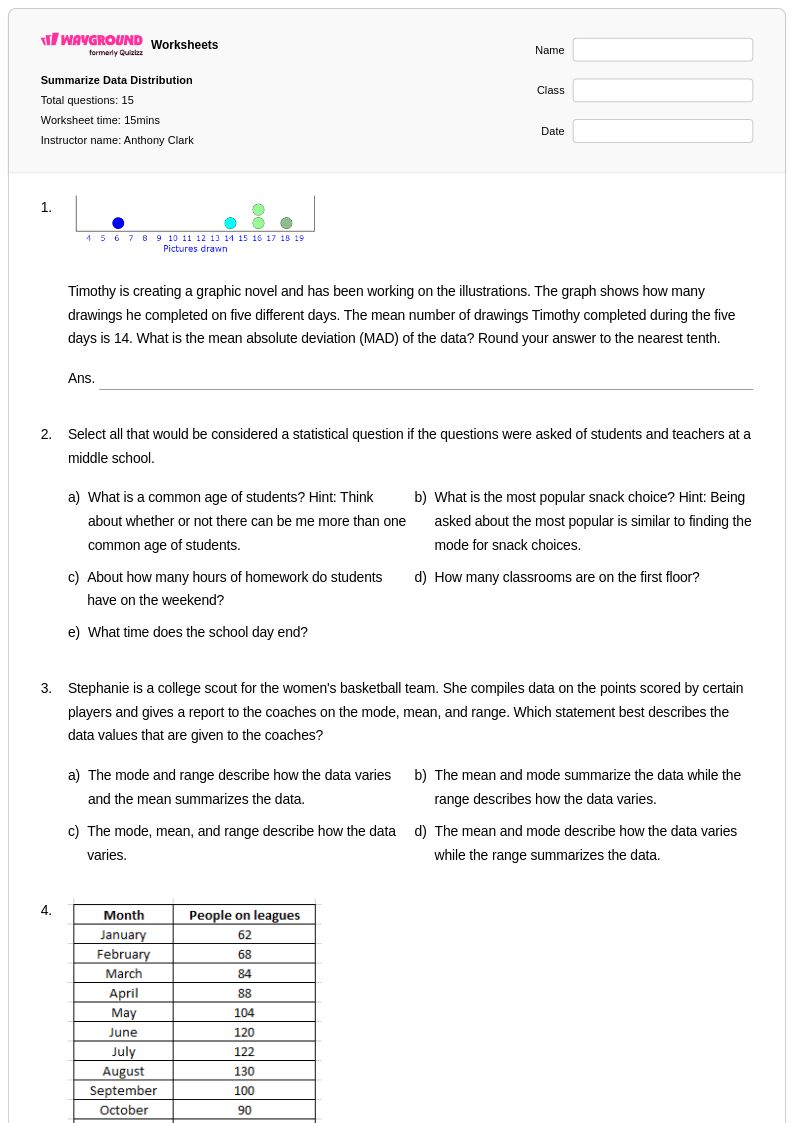
15 Q
6th - Uni
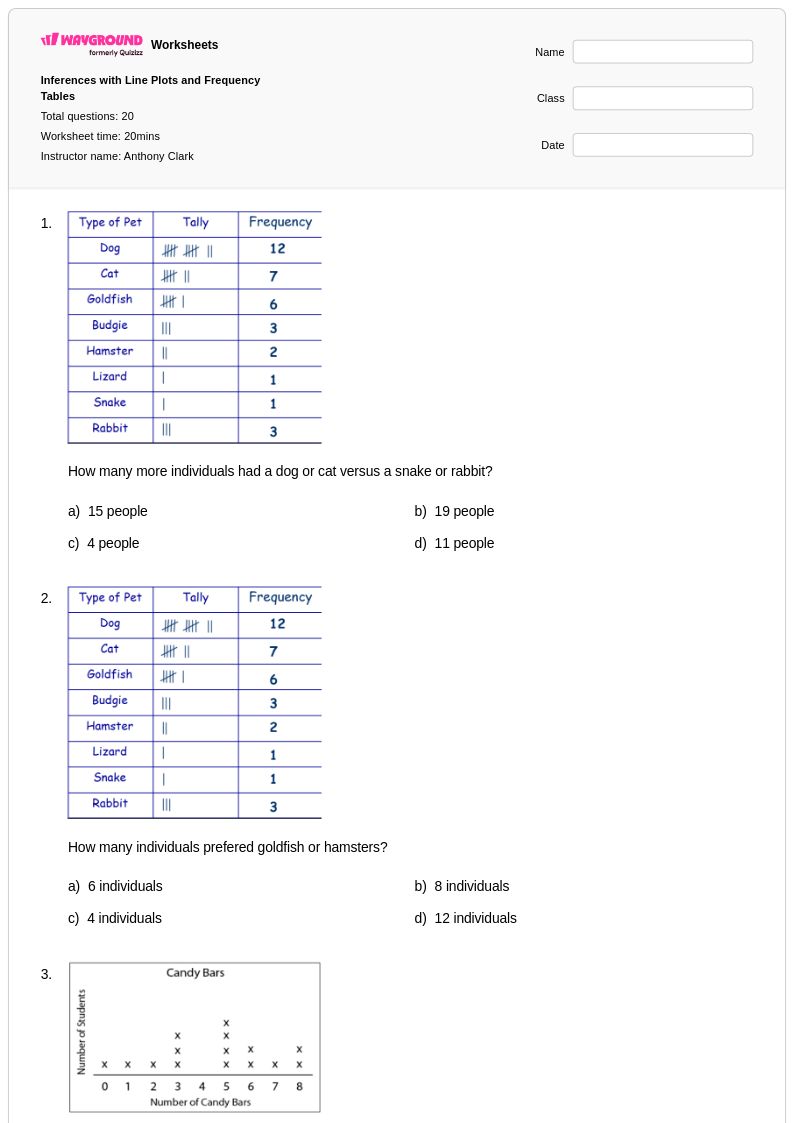
20 Q
6th - Uni
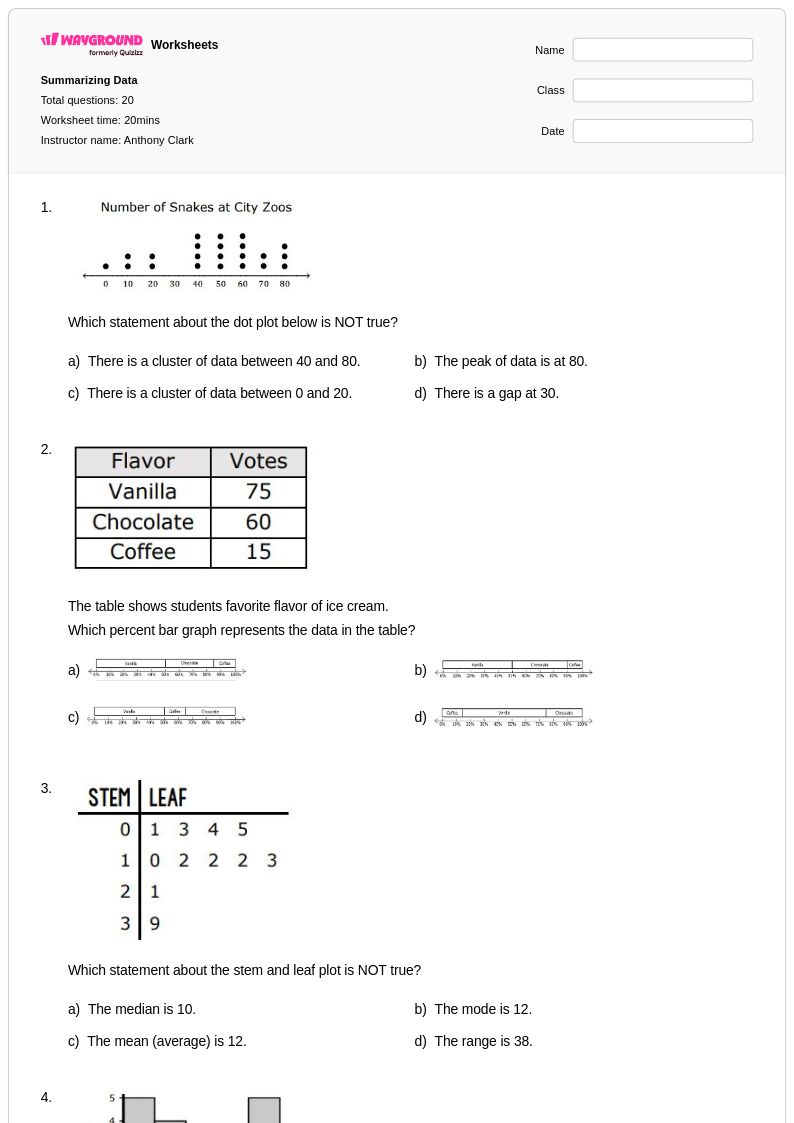
20 Q
6th - Uni
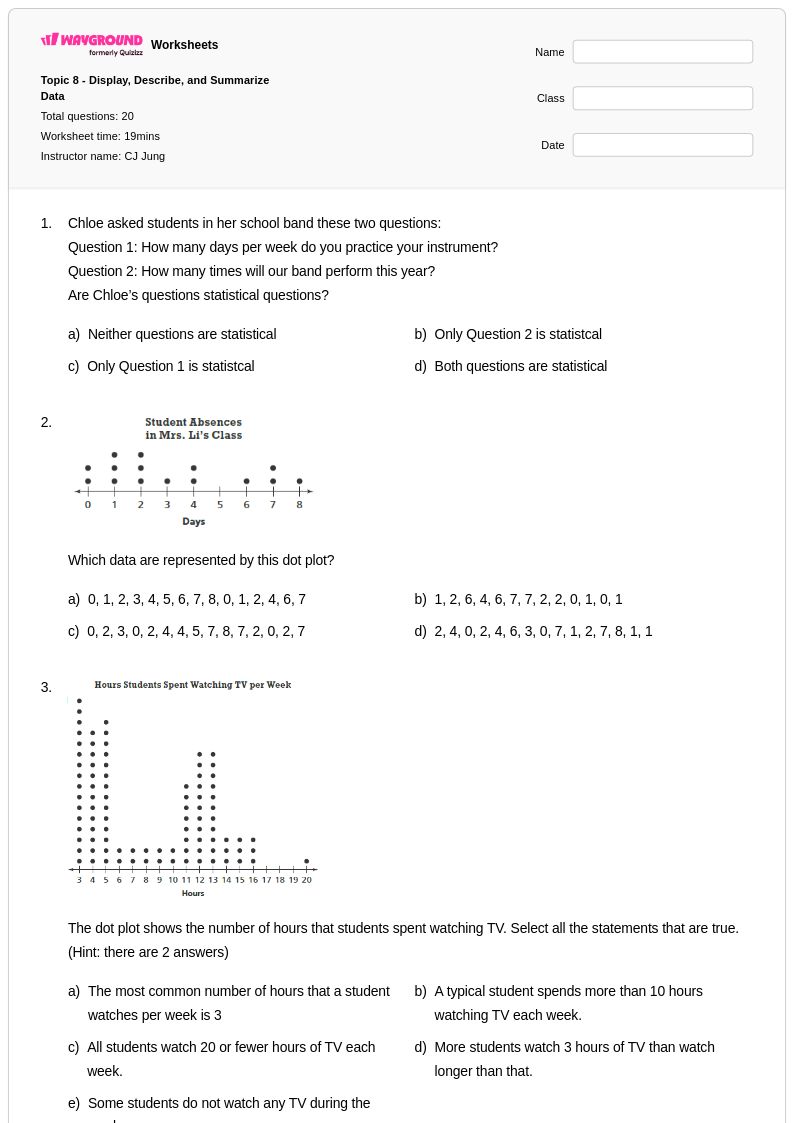
20 Q
6th
20 Q
6th - Uni
20 Q
6th - Uni
10 Q
6th
13 Q
6th
27 Q
6th
12 Q
6th
16 Q
6th - Uni
14 Q
6th - Uni
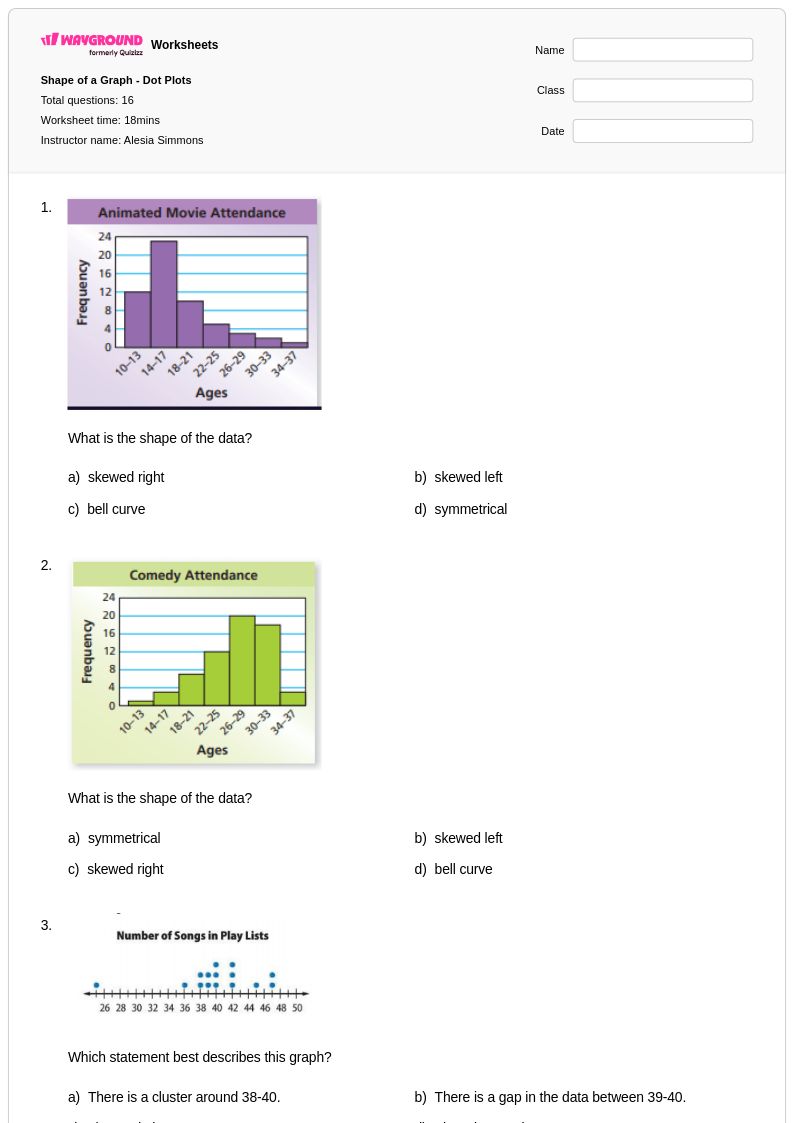
16 Q
6th
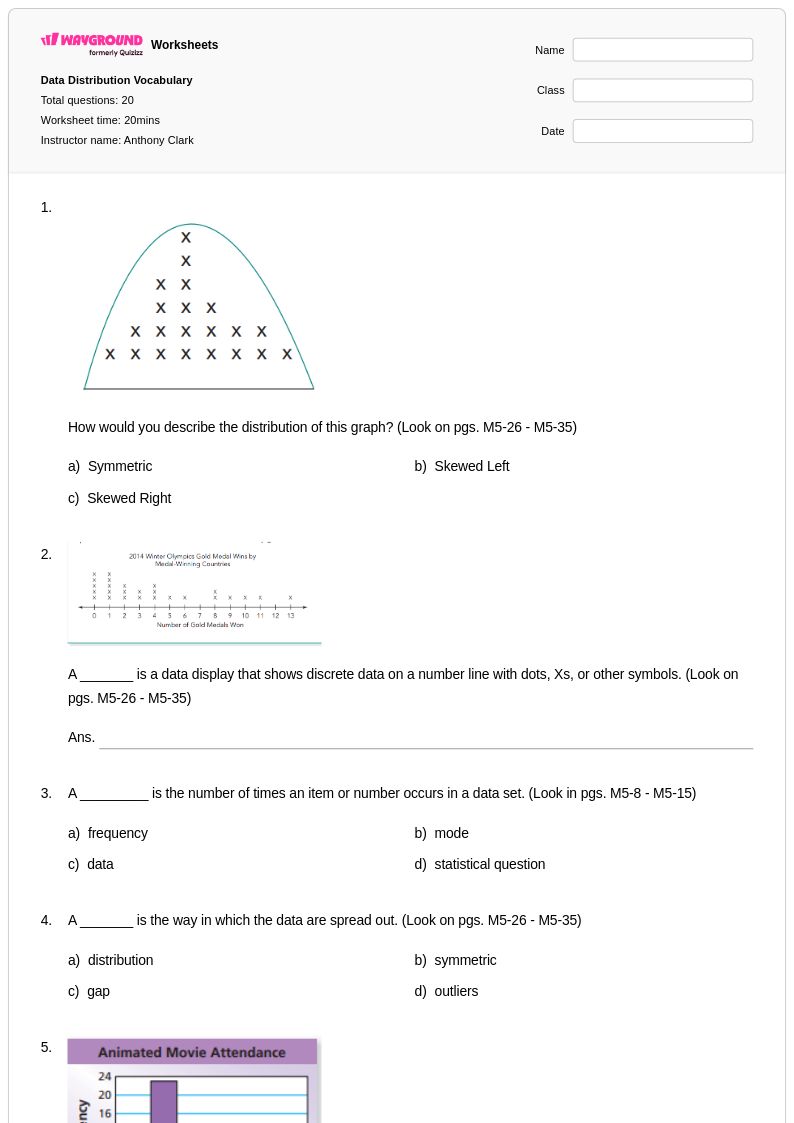
20 Q
6th - Uni
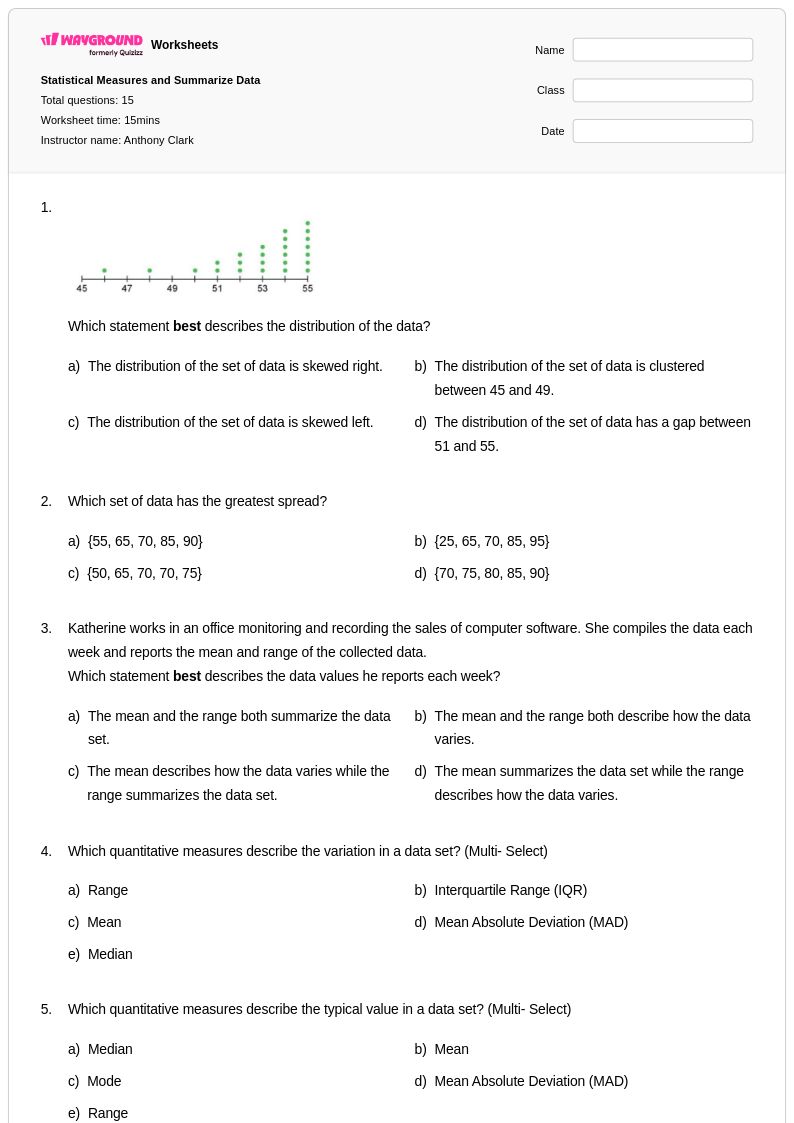
15 Q
6th - Uni
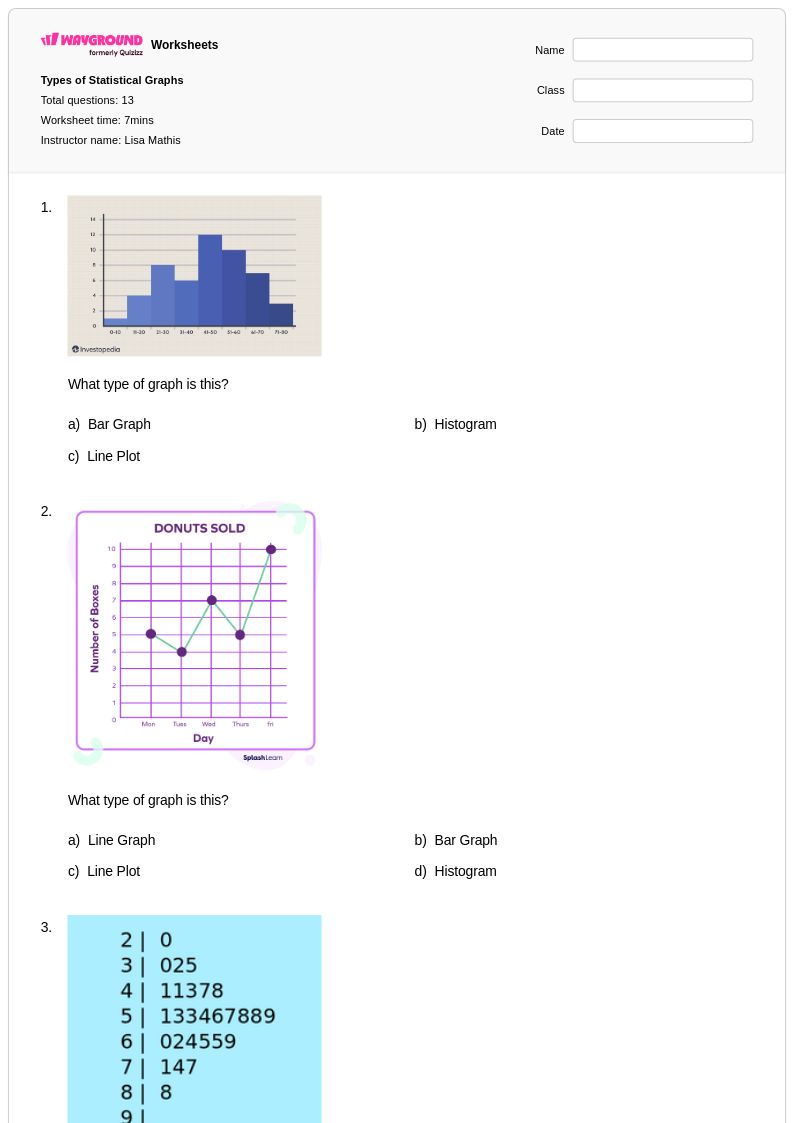
13 Q
6th
Explore Frequency Distribution Worksheets by Grades
Explore Other Subject Worksheets for class 6
Explore printable Frequency Distribution worksheets for Class 6
Frequency distribution worksheets for Class 6 students available through Wayground (formerly Quizizz) provide essential practice in organizing and interpreting data sets through systematic categorization. These comprehensive printable resources help students master the fundamental skill of creating frequency tables, understanding how to group data into meaningful intervals, and calculating frequencies for different categories or ranges. The worksheets strengthen critical mathematical reasoning by teaching students to analyze raw data, identify patterns, and present information in organized tabular formats. Each practice problem set includes detailed answer keys that guide students through proper frequency distribution construction methods, while the free pdf format ensures accessibility for both classroom instruction and independent study. Students develop proficiency in reading and creating frequency tables, determining appropriate class intervals, and interpreting the distribution patterns that emerge from organized data sets.
Wayground (formerly Quizizz) supports mathematics educators with an extensive collection of teacher-created frequency distribution resources that streamline lesson planning and differentiated instruction for Class 6 probability and statistics units. The platform's millions of worksheets offer robust search and filtering capabilities that allow teachers to locate materials aligned with specific curriculum standards and learning objectives. These digital and printable resources provide flexible customization options, enabling educators to modify difficulty levels, adjust problem types, and tailor content for diverse learning needs within their classrooms. Teachers can efficiently implement targeted remediation for students struggling with data organization concepts while simultaneously offering enrichment activities for advanced learners ready to explore more complex frequency distribution applications. The comprehensive pdf collections facilitate seamless integration into existing mathematics curricula, supporting both formative assessment strategies and skill-building practice sessions that reinforce students' understanding of statistical data representation.
FAQs
What do 6th graders learn about frequency distributions?
What's a good way to teach frequency distributions in 6th grade?
What kind of practice is best for 6th graders learning about frequency tables?
What mistakes do 6th graders typically make when creating frequency tables?
How can I use this Grade 6 frequency distribution worksheet?
How does this topic align with 6th-grade math standards?