
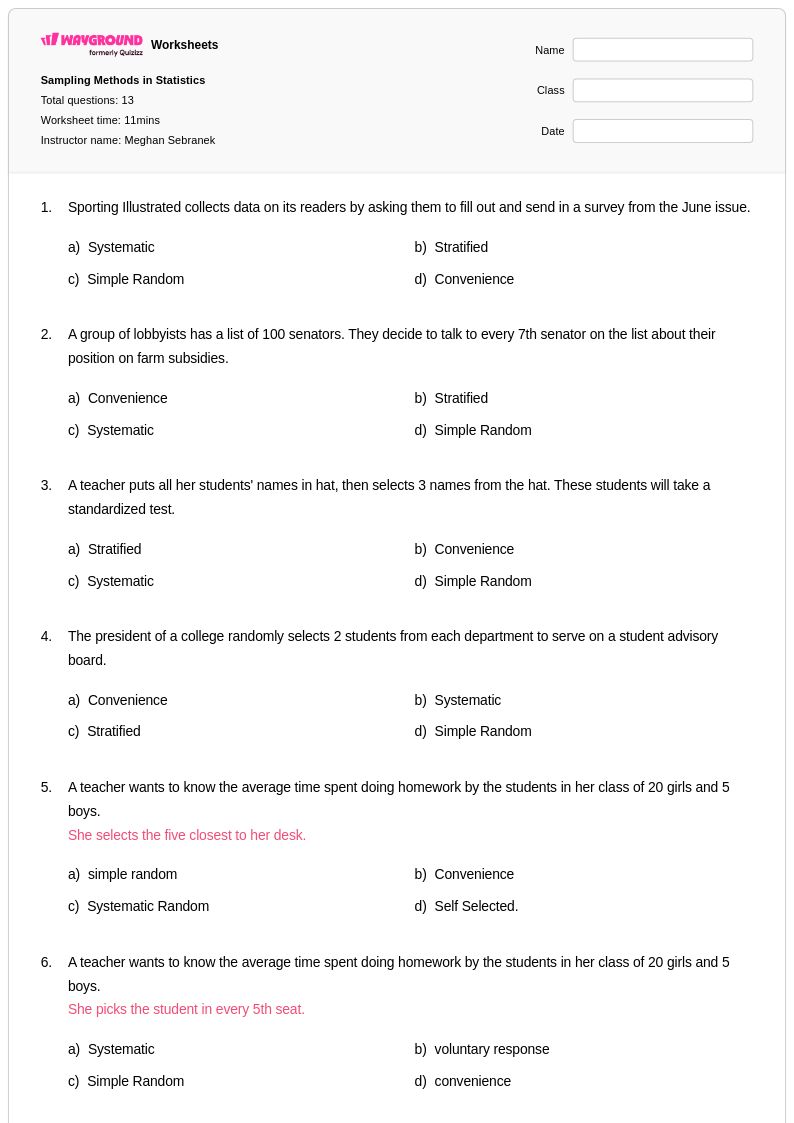
13 Q
5th - Uni
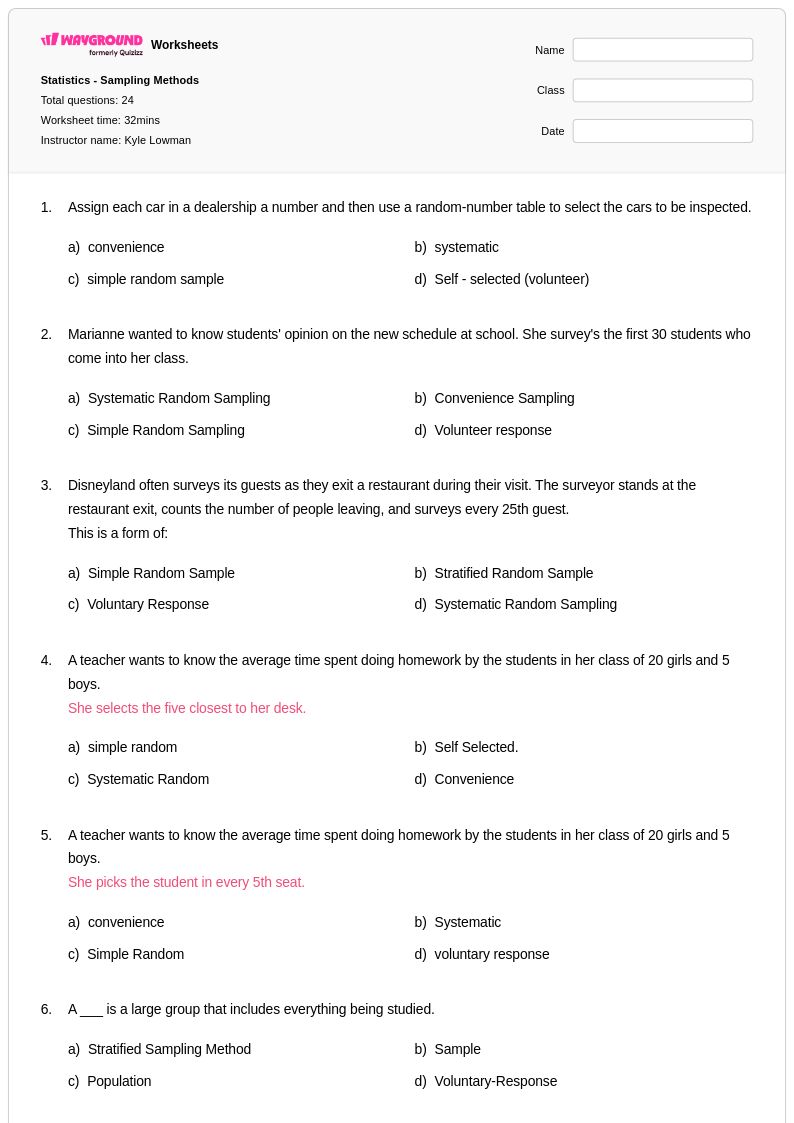
24 Q
6th - 12th
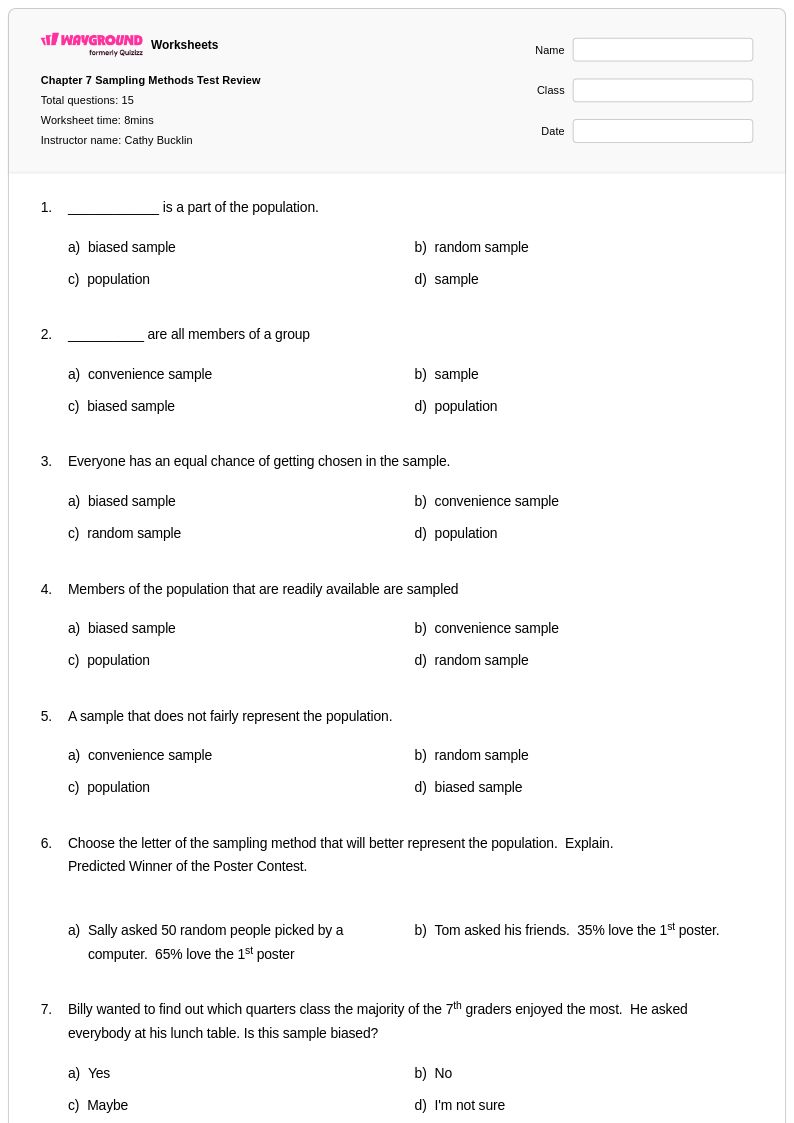
15 Q
6th - 8th
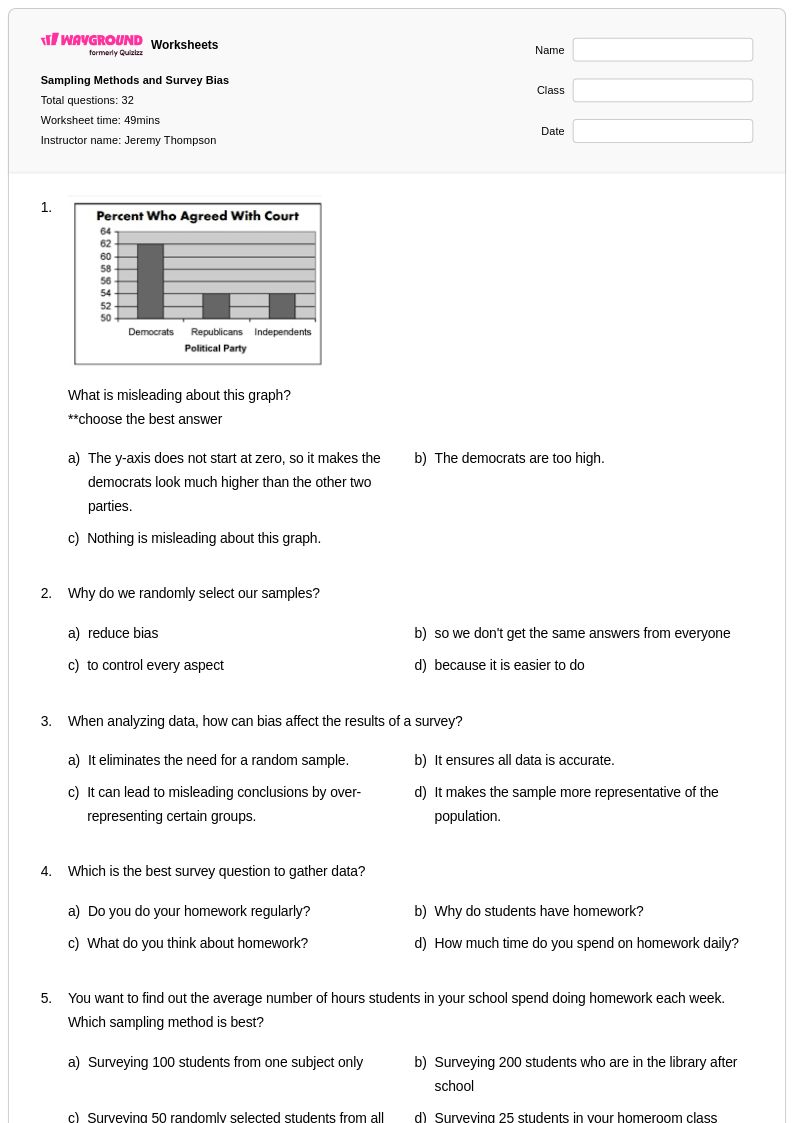
32 Q
6th - 8th
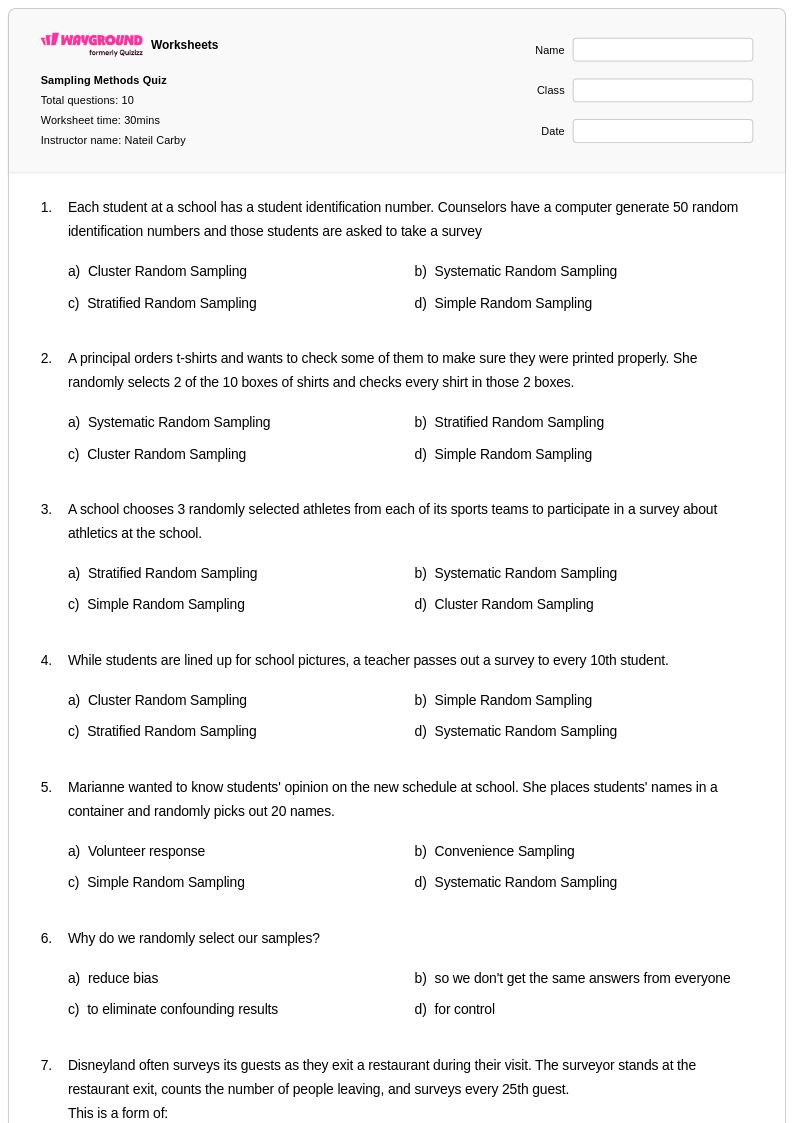
10 Q
6th - 8th
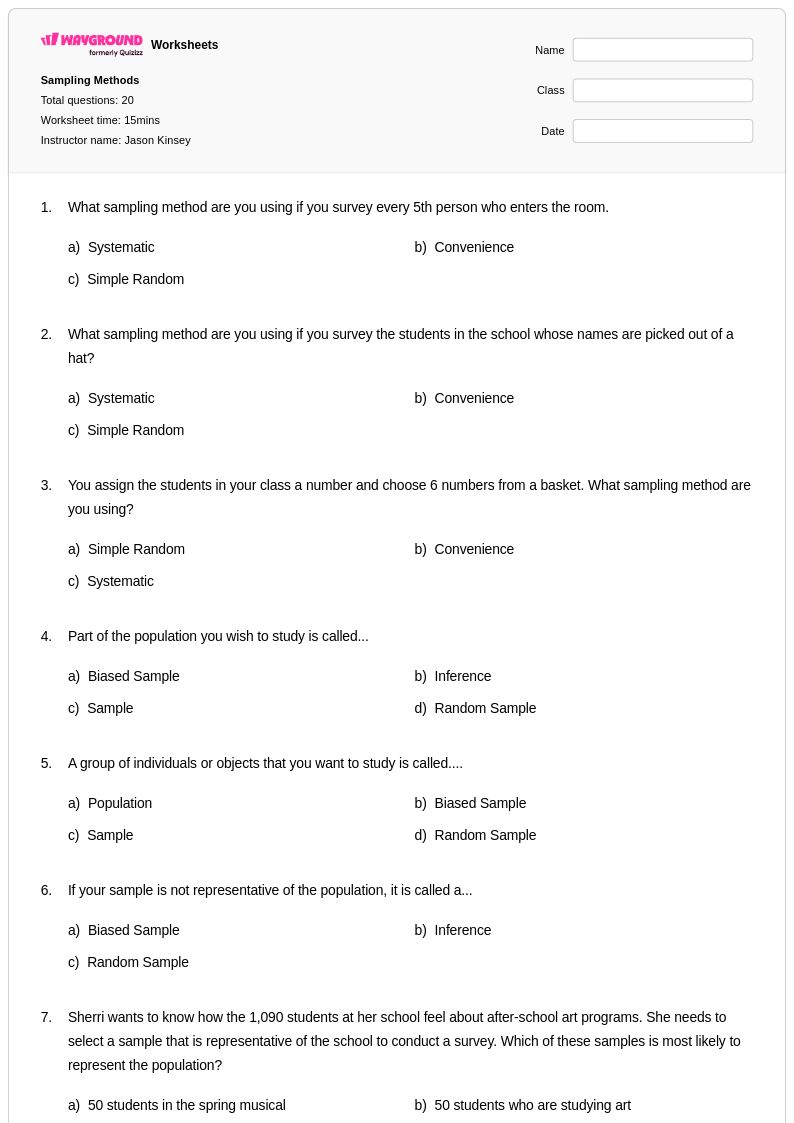
20 Q
6th - 11th
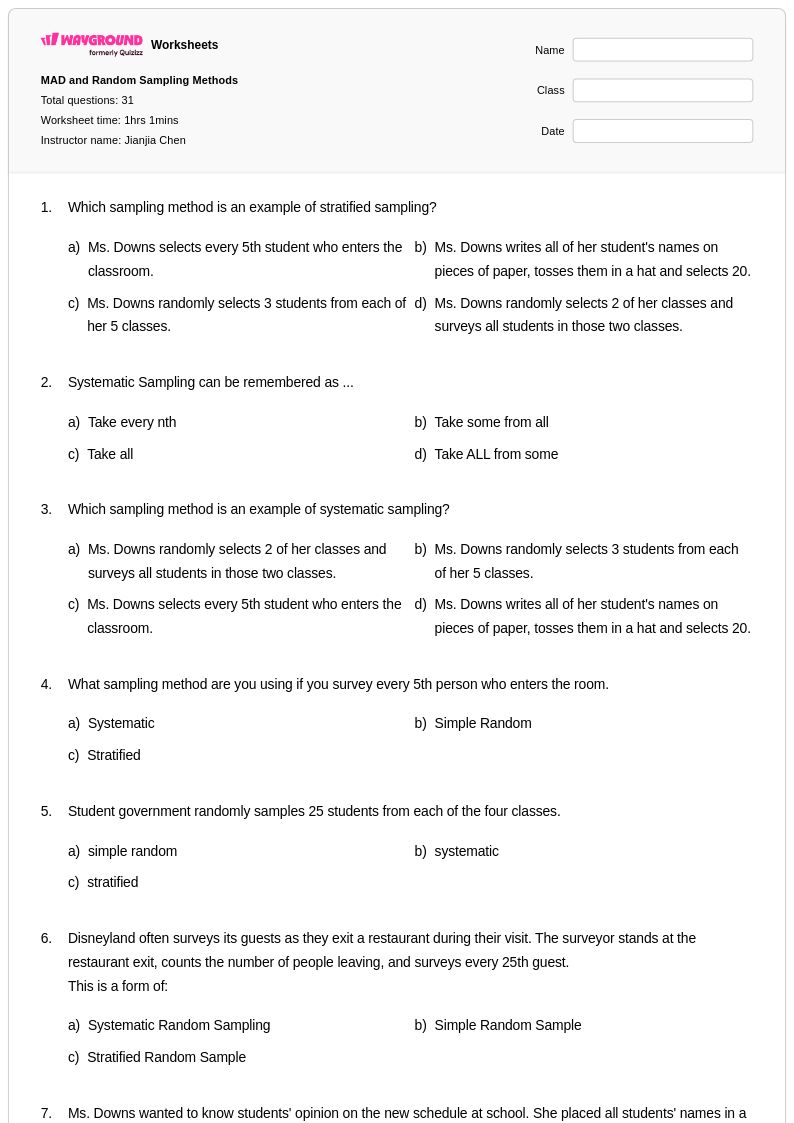
31 Q
6th - 8th
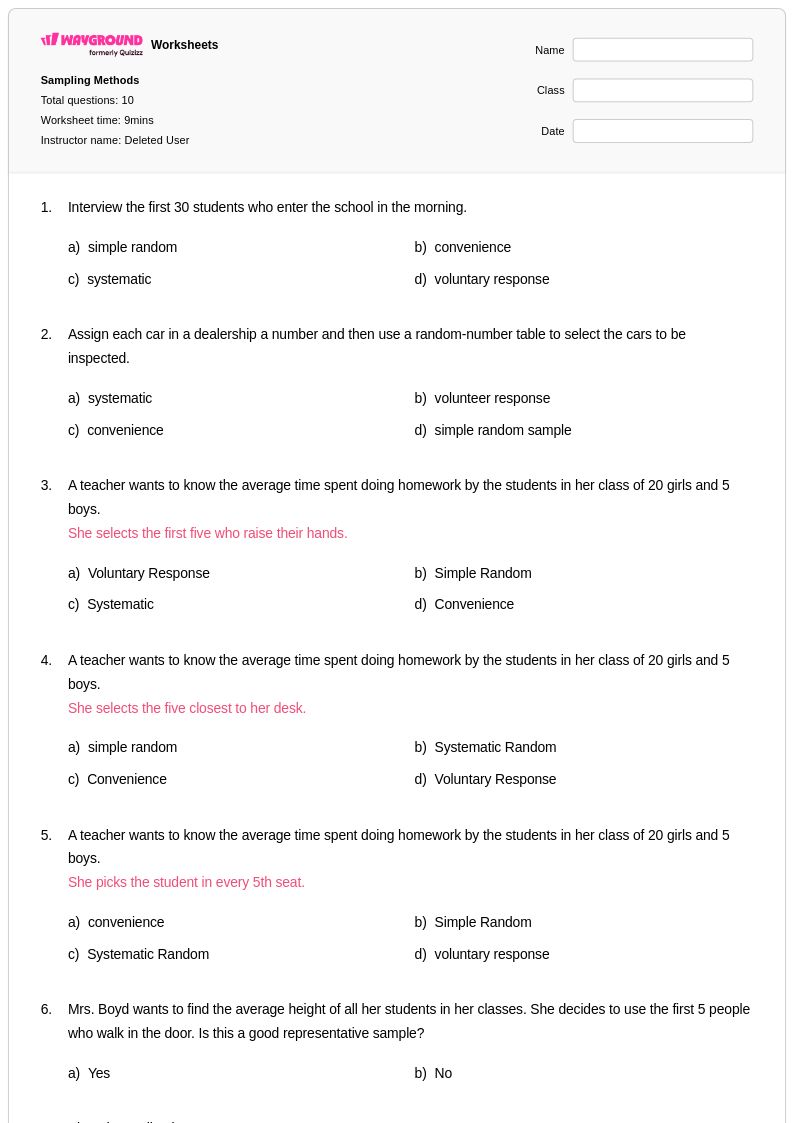
10 Q
6th - 7th
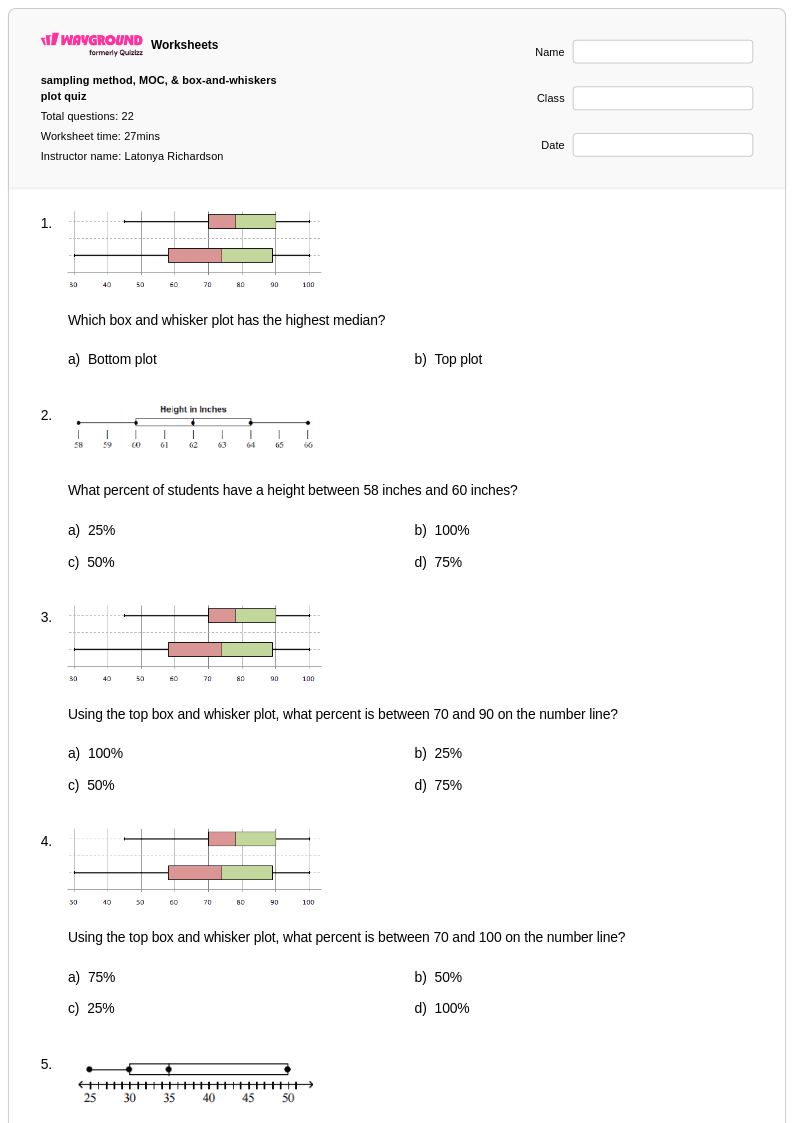
22 Q
6th - 8th

10 Q
6th - 8th
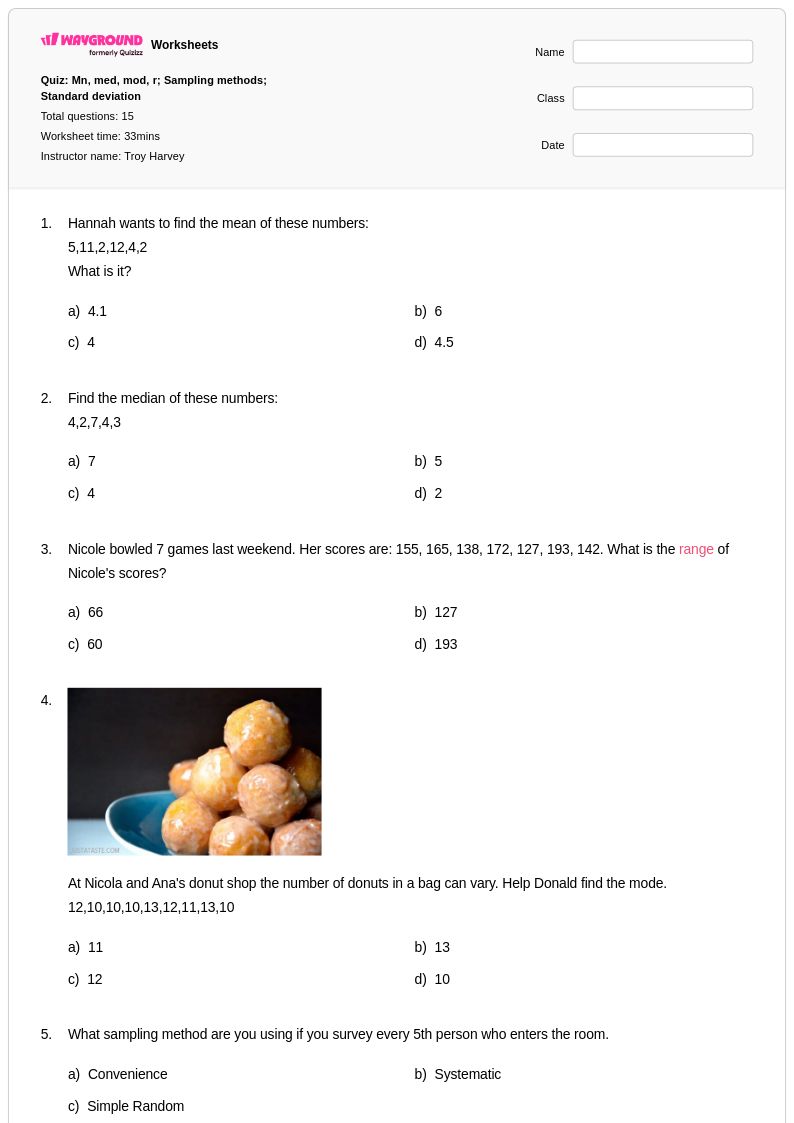
15 Q
6th - 8th
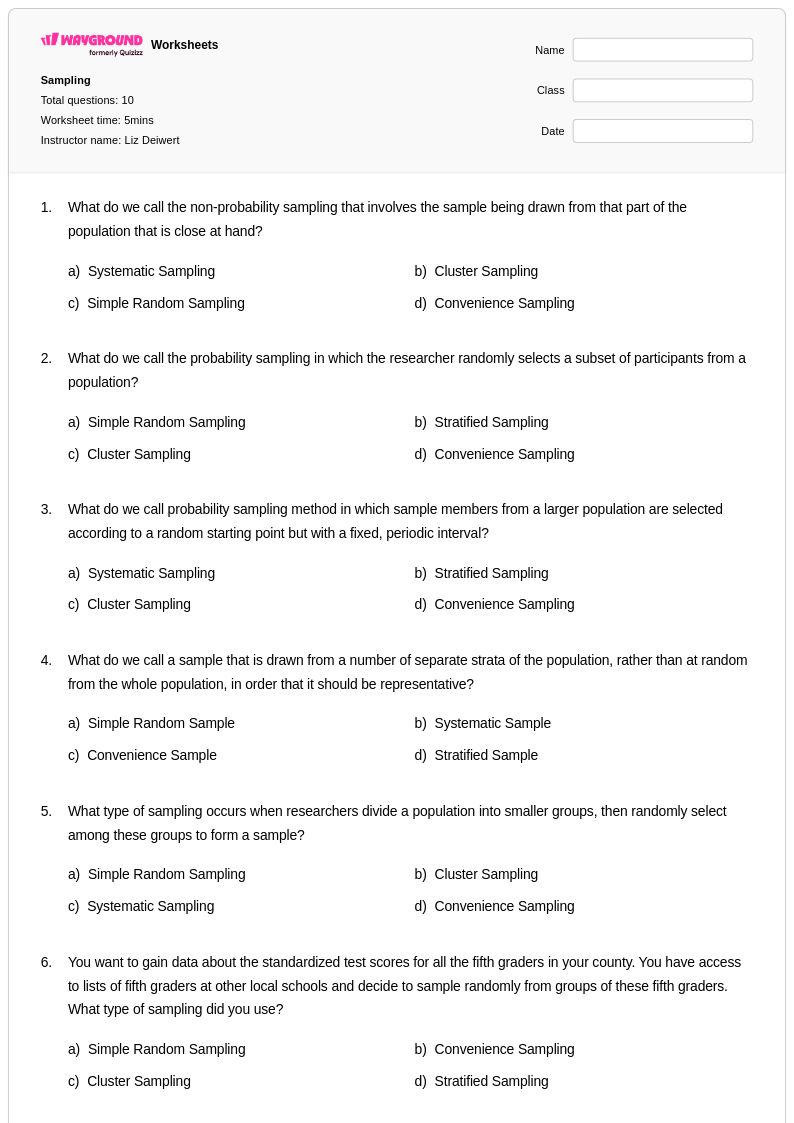
10 Q
6th - 9th
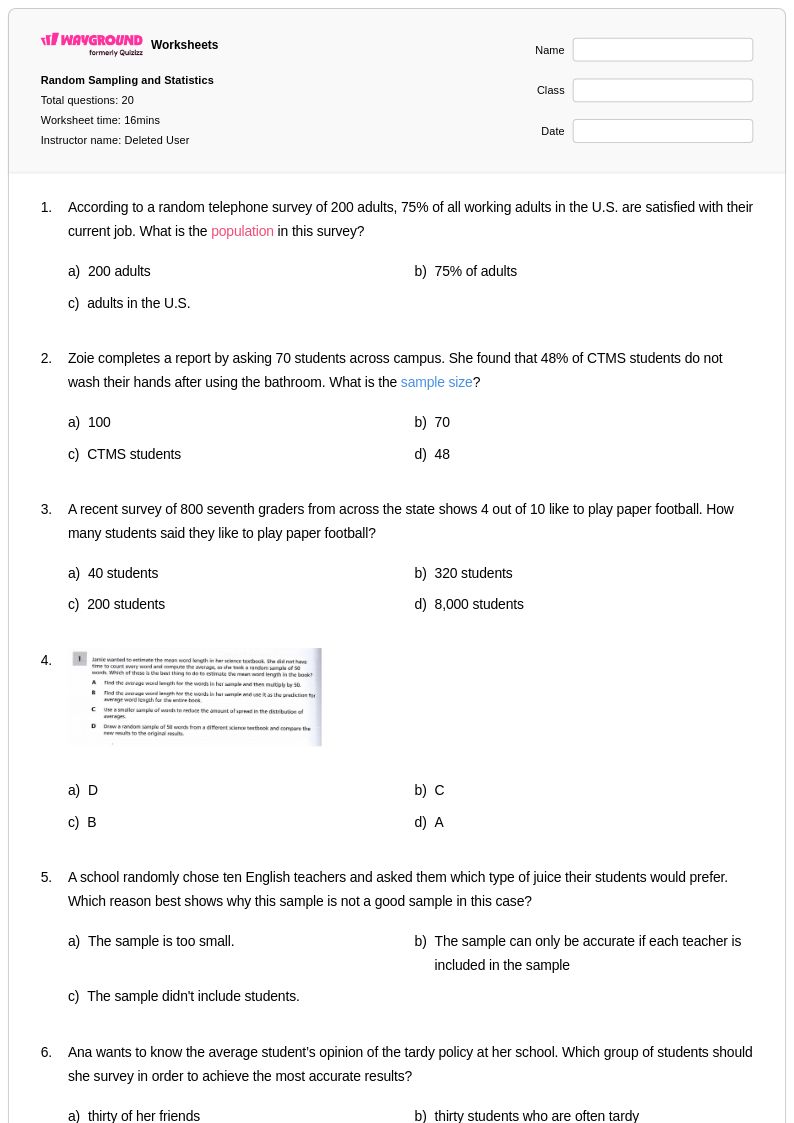
20 Q
6th - 8th
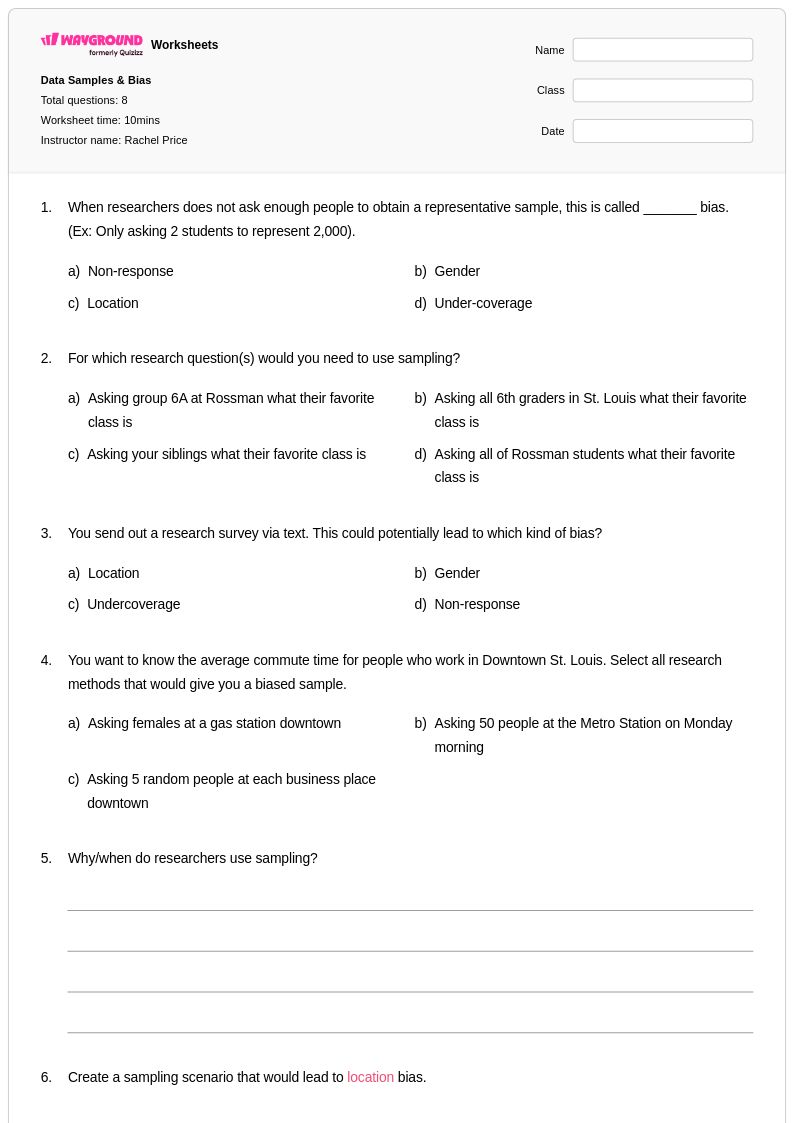
8 Q
6th
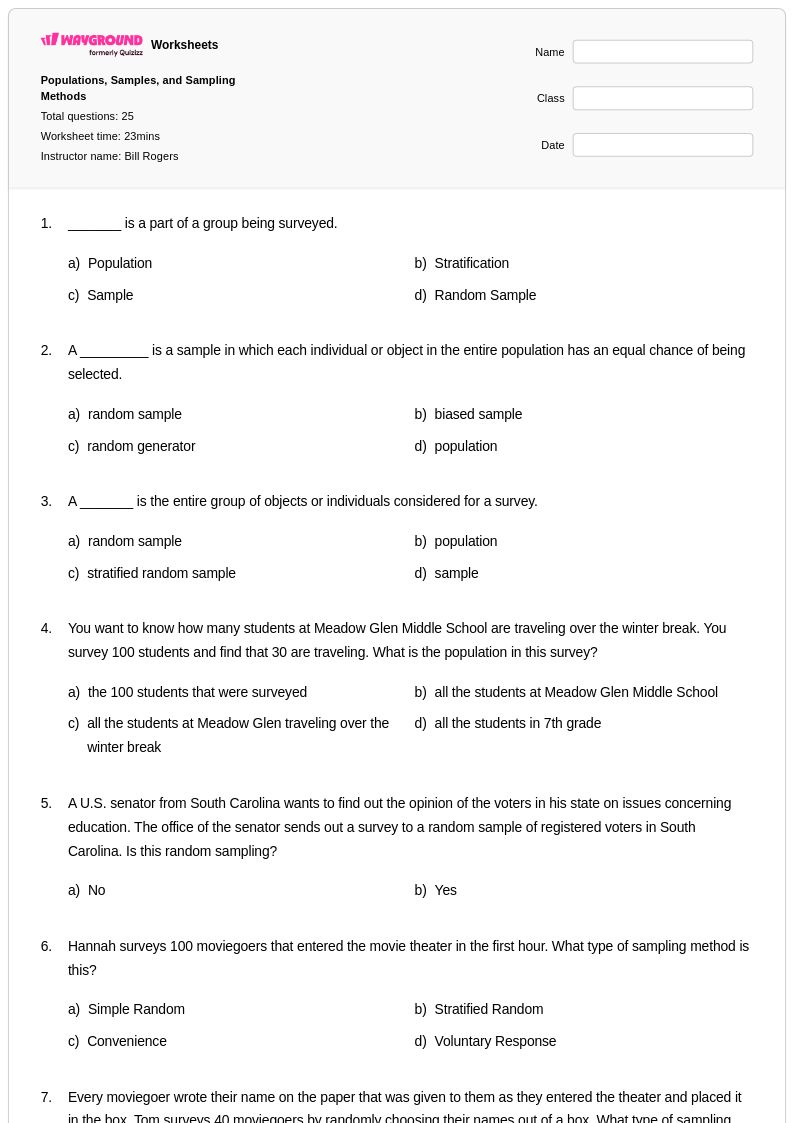
25 Q
6th - 7th
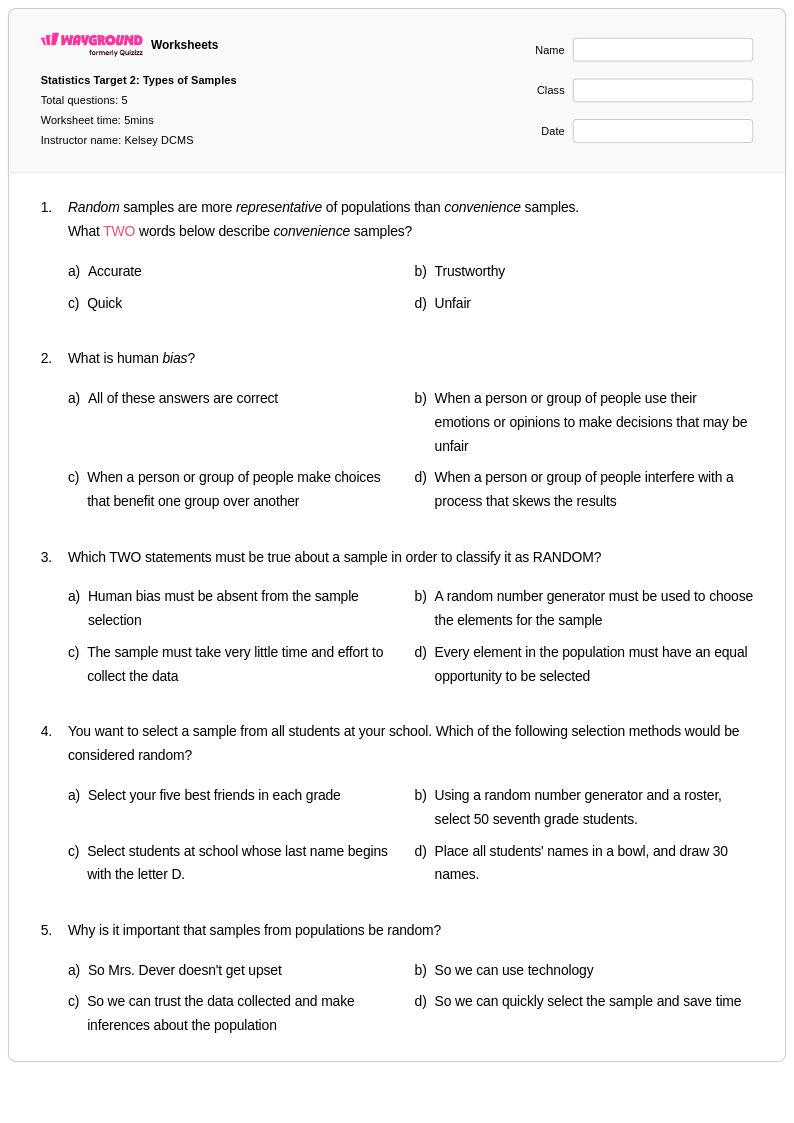
5 Q
6th - 8th
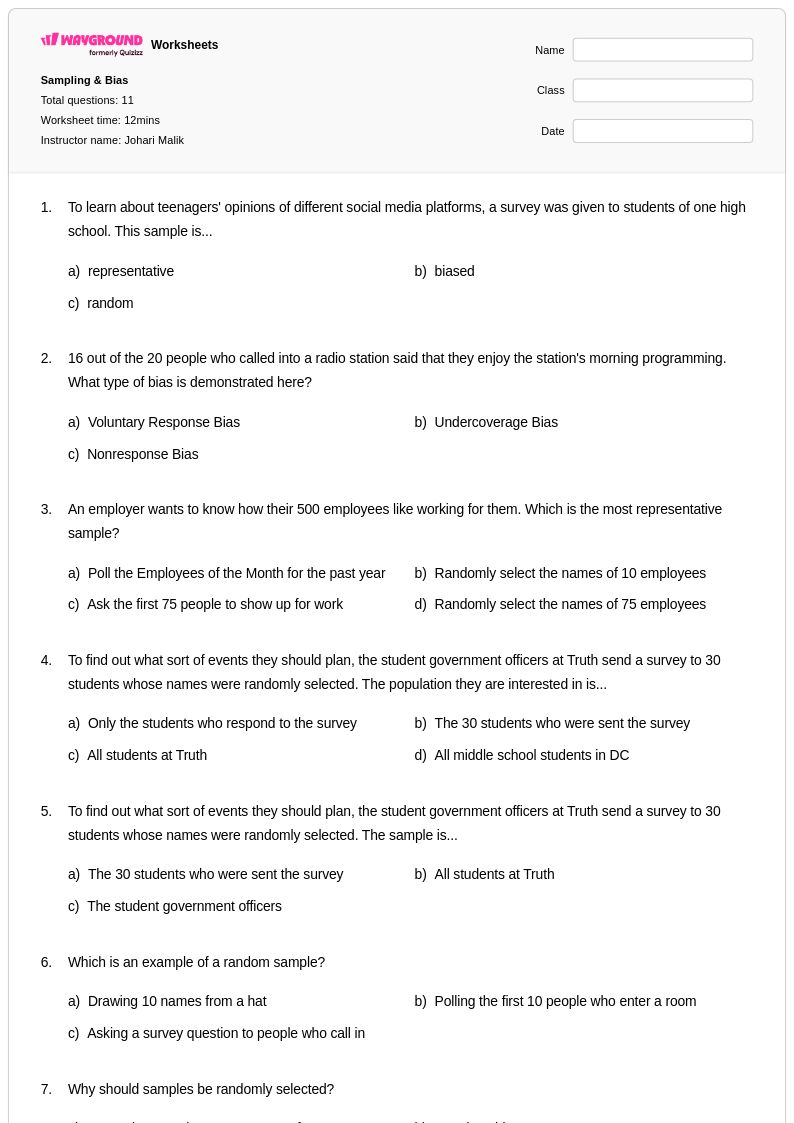
11 Q
6th - 7th

6 Q
6th - Uni
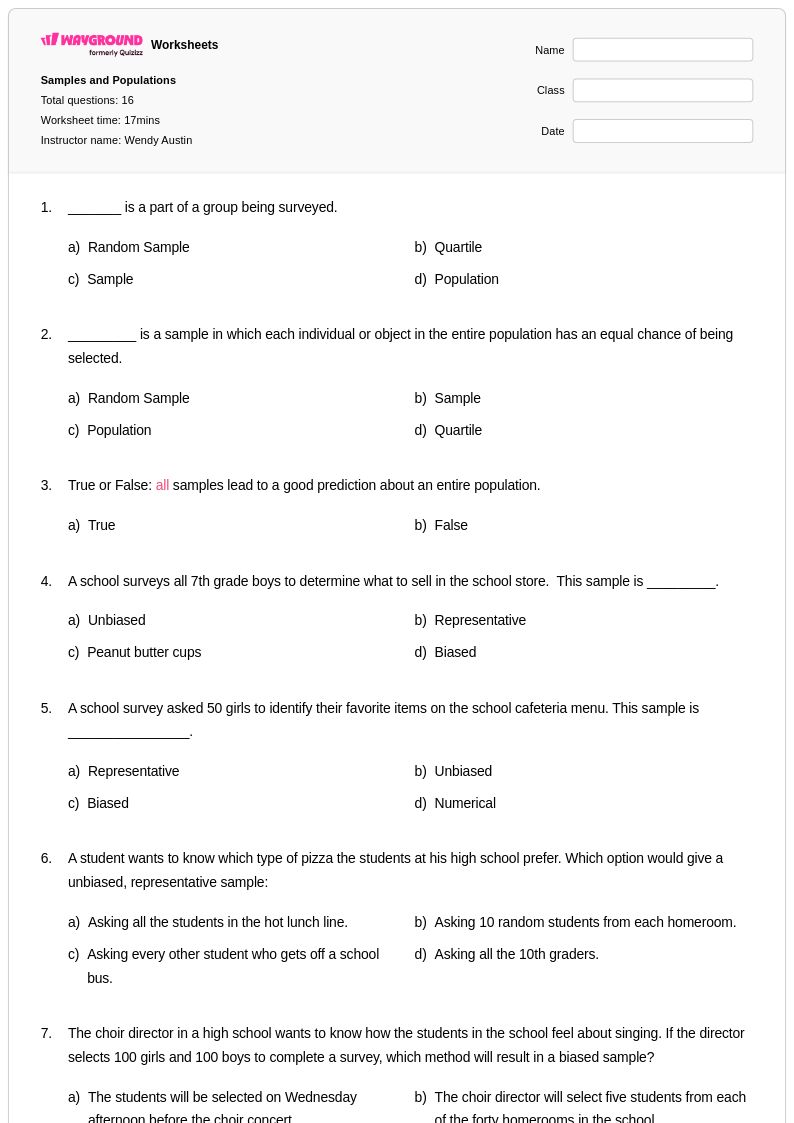
16 Q
6th - 7th
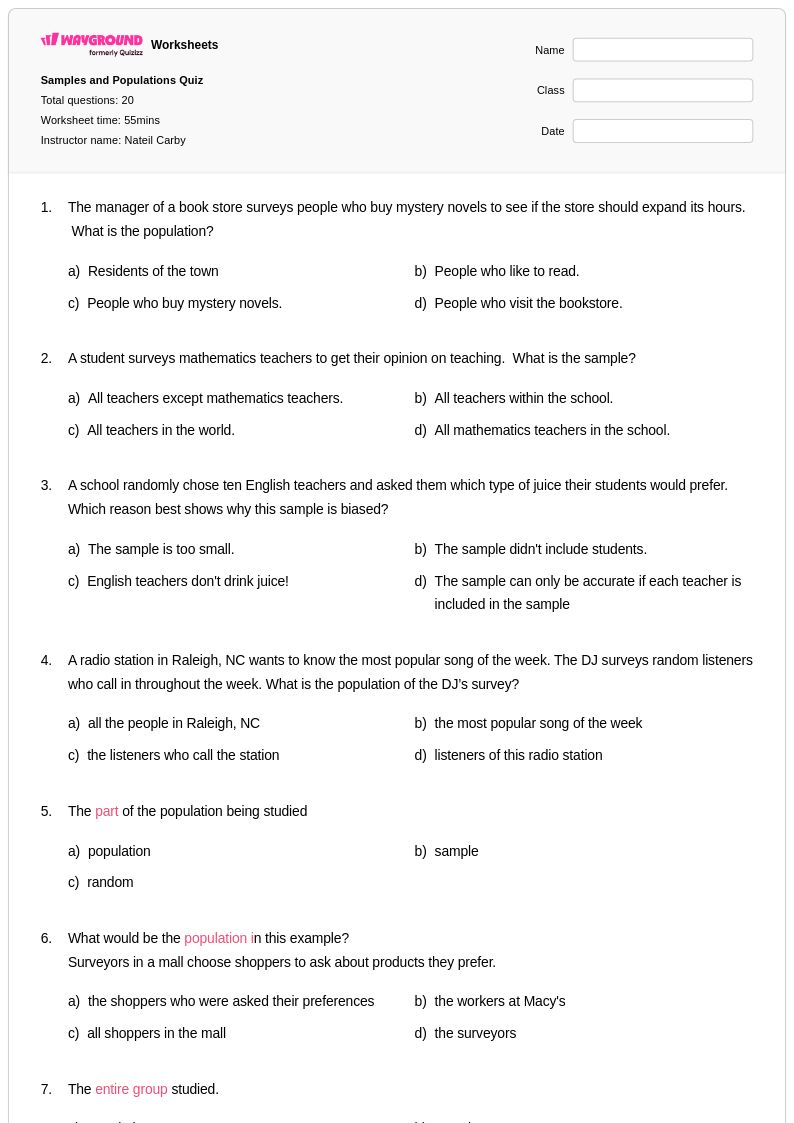
20 Q
6th - 8th
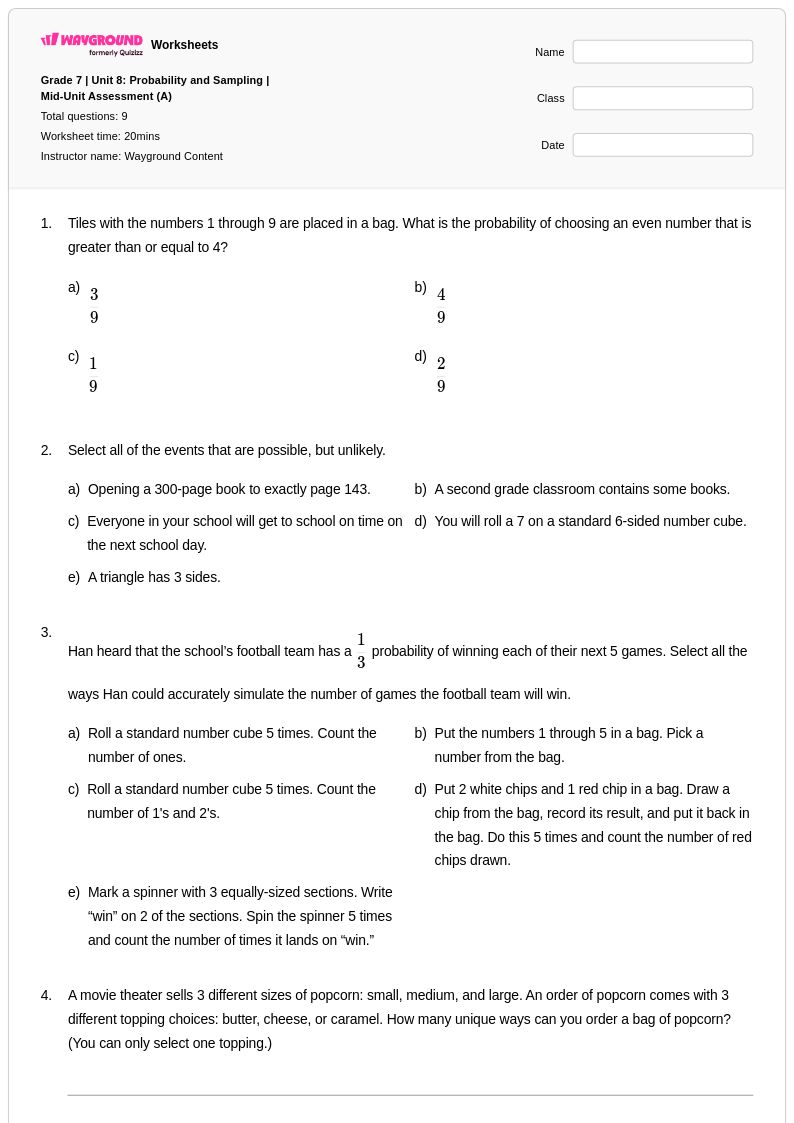
9 Q
6th - Uni
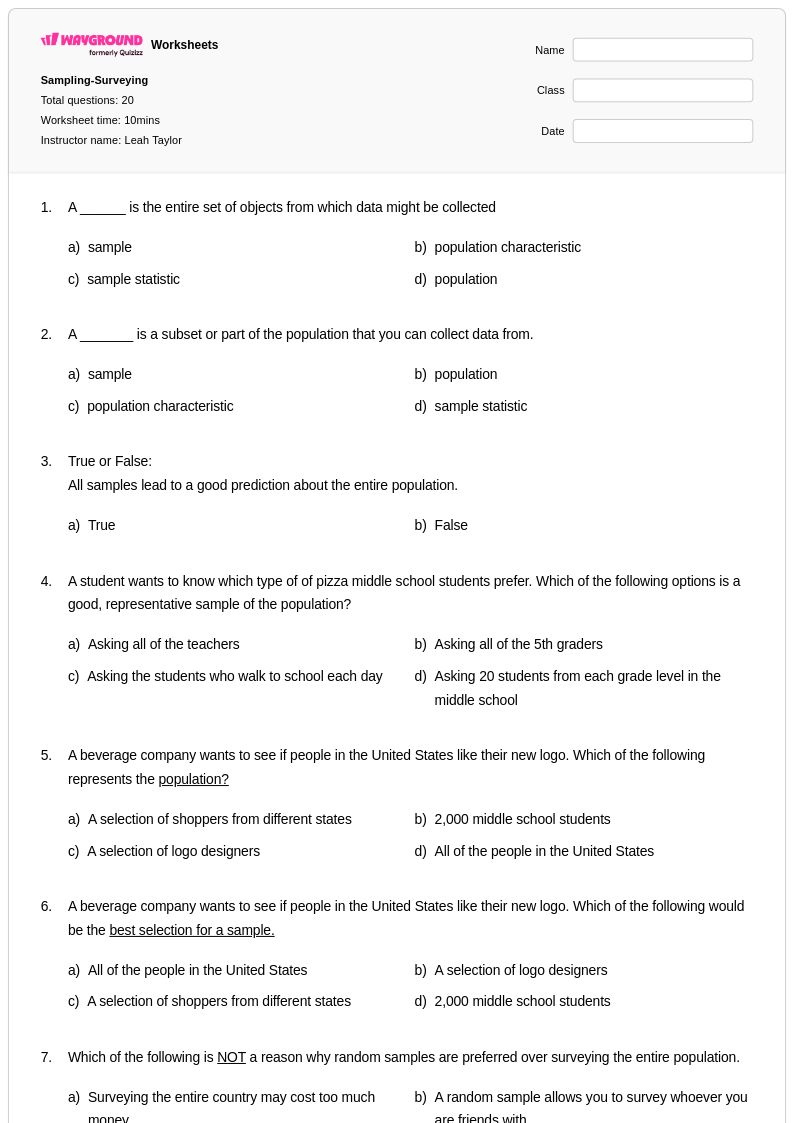
20 Q
6th - 8th

7 Q
6th - Uni
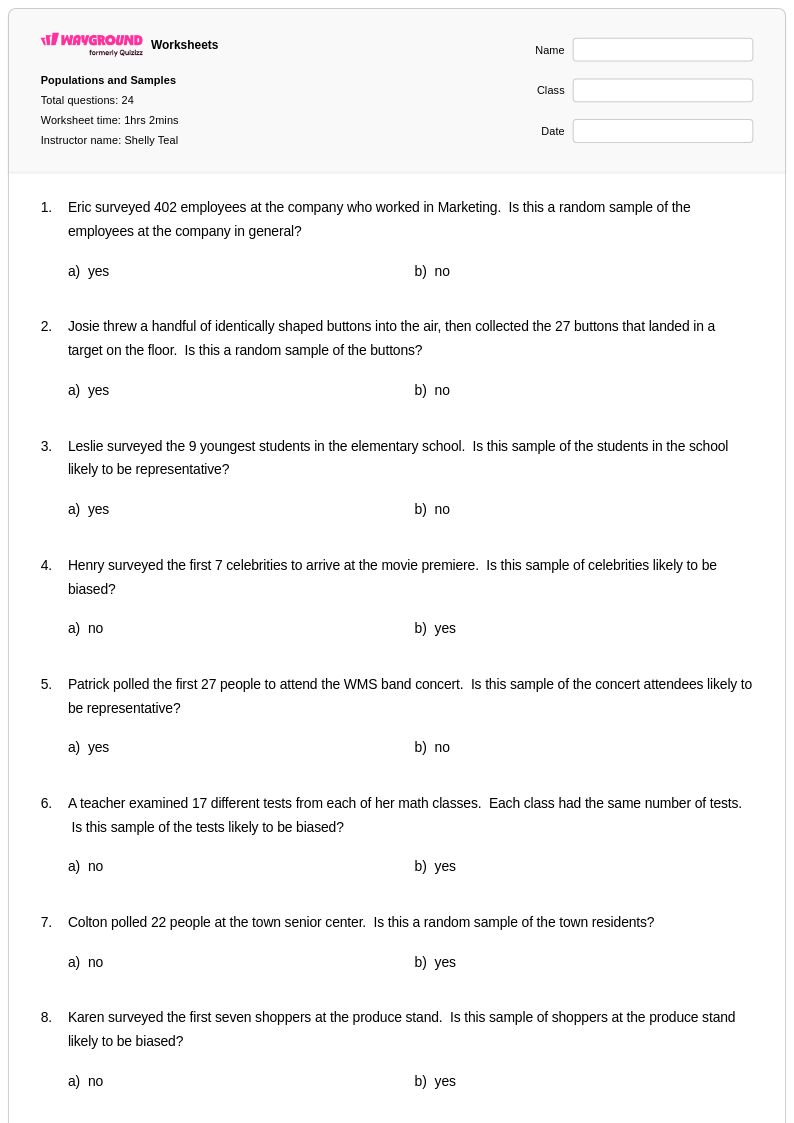
24 Q
6th - 8th
Explore Other Subject Worksheets for class 6
Explore printable Sampling Methods worksheets for Class 6
Sampling methods worksheets for Class 6 students available through Wayground (formerly Quizizz) provide essential foundation-building practice in this critical area of probability and statistics. These carefully crafted resources help sixth-grade students develop fundamental understanding of how data is collected and analyzed, covering key concepts such as random sampling, systematic sampling, and the difference between populations and samples. The worksheets strengthen students' analytical thinking skills through engaging practice problems that demonstrate real-world applications of sampling techniques, from surveying classmates to understanding how polls and research studies work. Each worksheet comes with comprehensive answer keys and is available as free printables in convenient PDF format, making them accessible for both classroom instruction and independent study.
Wayground (formerly Quizizz) supports mathematics educators with an extensive collection of teacher-created sampling methods resources, drawing from millions of high-quality materials developed by experienced classroom professionals. The platform's robust search and filtering capabilities allow teachers to quickly locate worksheets that align with specific grade-level standards and learning objectives, while built-in differentiation tools enable customization for students with varying ability levels. These versatile resources are available in both printable PDF format and interactive digital versions, providing flexibility for diverse teaching environments and learning preferences. Teachers can efficiently plan comprehensive lessons, target remediation for struggling learners, offer enrichment opportunities for advanced students, and provide consistent skill practice that builds mathematical confidence and competency in probability and statistics concepts.
FAQs
What do 6th graders learn about sampling methods?
How can I introduce the concept of a 'sample' versus a 'population' to 6th graders?
What kind of practice is best for 6th graders learning about sampling?
How can I use this 6th-grade sampling worksheet?
How does this topic align with 6th-grade math standards?