
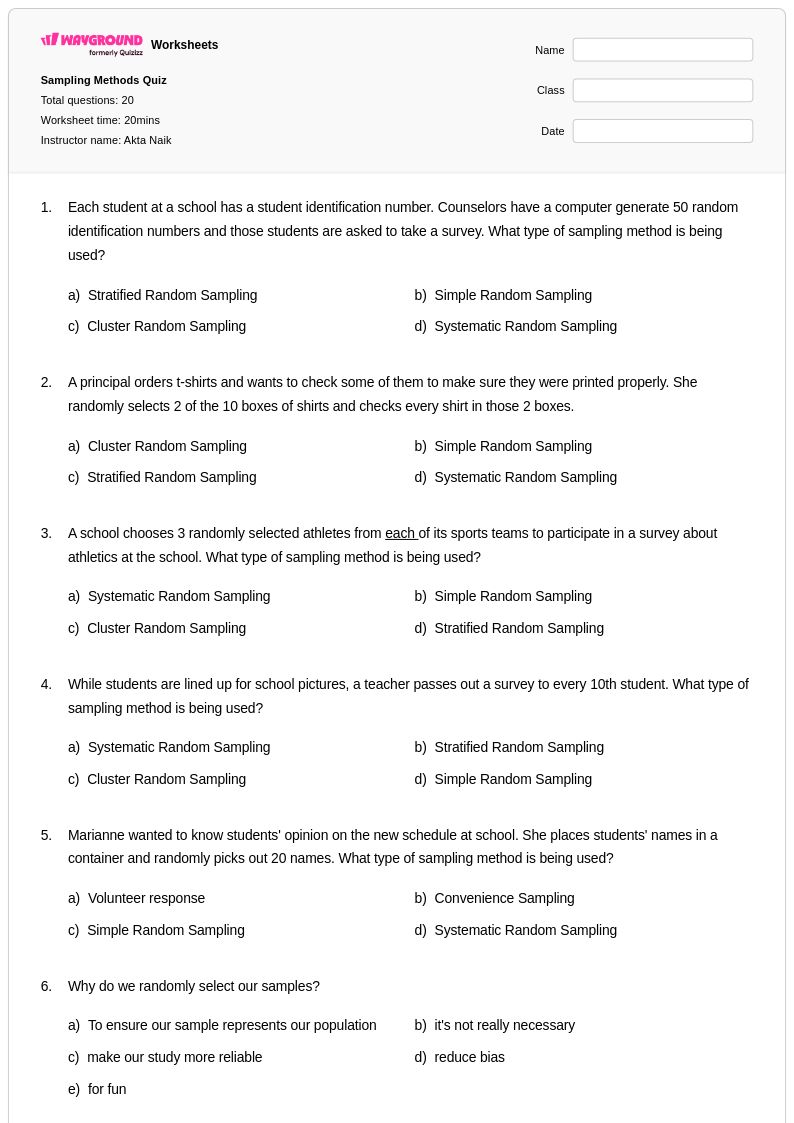
20 Q
9th - 12th
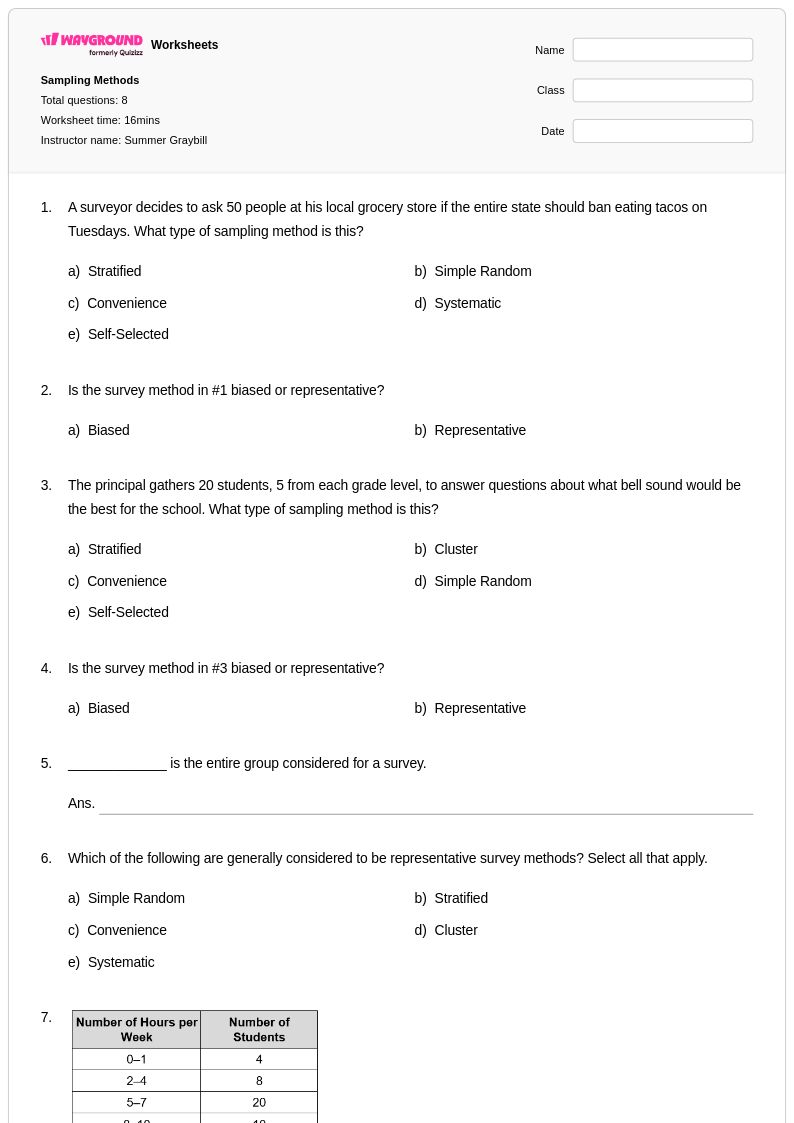
8 Q
9th - 12th
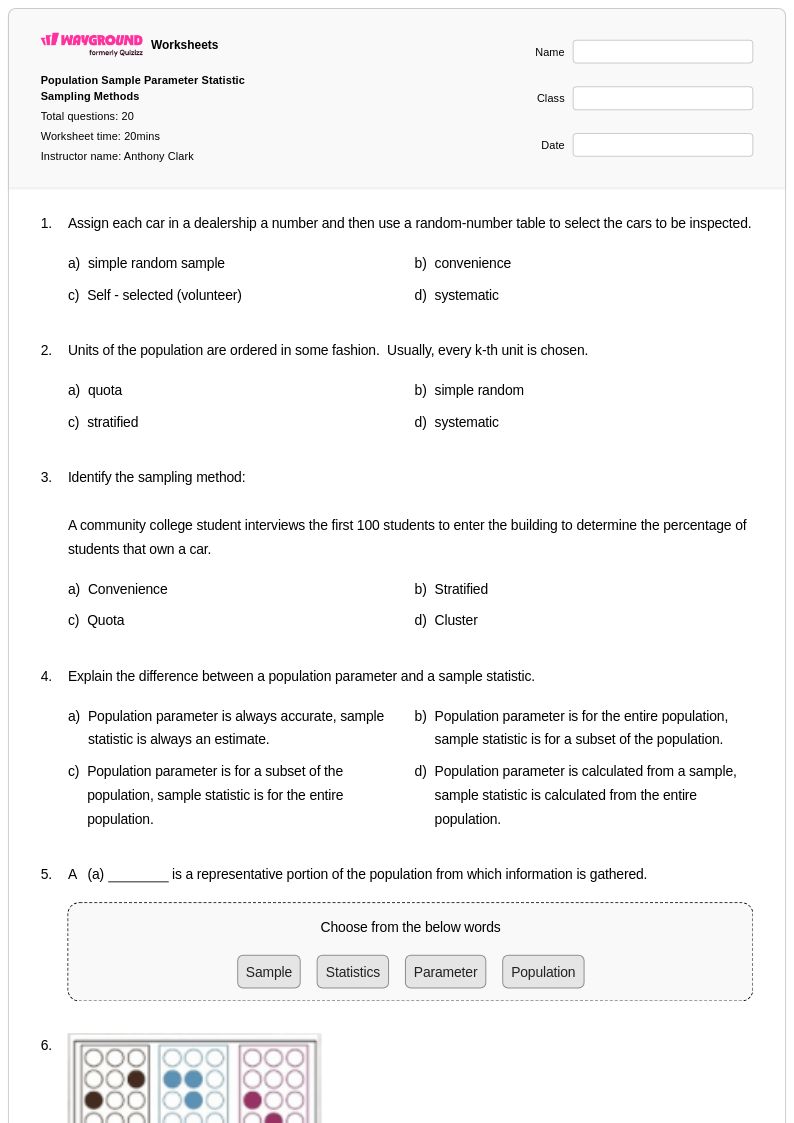
20 Q
11th - Uni
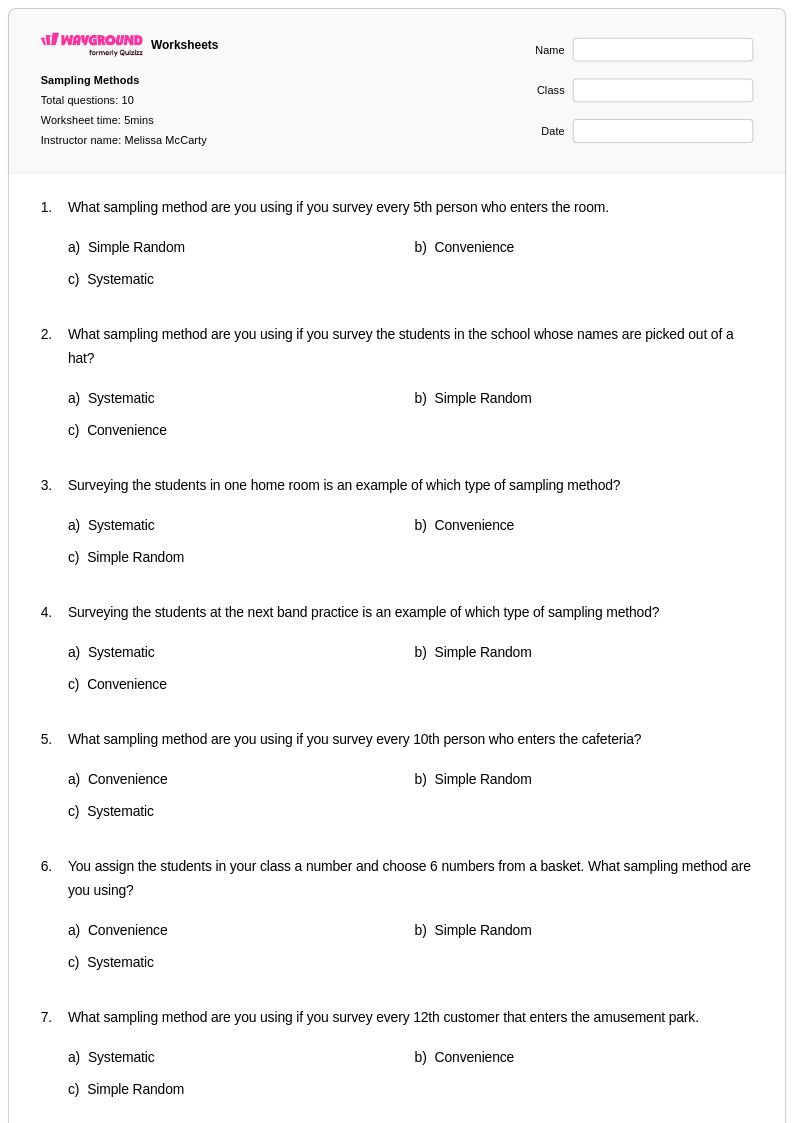
10 Q
7th
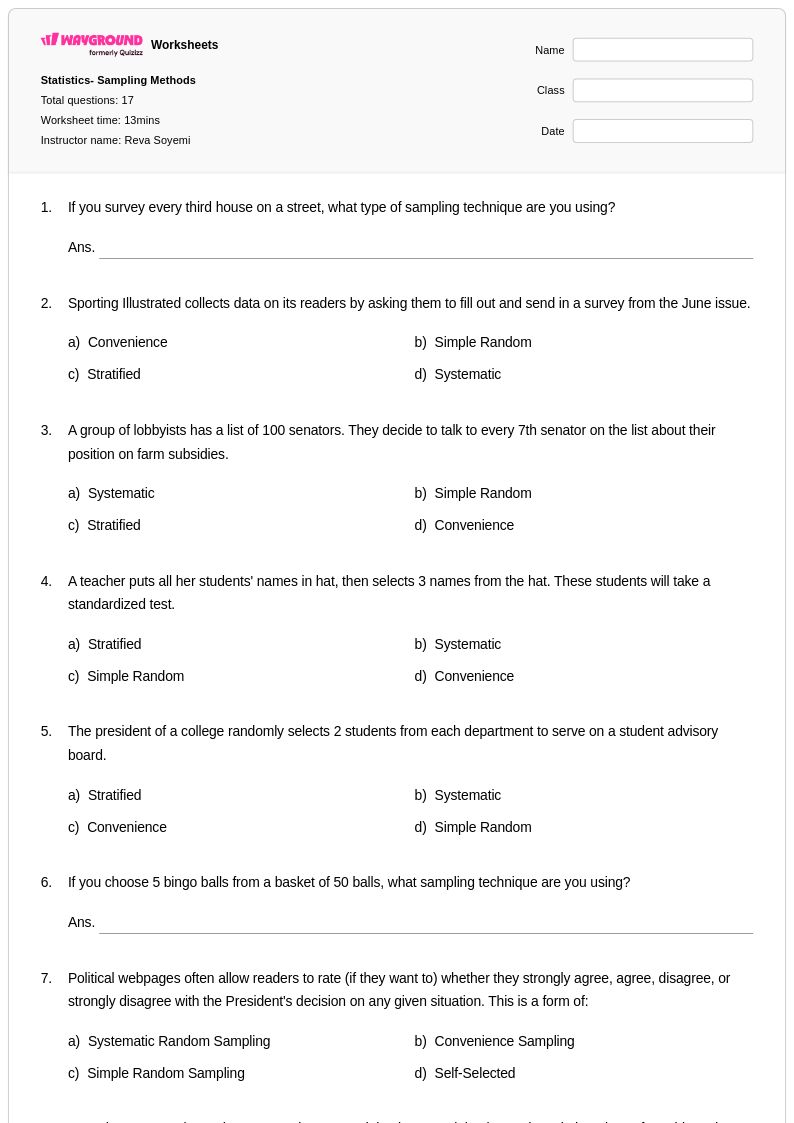
17 Q
10th - 12th
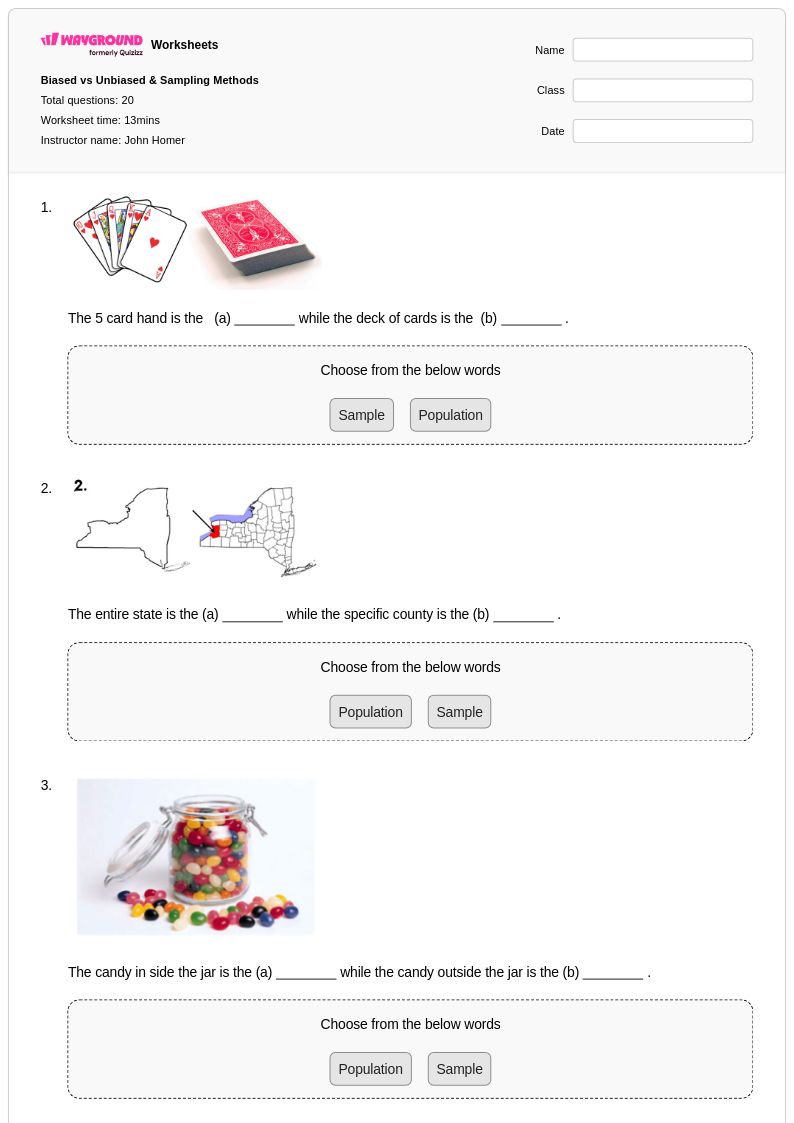
20 Q
8th - Uni
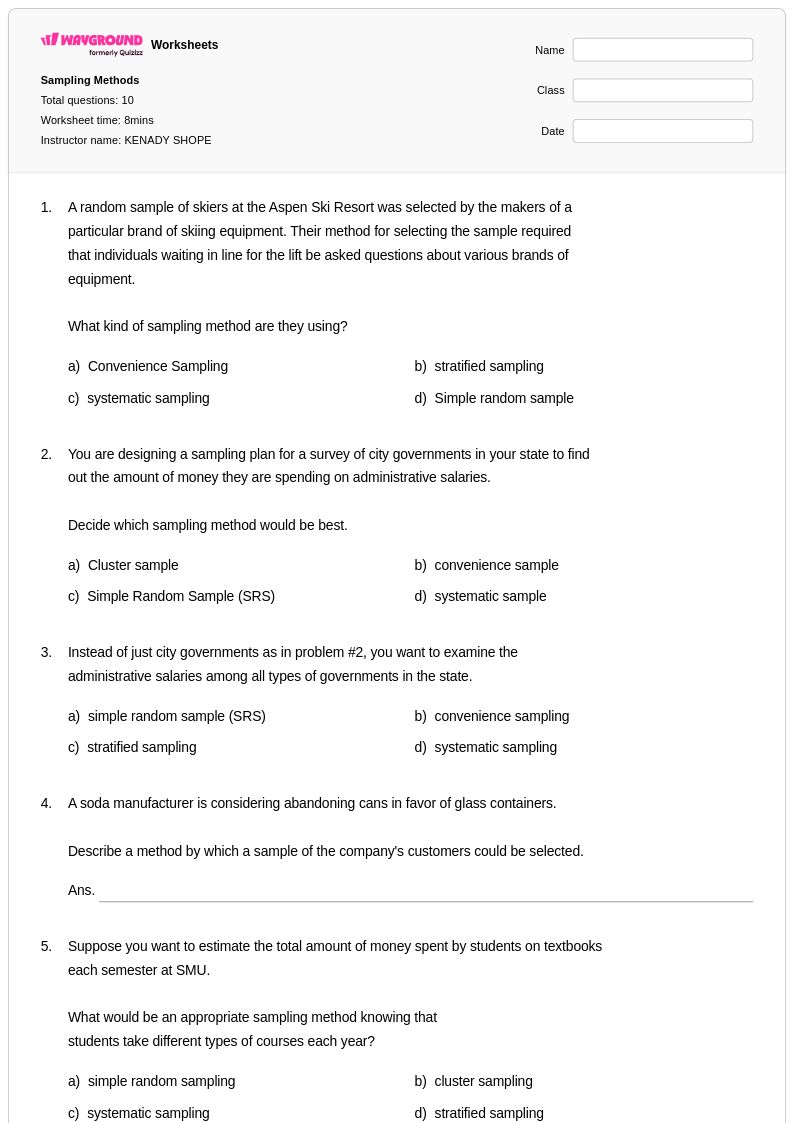
10 Q
11th - 12th
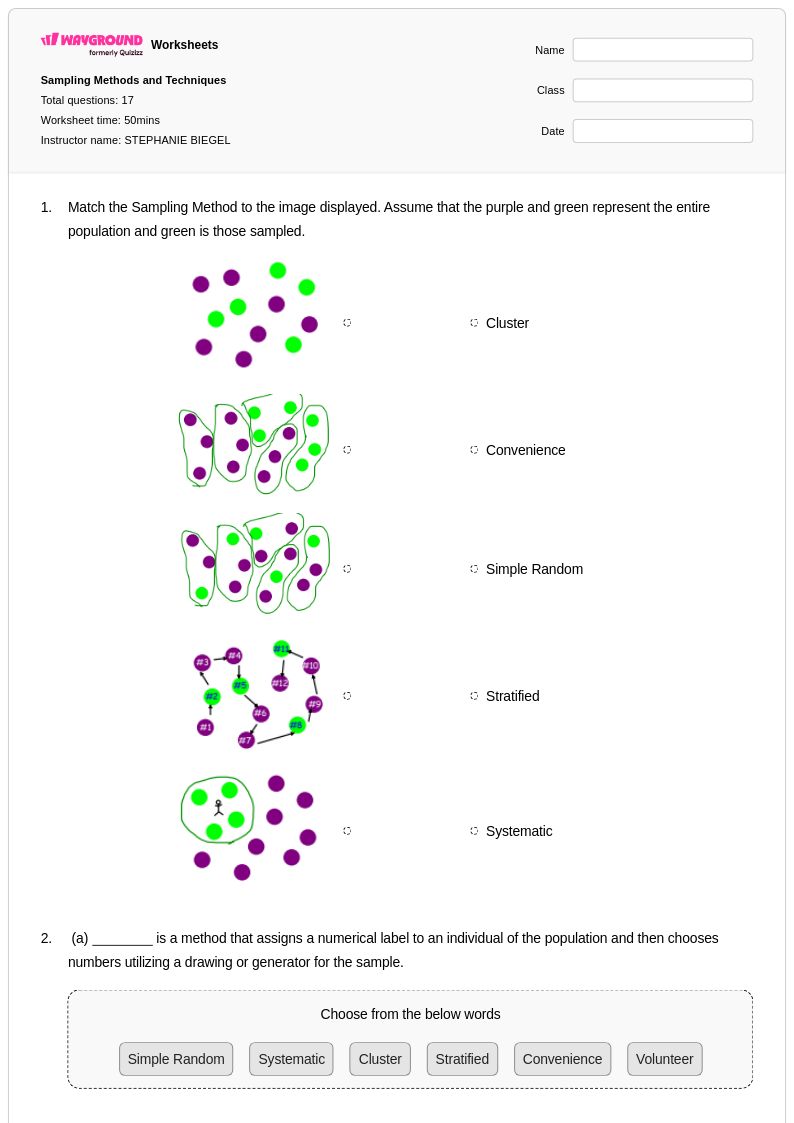
17 Q
12th
19 Q
12th - Uni
18 Q
12th
19 Q
9th - 12th
20 Q
12th - Uni
20 Q
12th - Uni
10 Q
9th - 12th
10 Q
Uni
20 Q
12th - Uni
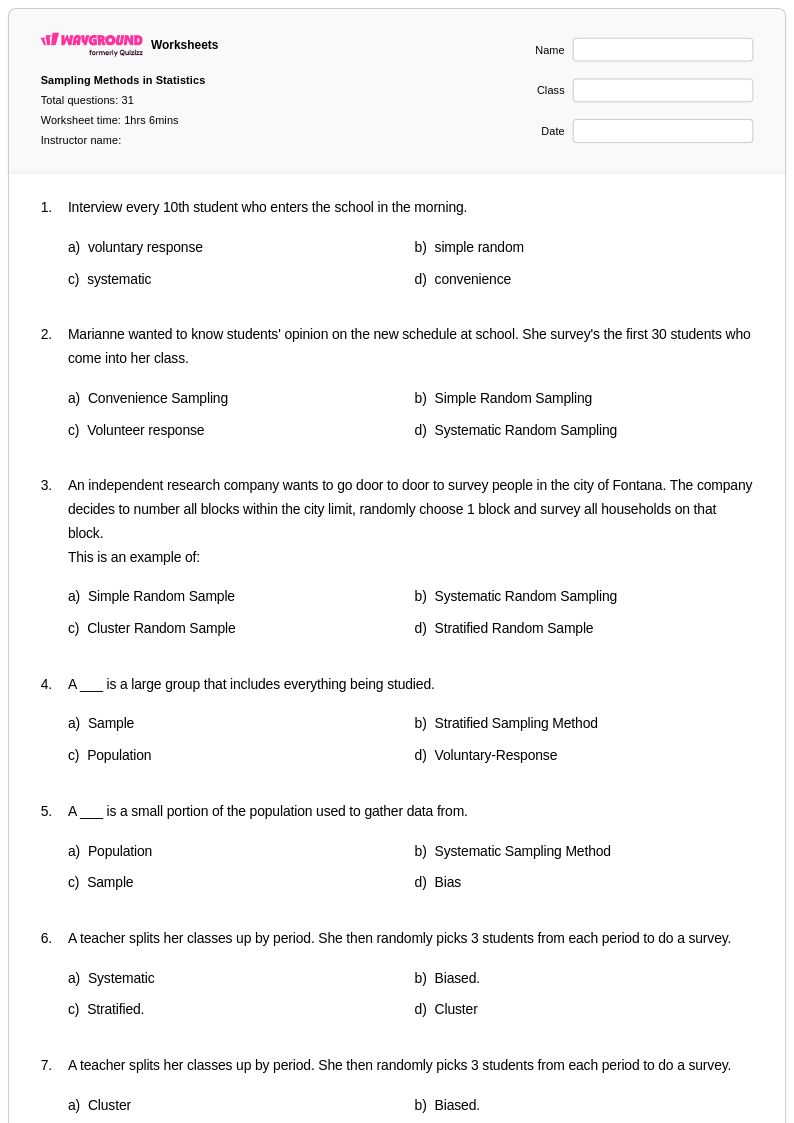
22 Q
12th
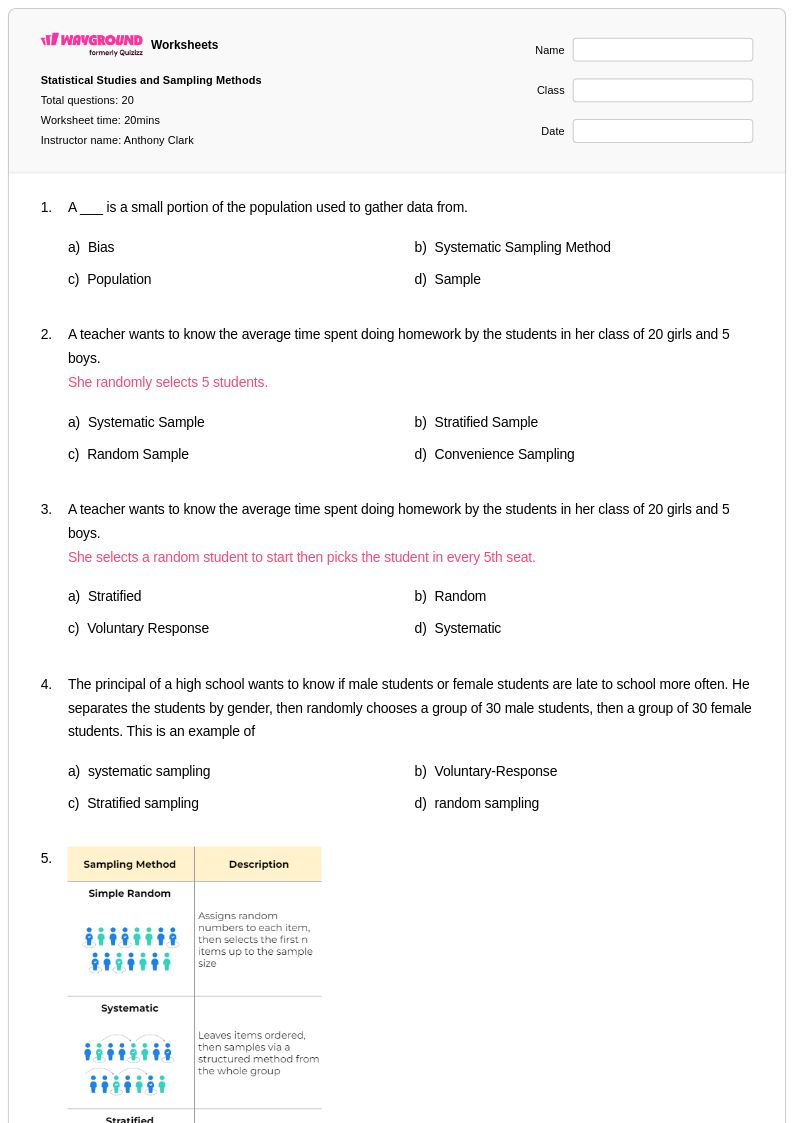
20 Q
11th - Uni
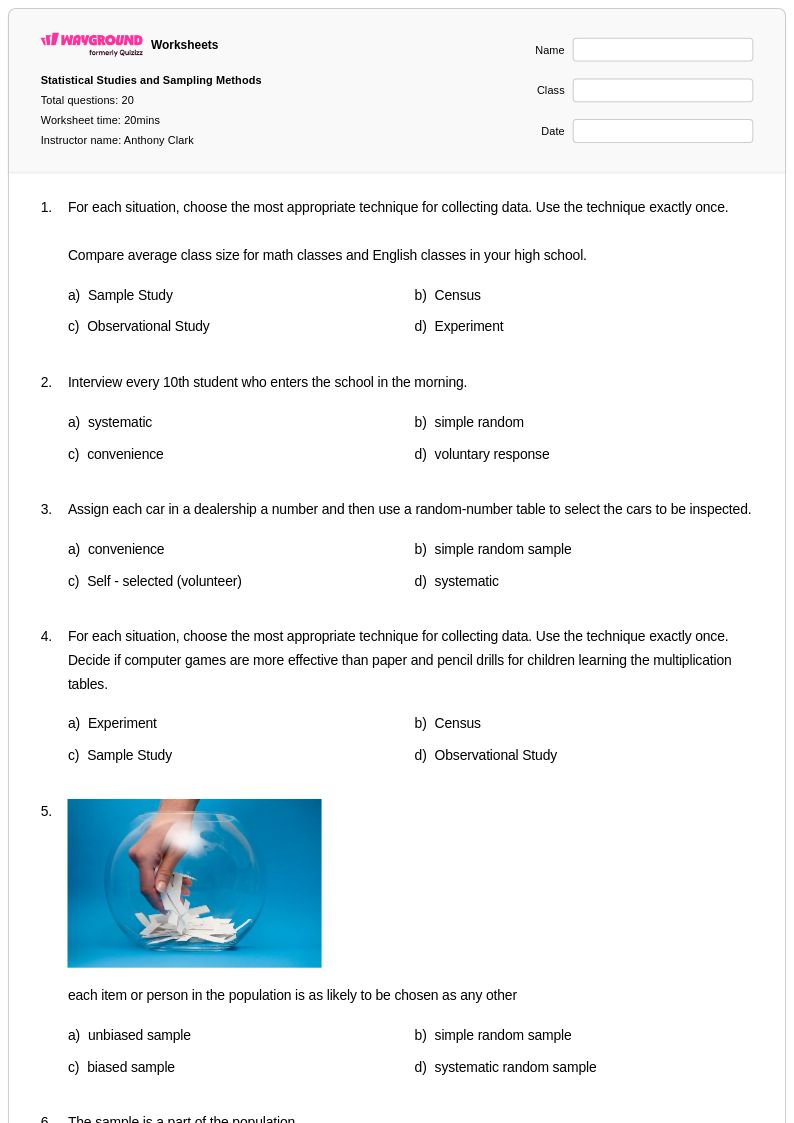
20 Q
12th - Uni
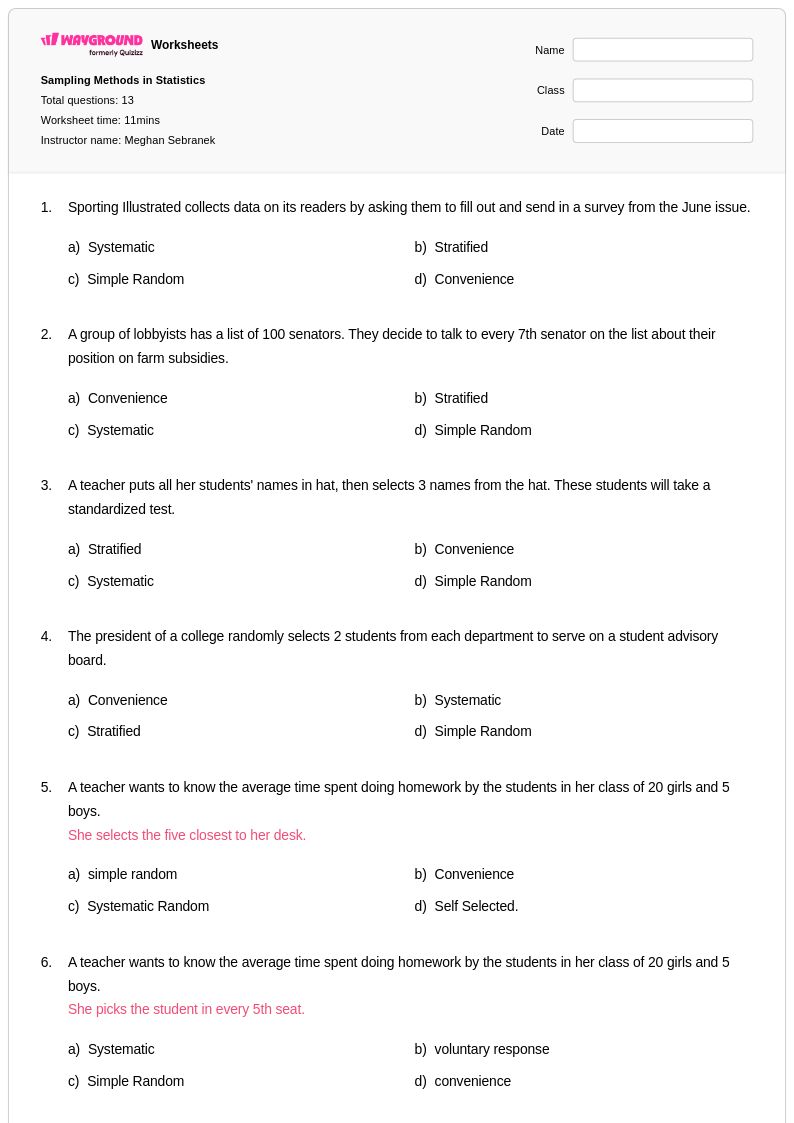
13 Q
5th - Uni
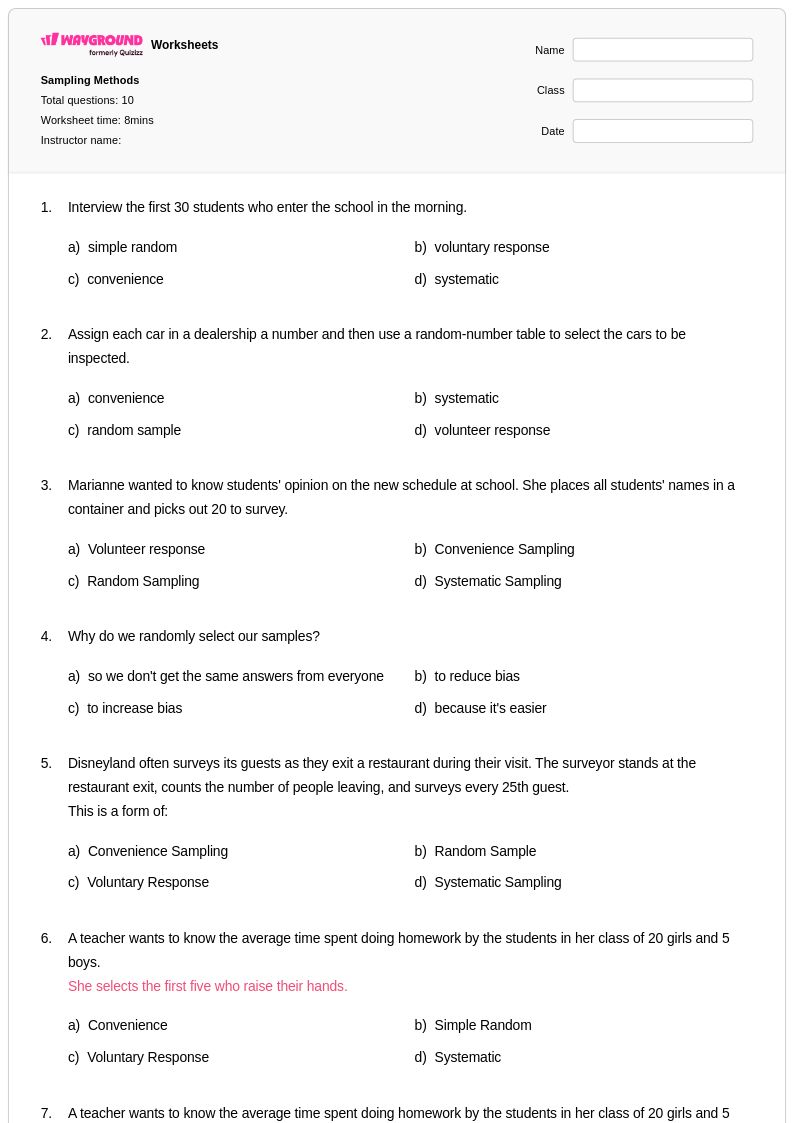
10 Q
7th - 11th
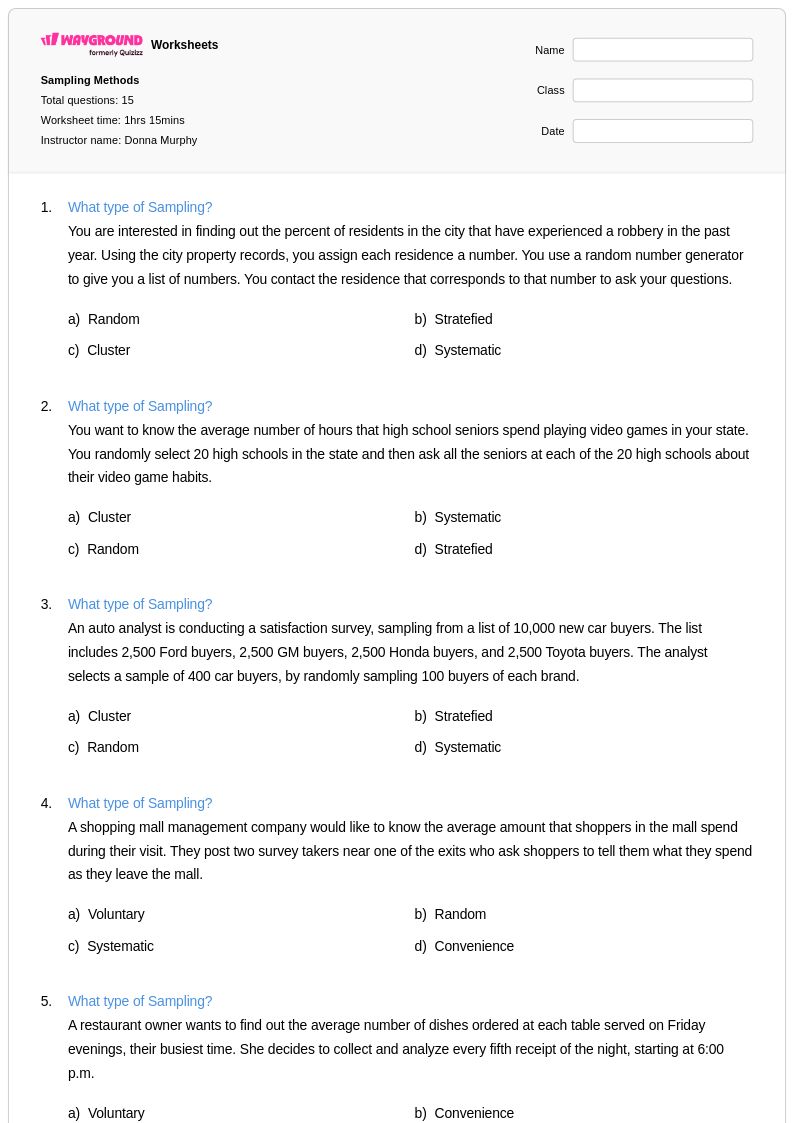
15 Q
9th - 12th
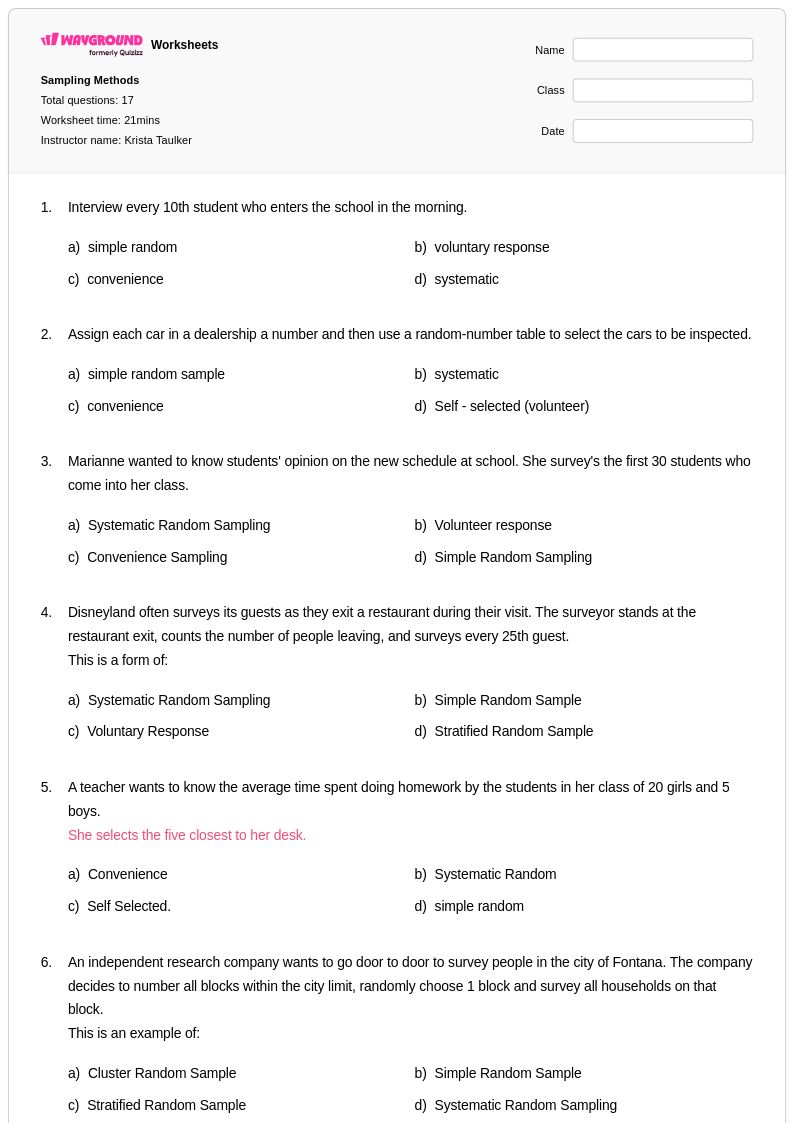
17 Q
10th - 12th
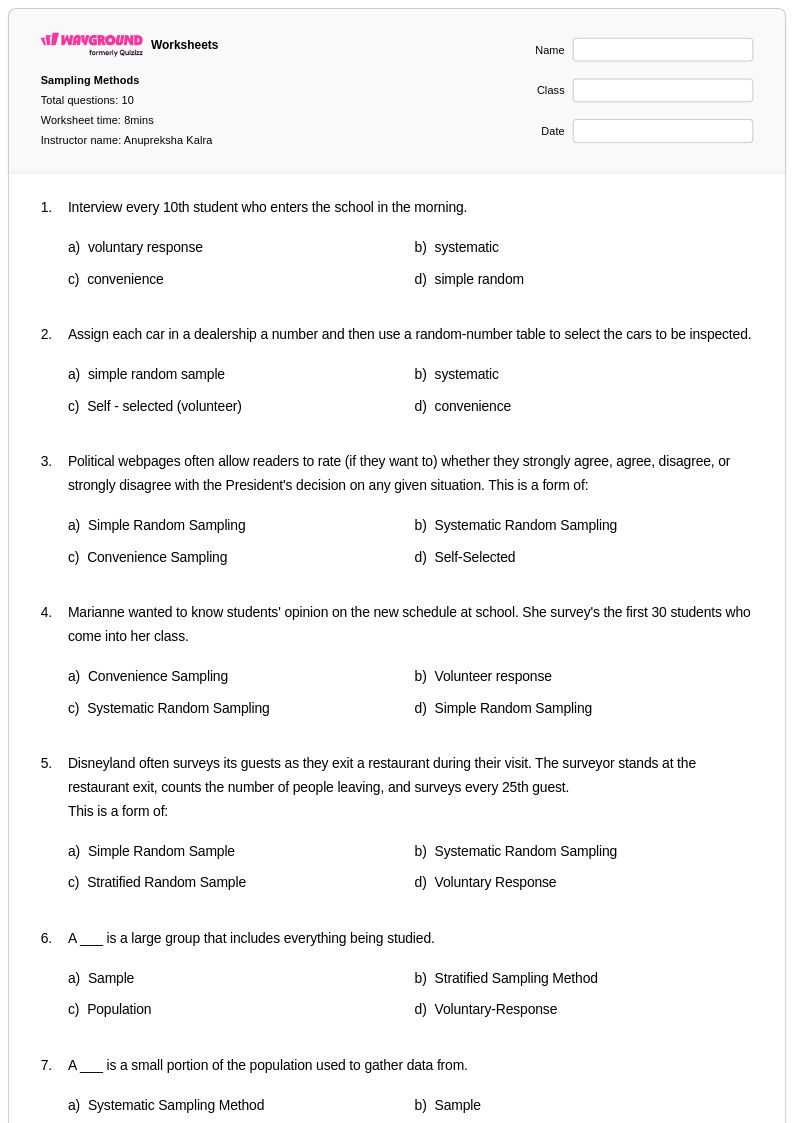
10 Q
8th
Explore Worksheets by Subjects
Explore printable Sampling Methods worksheets
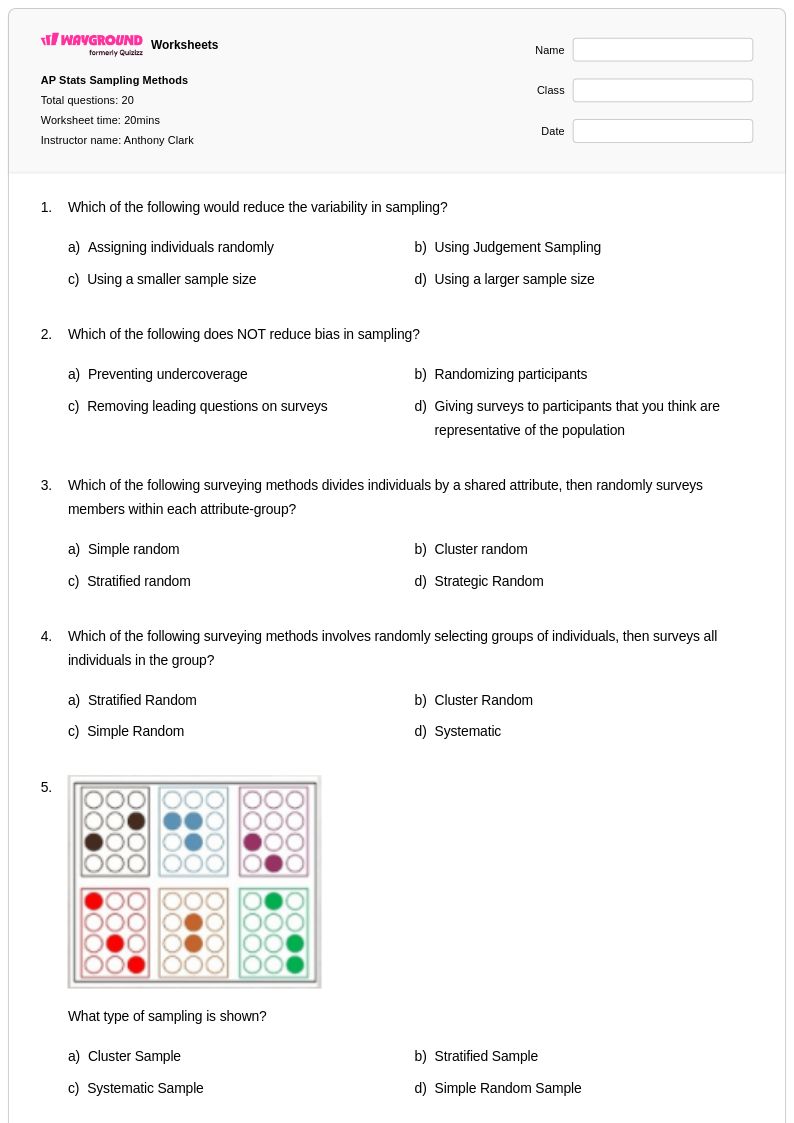
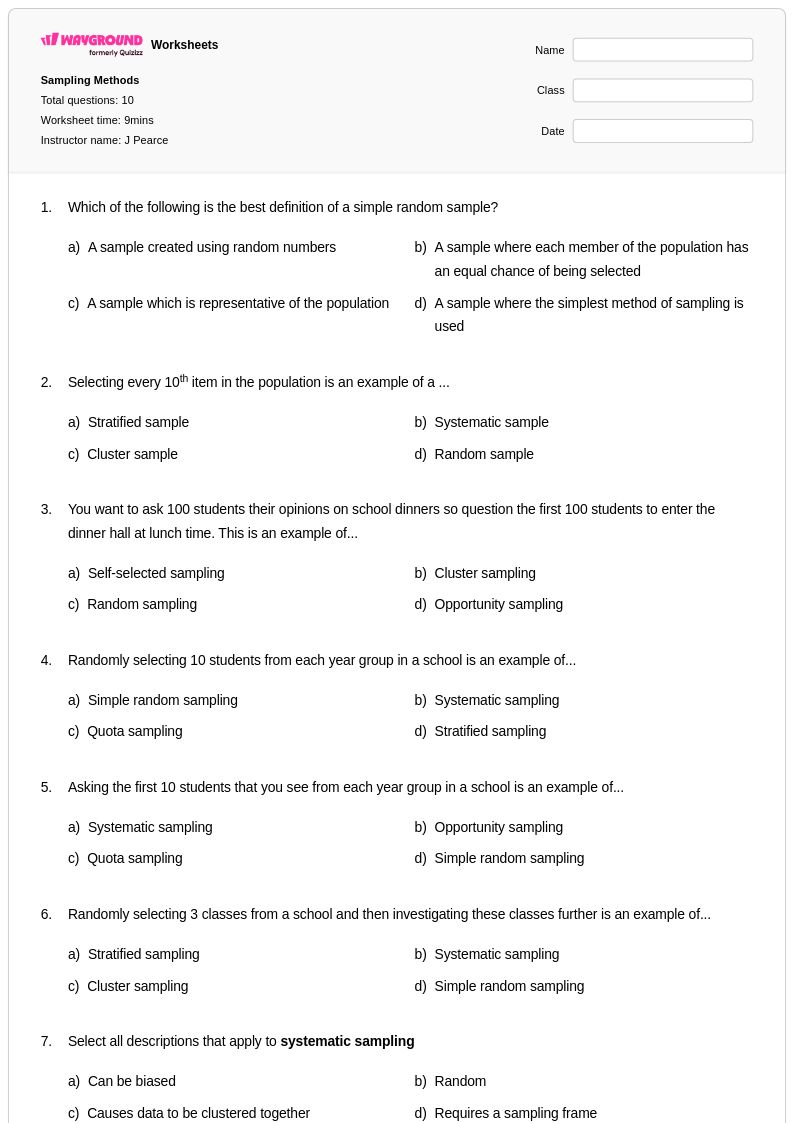
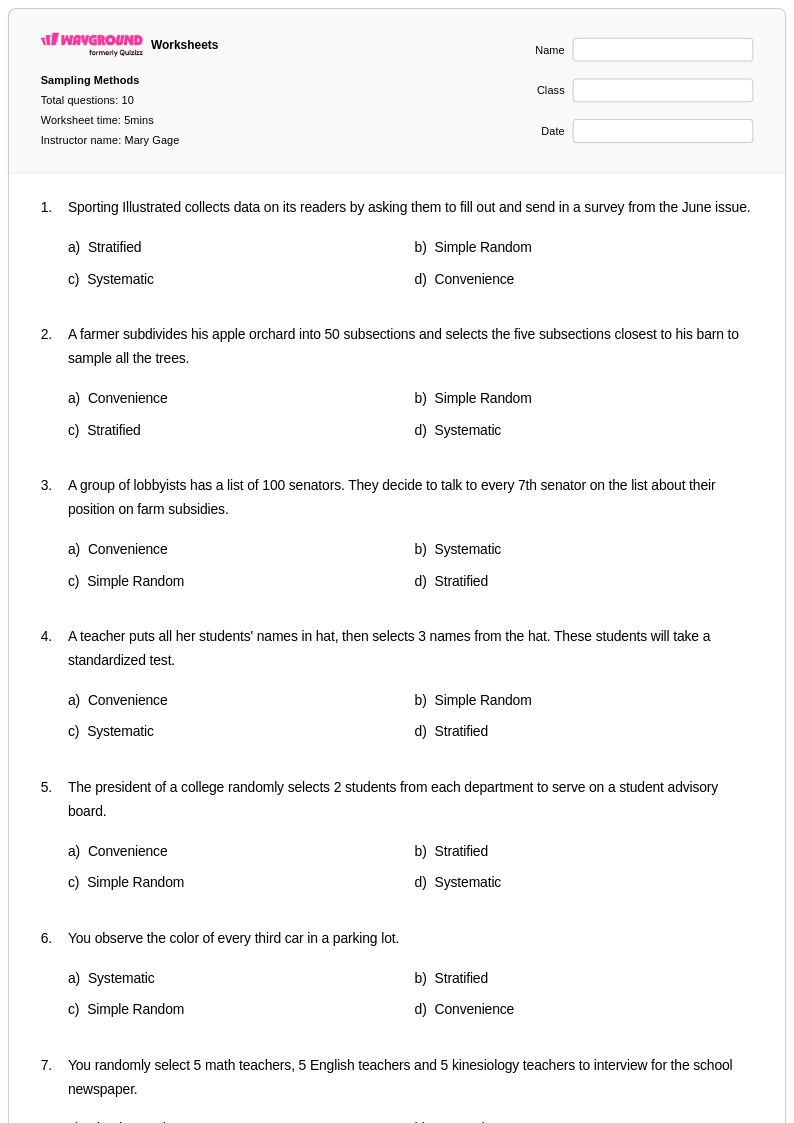
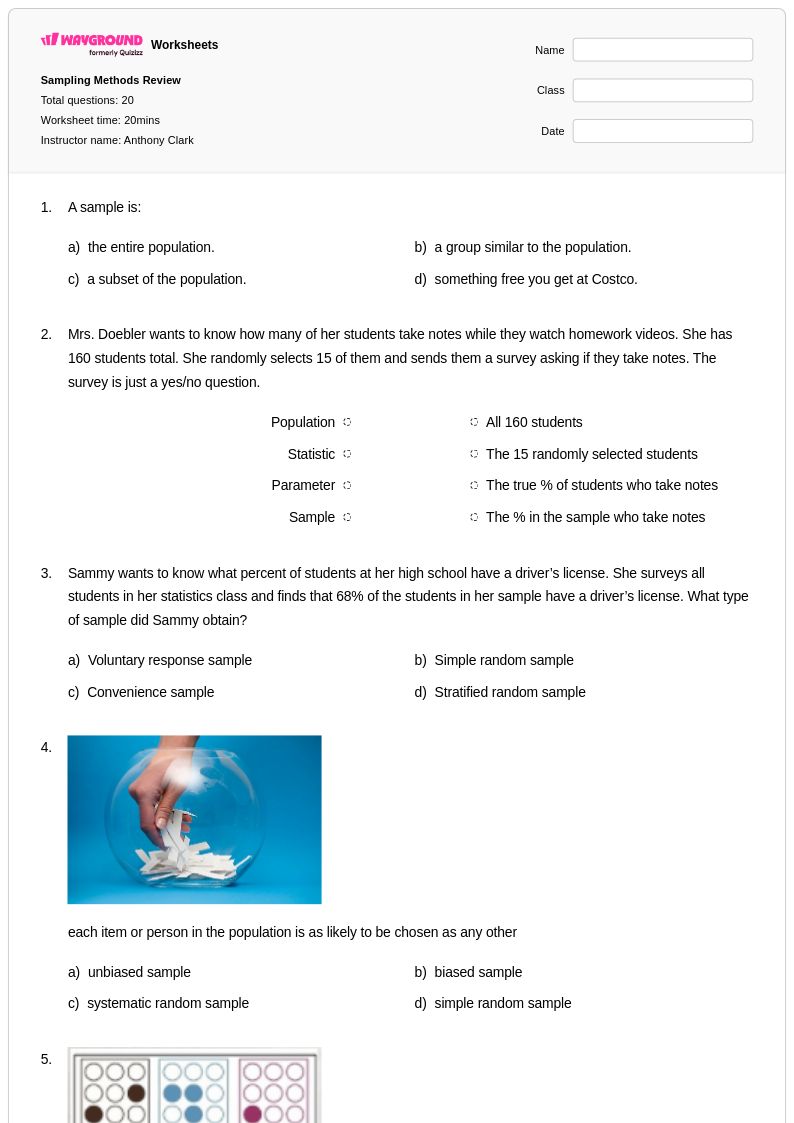
Sampling Methods worksheets available through Wayground (formerly Quizizz) provide comprehensive practice opportunities for students to master the fundamental techniques used to collect representative data from populations. These expertly designed resources strengthen critical statistical skills including understanding random sampling, systematic sampling, stratified sampling, cluster sampling, and convenience sampling methodologies. Students engage with practice problems that challenge them to identify appropriate sampling techniques for different research scenarios, calculate sampling errors, and evaluate the strengths and limitations of various approaches. Each worksheet includes detailed answer key solutions that guide learners through complex sampling calculations and reinforce proper methodology selection, while the free printable format allows educators to seamlessly integrate these materials into classroom instruction or independent study sessions.
Wayground (formerly Quizizz) empowers educators with millions of teacher-created Sampling Methods resources that feature robust search and filtering capabilities aligned to statistical standards and learning objectives. The platform's differentiation tools enable teachers to customize worksheets based on individual student needs, offering both printable pdf versions for traditional classroom use and interactive digital formats for technology-enhanced learning environments. These flexible resources support comprehensive lesson planning by providing varied difficulty levels for remediation and enrichment, allowing educators to address diverse learning paces within their statistics curriculum. Teachers can efficiently locate specific sampling methodology content, modify existing worksheets to match their instructional goals, and create targeted skill practice sessions that build student confidence in statistical reasoning and data collection techniques.
FAQs
How do I teach the different types of sampling methods?
What exercises help students practice sampling methods?
What are the most common errors students make when learning sampling methods?
How can I use this sampling methods worksheet with my class?
How does learning sampling methods fit into the math curriculum?
How can I support students who struggle to differentiate between sampling techniques?