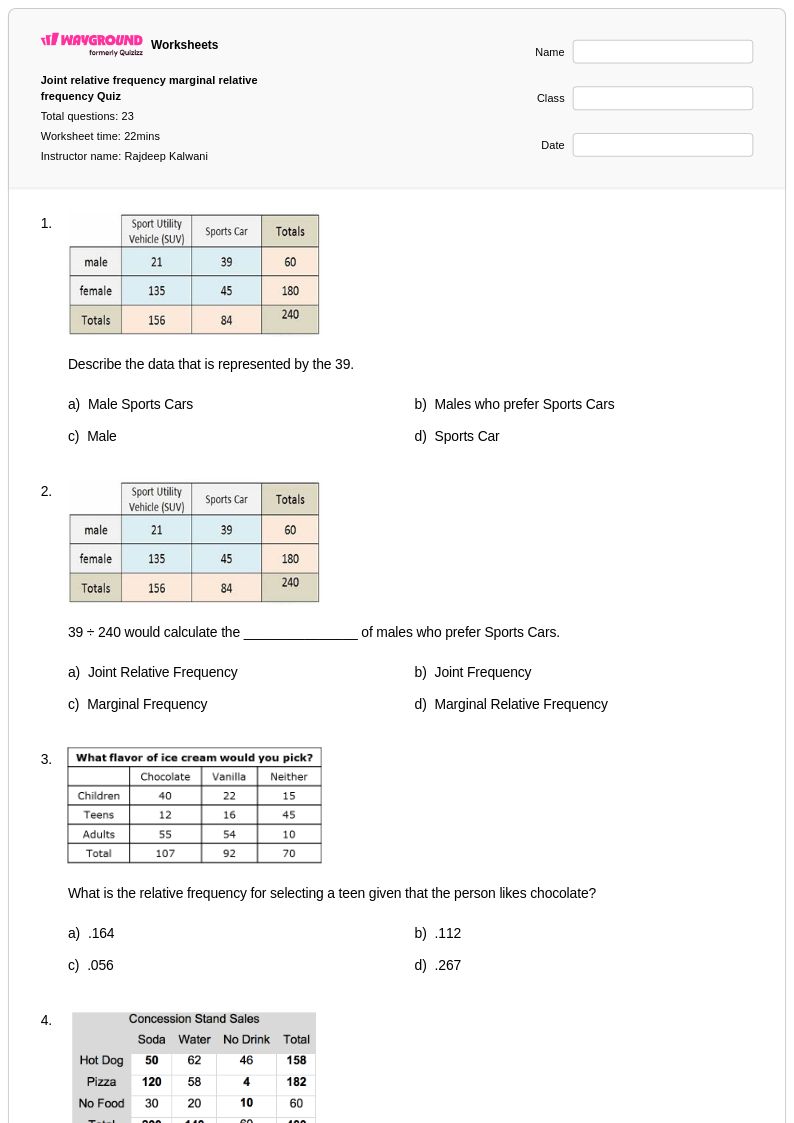
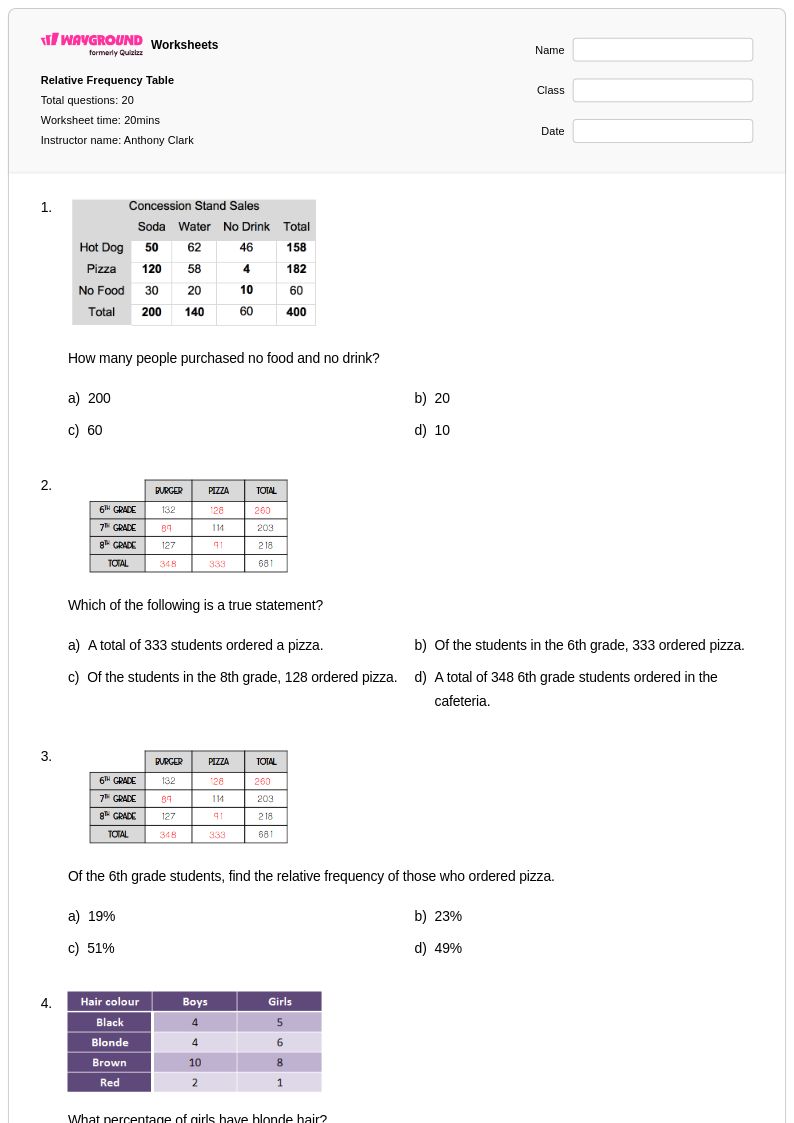
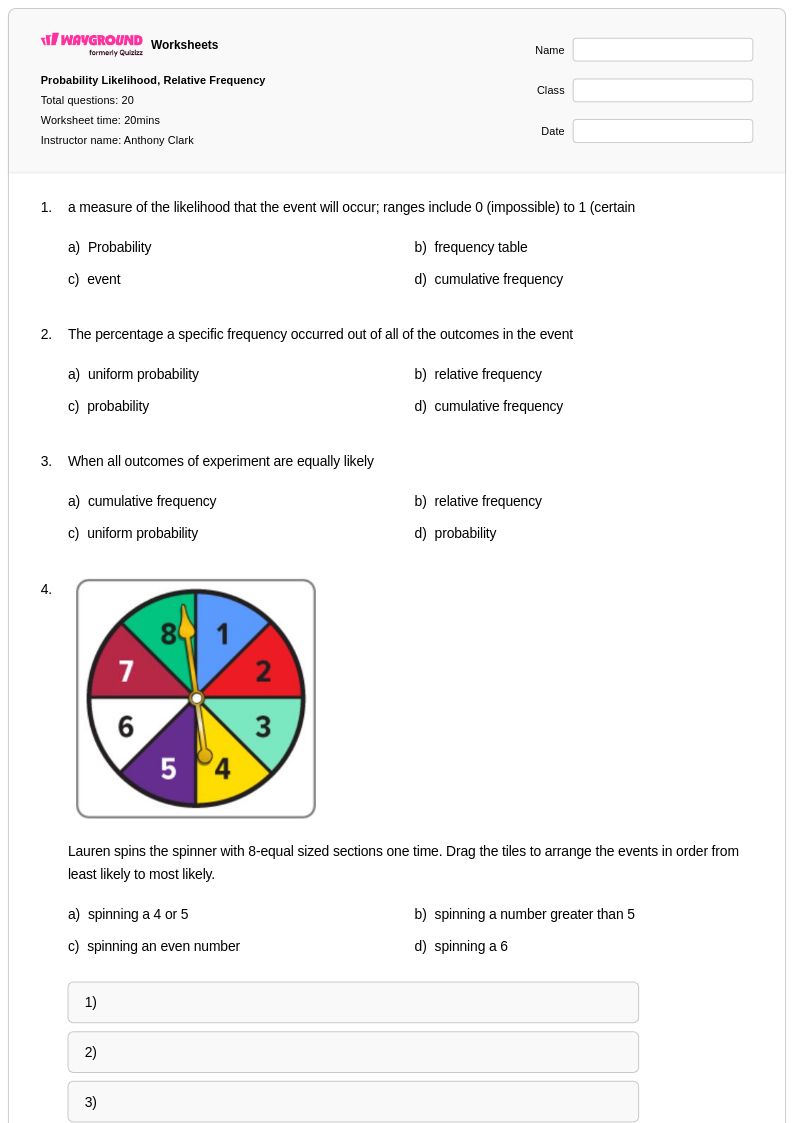
Enhance your students' understanding of relative frequency with Wayground's comprehensive collection of free worksheets, featuring printable PDFs with practice problems and answer keys to master data analysis and probability calculations.
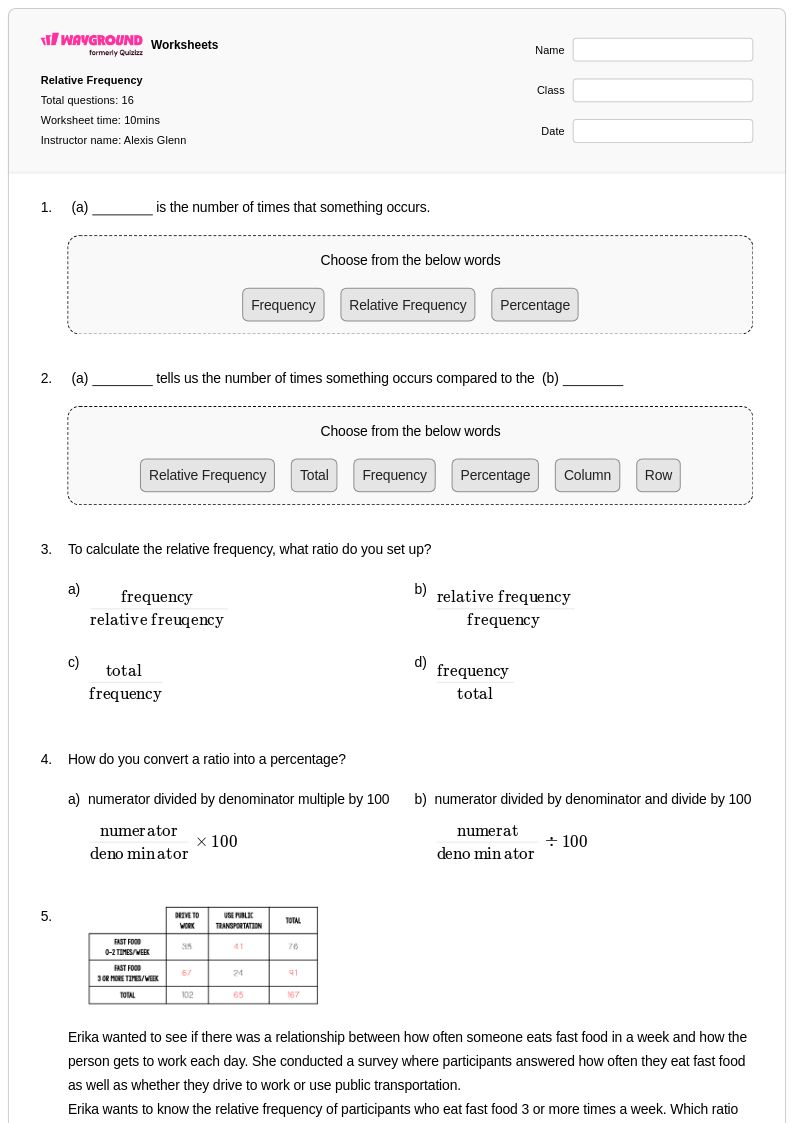
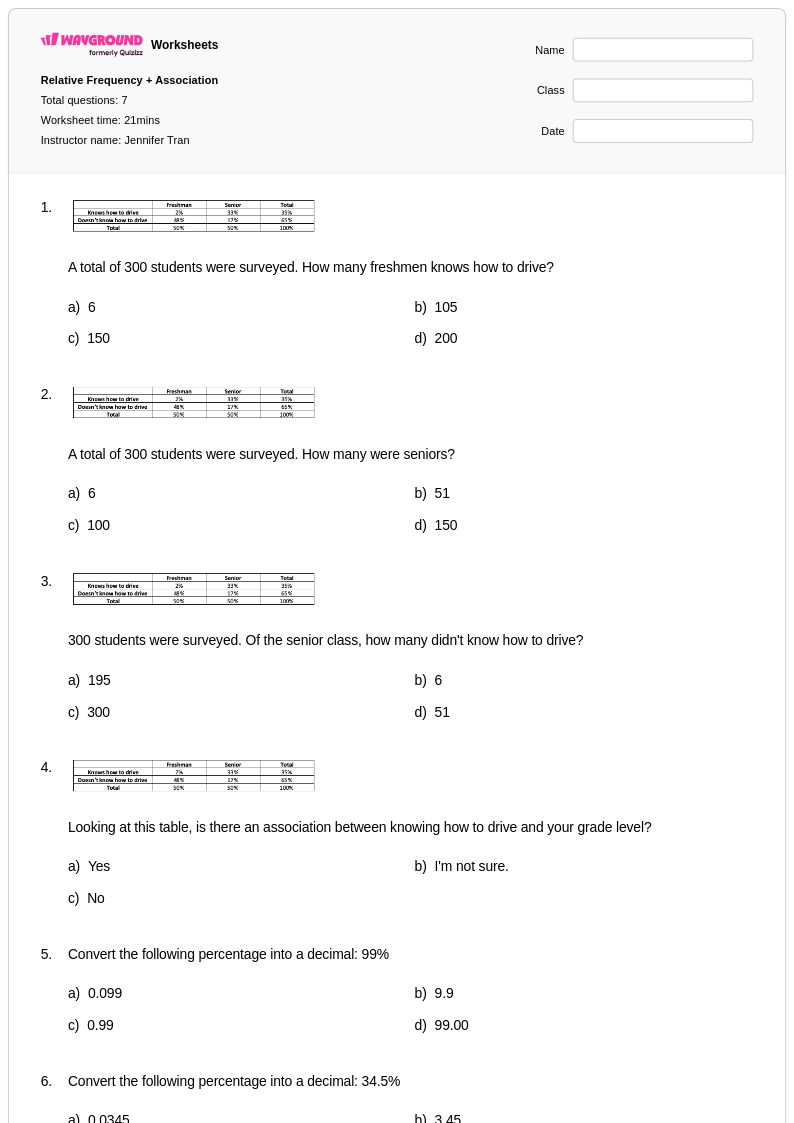
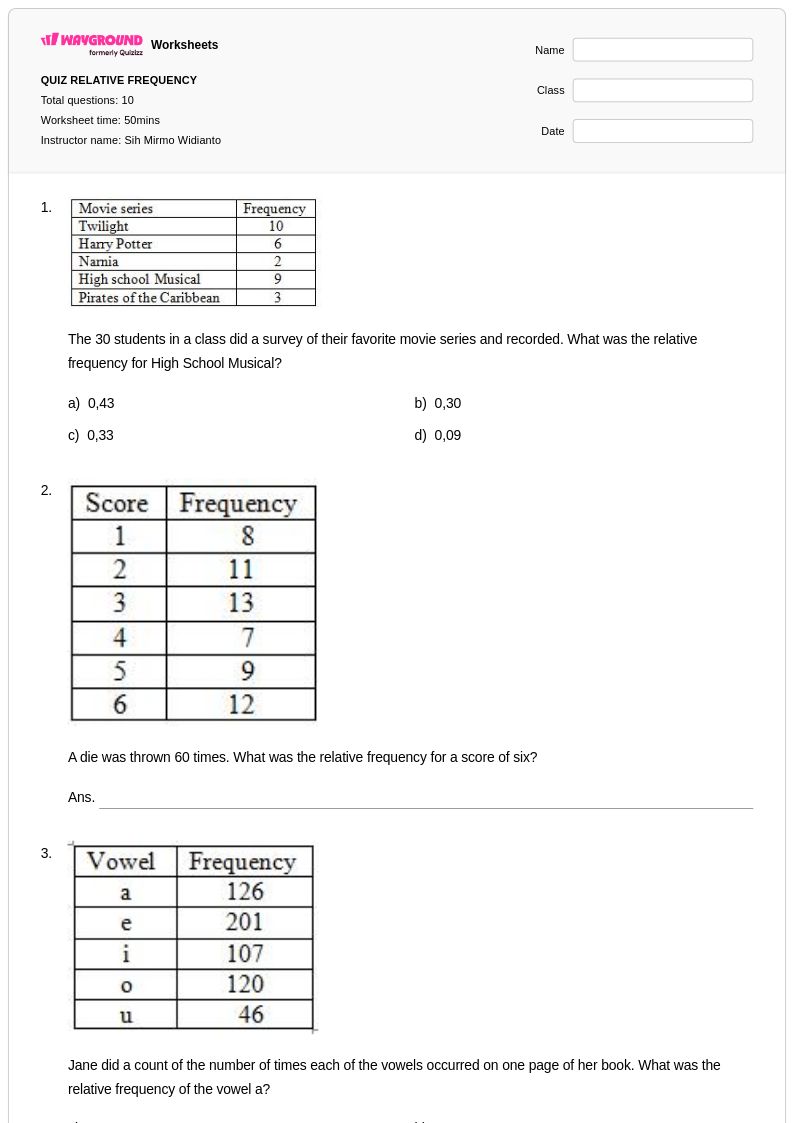
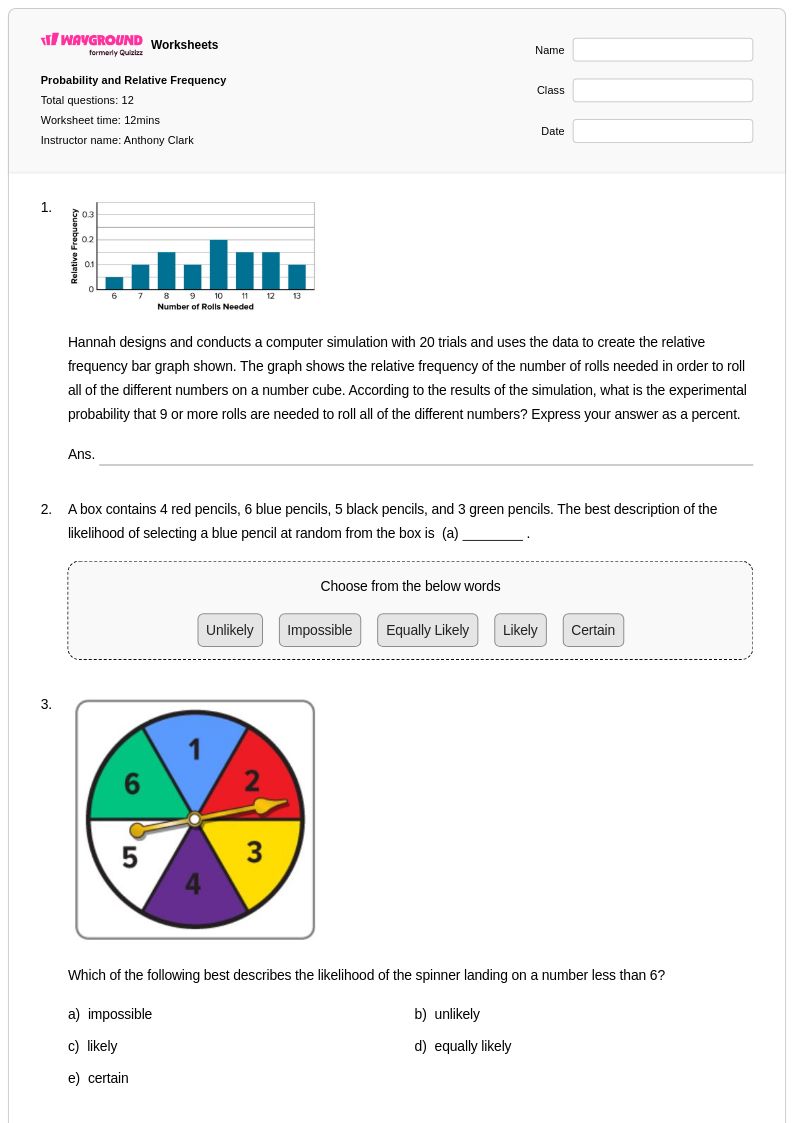
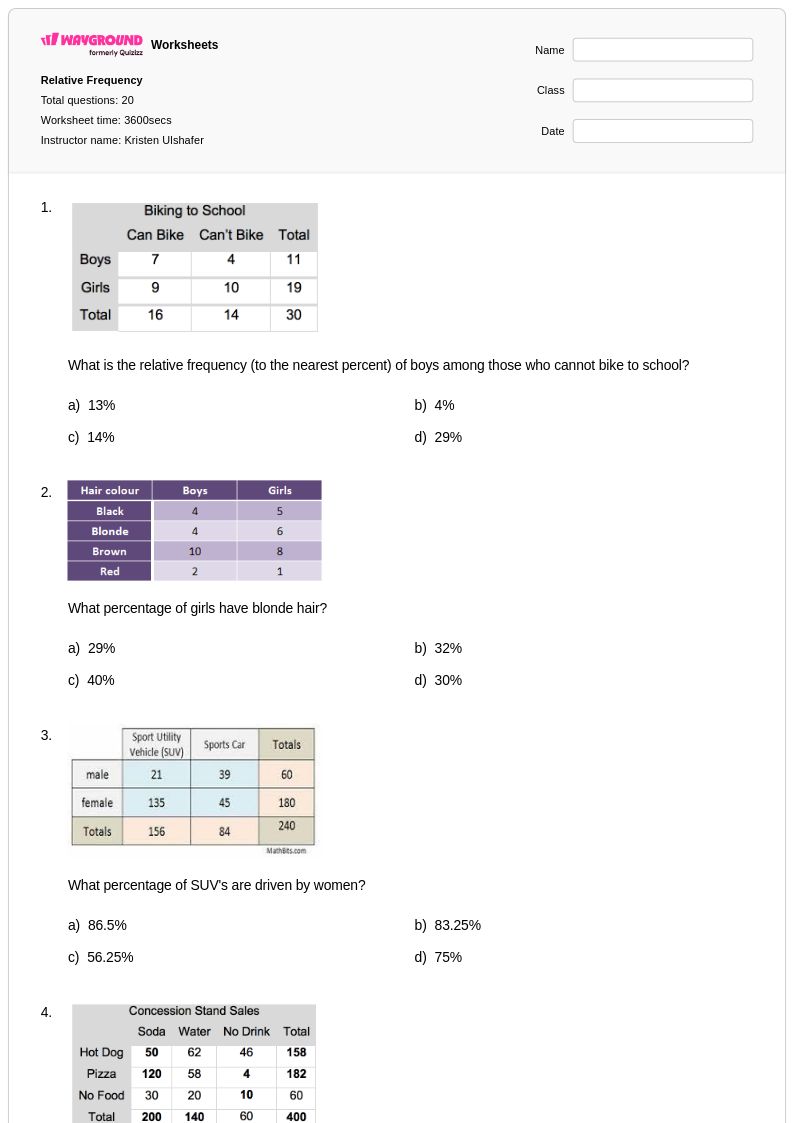
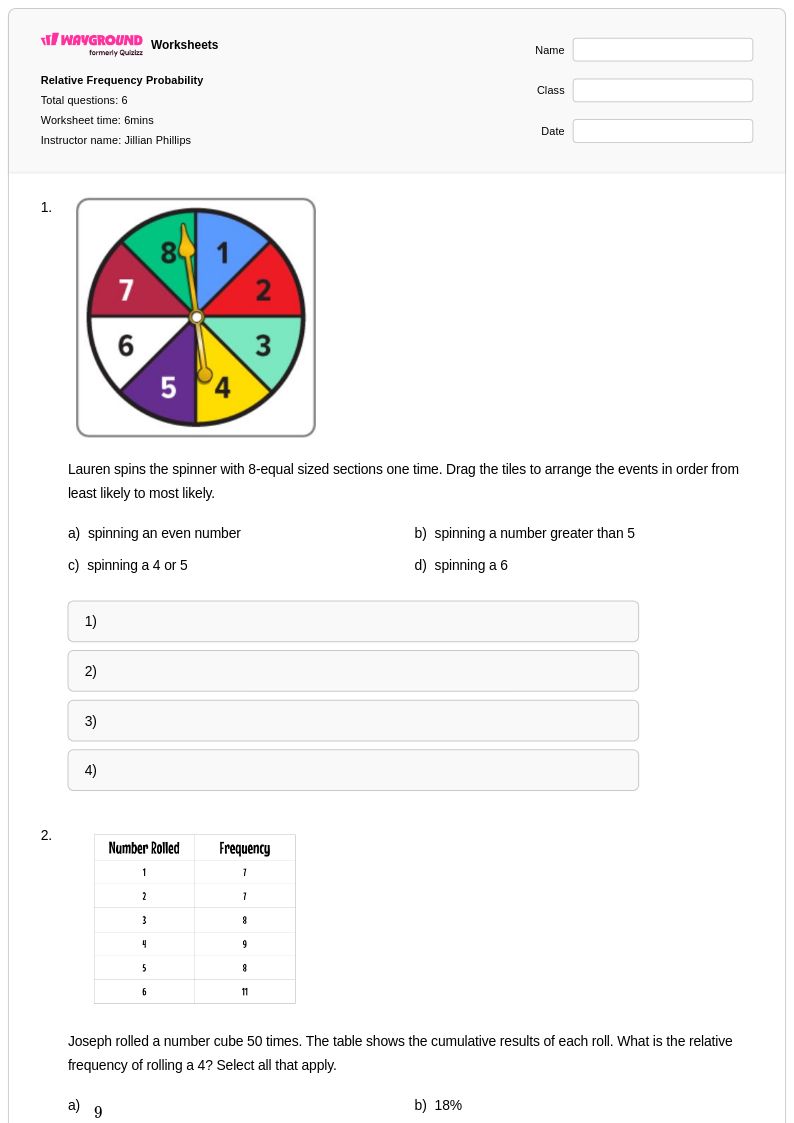
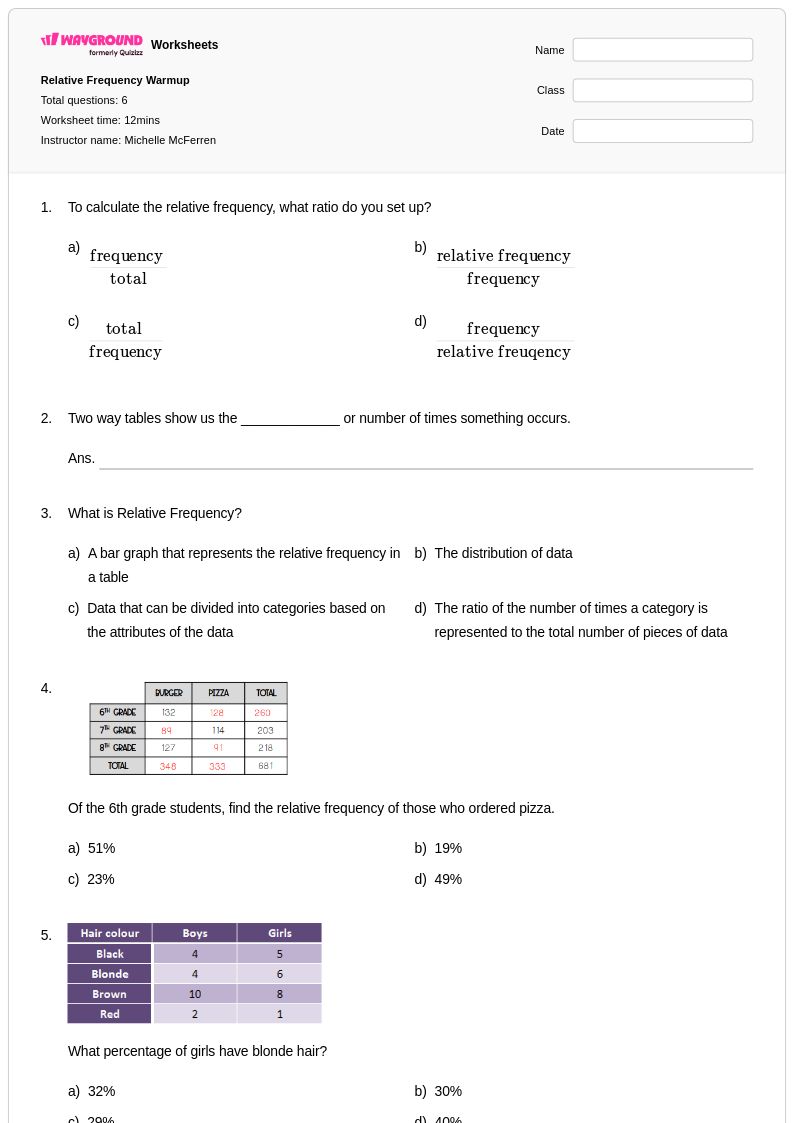
Relative frequency worksheets available through Wayground (formerly Quizizz) provide comprehensive practice opportunities for students to master this fundamental statistical concept. These expertly crafted resources guide learners through calculating relative frequencies by dividing individual category frequencies by the total number of observations, helping them understand how to express data as proportions, decimals, and percentages. The worksheets strengthen critical analytical skills including data interpretation, fraction-to-decimal conversion, and percentage calculations while building foundational knowledge for more advanced probability concepts. Each resource includes detailed practice problems with varying complexity levels, complete answer keys for immediate feedback, and free printable pdf formats that accommodate diverse classroom needs and learning preferences.
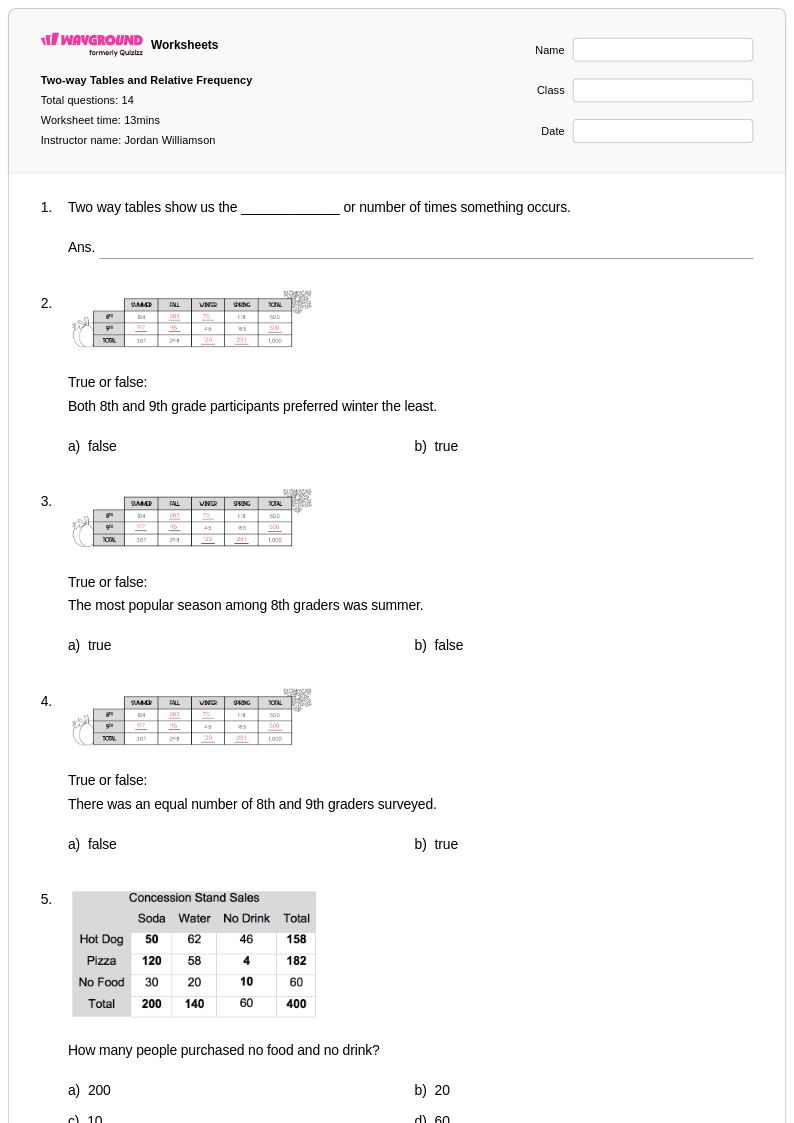
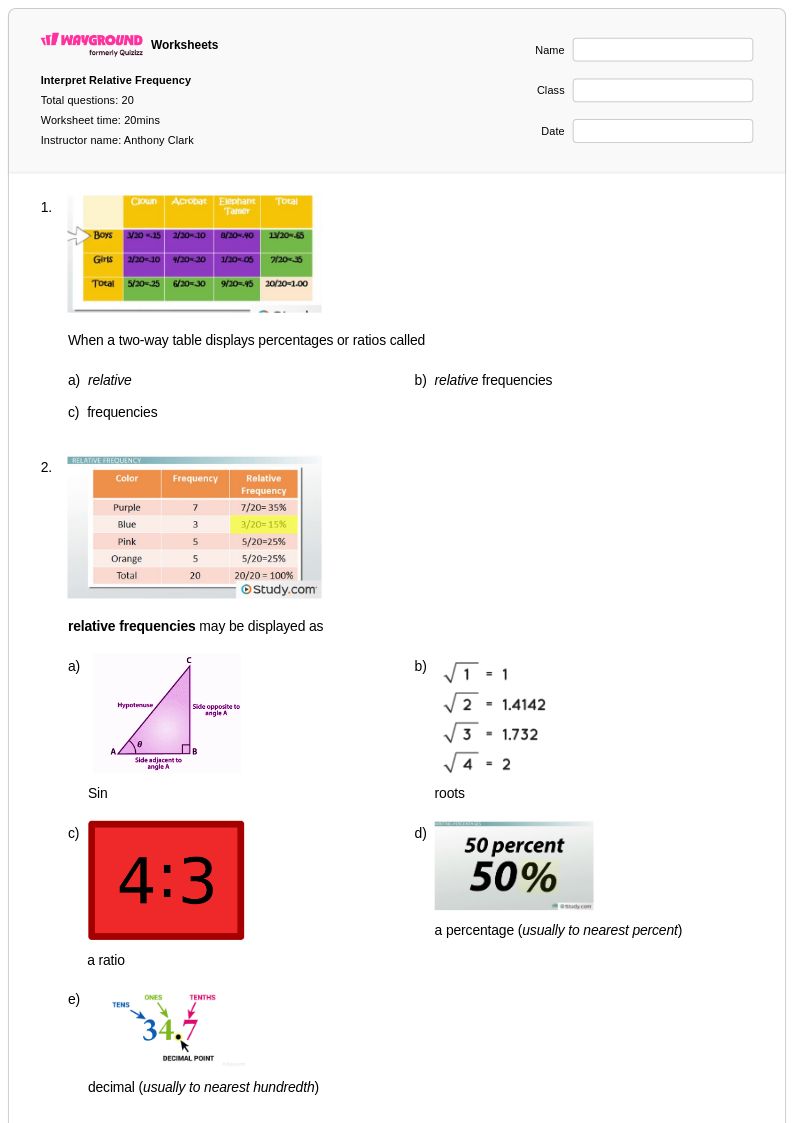
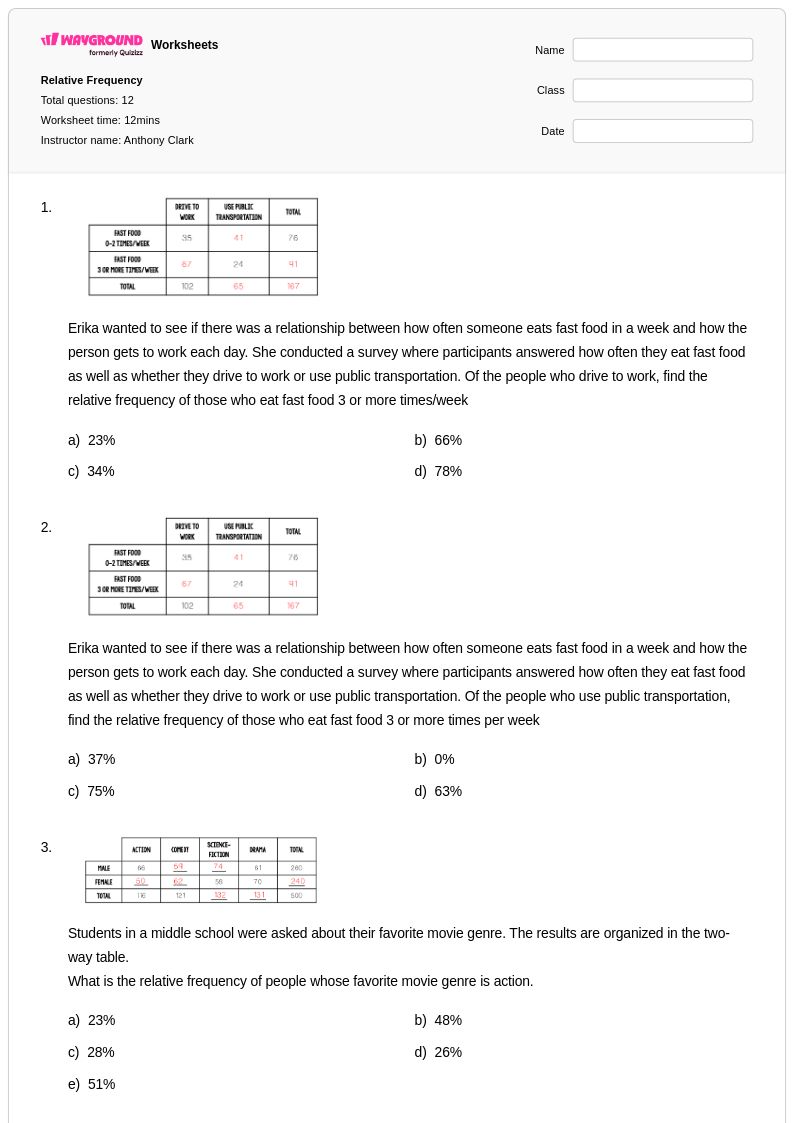
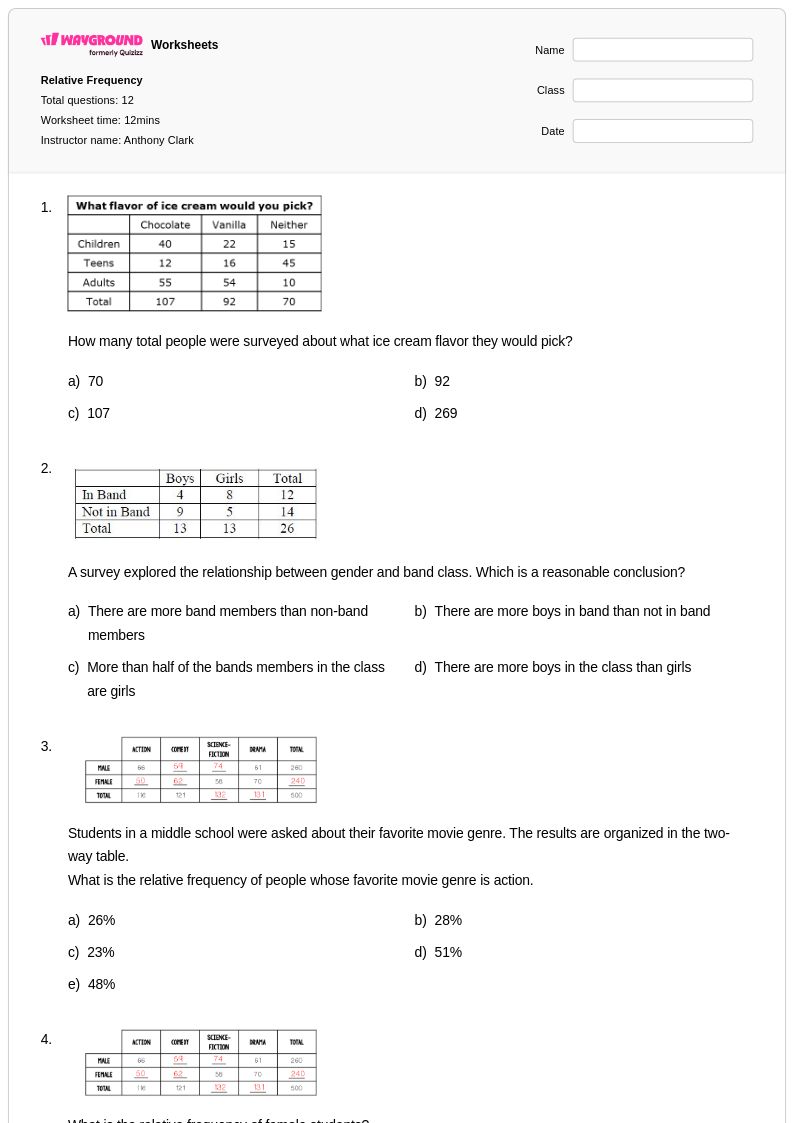
Wayground (formerly Quizizz) empowers educators with millions of teacher-created relative frequency worksheet collections that feature robust search and filtering capabilities, enabling quick identification of resources aligned with specific curriculum standards and learning objectives. The platform's differentiation tools allow teachers to customize worksheets based on individual student needs, whether for remediation of basic frequency concepts or enrichment through complex real-world applications involving two-way tables and conditional relative frequency. Available in both printable and digital formats including downloadable pdfs, these resources seamlessly integrate into lesson planning workflows and support flexible instruction delivery. Teachers can efficiently address diverse skill levels within their classrooms while providing targeted practice that reinforces statistical reasoning and prepares students for advanced data analysis concepts.
FAQs
How do I introduce the concept of relative frequency?
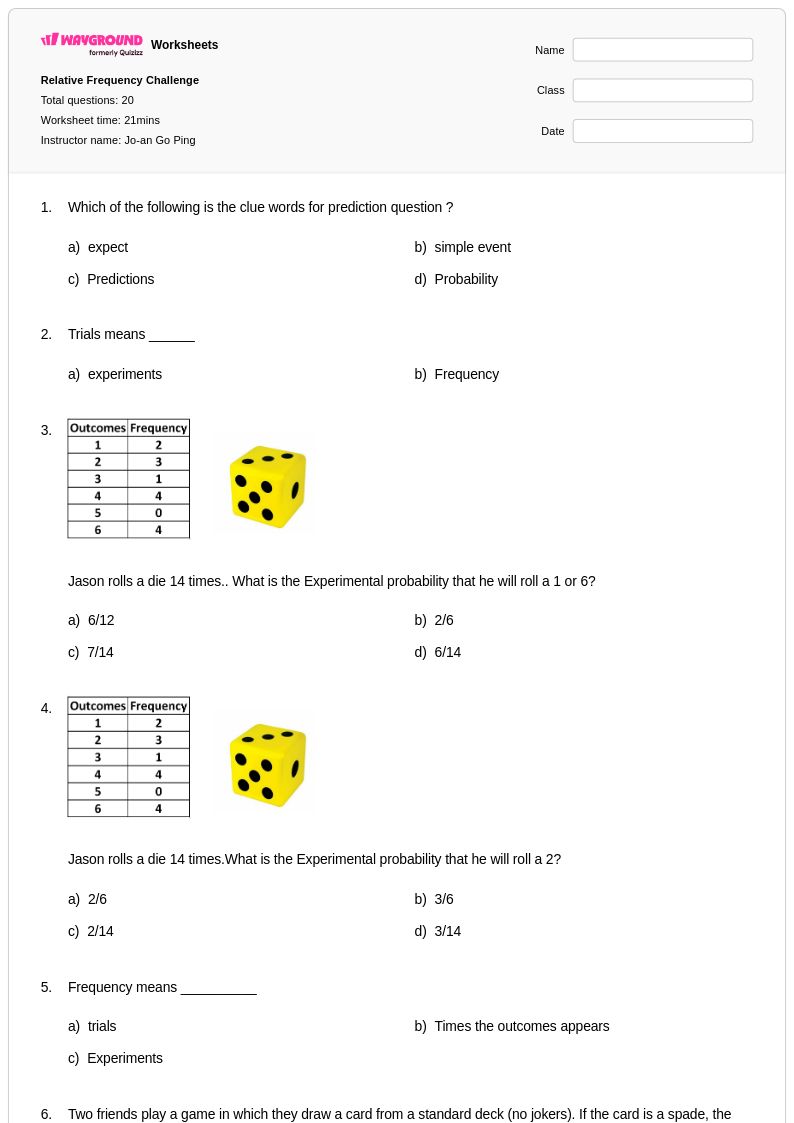
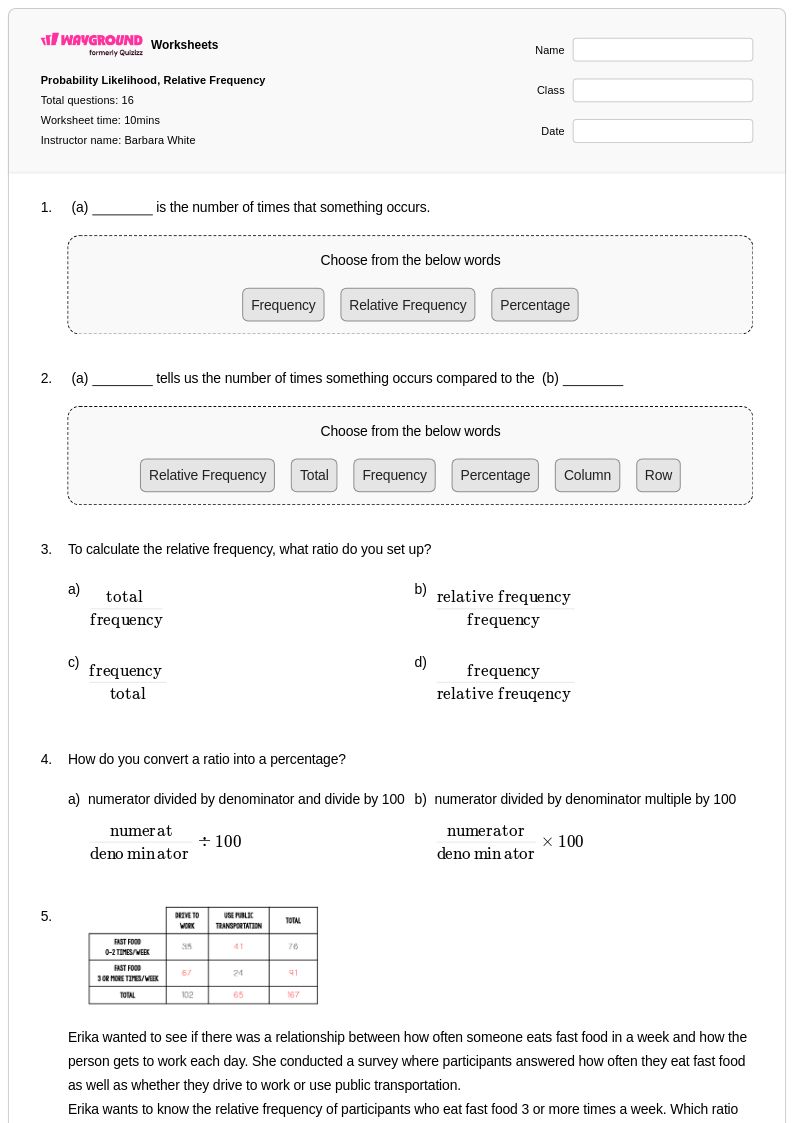
Introduce relative frequency as a way to compare parts of a data set to the whole. Connect it to concepts students already know, like fractions and percentages. Start with a simple question and a small data set, such as, "In a bag of 20 marbles with 5 red ones, what fraction of the marbles are red?" This frames the core idea: the count of an item (frequency) divided by the total count.
What types of exercises help students practice relative frequency?
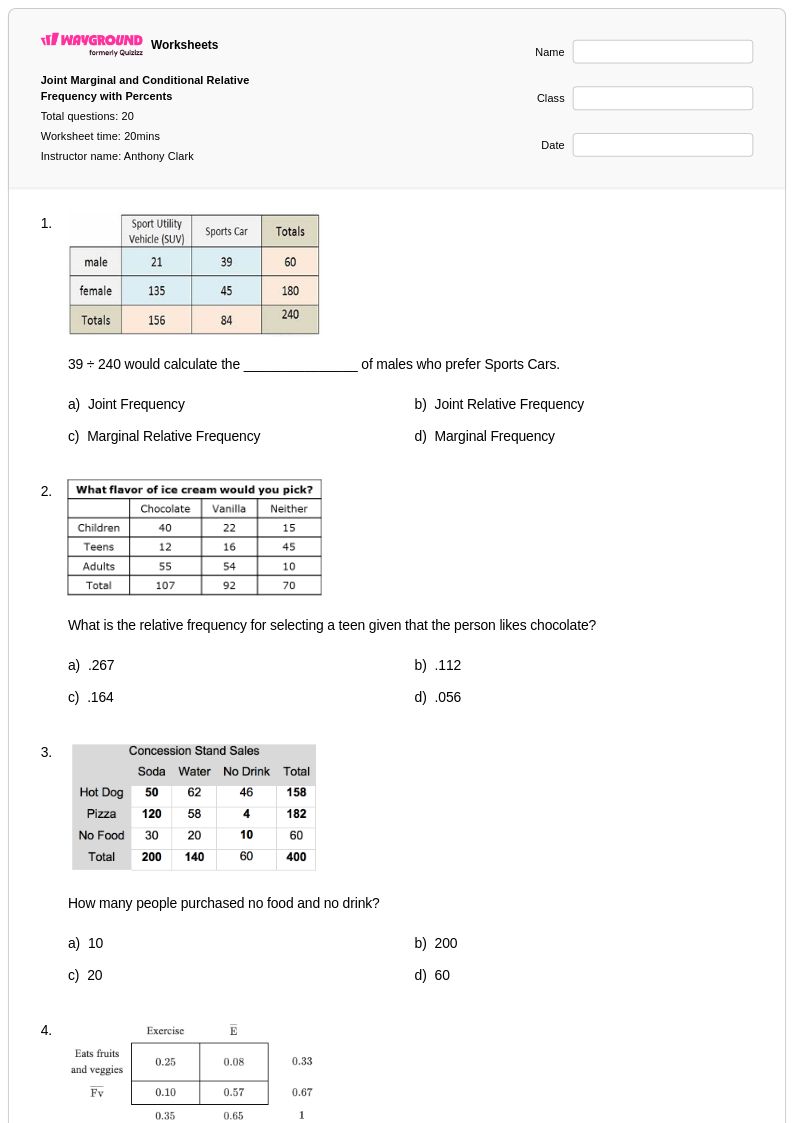
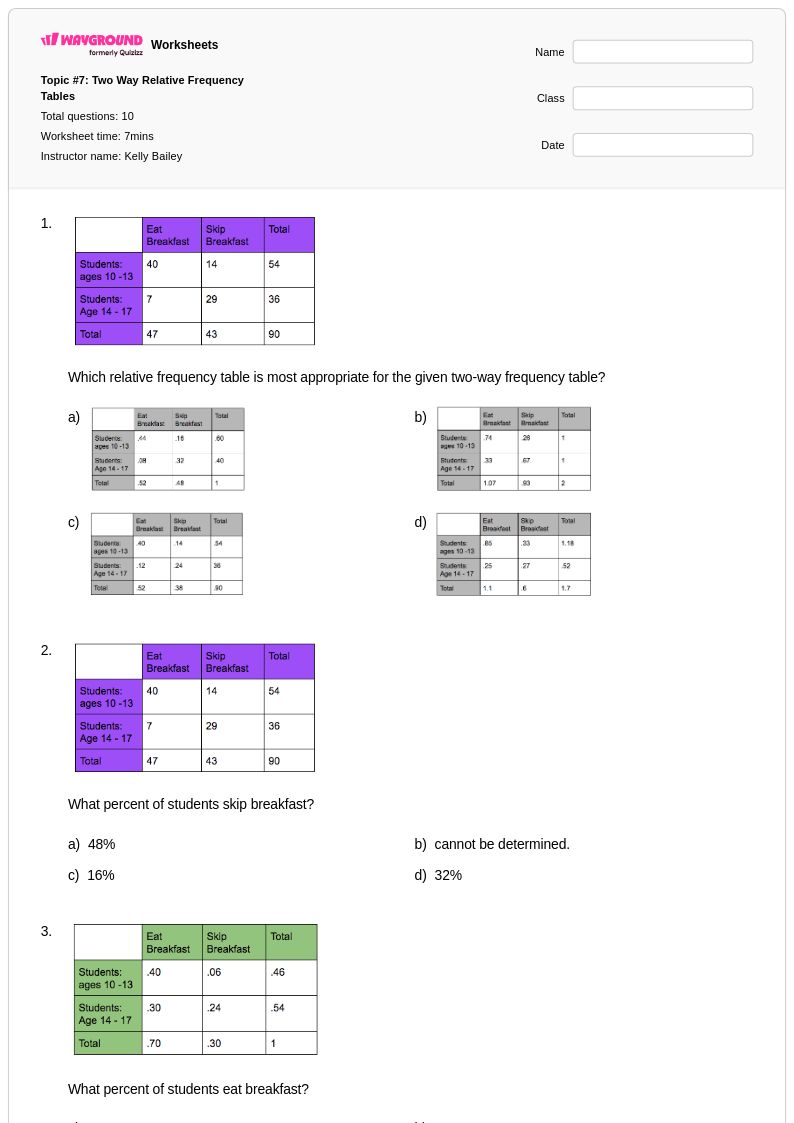
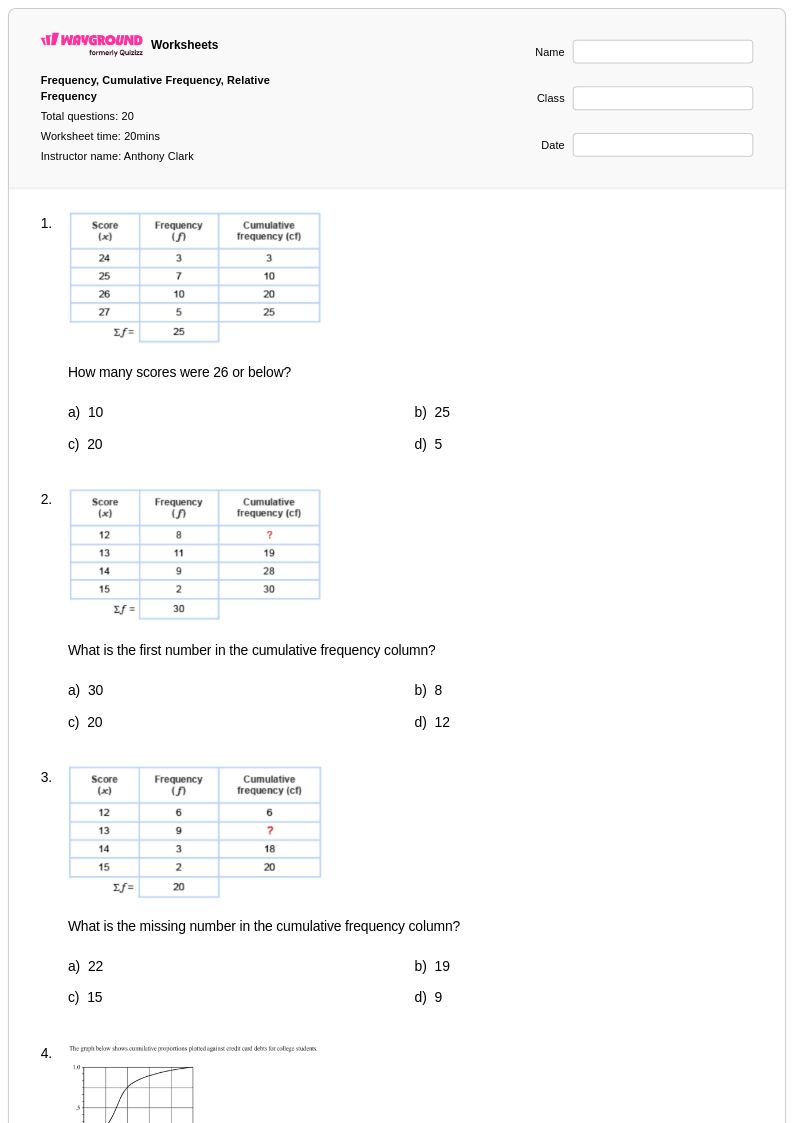
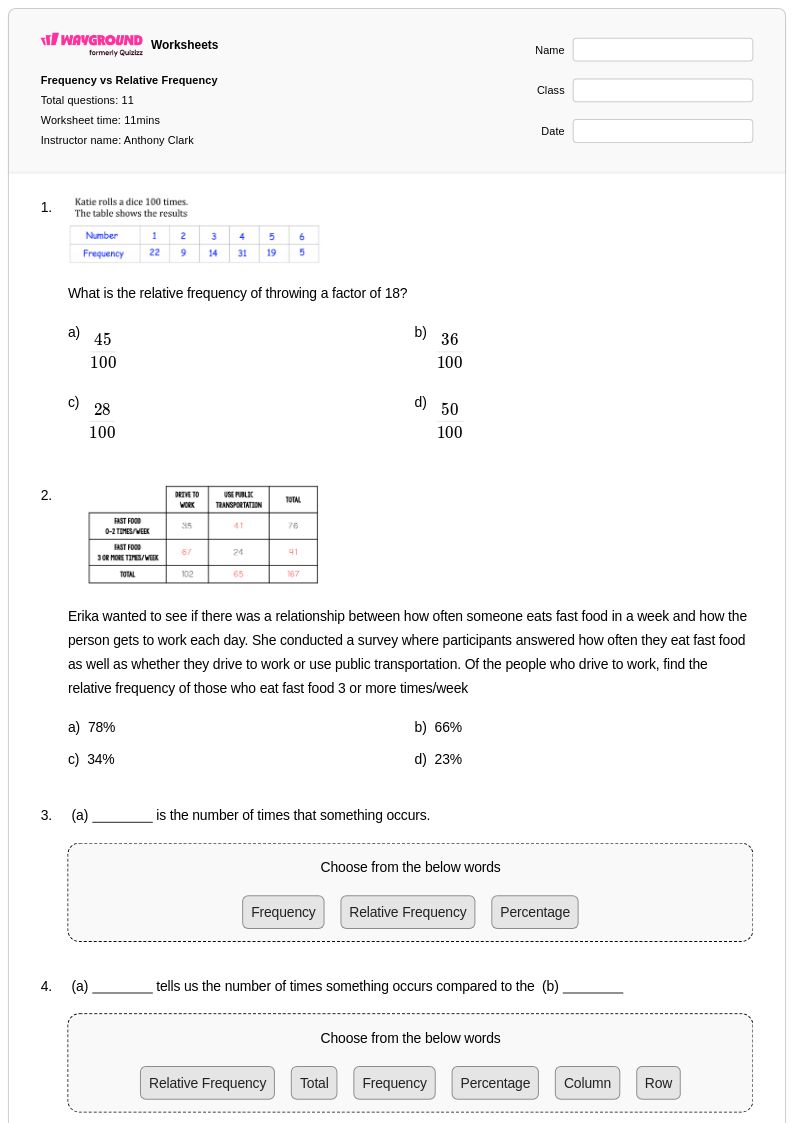
Effective practice moves from simple to complex scenarios. Start with basic frequency tables where students calculate the relative frequency for each category. Progress to problems involving real-world data from surveys or experiments. For a challenge, use two-way tables where students must analyze the relationship between two variables, calculating joint, marginal, and conditional relative frequencies.
What are the most common student mistakes with relative frequency?
A primary error is confusing frequency (a simple count) with relative frequency (a proportion or percentage). Students may also use the wrong total in their calculations, especially with two-way tables when determining a conditional relative frequency. Emphasize that the denominator must always be the total number of observations for the group being considered.
How can I use this Wayground worksheet with my class?
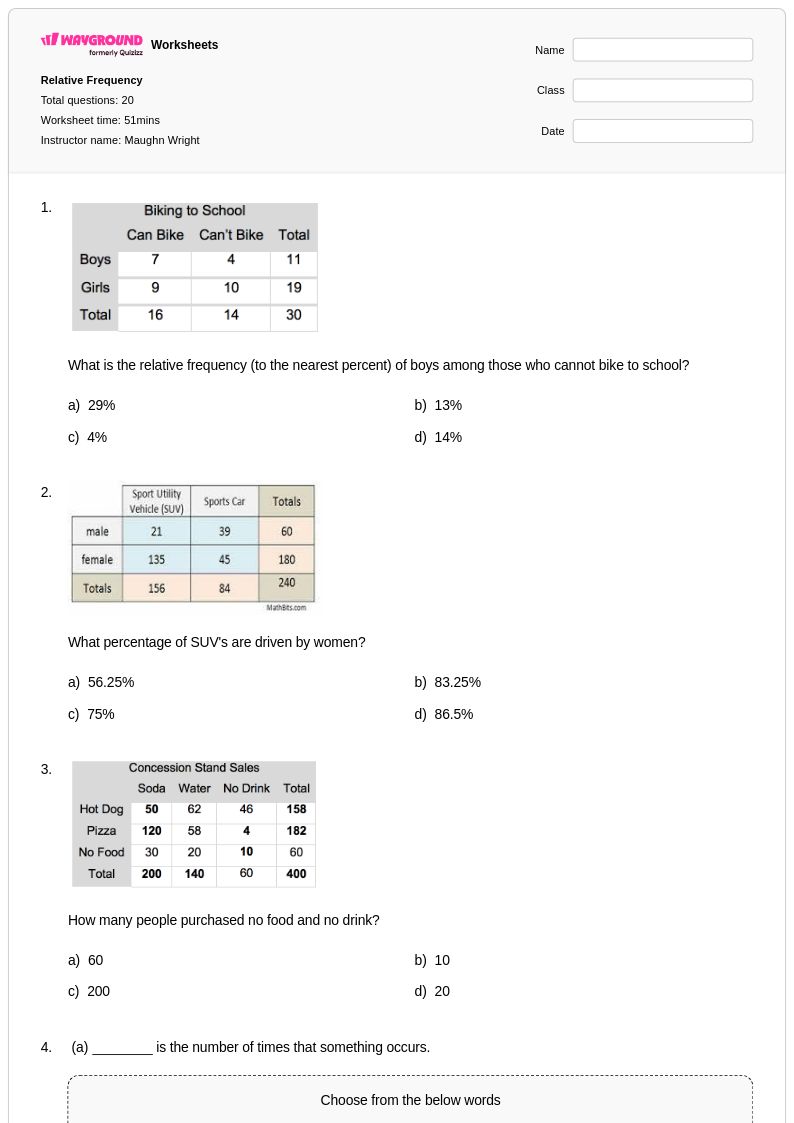
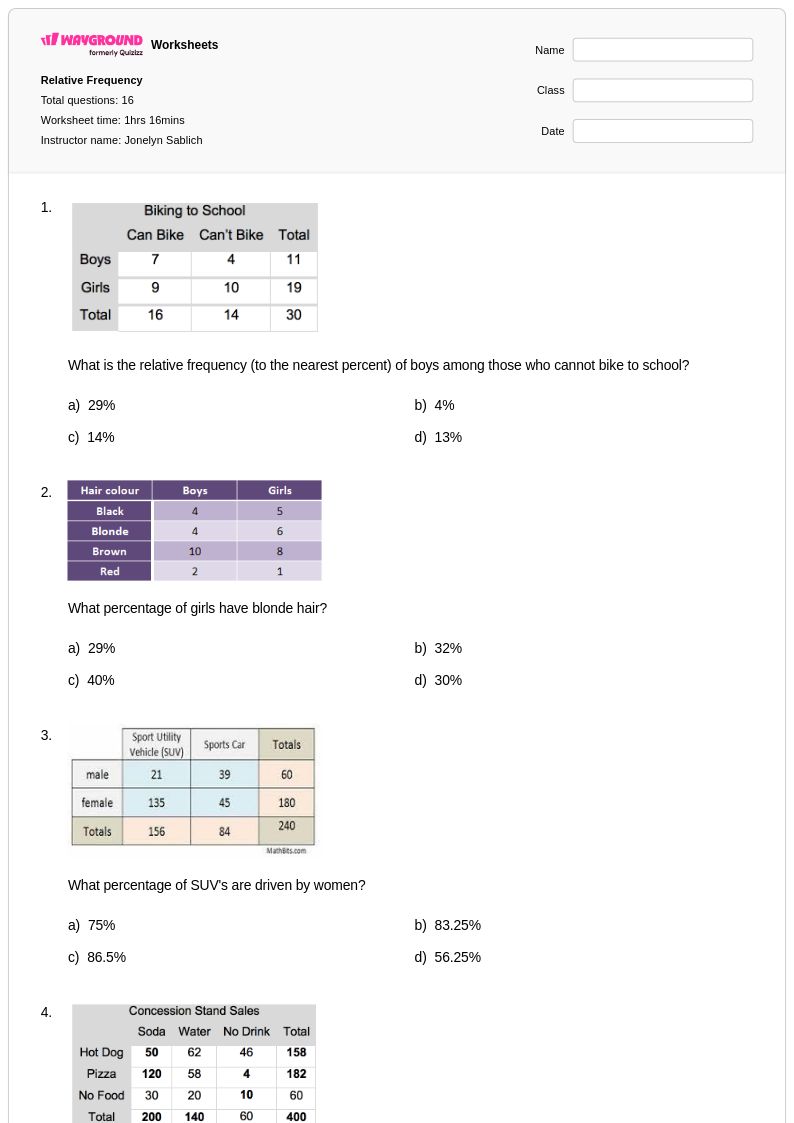
This worksheet is available as a printable PDF for hands-on, offline practice or as an interactive digital quiz you can host on the Wayground platform. The digital format allows for automatic grading, while for paper submissions, you can use the Wayground for Teachers app to quickly scan and grade student work. Every worksheet includes a complete answer key for efficient review.
How does relative frequency fit into the math curriculum?
Aligned with Common Core standards for statistics, relative frequency is a critical bridge between middle school ratio reasoning and high school probability. It formalizes the part-whole concept within a data context, laying the groundwork for students to understand experimental probability, make inferences from data, and eventually study patterns of association in bivariate data using two-way tables.
How can I differentiate instruction for relative frequency?
Use simpler, single-variable frequency tables for students who need support, and challenge advanced learners with two-way tables that require calculating conditional relative frequencies. For digital assignments on Wayground, you can enable accommodations like 'Read Aloud' for students who benefit from audio support on word problems or 'Reduced answer choices' to lower cognitive load.