
20 Q
7th - Uni
20 Q
7th
6 Q
7th
13 Q
7th
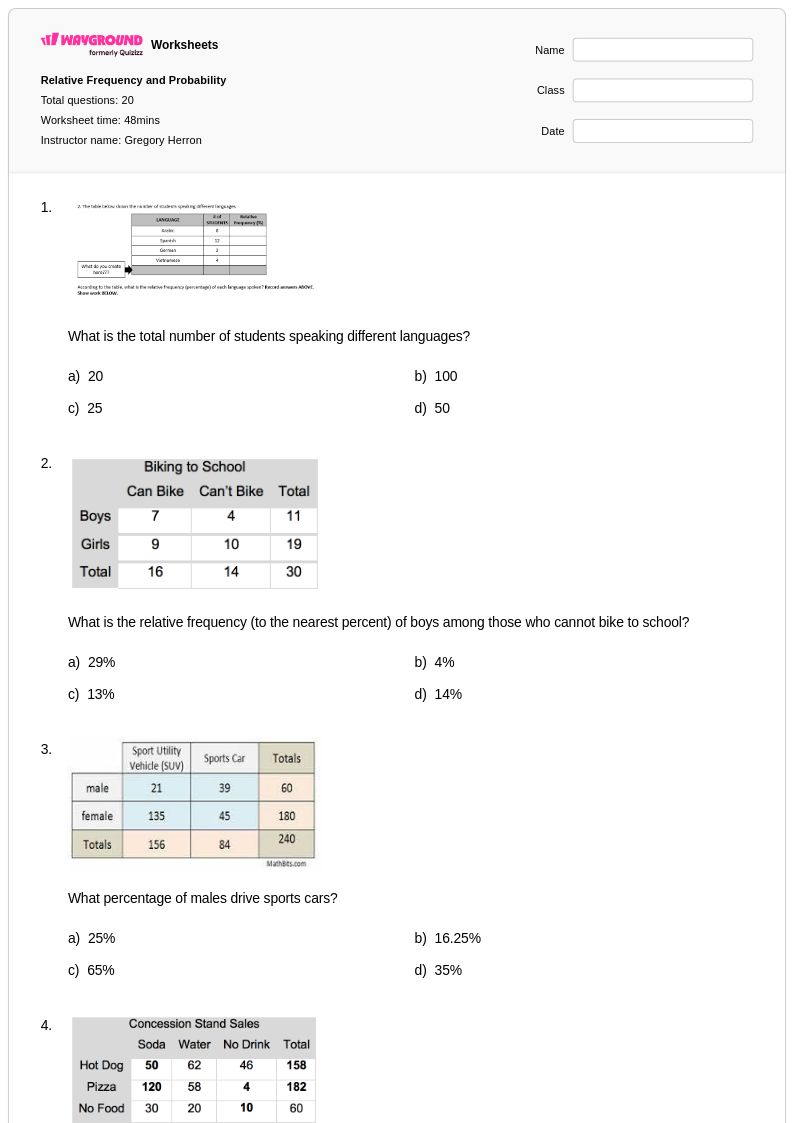
20 Q
7th - 8th
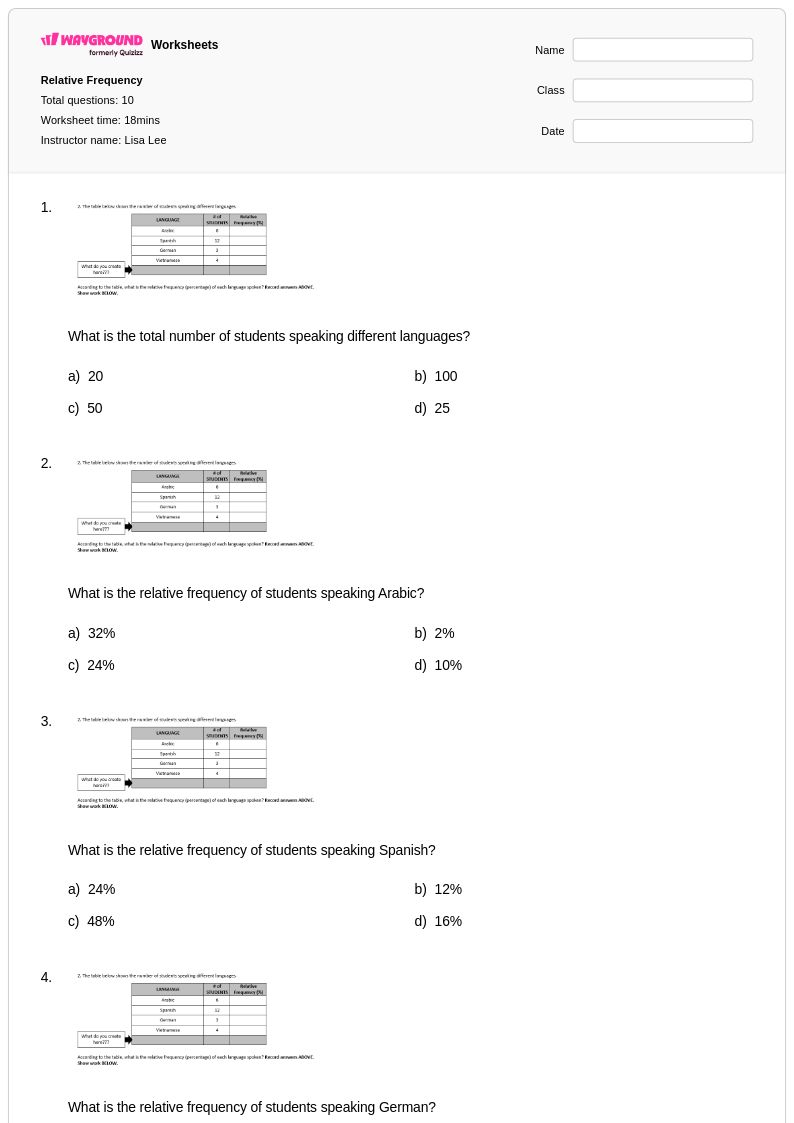
10 Q
7th - 9th
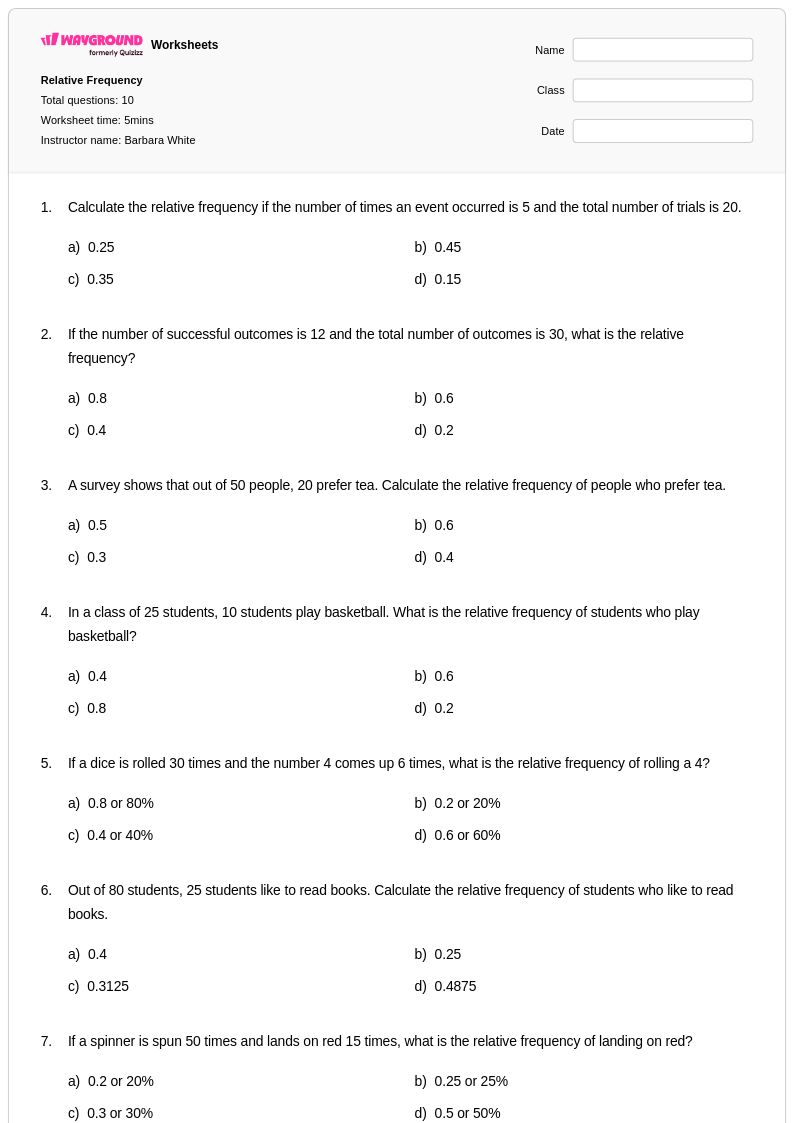
10 Q
7th
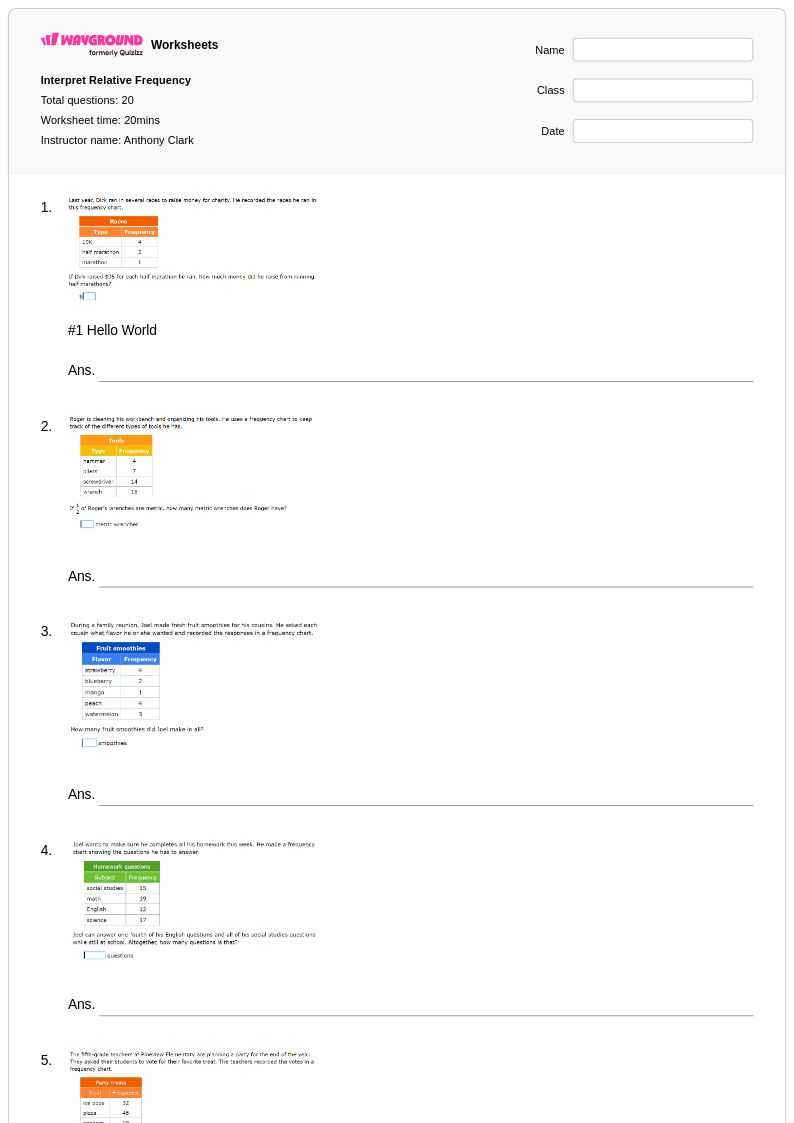
20 Q
5th - Uni
16 Q
7th
10 Q
7th
20 Q
KG - Uni
9 Q
7th - 12th
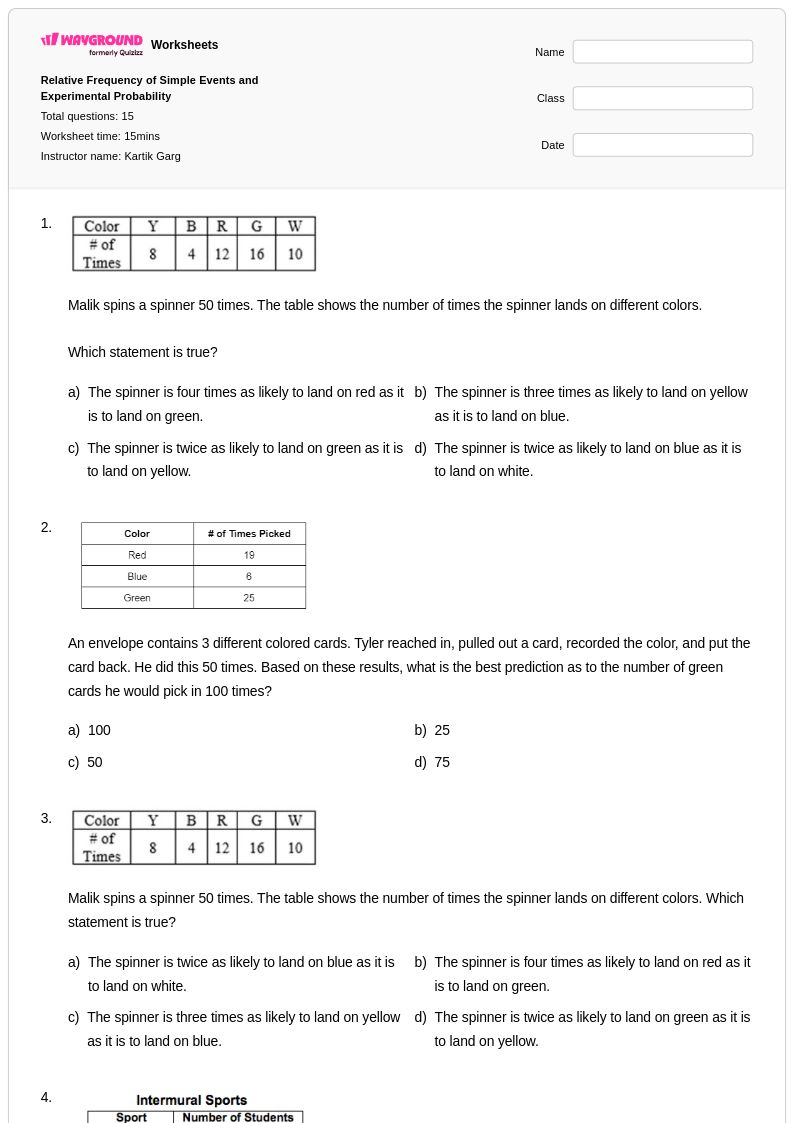
15 Q
7th
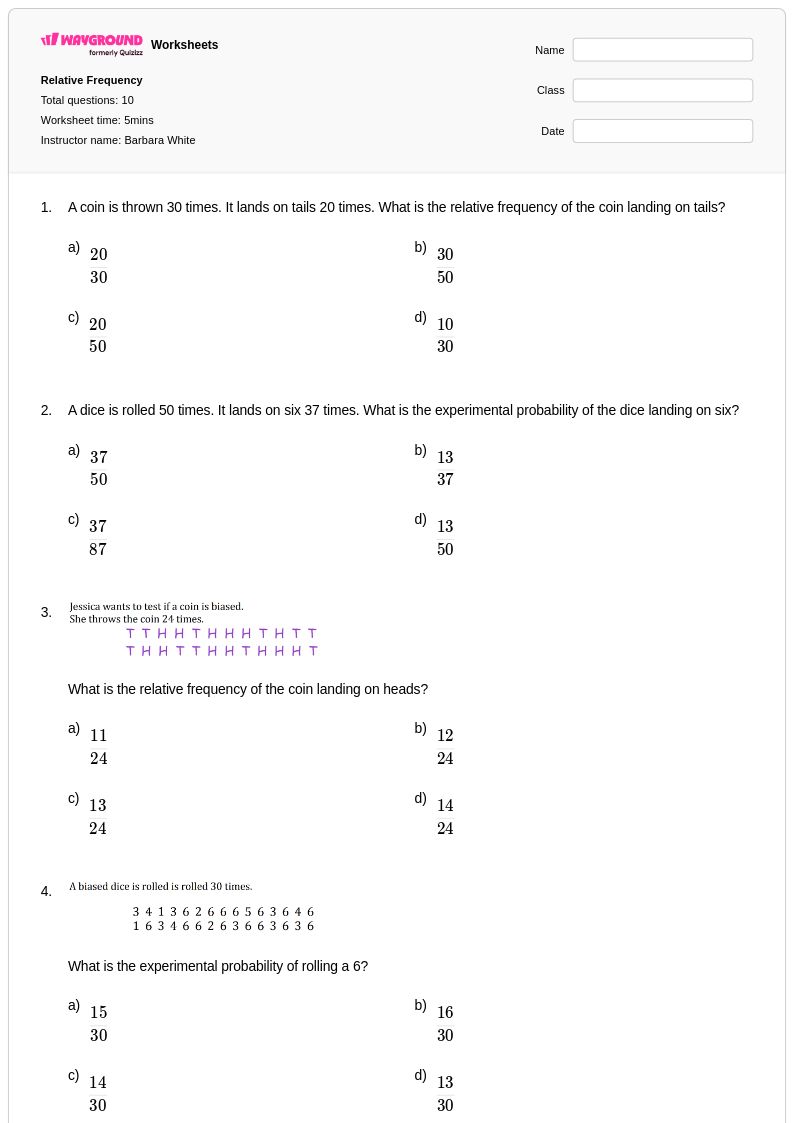
10 Q
7th - 10th
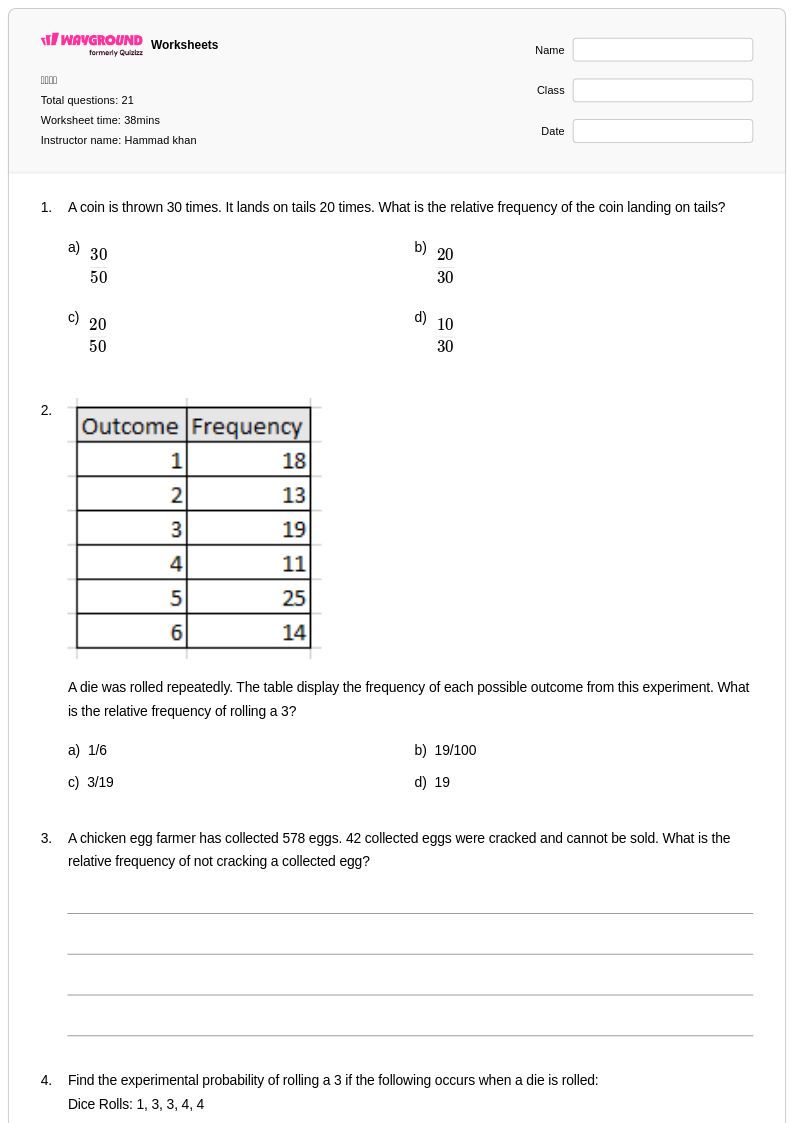
21 Q
7th
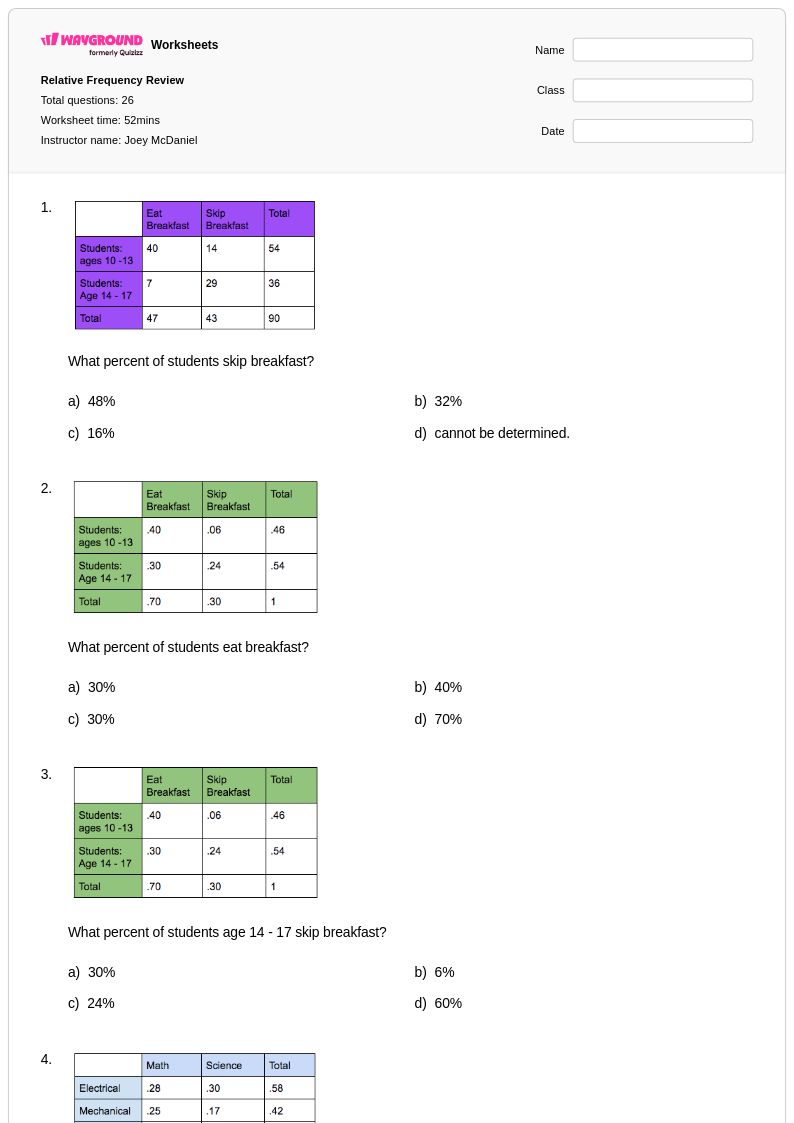
26 Q
6th - 9th
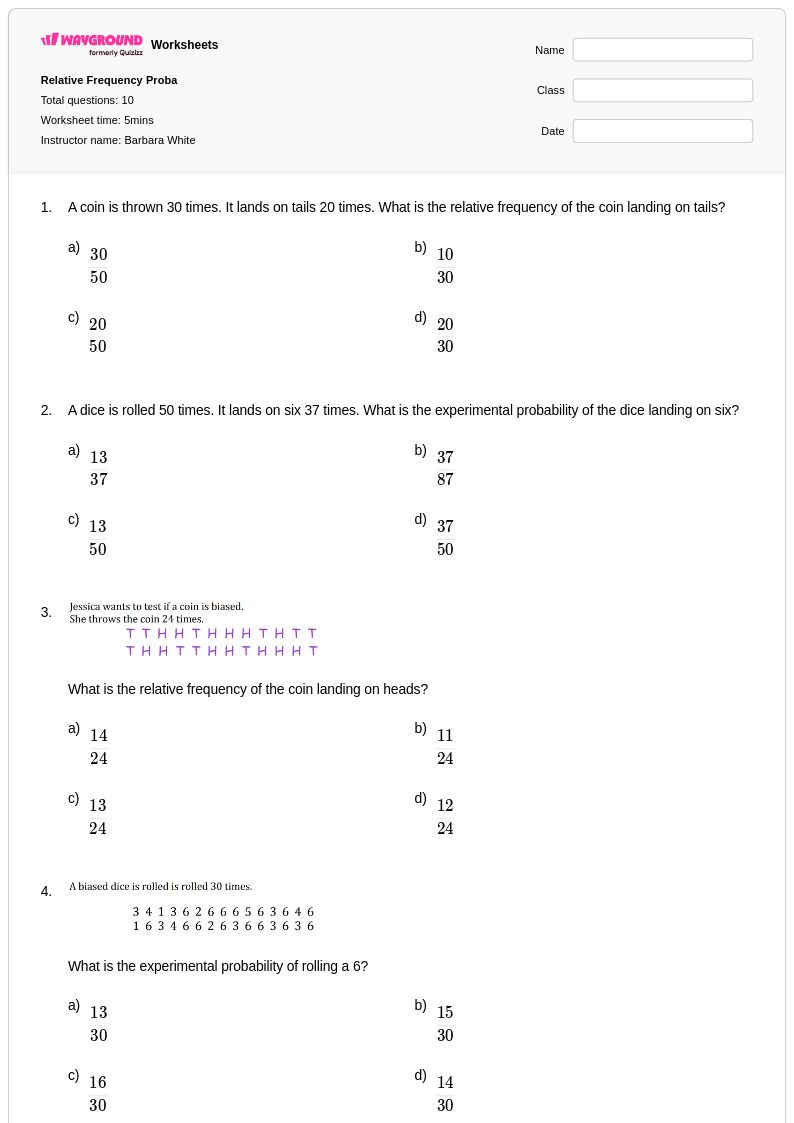
10 Q
7th - 10th
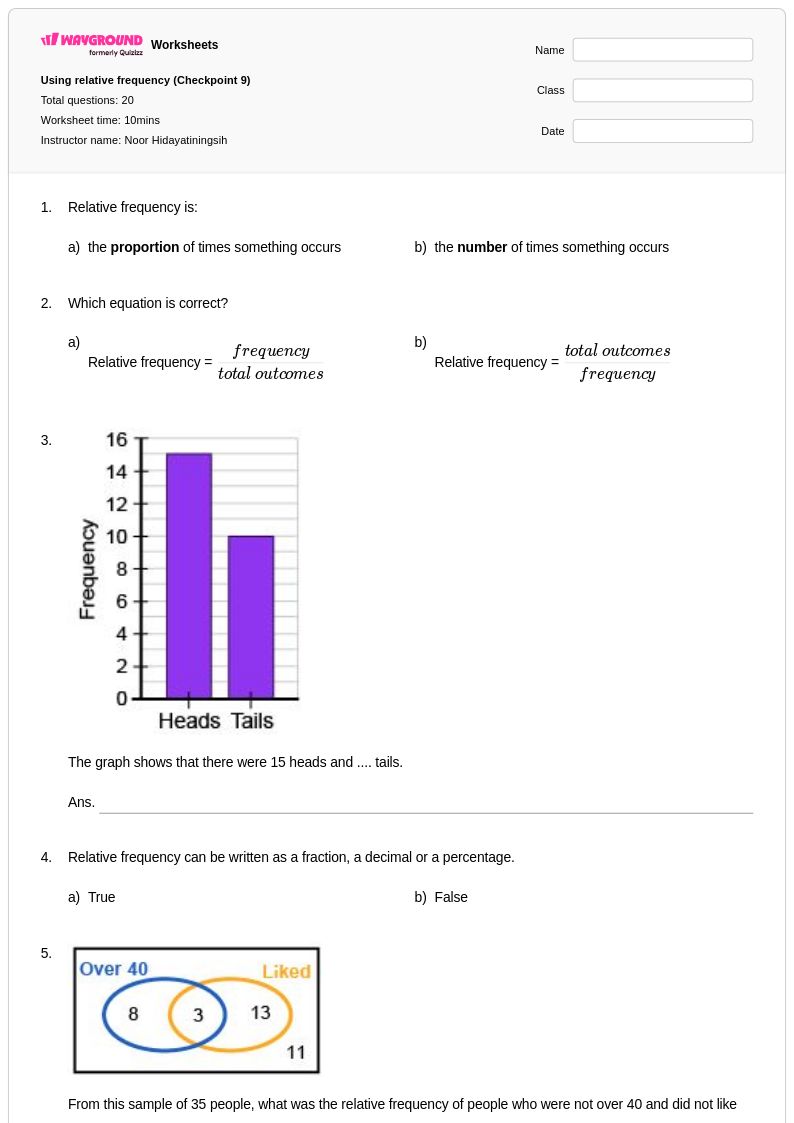
20 Q
7th - 9th
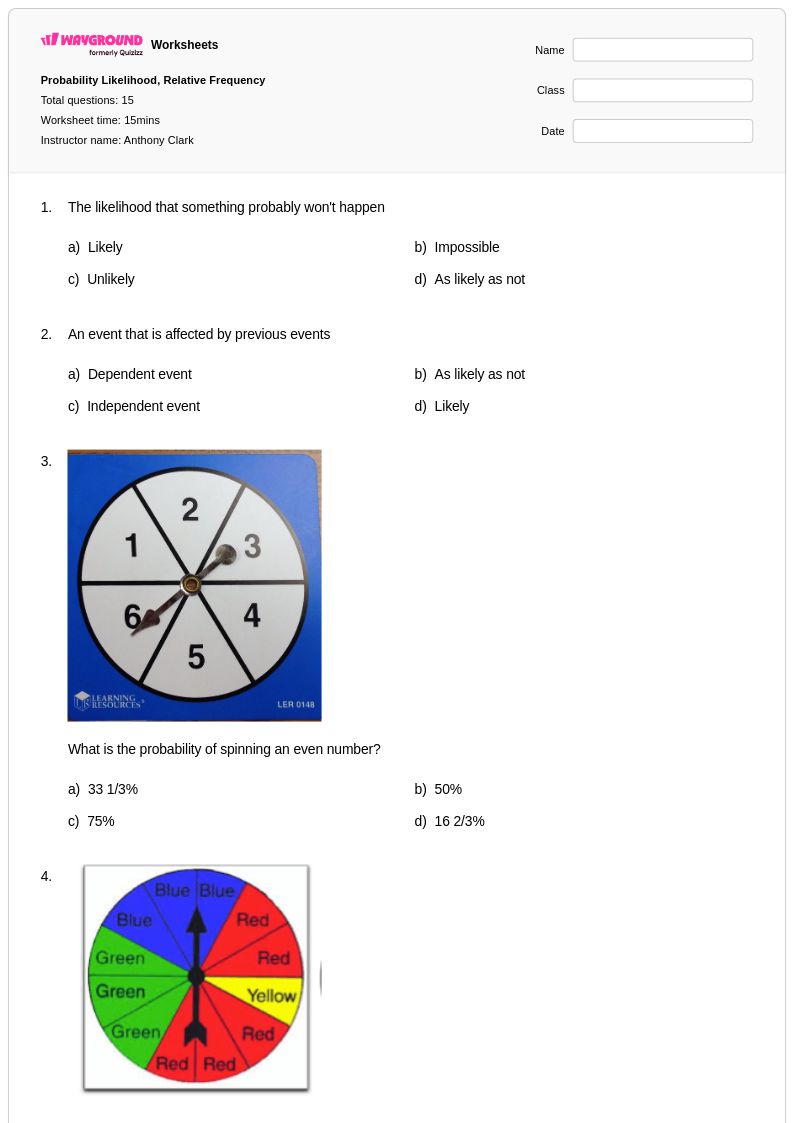
15 Q
7th - Uni
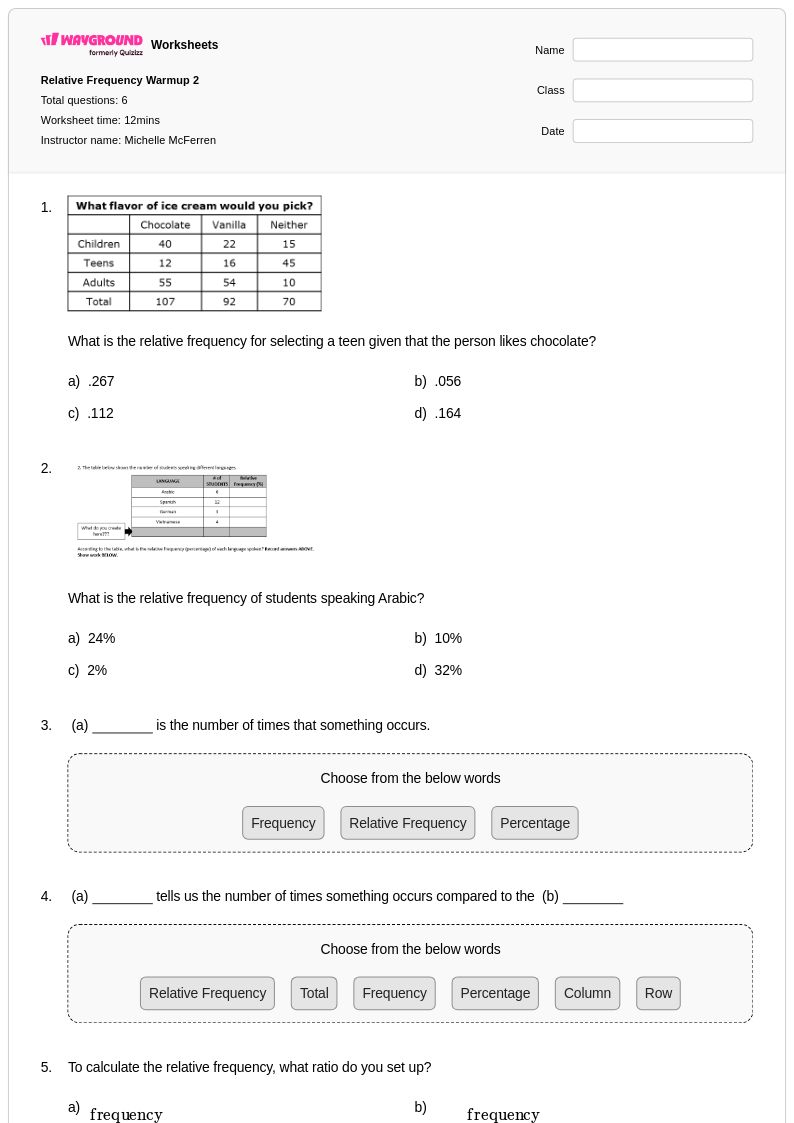
6 Q
7th
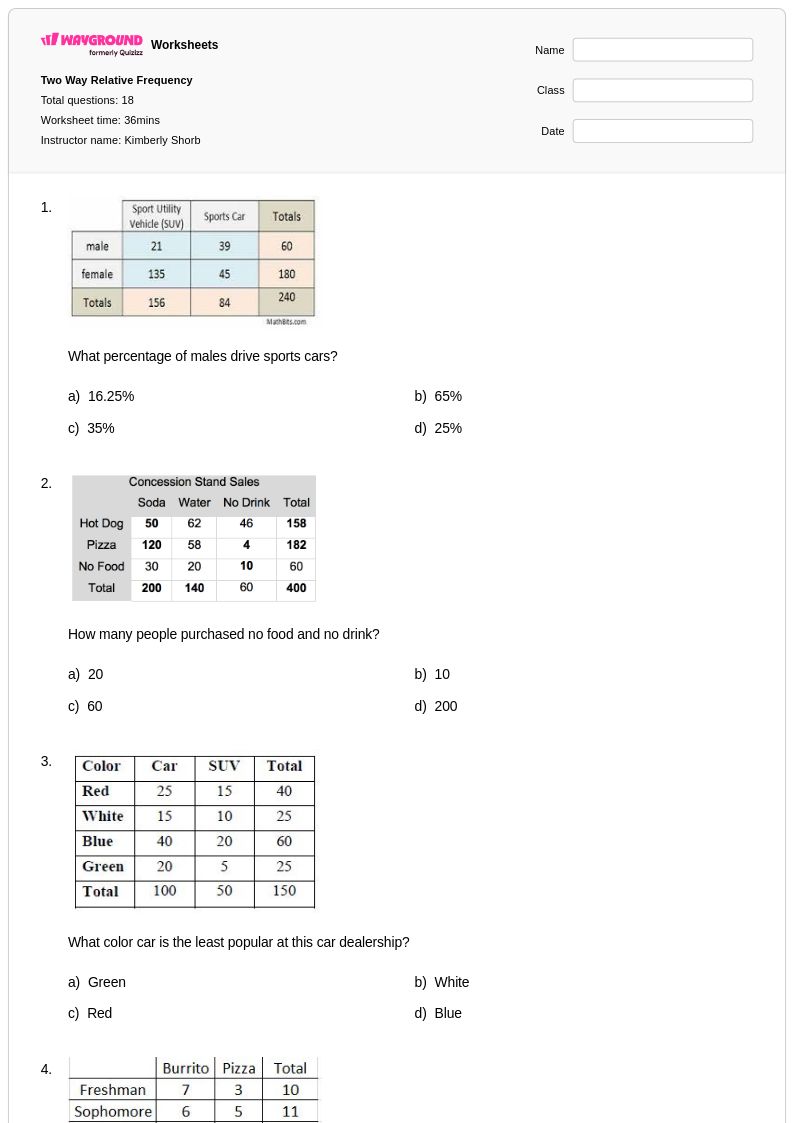
18 Q
7th - 10th
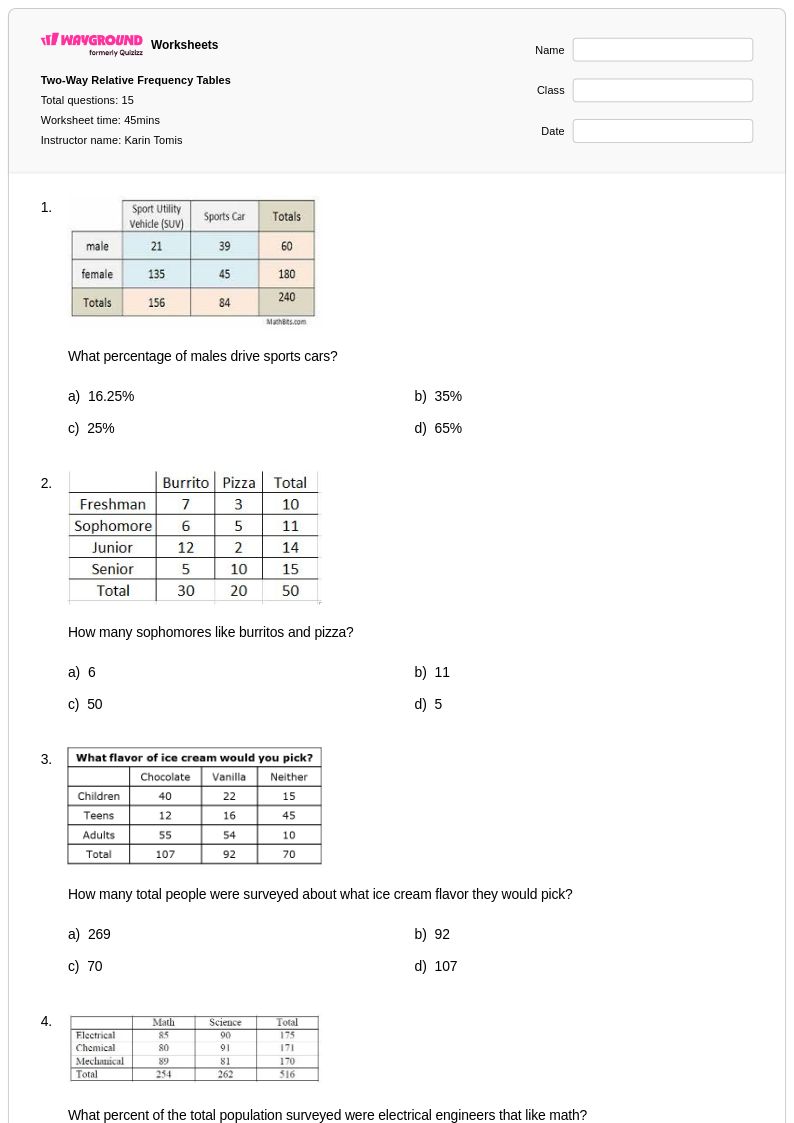
15 Q
7th - 8th
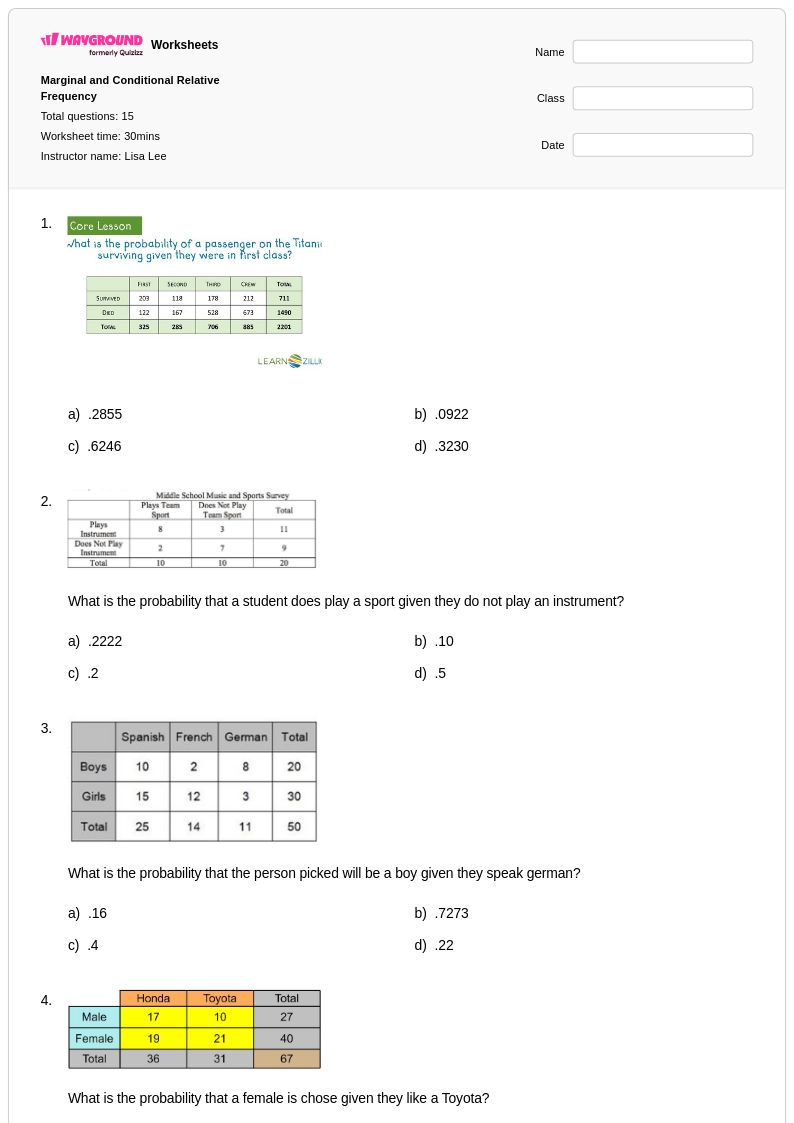
15 Q
7th - 10th
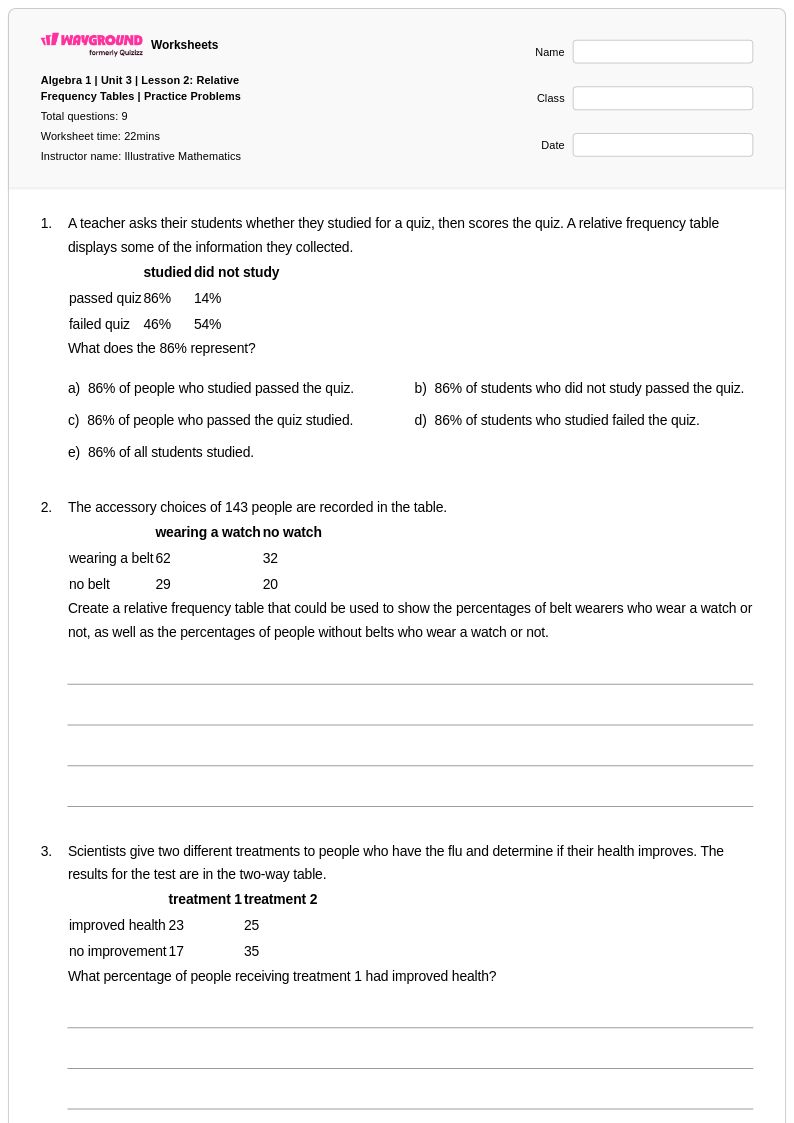
9 Q
6th - Uni
Explore Relative Frequency Worksheets by Grades
Explore Other Subject Worksheets for class 7
Explore printable Relative Frequency worksheets for Class 7
Relative frequency worksheets for Class 7 students available through Wayground (formerly Quizizz) provide essential practice in understanding how often events occur within data sets and experiments. These comprehensive worksheets strengthen students' ability to calculate relative frequency by dividing the frequency of specific outcomes by the total number of trials, express results as fractions, decimals, and percentages, and interpret what these values reveal about probability patterns. Students work through practice problems involving spinning wheels, rolling dice, drawing cards, and analyzing survey data, developing crucial skills in data analysis and statistical reasoning. Each worksheet collection includes detailed answer keys and is available as free printables in convenient PDF format, allowing students to build confidence in converting experimental data into meaningful mathematical insights.
Wayground (formerly Quizizz) supports mathematics educators with millions of teacher-created relative frequency resources that align with Class 7 probability and statistics standards. The platform's robust search and filtering capabilities enable teachers to quickly locate worksheets that match specific learning objectives, whether focusing on basic relative frequency calculations or more complex applications involving two-way tables and comparative analysis. Advanced differentiation tools allow educators to customize practice problems for varying skill levels, while flexible formatting options provide both printable PDF versions for traditional classroom use and digital formats for interactive learning environments. These comprehensive features streamline lesson planning and enable targeted remediation for students struggling with frequency concepts, enrichment opportunities for advanced learners, and consistent skill practice that builds mathematical proficiency in statistical analysis.
FAQs
Is relative frequency a 7th-grade math topic?
How does relative frequency connect to probability in 7th grade?
What are good practice problems for 7th graders?
What misconceptions do 7th graders have about this topic?
How can I use this Wayground worksheet for my 7th-grade class?
How does this topic fit into the 7th-grade curriculum progression?