
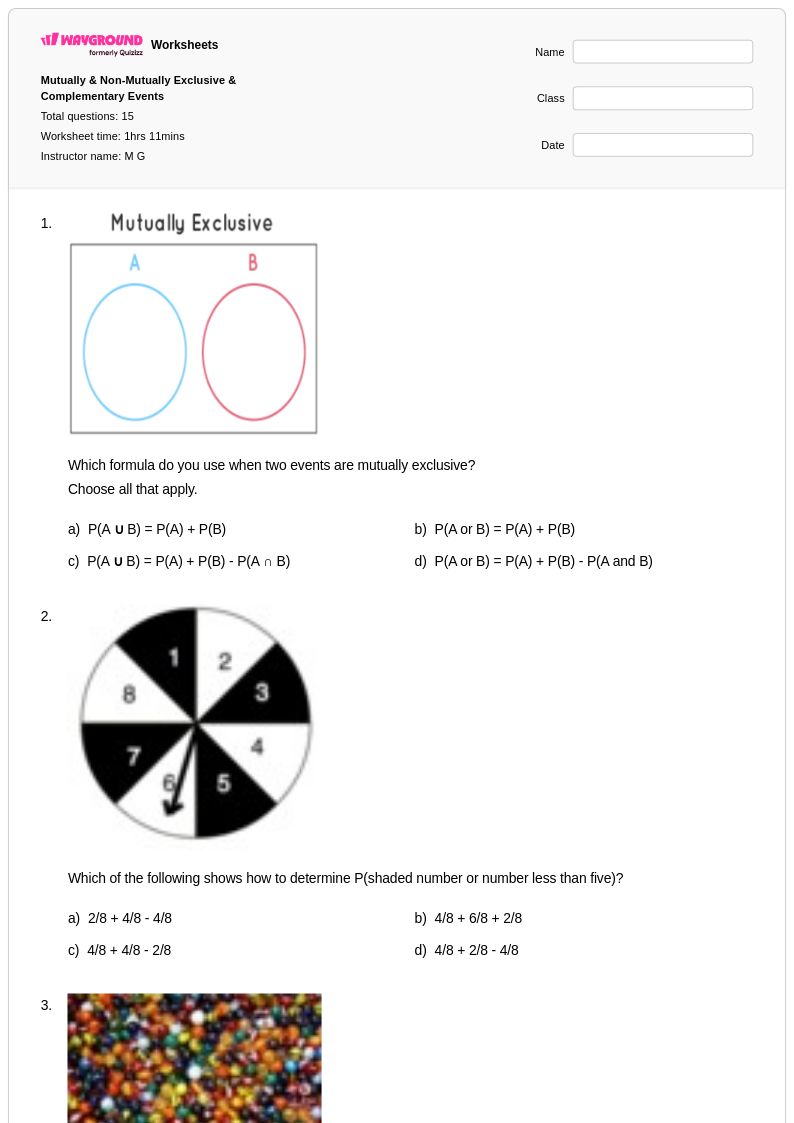
15 Q
6th - 8th
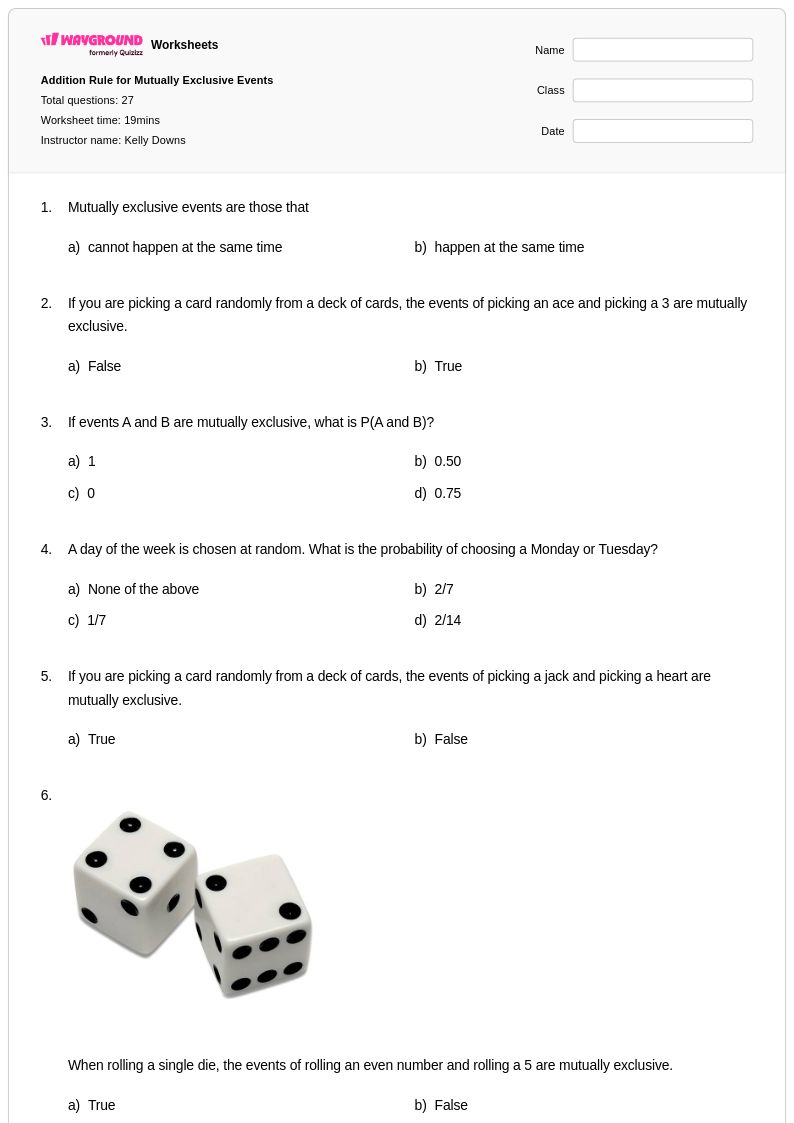
29 Q
7th - 12th
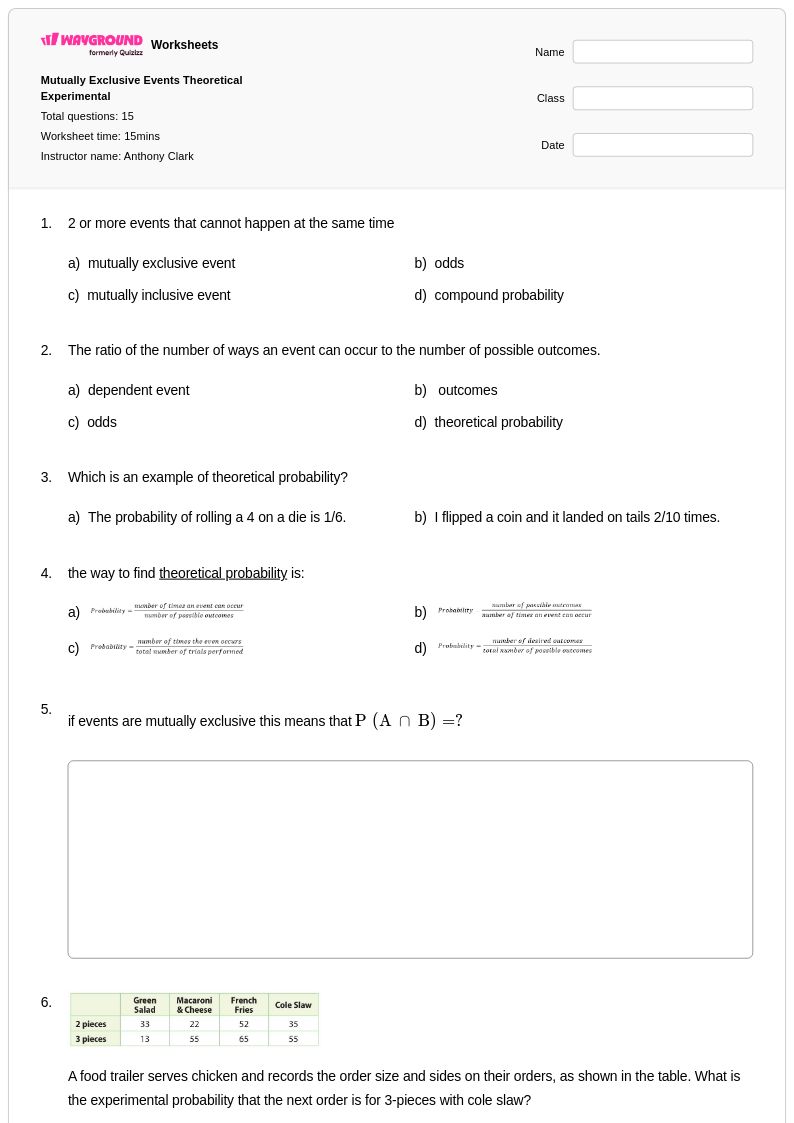
15 Q
7th - Uni
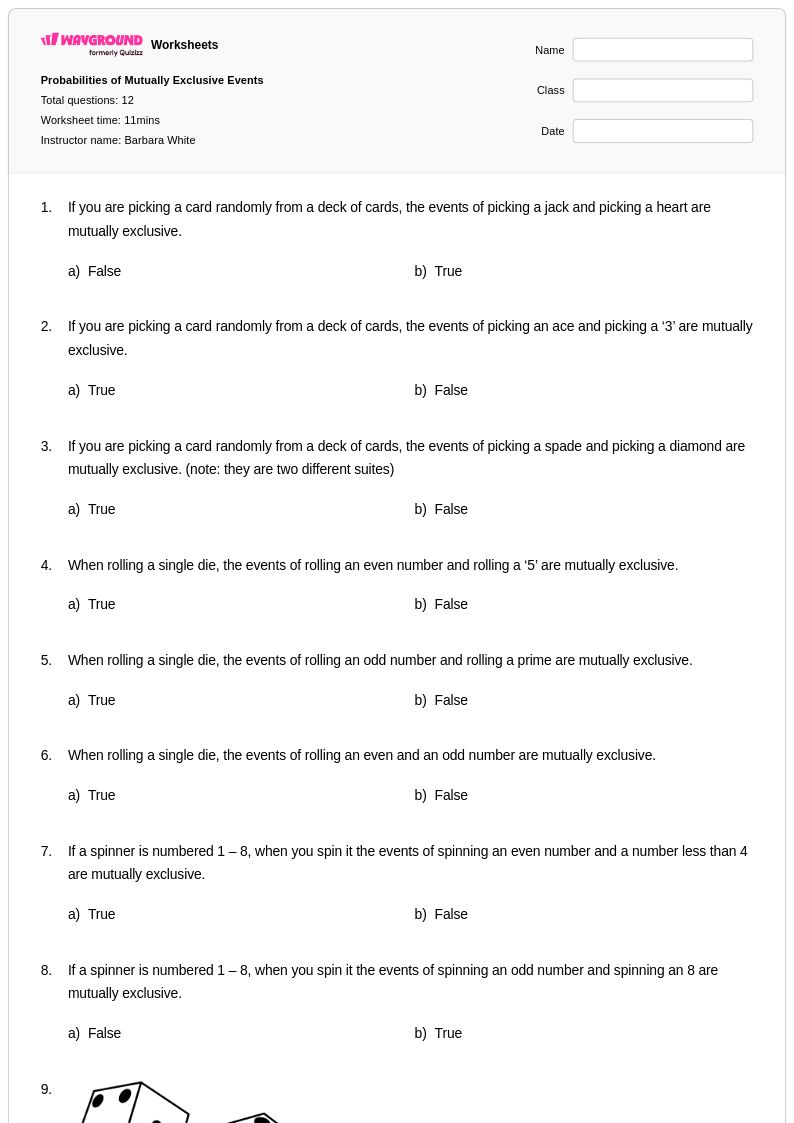
12 Q
7th
12 Q
7th
12 Q
7th
20 Q
6th - 12th
12 Q
7th
12 Q
7th
26 Q
6th - 8th
20 Q
6th - 10th
20 Q
6th - 9th
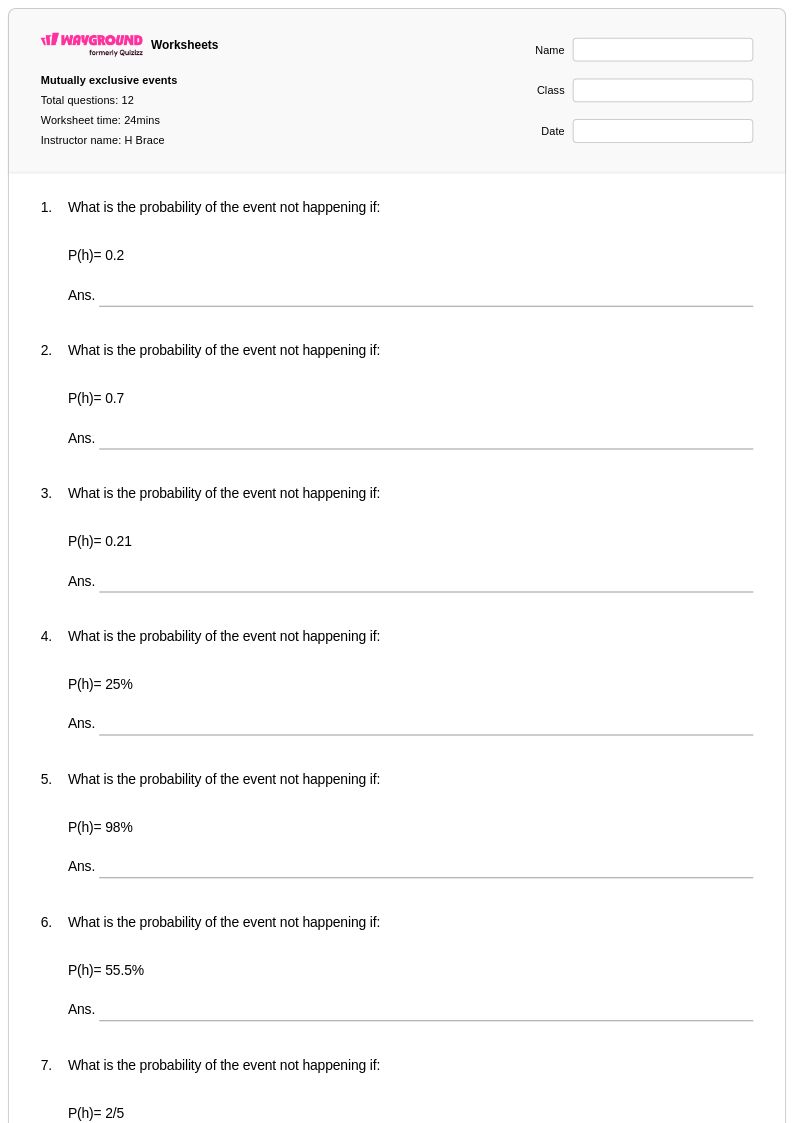
12 Q
7th - 8th
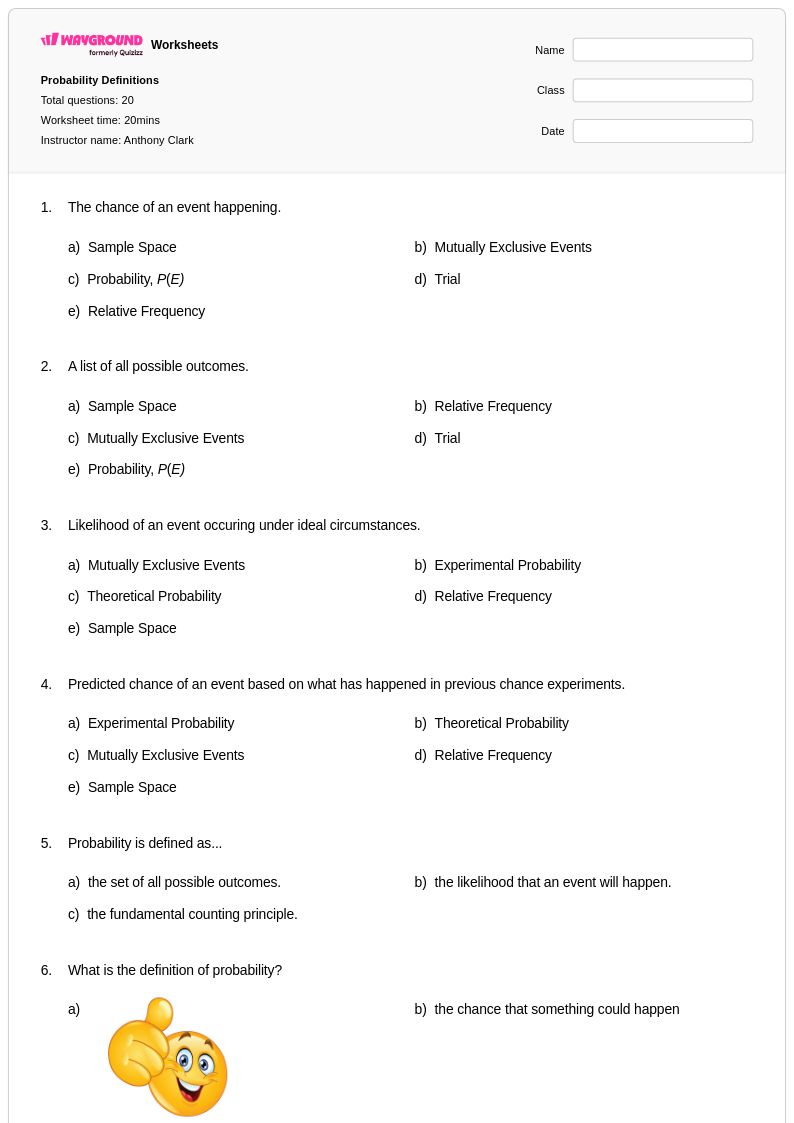
20 Q
7th - Uni
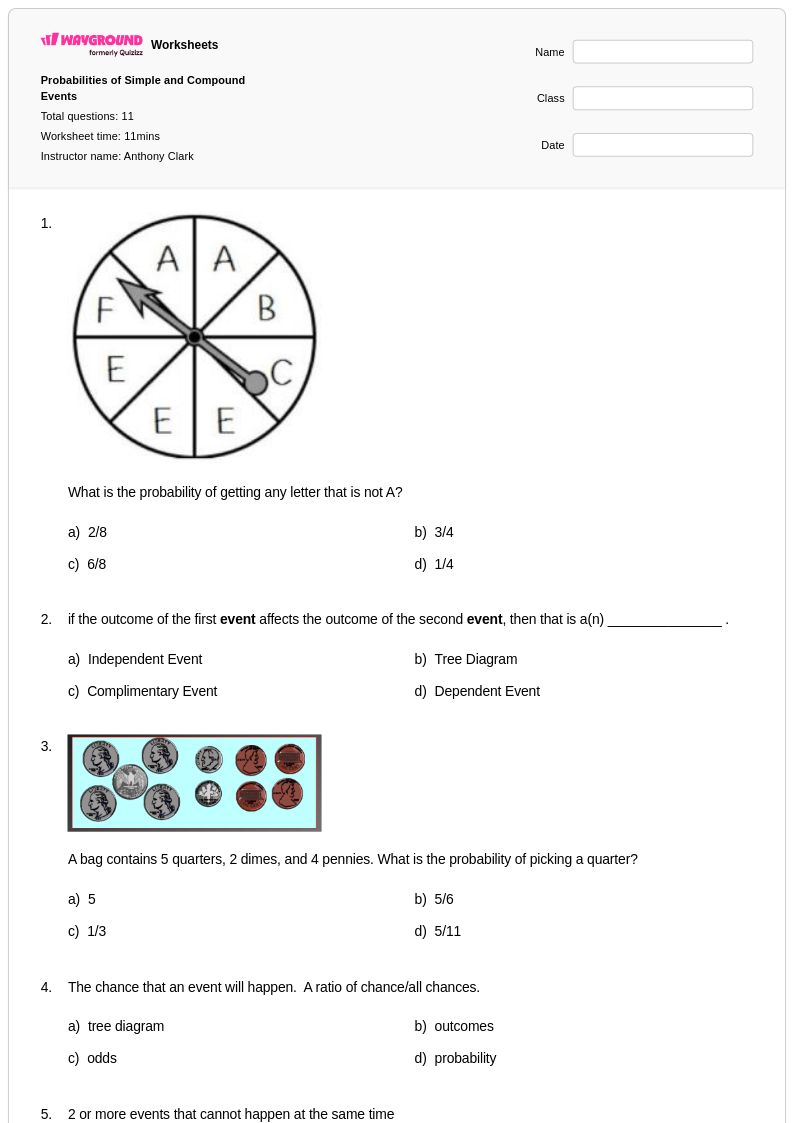
11 Q
7th - Uni
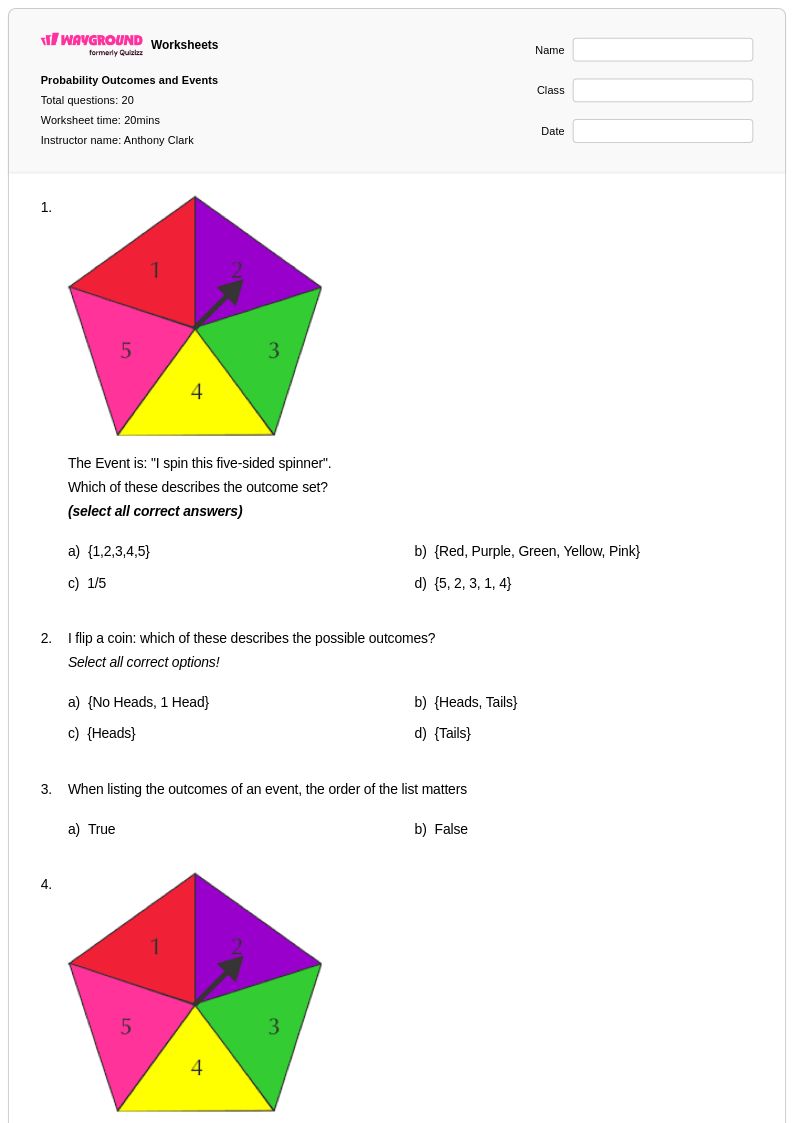
20 Q
7th - Uni
20 Q
7th - Uni
20 Q
7th - Uni
20 Q
7th - Uni
20 Q
7th - Uni
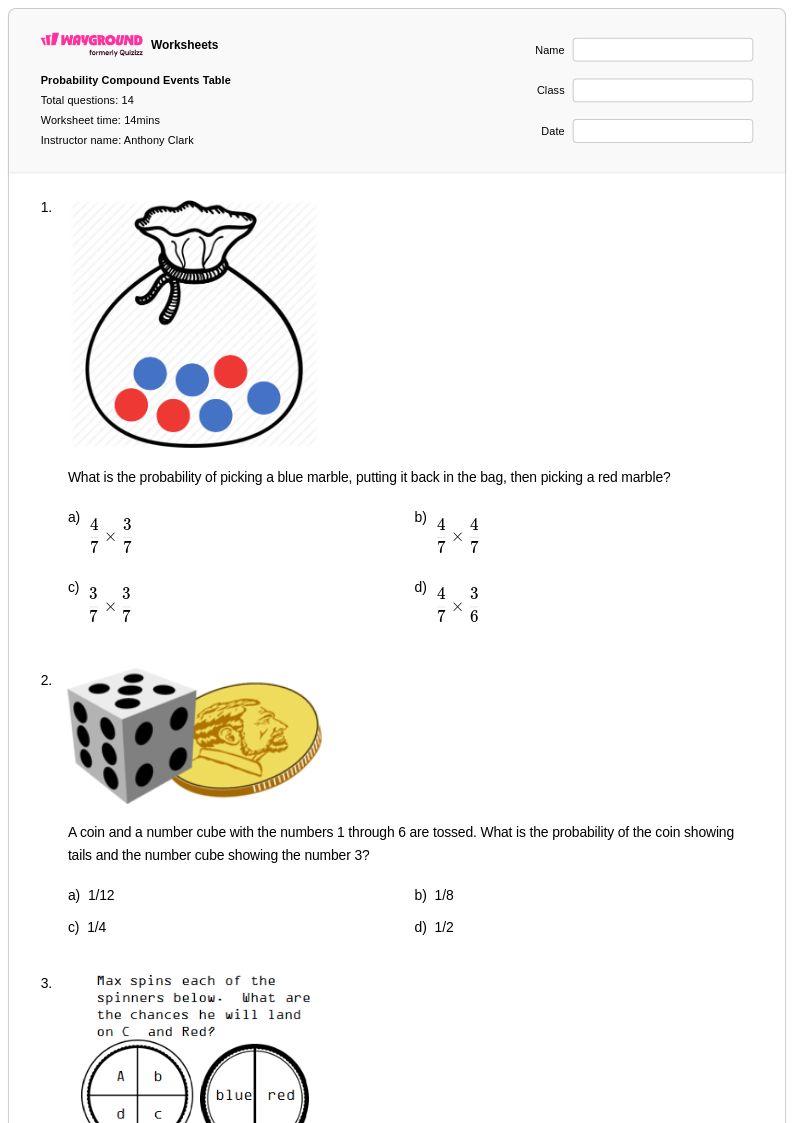
14 Q
7th - Uni
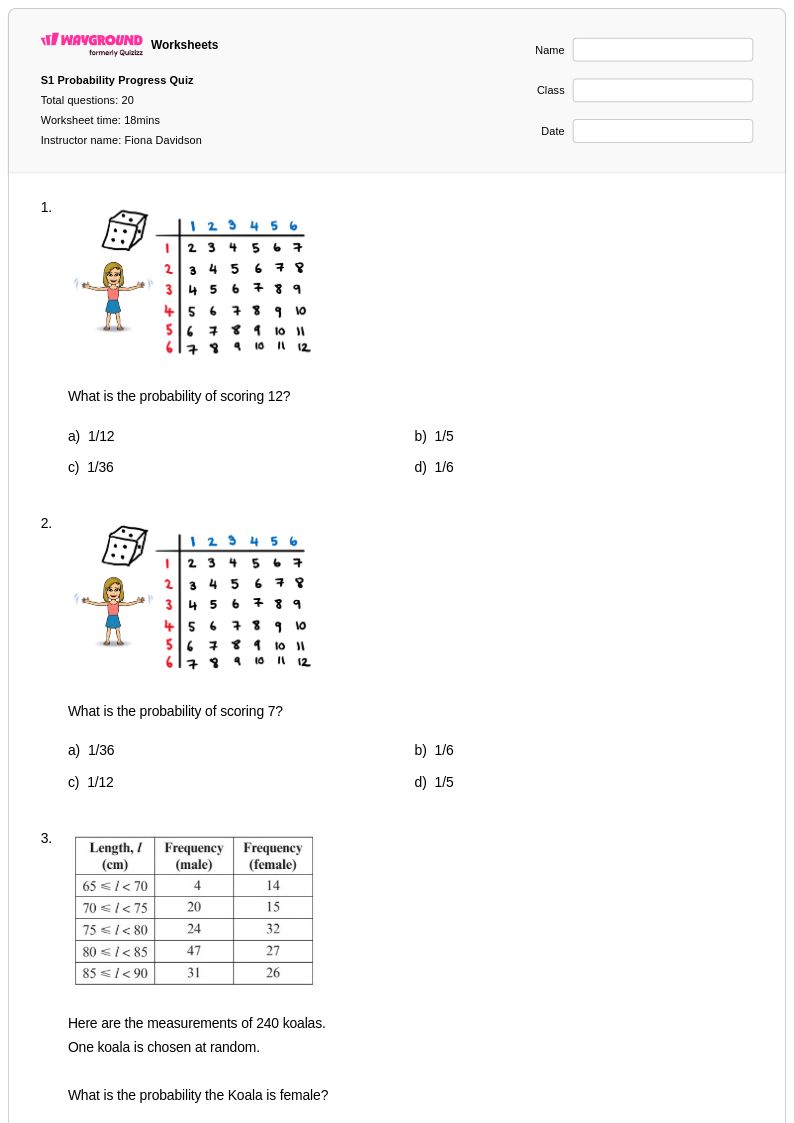
20 Q
7th
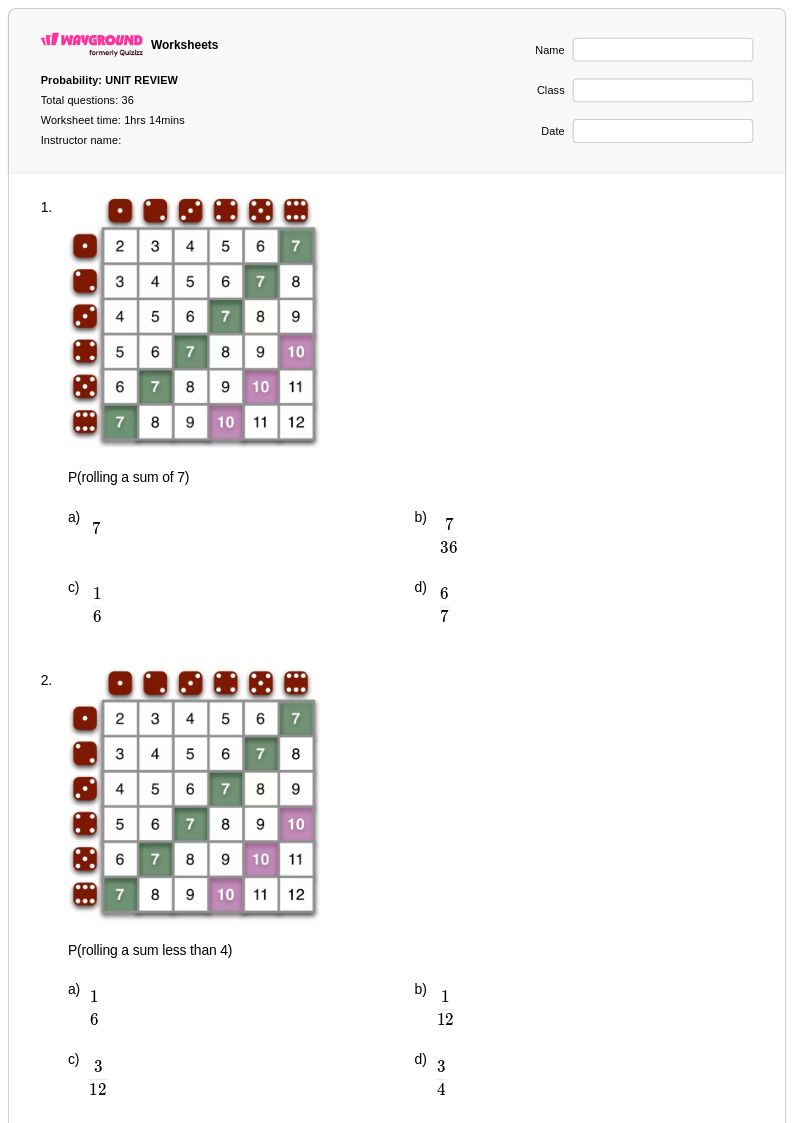
36 Q
7th
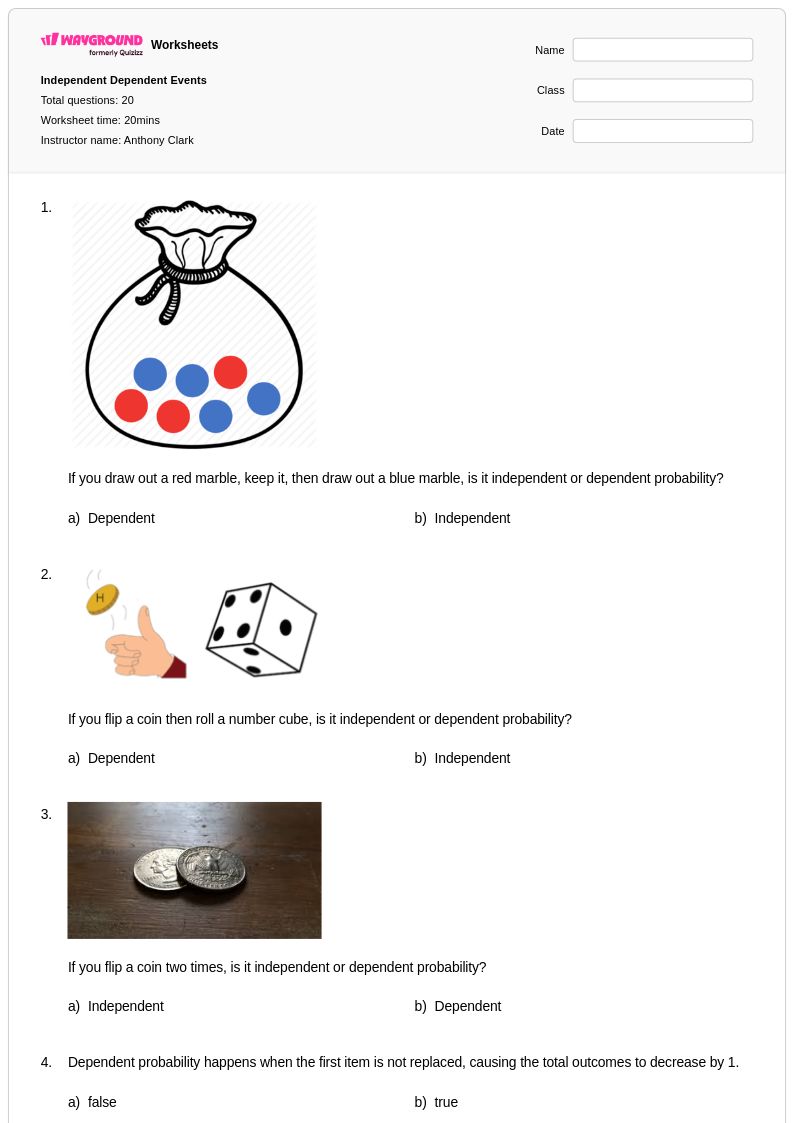
20 Q
7th - Uni
Explore Mutually Exclusive Events Worksheets by Grades
Explore Other Subject Worksheets for class 7
Explore printable Mutually Exclusive Events worksheets for Class 7
Mutually exclusive events worksheets for Class 7 students available through Wayground provide essential practice in understanding probability concepts where two or more events cannot occur simultaneously. These comprehensive worksheets strengthen students' ability to identify mutually exclusive scenarios, calculate probabilities using the addition rule, and distinguish between events that can and cannot happen at the same time. Each worksheet includes carefully crafted practice problems that progress from basic identification exercises to more complex probability calculations, complete with detailed answer keys that support independent learning and self-assessment. The free printable resources cover real-world applications such as rolling dice, drawing cards, and spinning spinners, helping students connect abstract mathematical concepts to concrete situations they can visualize and understand.
Wayground's extensive collection of mutually exclusive events worksheets draws from millions of teacher-created resources, offering educators powerful search and filtering capabilities to locate materials that align with specific learning objectives and curriculum standards. Teachers can easily differentiate instruction by selecting from various difficulty levels and problem types, while the platform's flexible customization tools allow for modifications to meet individual student needs. Available in both printable pdf format and interactive digital versions, these worksheets support diverse classroom environments and learning preferences. The comprehensive nature of the collection enables teachers to efficiently plan lessons, provide targeted remediation for struggling learners, offer enrichment opportunities for advanced students, and deliver consistent skill practice that builds mathematical confidence and proficiency in probability concepts.
FAQs
What is the focus for mutually exclusive events in 7th grade?
How do I teach the difference between mutually exclusive and non-mutually exclusive events?
What exercises help 7th graders practice this concept?
What common calculation error should I watch for in 7th grade?
How can I use this 7th grade worksheet in my classroom?
How do mutually exclusive events fit into 7th grade Common Core standards?