
11 Q
6th
20 Q
6th - Uni
19 Q
6th - Uni
20 Q
6th
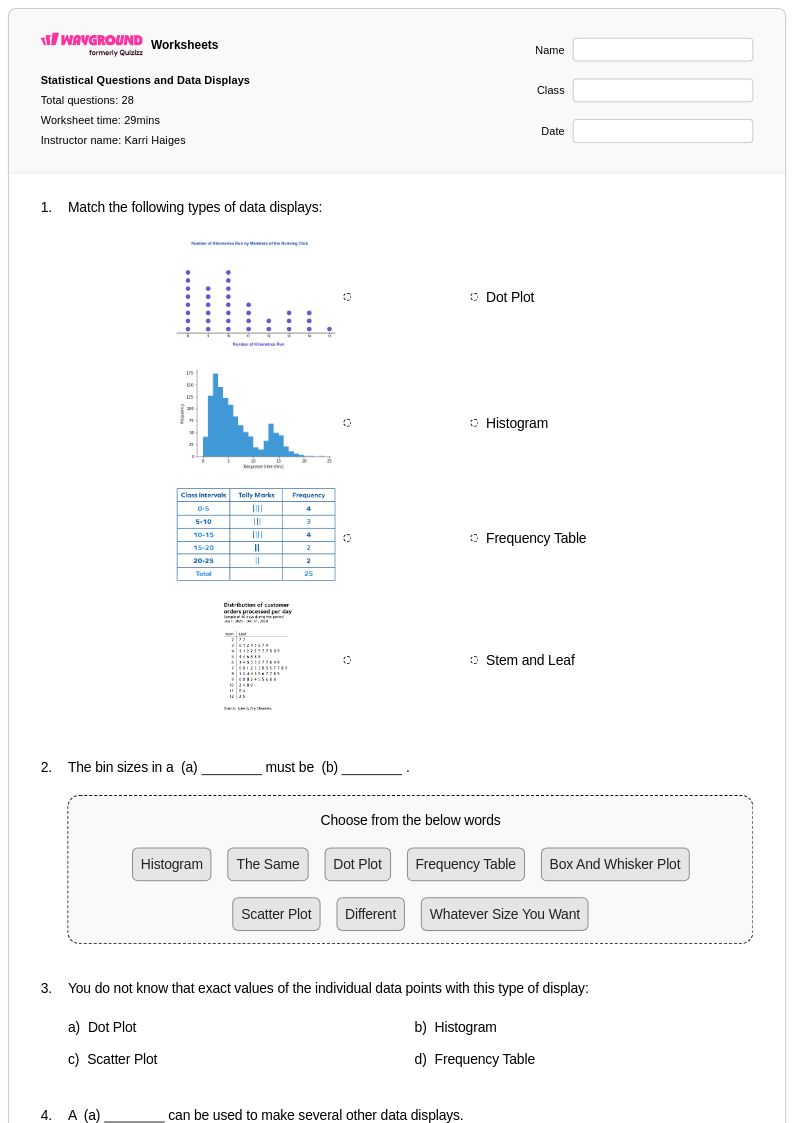
28 Q
6th - 8th
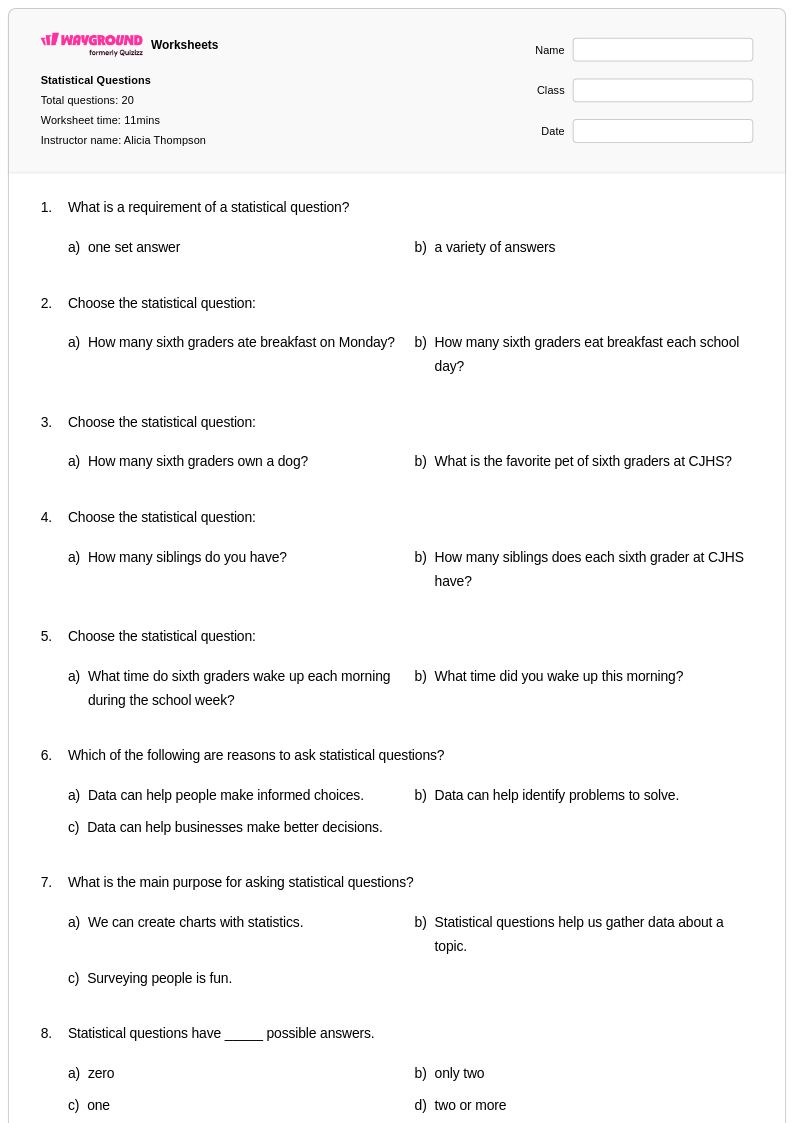
20 Q
6th
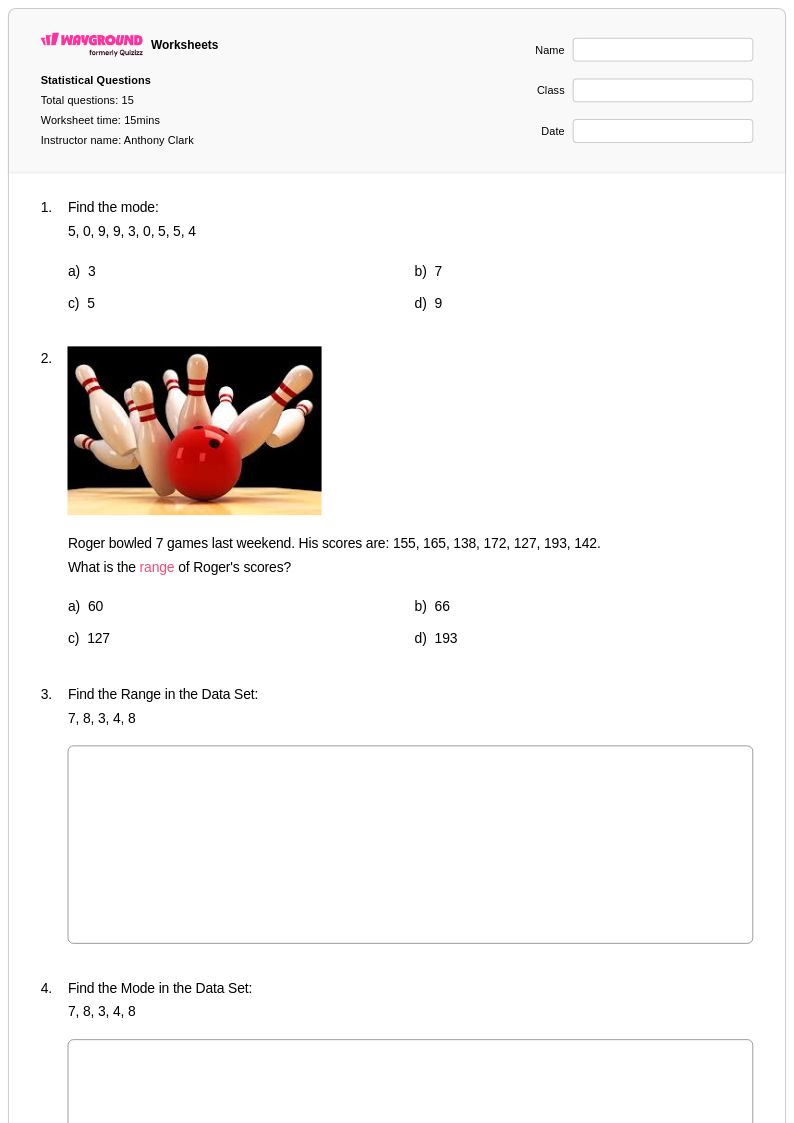
15 Q
6th - Uni
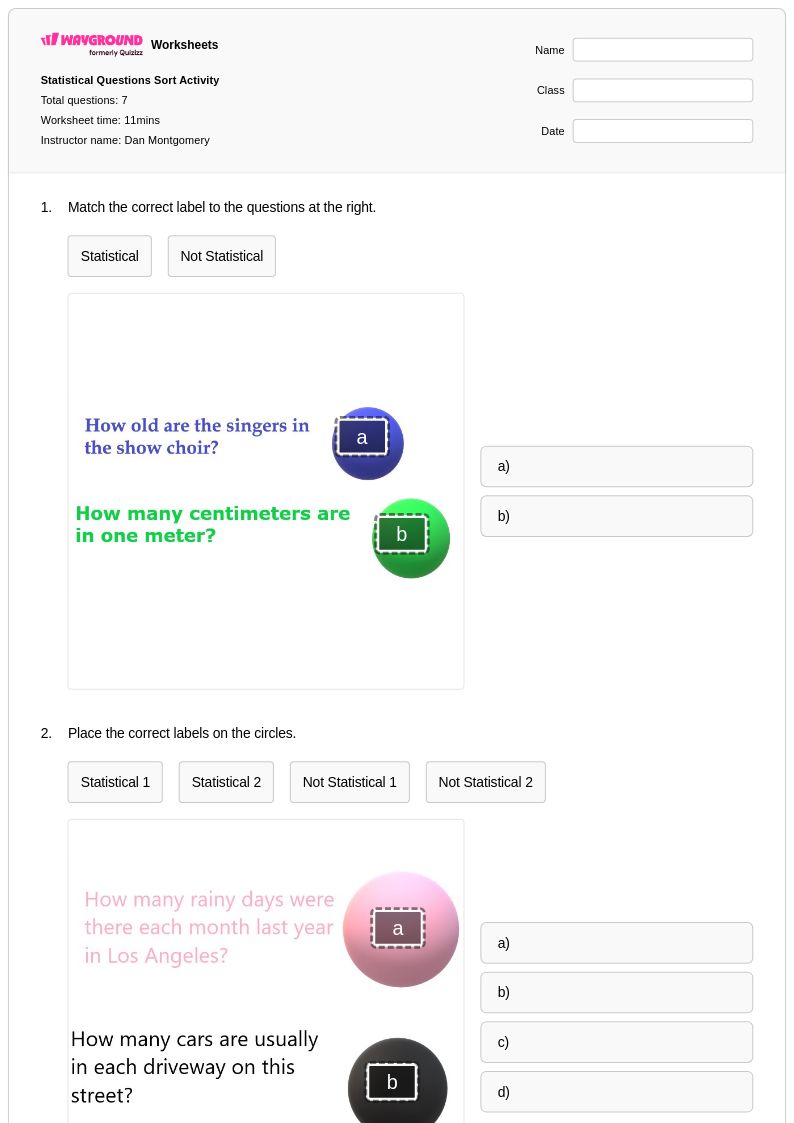
7 Q
6th
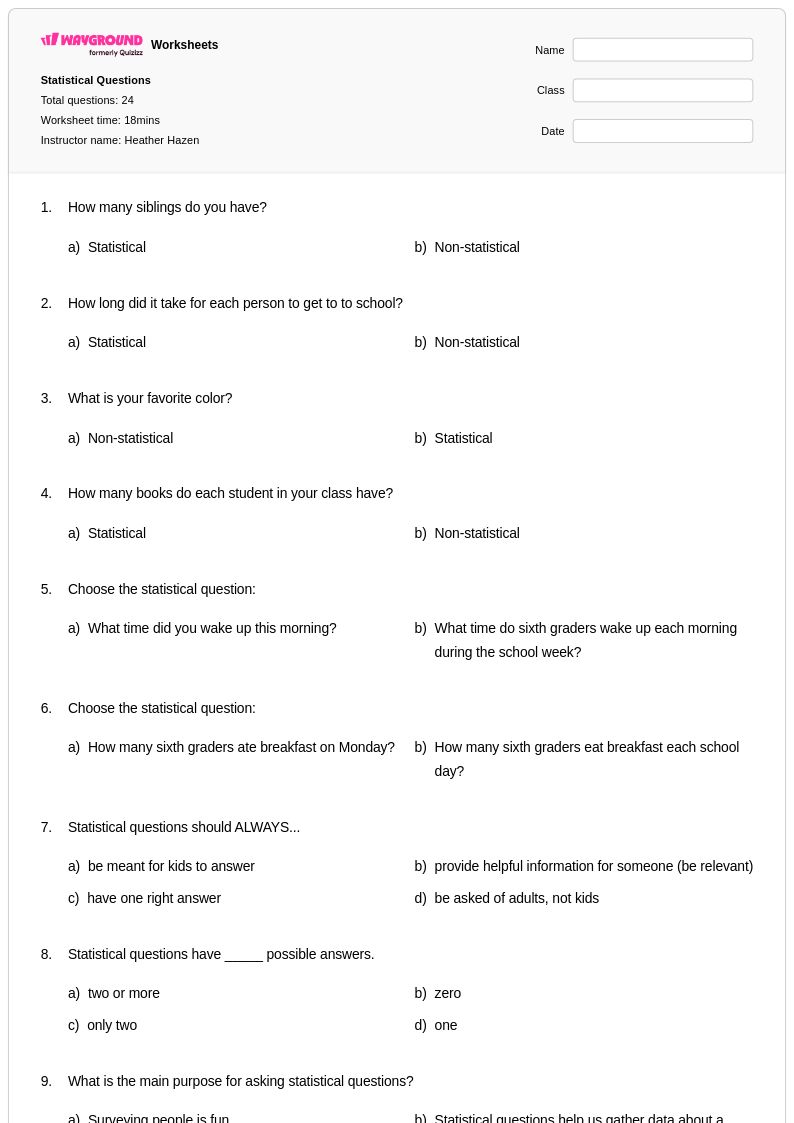
24 Q
6th
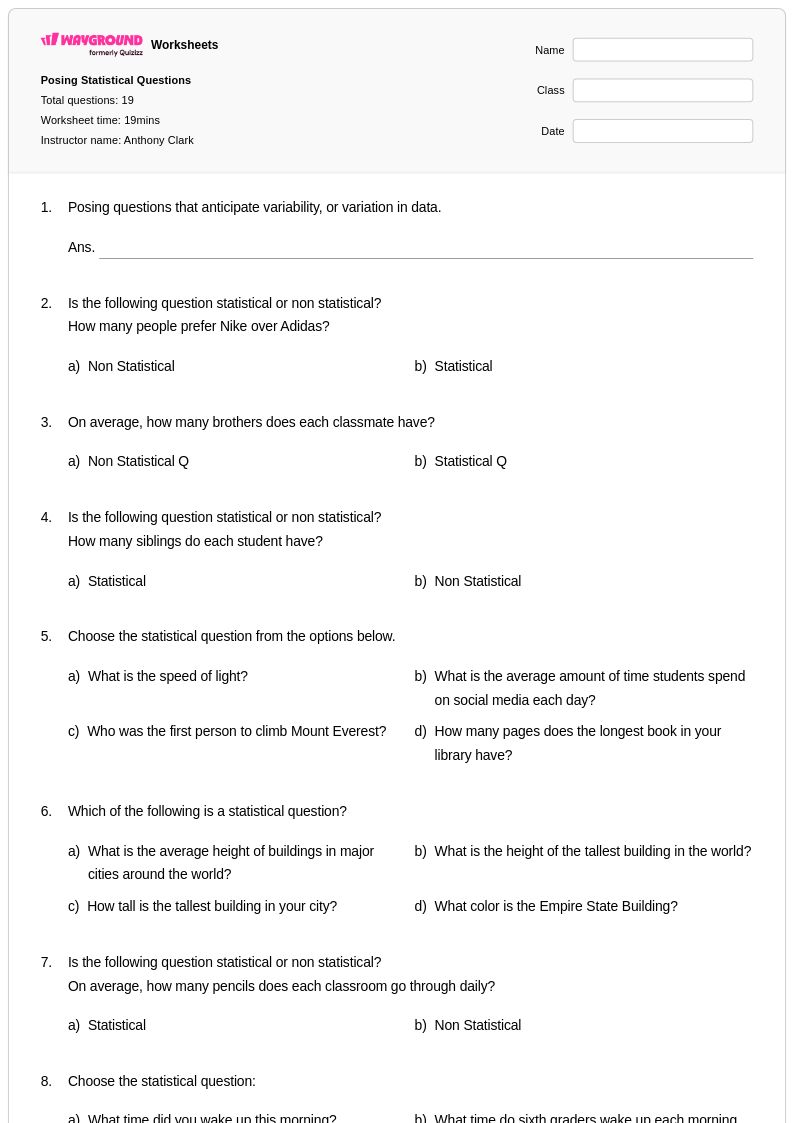
19 Q
6th - Uni
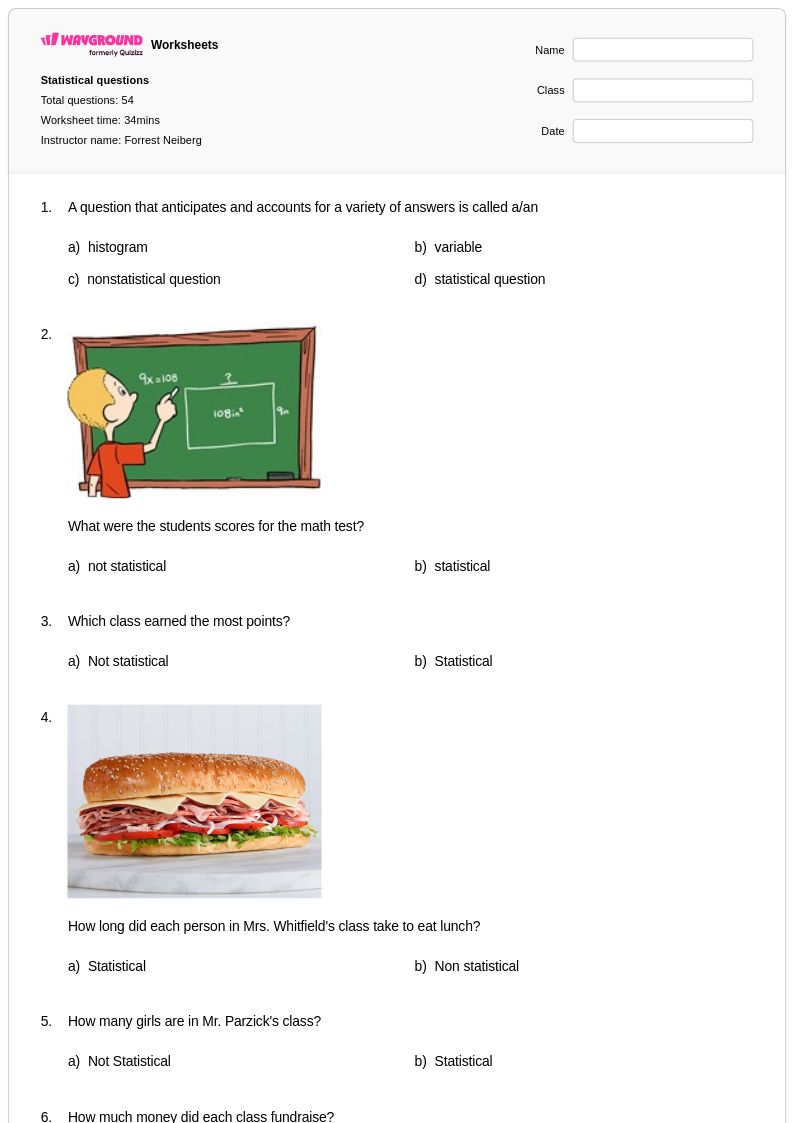
54 Q
9th - 12th
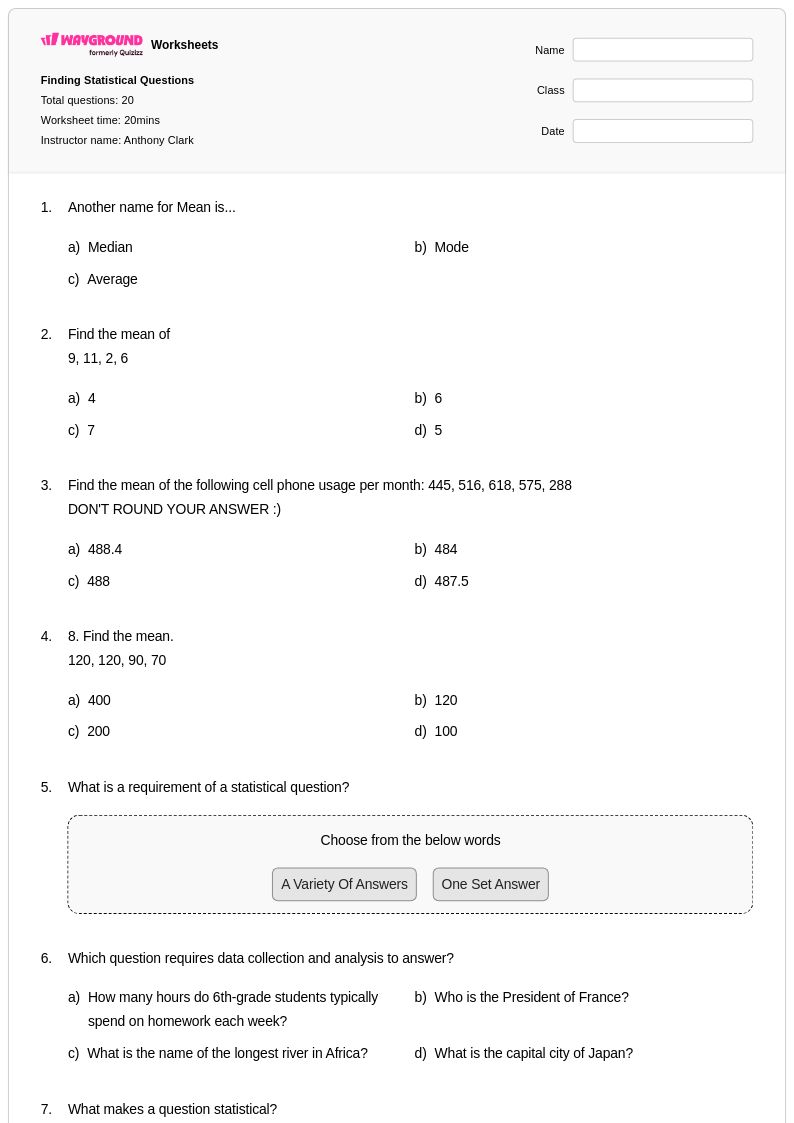
20 Q
6th - Uni
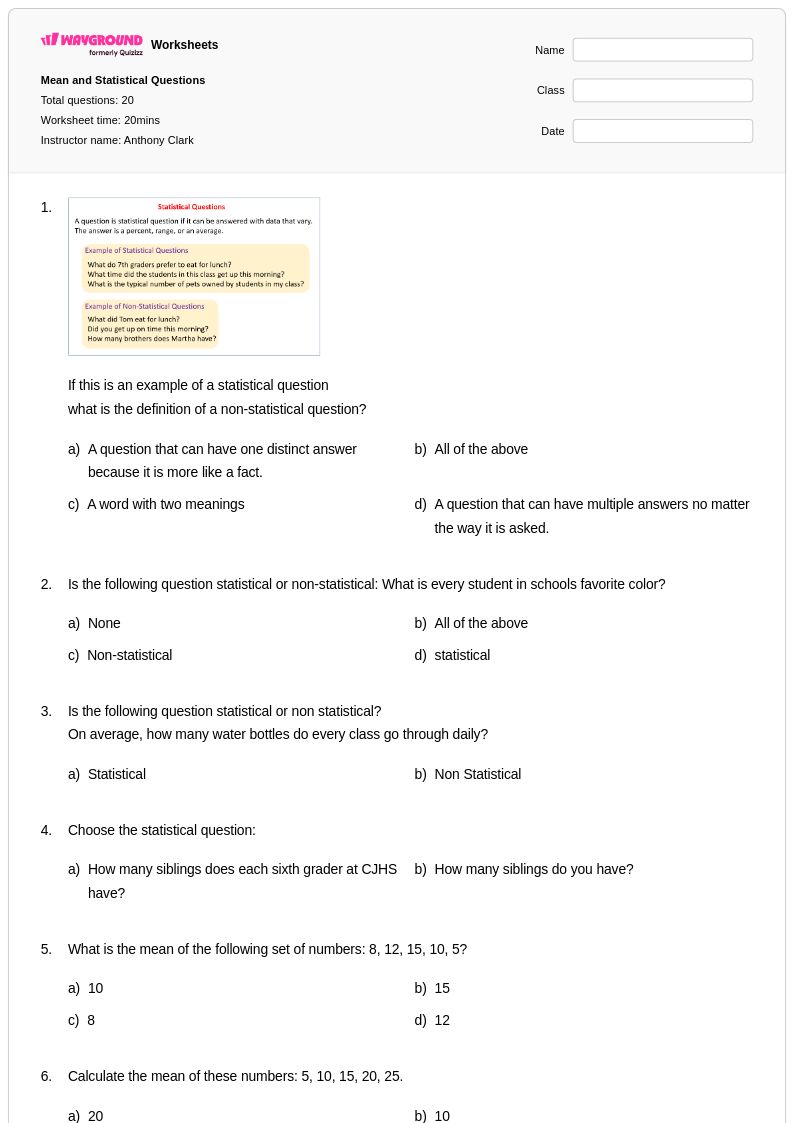
20 Q
6th - Uni
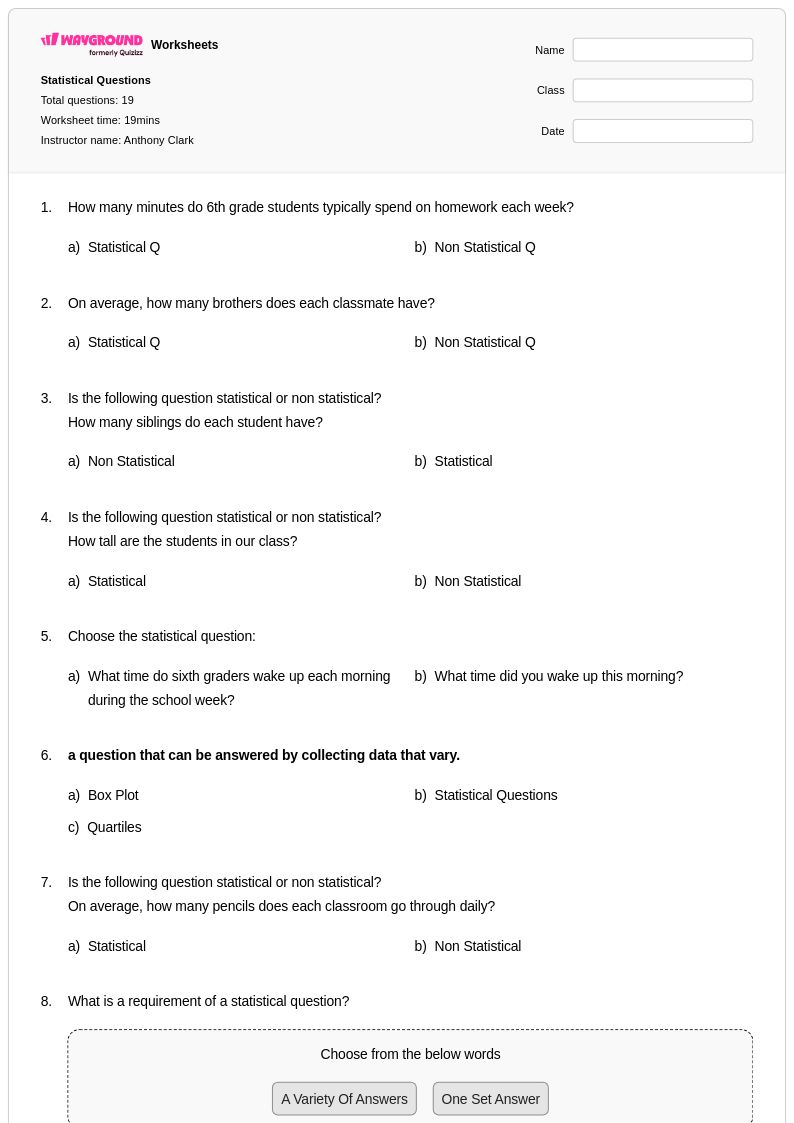
19 Q
6th - Uni
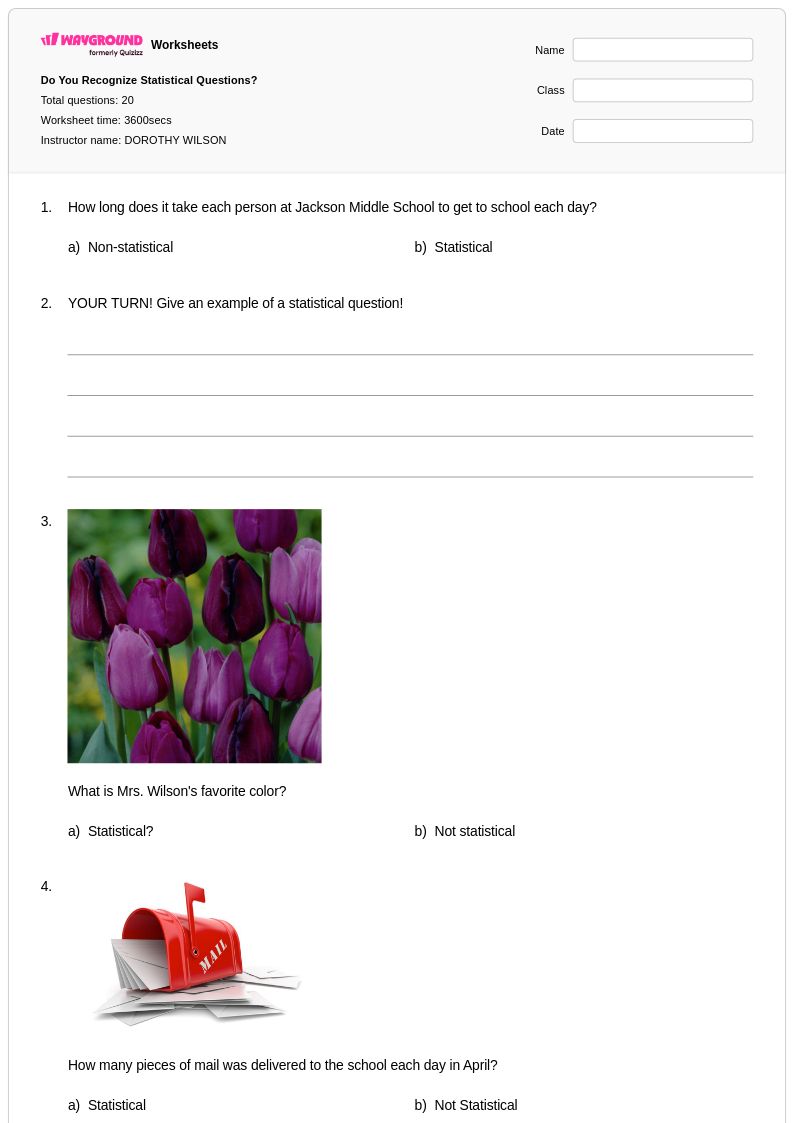
20 Q
6th
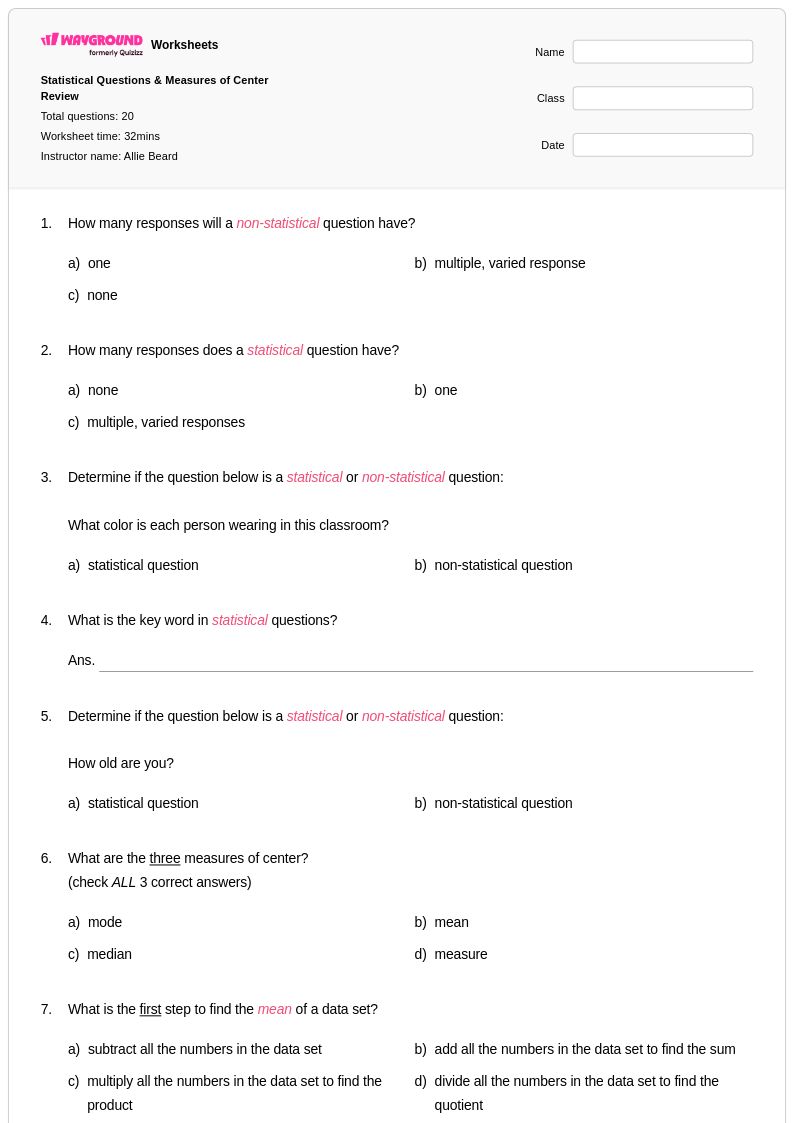
20 Q
6th
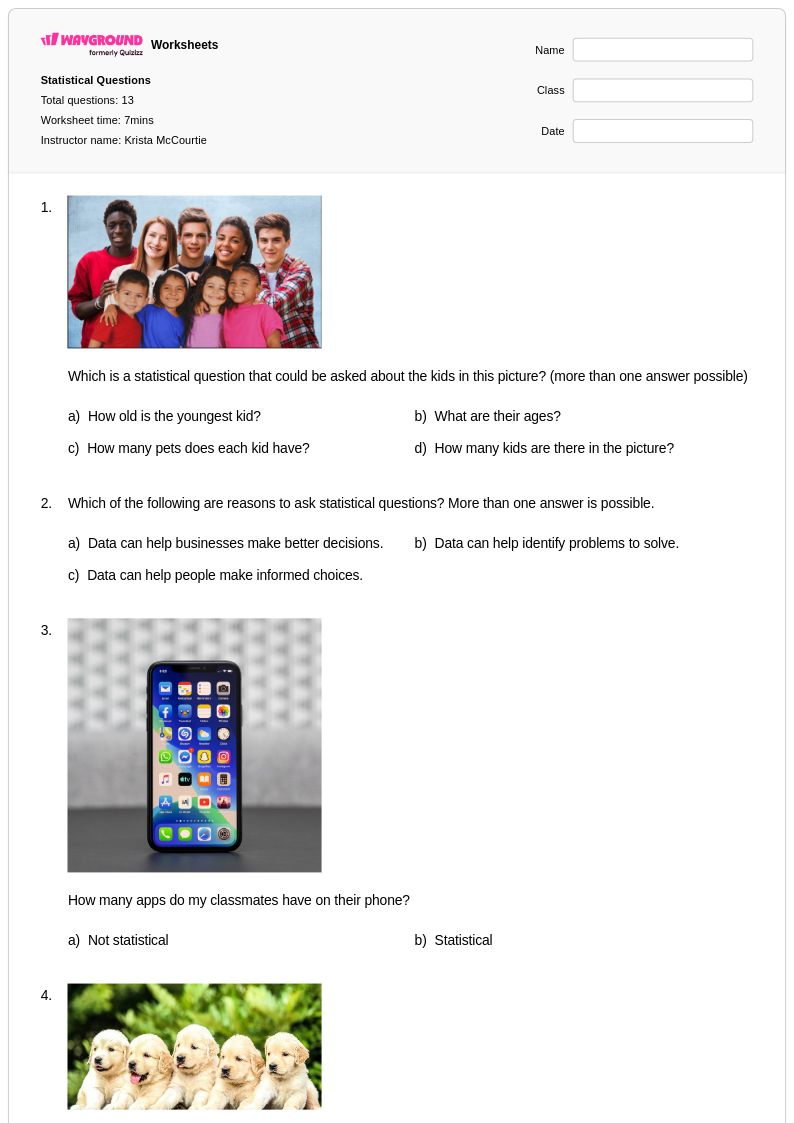
13 Q
6th
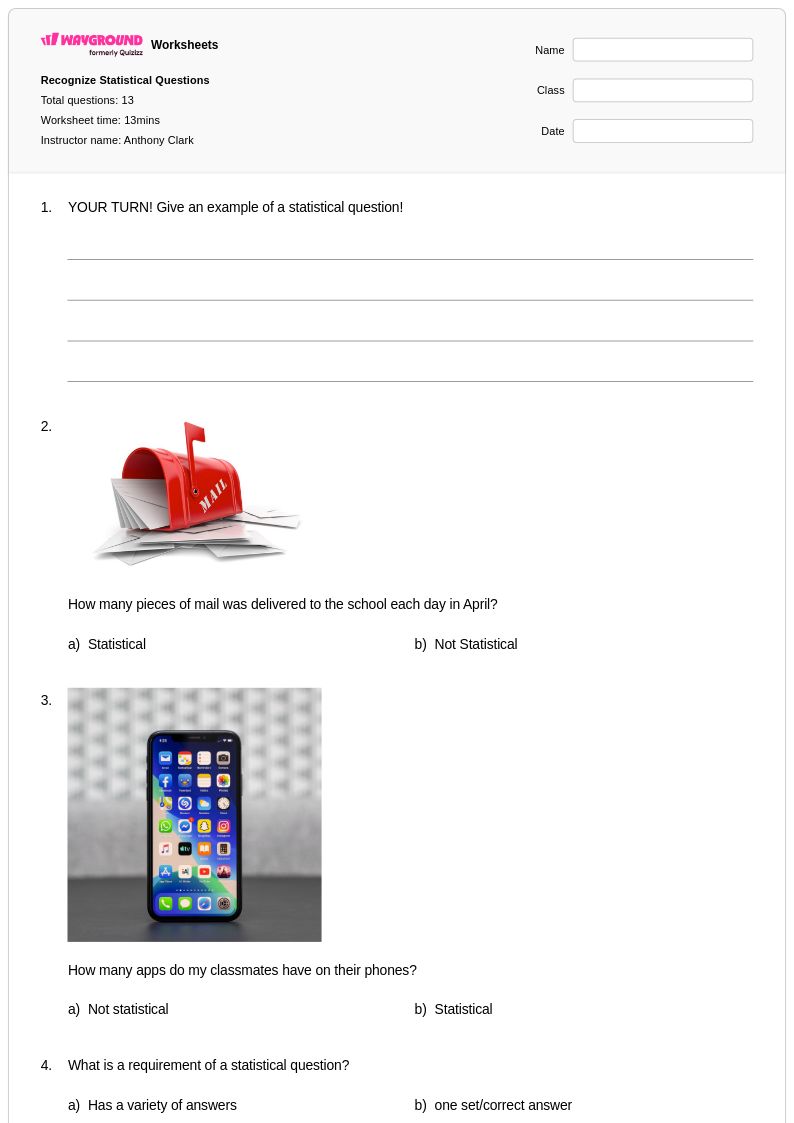
13 Q
4th - Uni
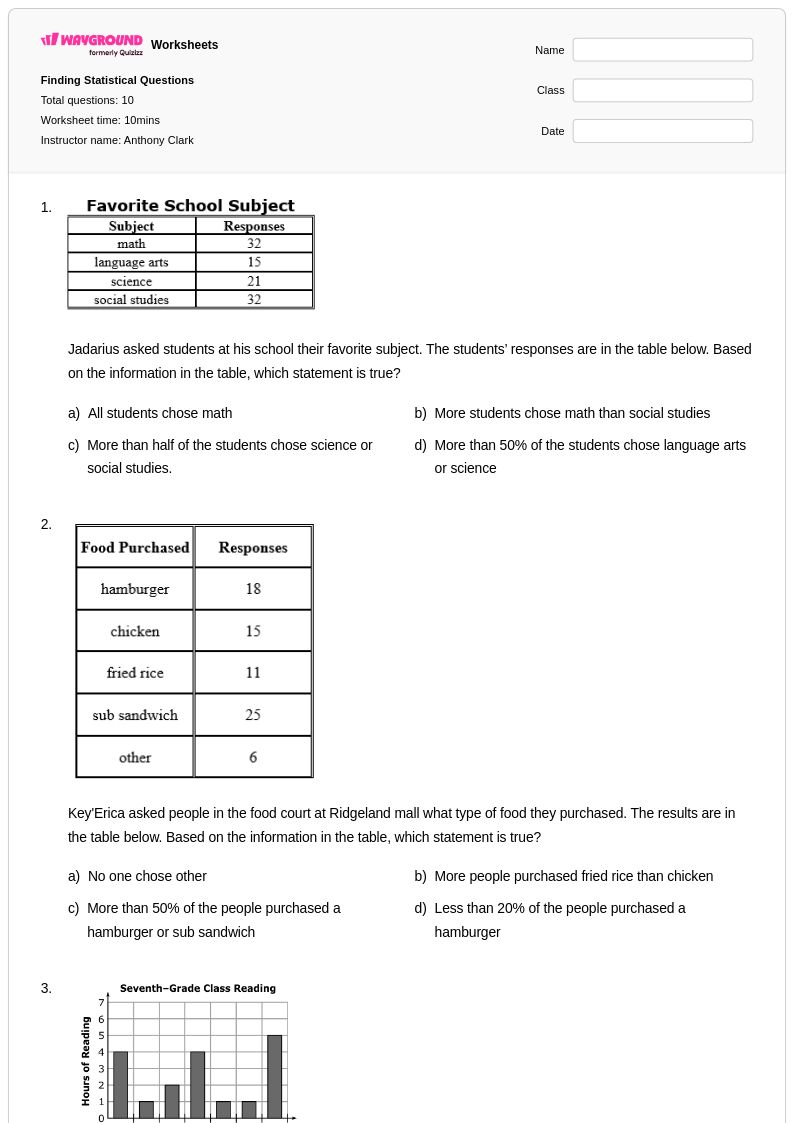
10 Q
6th - Uni
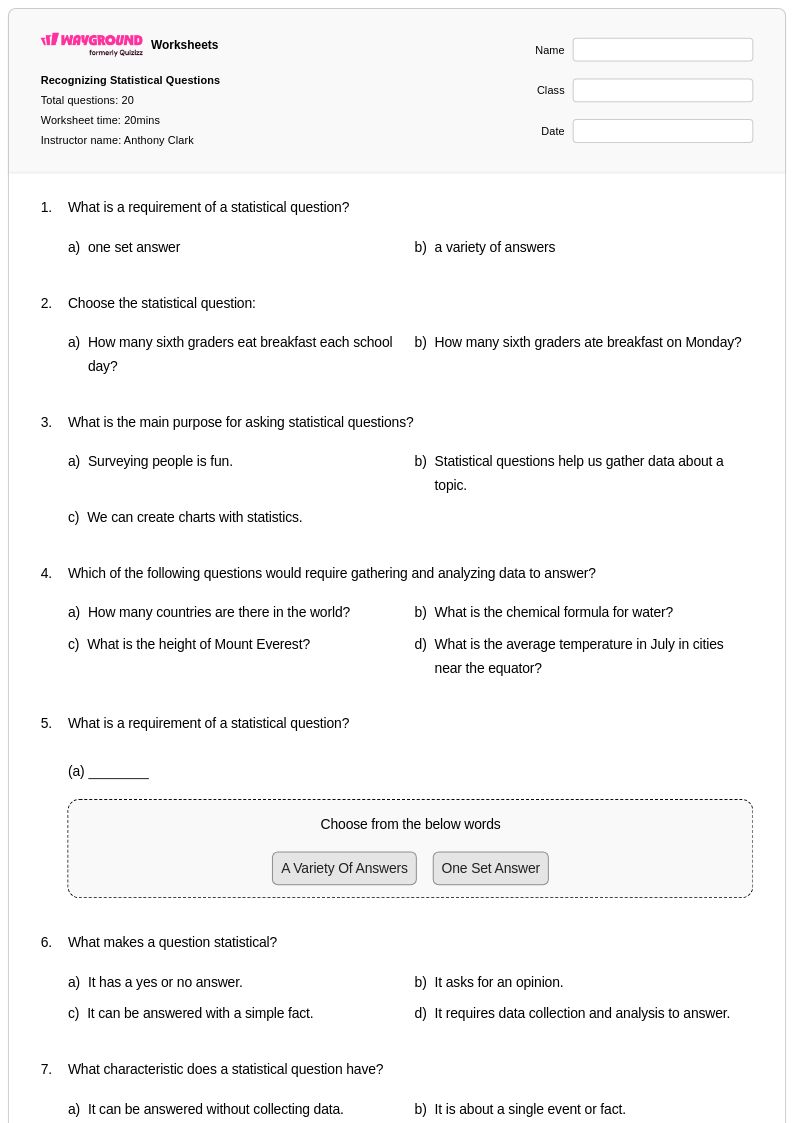
20 Q
6th - Uni
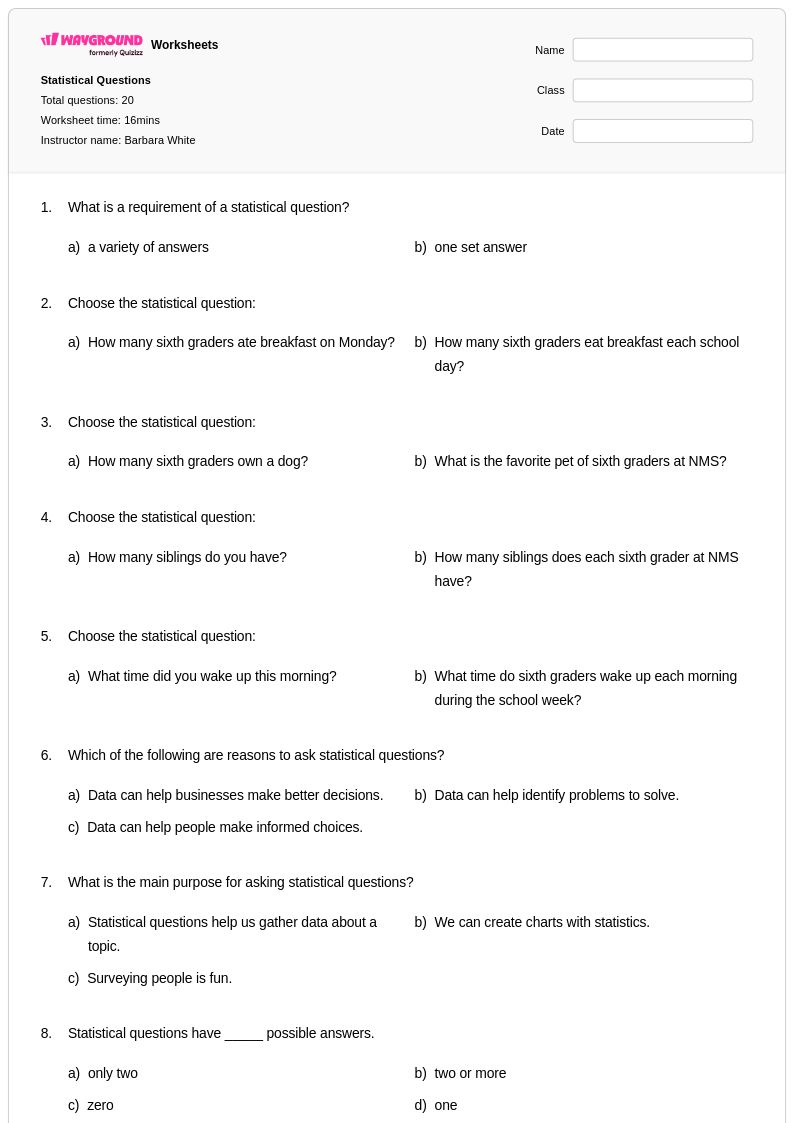
20 Q
6th
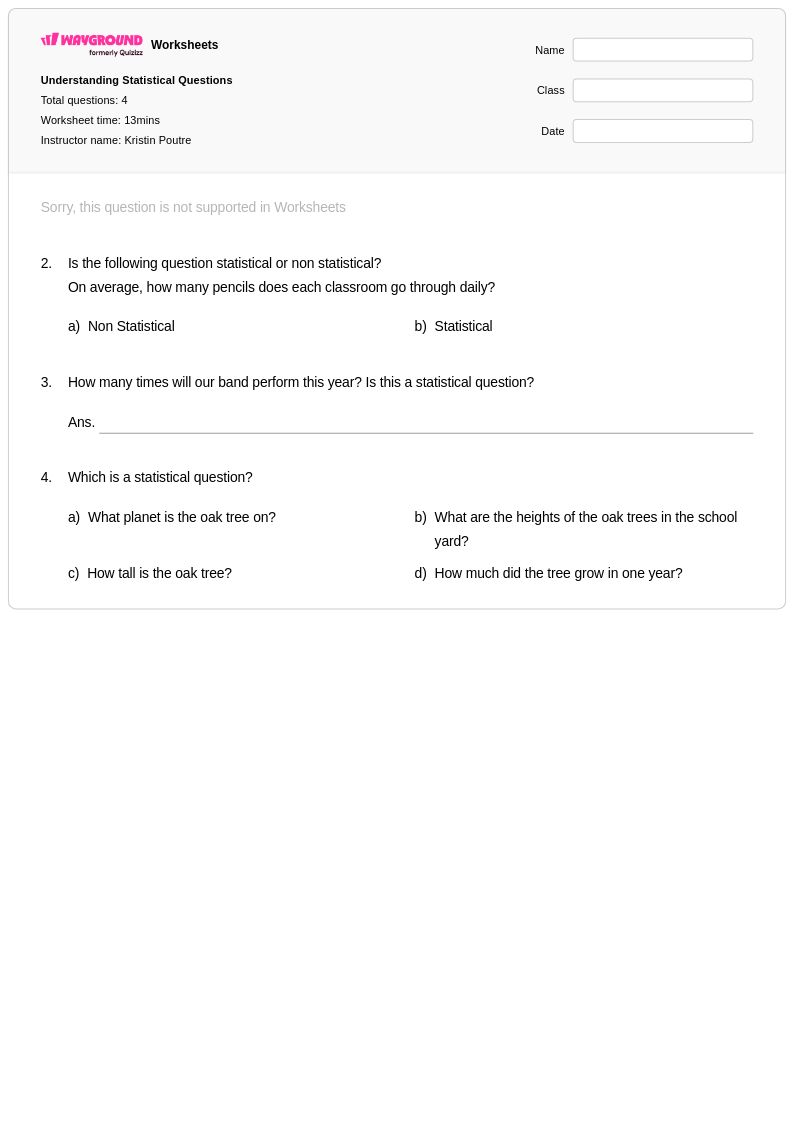
11 Q
6th
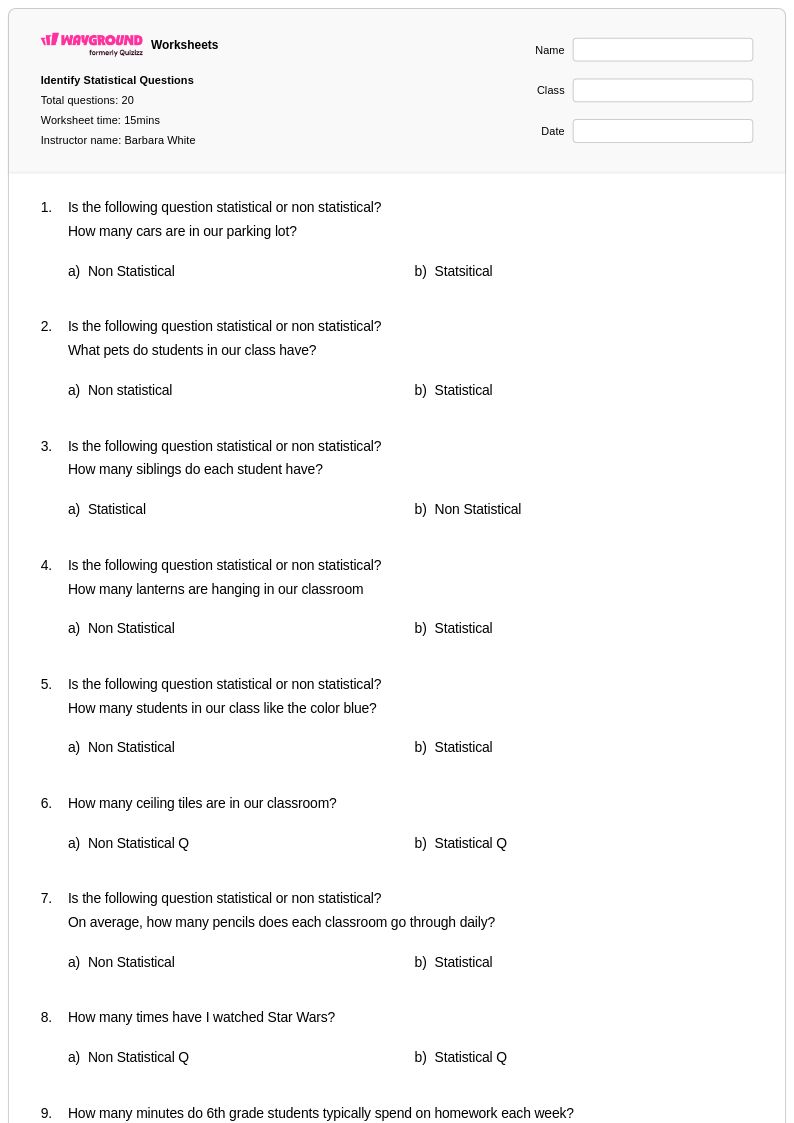
20 Q
6th
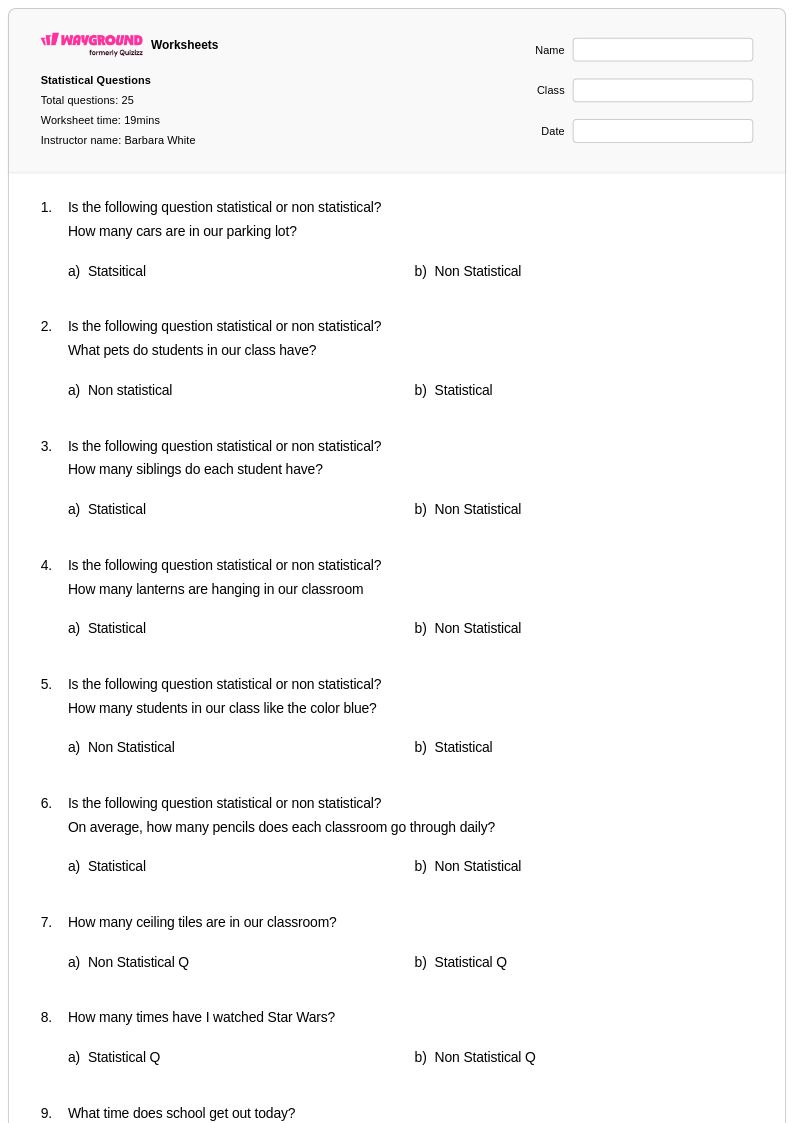
25 Q
6th
Explore Worksheets by Subjects
Explore printable Statistical Questions worksheets
Statistical questions worksheets available through Wayground (formerly Quizizz) provide mathematics educators with comprehensive resources designed to help students distinguish between statistical and non-statistical questions while developing critical thinking skills essential for data analysis. These carefully crafted worksheets strengthen students' ability to identify questions that anticipate variability in data and require data collection for meaningful answers, as opposed to questions with single, definitive responses. Each worksheet includes diverse practice problems that challenge learners to analyze real-world scenarios and determine whether questions generate statistical investigations, with complete answer keys provided to support both independent study and classroom instruction. The free printables cover fundamental concepts such as recognizing questions that involve data collection, understanding variability in responses, and identifying investigations that require statistical methods to draw conclusions.
Wayground's extensive collection draws from millions of teacher-created resources, offering educators powerful search and filtering capabilities to locate statistical questions worksheets that align with specific curriculum standards and learning objectives. The platform's differentiation tools enable teachers to customize content difficulty and complexity, ensuring appropriate challenge levels for diverse learners while maintaining focus on essential statistical reasoning skills. These versatile resources are available in both printable pdf formats for traditional classroom use and digital formats for online learning environments, providing flexibility for various instructional settings. Teachers utilize these comprehensive worksheet collections for lesson planning, targeted remediation of misconceptions about statistical versus non-statistical questions, enrichment activities for advanced learners, and systematic skill practice that builds students' foundation for more complex probability and statistics concepts.
FAQs
How do I teach the difference between statistical and non-statistical questions?
What exercises help students practice identifying statistical questions?
What is the most common mistake students make with statistical questions?
How can I use this statistical questions worksheet in my class?
How do statistical questions fit into the math curriculum?
How can I differentiate this topic for my students?