
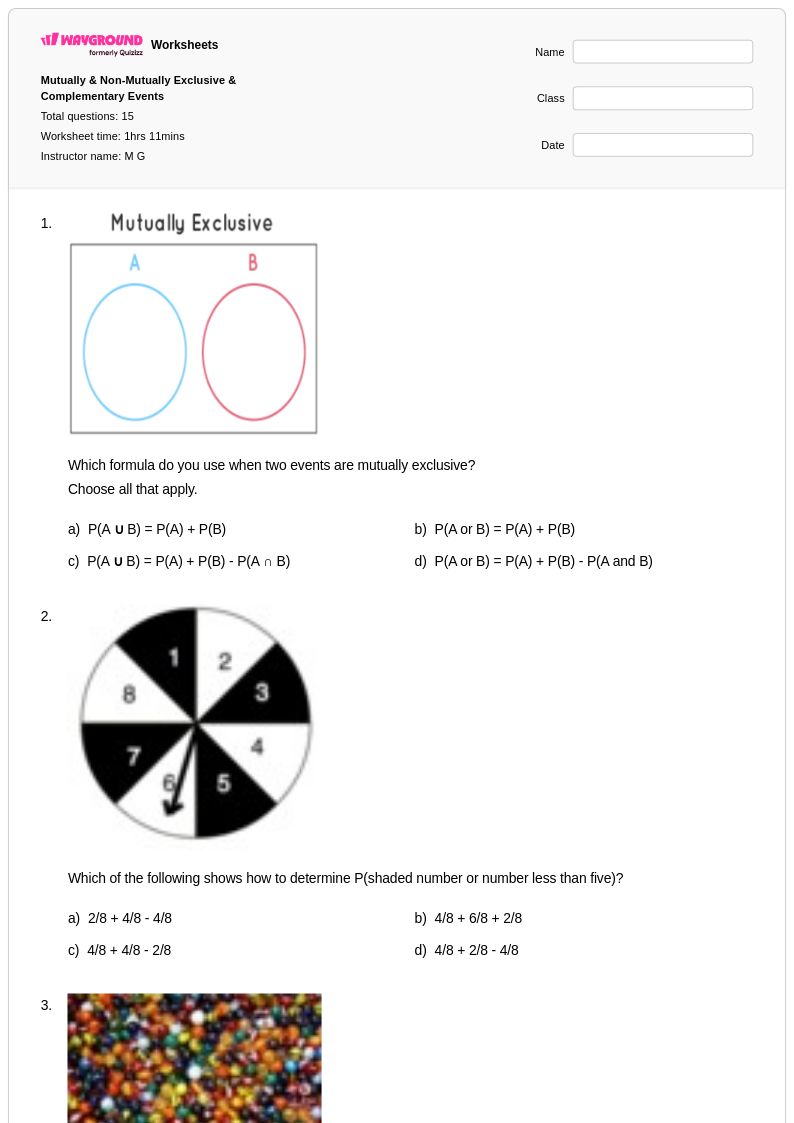
15 Q
6th - 8th
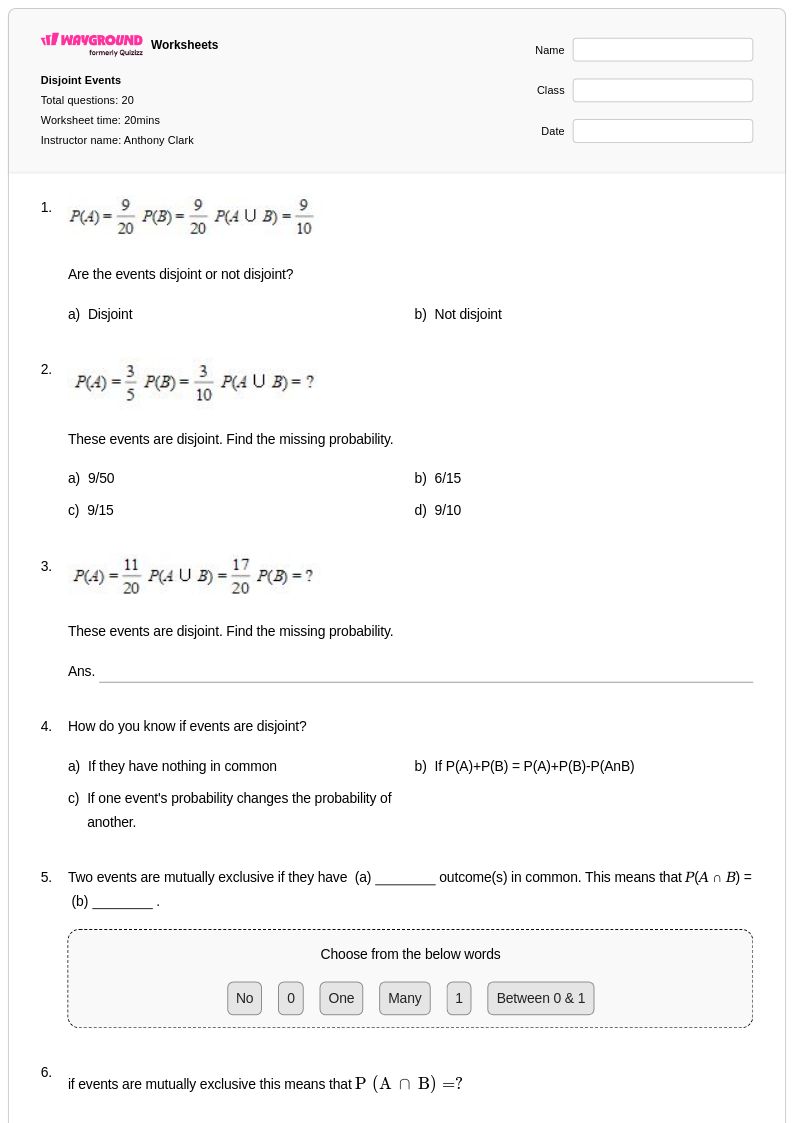
20 Q
10th - Uni
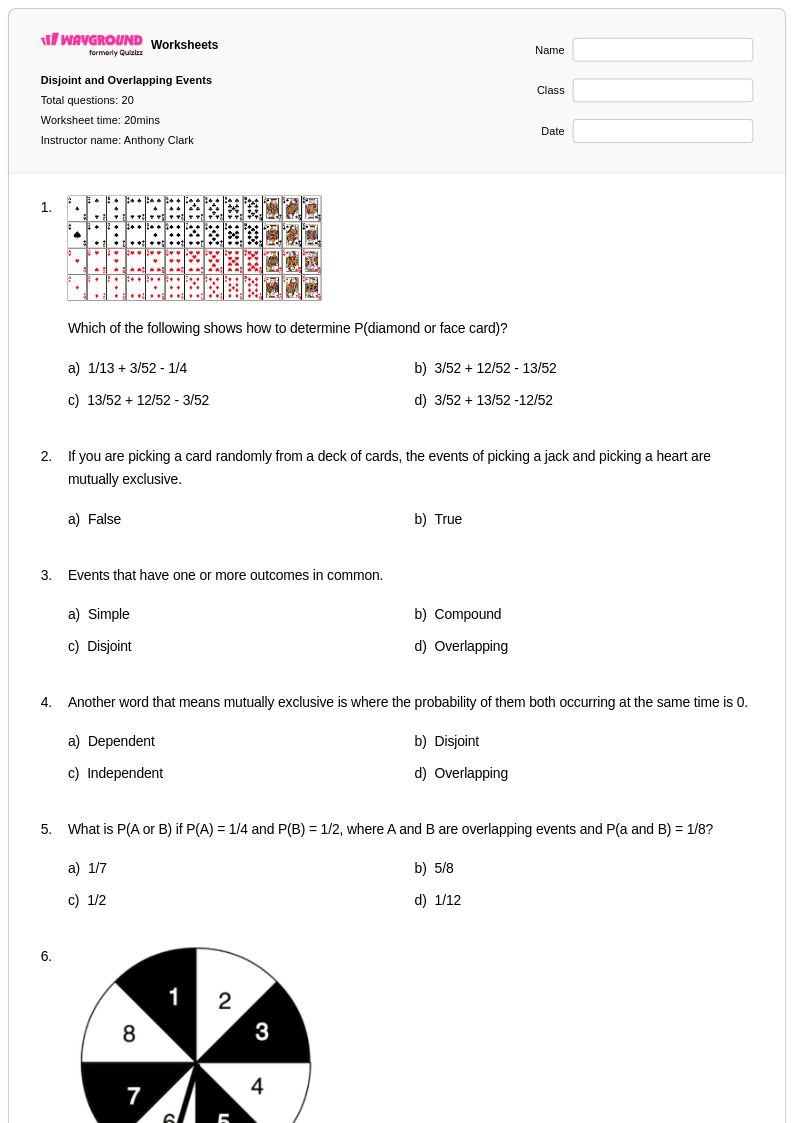
20 Q
11th - Uni
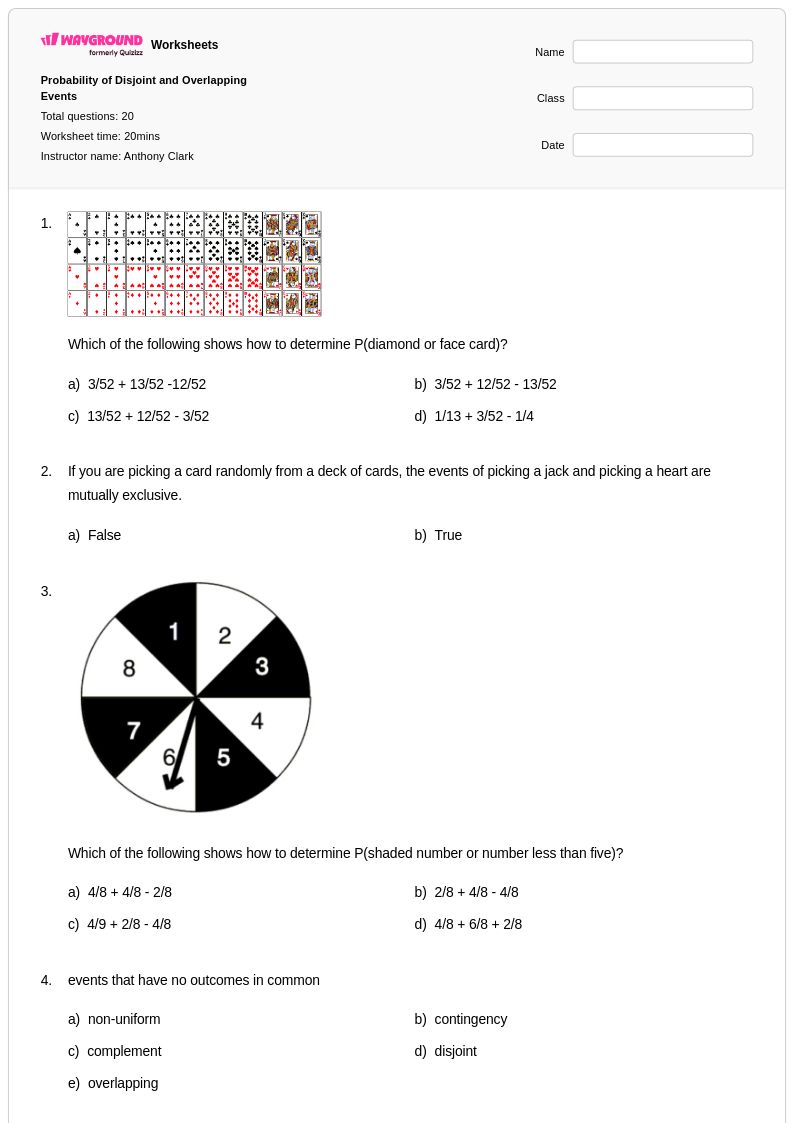
20 Q
10th - Uni
20 Q
9th - 10th
20 Q
9th - 12th
22 Q
11th
16 Q
12th
20 Q
7th - Uni
15 Q
9th - 12th
24 Q
11th
10 Q
10th - Uni
20 Q
9th - 10th
10 Q
Uni
12 Q
7th - 8th
20 Q
Uni
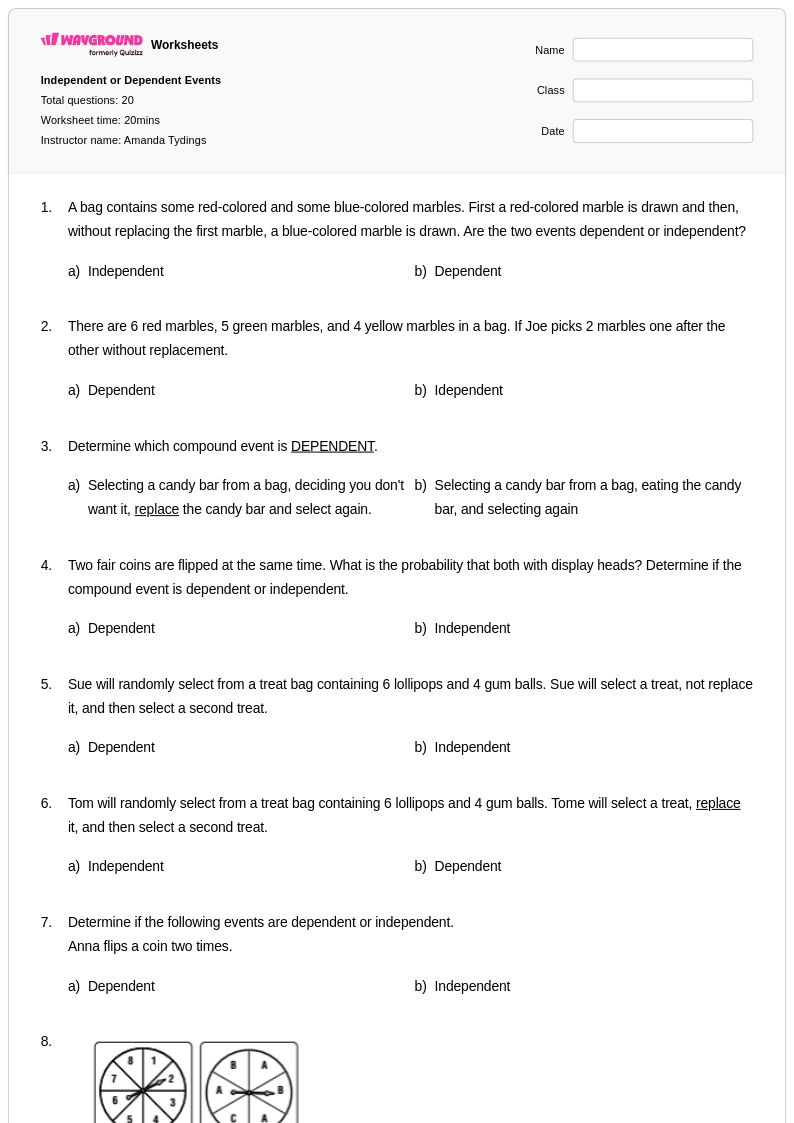
20 Q
7th - Uni
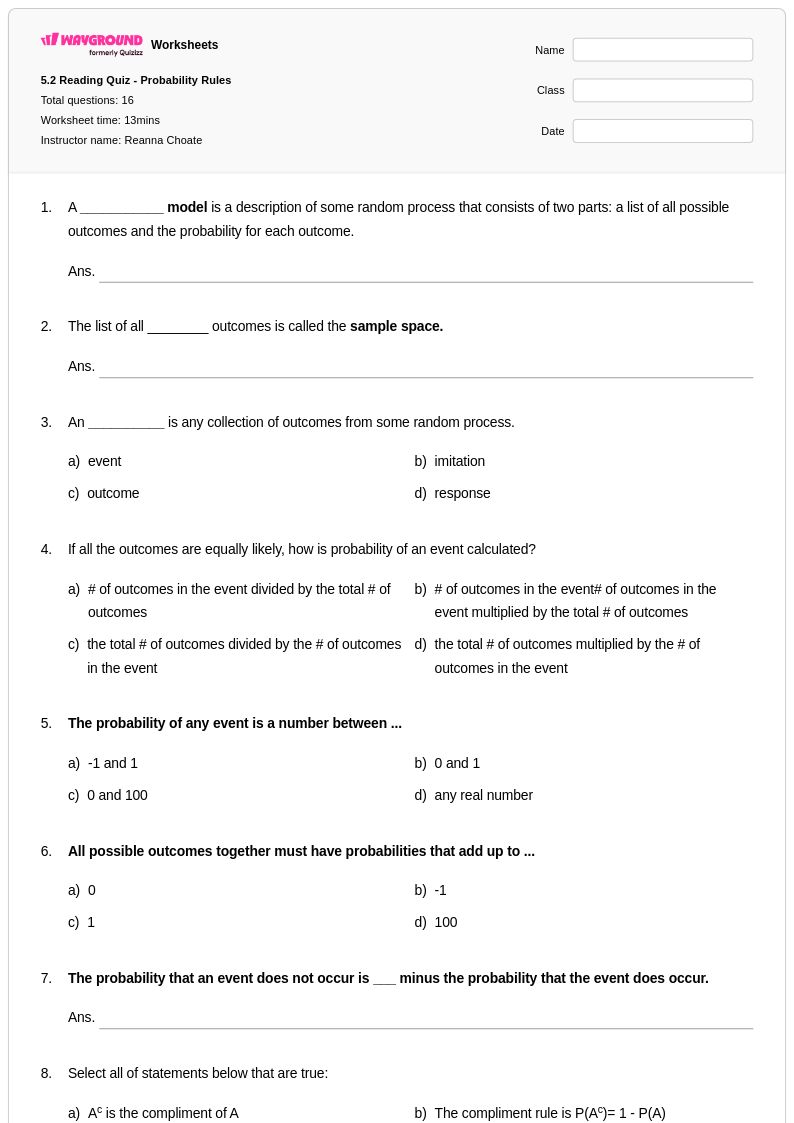
16 Q
10th - Uni
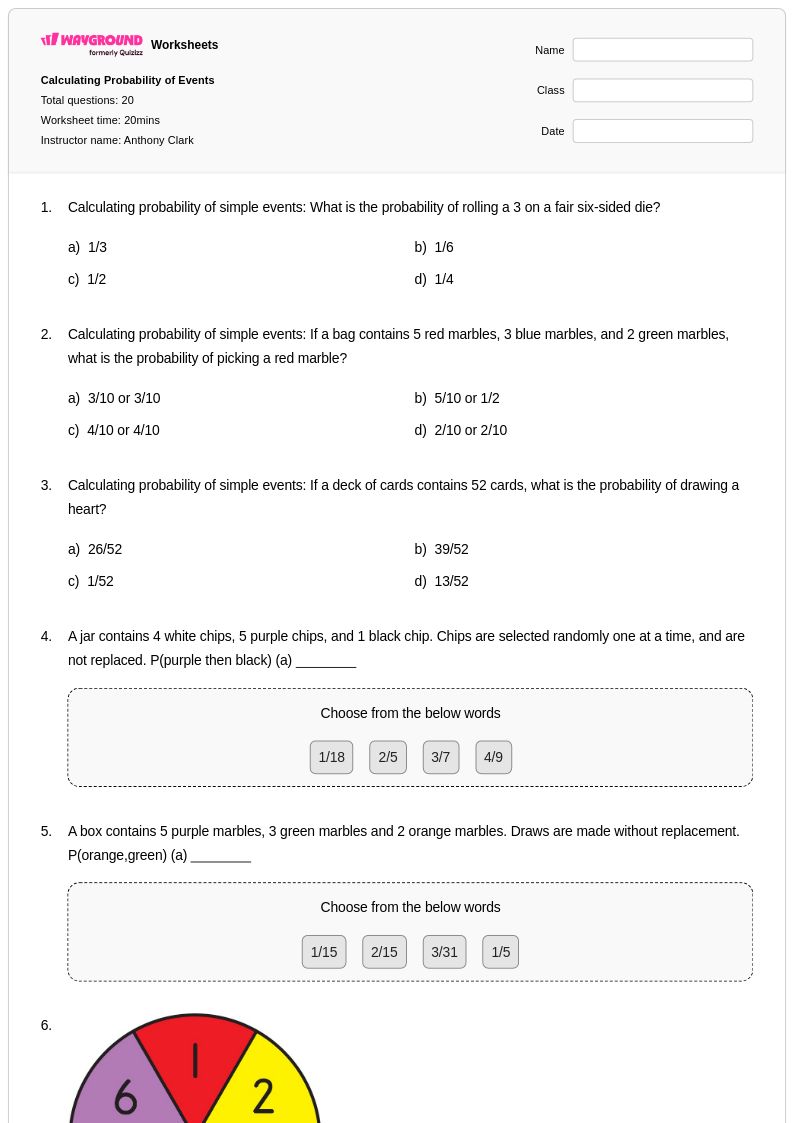
20 Q
7th - Uni
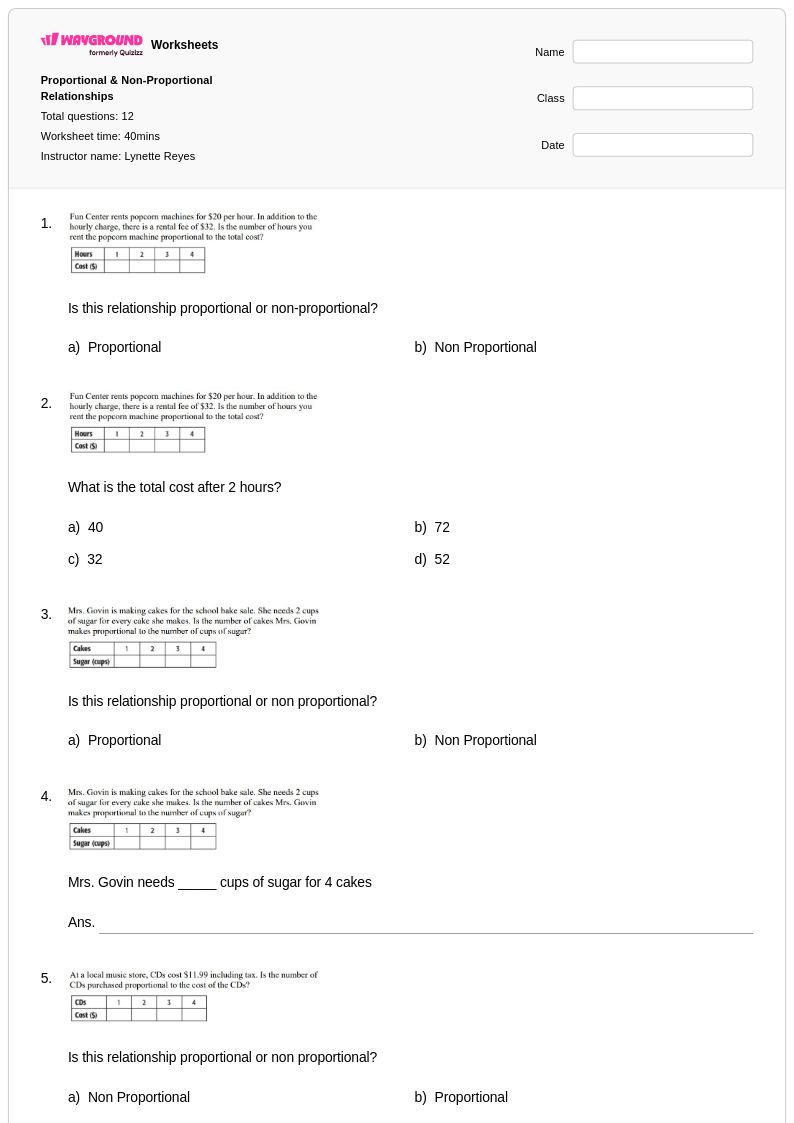
12 Q
7th
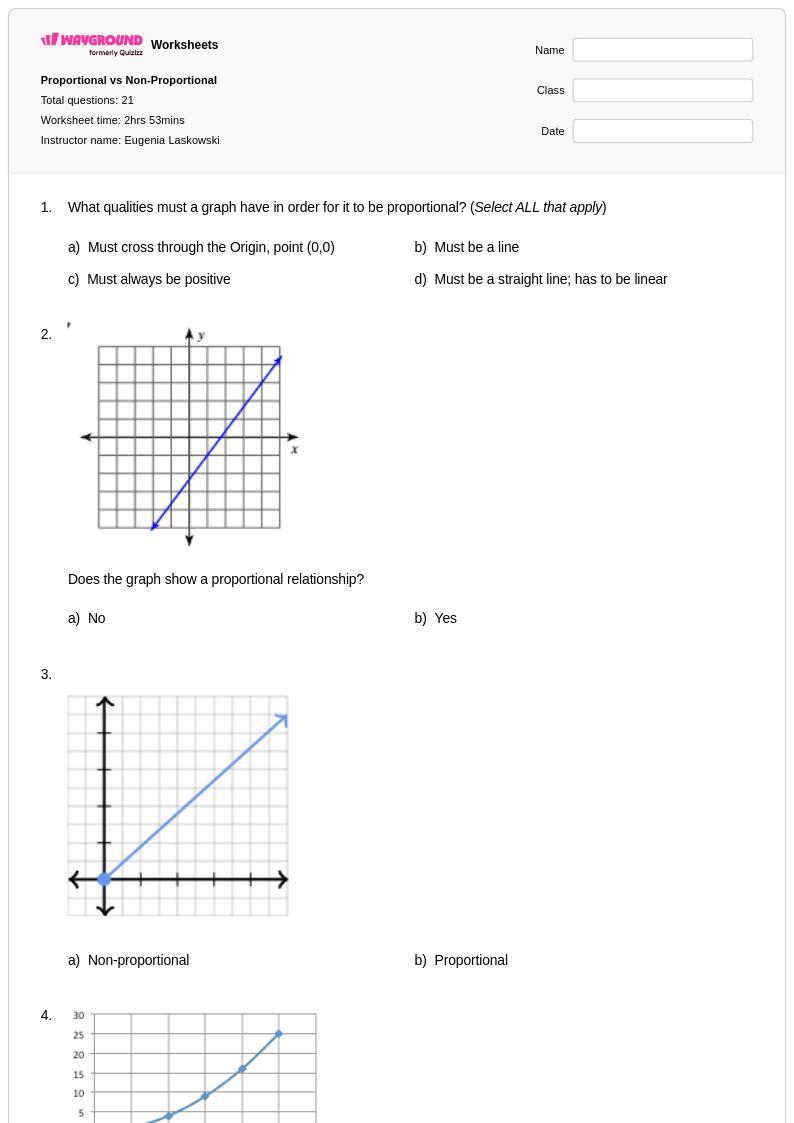
21 Q
9th
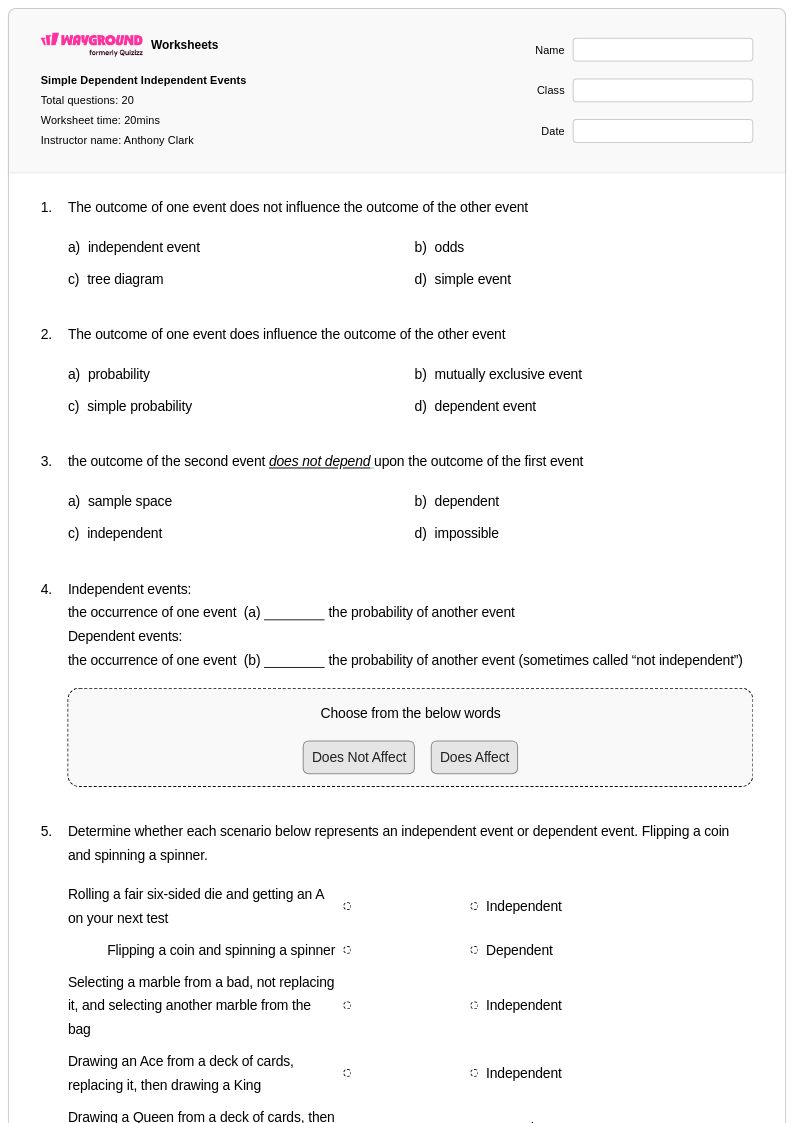
20 Q
7th - Uni
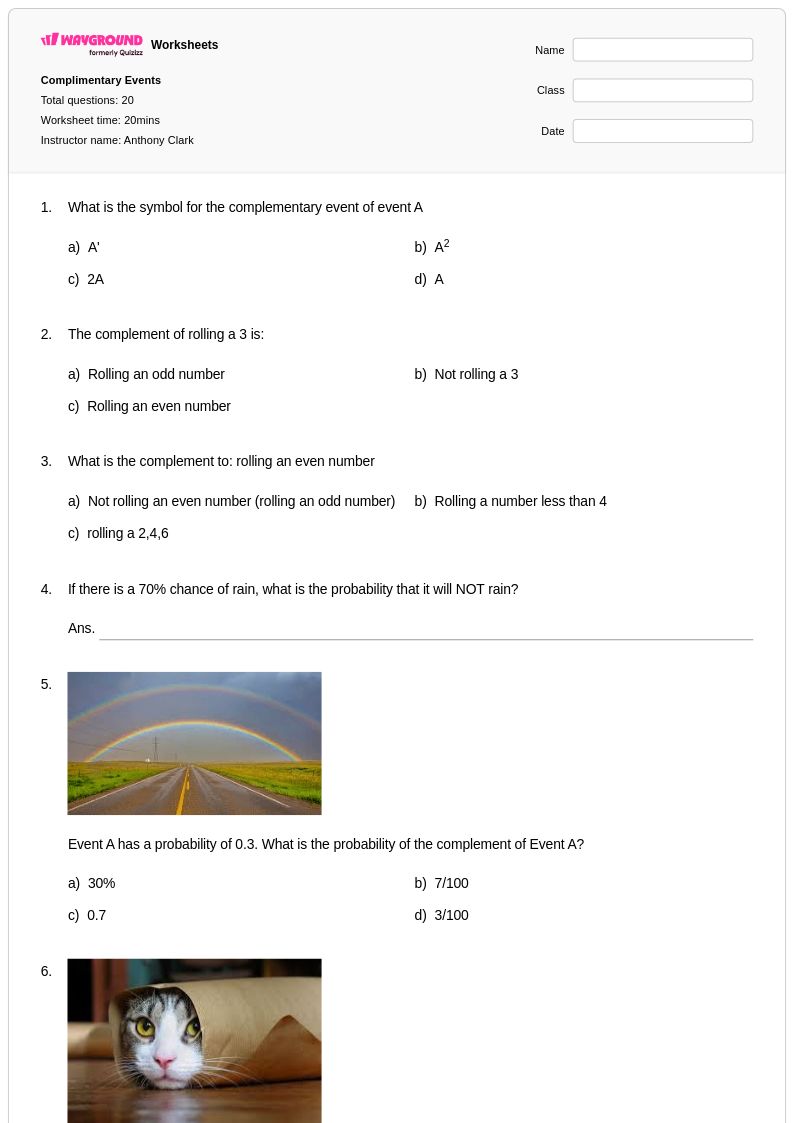
20 Q
8th - Uni
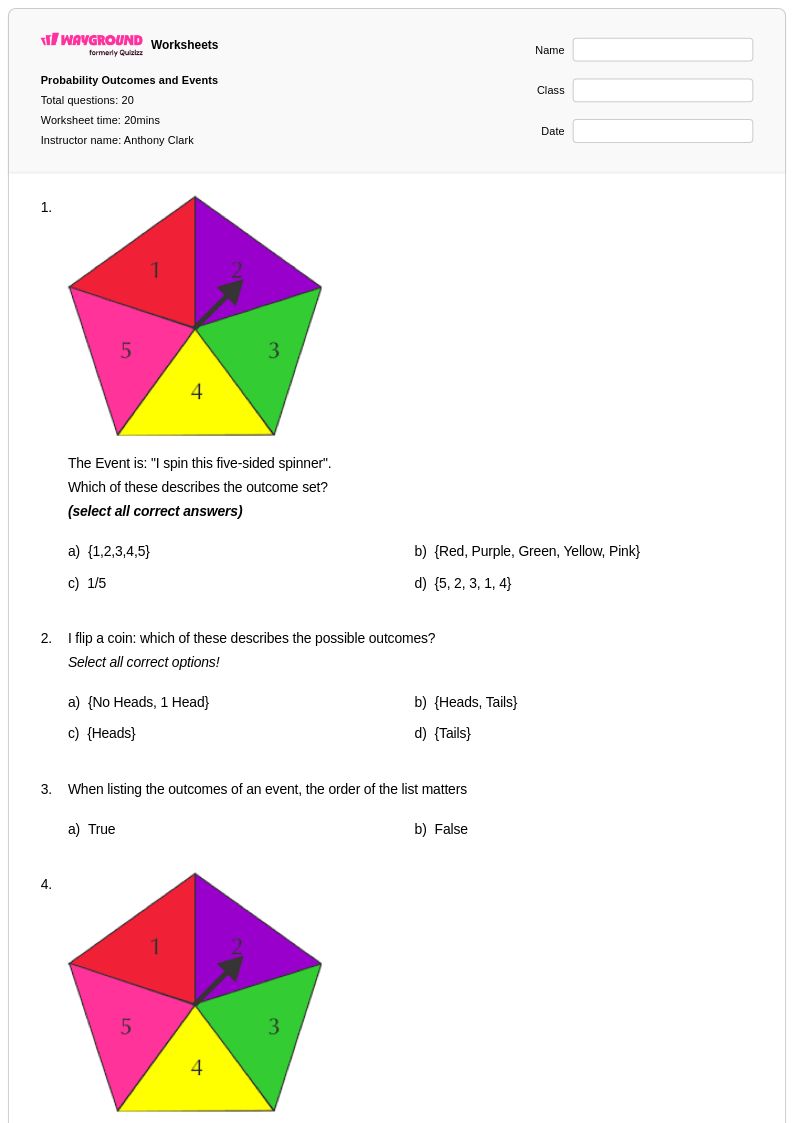
20 Q
7th - Uni
Explore Worksheets by Subjects
Explore printable Non-disjoint Events worksheets
Non-disjoint events worksheets available through Wayground (formerly Quizizz) provide comprehensive practice materials that help students master one of the most challenging concepts in probability theory. These expertly designed resources focus on events that share common outcomes, enabling learners to calculate probabilities using the addition rule and inclusion-exclusion principle. The worksheets strengthen critical mathematical reasoning skills through carefully structured practice problems that progress from basic overlapping event identification to complex multi-step probability calculations. Each resource includes detailed answer keys and step-by-step solutions, with free printable pdf formats that make these materials accessible for both classroom instruction and independent study.
Wayground (formerly Quizizz) supports mathematics educators with an extensive collection of teacher-created resources specifically tailored for probability and statistics instruction. The platform's robust search and filtering capabilities allow instructors to quickly locate worksheets that align with specific curriculum standards and learning objectives for non-disjoint events. Teachers can leverage powerful differentiation tools to customize difficulty levels, modify problem sets, and create targeted interventions for students who need additional support with probability concepts. These flexible resources are available in both printable and digital formats, including downloadable pdfs, enabling seamless integration into lesson planning, homework assignments, remediation sessions, and enrichment activities that reinforce understanding of overlapping probability scenarios.
FAQs
How do I teach the concept of non-disjoint events?
What exercises help students practice calculating probability for non-disjoint events?
What is a common mistake students make with non-disjoint events?
How can I use this non-disjoint events worksheet?
How does this topic fit into the math curriculum?
How can I differentiate instruction for non-disjoint events?