
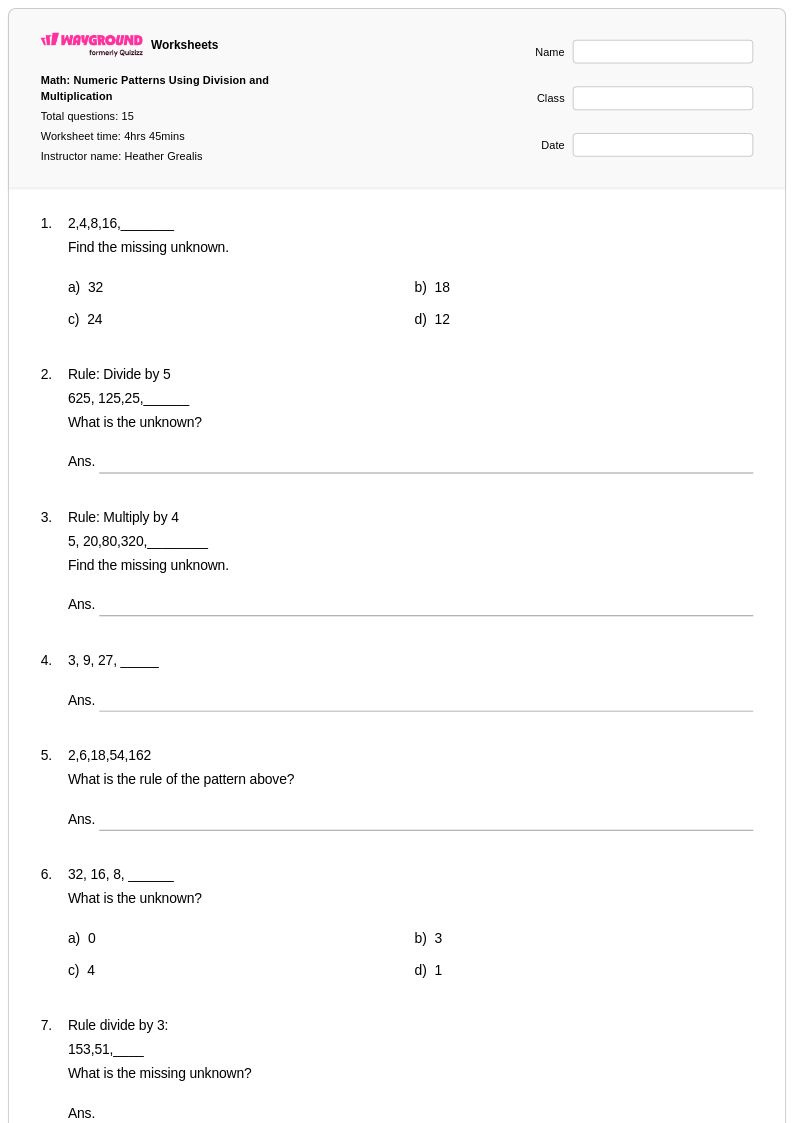
15 Q
4th
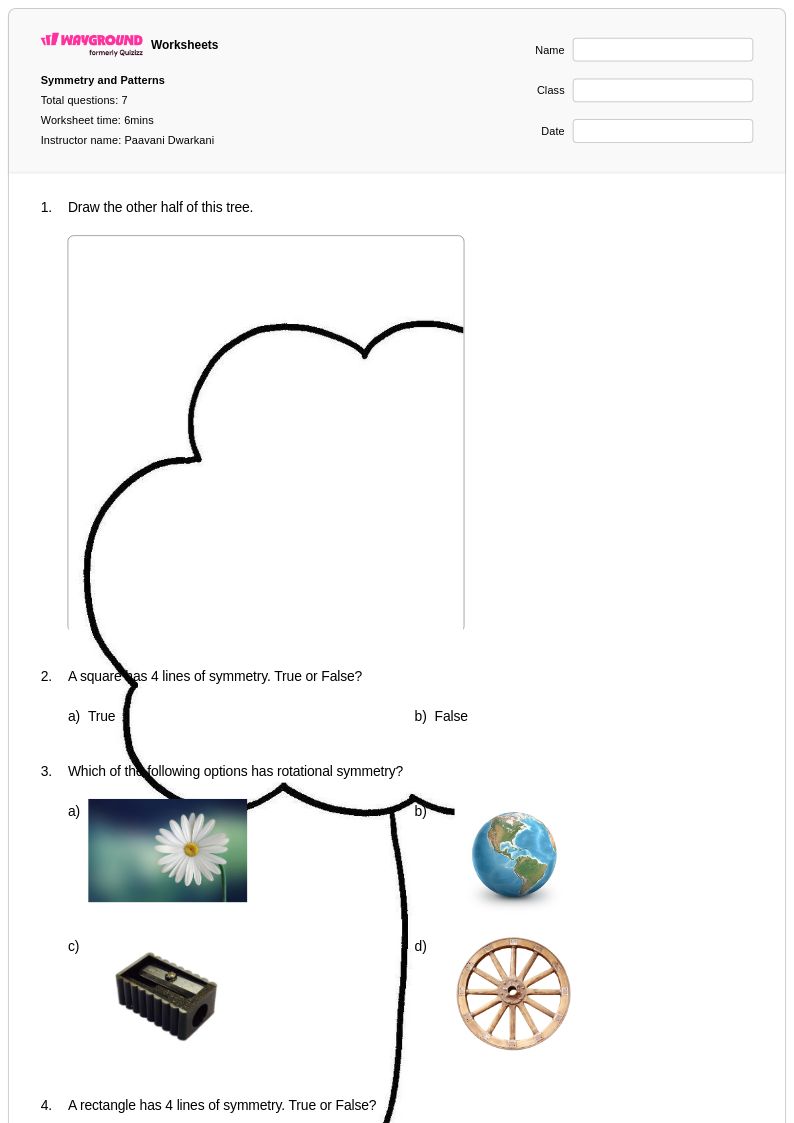
7 Q
4th - 6th
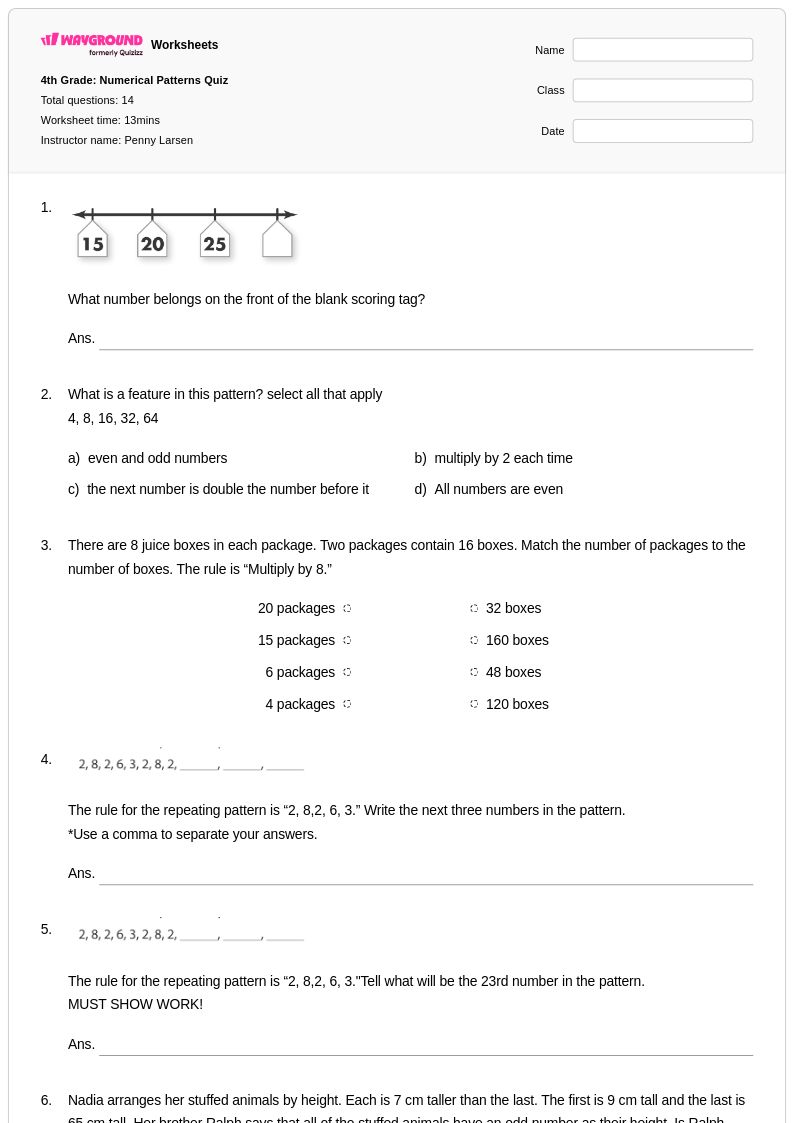
14 Q
4th
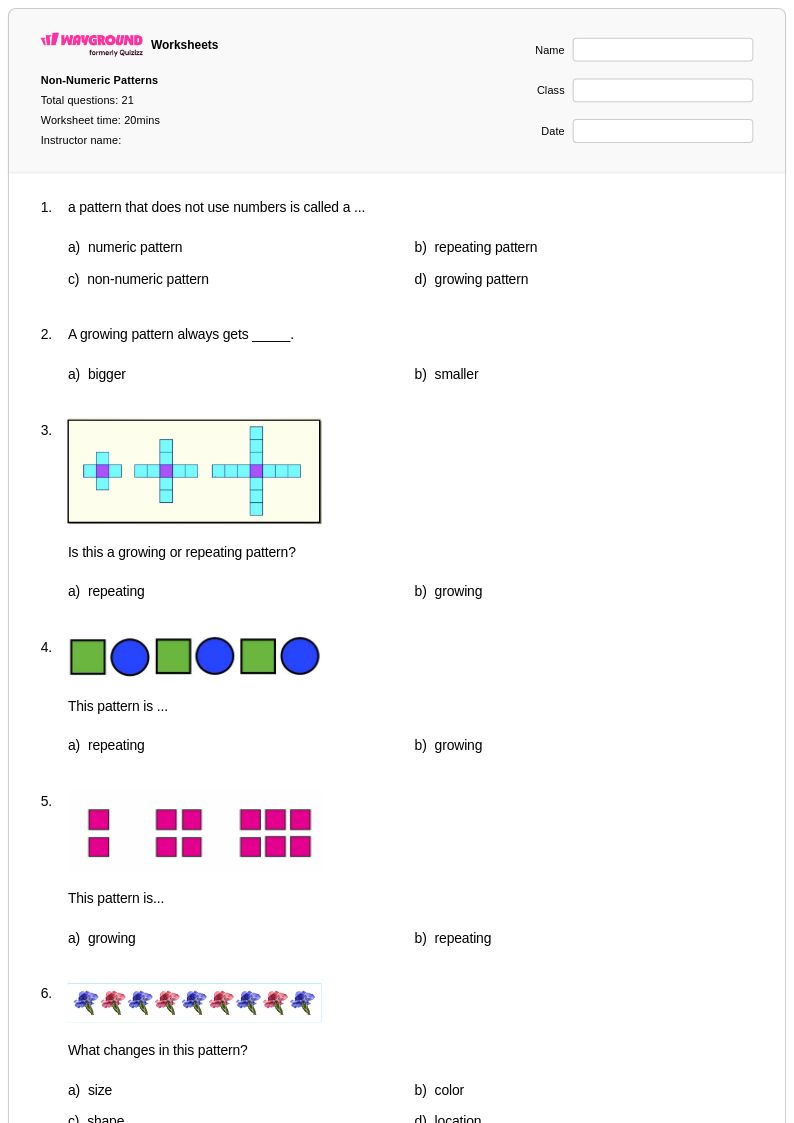
21 Q
3rd - 5th
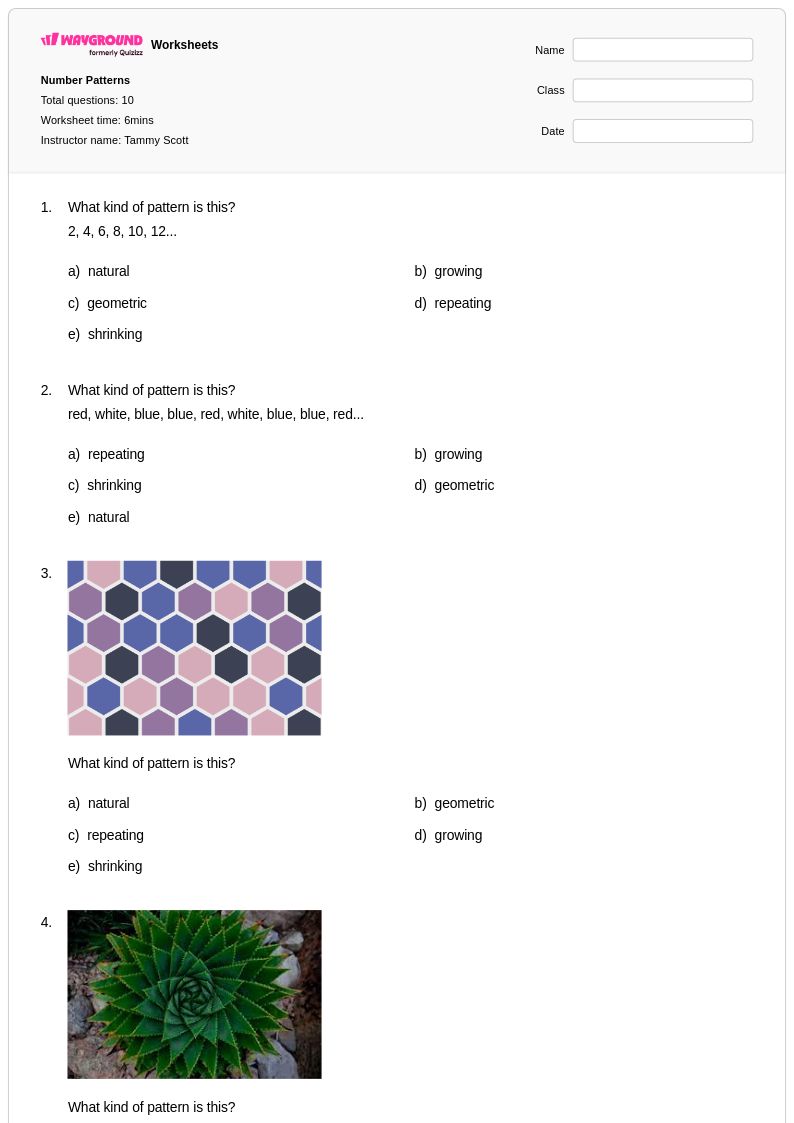
10 Q
3rd - 6th
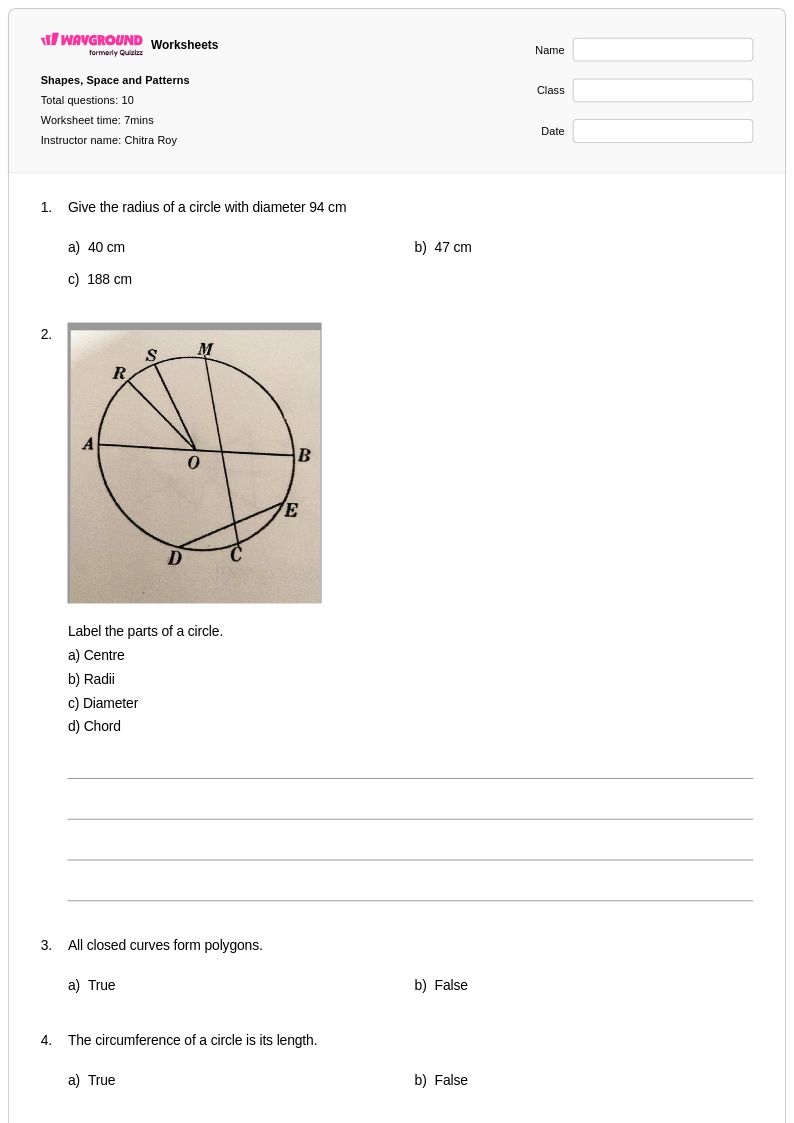
10 Q
4th
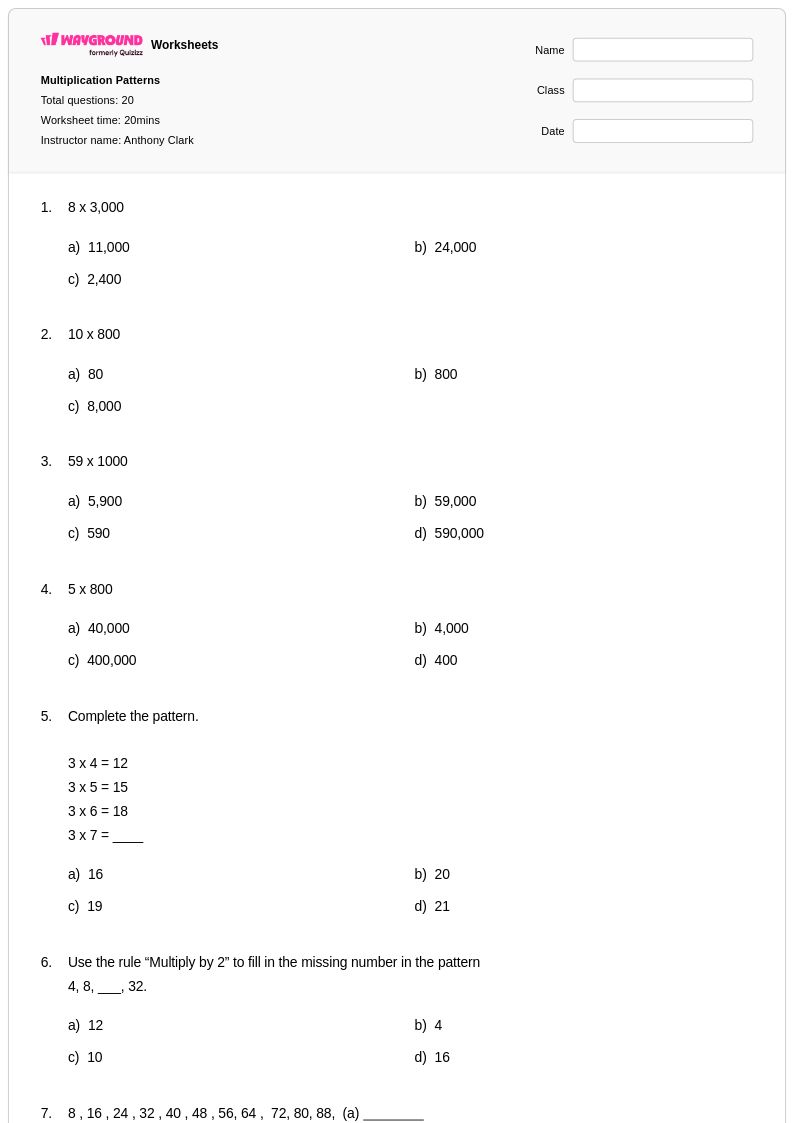
20 Q
3rd - Uni
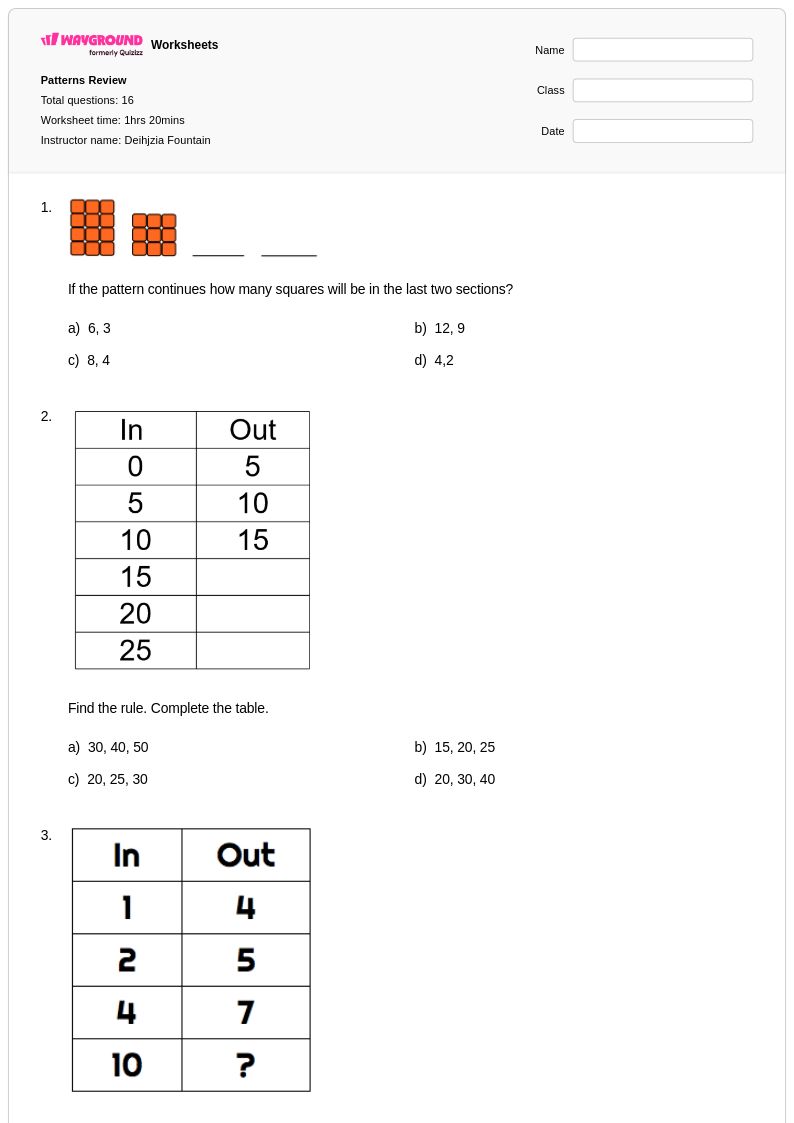
16 Q
4th

13 Q
4th
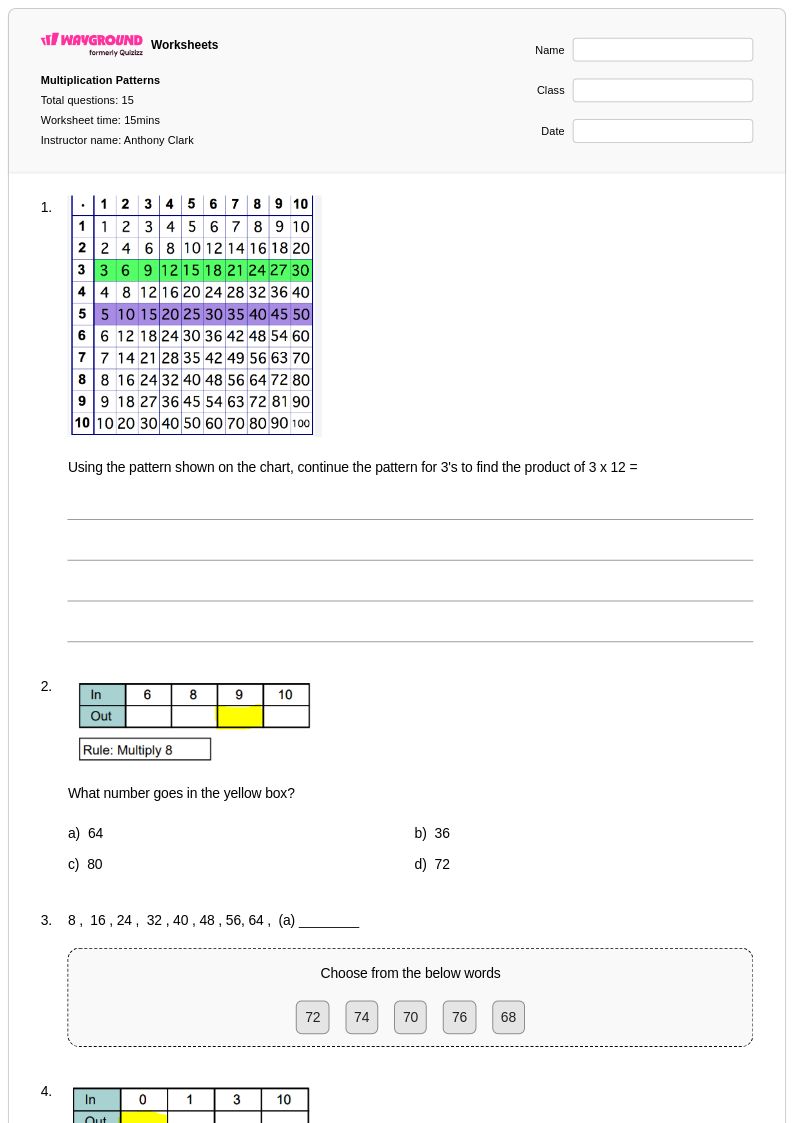
15 Q
3rd - Uni
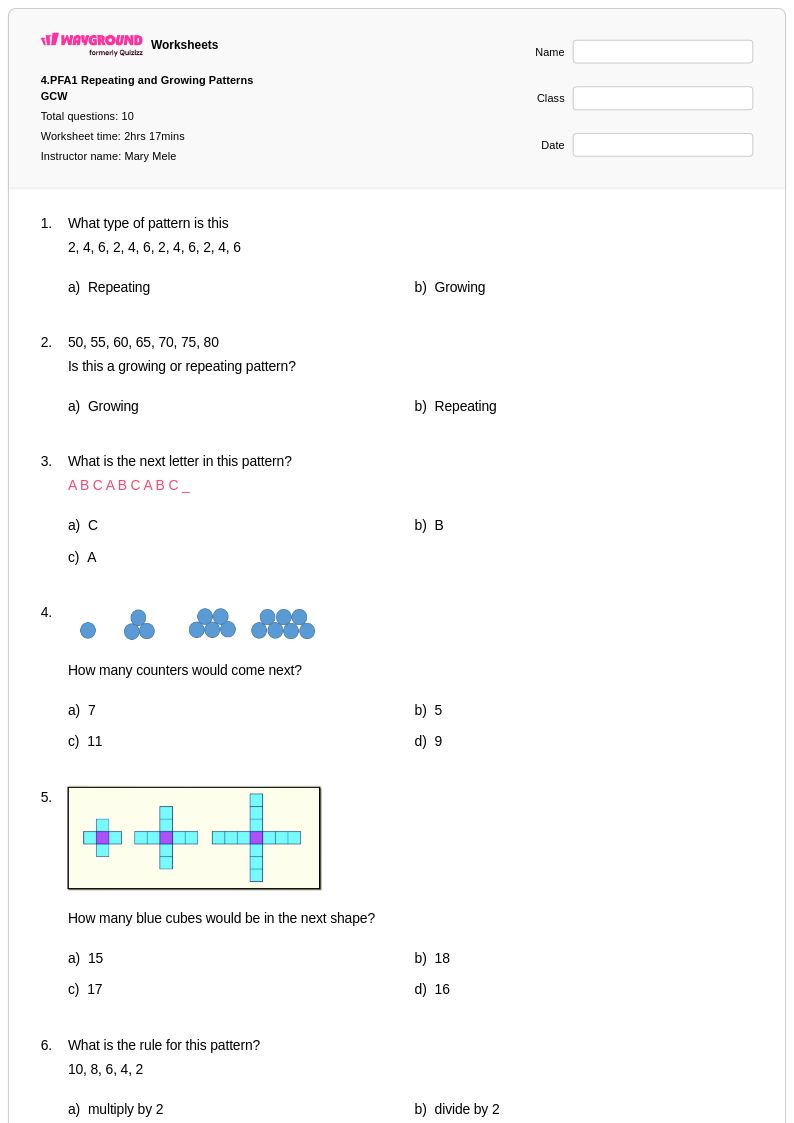
10 Q
4th
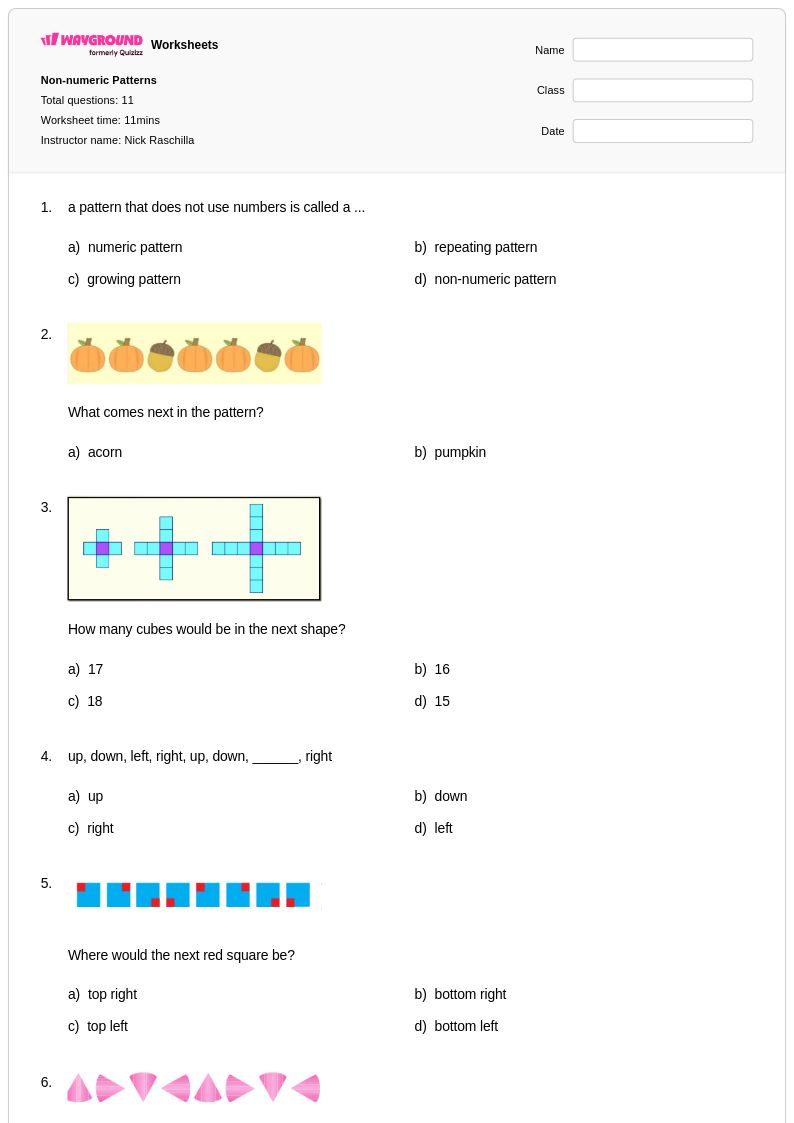
11 Q
4th
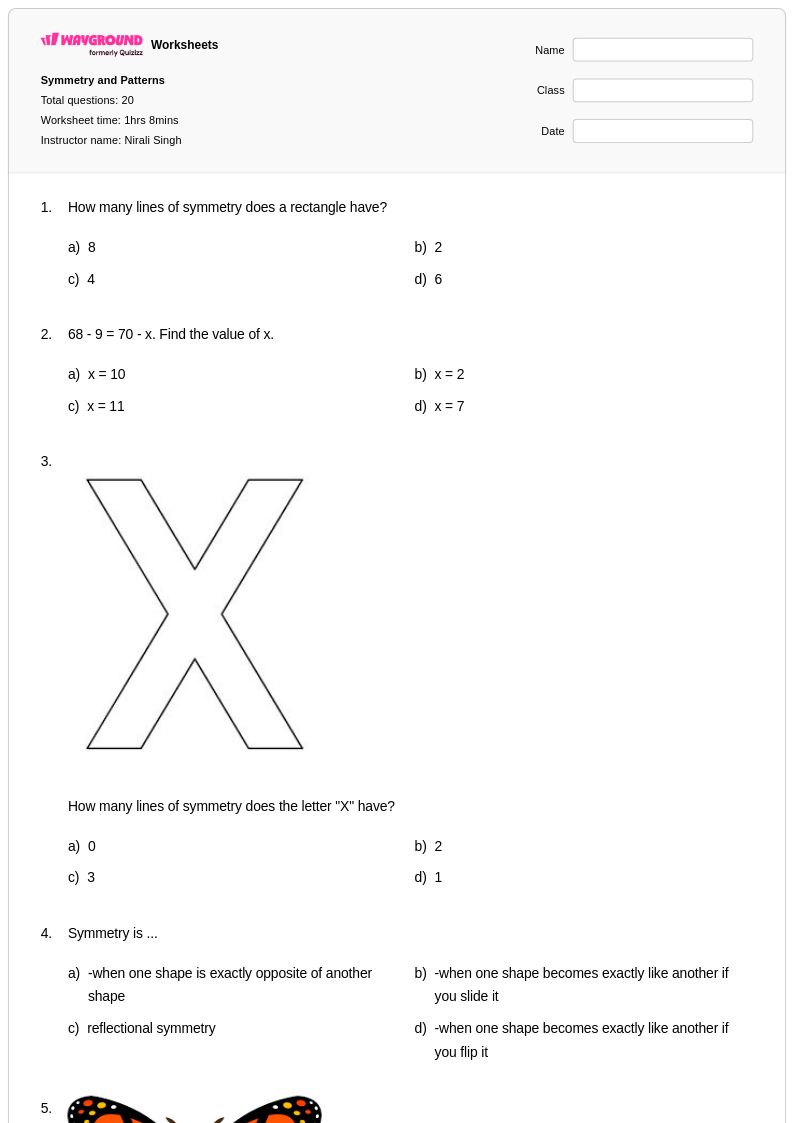
20 Q
4th - 5th
10 Q
4th - 6th
10 Q
1st - 12th
12 Q
4th
16 Q
3rd - 5th
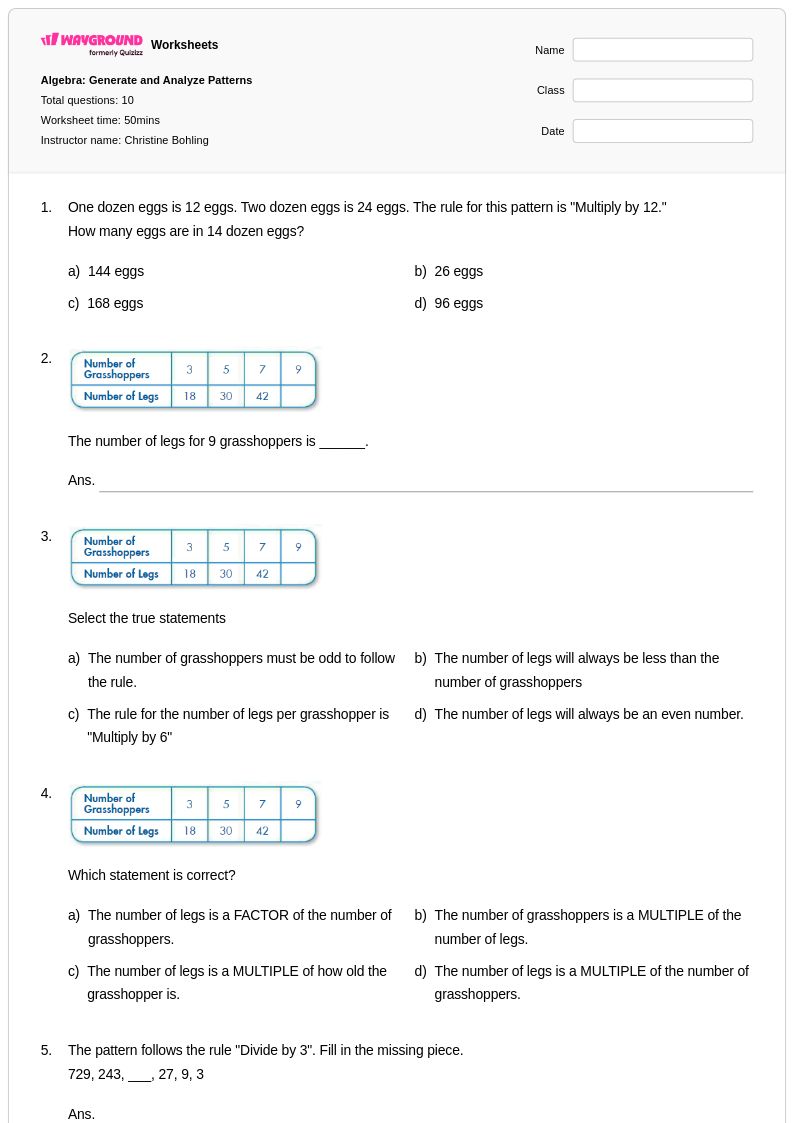
10 Q
4th
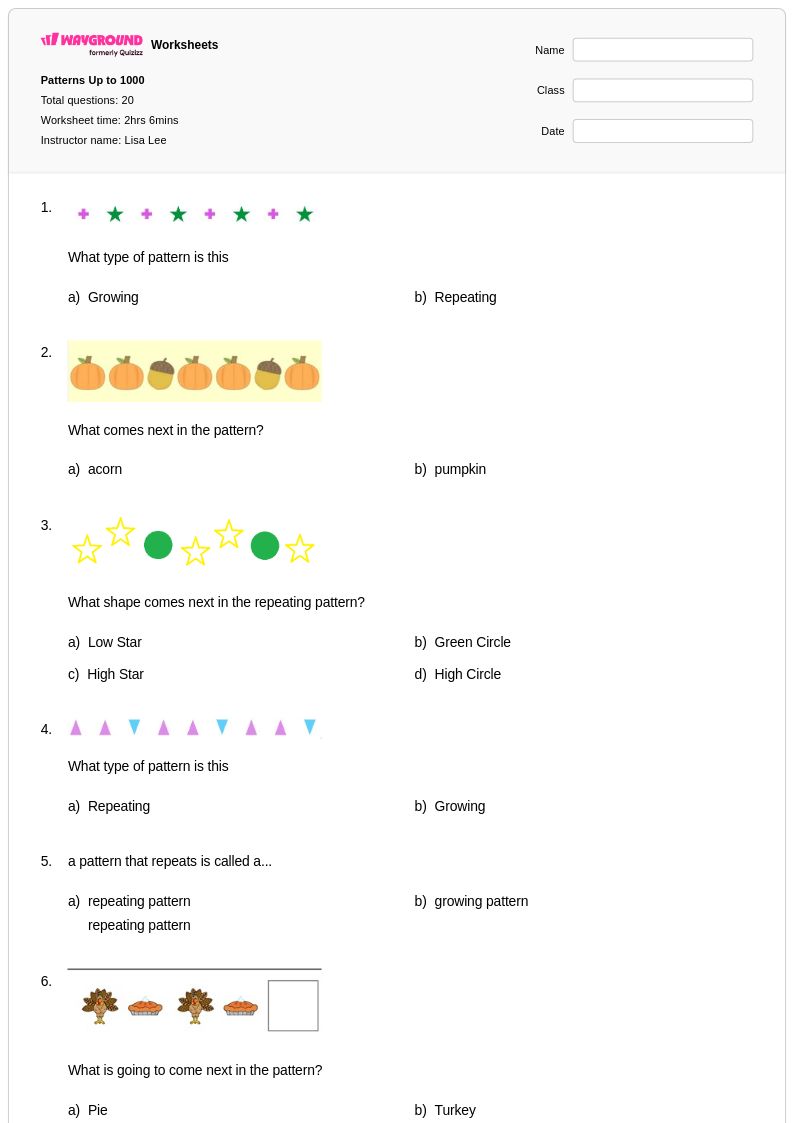
20 Q
4th
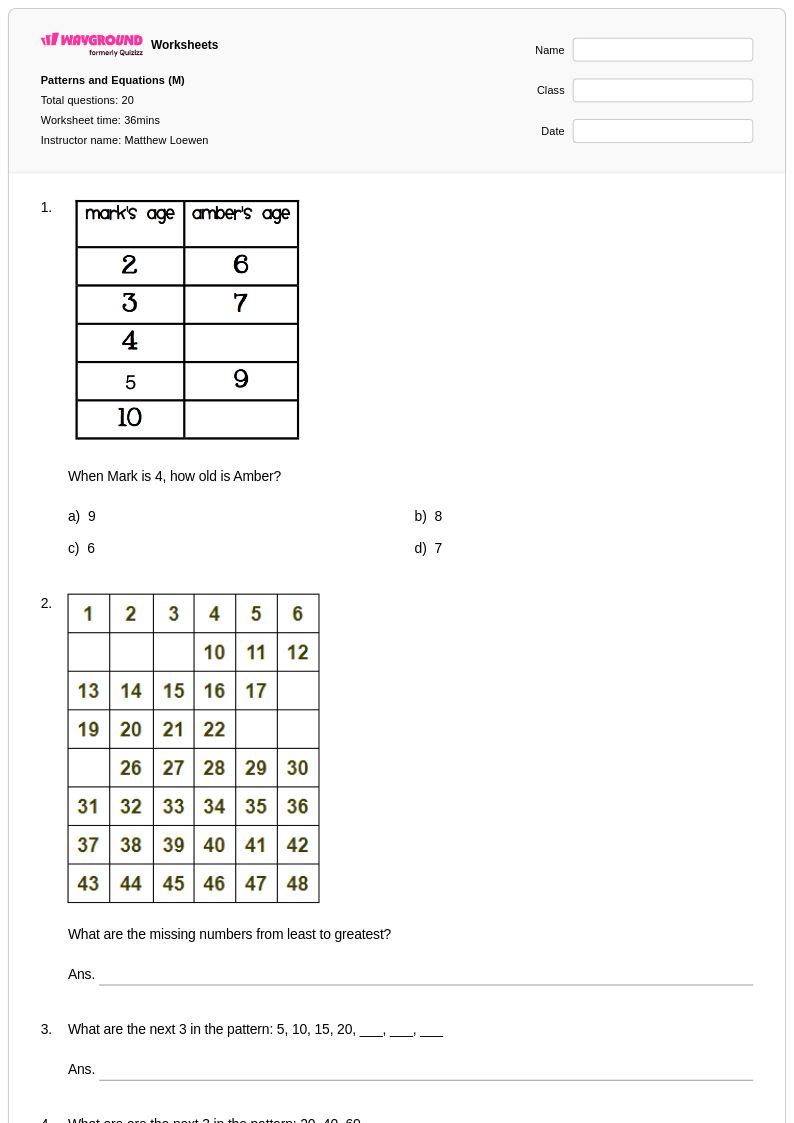
20 Q
2nd - 4th
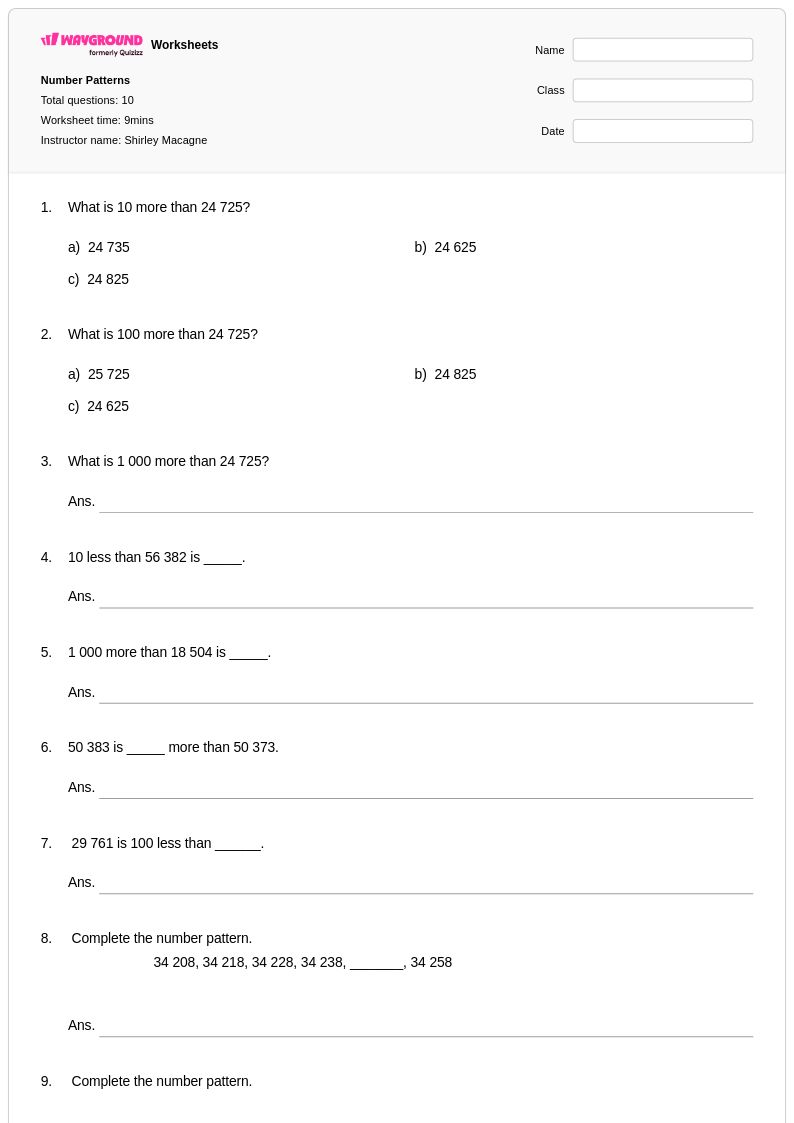
10 Q
4th
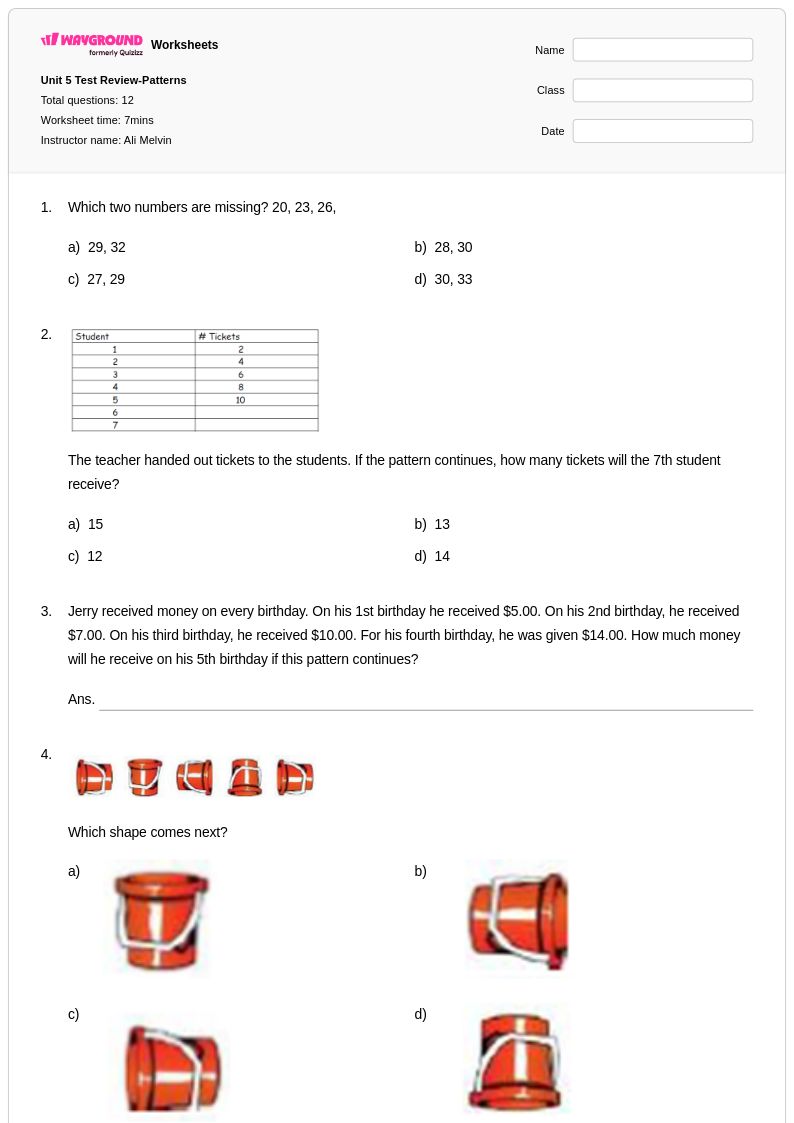
12 Q
4th
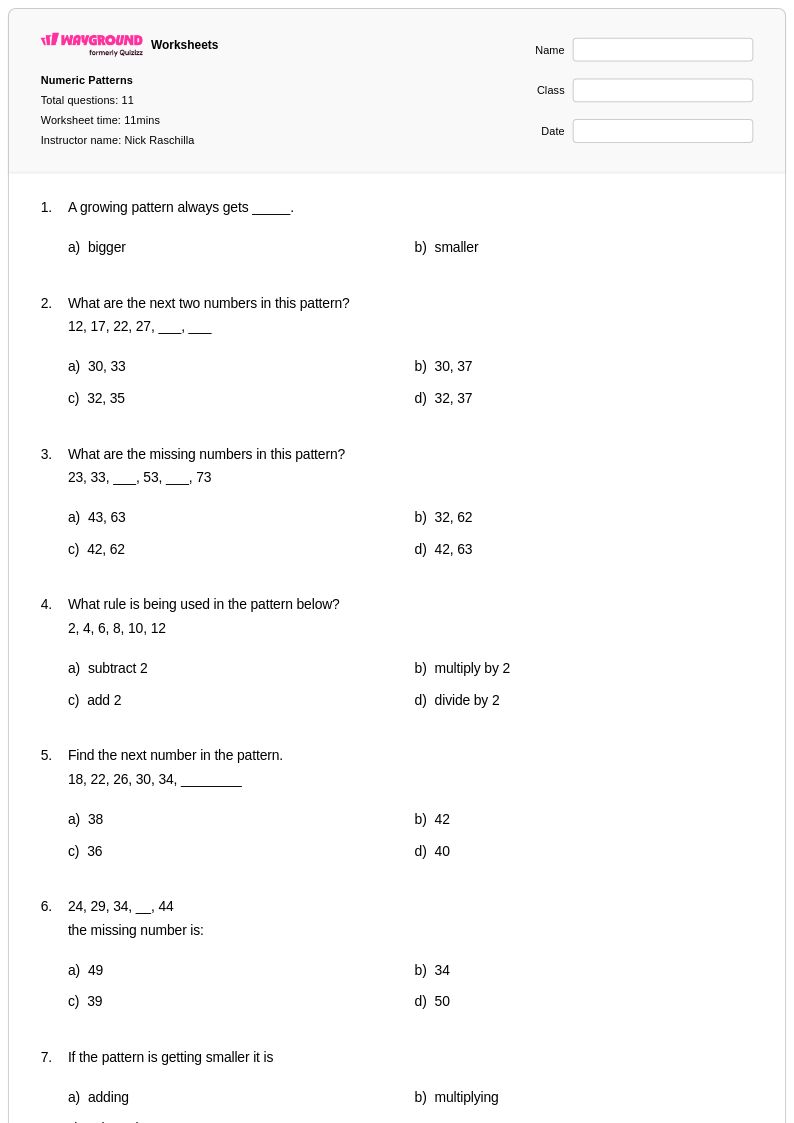
11 Q
4th
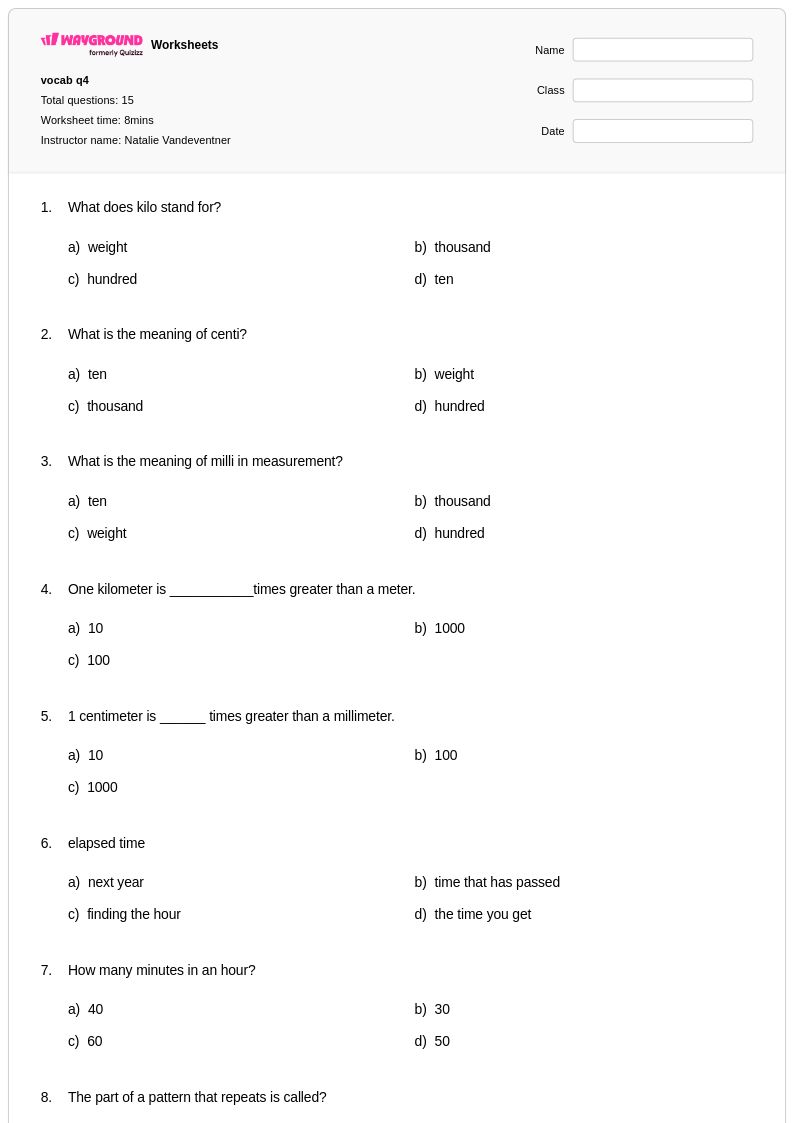
15 Q
4th
Explore Other Subject Worksheets for class 4
Explore printable Growing Patterns worksheets for Class 4
Growing patterns worksheets for Class 4 students available through Wayground (formerly Quizizz) provide essential practice for developing algebraic thinking and mathematical reasoning skills. These comprehensive printables help fourth-grade learners identify, extend, and analyze numerical and geometric sequences that follow specific rules or relationships. Students work through carefully crafted practice problems that progress from simple skip-counting patterns to more complex growing sequences involving shapes, numbers, and real-world scenarios. Each worksheet includes an answer key to support independent learning and self-assessment, while the free pdf format ensures easy access for both classroom instruction and home practice. These resources strengthen critical foundational skills including pattern recognition, logical reasoning, and the ability to make predictions based on mathematical relationships.
Wayground (formerly Quizizz) empowers educators with millions of teacher-created growing patterns resources specifically designed for Class 4 mathematics instruction. The platform's robust search and filtering capabilities allow teachers to quickly locate worksheets that align with curriculum standards and match their students' specific learning needs. Advanced differentiation tools enable instructors to customize content difficulty levels, making these materials suitable for remediation, on-grade-level practice, and enrichment activities. Teachers can access resources in both printable and digital formats, including downloadable pdf versions that streamline lesson planning and classroom management. This comprehensive collection supports educators in providing targeted skill practice, conducting formative assessments, and ensuring students develop the pattern recognition abilities essential for success in higher-level mathematical concepts.