
20 Q
1st - Uni
18 Q
1st
22 Q
1st - 2nd
20 Q
1st
15 Q
KG - 1st
20 Q
1st - Uni
22 Q
1st - 2nd
12 Q
1st
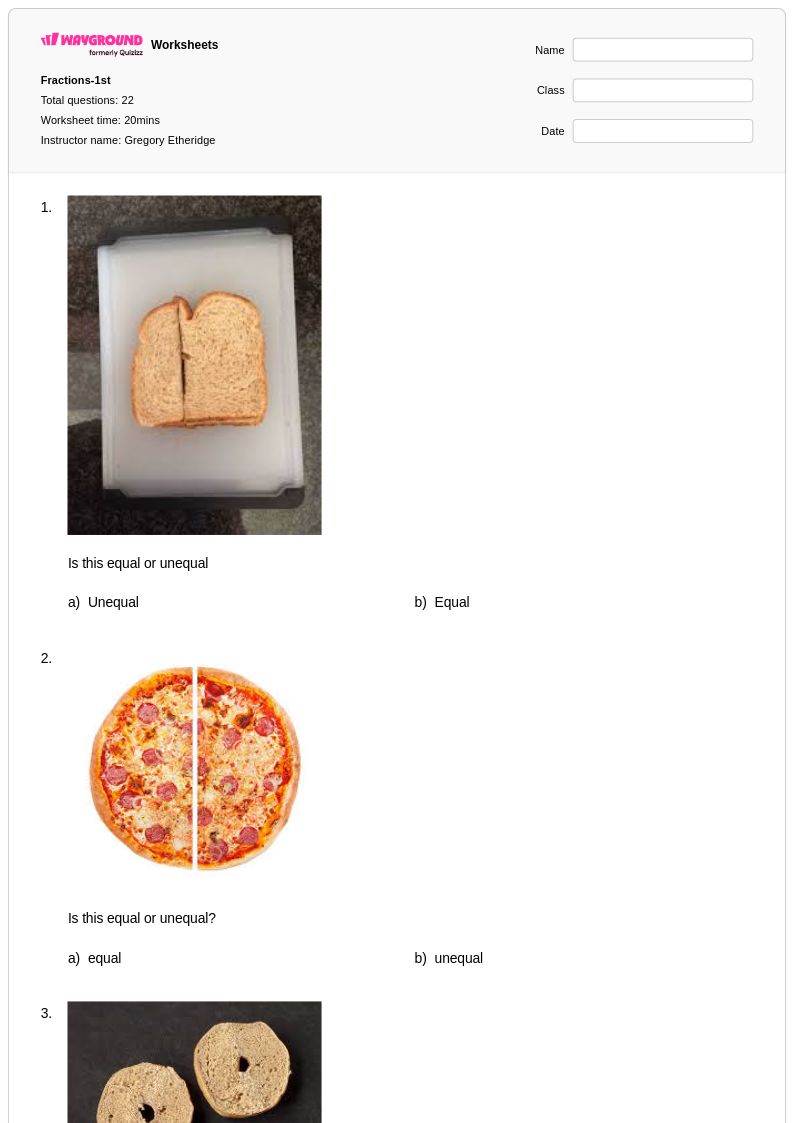
22 Q
1st
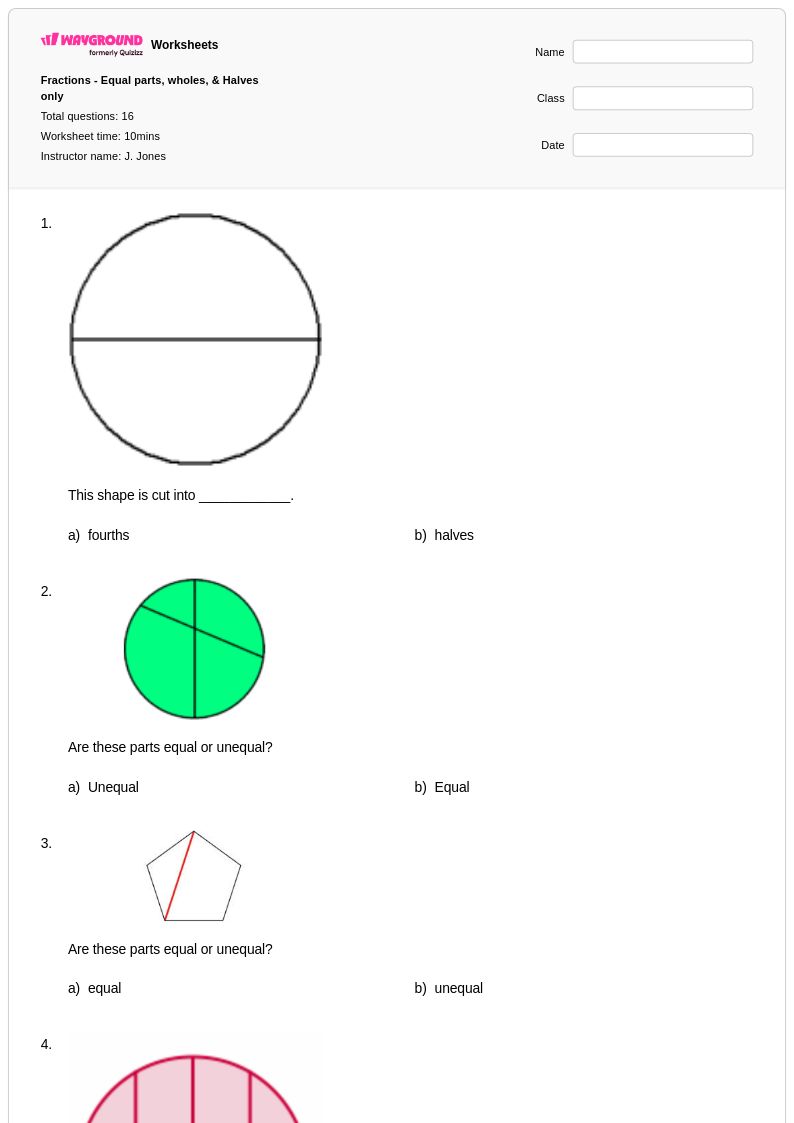
16 Q
1st
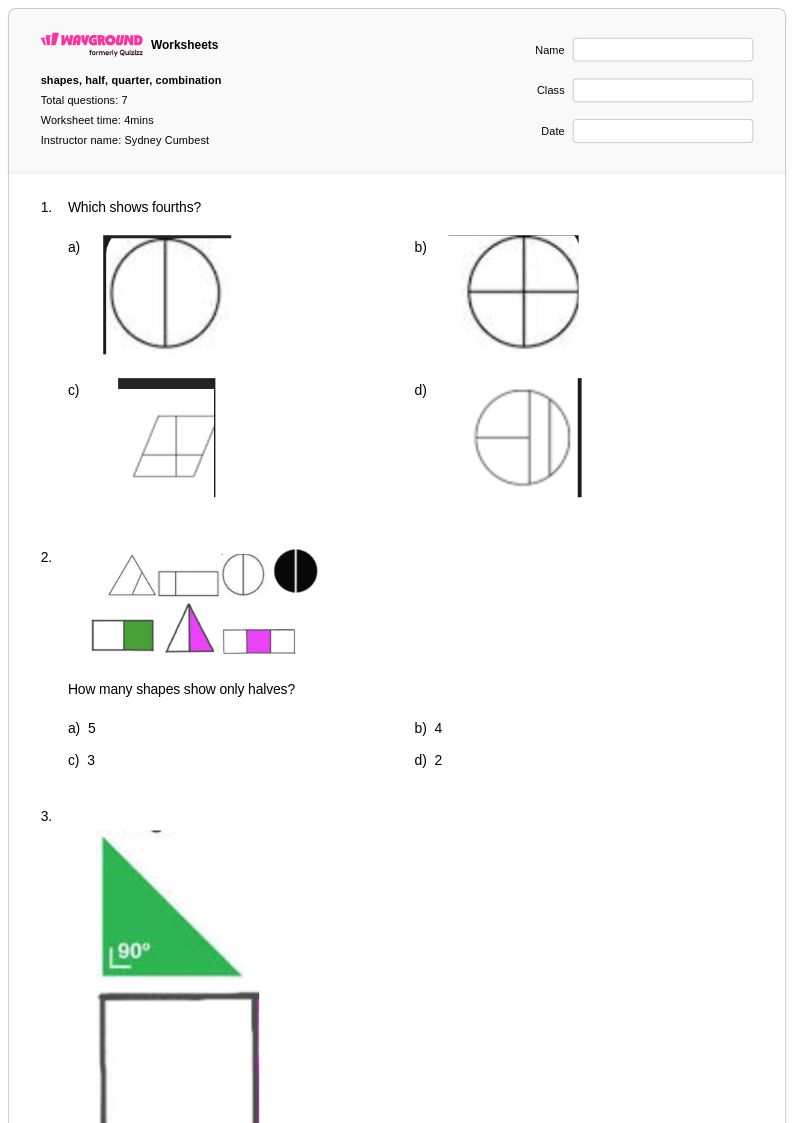
7 Q
1st
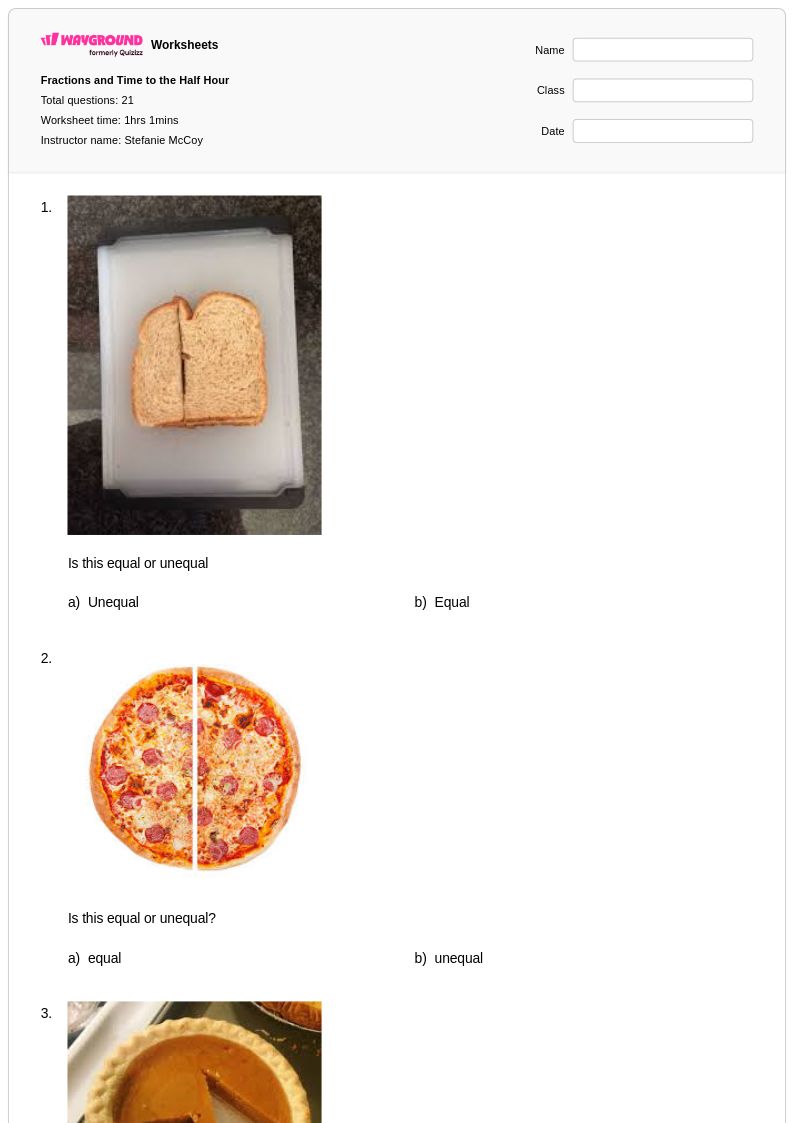
21 Q
1st
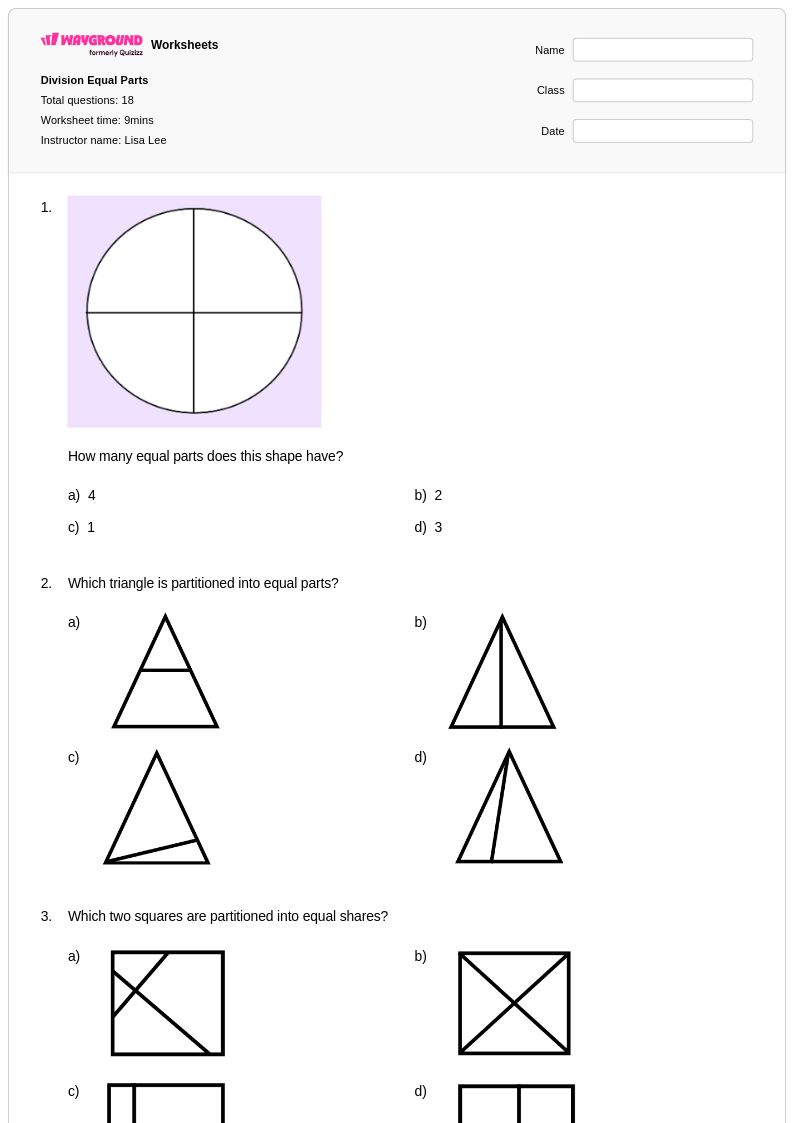
18 Q
1st
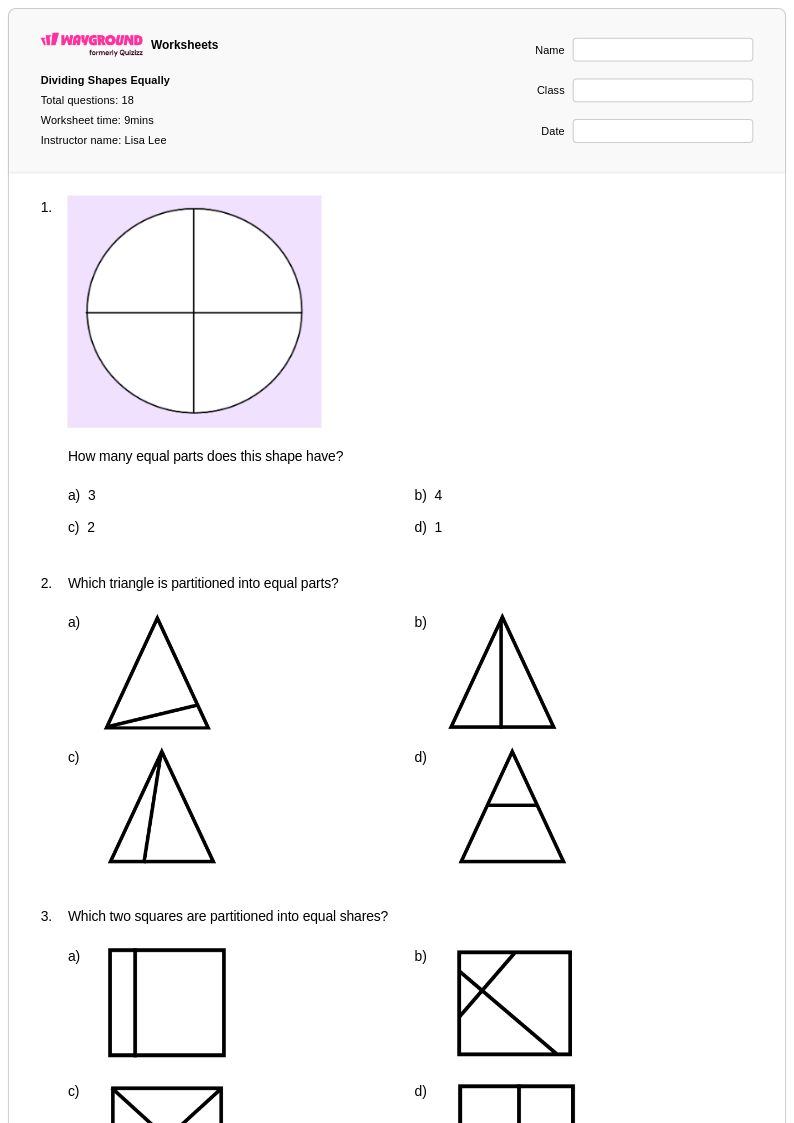
18 Q
1st
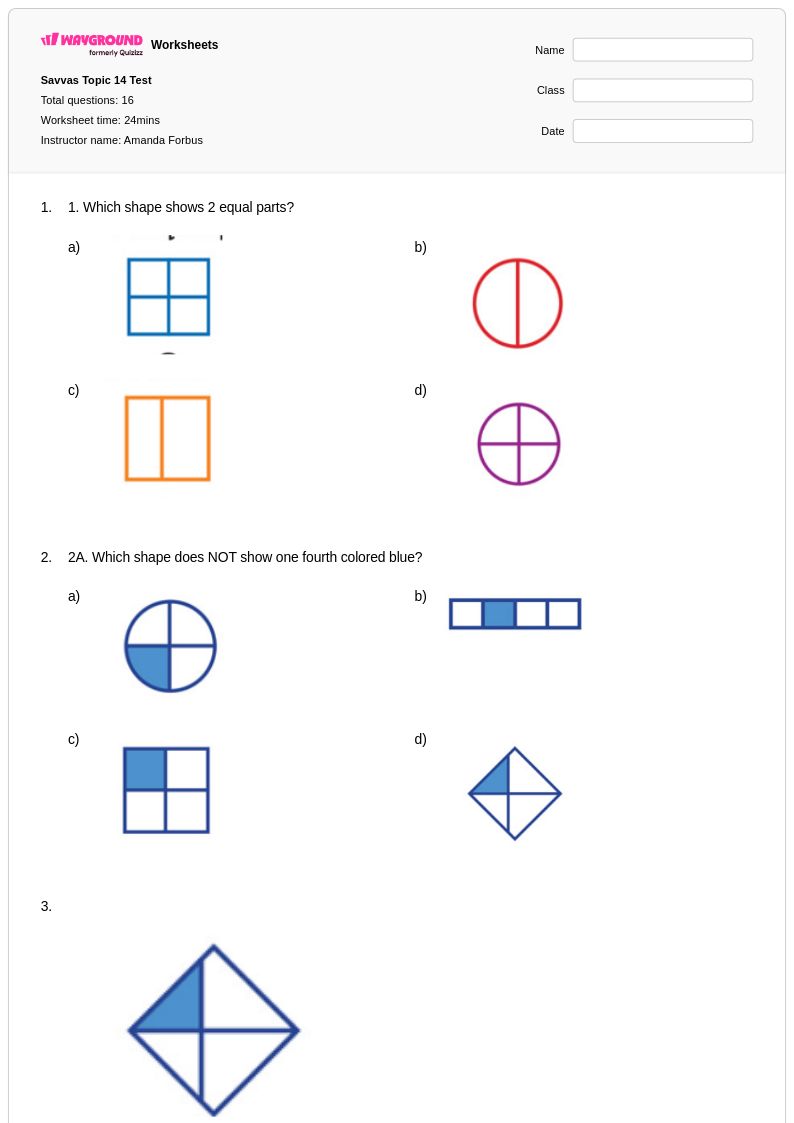
16 Q
1st
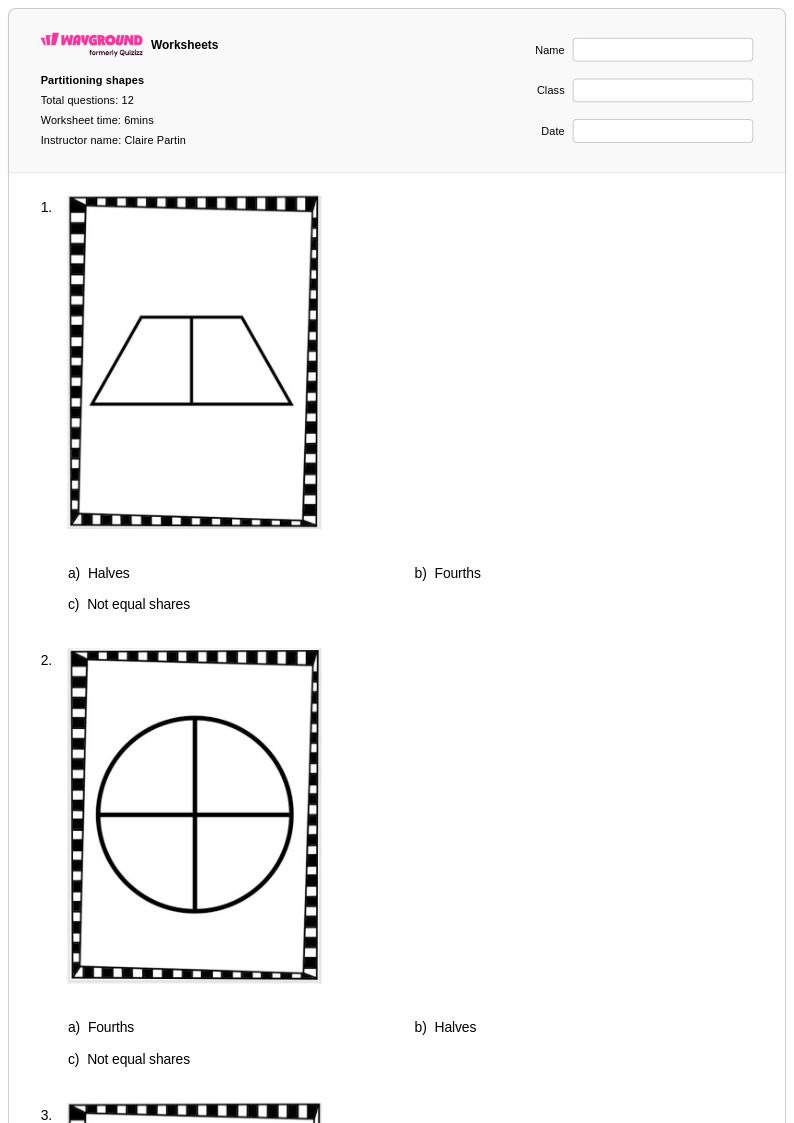
12 Q
1st
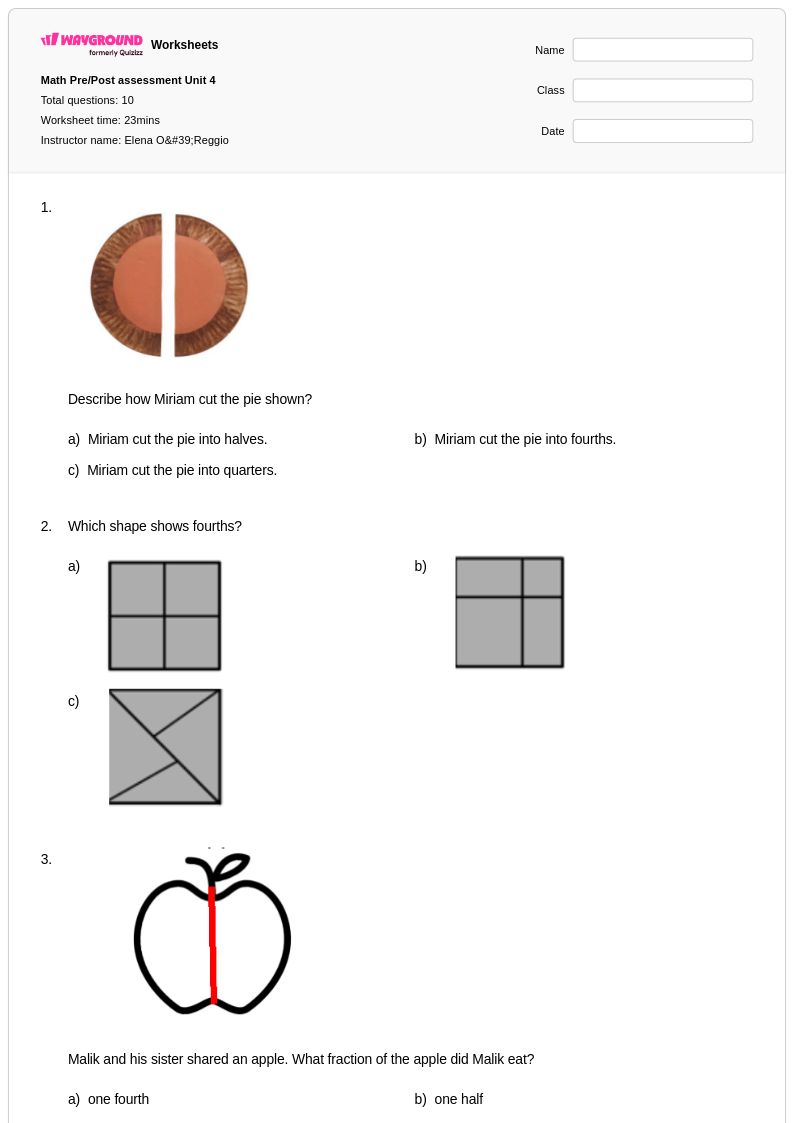
10 Q
1st
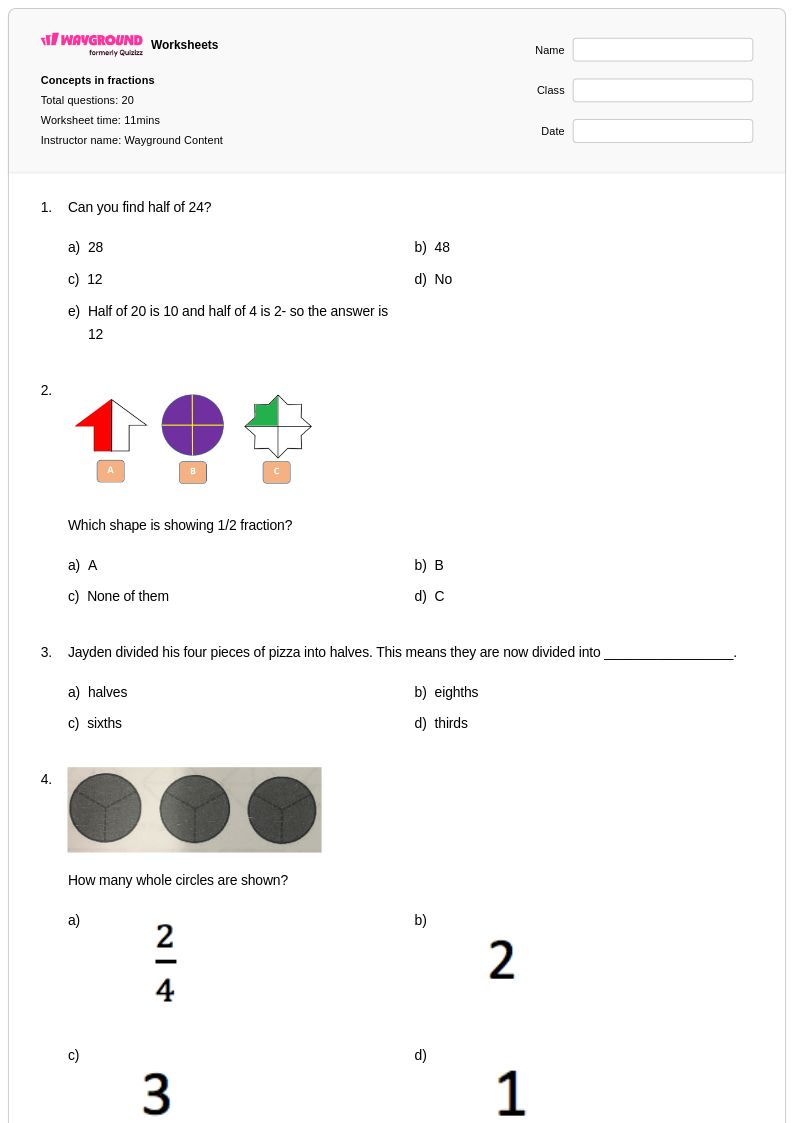
20 Q
1st
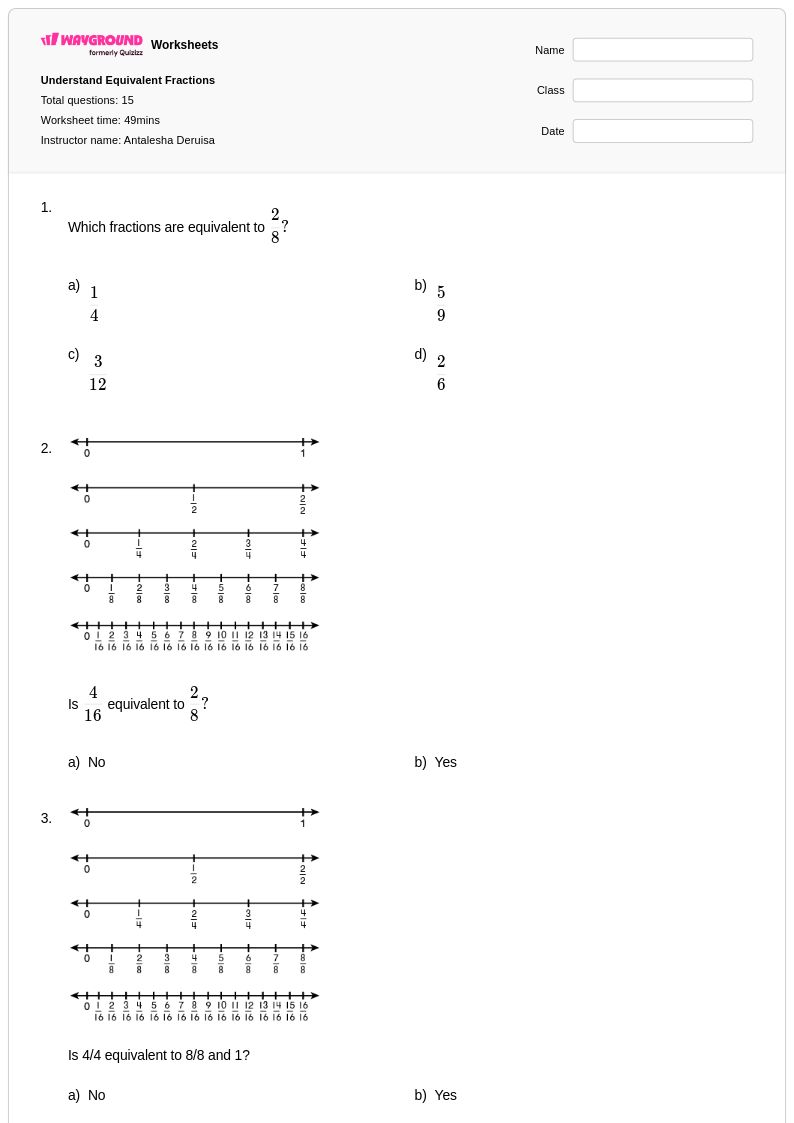
15 Q
1st - 5th

21 Q
1st
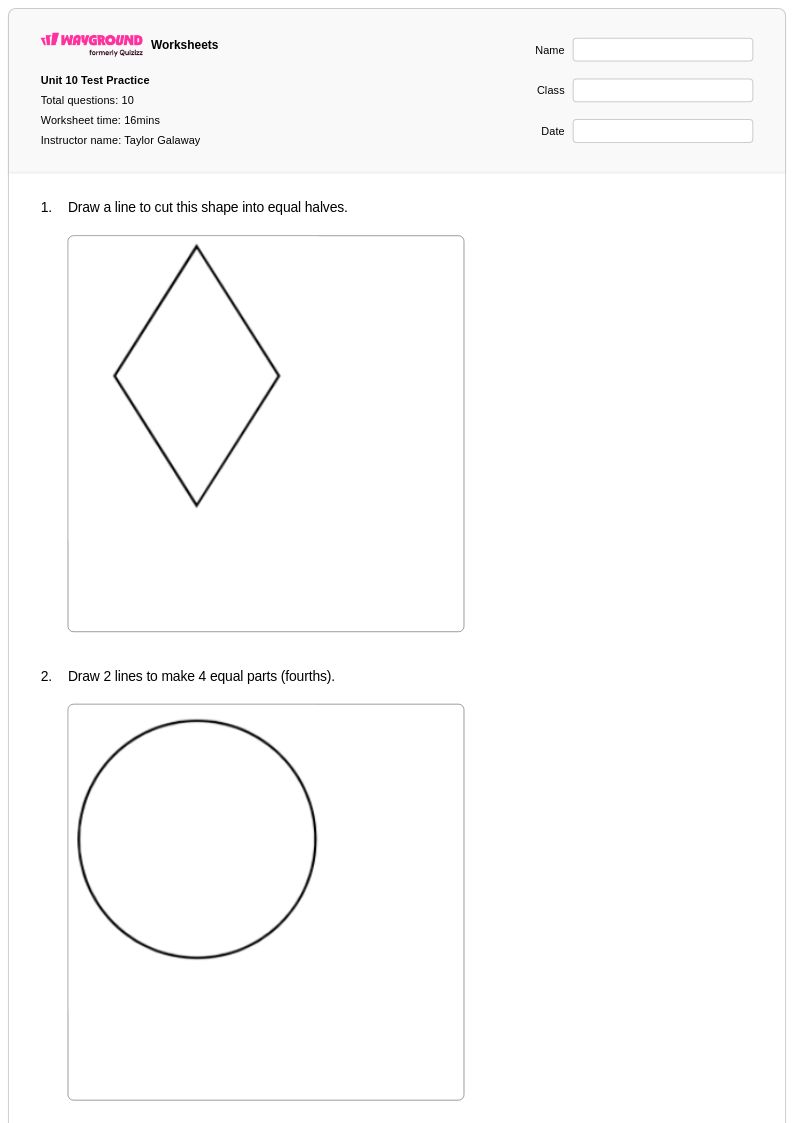
10 Q
1st
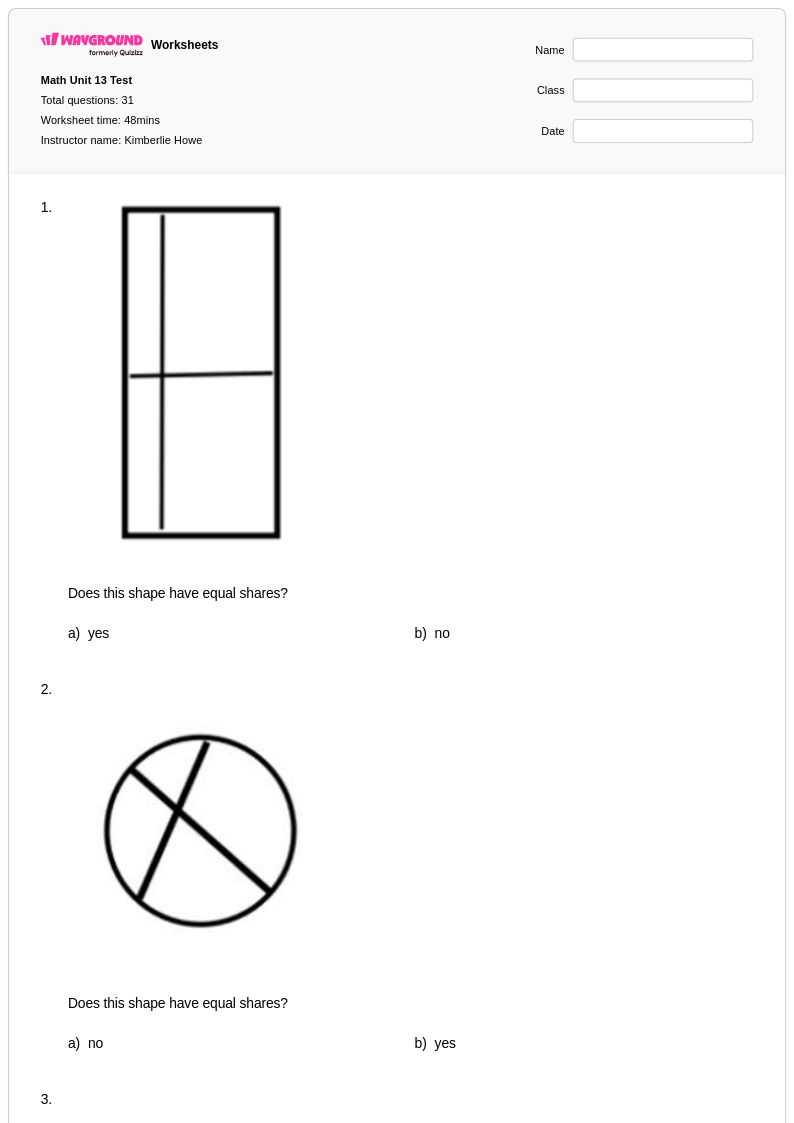
31 Q
1st
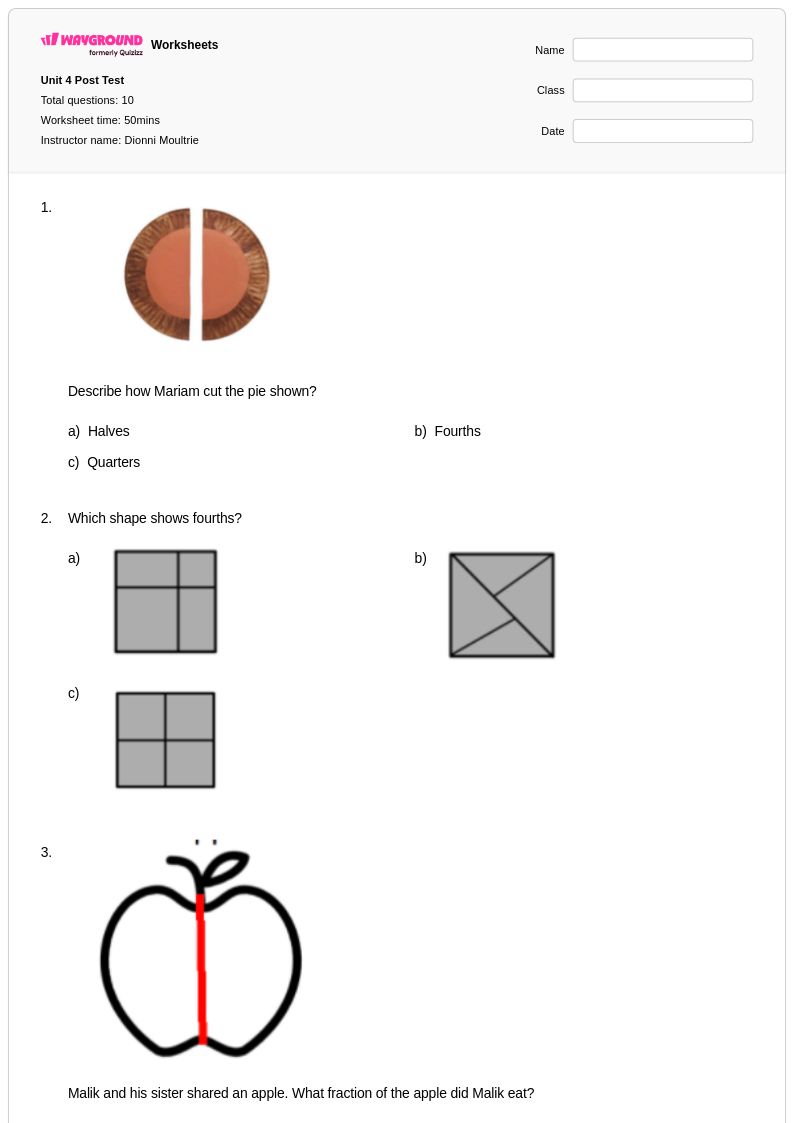
10 Q
1st
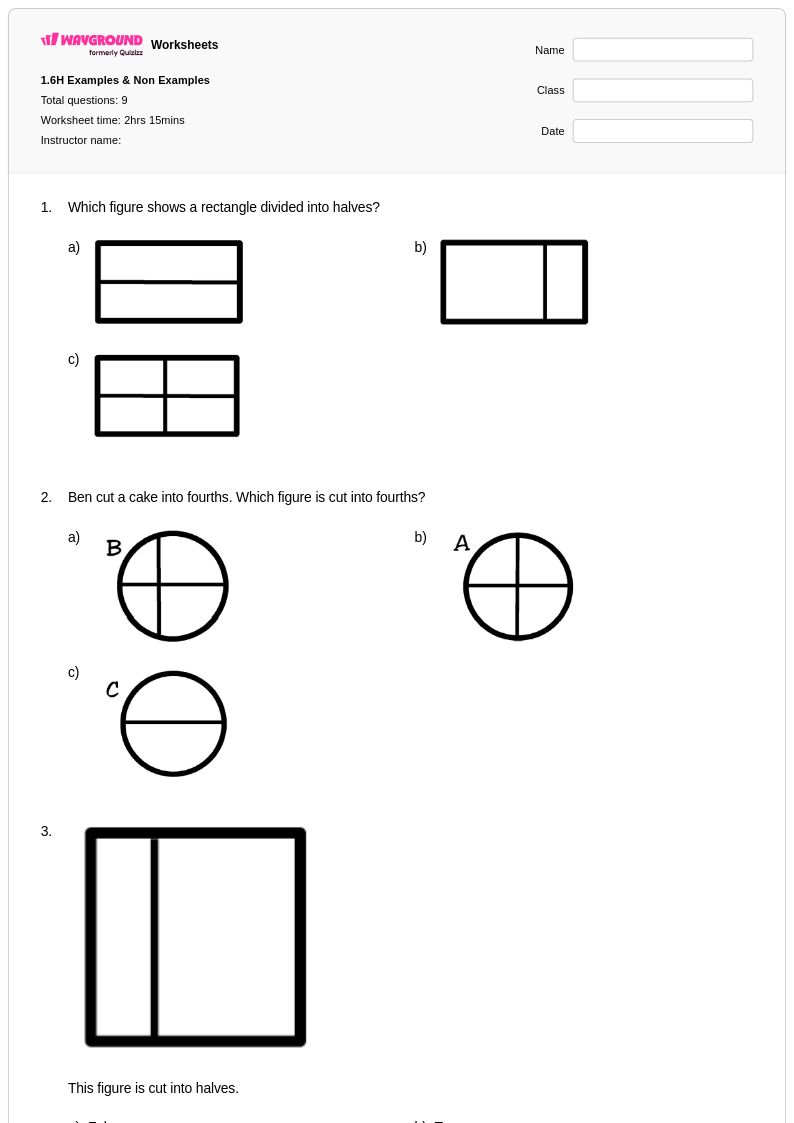
9 Q
1st
Explore Halves and Fourths Worksheets by Grades
Explore Other Subject Worksheets for class 1
Explore printable Halves and Fourths worksheets for Class 1
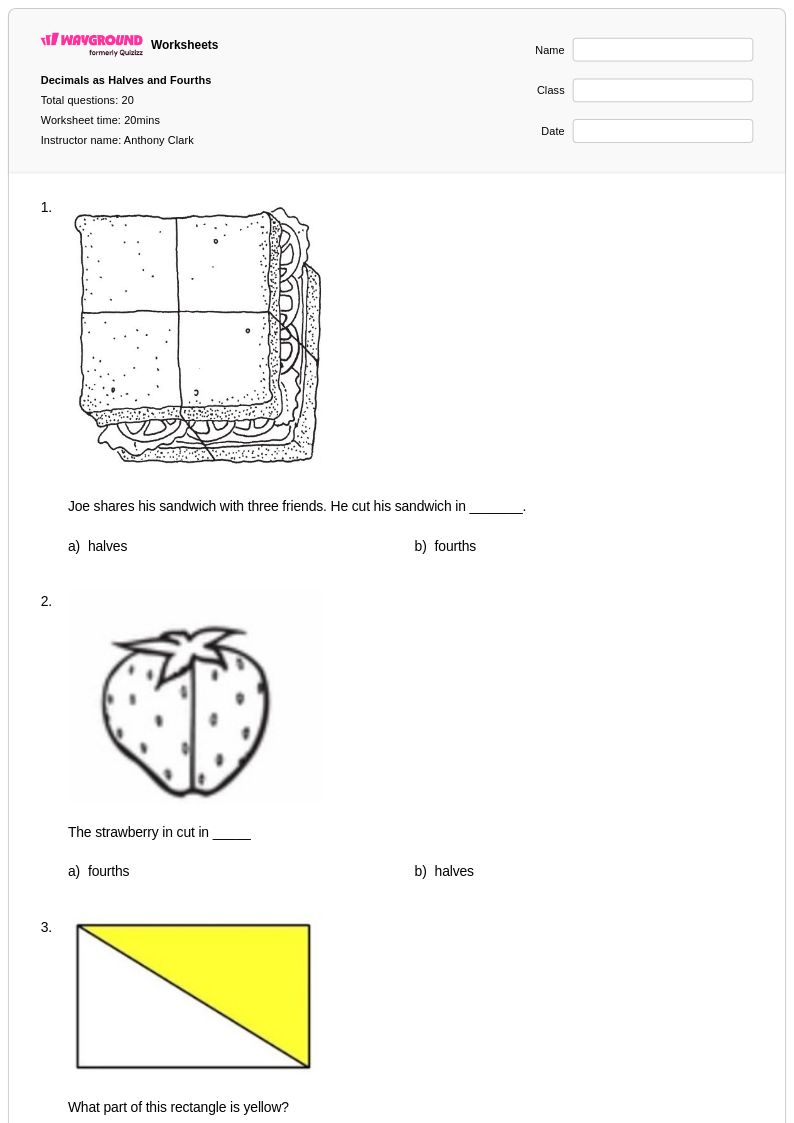
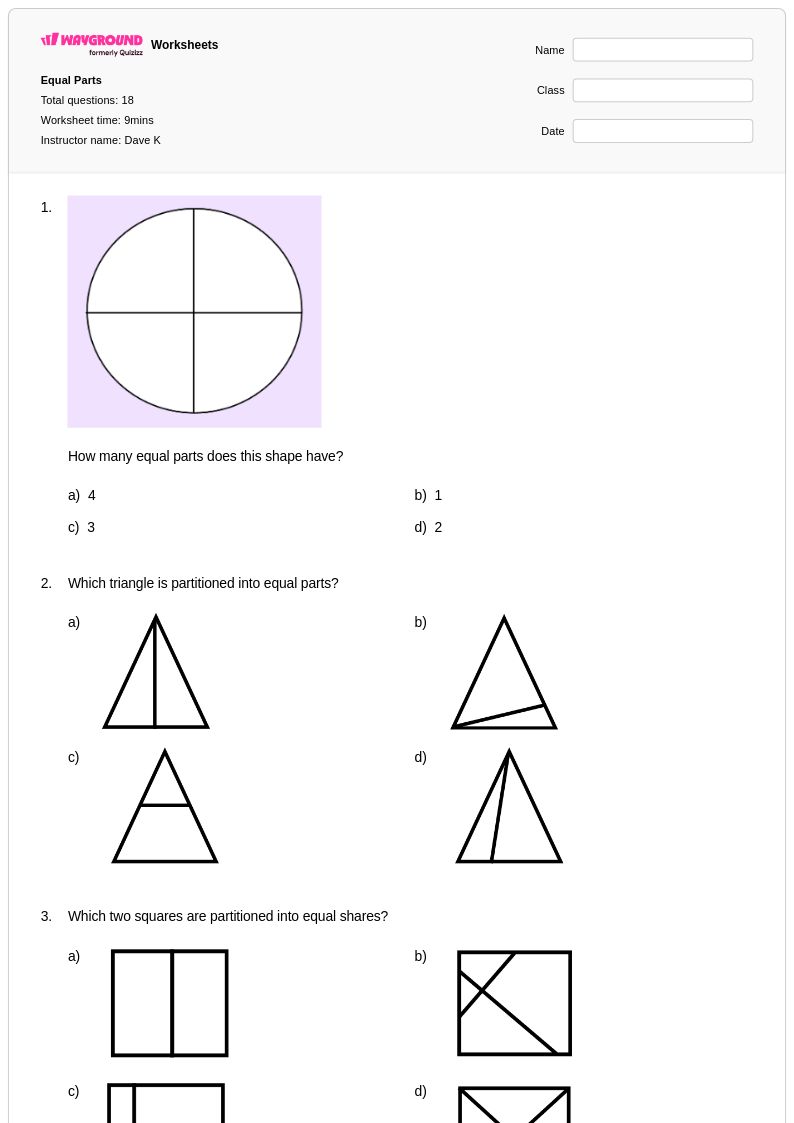
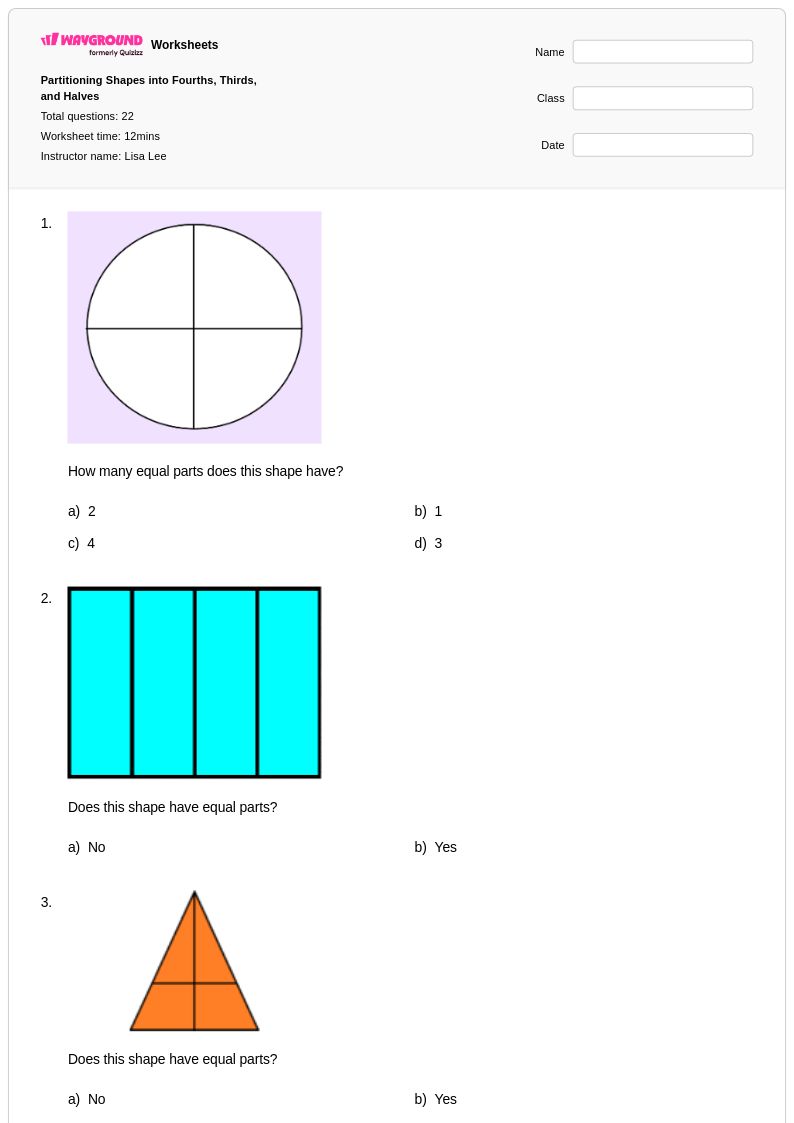
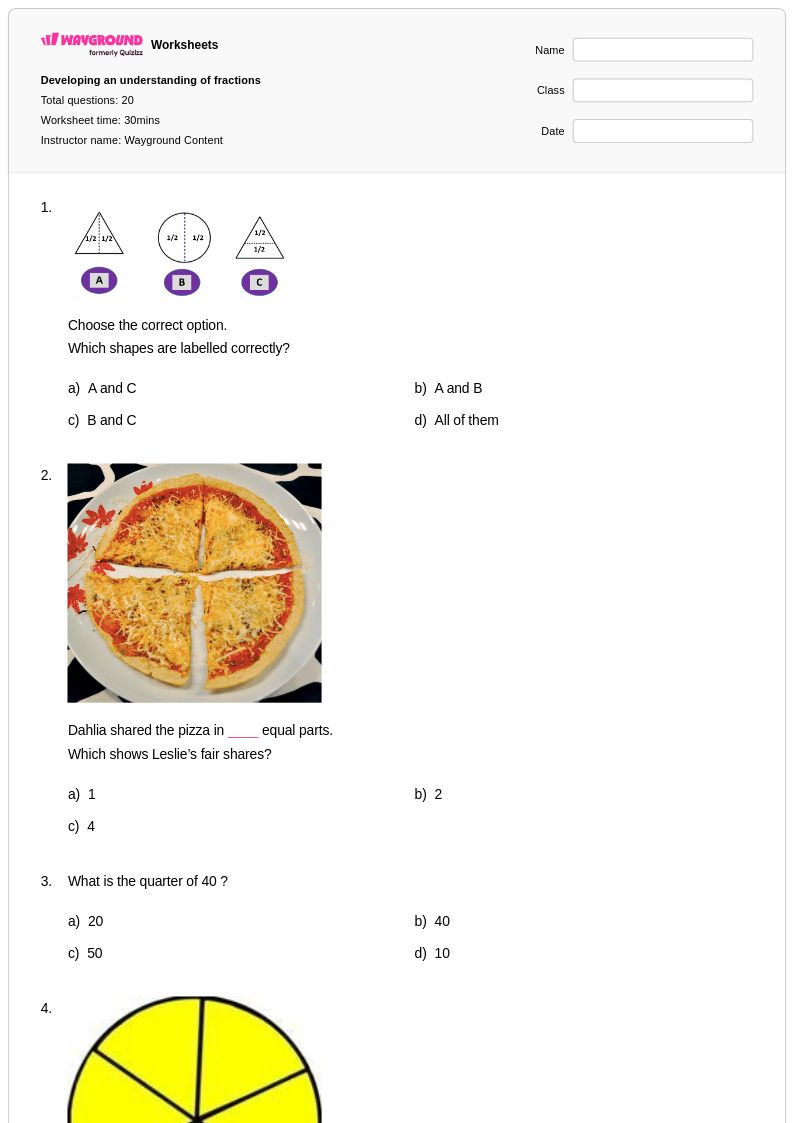
Halves and fourths worksheets for Class 1 students available through Wayground (formerly Quizizz) provide foundational fraction instruction that introduces young learners to the concept of equal parts within a whole. These carefully designed practice problems help first-grade students develop visual fraction recognition skills by identifying when shapes, objects, and sets are divided into two equal parts (halves) or four equal parts (fourths). The worksheets strengthen critical mathematical thinking through hands-on activities that require students to shade, circle, and identify fractional parts while building essential number sense concepts. Each printable resource includes comprehensive answer keys and free pdf downloads, allowing educators to seamlessly integrate fraction fundamentals into their mathematics curriculum while providing students with concrete visual representations of these abstract mathematical concepts.
Wayground (formerly Quizizz) empowers teachers with millions of educator-created halves and fourths resources that support comprehensive Class 1 fraction instruction through robust search and filtering capabilities aligned to state mathematics standards. The platform's differentiation tools enable instructors to customize worksheets based on individual student needs, offering both remediation support for struggling learners and enrichment opportunities for advanced students ready to explore deeper fraction concepts. Teachers can access these materials in flexible formats including printable worksheets and digital activities, streamlining lesson planning while ensuring consistent skill practice across diverse learning environments. The extensive collection supports systematic fraction instruction that builds from concrete manipulative experiences to abstract mathematical understanding, helping educators establish solid conceptual foundations that prepare students for more complex fraction work in subsequent grade levels.
FAQs
What is expected of a 1st grader learning halves and fourths?
What's the best way to teach halves and fourths in first grade?
What types of problems help first graders practice fractions?
What common errors do first graders make with halves and fourths?
How can I use these Grade 1 fraction worksheets?
How does this topic align with 1st grade math standards?