Free Printable Harriet Tubman Worksheets for Class 10
Explore Class 10 Harriet Tubman worksheets and printables that help students learn about the Underground Railroad conductor's heroic journey, featuring free PDF activities with comprehensive answer keys for effective practice.
Explore printable Harriet Tubman worksheets for Class 10
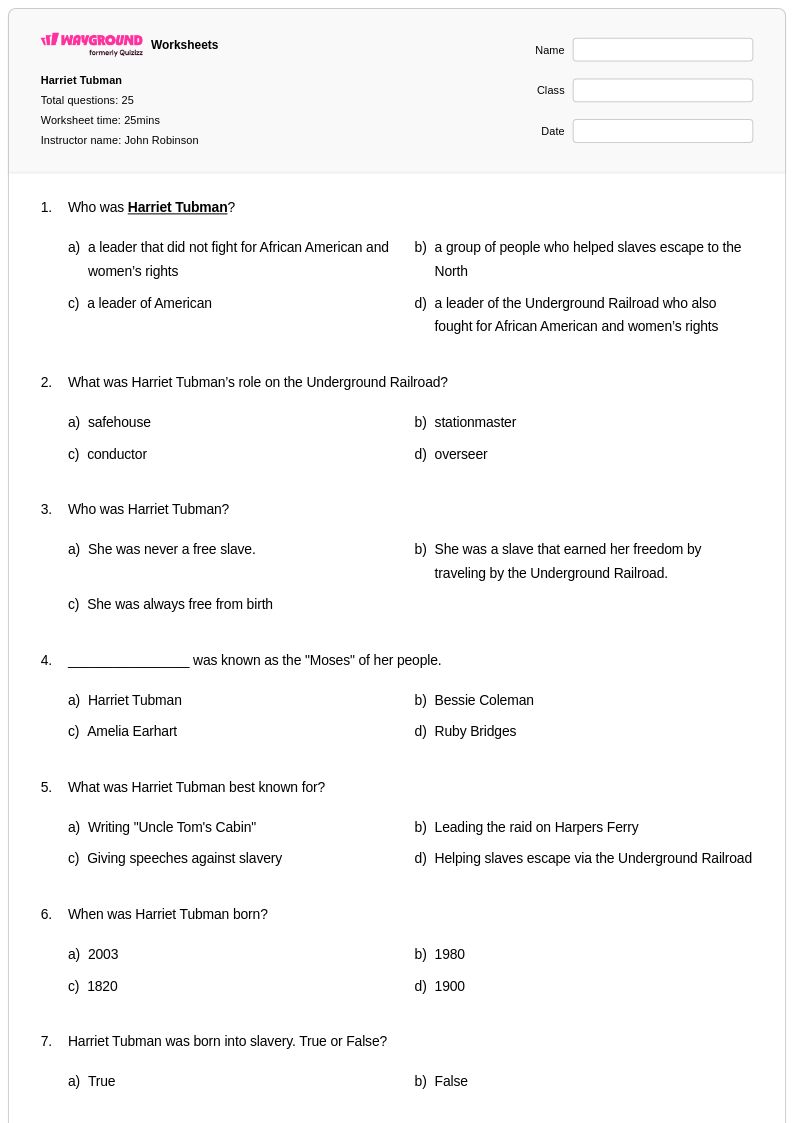
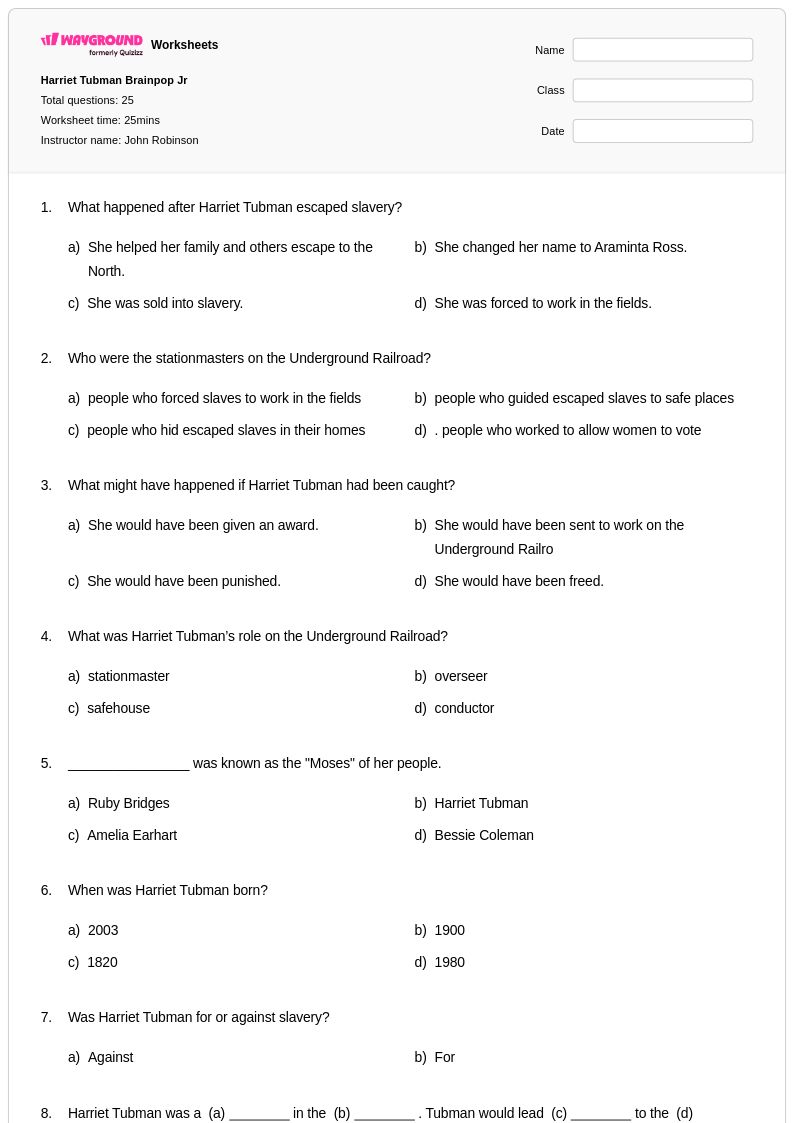
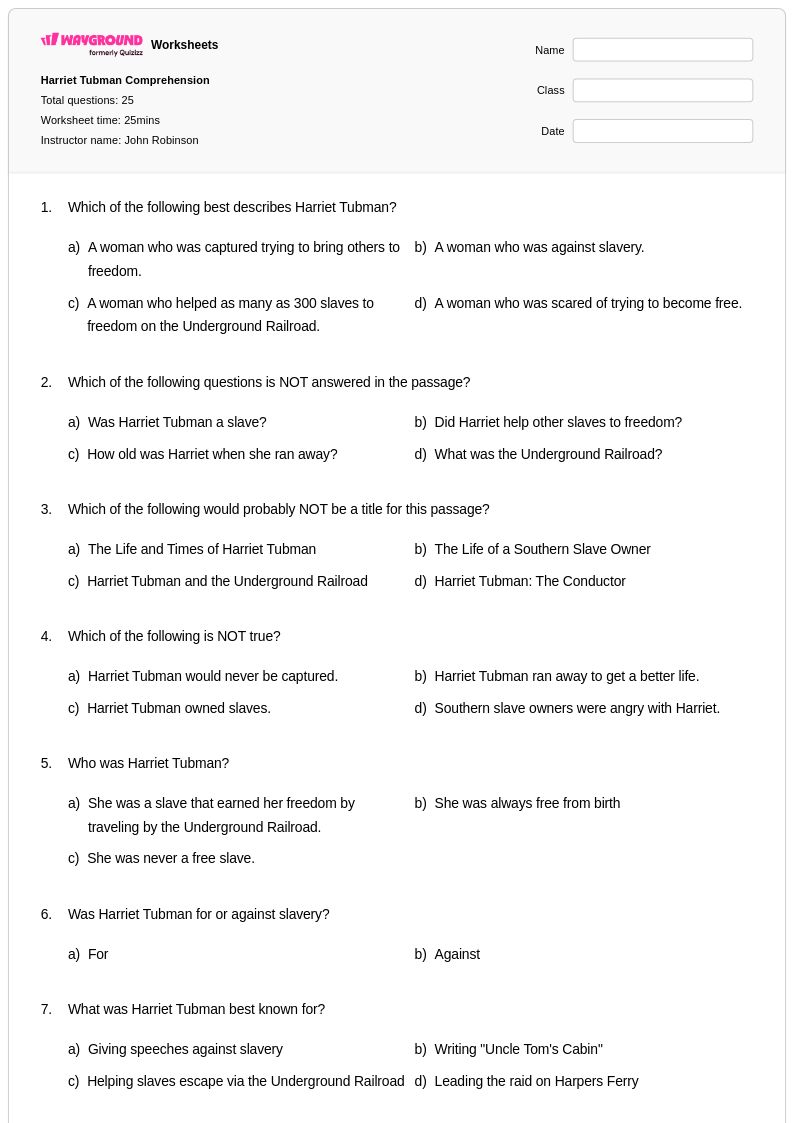
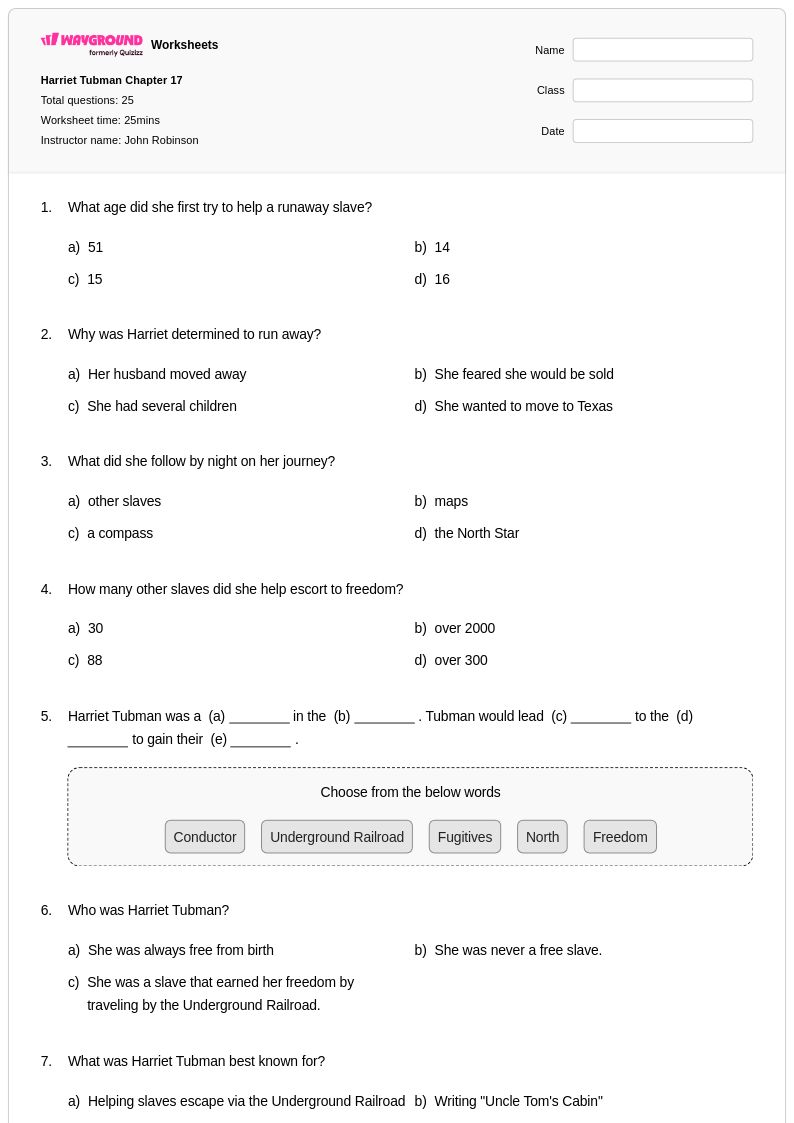
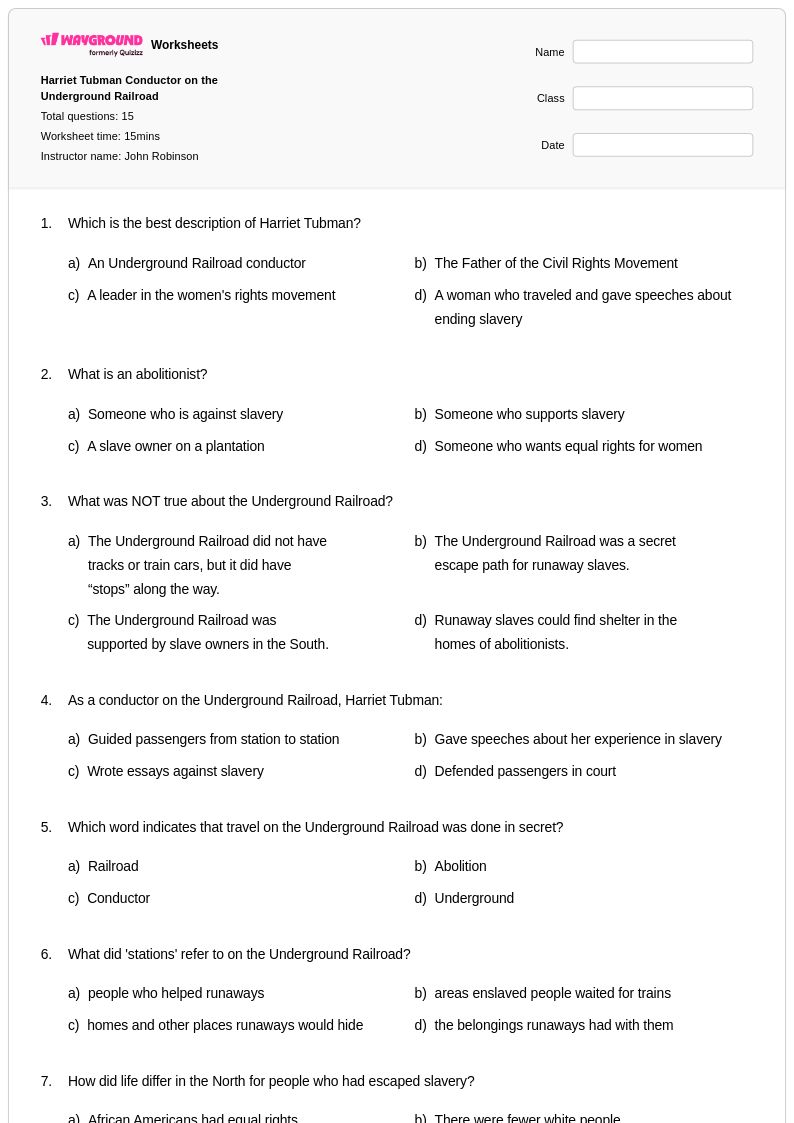
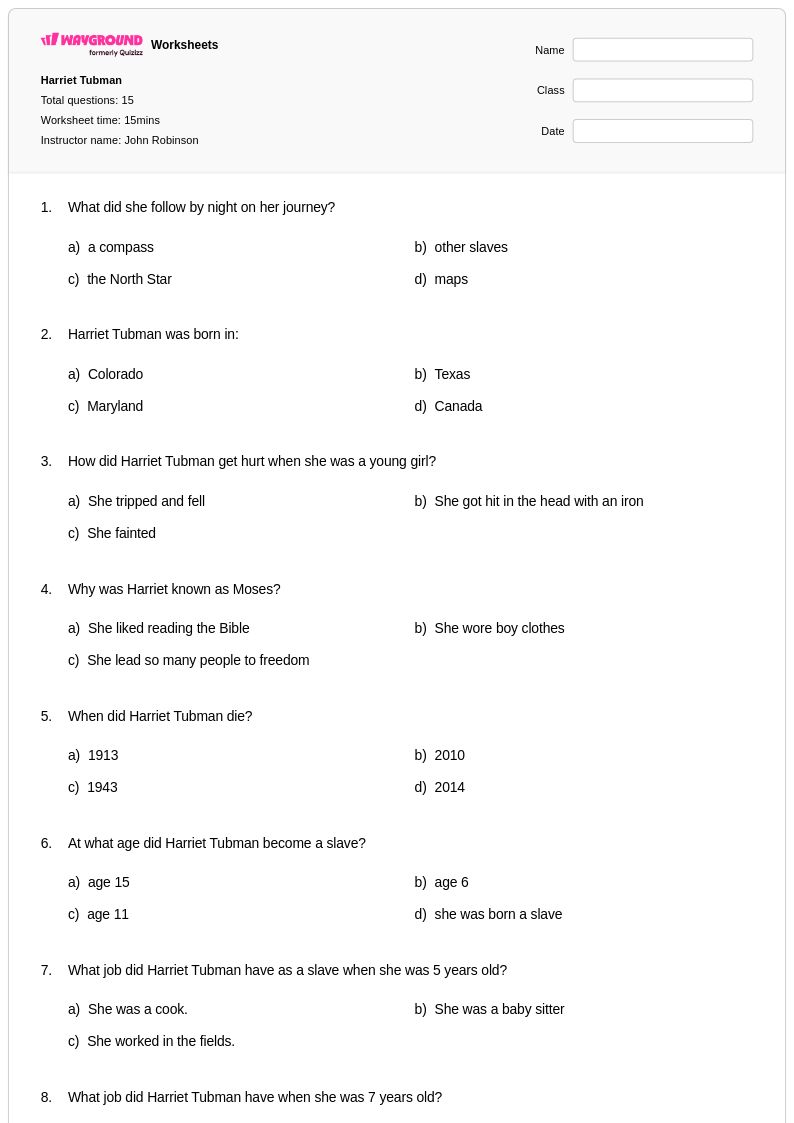
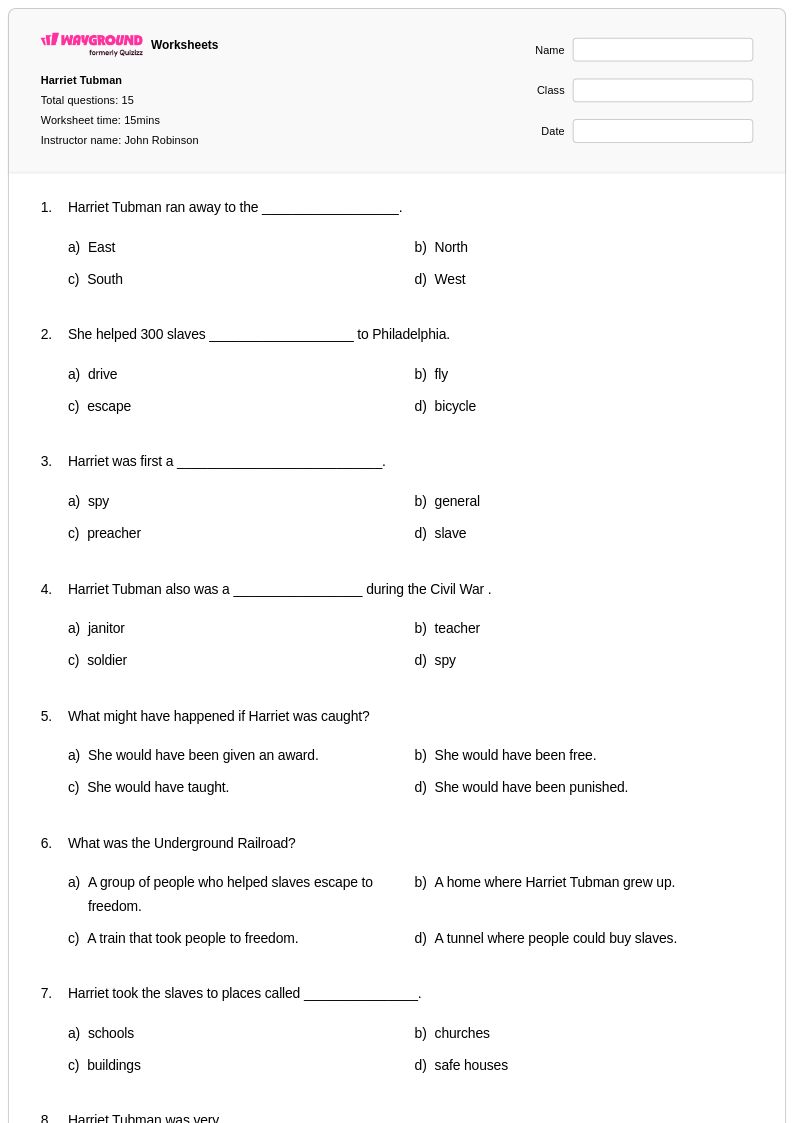
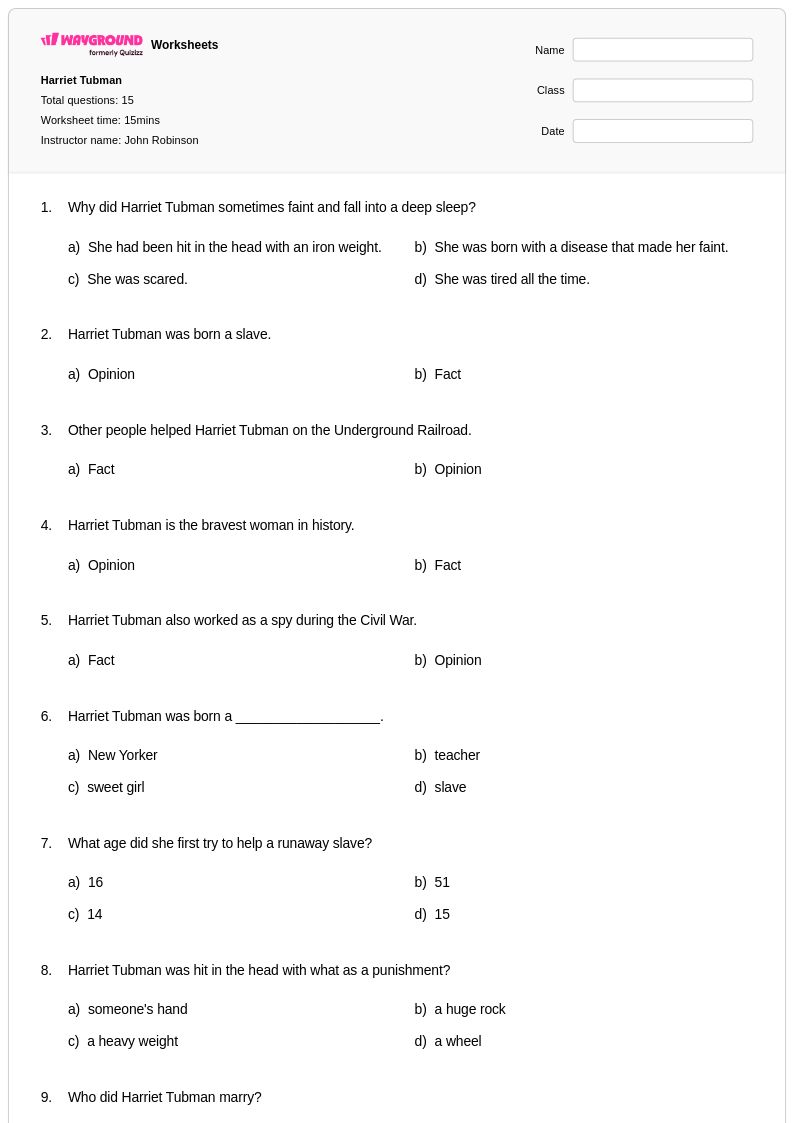
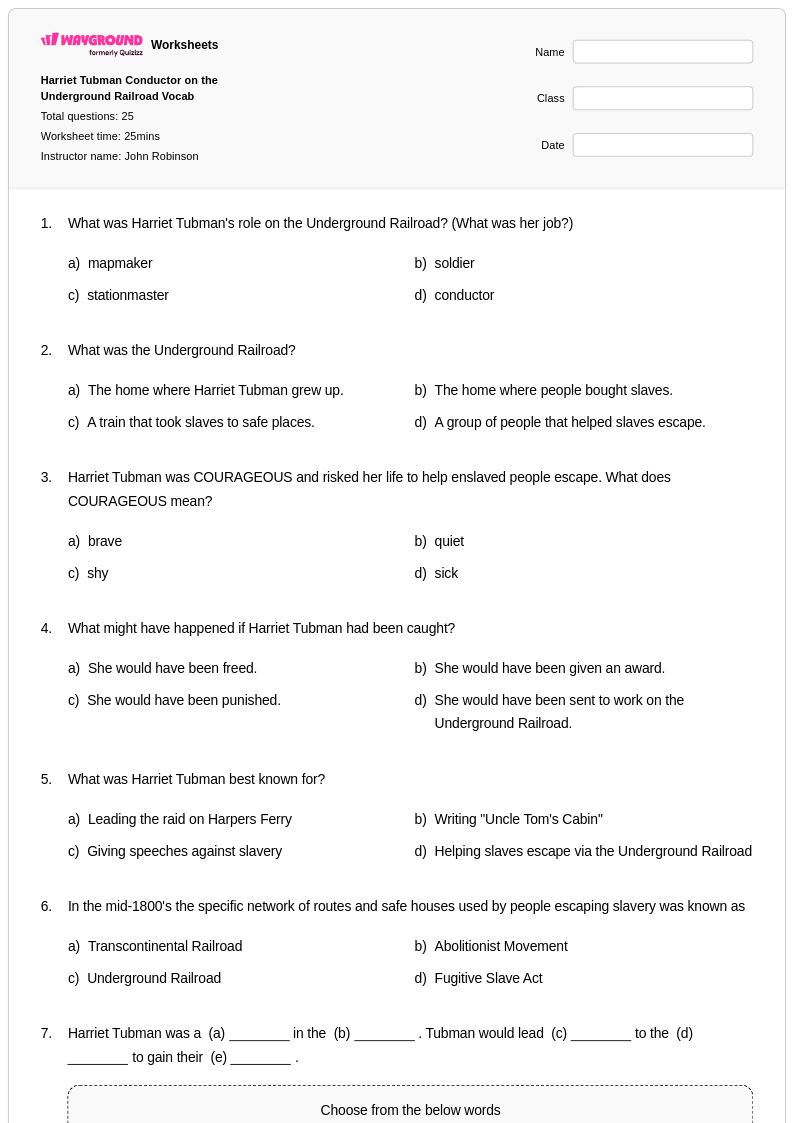
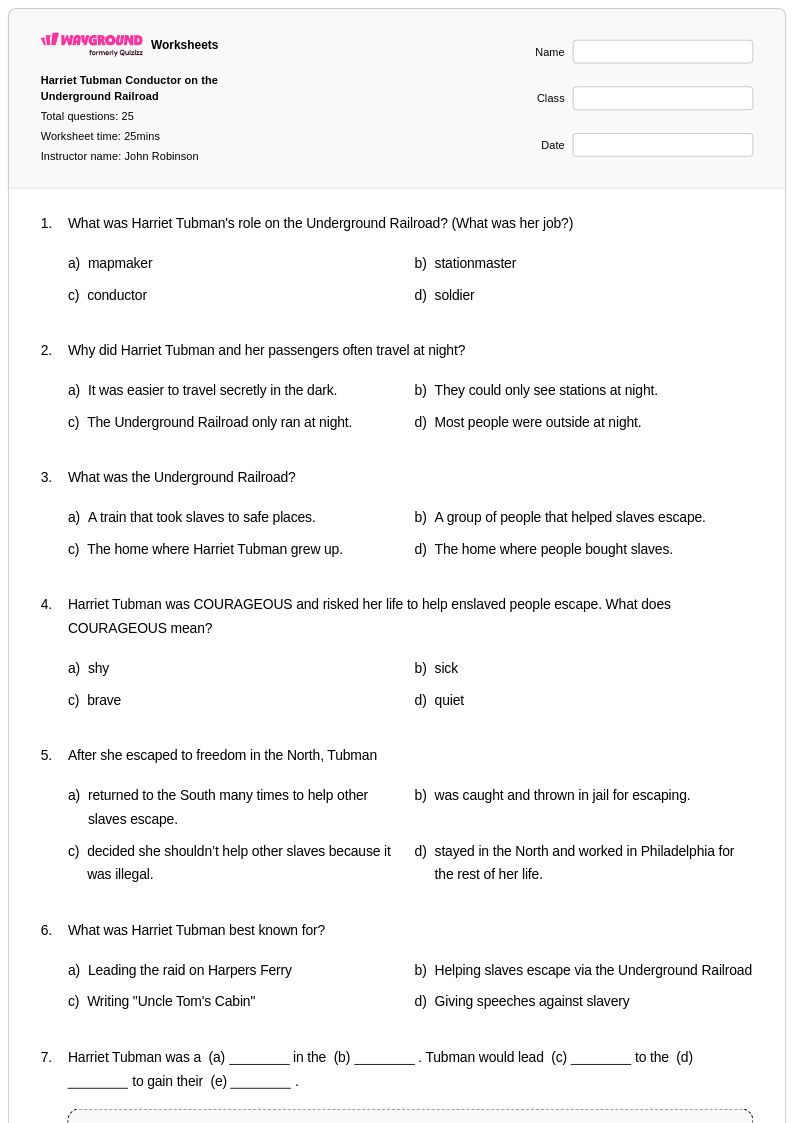
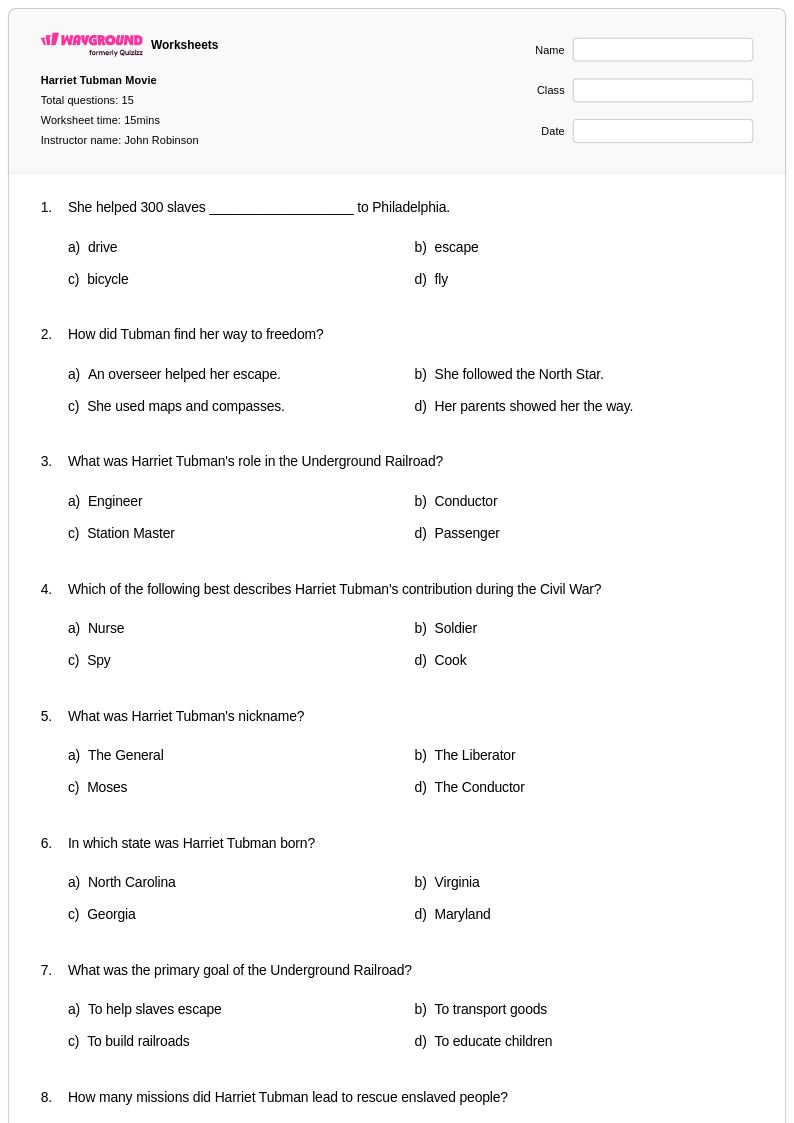
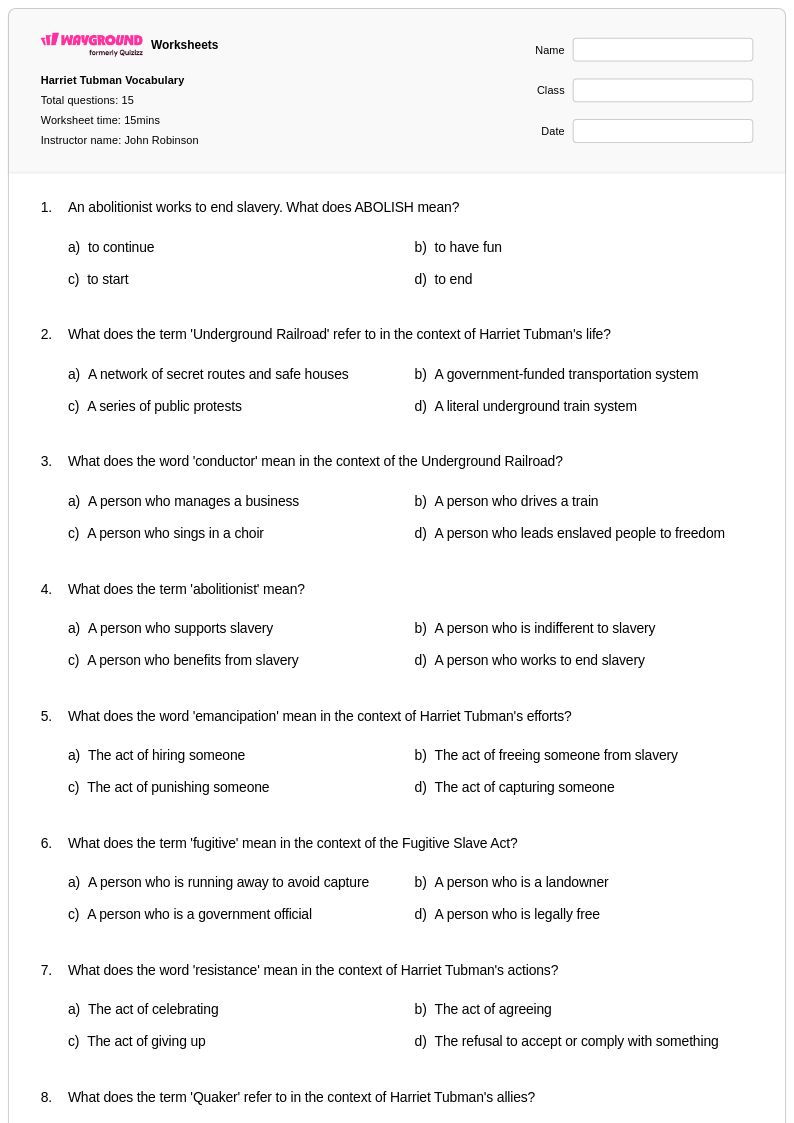
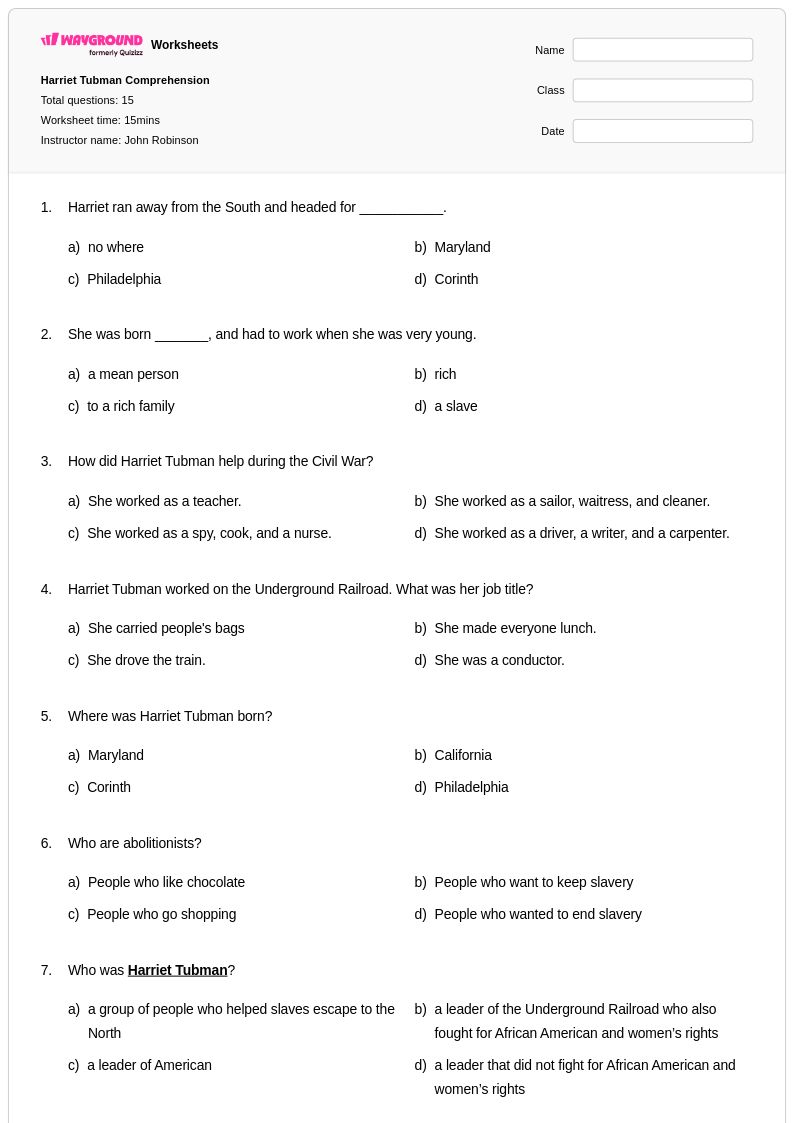
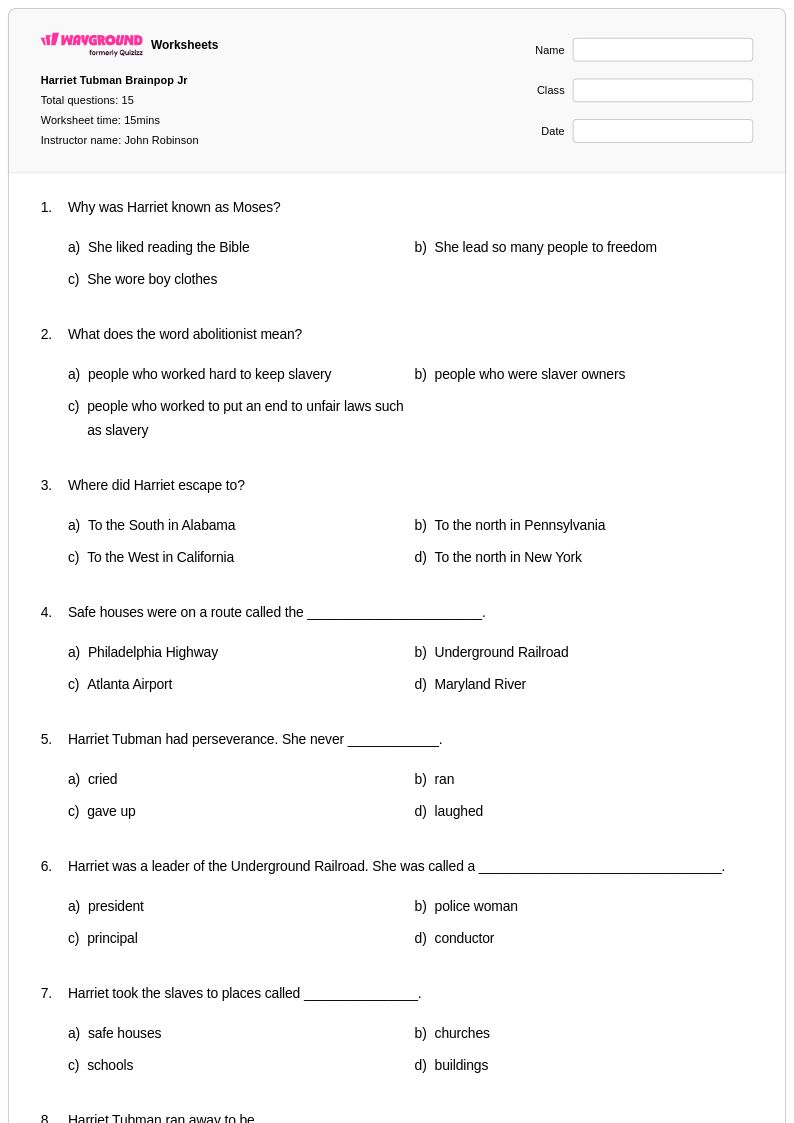
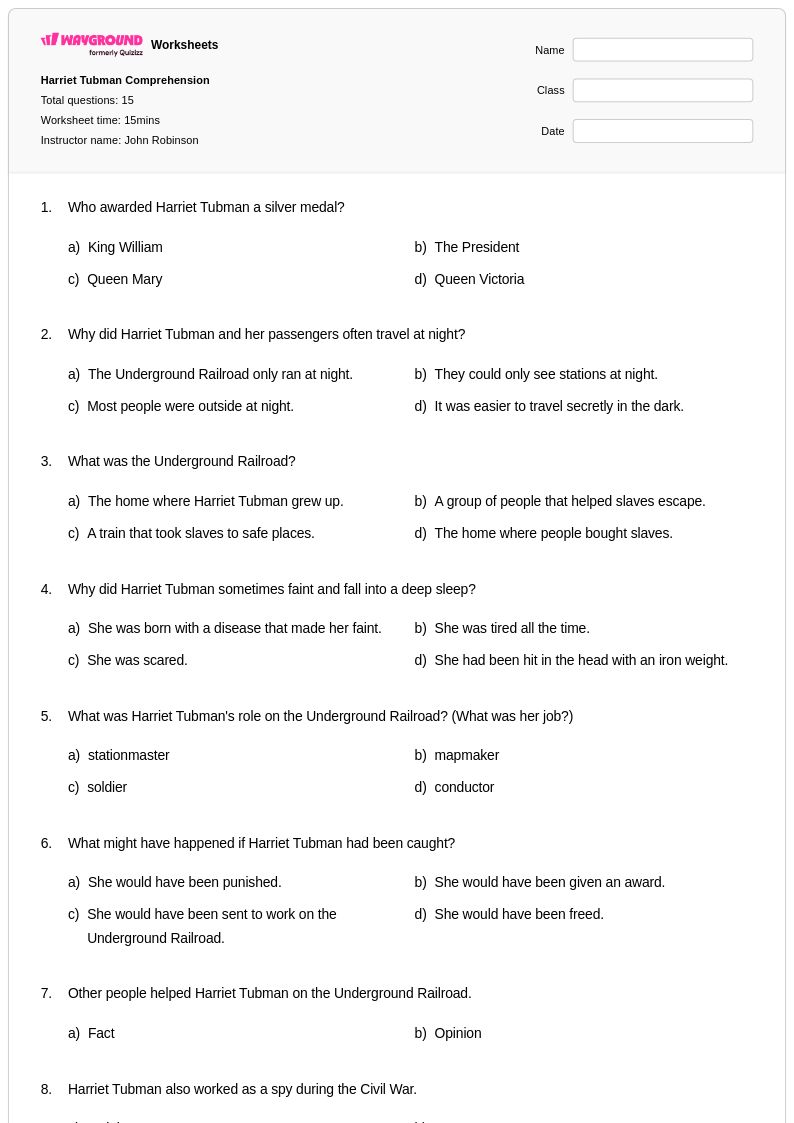
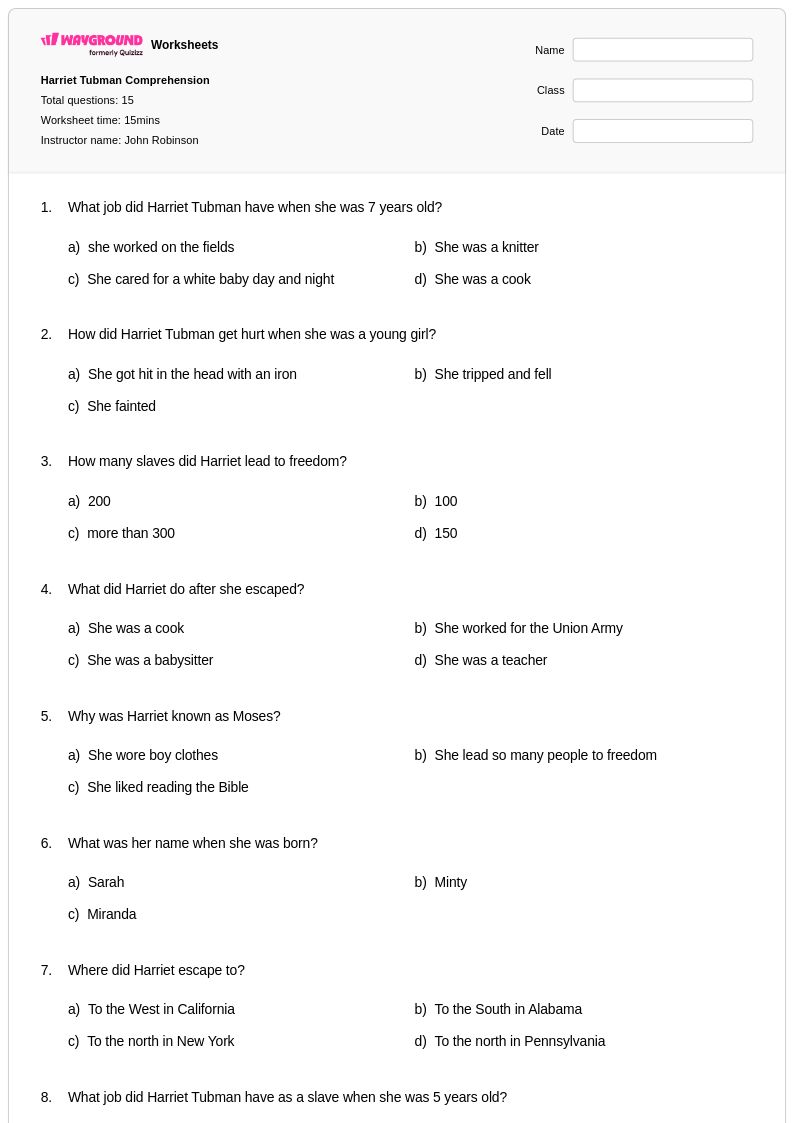
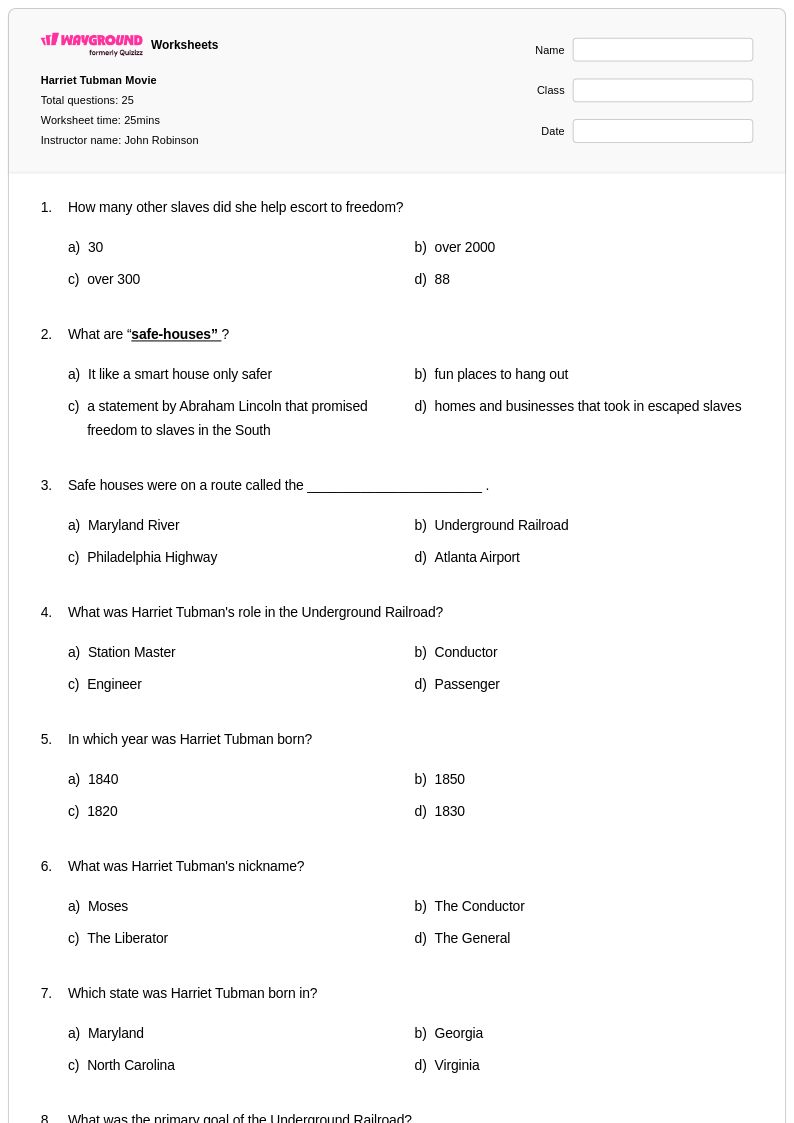
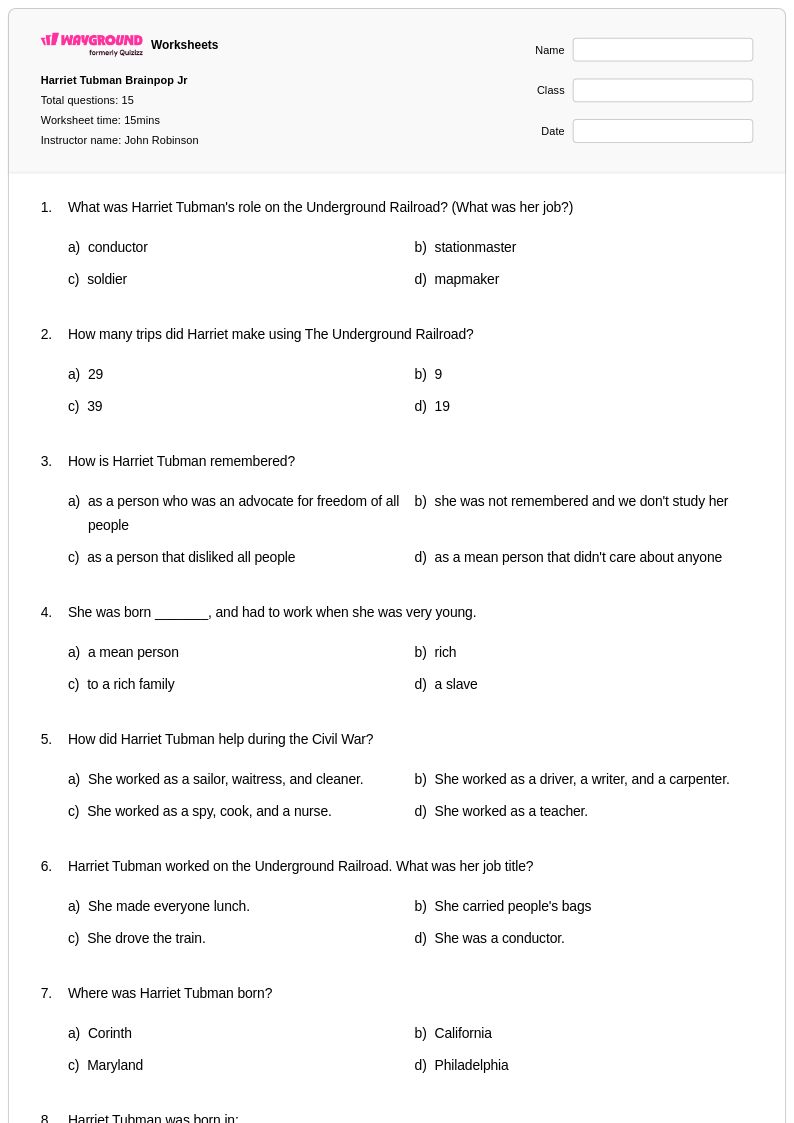
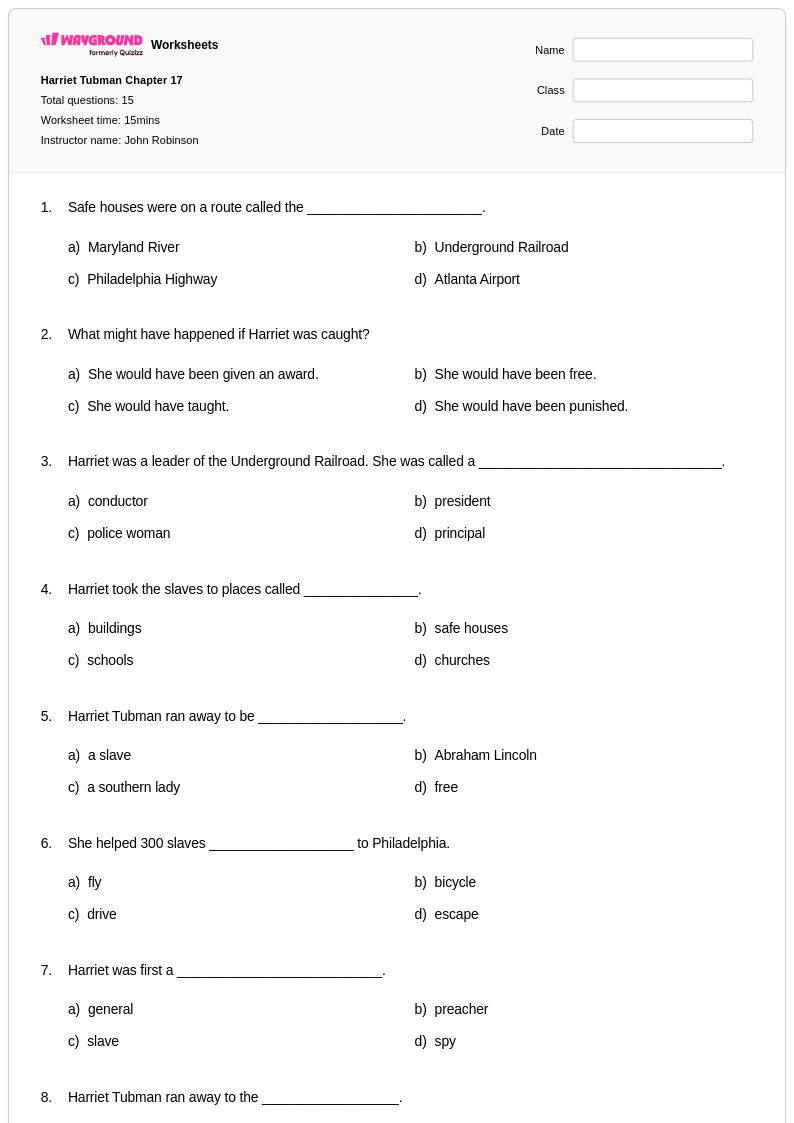
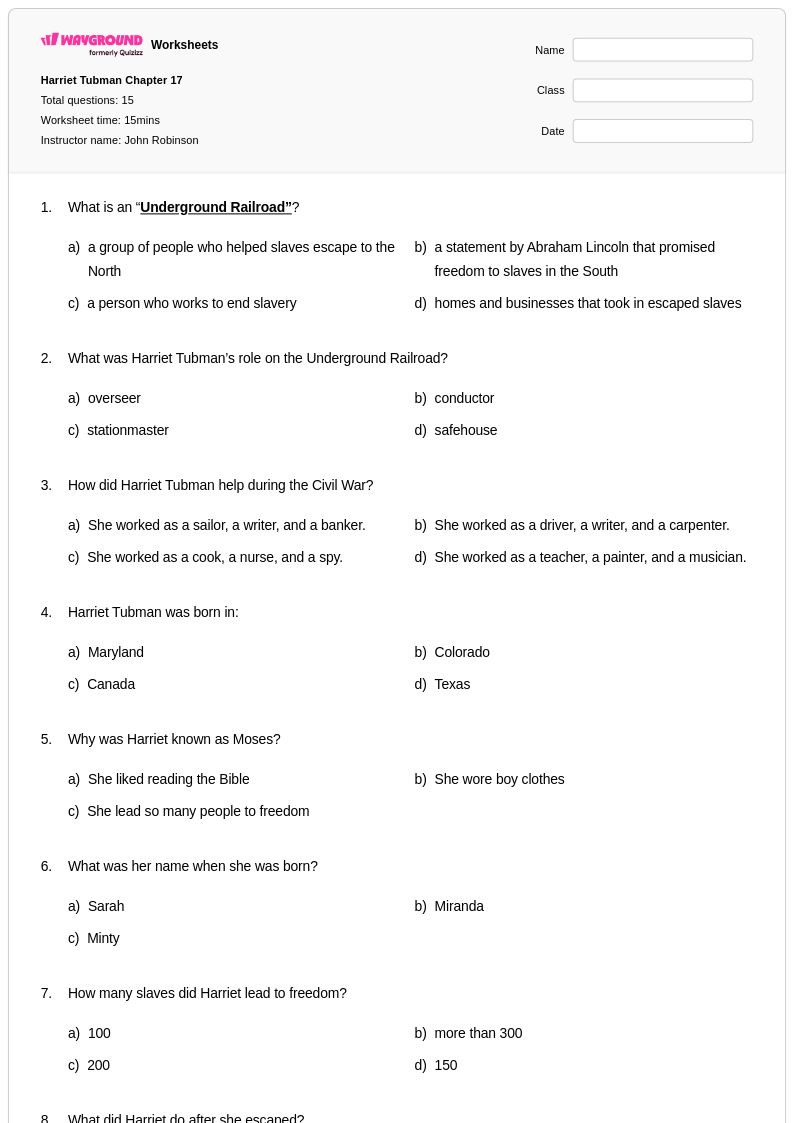
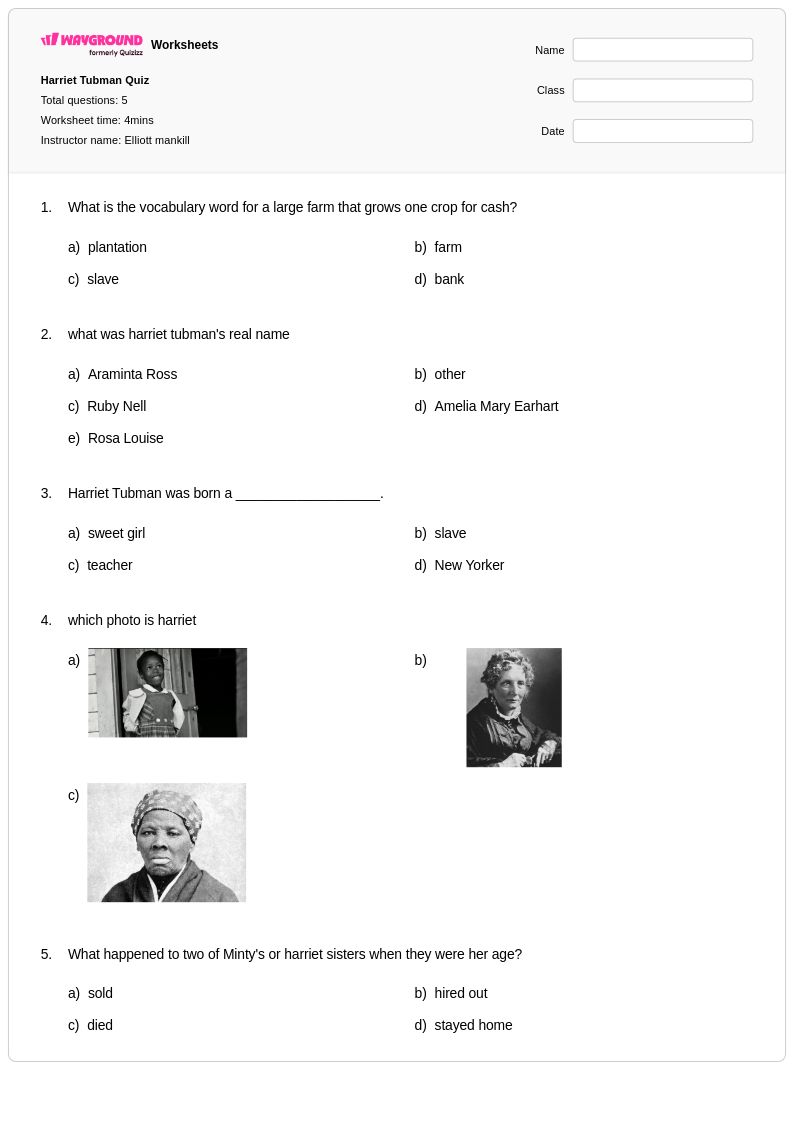
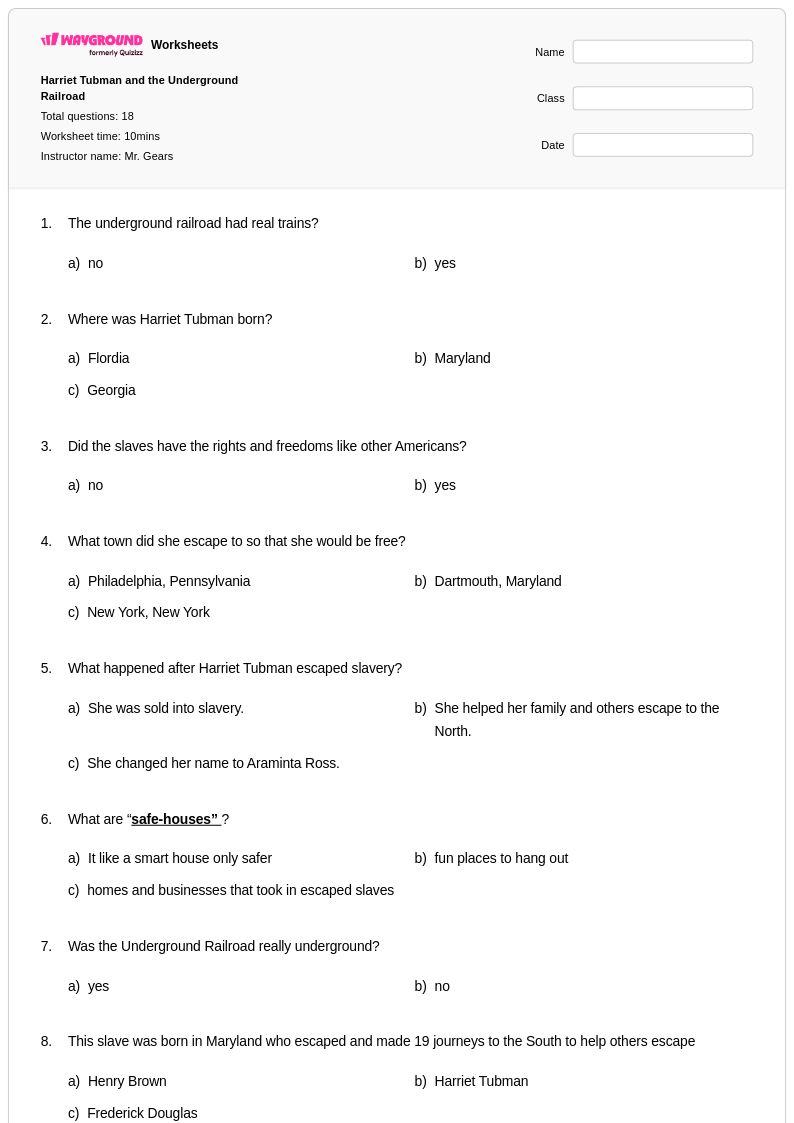
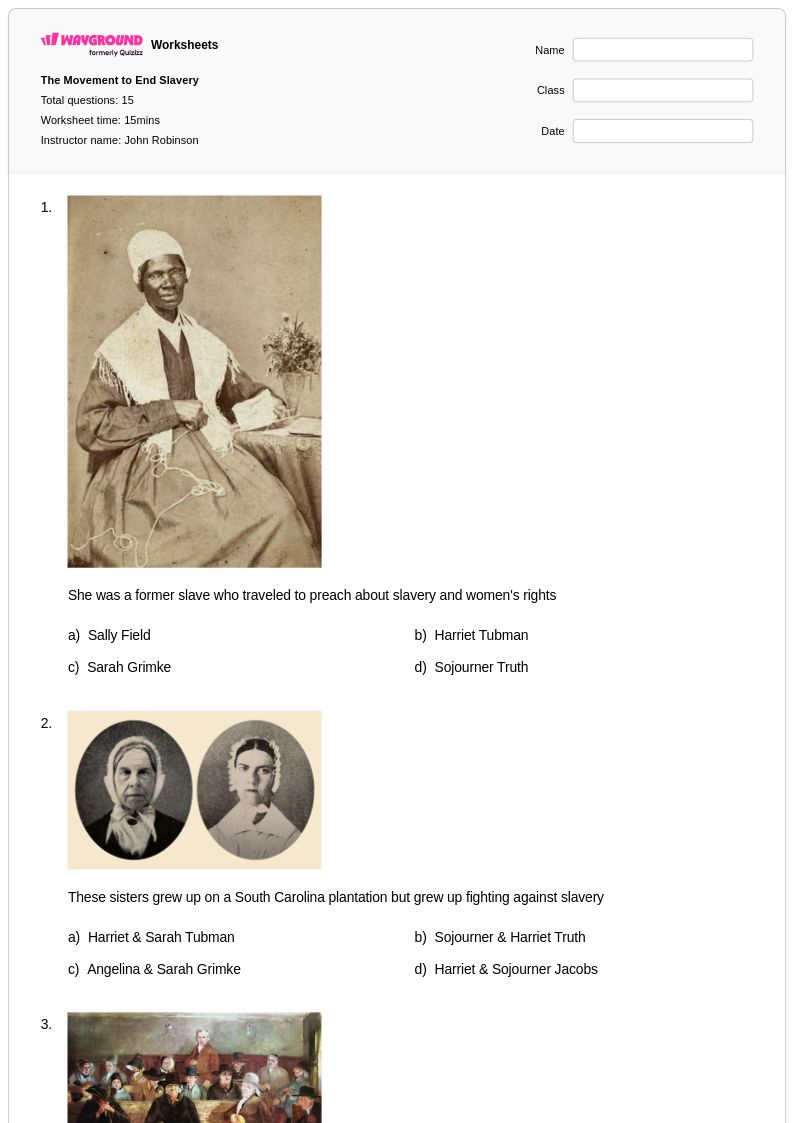
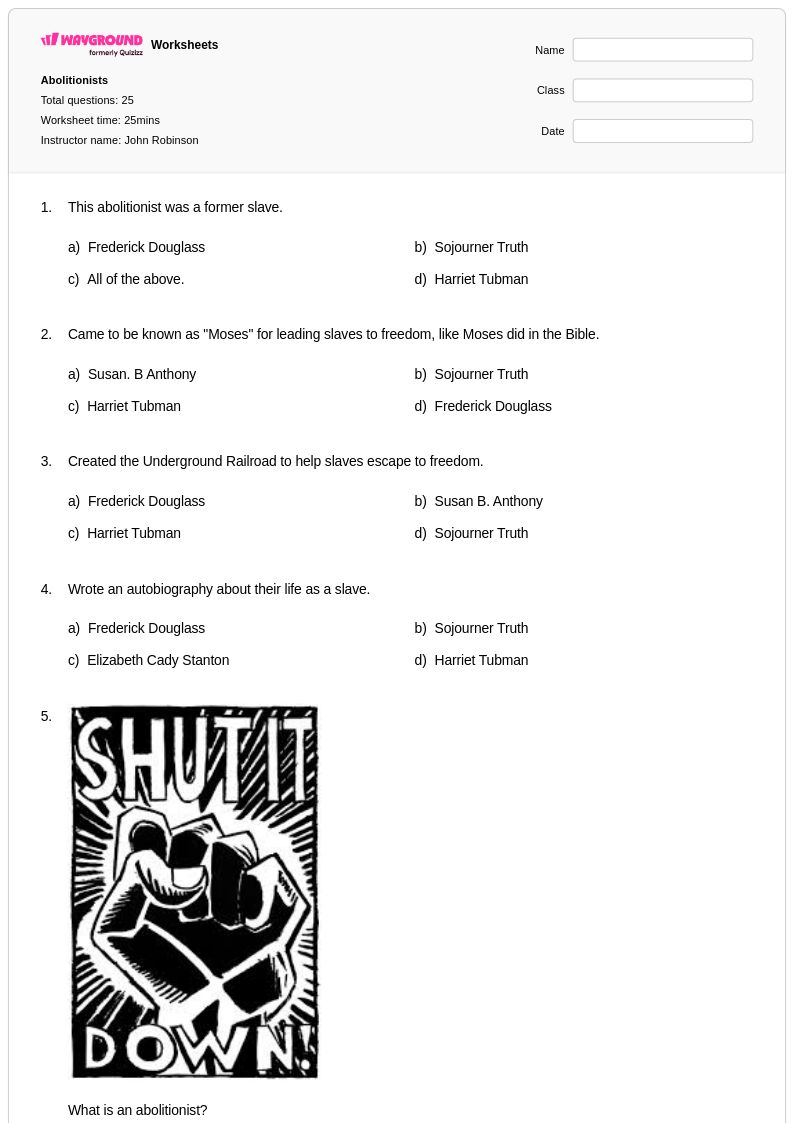
Harriet Tubman worksheets for Class 10 students available through Wayground provide comprehensive resources for exploring one of America's most courageous freedom fighters and her pivotal role in the Underground Railroad. These expertly crafted worksheets strengthen critical thinking skills as students analyze primary sources, evaluate Tubman's impact on the abolitionist movement, and examine her legacy within the broader context of pre-Civil War America. Students engage with practice problems that require them to synthesize historical evidence, compare different perspectives on slavery and resistance, and assess the significance of individual agency in social change movements. Each worksheet collection includes detailed answer keys to support independent learning, and these free printables offer educators flexible resources for classroom instruction, homework assignments, and assessment preparation.
Wayground's extensive collection of teacher-created Harriet Tubman resources supports educators with millions of carefully curated worksheets that align with social studies standards for Class 10 U.S. History instruction. The platform's robust search and filtering capabilities allow teachers to quickly locate materials that match their specific curriculum needs, whether focusing on biographical analysis, historical context, or thematic connections to broader civil rights movements. Advanced differentiation tools enable educators to customize content complexity and format, ensuring accessibility for diverse learning styles and academic levels. Available in both printable pdf formats and interactive digital versions, these resources facilitate seamless integration into lesson planning while providing essential support for remediation, enrichment activities, and targeted skill practice that deepens students' understanding of this transformative historical figure.
FAQs
How do I teach Harriet Tubman to elementary and middle school students?
Teaching Harriet Tubman effectively means grounding students in the historical context of slavery and the abolitionist movement before introducing her biography. Start with timeline activities that place her life within 19th-century American history, then use primary source documents and map exercises tracing Underground Railroad escape routes to build deeper understanding. Connecting her courage and strategic thinking to the broader fight for human freedom helps students move beyond surface-level biography toward genuine historical analysis.
What activities help students practice their knowledge of Harriet Tubman and the Underground Railroad?
Effective practice activities for this topic include biographical analysis tasks, timeline sequencing, and map exercises that trace Underground Railroad escape routes. Primary source document analysis encourages students to evaluate historical evidence directly, while structured comprehension questions challenge students to assess Tubman's role within the abolitionist movement. These varied activity types build both factual knowledge and critical thinking skills simultaneously.
What common misconceptions do students have about Harriet Tubman and the Underground Railroad?
Students often misunderstand the Underground Railroad as a literal railroad with fixed tracks and stations, rather than a covert network of people and safe houses. Many also underestimate the personal danger Tubman faced on each rescue mission, or assume she acted alone rather than within an organized abolitionist network. Clarifying the scale of institutional slavery and the coordinated nature of resistance helps students grasp why Tubman's leadership was so historically significant.
What mistakes do students commonly make when analyzing Harriet Tubman's historical significance?
A frequent error is treating Tubman's story as purely inspirational without situating it within the systemic context of slavery and 19th-century American law, including the Fugitive Slave Act. Students may also overlook her later work as a Union spy and women's suffrage advocate, reducing her legacy to a single chapter of her life. Encouraging students to analyze multiple dimensions of her impact deepens their historical thinking beyond a single narrative.
How can I use Harriet Tubman worksheets from Wayground in my classroom?
Wayground's Harriet Tubman worksheets are available as printable PDFs for traditional classroom use and in digital formats for technology-integrated learning environments, including the option to host them as a quiz directly on Wayground. Each worksheet includes a comprehensive answer key, making them easy to deploy for independent practice, guided instruction, or assessment. Teachers can also apply accommodations such as Read Aloud or extended time for individual students, ensuring the materials are accessible across diverse learners without disrupting the rest of the class.
How do I differentiate Harriet Tubman lessons for students at different reading and skill levels?
Differentiation for this topic can involve pairing primary source documents with scaffolded guiding questions for developing readers, while advanced students engage in deeper analysis of Tubman's strategic decision-making and its political context. On Wayground, teachers can apply student-level accommodations such as Read Aloud, reduced answer choices, and adjustable font sizes through Reading mode, which are configurable per student and reusable across future sessions. This allows struggling learners to access the same content meaningfully without requiring separate lesson plans.