Free Printable War of 1812 Worksheets for Class 10
Explore Wayground's comprehensive collection of Class 10 War of 1812 worksheets, featuring free printables and PDFs with answer keys to help students master this pivotal conflict in American history through engaging practice problems.
Explore printable War of 1812 worksheets for Class 10
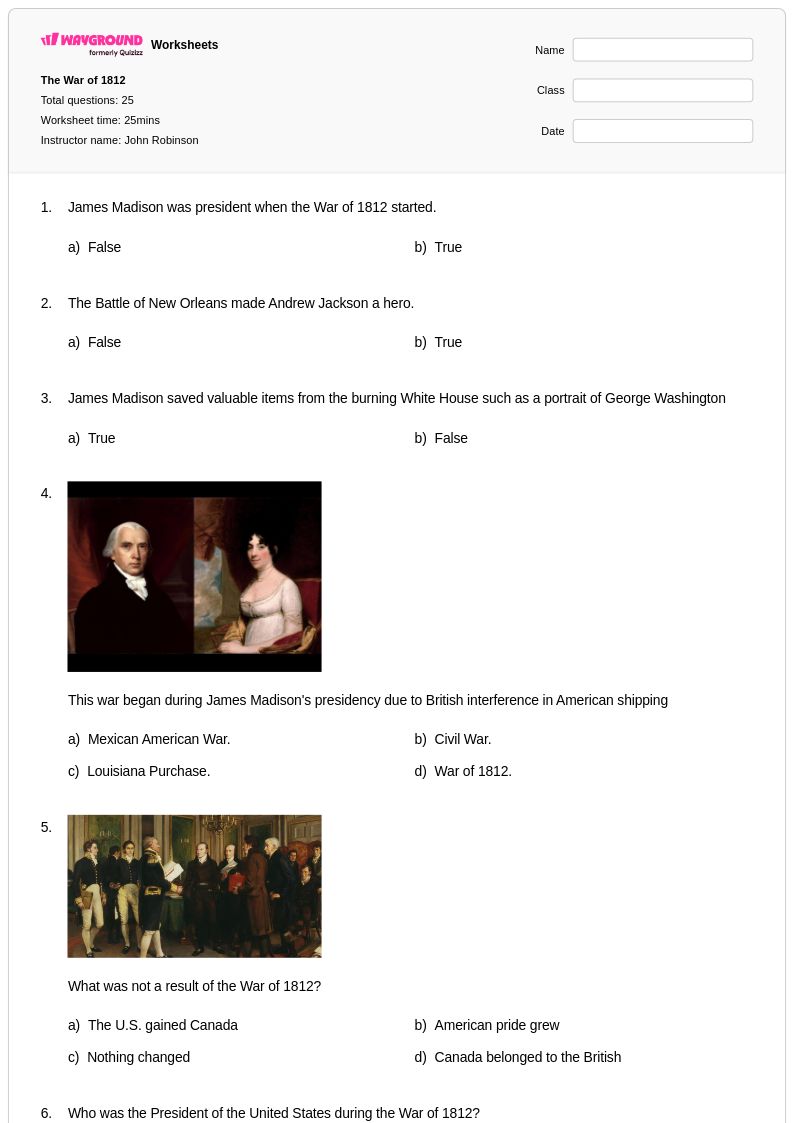
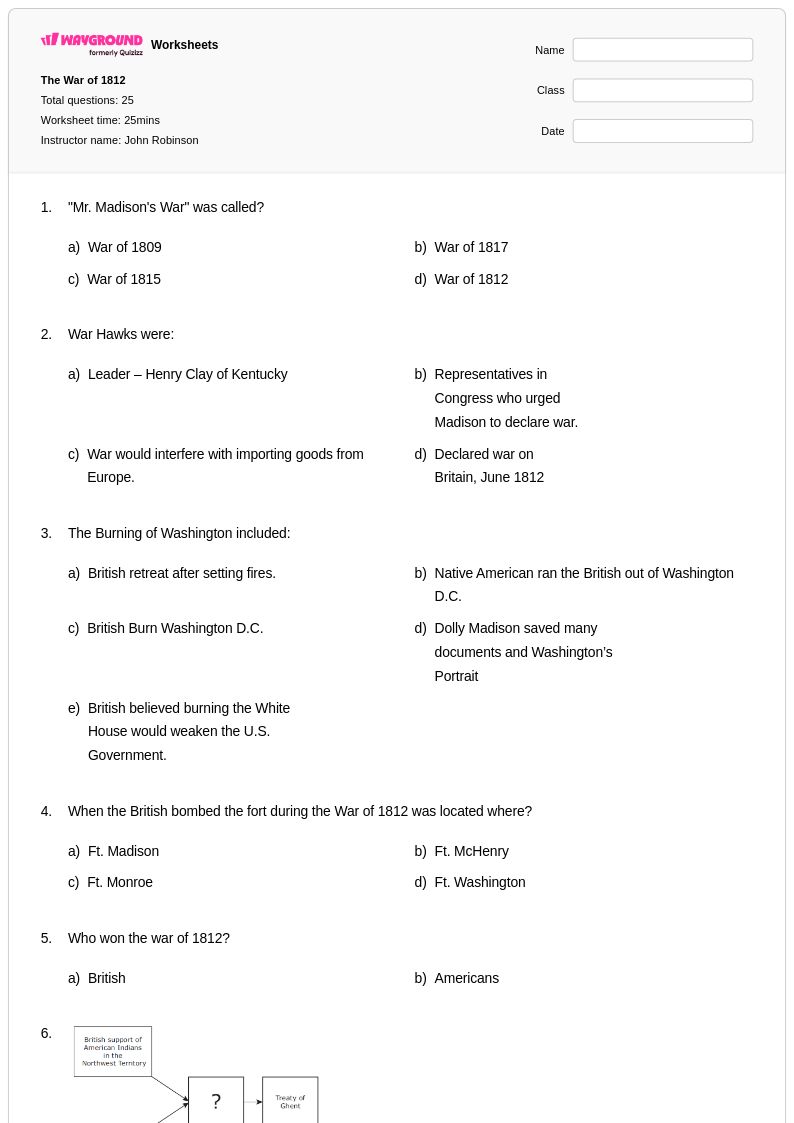
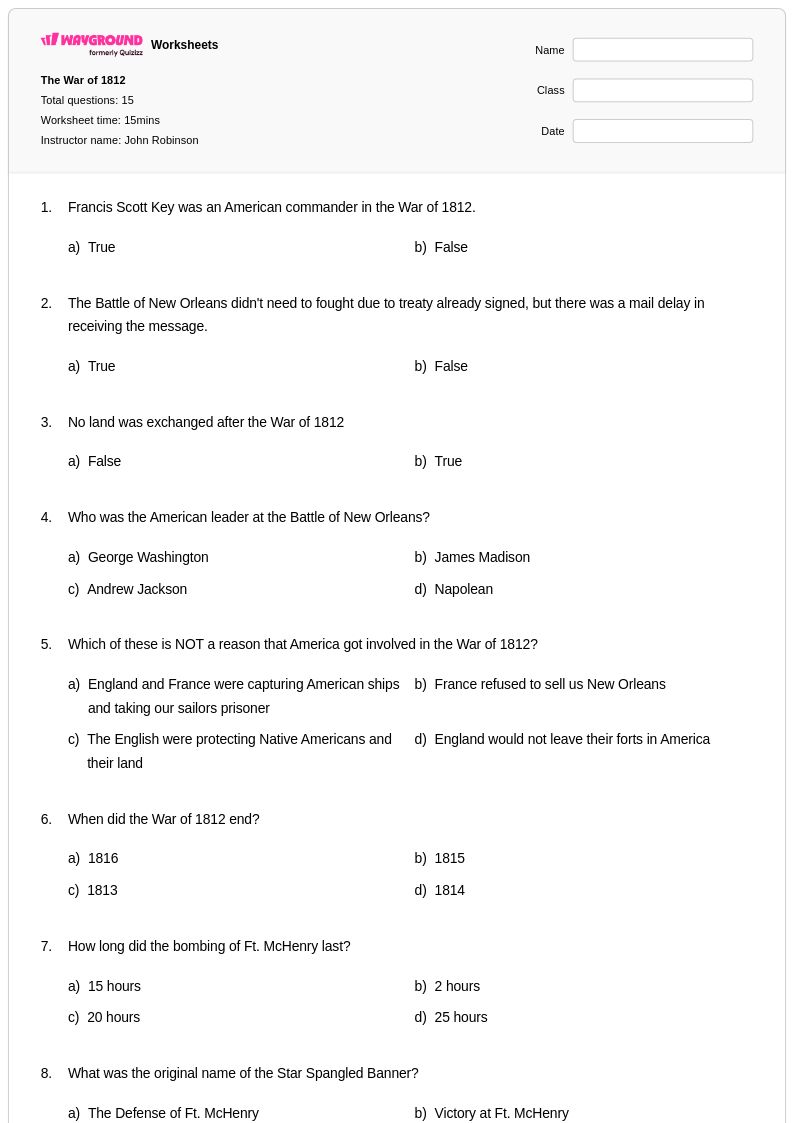
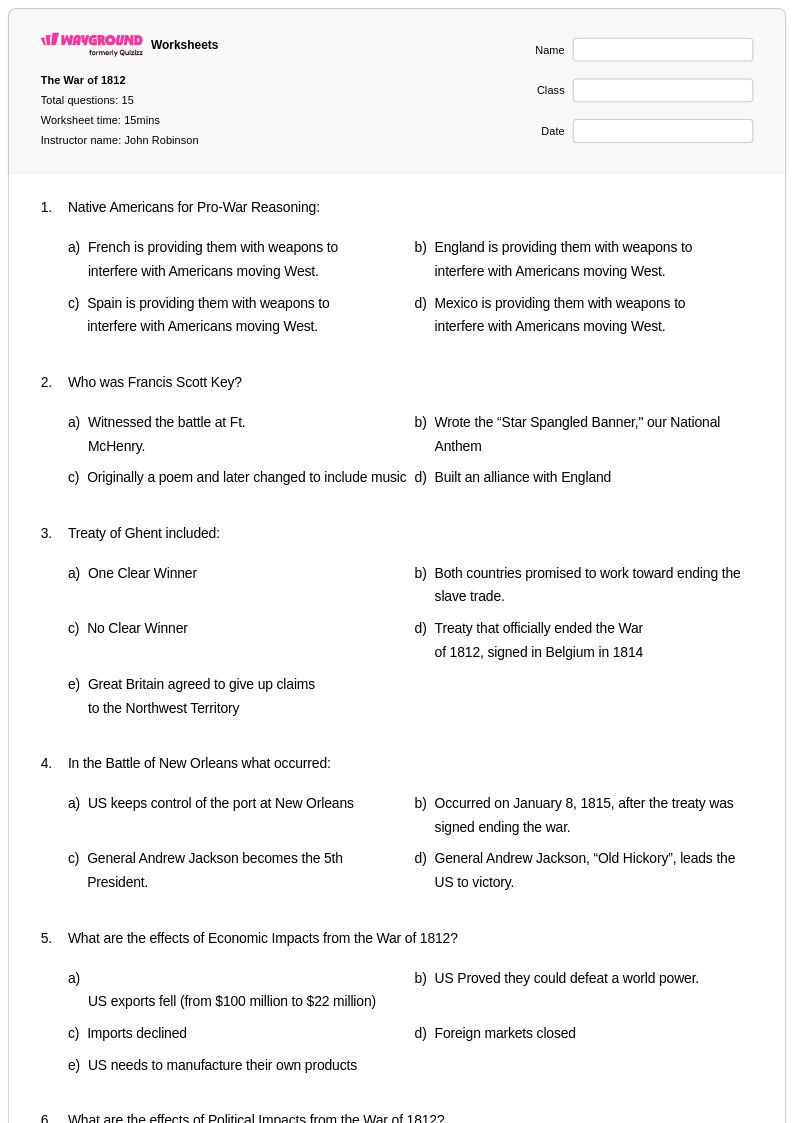
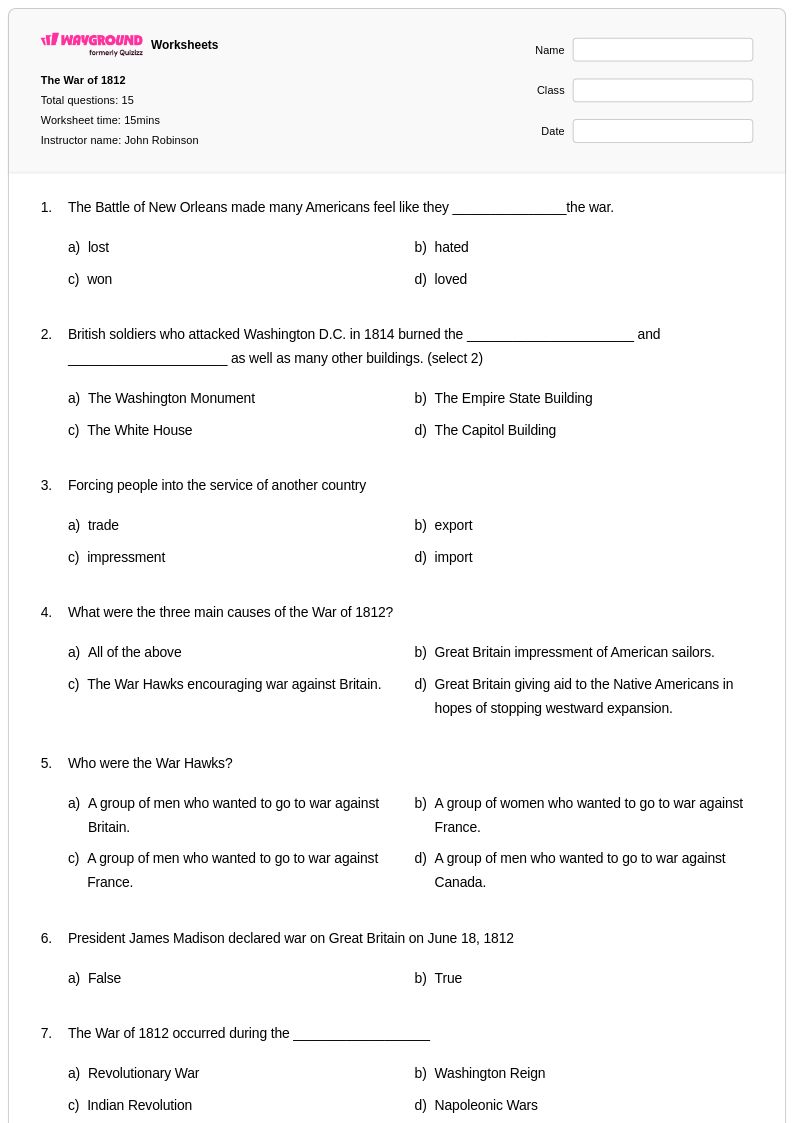
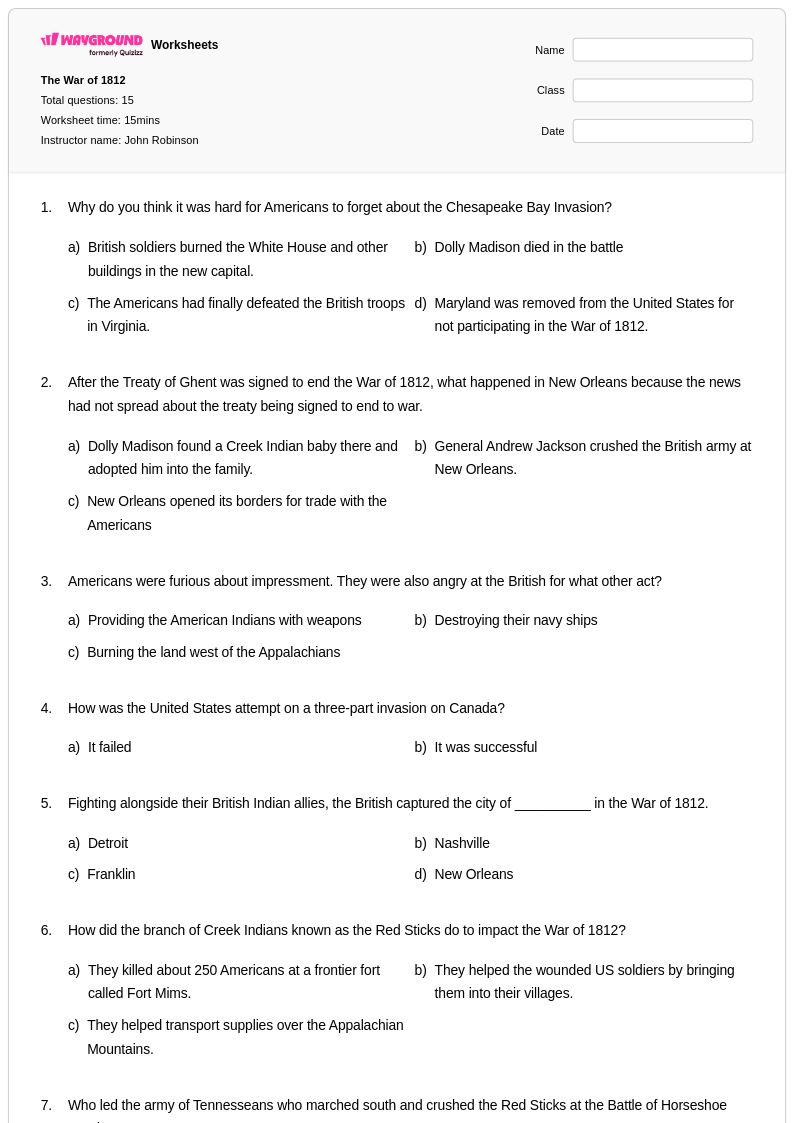
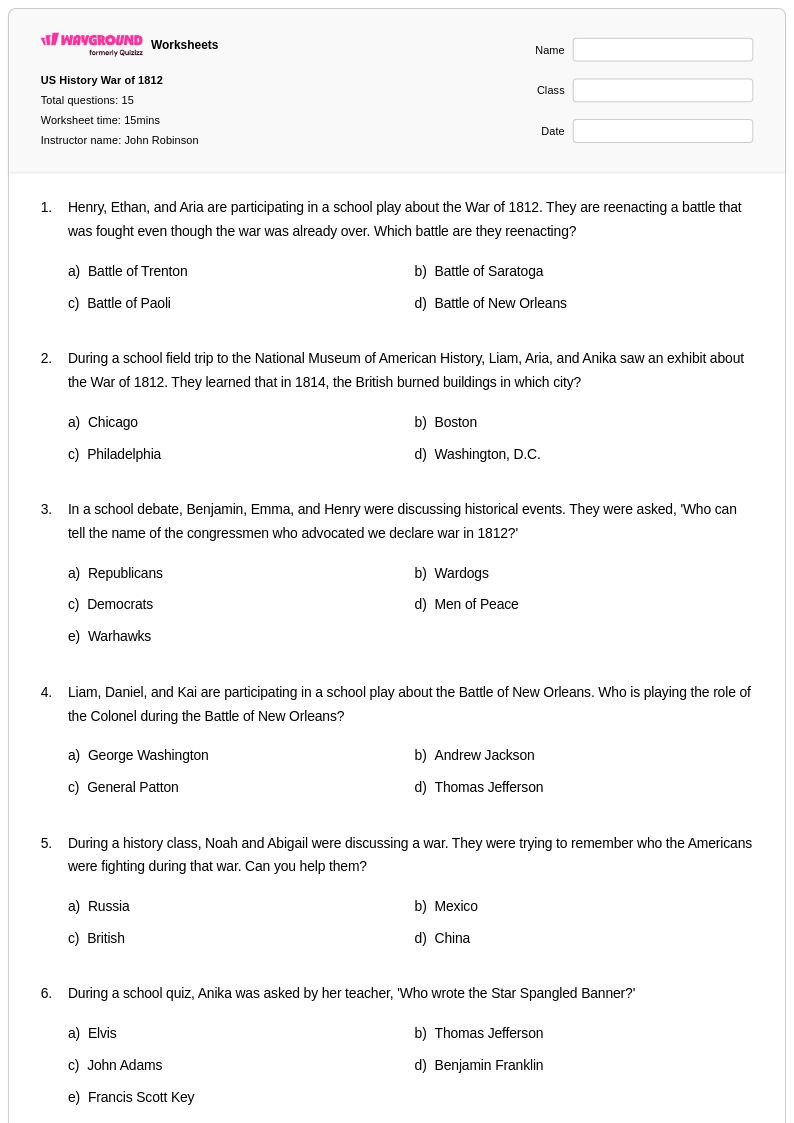
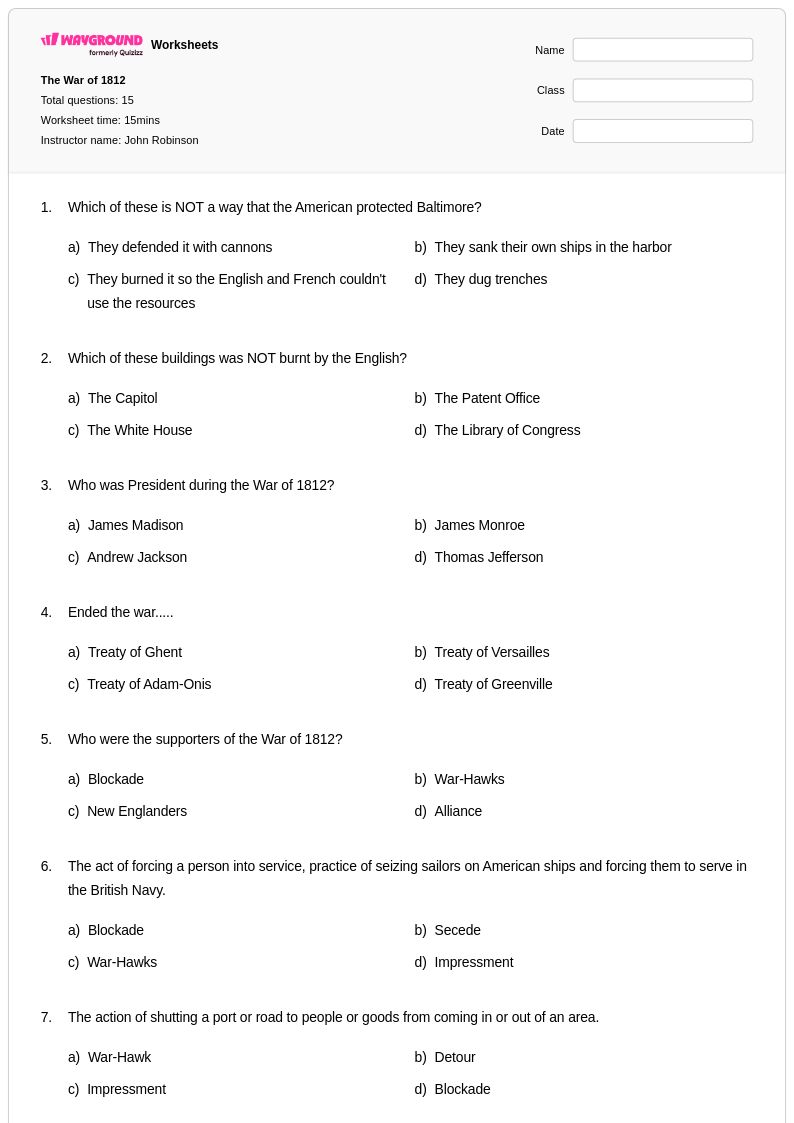
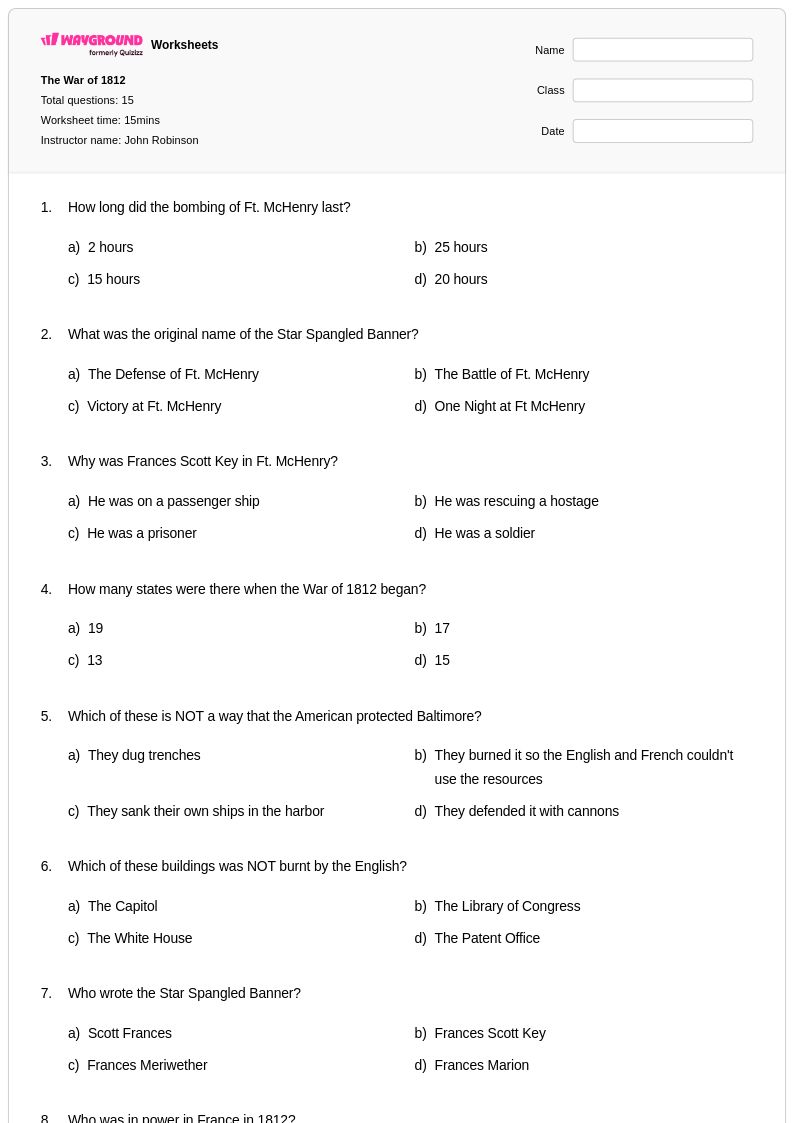
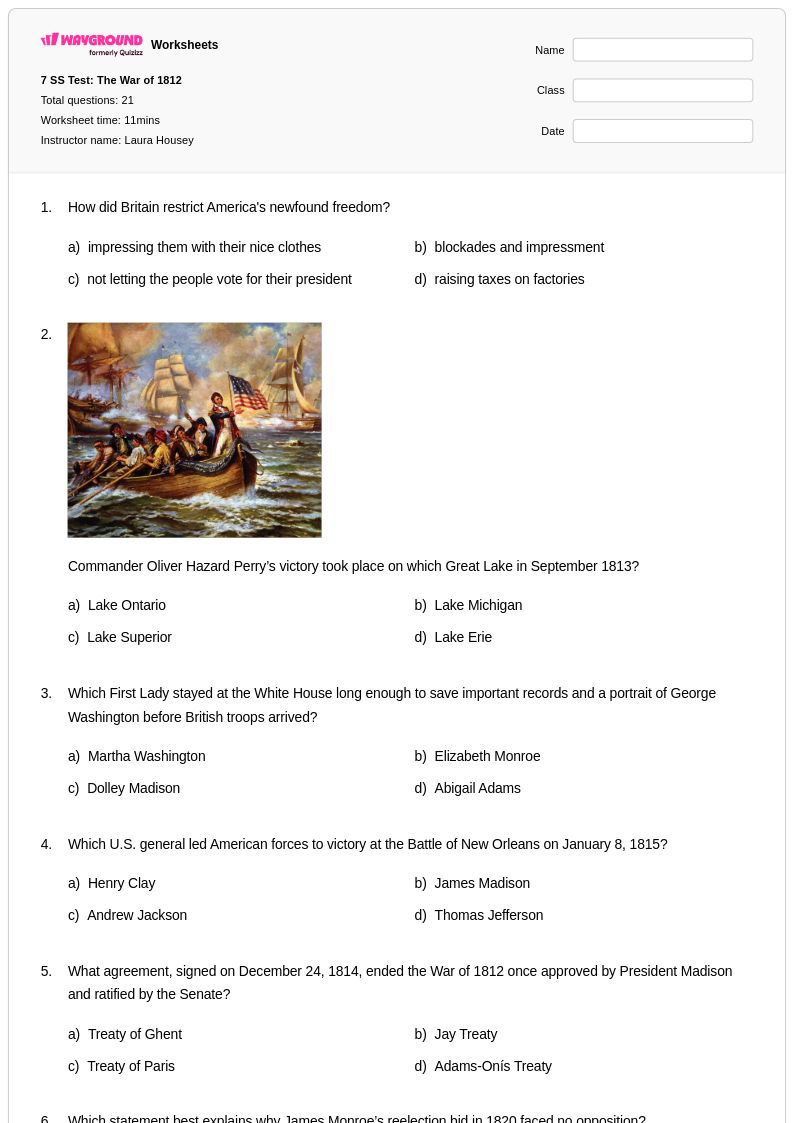
War of 1812 worksheets for Class 10 students available through Wayground offer comprehensive coverage of this pivotal conflict in American history, examining the complex causes, major battles, and lasting consequences that shaped the young nation's identity. These educational resources strengthen critical thinking skills by challenging students to analyze primary source documents, evaluate multiple perspectives on contentious issues like impressment and trade restrictions, and assess the war's impact on American nationalism and westward expansion. The collection includes practice problems that require students to interpret maps of key battlefields, compare British and American military strategies, and examine the roles of significant figures such as Andrew Jackson, Tecumseh, and Dolley Madison. Teachers can access printable pdf versions with comprehensive answer keys, making these free resources invaluable for both classroom instruction and independent study sessions focused on this often-overlooked war.
Wayground's extensive library supports educators with millions of teacher-created War of 1812 worksheets specifically designed for Class 10 social studies curricula, featuring robust search and filtering capabilities that allow instructors to locate materials aligned with specific state and national history standards. The platform's differentiation tools enable teachers to customize content difficulty levels, ensuring that struggling learners can grasp fundamental concepts about maritime conflicts and territorial disputes while advanced students tackle complex analysis of the war's economic and diplomatic ramifications. These versatile resources are available in both digital and printable pdf formats, providing flexibility for diverse classroom environments and supporting various instructional approaches from remediation activities that reinforce basic chronology and cause-and-effect relationships to enrichment projects exploring the war's influence on American literature and culture. The comprehensive collection facilitates effective lesson planning by offering ready-to-use materials that address different learning styles and assessment needs while maintaining historical accuracy and age-appropriate complexity.
FAQs
How do I teach the War of 1812 to middle or high school students?
Teaching the War of 1812 effectively means anchoring instruction in its layered causes before moving to military events. Start with British impressment of American sailors and trade restrictions under the Orders in Council, then connect those grievances to the political climate that pushed Congress toward war. From there, trace major turning points such as the burning of Washington D.C., the Battle of Lake Erie, and Andrew Jackson's victory at New Orleans, and close by examining the Treaty of Ghent and what the war's inconclusive outcome meant for American nationalism. Framing the war as a test of American sovereignty gives students a through-line that makes the timeline coherent rather than a list of disconnected events.
What are the most common misconceptions students have about the War of 1812?
One of the most persistent misconceptions is that the United States won the War of 1812 outright. In reality, the Treaty of Ghent restored pre-war boundaries without resolving any of the original causes, making the outcome essentially a draw. Students also frequently misattribute Andrew Jackson's victory at the Battle of New Orleans as decisive to the war's end, when in fact the treaty had already been signed before the battle was fought. A third common error is underestimating the war's impact on Native American nations, particularly the collapse of Tecumseh's confederacy, which permanently shifted the balance of power in the Northwest Territory.
What primary sources work well for a War of 1812 unit?
Strong primary sources for a War of 1812 unit include President Madison's War Message to Congress from June 1812, which outlines the official justifications for the declaration of war, and Federalist pamphlets opposing the conflict, which open up productive debates about political opposition during wartime. Eyewitness accounts of the burning of Washington D.C. and Dolley Madison's letter describing the evacuation of the White House add narrative immediacy. For the war's aftermath, excerpts from the Treaty of Ghent and contemporary newspaper editorials about American nationalism give students practice analyzing how the war was interpreted by those who lived through it.
What exercises help students practice analyzing the causes and effects of the War of 1812?
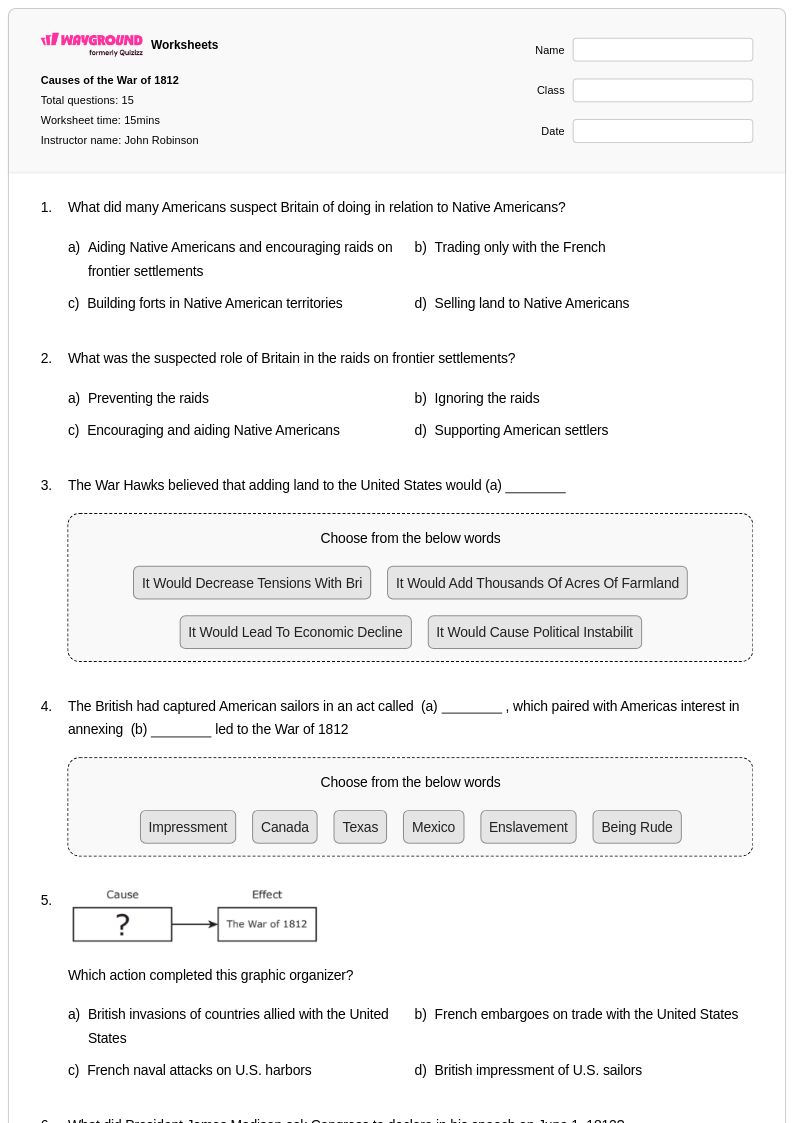
Cause-and-effect graphic organizers are particularly effective for helping students untangle the War of 1812's overlapping triggers, including British impressment, trade restrictions, and territorial ambitions in Canada. Timeline construction activities that ask students to sequence events from 1807 through the Treaty of Ghent in 1815 build chronological reasoning while reinforcing content. Structured written responses that ask students to evaluate which cause they consider most significant push higher-order thinking and prepare them for document-based question formats common in standardized assessments.
How do I use War of 1812 worksheets in my classroom?
War of 1812 worksheets on Wayground are available as printable PDFs for traditional classroom use and in digital formats for technology-integrated or hybrid learning environments, and they can also be hosted as a live quiz directly on Wayground. Printable versions work well as structured note-taking guides during direct instruction or as independent review materials before assessments. Digital versions allow students to complete work asynchronously, which is useful for differentiated pacing or absence recovery. All worksheets include complete answer keys, so teachers can use them for self-checking activities or efficient grading.
How can I differentiate War of 1812 instruction for students at different skill levels?
For students who need additional support, focus on the war's core causes and major battles using graphic organizers and simplified timelines before introducing interpretive questions. Advanced learners can be challenged with deeper analysis of topics such as the Hartford Convention, the long-term implications of the Treaty of Ghent, or the war's effect on the decline of the Federalist Party. When using Wayground's digital worksheets, teachers can apply built-in accommodations such as read aloud, extended time, and reduced answer choices for individual students, ensuring that differentiation is handled efficiently without disrupting the rest of the class.