Free Printable Monroe Doctrine Worksheets for Class 10
Explore Class 10 Monroe Doctrine worksheets and printables that help students analyze America's foreign policy principles through engaging practice problems, free PDF resources, and comprehensive answer keys.
Explore printable Monroe Doctrine worksheets for Class 10
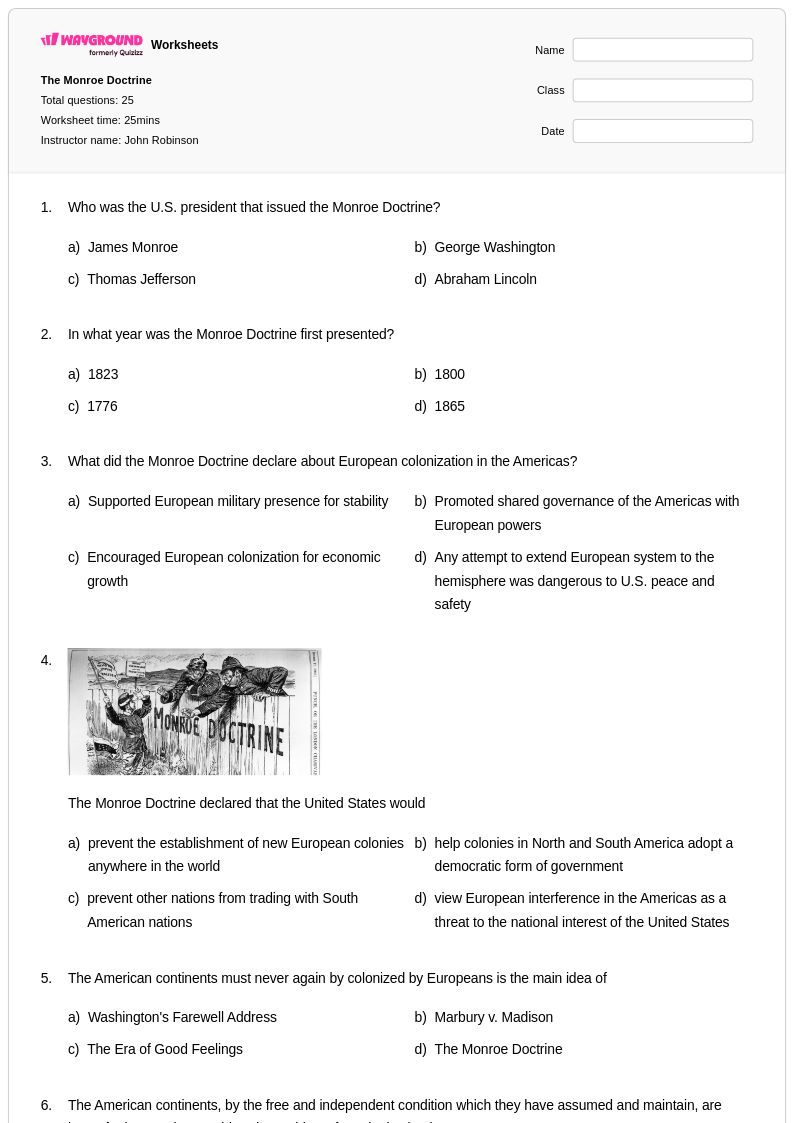
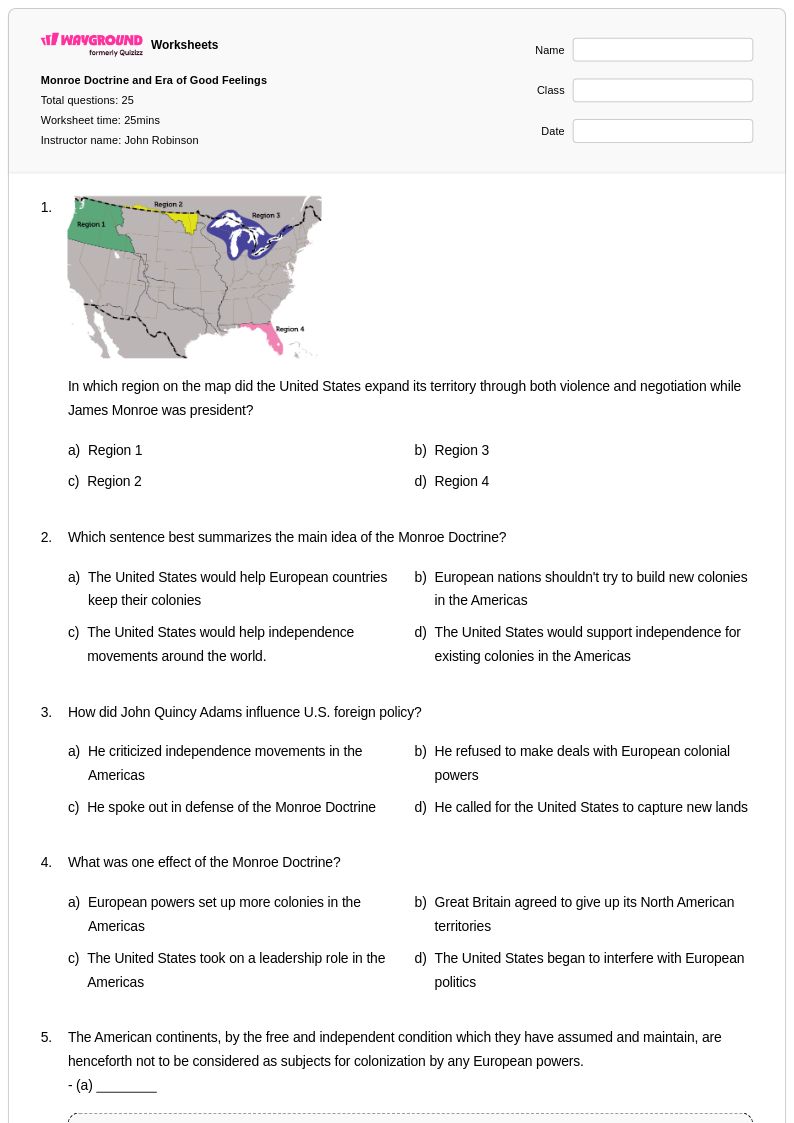
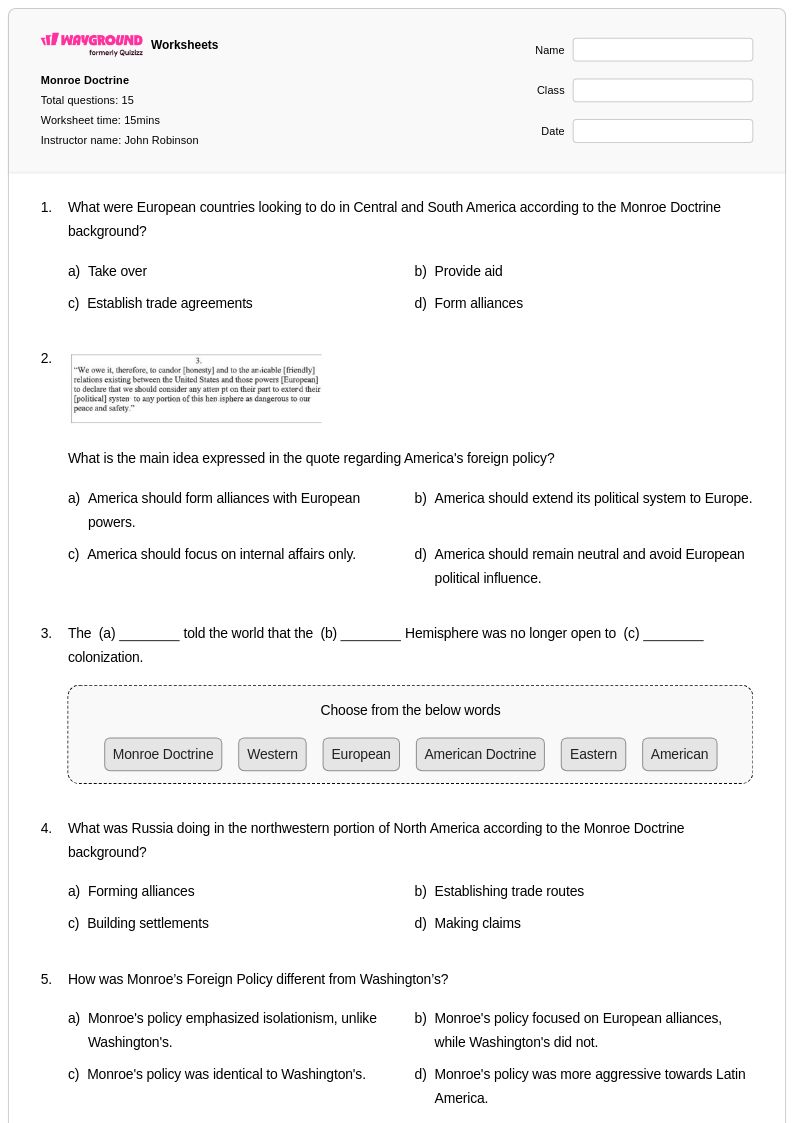
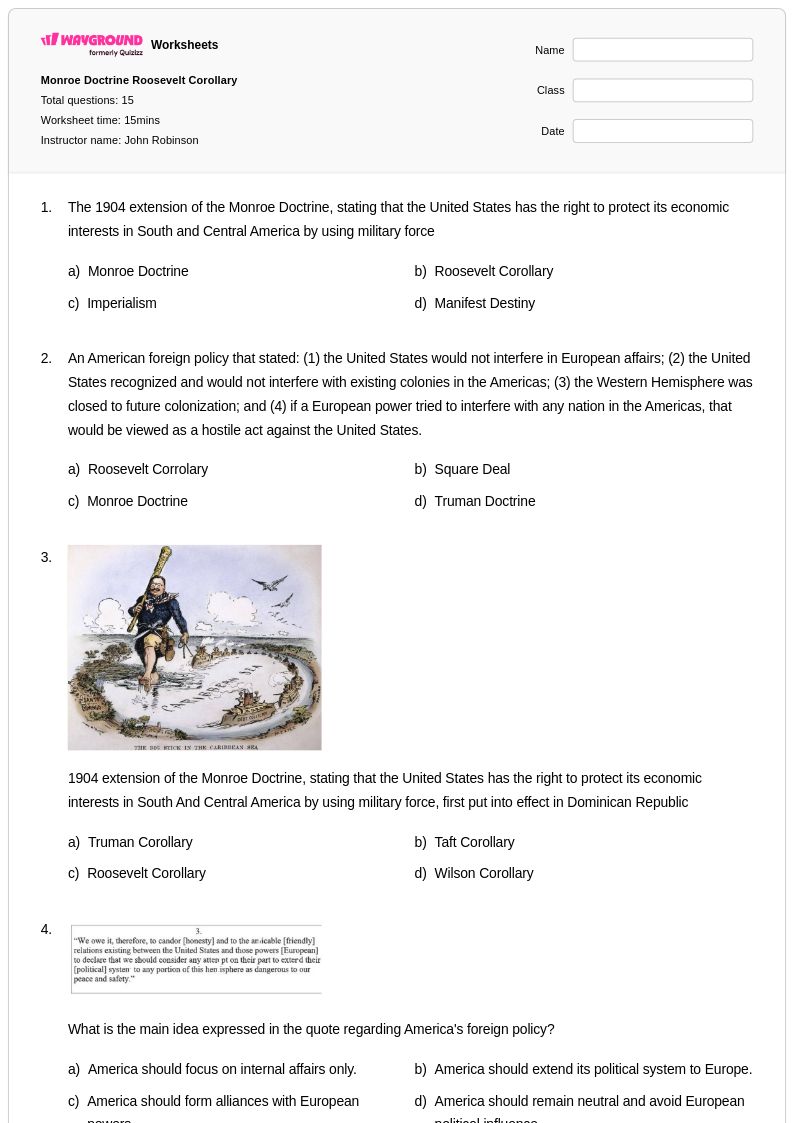
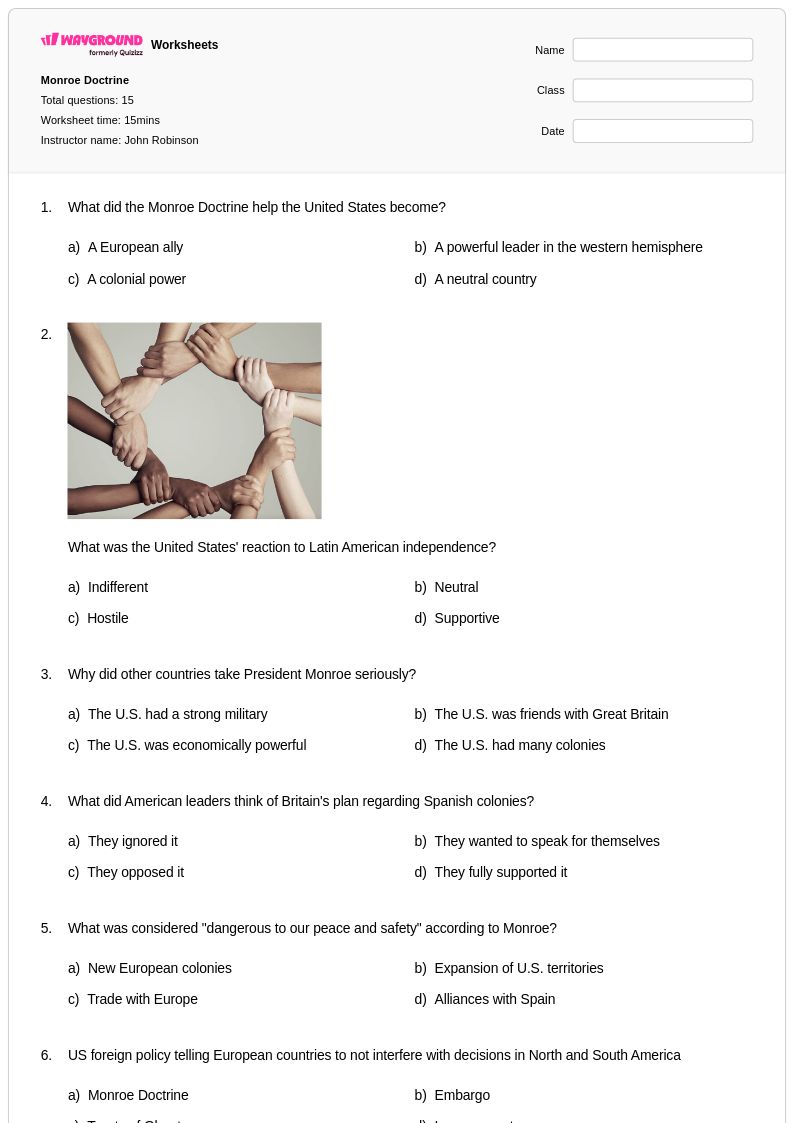
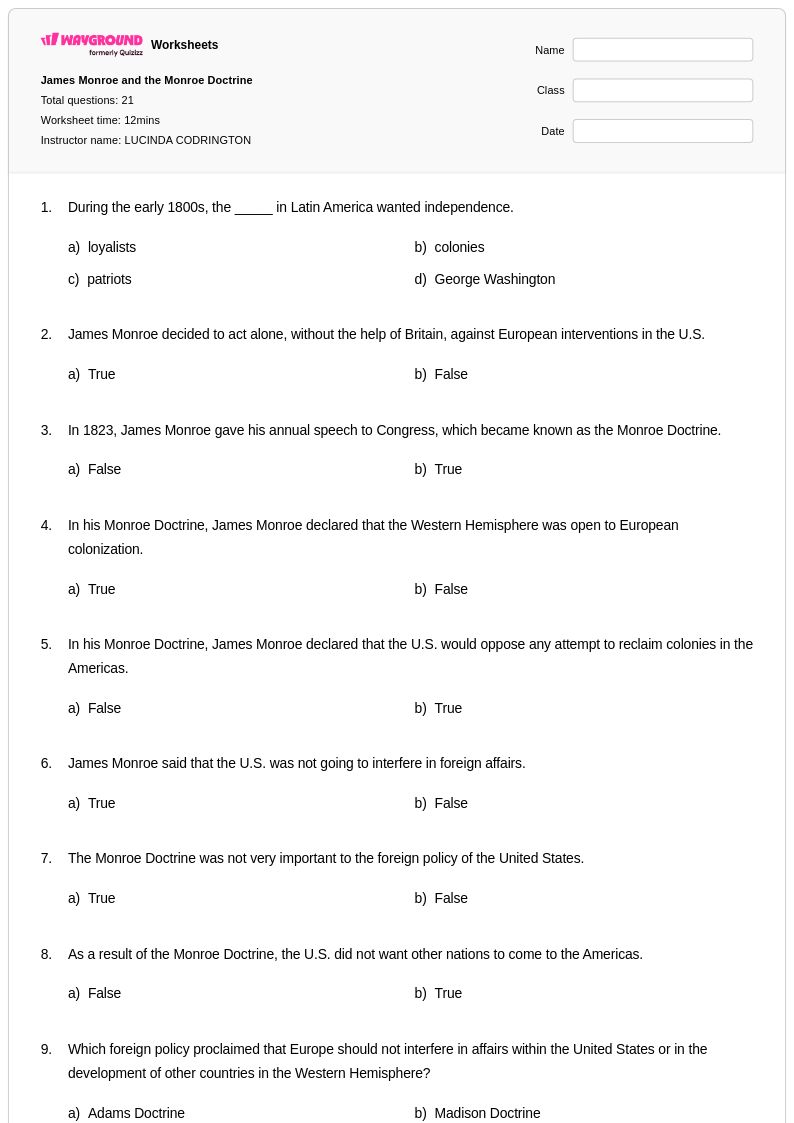
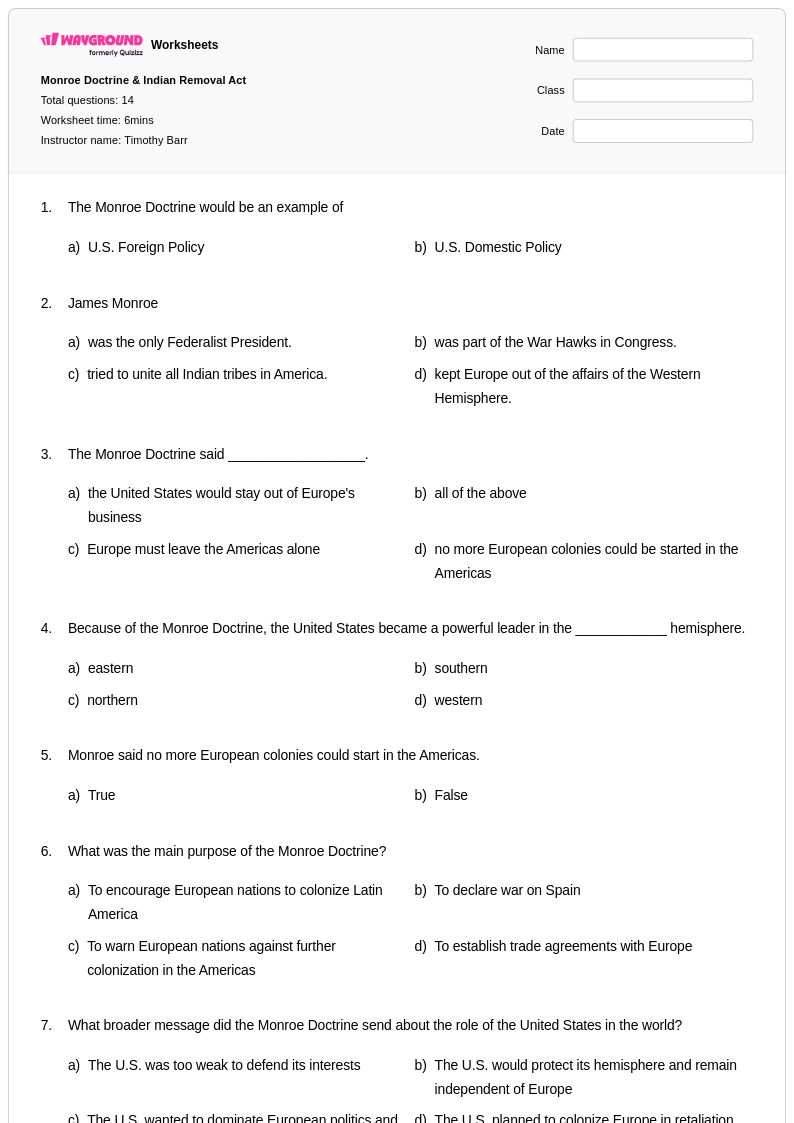
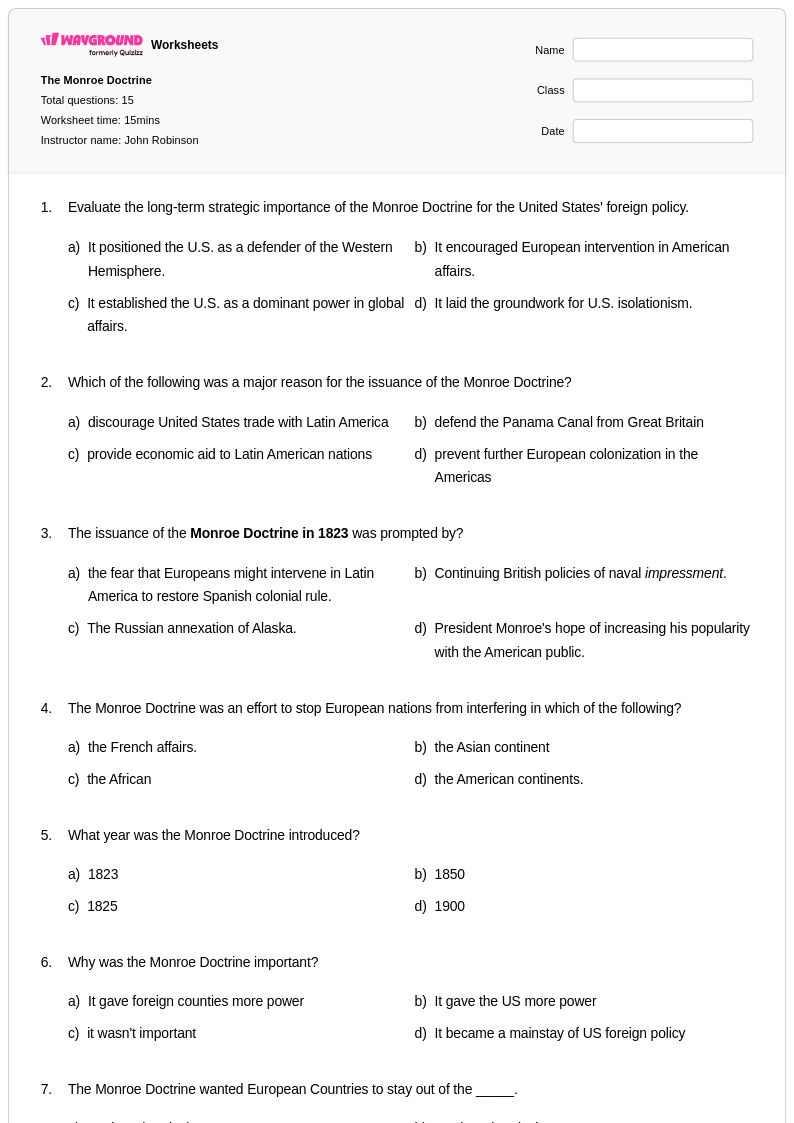
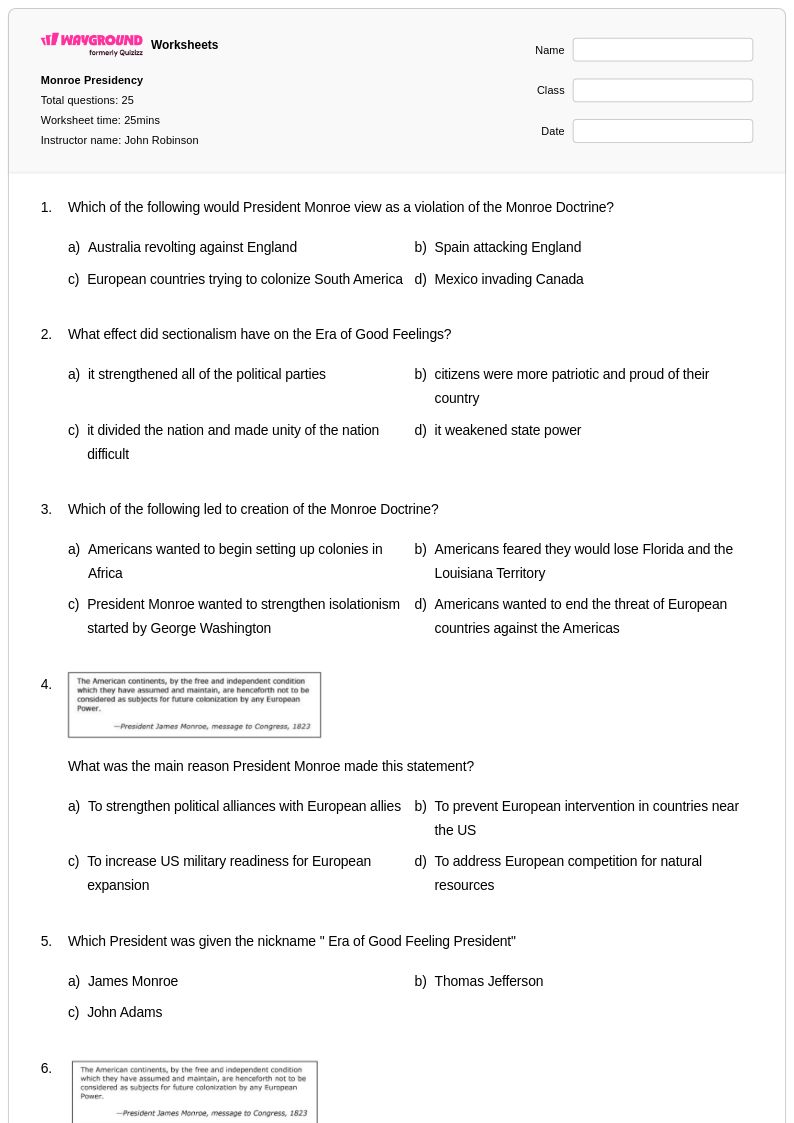
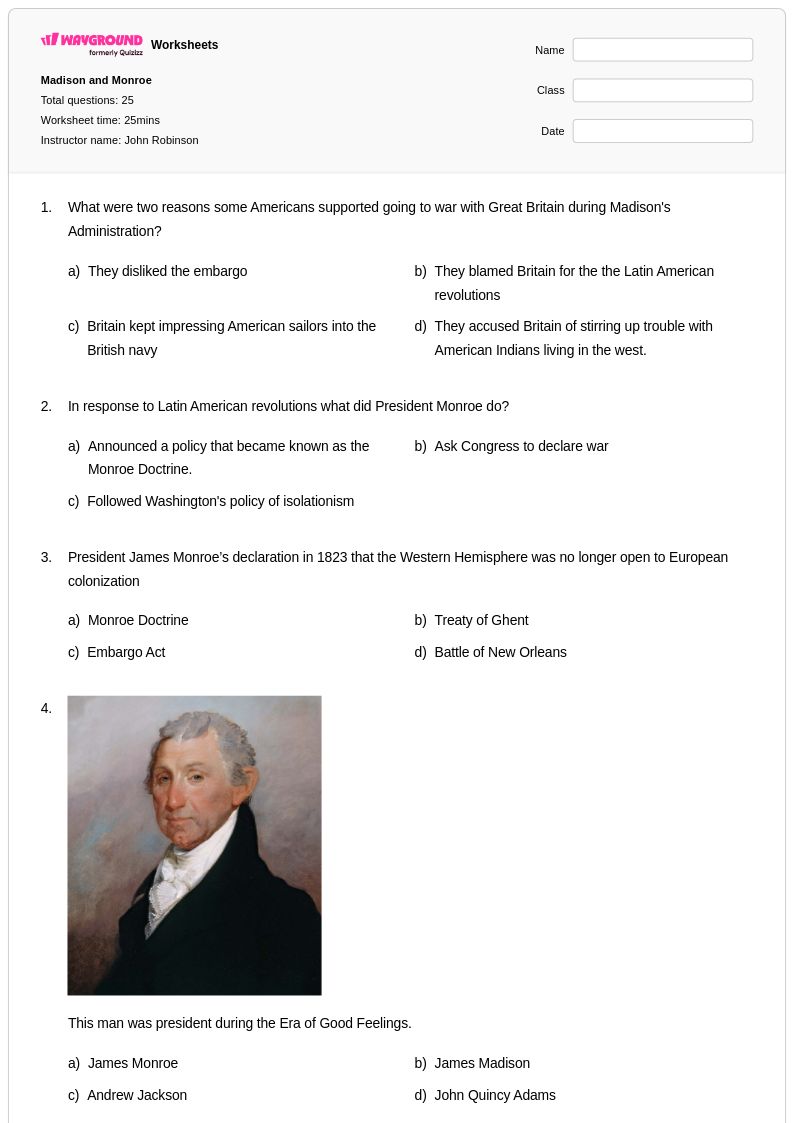
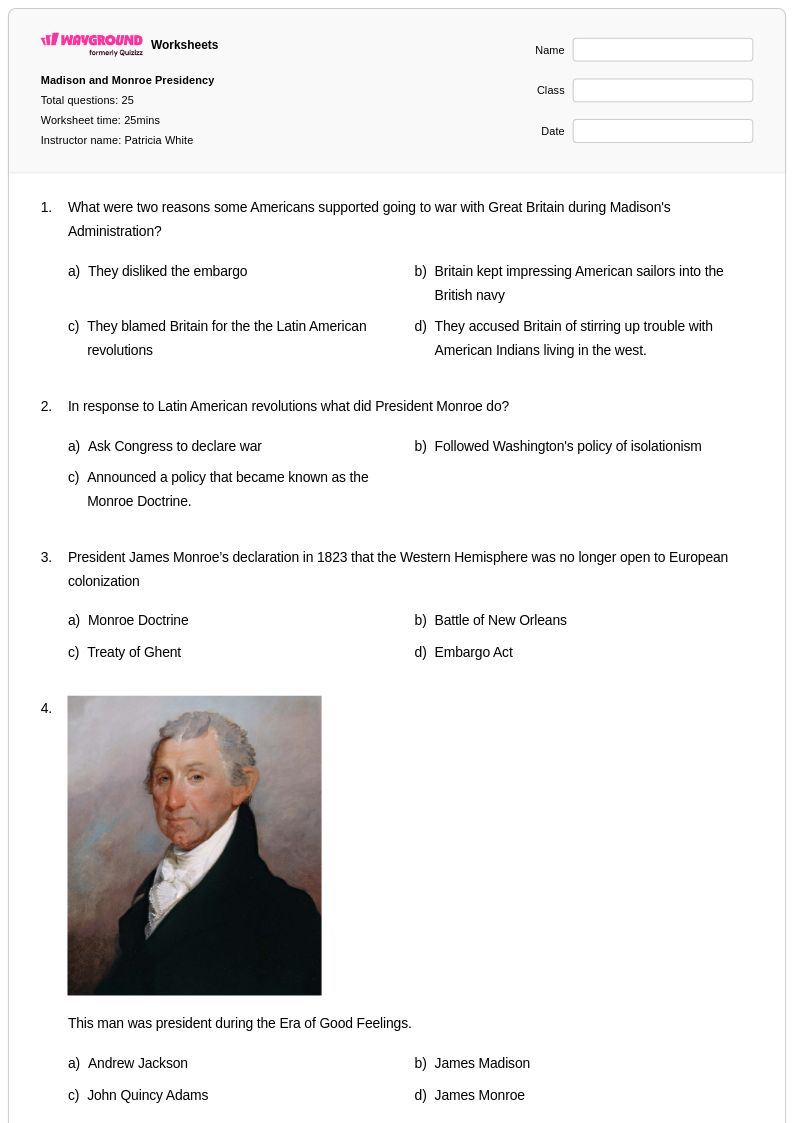
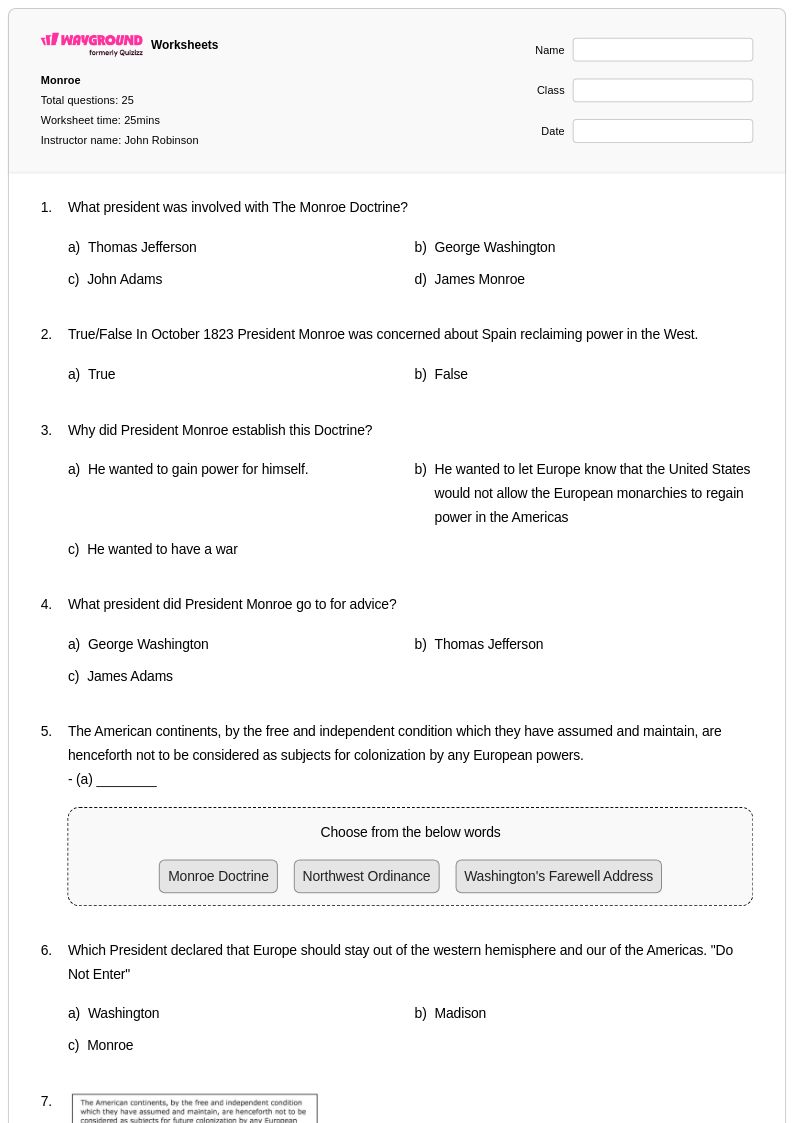
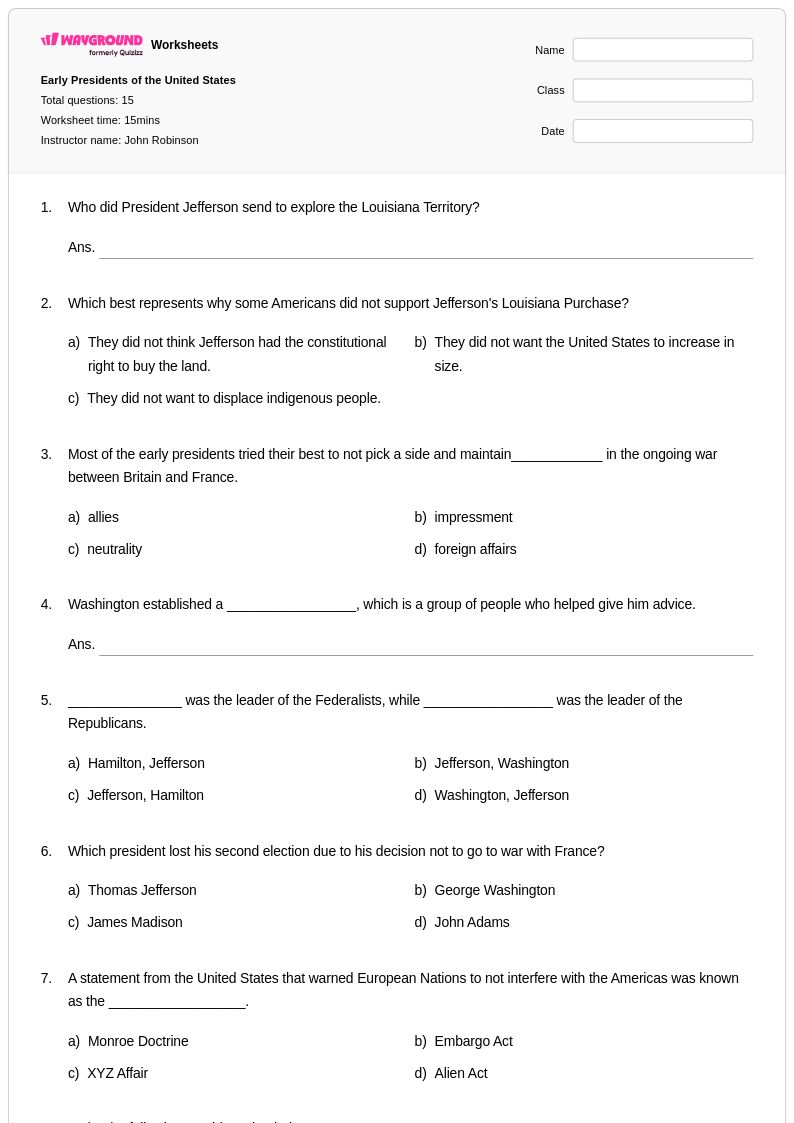
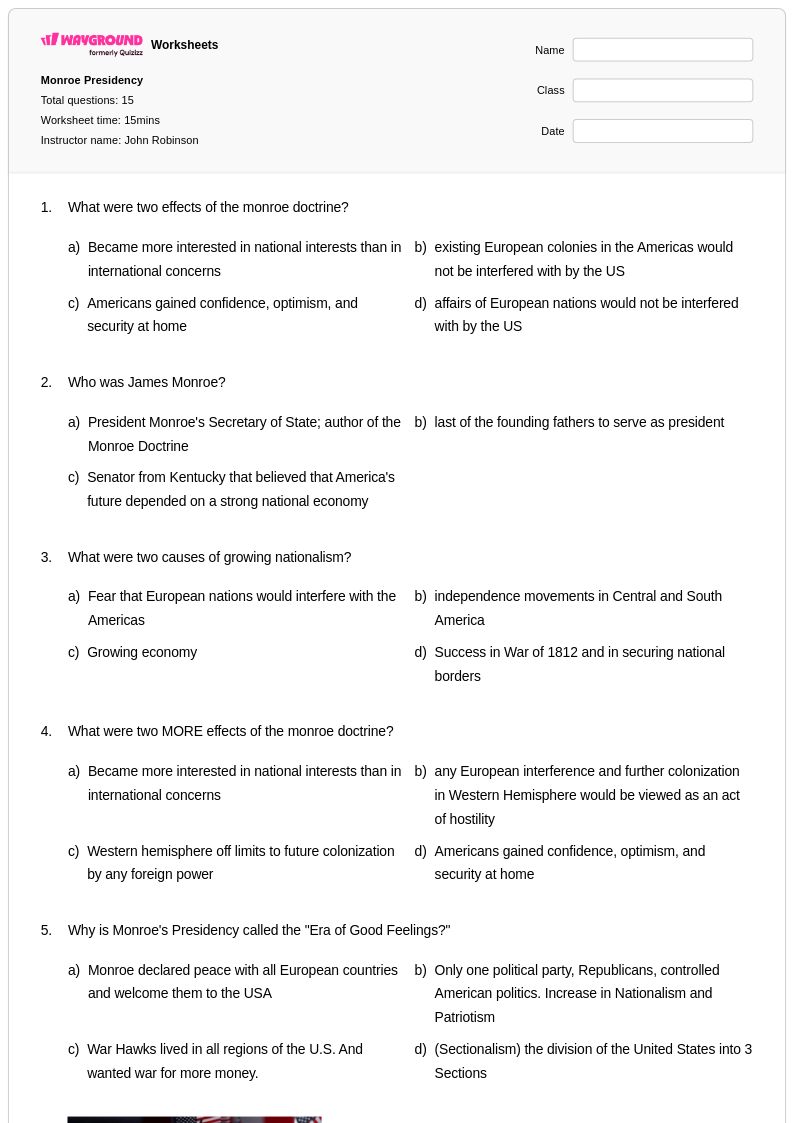
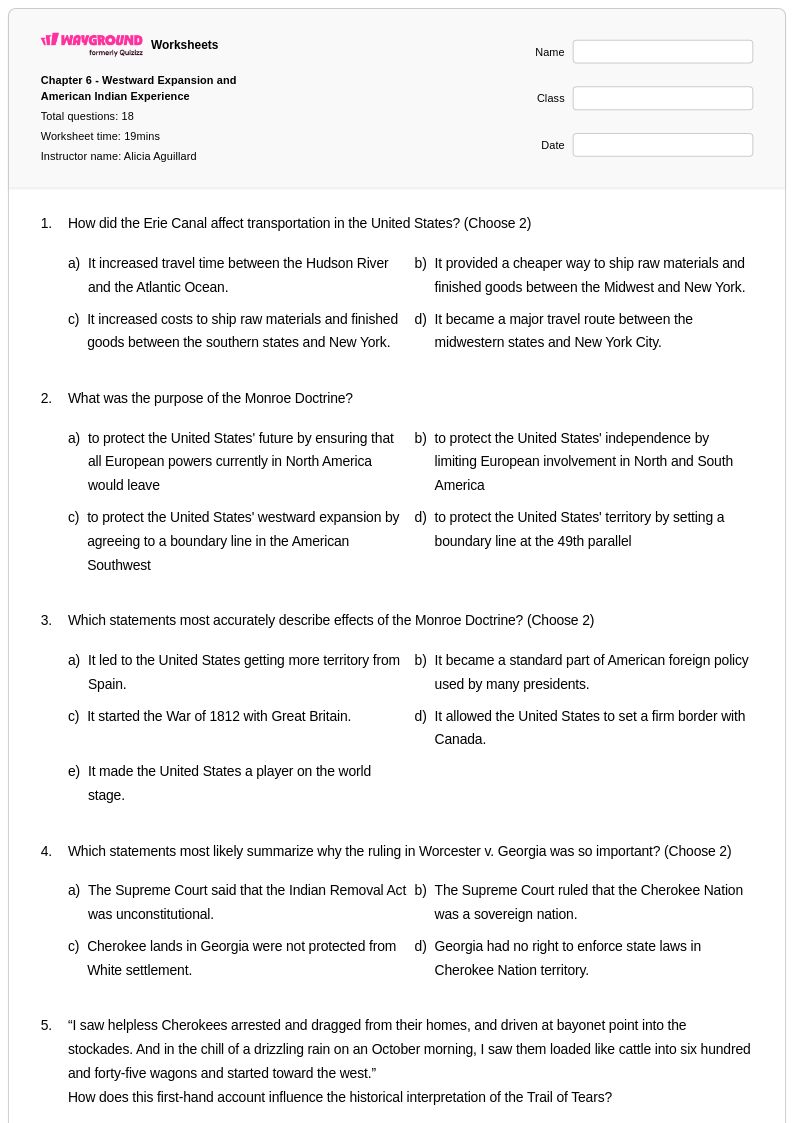
Monroe Doctrine worksheets for Class 10 students available through Wayground (formerly Quizizz) provide comprehensive exploration of this pivotal 1823 foreign policy declaration that shaped American diplomacy for generations. These educational resources help students analyze President James Monroe's bold assertion of American hemispheric influence, examining how the doctrine warned European powers against further colonization in the Americas while establishing the United States as a regional protector. Through carefully structured practice problems, students develop critical thinking skills by evaluating the doctrine's immediate impact on international relations, its role in Manifest Destiny, and its evolution into later policies like the Roosevelt Corollary. Each worksheet includes detailed answer keys that support both independent study and classroom discussion, with free printables offering flexibility for various learning environments and pdf formats ensuring easy access and distribution.
Wayground (formerly Quizizz) empowers educators with millions of teacher-created resources specifically designed to support Monroe Doctrine instruction at the Class 10 level, featuring robust search and filtering capabilities that allow teachers to locate materials aligned with state and national social studies standards. The platform's differentiation tools enable instructors to customize worksheets for diverse learning needs, whether providing remediation for struggling students or enrichment activities for advanced learners who can explore the doctrine's connections to modern American foreign policy. Teachers benefit from flexible formatting options that include both printable and digital versions, streamlining lesson planning while accommodating different classroom technologies and teaching preferences. These comprehensive worksheet collections support systematic skill practice in document analysis, historical reasoning, and argumentative writing, helping educators create engaging learning experiences that deepen students' understanding of how the Monroe Doctrine established foundational principles of American international engagement.
FAQs
How do I teach the Monroe Doctrine to middle or high school students?
Start by grounding students in the geopolitical context of 1823, specifically the threat of European re-colonization in Latin America following independence movements. From there, walk students through Monroe's proclamation as a primary source, identifying its three core principles: non-colonization, non-intervention, and U.S. neutrality in European affairs. Connecting the doctrine to real-world consequences, such as its invocation during the Venezuelan Crisis or the Roosevelt Corollary, helps students understand it as a living policy rather than a static historical document.
What kinds of practice activities help students understand the Monroe Doctrine?
Effective practice for the Monroe Doctrine includes primary source analysis of Monroe's 1823 address, cause-and-effect mapping between the doctrine and Latin American independence movements, and timeline construction tracing how the policy evolved through the Roosevelt Corollary and Cold War applications. Comparison activities that ask students to contrast the Monroe Doctrine with other U.S. foreign policy frameworks, such as isolationism or the Truman Doctrine, build the analytical depth required at the high school level.
What misconceptions do students commonly have about the Monroe Doctrine?
A common misconception is that the Monroe Doctrine gave the United States legal authority to intervene in Latin American affairs, when in reality it was a unilateral policy statement with no binding international status at the time of its issuance. Students also frequently conflate the original 1823 doctrine with the 1904 Roosevelt Corollary, which significantly expanded its scope to justify direct U.S. intervention. Addressing these distinctions explicitly helps students avoid oversimplifying a policy that changed meaning dramatically across different administrations.
How do I connect the Monroe Doctrine to broader U.S. foreign policy themes students need to know?
The Monroe Doctrine is a foundational anchor for teaching the arc of U.S. foreign policy from isolationism to interventionism. Teachers can use it to introduce concepts like spheres of influence, hemispheric hegemony, and the tension between sovereignty and security that reappears in later doctrines such as the Truman Doctrine and the Reagan Doctrine. Framing the Monroe Doctrine as the original template for American exceptionalism in foreign affairs gives students a through-line they can apply across multiple units.
How do I use Monroe Doctrine worksheets from Wayground in my classroom?
Wayground's Monroe Doctrine worksheets are available as printable PDFs for traditional classroom use and in digital formats for technology-integrated or remote learning environments, including the option to host them as a quiz directly on Wayground. The collection includes varied question formats ranging from basic comprehension to analytical essay prompts, so teachers can select materials that match the depth of instruction at any given point in the unit. Answer keys are included with all worksheets, reducing prep time and supporting consistent grading.
How can I differentiate Monroe Doctrine instruction for students at different levels?
For struggling learners, scaffold primary source analysis by pre-teaching key vocabulary such as colonization, sovereignty, and hemispheric influence before asking students to engage with Monroe's address directly. Advanced students benefit from comparative tasks that ask them to evaluate how the doctrine's meaning shifted under different presidents, or to argue whether the Roosevelt Corollary was a legitimate extension or a distortion of Monroe's original intent. On Wayground, teachers can also apply accommodations such as read aloud, extended time, and reduced answer choices to individual students without disrupting the experience of the rest of the class.