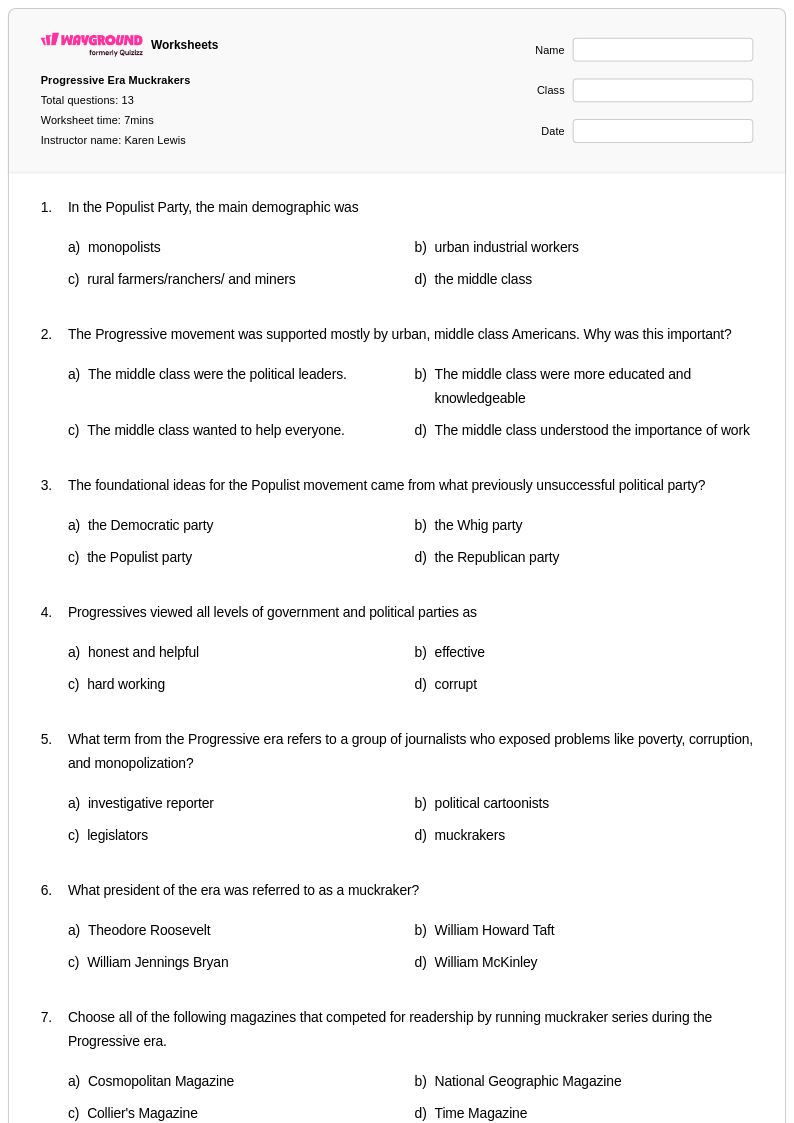
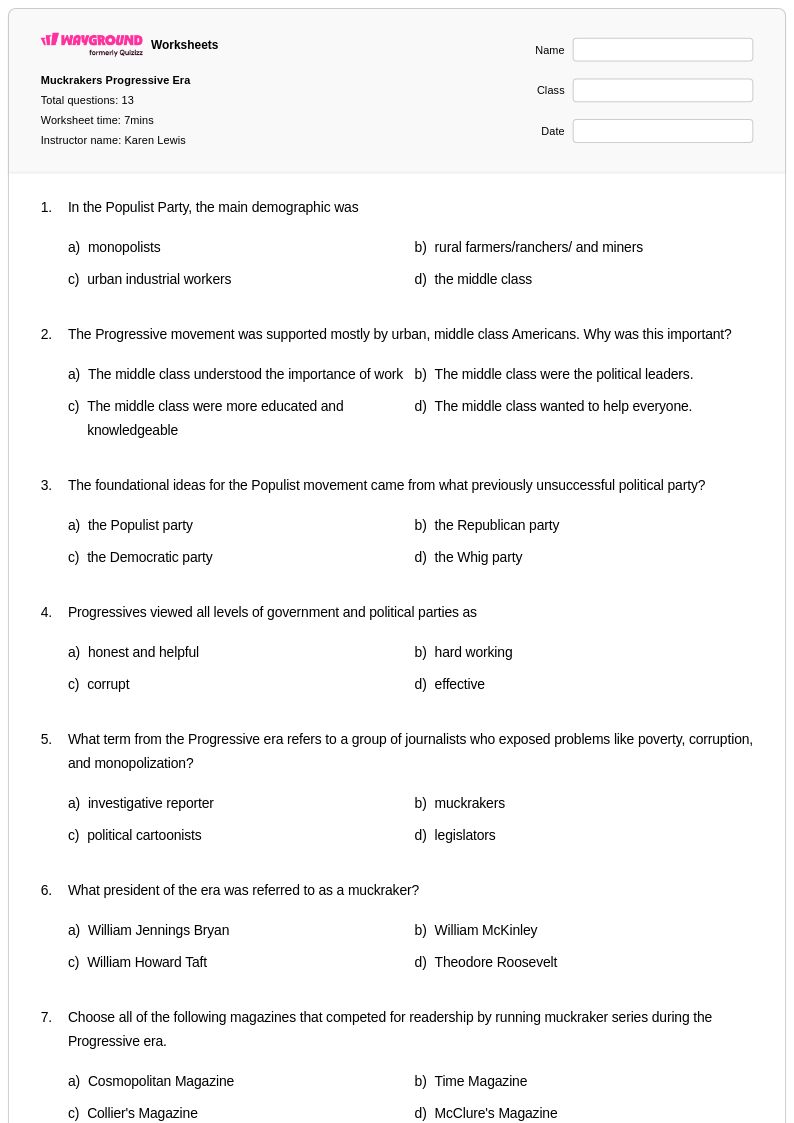
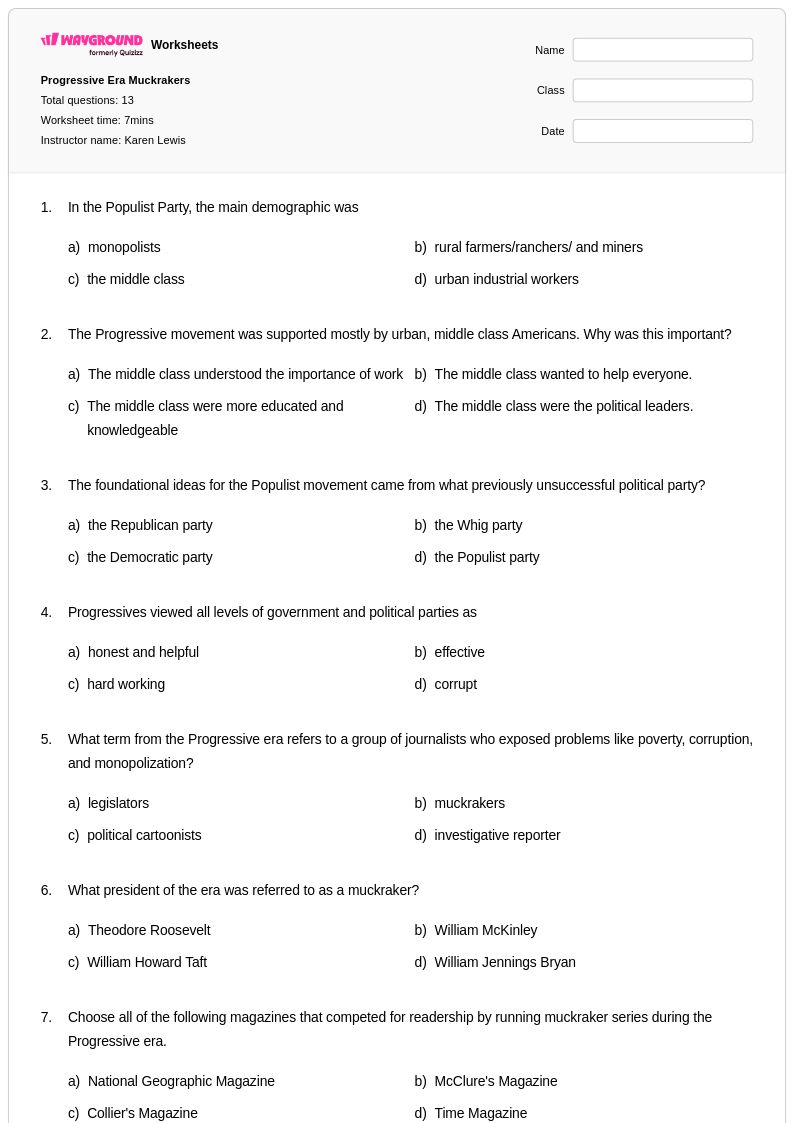
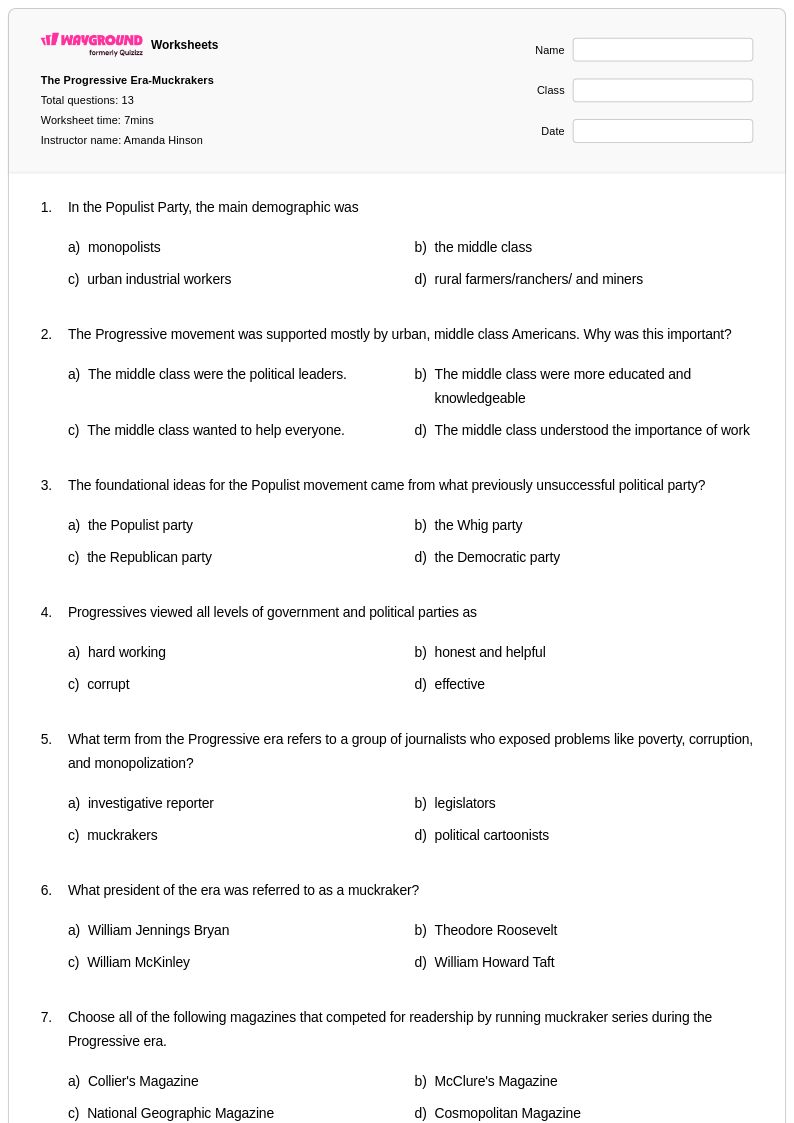
Explore Class 10 muckrakers worksheets and free printables that help students analyze Progressive Era investigative journalists through engaging practice problems and comprehensive answer keys available as downloadable PDFs.
Explore printable Muckrakers worksheets for Class 10
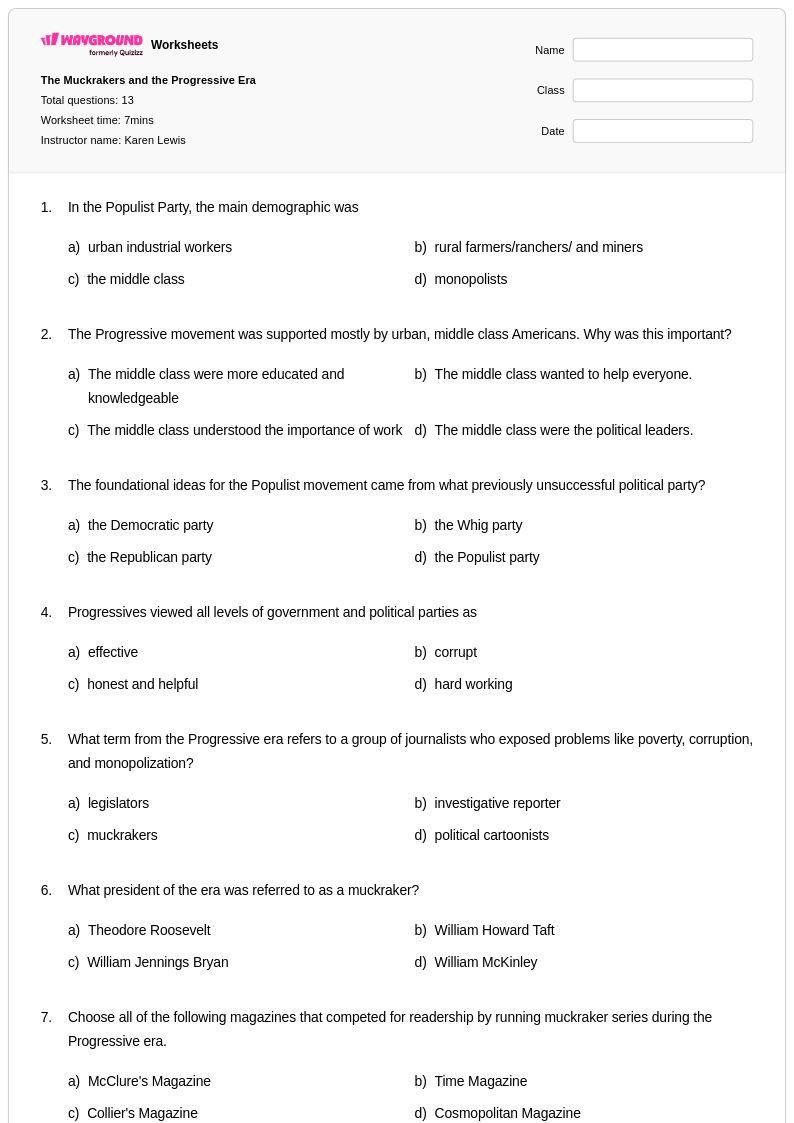
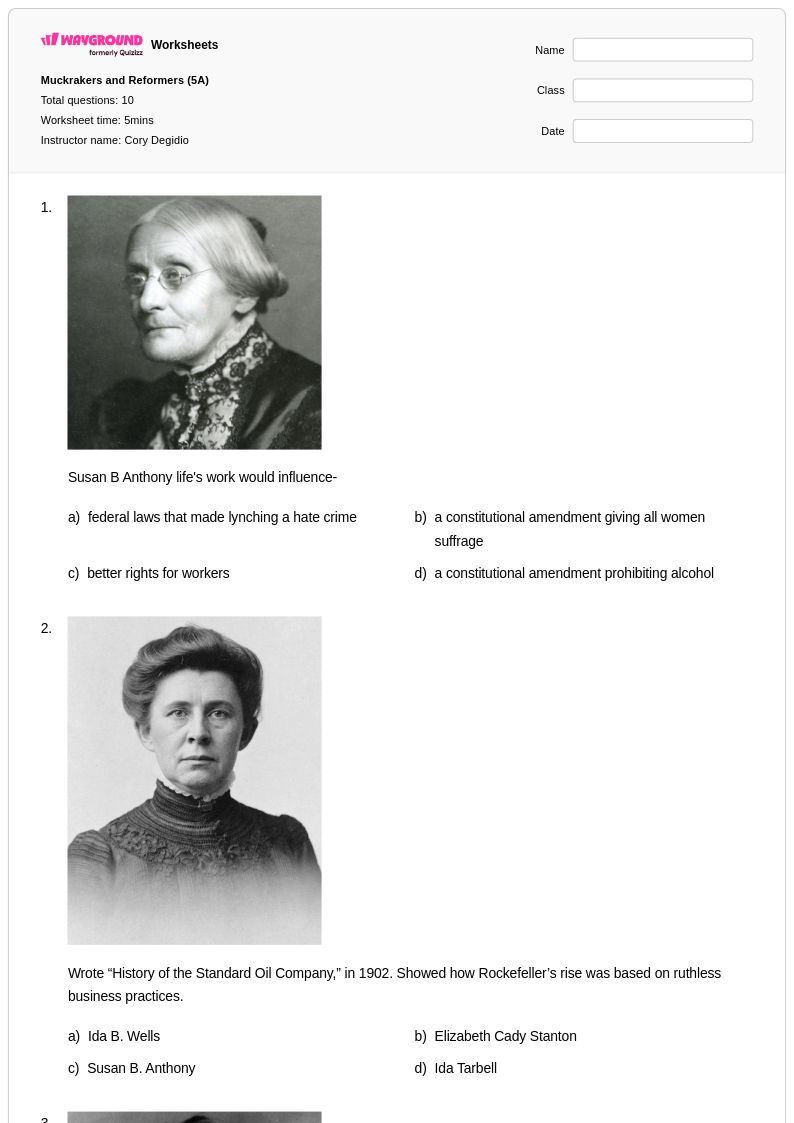
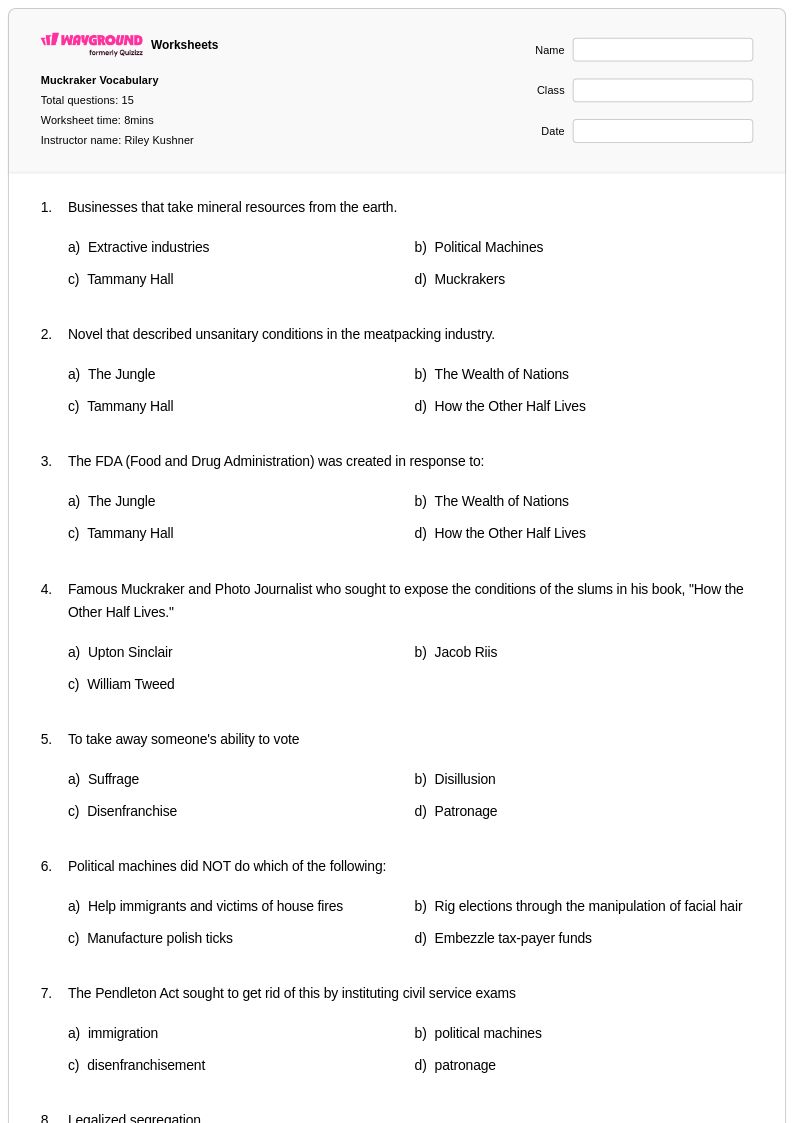
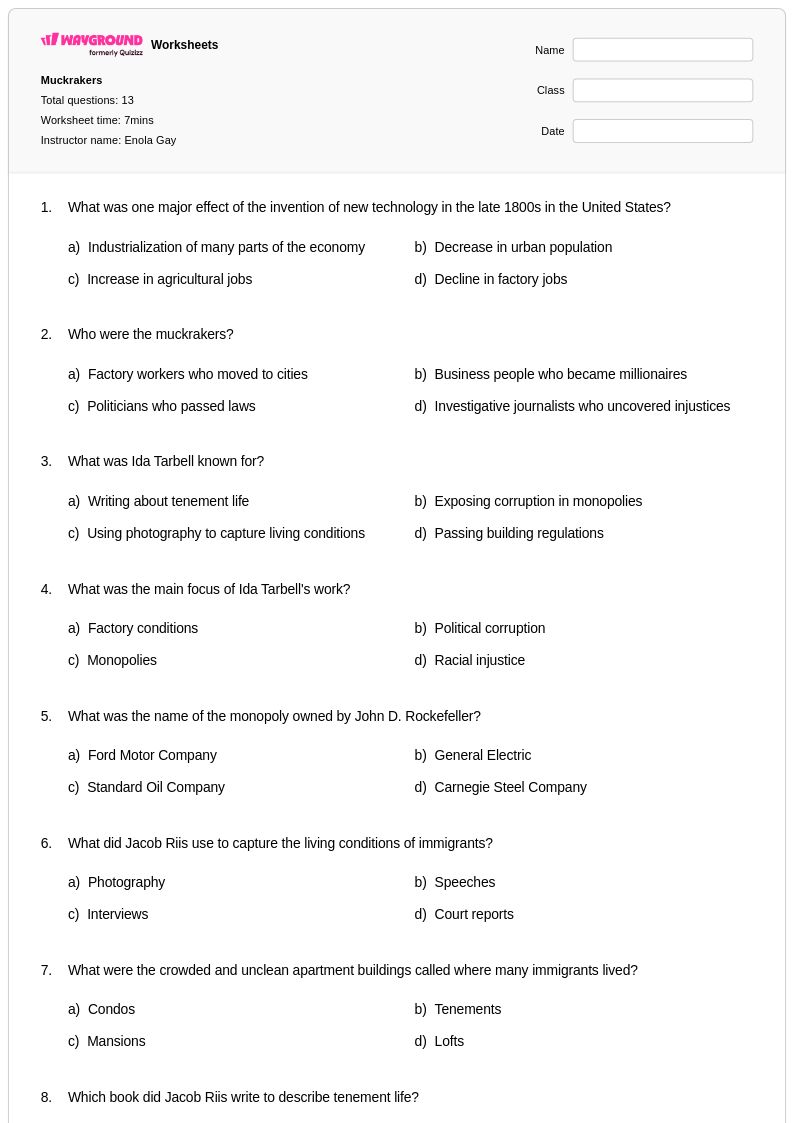
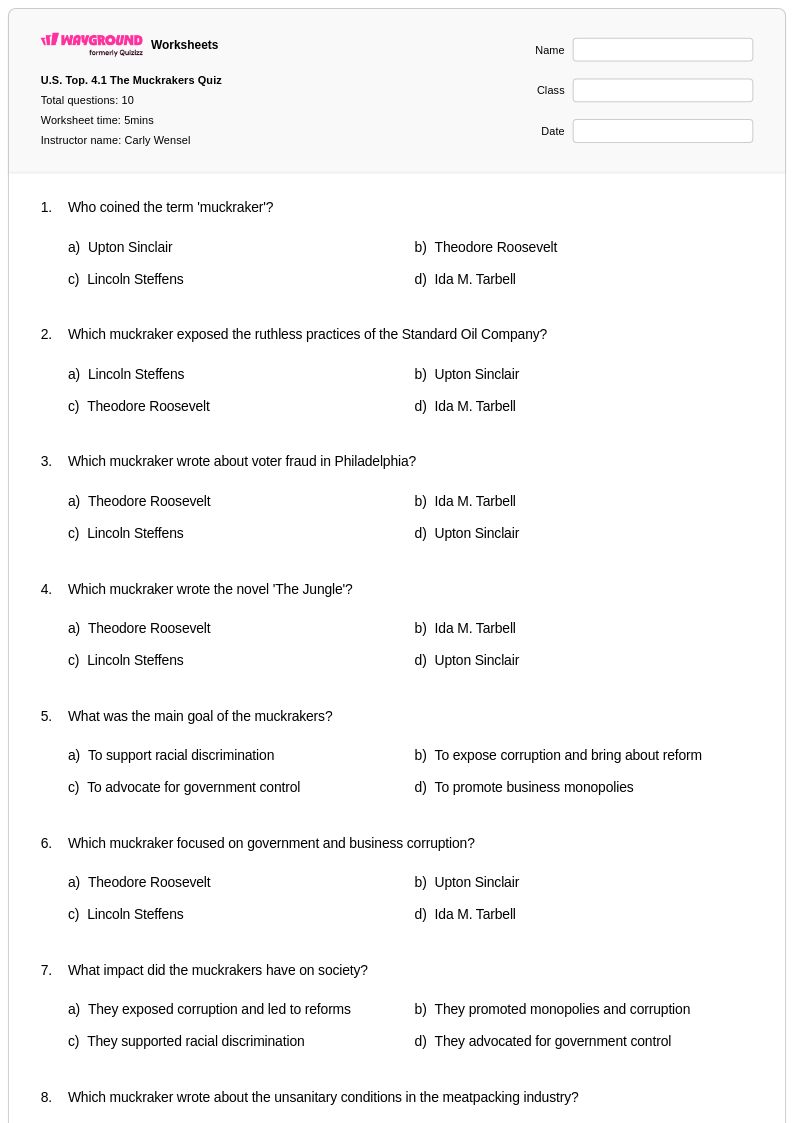
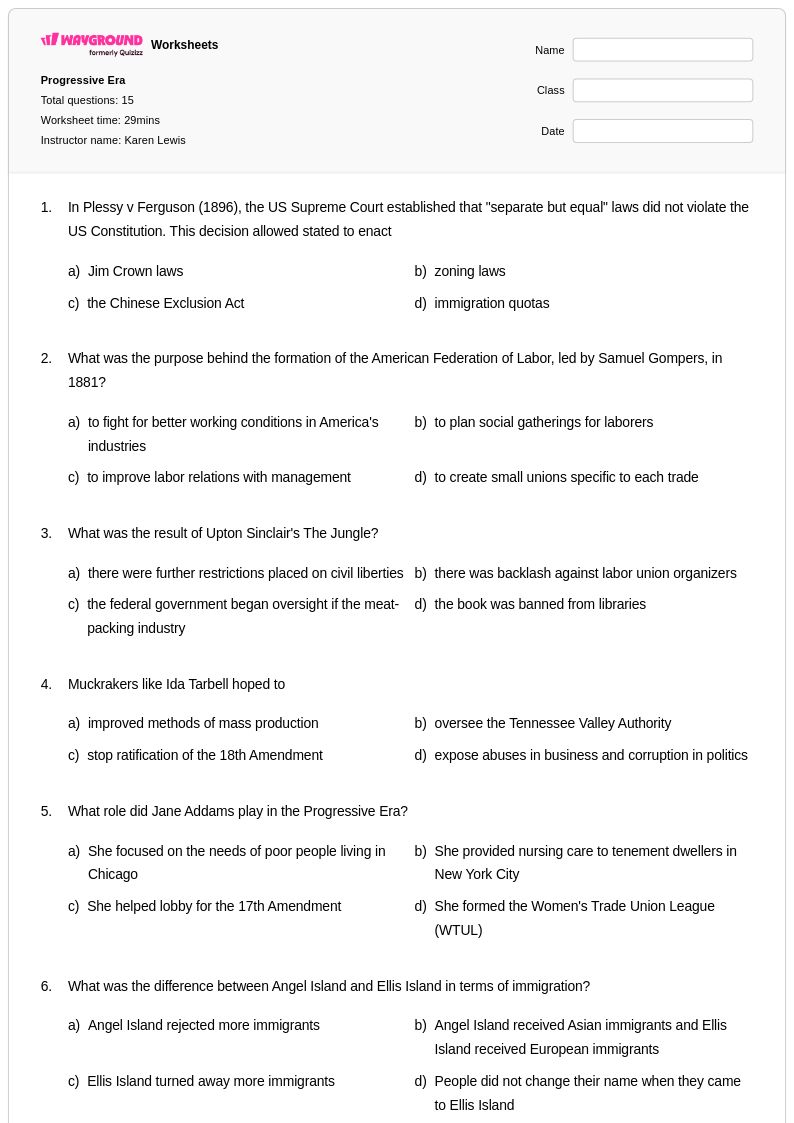
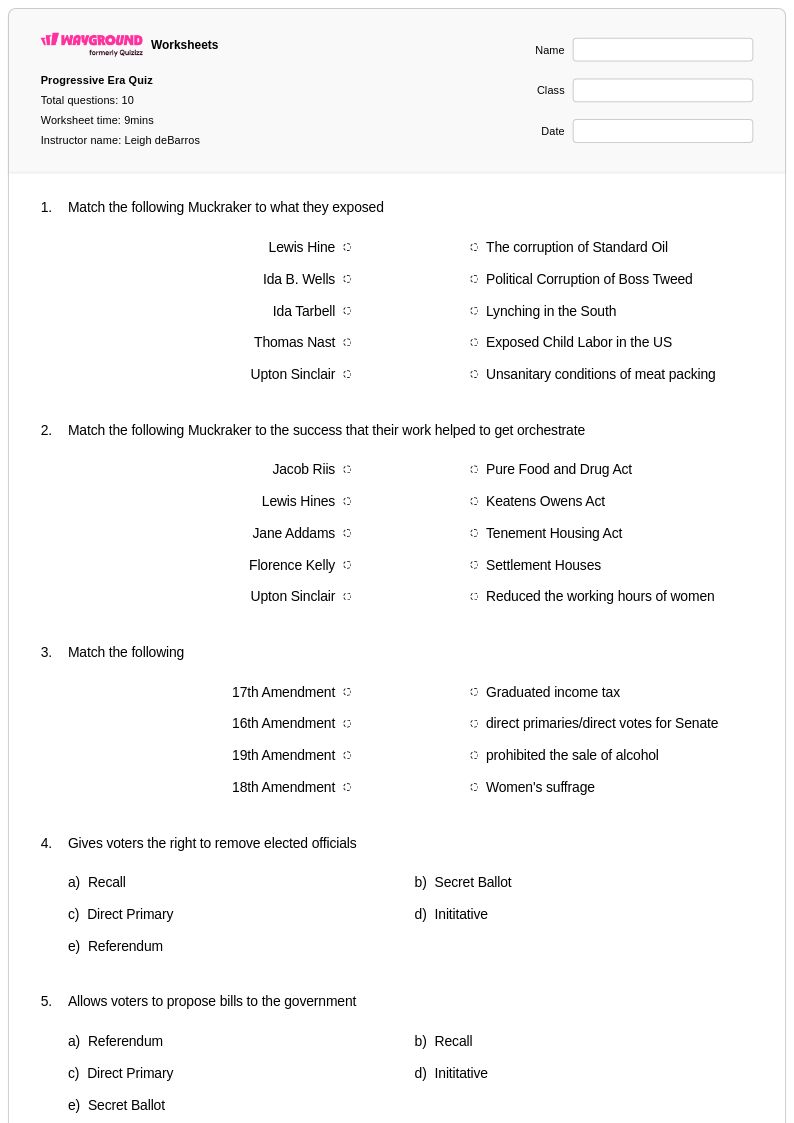
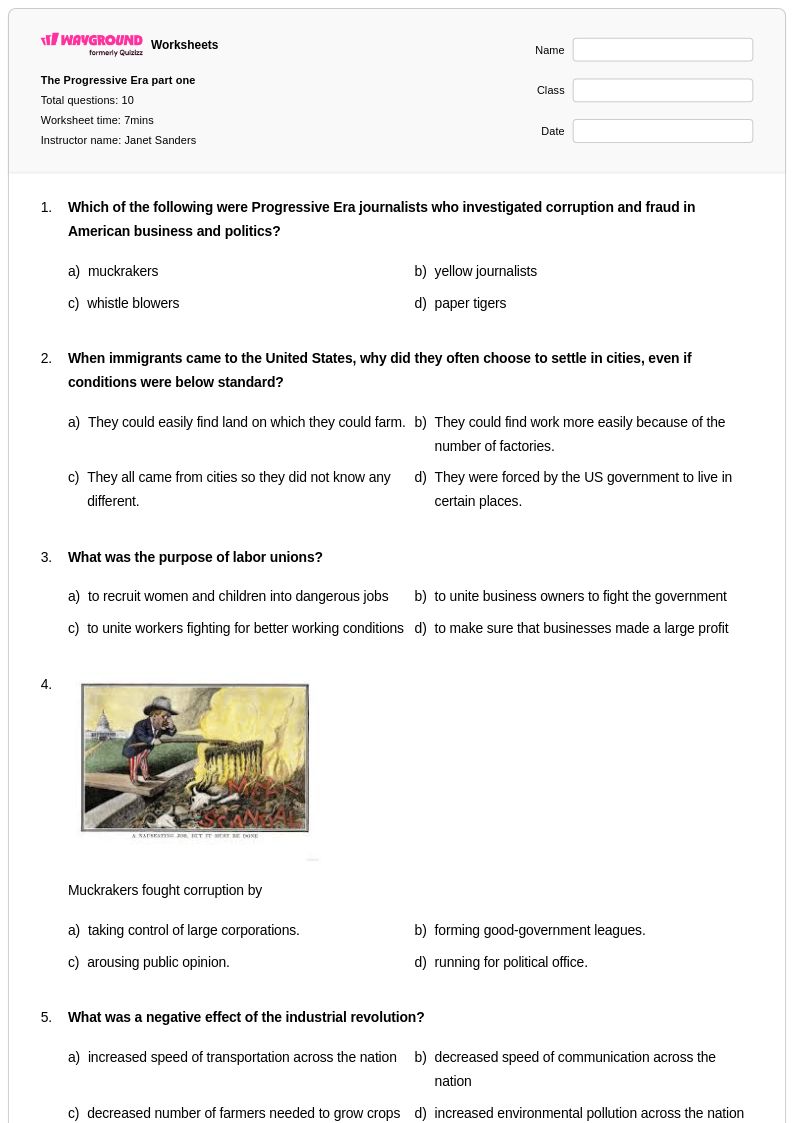
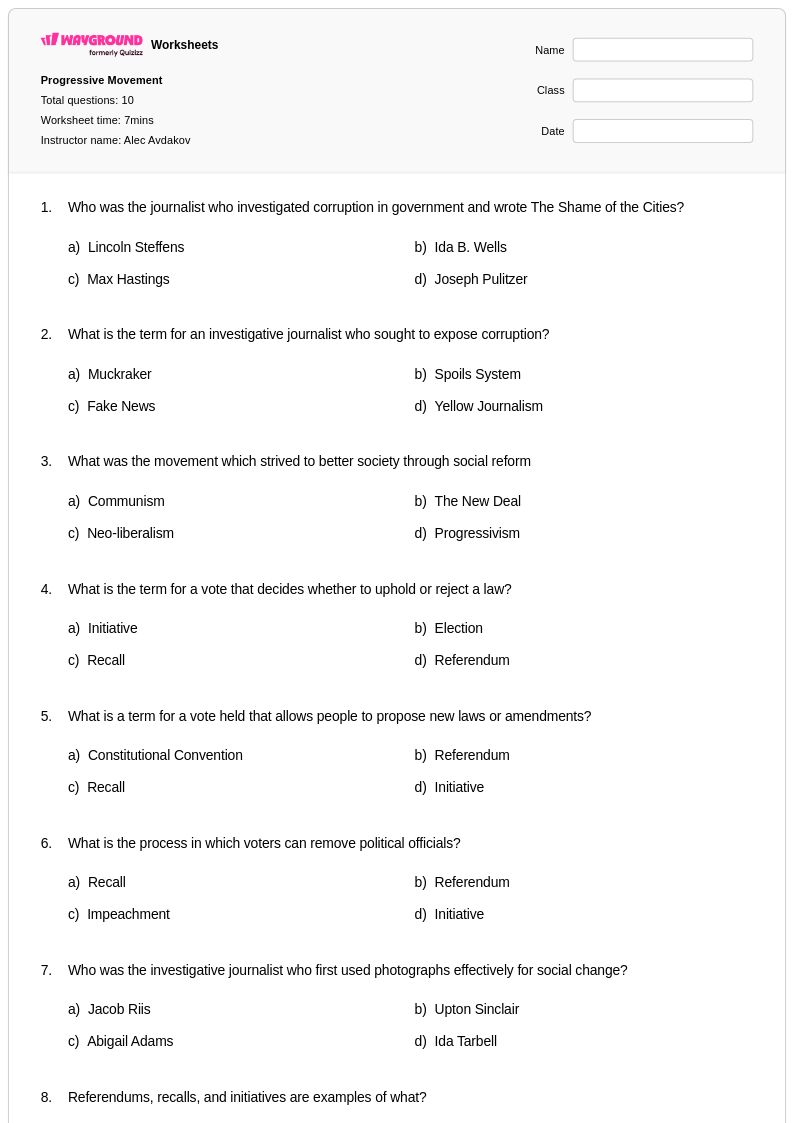
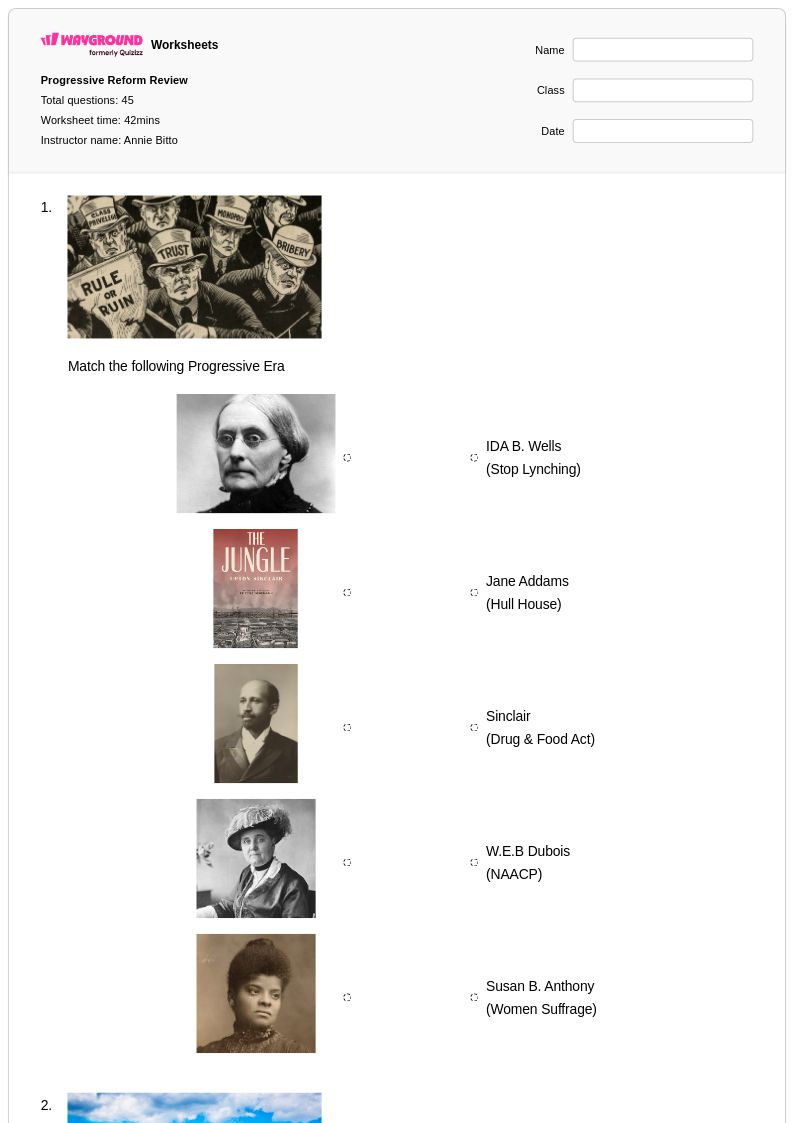
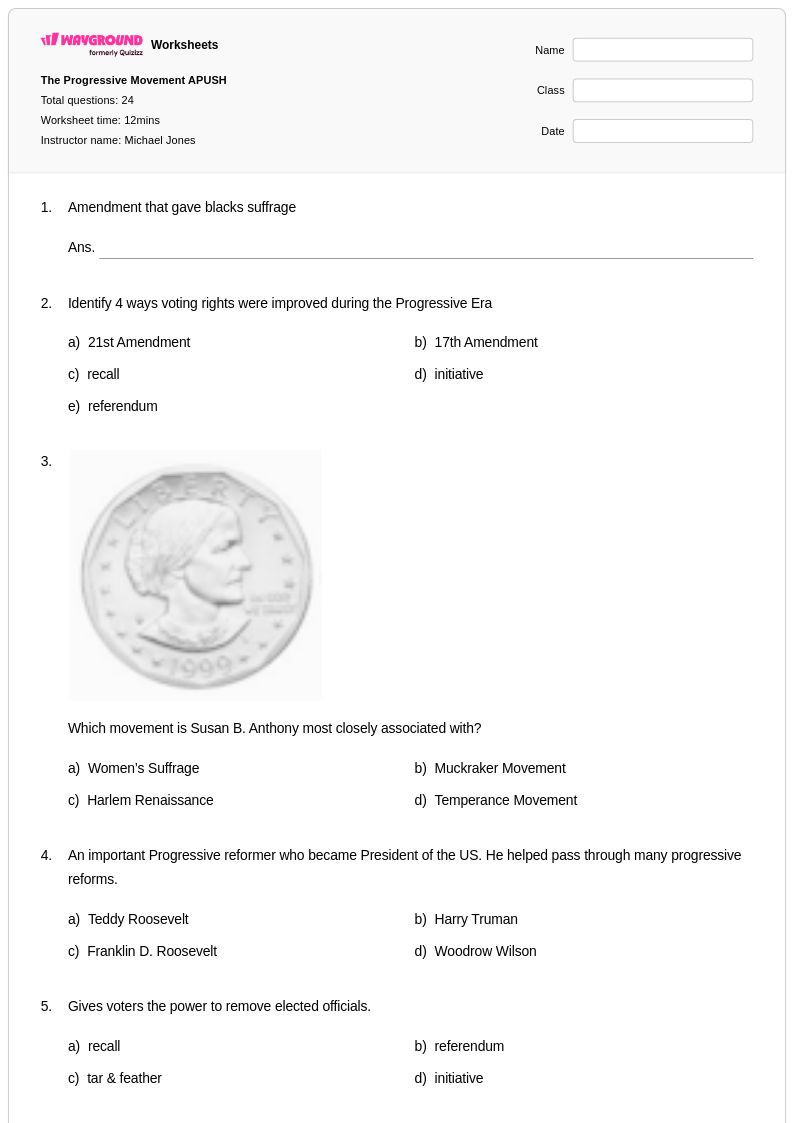
Muckrakers worksheets for Class 10 students provide comprehensive coverage of this pivotal reform movement in early 20th century America, examining the investigative journalists and writers who exposed corruption, unsafe working conditions, and social injustices that spurred Progressive Era reforms. These educational materials strengthen critical thinking skills by having students analyze primary source excerpts from influential muckrakers like Ida Tarbell, Lincoln Steffens, and Upton Sinclair, while developing their ability to evaluate the impact of investigative journalism on American society and politics. The worksheets include practice problems that challenge students to connect muckraking exposés to specific legislative reforms, such as the Pure Food and Drug Act and antitrust legislation, with comprehensive answer keys provided to support both independent study and classroom instruction. Available as free printables in convenient pdf format, these resources help students understand how media and journalism can serve as catalysts for social and political change.
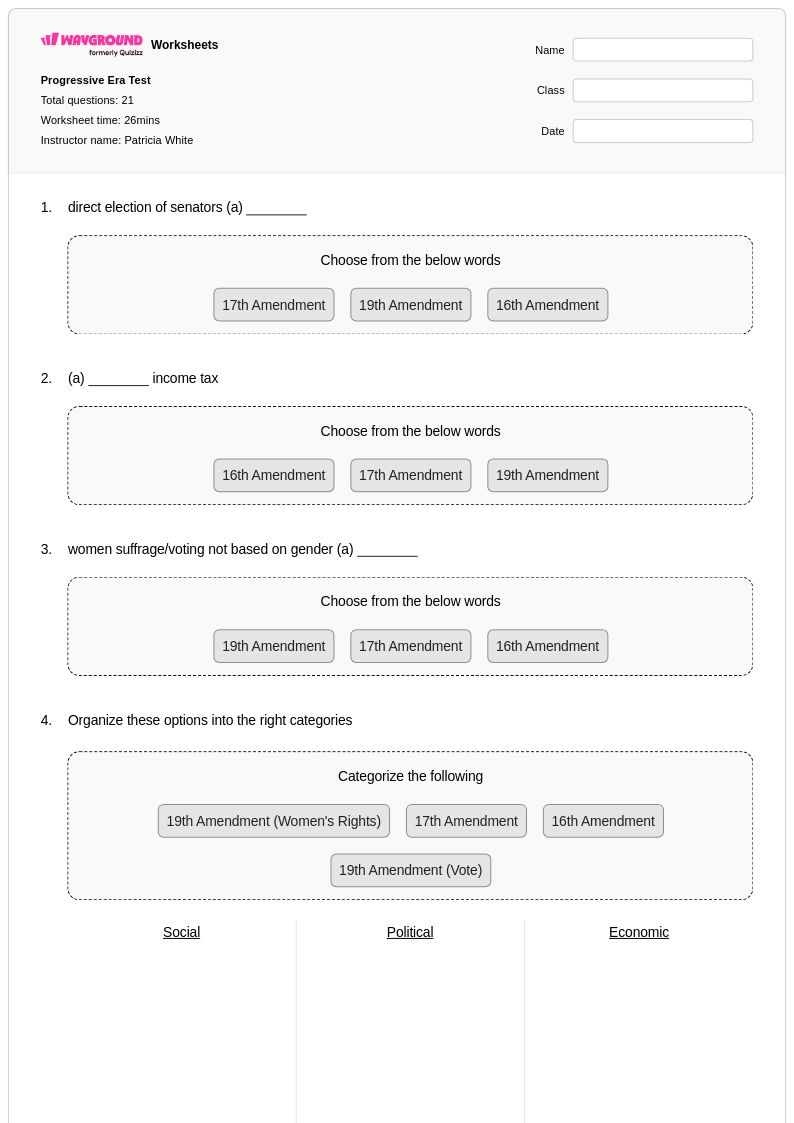
Wayground, formerly Quizizz, empowers educators with an extensive collection of teacher-created muckrakers worksheets drawn from millions of high-quality resources that align with national social studies standards for Class 10 U.S. History curricula. The platform's robust search and filtering capabilities enable teachers to quickly locate materials that match their specific instructional needs, whether focusing on individual muckrakers, their investigative methods, or the broader Progressive movement context. These differentiation tools allow educators to customize worksheets for varying skill levels within their classrooms, supporting both remediation for struggling learners and enrichment opportunities for advanced students. Available in both printable pdf format for traditional classroom use and digital formats for online learning environments, these flexible resources streamline lesson planning while providing targeted skill practice that helps students master the complex relationships between media, public awareness, and democratic reform processes.
FAQs
How do I teach muckrakers in a U.S. History class?
Teaching muckrakers is most effective when students connect specific journalists to the concrete social problems they exposed. Start by introducing the term 'muckraker' in the context of the Progressive Era, then focus on key figures like Ida Tarbell (Standard Oil), Upton Sinclair (meatpacking industry), and Jacob Riis (urban poverty). Using primary source excerpts, political cartoons, and reform legislation alongside your direct instruction helps students understand how investigative journalism translated into legislative change, such as the Pure Food and Drug Act of 1906.
What activities help students practice analyzing muckraker journalism?
Document analysis tasks work especially well for this topic because they mirror what muckrakers actually did. Have students evaluate primary source excerpts from works like 'The Jungle' or Tarbell's 'History of the Standard Oil Company,' identifying the author's claims, evidence, and intended audience. Cause-and-effect graphic organizers that trace the path from a muckraker's investigation to specific legislative reform are particularly effective at reinforcing how journalism drove policy change during the Progressive Era.
What common mistakes do students make when studying muckrakers?
Students frequently conflate muckrakers with general political activists, missing the journalistic and investigative dimension that made them distinct. Another common error is treating muckrakers as a monolithic group rather than recognizing that each figure targeted a different sector, from corporate monopolies to tenement housing to political corruption. Students also tend to underestimate the resistance muckrakers faced from powerful interests, which is important context for understanding why their work was considered radical at the time.
How do muckraker worksheets help students think critically about primary sources?
Muckraker worksheets typically present students with excerpts from actual investigative writing, which requires them to evaluate purpose, bias, and evidence rather than passively absorb information. Tasks like identifying the social problem being exposed, assessing the author's rhetorical choices, and connecting the text to resulting legislation build the kind of historical thinking skills tested on AP U.S. History and state assessments. This close reading practice also helps students transfer analytical skills to other document-based questions.
How can I use Wayground's muckrakers worksheets in my classroom?
Wayground's muckrakers worksheets are available as printable PDFs for traditional classroom use and in digital formats for technology-integrated environments, giving you flexibility regardless of your classroom setup. You can also host them as a quiz directly on Wayground, which is useful for formative assessment or independent practice. The worksheets range from basic comprehension questions to advanced analytical tasks, so they can serve different instructional purposes within the same unit, from initial instruction to review and enrichment.
How do I differentiate muckraker instruction for students with different learning needs?
For students who need additional support, reducing the complexity of primary source excerpts and providing sentence starters for analysis responses can lower the entry point without removing the critical thinking demand. On Wayground's digital platform, teachers can apply individual accommodations such as read aloud, extended time, and reduced answer choices for specific students, while the rest of the class works with standard settings. For advanced students, extending analysis to compare multiple muckrakers' rhetorical strategies or connecting their work to contemporary investigative journalism adds meaningful depth.