Free Printable Hearing Syllables Worksheets for Class 1
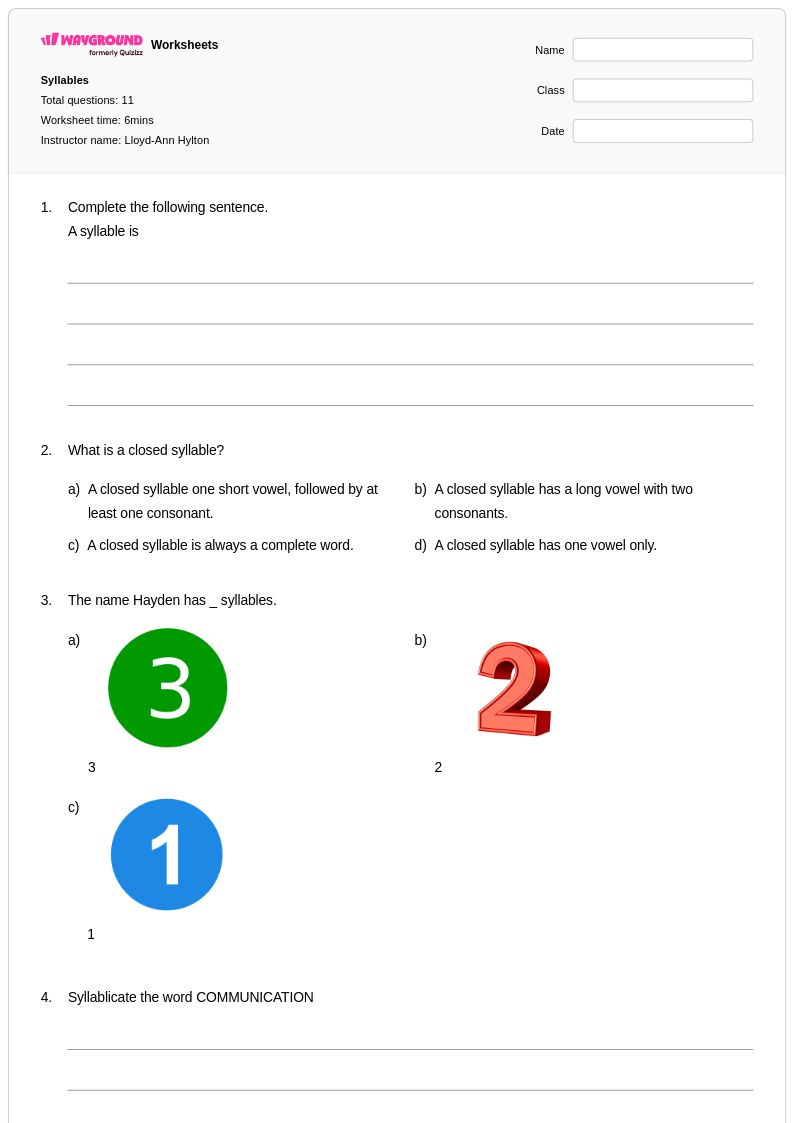
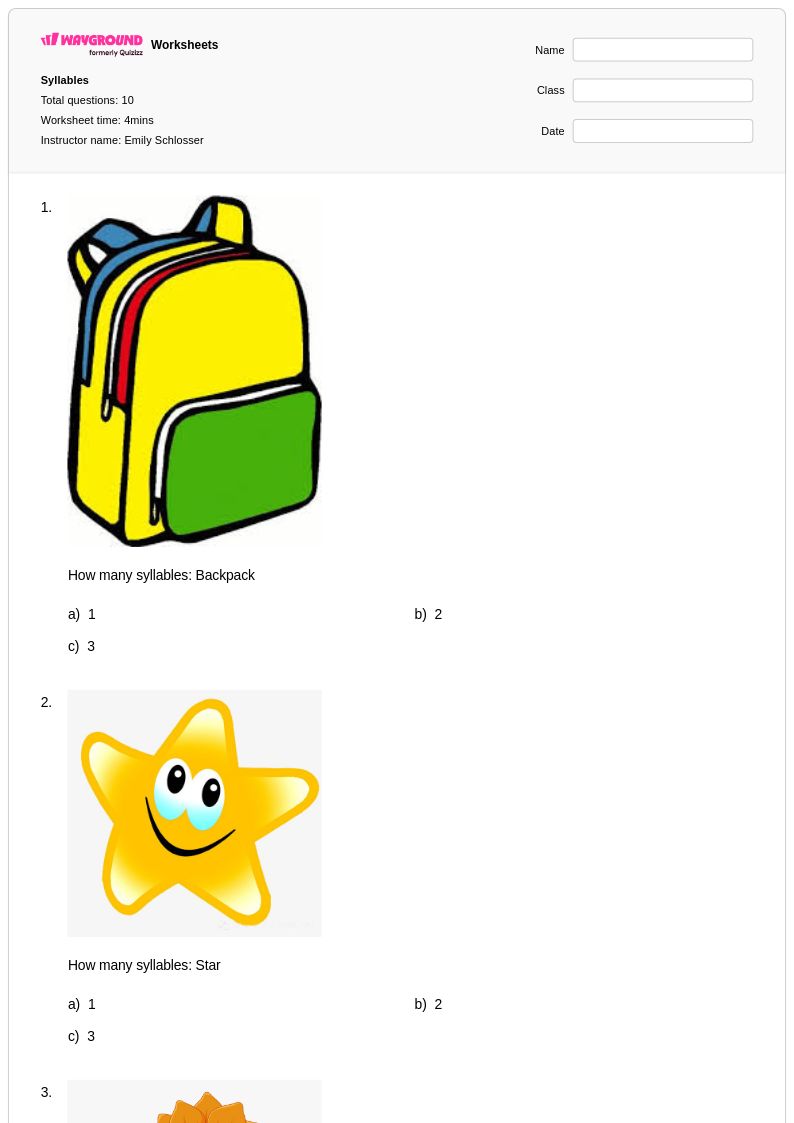
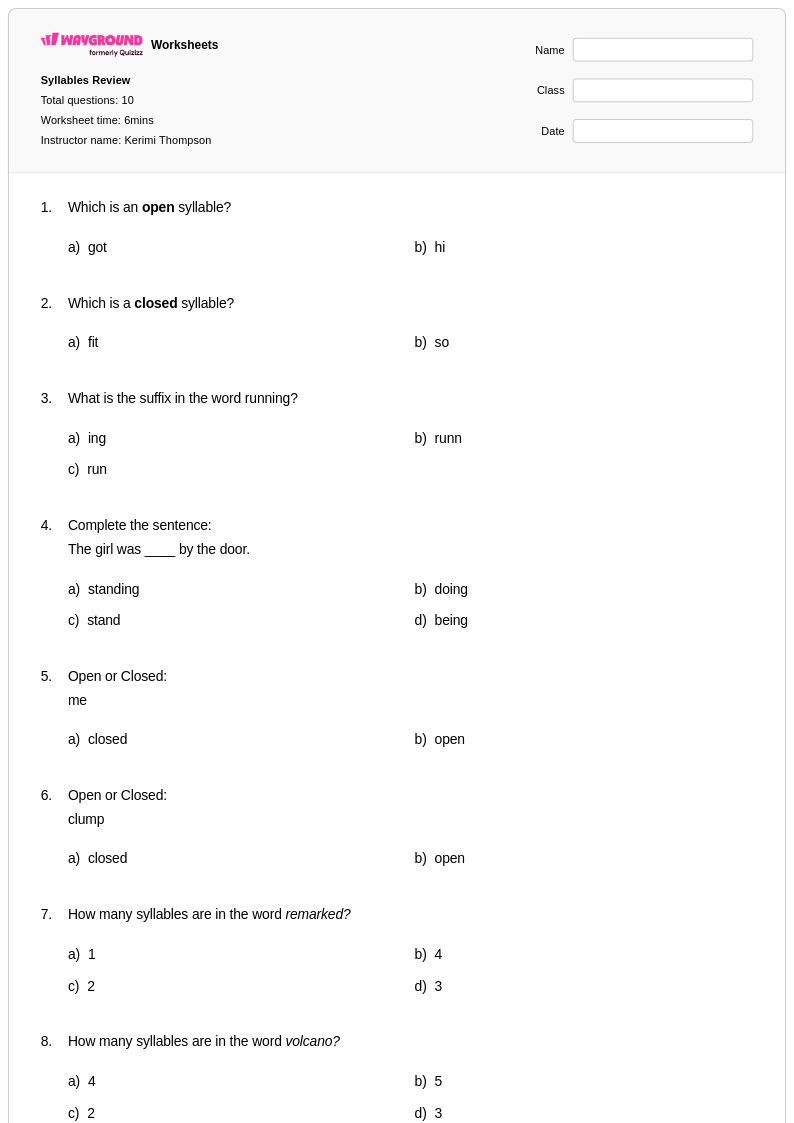
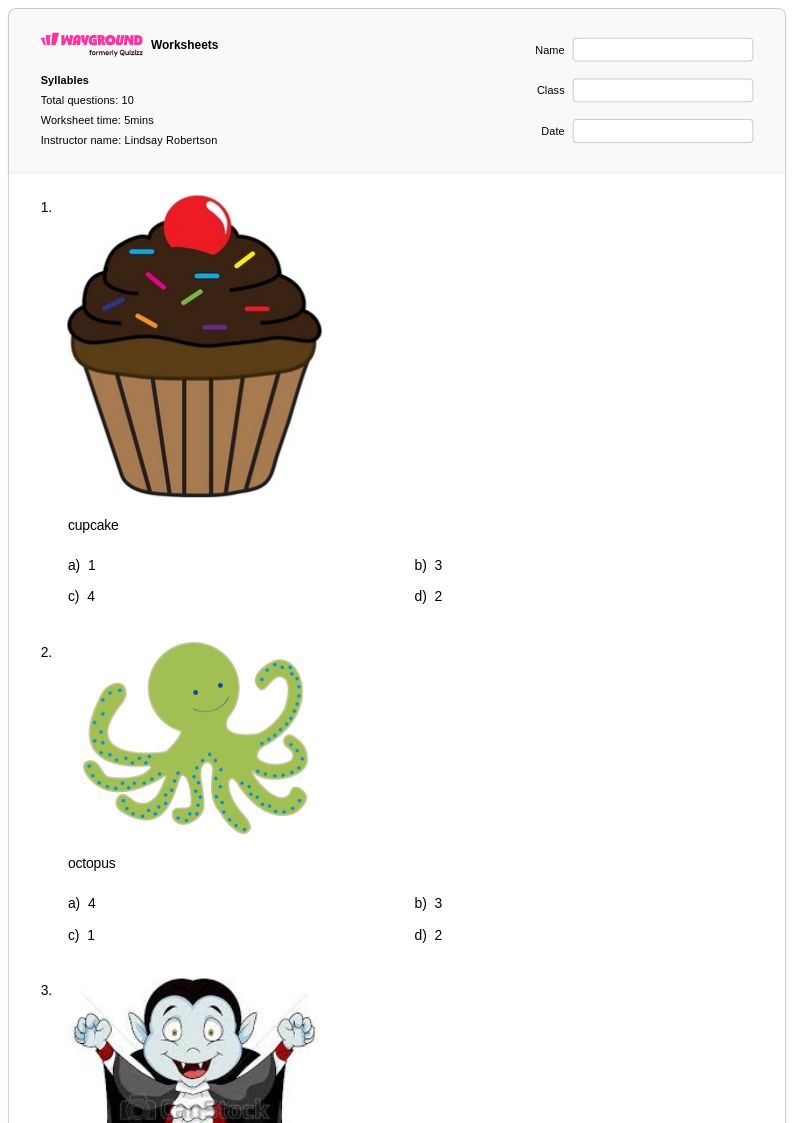
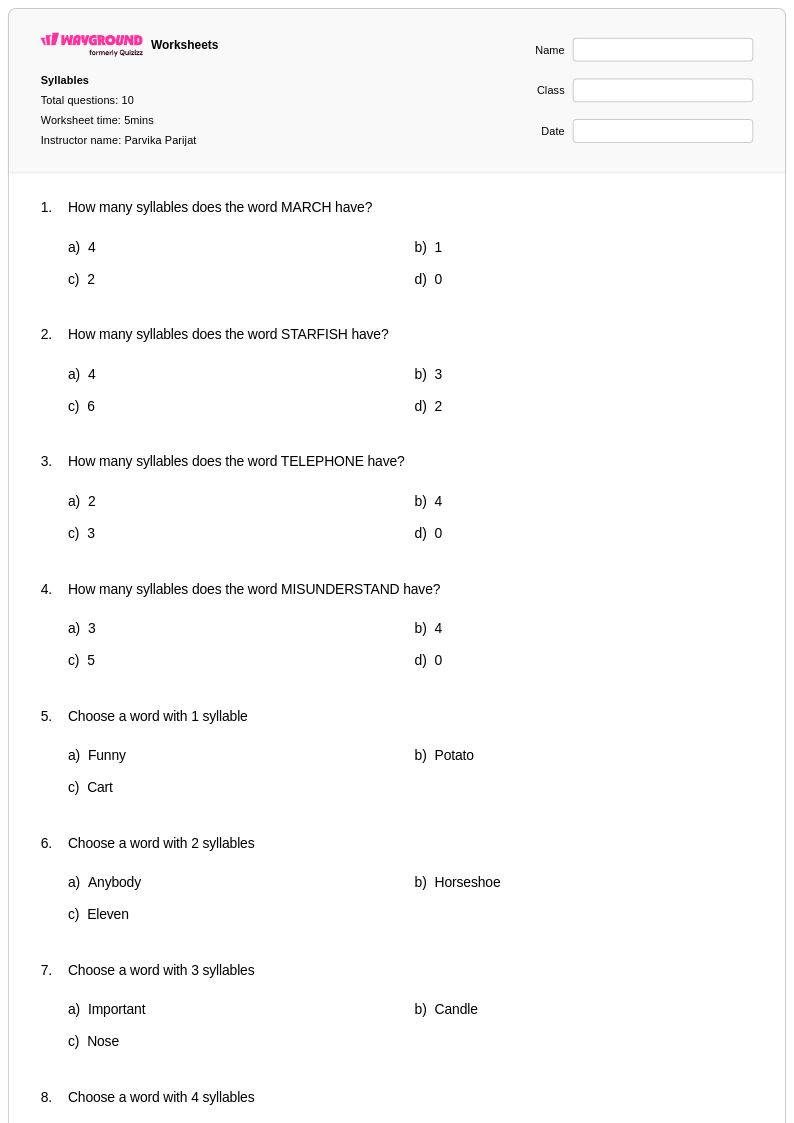
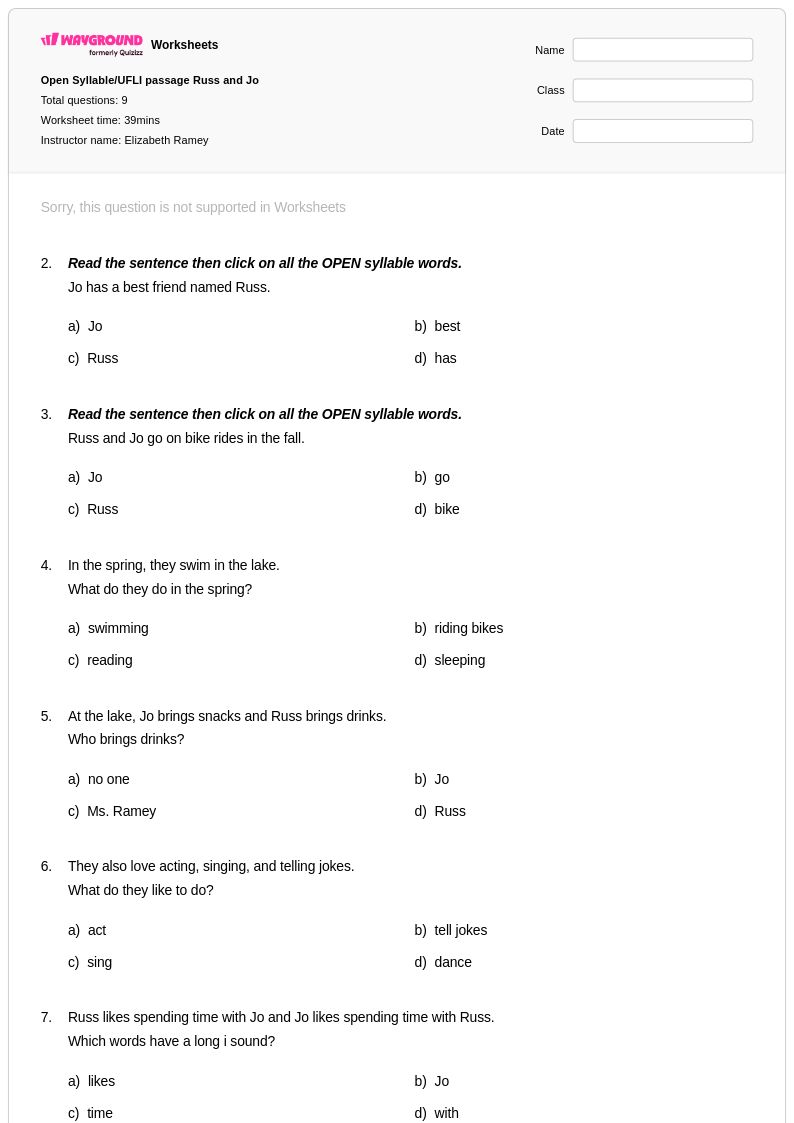
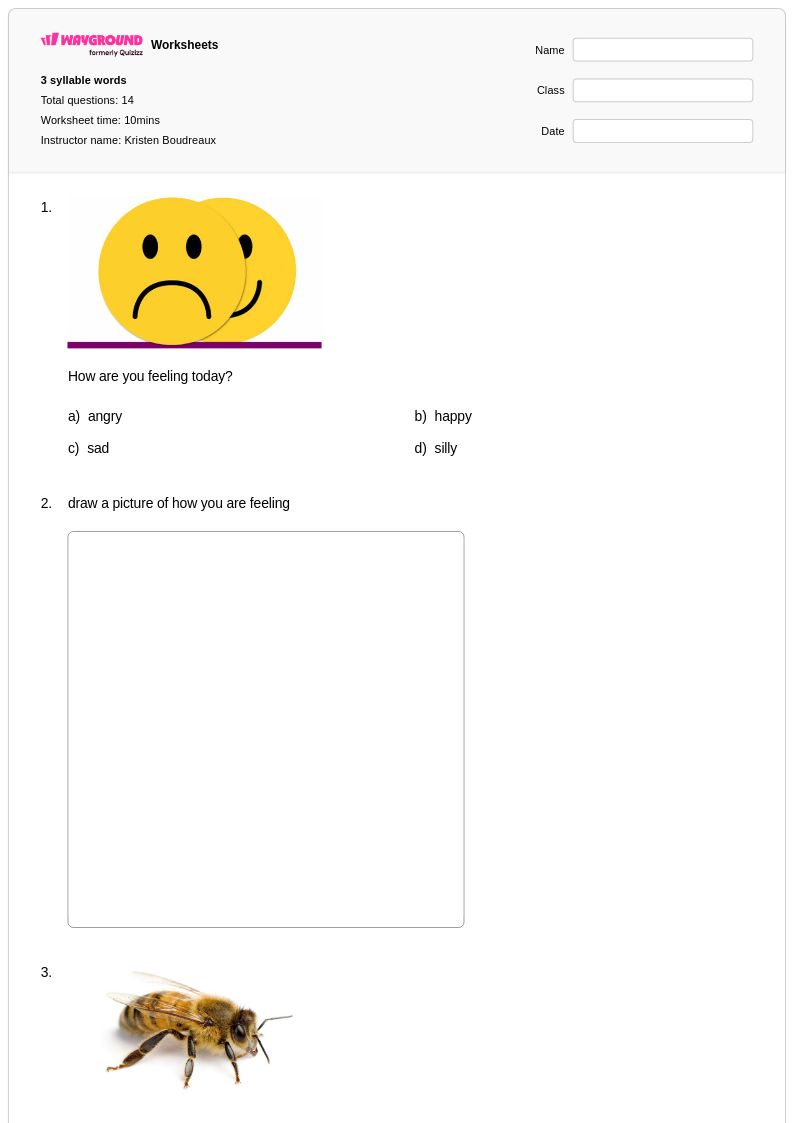
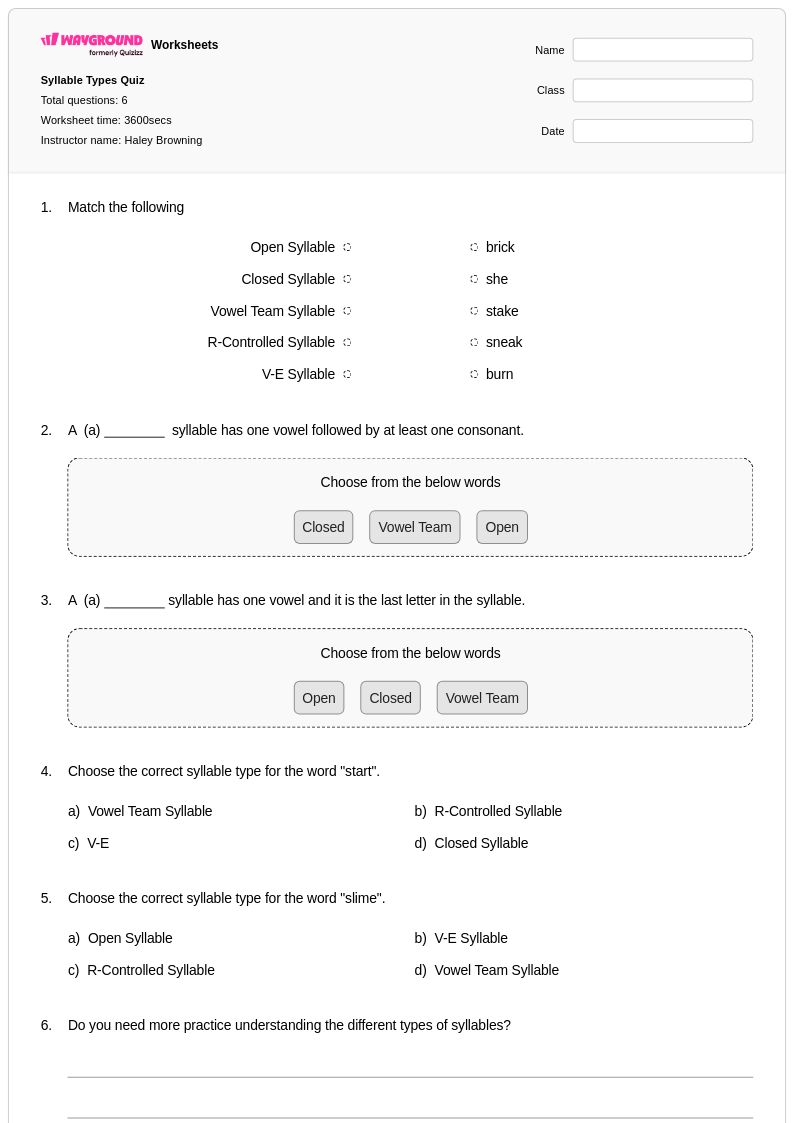
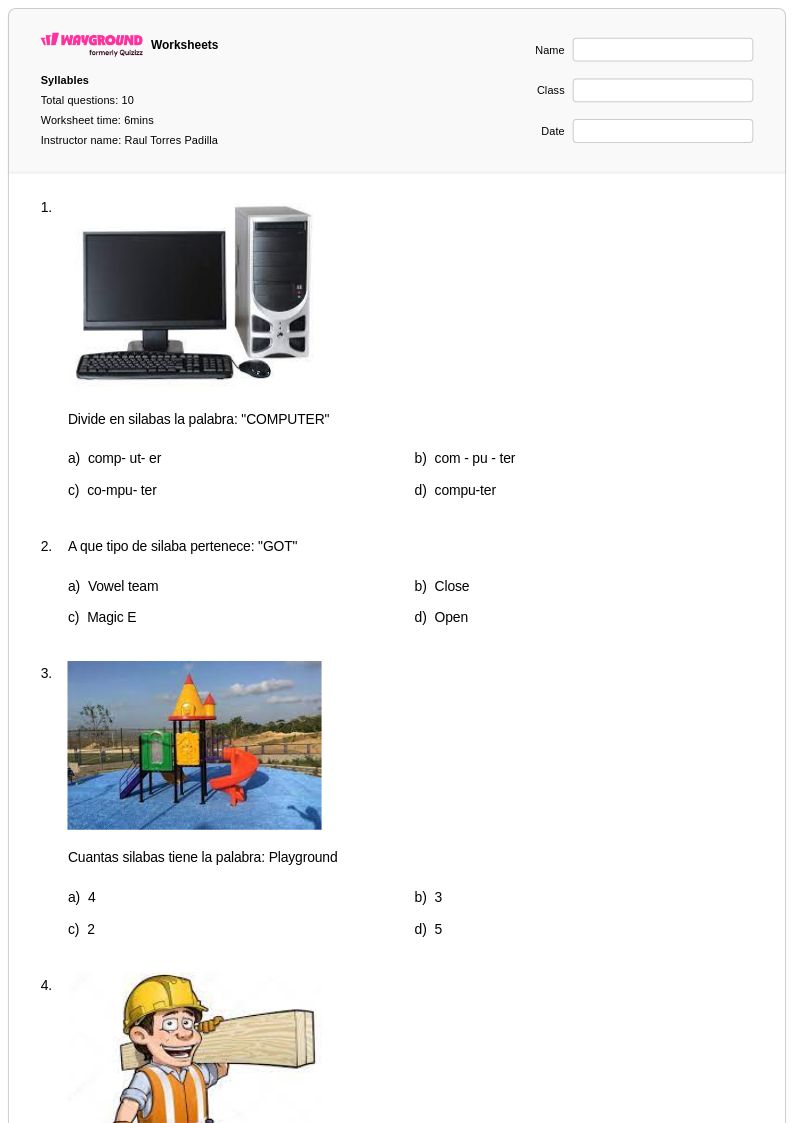
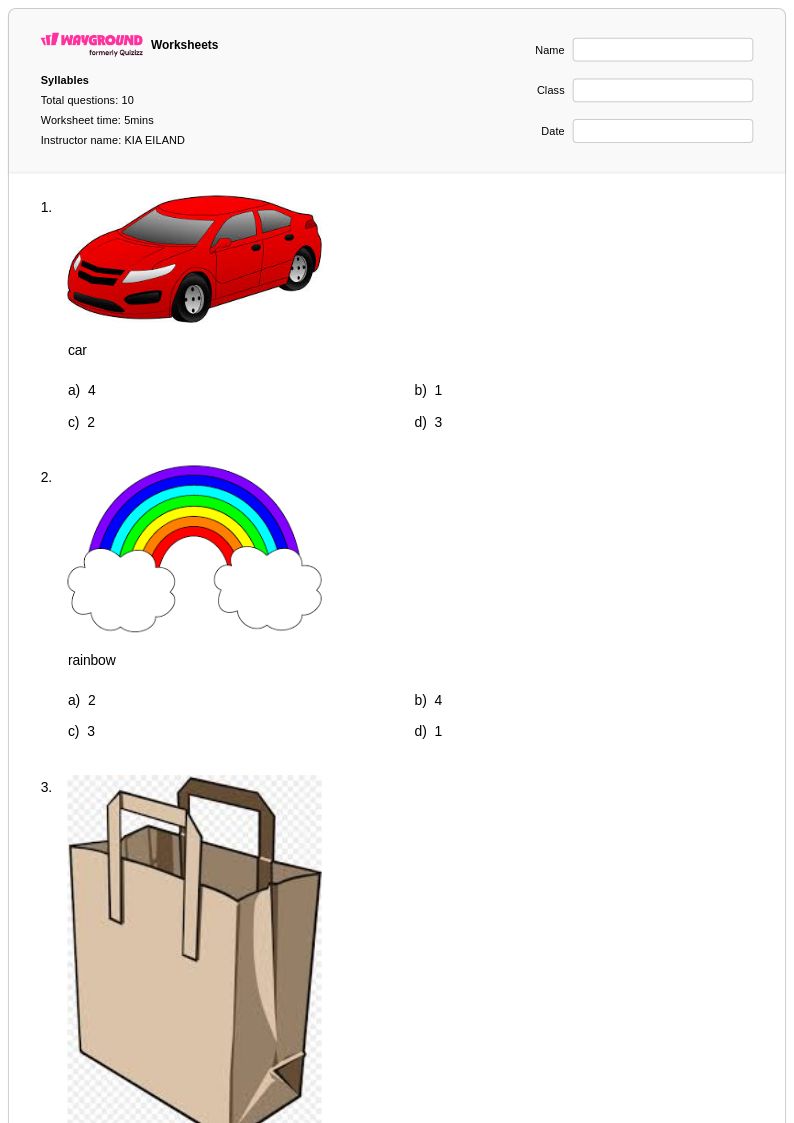
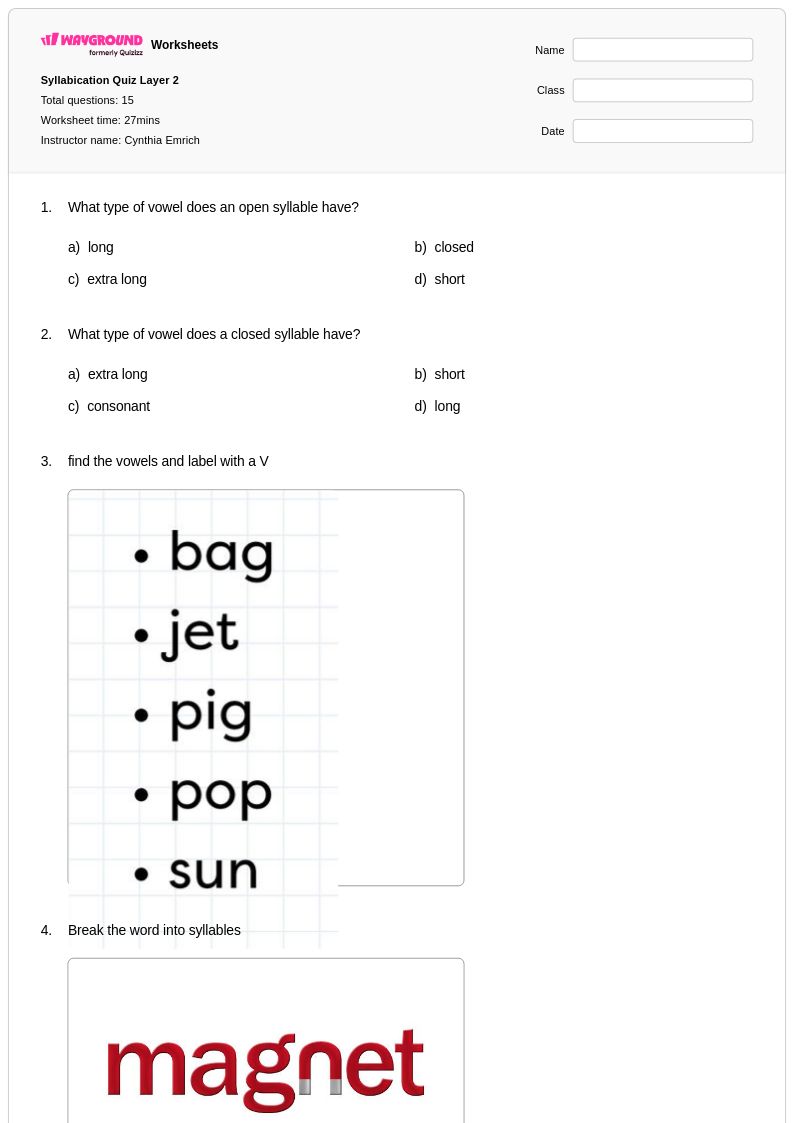
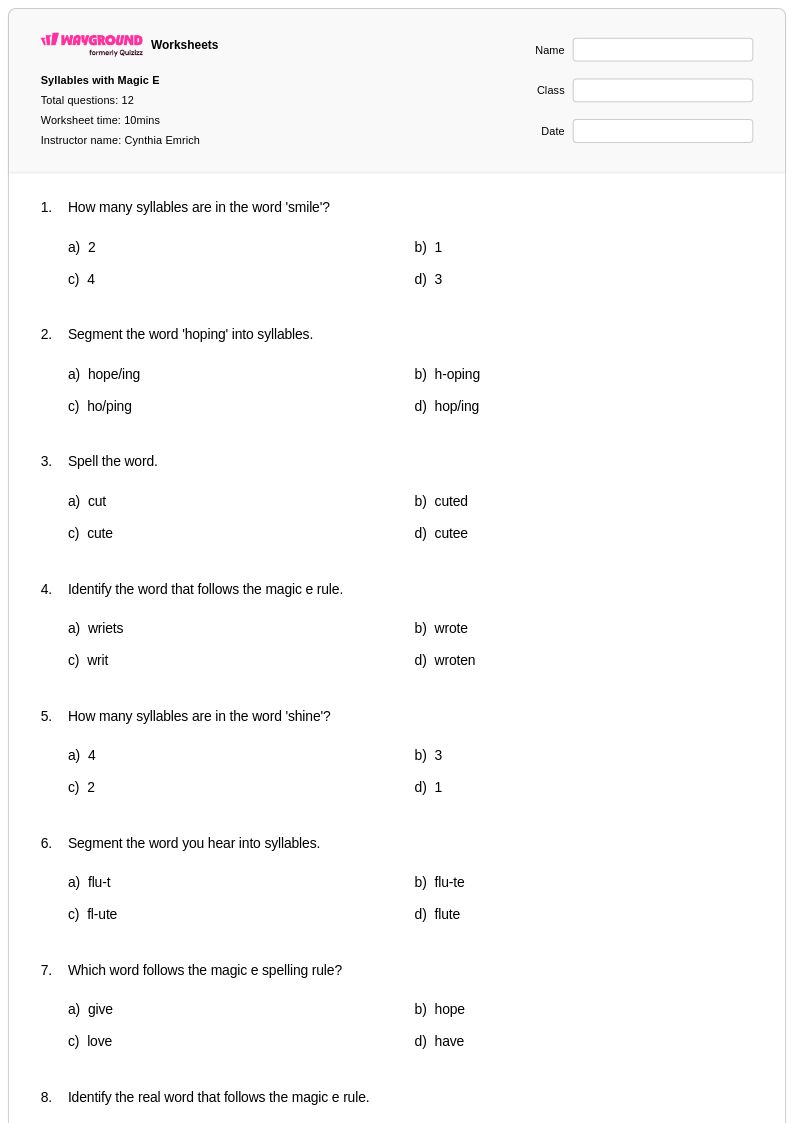
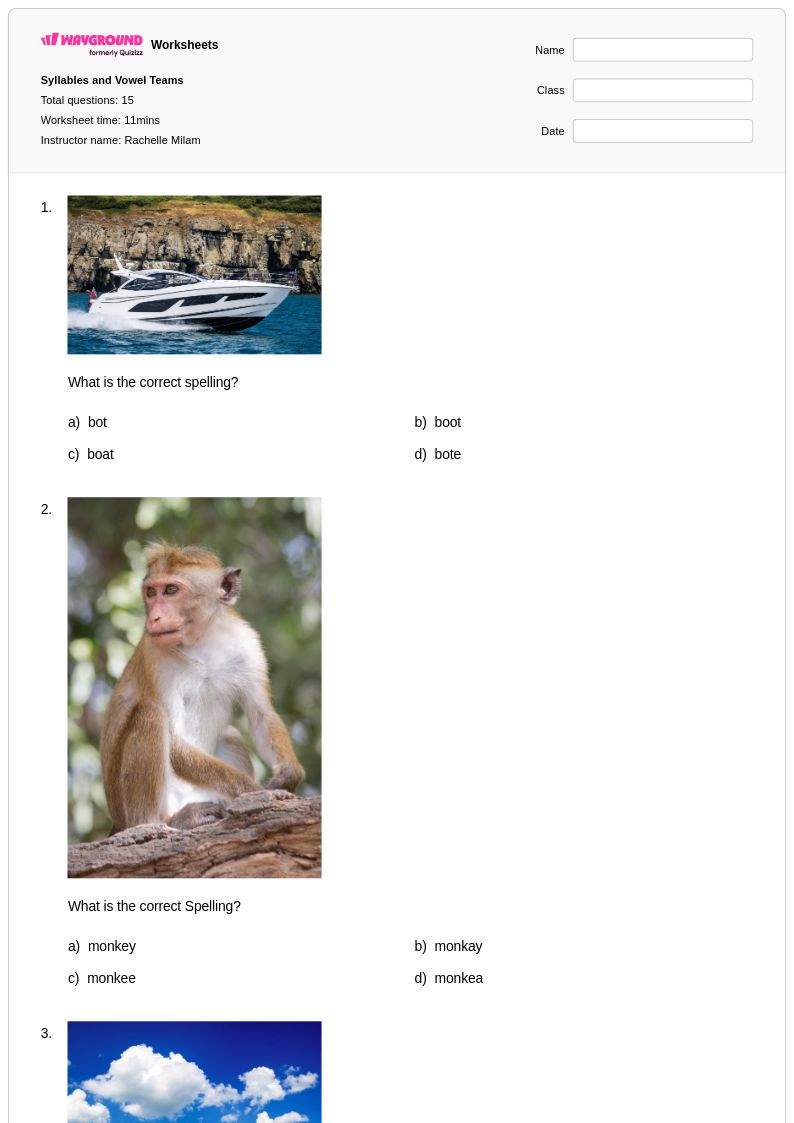
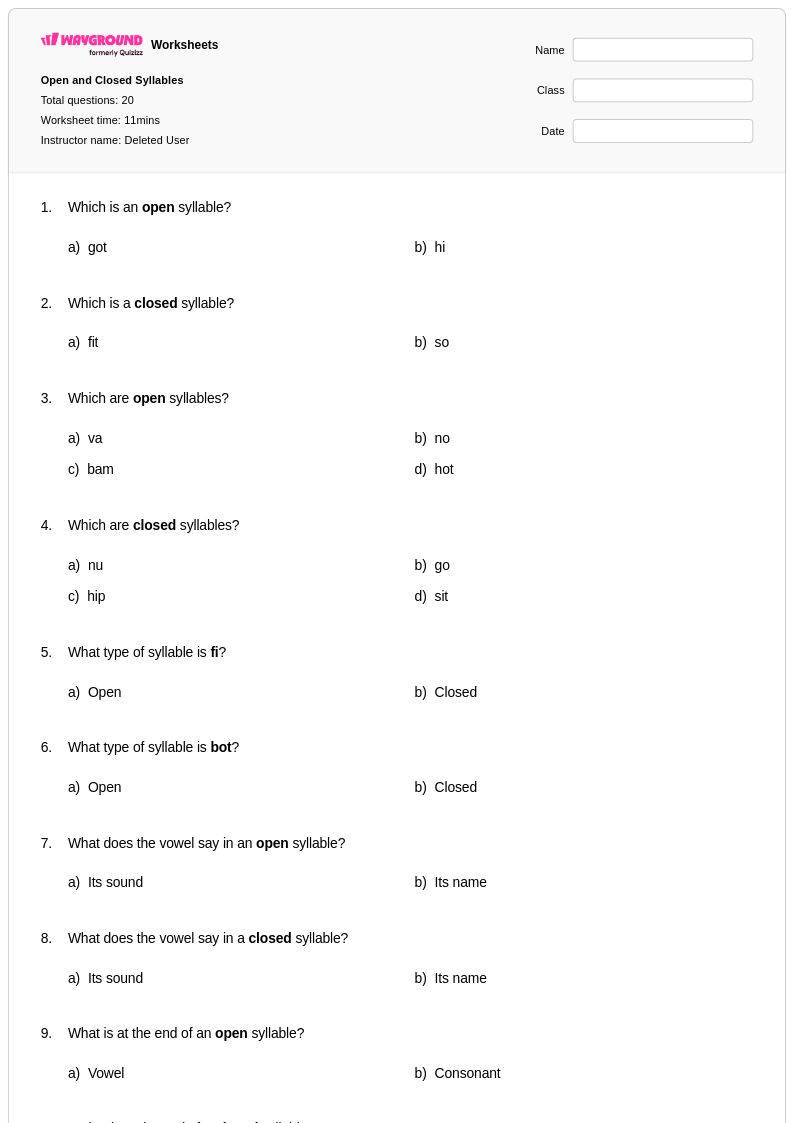
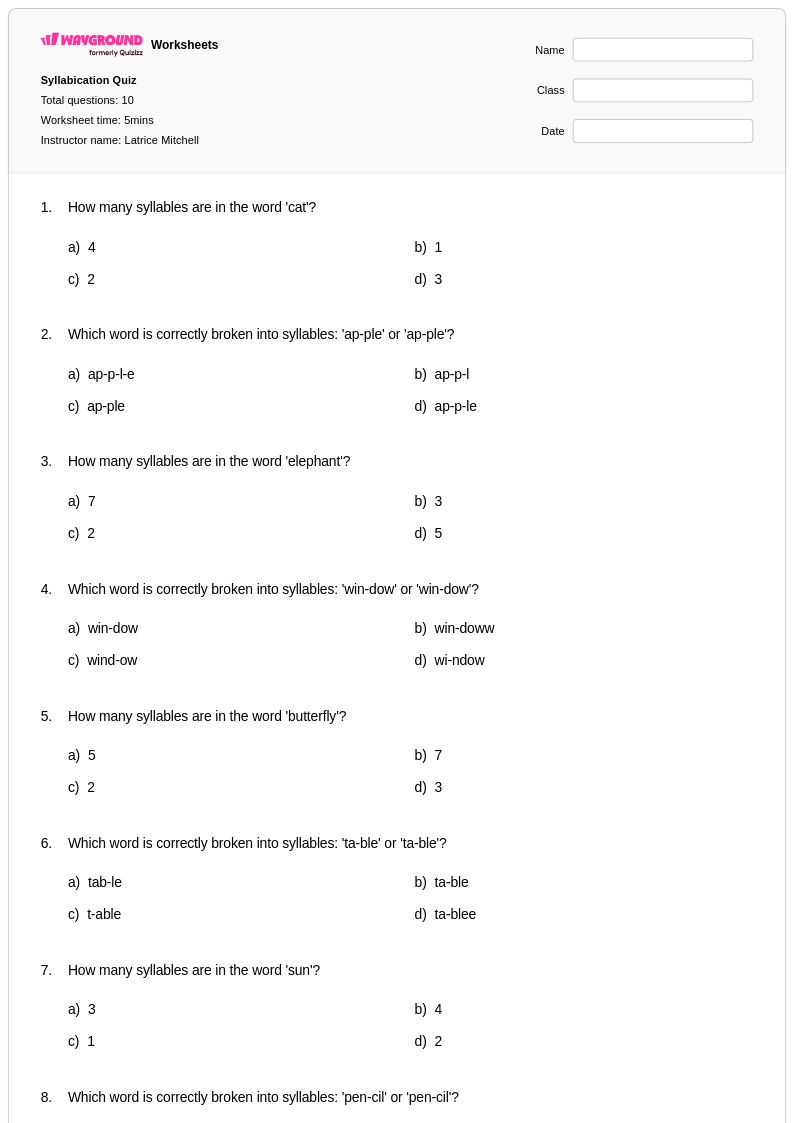
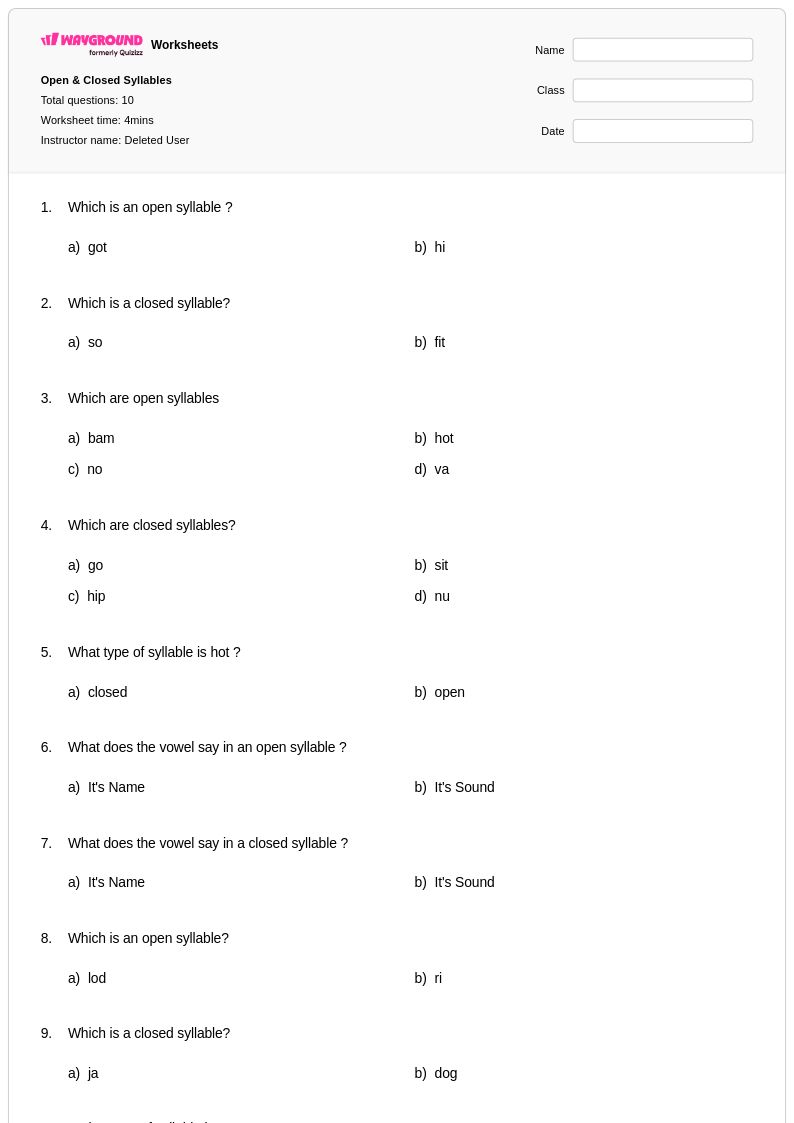
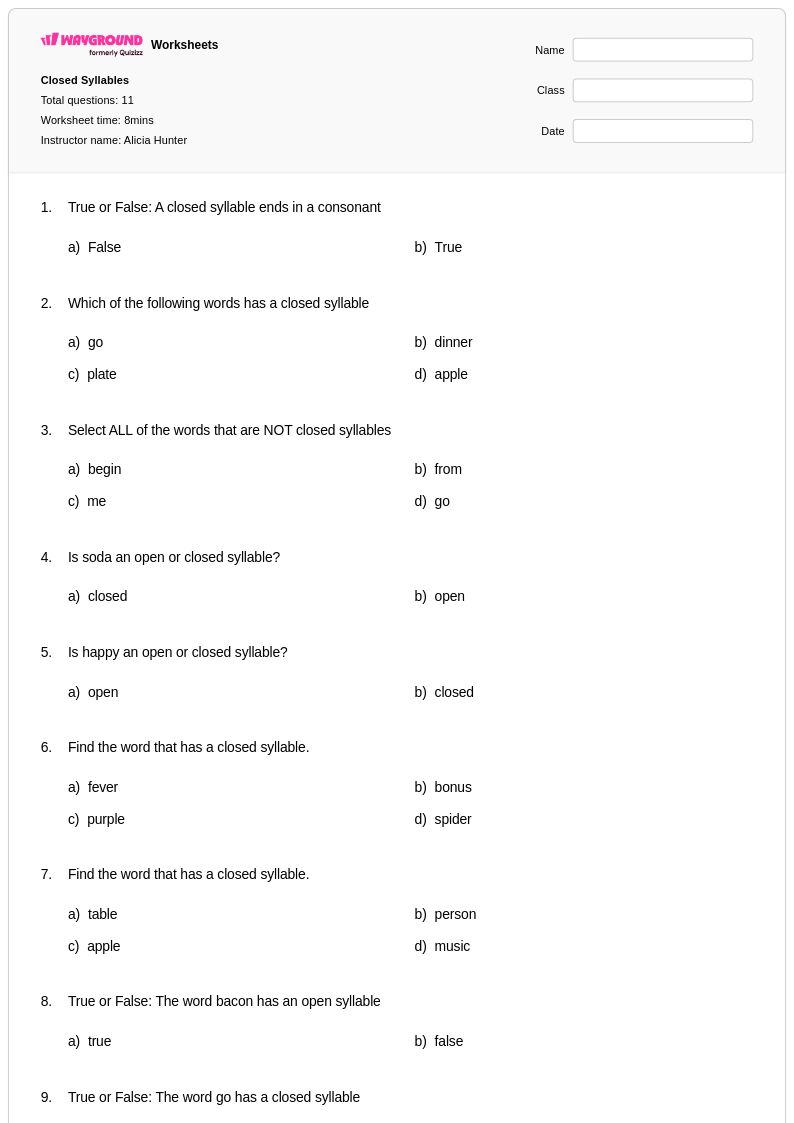
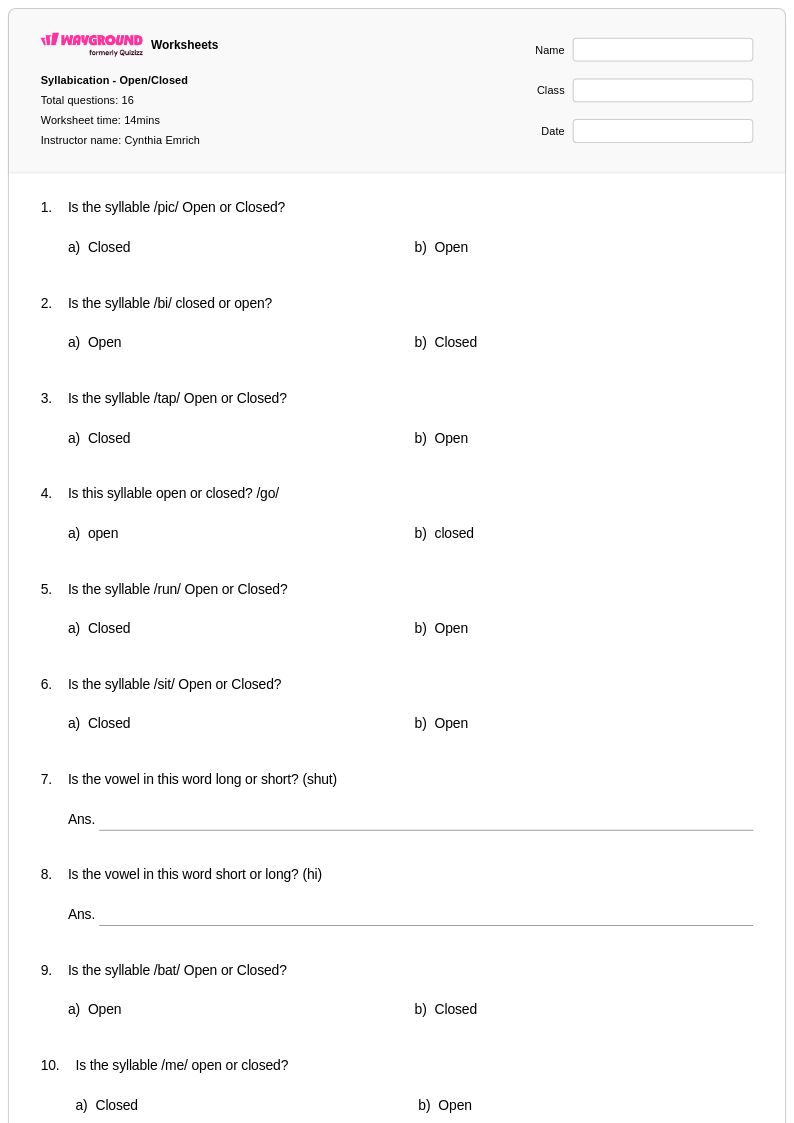
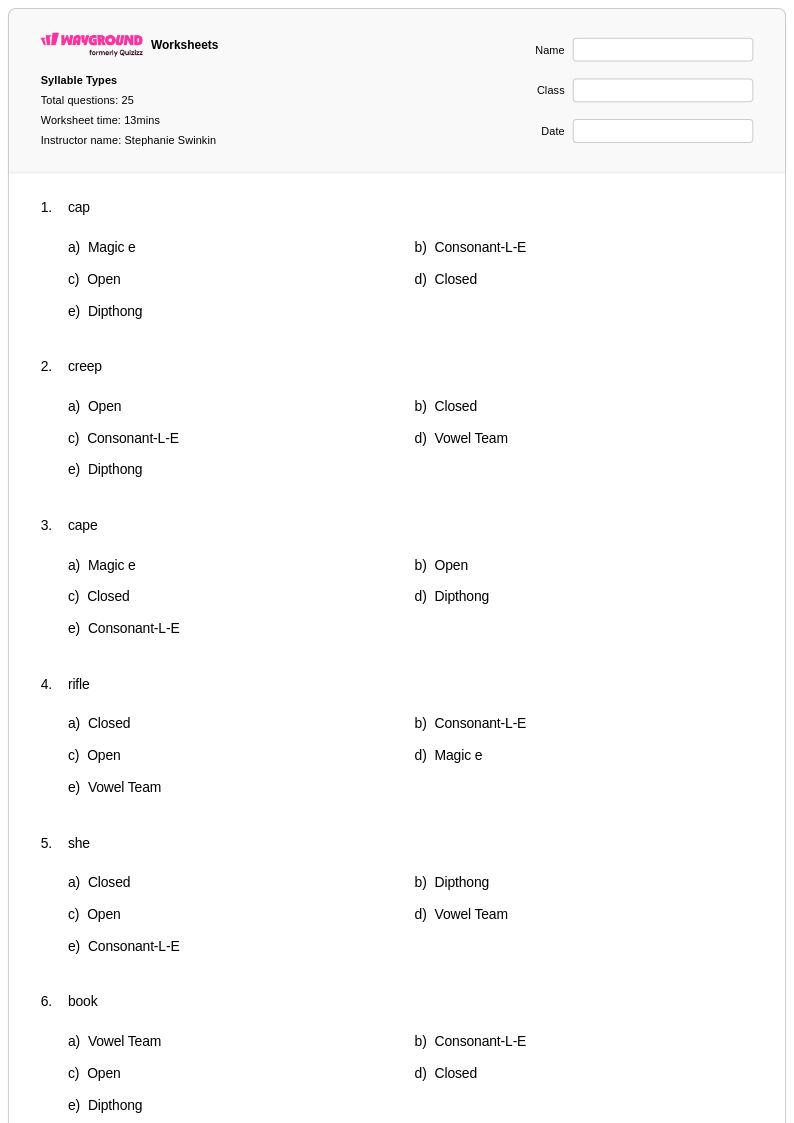
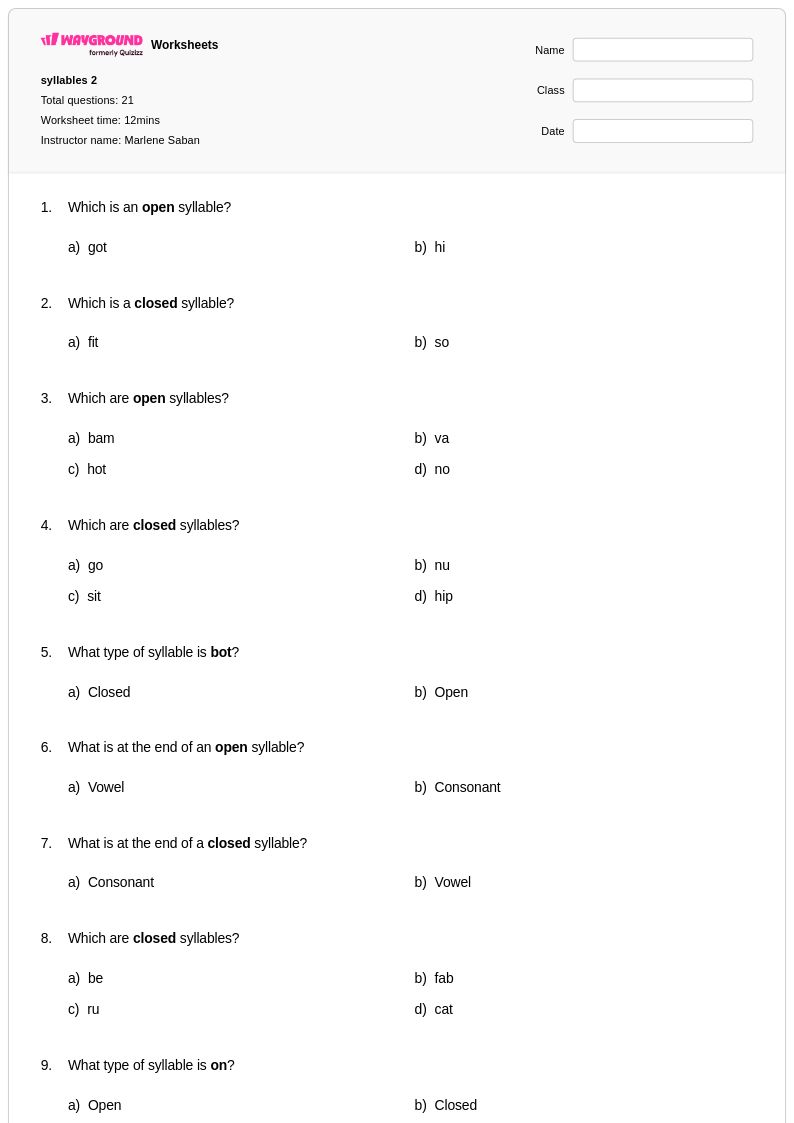
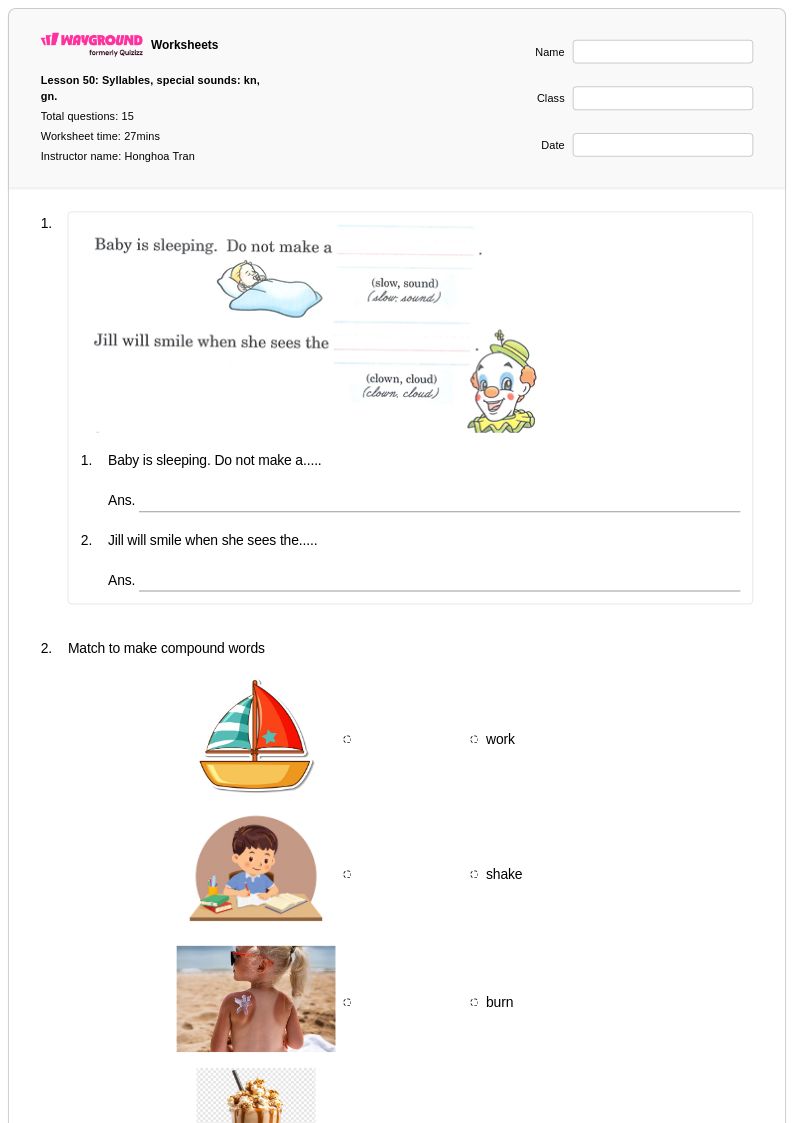
Class 1 hearing syllables worksheets from Wayground help students develop phonological awareness by practicing how to identify and count syllables in spoken words through engaging printables with answer keys.
Explore printable Hearing Syllables worksheets for Class 1
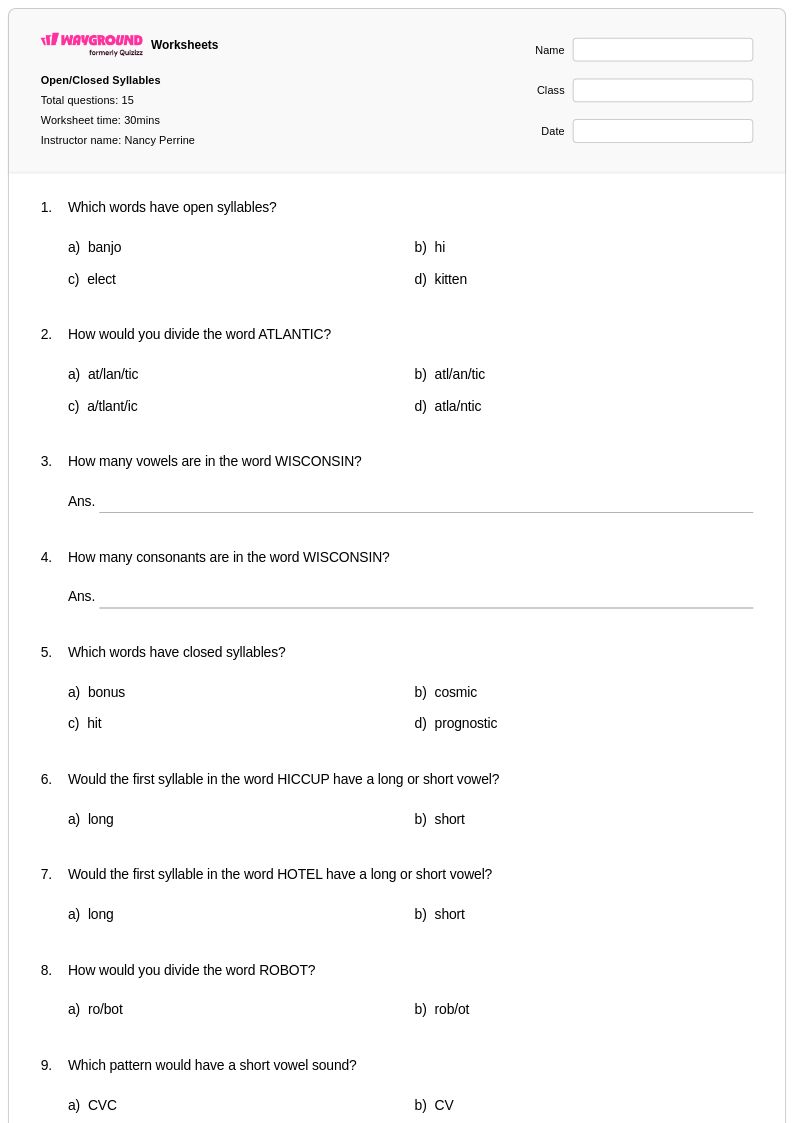
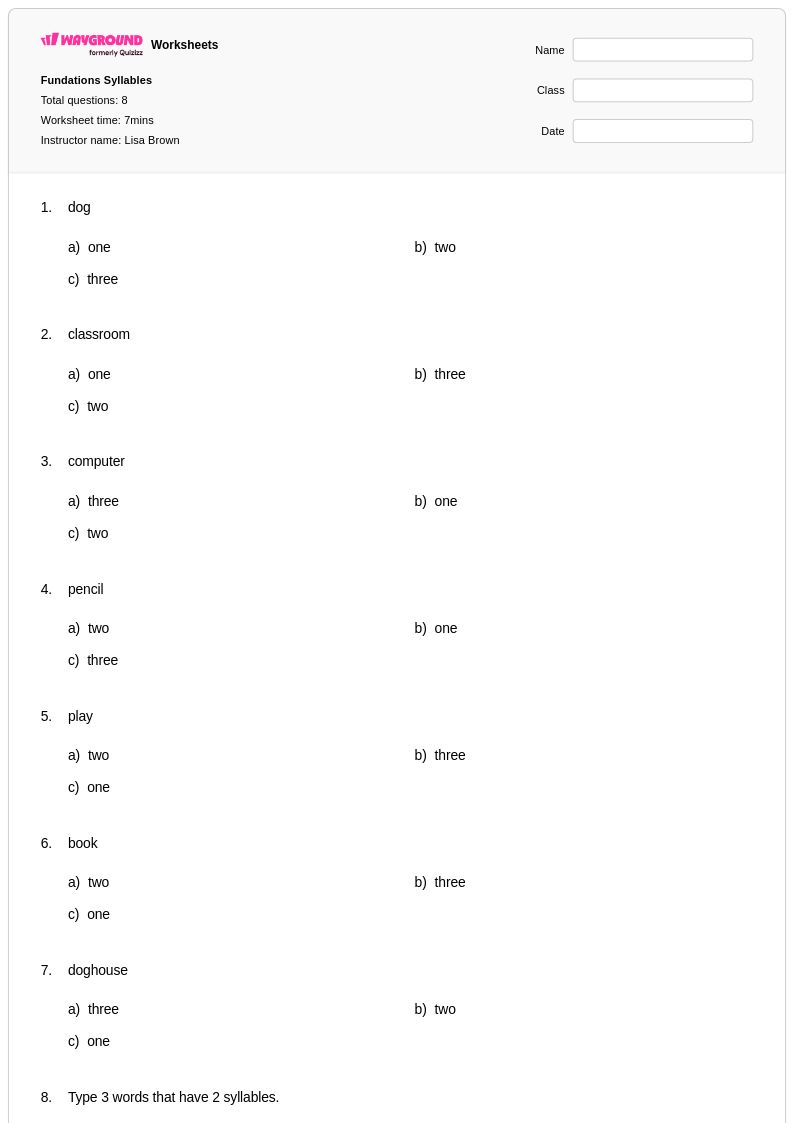
Hearing syllables forms a fundamental building block in Class 1 English literacy development, and Wayground's extensive worksheet collection provides educators with comprehensive resources to strengthen this essential phonological awareness skill. These carefully designed worksheets guide young learners through the process of identifying and counting syllables in spoken words, helping students develop their ability to break down words into manageable sound units. The practice problems range from simple one-syllable words to more complex multisyllabic vocabulary, with each worksheet including a detailed answer key to support accurate assessment and feedback. Teachers can access these valuable printables in convenient pdf format, offering both structured exercises and engaging activities that make syllable recognition an enjoyable learning experience for first-grade students.
Wayground's platform, formerly known as Quizizz, empowers educators with millions of teacher-created resources specifically designed for hearing syllables instruction, complete with robust search and filtering capabilities that allow quick identification of grade-appropriate materials. The collection supports differentiated instruction through customizable worksheets that can be modified to meet diverse learning needs, whether for remediation with struggling readers or enrichment activities for advanced students. Teachers benefit from standards-aligned content available in both printable and digital formats, enabling seamless integration into lesson planning and flexible delivery methods that accommodate various classroom environments. These comprehensive tools streamline the process of providing targeted skill practice, allowing educators to focus on individualized support while ensuring students develop strong foundational skills in syllable awareness that will support their reading and spelling development throughout their academic journey.
FAQs
How do I teach students to hear syllables in words?
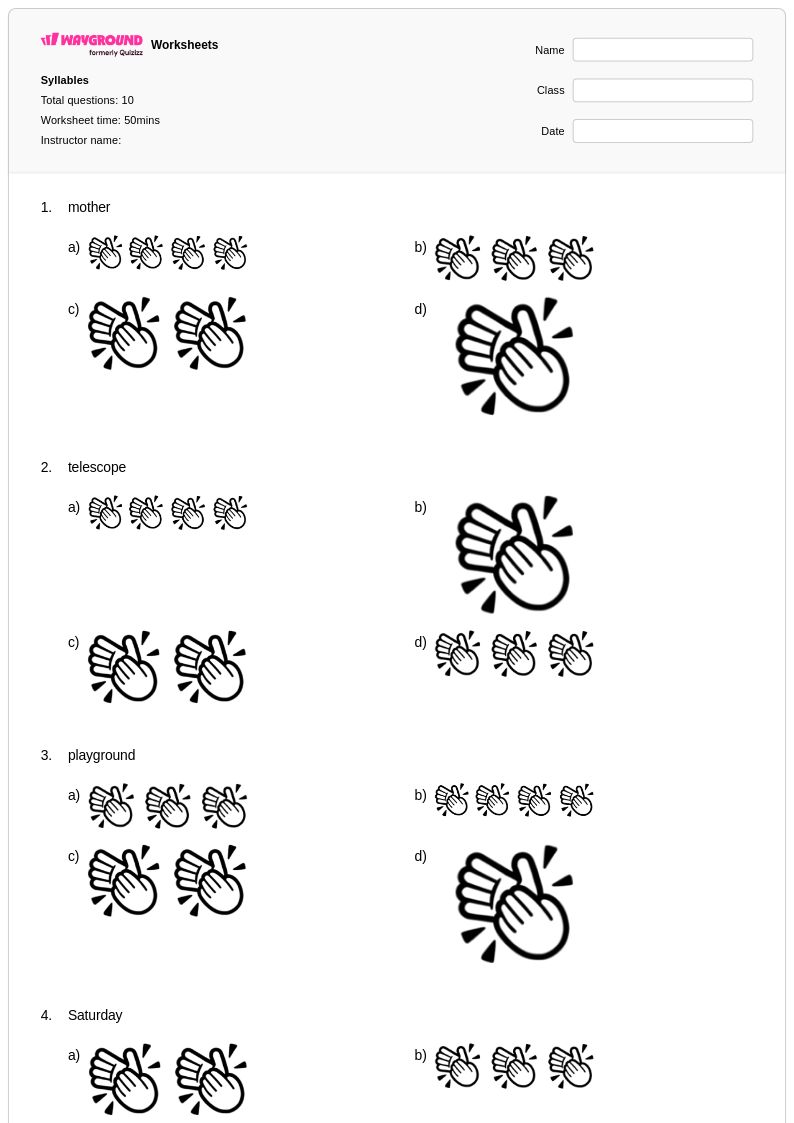
The most effective approach to teaching syllable awareness is multisensory: have students clap, tap, or stomp once for each syllable as they say a word aloud. Pairing physical movement with verbal repetition helps students internalize the rhythm of spoken language. Start with simple two-syllable compound words like 'sunset' or 'pancake' before progressing to multisyllabic vocabulary, so students build confidence on predictable patterns first.
What exercises help students practice identifying and counting syllables?
Clapping exercises, syllable sorting tasks, and word segmentation challenges are all high-value practice formats for syllable recognition. Sorting activities — where students categorize picture cards by syllable count — are particularly effective because they require students to apply the skill independently rather than follow along. Word segmentation challenges that move from one-syllable to multisyllabic words give students a natural progression that builds fluency over time.
What common mistakes do students make when counting syllables?
The most frequent error is miscounting syllables in words with adjacent vowels or unstressed syllables, such as 'chocolate' (often counted as three syllables instead of two) or 'family' (frequently split into four instead of three). Students also struggle with silent vowels and vowel teams, which can make a word look like it has more syllables than it sounds like it has. Drawing attention to the number of vowel sounds — not vowel letters — heard in a word is a reliable corrective strategy.
Why is hearing syllables important for early reading development?
Syllable awareness is a core component of phonological awareness, which is one of the strongest predictors of reading success. When students can segment words into syllable units, they gain a key decoding strategy for sounding out unfamiliar words, especially longer vocabulary they encounter in independent reading. It also supports spelling, since students who can isolate syllables are better equipped to apply phonics patterns one chunk at a time.
How can I use hearing syllables worksheets in my classroom?
Hearing syllables worksheets on Wayground are available as printable PDFs for traditional classroom use and in digital formats for technology-integrated learning environments, and can also be hosted as a quiz directly on Wayground. Printable versions work well for independent seat work, small group instruction, or homework, while digital versions allow for immediate feedback during whole-class or station activities. Each worksheet includes a complete answer key, making them easy to use for self-checking, peer review, or teacher-led correction.
How do I support struggling readers who can't hear syllable breaks?
For students who have difficulty isolating syllables auditorily, combine tactile cues with auditory practice — placing a hand under the chin to feel each jaw drop as a syllable is pronounced is a classic and reliable technique. On Wayground, teachers can apply individual accommodations such as Read Aloud, which allows students to hear words read aloud, reducing the auditory processing demand of the task. Reducing answer choices is another available accommodation that can lower cognitive load for students who are still building foundational awareness.