
20 Q
4th - Uni
20 Q
4th - Uni
20 Q
4th - Uni
15 Q
4th - Uni
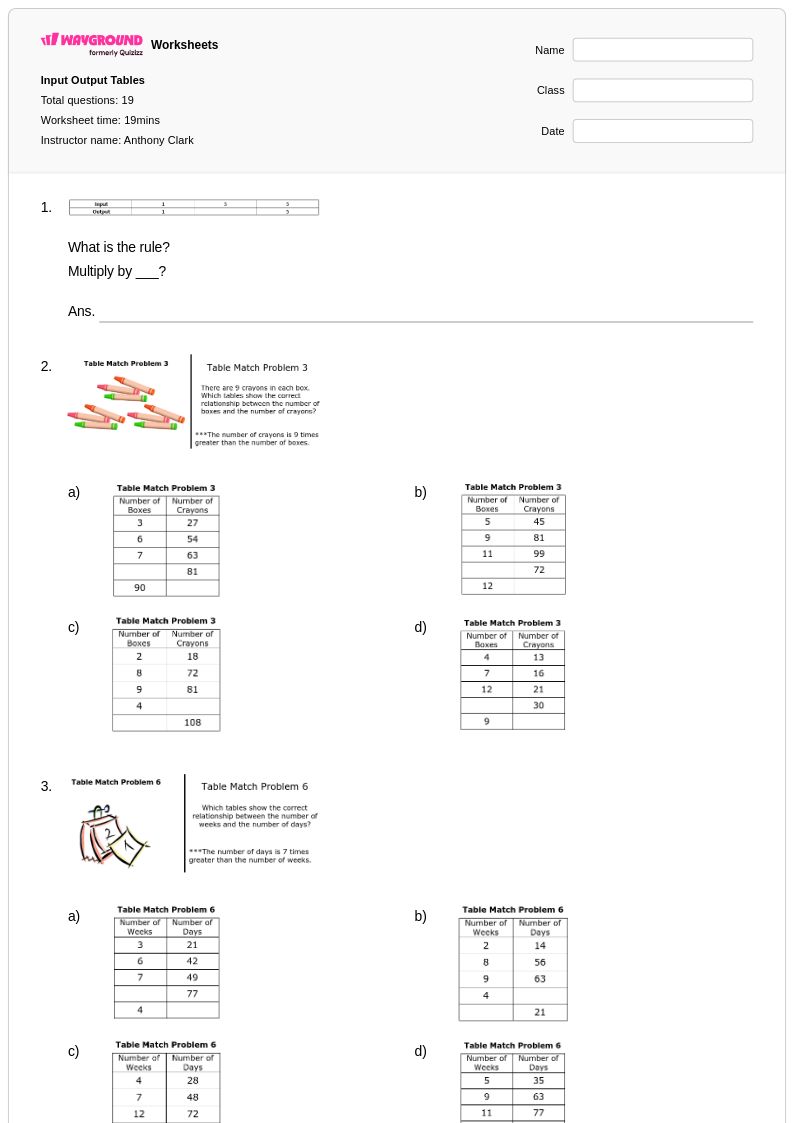
19 Q
4th - Uni
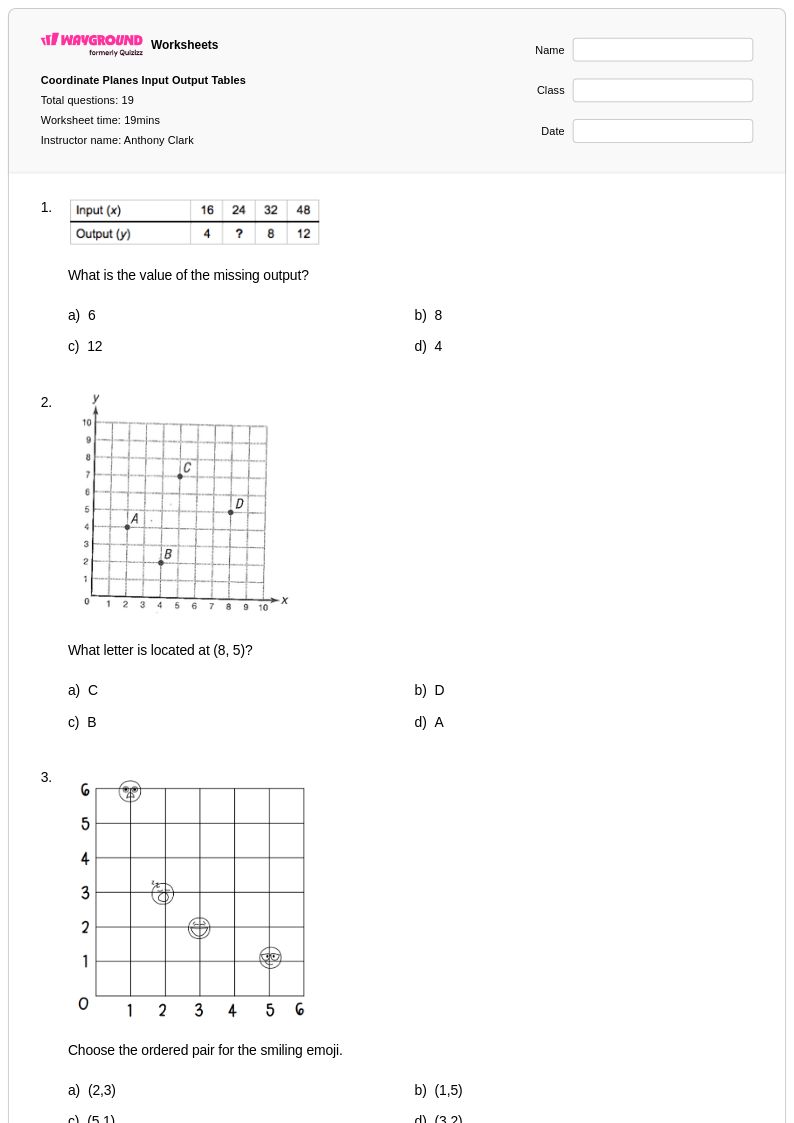
19 Q
4th - Uni
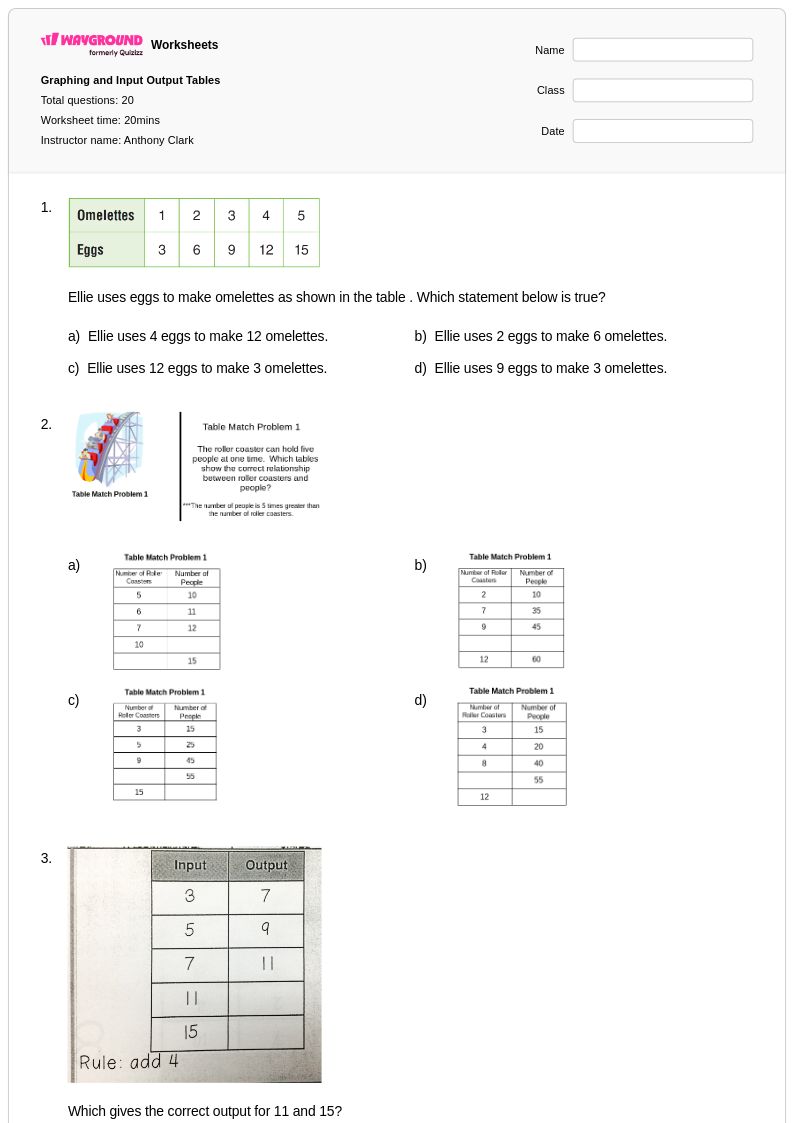
20 Q
4th - Uni
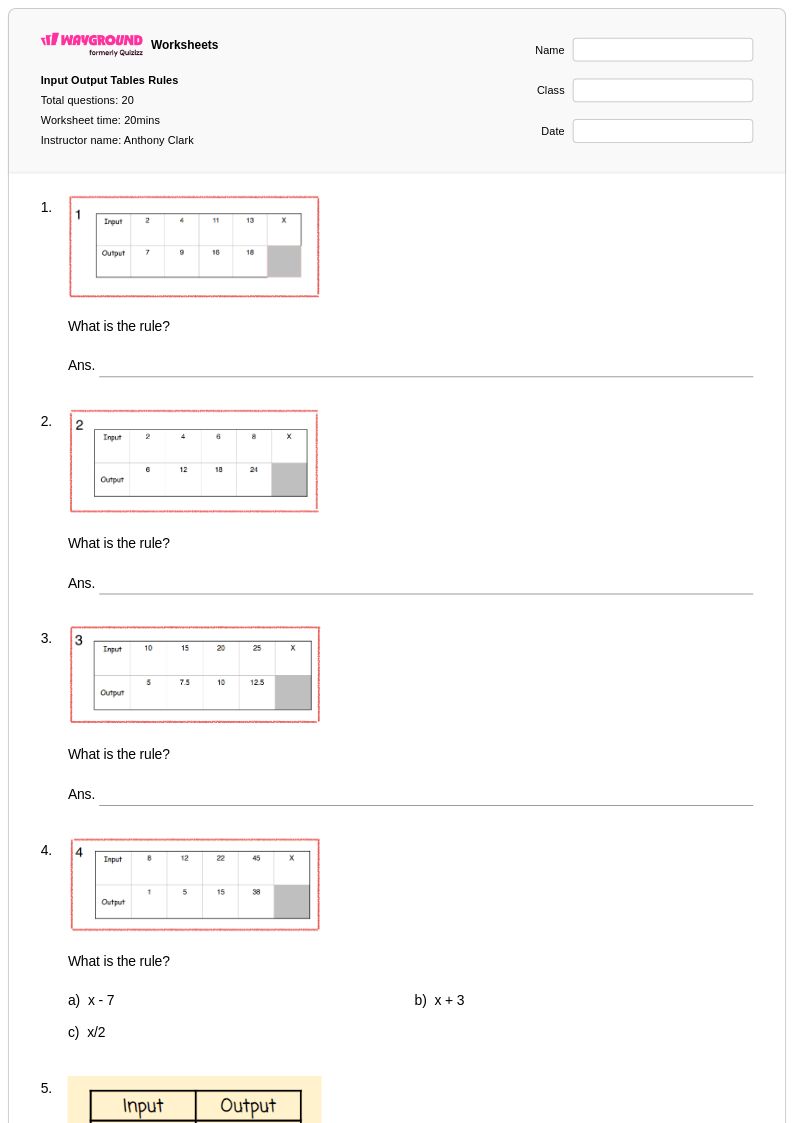
20 Q
4th - Uni
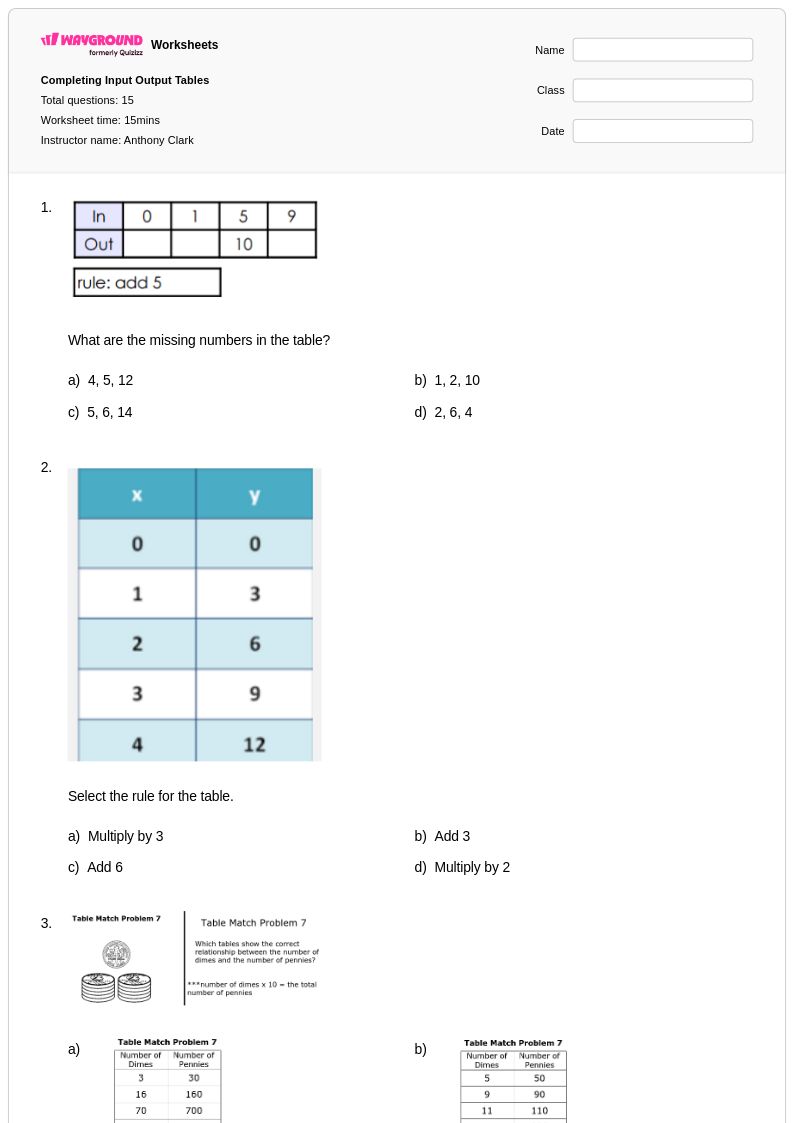
15 Q
4th - Uni
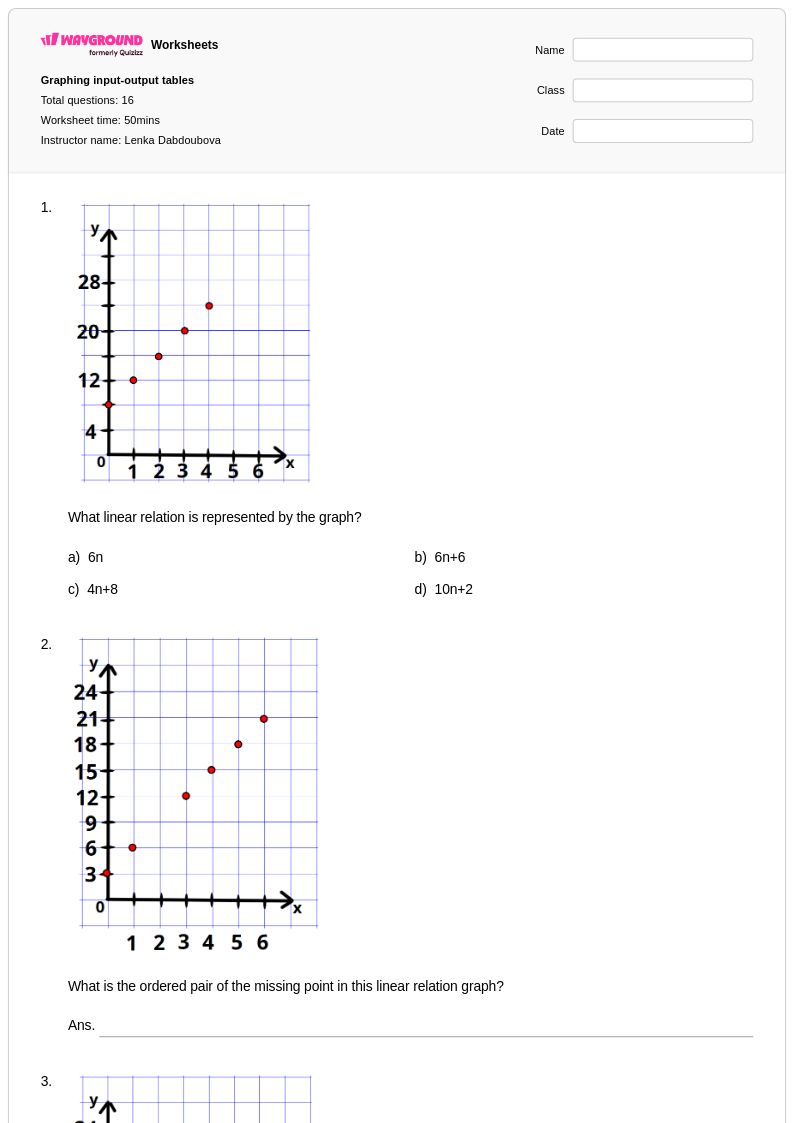
16 Q
7th
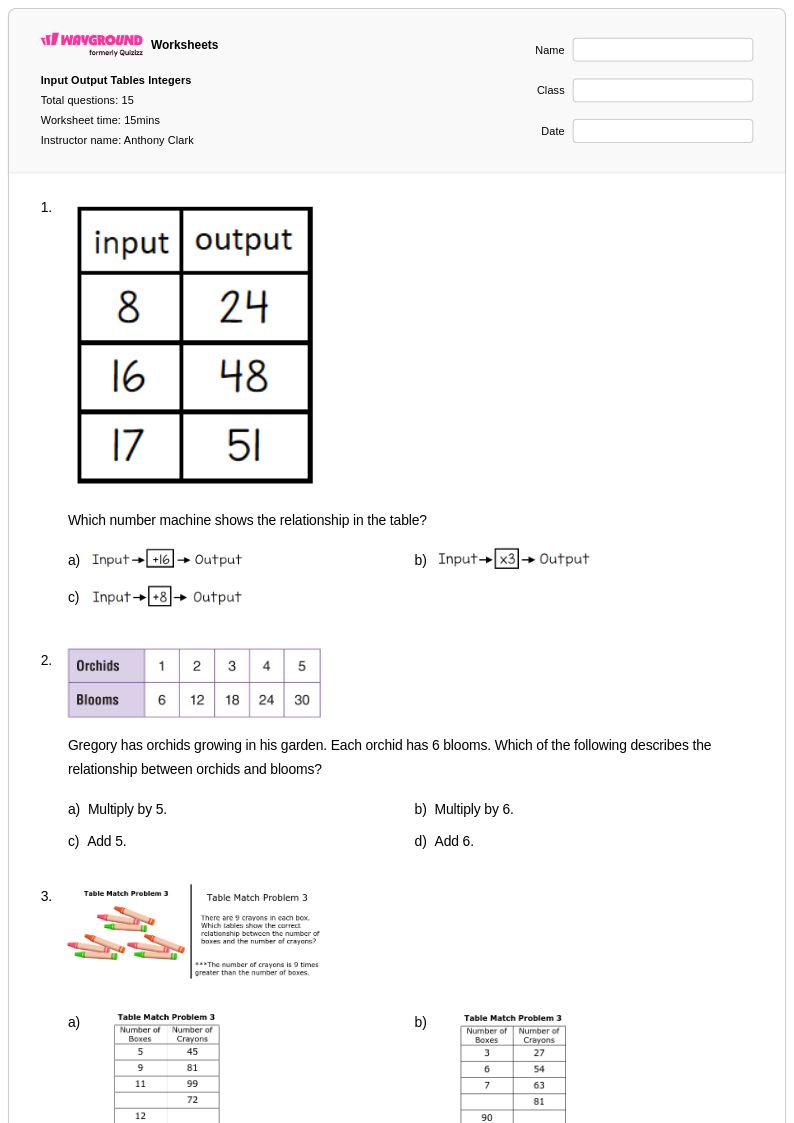
15 Q
4th - Uni
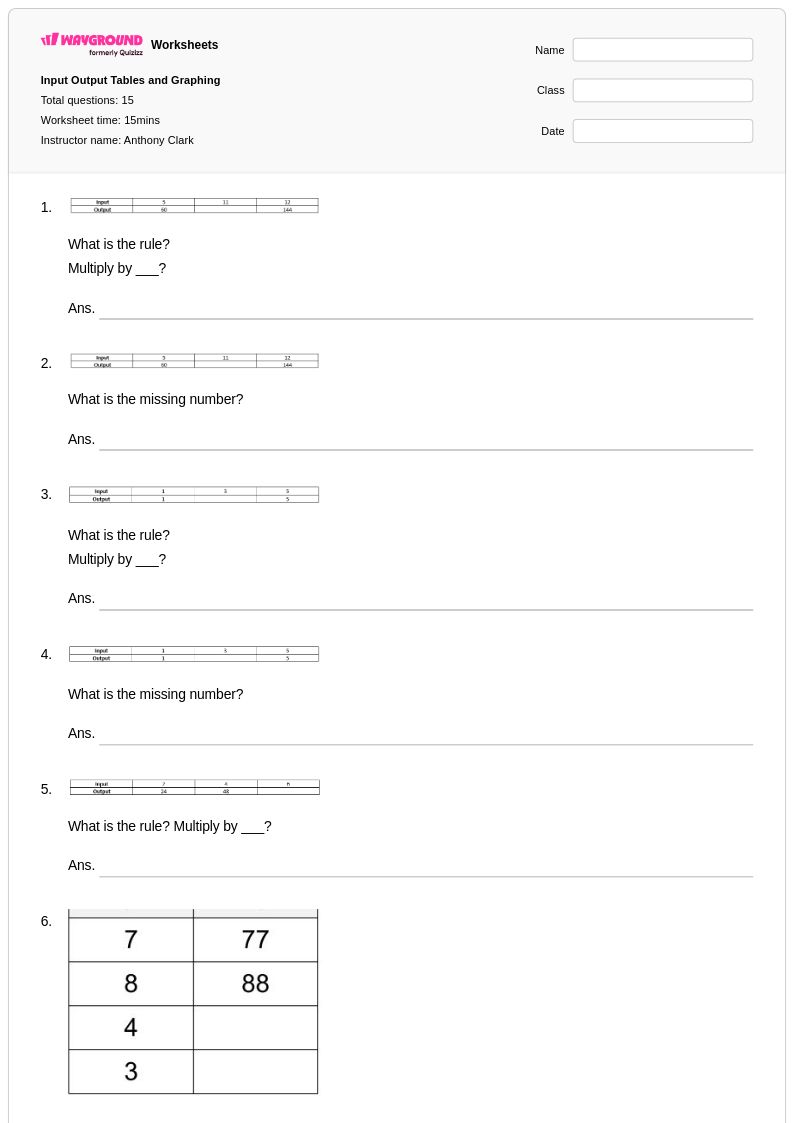
15 Q
4th - Uni
20 Q
4th - Uni
20 Q
4th - Uni
15 Q
4th - Uni
20 Q
4th - Uni
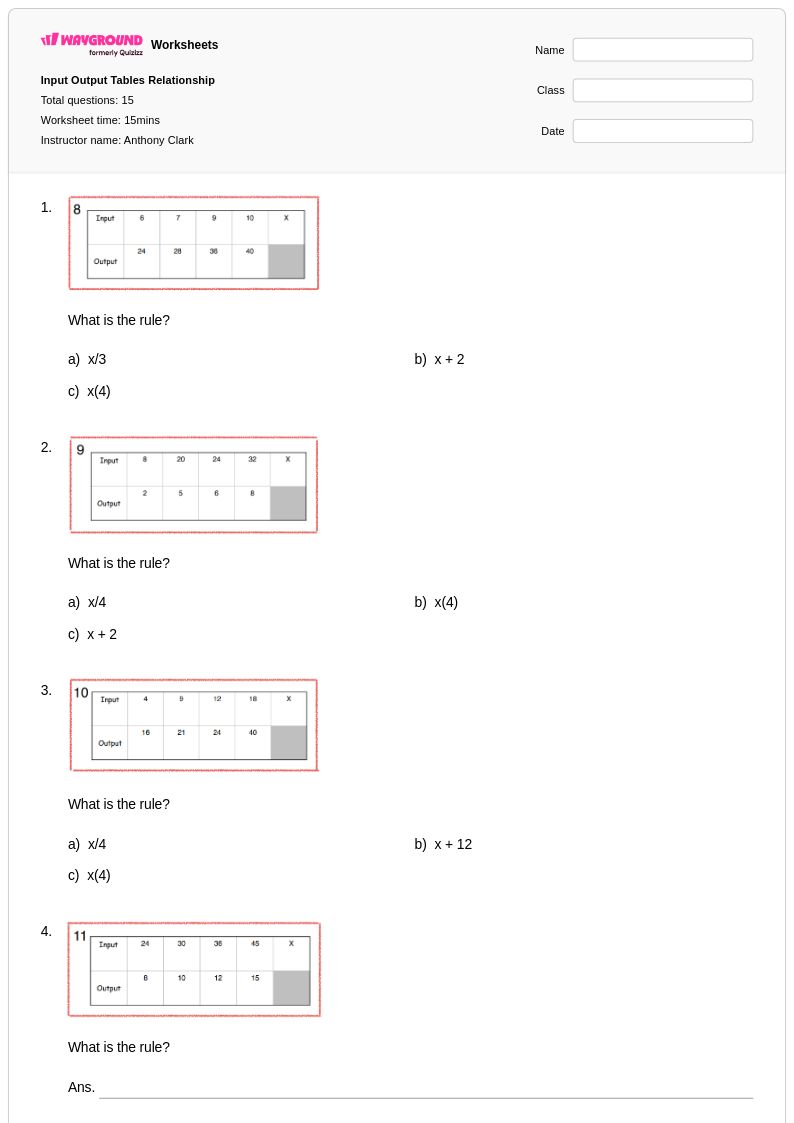
15 Q
4th - Uni
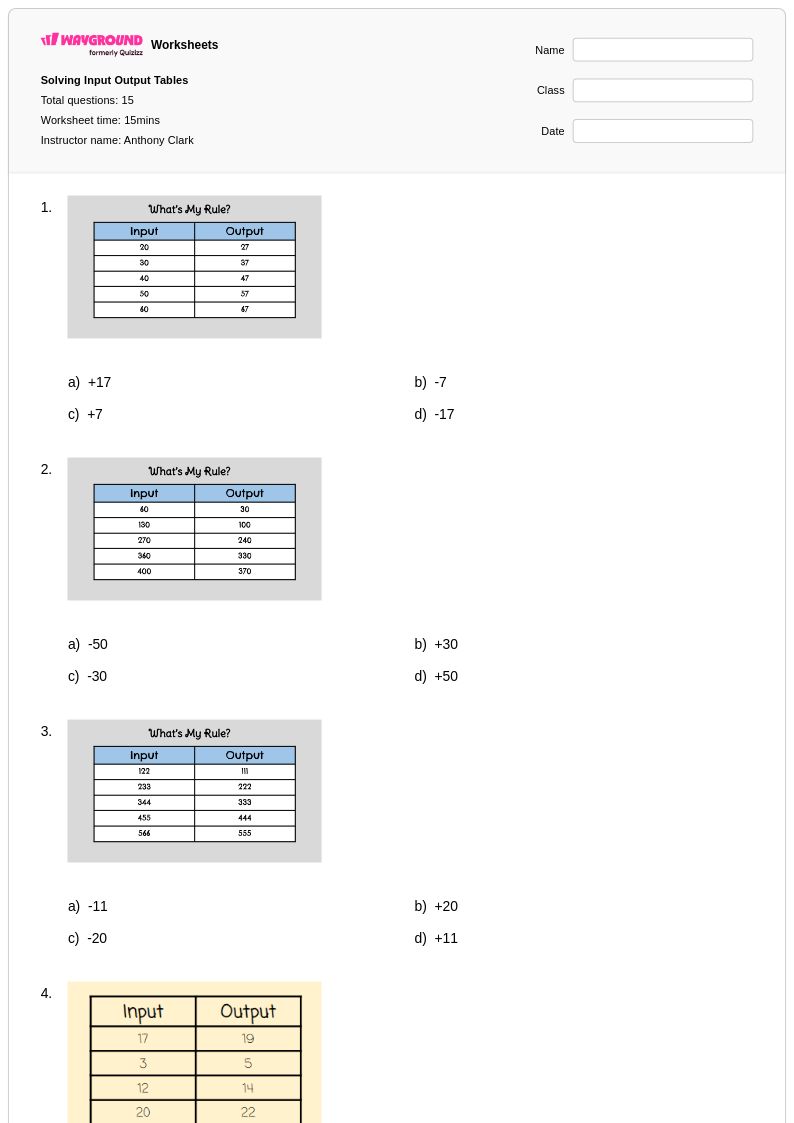
15 Q
4th - Uni
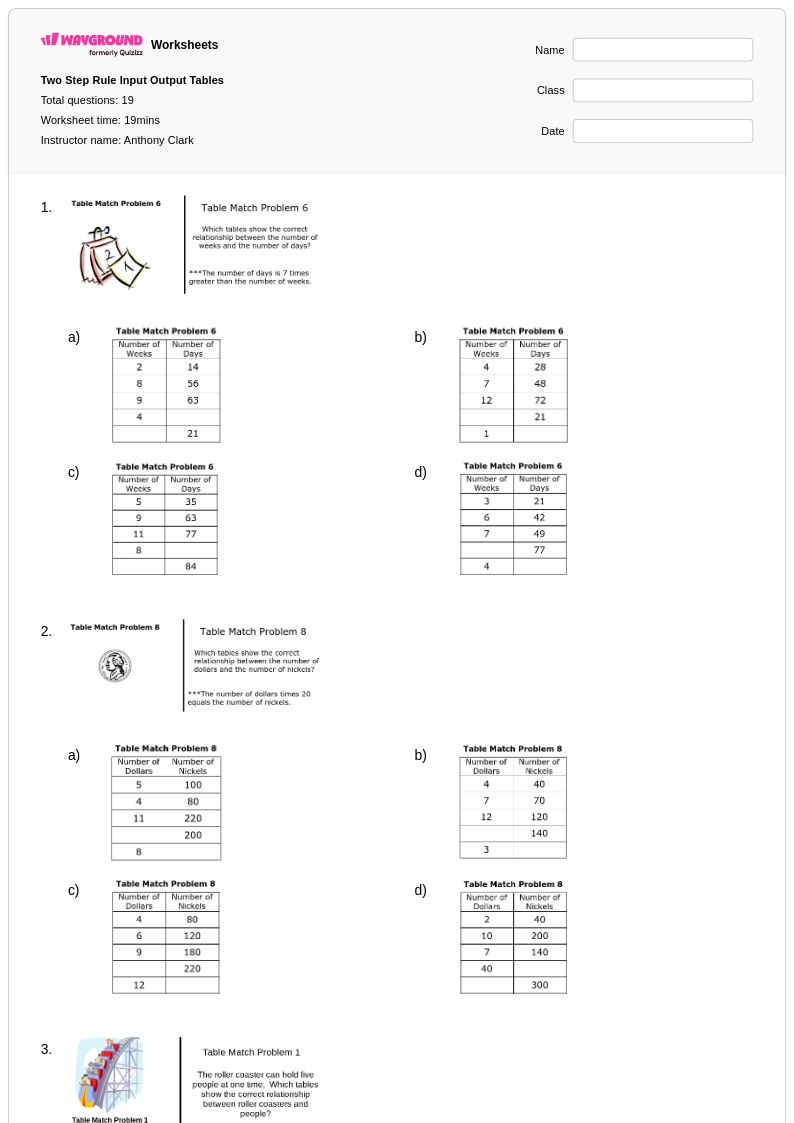
19 Q
4th - Uni
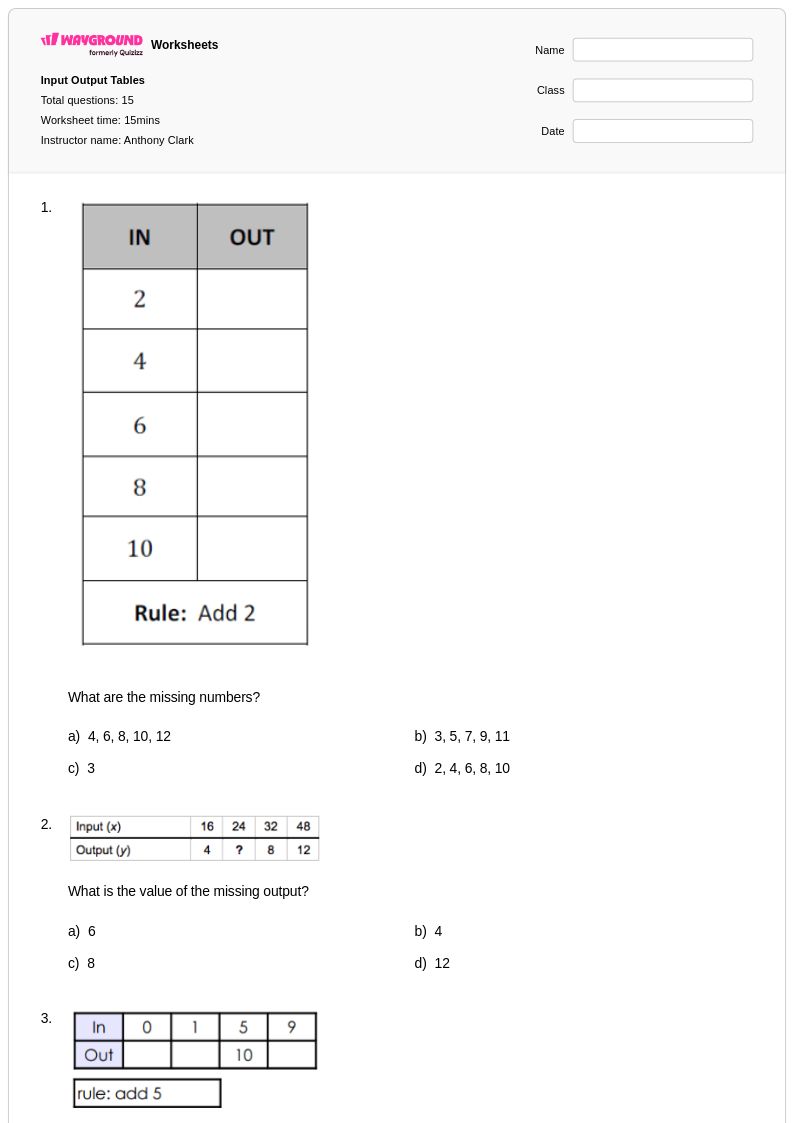
15 Q
4th - Uni
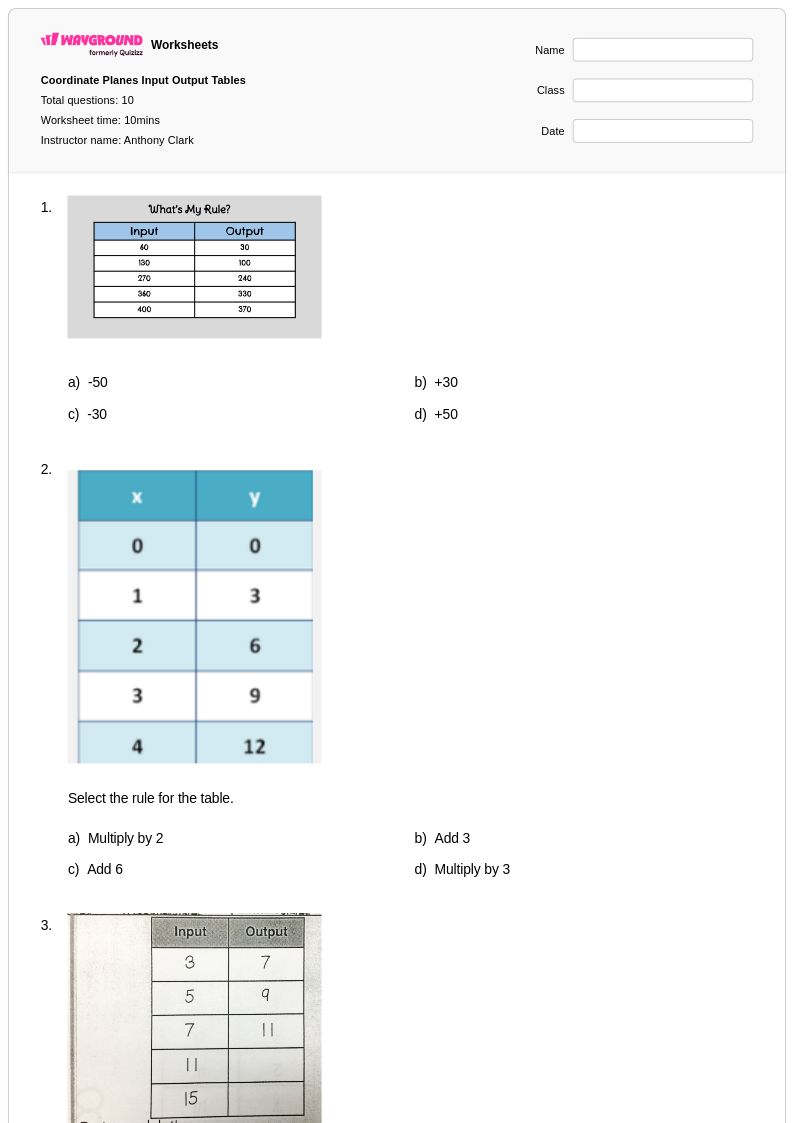
10 Q
4th - Uni
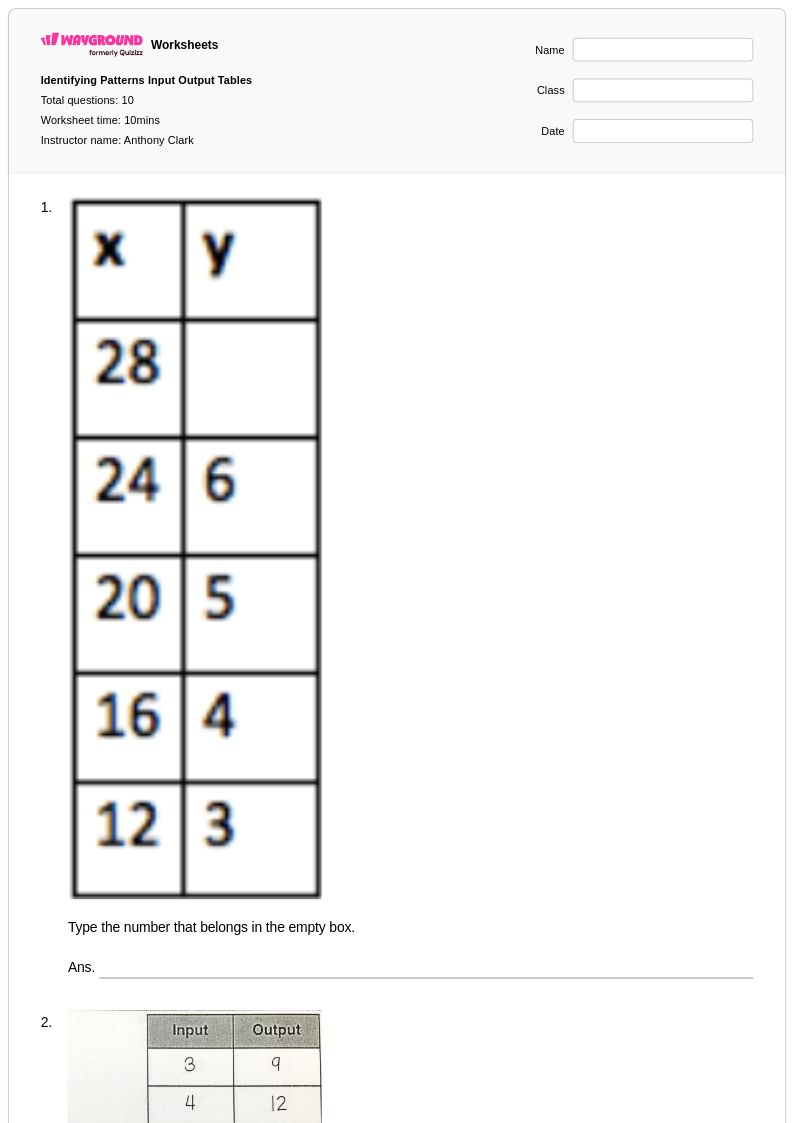
10 Q
4th - Uni
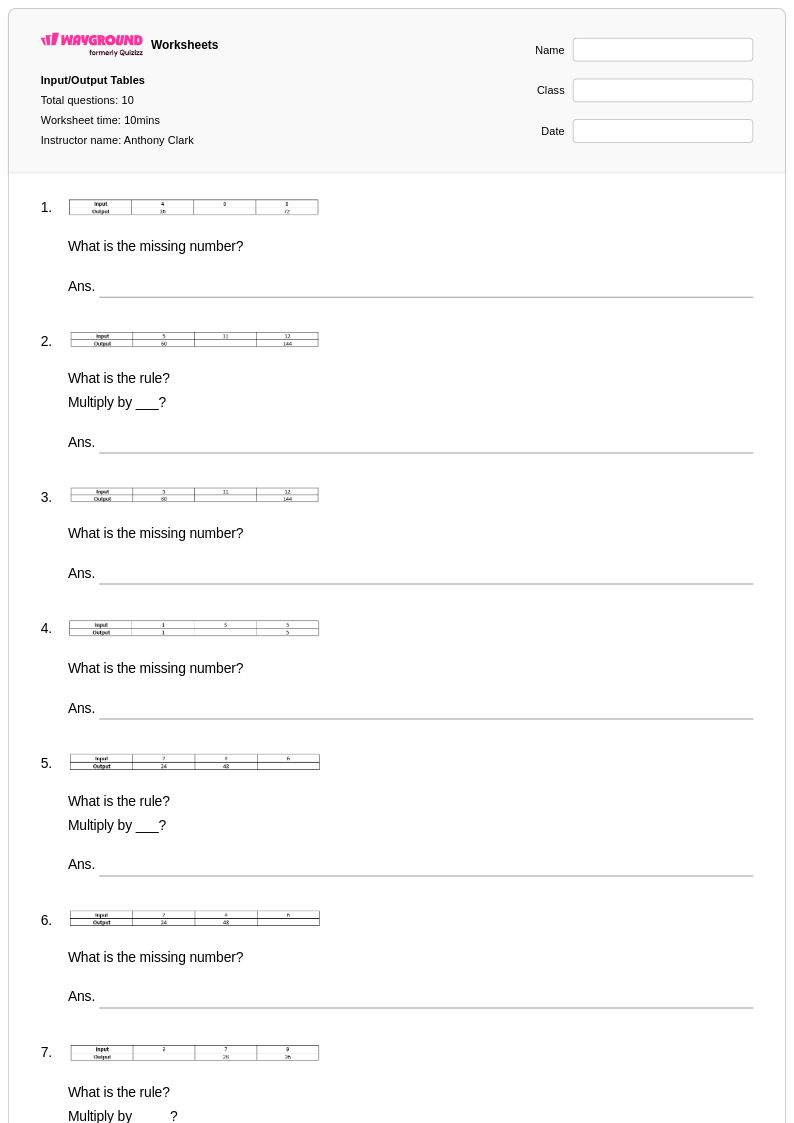
10 Q
4th - Uni
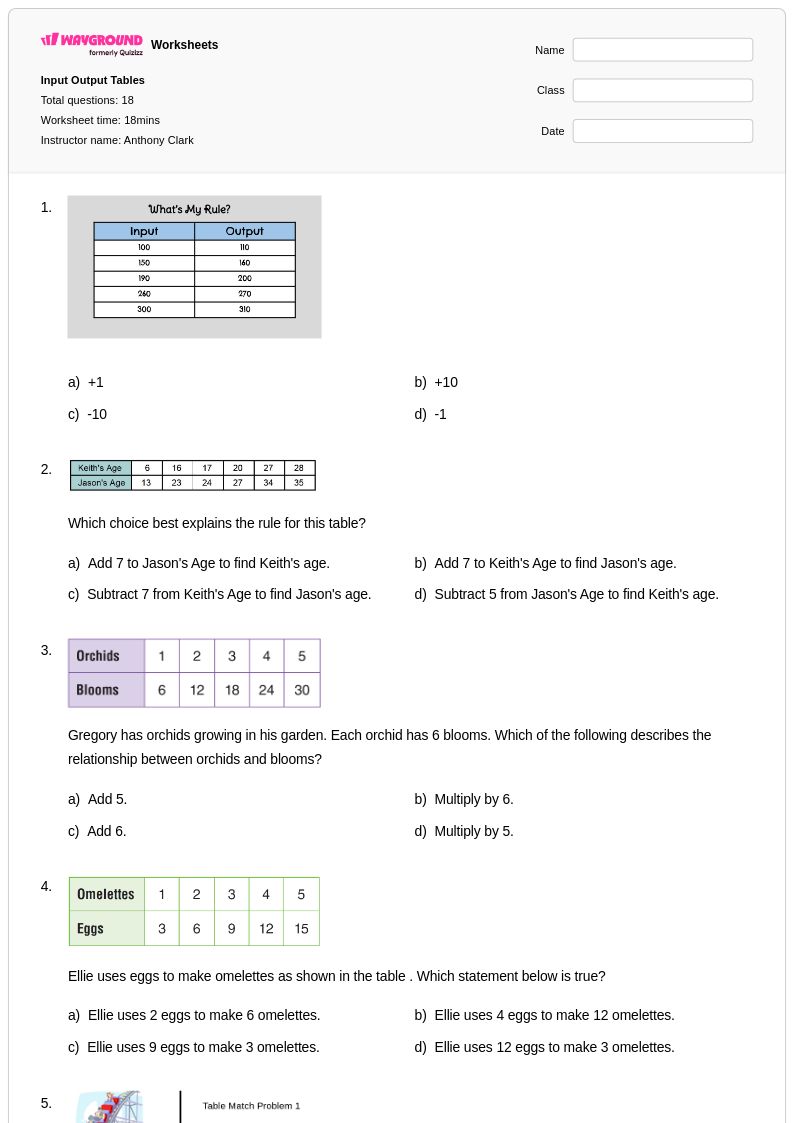
18 Q
4th - Uni
Explore Other Subject Worksheets for class 7
Explore printable Input Output Tables worksheets for Class 7
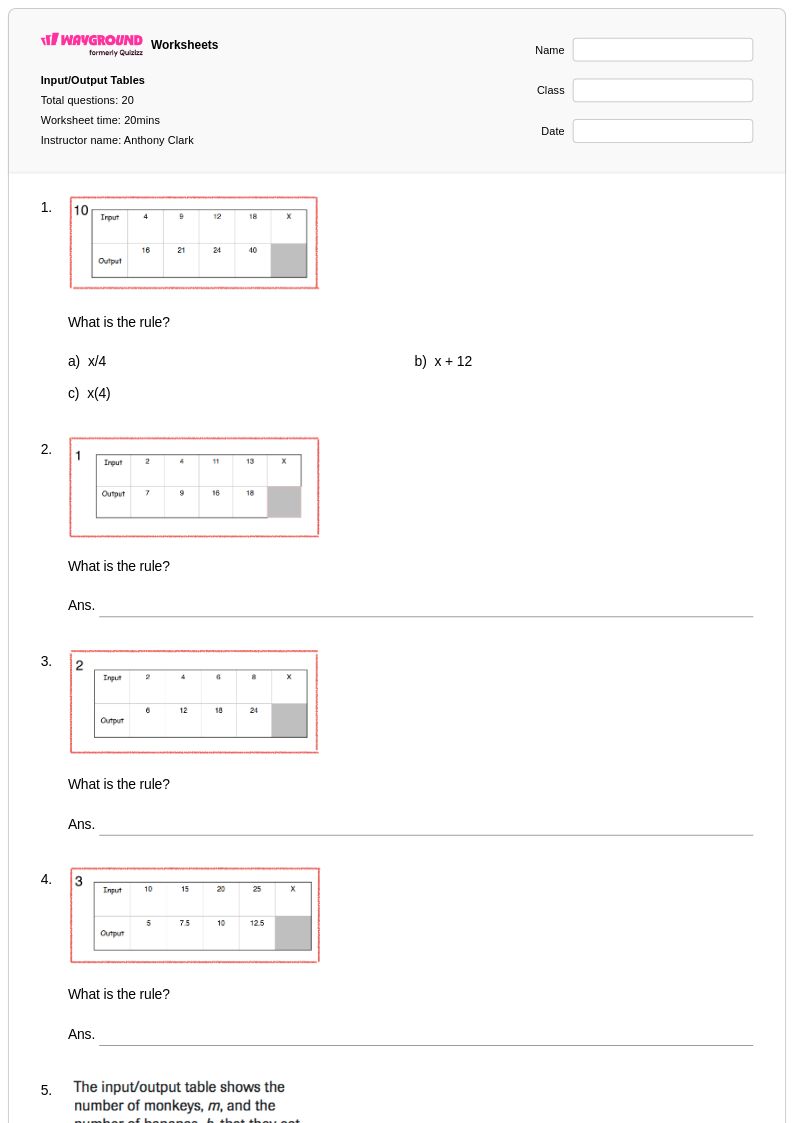
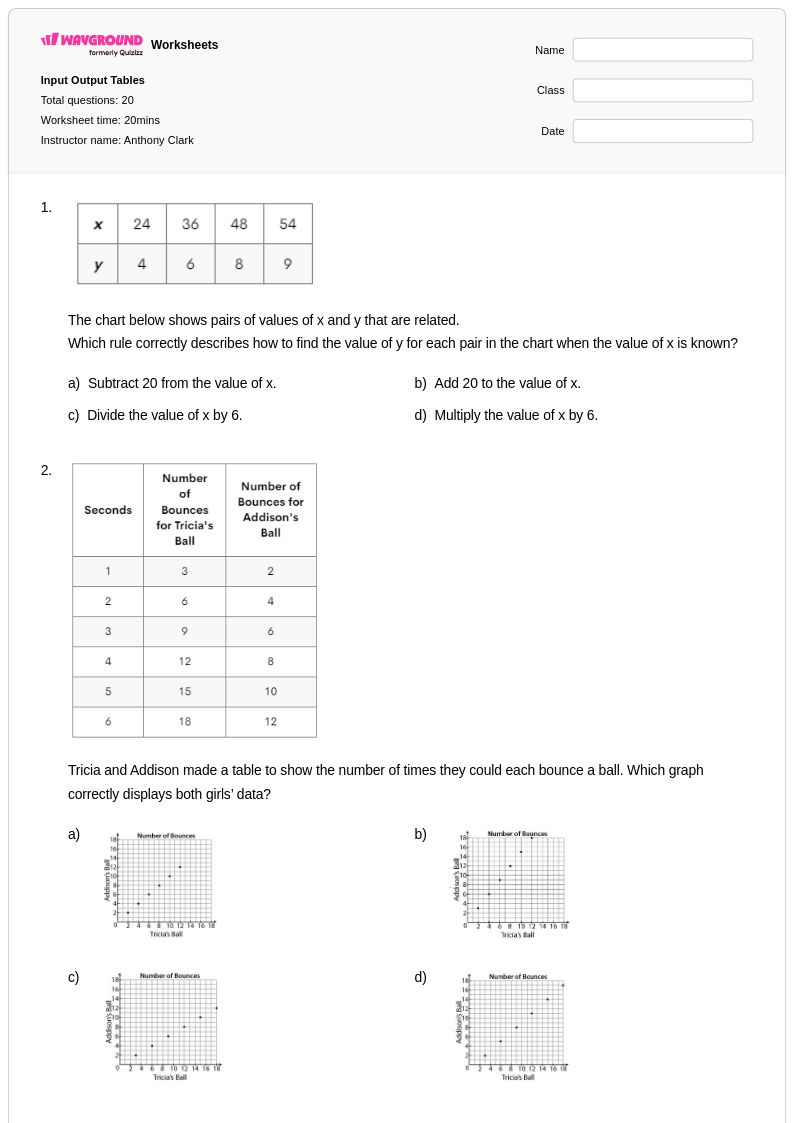
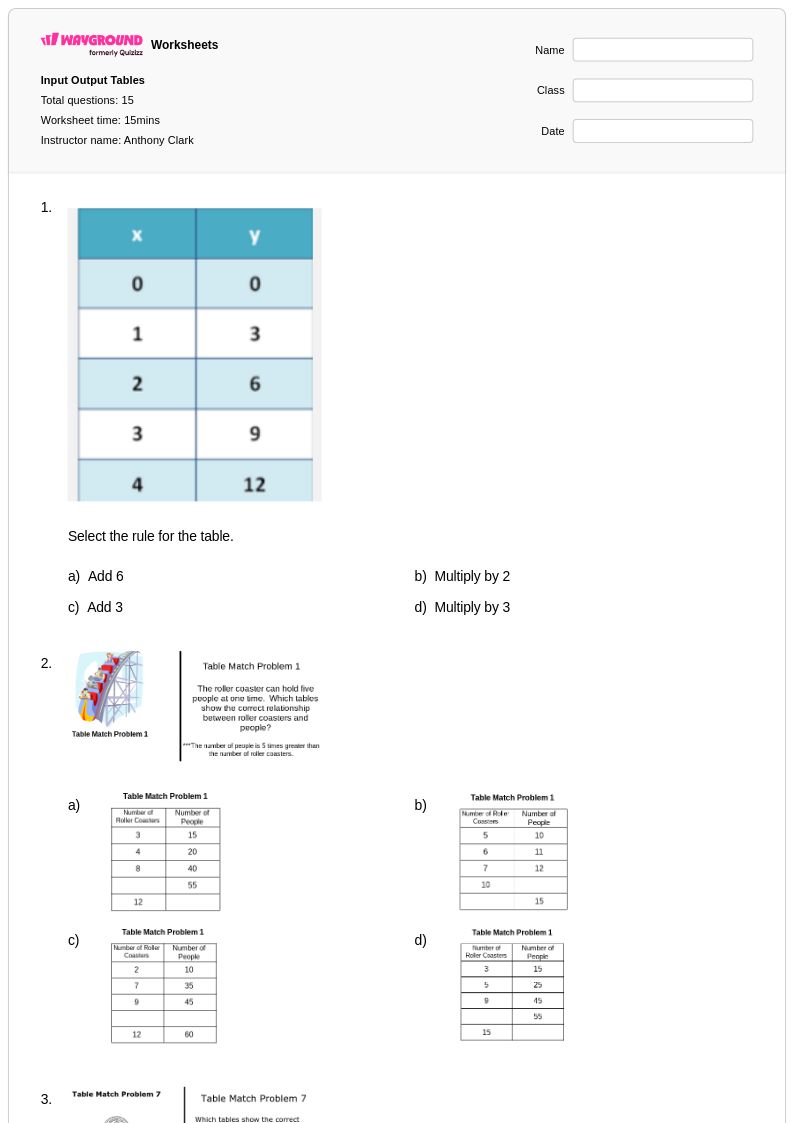
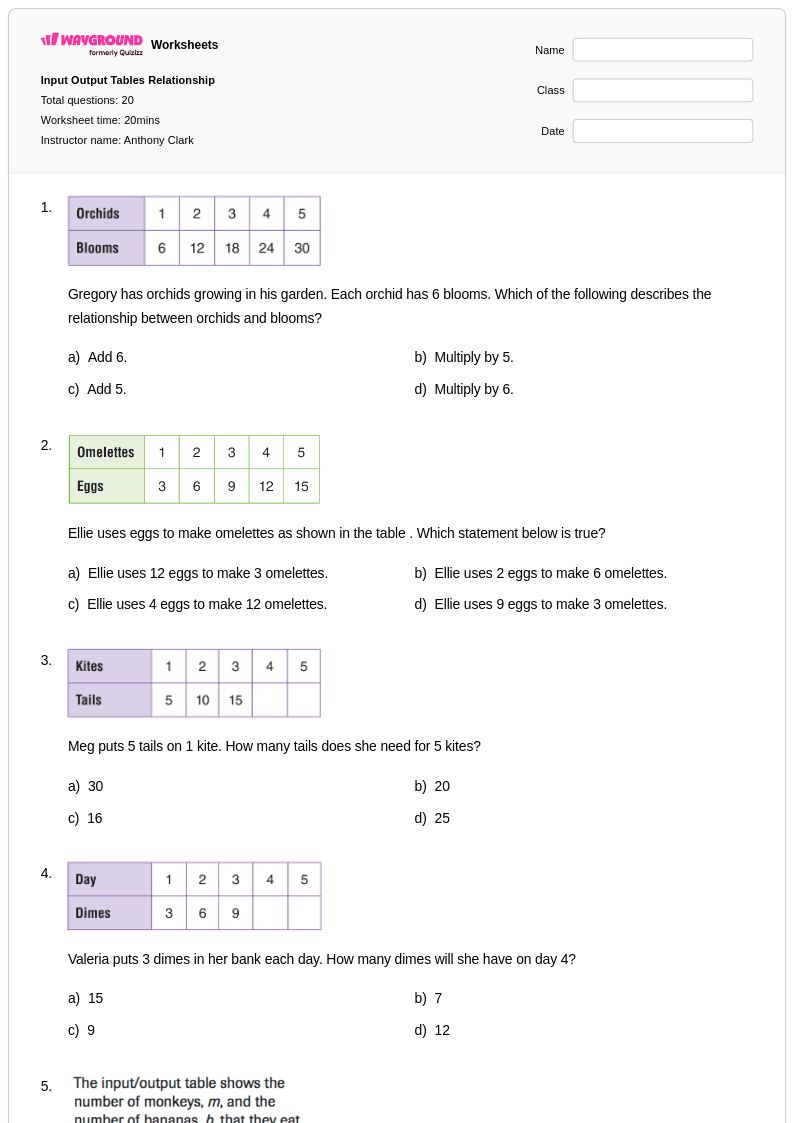
Input Output Tables worksheets for Class 7 represent a fundamental component in developing students' understanding of function relationships and algebraic thinking. These comprehensive practice problems guide seventh-grade students through the process of analyzing patterns, identifying rules, and completing function tables by determining missing input or output values. The worksheets strengthen critical mathematical skills including pattern recognition, algebraic reasoning, and the ability to express relationships between variables using words, numbers, and eventually algebraic expressions. Students work with various types of functions including linear relationships, where they learn to identify constant rates of change and apply function rules systematically. Each printable resource includes detailed answer keys that support both independent practice and guided instruction, while the free pdf format ensures accessibility for classroom use, homework assignments, and differentiated instruction based on individual student needs.
Wayground (formerly Quizizz) empowers educators with an extensive collection of millions of teacher-created Input Output Tables worksheets specifically designed for Class 7 mathematics instruction. The platform's robust search and filtering capabilities allow teachers to quickly locate resources that align with curriculum standards and match their students' specific learning objectives and skill levels. Teachers can customize worksheets to provide appropriate challenge levels for remediation or enrichment, ensuring that struggling students receive additional scaffolding while advanced learners encounter more complex function relationships. The flexible format options include both digital interactive versions and traditional printable pdf worksheets, enabling seamless integration into various instructional models including in-person, remote, and hybrid learning environments. These differentiation tools support effective lesson planning by providing teachers with ready-to-use materials that can be adapted for whole-class instruction, small group work, or individual skill practice sessions.
FAQs
What is the focus of input-output tables in 7th grade?
How can I help 7th graders connect input-output tables to linear equations?
What kinds of problems are on these 7th-grade function table worksheets?
Where do 7th graders typically struggle when analyzing function tables?
How can I assign this 7th-grade input-output table worksheet?
How does this topic support 7th-grade Common Core math standards?