
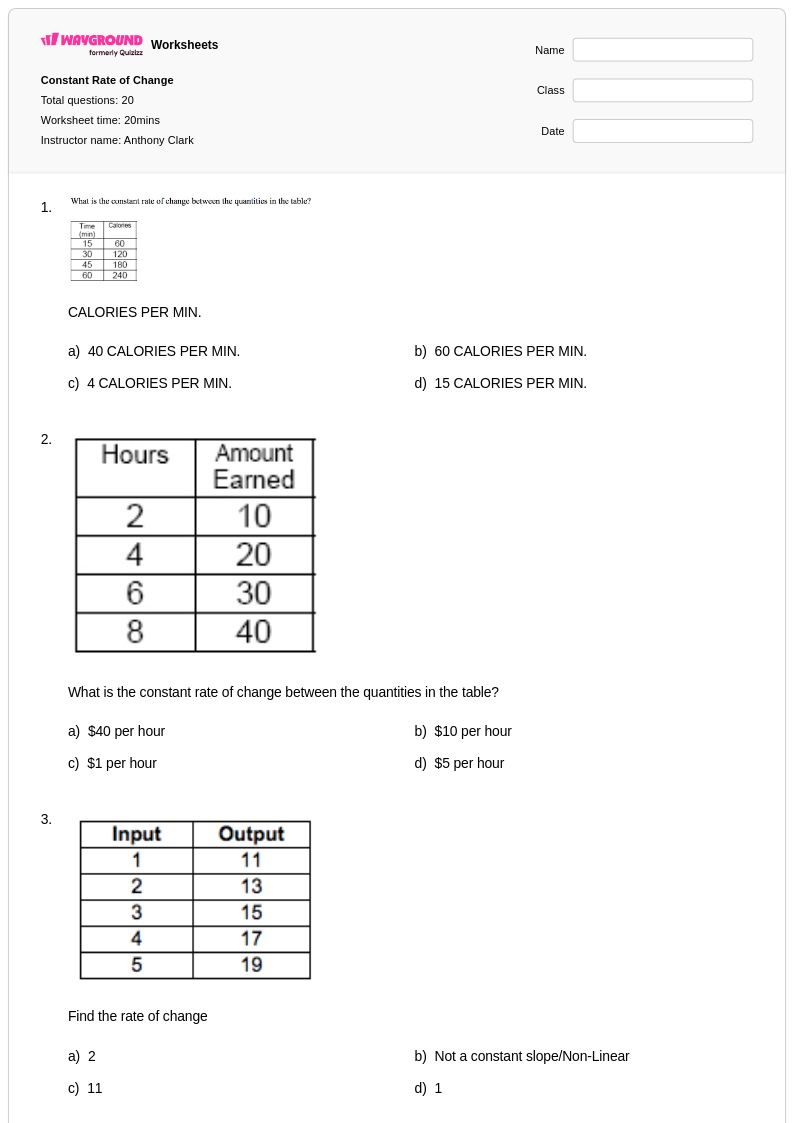
20 Q
7th - Uni
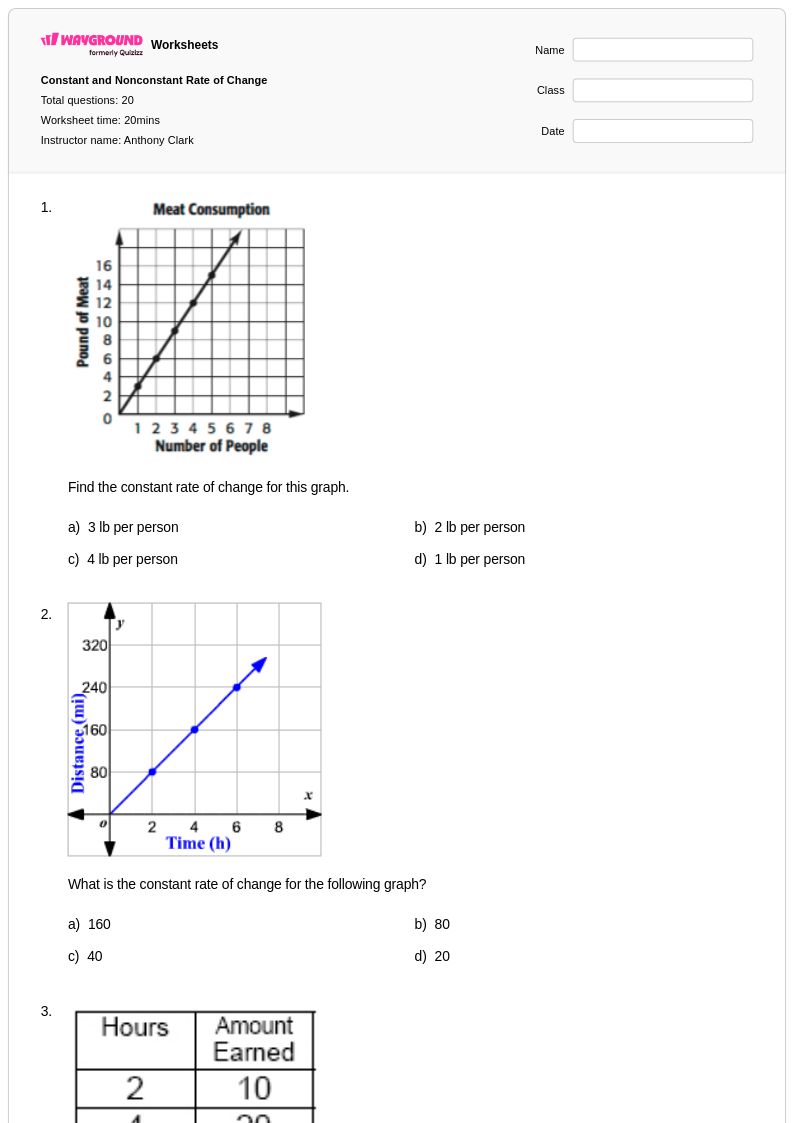
20 Q
7th - Uni
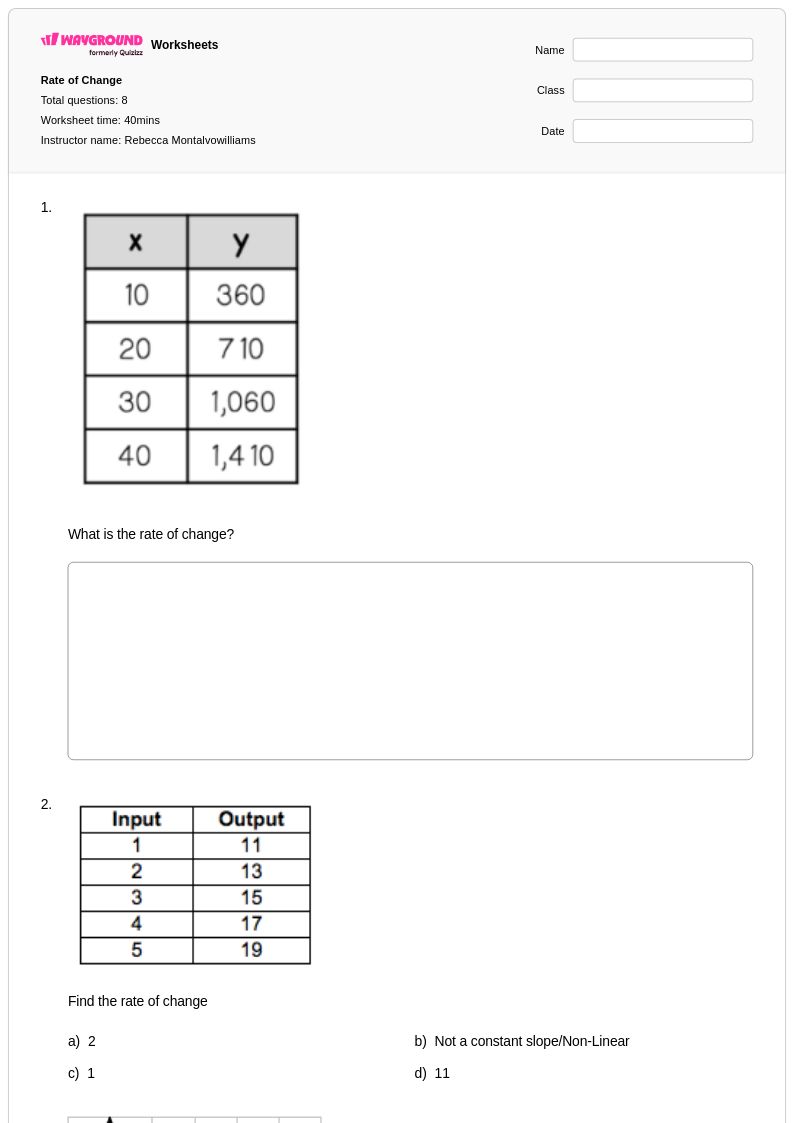
8 Q
7th
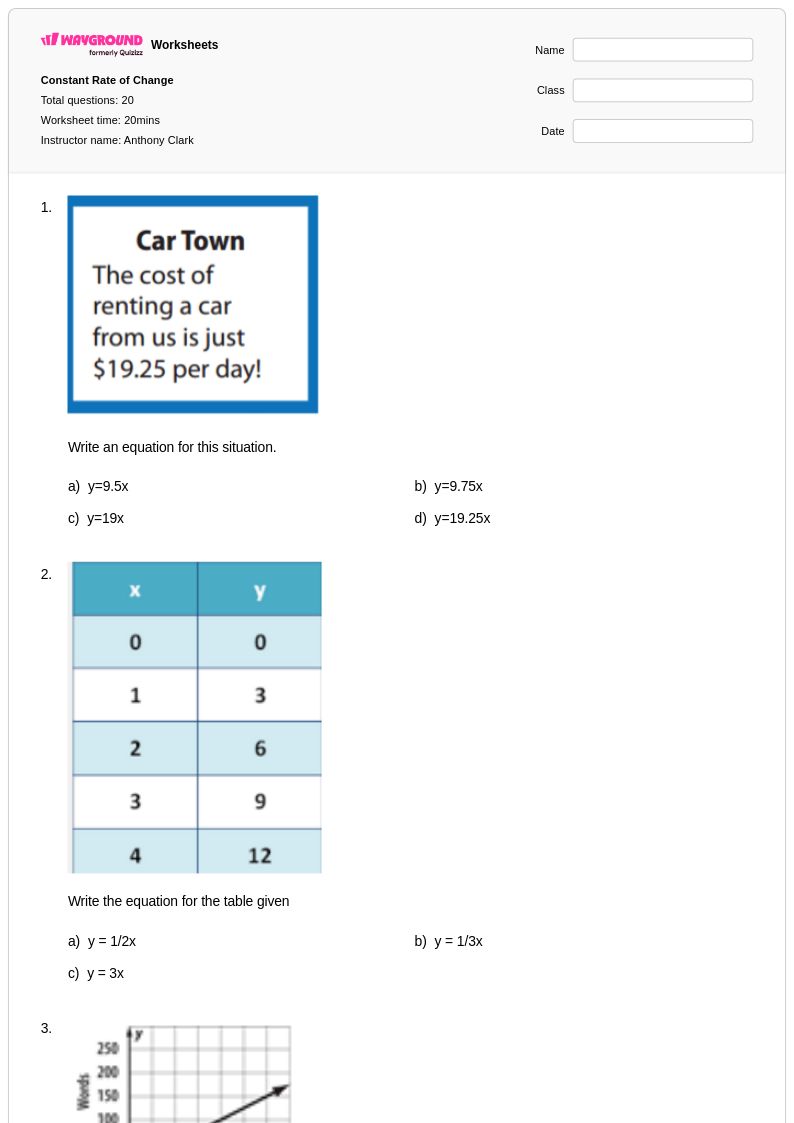
20 Q
7th - Uni
20 Q
7th - Uni
20 Q
7th - Uni
20 Q
7th - Uni
10 Q
7th
20 Q
7th - Uni
20 Q
7th - Uni
20 Q
7th - Uni
15 Q
7th - Uni
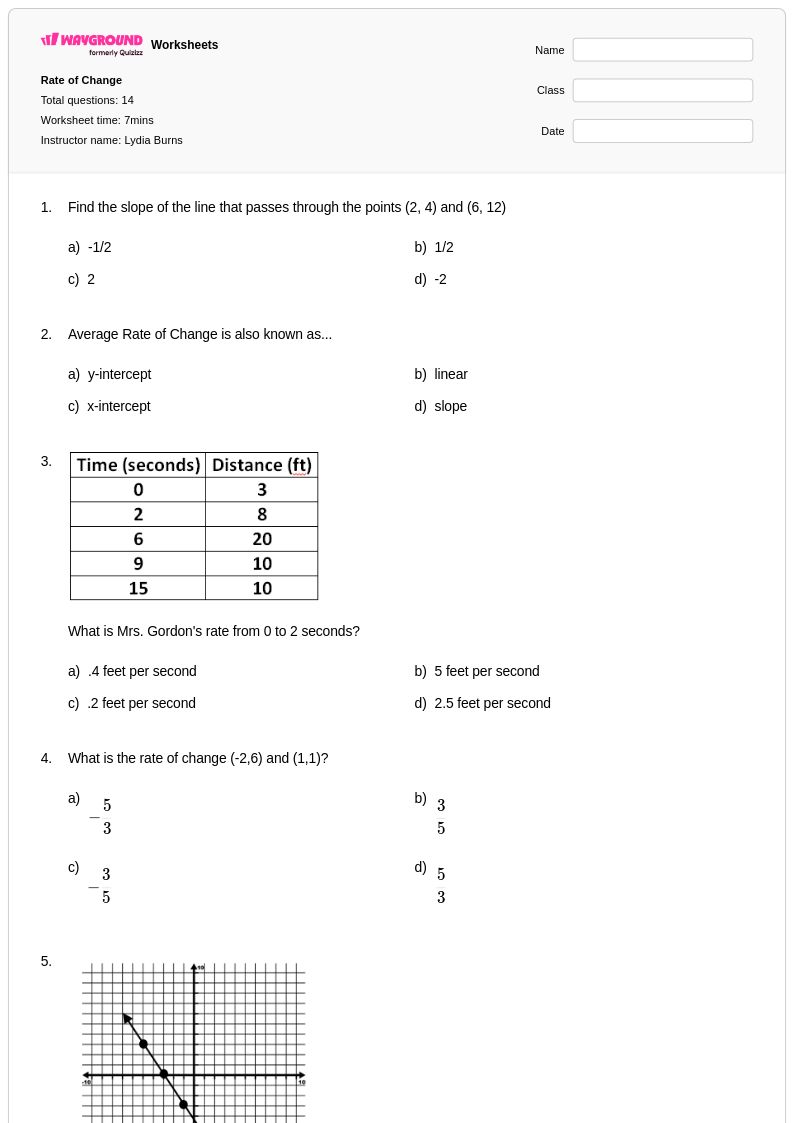
14 Q
7th - 9th
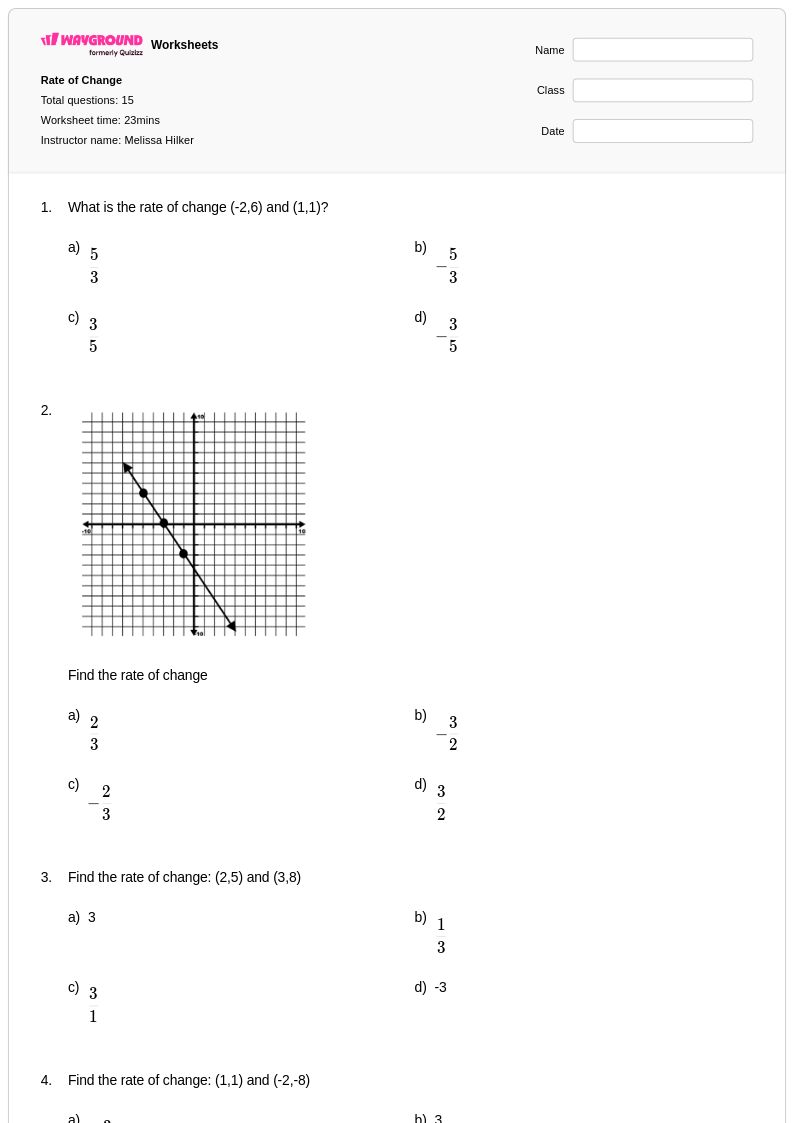
15 Q
7th - 8th
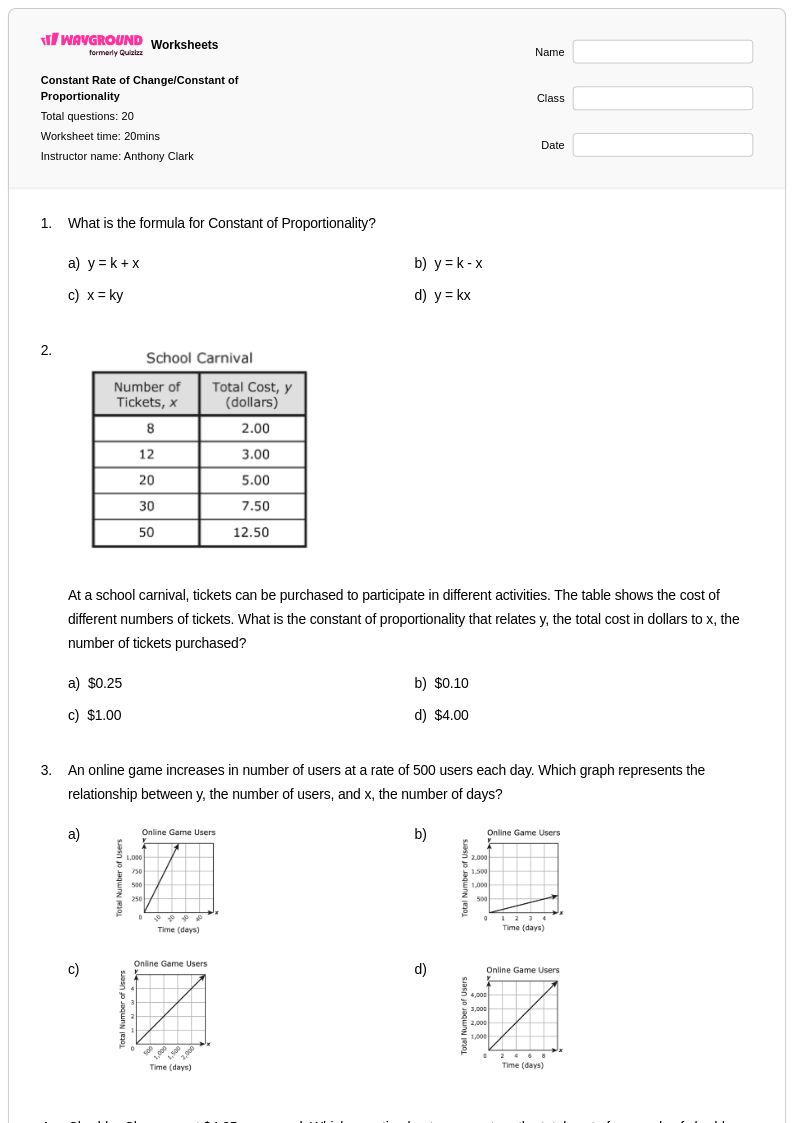
20 Q
7th - Uni
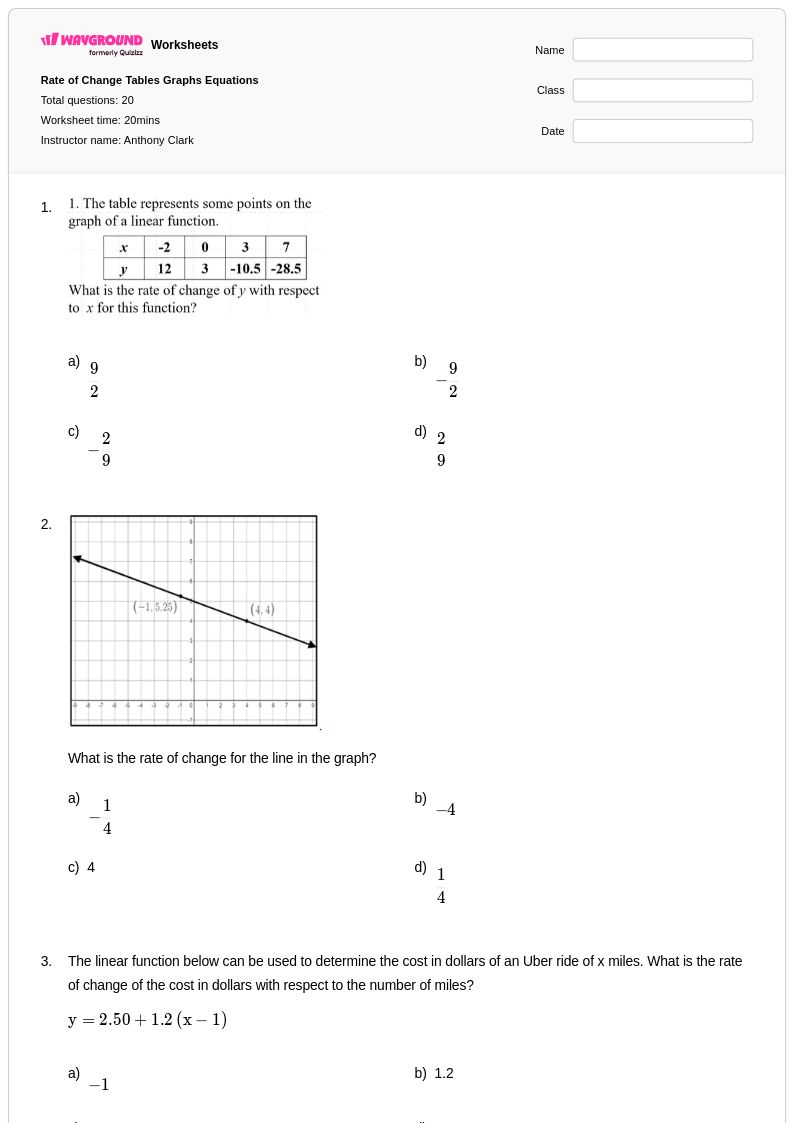
20 Q
7th - Uni
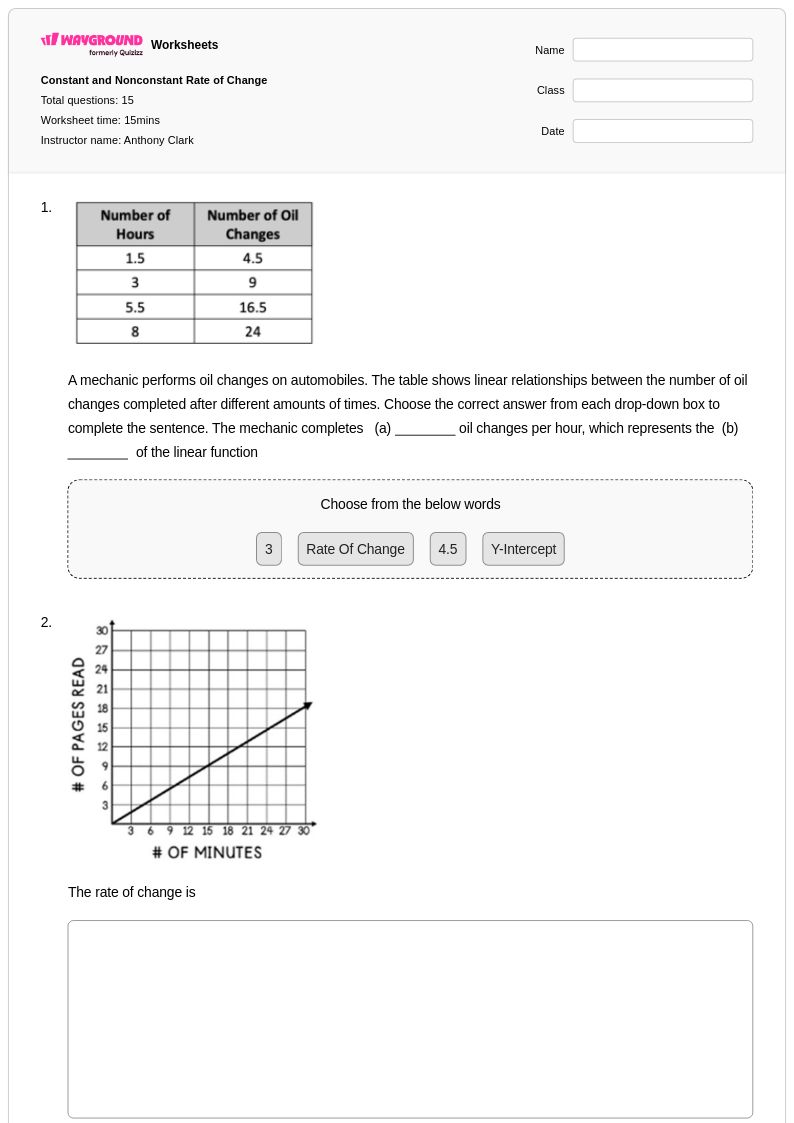
15 Q
7th - Uni
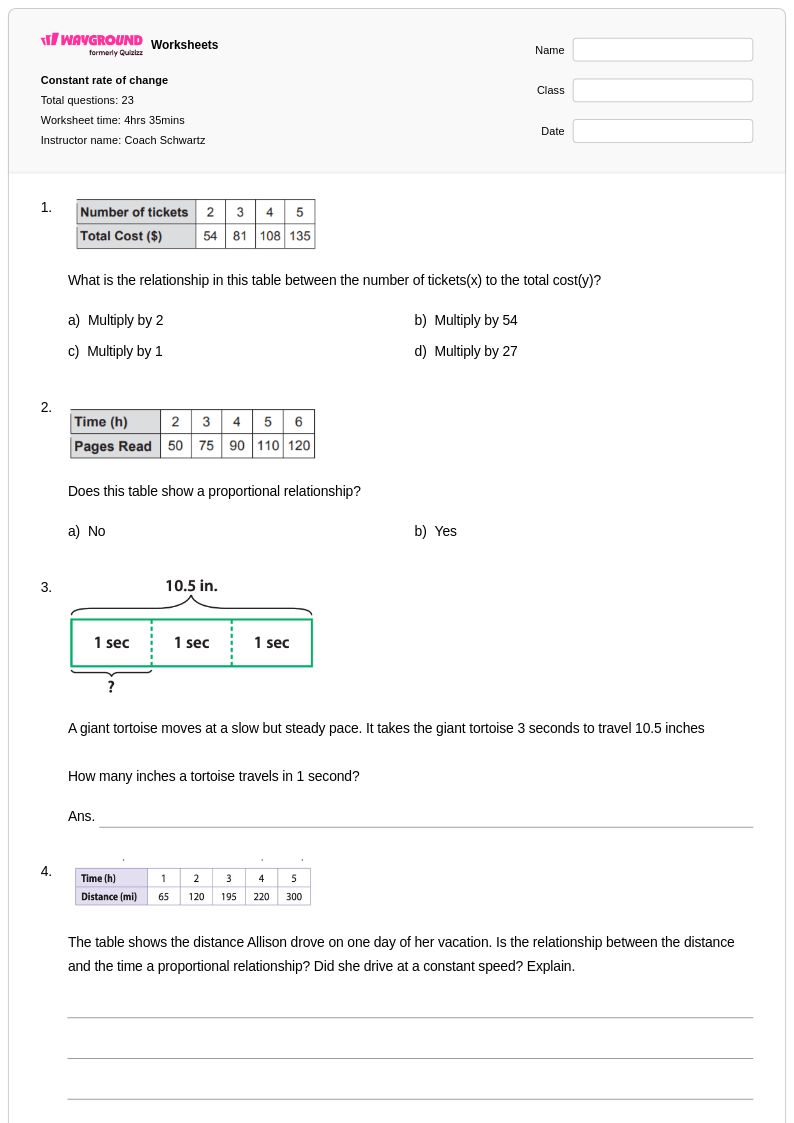
23 Q
7th
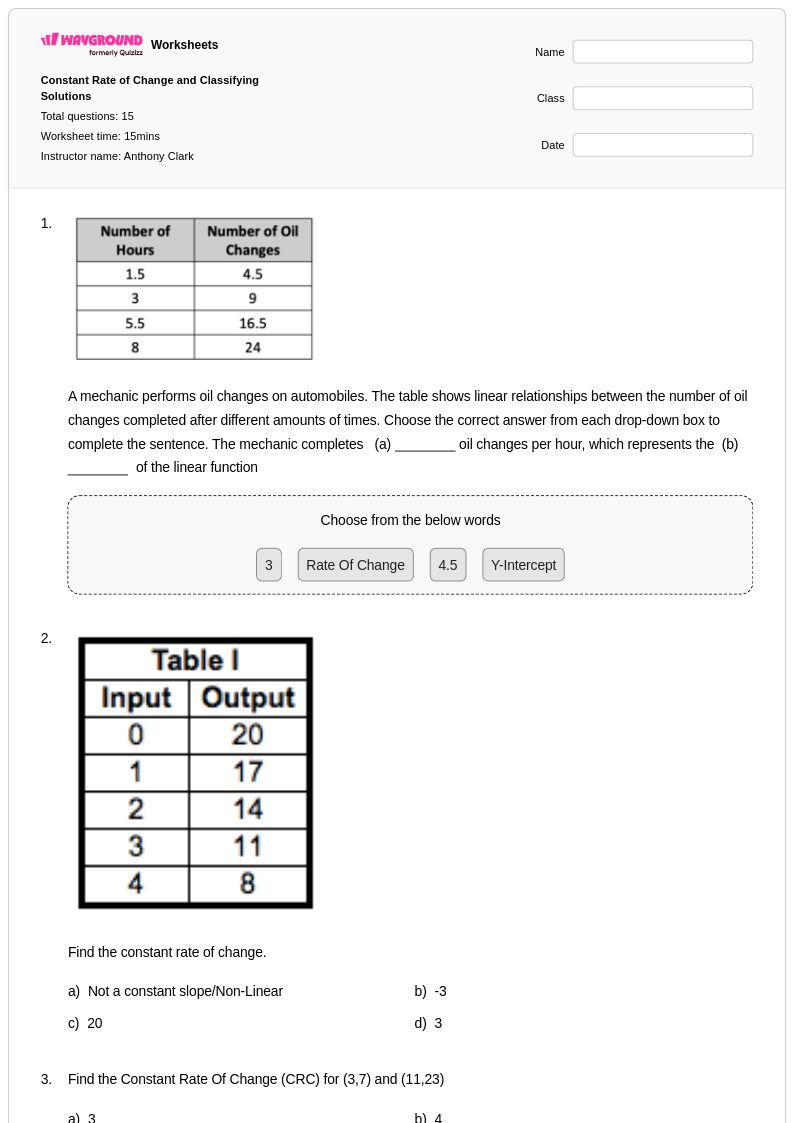
15 Q
7th - Uni
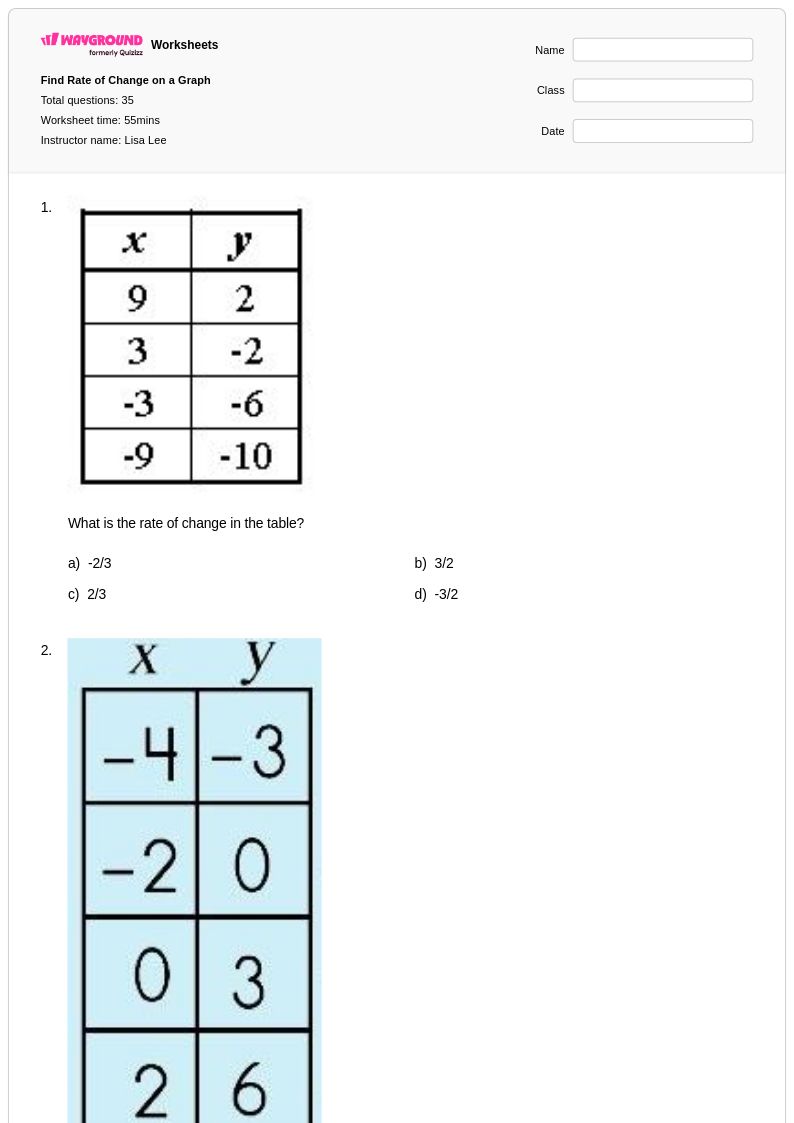
35 Q
7th
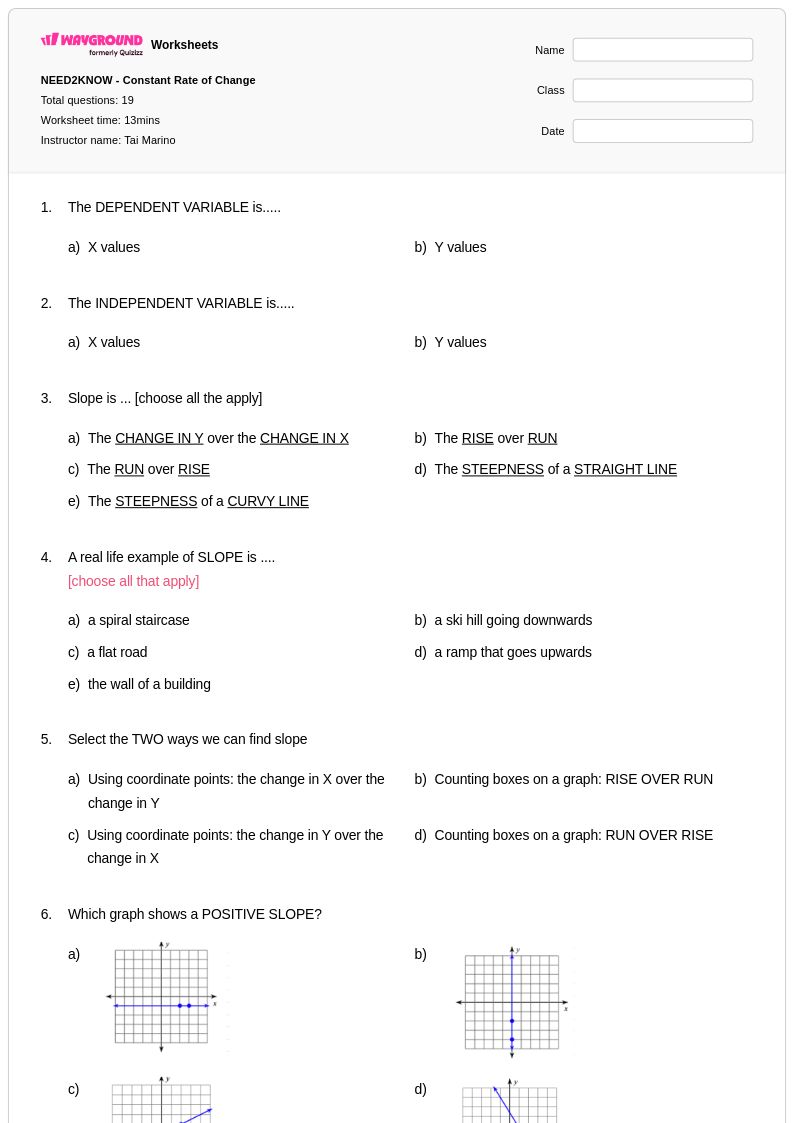
19 Q
7th - 9th
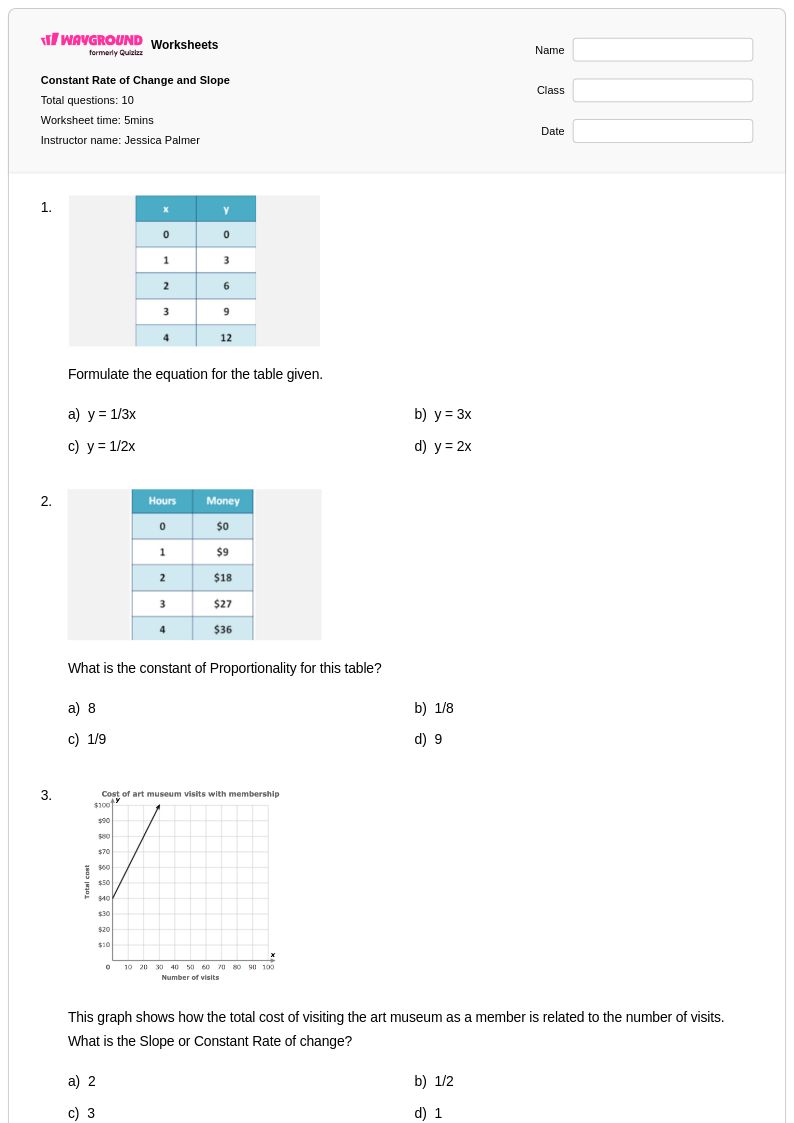
10 Q
7th
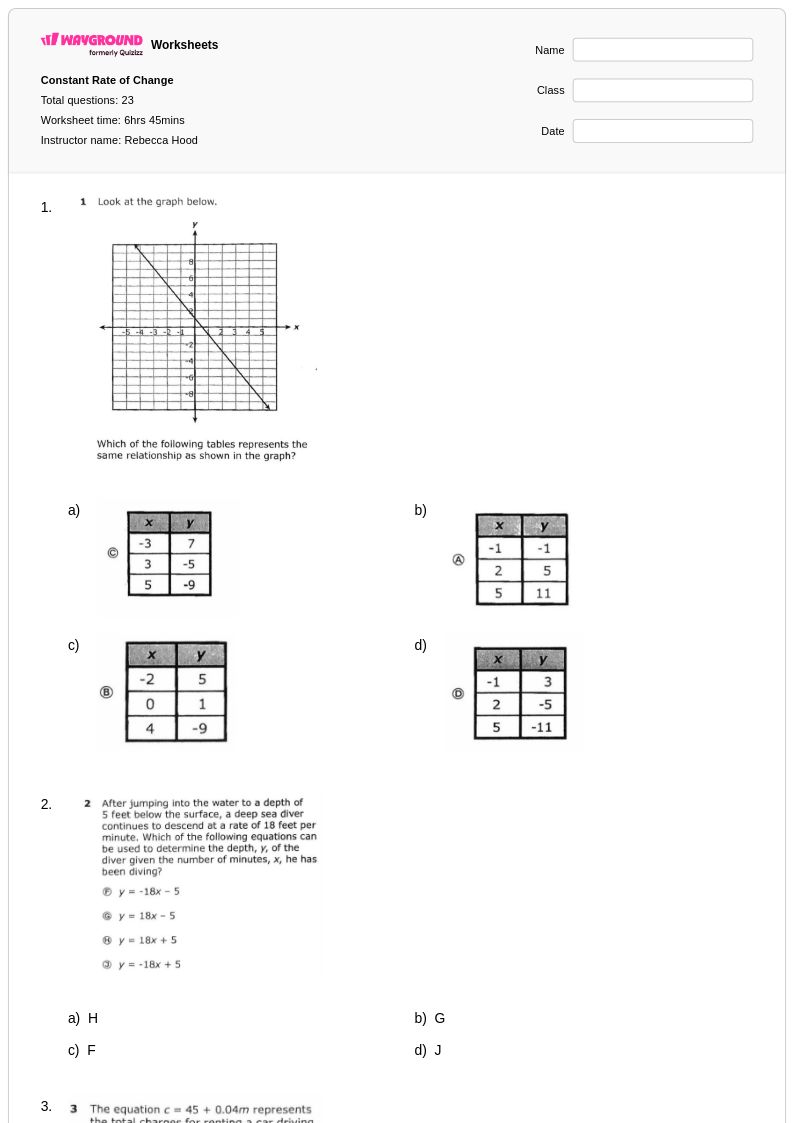
23 Q
7th
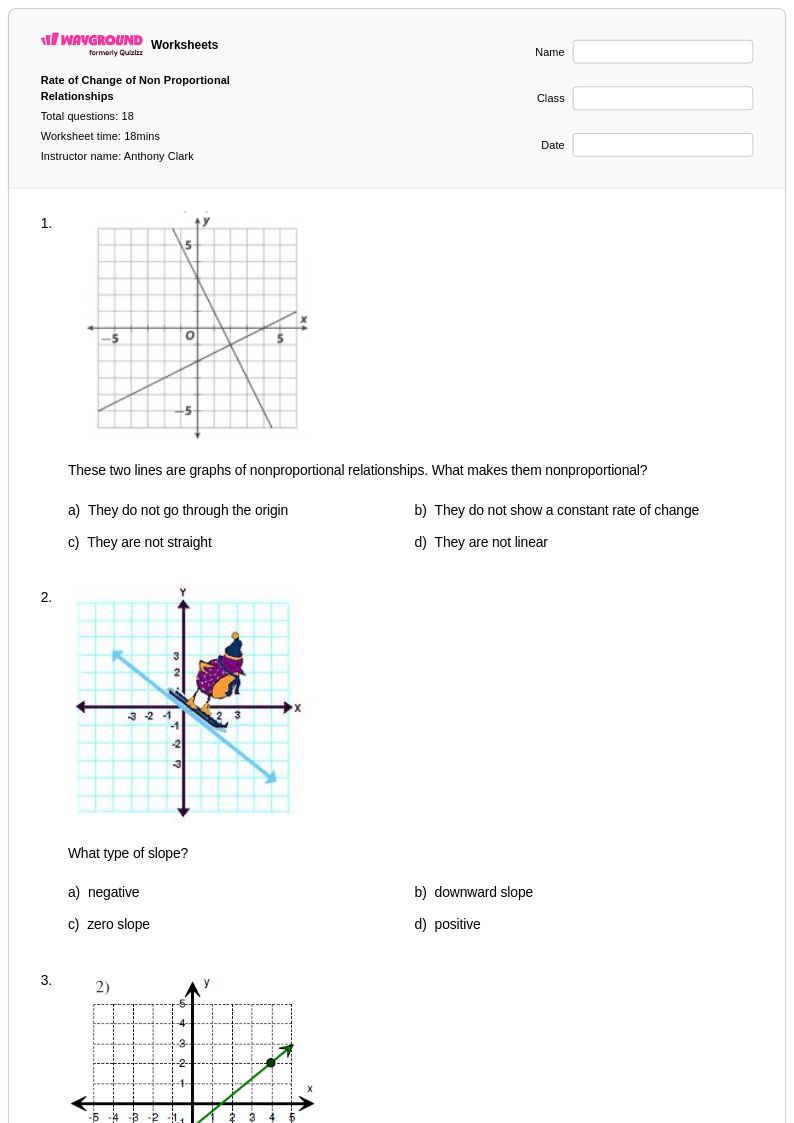
18 Q
7th - Uni
Explore Other Subject Worksheets for class 7
Explore printable Rate of Change worksheets for Class 7
Rate of change worksheets for Class 7 mathematics provide students with essential practice in understanding how quantities change over time and in relation to one another. These comprehensive worksheets available through Wayground (formerly Quizizz) focus on building foundational skills in analyzing patterns, calculating rates, and interpreting real-world scenarios involving changing values. Students work through practice problems that cover constant rates of change, variable rates, and the connections between tables, graphs, and algebraic expressions. Each worksheet includes detailed answer keys and is available as free printables in pdf format, making them accessible for both classroom instruction and independent study. The problems progressively build complexity, helping seventh graders develop proficiency in recognizing rate patterns and applying rate calculations to practical situations.
Wayground (formerly Quizizz) empowers educators with millions of teacher-created rate of change resources specifically designed for Class 7 mathematics instruction. The platform's robust search and filtering capabilities allow teachers to quickly locate worksheets that align with curriculum standards and match their students' specific learning needs. These differentiation tools enable instructors to customize content for various skill levels, supporting both remediation for struggling learners and enrichment opportunities for advanced students. Available in both printable pdf formats and interactive digital versions, these worksheet collections streamline lesson planning while providing flexible options for skill practice, formative assessment, and targeted intervention. Teachers can efficiently organize their rate of change instruction knowing they have access to high-quality, standards-aligned materials that support comprehensive understanding of this critical mathematical concept.
FAQs
How do I teach rate of change in 7th grade?
What practice problems are best for 7th graders?
What's a common mistake when finding rate of change from a graph?
How can I use this worksheet with my 7th grade class?
How does this topic align with 7th grade math standards?