Free Printable Law of Superposition Worksheets for Class 8
Explore Wayground's comprehensive Class 8 Law of Superposition worksheets featuring free printables and practice problems that help students master rock layer sequencing and geological time principles, complete with detailed answer keys and PDF resources.
Explore printable Law of Superposition worksheets for Class 8
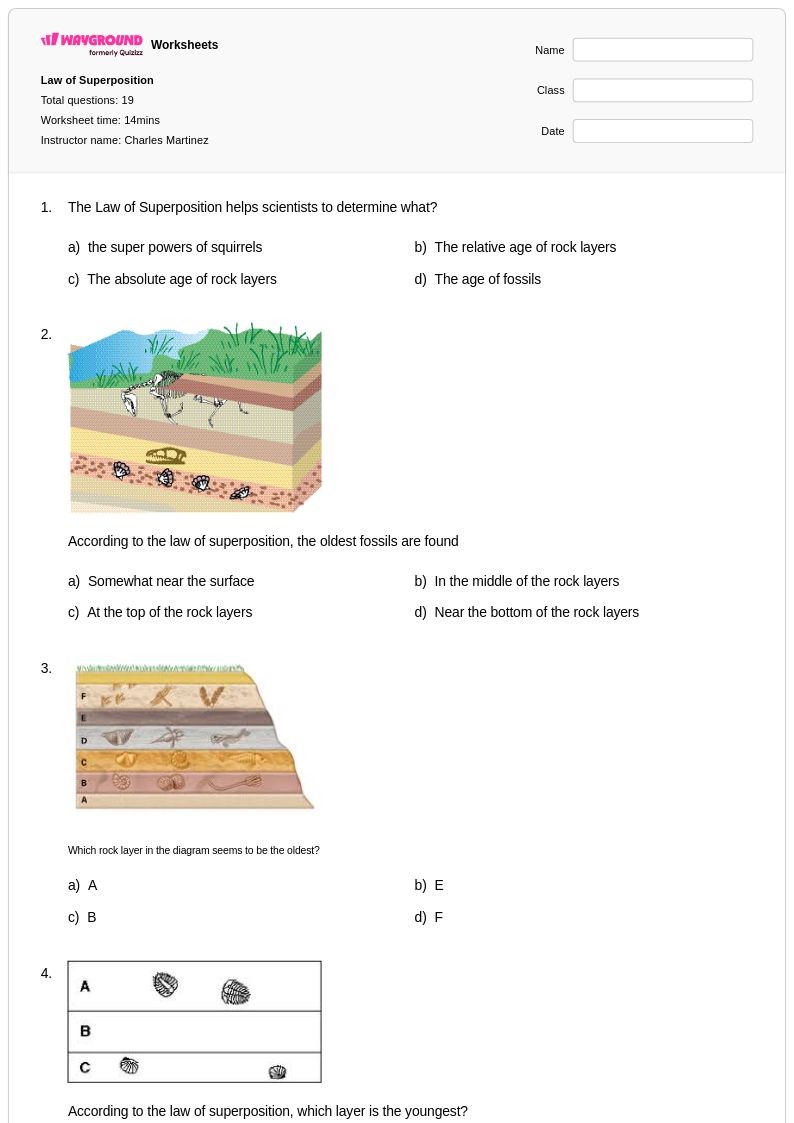
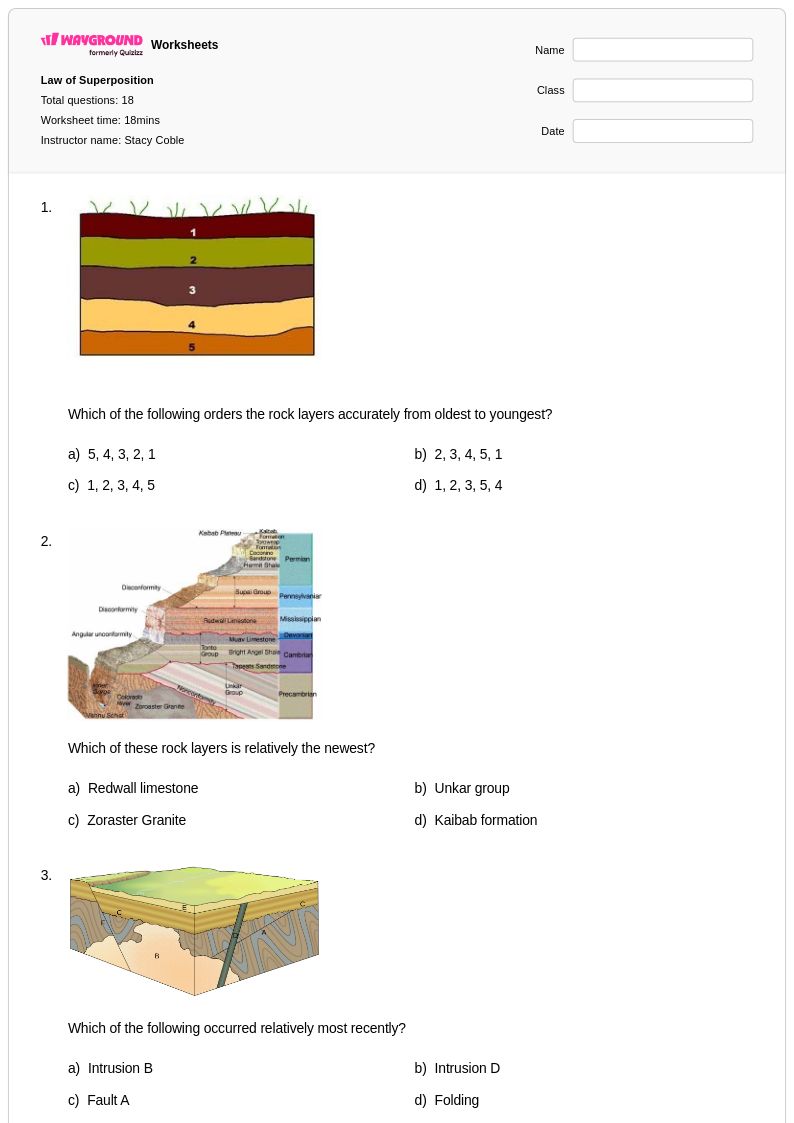
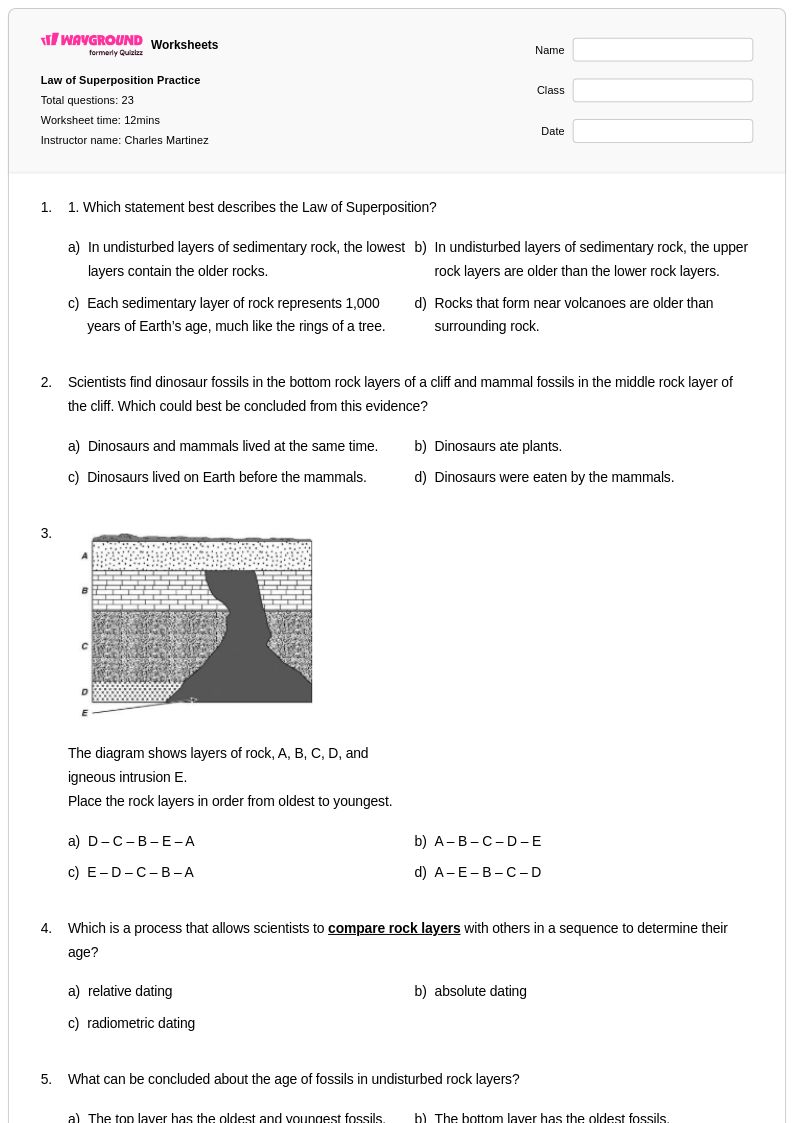
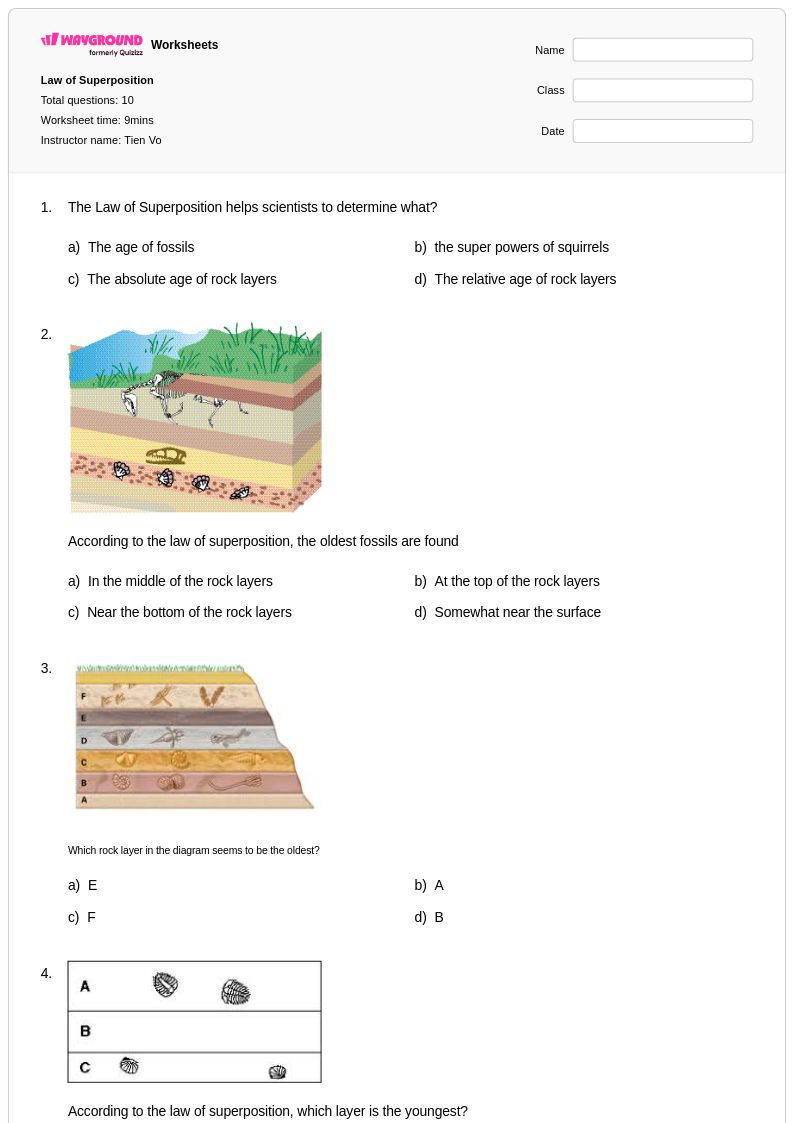
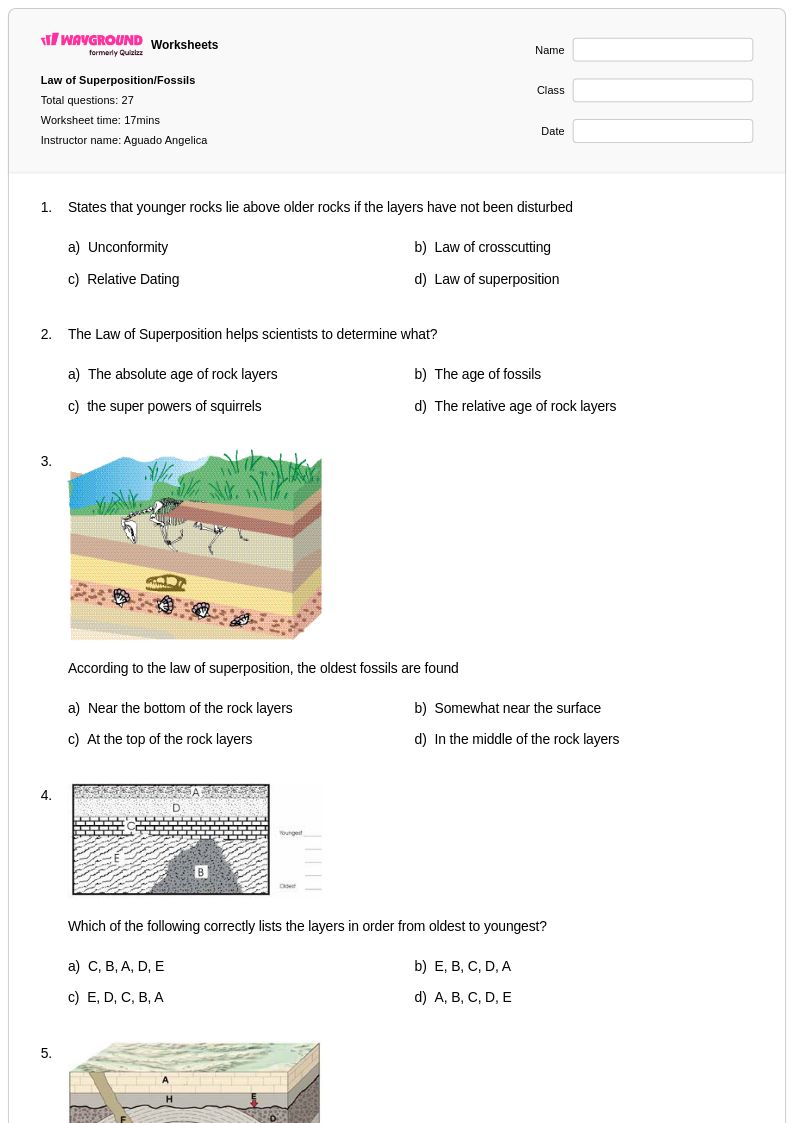
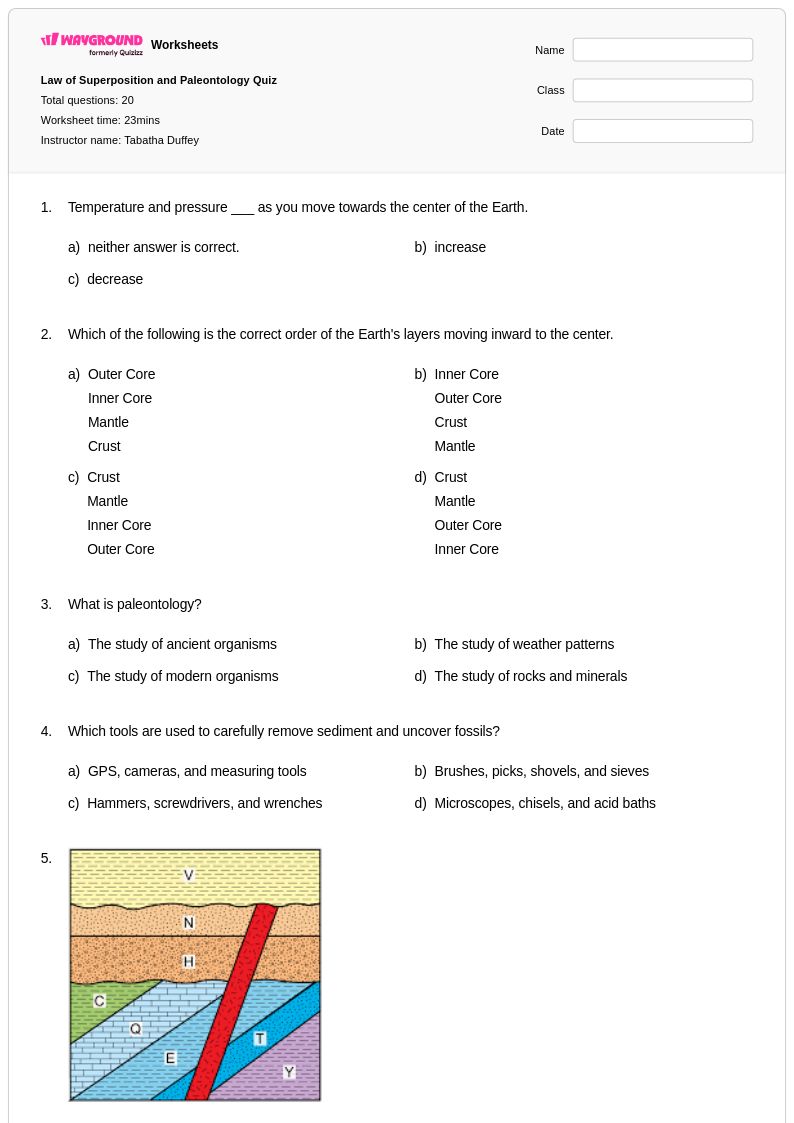
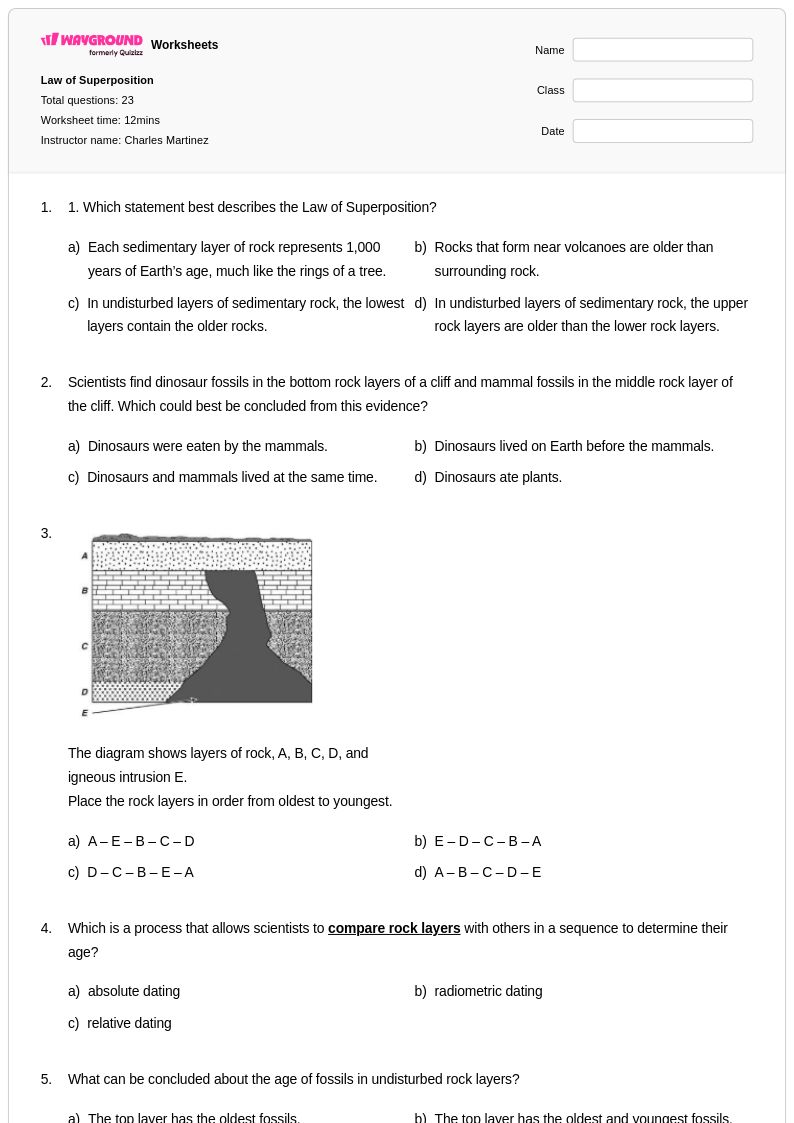
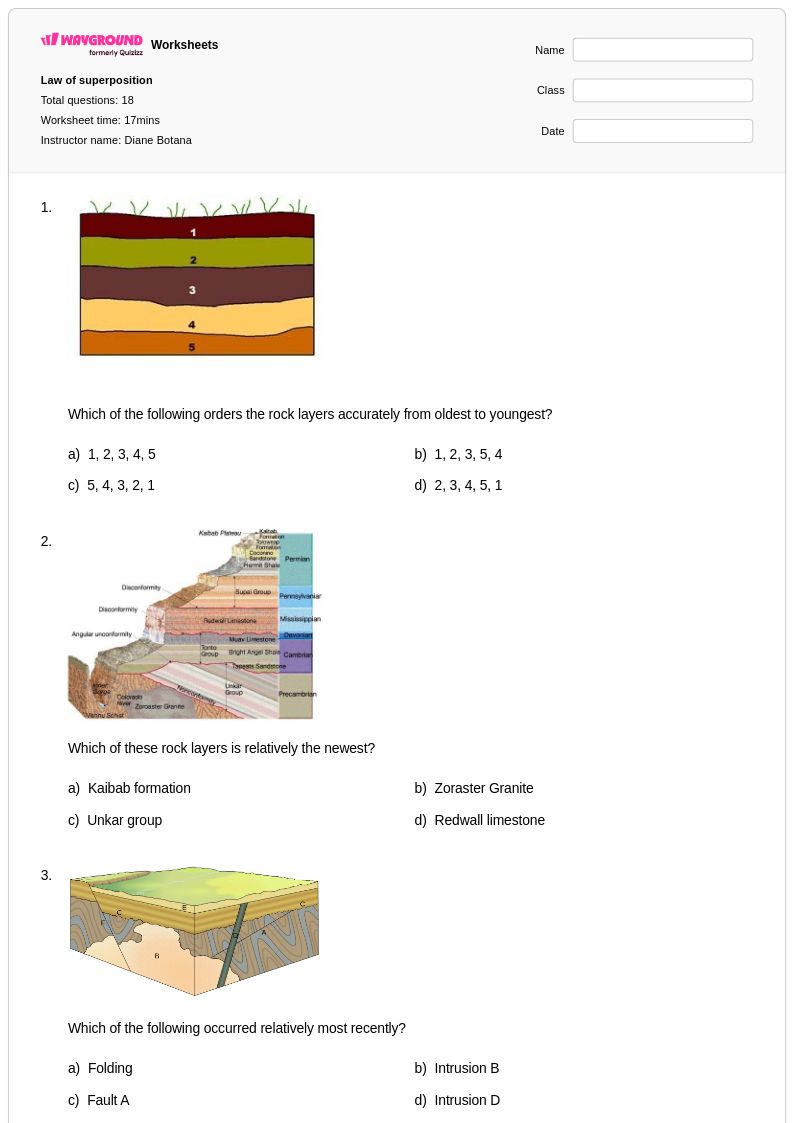
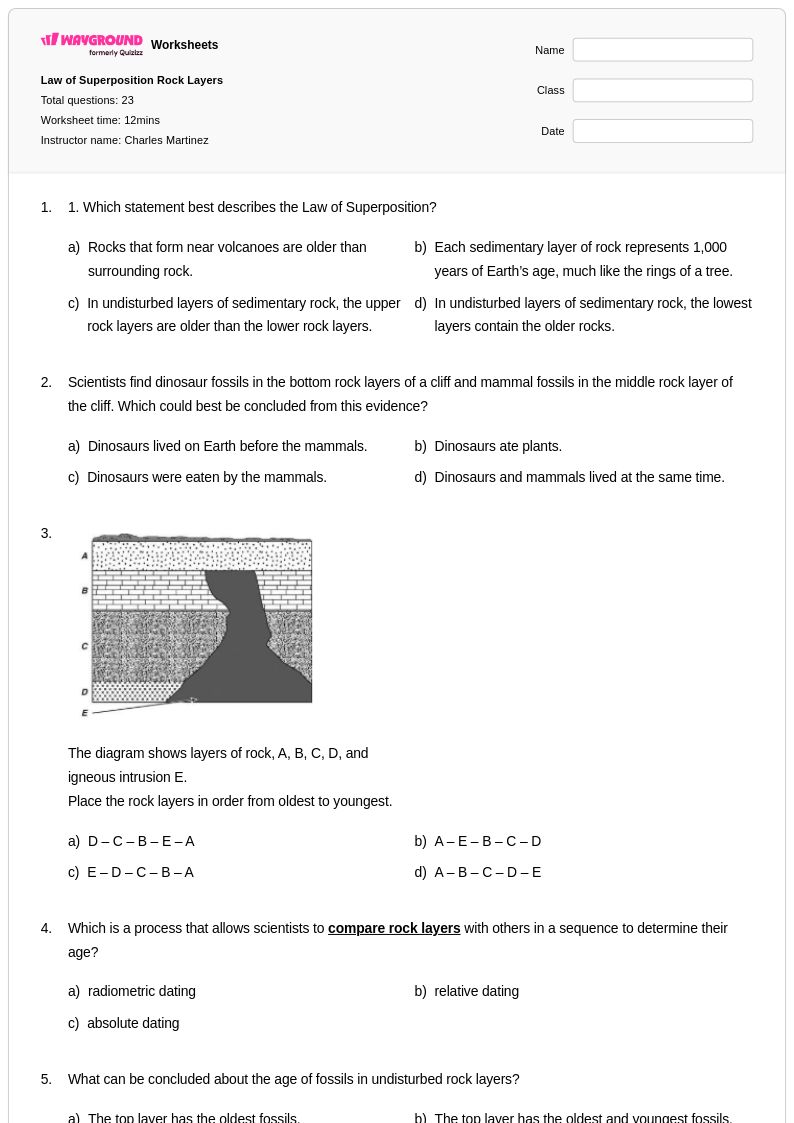
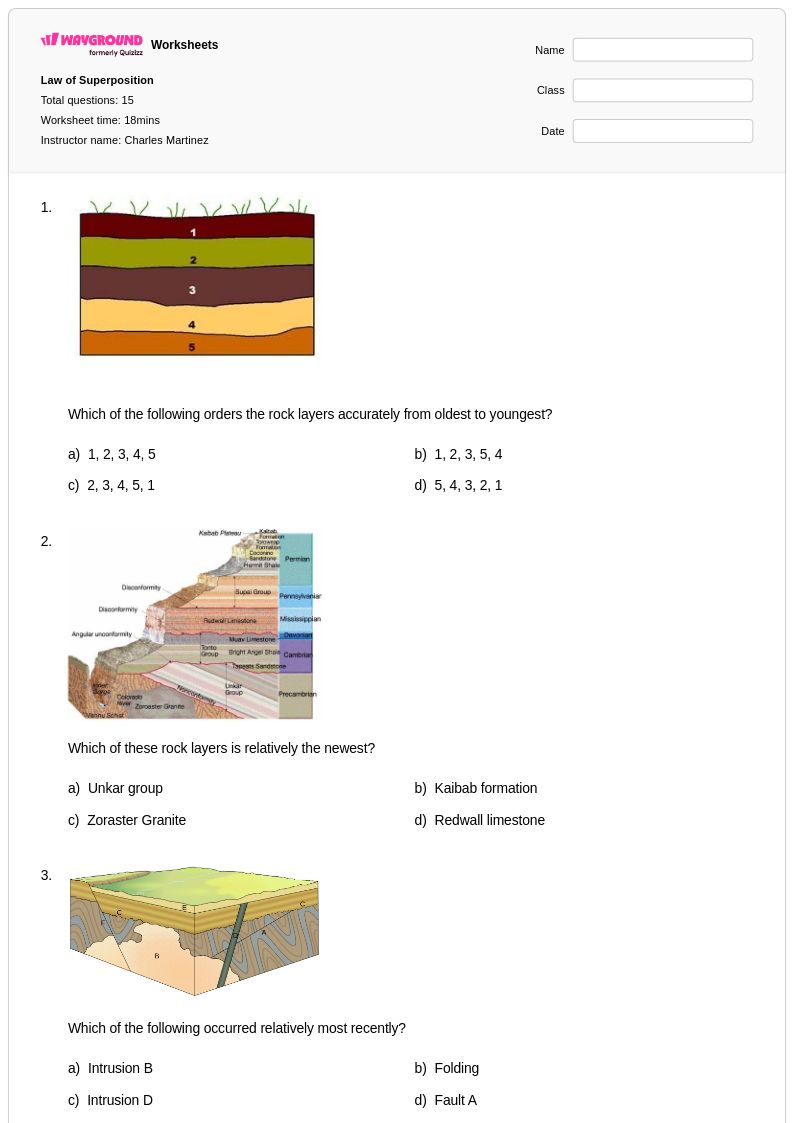
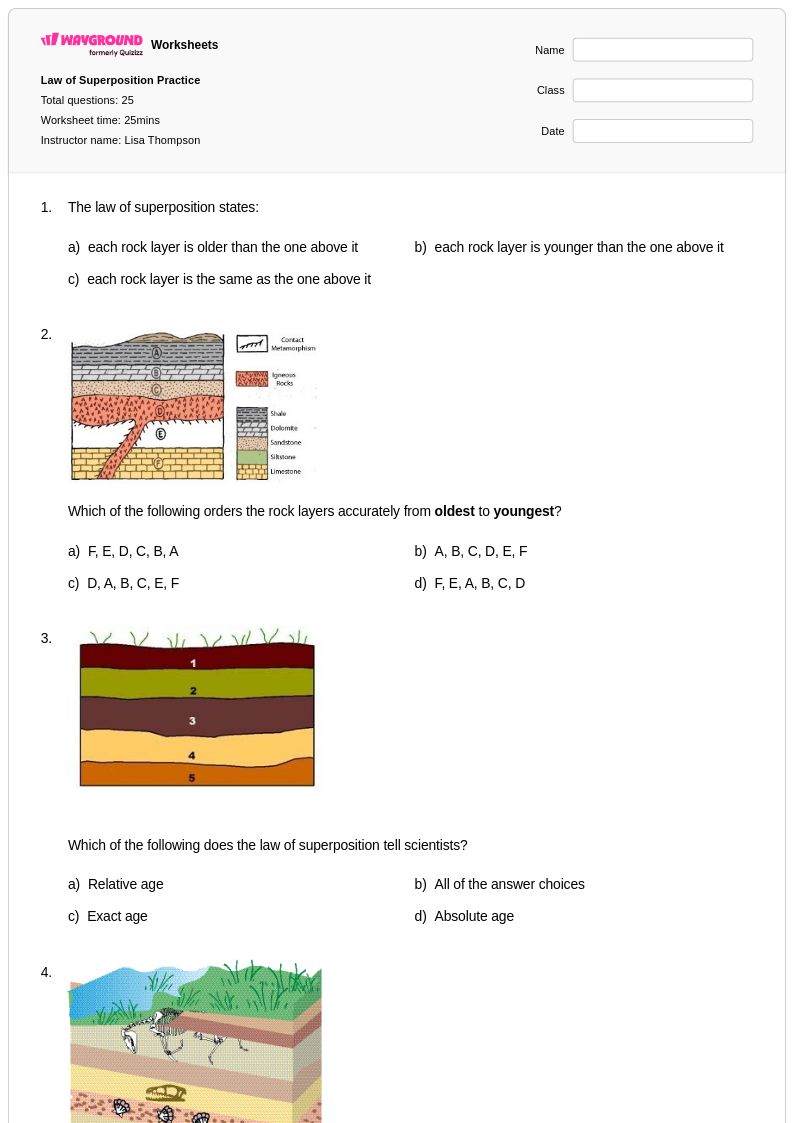
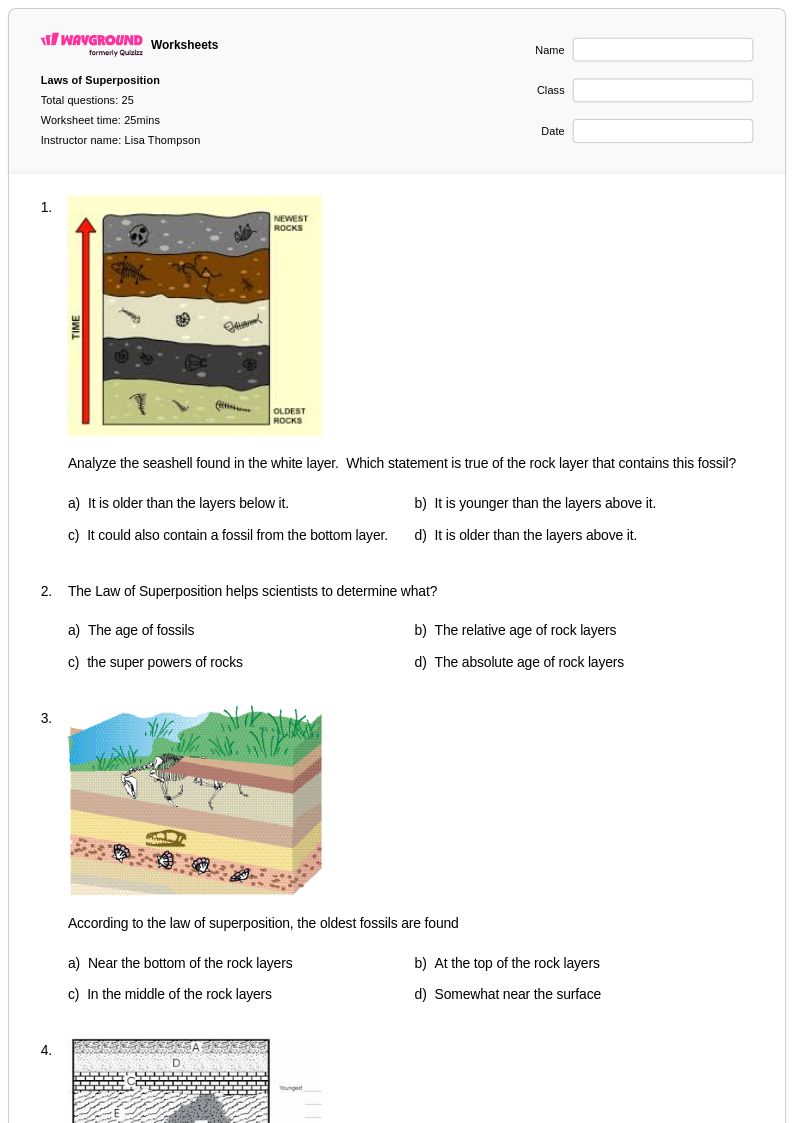
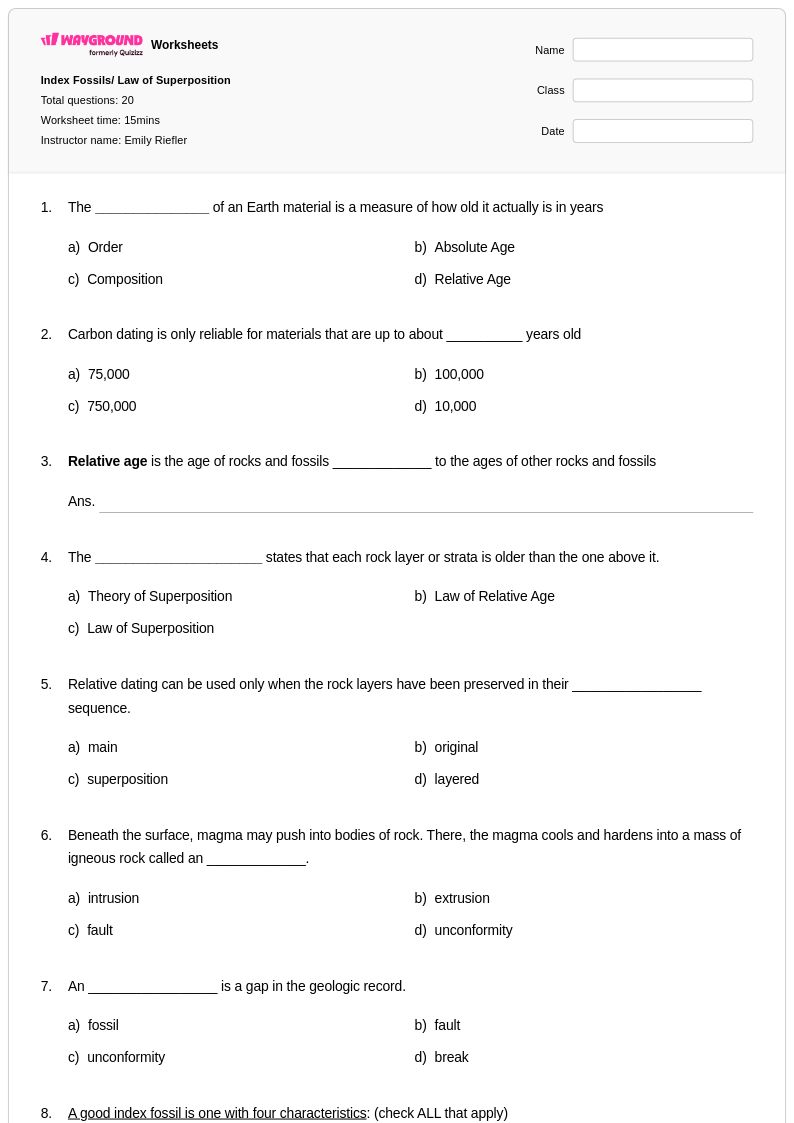
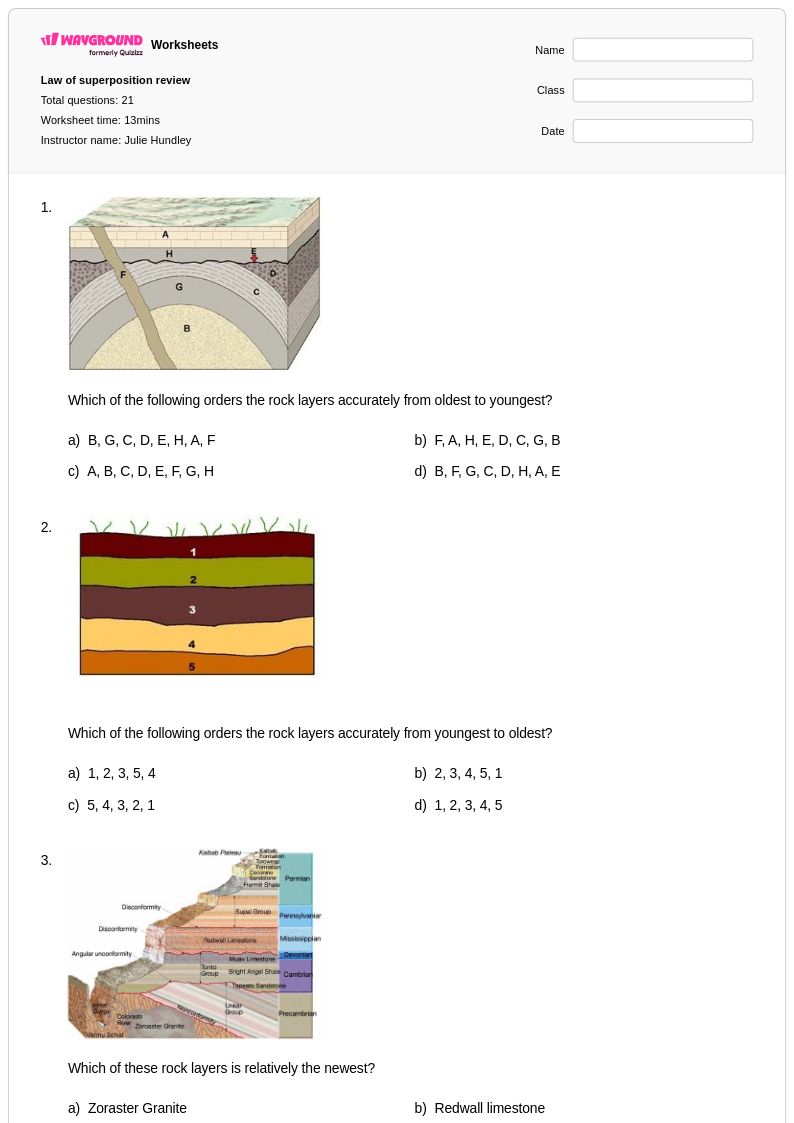
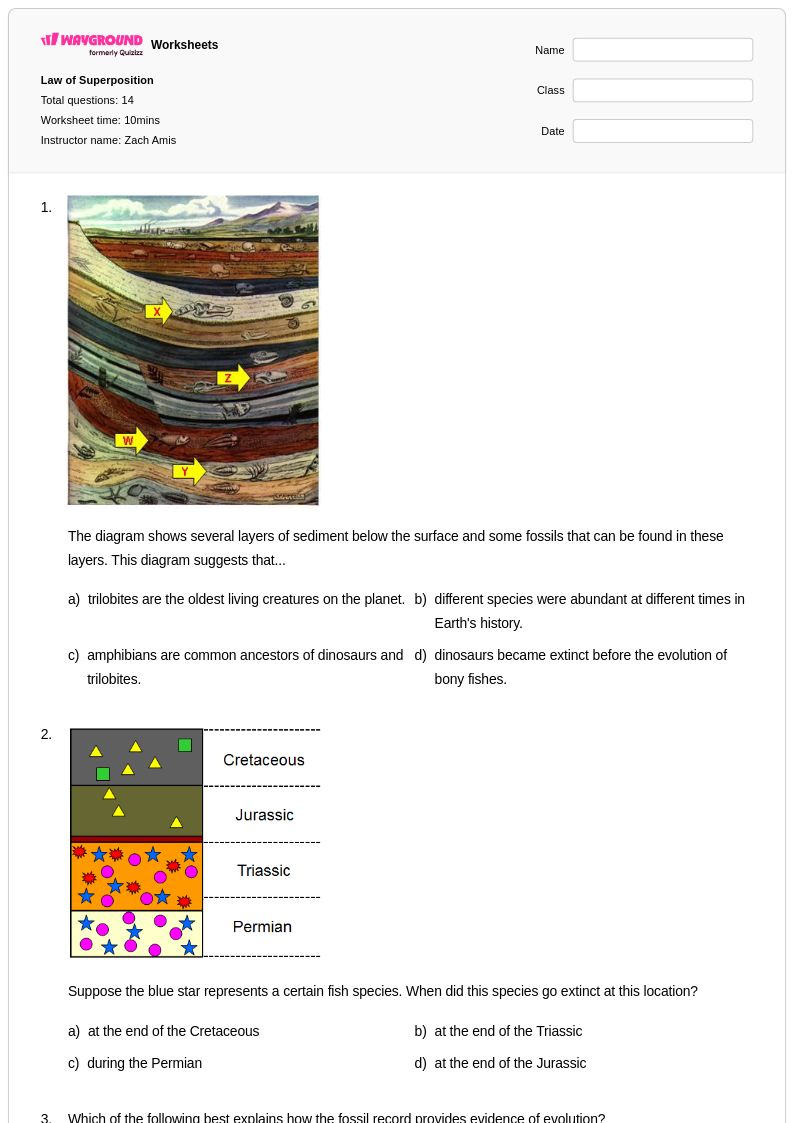
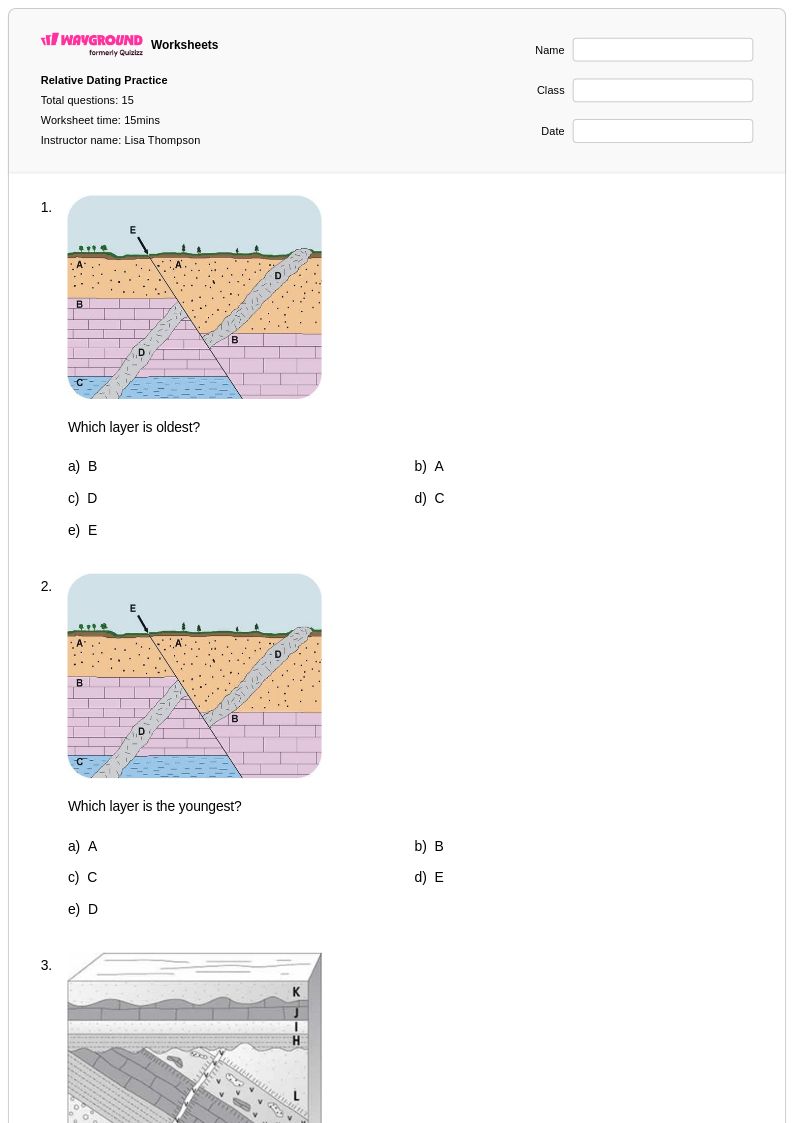
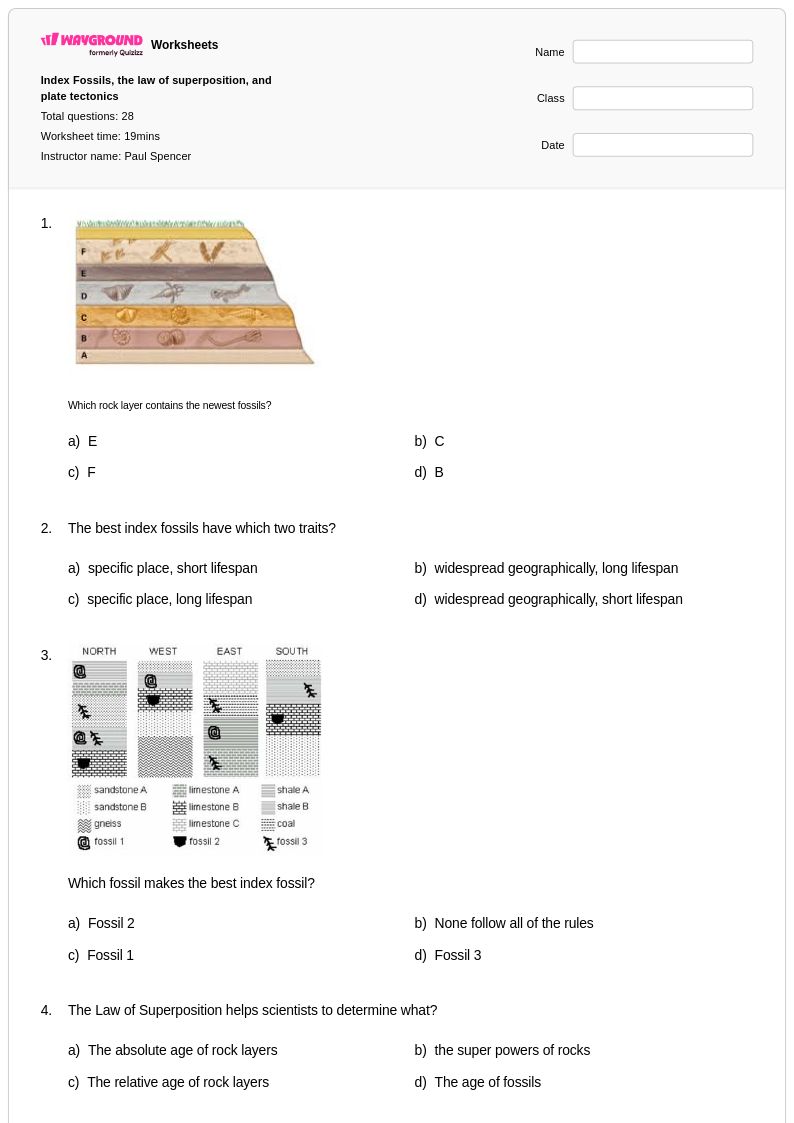
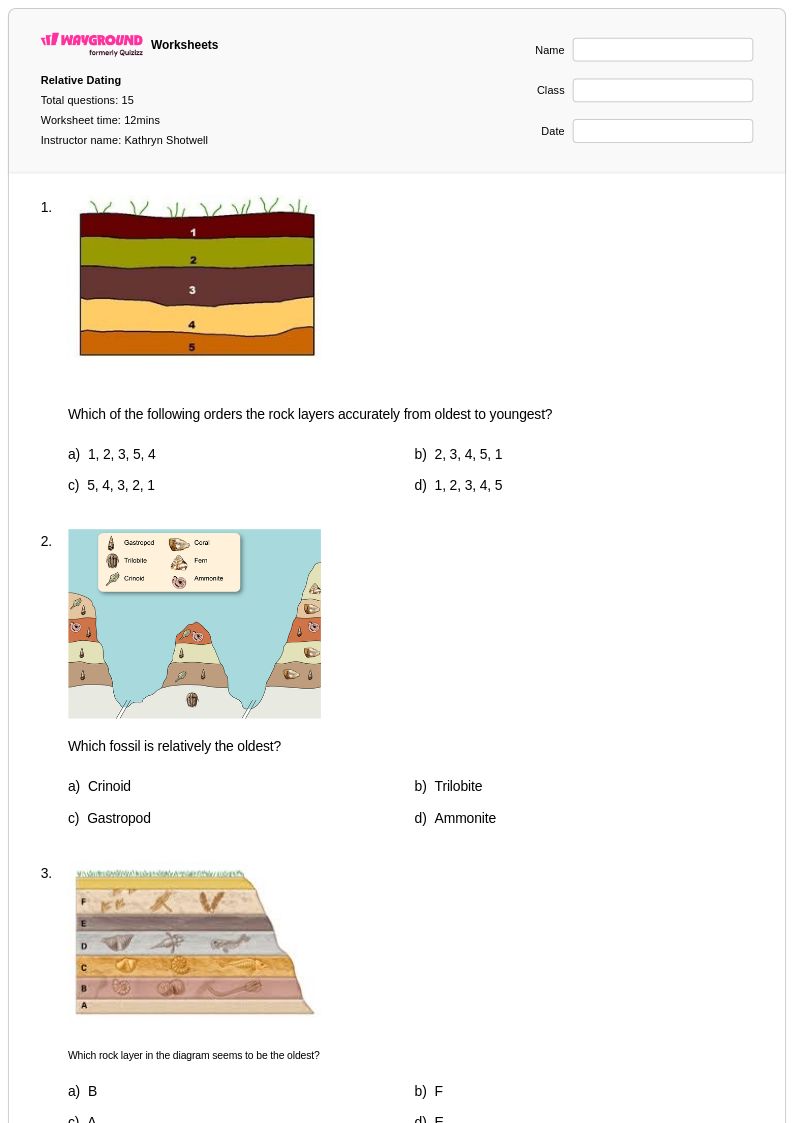
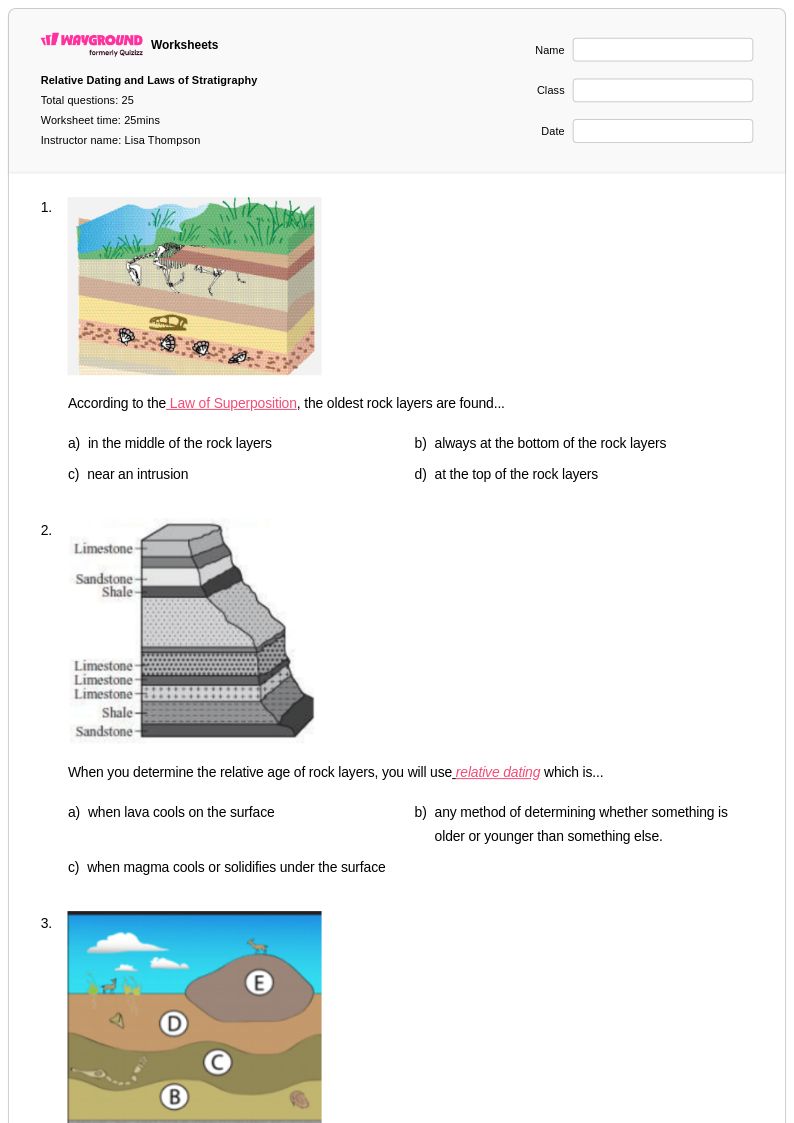
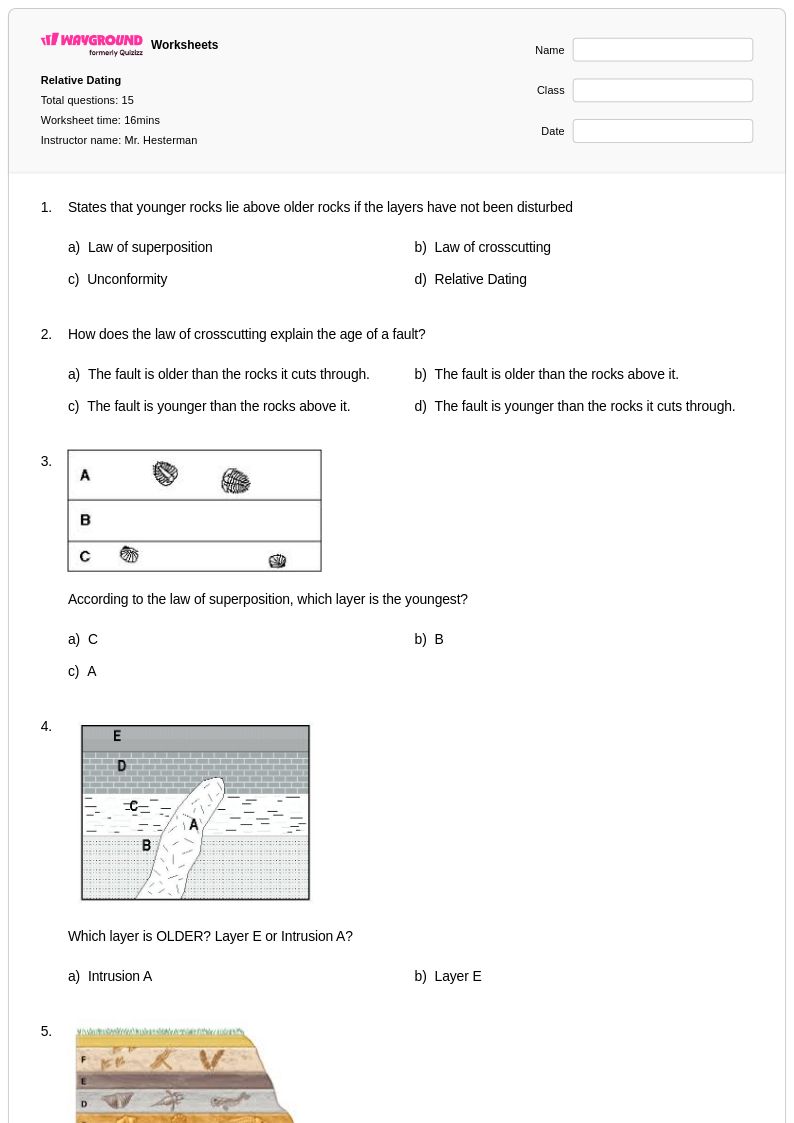
Law of Superposition worksheets for Class 8 students available through Wayground provide comprehensive practice with this fundamental geological principle that states younger rock layers are deposited on top of older layers in undisturbed sedimentary sequences. These expertly crafted worksheets strengthen critical thinking skills as students analyze rock layer diagrams, determine relative ages of geological formations, and apply superposition concepts to real-world scenarios including fossil dating and stratigraphic interpretation. The collection includes diverse practice problems ranging from basic layer identification to complex cross-cutting relationships, with each worksheet featuring detailed answer keys and available as free printables in convenient pdf format to support both classroom instruction and independent study.
Wayground's extensive library draws from millions of teacher-created resources to offer educators an unparalleled selection of Law of Superposition materials that align with Class 8 Earth and Space Science standards. Teachers benefit from powerful search and filtering tools that allow them to quickly locate worksheets matching specific learning objectives, difficulty levels, and instructional needs. The platform's differentiation capabilities enable seamless customization of content for diverse learners, while flexible formatting options provide both printable pdf versions for traditional paper-based activities and digital formats for technology-integrated lessons. This comprehensive approach supports effective lesson planning while providing targeted resources for remediation, enrichment, and systematic skill practice that helps students master the foundational concepts of geological time and rock layer analysis.
FAQs
How do I teach the Law of Superposition to middle or high school students?
Start by having students examine physical or illustrated cross-sections of undisturbed sedimentary rock layers, asking them to rank the layers from oldest to youngest before introducing the formal principle. Once students grasp that lower layers were deposited first, move to more complex diagrams that include faults, intrusions, or unconformities to challenge their reasoning. Anchoring the concept in a visual, hands-on sequence before adding terminology helps students build genuine understanding rather than memorizing a rule.
What exercises help students practice the Law of Superposition?
The most effective practice involves interpreting labeled cross-sectional diagrams of rock strata and ordering geological events from oldest to most recent. Students benefit from problems that require them to justify their sequencing decisions in writing, reinforcing the logic behind the principle. Practice sets that progressively introduce complicating features such as erosion surfaces, igneous intrusions, and tilted layers push students to apply the Law of Superposition rather than rely on simple pattern recognition.
What mistakes do students commonly make when applying the Law of Superposition?
The most common error is assuming the Law of Superposition applies universally, even when rock layers have been folded, overturned, or disturbed by tectonic activity. Students also frequently confuse relative dating with absolute dating, believing that identifying an older layer tells them how many years ago it formed. A targeted misconception to address early is the idea that the topmost layer is always the youngest, which breaks down as soon as students encounter inverted or disturbed sequences.
How does the Law of Superposition relate to relative dating and geologic time?
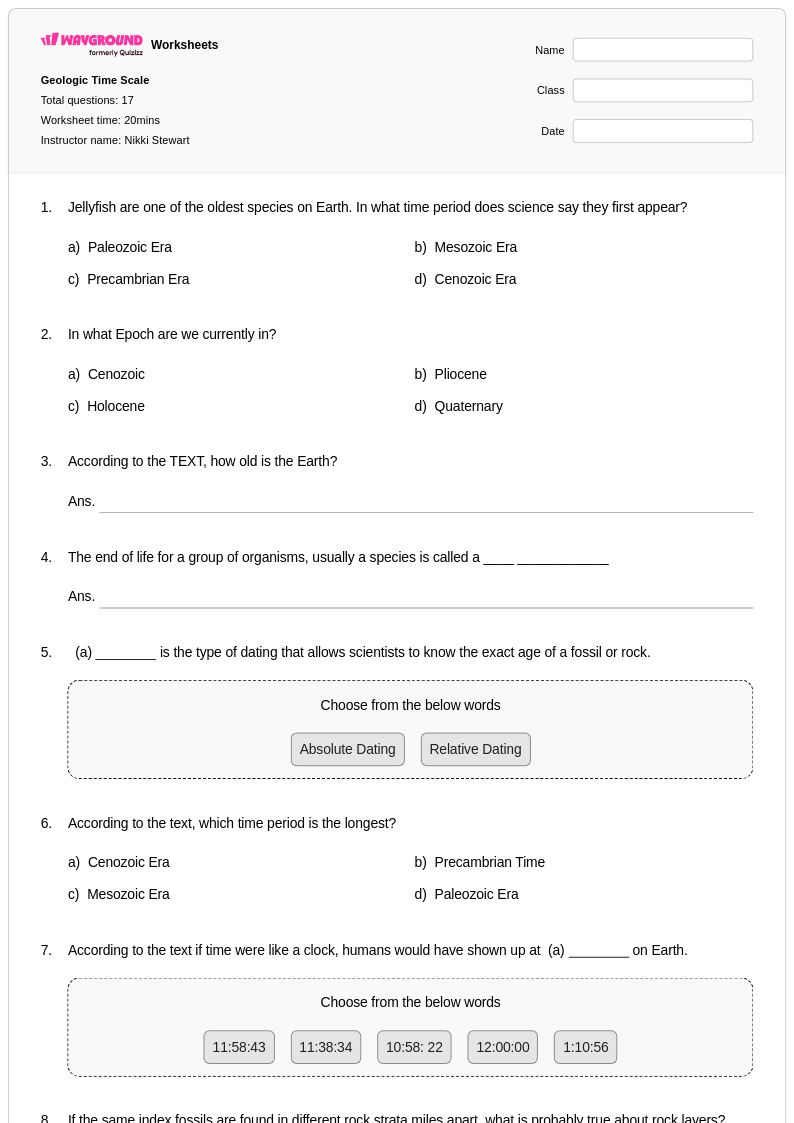
The Law of Superposition is the foundational principle behind relative dating, the method geologists use to determine the sequence of geological events without assigning numerical ages. By establishing that deeper, undisturbed layers are older than shallower ones, it allows scientists to reconstruct the chronological order of rock formation, erosion, and deposition. Teaching this principle builds the conceptual scaffolding students need before tackling index fossils, the geologic time scale, and eventually radiometric dating methods.
How do I use Law of Superposition worksheets from Wayground in my classroom?
Wayground's Law of Superposition worksheets are available as printable PDFs for traditional classroom use and in digital formats for technology-integrated or remote learning environments, and you can also host them as a quiz directly on Wayground. The worksheets include answer keys, making them suitable for independent practice, homework assignments, or self-paced review stations. Wayground also allows teachers to apply student-level accommodations such as read aloud, extended time, and reduced answer choices, so the same resource can be appropriately differentiated across learners with varying needs.
How can I differentiate Law of Superposition instruction for students at different skill levels?
For foundational learners, begin with simple two- or three-layer diagrams where all strata are horizontal and undisturbed, focusing solely on the core principle before adding complexity. Advanced students benefit from multi-event scenarios that require them to sequence faulting, intrusion, and erosion in addition to deposition. On Wayground, teachers can apply accommodations such as reduced answer choices for students who need additional support, or extended time for those who require it, without signaling any difference to the rest of the class.