Free Printable Natural Events Worksheets for Class 8
Explore Wayground's free Class 8 natural events worksheets and printables that help students understand earthquakes, volcanoes, weather patterns, and other Earth phenomena through engaging practice problems with complete answer keys.
Explore printable Natural Events worksheets for Class 8
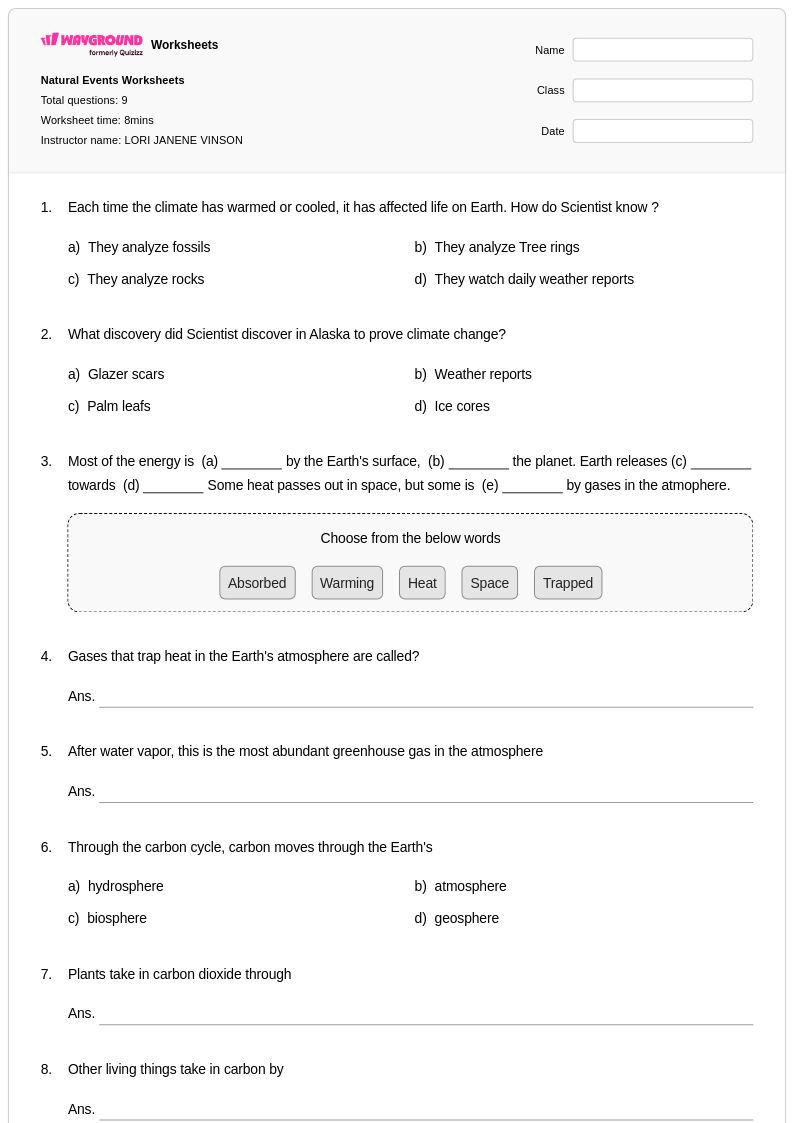
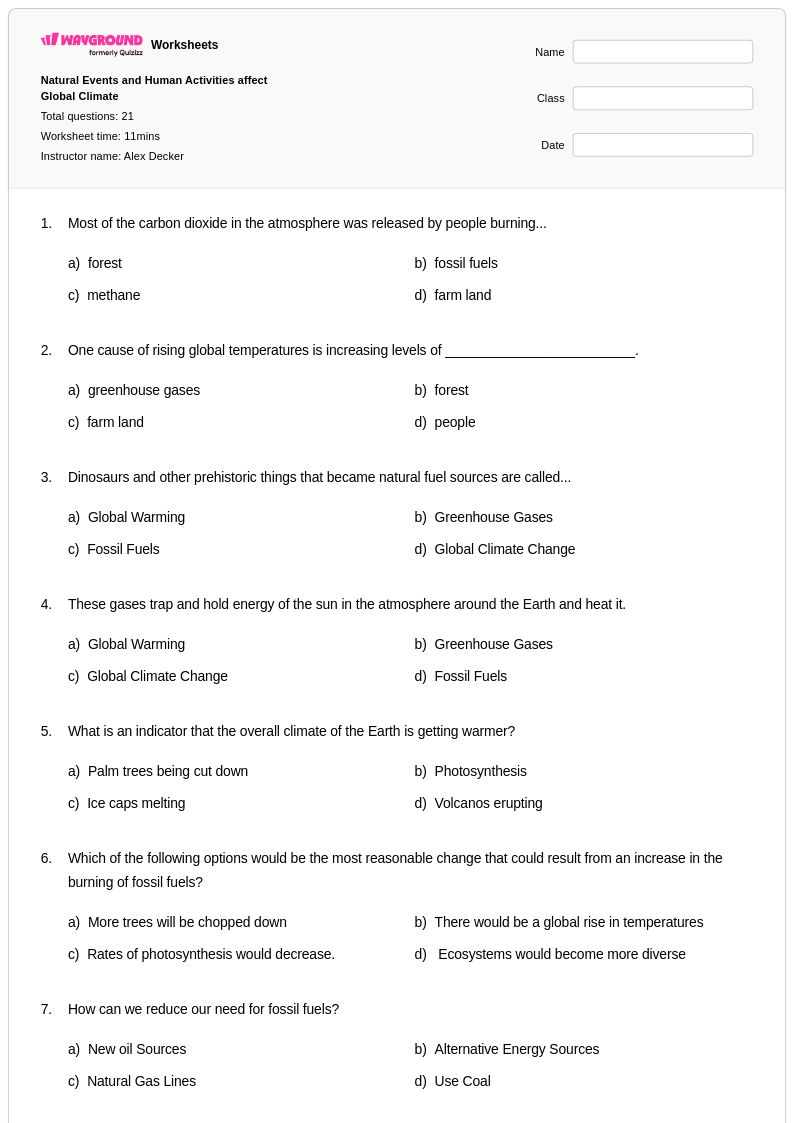
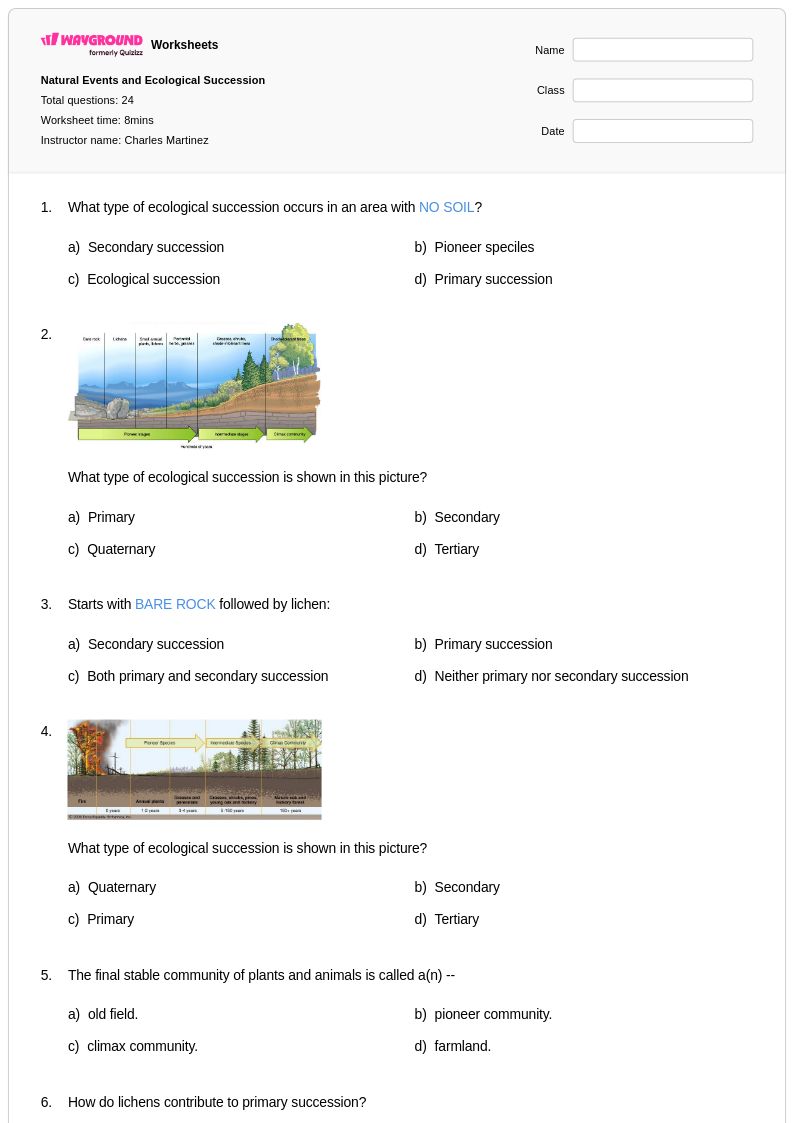
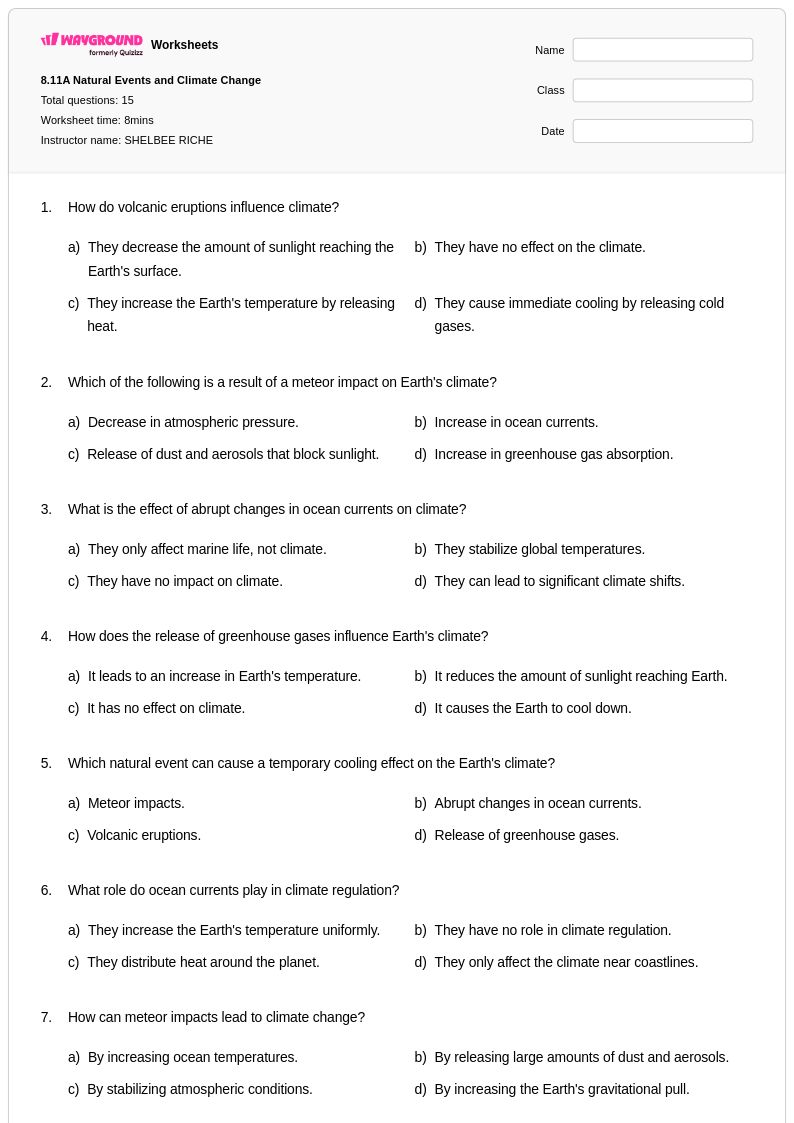
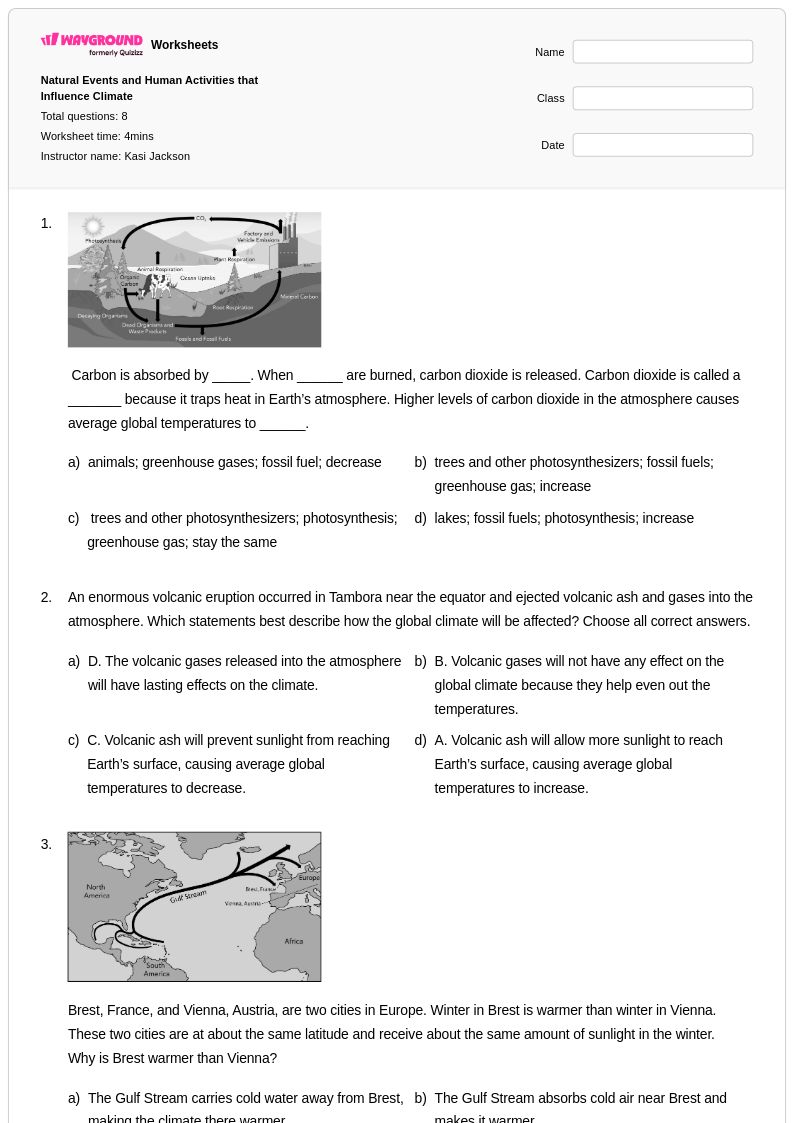
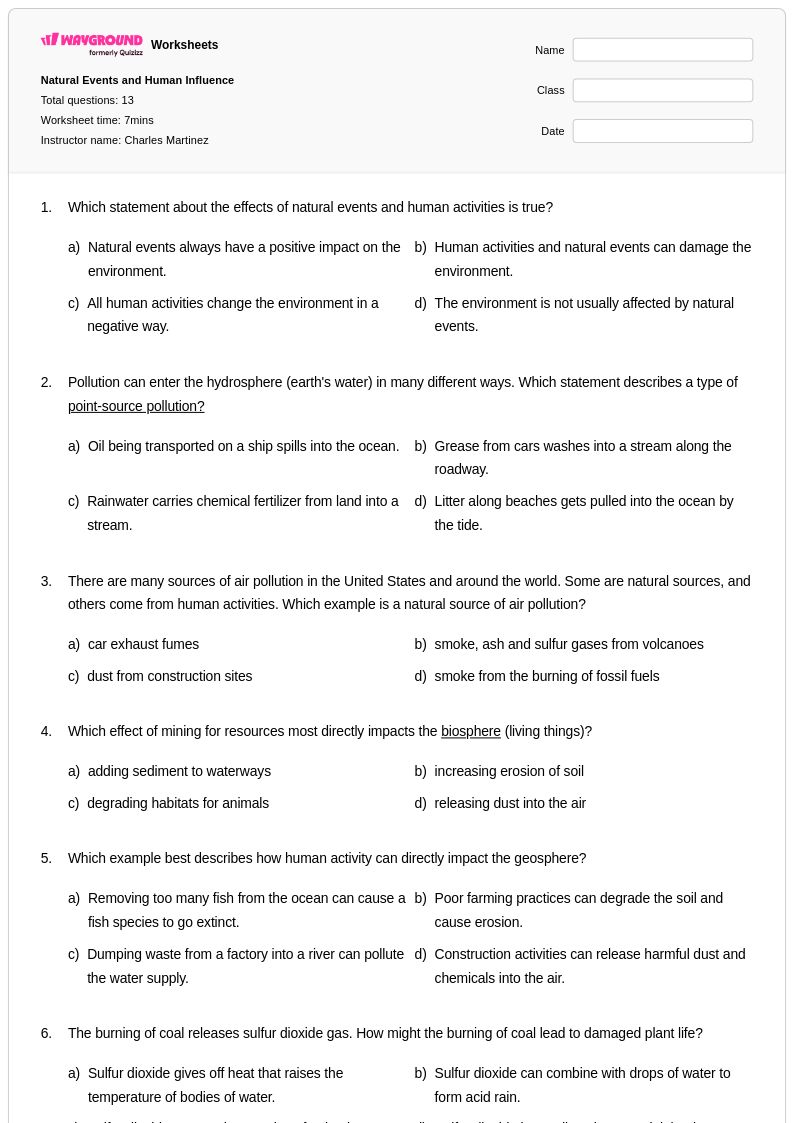
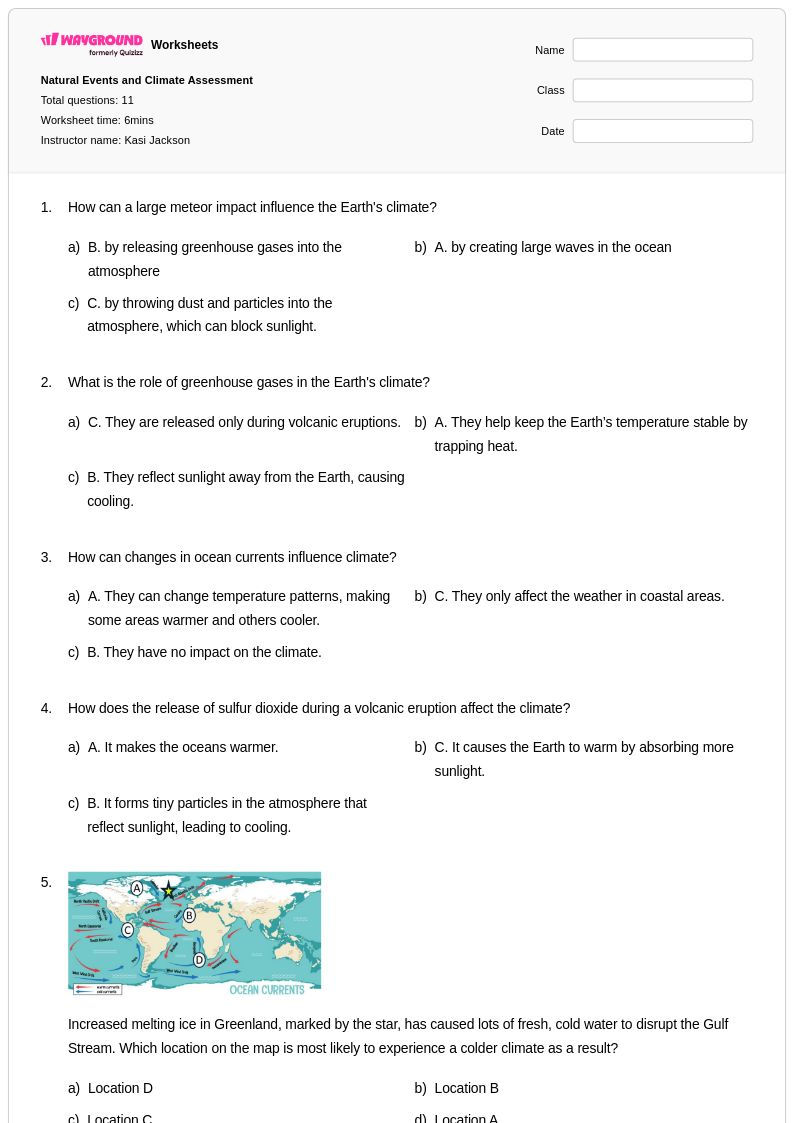
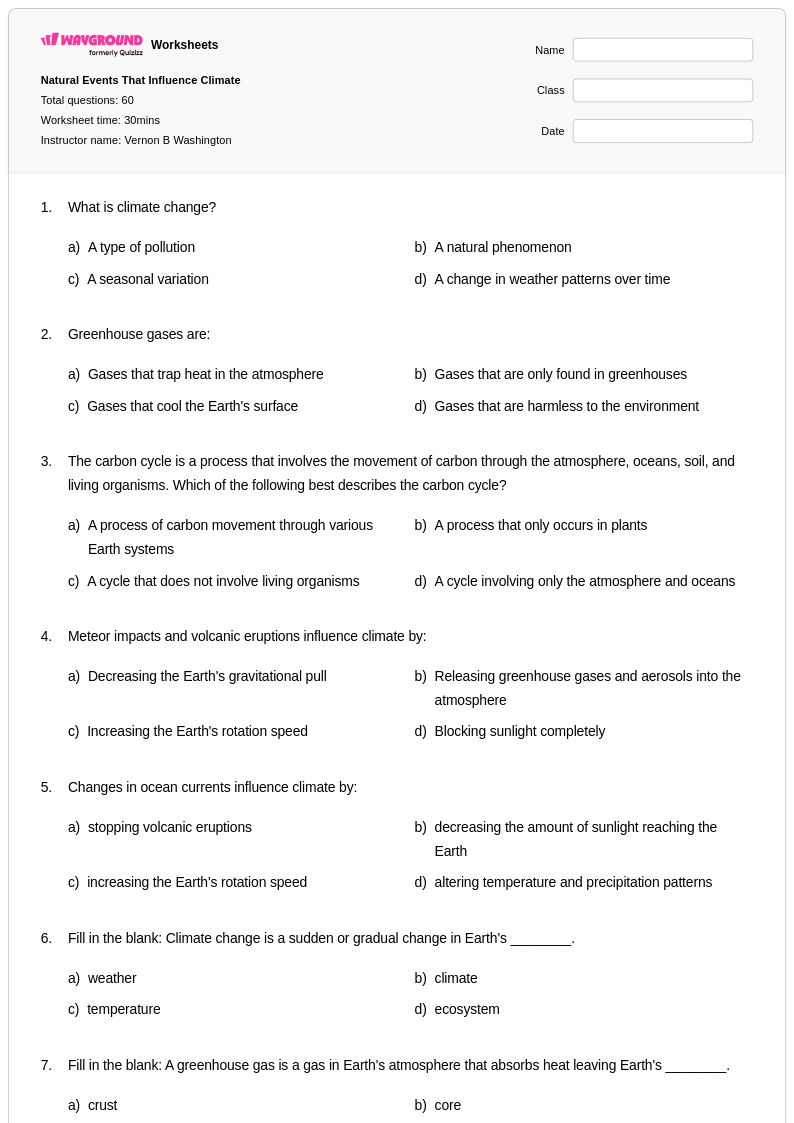
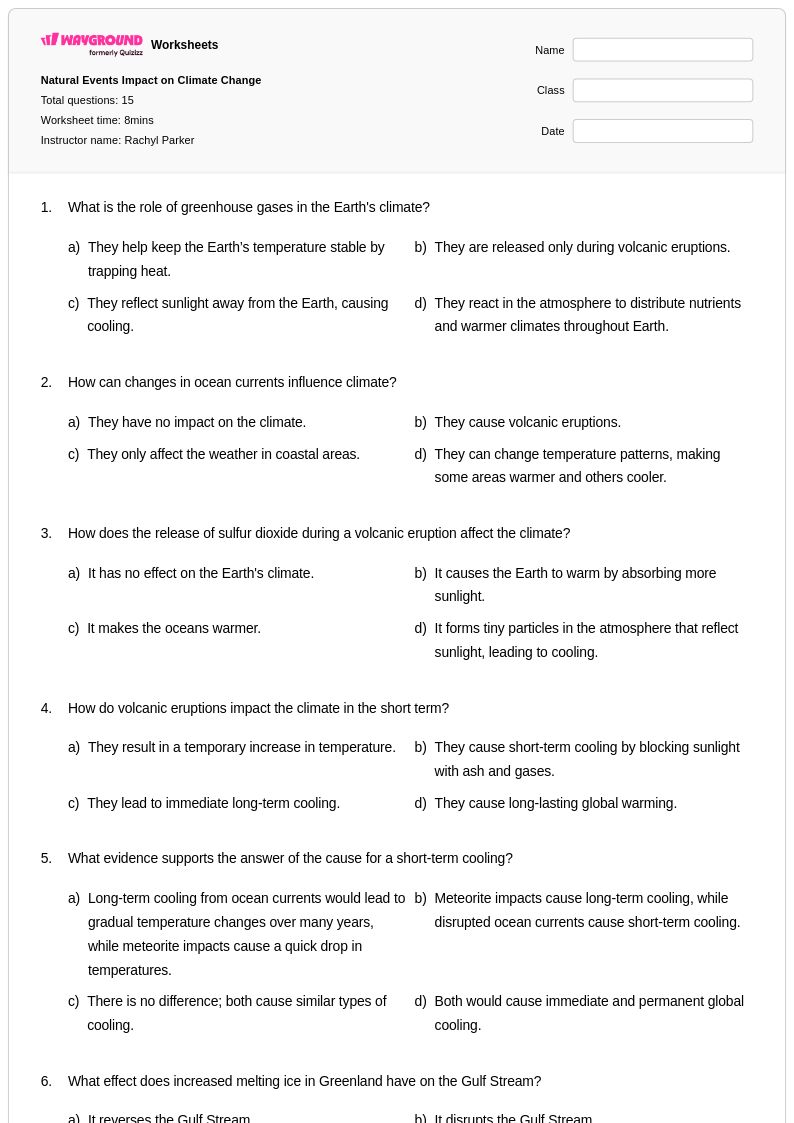
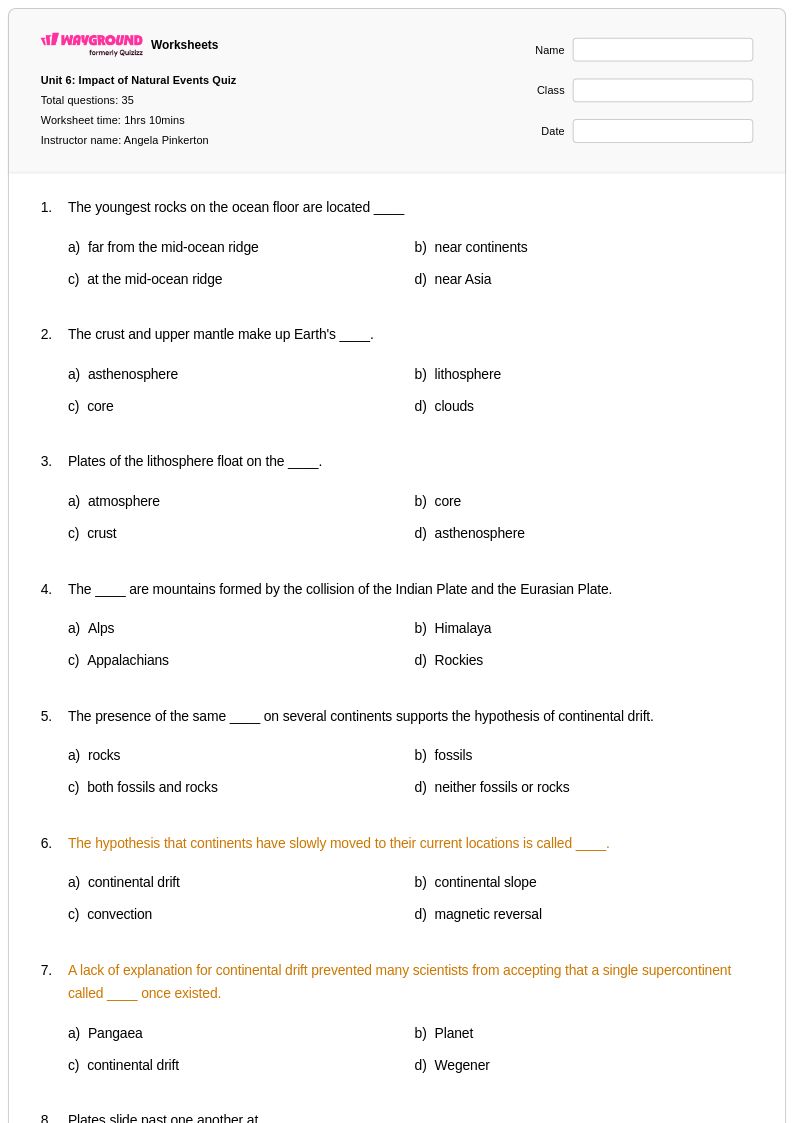
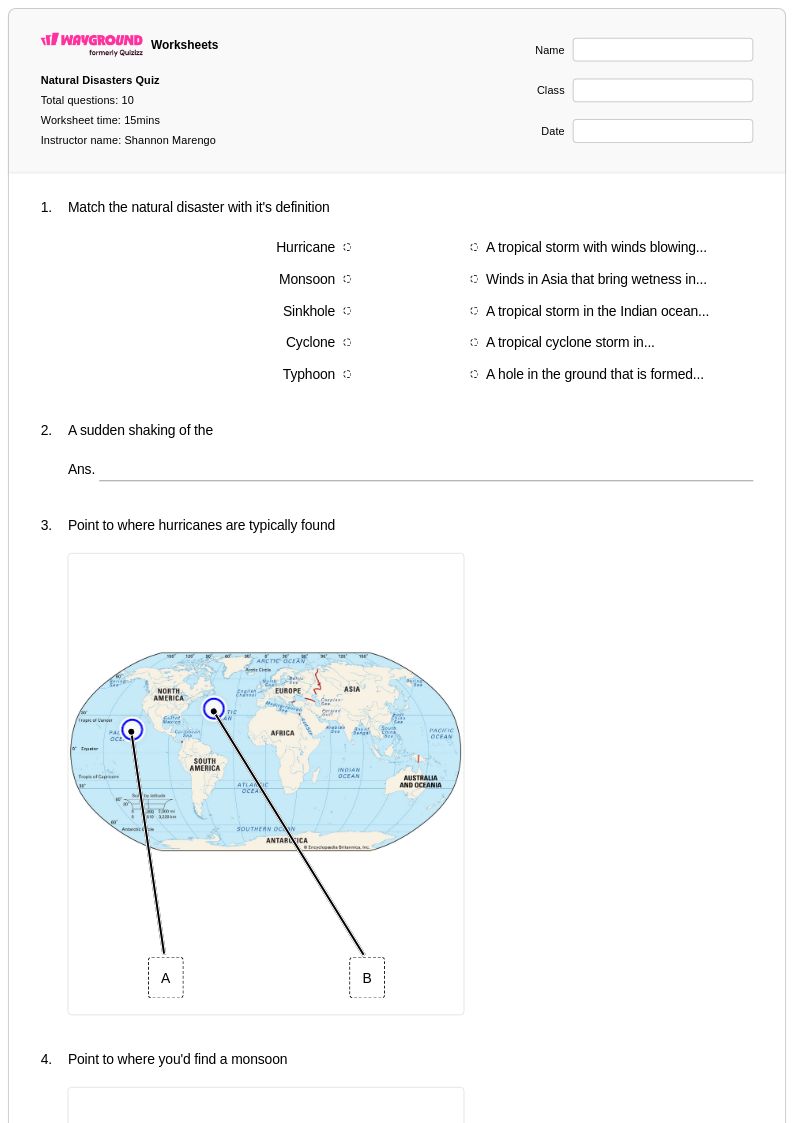
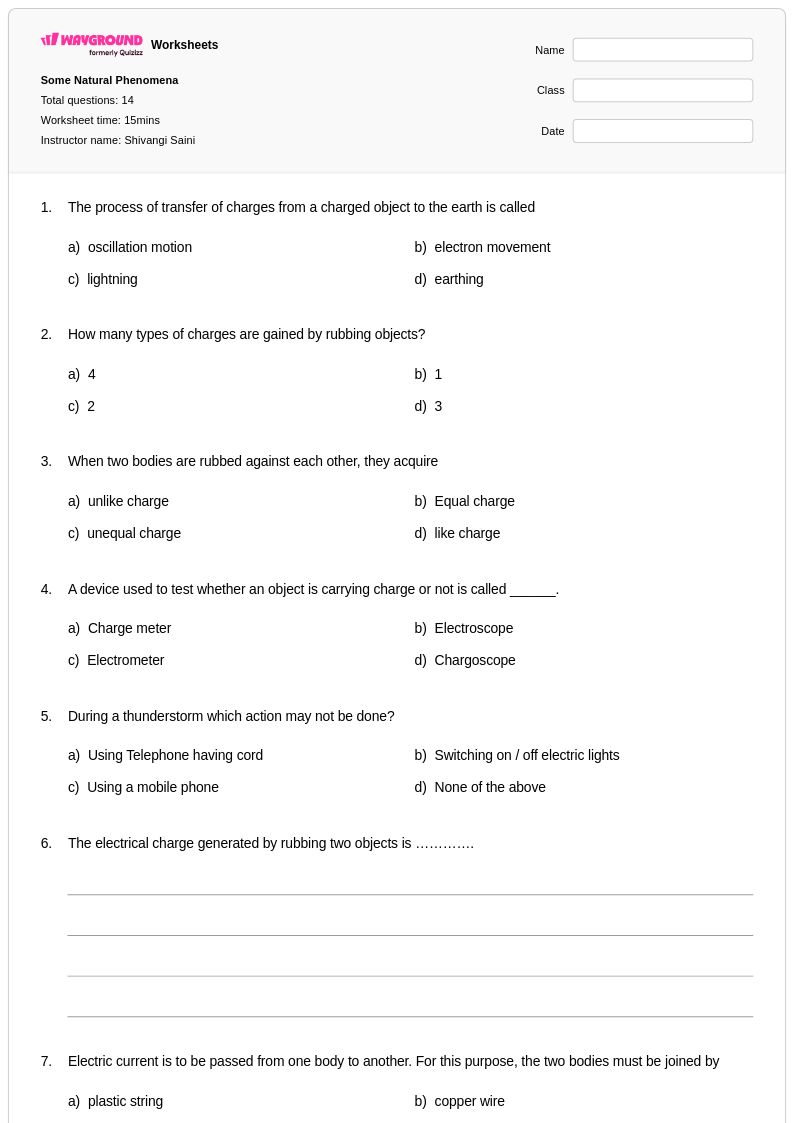
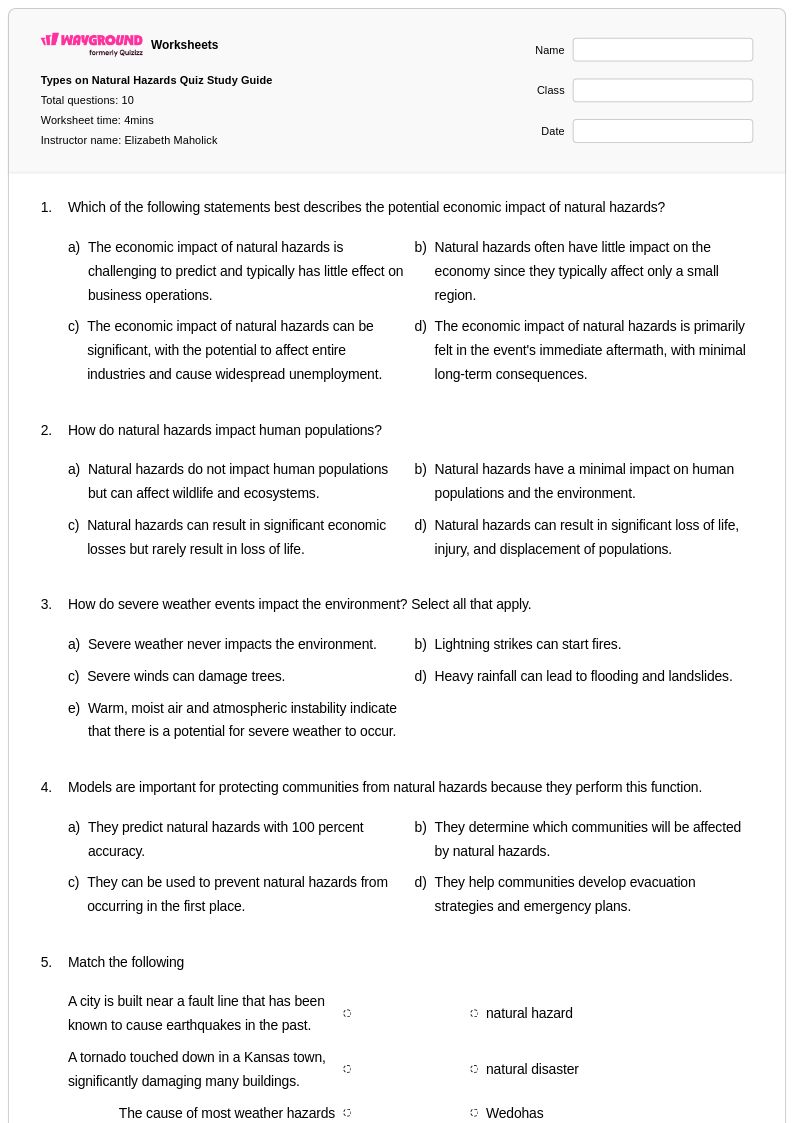
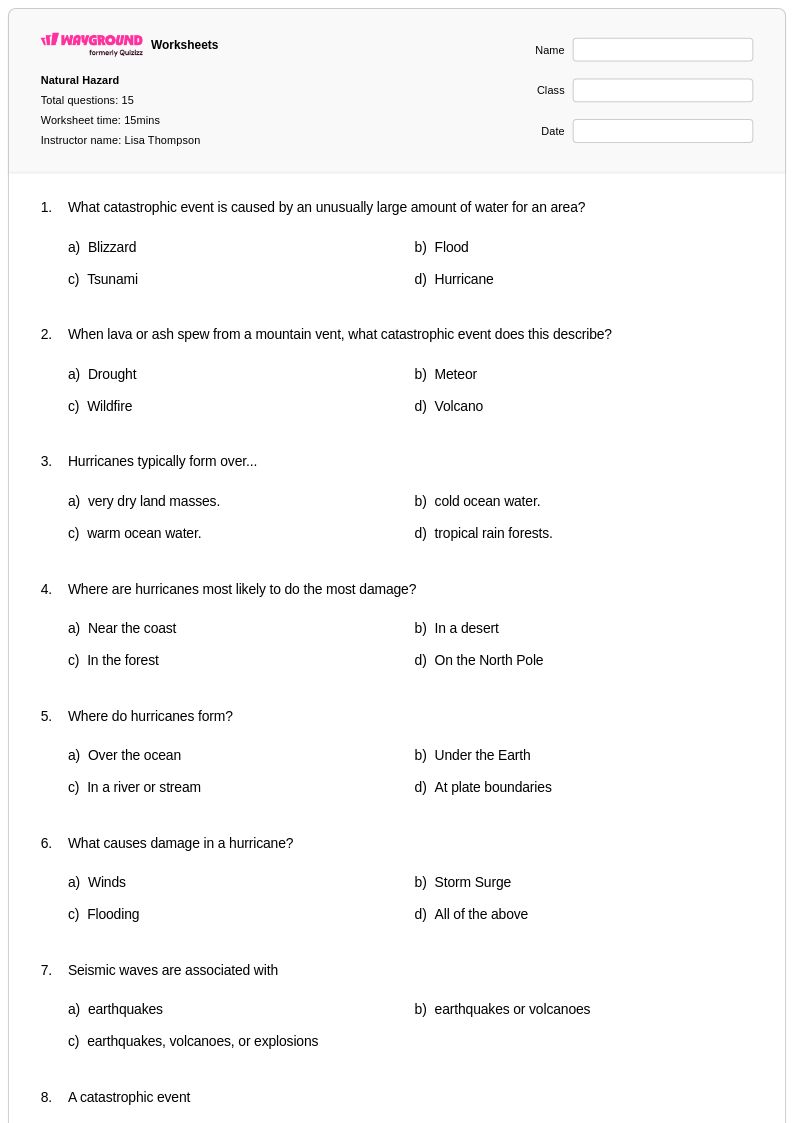
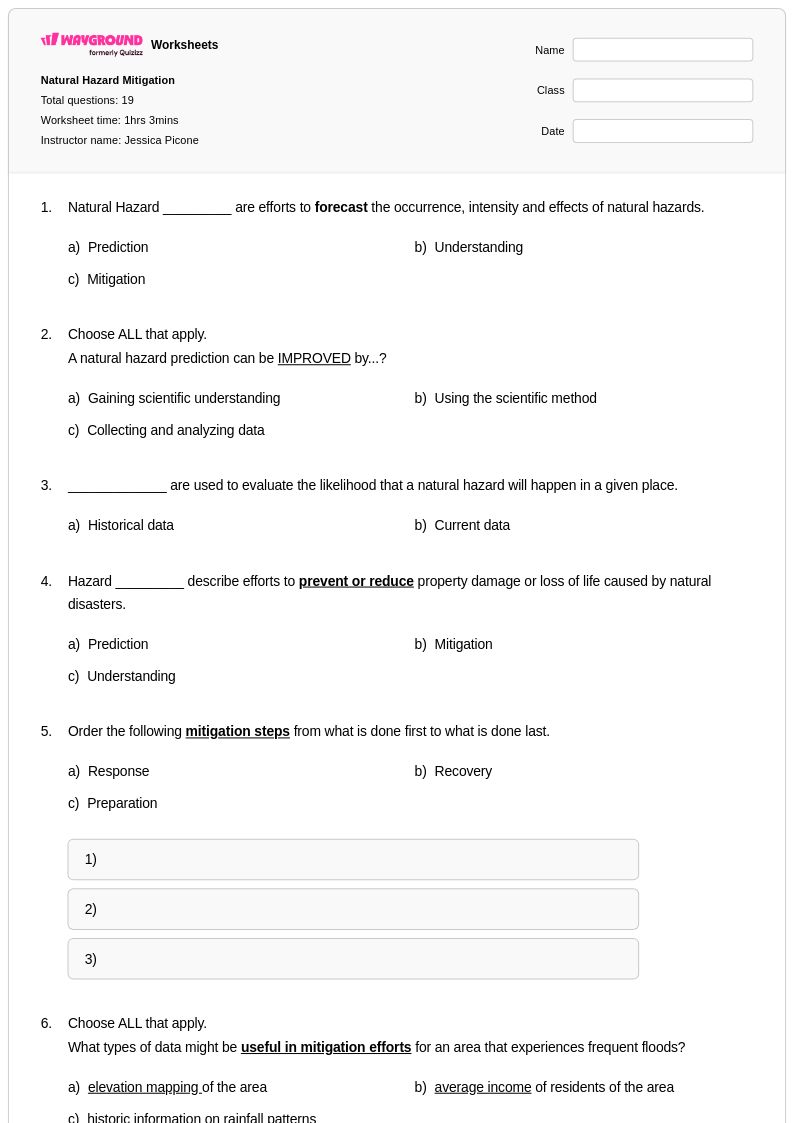
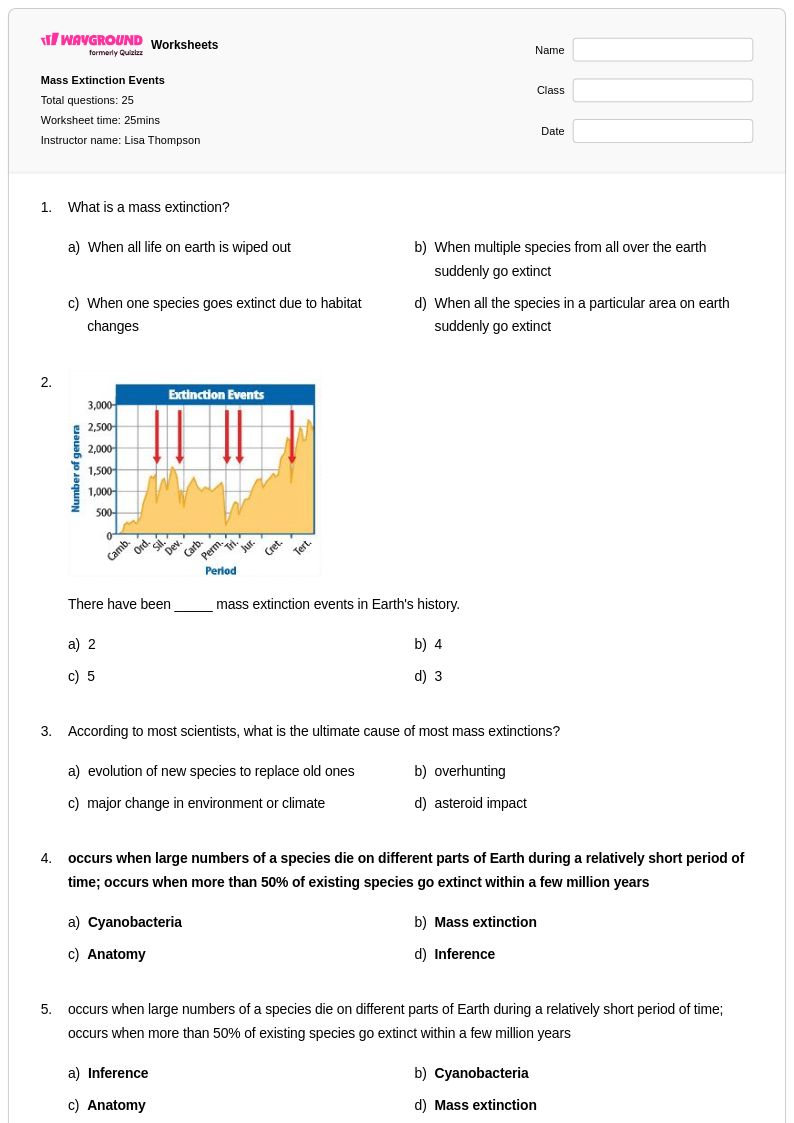
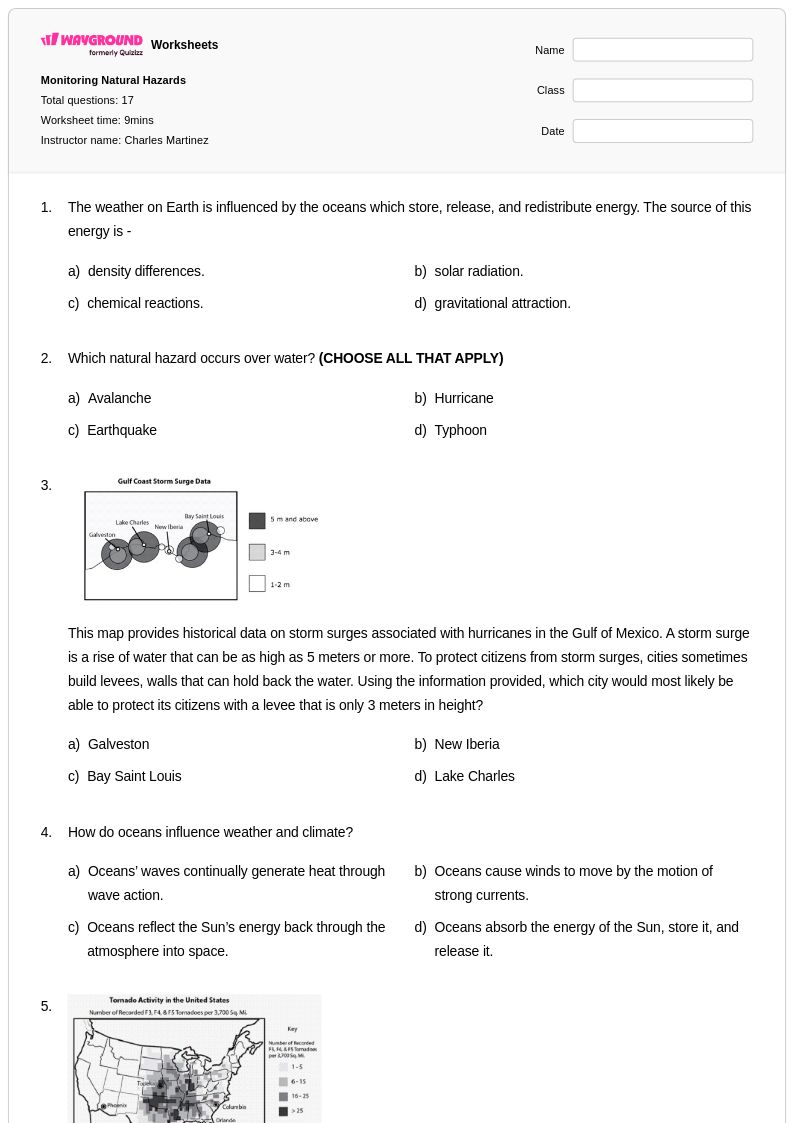
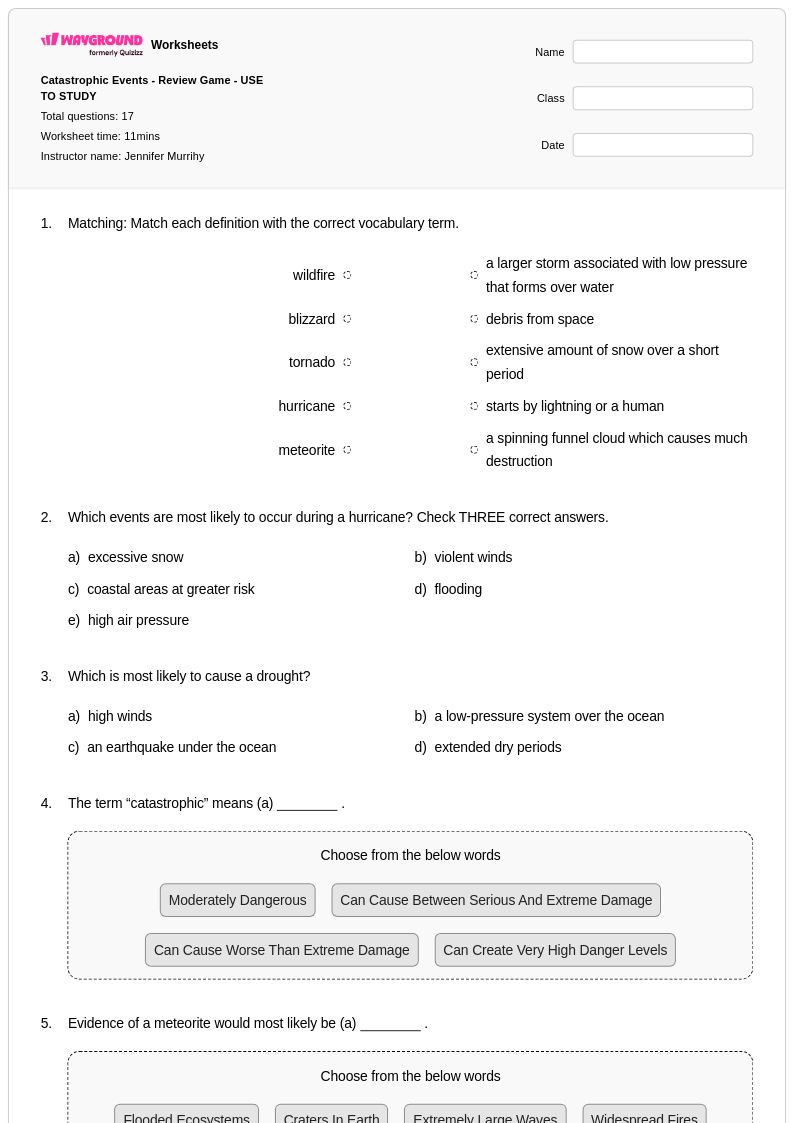
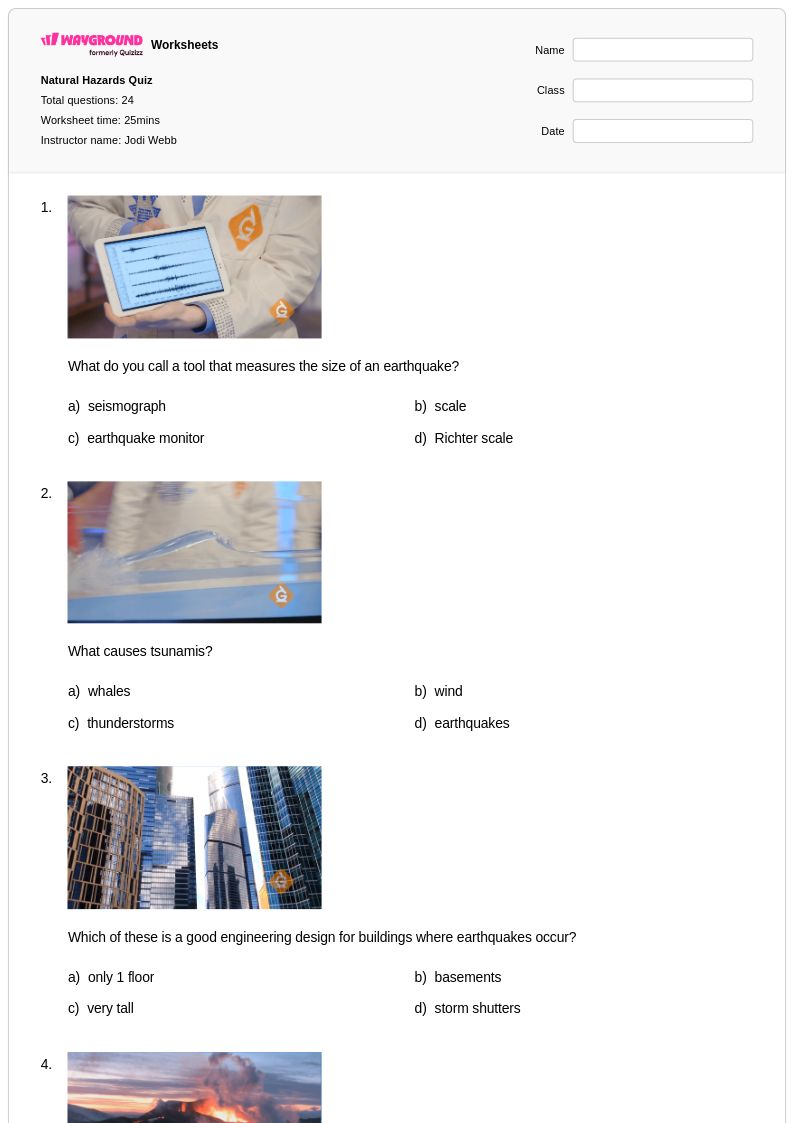
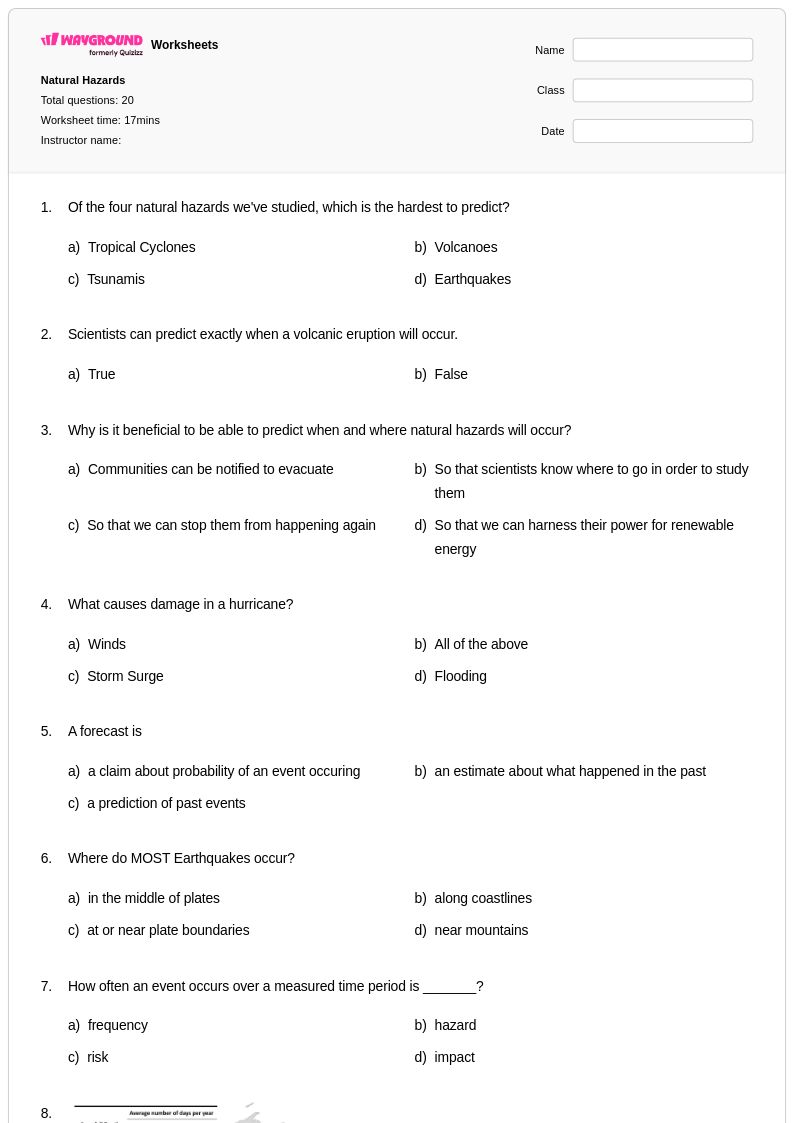
Natural events worksheets for Class 8 students available through Wayground (formerly Quizizz) provide comprehensive coverage of Earth's dynamic processes and space phenomena that shape our planet and universe. These carefully designed educational resources help students develop critical thinking skills while exploring earthquakes, volcanic eruptions, severe weather patterns, asteroid impacts, and other significant geological and astronomical events. Each worksheet collection includes detailed answer keys and practice problems that guide students through understanding the causes, effects, and patterns of natural disasters and celestial occurrences. The free printables incorporate real-world scenarios and data analysis exercises that strengthen students' ability to interpret scientific evidence, make predictions about natural phenomena, and understand the interconnected systems that drive Earth's processes. These pdf resources emphasize hands-on learning through case studies of historical events, enabling students to connect theoretical knowledge with observable consequences in their environment.
Wayground's extensive library contains millions of teacher-created natural events worksheets specifically aligned with Class 8 Earth and Space Science standards, offering educators powerful tools for differentiated instruction and flexible lesson planning. The platform's advanced search and filtering capabilities allow teachers to quickly locate resources that match their specific curriculum requirements, whether focusing on seismic activity, meteorological events, or space-based phenomena. These digitally accessible and printable materials support various instructional approaches, from individual skill practice and homework assignments to collaborative classroom investigations and assessment preparation. Teachers can seamlessly customize worksheet content to address diverse learning needs, providing targeted remediation for struggling students while offering enrichment opportunities for advanced learners. The comprehensive nature of these resources enables educators to create cohesive learning experiences that build students' scientific literacy and prepare them to understand the complex natural forces that continue to shape Earth's surface and influence life on our planet.
FAQs
How do I teach natural events like earthquakes and volcanoes to students?
Teaching natural events effectively means grounding abstract Earth science concepts in cause-and-effect reasoning. Start by helping students understand the underlying systems — tectonic plates, atmospheric pressure, the water cycle — before introducing specific events like earthquakes, hurricanes, or volcanic eruptions. Connecting each phenomenon to real-world impacts, including environmental consequences and human response, builds both scientific literacy and critical thinking. Structured worksheets that walk students through data interpretation and scenario analysis are especially useful for reinforcing these connections after direct instruction.
What kinds of practice exercises help students understand natural disasters and Earth phenomena?
Effective practice for natural events includes cause-and-effect analysis, where students trace how a triggering condition leads to a specific event and its aftermath. Identification exercises build foundational vocabulary, while more complex problems ask students to predict outcomes or evaluate the environmental and human impacts of events like floods, tornadoes, or solar flares. Mixing basic recall with applied reasoning ensures students develop both content knowledge and the ability to think scientifically about Earth's systems.
What misconceptions do students commonly have about natural events like hurricanes or earthquakes?
A common misconception is that natural disasters are random or unpredictable, when in fact most are driven by identifiable Earth system processes. Students often confuse the causes of different events — for example, conflating the atmospheric conditions that produce hurricanes with those that generate tornadoes. Another frequent error is underestimating the role of human geography in determining disaster impact, treating natural events as purely geological or meteorological rather than understanding how vulnerability and preparedness shape outcomes. Worksheets that include scenario-based questions and data interpretation can surface and correct these errors directly.
How can I use natural events worksheets to support different skill levels in my classroom?
Natural events worksheets that range from basic identification to complex predictive scenarios allow teachers to assign tasks that match each student's readiness level. For struggling learners, exercises focused on vocabulary and simple cause-and-effect are a strong starting point, while advanced students benefit from problems requiring data analysis and impact evaluation. On Wayground, teachers can also apply accommodations at the individual student level — such as reduced answer choices to lower cognitive load or read aloud support for students who need it — without disrupting the experience for the rest of the class.
How do I use Wayground's natural events worksheets in my class?
Wayground's natural events worksheets are available as printable PDFs for traditional classroom use and in digital formats for technology-integrated environments, giving teachers flexibility to assign them as in-class practice, homework, or independent study. Digital worksheets can also be hosted as a quiz directly on Wayground, which is useful for quick formative assessment. Each worksheet includes a complete answer key, so grading and review are straightforward. Teachers can use Wayground's search and filtering tools to find materials aligned to specific standards or adjust difficulty to meet the needs of different learners.
What natural events topics are typically covered in K-12 Earth science curricula?
K-12 Earth science curricula typically cover a broad range of natural events, including geological events like earthquakes and volcanic eruptions, meteorological events like hurricanes, tornadoes, and floods, hydrological events like droughts, and astronomical events like meteor impacts and solar flares. These topics are usually introduced conceptually in middle school and revisited with greater analytical depth in high school, with increasing emphasis on Earth systems thinking, data interpretation, and the relationship between natural hazards and human society.