Free Printable Seafloor Spreading Worksheets for Class 8
Class 8 seafloor spreading worksheets from Wayground offer comprehensive printables and practice problems that help students understand how oceanic crust forms at mid-ocean ridges, complete with answer keys and free PDF downloads.
Explore printable Seafloor Spreading worksheets for Class 8
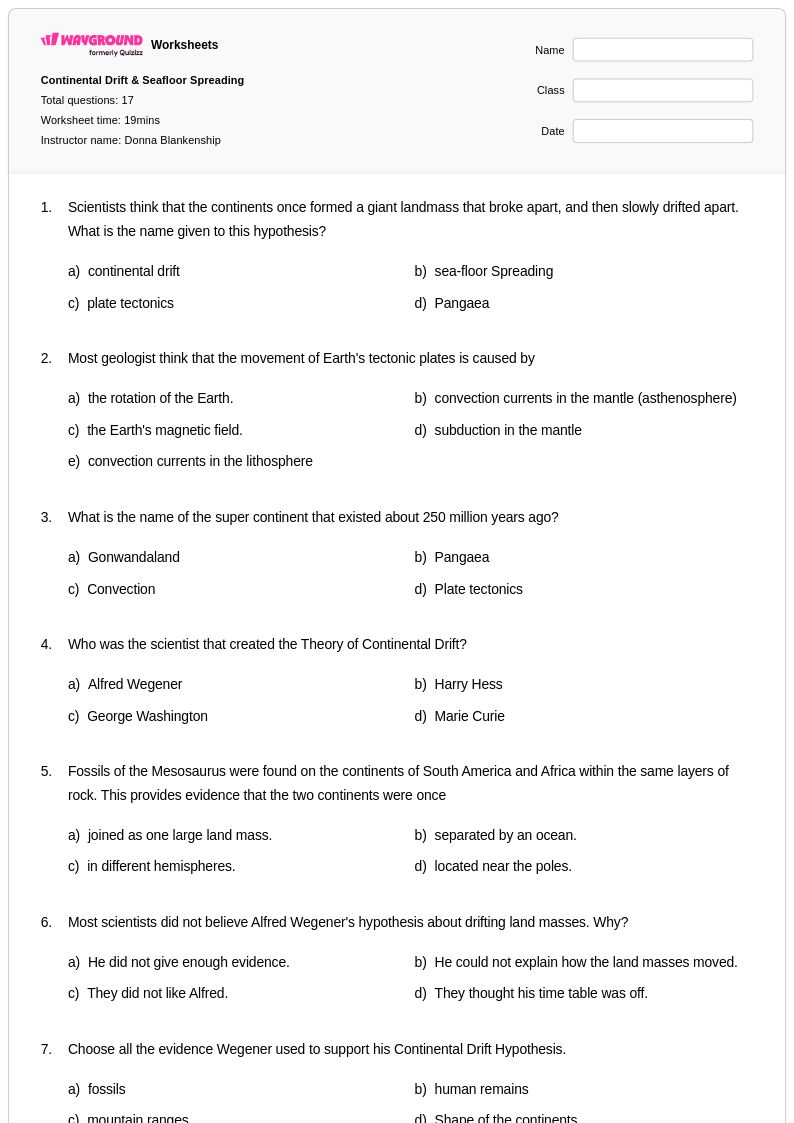
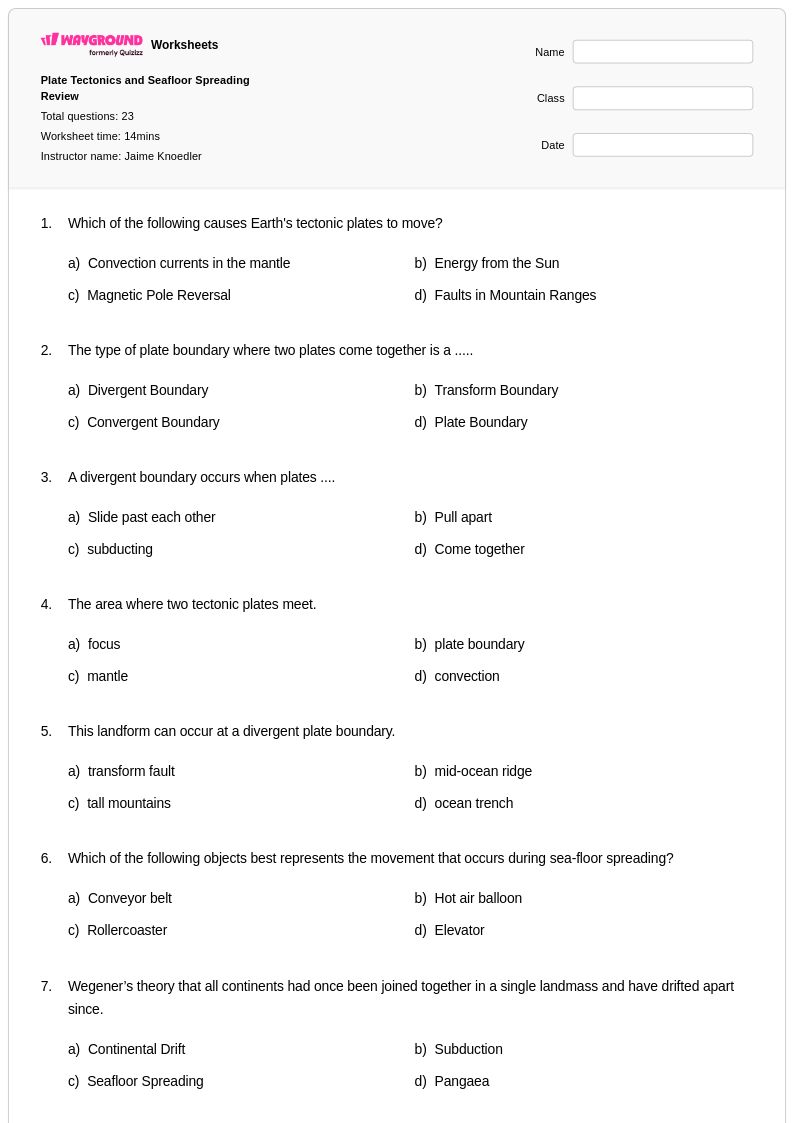
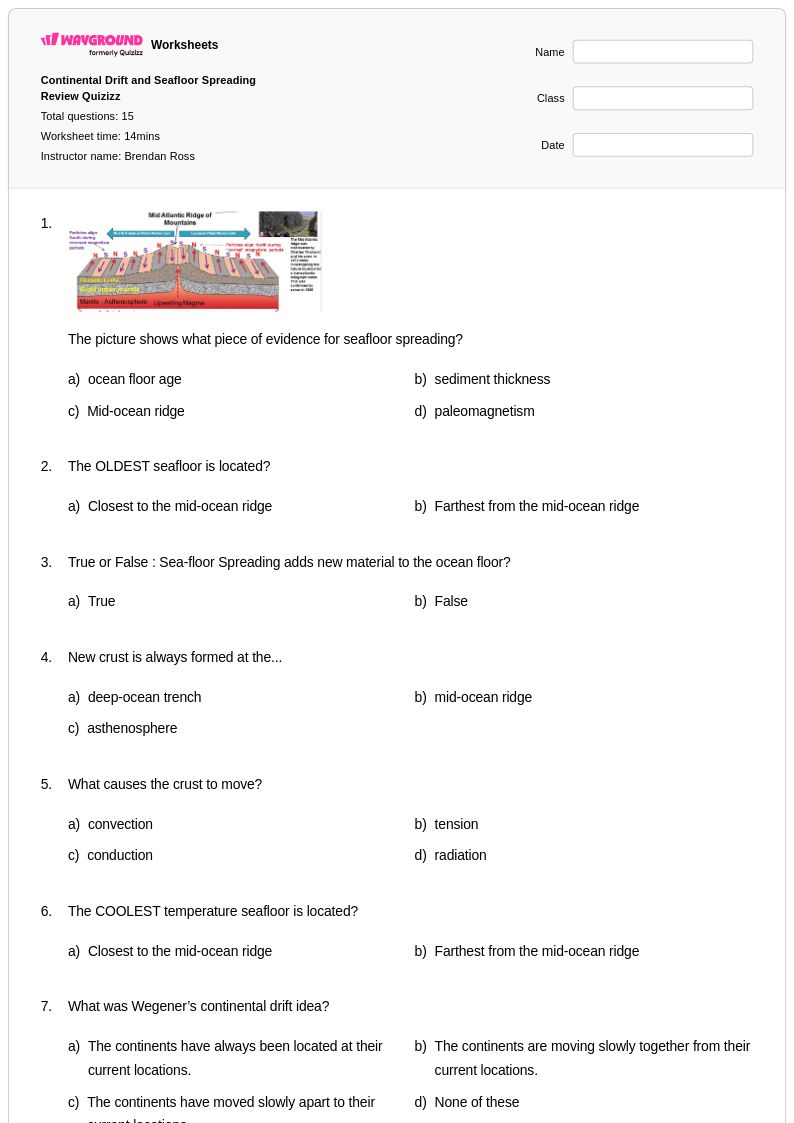
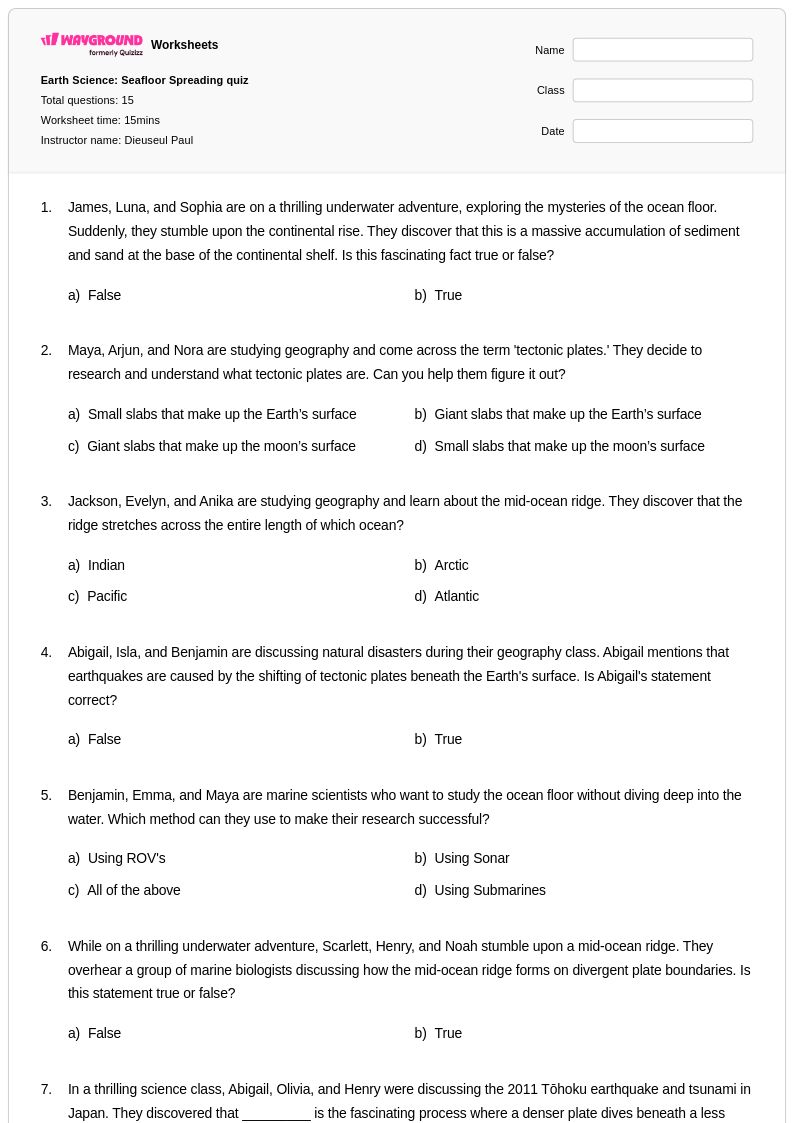
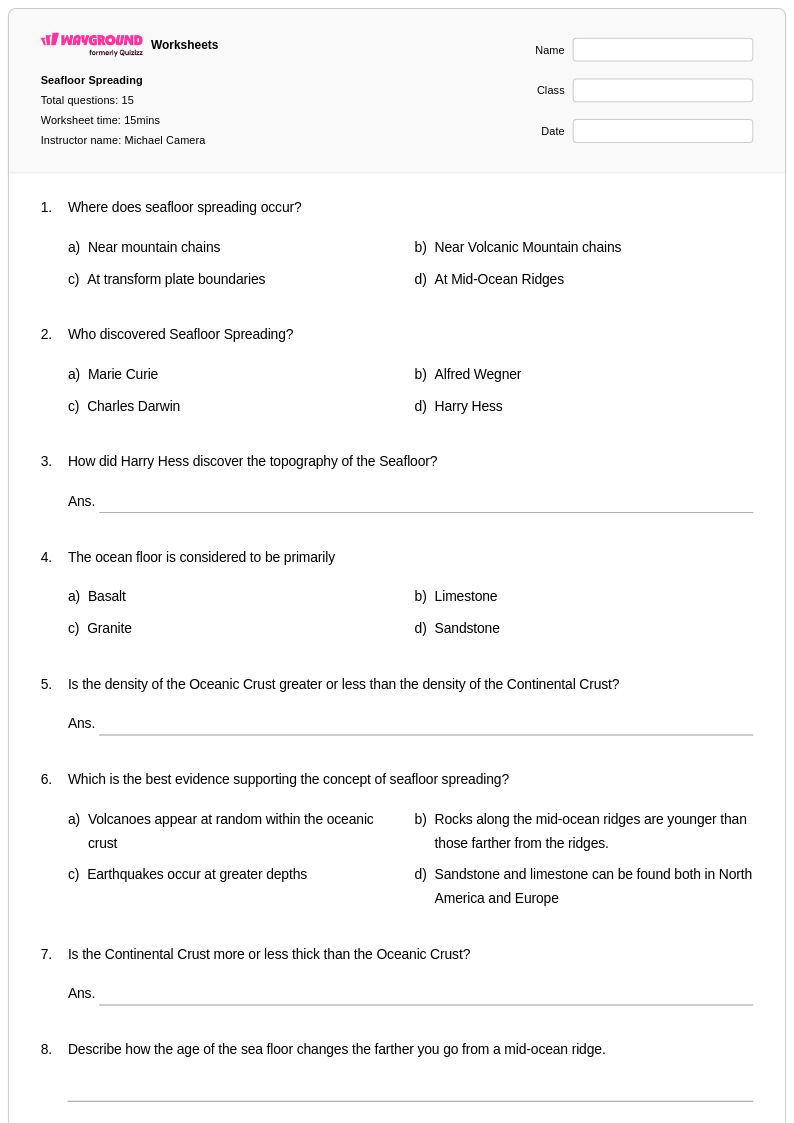
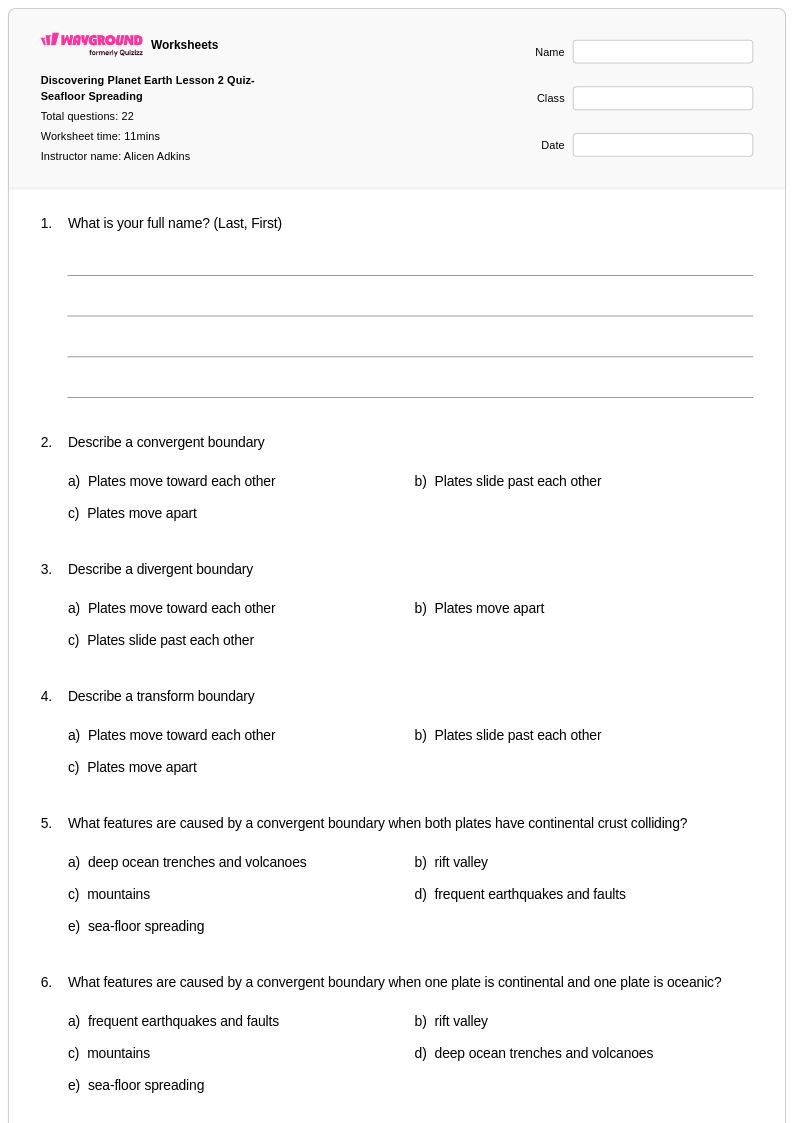
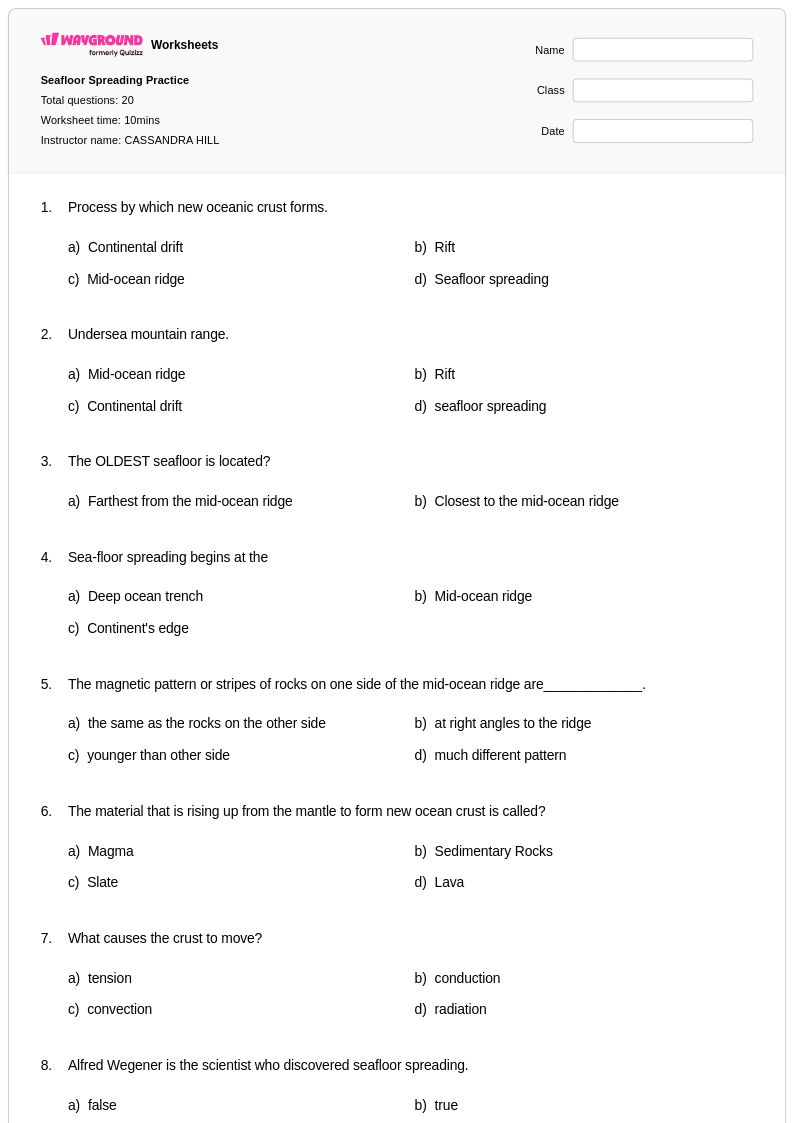
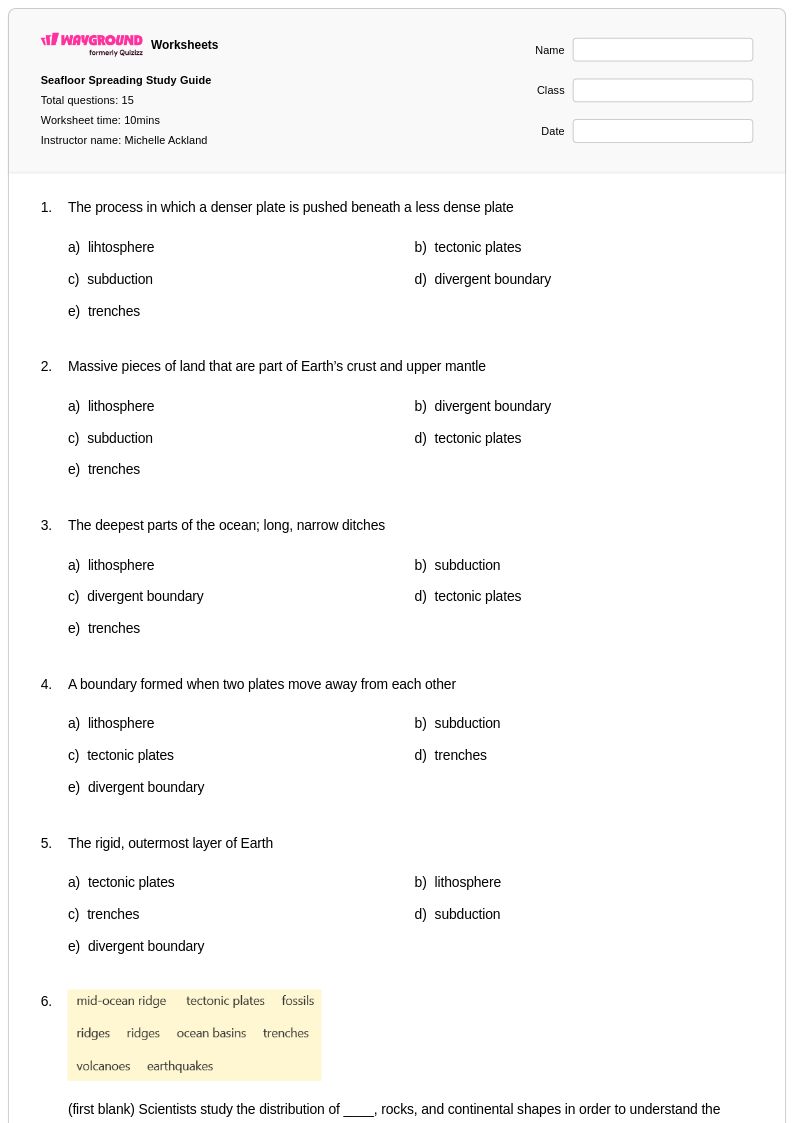
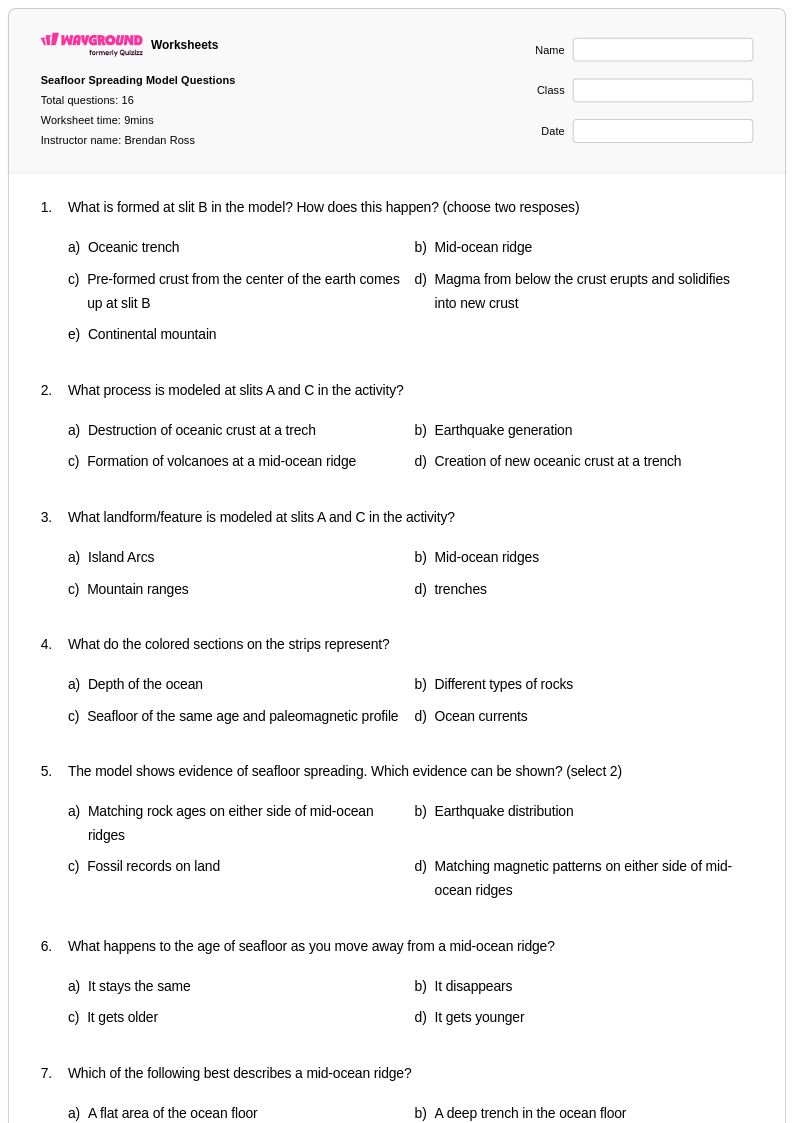
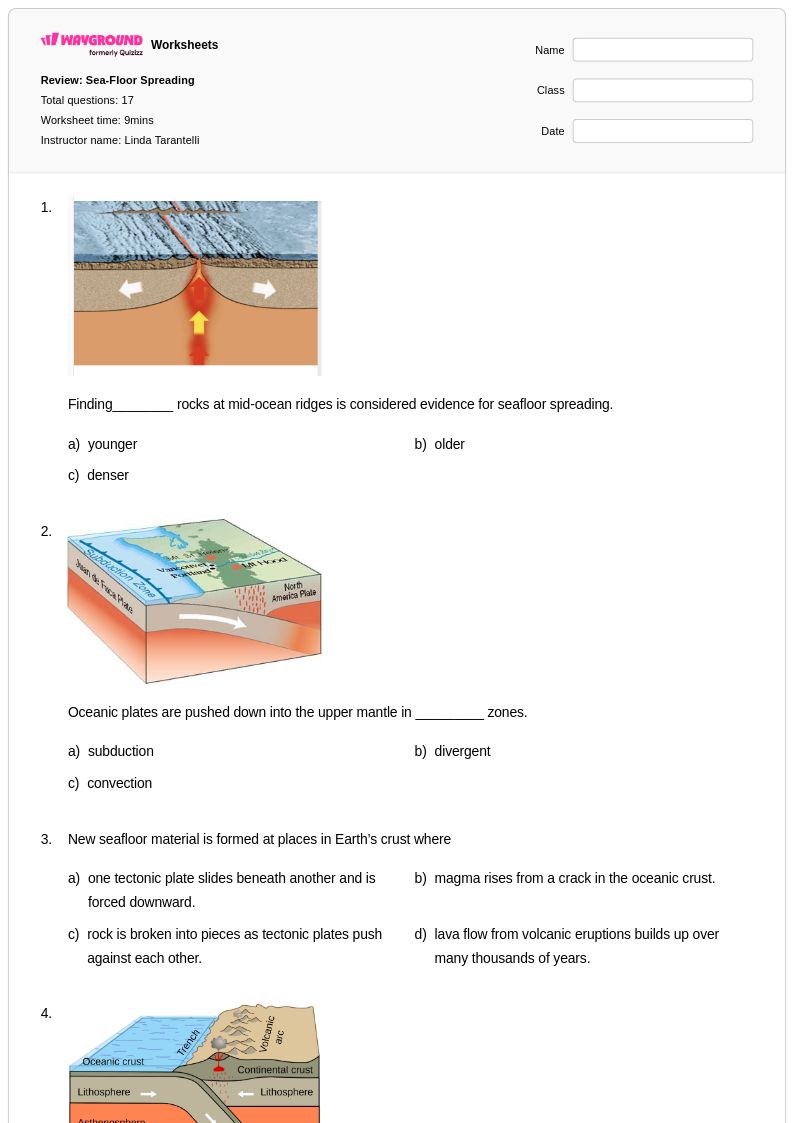
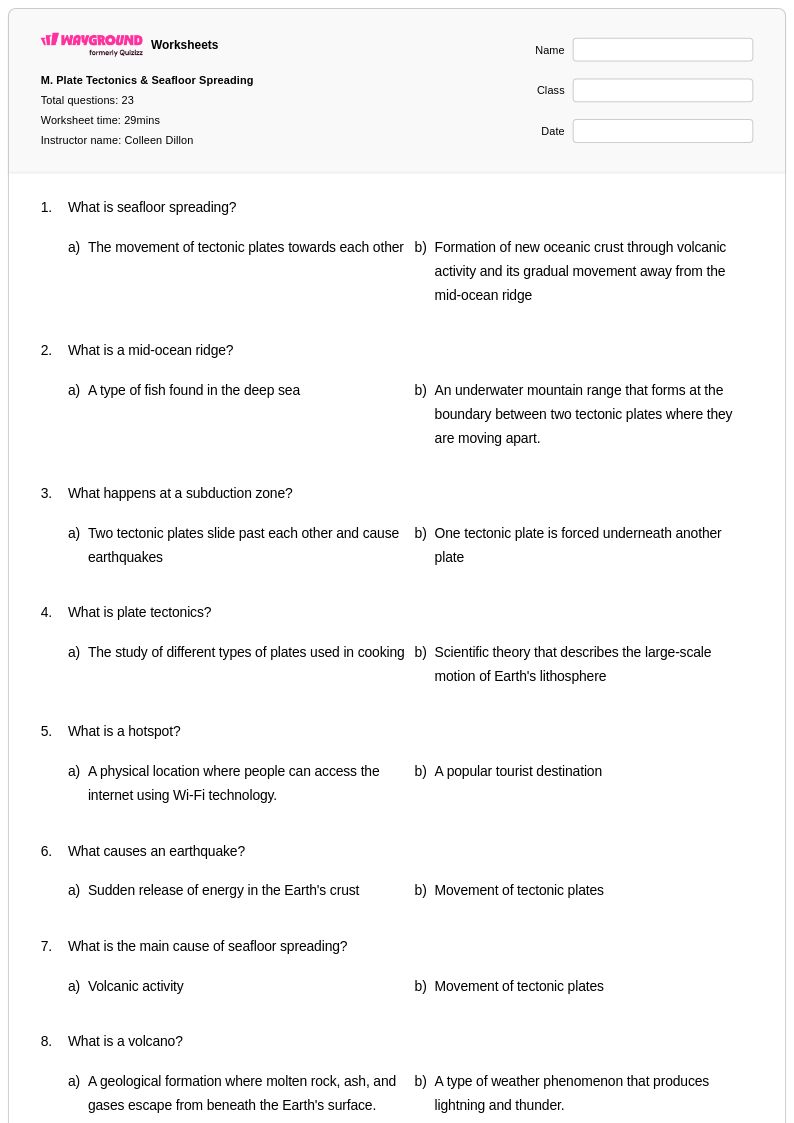
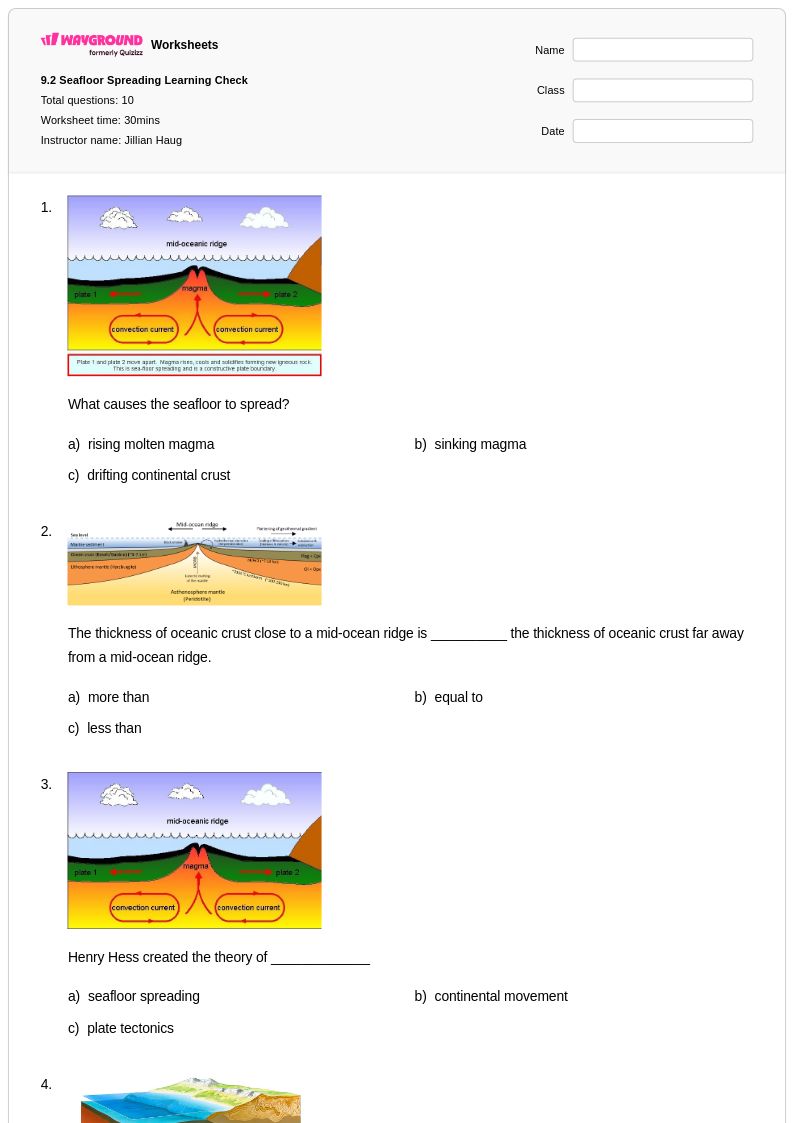
Seafloor spreading worksheets for Class 8 students available through Wayground provide comprehensive educational resources that help students understand one of Earth's most dynamic geological processes. These carefully designed materials guide eighth-grade learners through the mechanisms of oceanic crust formation at mid-ocean ridges, magnetic striping patterns, and the relationship between seafloor spreading and continental drift theory. The worksheets strengthen critical thinking skills as students analyze bathymetric maps, interpret magnetic anomaly data, and connect seafloor spreading rates to plate tectonic movements. Each resource includes detailed practice problems that challenge students to calculate spreading rates, identify key seafloor features, and explain how new oceanic lithosphere forms and moves away from ridge systems. Teachers can access complete answer keys and printable pdf formats that make classroom implementation seamless, while the free availability of these materials ensures all educators can provide quality instruction on this fundamental Earth science concept.
Wayground's extensive collection of millions of teacher-created resources makes finding high-quality seafloor spreading materials effortless for Class 8 educators. The platform's robust search and filtering capabilities allow teachers to quickly locate worksheets that align with specific curriculum standards and match their students' learning needs. Advanced differentiation tools enable educators to modify content complexity, ensuring both struggling learners and advanced students can engage meaningfully with seafloor spreading concepts. Teachers can customize worksheets to emphasize particular aspects of the topic, whether focusing on the historical development of the theory or contemporary research methods used to study mid-ocean ridges. The availability of both digital and printable formats, including downloadable pdfs, provides flexibility for various classroom environments and learning preferences. These comprehensive resources support effective lesson planning while offering targeted materials for remediation, enrichment activities, and ongoing skill practice that reinforces students' understanding of how seafloor spreading drives plate tectonic processes.
FAQs
How do I teach seafloor spreading to middle or high school students?
Start by grounding students in the structure of the ocean floor, particularly mid-ocean ridges and divergent plate boundaries, before introducing the mechanism of seafloor spreading. Use visual aids like magnetic stripe diagrams and age maps of the ocean floor to make the process concrete. Connecting seafloor spreading to convection currents in the mantle and the broader theory of plate tectonics helps students understand why it matters, not just how it works.
What practice exercises help students understand seafloor spreading?
Effective practice focuses on interpreting magnetic stripe patterns in oceanic crust, calculating seafloor age based on distance from spreading centers, and analyzing data from deep-sea drilling projects. Students benefit from problems that ask them to relate evidence of magnetic reversals to the timeline of seafloor formation. These exercises build both data literacy and conceptual understanding of how new oceanic crust forms and migrates away from mid-ocean ridges.
What misconceptions do students commonly have about seafloor spreading?
A frequent misconception is that continents move through the ocean floor rather than being carried on tectonic plates as the ocean floor itself expands. Students also often confuse seafloor spreading with continental drift, treating them as separate unrelated theories rather than complementary components of plate tectonics. Another common error is misreading magnetic stripe symmetry, where students fail to recognize that stripes mirror on either side of a mid-ocean ridge.
How can I use seafloor spreading worksheets to assess student understanding?
Worksheets that ask students to interpret magnetic stripe data, sequence the formation of oceanic crust, or explain the relationship between seafloor spreading and continental drift provide strong formative assessment opportunities. Look for errors in how students describe the direction of plate movement or the role of convection currents, as these reveal conceptual gaps rather than surface-level recall issues. Using the included answer keys allows for efficient review and targeted follow-up instruction.
How do I use Wayground's seafloor spreading worksheets in my classroom?
Wayground's seafloor spreading worksheets are available as printable PDFs for traditional classroom use and in digital formats for technology-integrated learning environments, giving teachers flexibility regardless of their classroom setup. Teachers can also host worksheets as a quiz directly on Wayground, enabling interactive student practice with built-in answer key support for immediate feedback. Wayground's search and filtering tools make it straightforward to locate worksheets by concept, such as magnetic reversals, divergent boundaries, or convection currents, so lesson planning stays efficient.
How does seafloor spreading support the theory of plate tectonics?
Seafloor spreading provides direct physical evidence for plate tectonics by demonstrating that oceanic crust is continuously created at mid-ocean ridges and moves outward, carrying a record of magnetic reversals preserved in the rock. The symmetrical pattern of magnetic stripes on either side of a ridge, combined with the observation that oceanic crust is youngest near spreading centers and oldest near subduction zones, confirms that the ocean floor is dynamic rather than static. This evidence was pivotal in establishing plate tectonics as the unifying framework for understanding Earth's geological systems.