
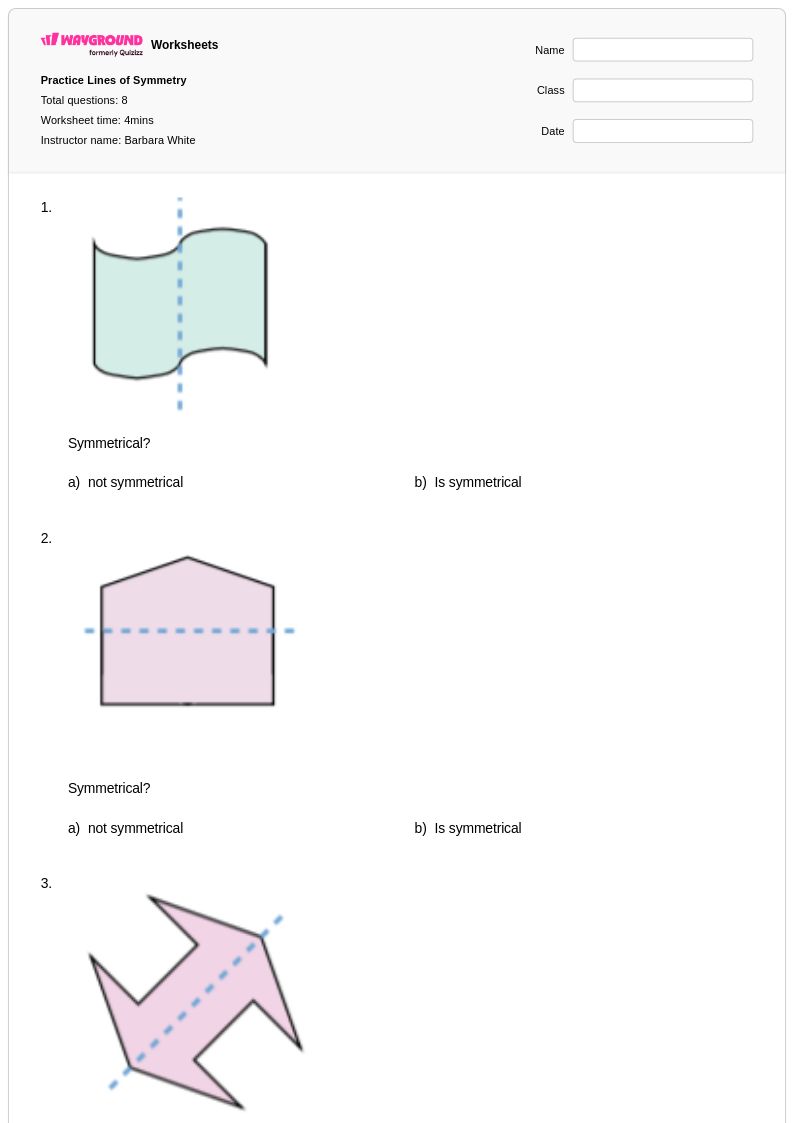
8Q
3rd
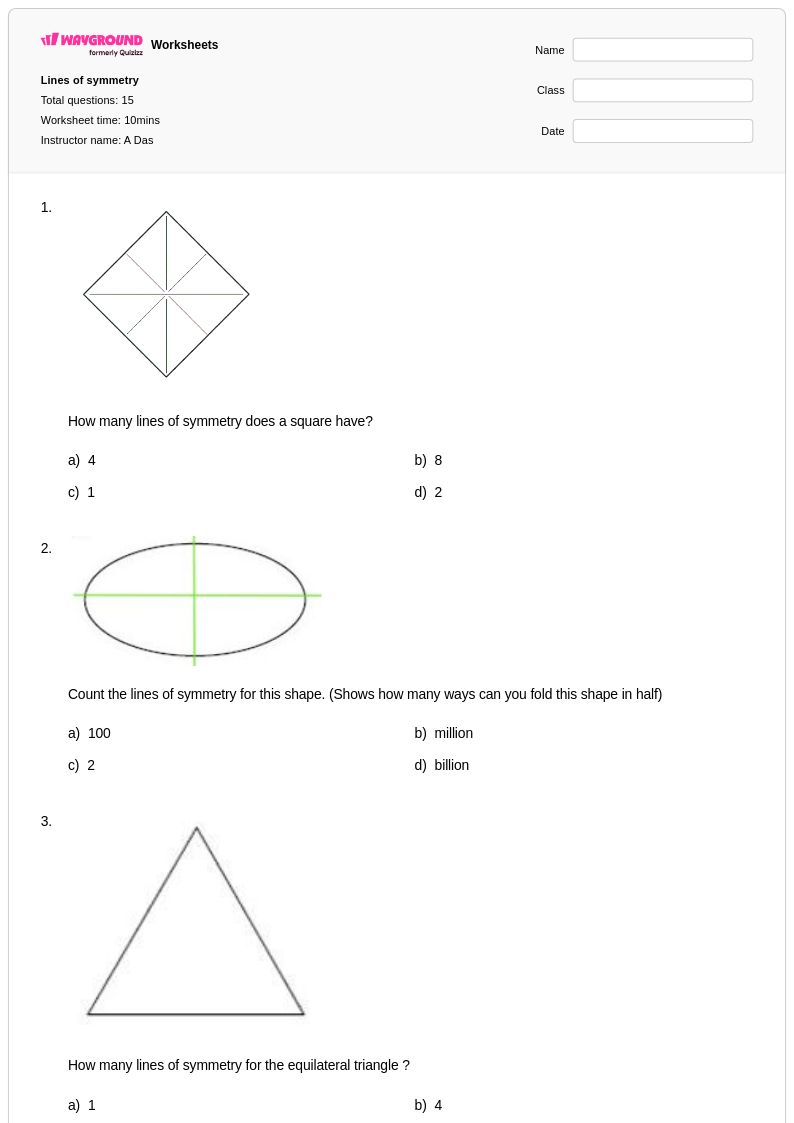
15Q
1st - 5th
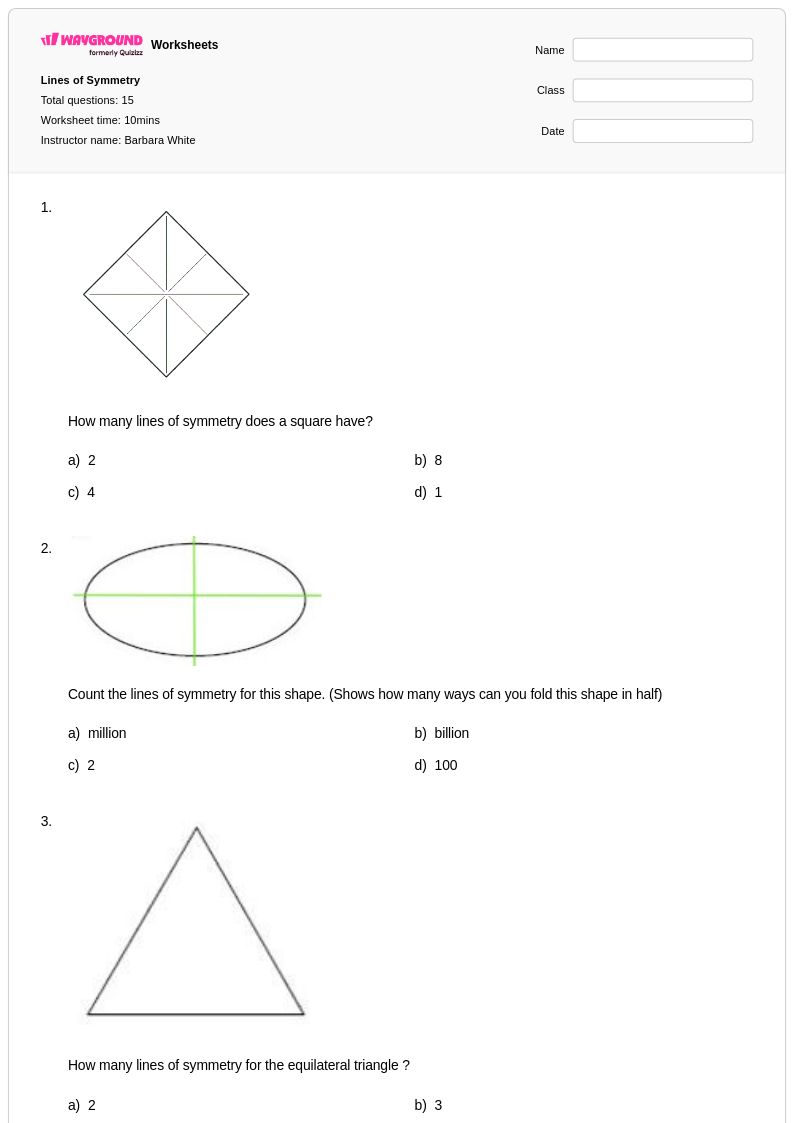
15Q
1st - 5th
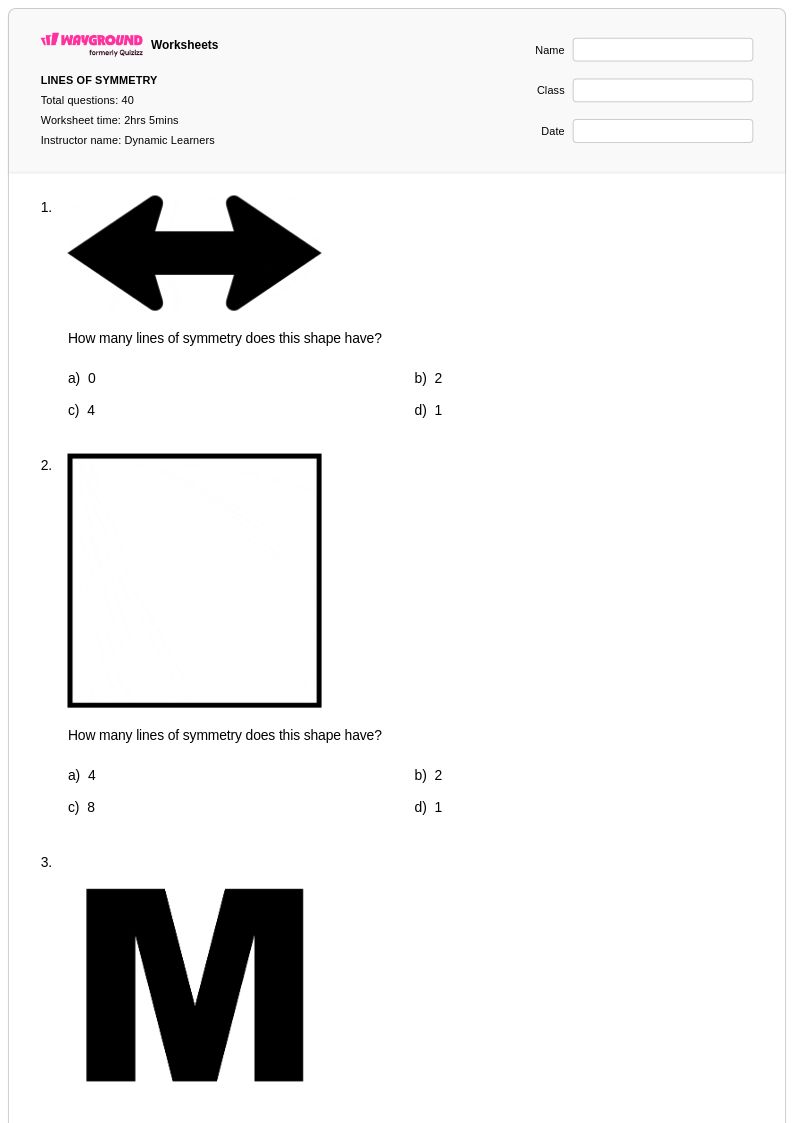
40Q
1st - 5th
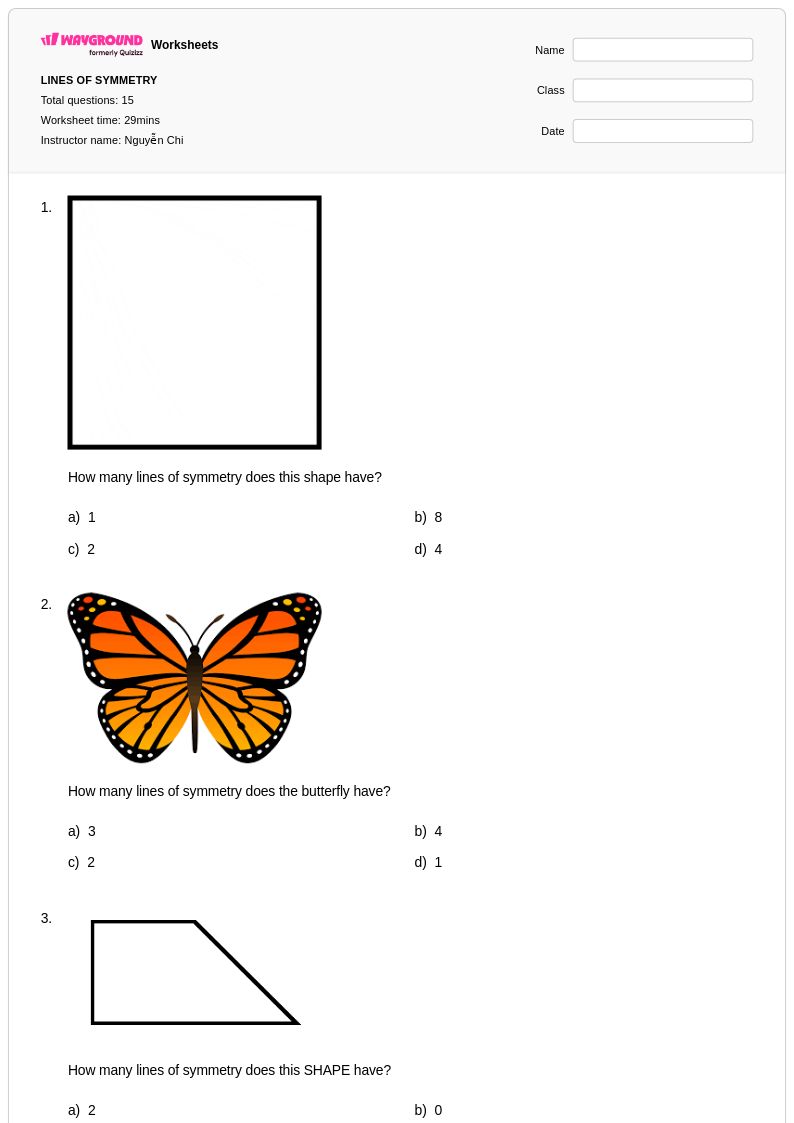
15Q
1st - 3rd
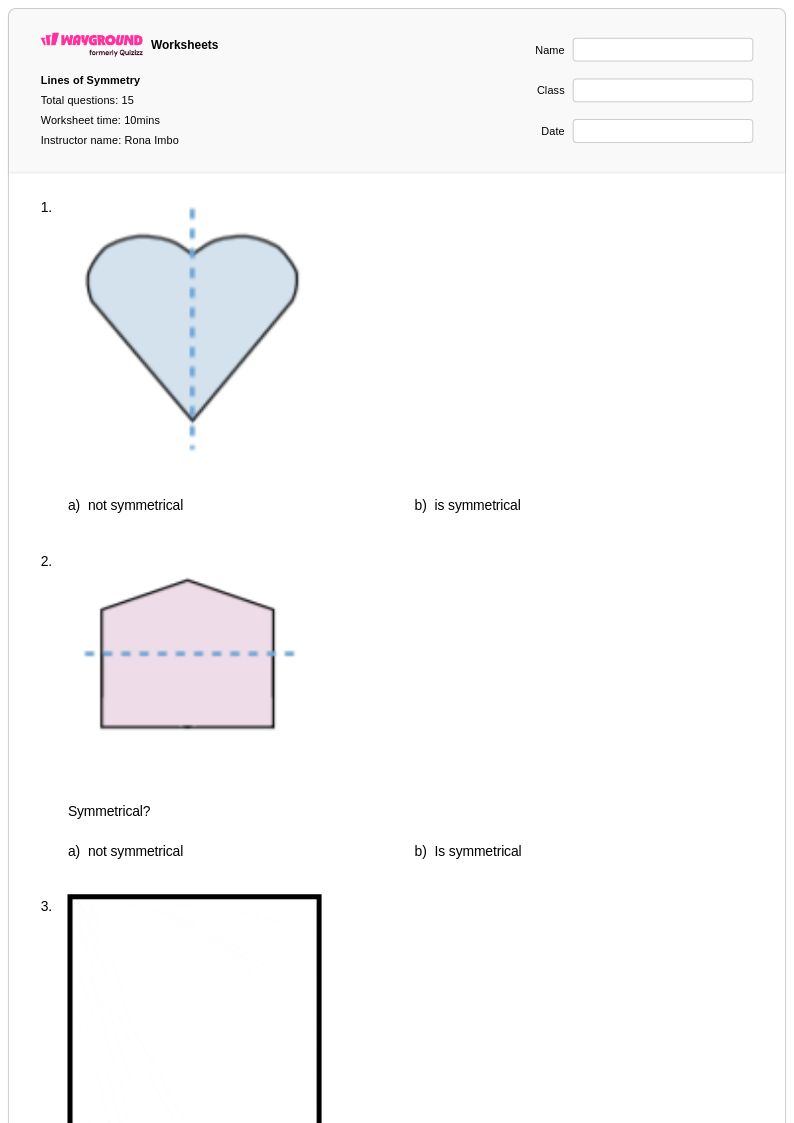
15Q
3rd
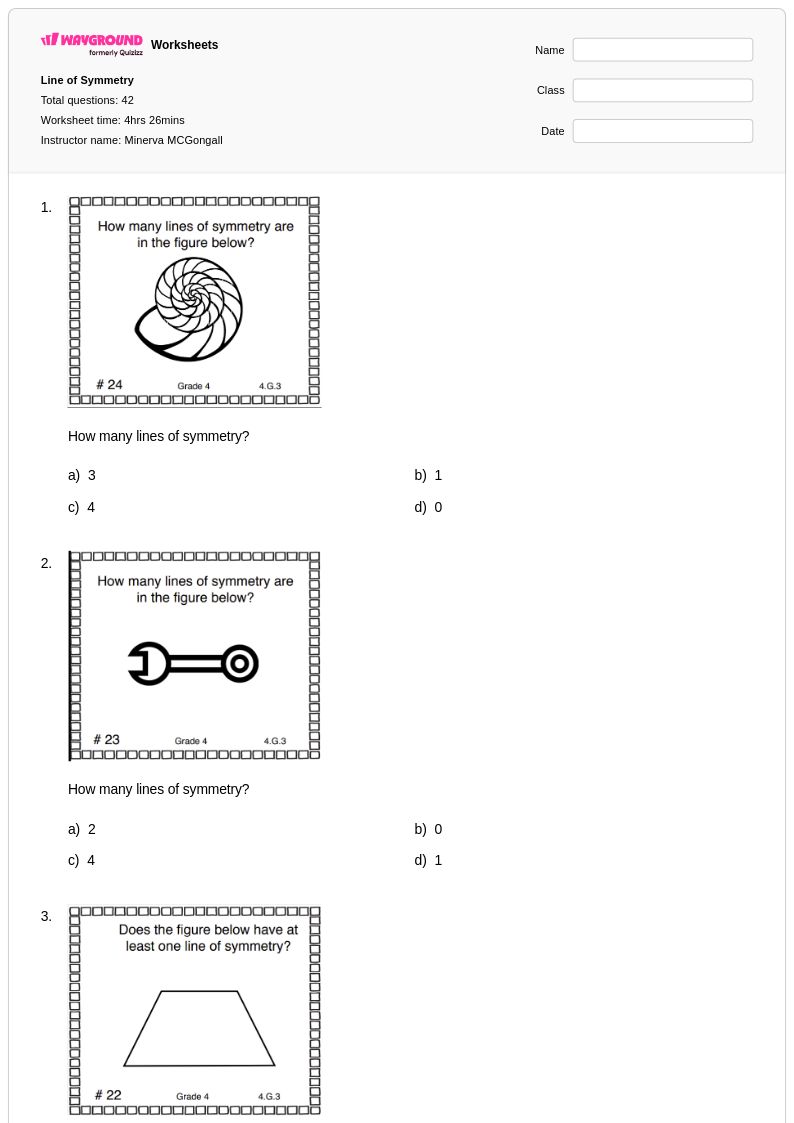
42Q
3rd
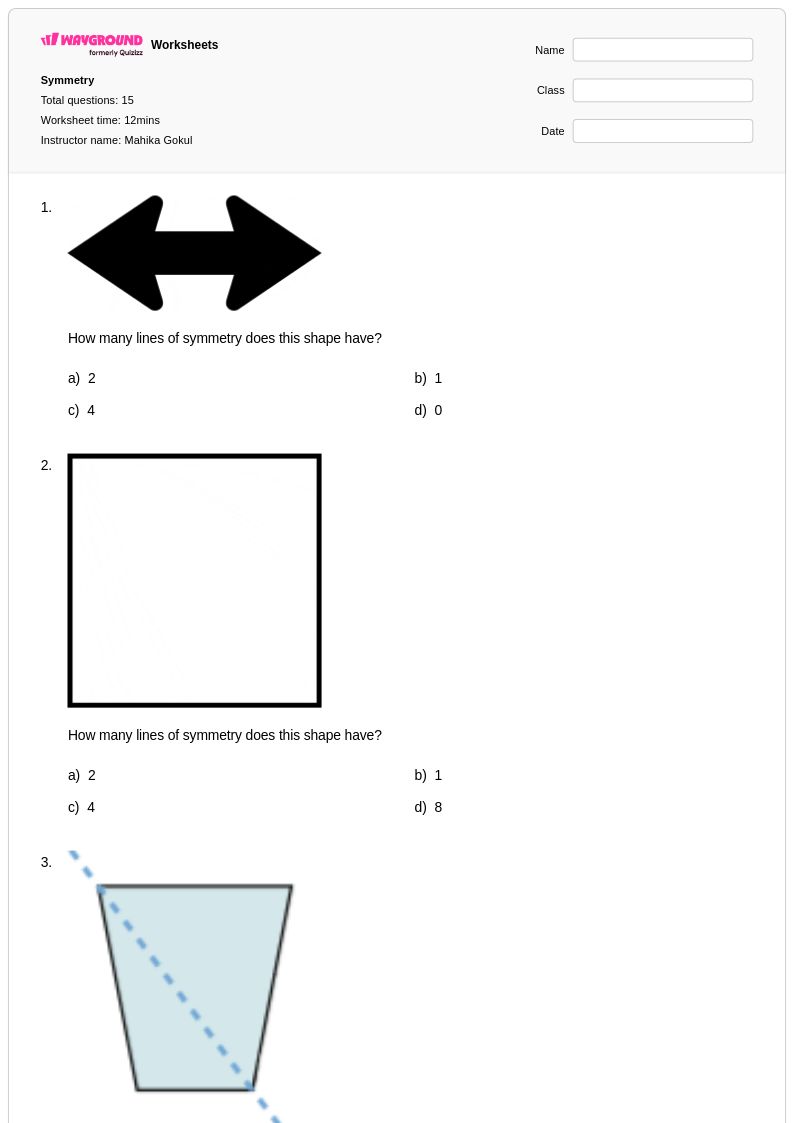
15Q
3rd - 7th
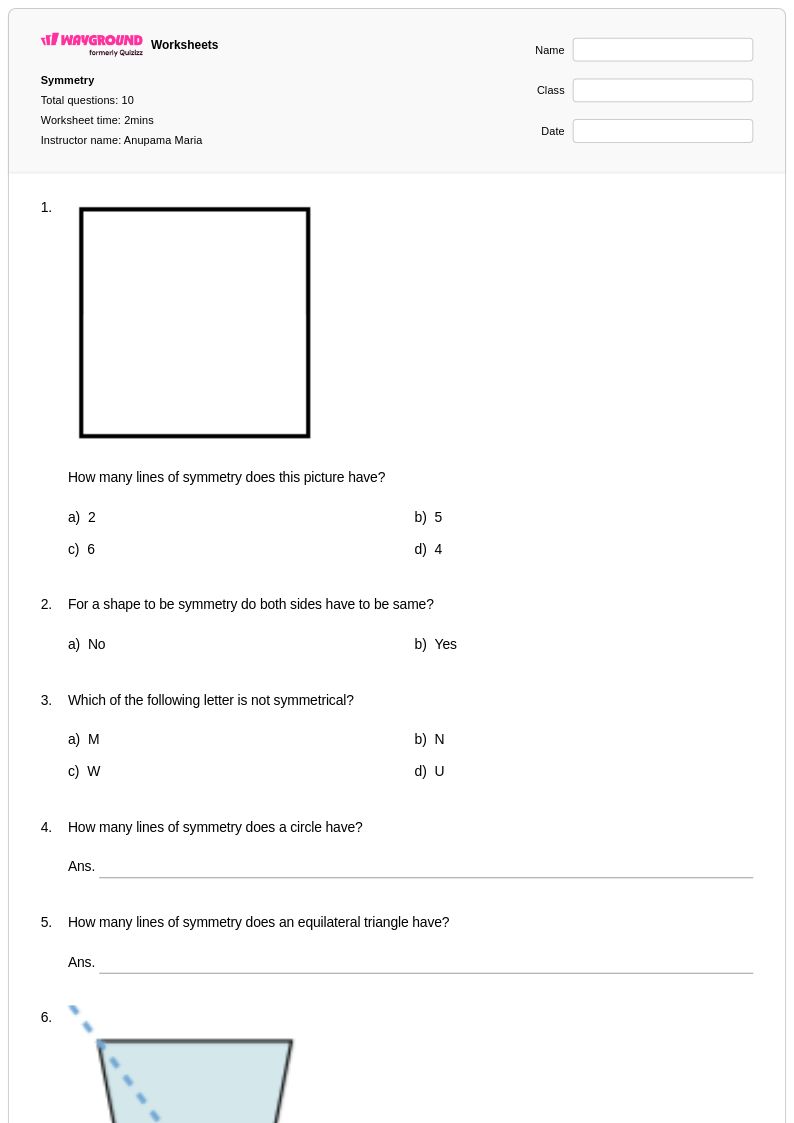
10Q
3rd - 4th
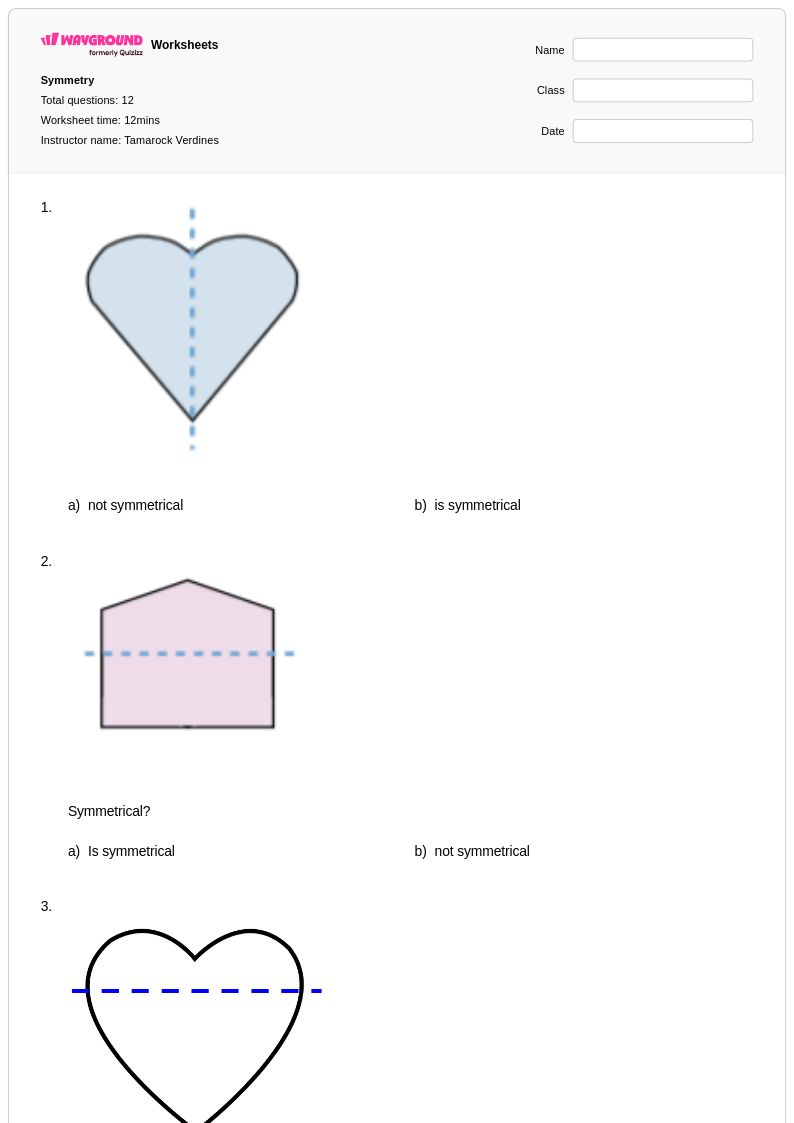
12Q
3rd
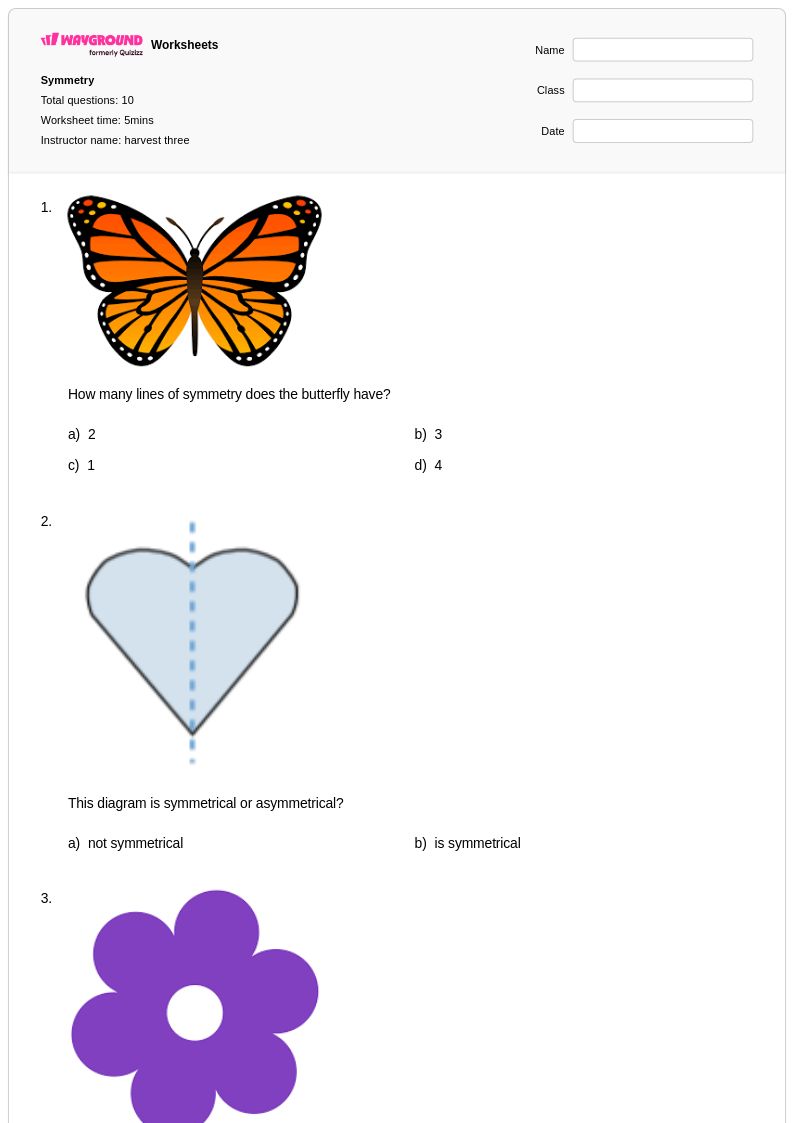
10Q
3rd
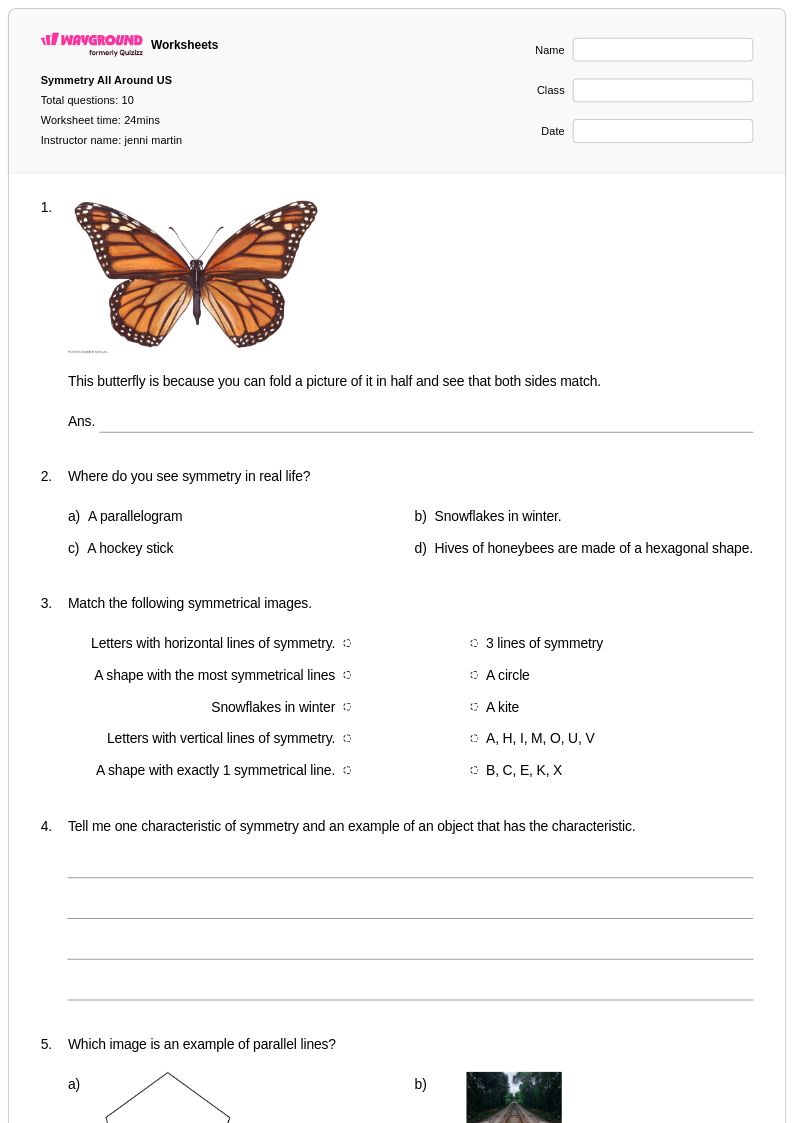
10Q
3rd - 5th
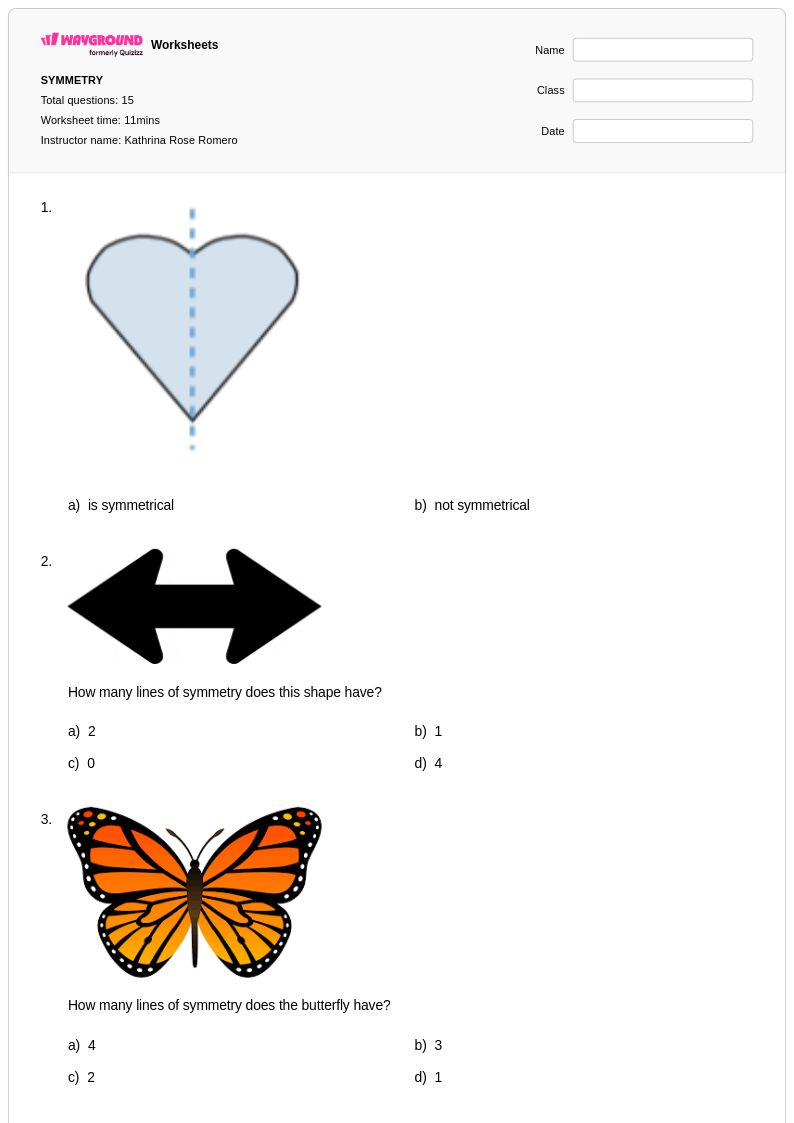
15Q
3rd
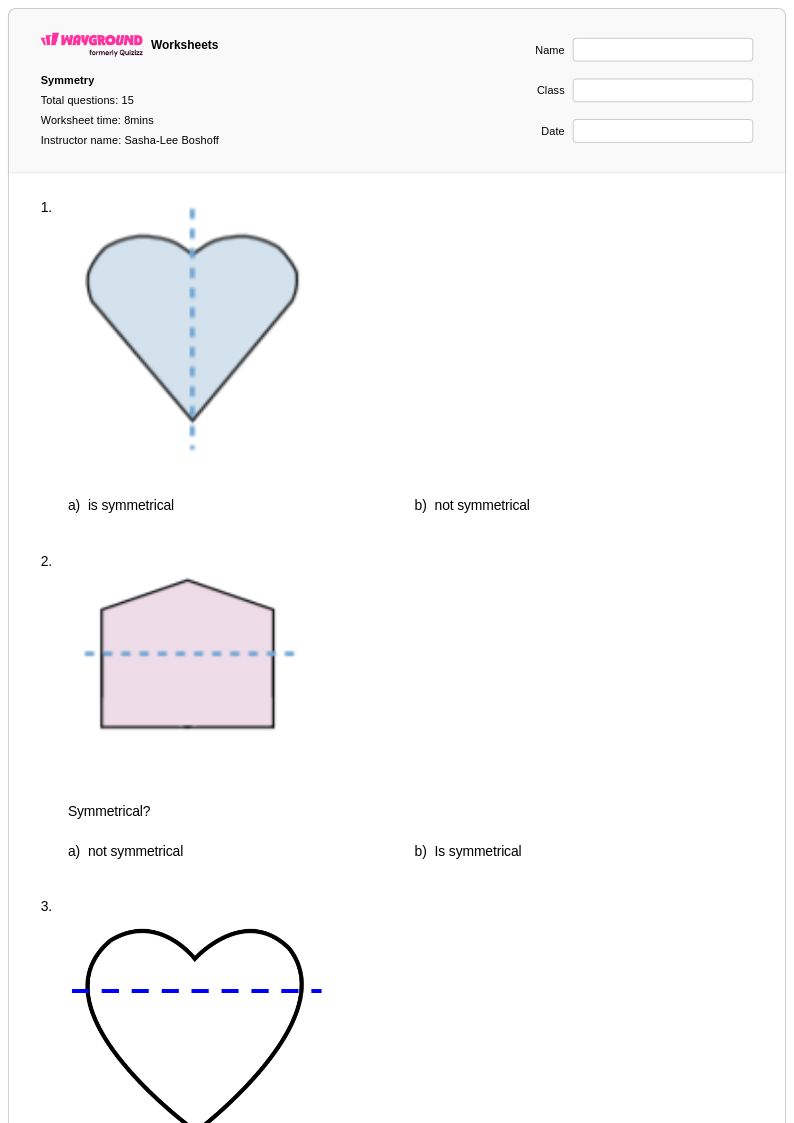
15Q
3rd - 5th
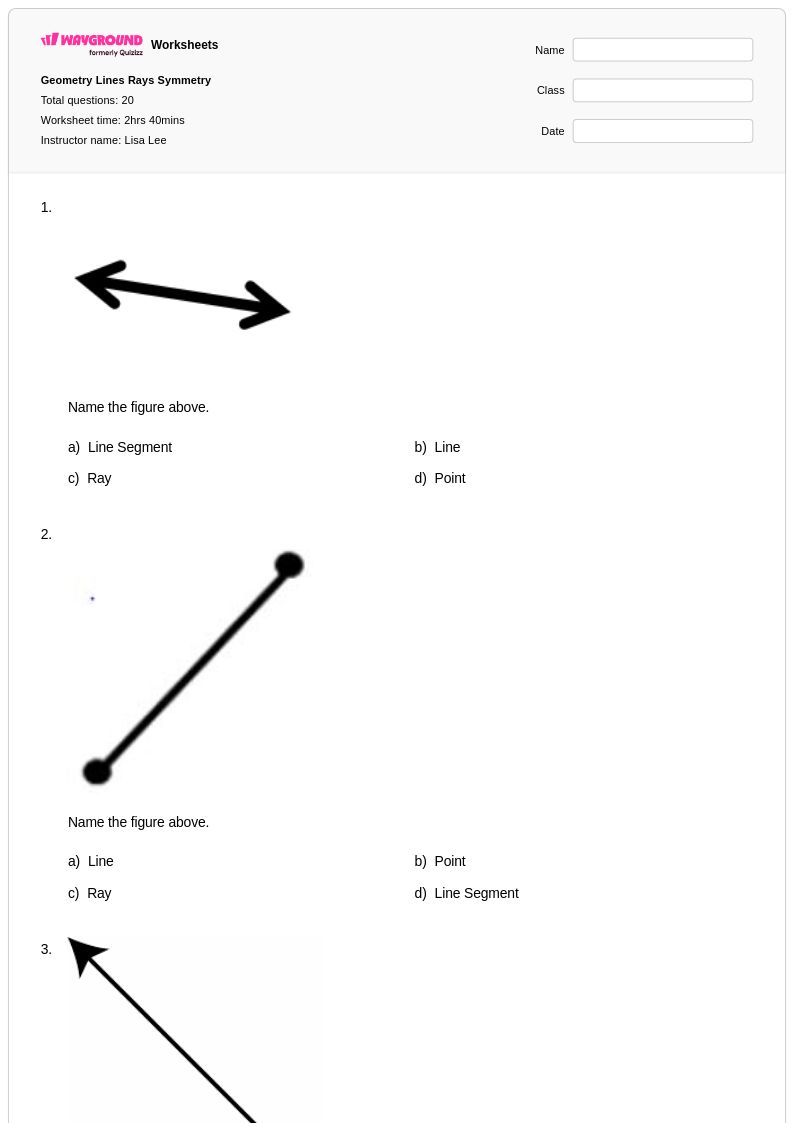
20Q
3rd - 4th
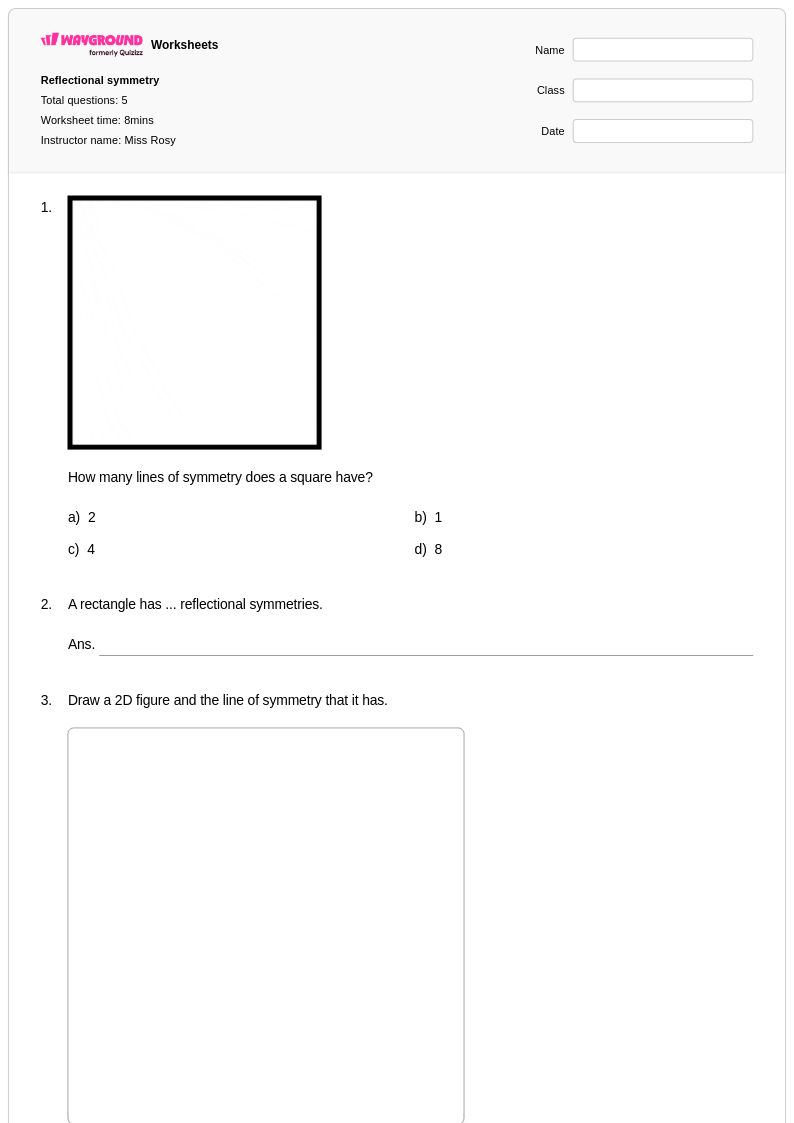
5Q
3rd
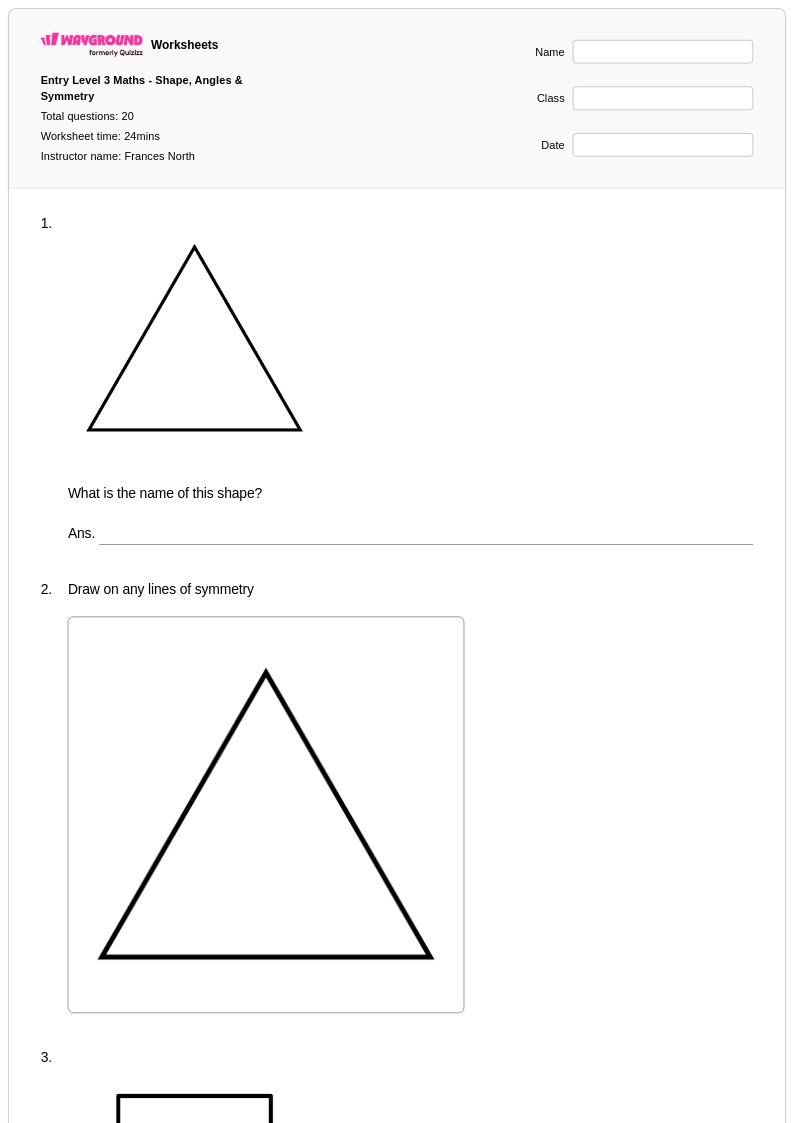
20Q
1st - 7th
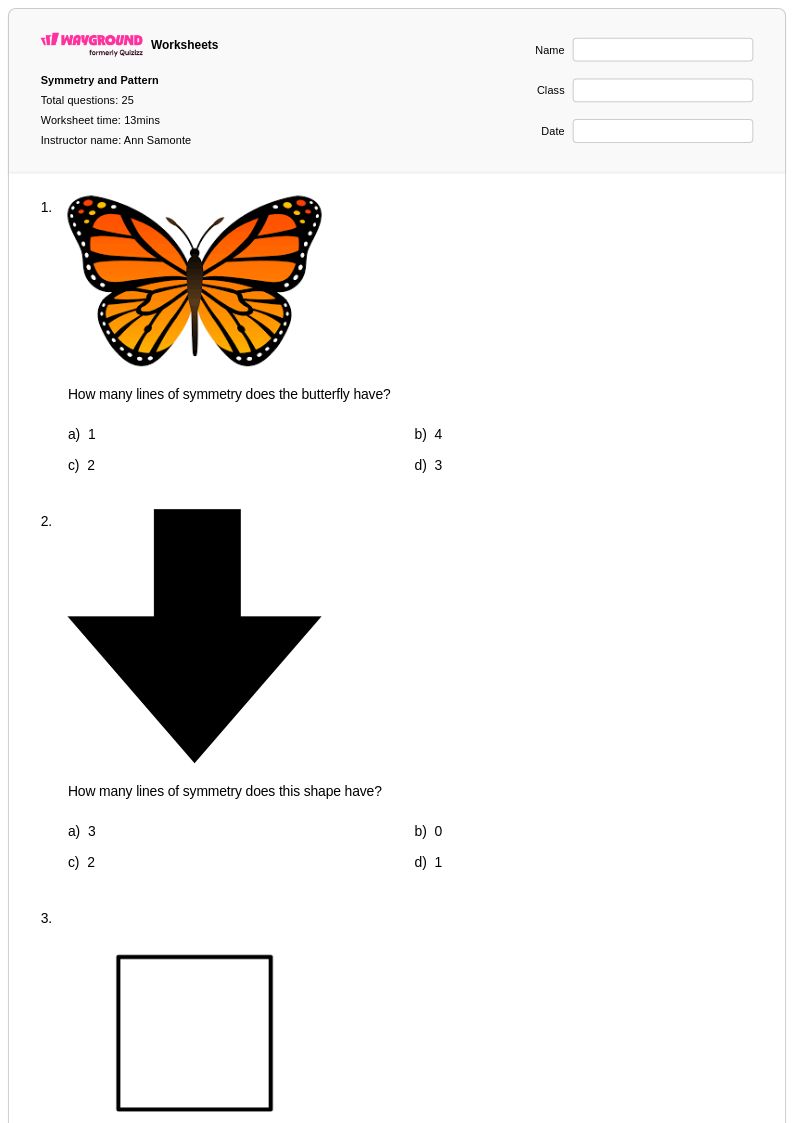
25Q
3rd
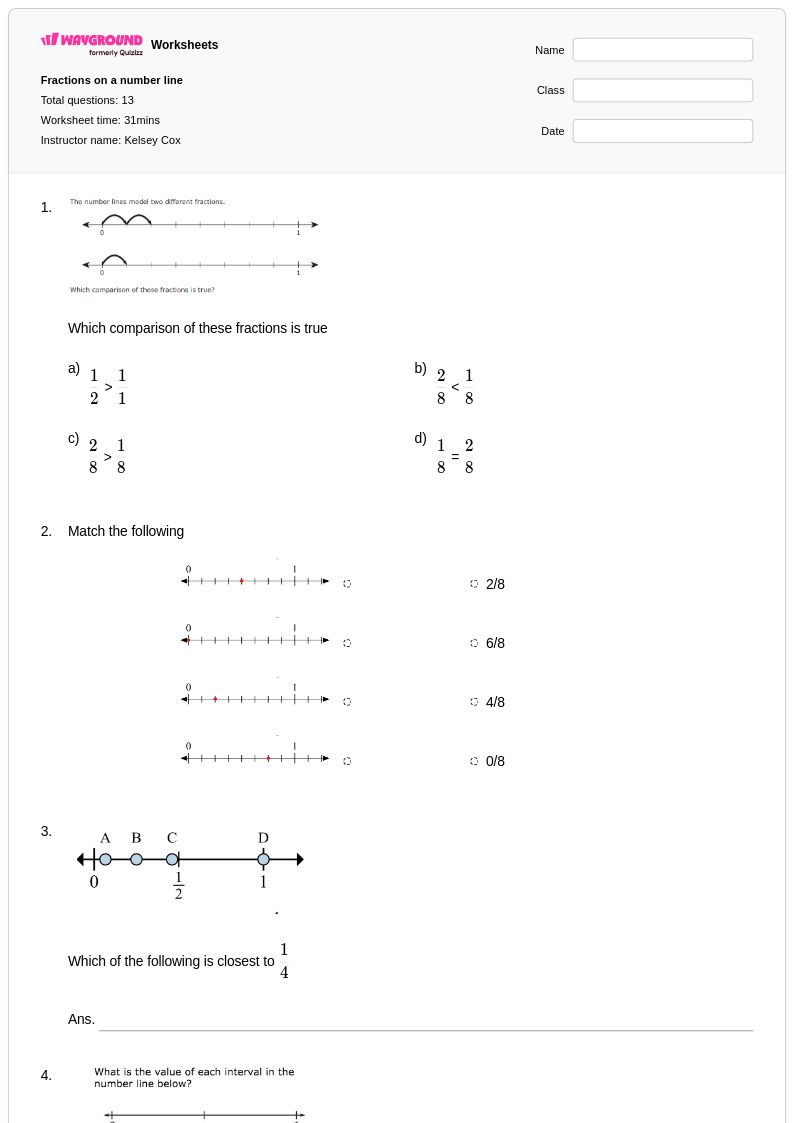
13Q
3rd
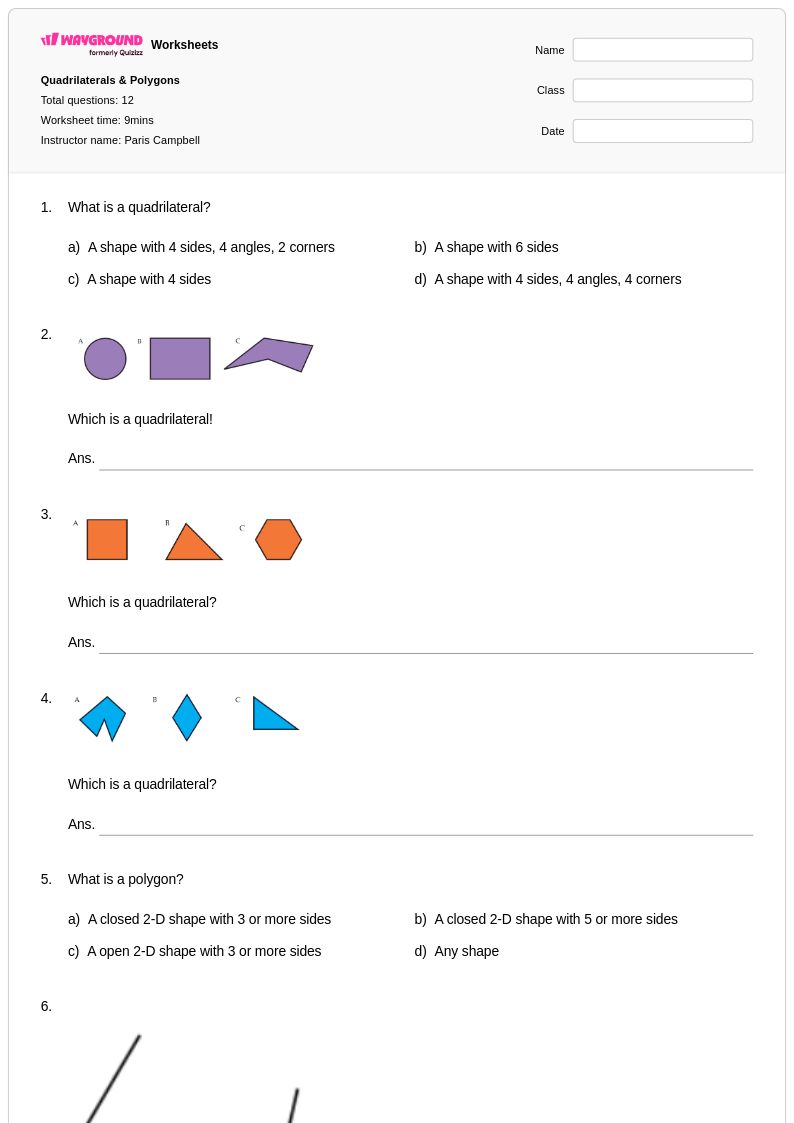
12Q
3rd
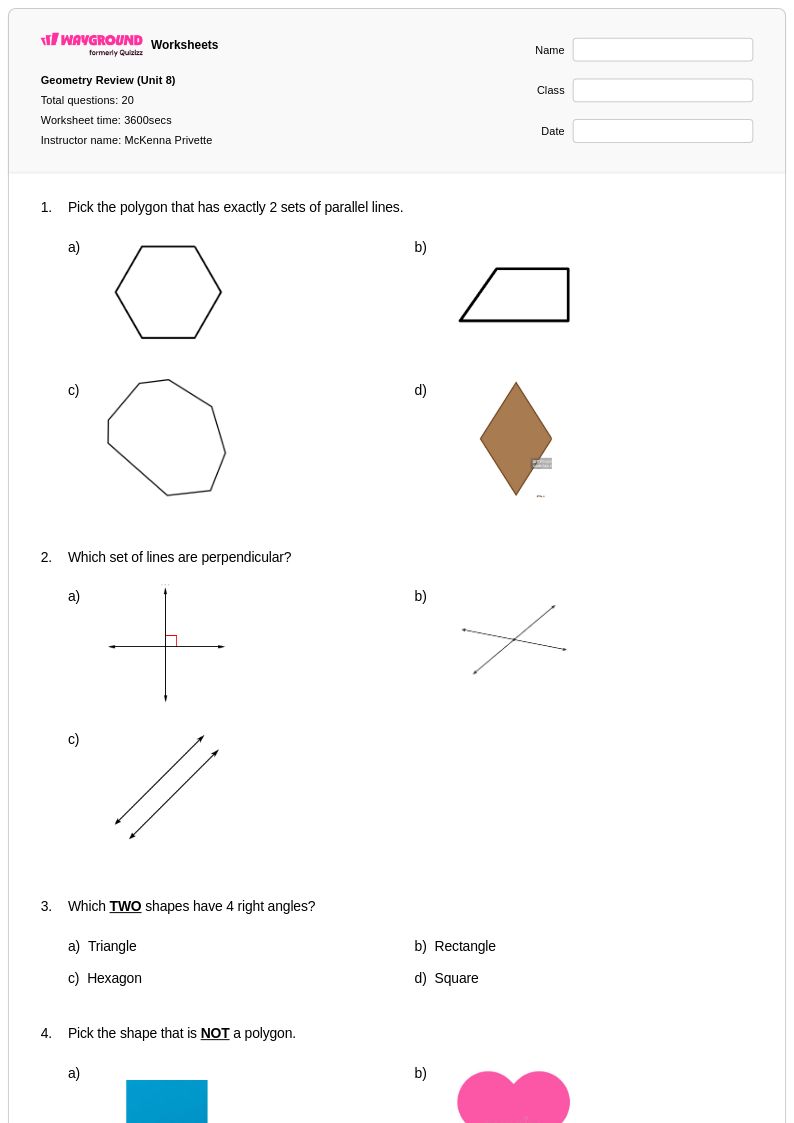
20Q
3rd
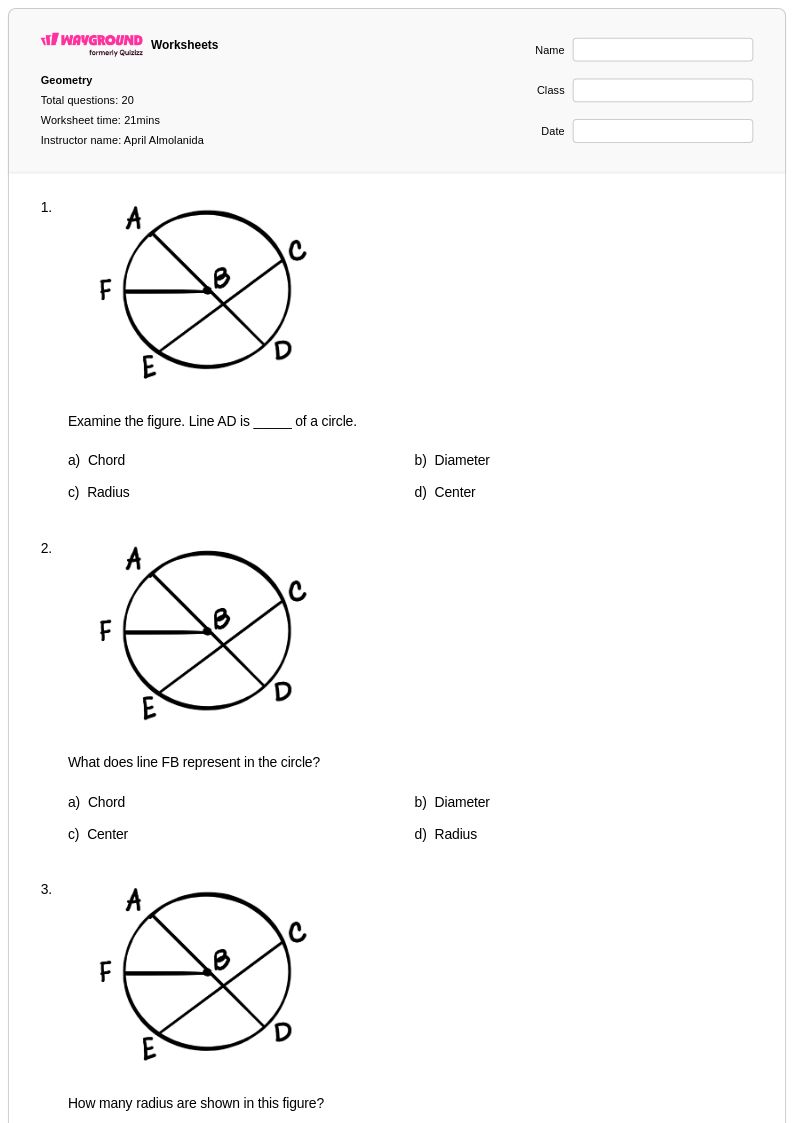
20Q
3rd - 5th
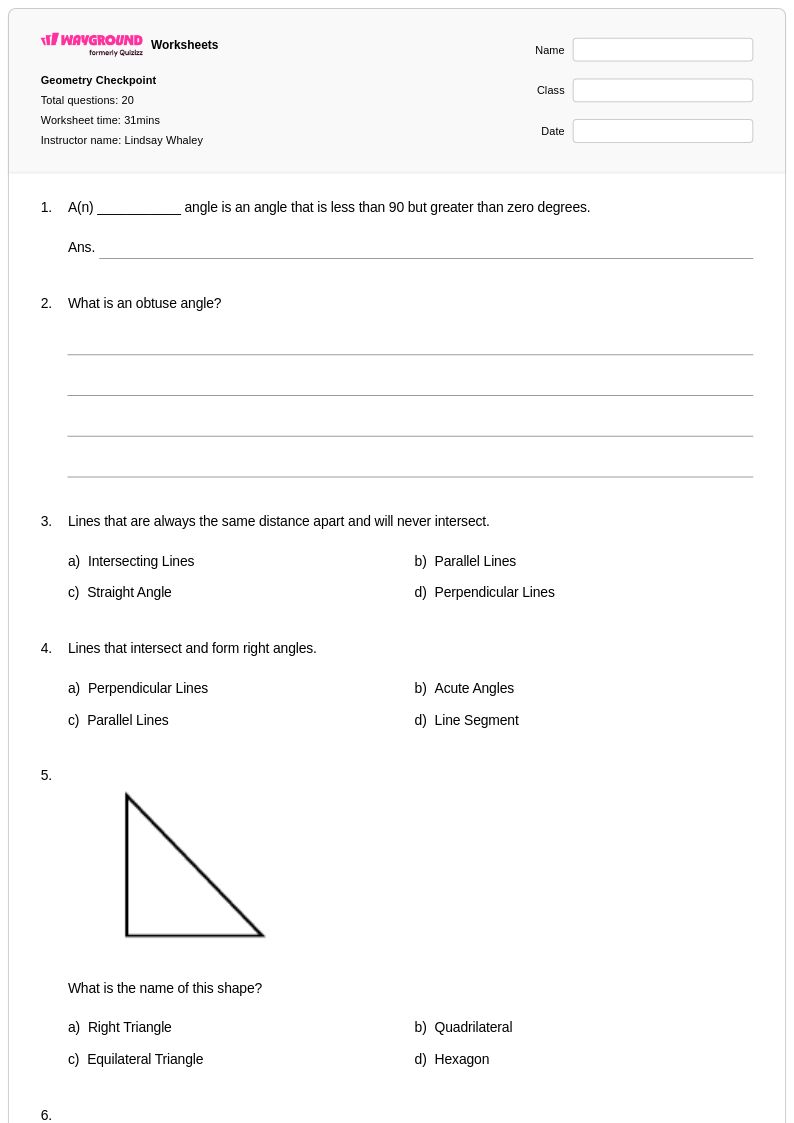
20Q
3rd - 5th
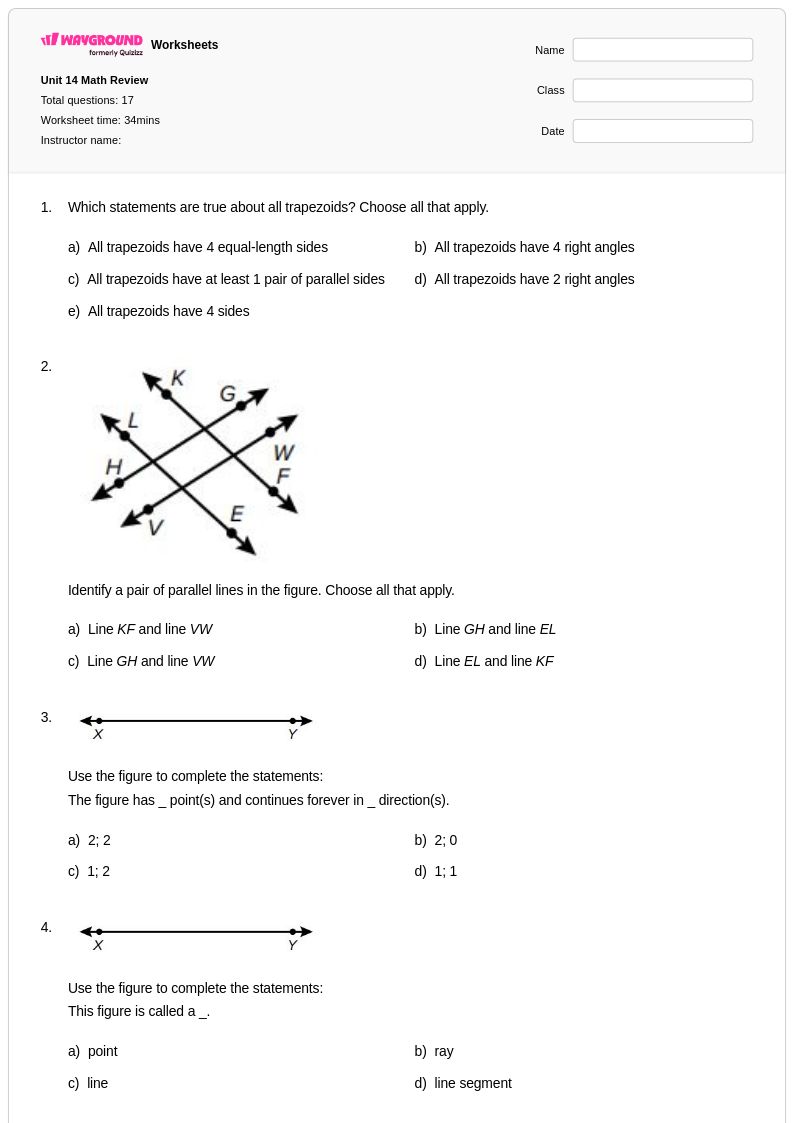
17Q
3rd
Explorar Lines of Symmetry hojas de trabajo por grados
Explore otras hojas de trabajo de materias para class 3
Explore printable Lines of Symmetry worksheets for Class 3
Lines of symmetry worksheets for Class 3 students available through Wayground (formerly Quizizz) provide essential practice in recognizing and drawing lines that divide shapes into identical halves. These comprehensive worksheets strengthen spatial reasoning skills and geometric understanding by engaging students with hands-on activities involving mirrors, folding exercises, and visual identification tasks. Each printable worksheet collection includes carefully designed practice problems that progress from simple symmetric shapes like squares and circles to more complex figures, helping young learners develop confidence in identifying vertical, horizontal, and diagonal lines of symmetry. The accompanying answer key allows for immediate feedback and self-assessment, while the free pdf format ensures accessibility for both classroom instruction and independent practice at home.
Wayground (formerly Quizizz) supports mathematics educators with an extensive library of millions of teacher-created resources specifically designed for lines of symmetry instruction at the Class 3 level. The platform's robust search and filtering capabilities enable teachers to quickly locate worksheets aligned with specific learning standards and differentiate instruction based on individual student needs. These customizable materials are available in both printable and digital formats, including downloadable pdf versions that facilitate seamless integration into lesson plans for skill practice, remediation, and enrichment activities. Teachers can easily modify existing worksheets or combine multiple resources to create targeted practice sessions that address diverse learning styles and mathematical proficiency levels, ensuring every student develops a solid foundation in recognizing and understanding symmetrical relationships in geometric shapes.
FAQs
What are effective strategies for teaching symmetry in 3rd grade?
What kind of practice helps 3rd graders master symmetry?
What are common errors 3rd graders make with lines of symmetry?
How do I use this Wayground worksheet with my 3rd grade class?
How does this topic align with 3rd grade math standards?