
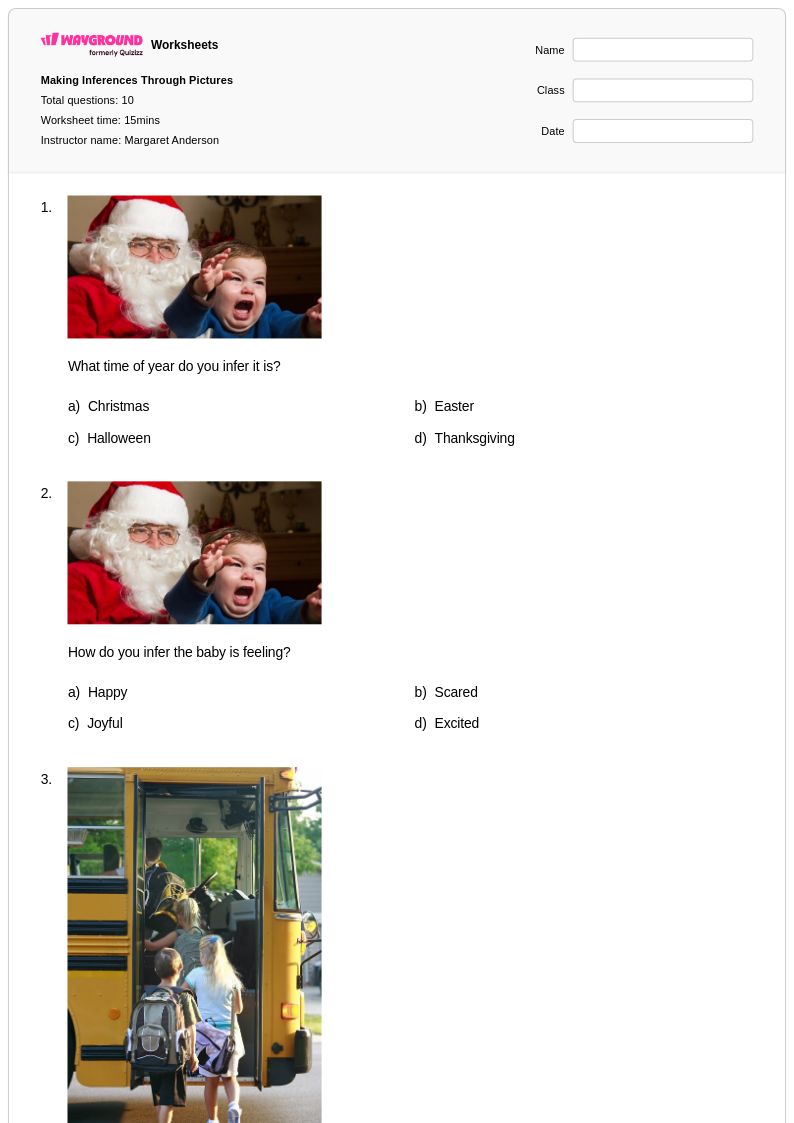
10 Q
3rd - 5th
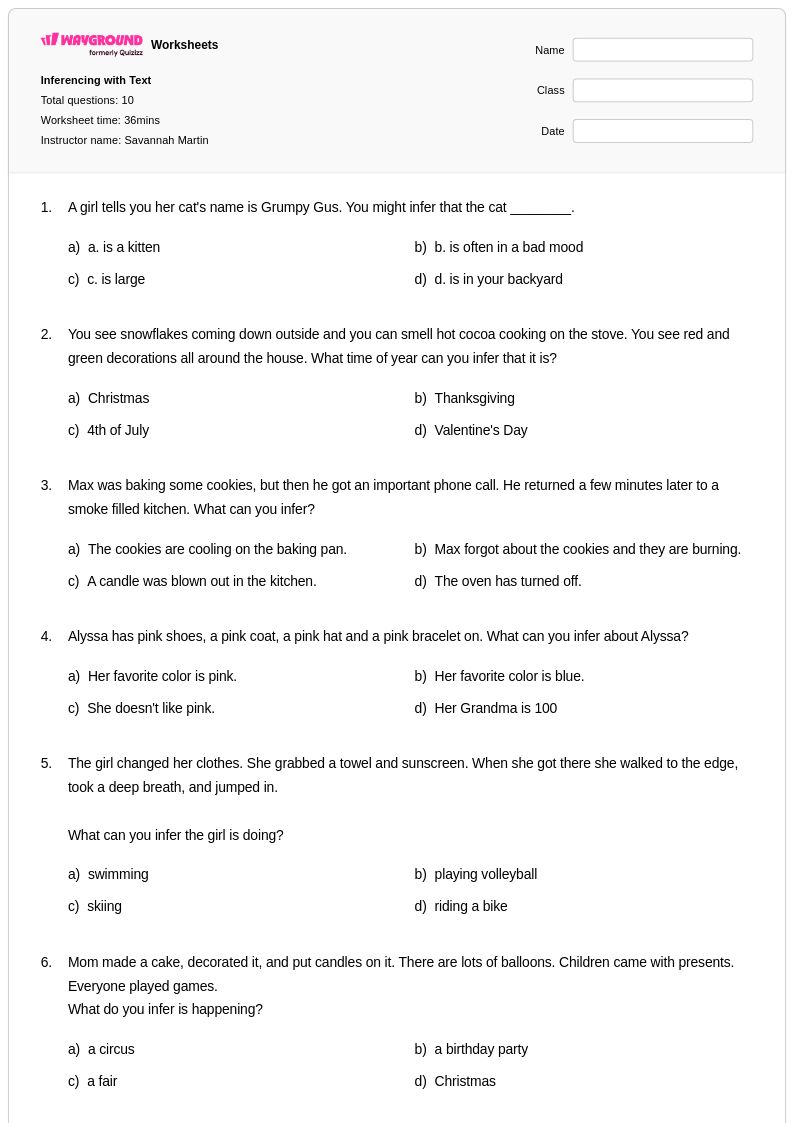
10 Q
3rd - 4th
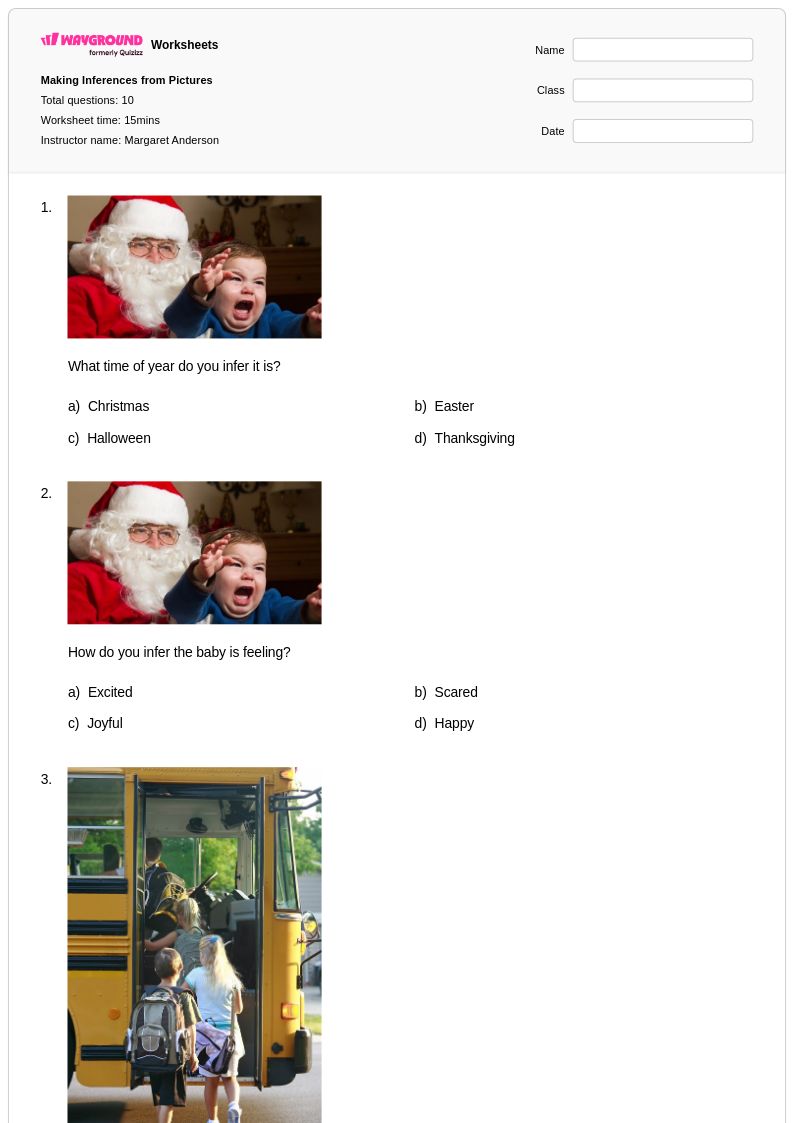
10 Q
3rd - 5th
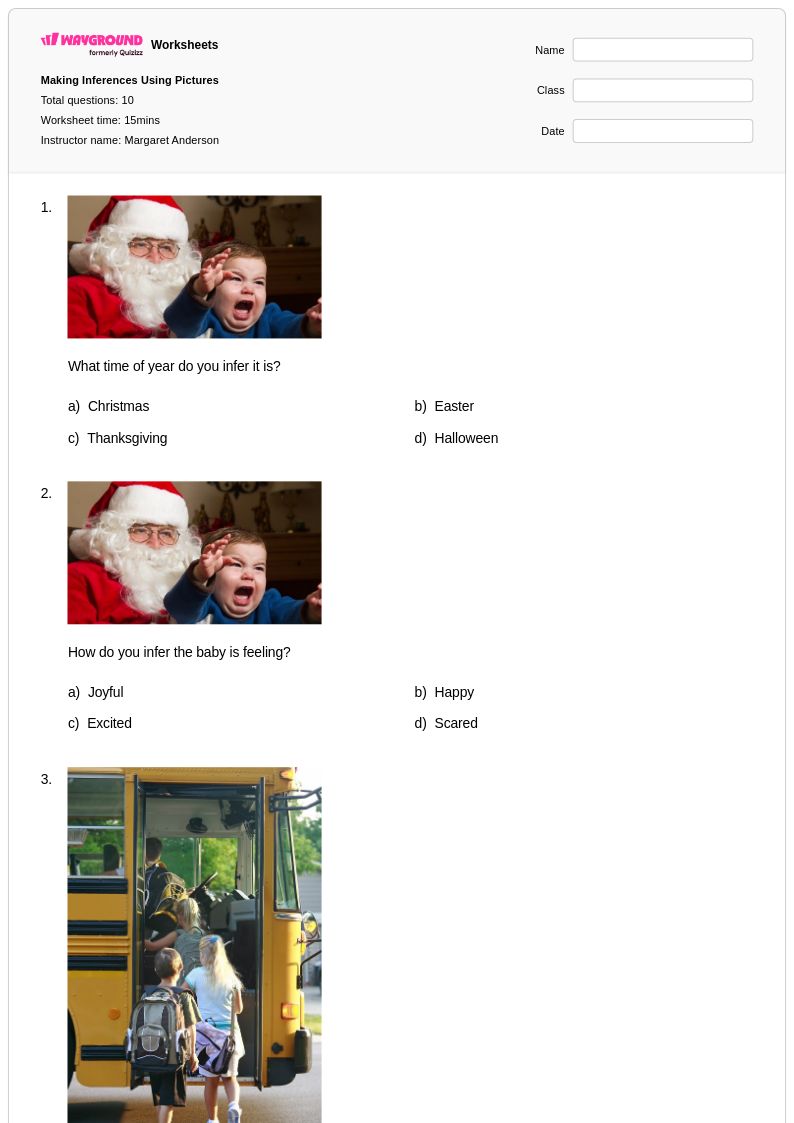
10 Q
3rd - 5th
10 Q
3rd
12 Q
3rd
41 Q
1st - 5th
15 Q
3rd
20 Q
3rd
32 Q
3rd
10 Q
3rd
11 Q
3rd
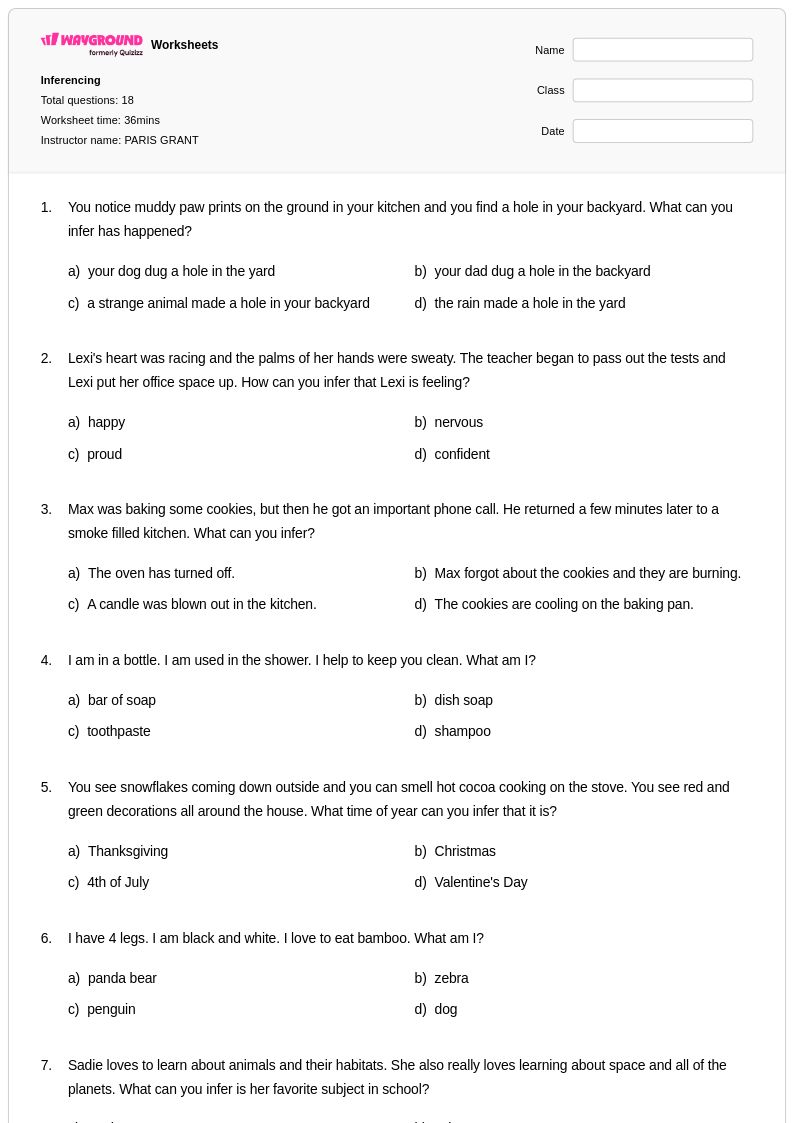
18 Q
3rd
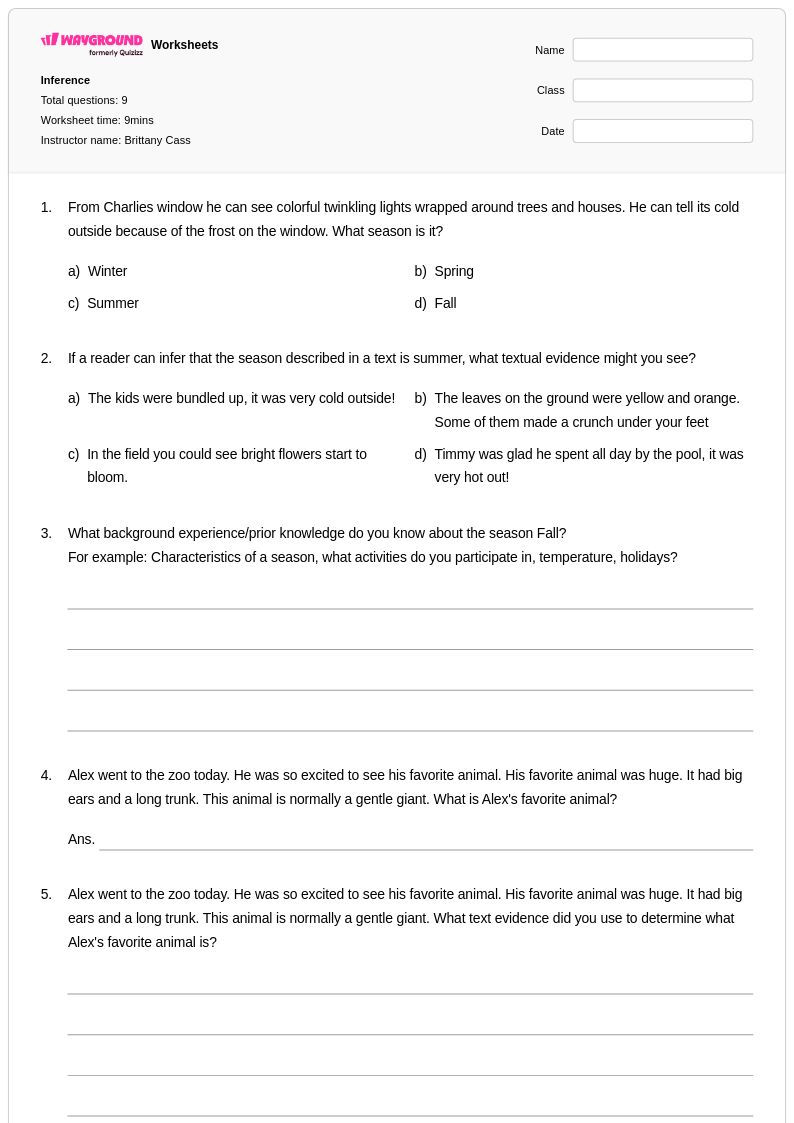
9 Q
3rd - 5th
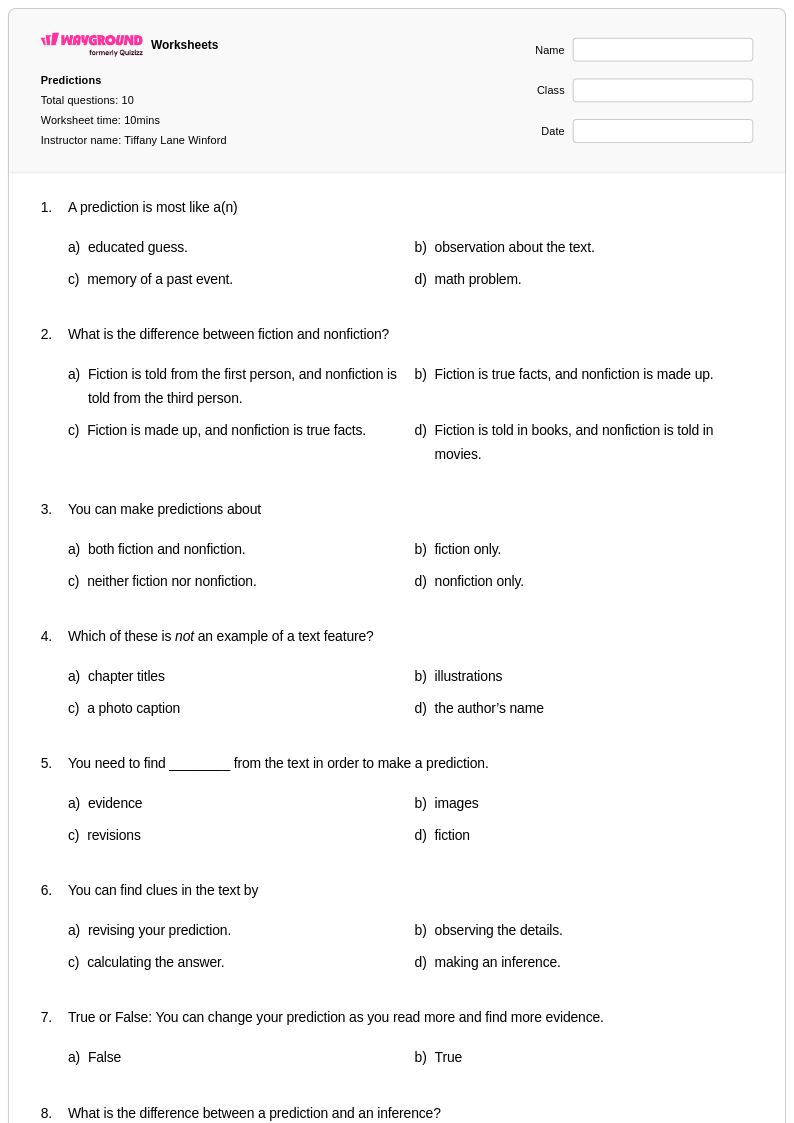
10 Q
2nd - 6th
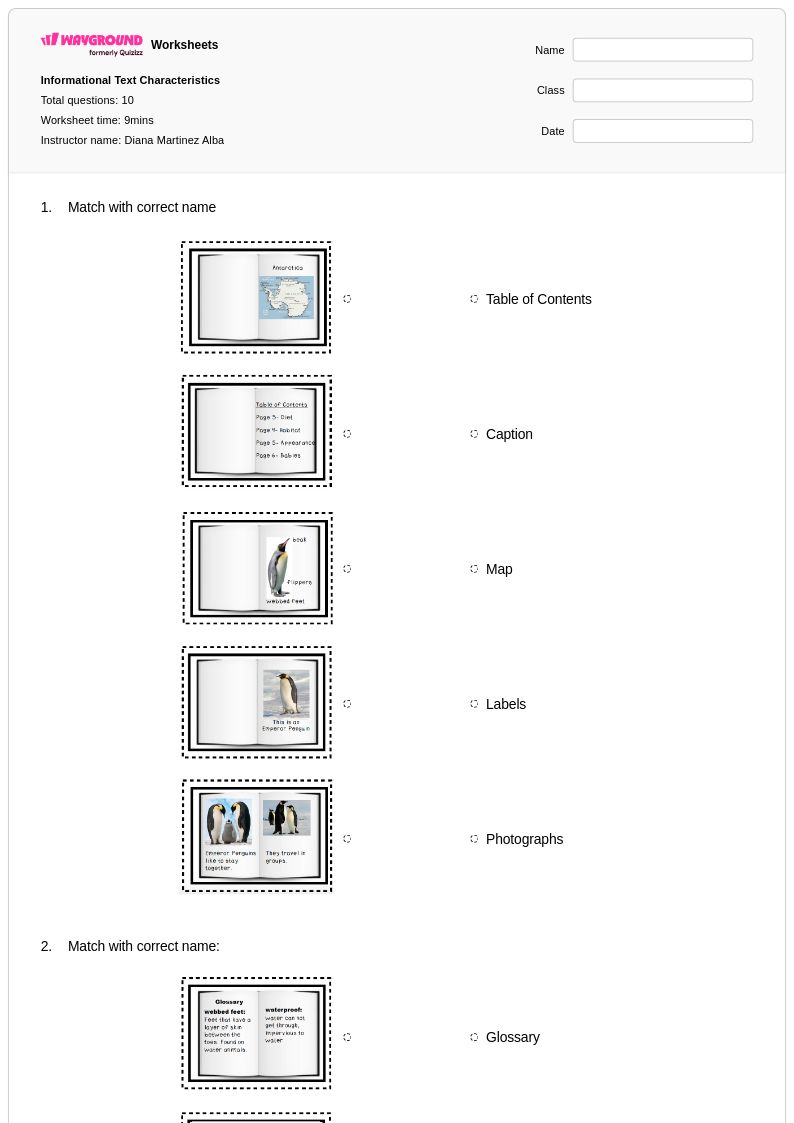
10 Q
3rd
15 Q
2nd - Uni
10 Q
1st - 5th
10 Q
3rd
15 Q
3rd
15 Q
1st - 4th
12 Q
3rd
5 Q
3rd
12 Q
3rd
Explore Making Inferences in Nonfiction Worksheets by Grades
Explore Other Subject Worksheets for class 3
Explore printable Making Inferences in Nonfiction worksheets for Class 3
Making inferences in nonfiction texts represents a critical reading comprehension skill for Class 3 students, and Wayground's extensive collection of worksheets provides targeted practice to develop this analytical ability. These educational resources guide young learners through the process of reading between the lines in factual texts, using context clues, prior knowledge, and textual evidence to draw logical conclusions about information that isn't explicitly stated. The worksheets feature age-appropriate nonfiction passages on topics ranging from animals and nature to simple scientific concepts, accompanied by carefully crafted practice problems that challenge students to make thoughtful inferences. Each printable resource includes comprehensive answer keys that help educators assess student understanding while providing clear explanations for correct responses, making these free materials invaluable for both classroom instruction and independent study.
Wayground's platform, formerly known as Quizizz, empowers teachers with millions of educator-created resources specifically designed to strengthen inference skills in nonfiction reading contexts. The robust search and filtering capabilities allow instructors to quickly locate worksheets that align with specific learning standards and match their students' reading levels, while differentiation tools enable seamless customization for learners with varying abilities. These materials are available in both digital and printable PDF formats, providing flexibility for diverse classroom environments and teaching preferences. Teachers can effectively utilize these resources for lesson planning, targeted remediation for struggling readers, enrichment activities for advanced students, and ongoing skill practice that builds confidence in critical thinking and analytical reading abilities essential for academic success across all subject areas.