
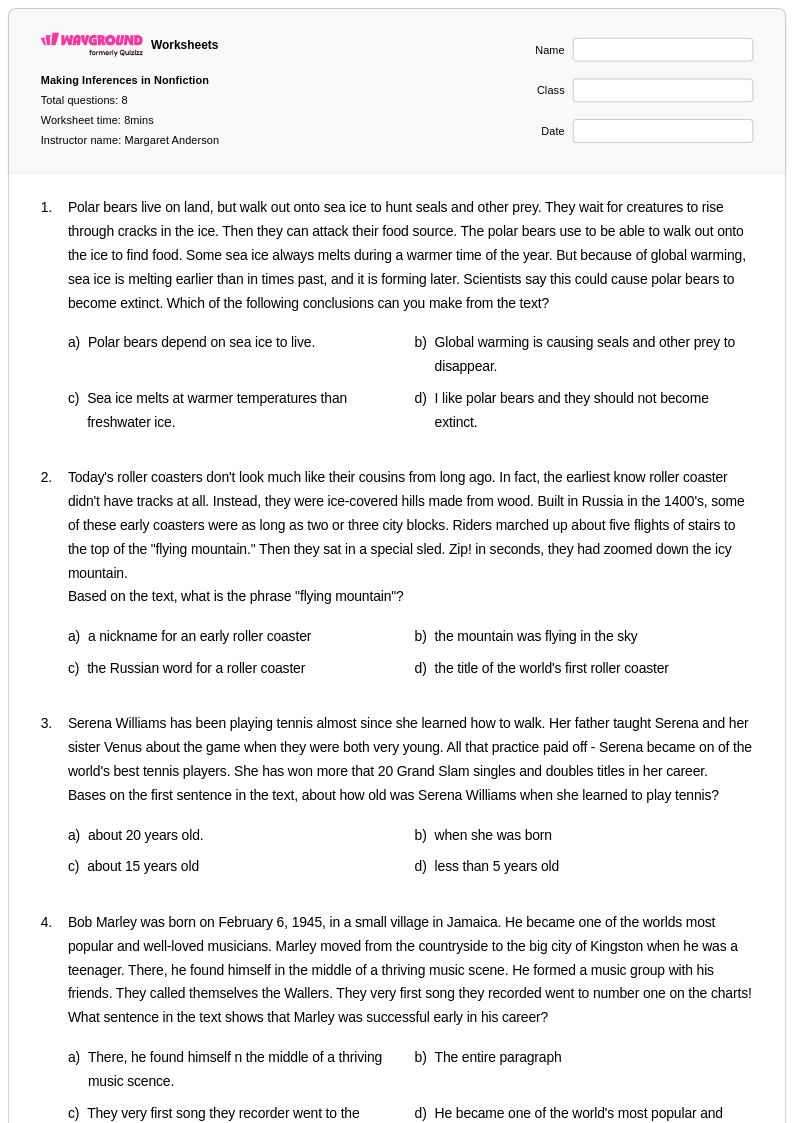
8 Q
5th
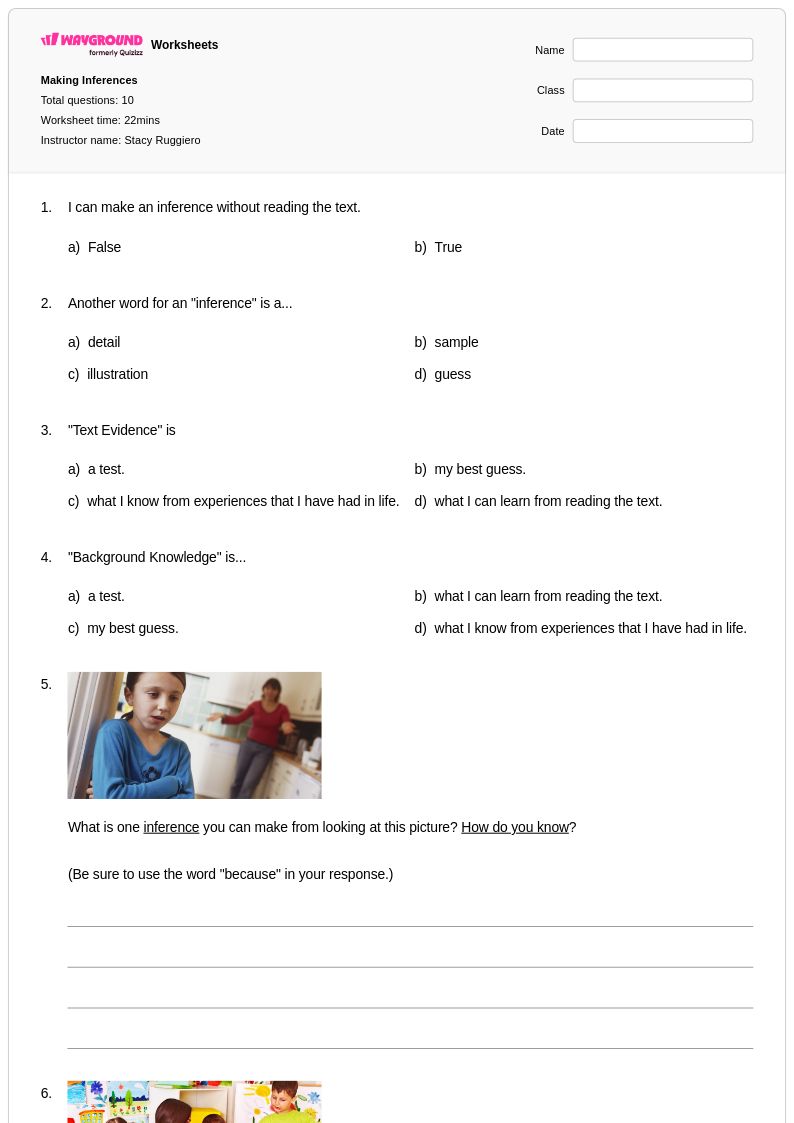
10 Q
4th - 6th
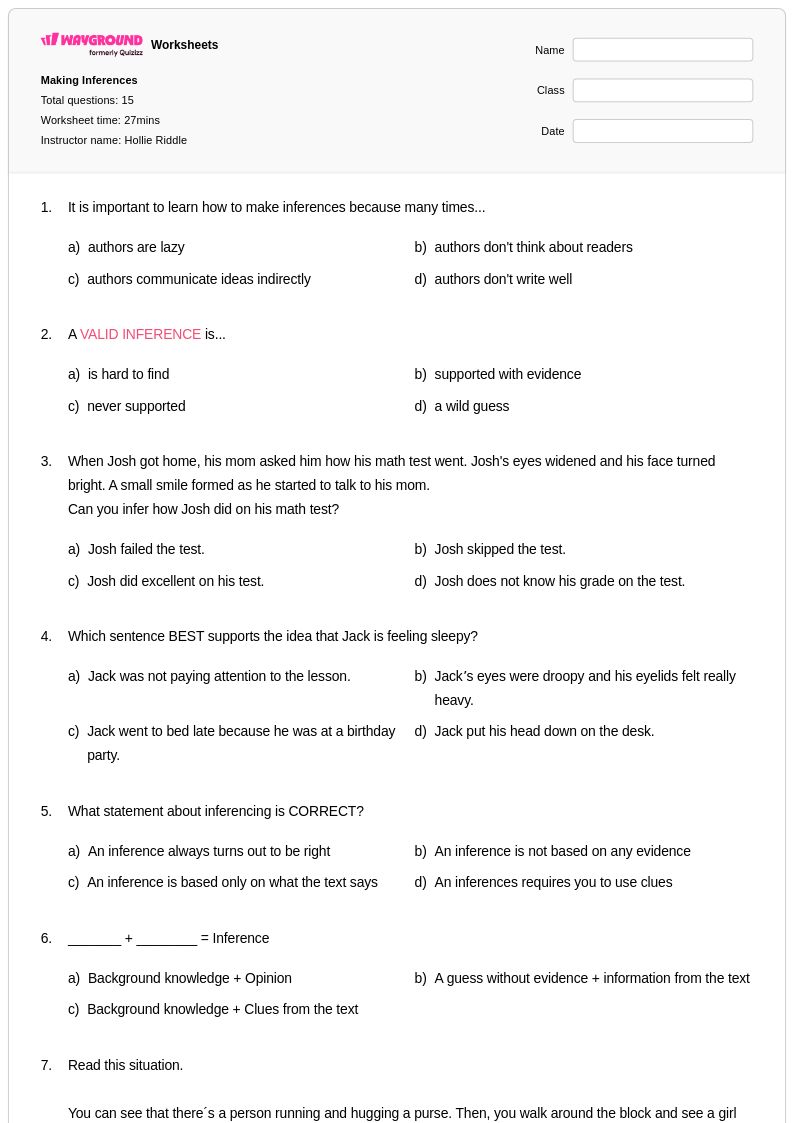
15 Q
5th
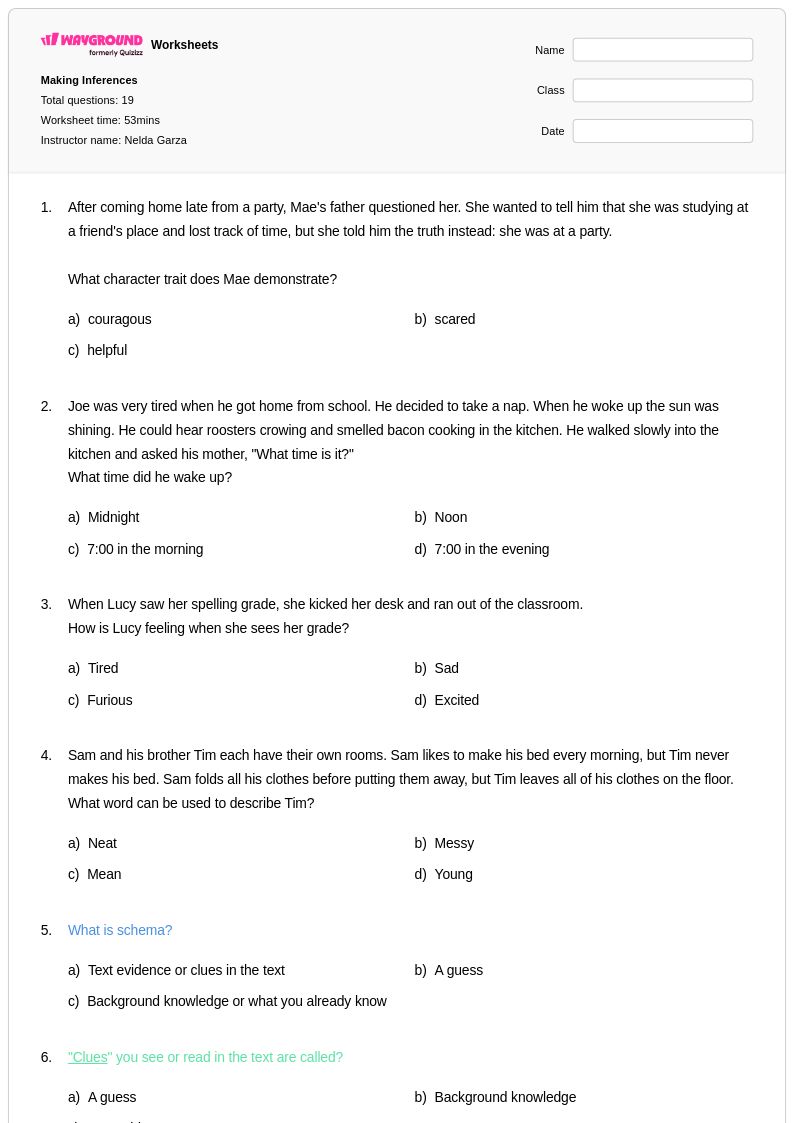
19 Q
5th
15 Q
5th
5 Q
5th - 6th
8 Q
5th
8 Q
5th
10 Q
3rd - 5th
10 Q
5th
15 Q
5th
10 Q
5th
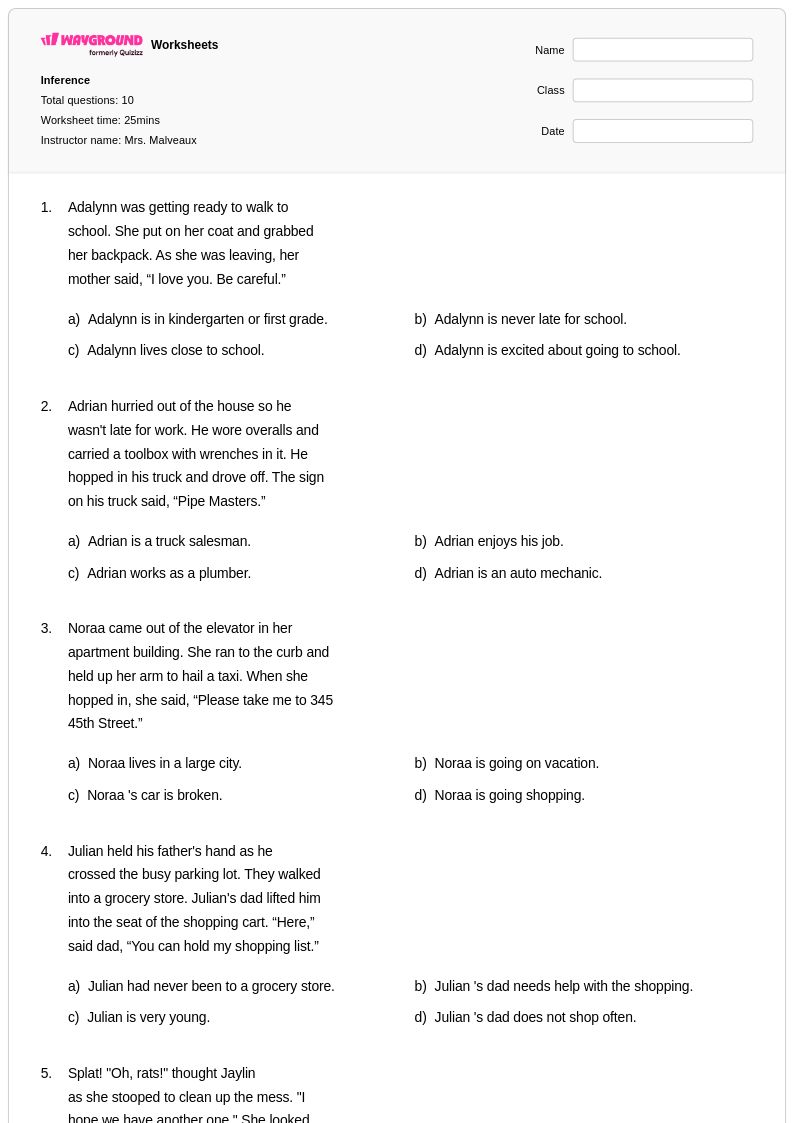
10 Q
2nd - 5th
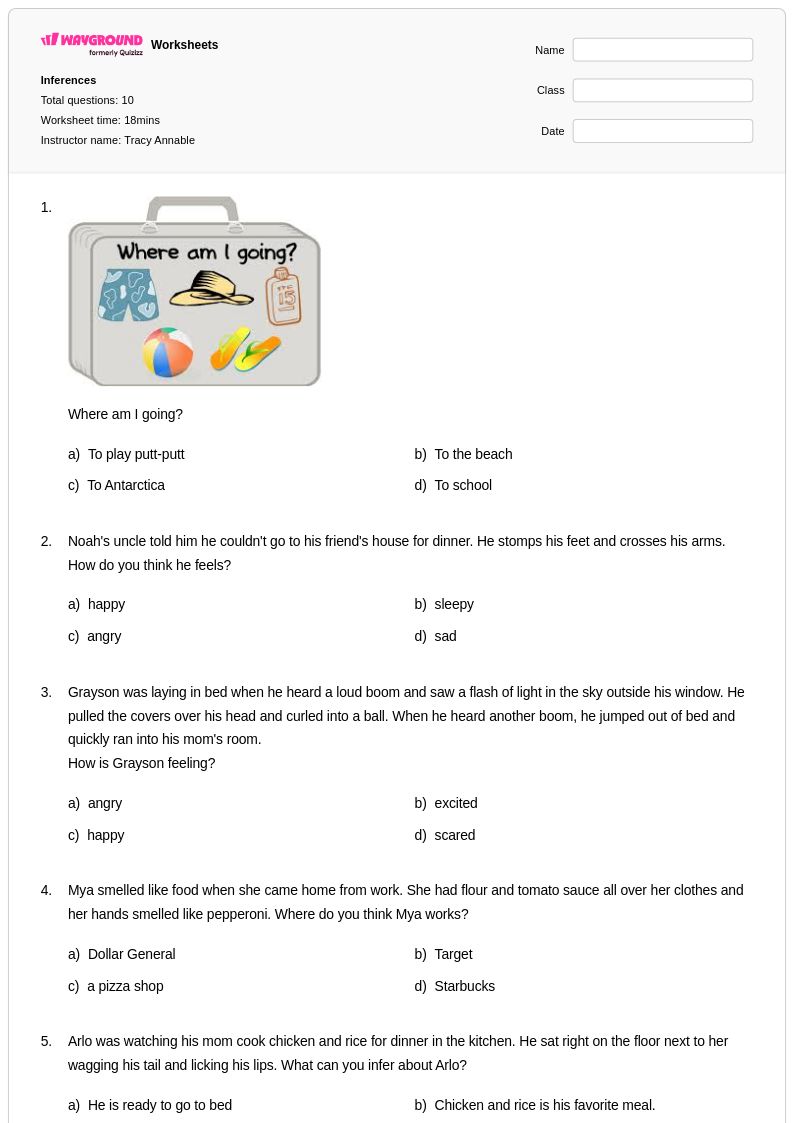
10 Q
5th
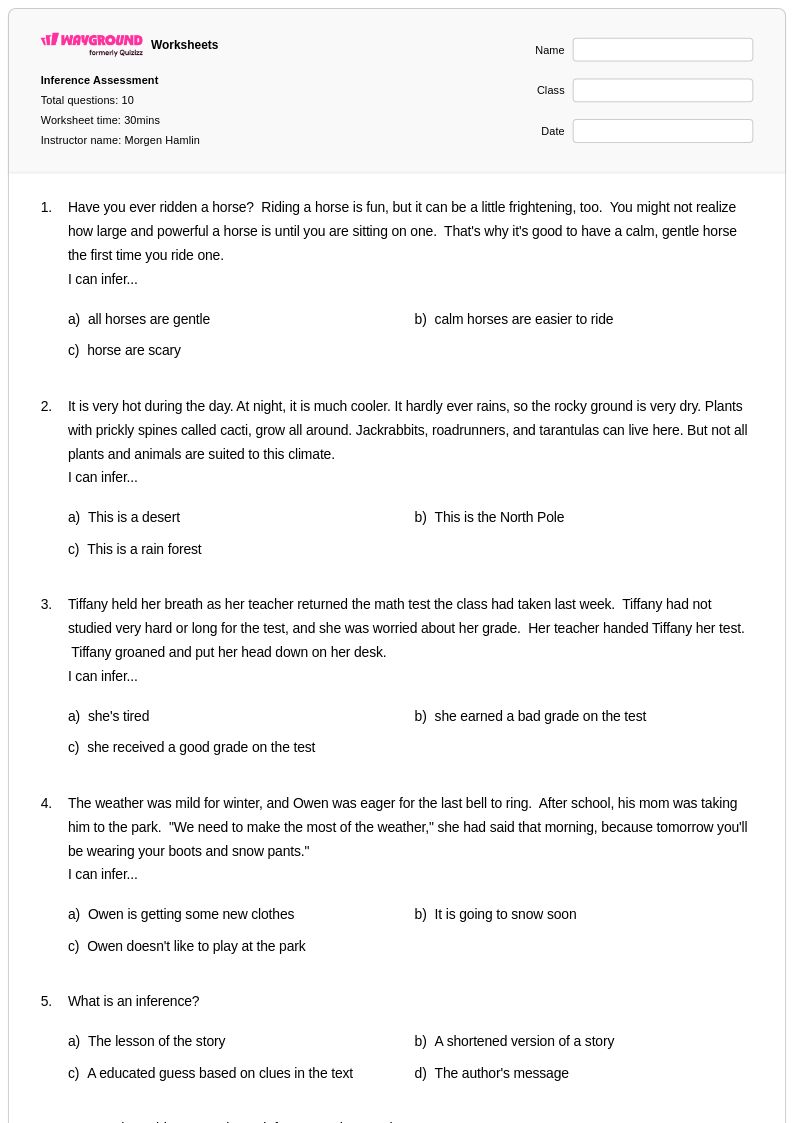
10 Q
5th
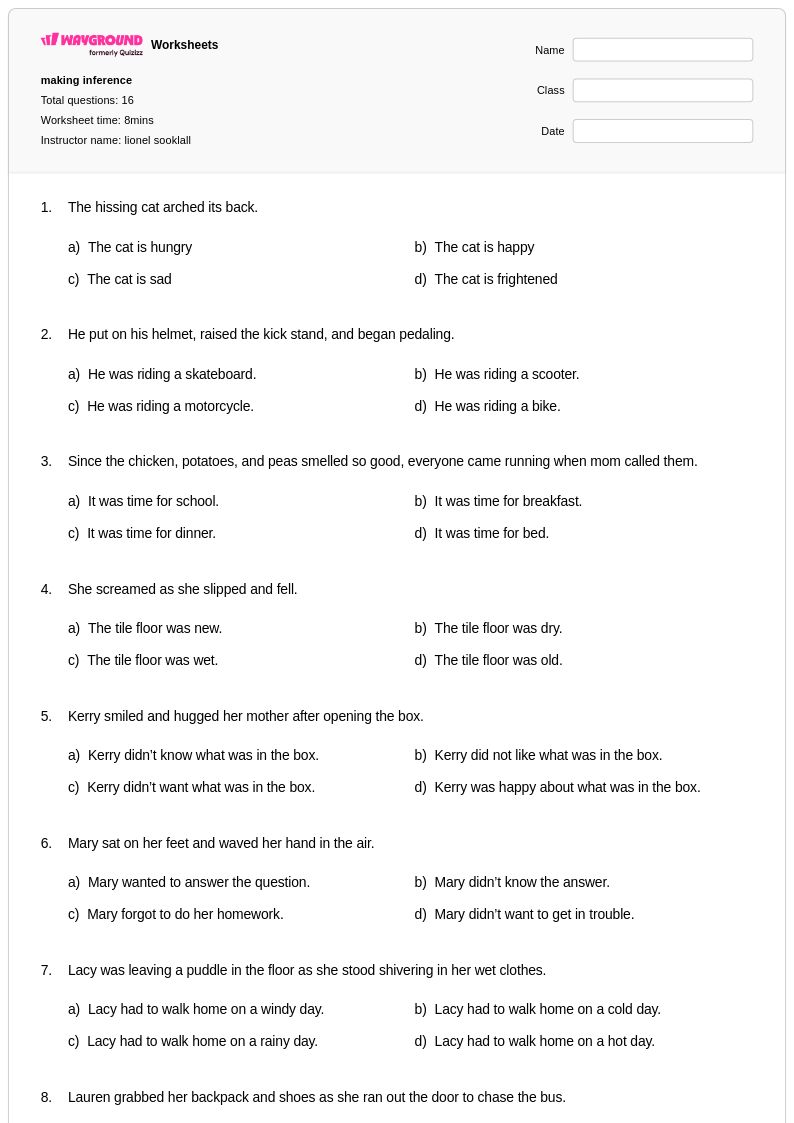
16 Q
5th - 6th
13 Q
5th
19 Q
5th
10 Q
5th - 7th
25 Q
1st - 5th
10 Q
3rd - 6th
10 Q
5th
10 Q
5th
11 Q
1st - 5th
Explore Making Inferences in Nonfiction Worksheets by Grades
Explore Other Subject Worksheets for class 5
Explore printable Making Inferences in Nonfiction worksheets for Class 5
Making inferences in nonfiction texts represents a critical reading comprehension skill that Class 5 students must master to become proficient analytical readers. Wayground's comprehensive collection of making inferences in nonfiction worksheets provides students with targeted practice in extracting implicit information from factual texts, scientific articles, historical documents, and informational passages. These expertly designed worksheets strengthen students' ability to use textual evidence, prior knowledge, and context clues to draw logical conclusions about unstated information in nonfiction materials. Each worksheet includes carefully scaffolded practice problems that guide students through the inference-making process, complete with detailed answer keys that help educators assess student understanding and provide meaningful feedback. The free printable resources feature diverse nonfiction passages across multiple subject areas, ensuring students develop transferable inference skills applicable to social studies, science, and other academic disciplines.
Wayground's extensive library empowers teachers with millions of educator-created worksheets specifically focused on making inferences in nonfiction, all accessible through intuitive search and filtering tools that streamline lesson planning and resource discovery. The platform's robust standards alignment ensures that inference-focused materials meet Class 5 reading comprehension benchmarks while supporting differentiated instruction through customizable difficulty levels and varied text complexity. Teachers can seamlessly adapt worksheets for remediation with struggling readers or enrichment for advanced students, utilizing both printable pdf formats for traditional classroom use and digital versions for technology-integrated learning environments. These flexible formatting options, combined with comprehensive answer keys and detailed explanations, enable educators to efficiently implement targeted skill practice, conduct formative assessments, and provide individualized support that helps students master the sophisticated thinking processes required for successful nonfiction comprehension.