Free Printable Narrative Elements Worksheets for Class 5
Class 5 narrative elements worksheets help students master story components like character, setting, and plot through engaging printables with answer keys and practice problems available as free PDF downloads.
Explore printable Narrative Elements worksheets for Class 5
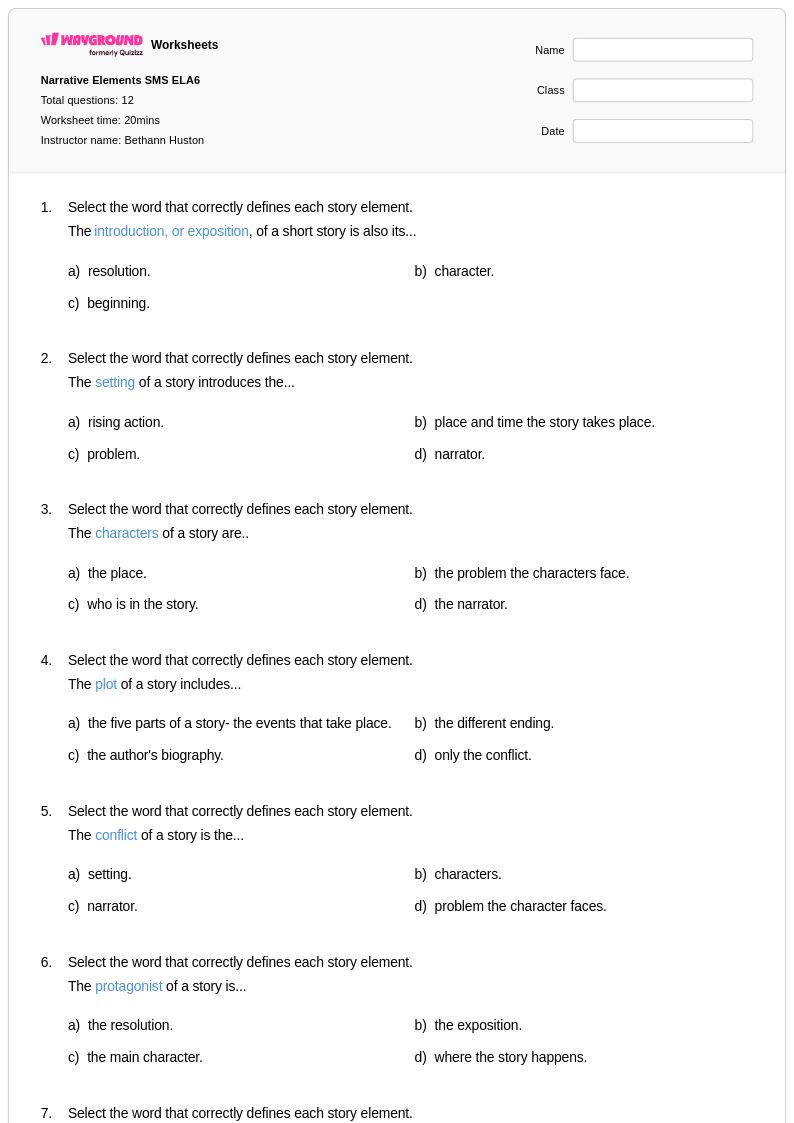
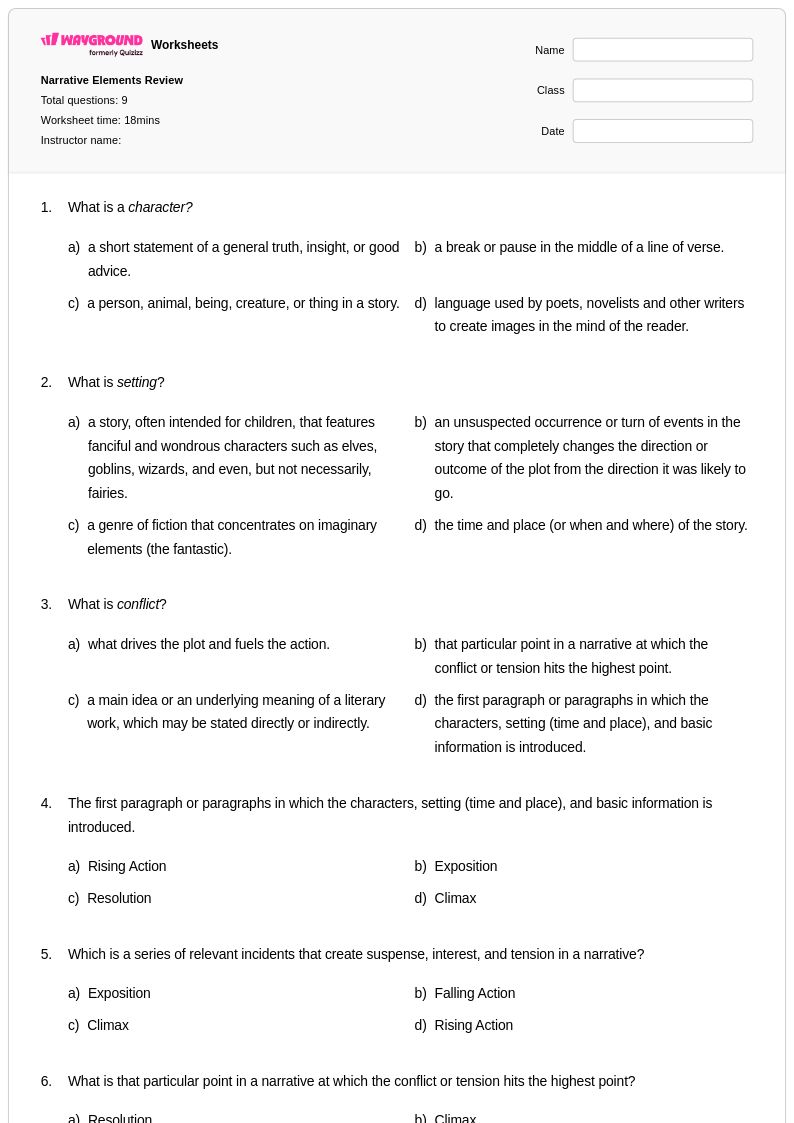
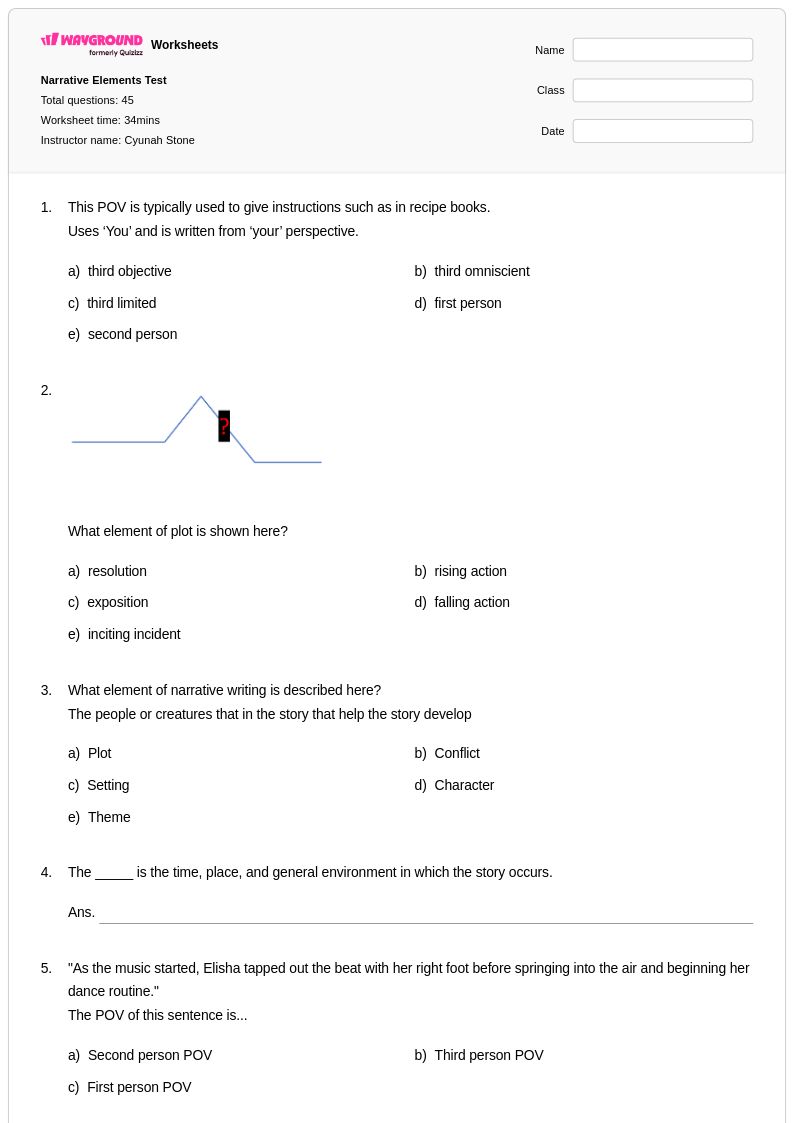
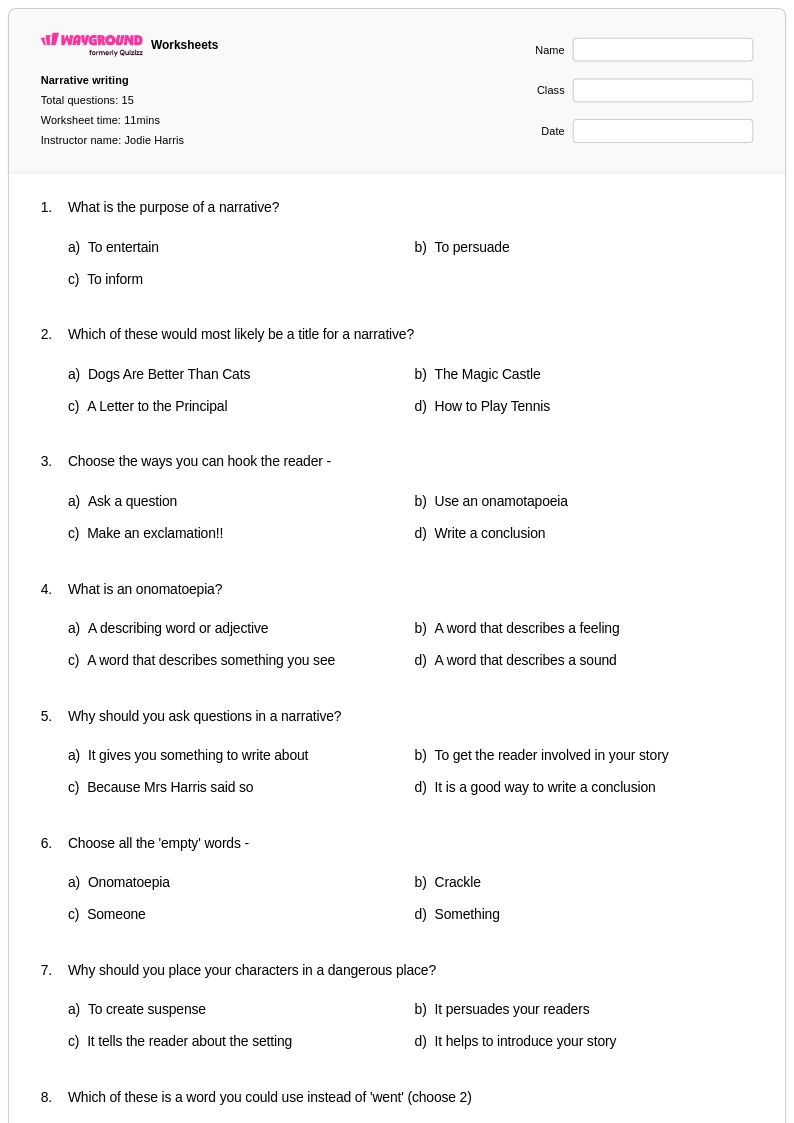
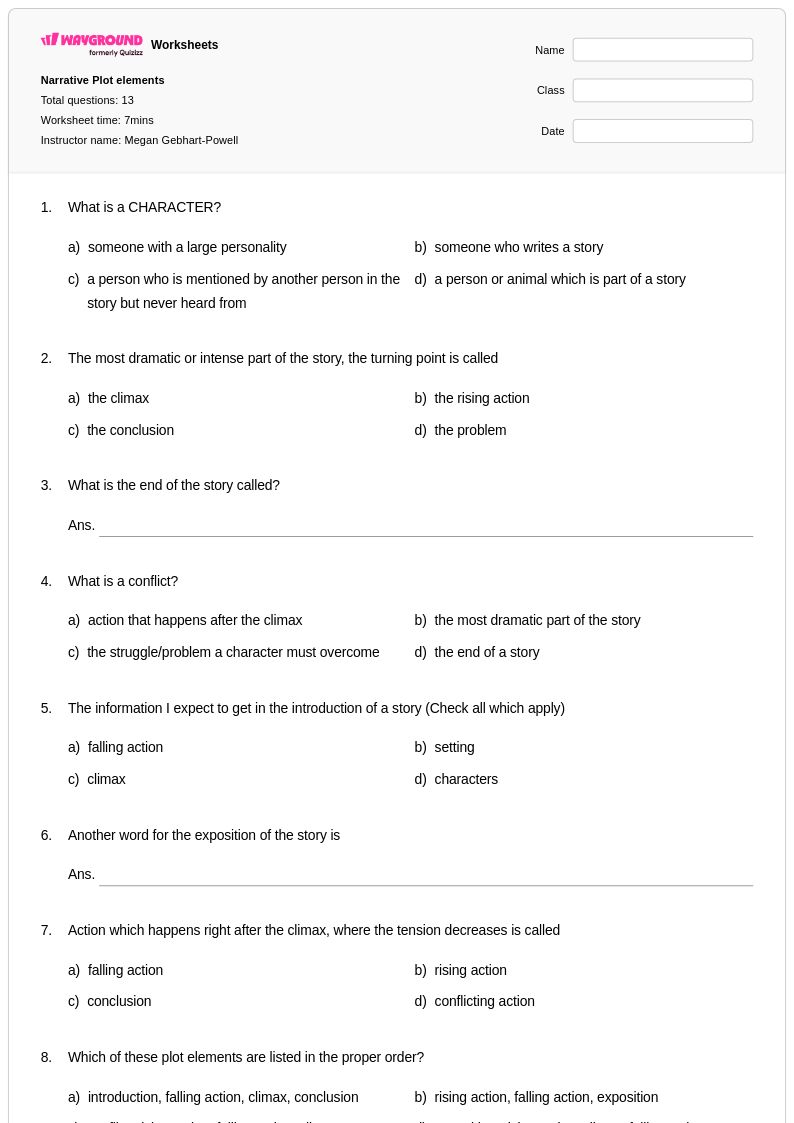
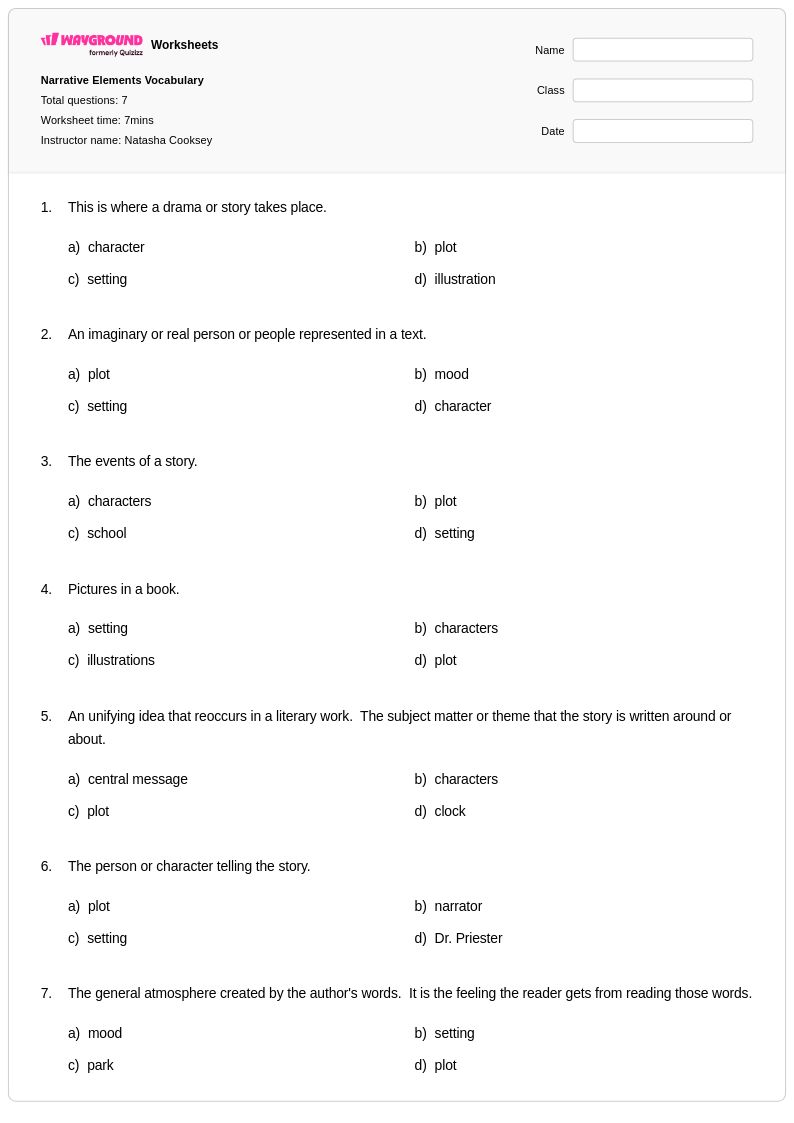
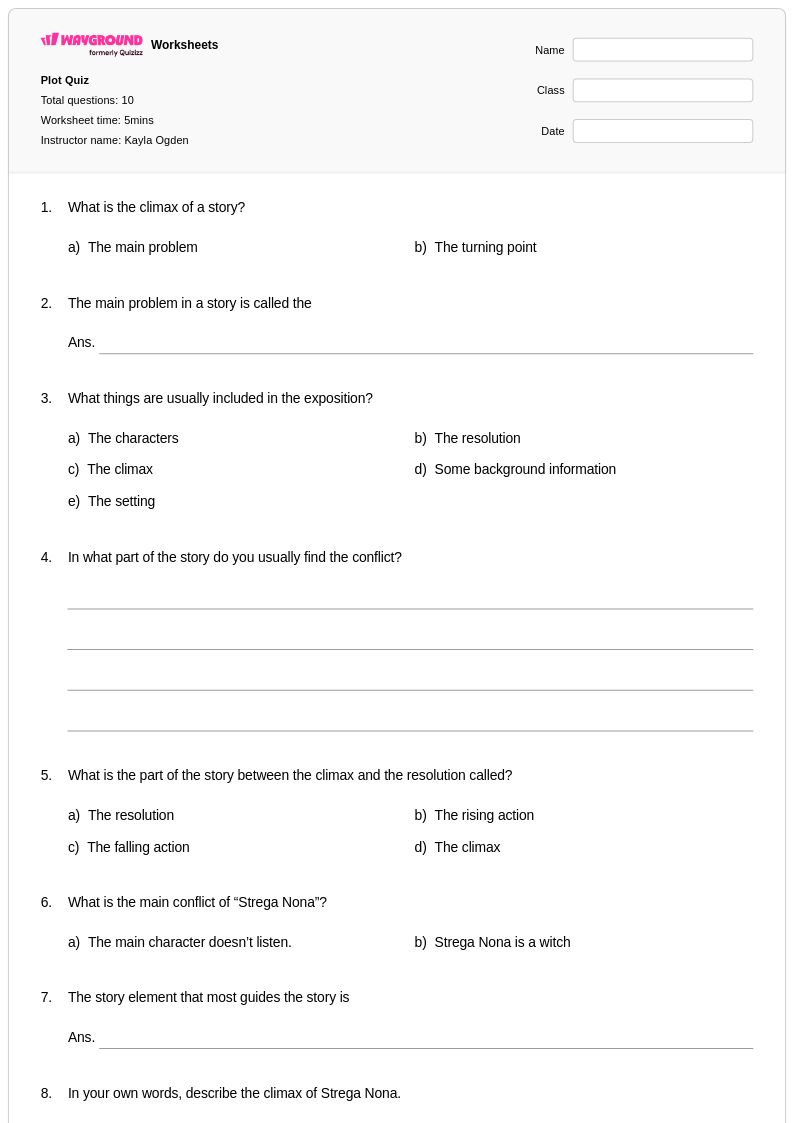
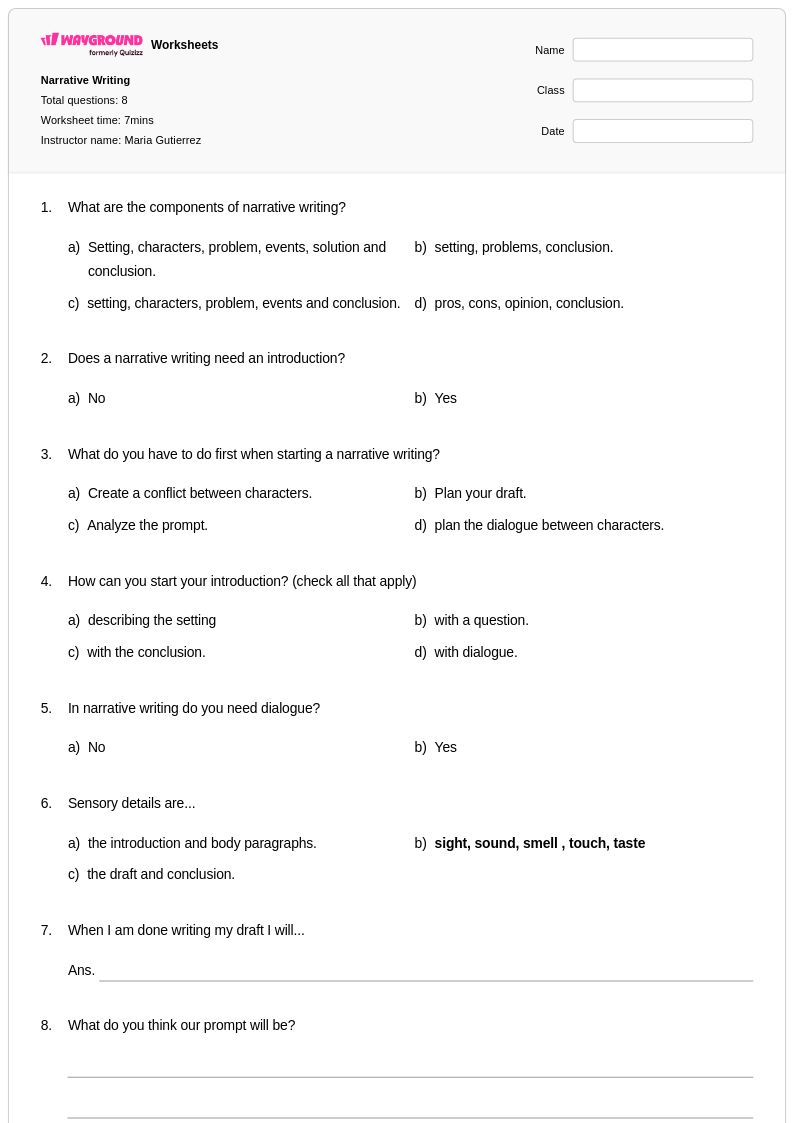
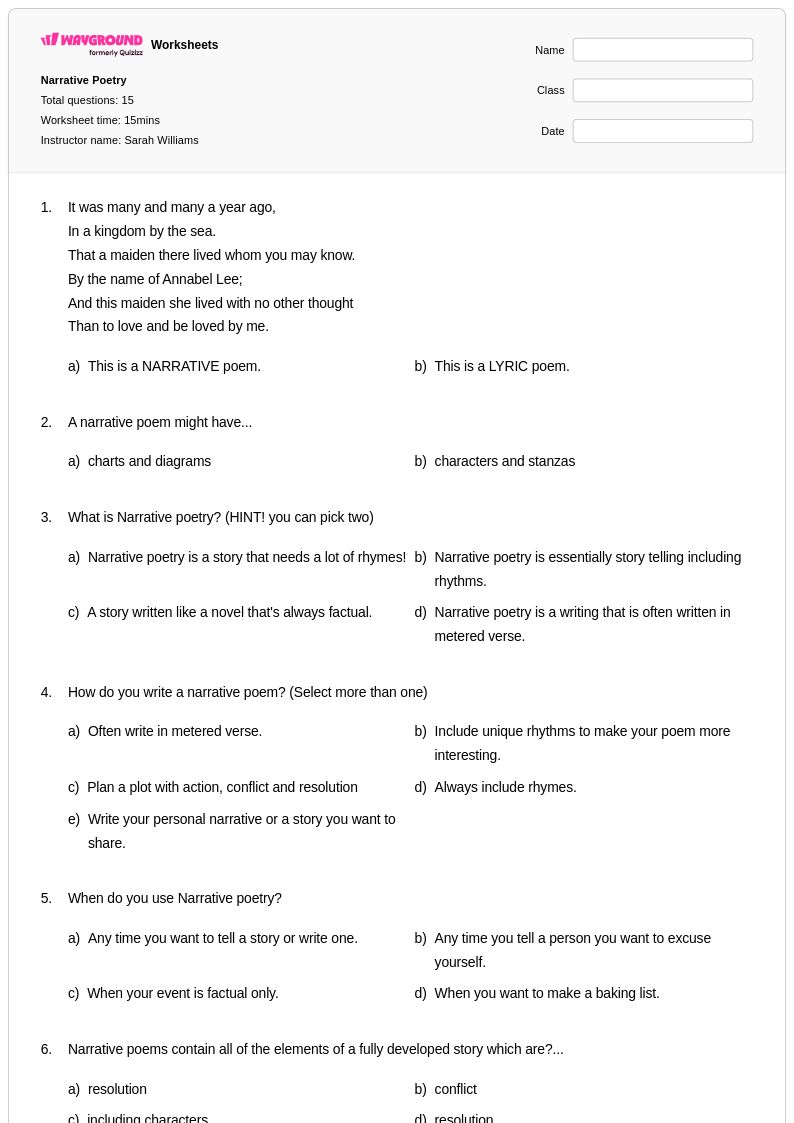
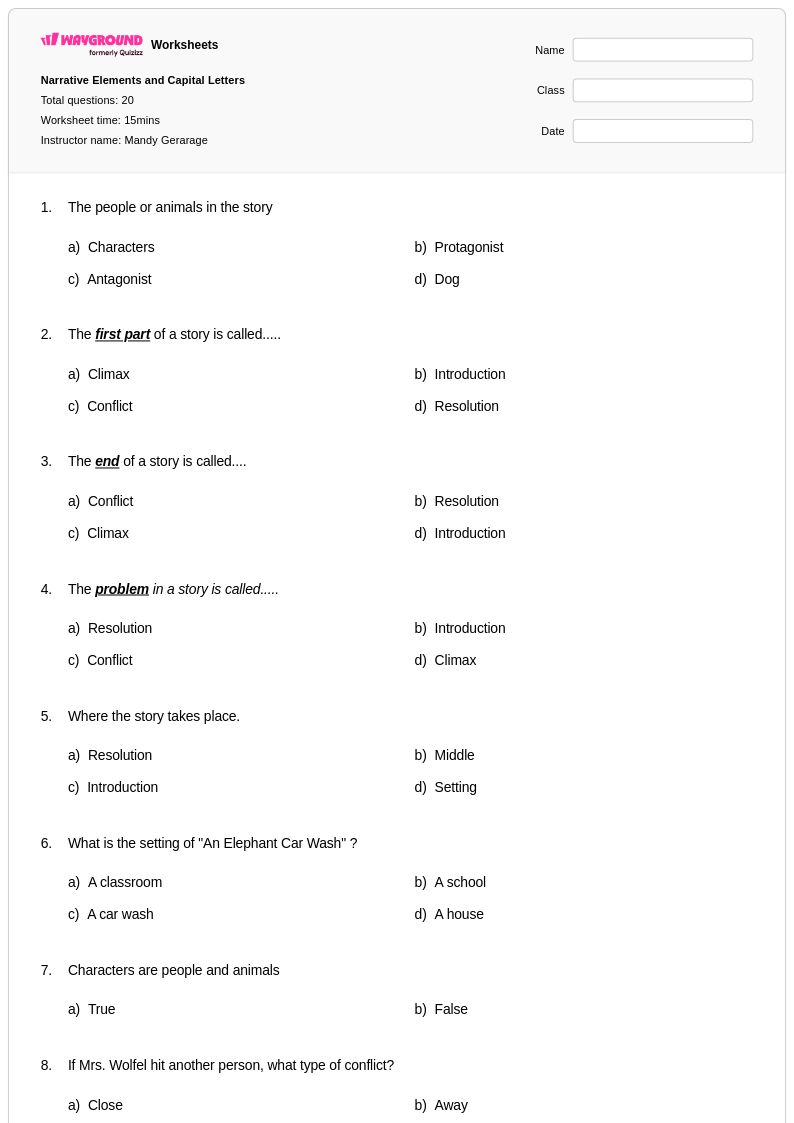
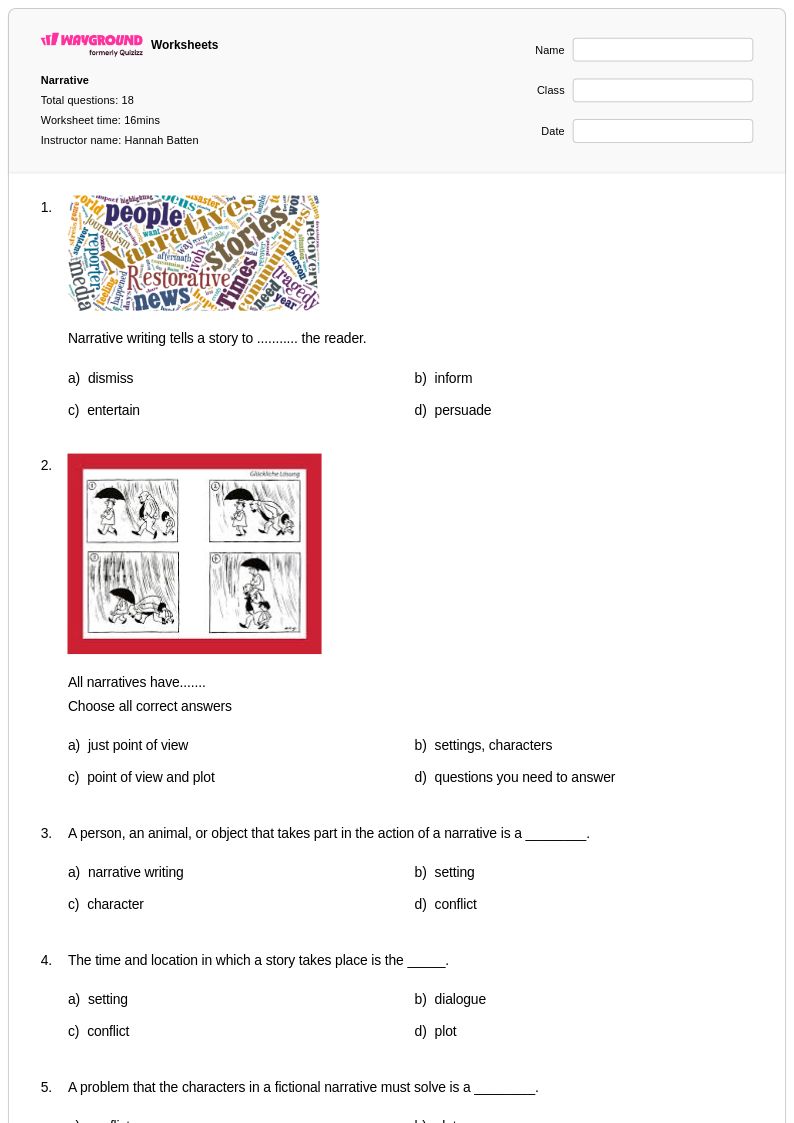
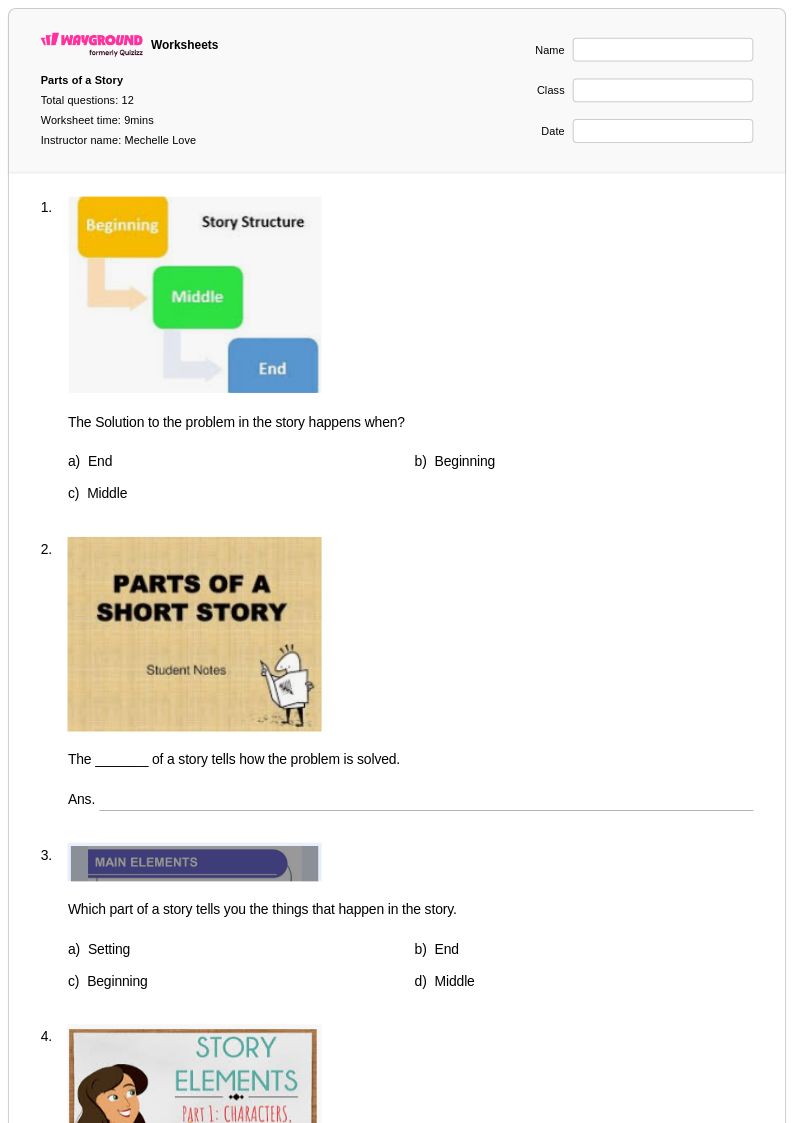
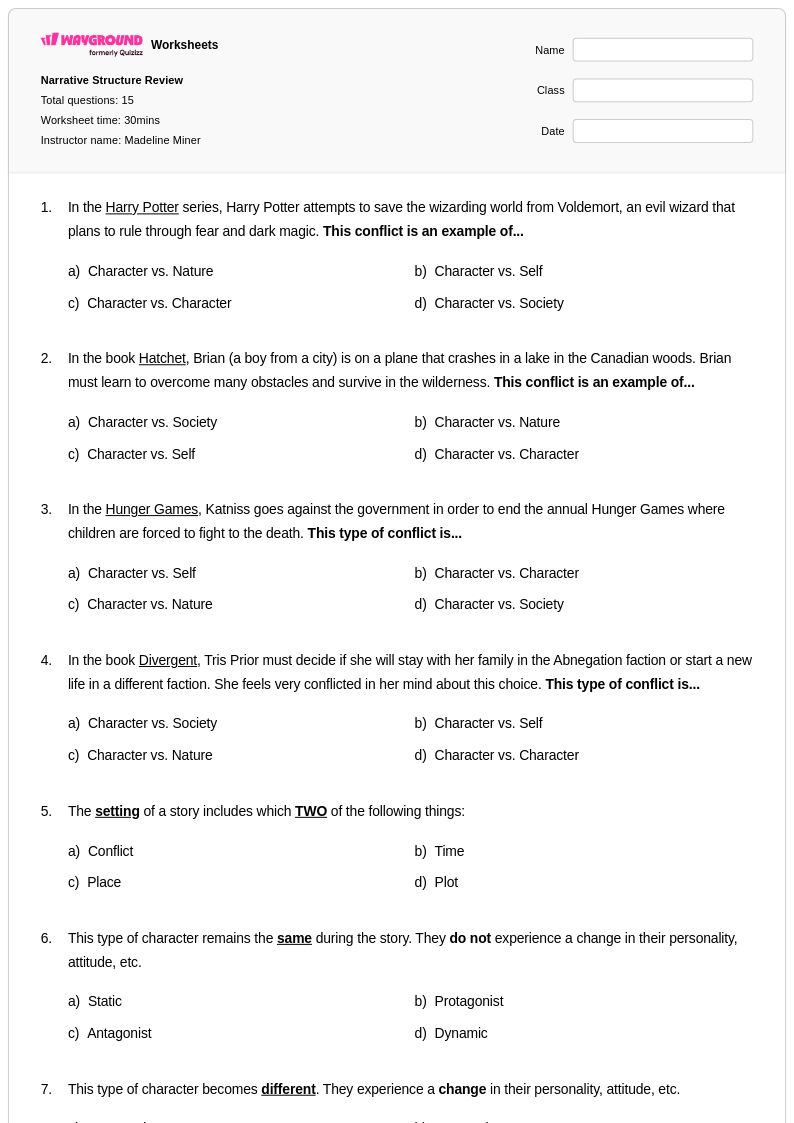
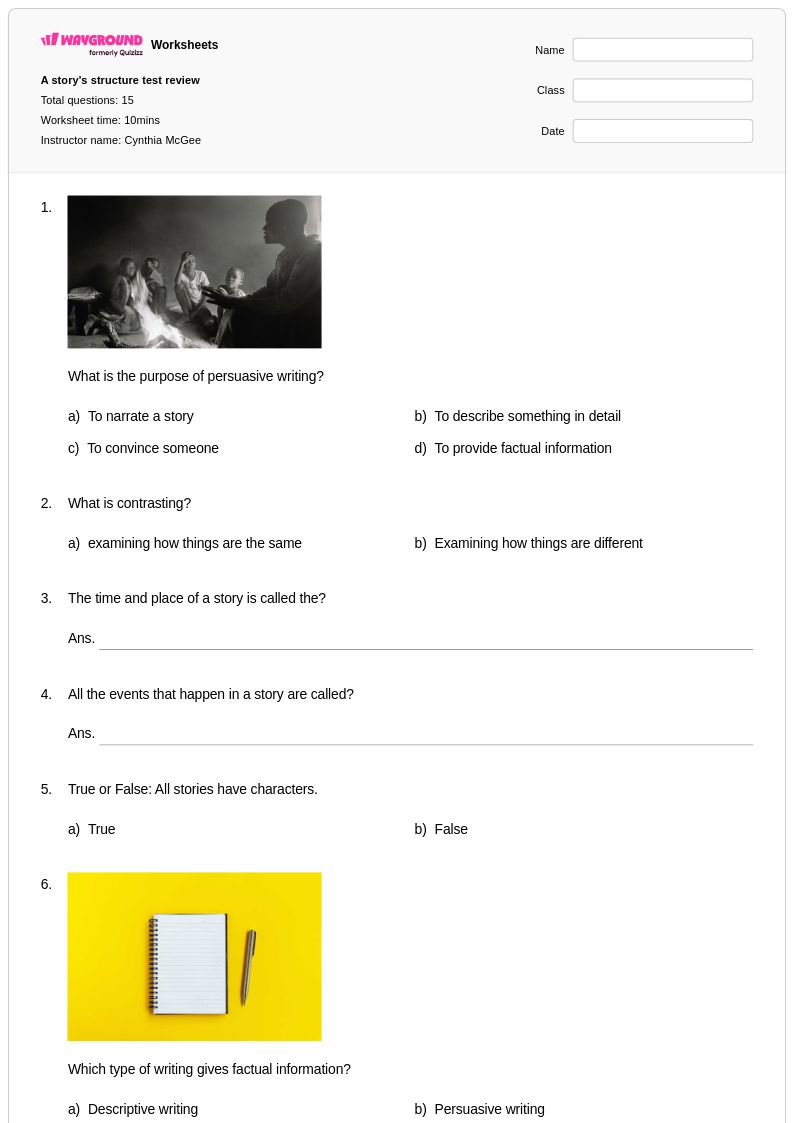
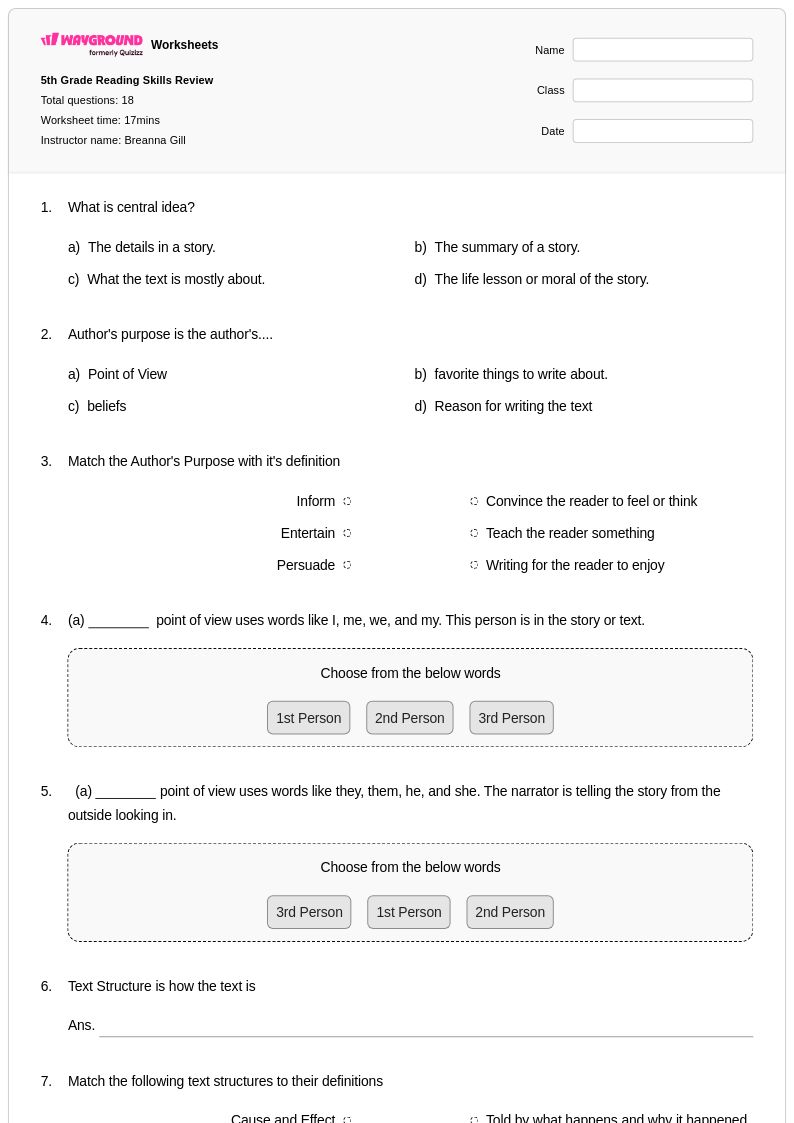
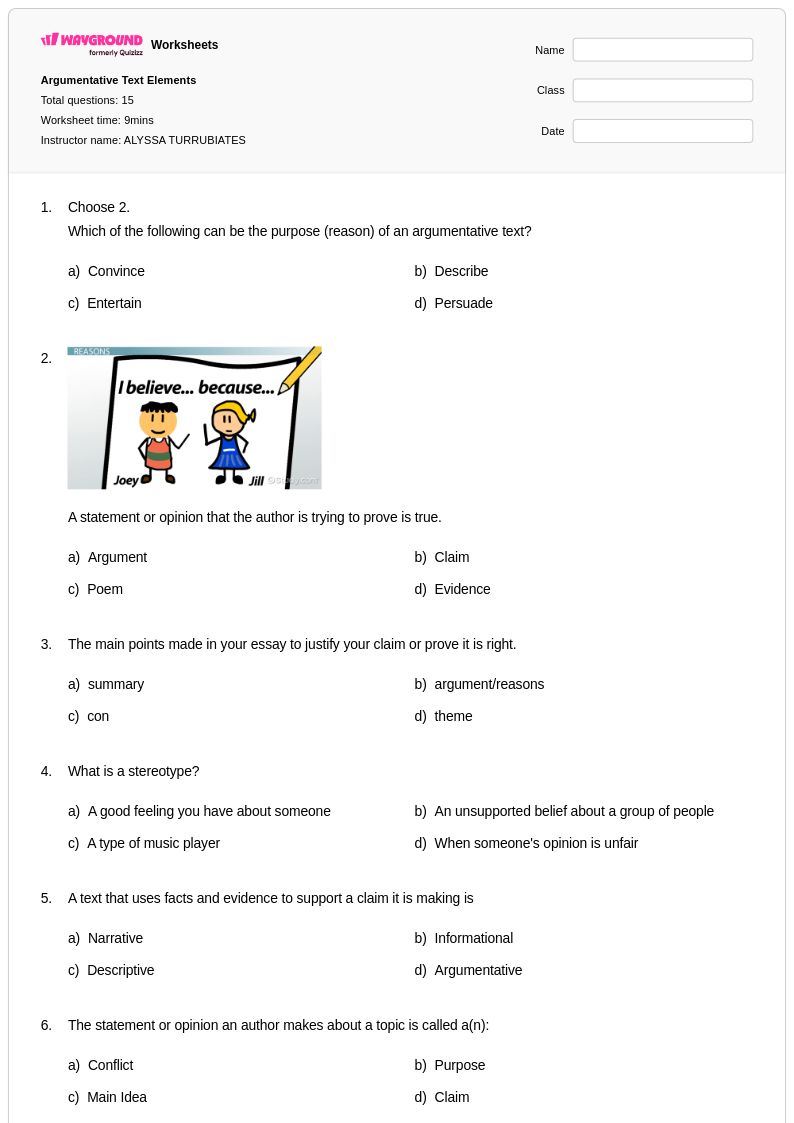
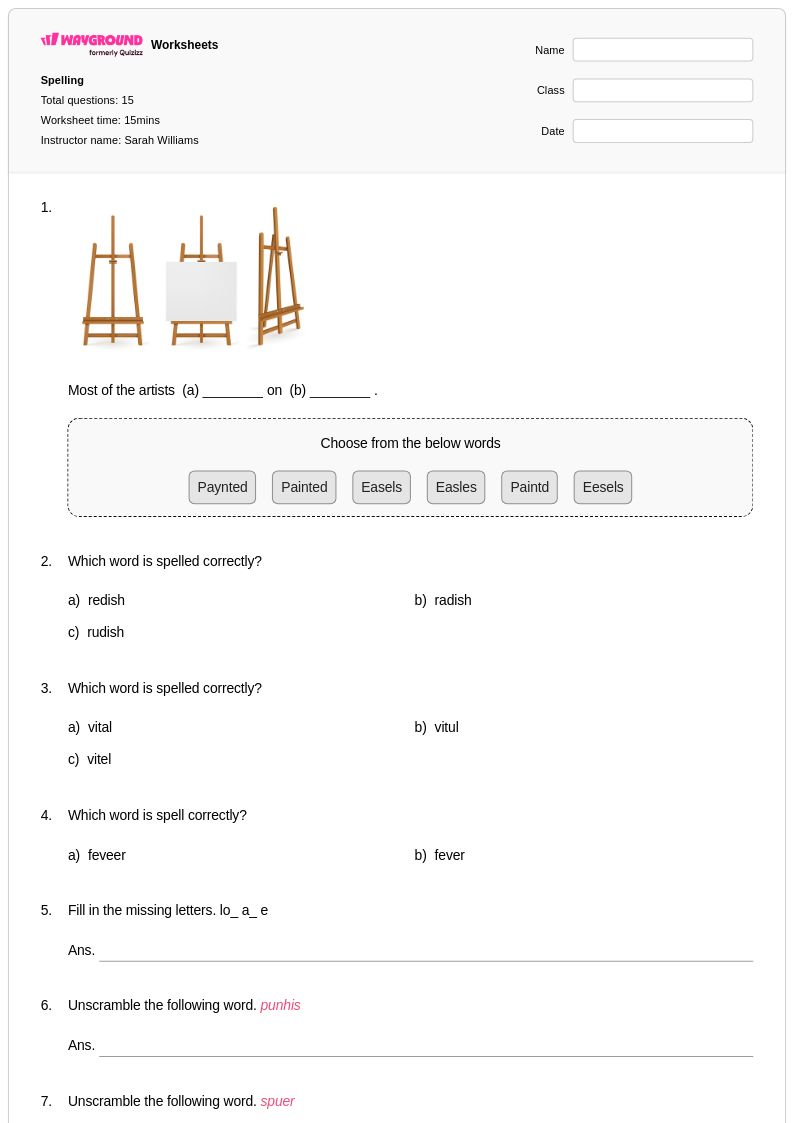
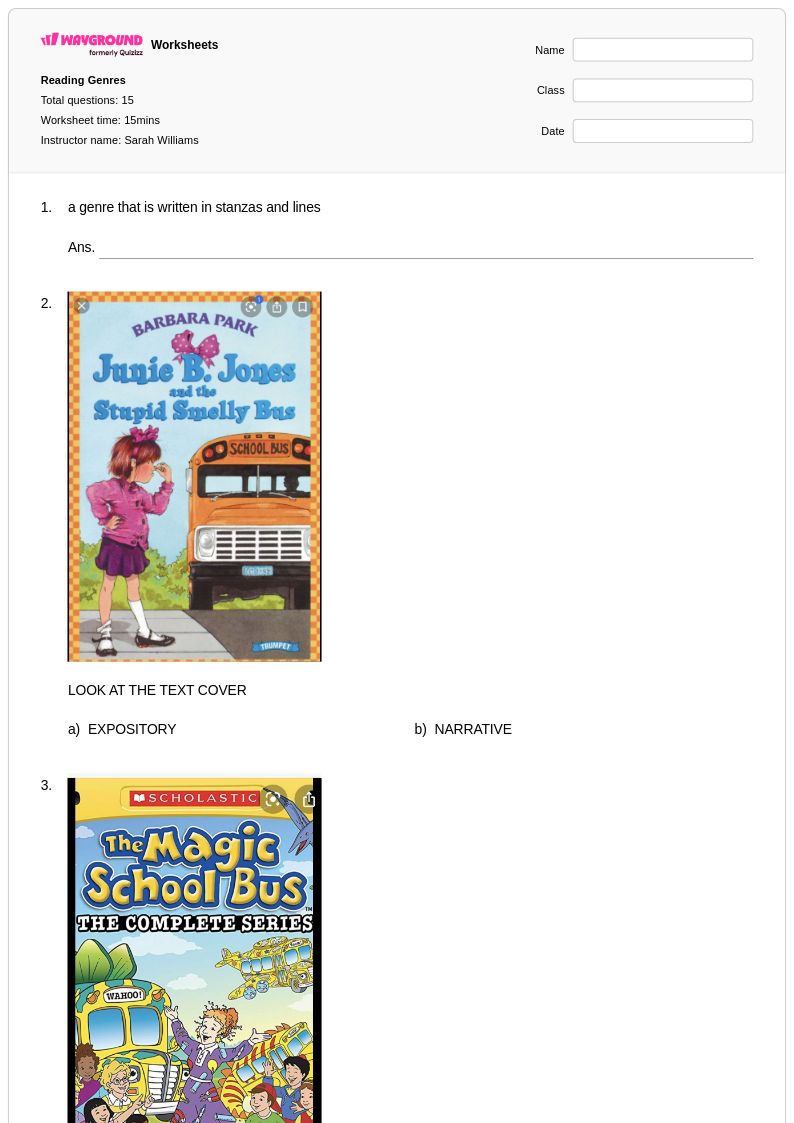
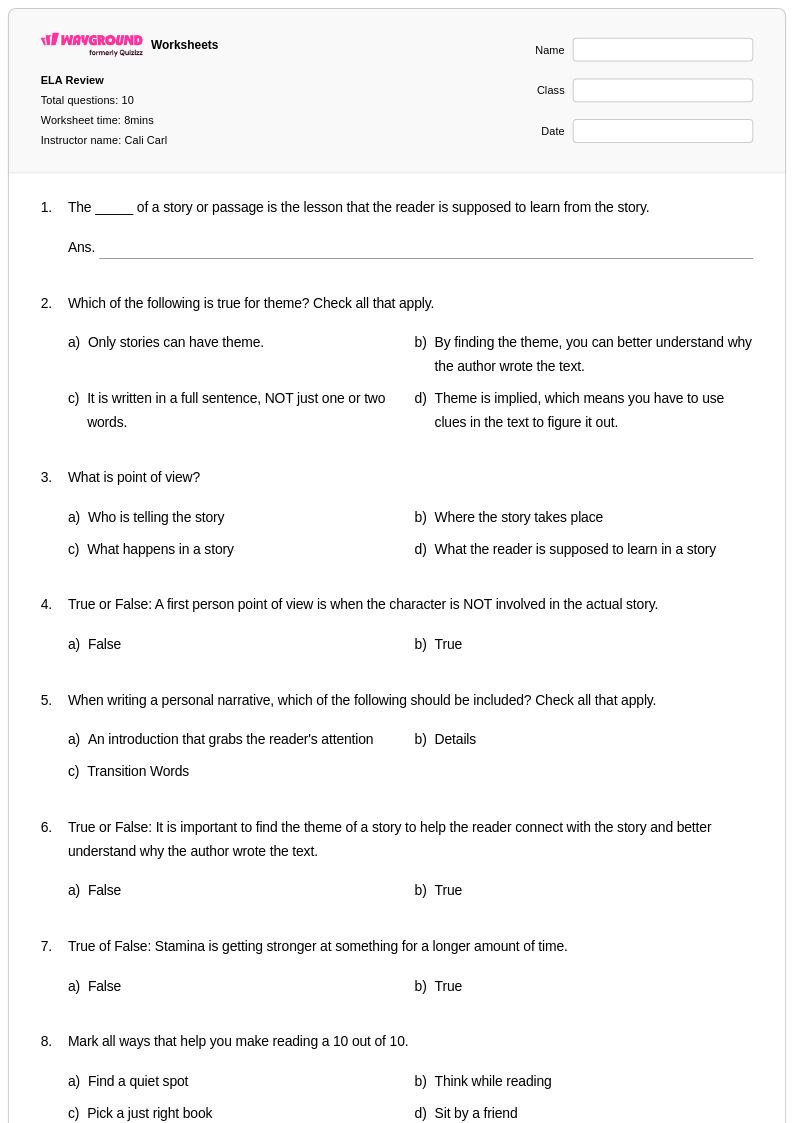
Narrative elements worksheets for Class 5 students available through Wayground (formerly Quizizz) provide comprehensive practice in identifying and analyzing the fundamental components that make stories compelling and meaningful. These expertly crafted printables strengthen students' ability to recognize characters, setting, plot structure, theme, and point of view within various fictional texts, building essential reading comprehension skills that serve as the foundation for literary analysis. Each worksheet includes carefully selected passages paired with targeted practice problems that guide fifth-grade students through systematic examination of how authors develop characters, establish conflict, and create resolution, with answer keys provided to support both independent learning and teacher-directed instruction in pdf format.
Wayground's extensive collection of narrative elements worksheets draws from millions of teacher-created resources, offering educators powerful search and filtering capabilities to locate materials perfectly aligned with Class 5 reading standards and individual student needs. The platform's differentiation tools enable teachers to customize worksheet difficulty levels and modify practice problems to support both remediation for struggling readers and enrichment opportunities for advanced students. Available in both printable pdf formats for traditional classroom use and digital versions for interactive learning environments, these resources streamline lesson planning while providing flexible options for targeted skill practice, allowing educators to efficiently address diverse learning styles and reinforce critical narrative analysis concepts through systematic, standards-aligned instruction.
FAQs
How do I teach narrative elements to students?
Start by introducing each narrative element in isolation before asking students to analyze how they work together. Use mentor texts — short stories or picture books — to model how character development, setting, plot structure, conflict, and theme each contribute to the whole. Once students can identify elements independently, guide them toward synthesis: asking why an author made specific choices and how those choices shape meaning. Anchor charts and structured note-taking templates help students internalize the vocabulary before applying it independently.
What are the key narrative elements students need to know?
The core narrative elements are character, setting, plot, conflict, theme, and point of view. Character development refers to how a character changes or is revealed over the course of a story. Plot is the sequence of events, often analyzed through a story arc (exposition, rising action, climax, falling action, resolution). Conflict drives the plot and can be internal or external. Theme is the central message or insight, and point of view determines whose perspective shapes the narrative.
What exercises help students practice identifying narrative elements?
Effective practice includes story mapping activities where students fill in each element after reading a passage, as well as targeted questions that ask students to cite textual evidence for their answers. Compare-and-contrast tasks — asking how two stories handle conflict differently, for example — deepen analytical thinking beyond simple identification. Short constructed-response prompts that require students to explain how a specific element contributes to the story's meaning are especially useful for building higher-order comprehension skills.
What mistakes do students commonly make when analyzing narrative elements?
The most common error is confusing plot summary with thematic analysis — students often retell what happened instead of explaining what it means. Students also frequently conflate setting with background detail, not recognizing that setting can actively create mood or drive conflict. Another frequent misconception is treating theme as a single word (e.g., 'friendship') rather than as a complete statement about what the story says about that concept. Teaching students to distinguish these layers explicitly, with modeled examples, reduces these errors significantly.
How can I differentiate narrative elements instruction for struggling readers?
For struggling readers, scaffold the task by focusing on one element at a time rather than requiring students to analyze all elements simultaneously. Using graphic organizers with sentence starters helps students structure their thinking before writing. On Wayground, teachers can enable Read Aloud so that passages and questions are read to students who need audio support, and Reduced Answer Choices can lower cognitive load for students who find multiple-choice tasks overwhelming. These accommodations can be assigned to individual students without affecting the rest of the class.
How do I use Wayground's narrative elements worksheets in my classroom?
Wayground's narrative elements worksheets are available as printable PDFs for traditional classroom use and in digital formats for technology-integrated environments, including the option to host them as a quiz directly on Wayground. Teachers can use these resources for initial instruction, targeted remediation, or enrichment, depending on where students are in their learning. The platform allows teachers to search and filter by specific narrative element — such as theme or point of view — so it's easy to find materials that match the exact focus of a lesson.