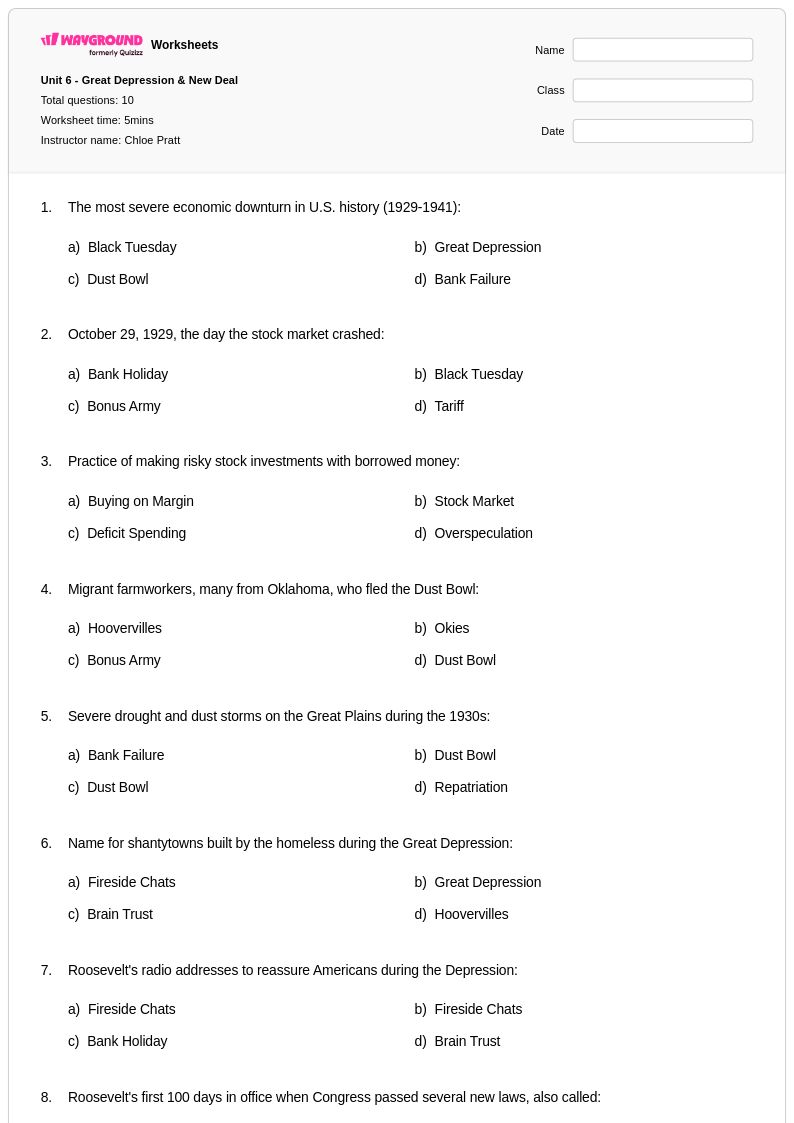
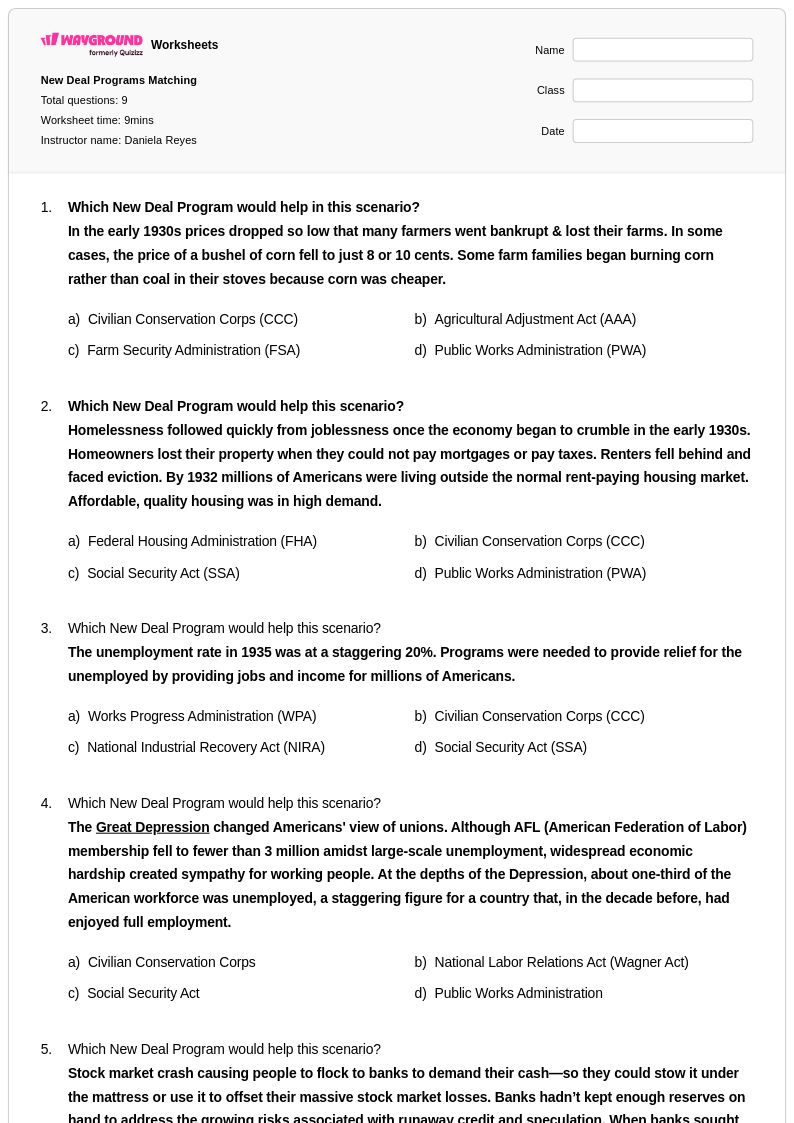
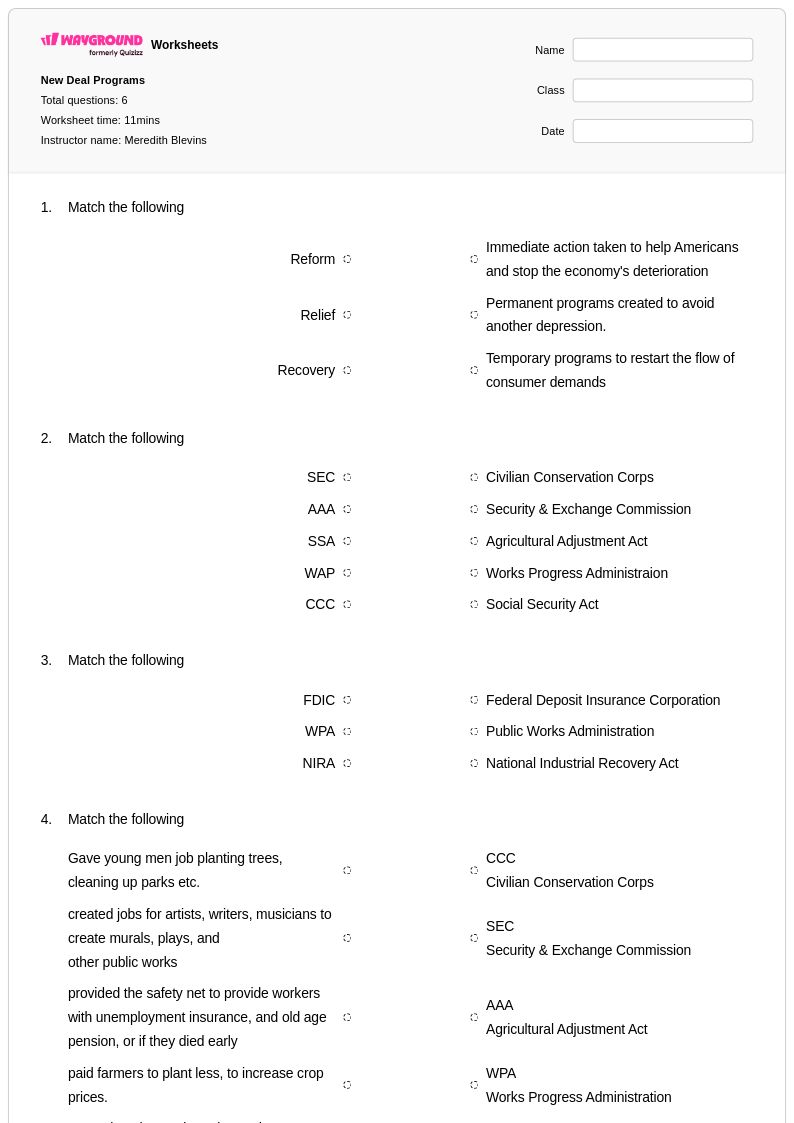
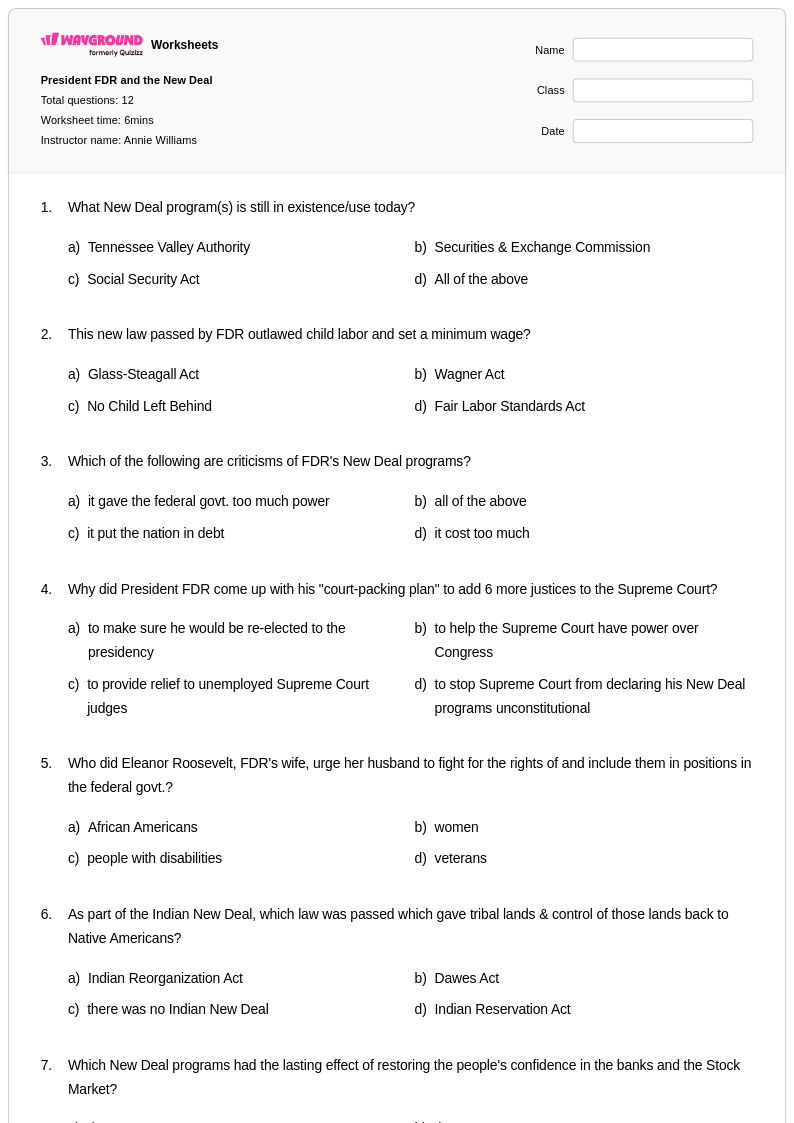
Class 11 New Deal worksheets and printables help students explore Roosevelt's programs and policies through comprehensive practice problems, free PDF resources, and detailed answer keys for effective U.S. History learning.
Explore printable New Deal worksheets for Class 11
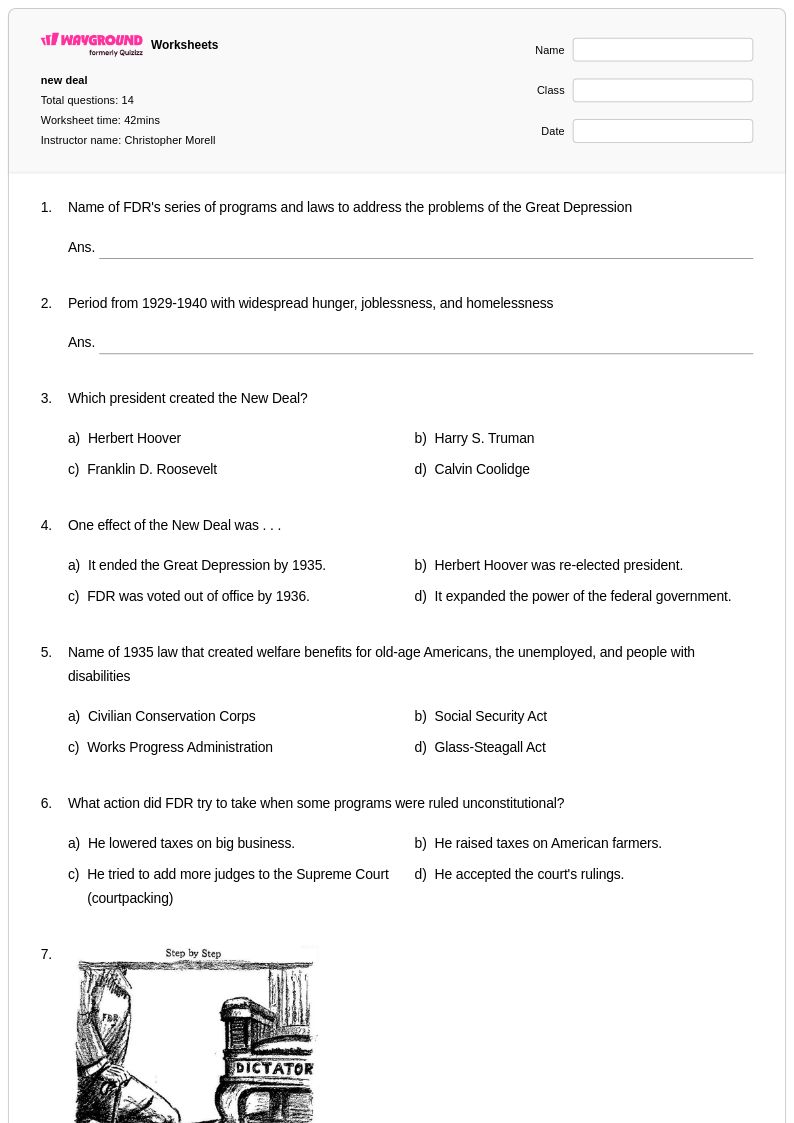
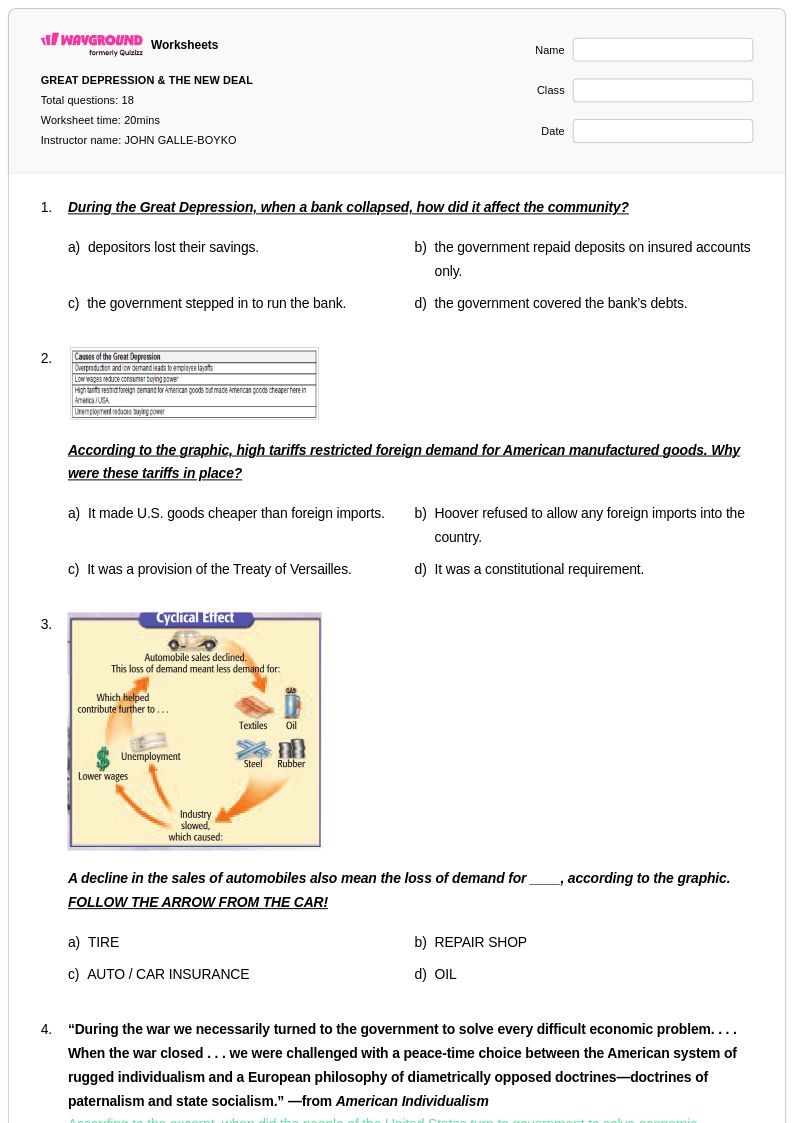
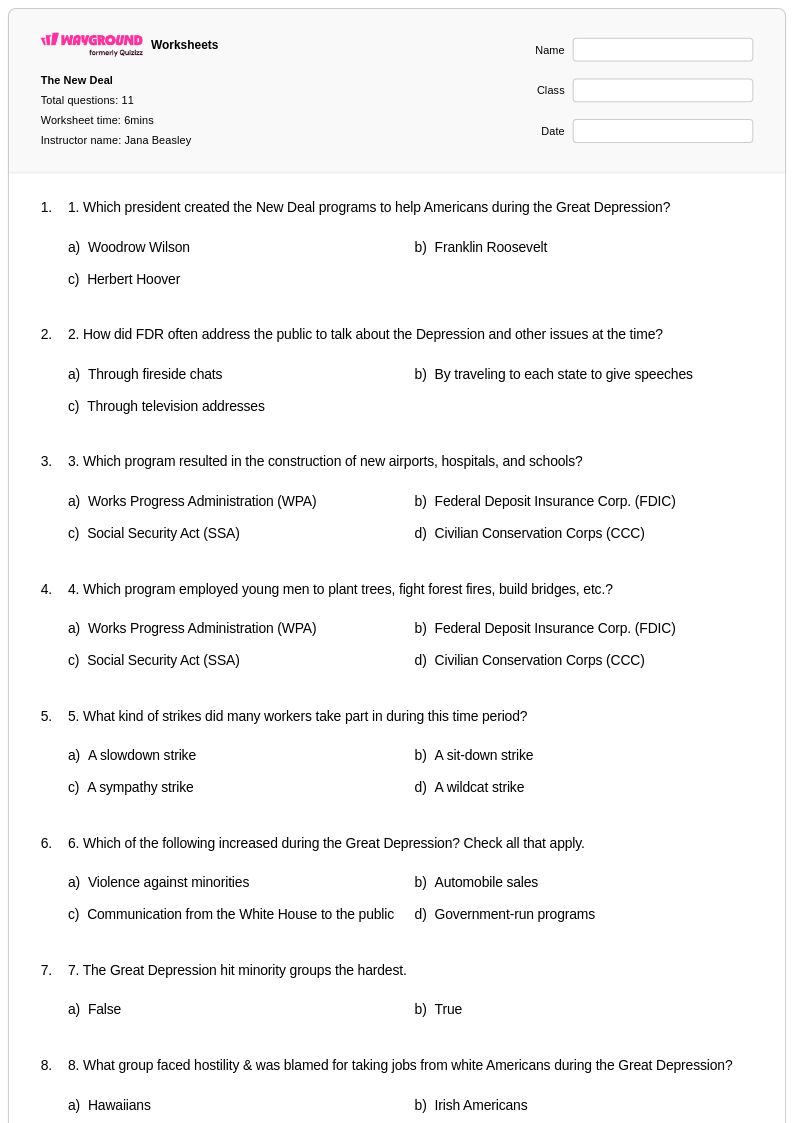
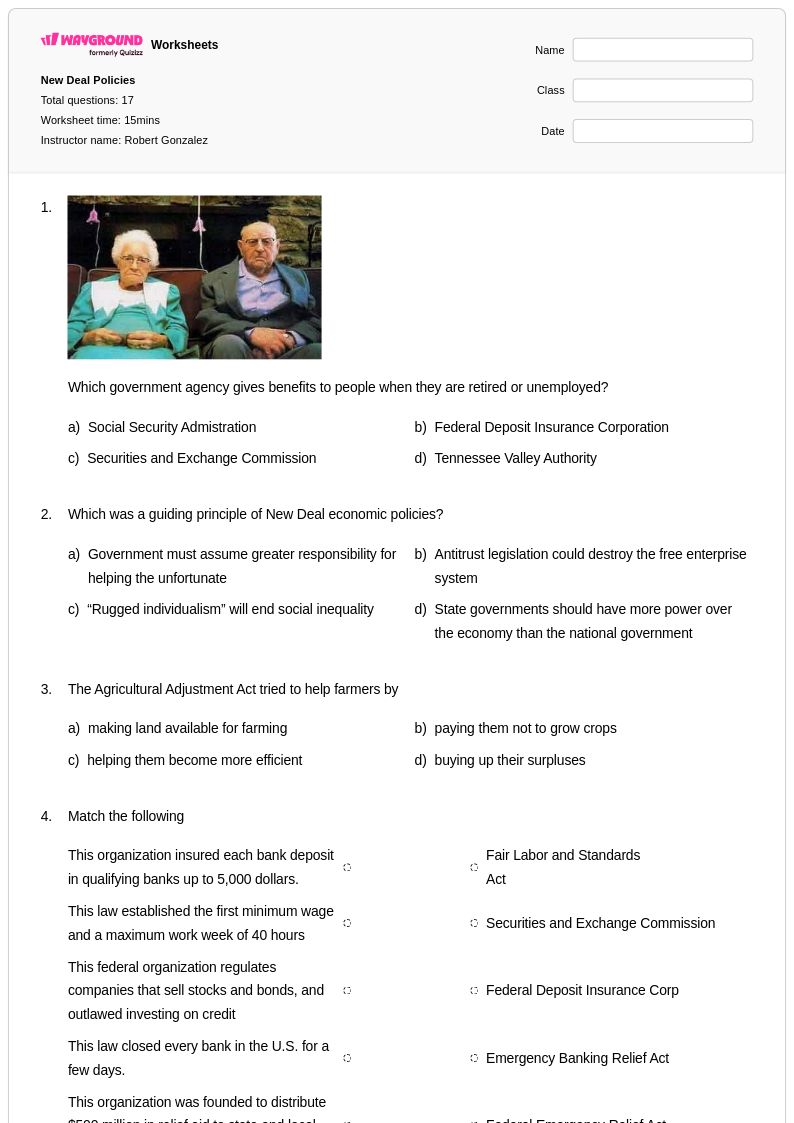
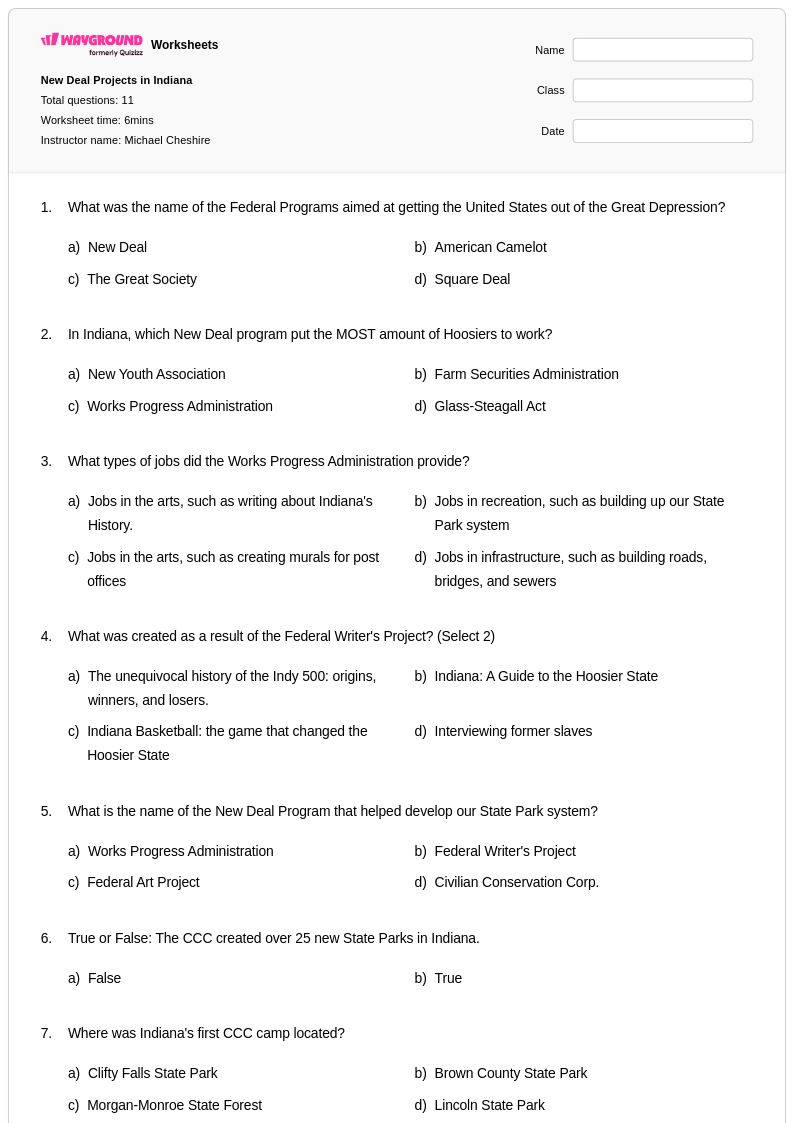
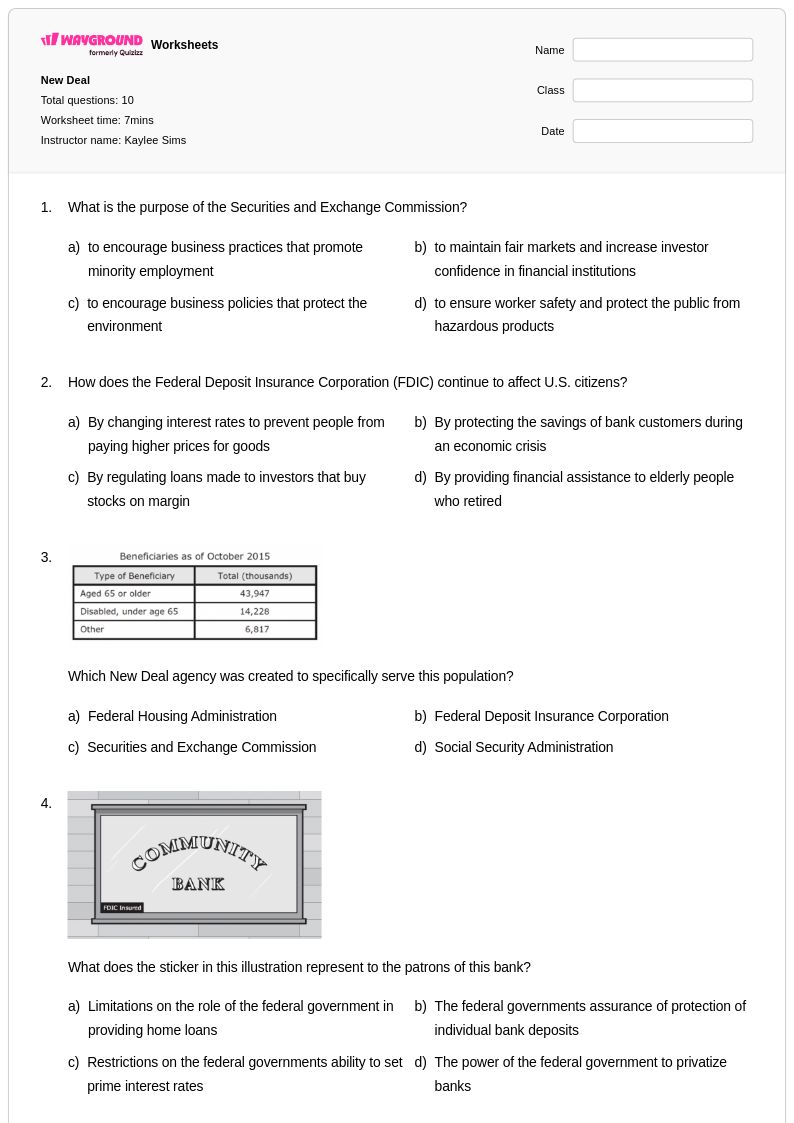
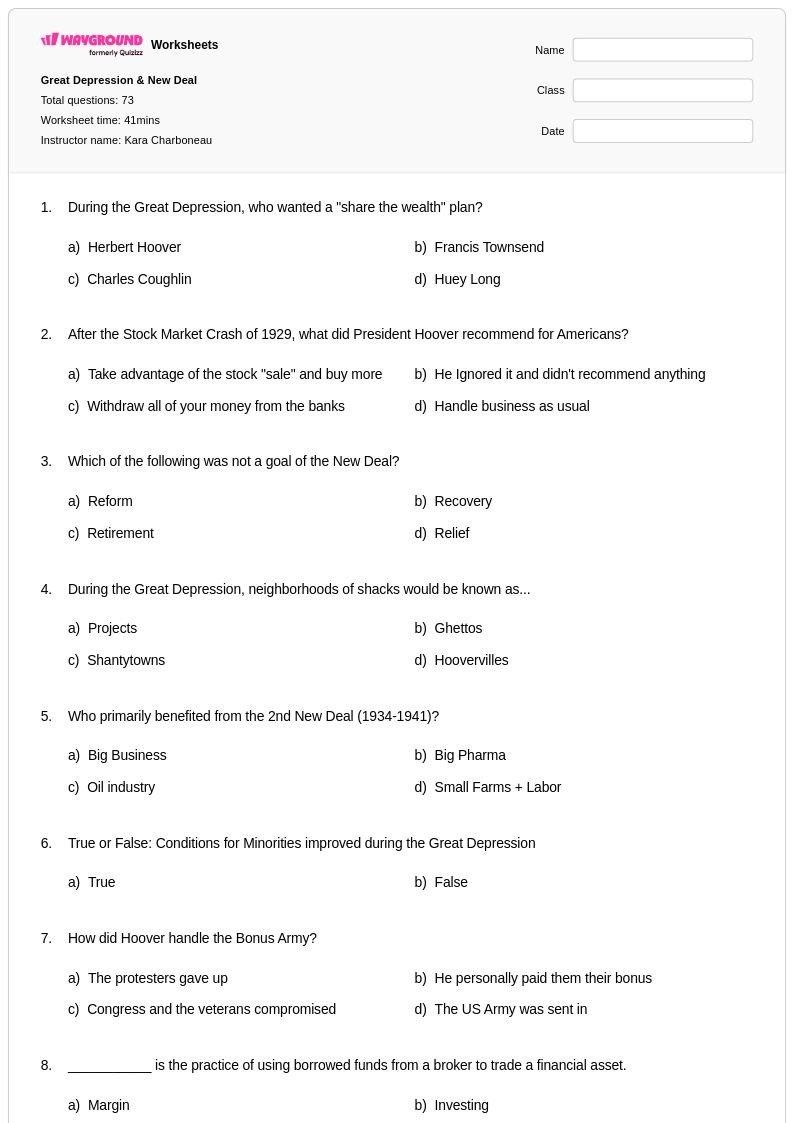
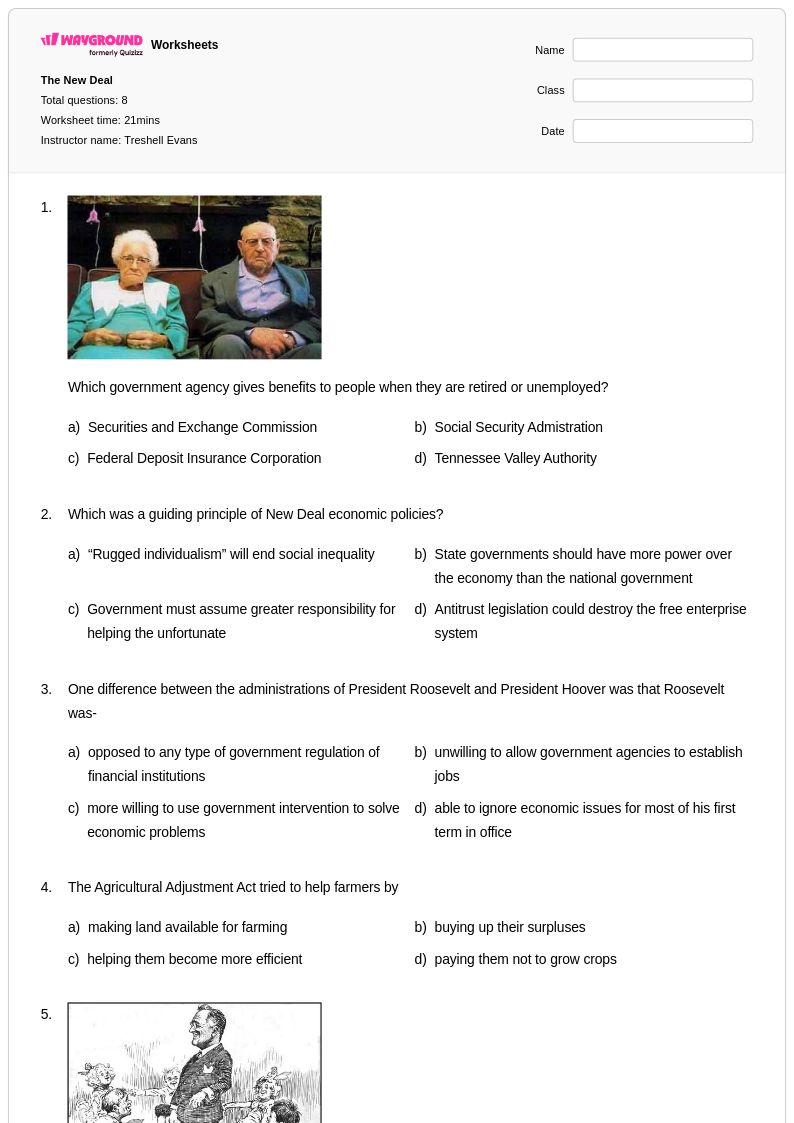
New Deal worksheets for Class 11 students available through Wayground (formerly Quizizz) provide comprehensive coverage of Franklin D. Roosevelt's transformative economic recovery programs during the Great Depression era. These educational resources strengthen critical thinking skills as students analyze the effectiveness of agencies like the Works Progress Administration, Civilian Conservation Corps, and Social Security Administration while examining their lasting impact on American society and government. The worksheets feature practice problems that challenge students to evaluate primary source documents, interpret economic data from the 1930s, and assess the constitutional debates surrounding New Deal legislation. Teachers can access printables with detailed answer keys, making these free resources invaluable for both classroom instruction and independent study, while pdf formats ensure easy distribution and consistent formatting across different learning environments.
Wayground (formerly Quizizz) supports educators with millions of teacher-created New Deal worksheet collections that offer robust search and filtering capabilities to locate materials perfectly aligned with curriculum standards and specific learning objectives. The platform's differentiation tools enable teachers to customize content difficulty levels, ensuring appropriate challenges for diverse learners while maintaining focus on essential Class 11 U.S. History concepts like federal intervention in the economy and the expansion of presidential power. These flexible resources are available in both printable and digital formats, including downloadable pdfs, allowing seamless integration into various instructional approaches whether for remediation of struggling students, enrichment activities for advanced learners, or regular skill practice sessions. The comprehensive nature of these worksheet collections streamlines lesson planning by providing educators with ready-to-use materials that can be easily modified to meet specific classroom needs and pacing requirements.
FAQs
How do I teach the New Deal to high school students?
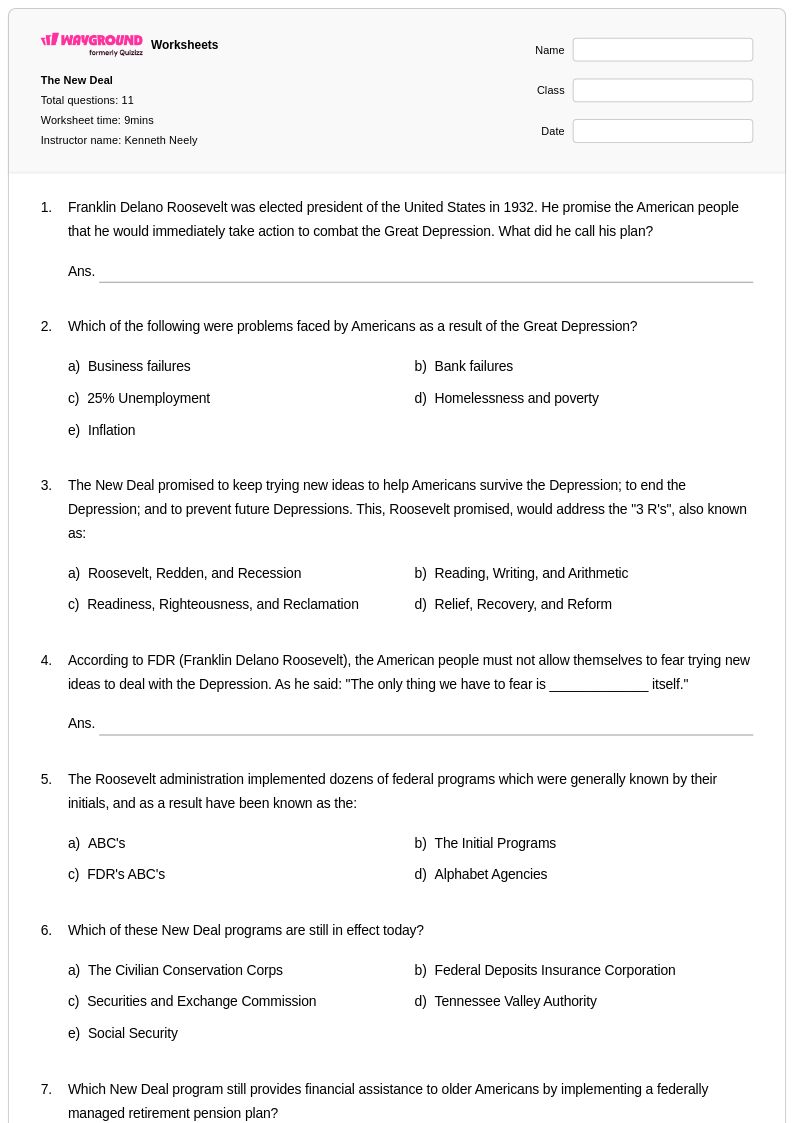
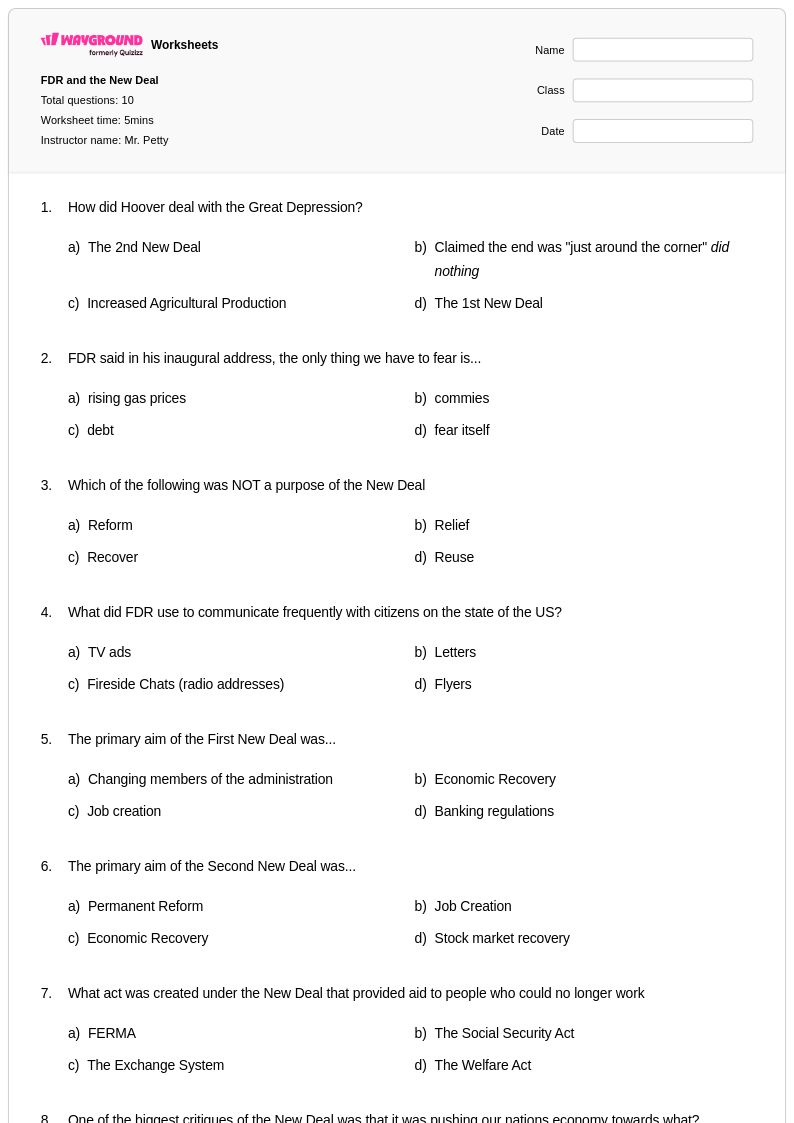
Teaching the New Deal effectively means organizing instruction around Roosevelt's Three Rs: Relief, Recovery, and Reform. Start by grounding students in the economic devastation of the Great Depression before introducing specific agencies like the Works Progress Administration and Civilian Conservation Corps, then move into evaluating whether each program addressed relief, recovery, or long-term reform. Primary source analysis, such as examining fireside chat transcripts or political cartoons, helps students engage critically with both support for and opposition to Roosevelt's programs, including Supreme Court challenges to New Deal legislation.
What exercises help students practice analyzing New Deal programs?
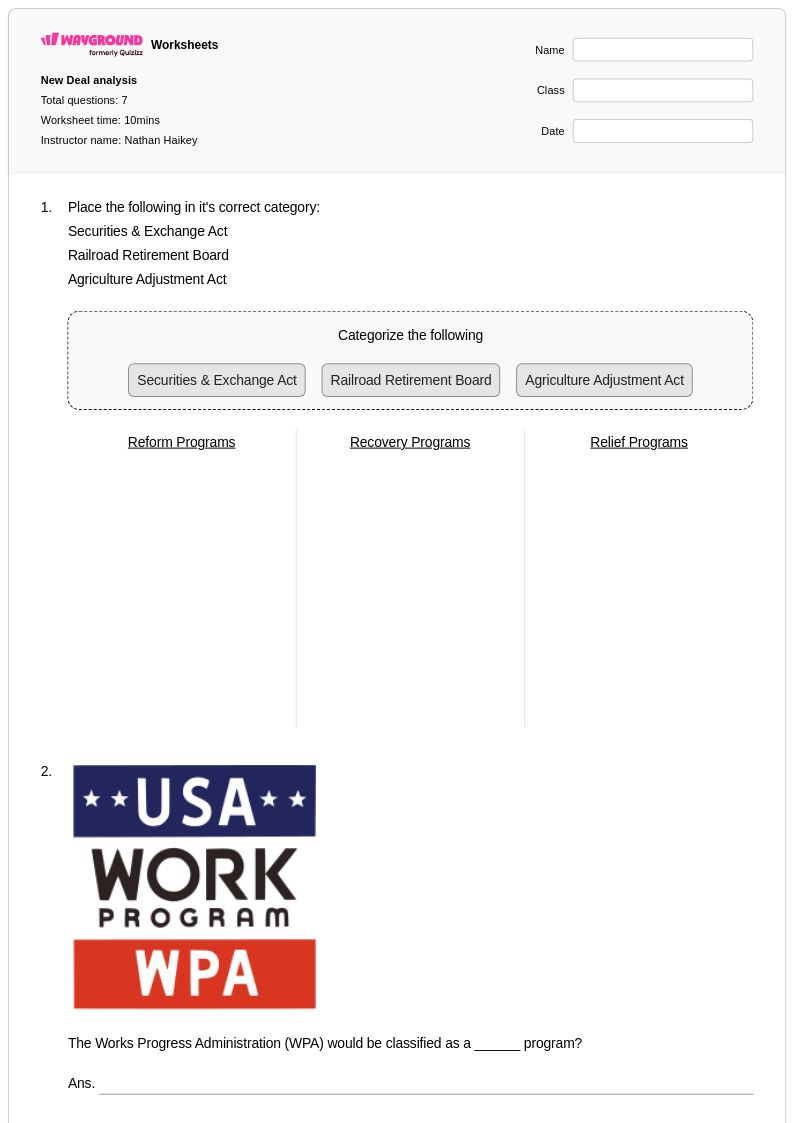
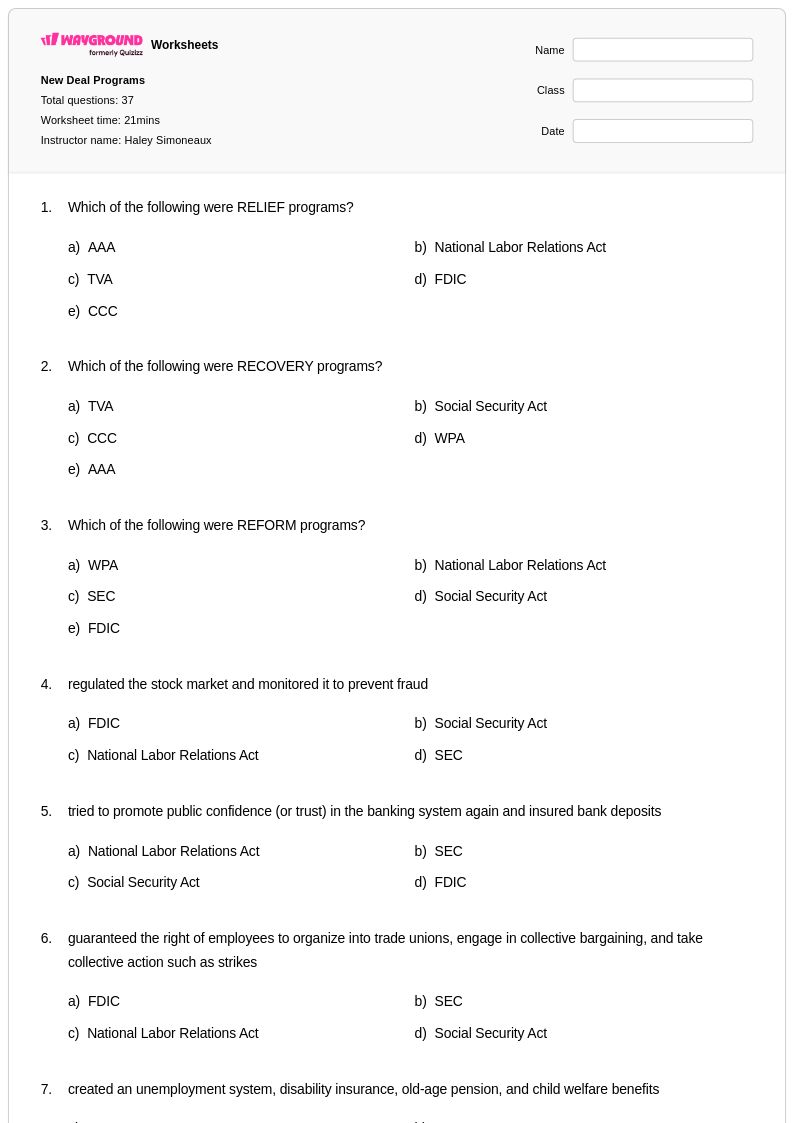
Effective practice exercises ask students to categorize New Deal agencies under Relief, Recovery, or Reform and then justify their reasoning using evidence. Comparing the goals of specific agencies, such as the Social Security Administration versus the Federal Deposit Insurance Corporation, requires students to distinguish between immediate relief and structural reform. Worksheet activities that ask students to assess the effectiveness of New Deal programs, including their lasting impact on unemployment insurance and federal banking regulation, build the analytical depth expected in U.S. History courses.
What mistakes do students commonly make when learning about the New Deal?
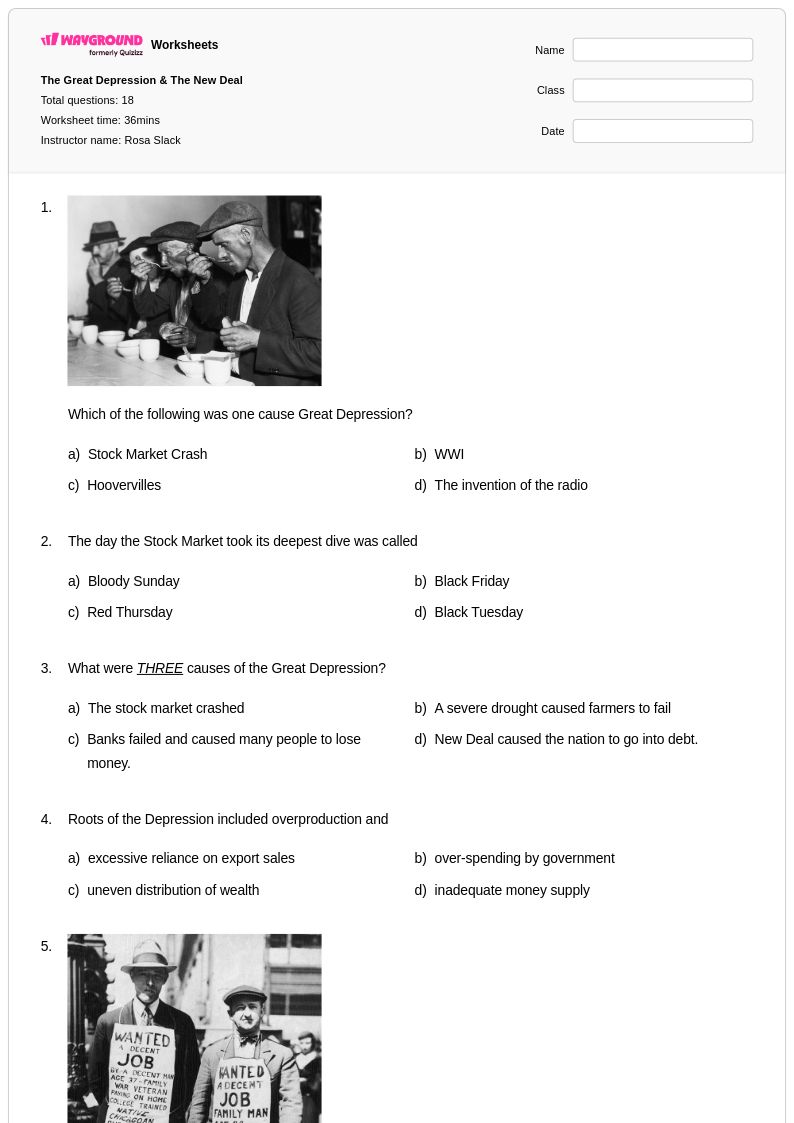
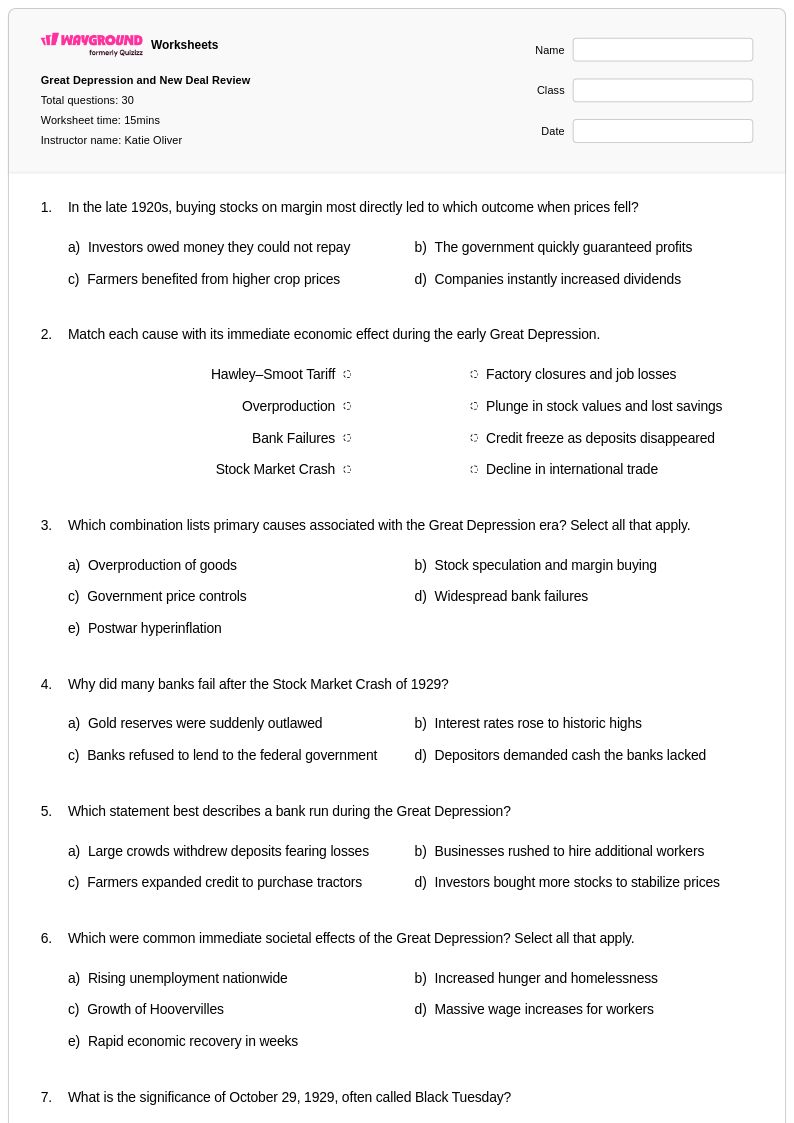
One of the most common misconceptions is that the New Deal single-handedly ended the Great Depression. Students often conflate relief programs with economic recovery, not recognizing that unemployment remained high throughout the 1930s and that World War II mobilization played a significant role in restoring the economy. Another frequent error is treating the New Deal as a unified, consistent policy rather than recognizing it as a series of evolving legislative responses, some of which were struck down by the Supreme Court.
How do I use Wayground's New Deal worksheets in my classroom?
Wayground's New Deal worksheets are available as printable PDFs for traditional classroom use and in digital formats for technology-integrated or remote learning environments, and teachers can host them as a quiz directly on Wayground. Each worksheet includes a complete answer key, which supports independent student work and allows teachers to provide quick, targeted feedback. For classes with diverse learners, Wayground's accommodation tools, including read-aloud support and extended time, can be applied to individual students without disrupting the rest of the class.
How do I differentiate New Deal instruction for students at different skill levels?
For struggling learners, begin with scaffolded materials that define key agencies and vocabulary before asking for analysis. Advanced students can be challenged with comparative tasks, such as evaluating New Deal opposition from both the political left and right, or examining Supreme Court rulings that struck down early New Deal legislation. On Wayground, teachers can apply differentiation settings, including reduced answer choices or read-aloud options, to specific students so that each learner engages with the content at an appropriate level of challenge.
What are the most important New Deal programs students should know?
Students should have a working understanding of the Works Progress Administration, the Civilian Conservation Corps, the Social Security Administration, and the Federal Deposit Insurance Corporation, as these represent the breadth of New Deal policy across relief, employment, and financial reform. Understanding why each was created, what problem it addressed, and whether it represented temporary relief or lasting structural change is essential for deeper analysis. The Social Security Administration and federal deposit insurance are especially important because their frameworks remain central to American economic and social policy today.