Free Printable Revolutionary War Worksheets for Class 11
Class 11 Revolutionary War worksheets and printables help students master key battles, causes, and consequences of America's fight for independence through engaging practice problems and comprehensive answer keys.
Explore printable Revolutionary War worksheets for Class 11
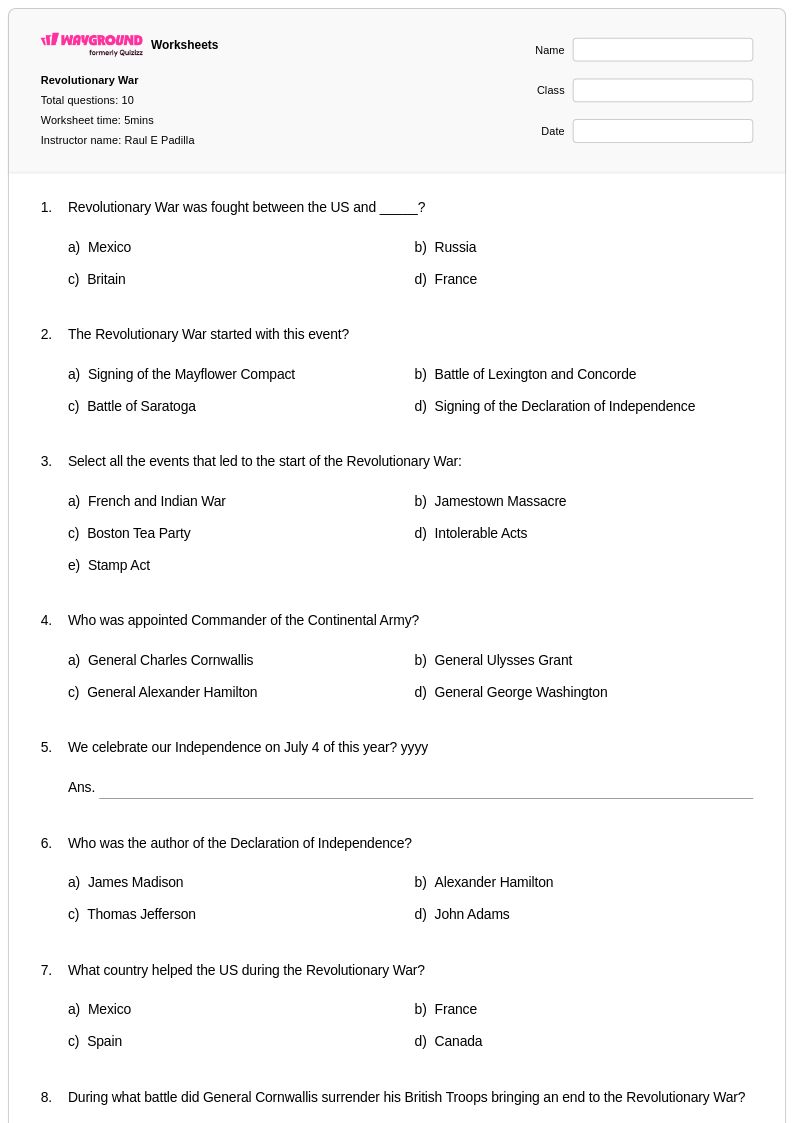
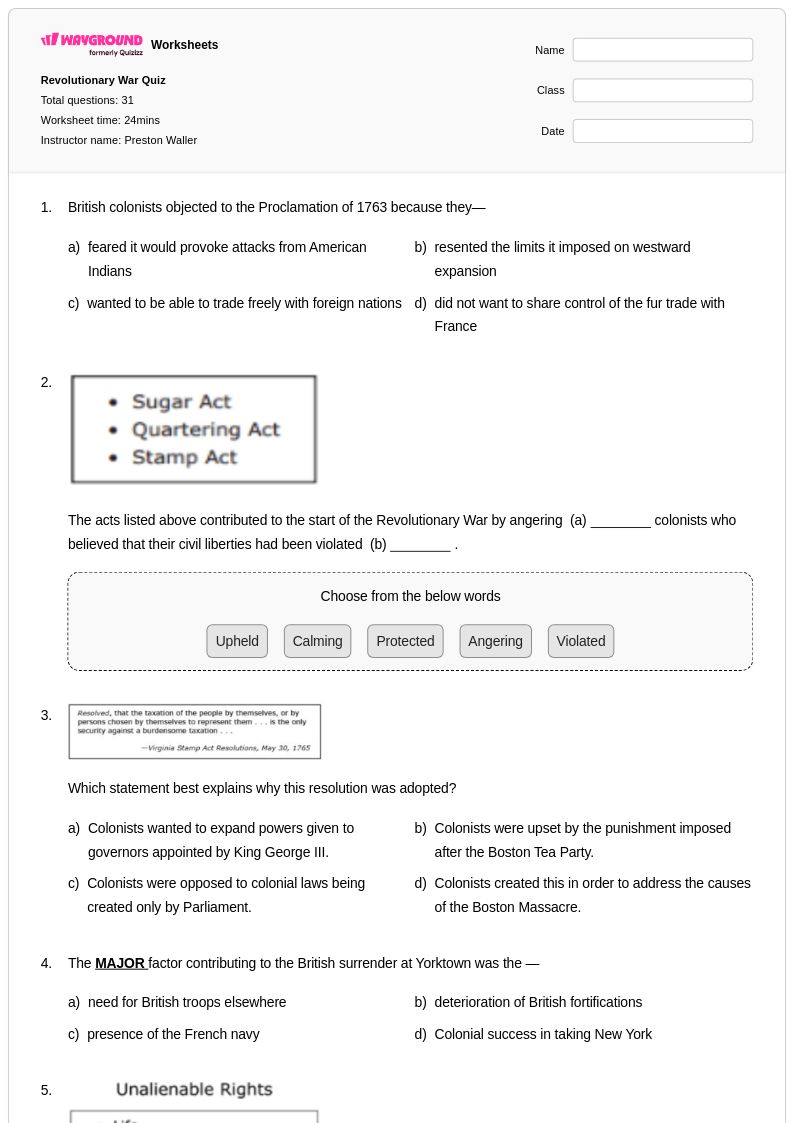
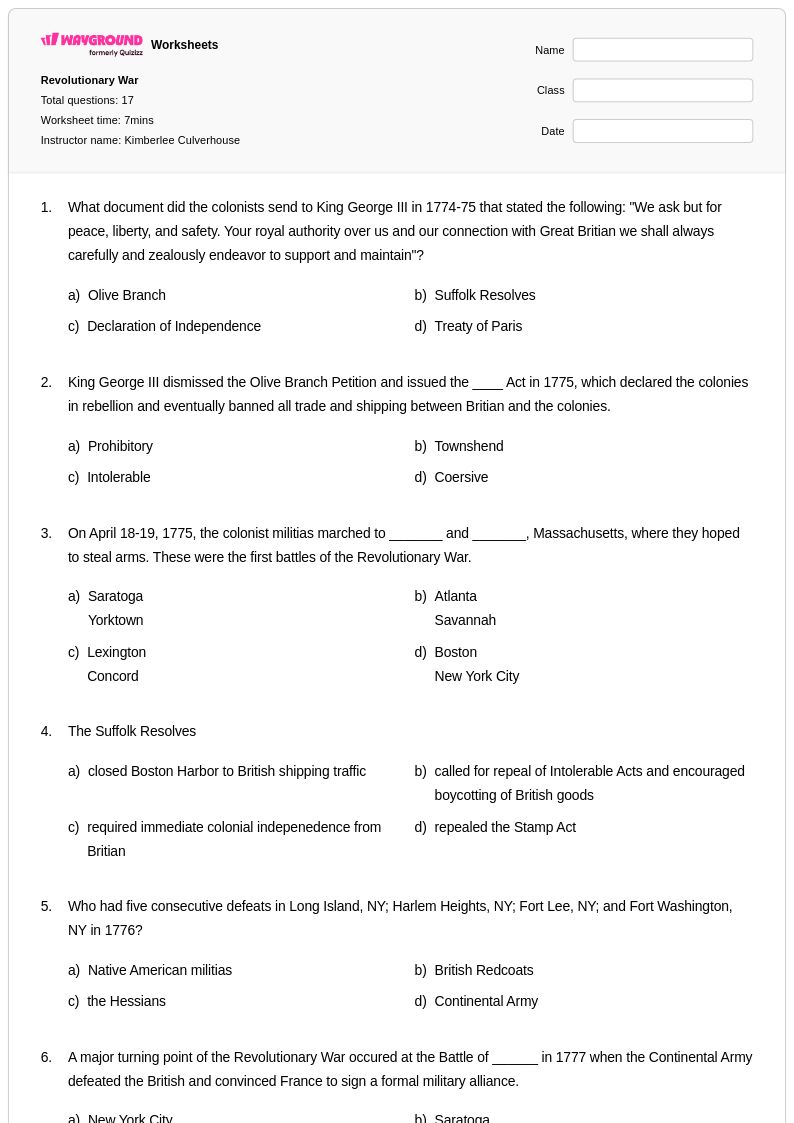
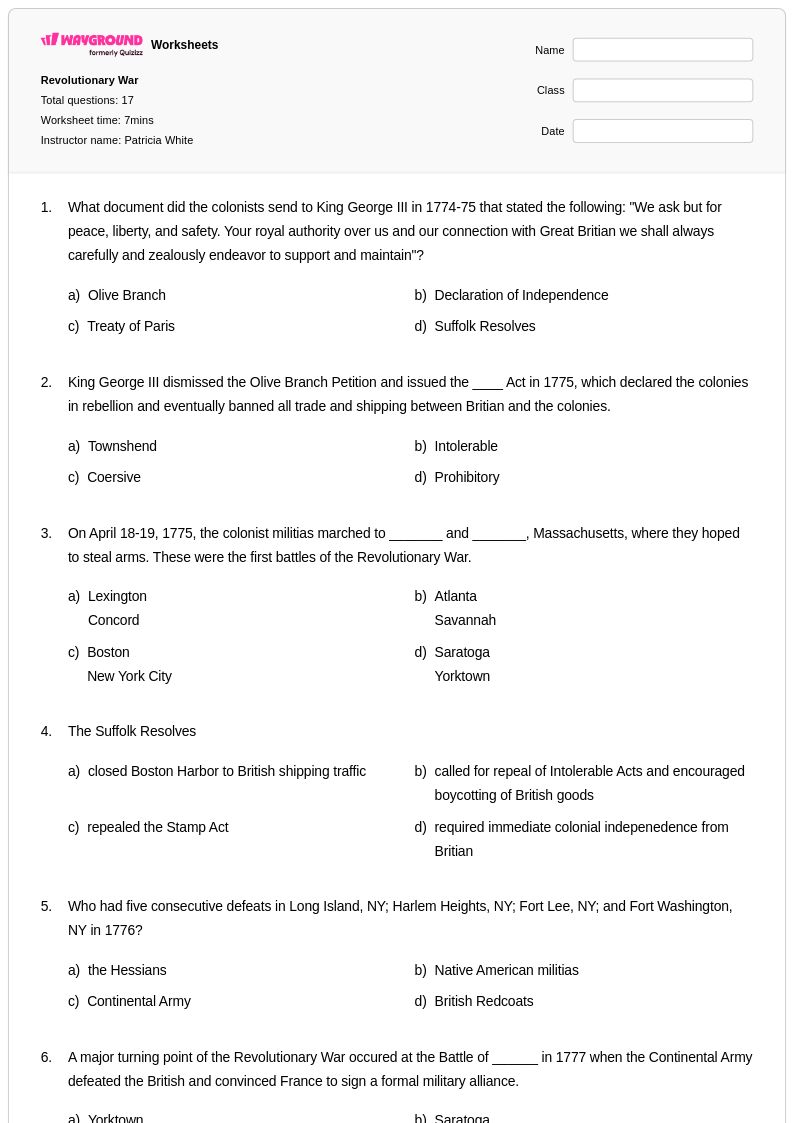
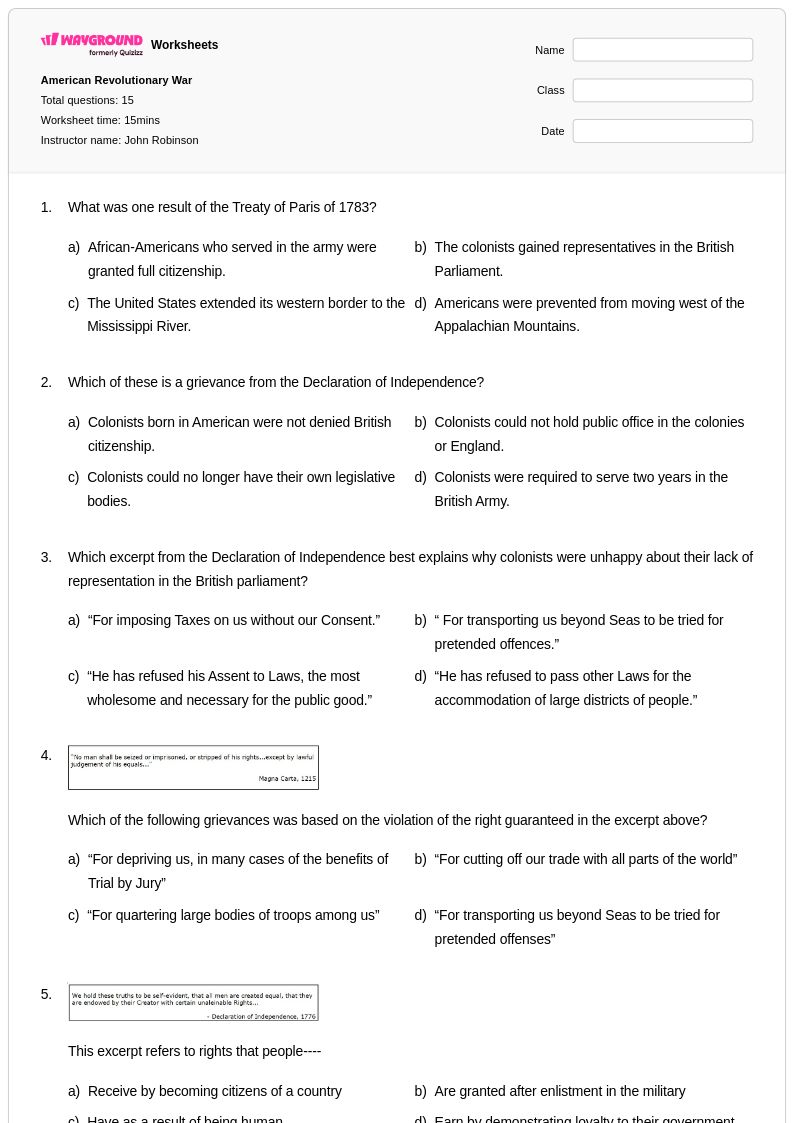
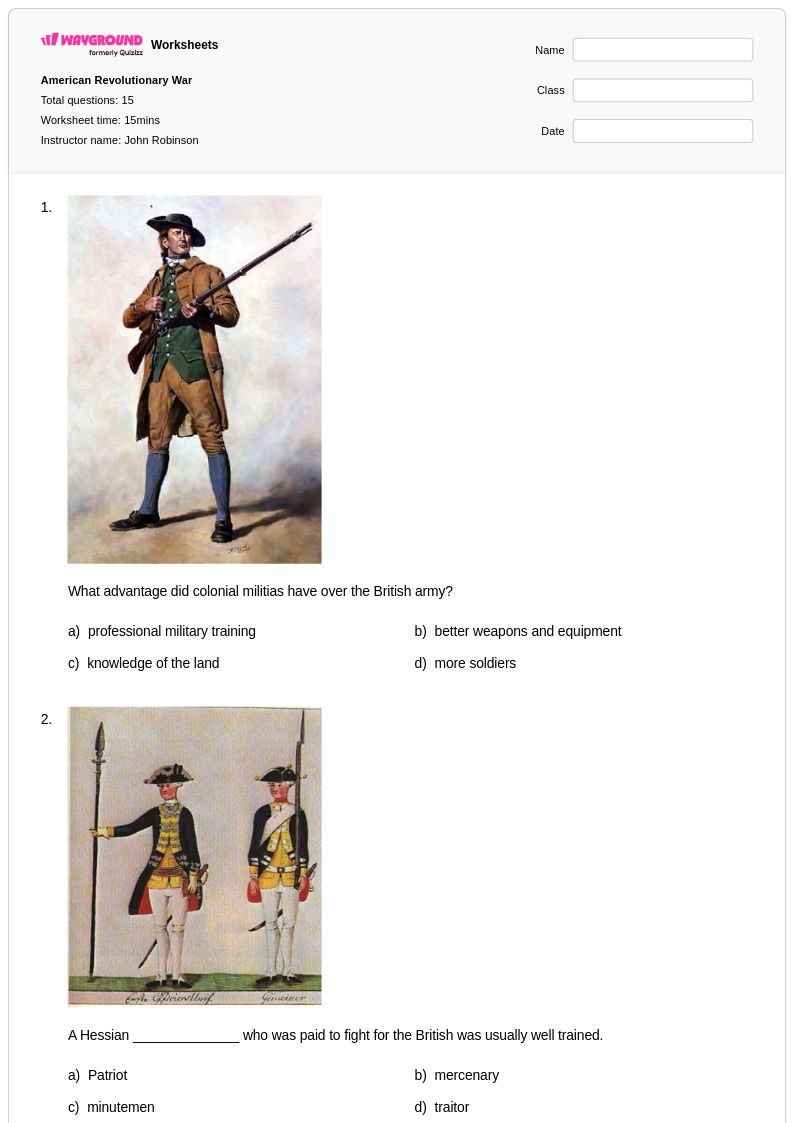
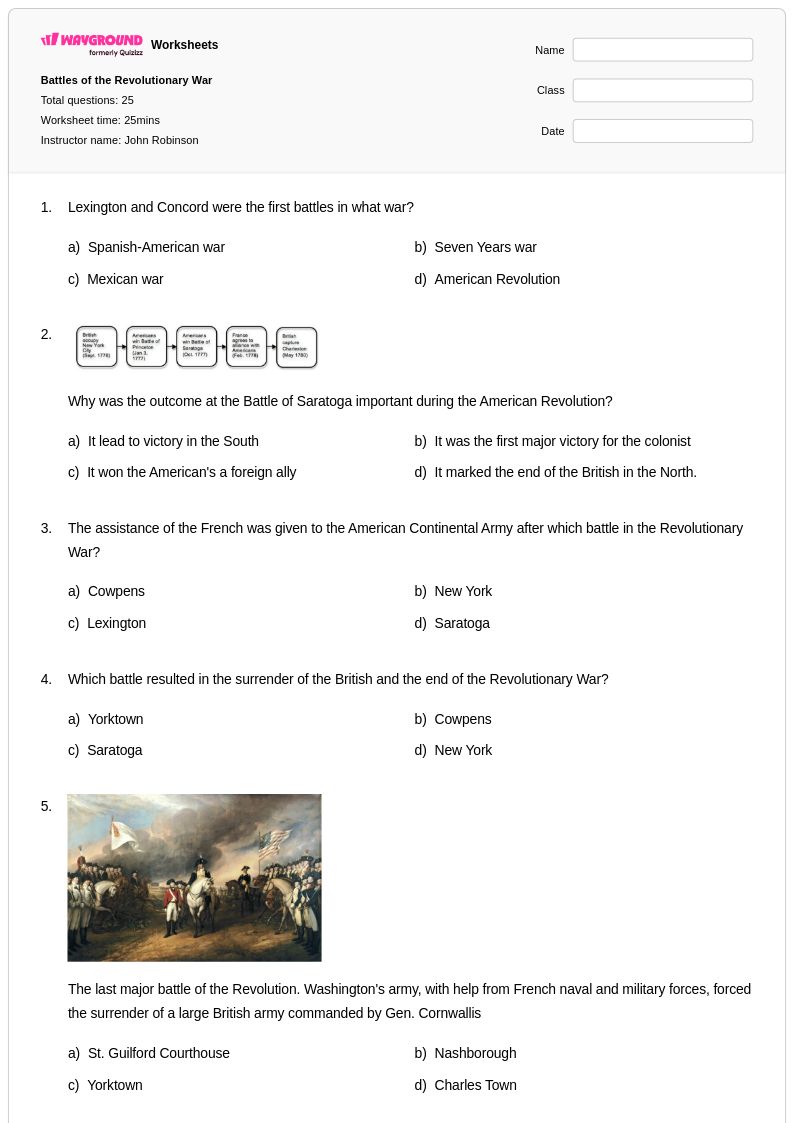
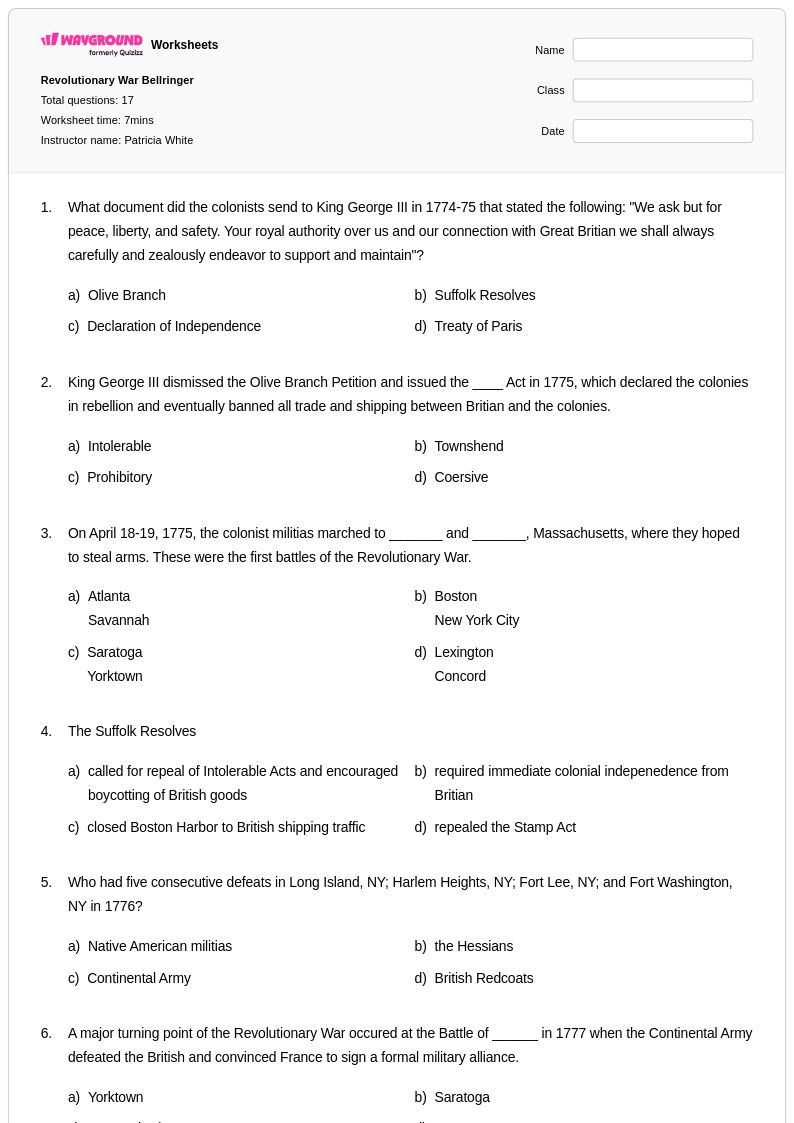
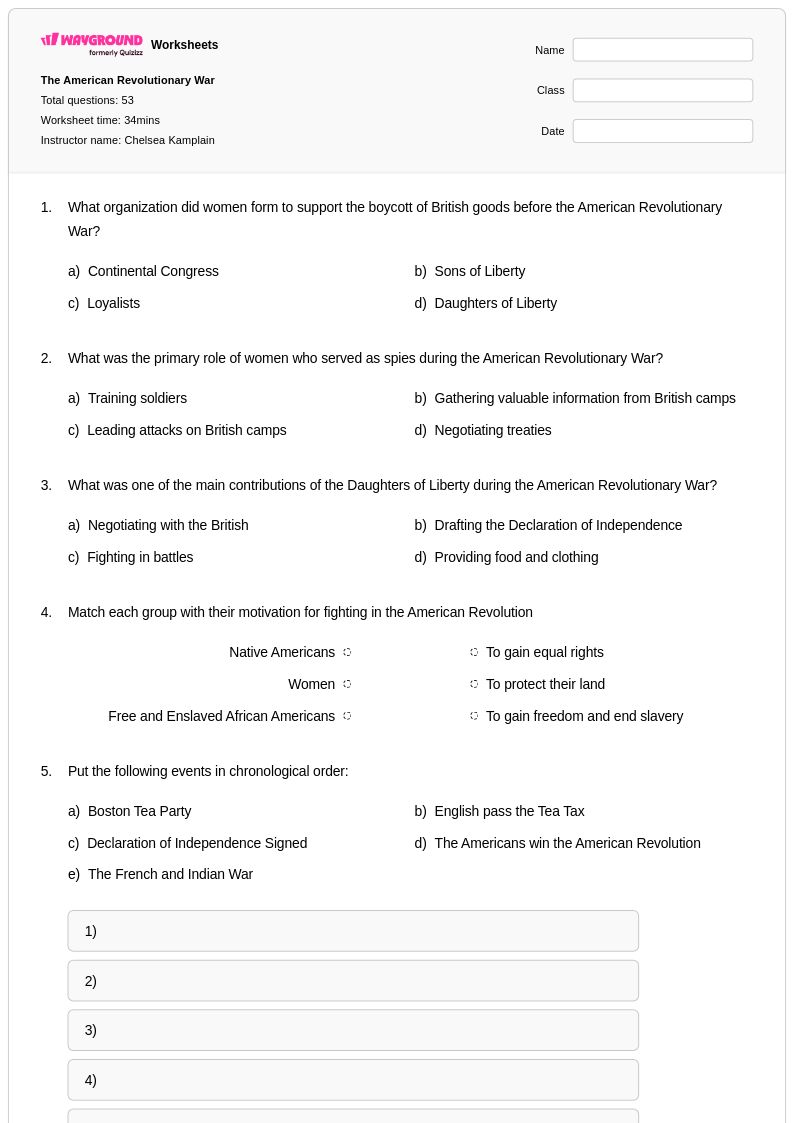
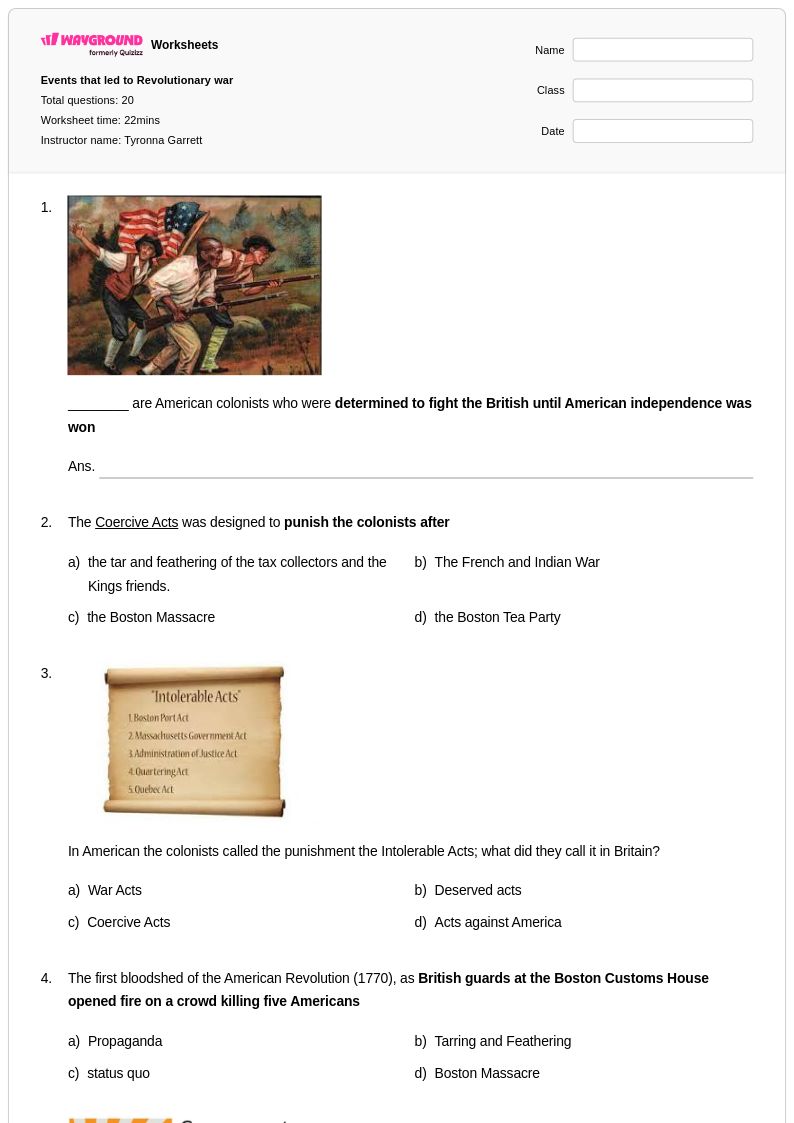
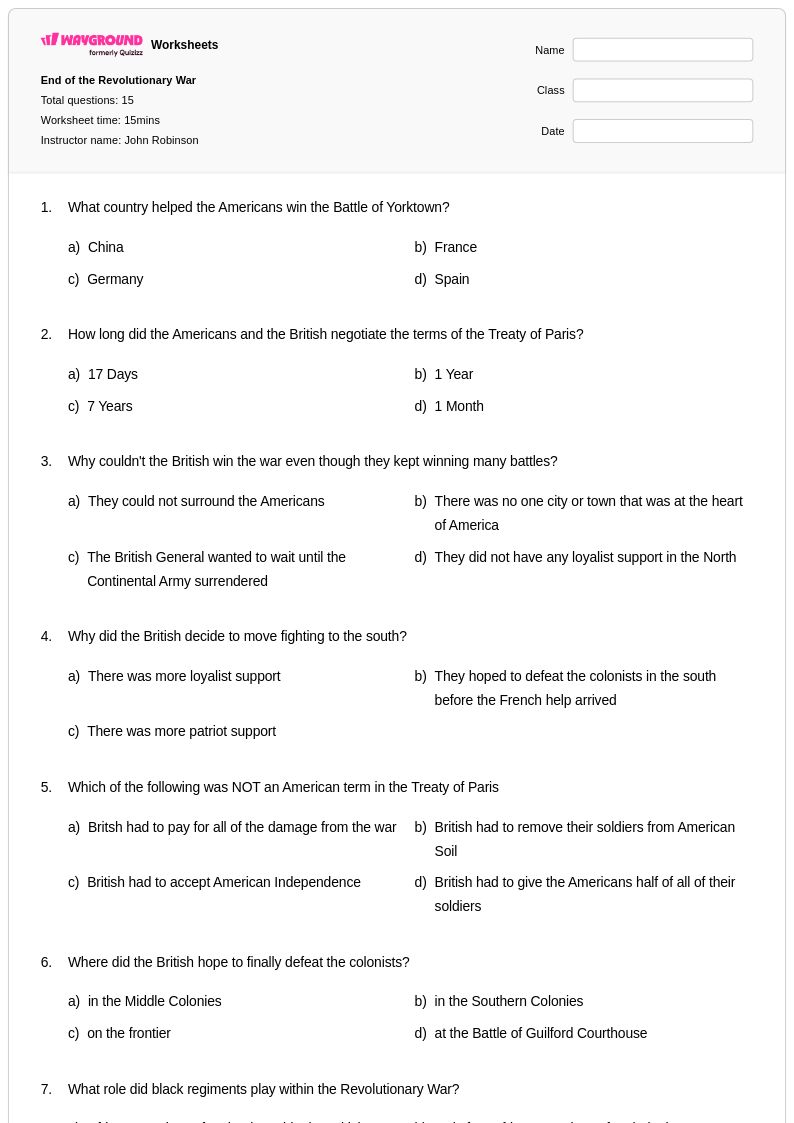
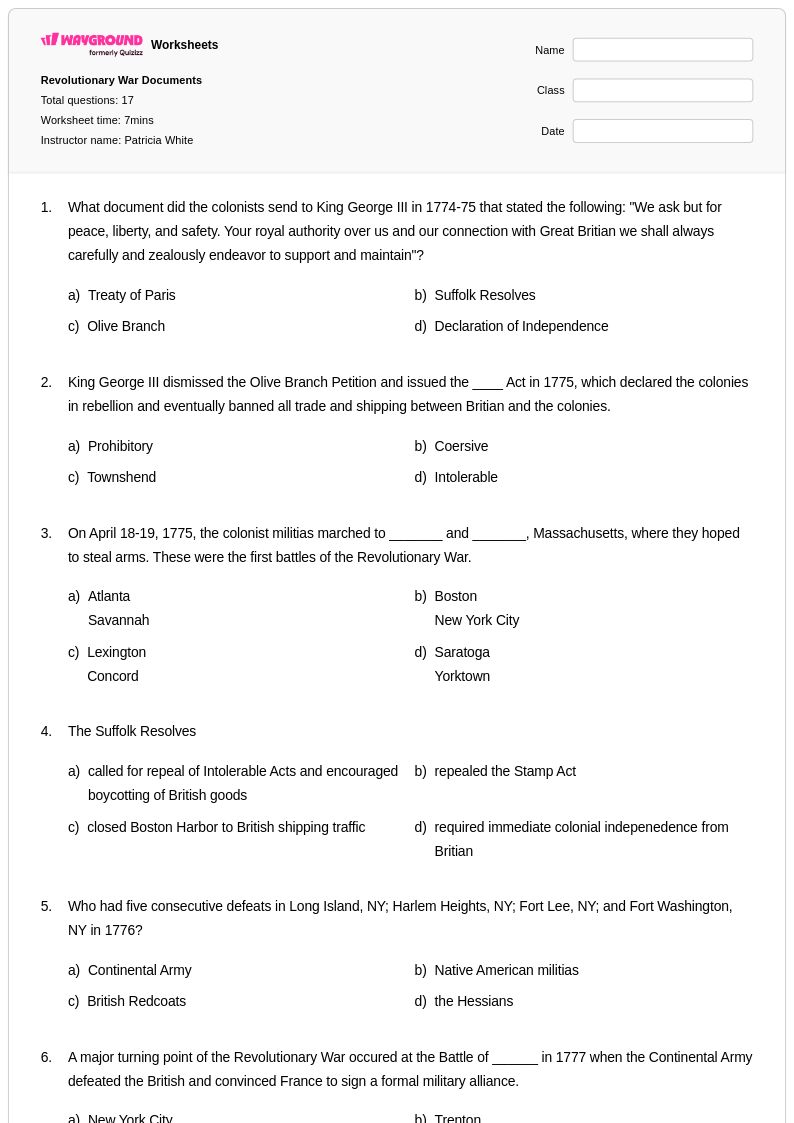
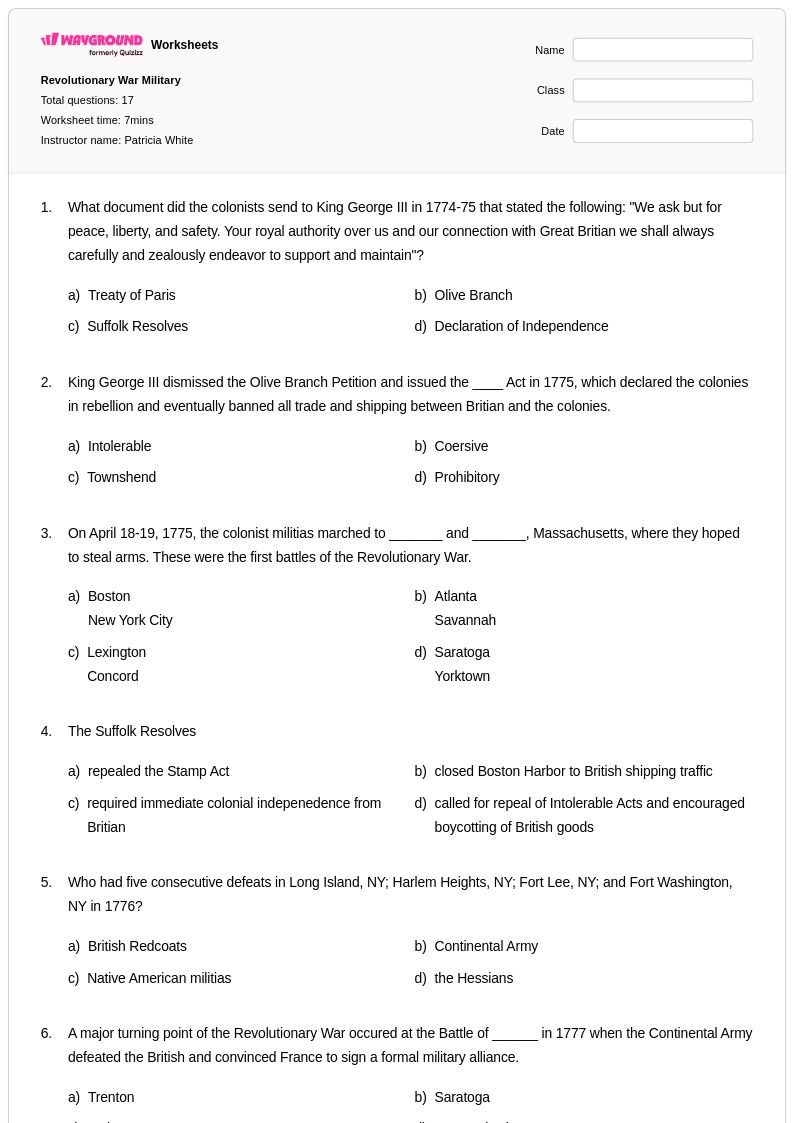
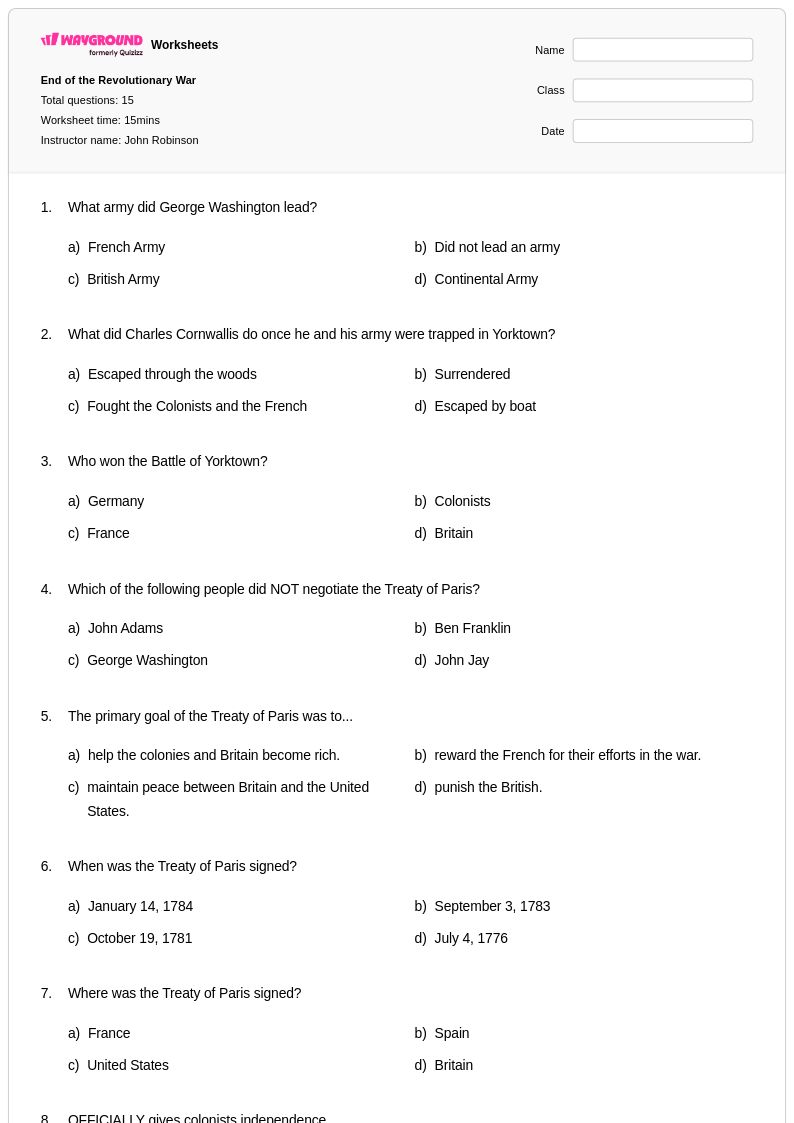
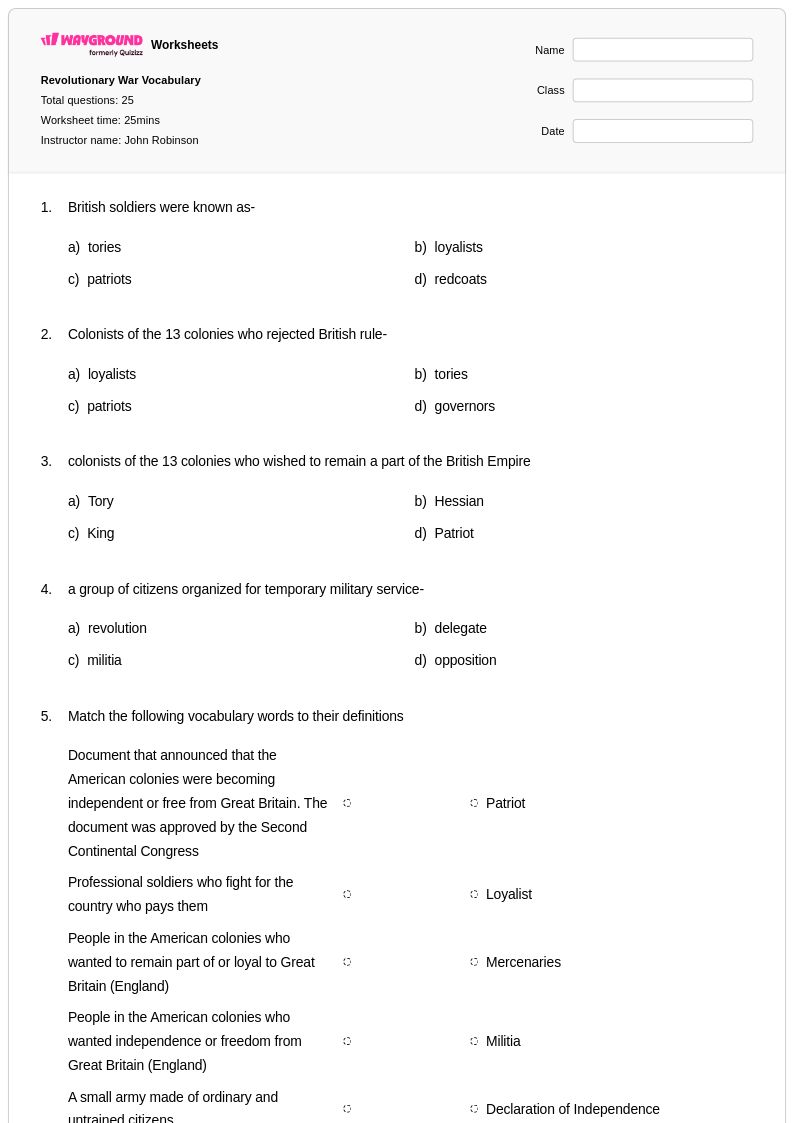
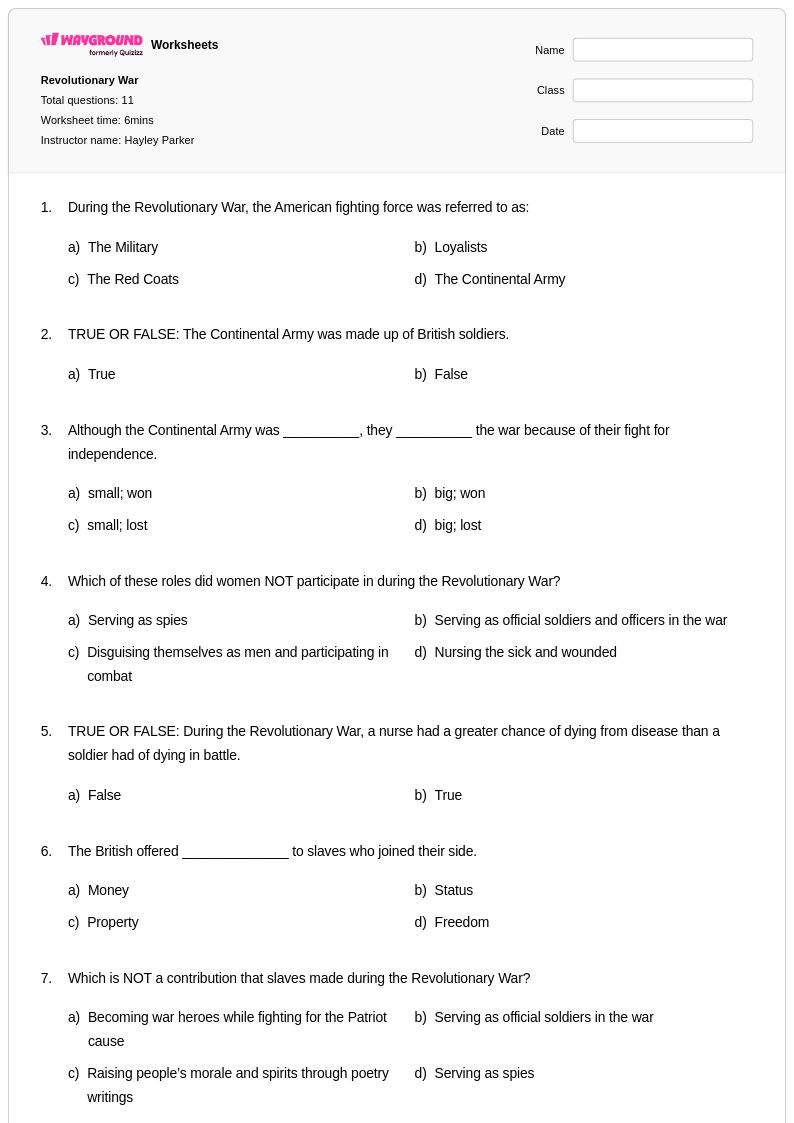
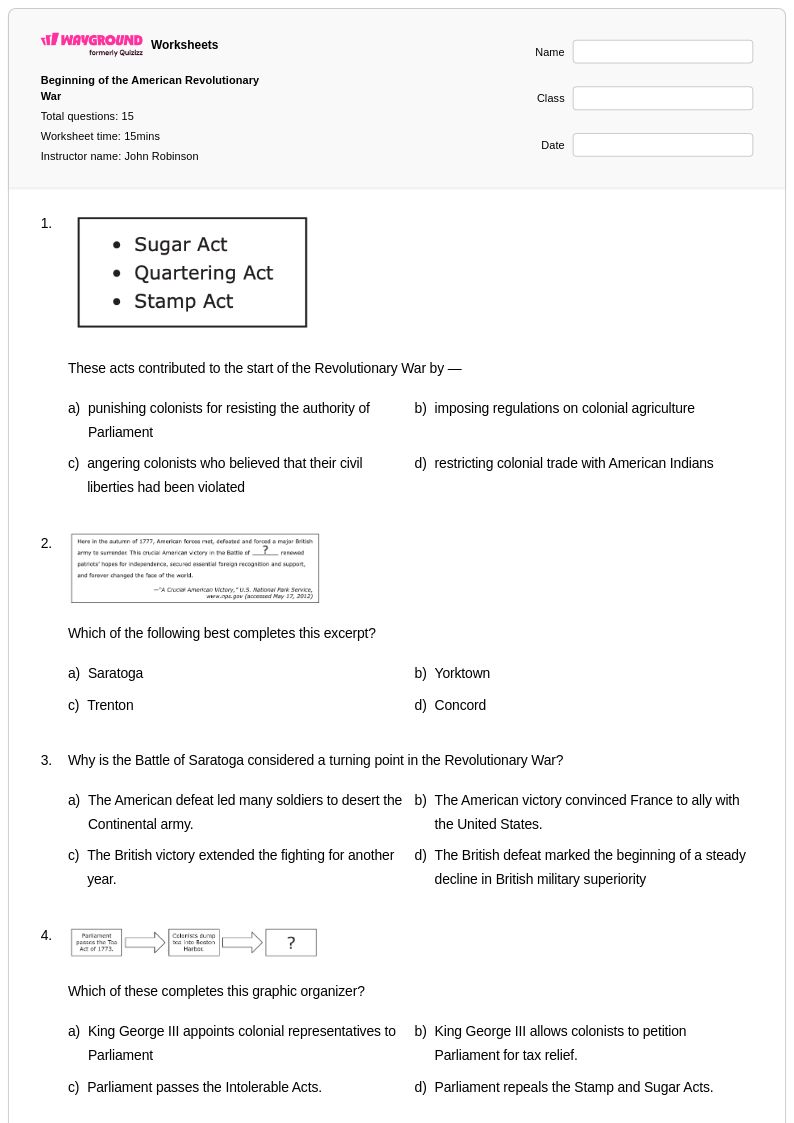
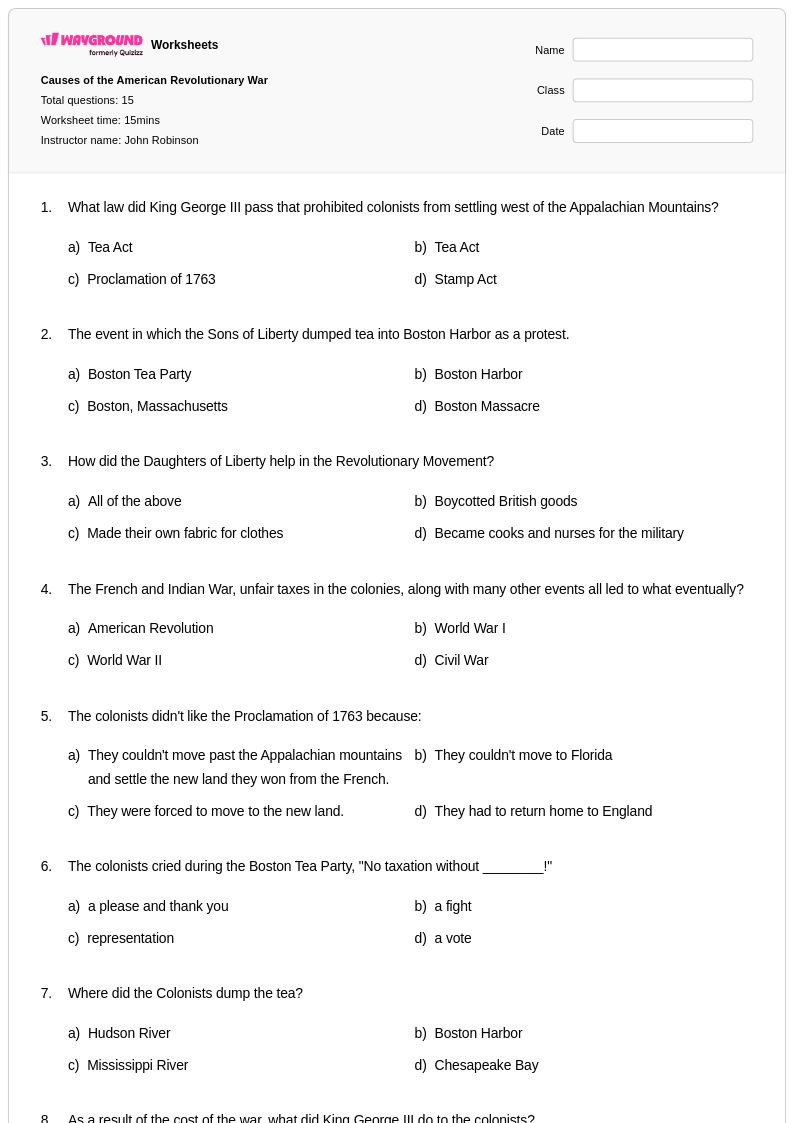
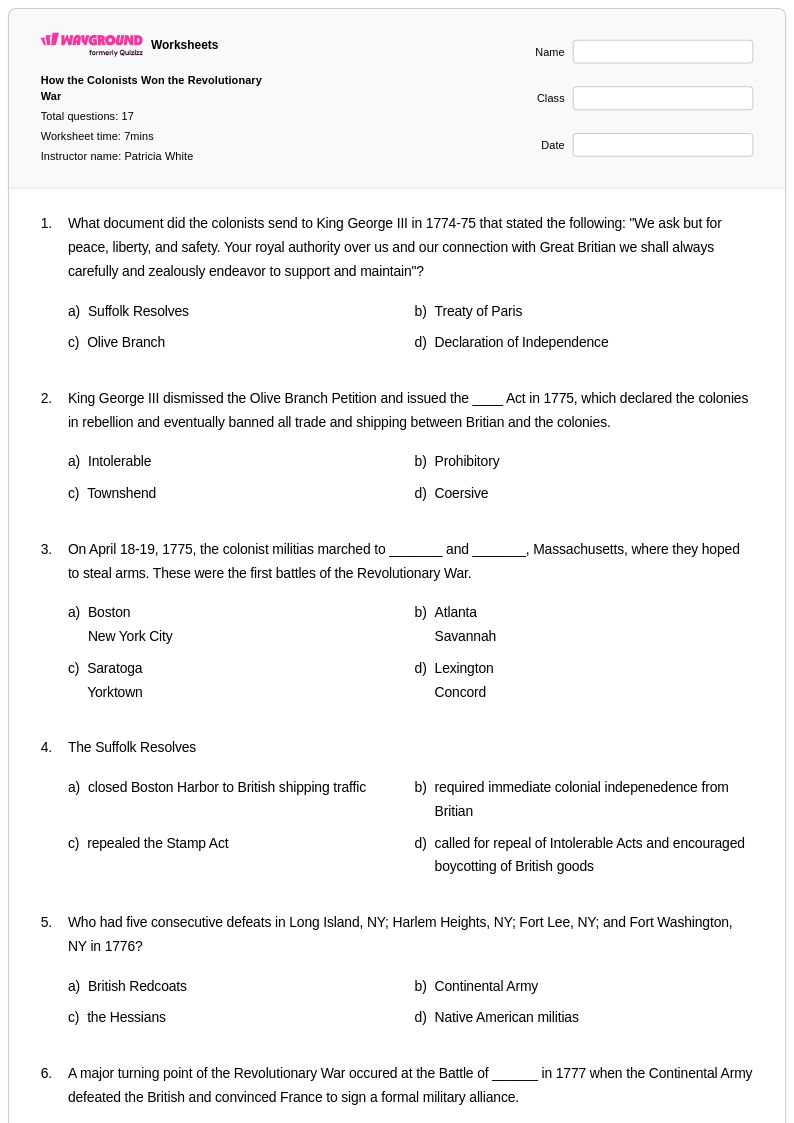
Revolutionary War worksheets for Class 11 students available through Wayground (formerly Quizizz) provide comprehensive coverage of America's struggle for independence, from the mounting tensions of the 1760s through the Treaty of Paris in 1783. These academically rigorous resources strengthen critical thinking skills by engaging students with primary source analysis, cause-and-effect relationships, and historical interpretation of pivotal events such as the Boston Massacre, Declaration of Independence, and major military campaigns. Each worksheet collection includes detailed answer keys and is designed as free printable materials that challenge eleventh-grade students to examine the political, economic, and social factors that shaped the revolutionary period. Practice problems encompass map skills, timeline construction, and document-based questions that develop the analytical abilities essential for advanced historical study, while pdf formats ensure consistent formatting across different classroom environments.
Wayground (formerly Quizizz) supports educators with an extensive library of millions of teacher-created Revolutionary War resources specifically designed for Class 11 Social Studies instruction. The platform's robust search and filtering capabilities allow teachers to locate materials aligned with state and national history standards, while differentiation tools enable customization for varying student ability levels within the same classroom. These flexible worksheet collections are available in both printable and digital formats, including downloadable pdf versions, making them adaptable to diverse teaching environments and learning preferences. Teachers can efficiently plan comprehensive units on the Revolutionary War period, implement targeted remediation for students struggling with chronological thinking, provide enrichment activities for advanced learners, and facilitate regular skill practice that reinforces understanding of democratic principles and constitutional foundations that emerged from America's founding era.
FAQs
How do I teach the Revolutionary War to middle or high school students?
Teaching the Revolutionary War effectively means organizing instruction around three interconnected threads: causes of colonial rebellion, key military campaigns, and the political ideas that shaped the new nation. Start with primary sources like the Declaration of Independence or pamphlets such as Common Sense to give students a sense of the ideological stakes before moving into battles and outcomes. Pairing document analysis with timeline construction helps students see how events built on one another rather than treating the war as a series of isolated facts.
What are the most important topics students need to understand about the Revolutionary War?
Students should develop mastery of the causes of colonial rebellion, including taxation without representation and the breakdown of relations with Britain; major battles such as Lexington and Concord, Saratoga, and Yorktown; and key figures like George Washington, Benedict Arnold, and the Founding Fathers. Equally important is understanding the political developments that followed the war, including the Articles of Confederation and the Constitutional Convention, which shows students that independence was only the beginning of nation-building.
What exercises help students practice Revolutionary War content?
Effective practice for the Revolutionary War includes cause-and-effect organizers that trace the path from colonial grievances to open conflict, timeline construction activities covering major battles and political milestones, and document analysis tasks using primary sources. Worksheets that ask students to evaluate the decisions of key figures, such as why colonists chose sides as Patriots or Loyalists, build the critical thinking skills needed for essay writing and historical analysis.
What common mistakes do students make when learning about the Revolutionary War?
A frequent misconception is that the Revolution was a sudden, unified response to British policy rather than a prolonged, contested process with significant Loyalist opposition. Students also tend to conflate the Revolutionary War with the Constitutional period, blurring the distinction between winning independence and establishing a functioning government. Another common error is reducing the war to a few famous battles while missing the political and social dimensions, including the roles of women, enslaved people, and Native American nations, that shaped its outcomes.
How can I use Revolutionary War worksheets to differentiate instruction in my classroom?
Revolutionary War worksheets can be tiered by task complexity: foundational learners benefit from structured timelines and vocabulary-focused activities, while advanced students engage more deeply through document analysis and cause-and-effect reasoning tasks. On Wayground, teachers can apply individual accommodations such as extended time, read-aloud support, and reduced answer choices to specific students, so the same worksheet set can serve the full range of learners without requiring separate lesson plans.
How do I use Wayground's Revolutionary War worksheets in my class?
Wayground's Revolutionary War worksheets are available as free printable PDFs for traditional classroom use and in digital formats for technology-integrated or hybrid environments, including the option to host them as a quiz directly on Wayground. Each worksheet includes a complete answer key, which reduces grading time and makes the materials easy to use for daily instruction, formative assessment, or targeted remediation. Teachers can use Wayground's search and filtering tools to quickly locate materials aligned to specific curriculum standards, whether the focus is military history, political philosophy, or social change during the colonial period.