
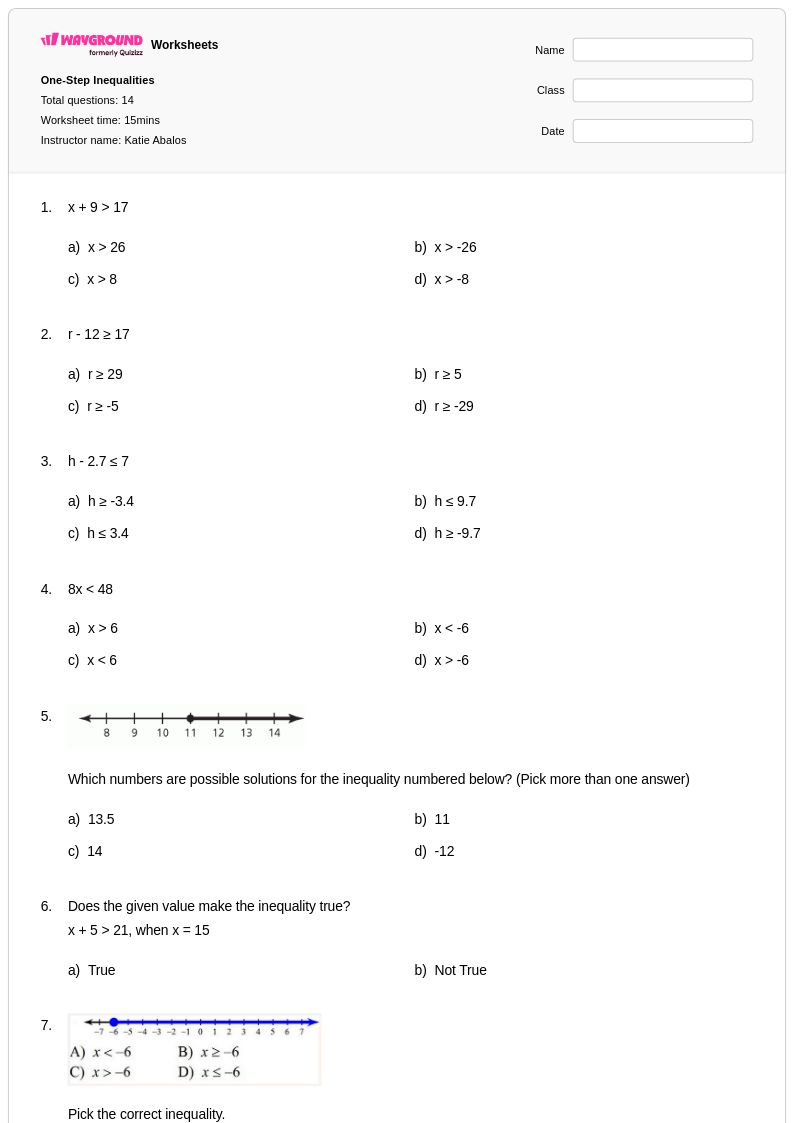
14 Q
6th
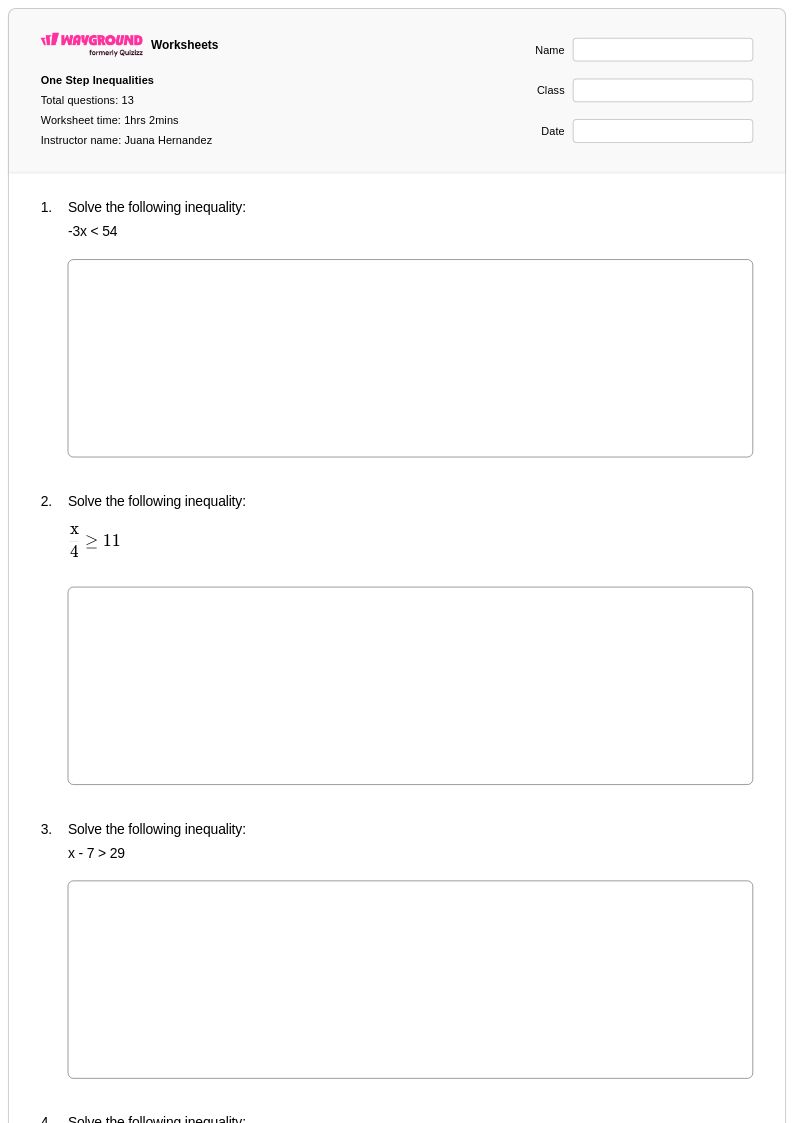
13 Q
6th
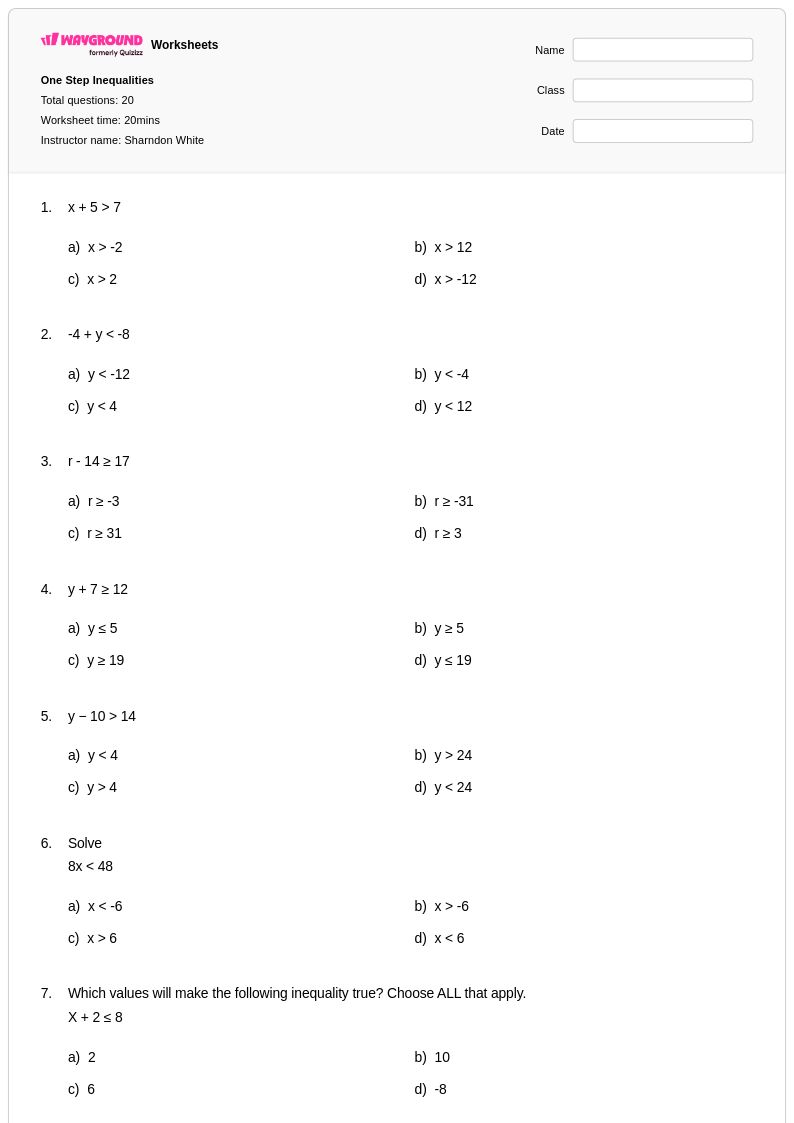
20 Q
6th
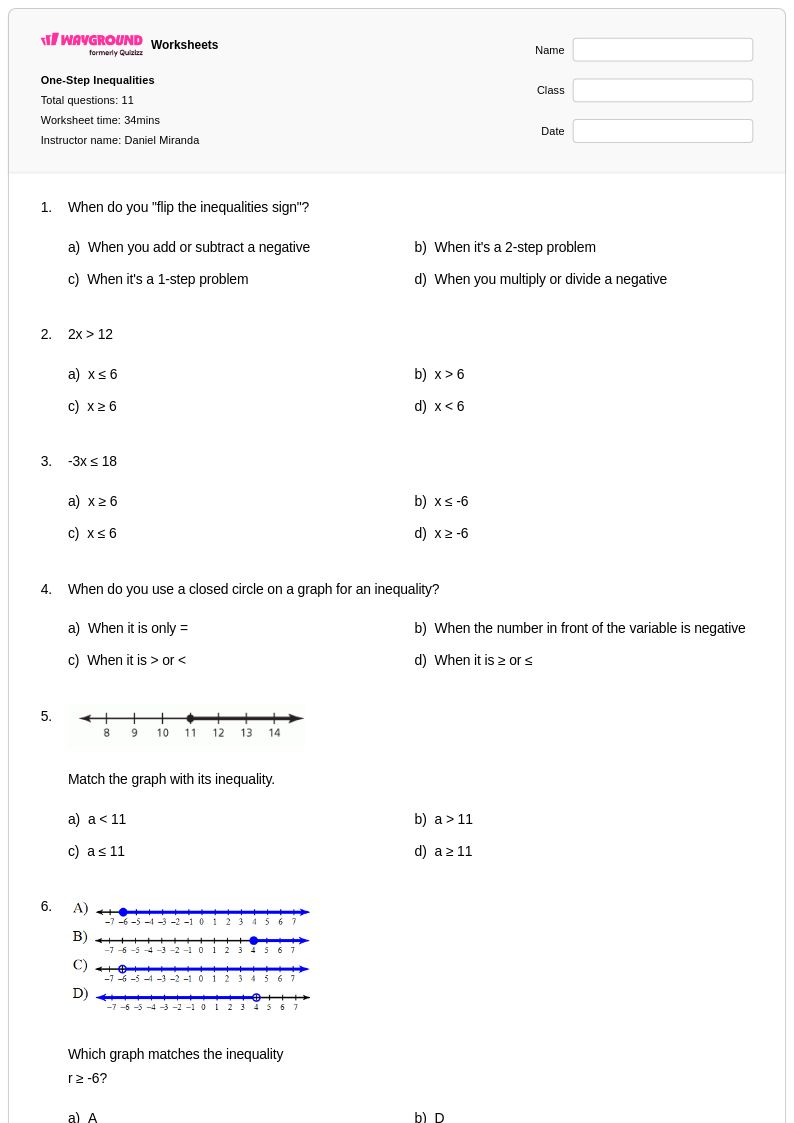
11 Q
6th - 8th
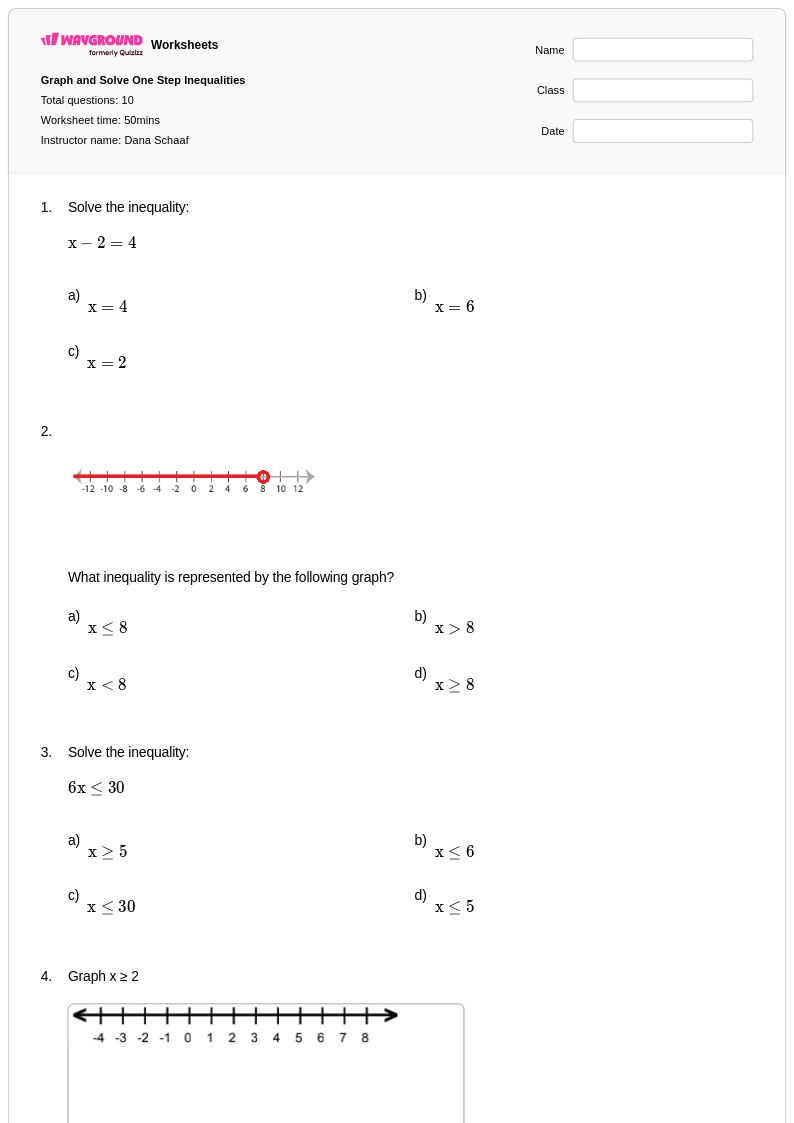
10 Q
5th - 7th
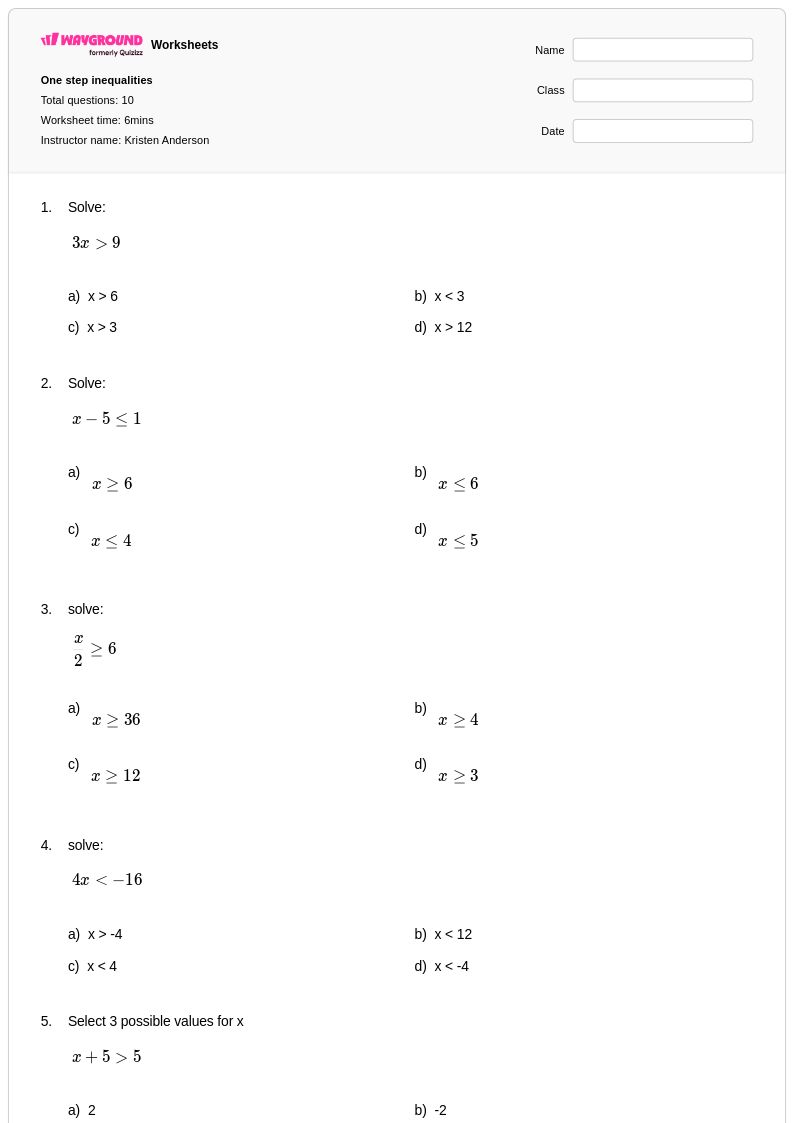
10 Q
6th - 7th
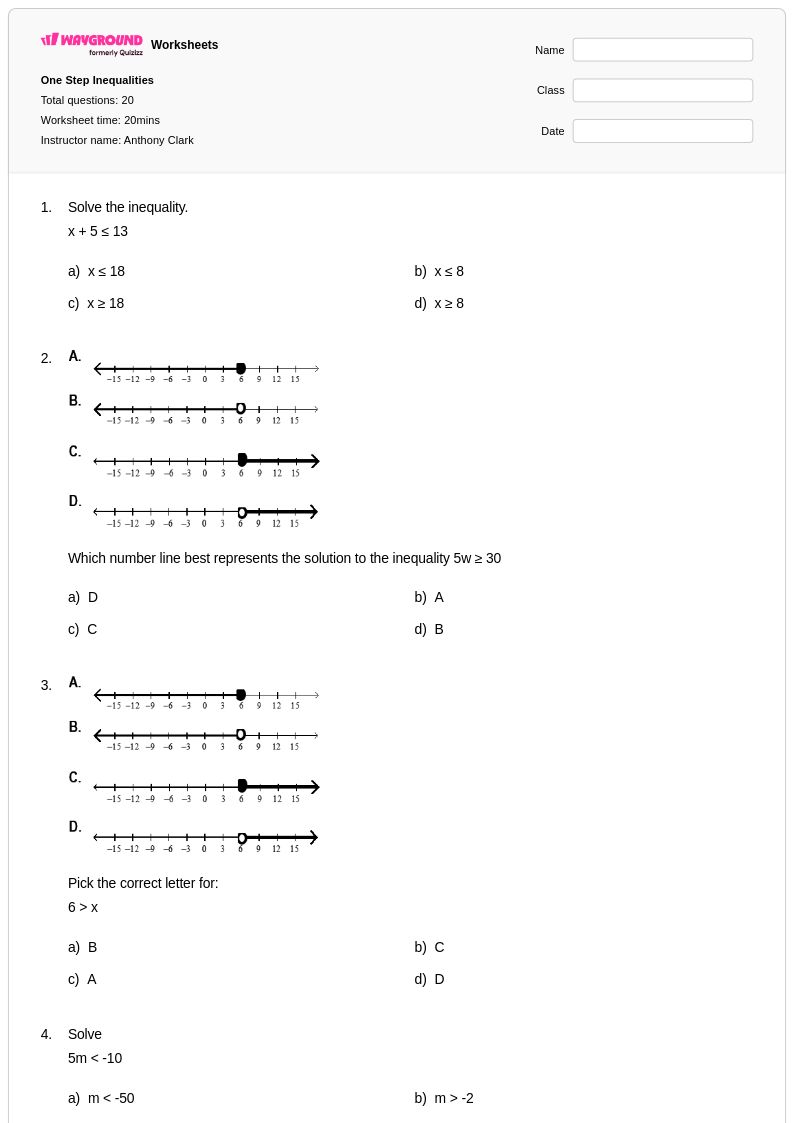
20 Q
6th - Uni
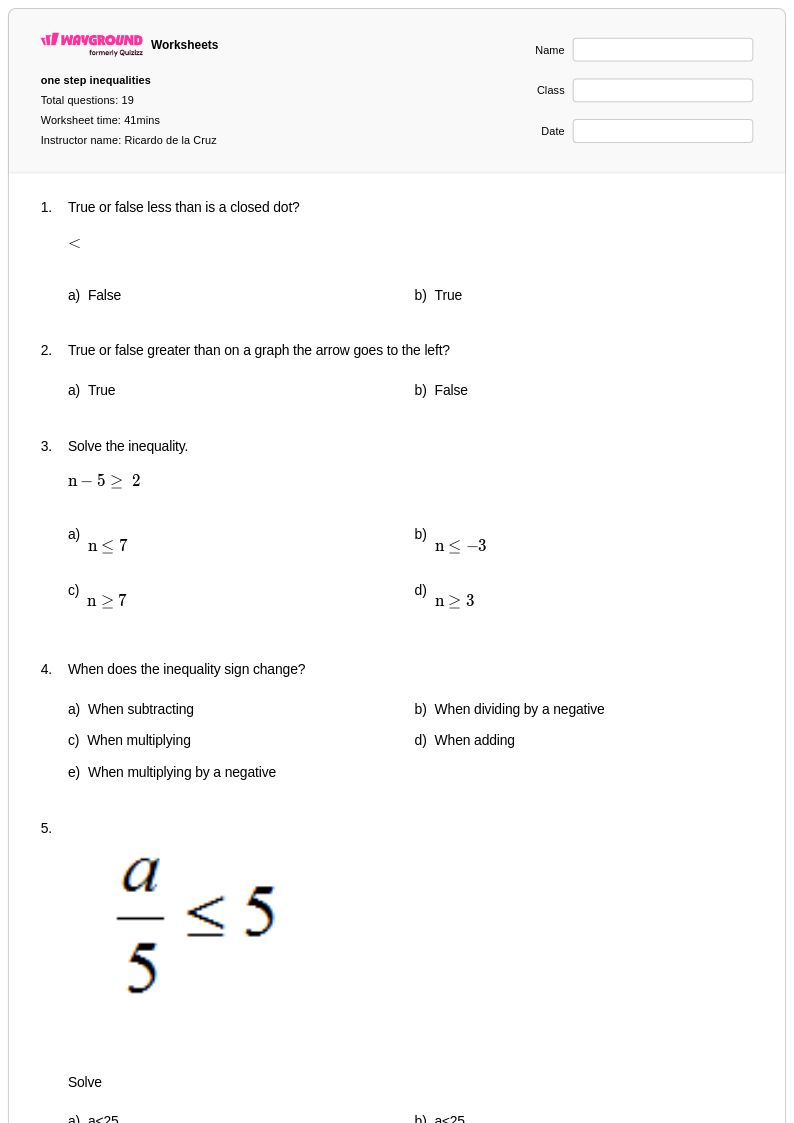
19 Q
6th
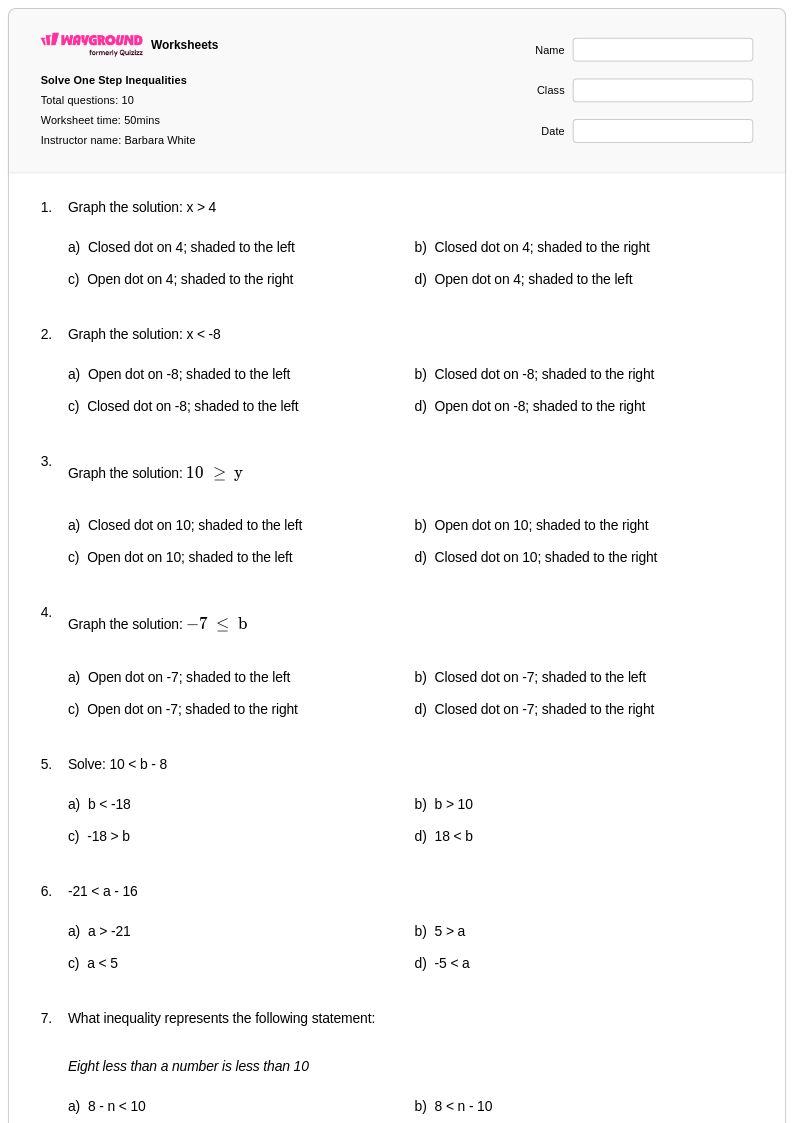
10 Q
6th - 7th
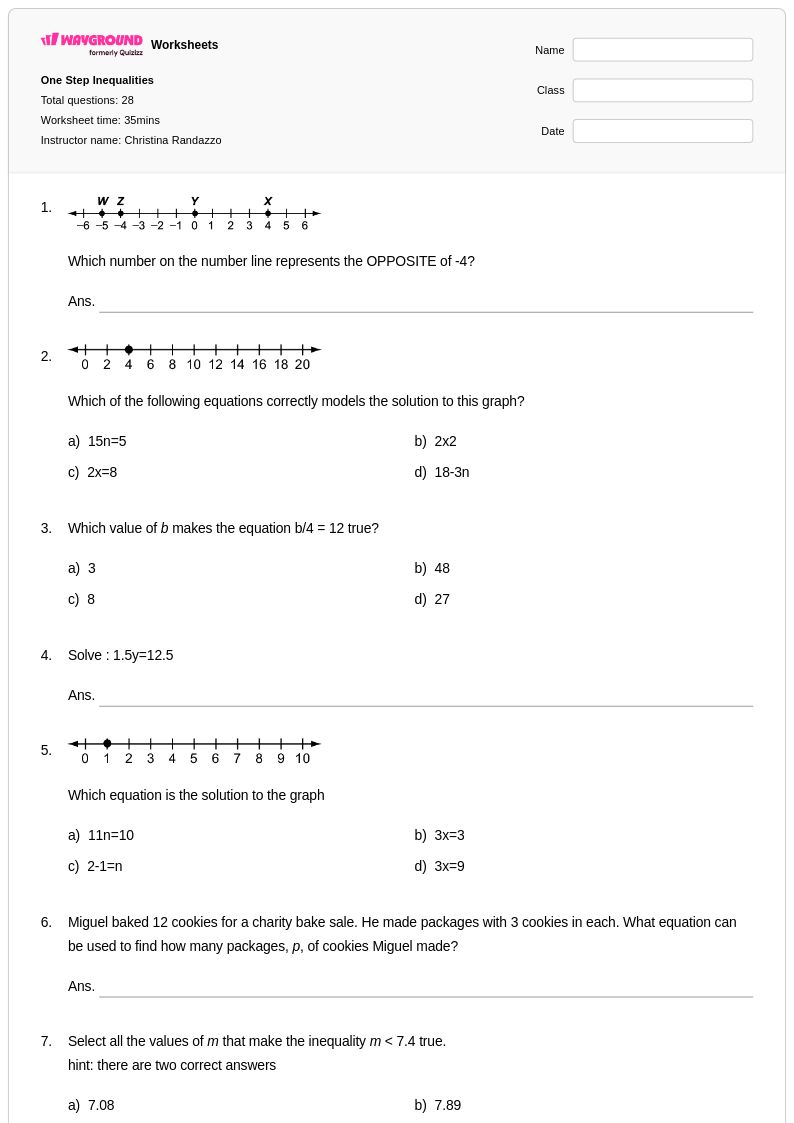
28 Q
6th
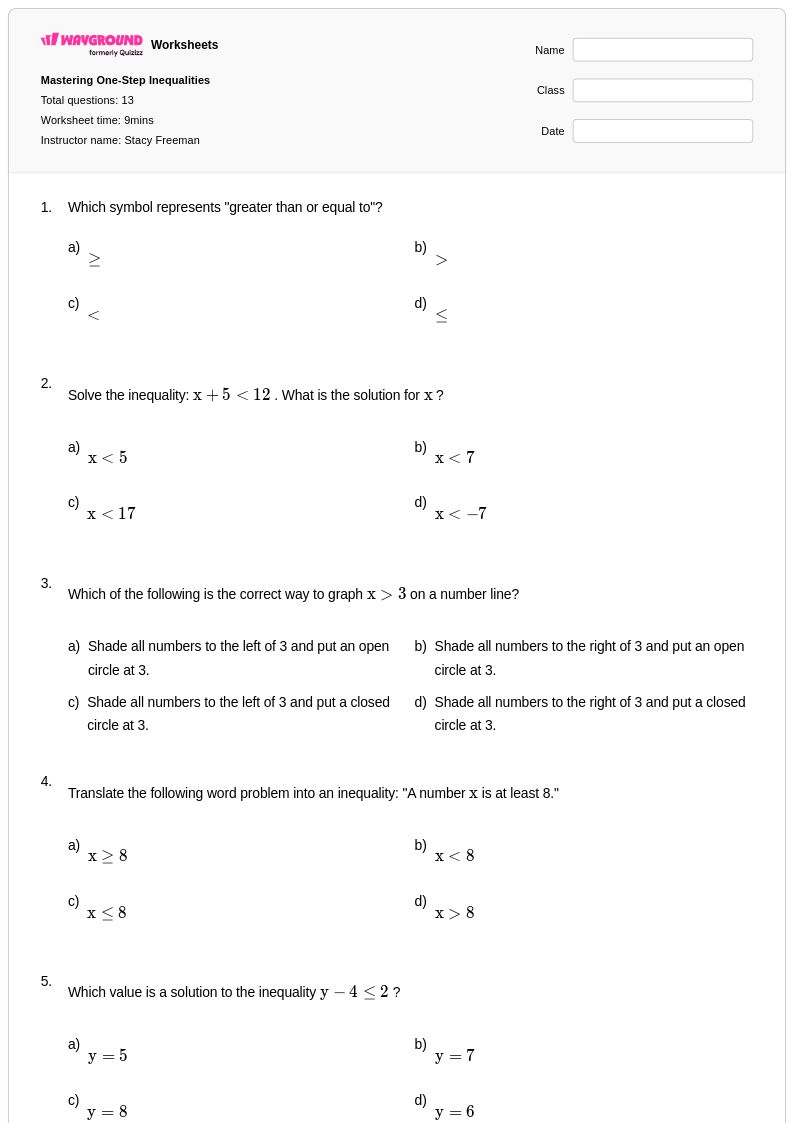
13 Q
6th
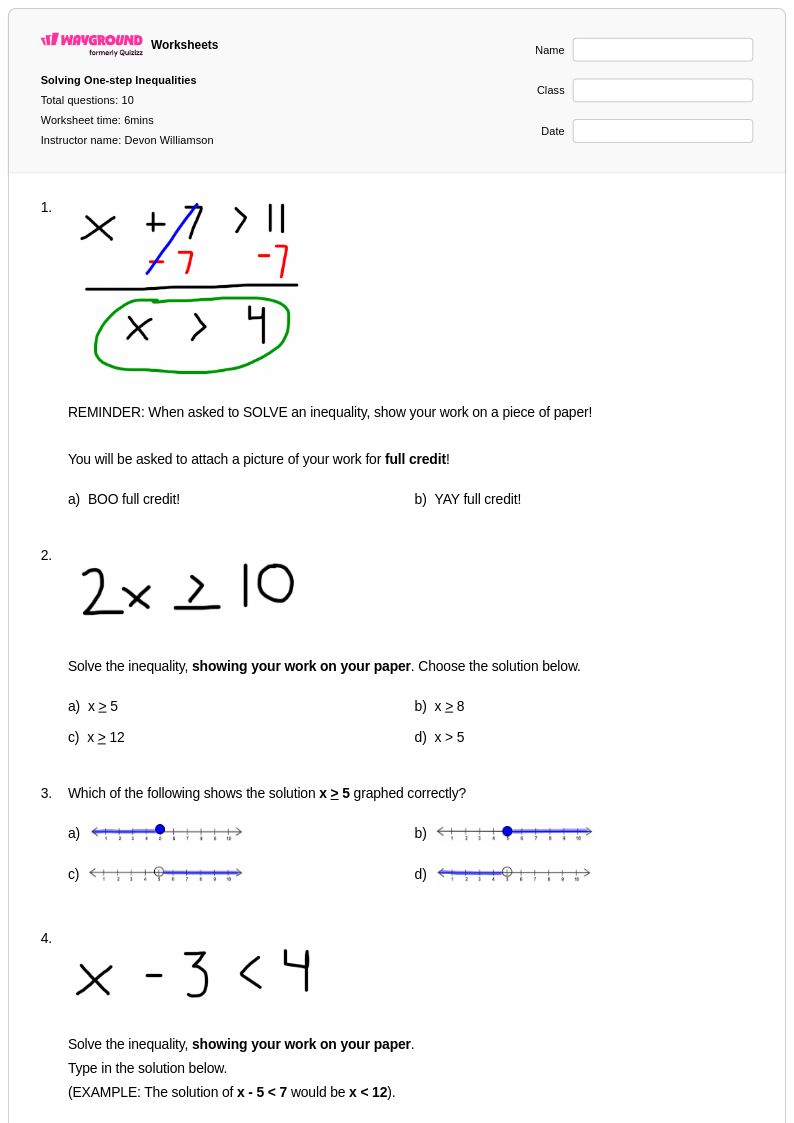
10 Q
6th - 7th
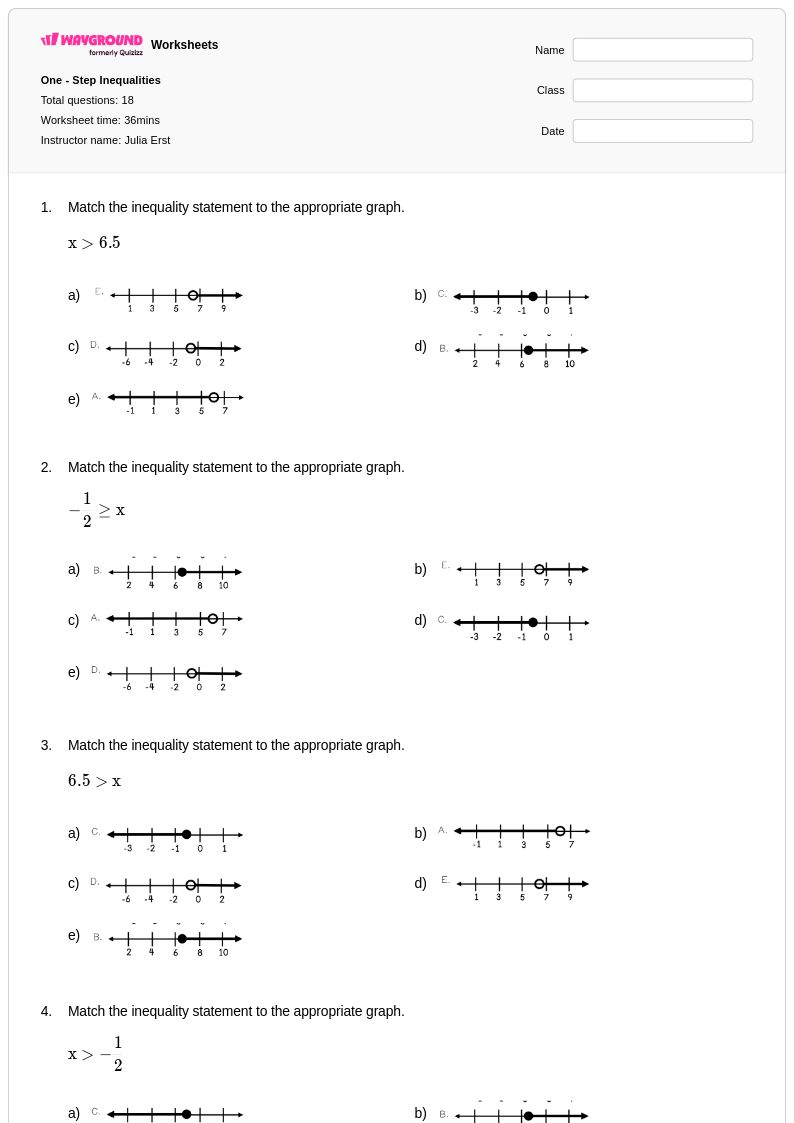
18 Q
6th - 8th
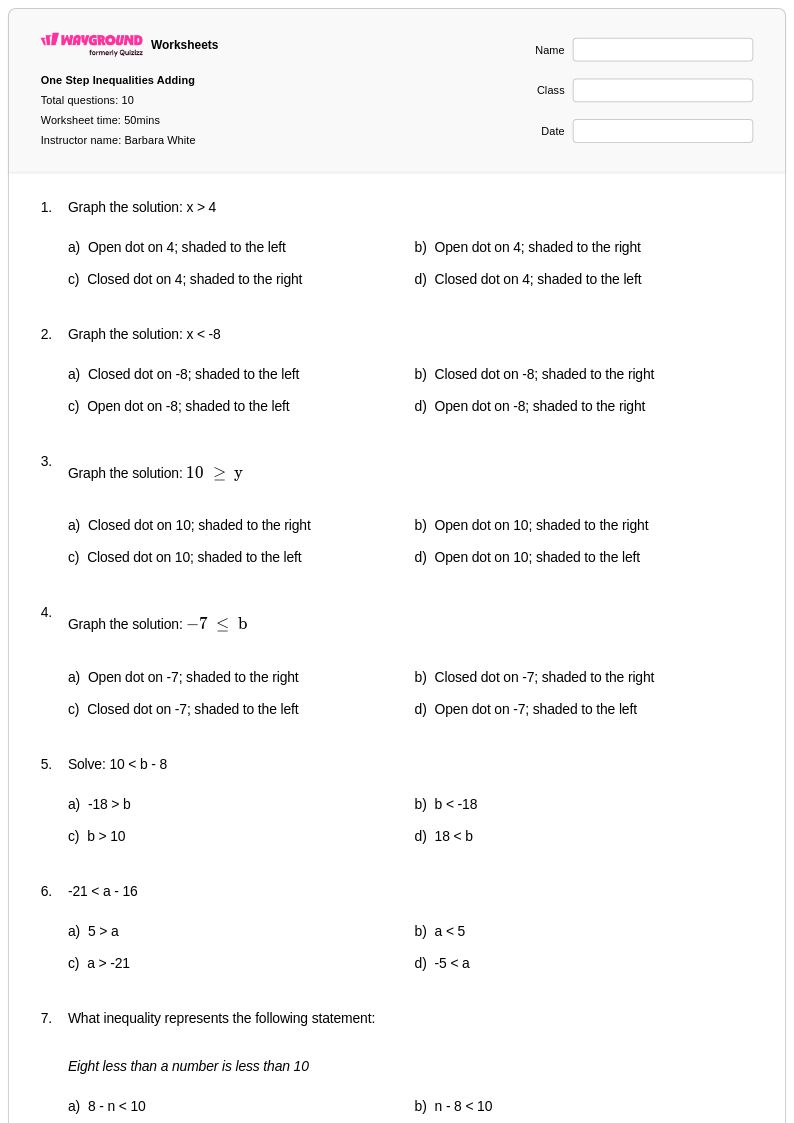
10 Q
6th - 7th
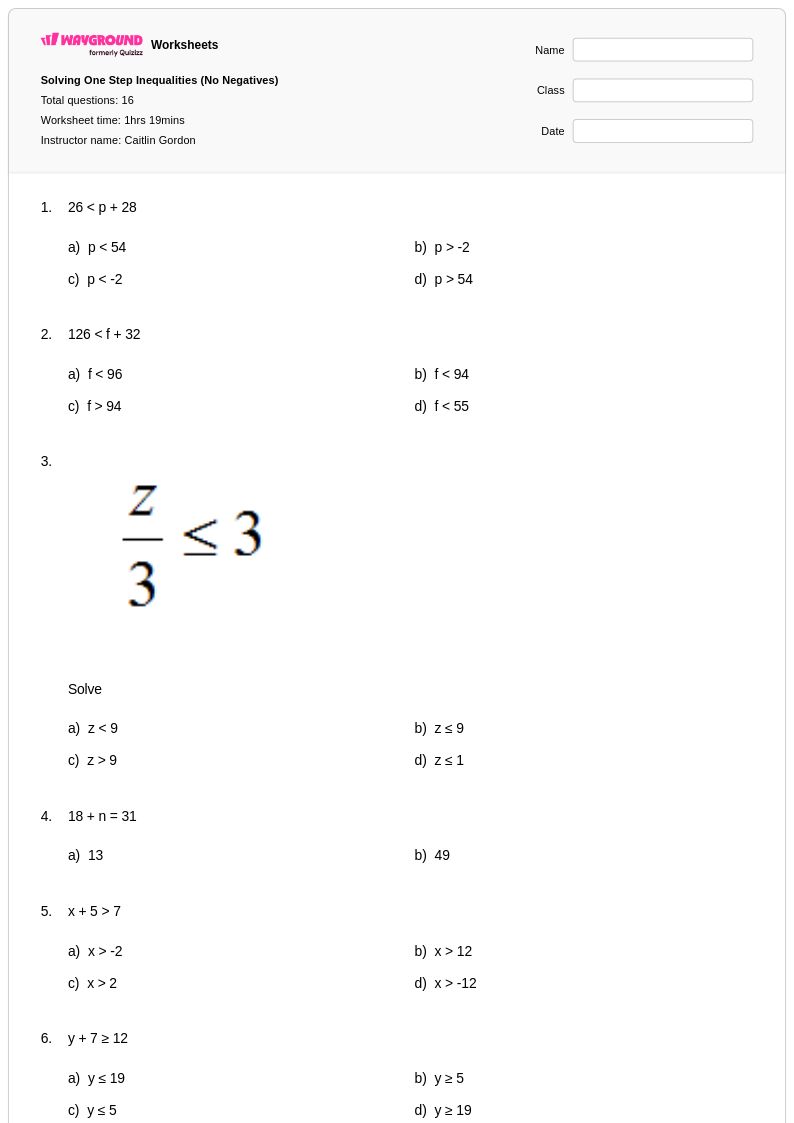
16 Q
6th
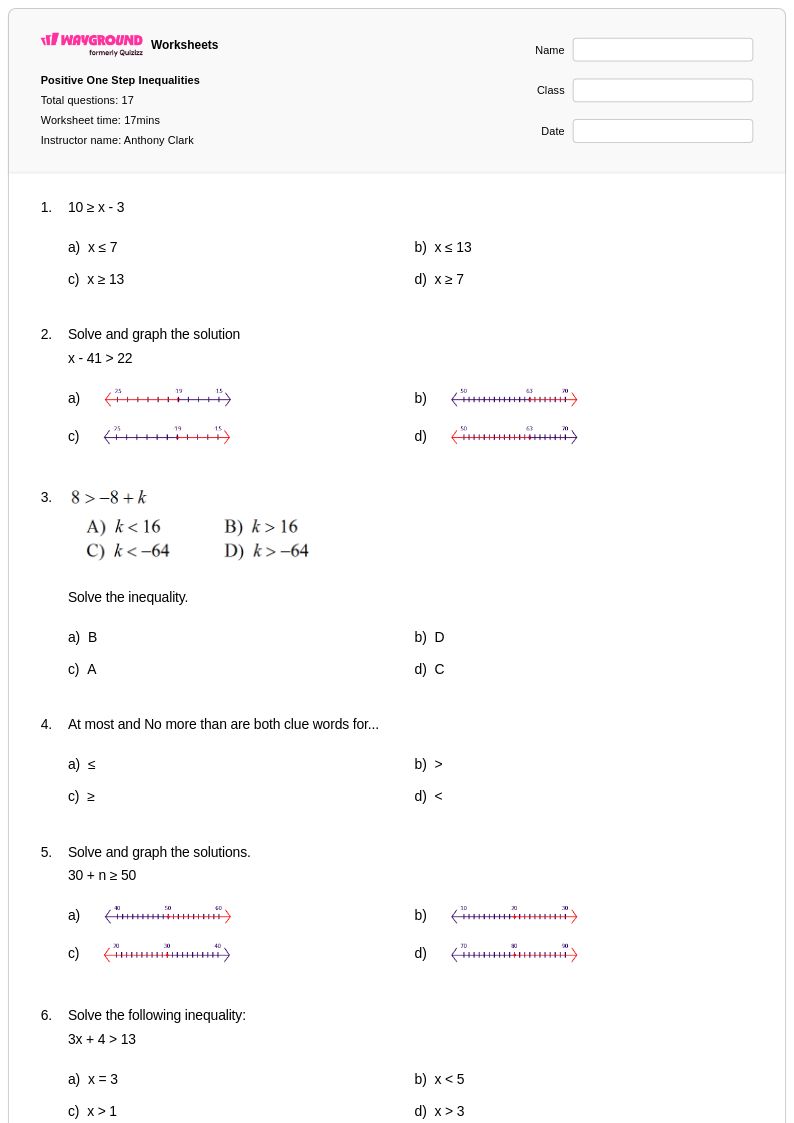
17 Q
6th - Uni
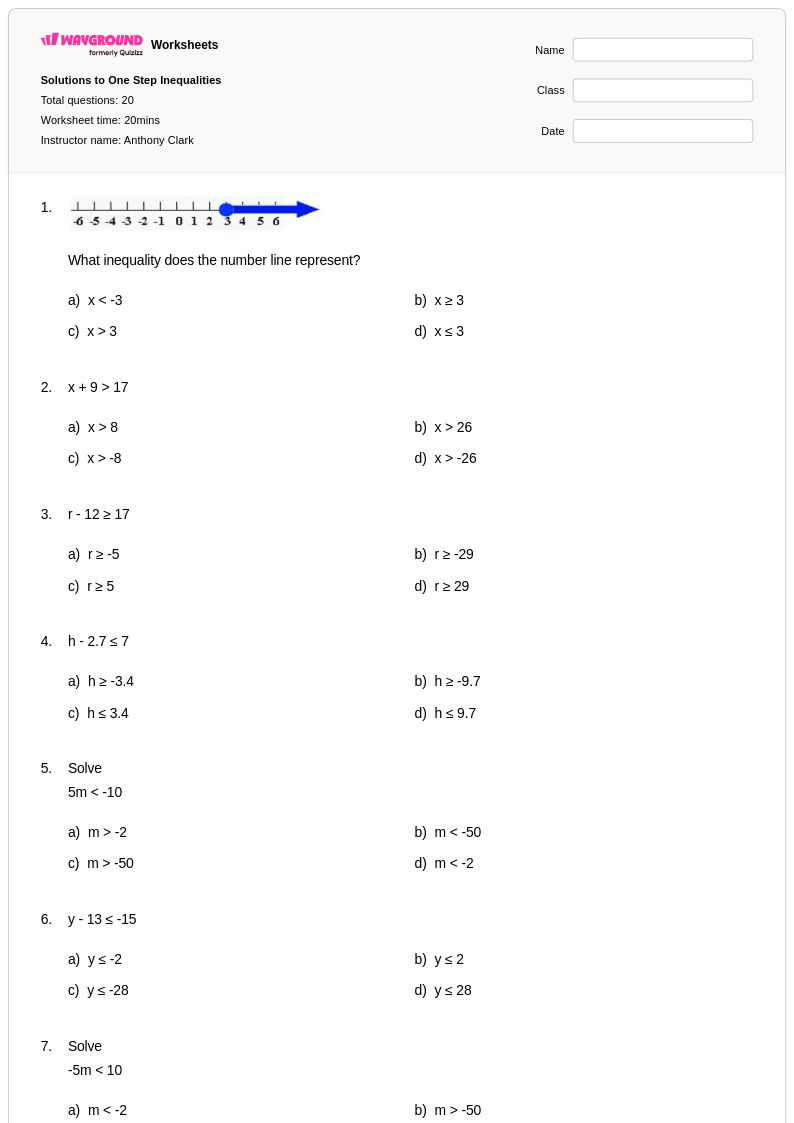
20 Q
6th - Uni
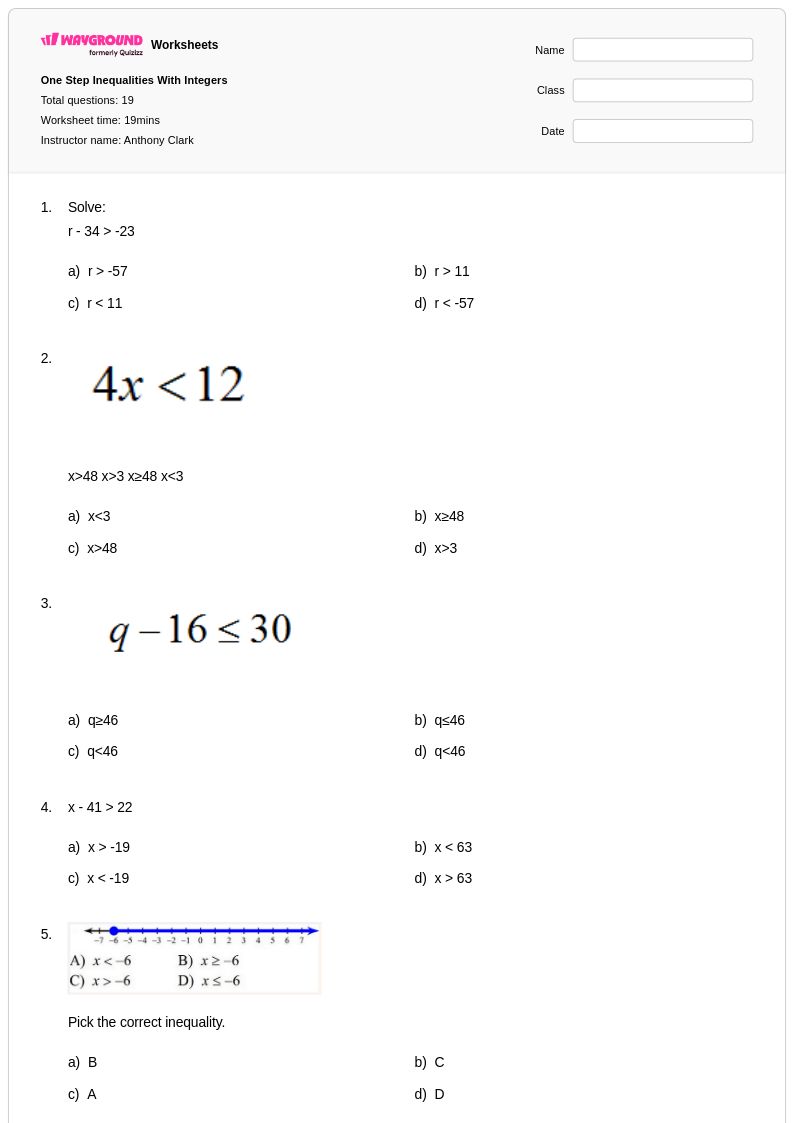
19 Q
6th - Uni
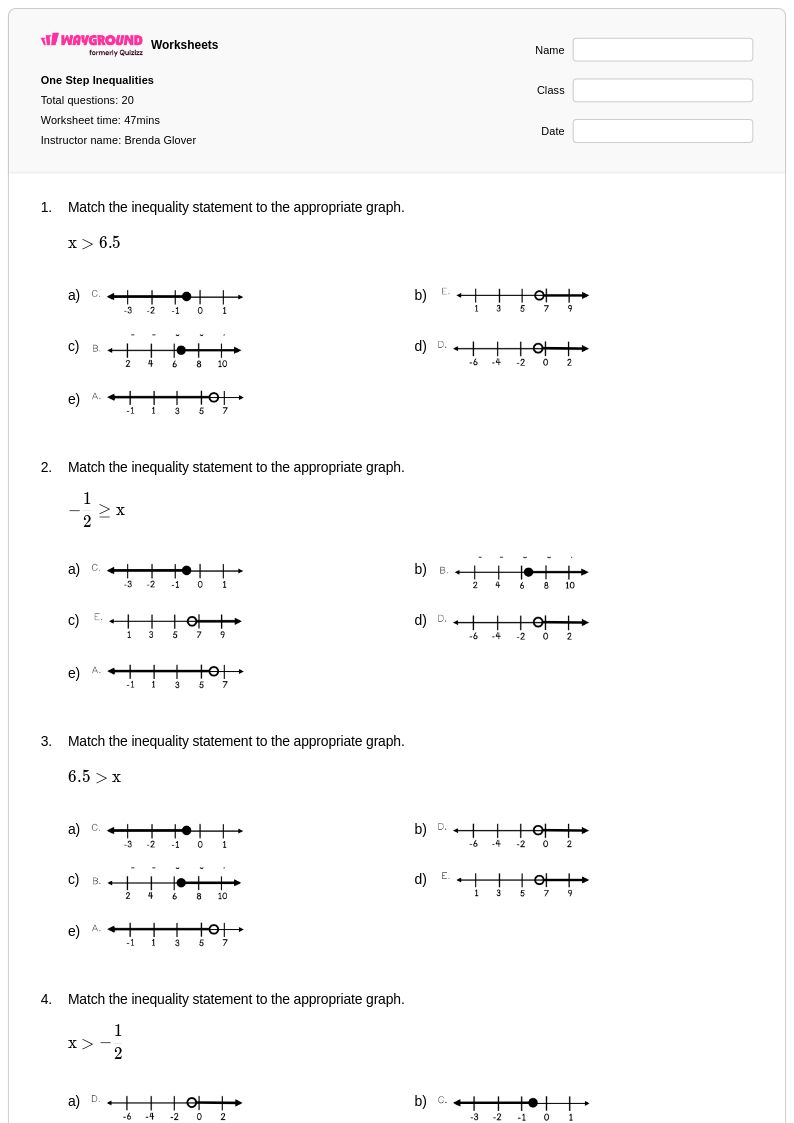
20 Q
6th

11 Q
6th - 10th
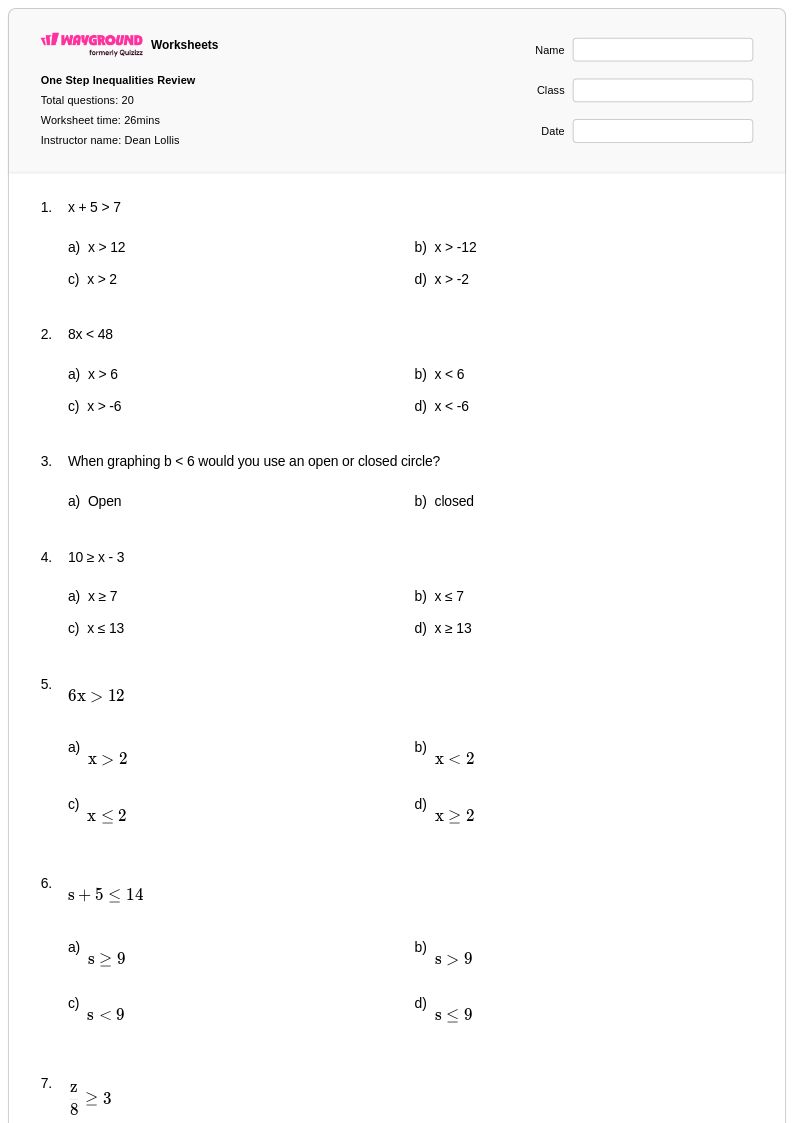
20 Q
6th - 8th
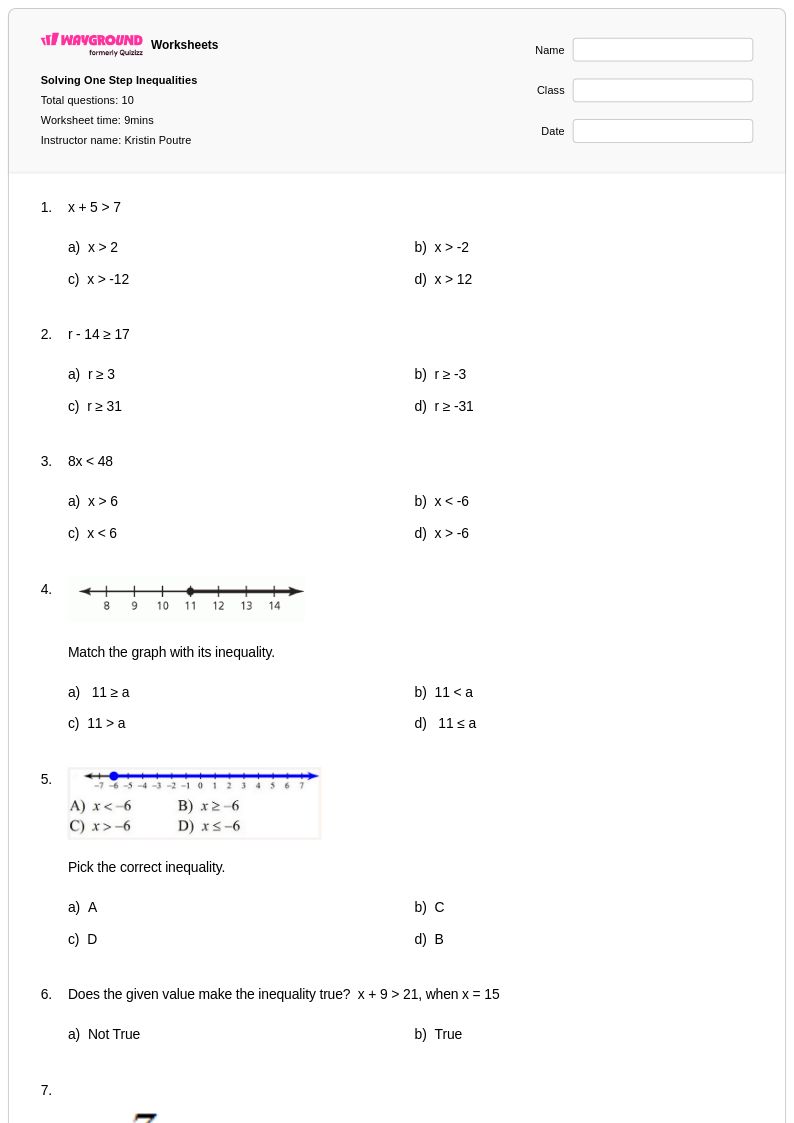
10 Q
6th
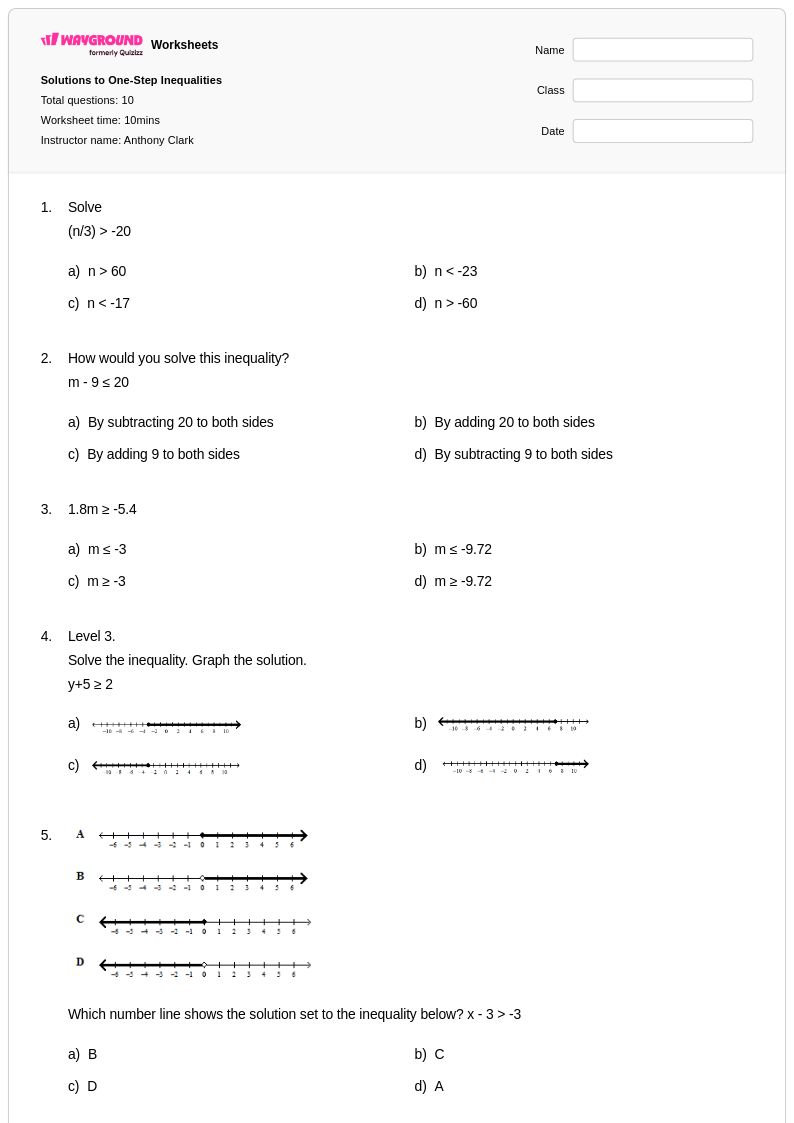
10 Q
6th - Uni
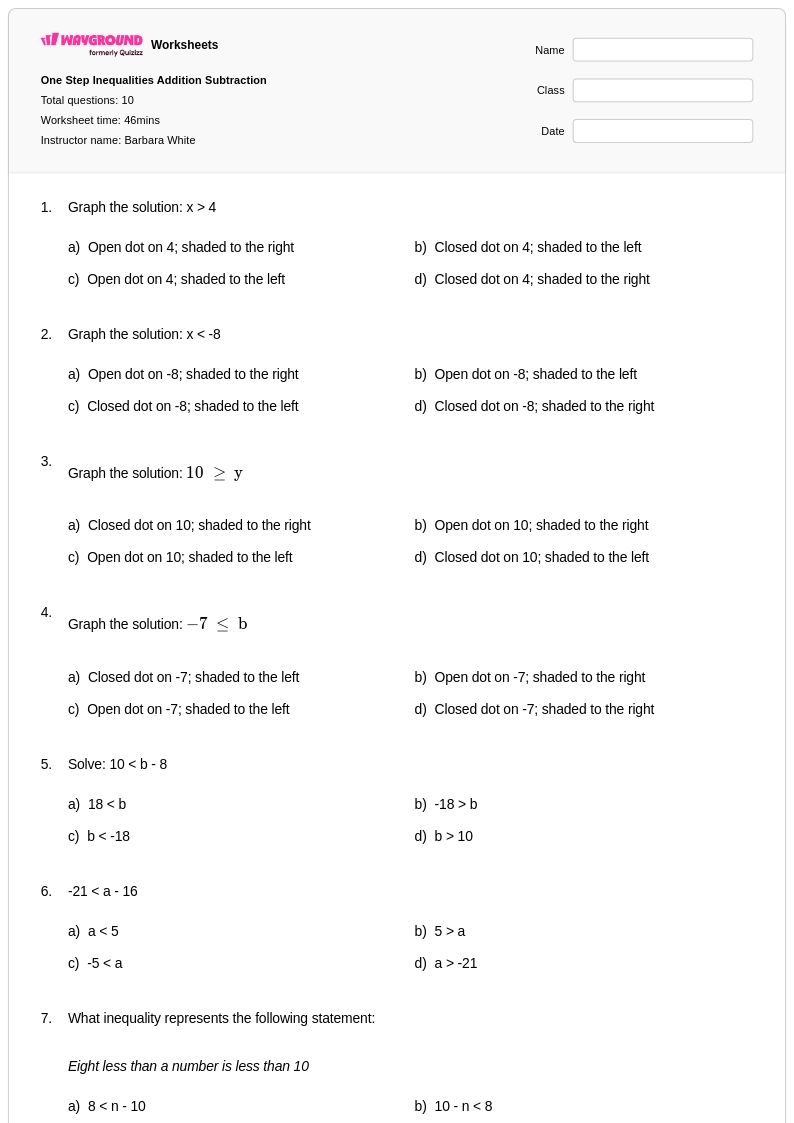
10 Q
6th - 7th
Explore Other Subject Worksheets for class 6
Explore printable One-step Inequalities worksheets for Class 6
One-step inequalities form a crucial foundation in Class 6 mathematics, building students' algebraic reasoning skills through systematic practice with expressions involving greater than, less than, and equal relationships. Wayground's comprehensive collection of one-step inequality worksheets provides educators with expertly designed practice problems that guide students through solving basic inequalities using addition, subtraction, multiplication, and division operations. These printable resources include detailed answer keys and are available as free pdf downloads, enabling teachers to seamlessly integrate targeted skill practice into their mathematics instruction while helping students master the fundamental concepts of inequality notation, solution sets, and graphing solutions on number lines.
Wayground, formerly Quizizz, empowers educators with access to millions of teacher-created resources specifically designed for one-step inequality instruction, featuring robust search and filtering capabilities that allow teachers to quickly locate materials aligned with specific mathematical standards and grade-level expectations. The platform's differentiation tools enable instructors to customize worksheets based on individual student needs, while the availability of both printable pdf formats and interactive digital versions provides flexibility for various classroom settings and learning environments. These comprehensive features support effective lesson planning by offering multiple pathways for skill remediation, concept reinforcement, and mathematical enrichment, ensuring that Class 6 students develop confidence and proficiency in solving one-step inequalities through structured, progressive practice opportunities.
FAQs
What grade do students learn one-step inequalities?
How should I introduce one-step inequalities to 6th graders?
What types of problems are included in these 6th-grade worksheets?
What's a common sticking point for 6th graders with inequalities?
How can I use these Grade 6 inequality worksheets in my class?
How do one-step inequalities align with 6th-grade math standards?