
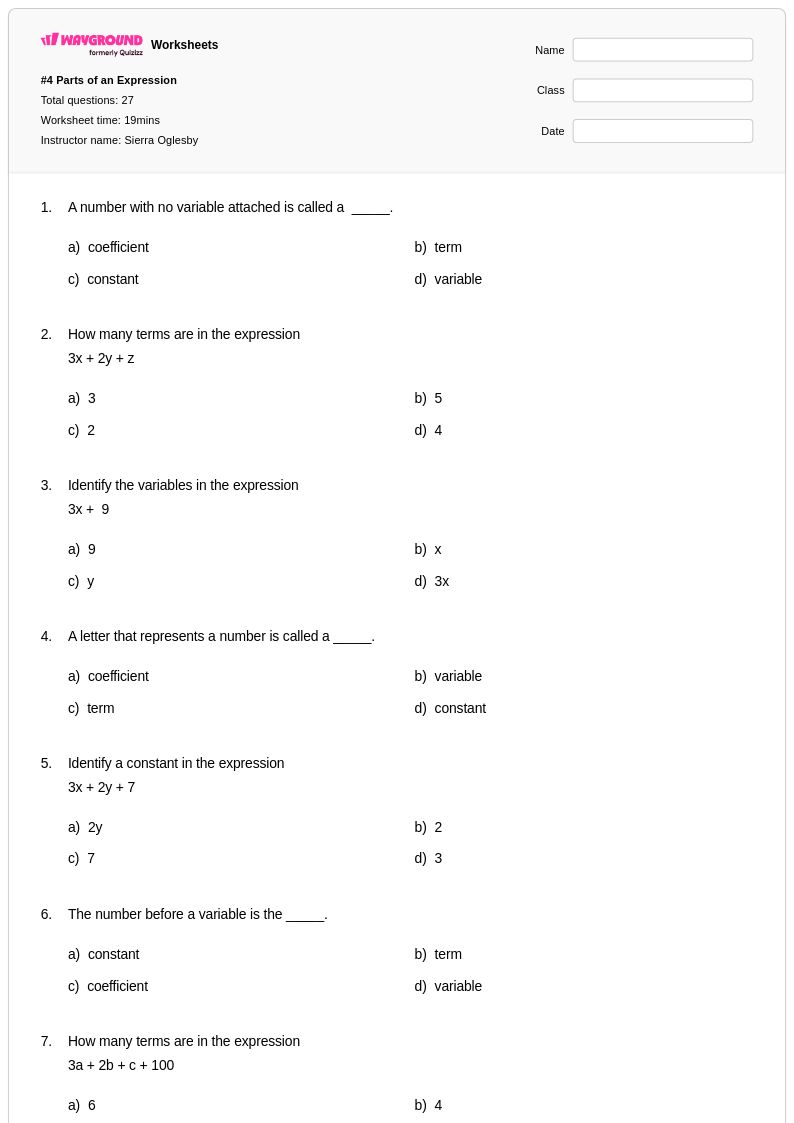
27 T
6th - 9th
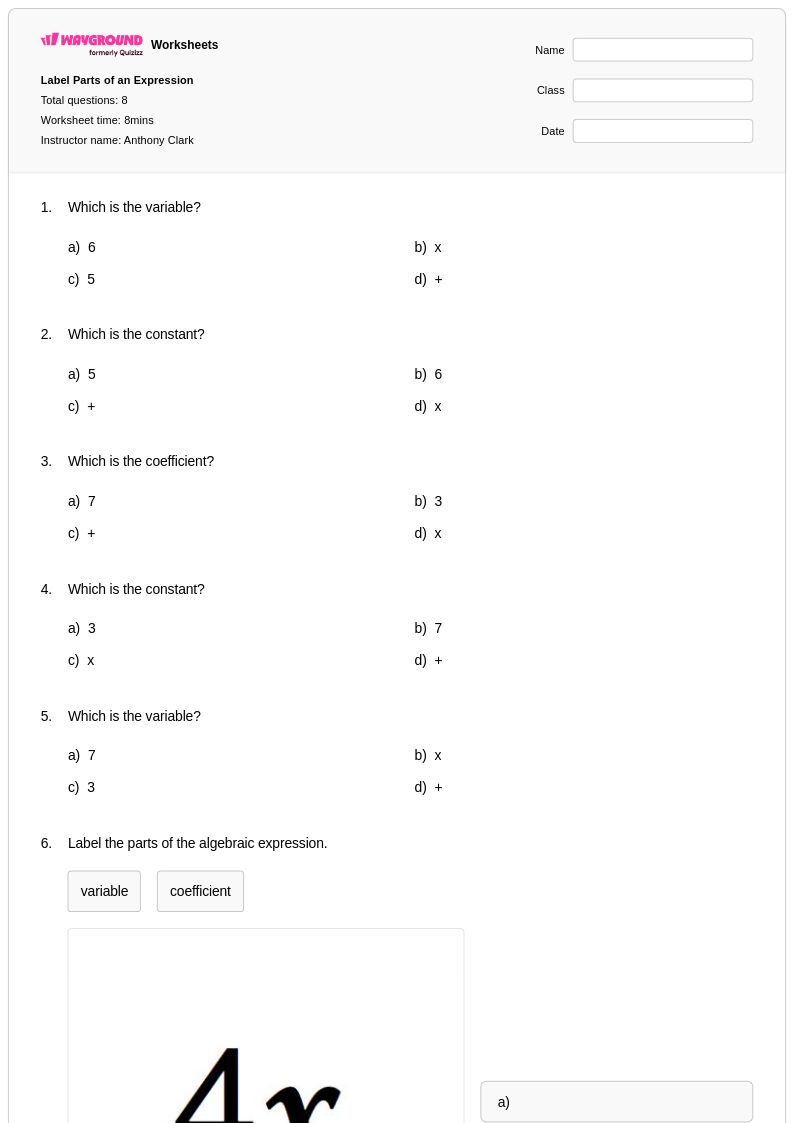
8 T
6th - Uni
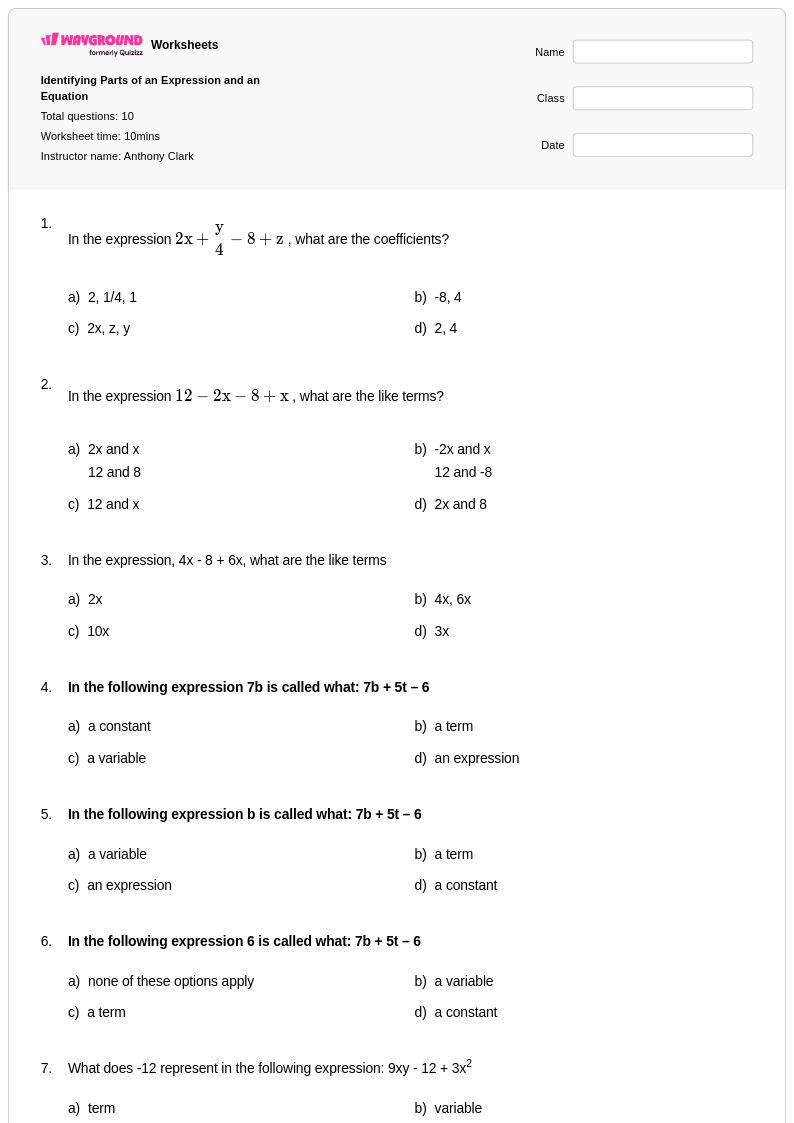
10 T
6th - Uni
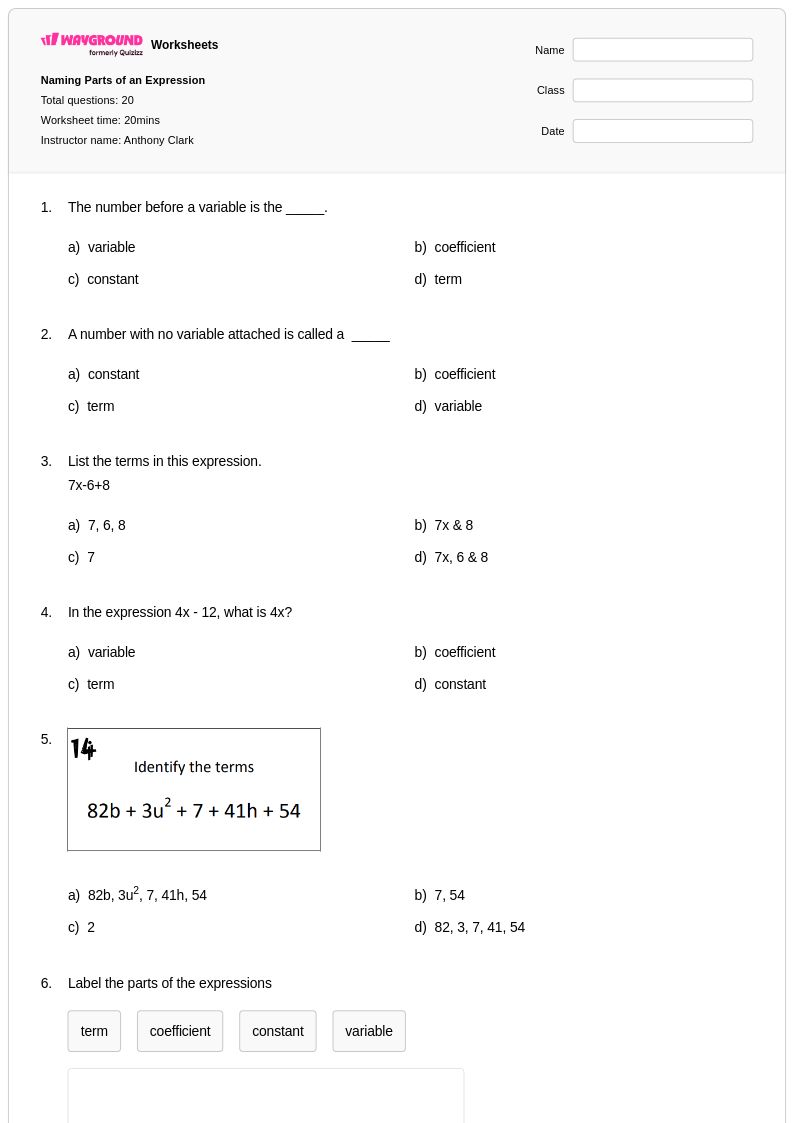
20 T
6th - Uni
12 T
6th - Uni
15 T
6th - 8th
15 T
6th - Uni
15 T
8th
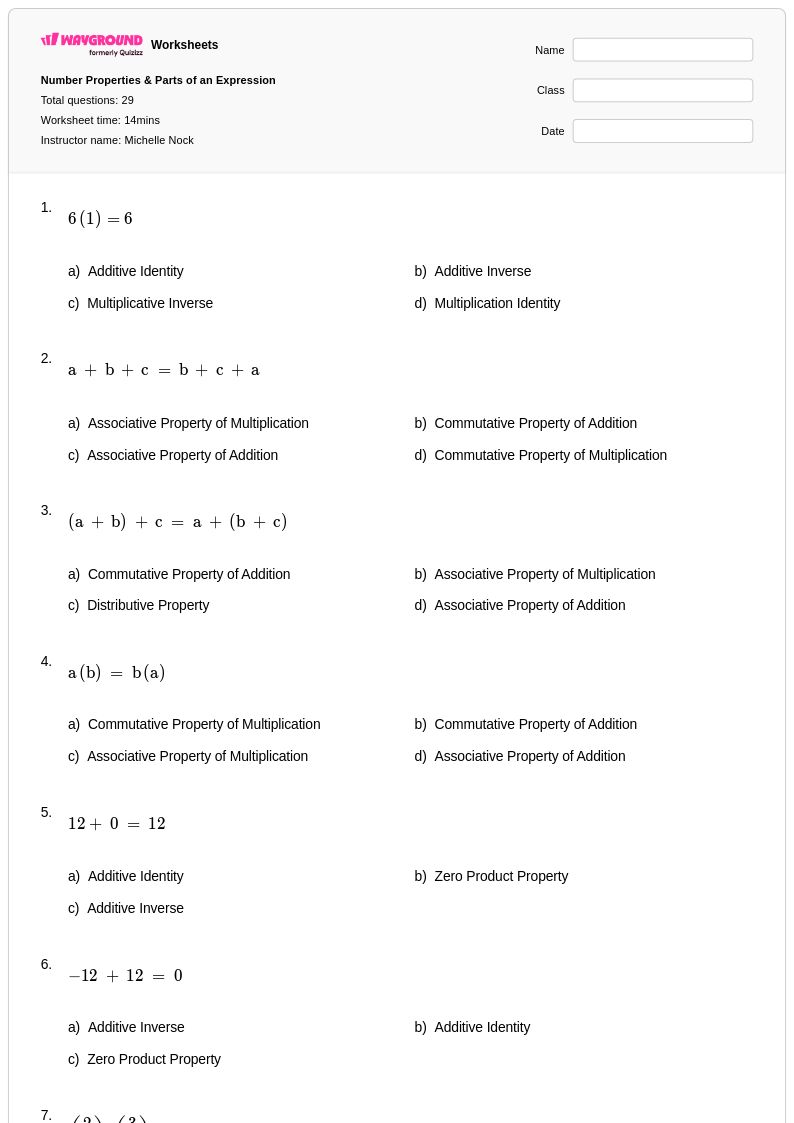
29 T
5th - 8th
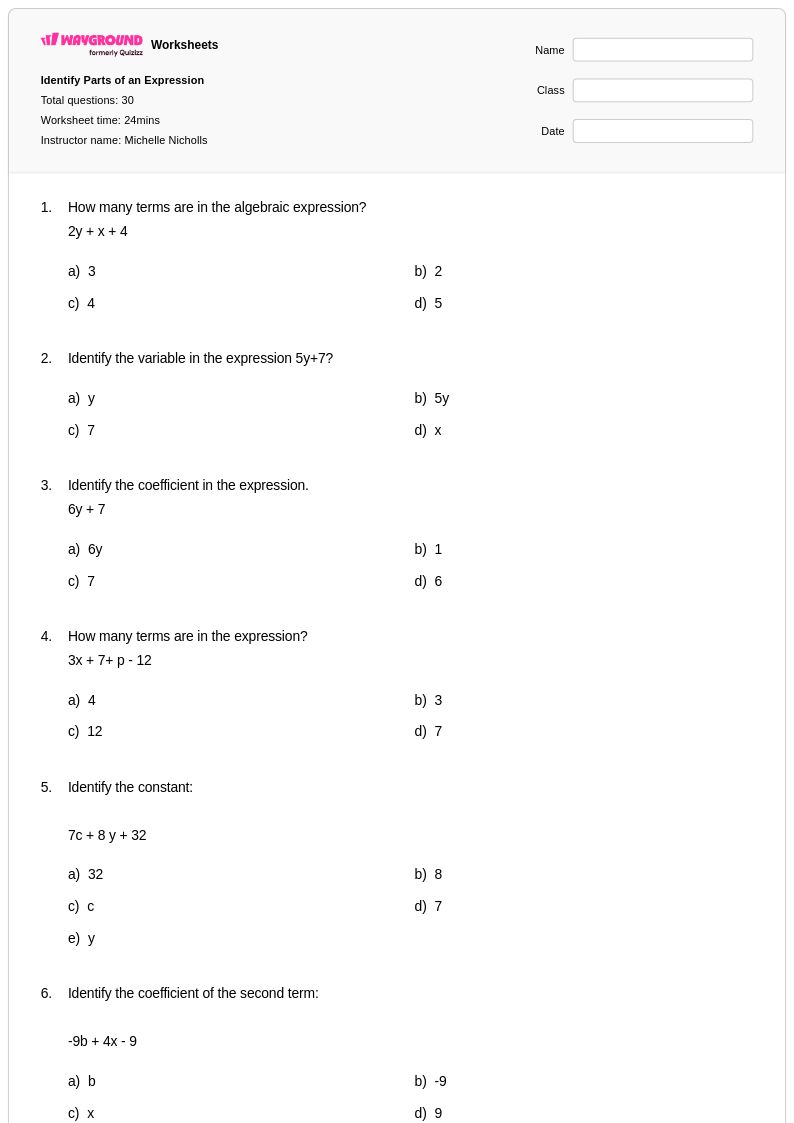
30 T
7th - 9th
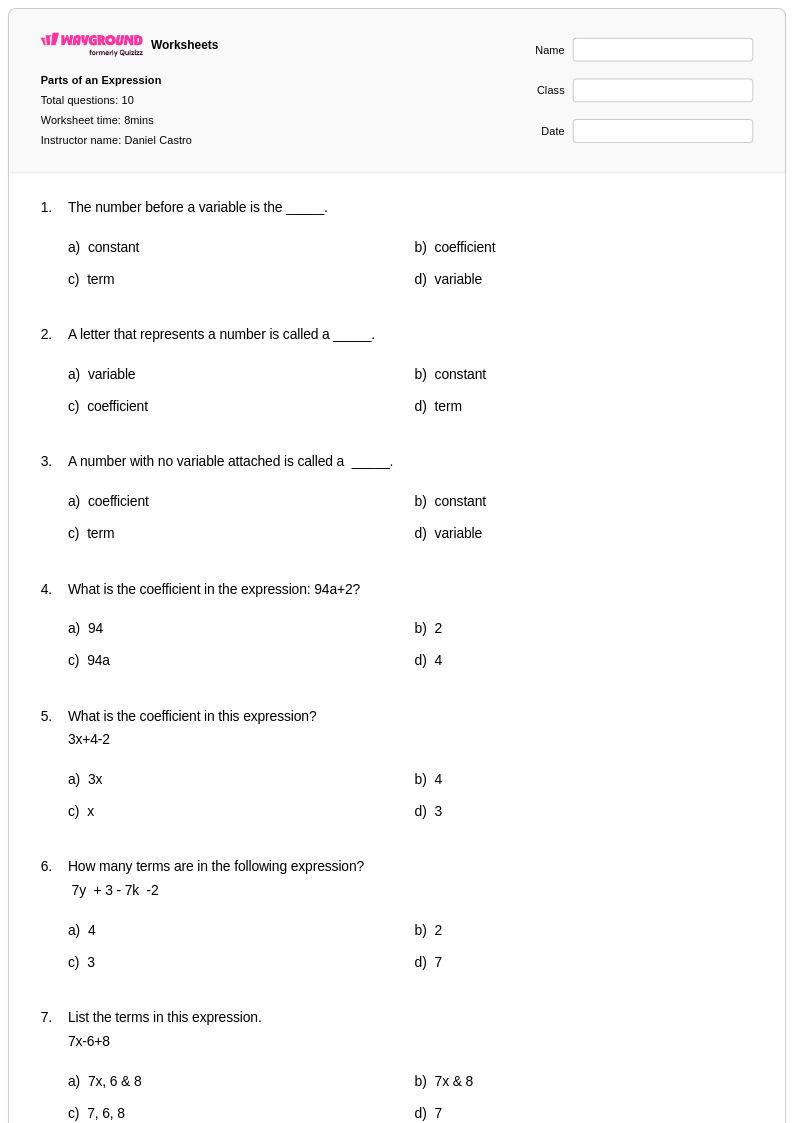
10 T
6th - 9th
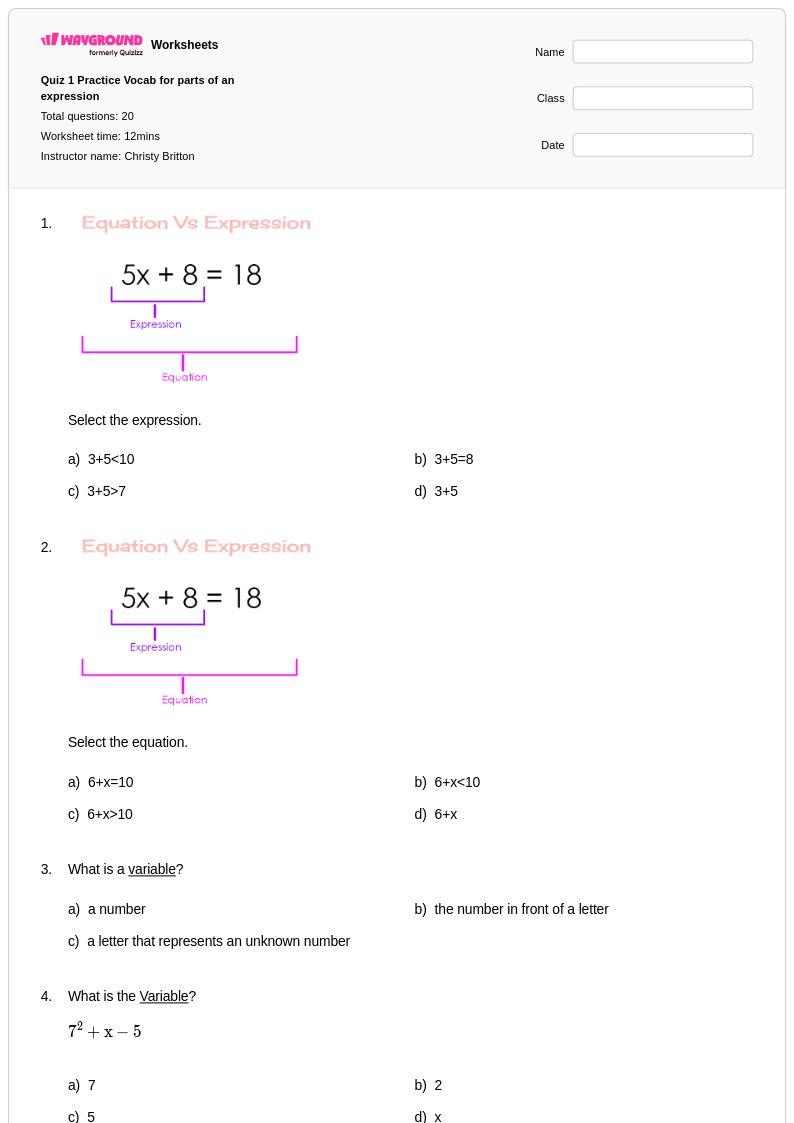
20 T
8th
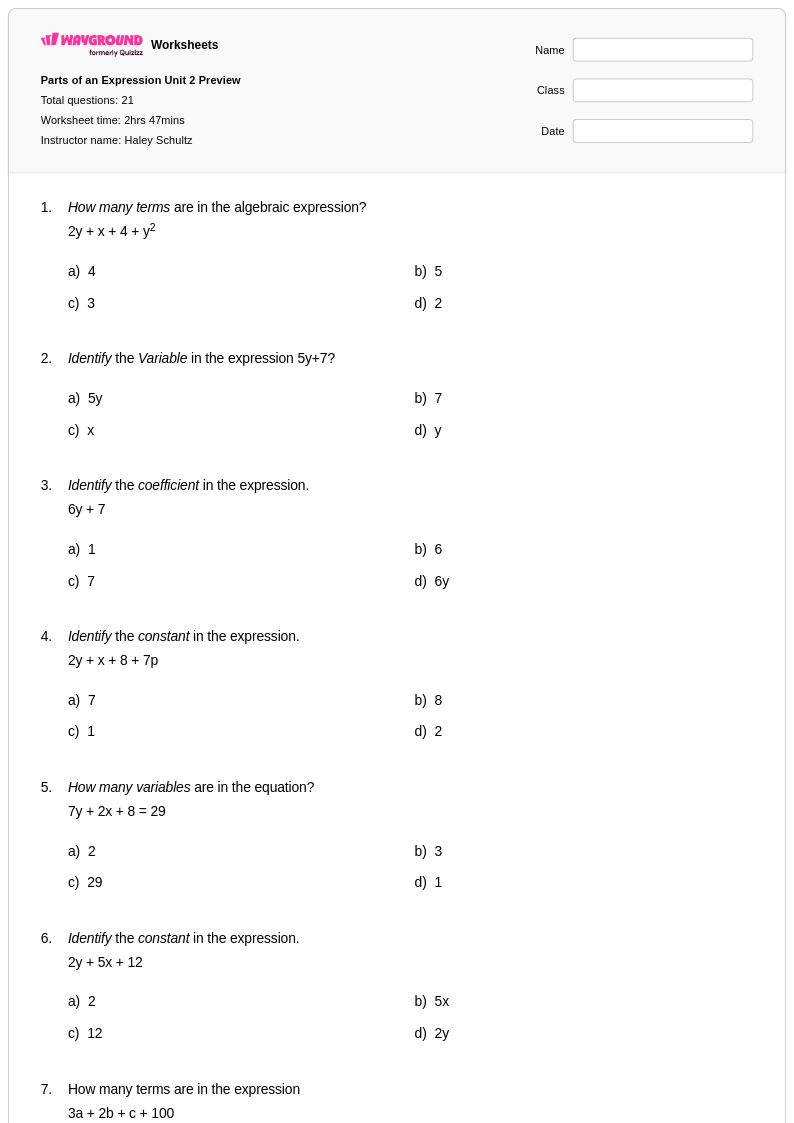
21 T
8th
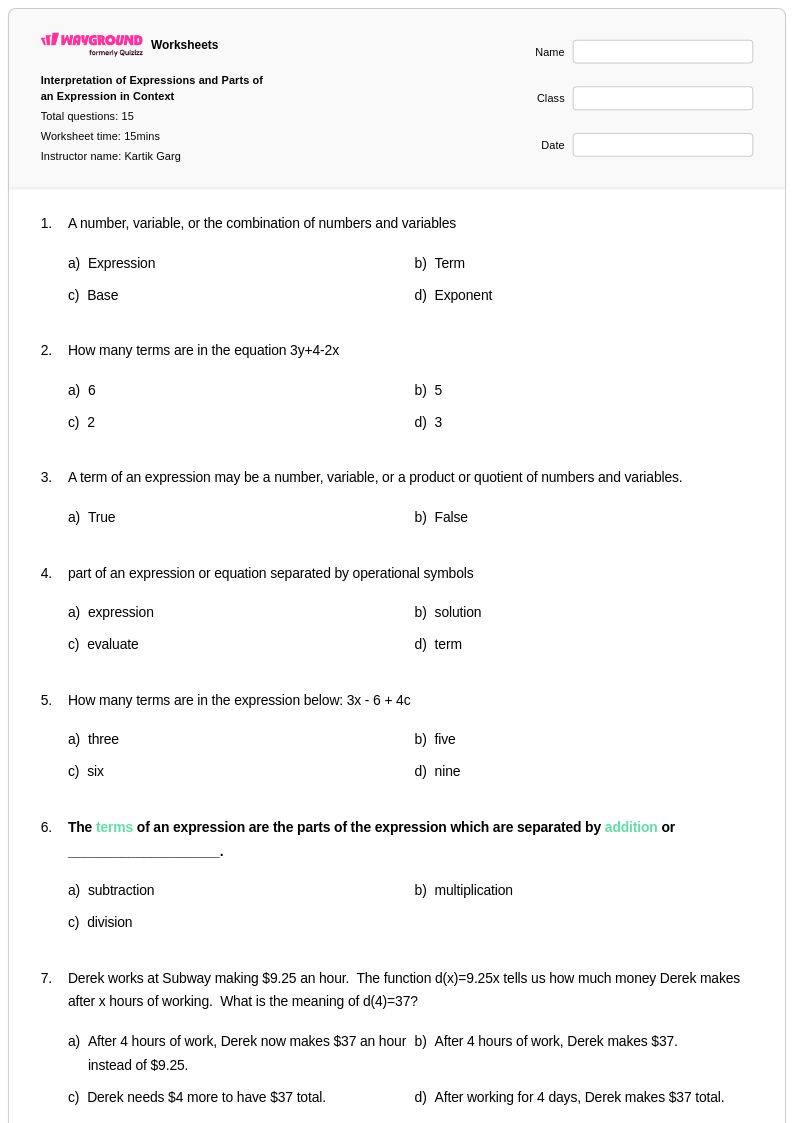
15 T
8th
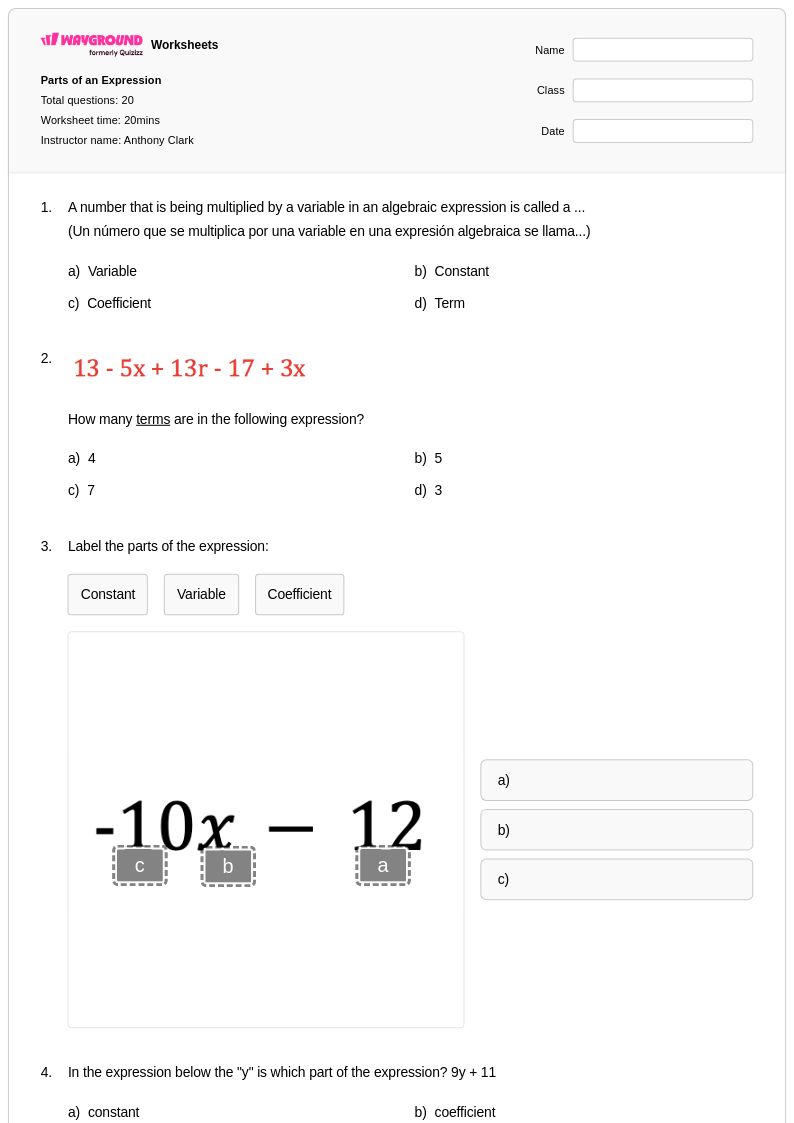
20 T
6th - Uni
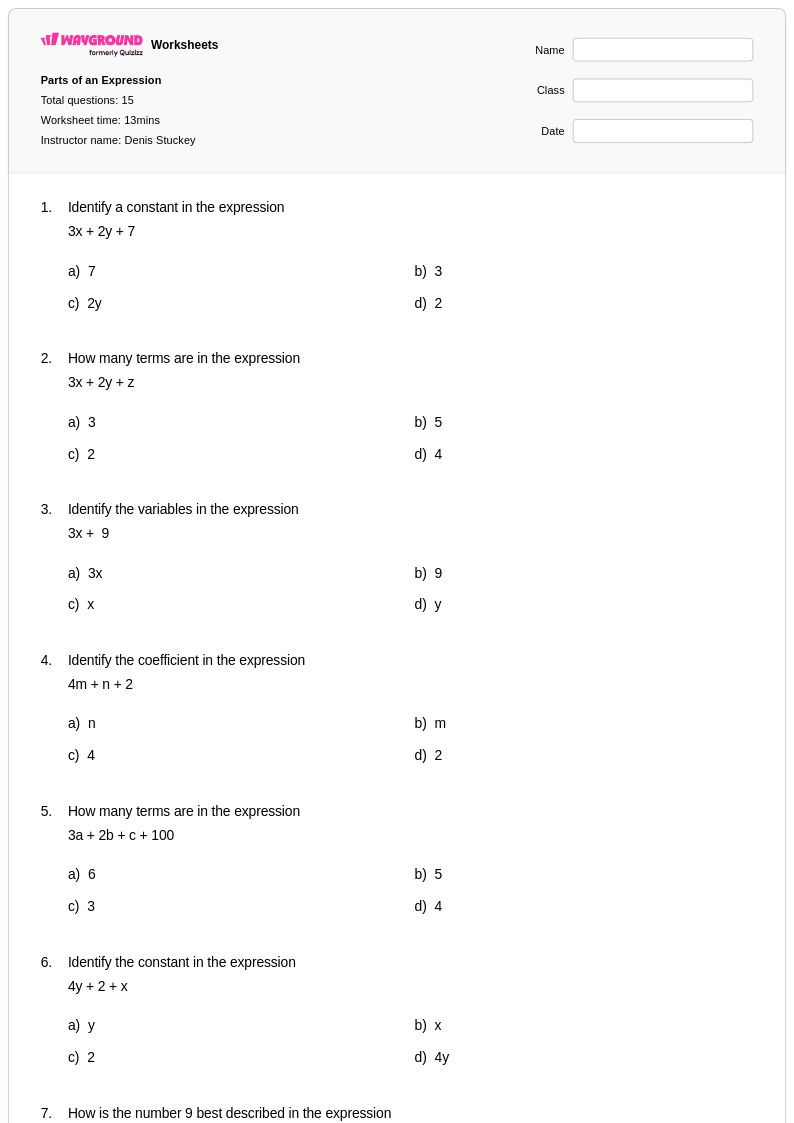
15 T
8th
10 T
5th - 8th
20 T
8th
10 T
6th - Uni
24 T
8th
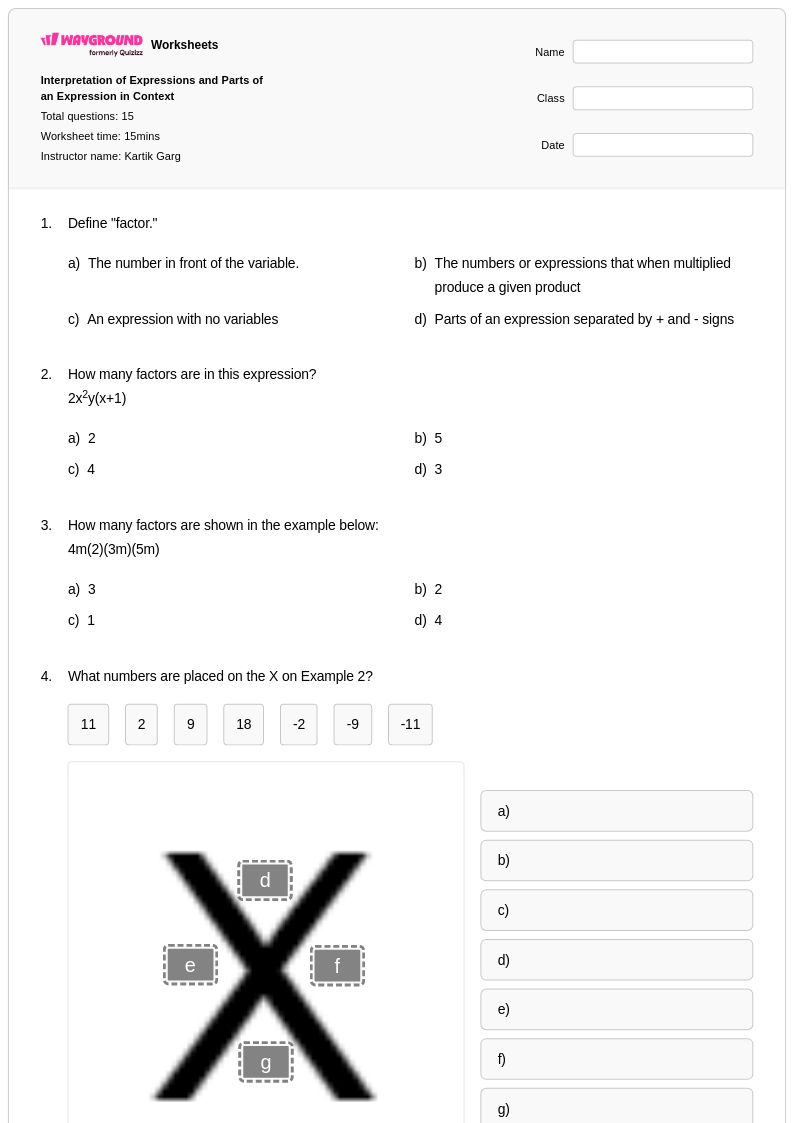
15 T
8th
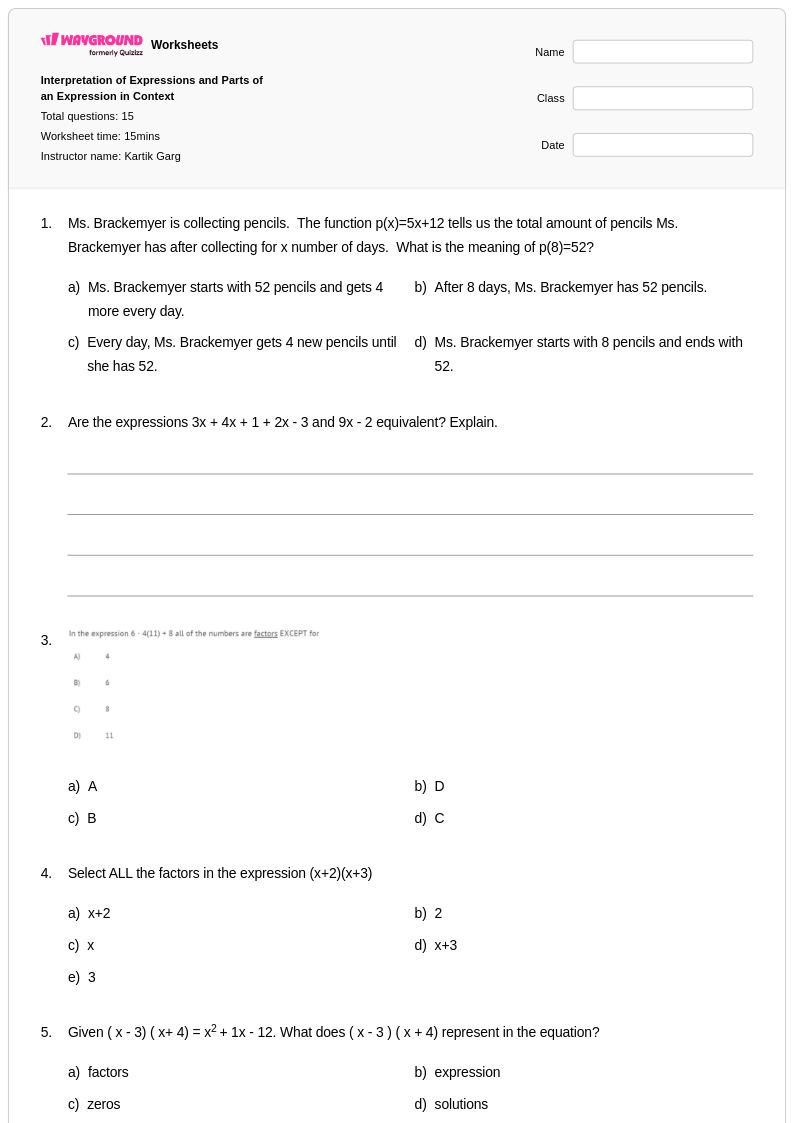
15 T
8th
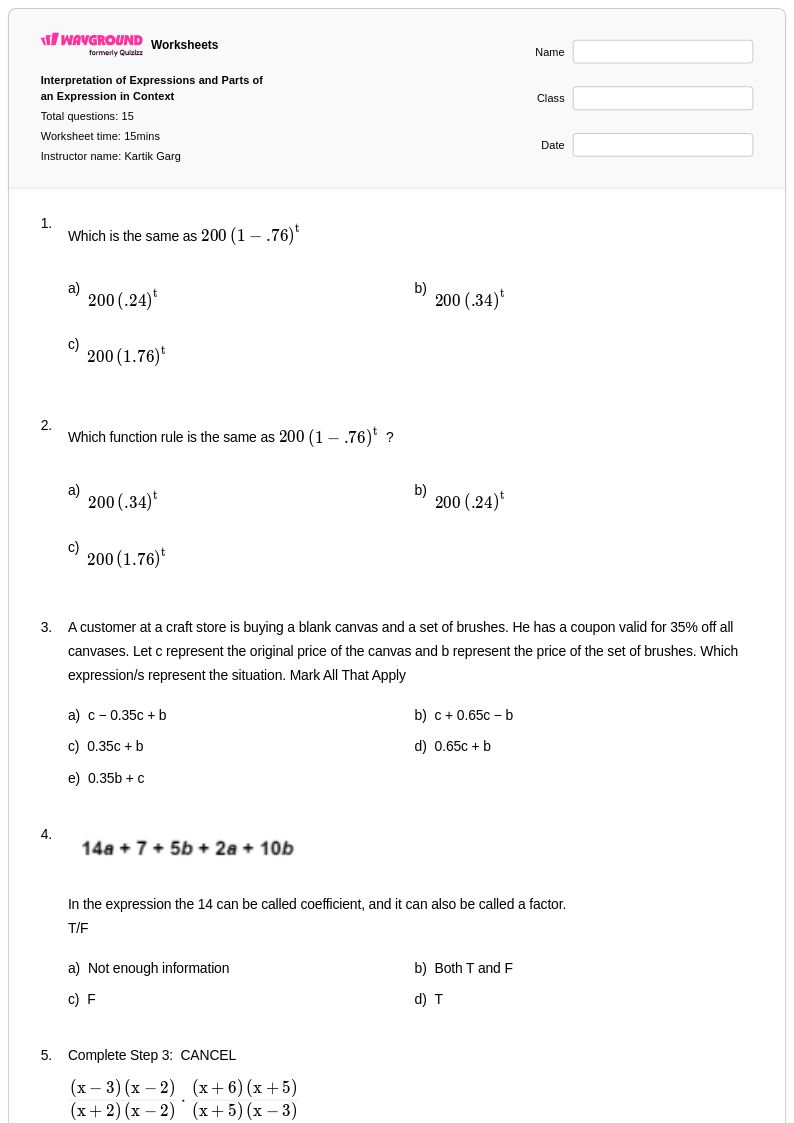
15 T
8th
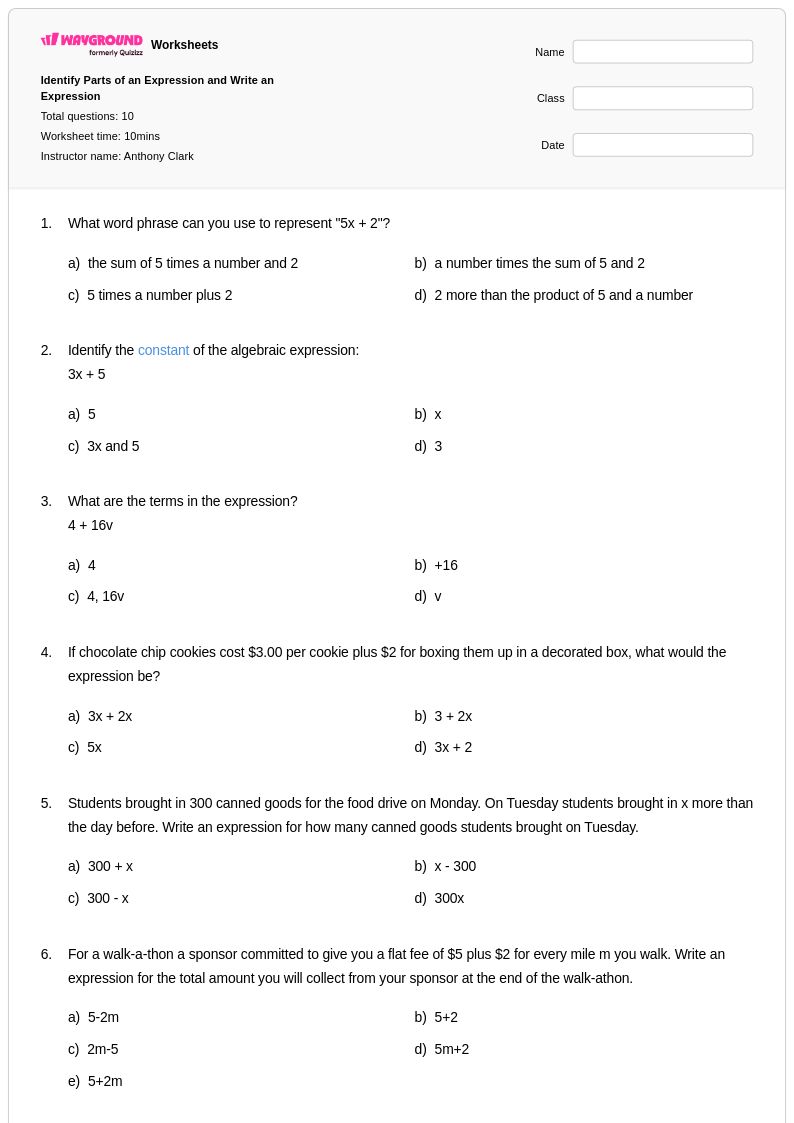
10 T
6th - Uni
Jelajahi Parts of an Expression Lembar Kerja berdasarkan Nilai
Jelajahi Lembar Kerja Mata Pelajaran Lainnya untuk class 8
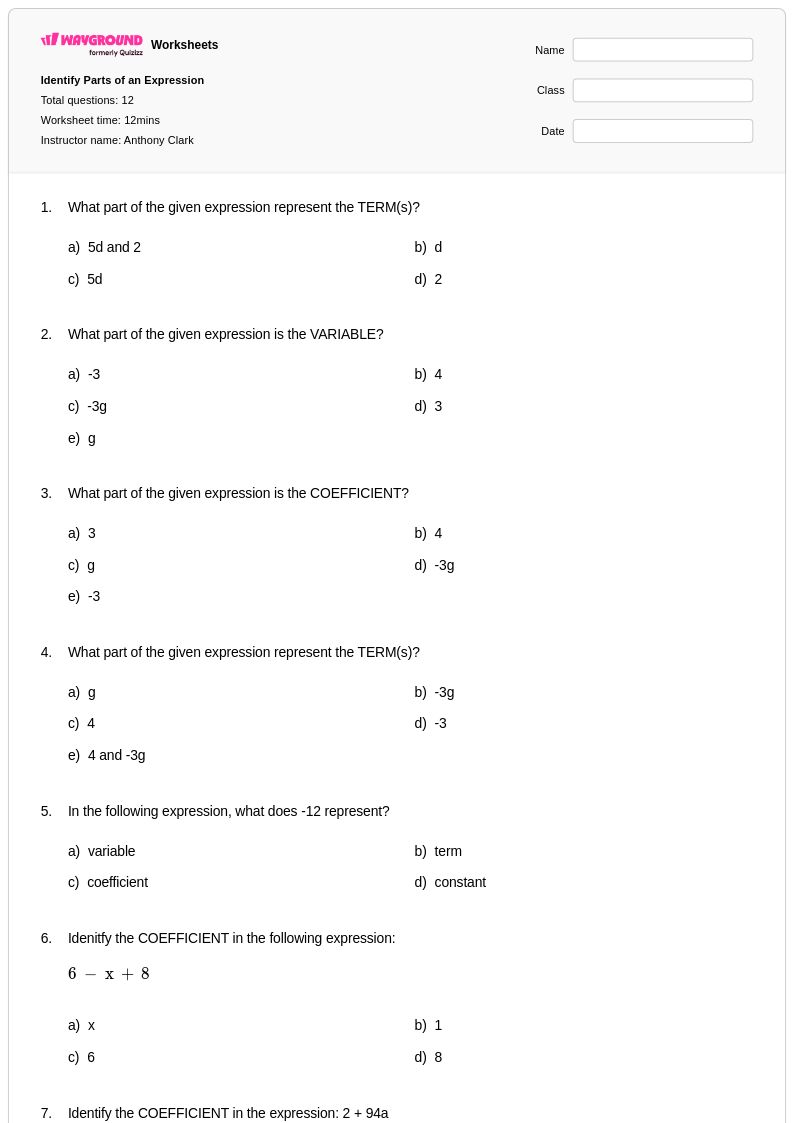
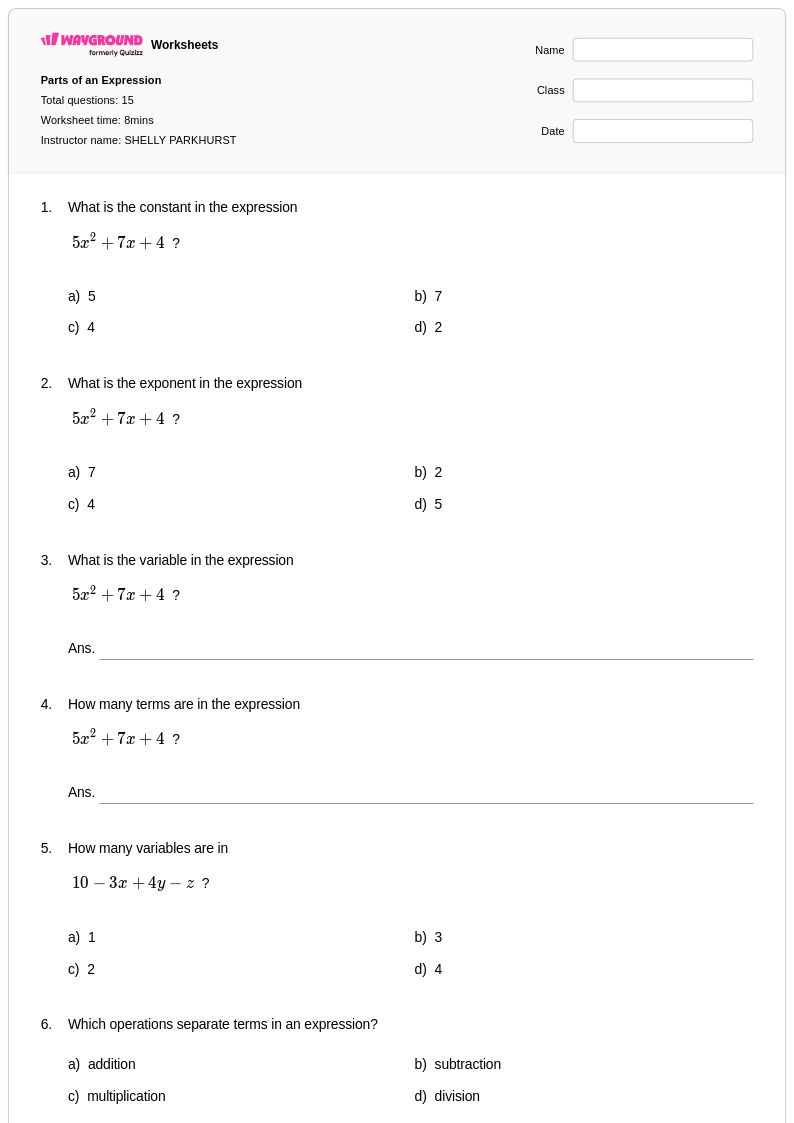
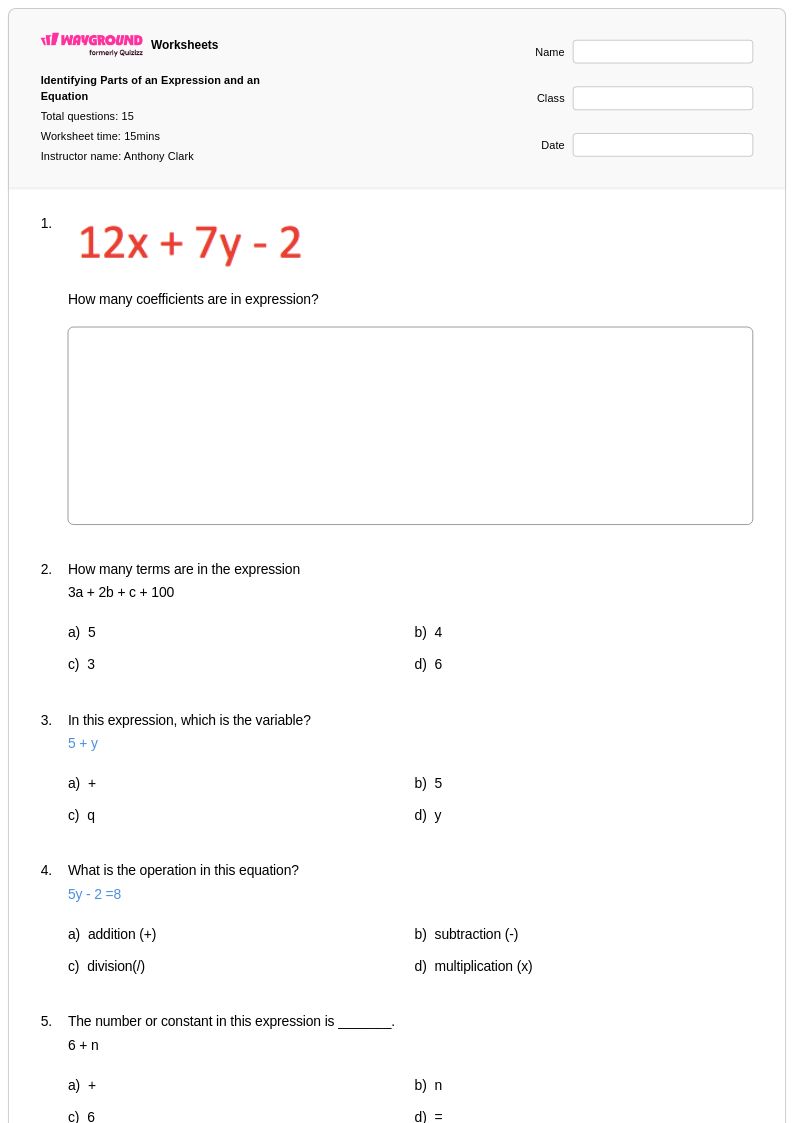
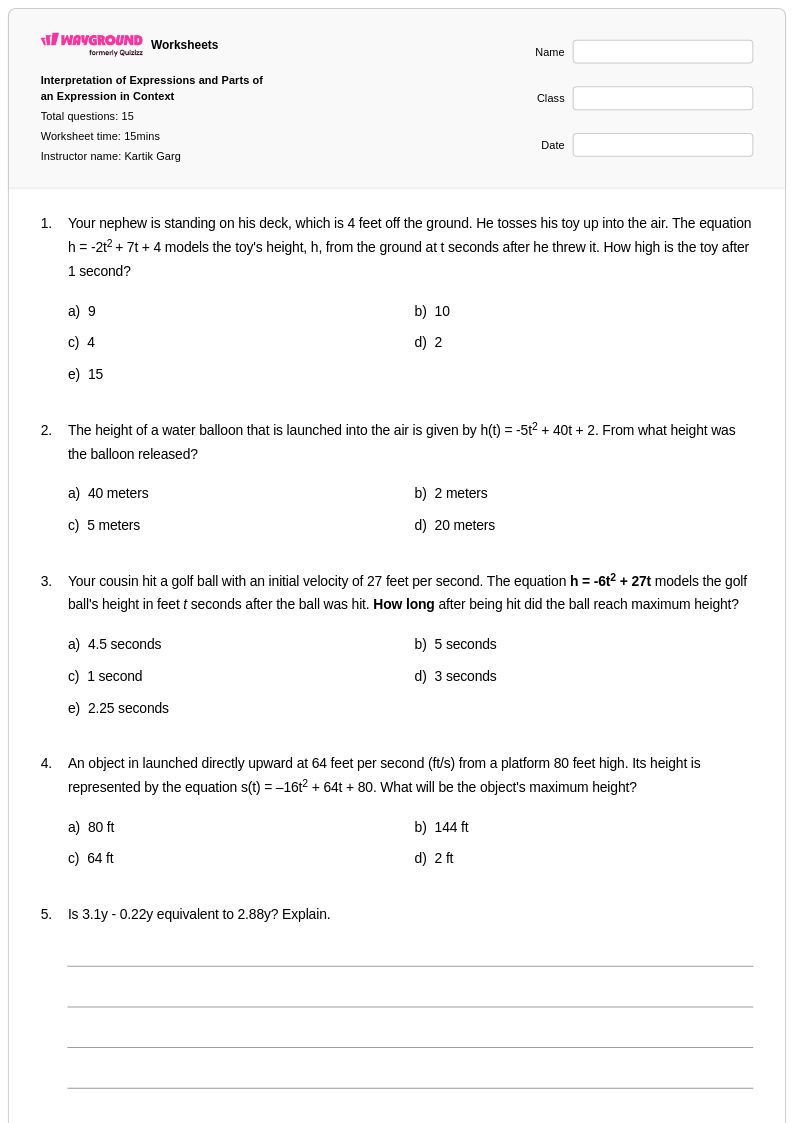
Explore printable Parts of an Expression worksheets for Class 8
Parts of an expression worksheets for Class 8 students through Wayground (formerly Quizizz) provide comprehensive practice in identifying and understanding the fundamental components that make up algebraic expressions. These carefully designed worksheets help students master essential skills including recognizing terms, coefficients, variables, constants, and like terms within various algebraic expressions. Students work through systematic practice problems that build their ability to distinguish between different parts of expressions, understand the role each component plays in algebraic manipulation, and develop the foundational knowledge necessary for more advanced algebraic operations. Each worksheet includes a complete answer key and is available as free printables in convenient pdf format, making them accessible resources for both classroom instruction and independent study.
Wayground (formerly Quizizz) supports mathematics educators with an extensive collection of teacher-created worksheets covering parts of an expression concepts, drawing from millions of high-quality resources that undergo rigorous review and standards alignment. The platform's advanced search and filtering capabilities enable teachers to quickly locate materials that match their specific Class 8 algebra curriculum requirements and student needs. These versatile worksheets are available in both printable pdf and interactive digital formats, allowing for seamless integration into diverse learning environments and teaching approaches. Teachers can customize content to provide targeted remediation for struggling students, offer enrichment opportunities for advanced learners, and create differentiated assignments that address varying skill levels within their classrooms, ultimately supporting comprehensive skill practice and mathematical understanding across all student populations.
FAQs
Are these worksheets appropriate for 8th grade?
How does understanding parts of an expression help with 8th-grade topics?
What kind of practice is most effective for 8th graders?
What's a common mistake 8th graders make with more complex expressions?
How can I use this worksheet for review or assessment?
How does this topic connect to the 8th-grade math curriculum?