
9 Q
6th - 7th
33 Q
7th
15 Q
7th
20 Q
7th - Uni
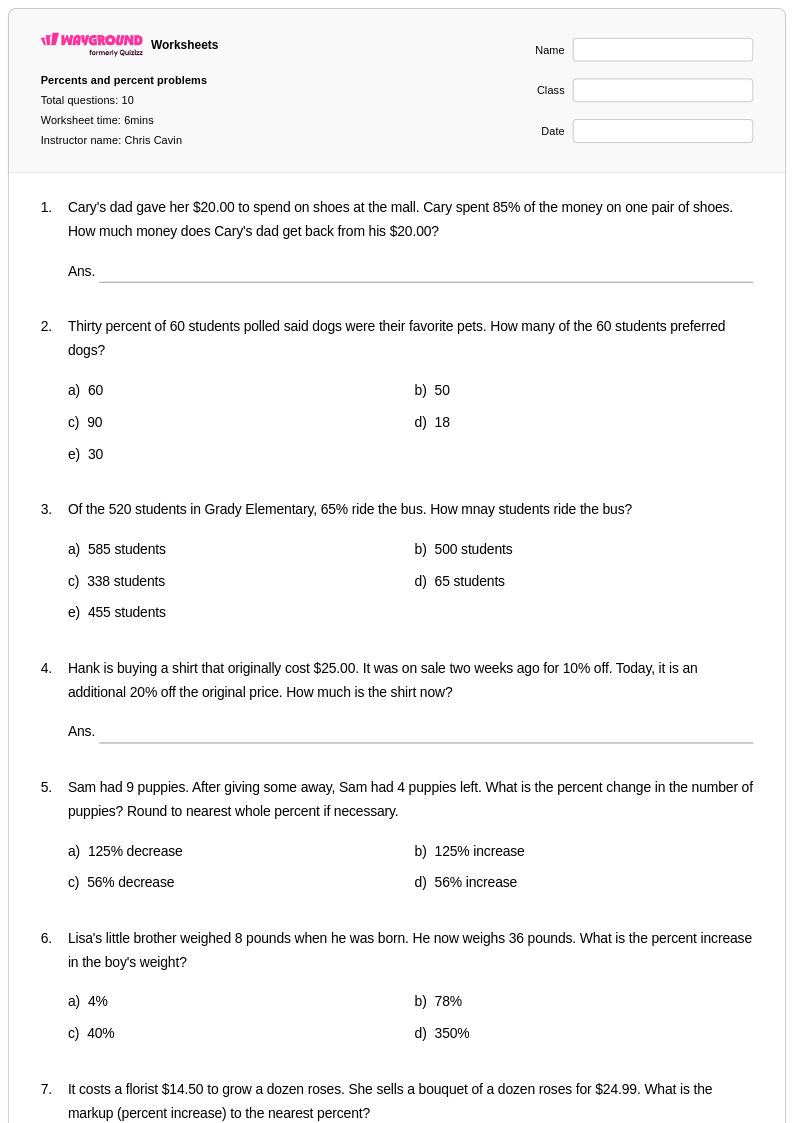
10 Q
7th
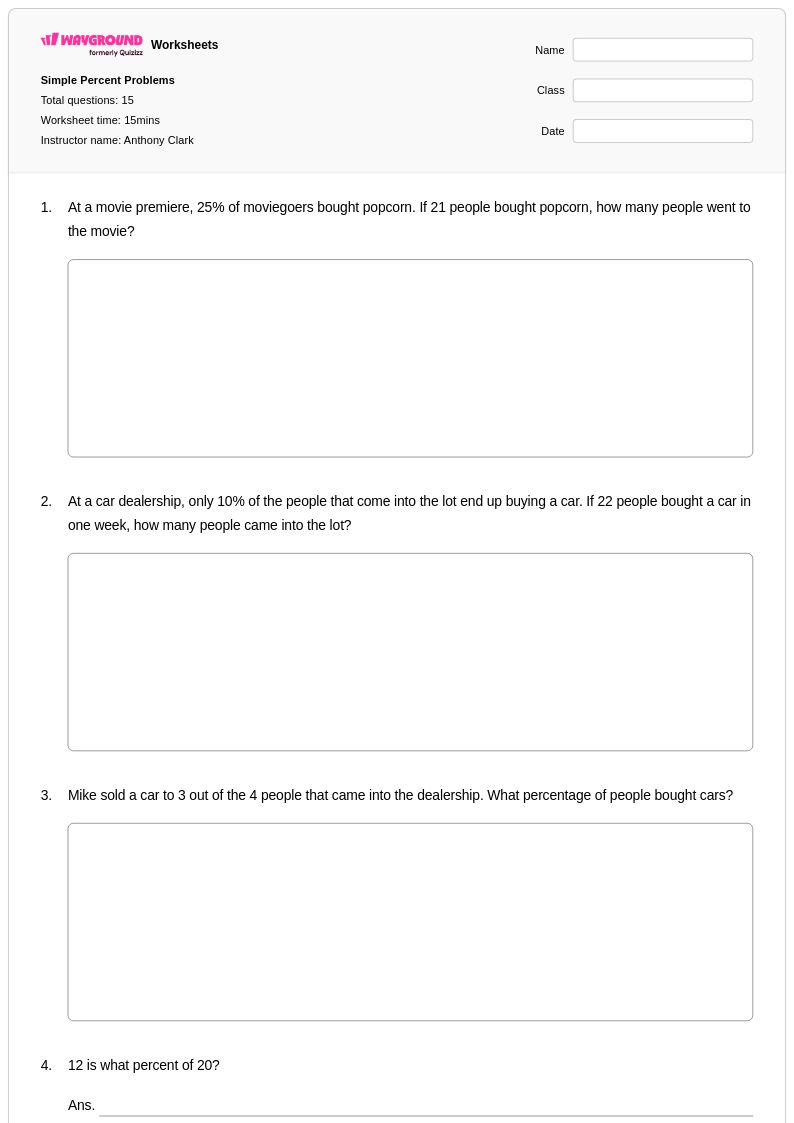
15 Q
7th - Uni
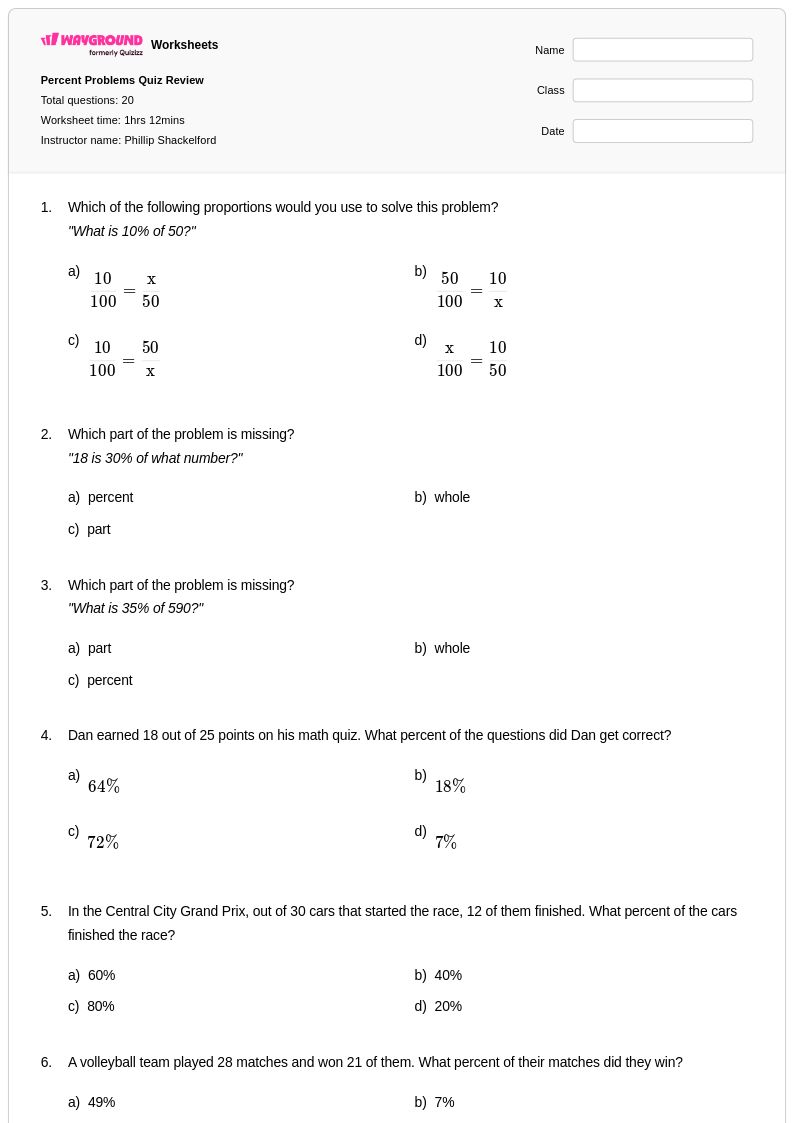
20 Q
6th - 8th
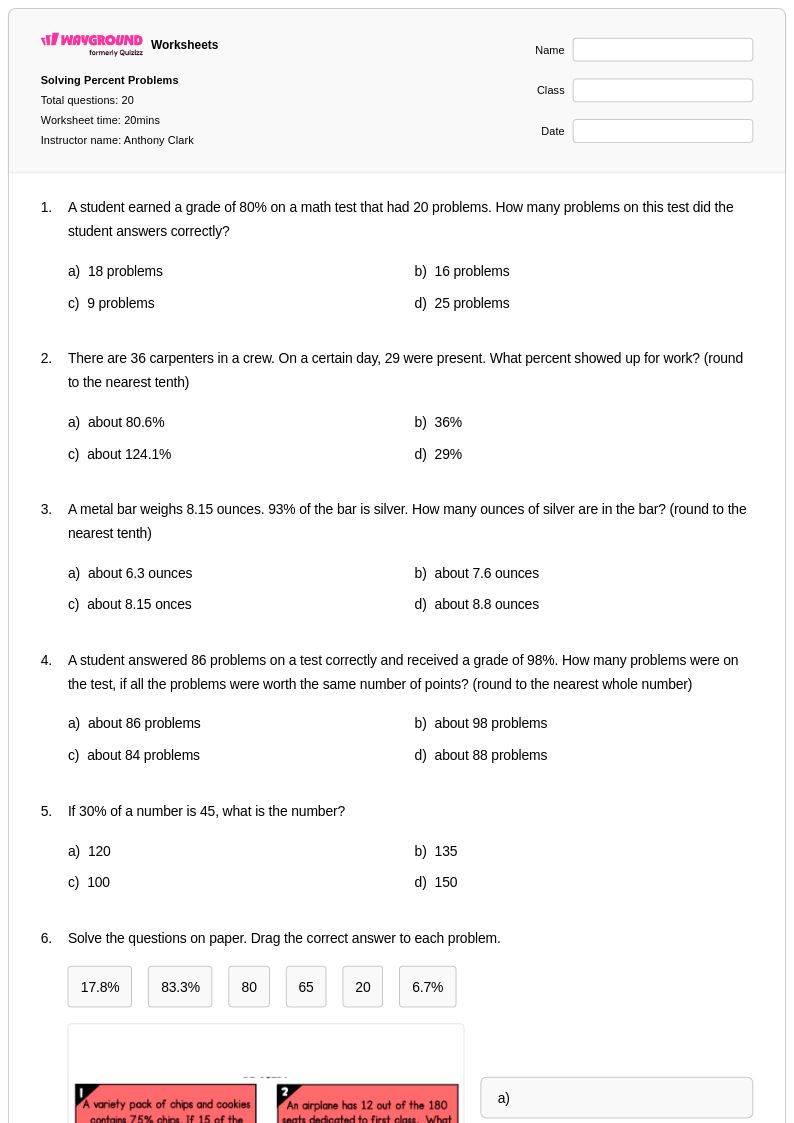
20 Q
7th - Uni
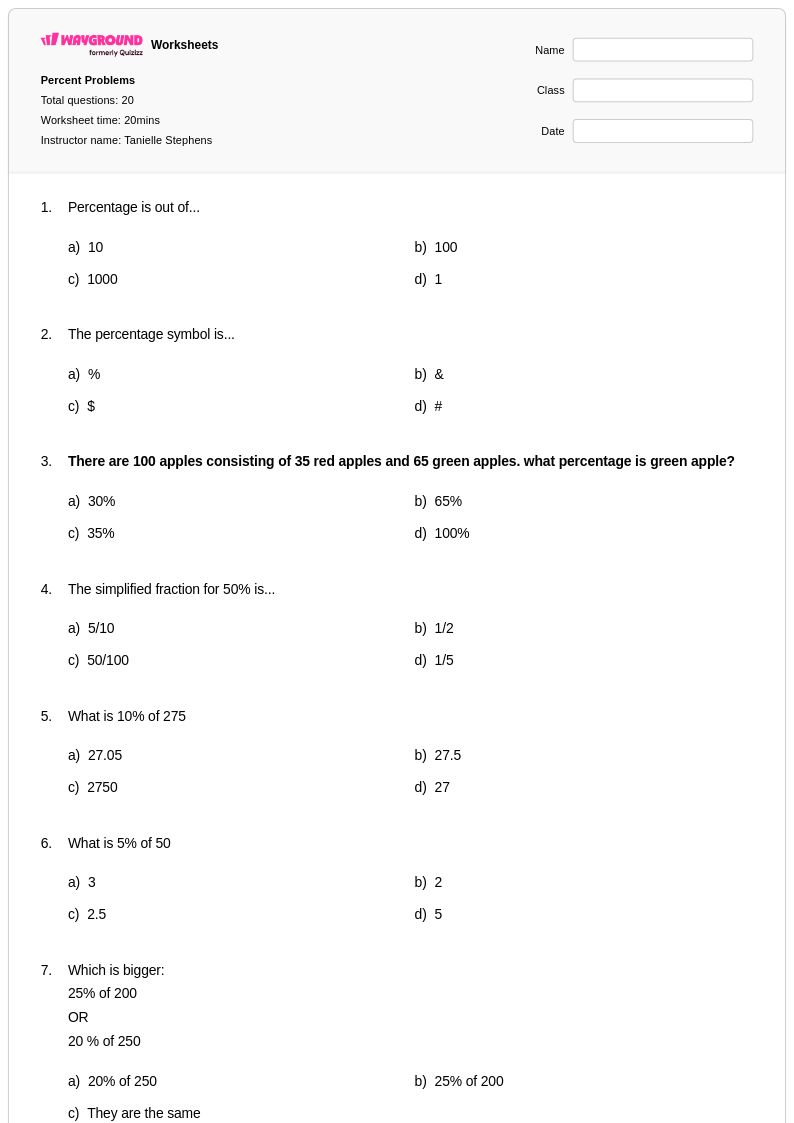
20 Q
7th
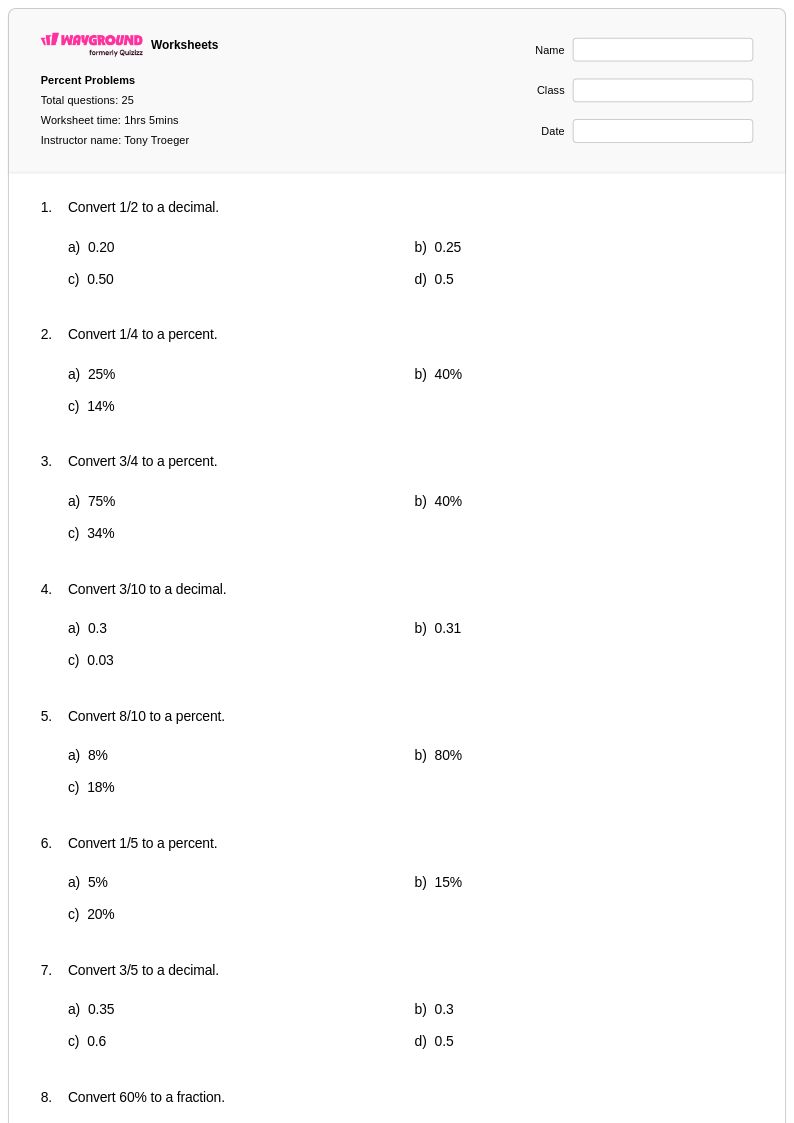
25 Q
6th - 7th
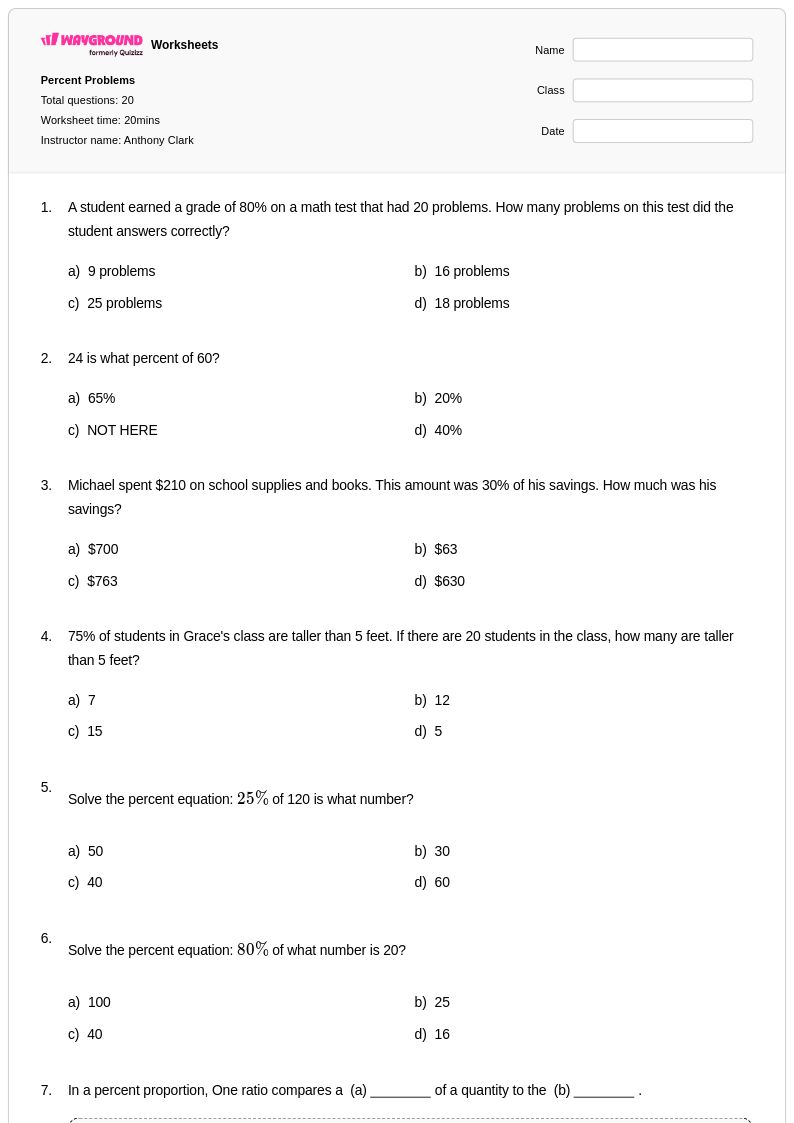
20 Q
6th - Uni
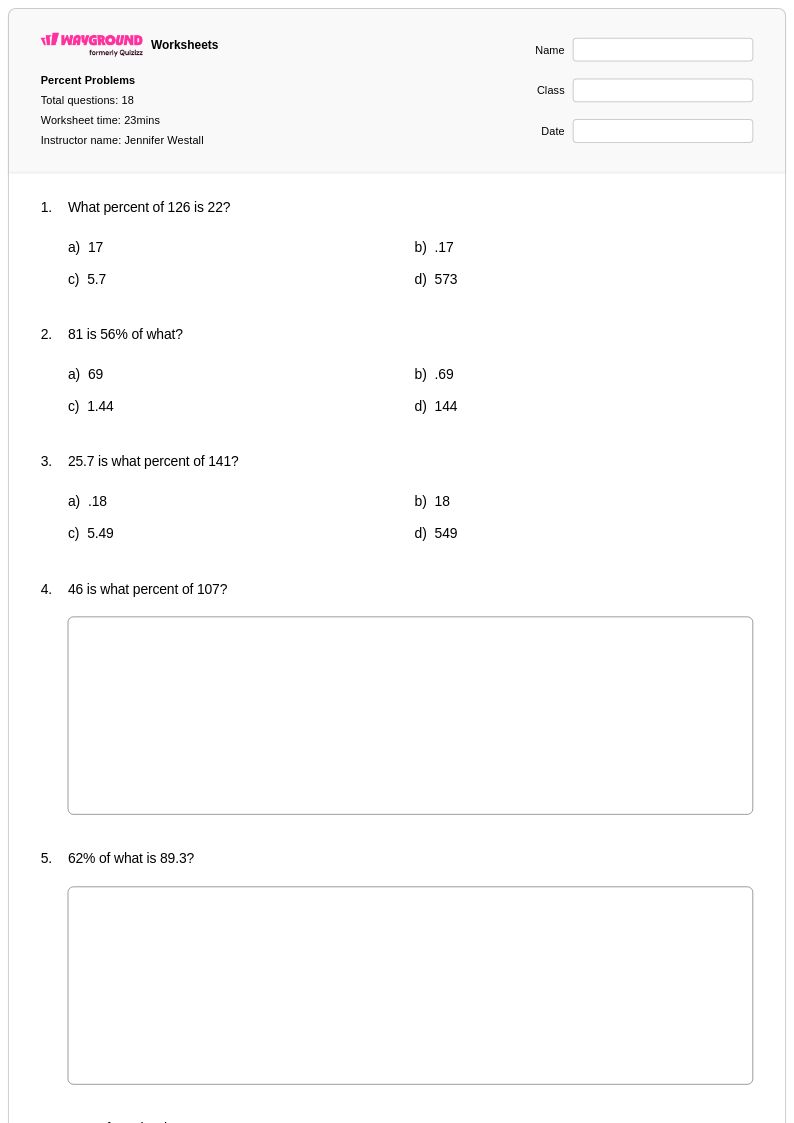
18 Q
7th
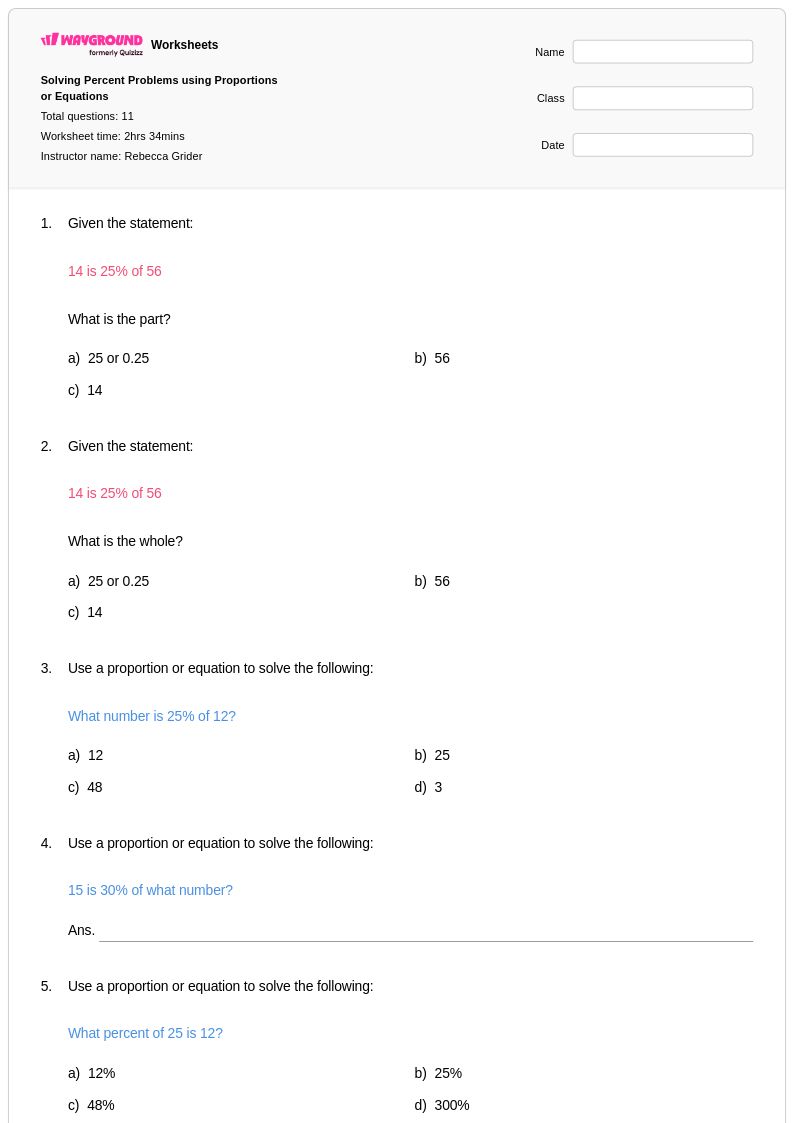
11 Q
7th
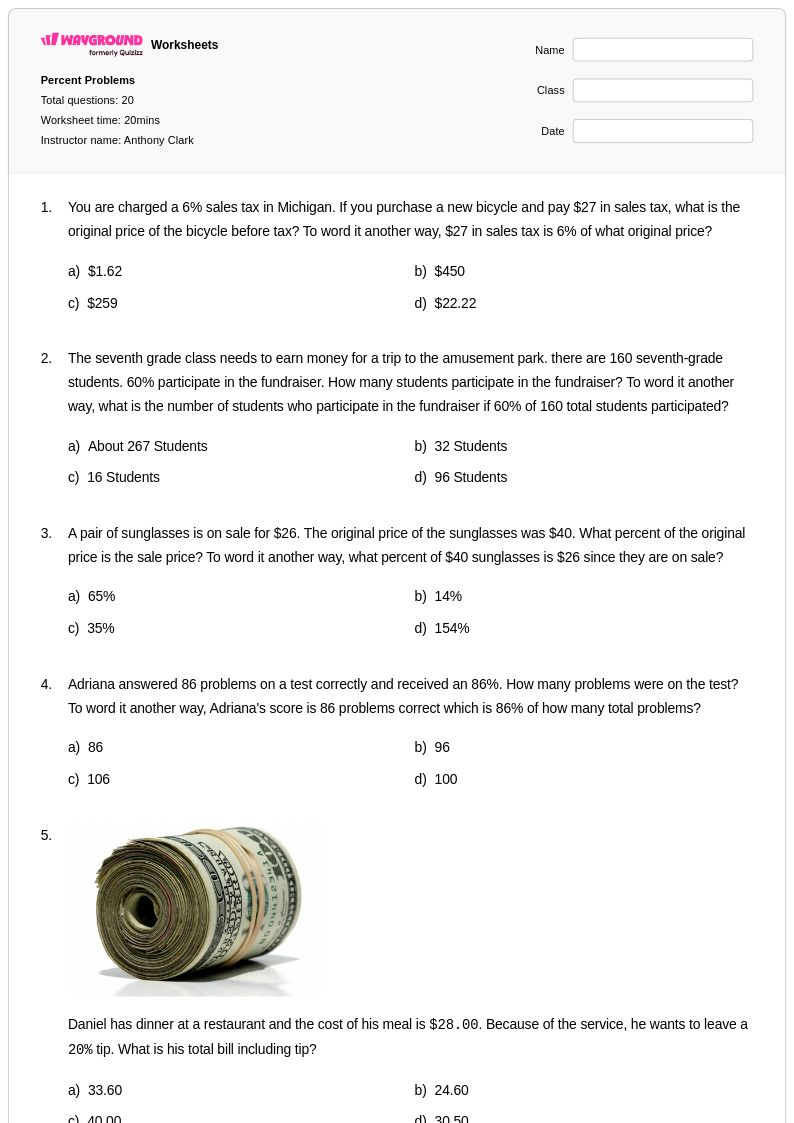
20 Q
7th - Uni
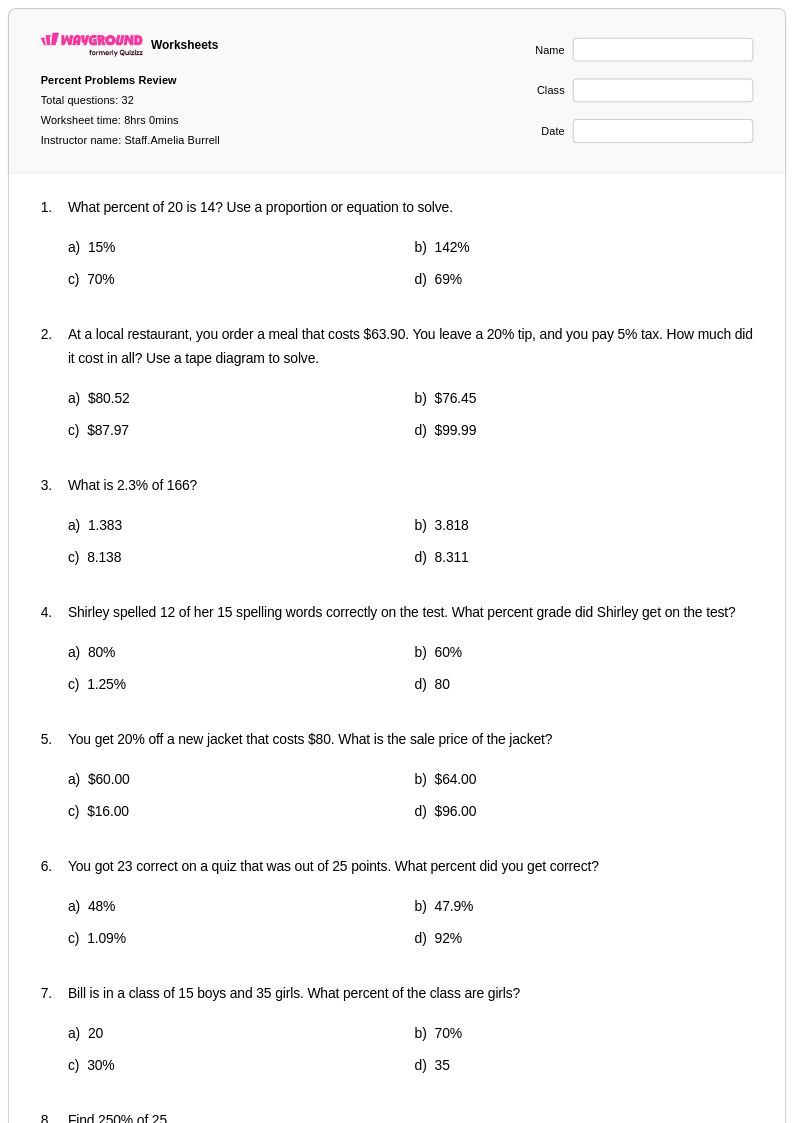
32 Q
7th
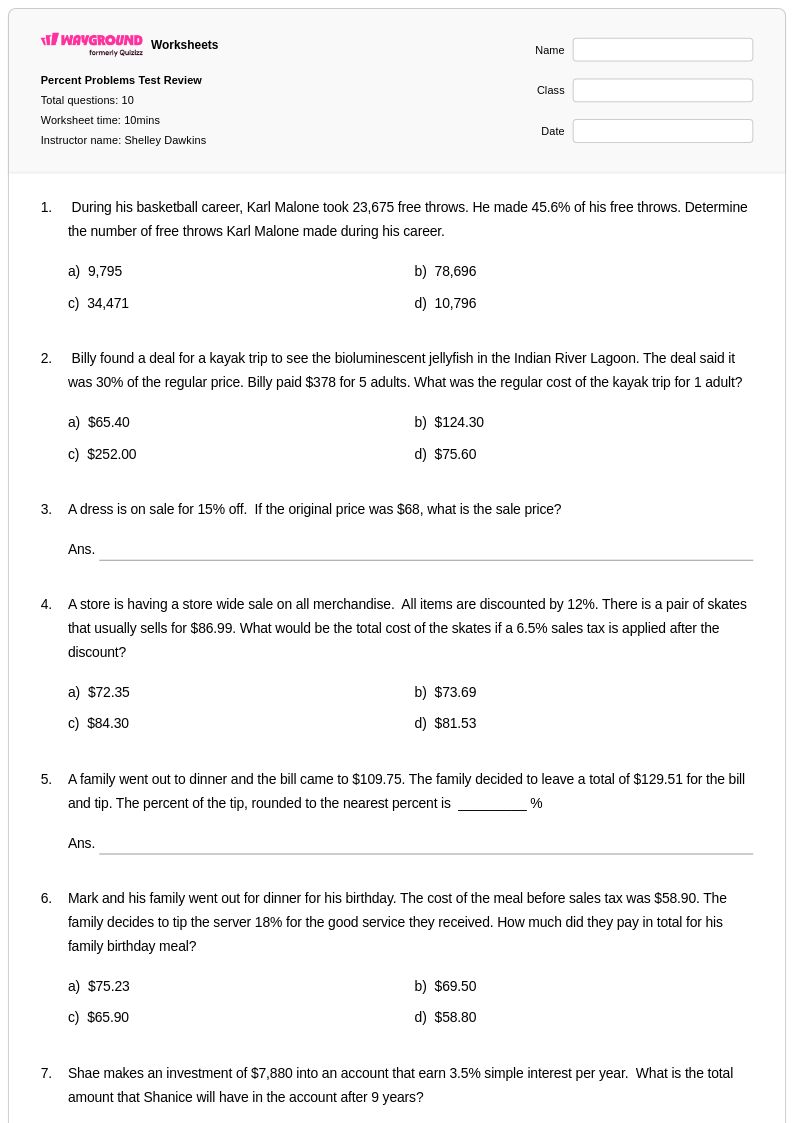
10 Q
7th
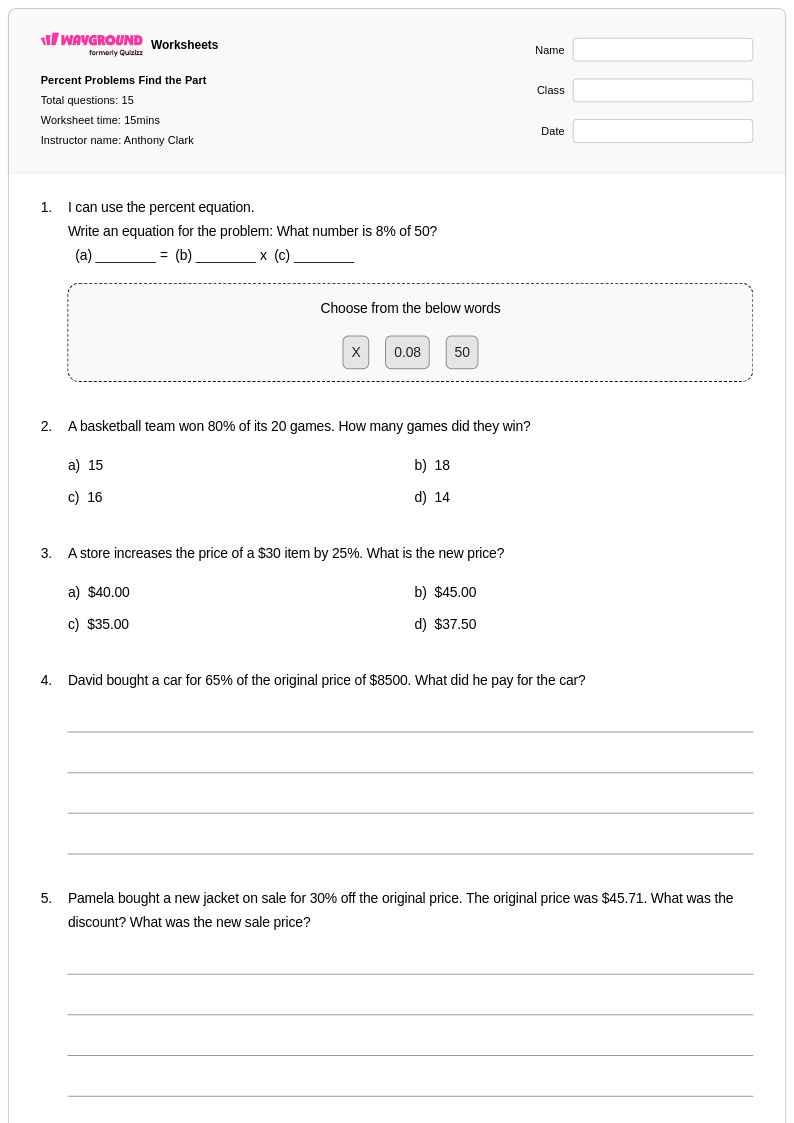
15 Q
6th - Uni
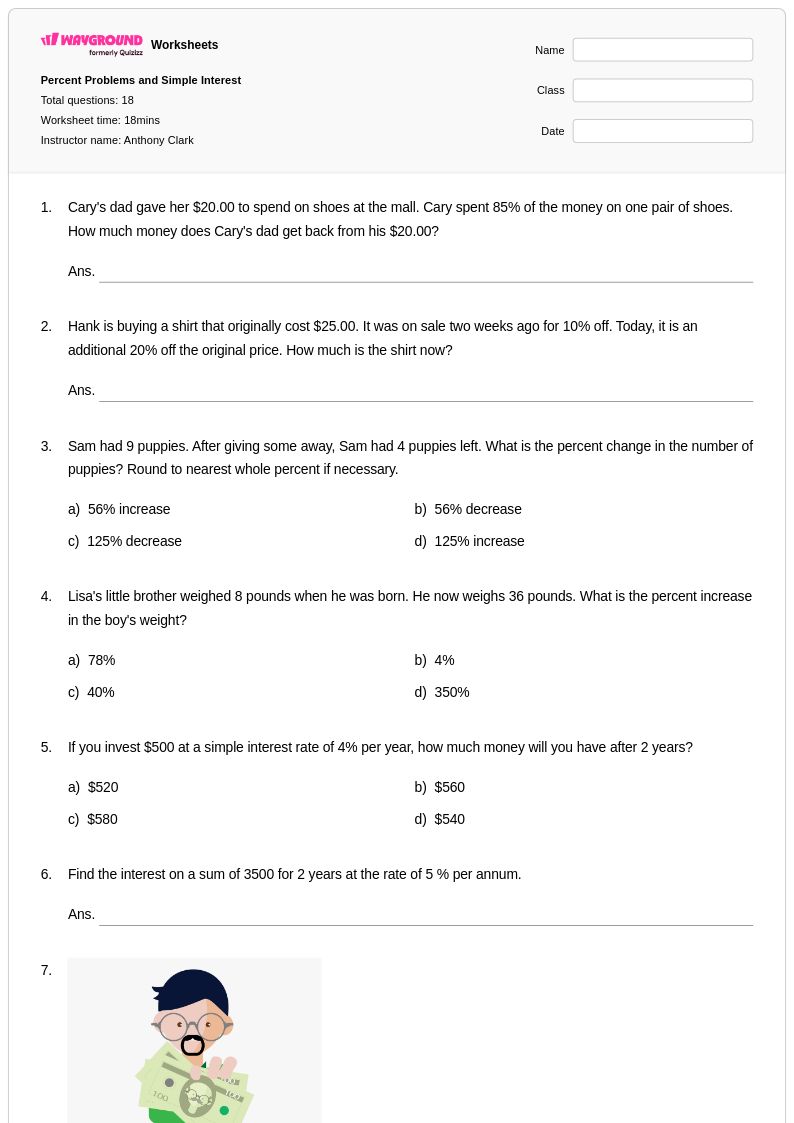
18 Q
7th - Uni
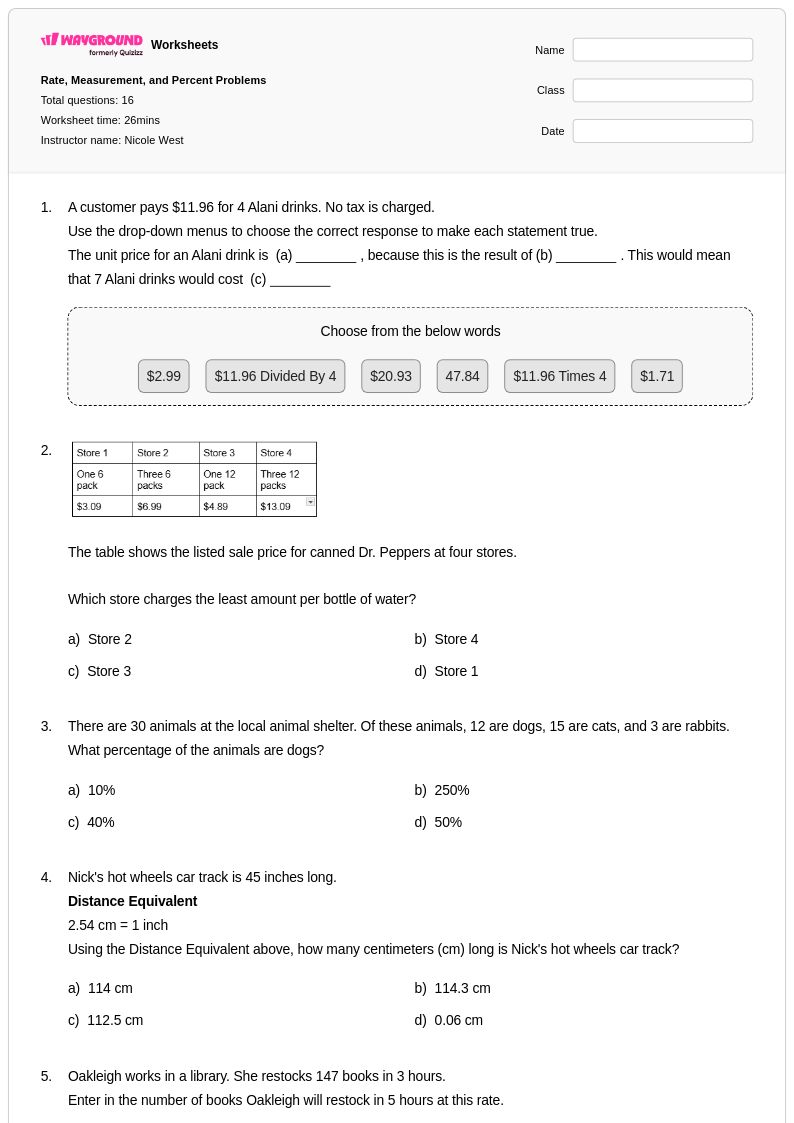
16 Q
6th - 8th
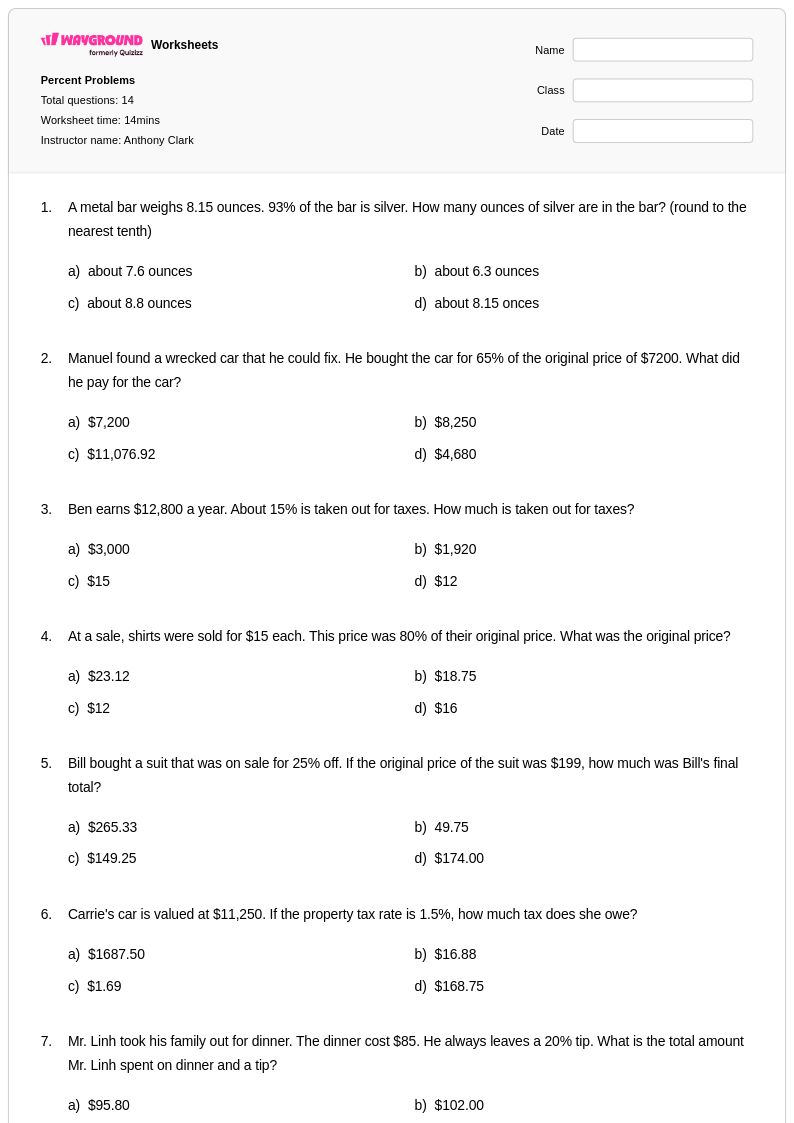
14 Q
7th - Uni
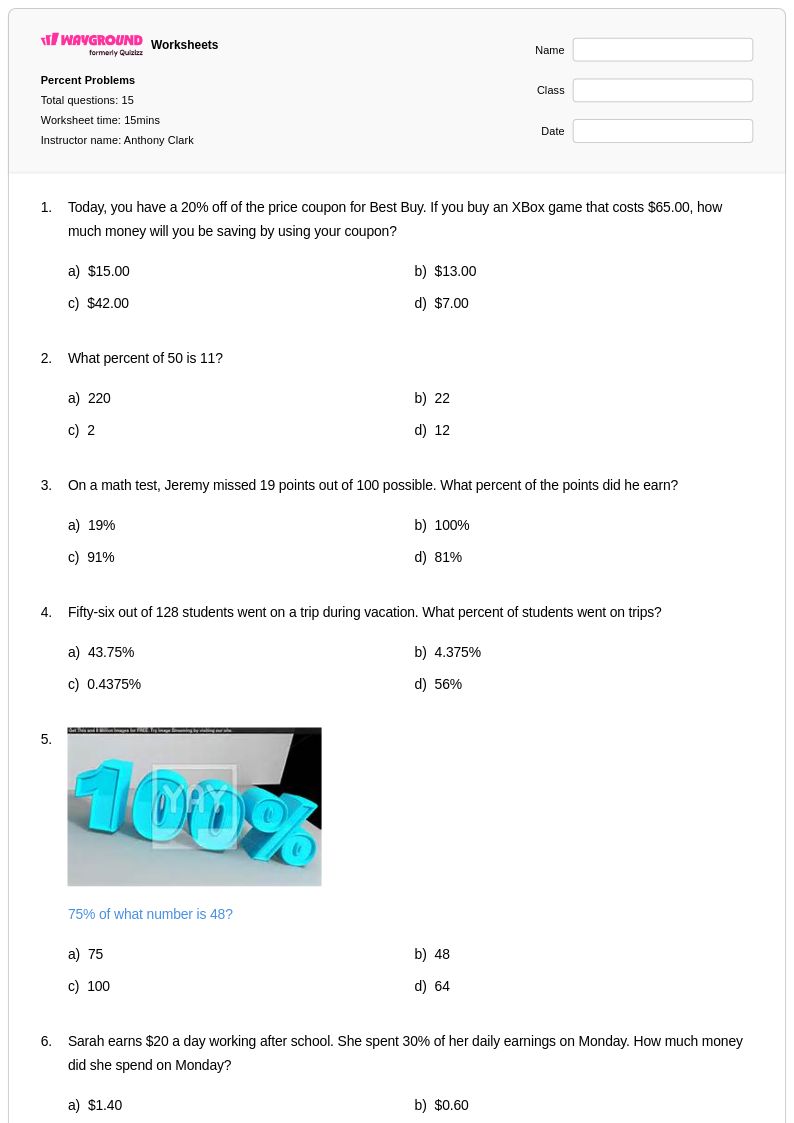
15 Q
7th - Uni
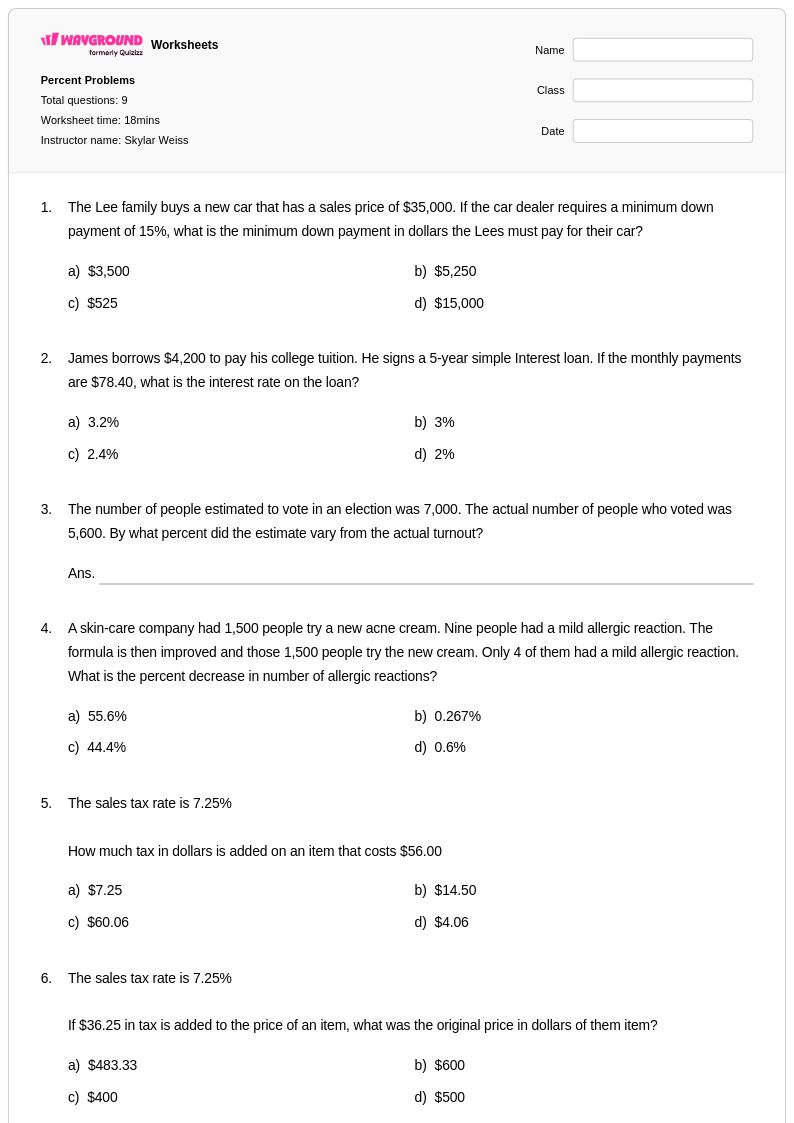
9 Q
7th
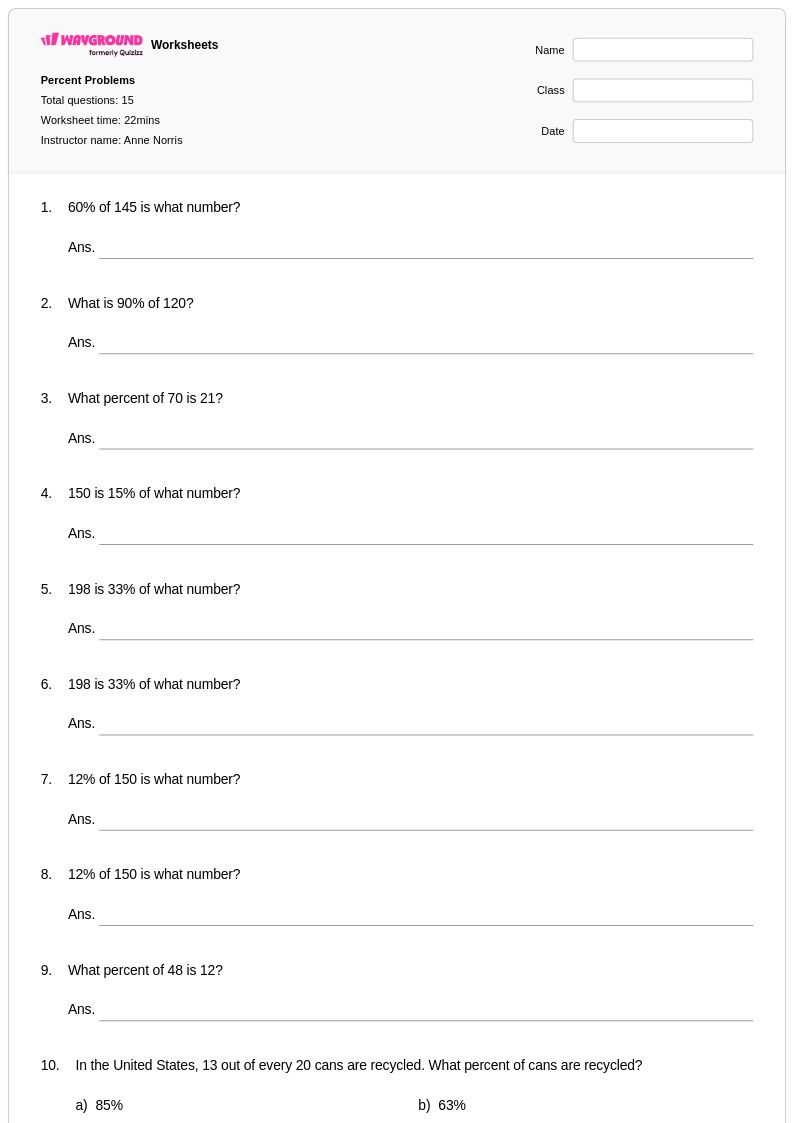
15 Q
7th - Uni
Explore Other Subject Worksheets for class 7
Explore printable Percent Problems worksheets for Class 7
Class 7 percent problems worksheets available through Wayground (formerly Quizizz) provide comprehensive practice opportunities for students to master real-world percentage applications that extend beyond basic calculation skills. These carefully designed resources focus on multi-step problem solving scenarios including discount calculations, tax computations, tip determinations, percent increase and decrease situations, and commission problems that mirror authentic mathematical reasoning students encounter in daily life. The worksheets strengthen critical thinking abilities by requiring students to identify relevant information, select appropriate problem-solving strategies, and interpret results within meaningful contexts. Each printable resource includes detailed answer keys that support both independent practice and guided instruction, while the free pdf format ensures accessibility for diverse classroom environments and homework assignments.
Wayground (formerly Quizizz) empowers educators with millions of teacher-created percent problem resources that streamline instructional planning and support differentiated mathematics instruction for Class 7 students. The platform's robust search and filtering capabilities allow teachers to quickly locate worksheets aligned with specific curriculum standards and learning objectives, while built-in customization tools enable educators to modify difficulty levels, adjust problem types, and personalize content to meet individual student needs. These versatile materials are available in both printable and digital formats, facilitating seamless integration into traditional classroom instruction, remote learning environments, and hybrid educational models. Teachers can efficiently implement targeted remediation for struggling learners, provide enrichment opportunities for advanced students, and deliver consistent skill practice that builds mathematical confidence and procedural fluency in percentage problem solving.
FAQs
What is the focus of percent problems in 7th grade?
How do I teach percent increase and decrease?
What's the most common error in multi-step percent problems?
How can I assign this percent worksheet to my 7th graders?
How do 7th-grade percent problems build on previous learning?
How can I differentiate for students struggling with multi-step problems?