Free Printable Perfect Competition Worksheets for Class 10
Free Class 10 perfect competition worksheets and printables help students master market structures, pricing mechanisms, and economic efficiency through comprehensive practice problems and detailed answer keys.
Explore printable Perfect Competition worksheets for Class 10
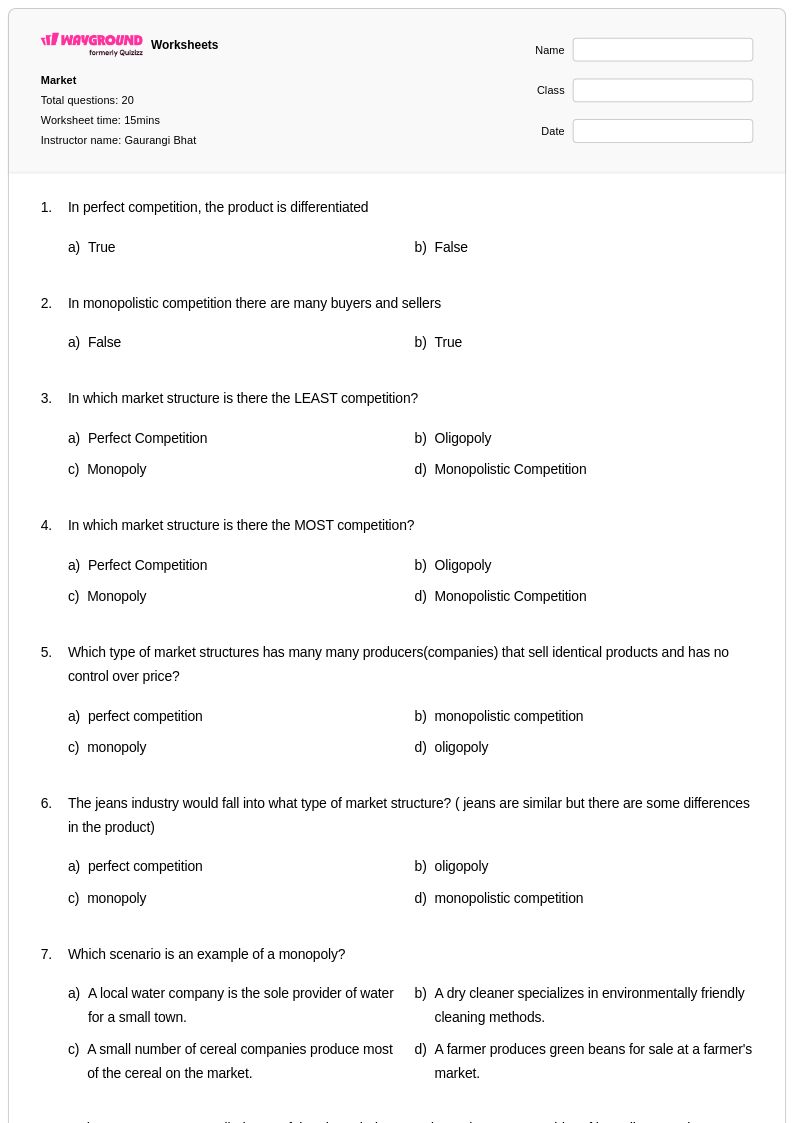
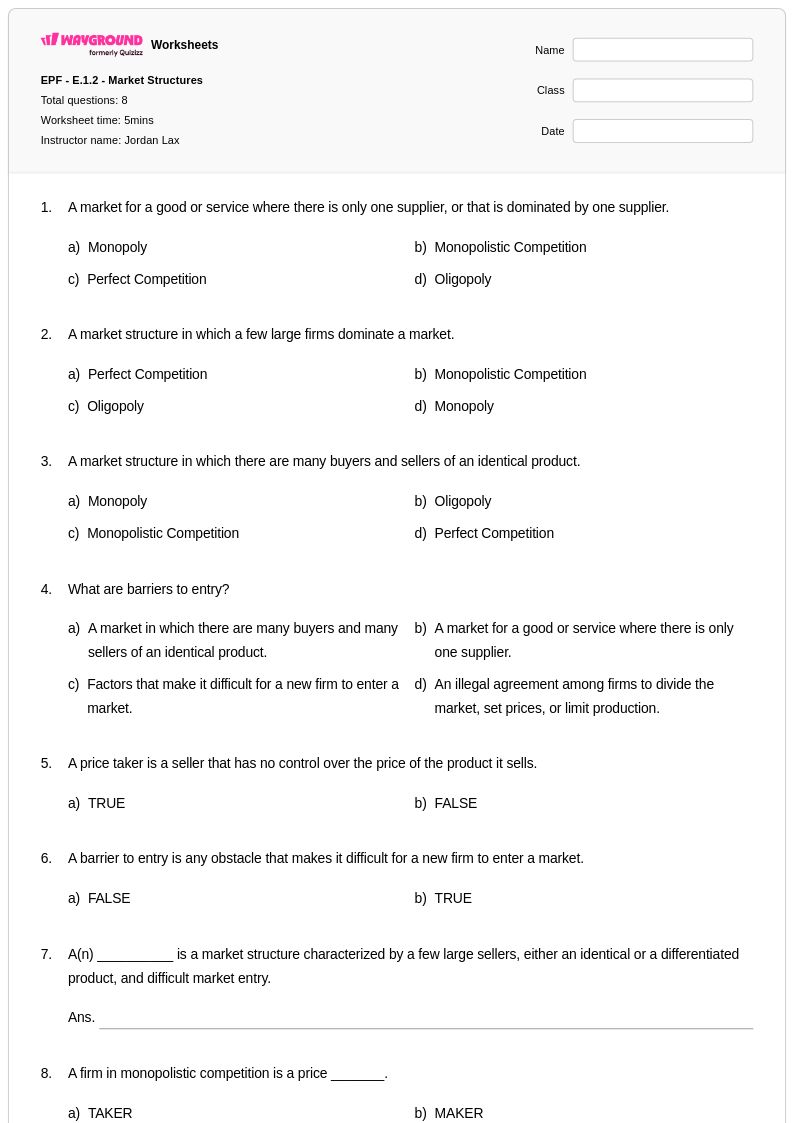
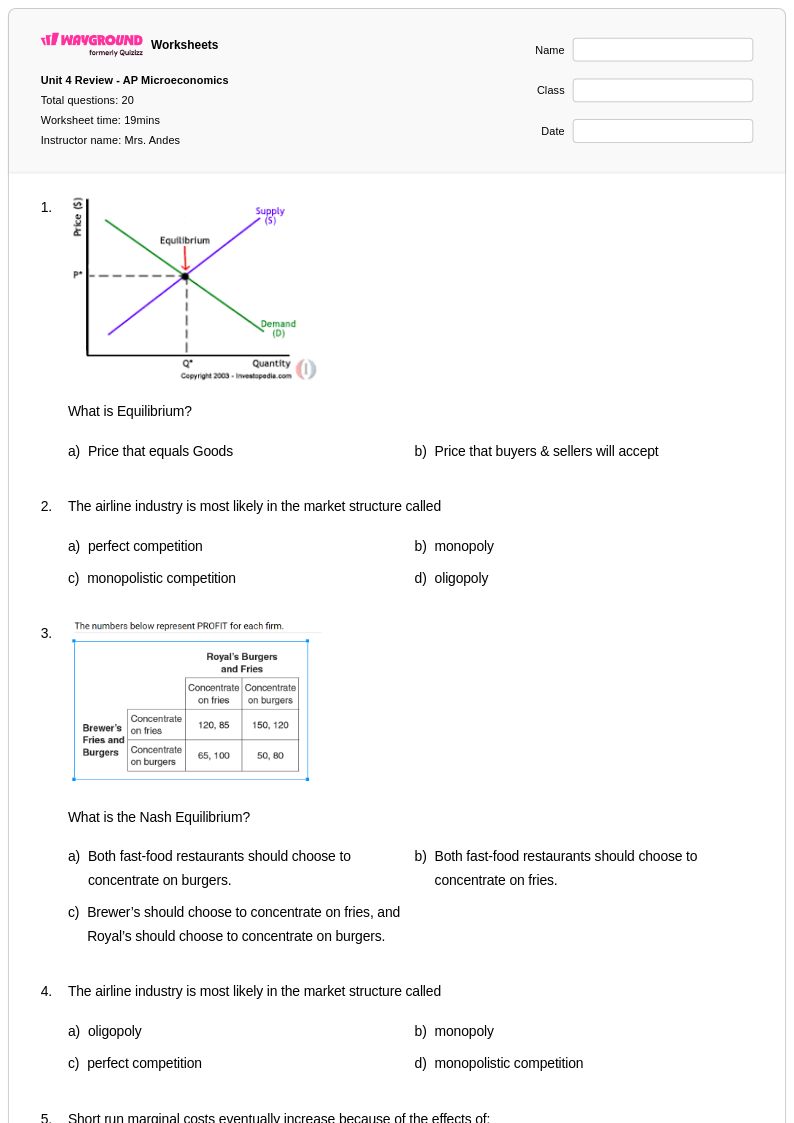
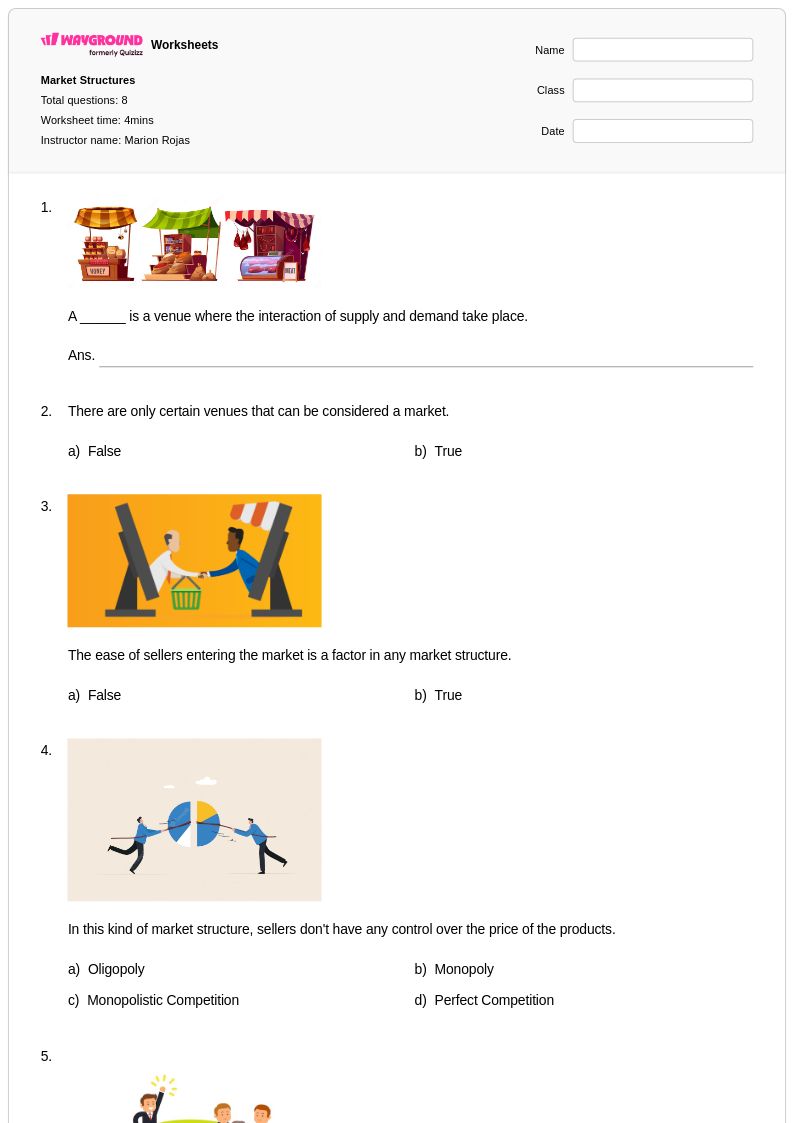
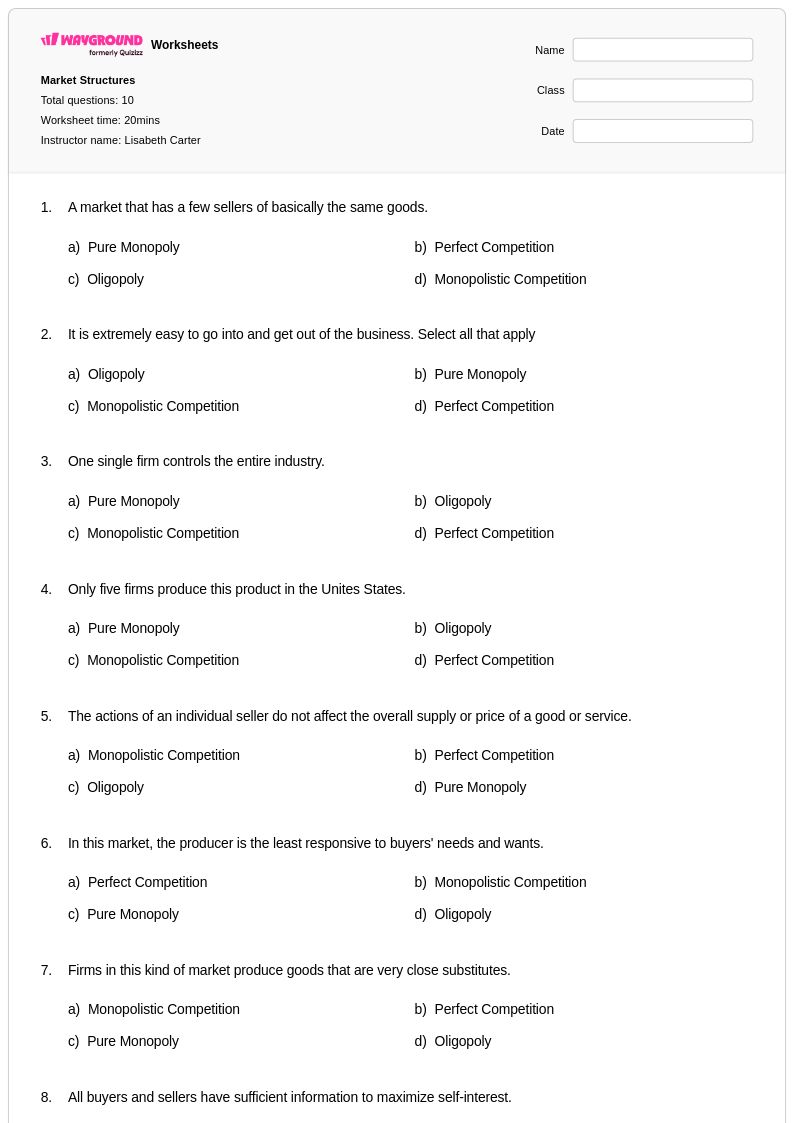
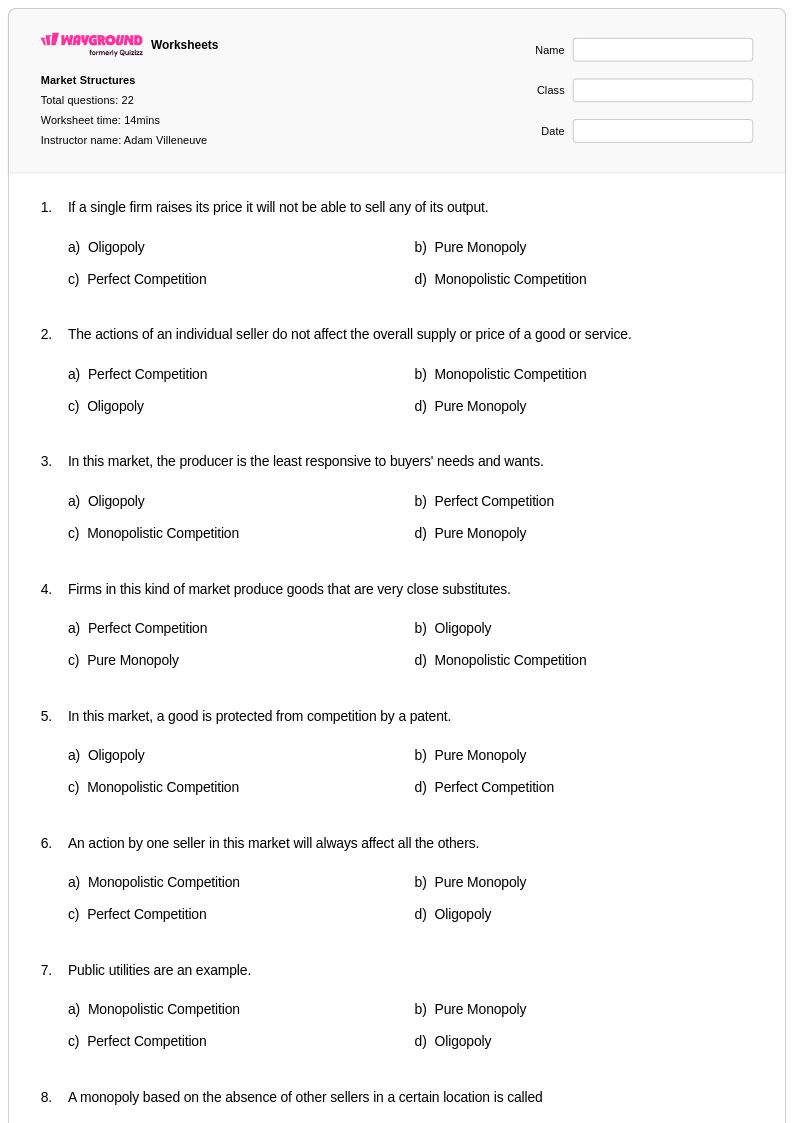
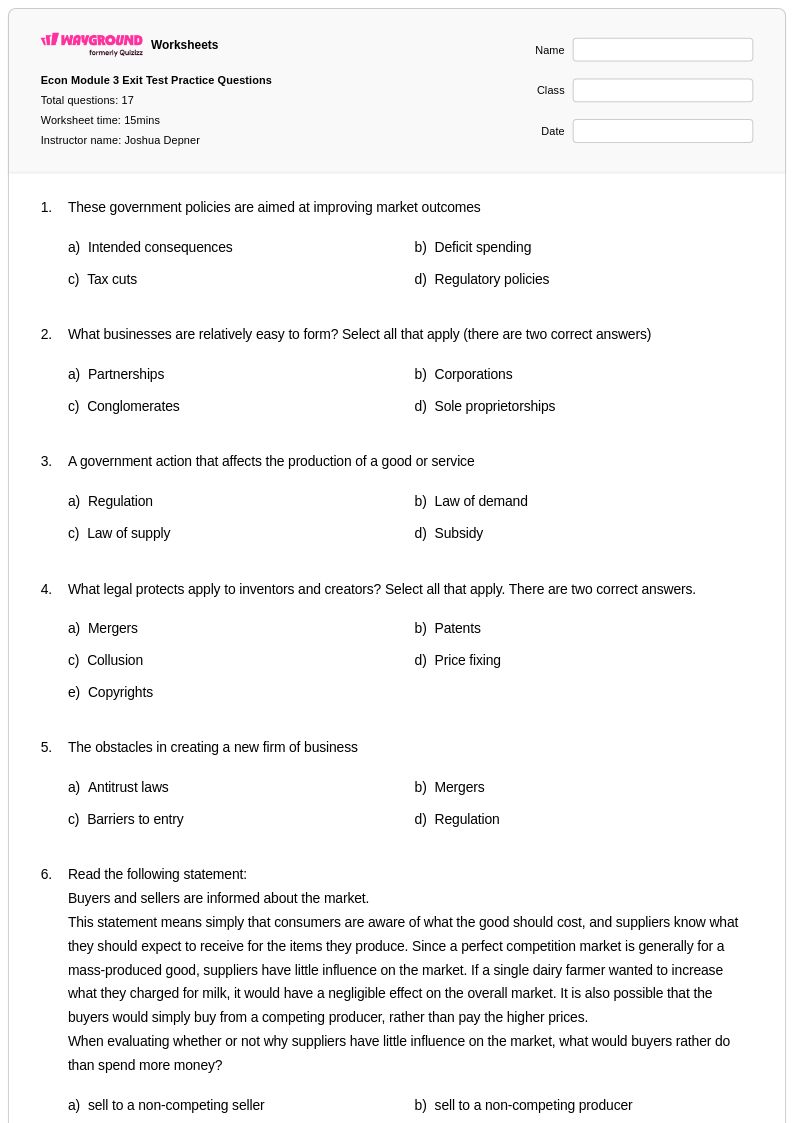
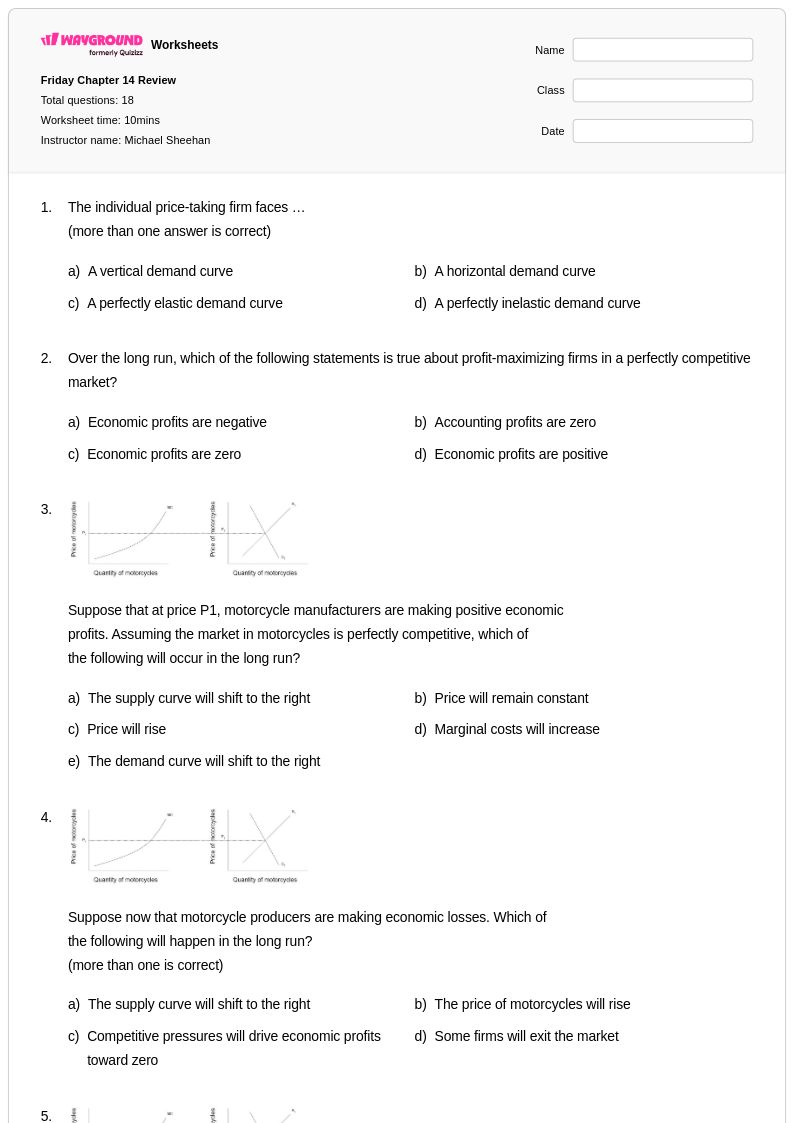
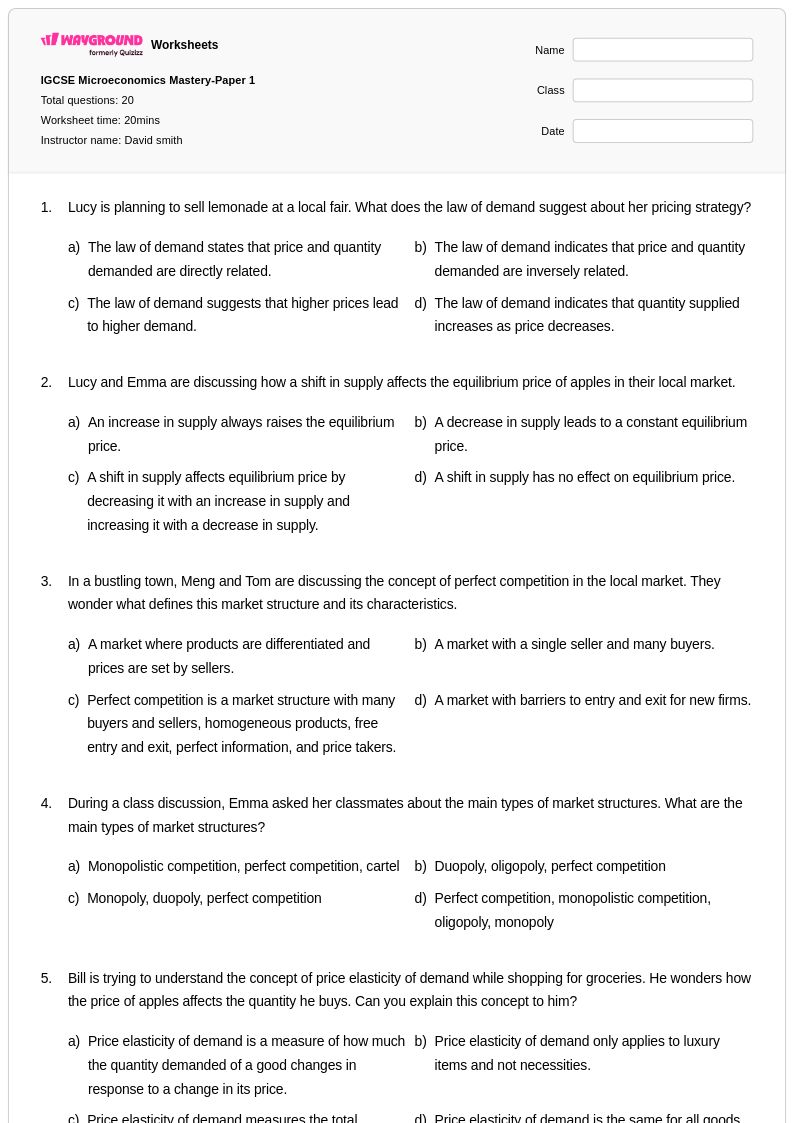
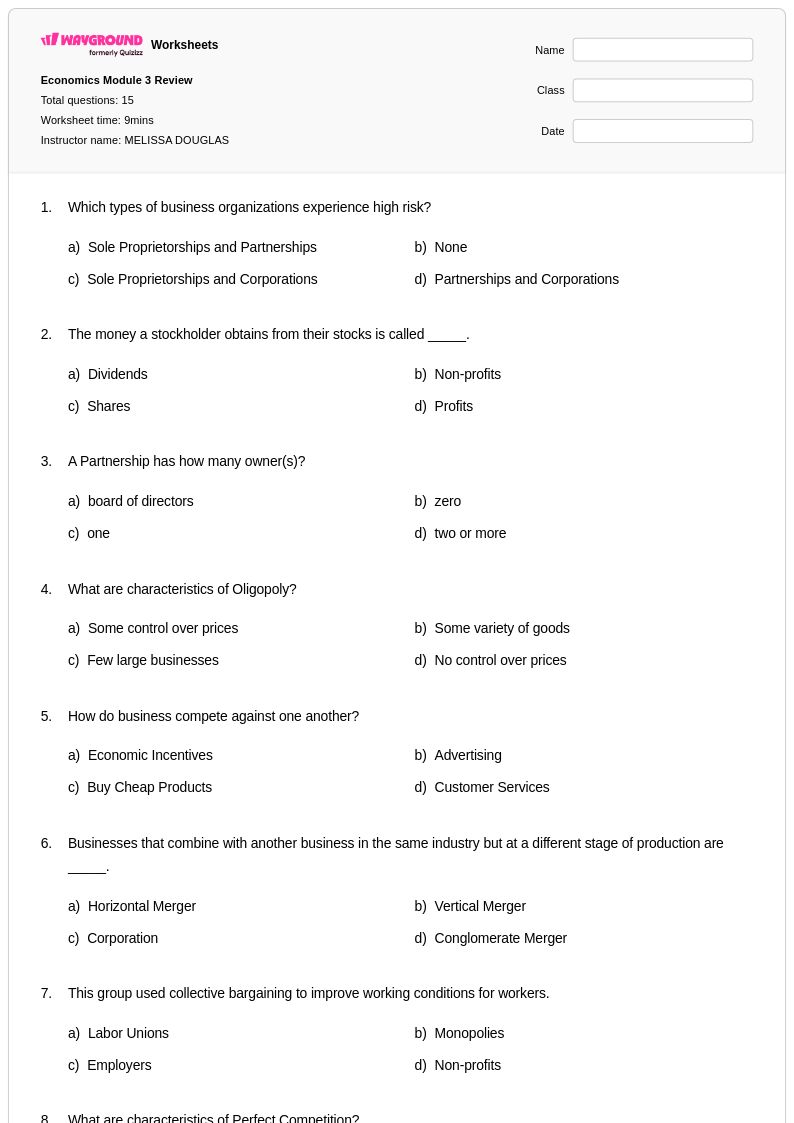
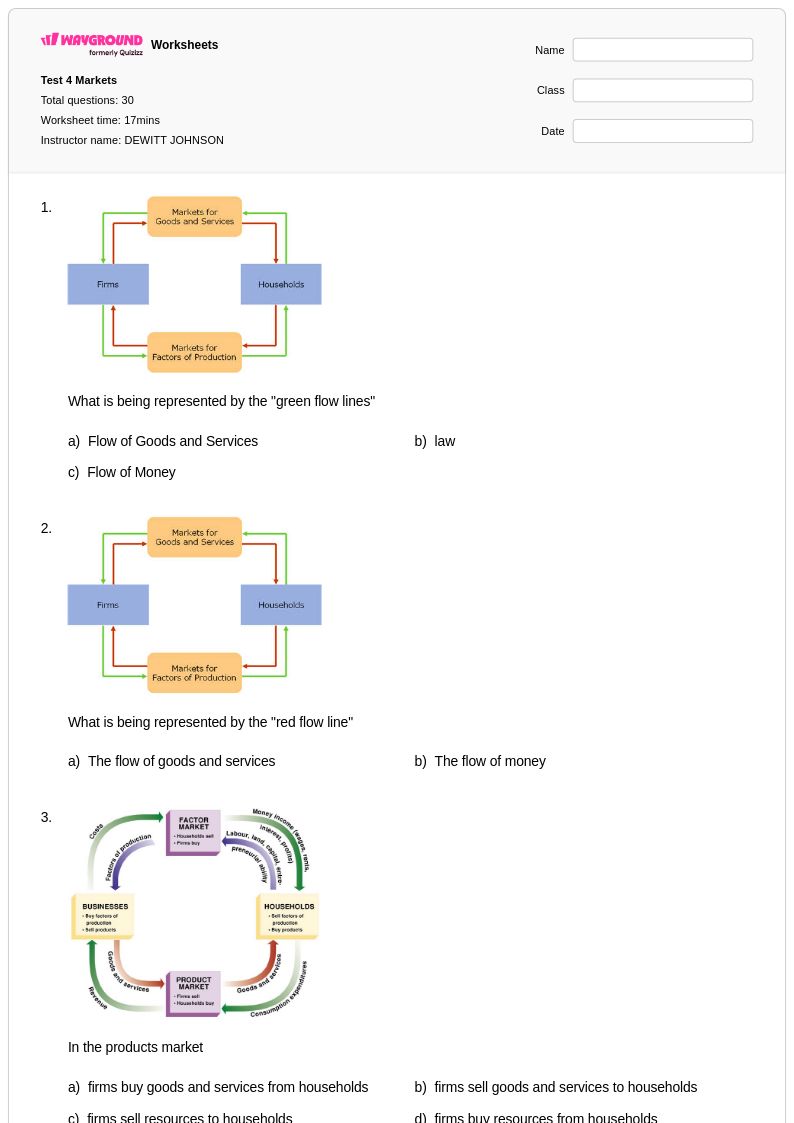
Perfect competition worksheets for Class 10 students available through Wayground (formerly Quizizz) provide comprehensive coverage of this fundamental economic market structure concept. These expertly designed resources help students master the characteristics that define perfectly competitive markets, including numerous buyers and sellers, homogeneous products, perfect information, and ease of market entry and exit. The worksheets strengthen critical analytical skills by guiding students through practice problems that examine price-taking behavior, profit maximization strategies, and long-run equilibrium conditions. Each printable resource includes detailed answer keys that support independent learning and self-assessment, while the free pdf format ensures accessibility for all students regardless of their technological resources.
Wayground (formerly Quizizz) empowers educators with an extensive collection of teacher-created perfect competition worksheets drawn from millions of high-quality educational resources. The platform's robust search and filtering capabilities allow teachers to quickly locate materials that align with specific curriculum standards and learning objectives for Class 10 economics instruction. Differentiation tools enable educators to customize content complexity and modify practice problems to meet diverse student needs, supporting both remediation for struggling learners and enrichment opportunities for advanced students. The flexibility of both printable and digital formats, including downloadable pdf versions, facilitates seamless integration into various teaching environments while streamlining lesson planning and providing targeted skill practice that reinforces essential economic concepts.
FAQs
How do I teach perfect competition to high school economics students?
Start by establishing the four defining characteristics of a perfectly competitive market: numerous buyers and sellers, homogeneous products, perfect information, and free entry and exit. From there, build student understanding progressively by introducing price-taking behavior, then moving into short-run profit maximization using marginal cost and marginal revenue analysis, and finally long-run equilibrium where economic profit trends to zero. Visual tools like supply and demand graphs and cost curve diagrams are essential for making abstract relationships concrete.
What practice problems help students understand pricing and profit in perfectly competitive markets?
Effective practice problems for perfect competition focus on three core skills: calculating economic profit or loss given price, average total cost, and quantity; identifying the profit-maximizing output where MR equals MC; and graphing short-run and long-run equilibrium scenarios. Problems that walk students through both profitable and loss-making scenarios help them understand the shutdown condition and why firms in perfect competition are price takers rather than price makers.
What misconceptions do students commonly have about perfect competition?
One of the most frequent misconceptions is confusing zero economic profit with zero accounting profit — students often assume that a firm earning normal profit is failing. Another common error is misidentifying the profit-maximizing rule: students sometimes equate it with minimizing average total cost rather than finding where marginal revenue equals marginal cost. Students also frequently struggle with the long-run adjustment process, not recognizing why new firms enter when economic profits exist and why this drives profit back to zero.
How do I help students graph perfectly competitive markets correctly?
Teach students to work with two distinct diagrams simultaneously: the market-level supply and demand graph that determines the equilibrium price, and the individual firm-level graph showing cost curves and the horizontal demand curve the firm faces at that price. A common graphing error is drawing a downward-sloping demand curve for the individual firm, which contradicts the price-taker assumption. Connecting the market price from the first graph to the firm's horizontal demand line in the second graph reinforces this distinction visually.
How can I use Wayground's perfect competition worksheets in my classroom?
Wayground's perfect competition worksheets are available as printable PDFs for traditional classroom use and in digital formats for technology-integrated learning environments, giving you flexibility depending on your instructional setup. You can also host them directly as a quiz on Wayground, which allows for interactive student engagement and streamlined review. Each worksheet includes a complete answer key, making them practical for independent practice, small group work, or structured review sessions without requiring additional teacher preparation.
How does perfect competition relate to economic efficiency, and how do I explain this to students?
Perfect competition achieves both allocative and productive efficiency in long-run equilibrium, which makes it the benchmark economists use to evaluate other market structures. Allocative efficiency occurs because price equals marginal cost, meaning resources are directed toward goods consumers value most. Productive efficiency occurs because firms produce at the minimum point of their average total cost curve. Framing these outcomes as the "ideal" benchmark helps students understand why economists use perfect competition as the standard against which monopoly, oligopoly, and monopolistic competition are measured.