Free Printable Plessy V. Ferguson Worksheets for Class 9
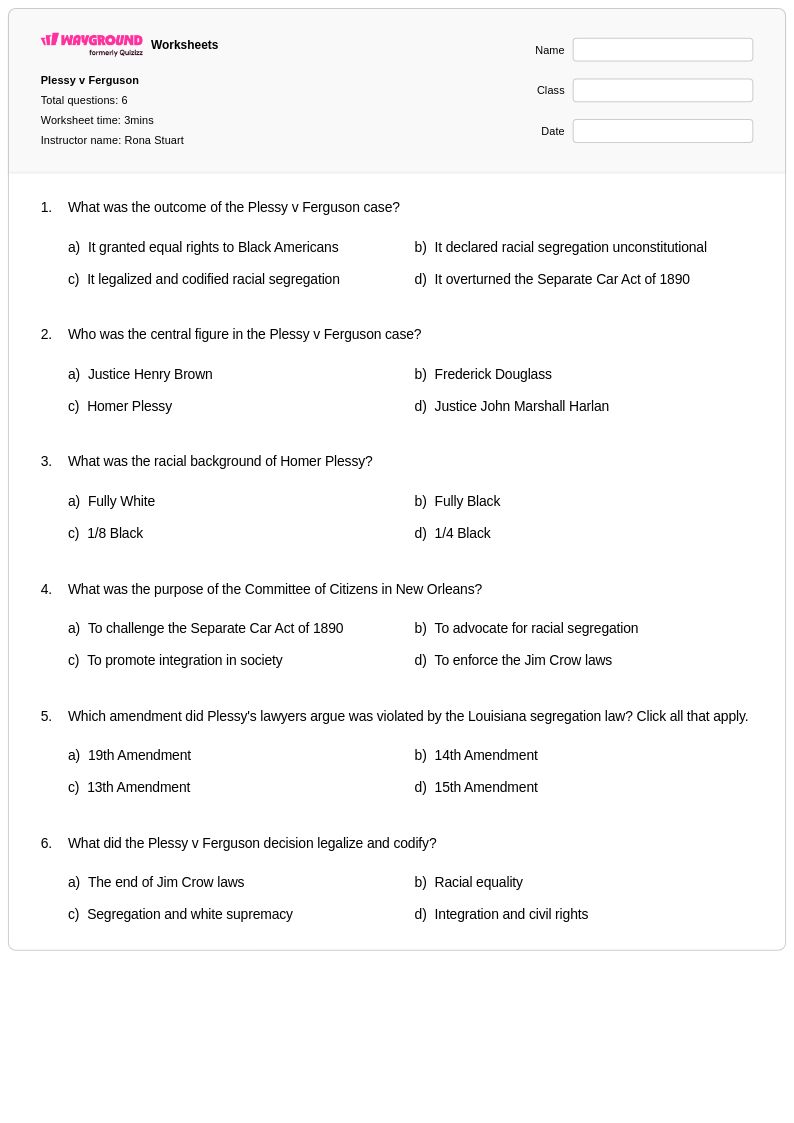
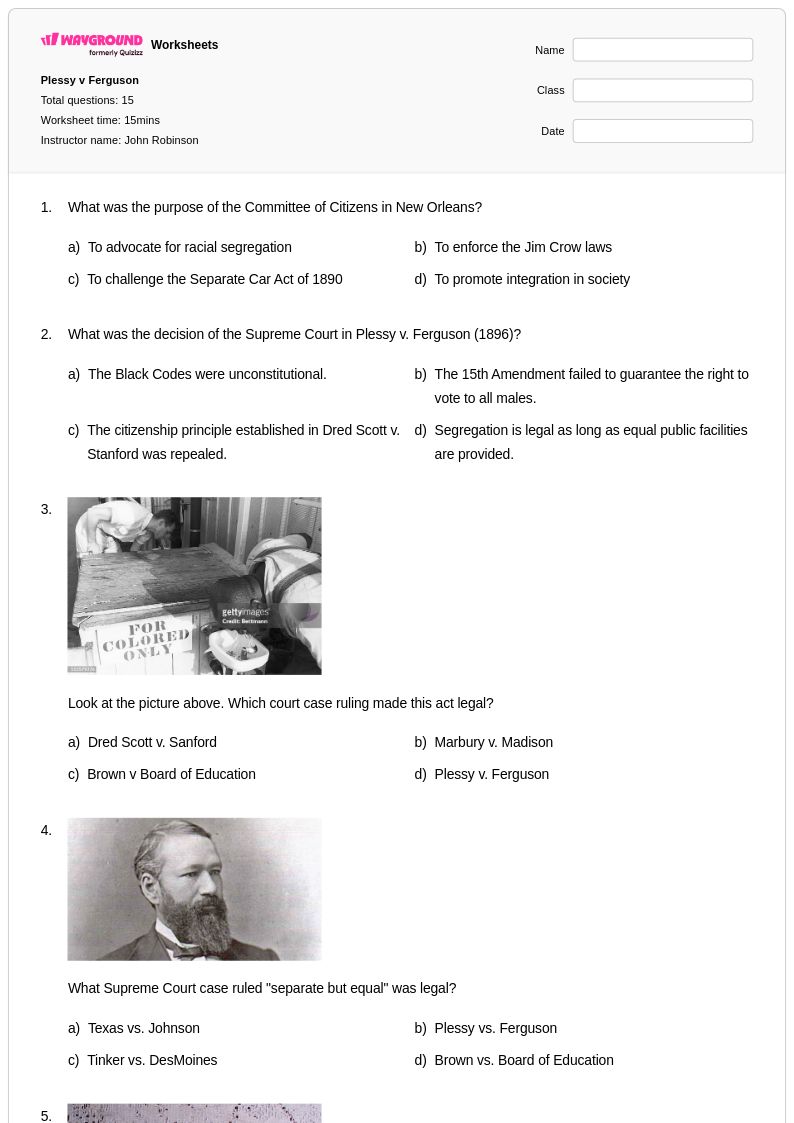
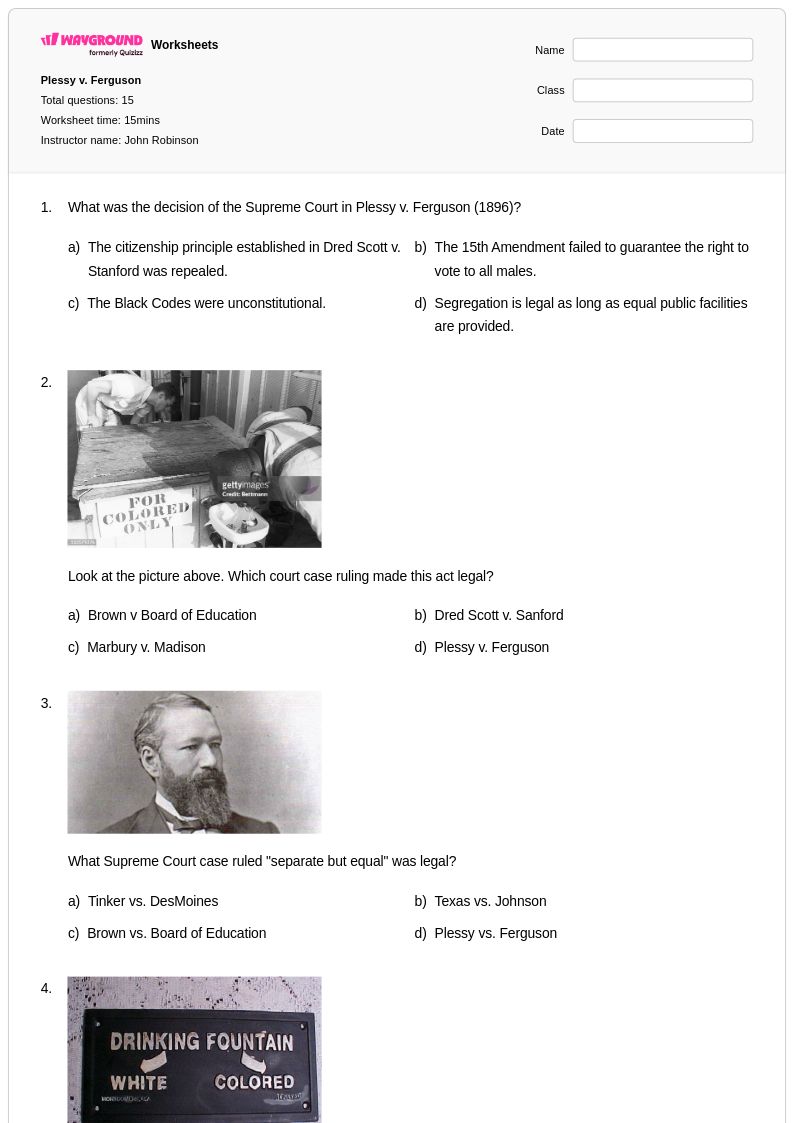
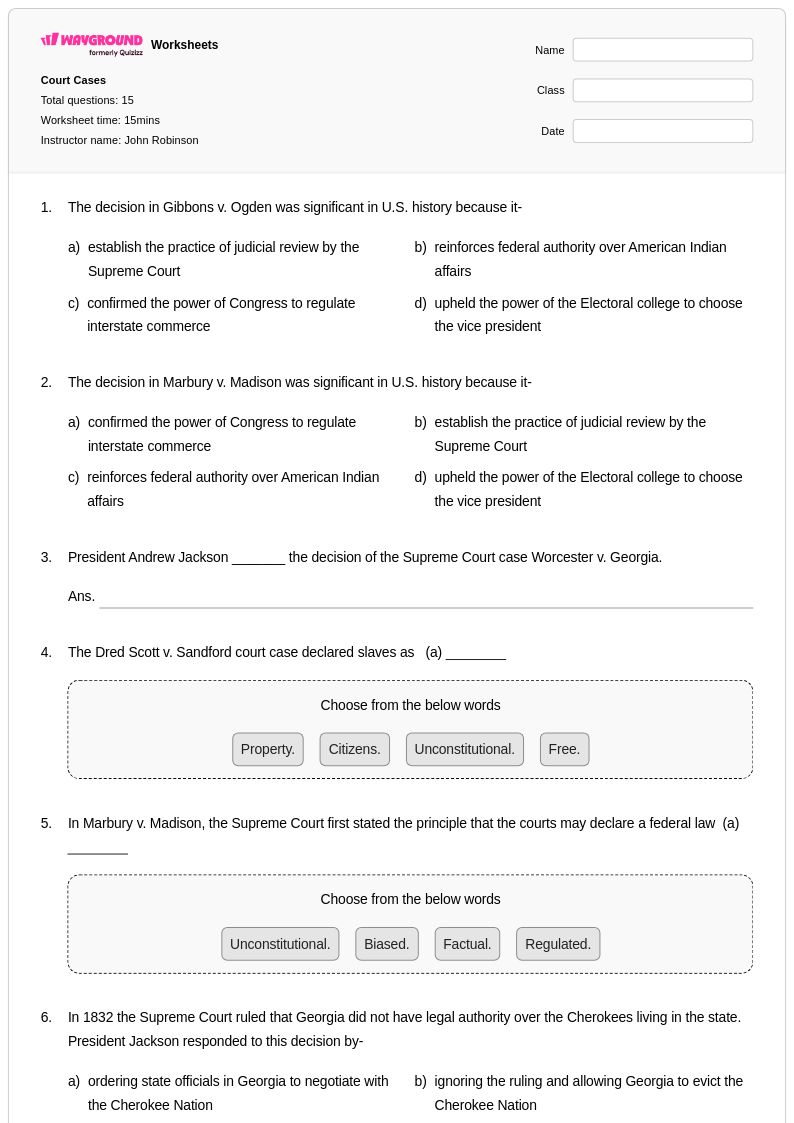
Class 9 students can explore the landmark Plessy v. Ferguson case with free worksheets and printables that help analyze this pivotal Supreme Court decision, complete with practice problems and answer keys.
Explore printable Plessy V. Ferguson worksheets for Class 9
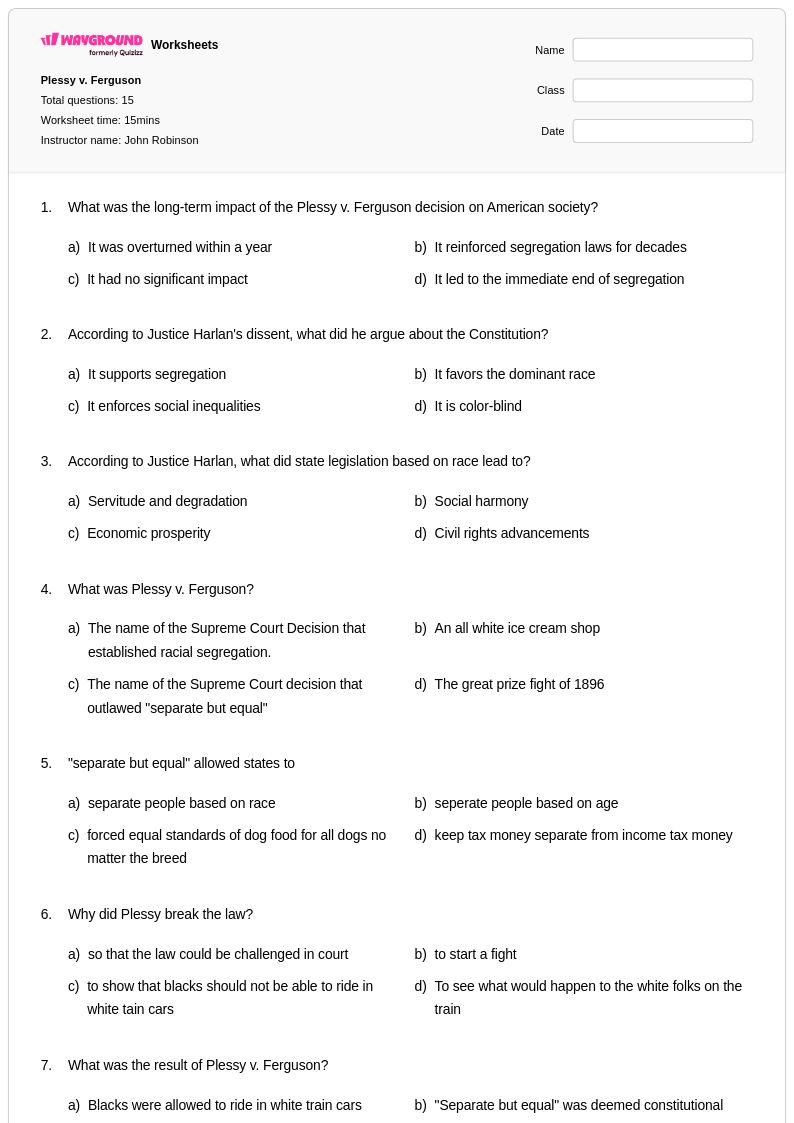
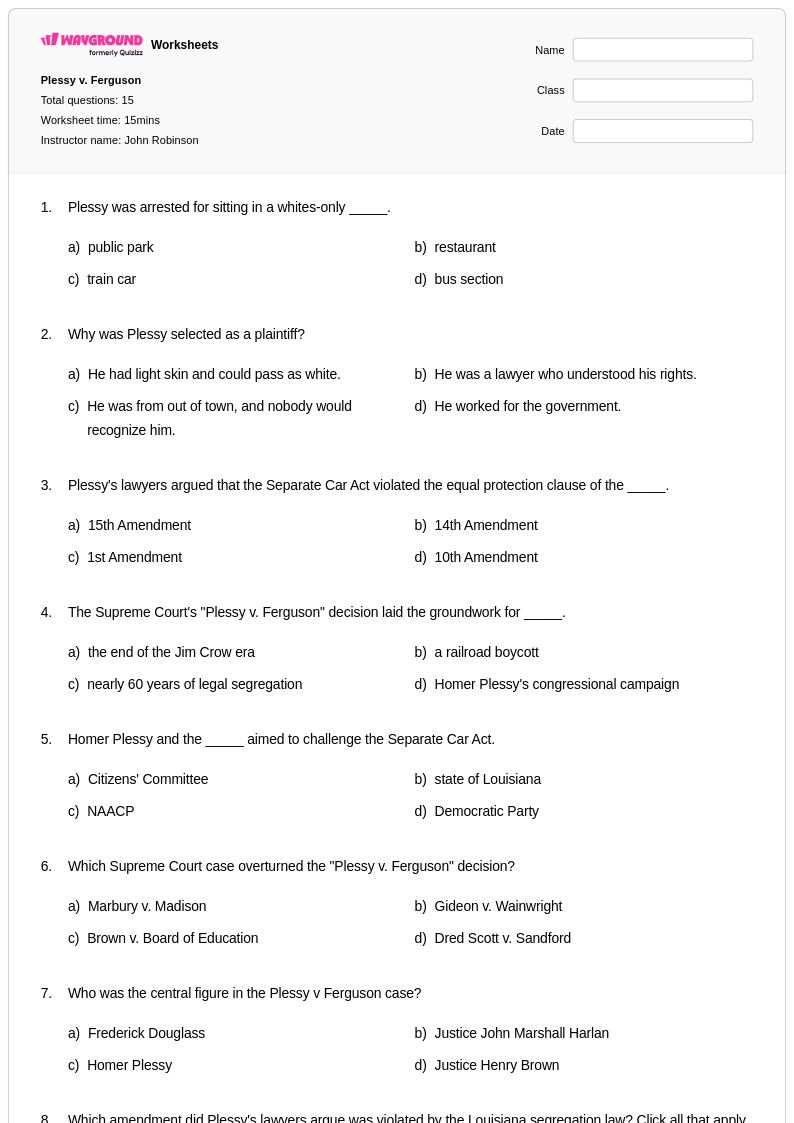
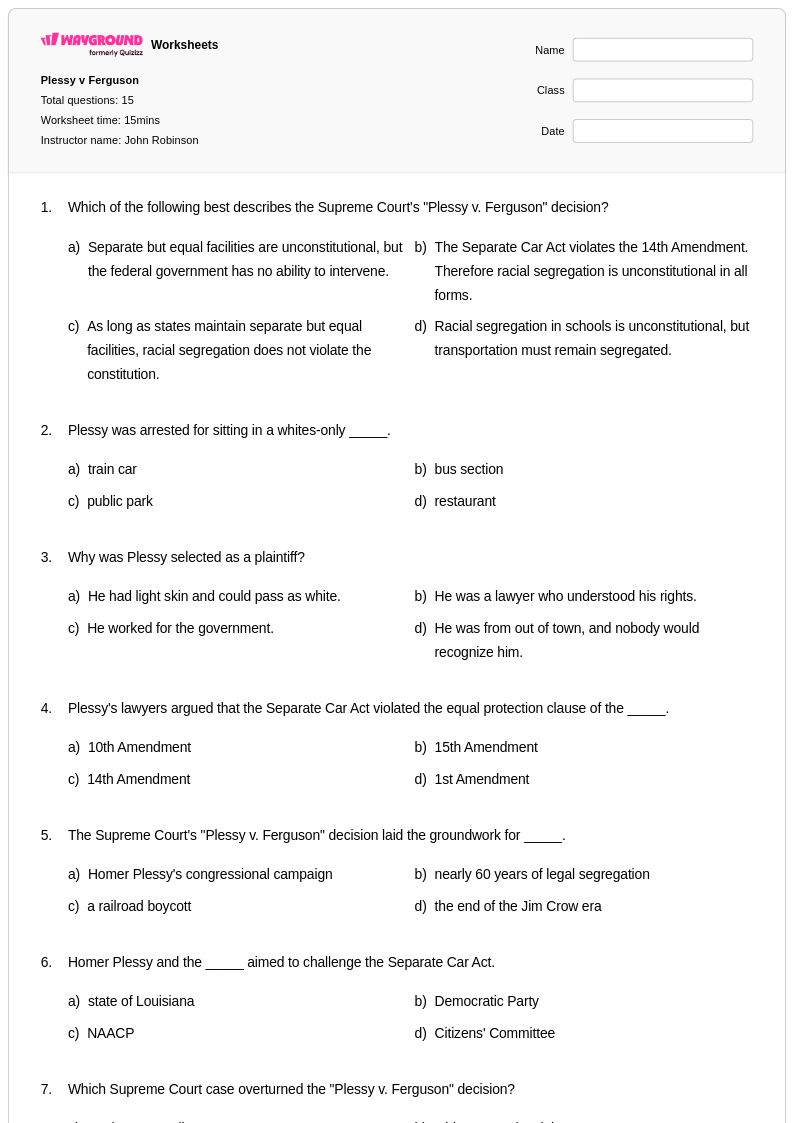
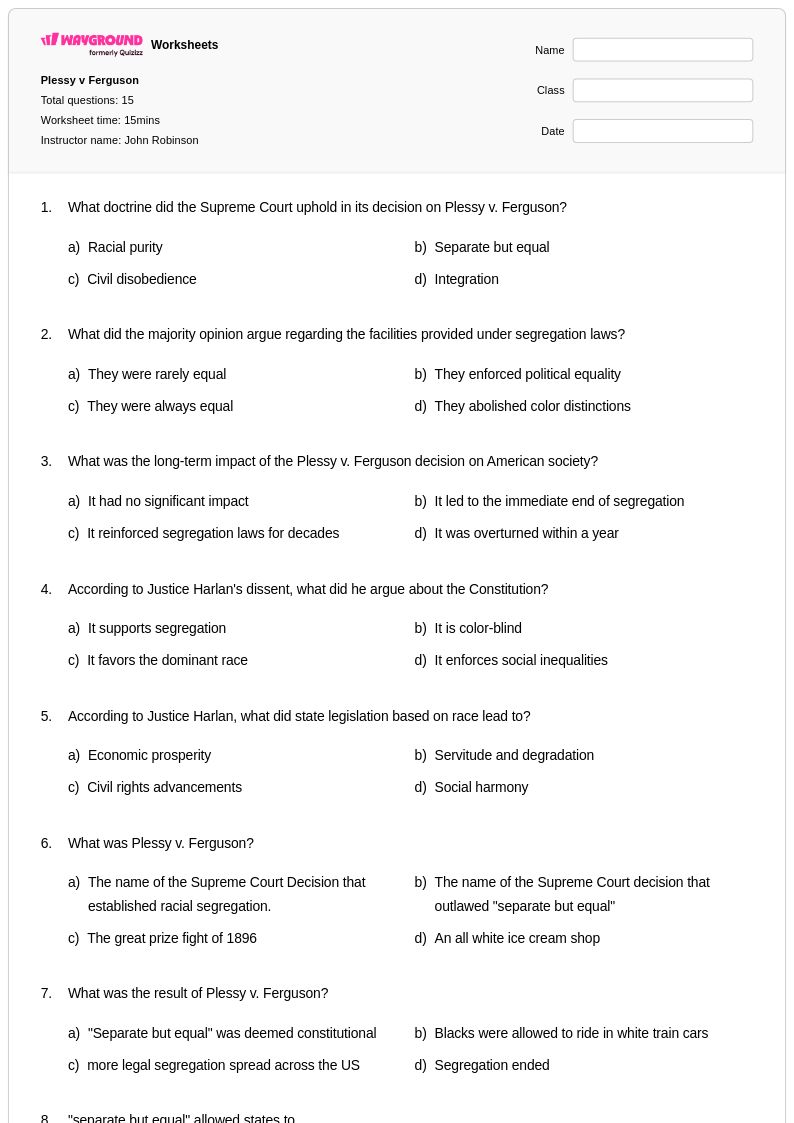
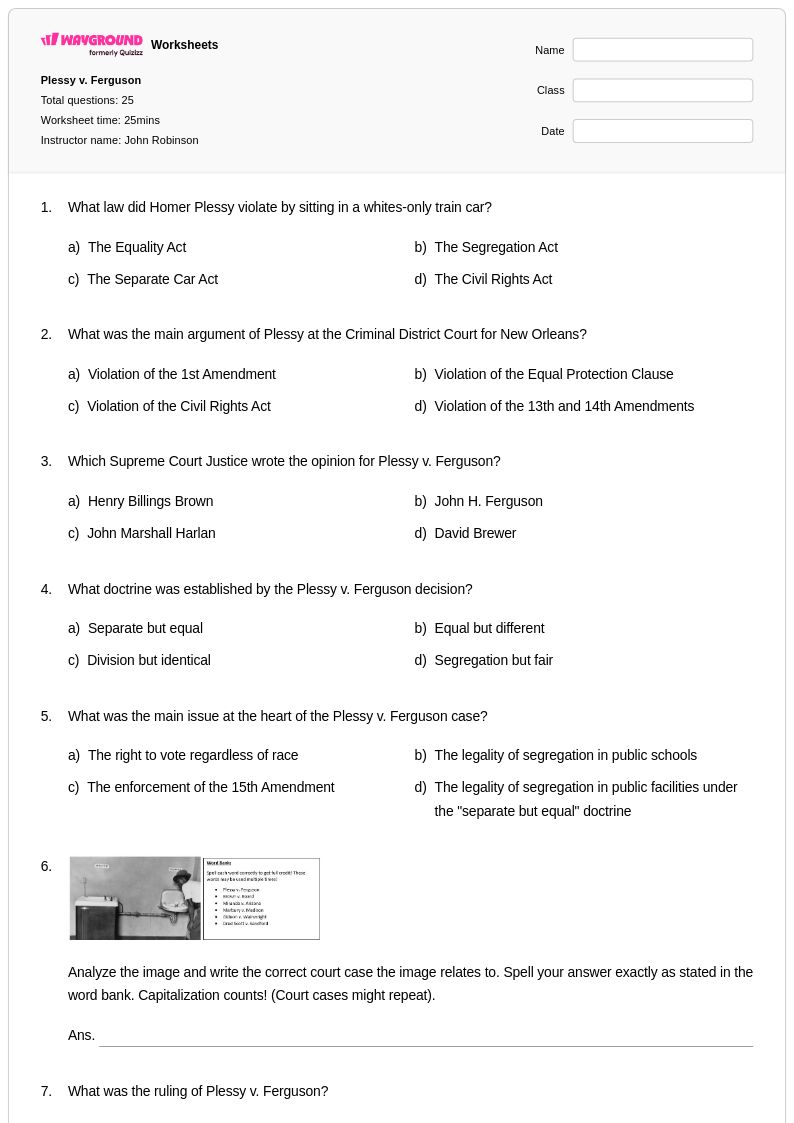
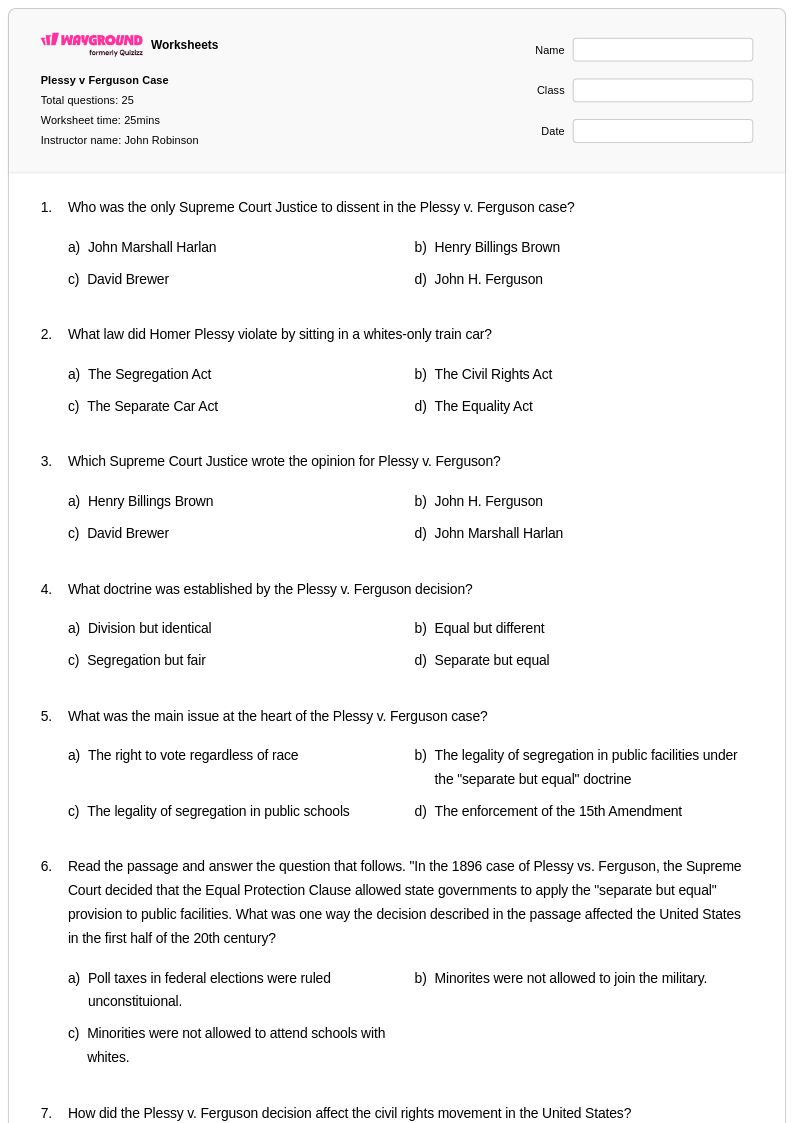
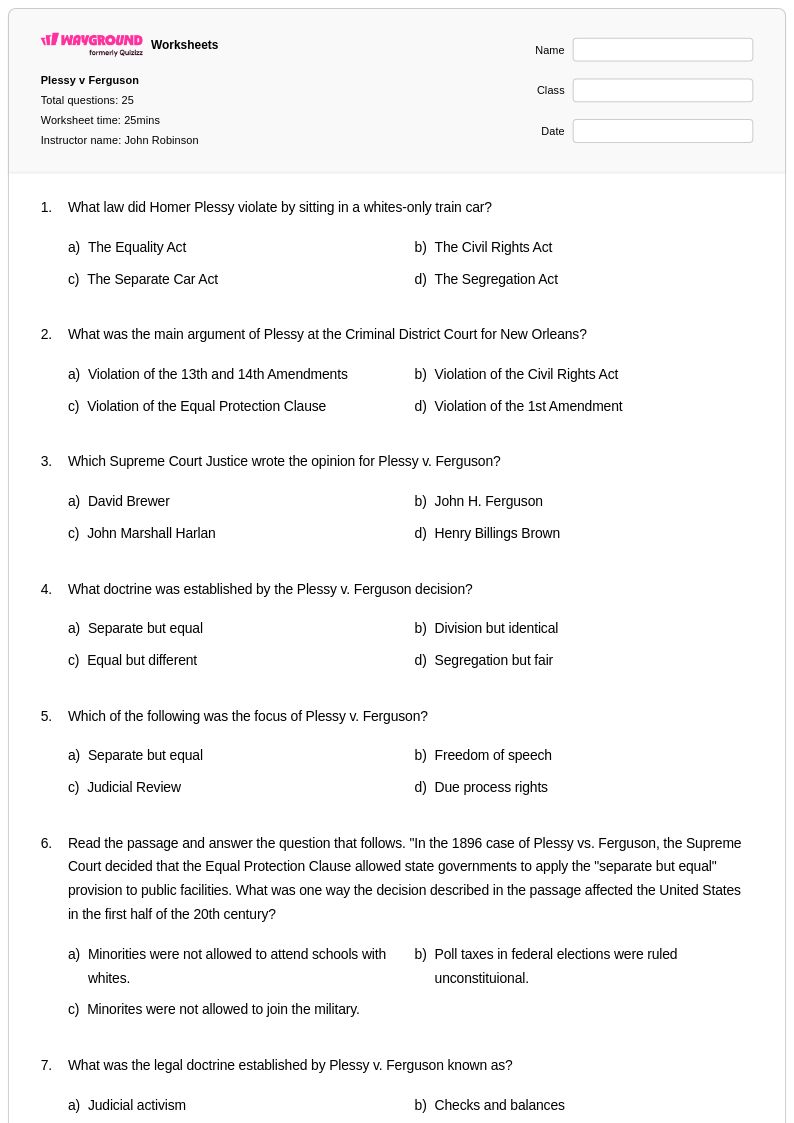
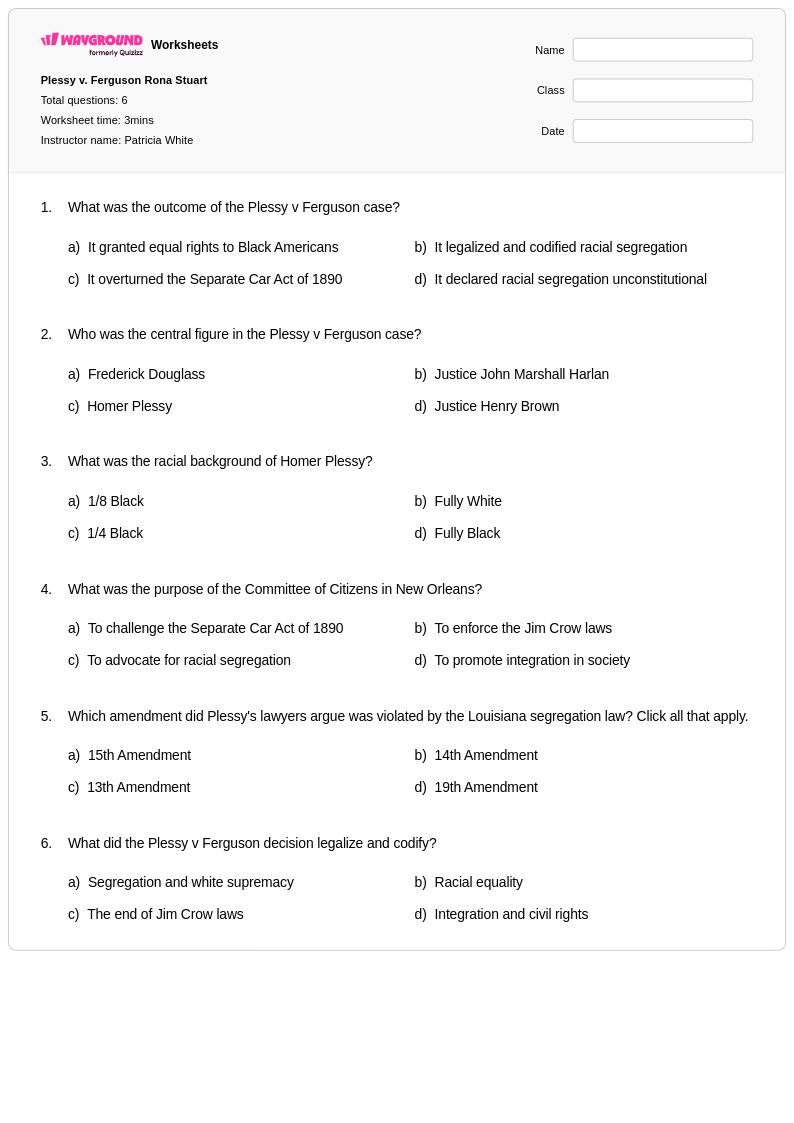
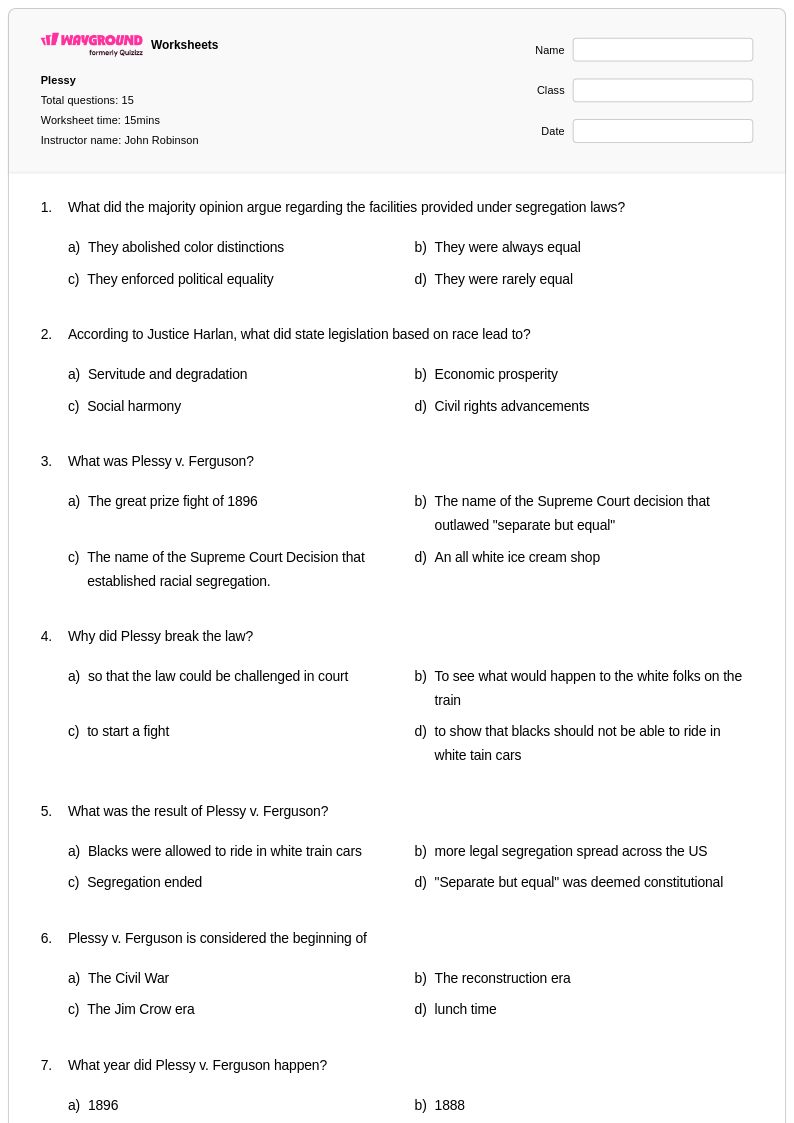
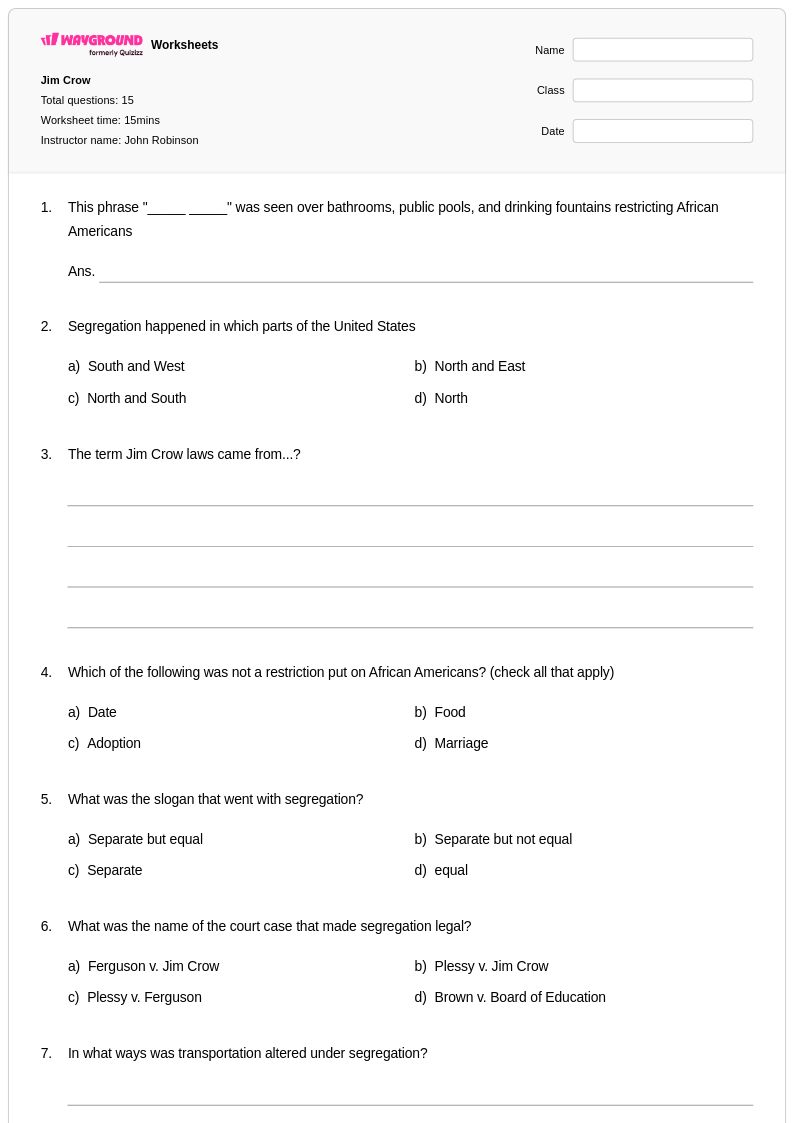
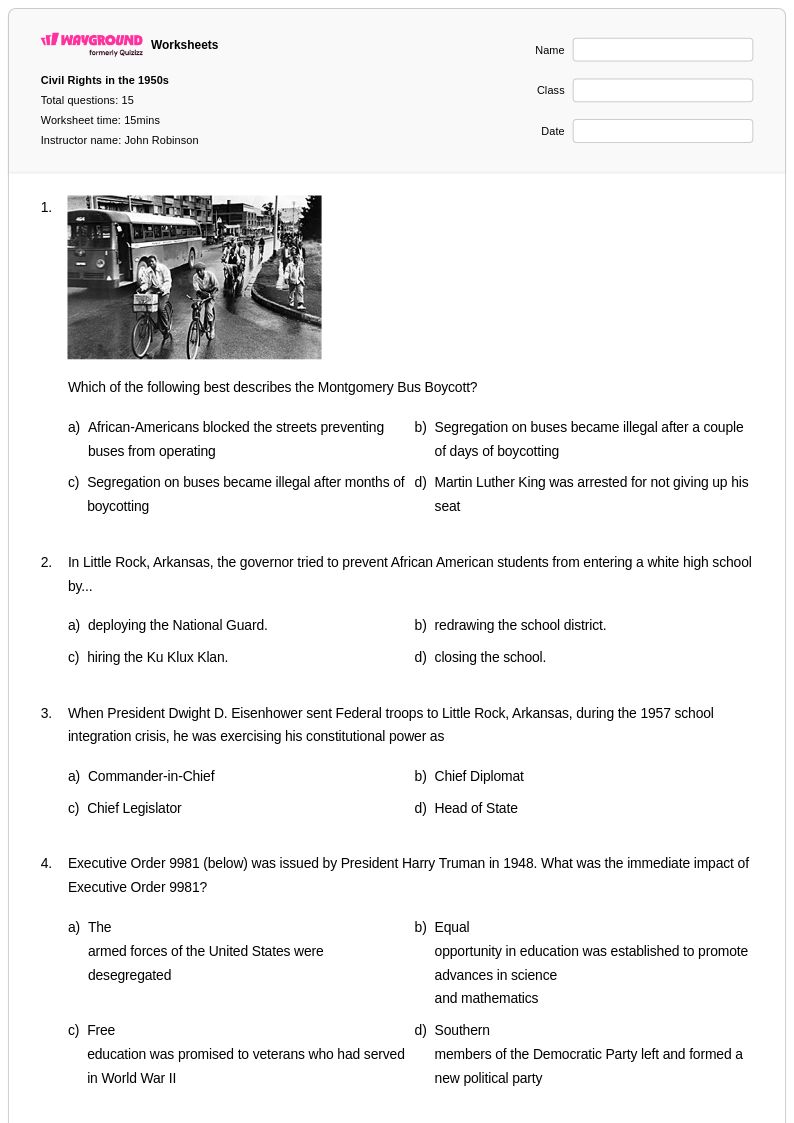
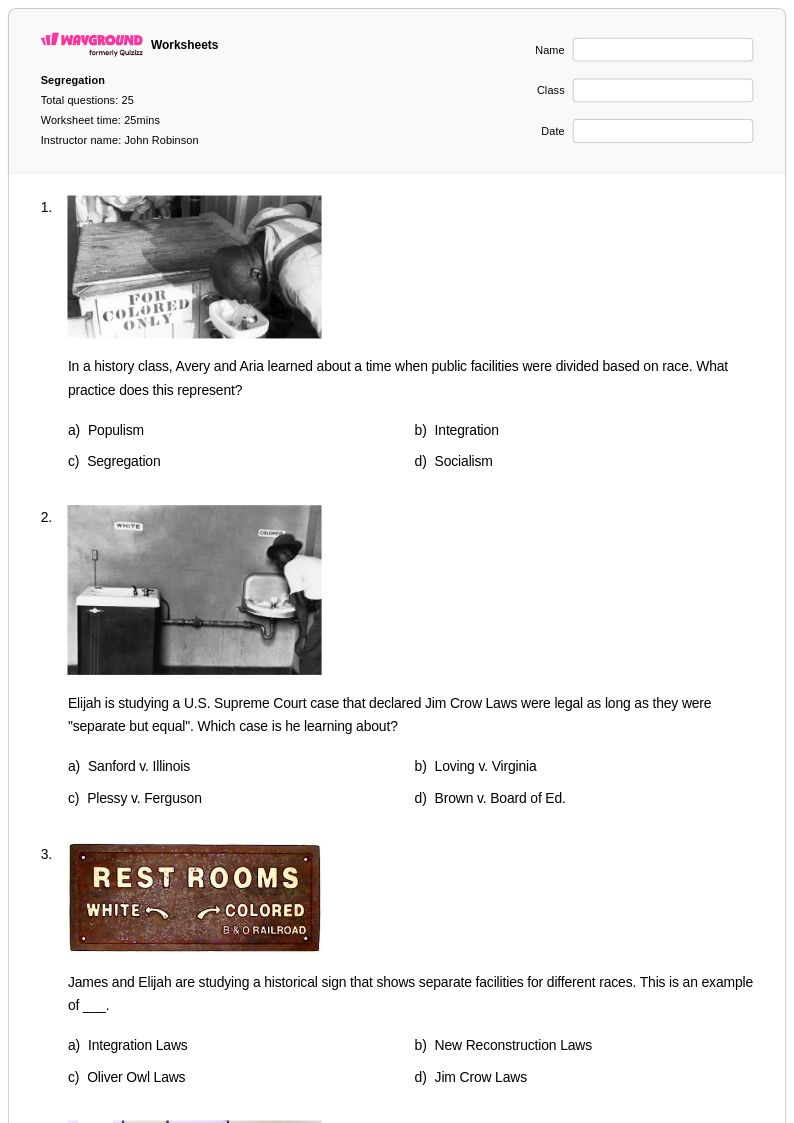
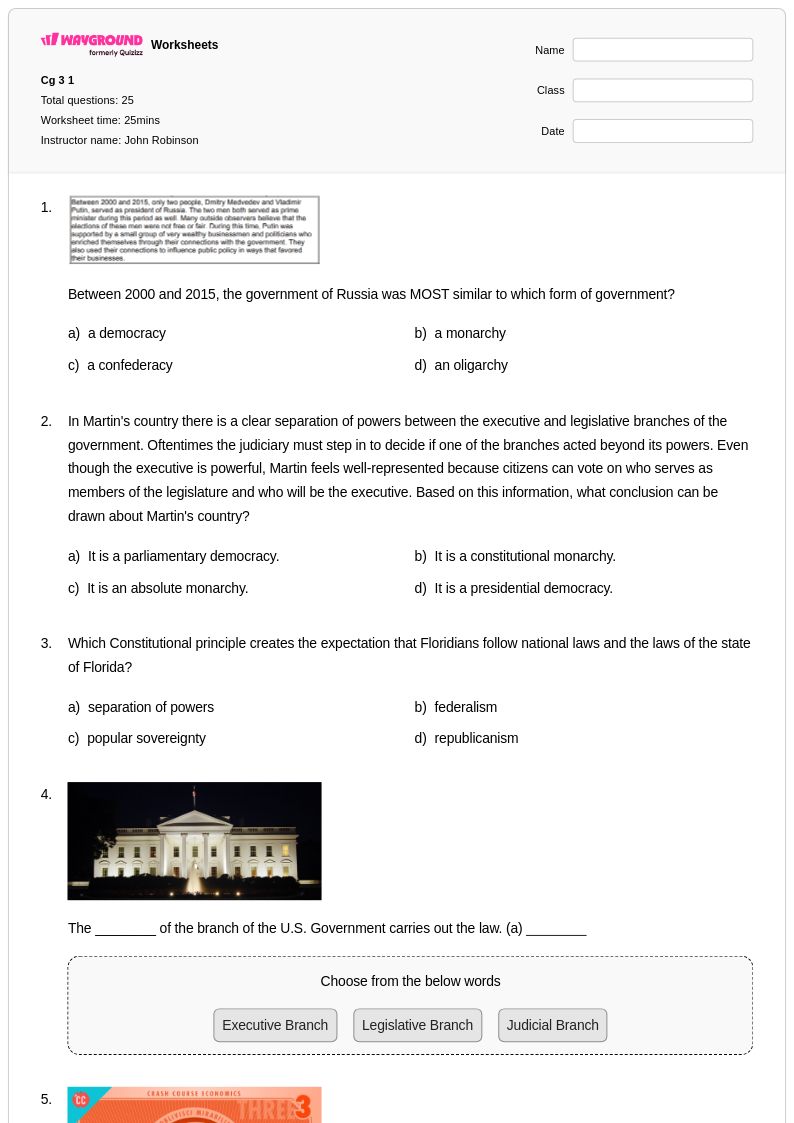
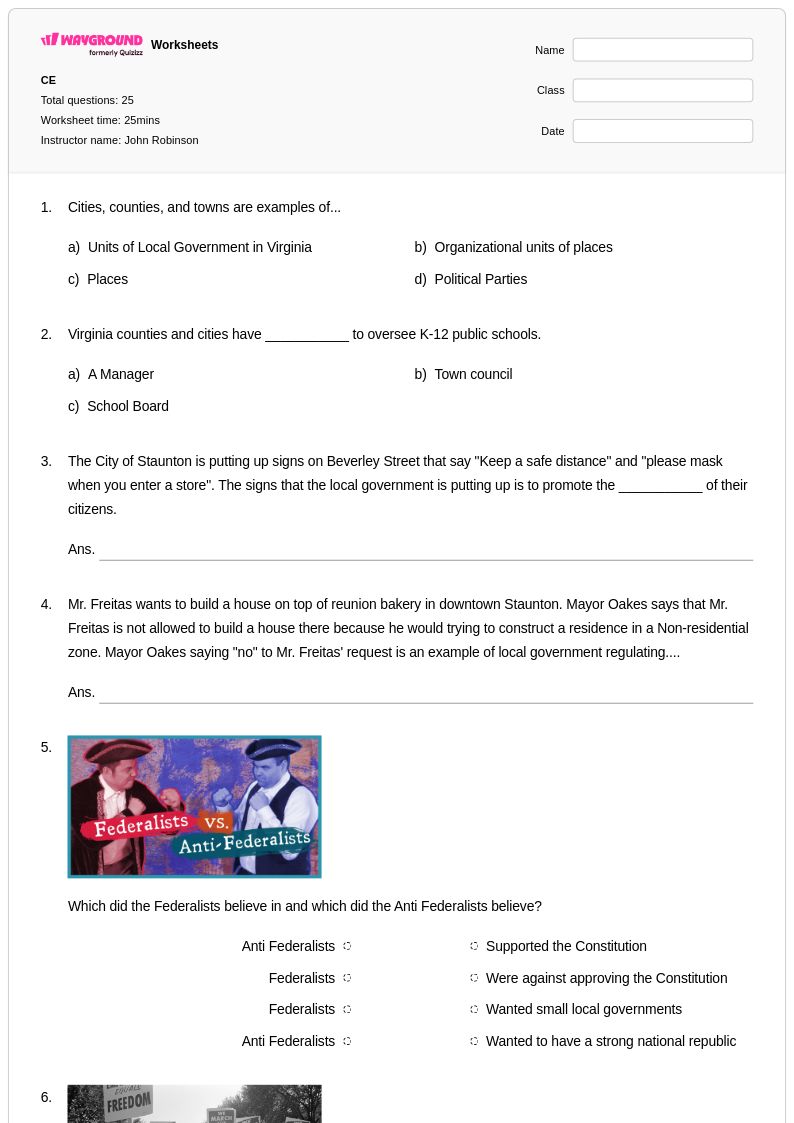
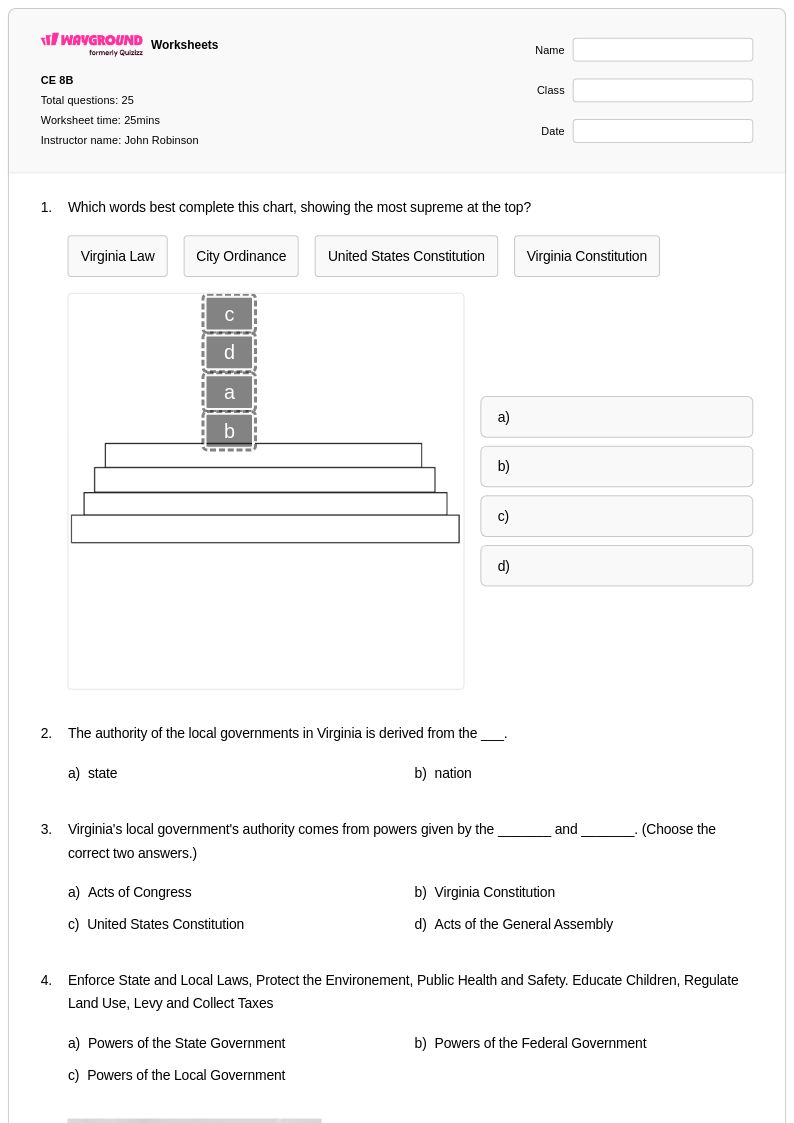
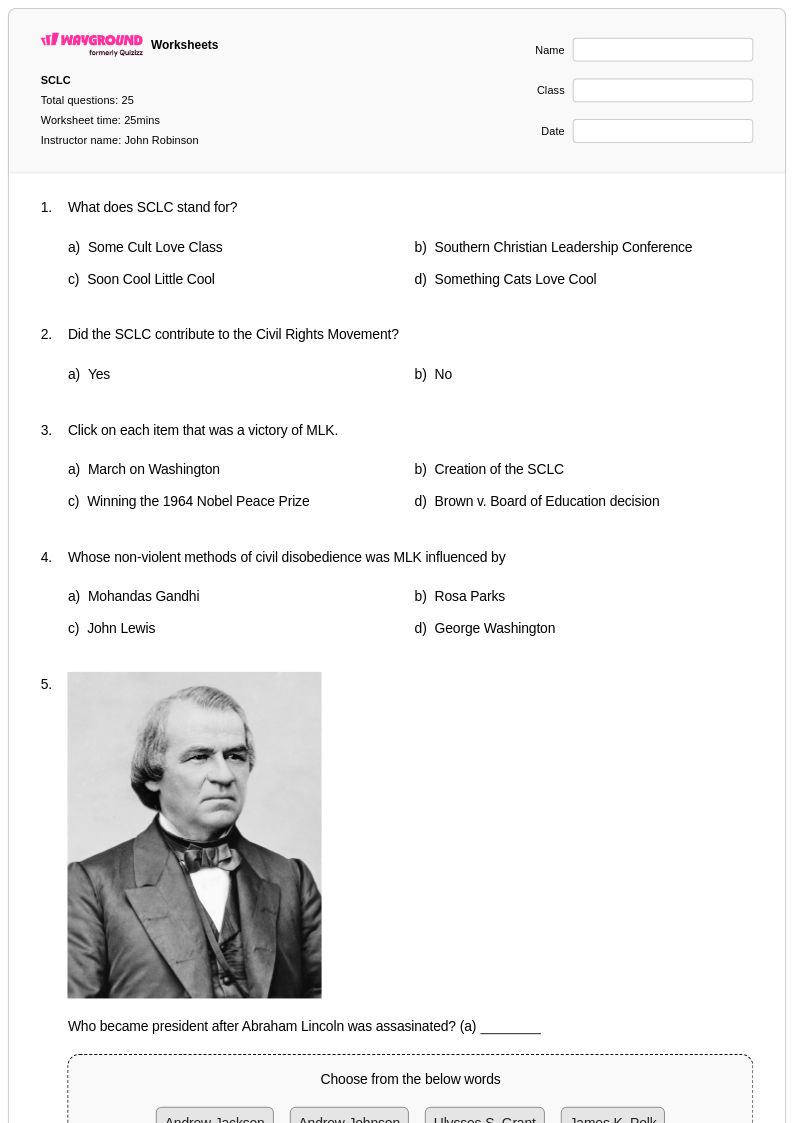
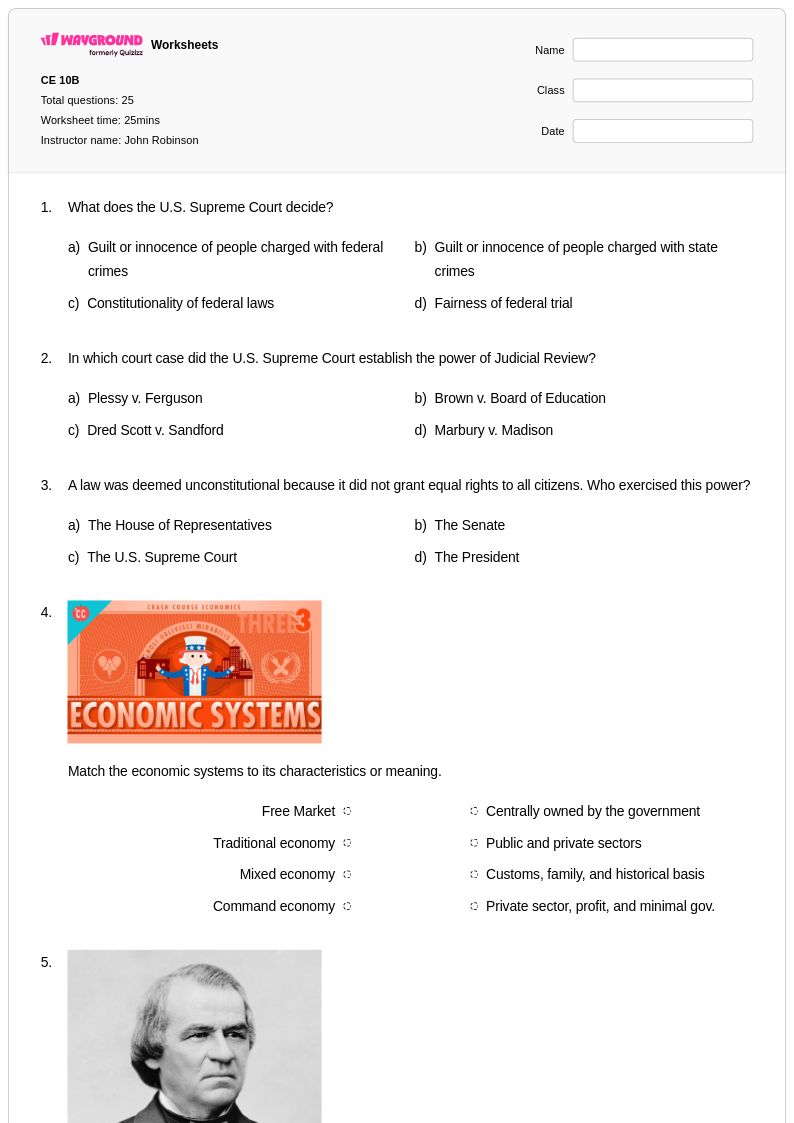
Plessy v. Ferguson worksheets for Class 9 students provide comprehensive exploration of this landmark 1896 Supreme Court case that established the "separate but equal" doctrine in American law. These educational resources guide students through the historical context, legal arguments, and far-reaching consequences of the case that legitimized racial segregation for nearly six decades. The worksheets strengthen critical thinking skills by having students analyze primary source documents, compare perspectives of different stakeholders, and evaluate the case's impact on civil rights movements. Free printable materials include practice problems that challenge students to interpret constitutional amendments, while accompanying answer keys help educators assess comprehension of complex legal concepts. These pdf resources systematically build students' understanding of how judicial decisions can shape social policy and influence generations of Americans.
Wayground, formerly Quizizz, supports Social Studies educators with an extensive collection of millions of teacher-created worksheets covering pivotal moments like Plessy v. Ferguson. The platform's robust search and filtering capabilities allow teachers to quickly locate standards-aligned materials that match their specific curriculum requirements and student needs. Differentiation tools enable educators to customize content complexity, ensuring both struggling learners and advanced students can engage meaningfully with this challenging historical topic. Available in both printable and digital pdf formats, these resources provide flexibility for various classroom environments and teaching approaches. Teachers utilize these comprehensive worksheet collections for lesson planning, targeted remediation of misconceptions about constitutional law, enrichment activities for accelerated learners, and ongoing skill practice that reinforces understanding of how historical legal precedents continue to influence contemporary American society.
FAQs
How do I teach Plessy v. Ferguson to students?
Teaching Plessy v. Ferguson effectively begins with grounding students in the post-Reconstruction legal landscape before presenting the case itself. Have students examine the constitutional arguments on both sides, particularly Justice Harlan's dissent, to build analytical depth. Connecting the ruling to its real-world consequences, such as the expansion of Jim Crow laws, helps students understand why this case was a turning point in civil rights history rather than an isolated legal event.
What exercises help students practice analyzing Plessy v. Ferguson?
Effective practice exercises include primary source analysis of the Court's majority opinion and Justice Harlan's lone dissent, which sharpens students' ability to evaluate competing constitutional interpretations. Comparative exercises that ask students to contrast pre- and post-Plessy segregation legislation help them trace the ruling's legislative impact. Case-to-case comparisons, such as connecting Plessy to Brown v. Board of Education, reinforce how legal precedents evolve over time.
What misconceptions do students commonly have about Plessy v. Ferguson?
A common misconception is that the 'separate but equal' doctrine actually guaranteed equal treatment in practice, when in reality it was used to legally justify systematically inferior conditions for Black Americans. Students also frequently confuse Homer Plessy's case as a spontaneous act of protest when it was, in fact, a planned legal challenge organized by the Citizens' Committee. Clarifying that the ruling was eventually overturned by Brown v. Board of Education (1954) is also essential, as students often assume its legal authority was permanent.
How can I use Plessy v. Ferguson worksheets to assess student understanding?
Plessy v. Ferguson worksheets are well-suited for formative assessment because they require students to interpret legal arguments, evaluate constitutional reasoning, and draw connections to broader civil rights history rather than simply recall facts. Teachers can use primary source analysis questions to gauge how well students can read and respond to legal documents, which is a higher-order skill aligned with most social studies standards. Answer keys included with each worksheet make it straightforward to review responses and identify gaps in understanding before moving forward.
How do I use Wayground's Plessy v. Ferguson worksheets in my classroom?
Wayground's Plessy v. Ferguson worksheets are available as free printable PDFs for traditional classroom use and in digital formats for technology-integrated learning environments, and teachers can also host them as a quiz directly on Wayground. The platform's search and filtering tools allow teachers to locate worksheets that match specific curriculum standards quickly. Differentiation tools let educators adjust content for struggling learners and advanced students within the same class, making the materials flexible enough for direct instruction, homework, or collaborative discussion.
How do I differentiate Plessy v. Ferguson instruction for students at different reading levels?
For students who struggle with complex legal language, pairing the primary source documents with guiding questions and vocabulary scaffolds can make the material more accessible without reducing its rigor. Advanced students can be challenged with extended analysis tasks, such as arguing whether the Court's ruling was legally consistent with the 14th Amendment. On Wayground, teachers can apply individual accommodations such as Read Aloud, reduced answer choices, and adjustable reading modes to support diverse learners while keeping all students working with the same core content.