
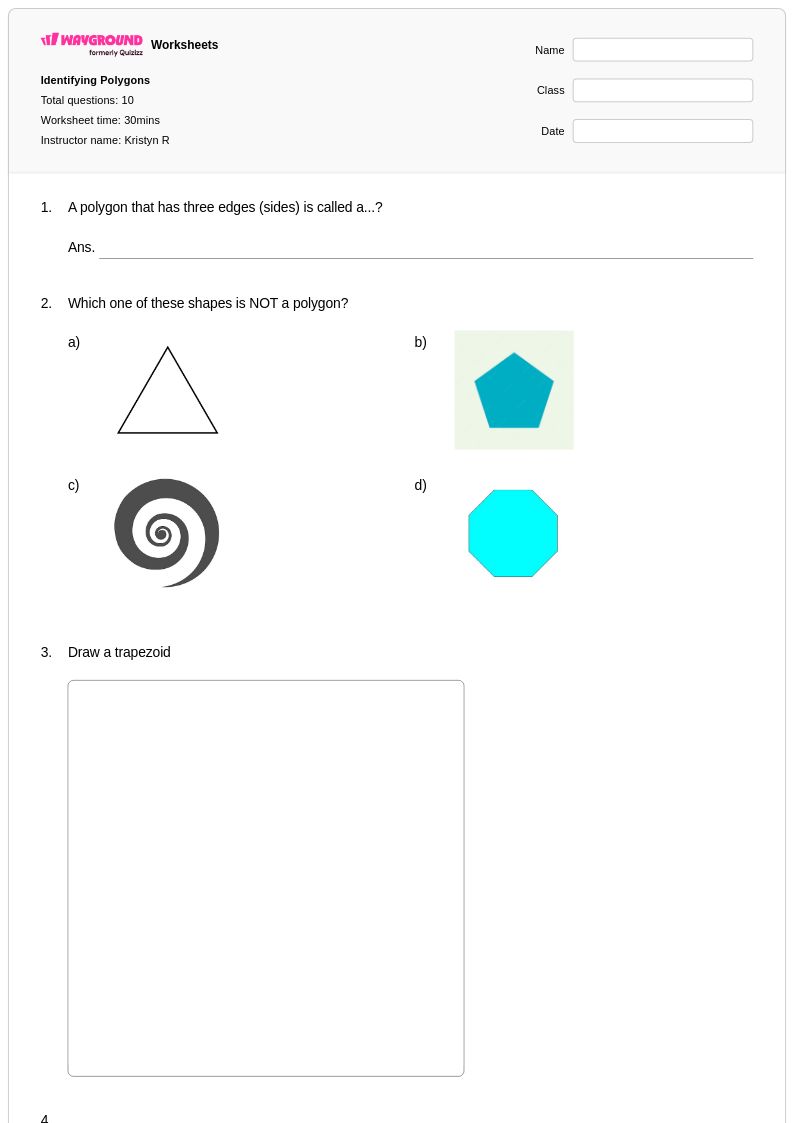
10 Q
2nd
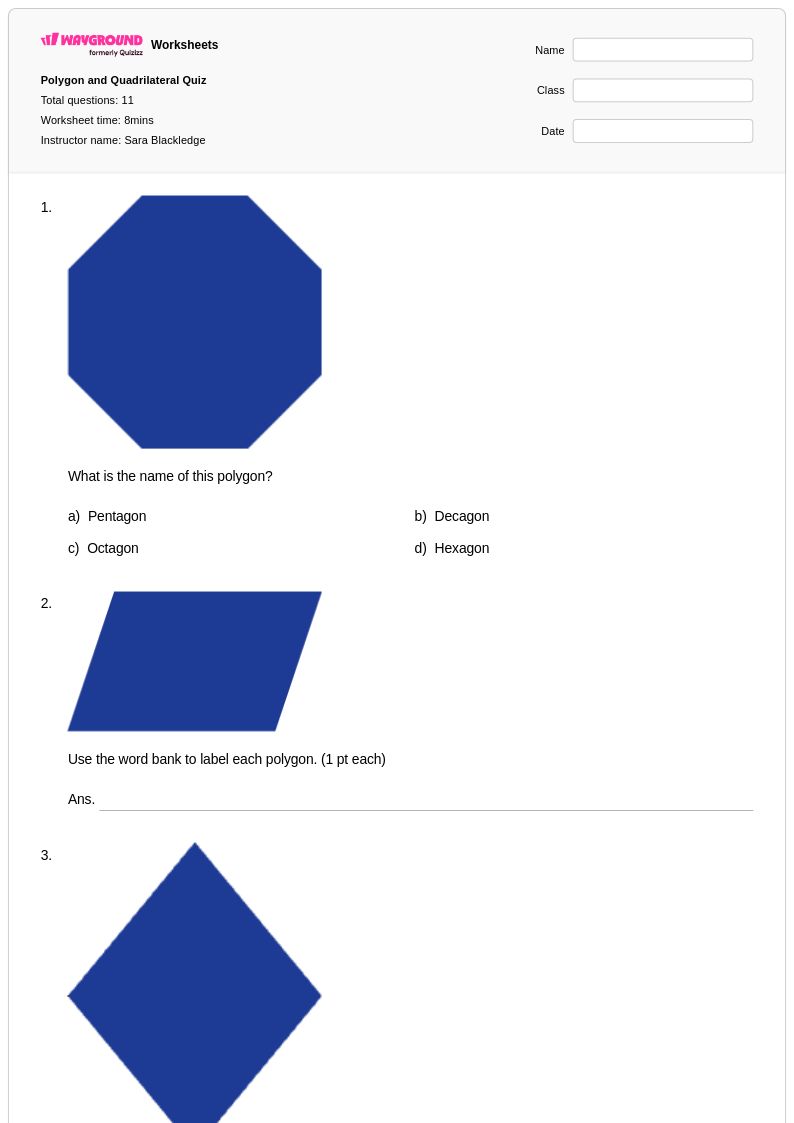
11 Q
2nd
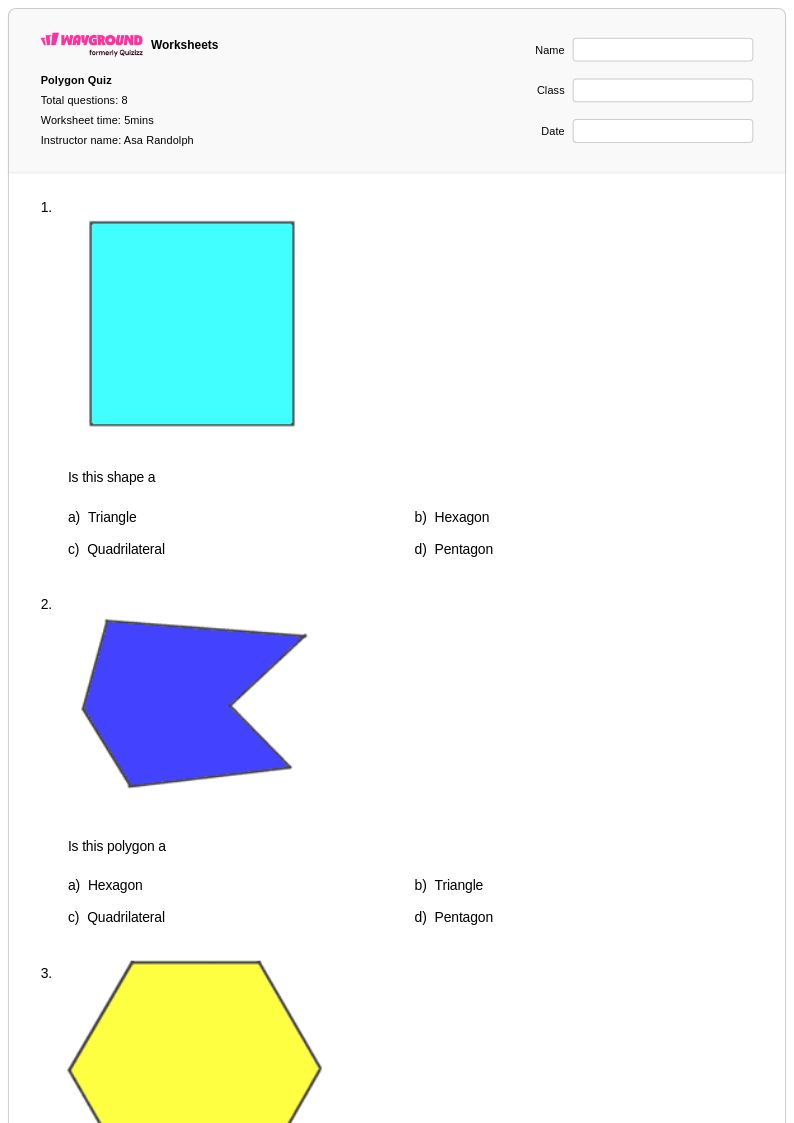
8 Q
2nd - 3rd
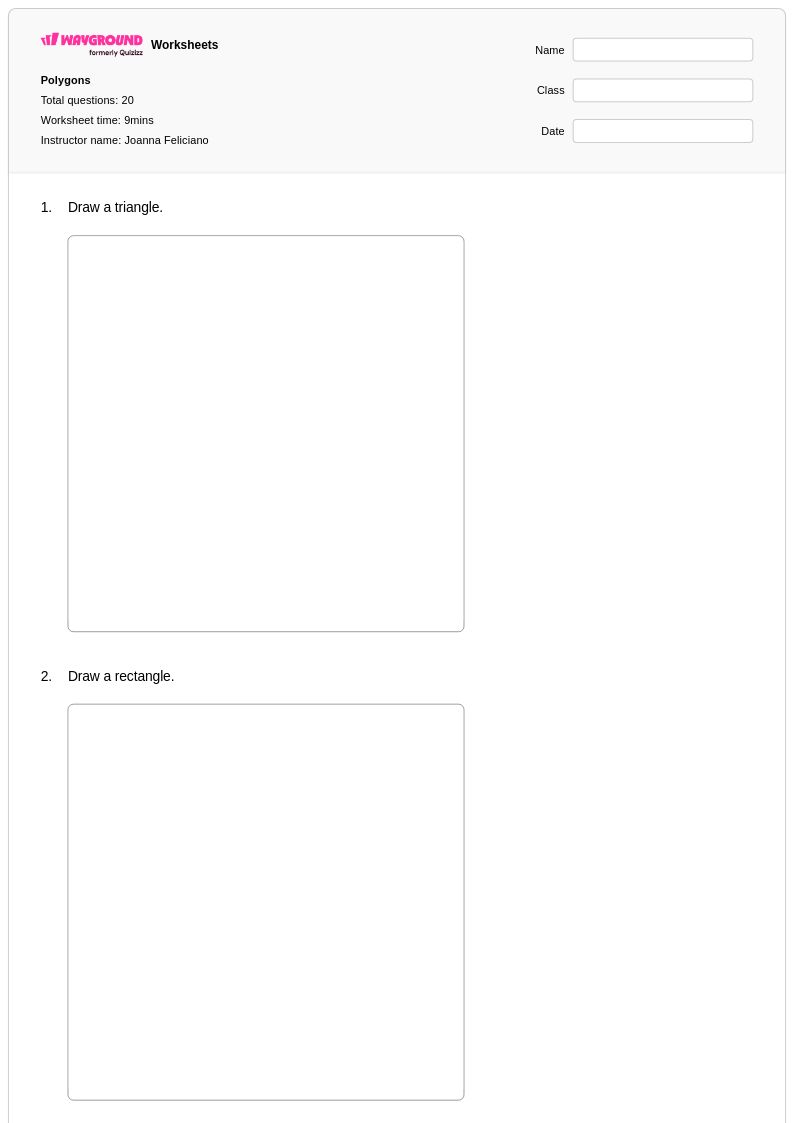
20 Q
2nd
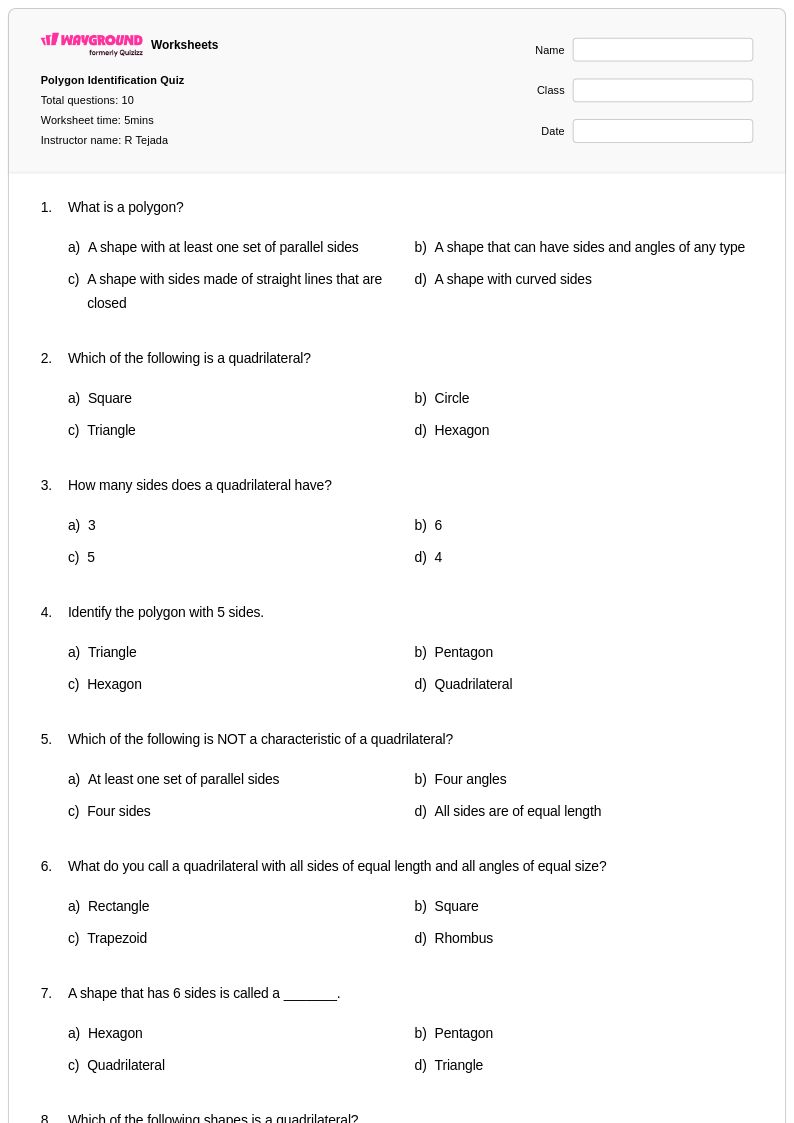
10 Q
2nd
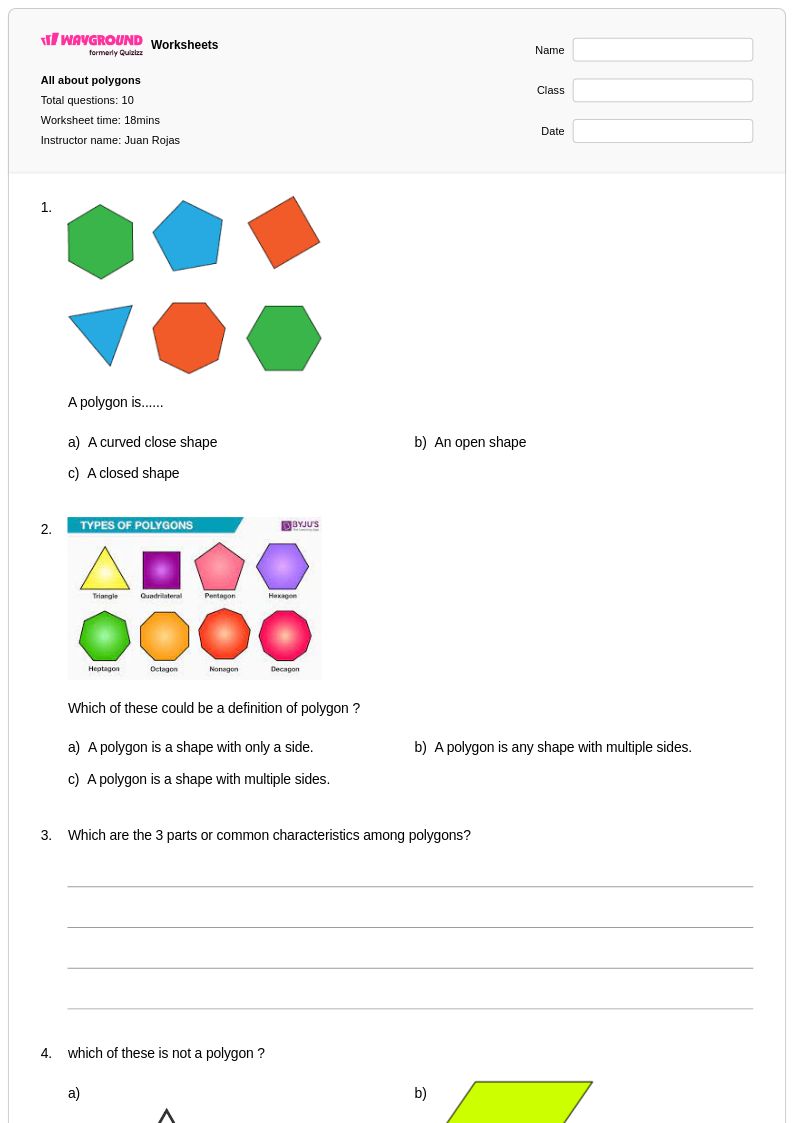
10 Q
1st - 12th
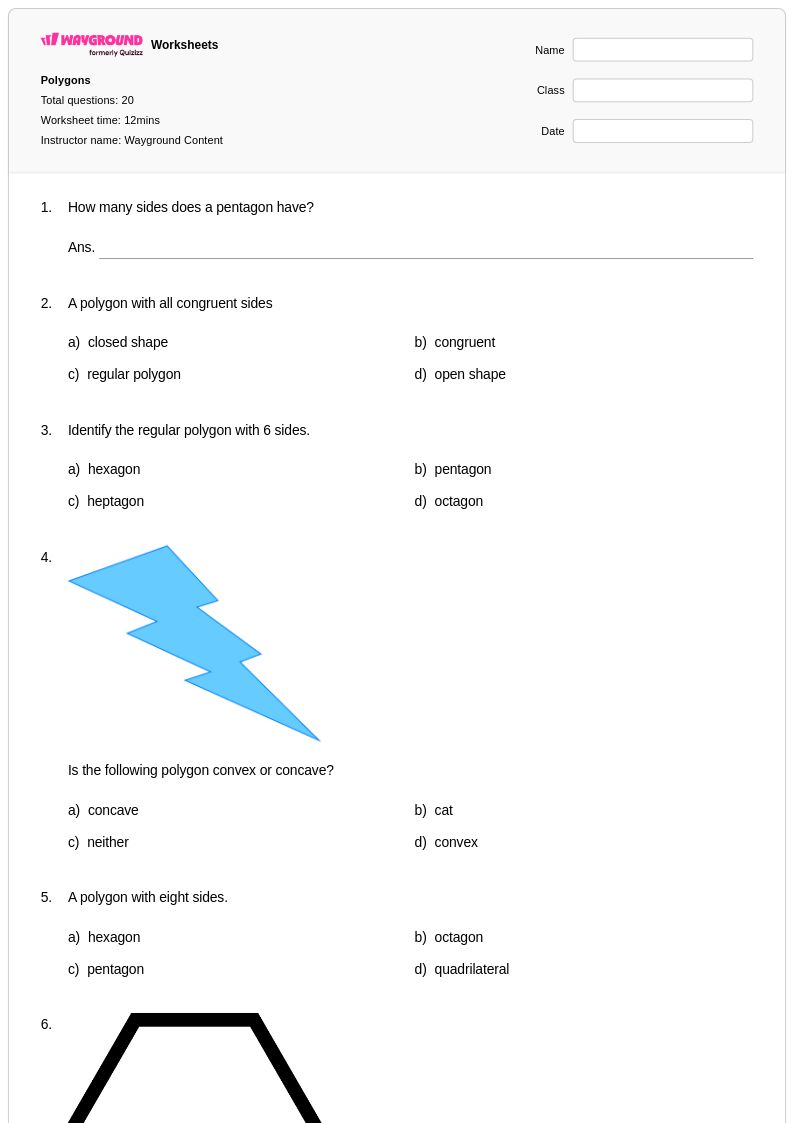
20 Q
2nd
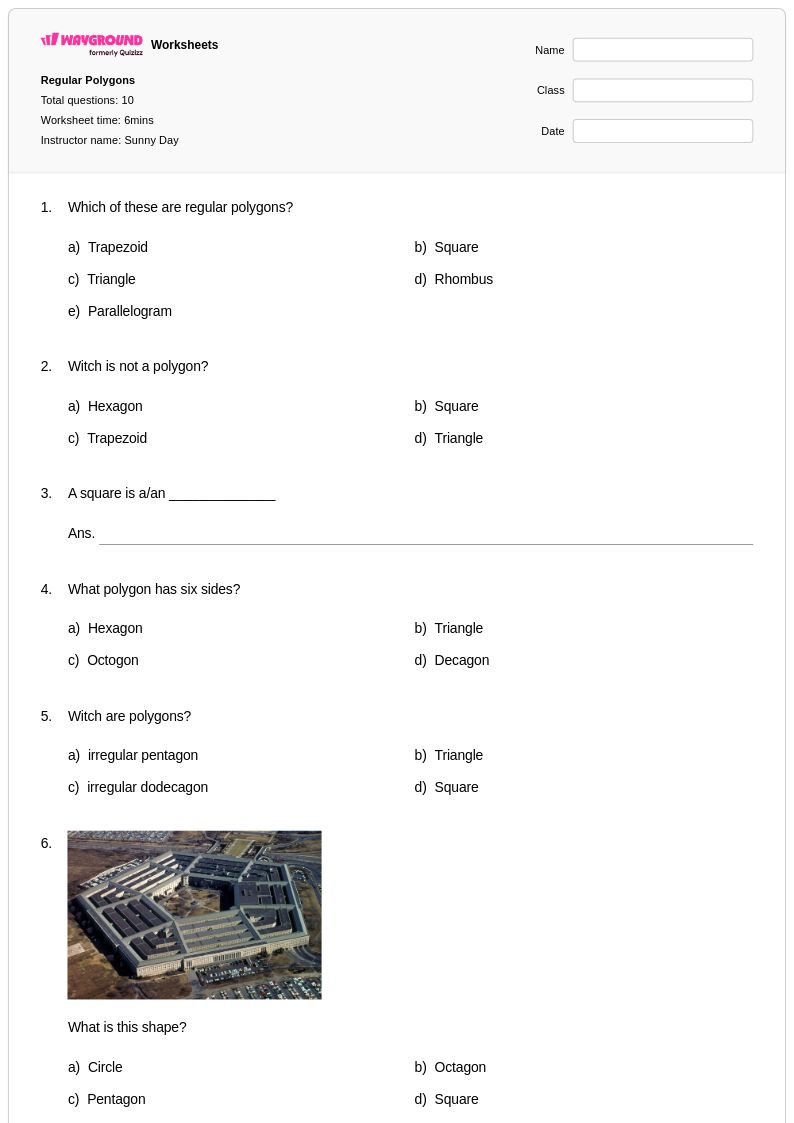
10 Q
1st - 5th
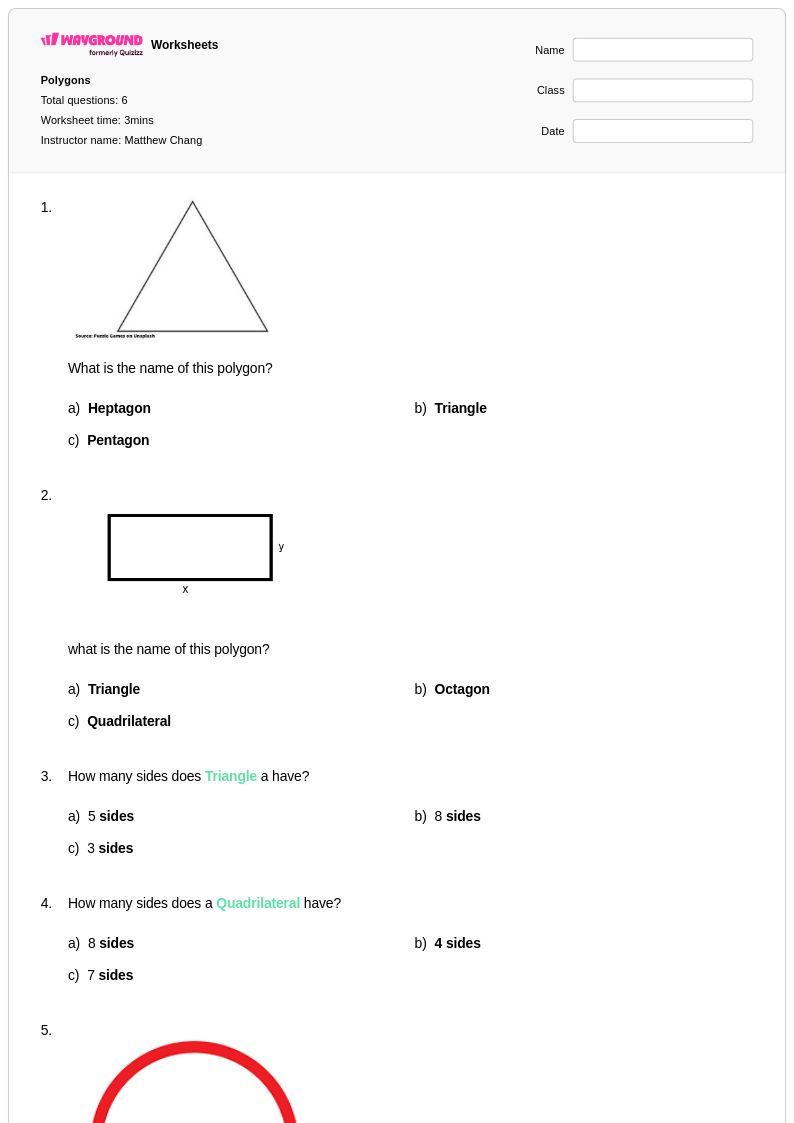
6 Q
2nd
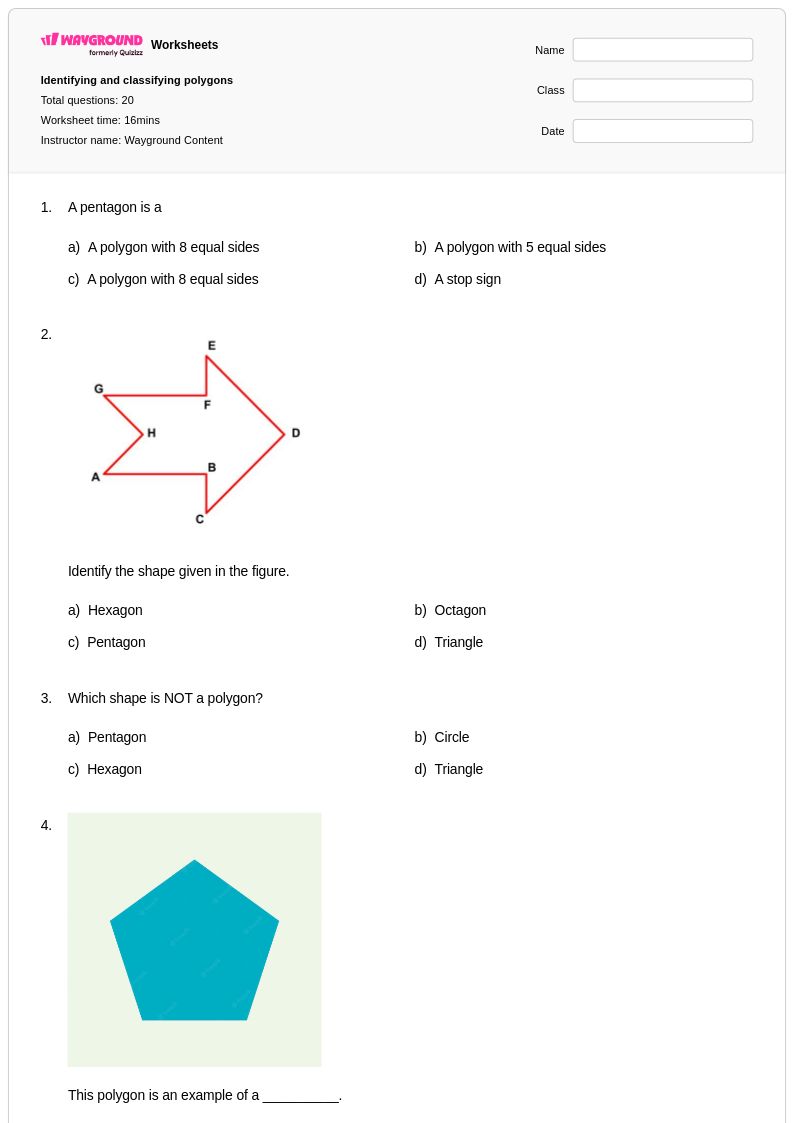
20 Q
2nd
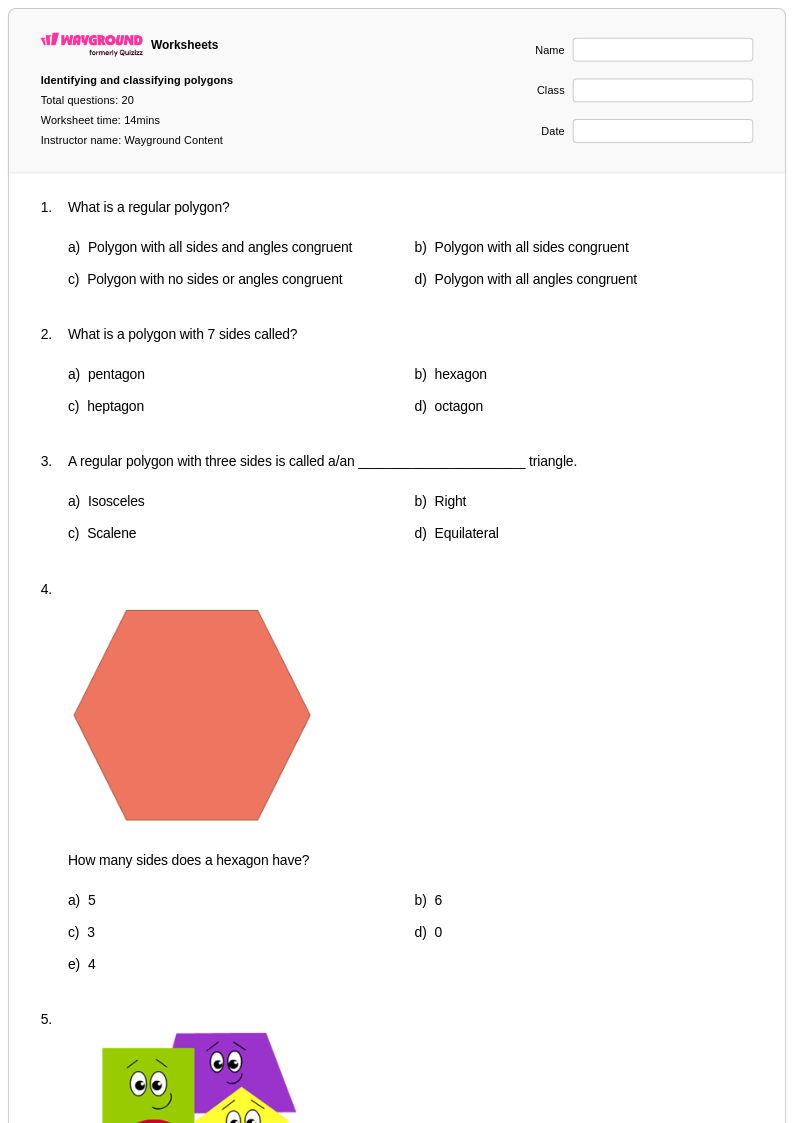
20 Q
2nd
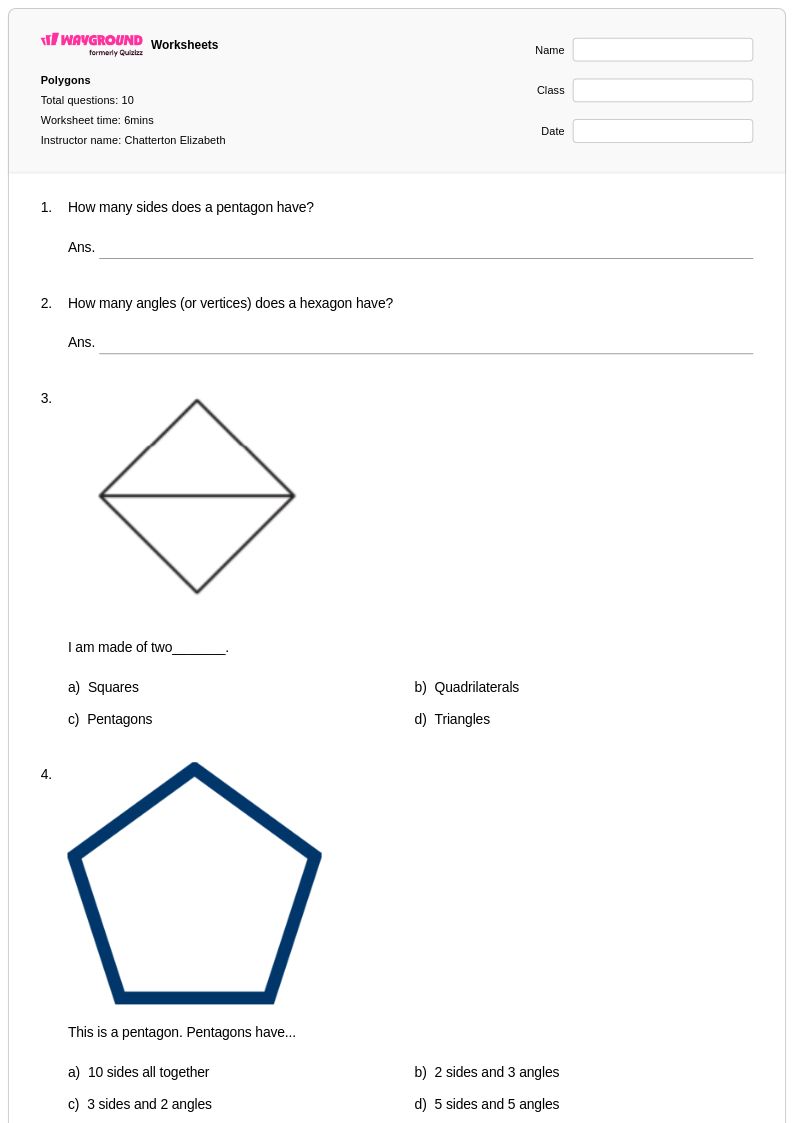
10 Q
2nd
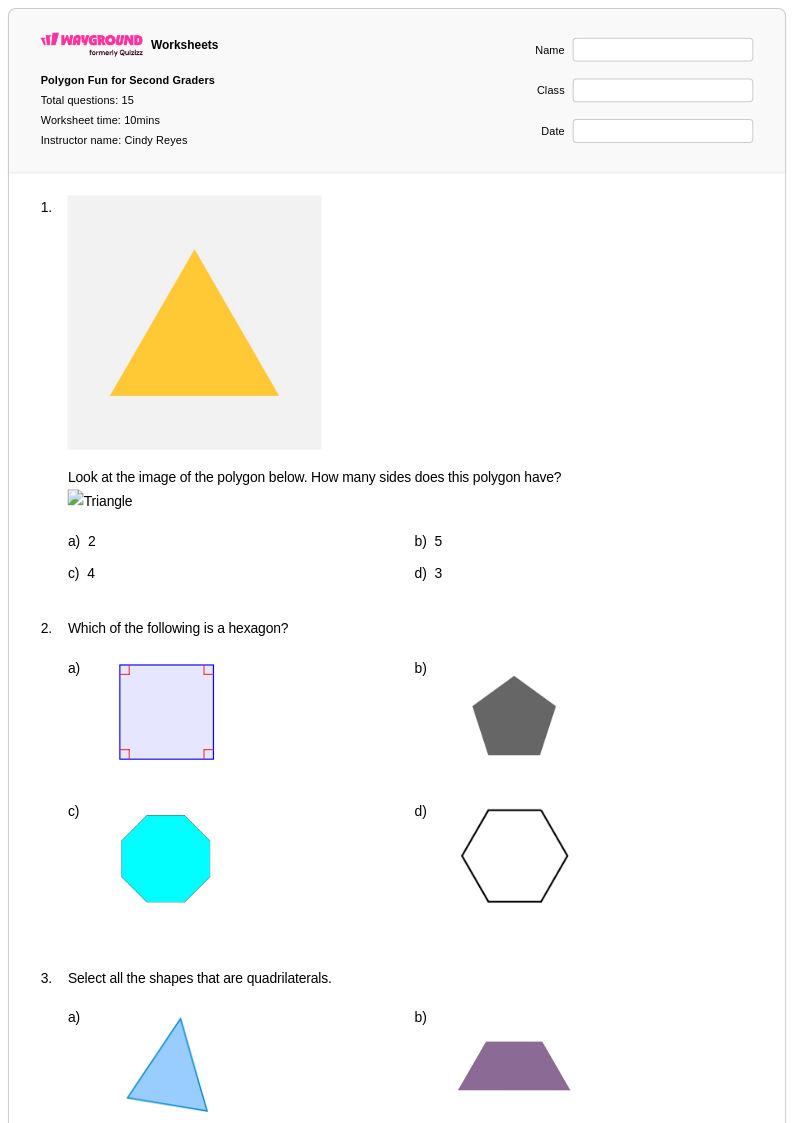
15 Q
2nd
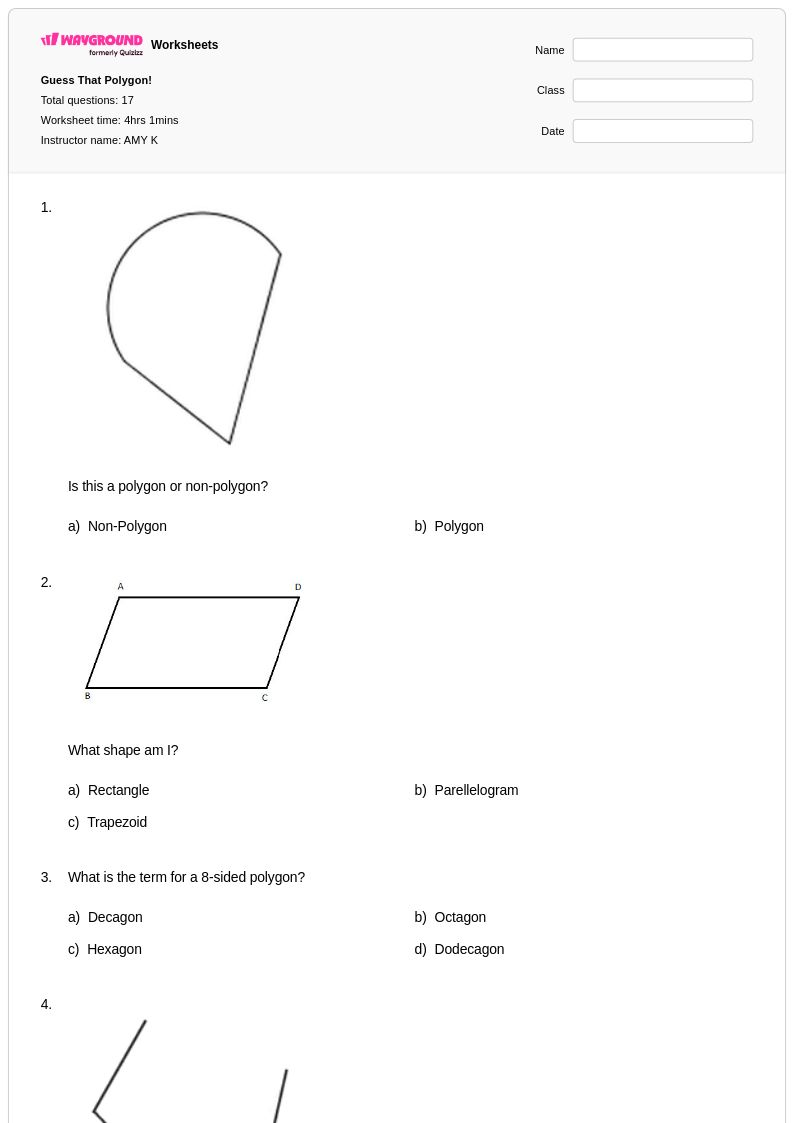
17 Q
2nd - 3rd
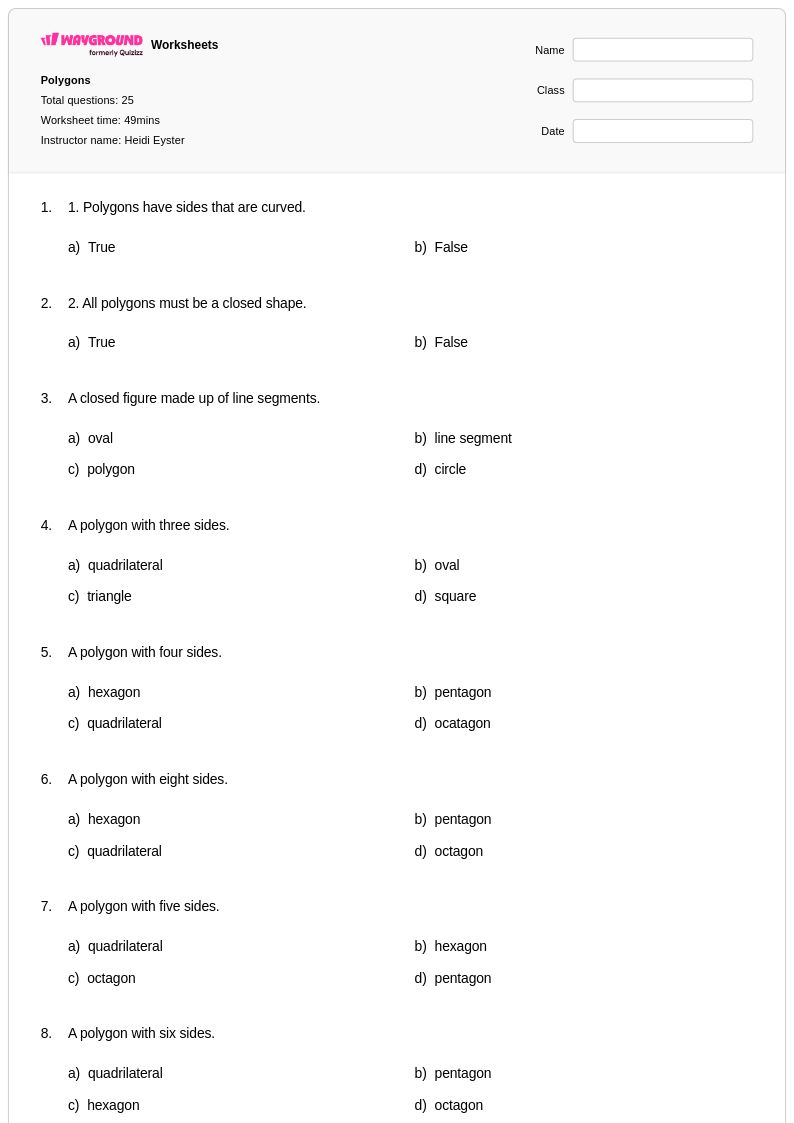
25 Q
2nd
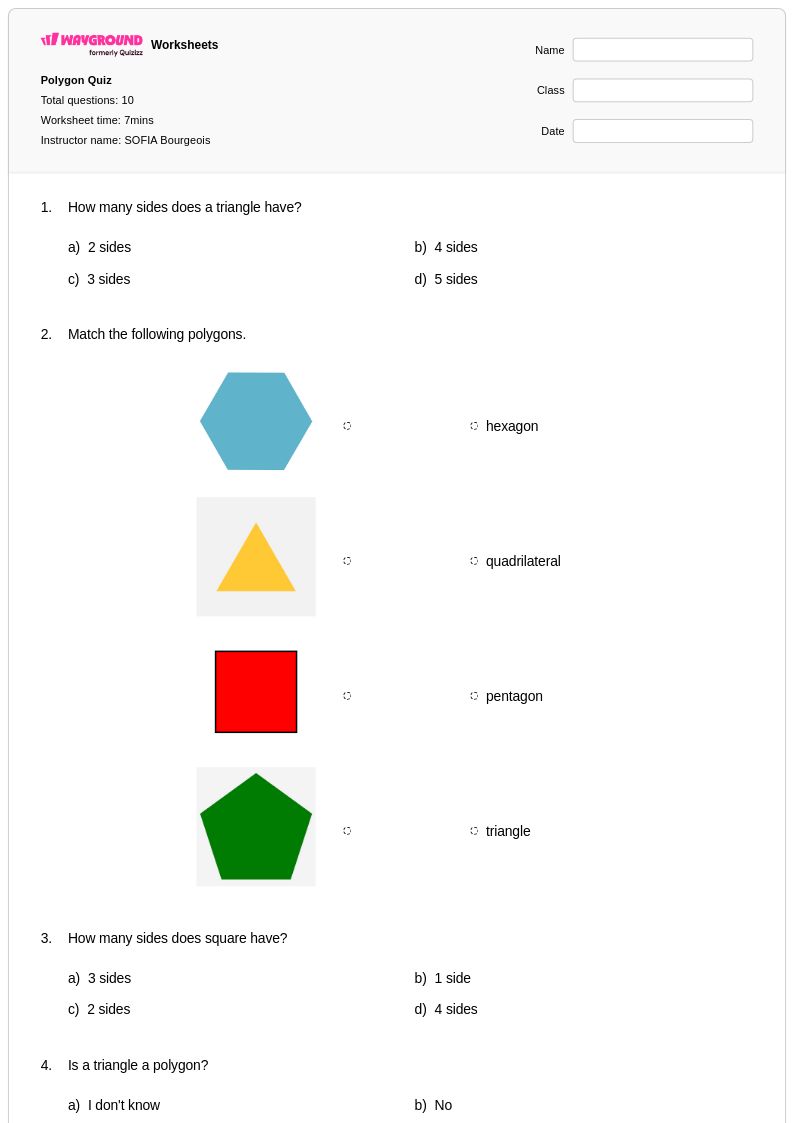
10 Q
2nd
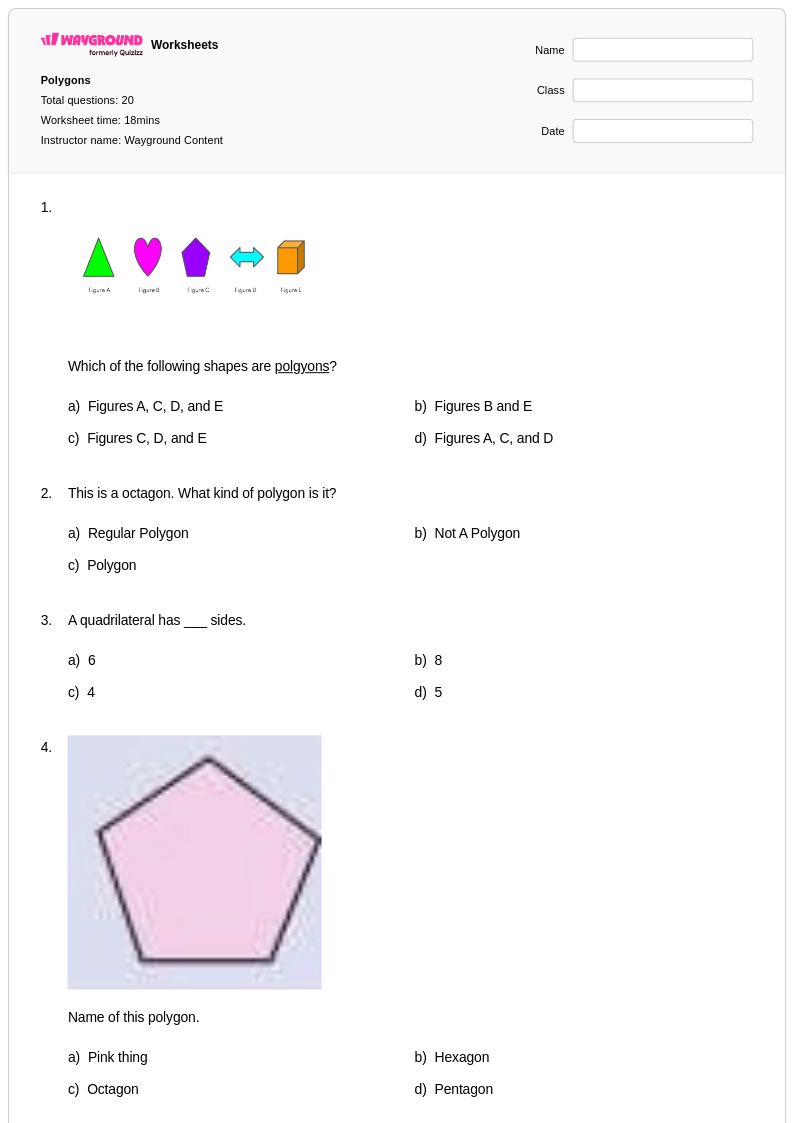
20 Q
2nd
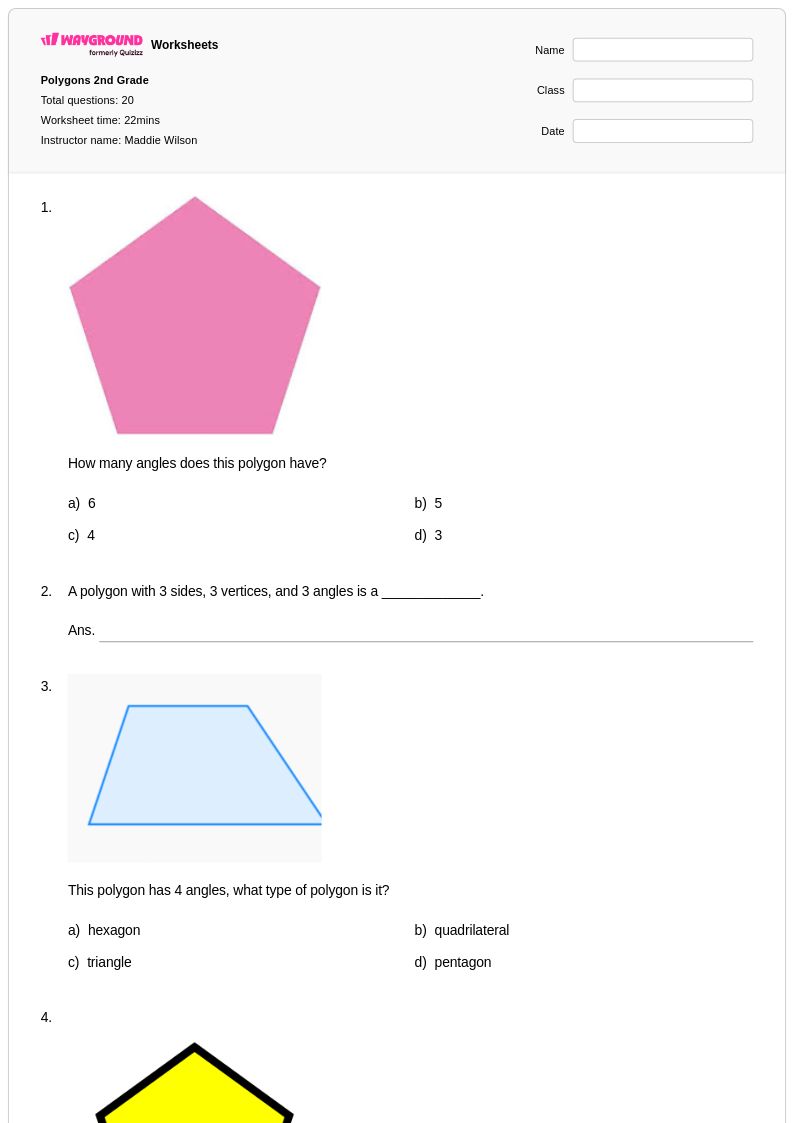
20 Q
2nd
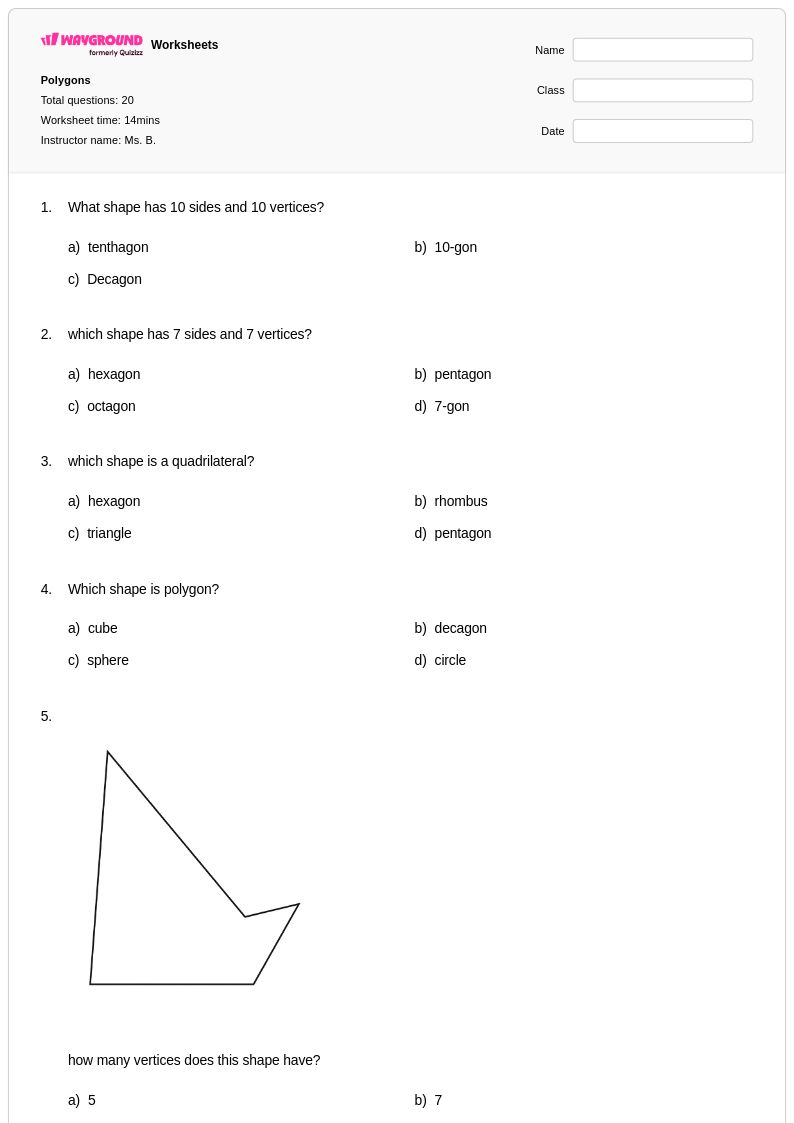
20 Q
2nd
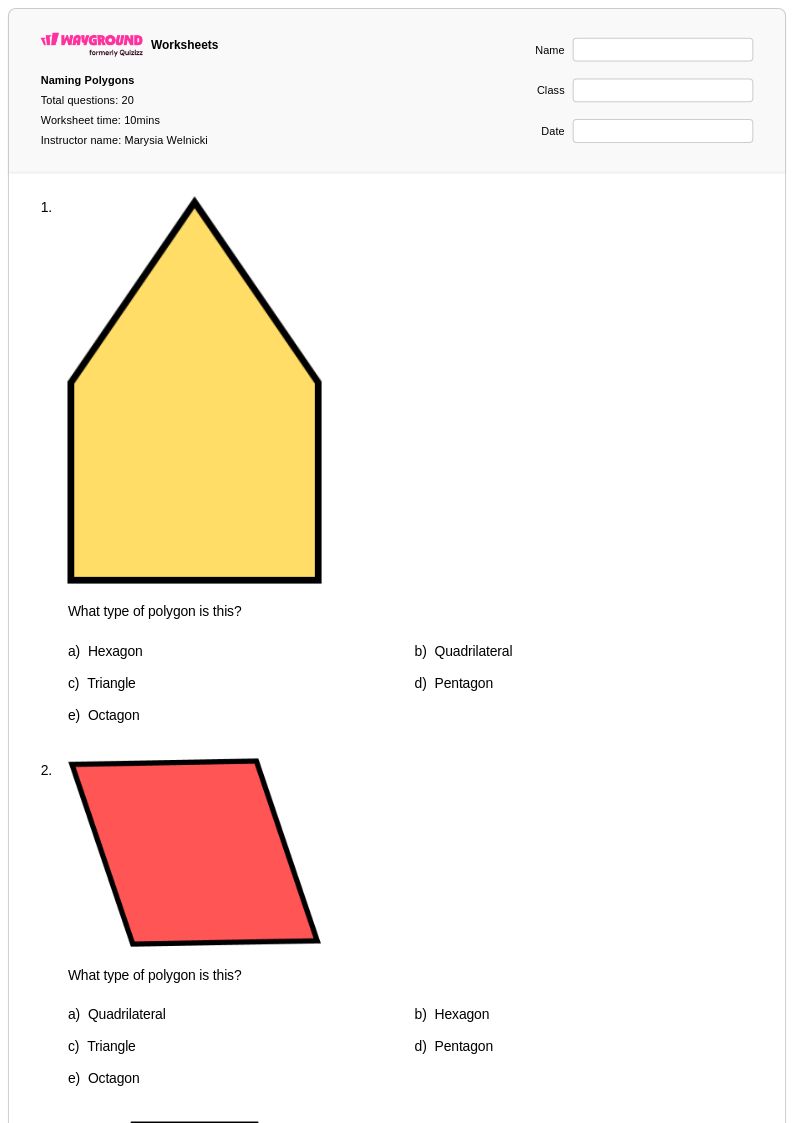
20 Q
2nd - 4th
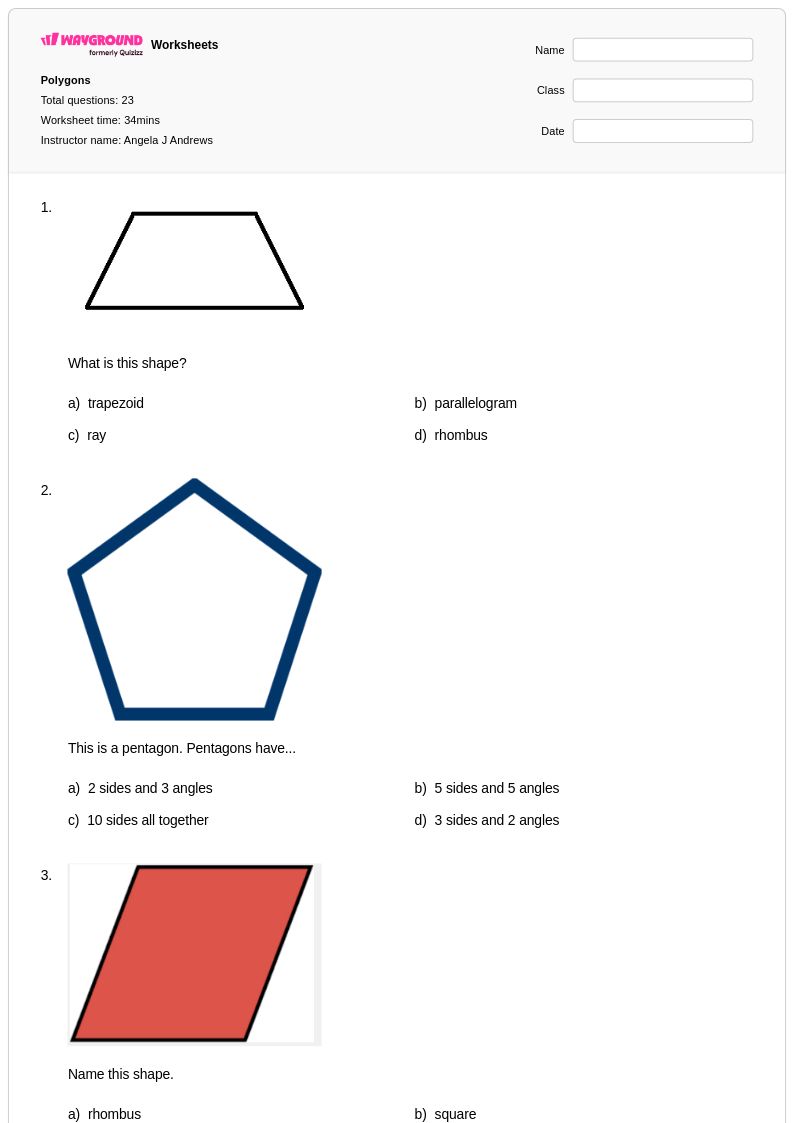
23 Q
1st - 3rd
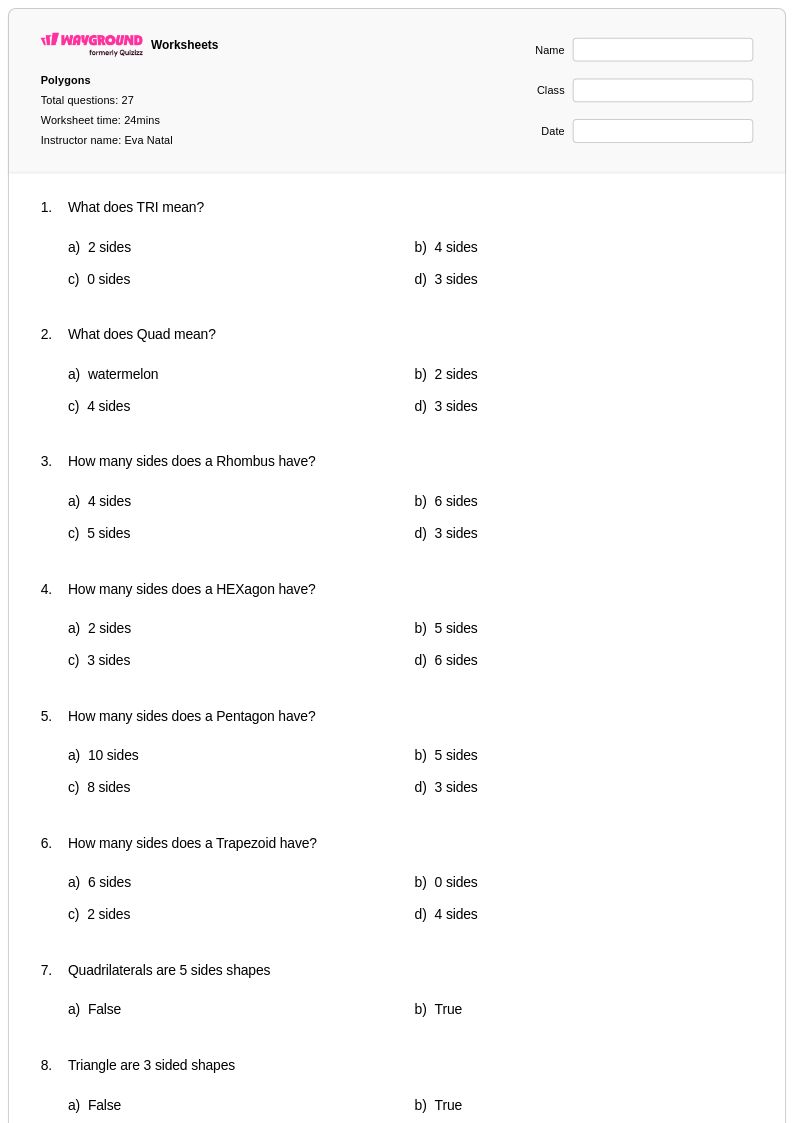
27 Q
2nd
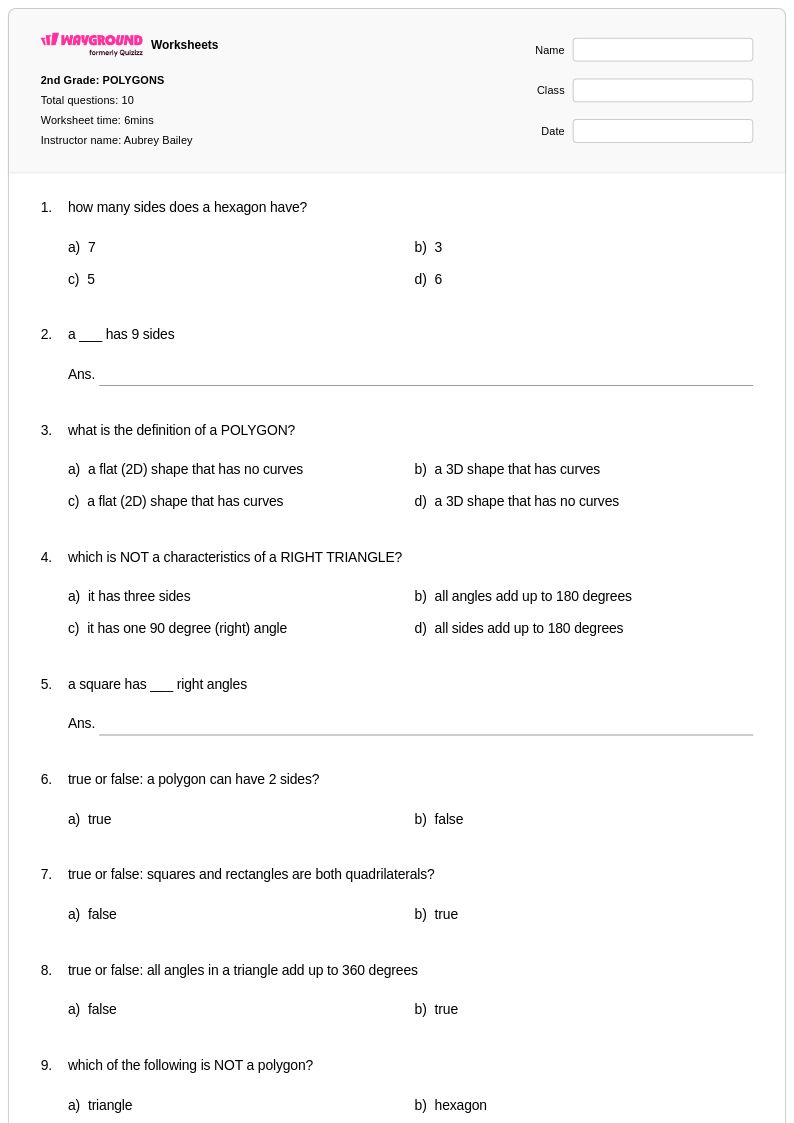
10 Q
2nd
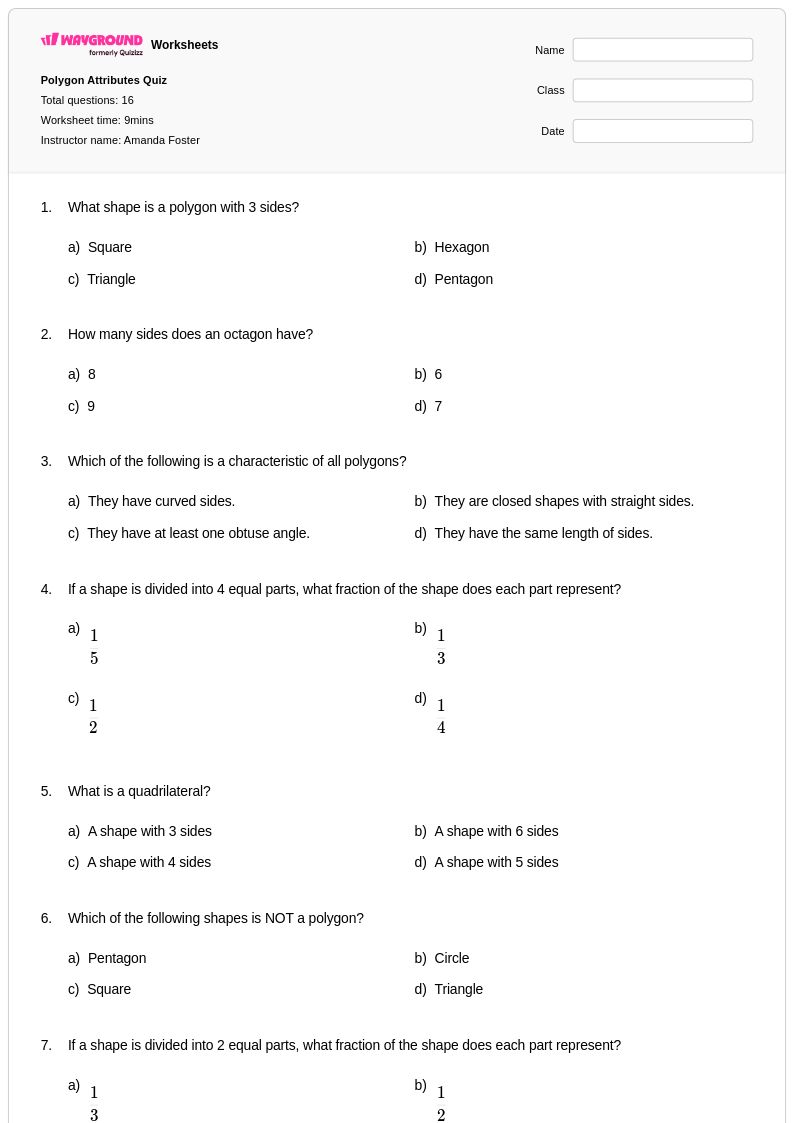
16 Q
2nd
Explore Other Subject Worksheets for class 2
Explore printable Polygon Identification worksheets for Class 2
Polygon identification worksheets for Class 2 students available through Wayground (formerly Quizizz) provide essential foundation-building resources that introduce young learners to the fundamental concepts of geometric shapes. These carefully designed practice problems help second-grade students develop critical visual discrimination skills as they learn to recognize, name, and categorize basic polygons including triangles, squares, rectangles, pentagons, and hexagons. The comprehensive worksheet collections strengthen spatial reasoning abilities while building mathematical vocabulary through engaging activities that require students to identify polygon characteristics such as the number of sides and vertices. Each printable resource includes detailed answer keys that support both independent learning and guided instruction, with free pdf formats ensuring accessibility for diverse classroom environments and home learning situations.
Wayground's extensive platform empowers teachers with millions of educator-created polygon identification resources specifically curated for Class 2 mathematics instruction. The robust search and filtering capabilities allow instructors to quickly locate worksheets that align with specific curriculum standards while offering multiple difficulty levels to support differentiation across varied learning needs. Teachers can seamlessly customize existing materials or create original content using the platform's flexible tools, ensuring that polygon identification practice perfectly matches their instructional objectives and student requirements. These versatile resources are available in both printable and digital formats, including downloadable pdf options, making them ideal for classroom activities, homework assignments, remediation sessions, and enrichment opportunities that reinforce geometric concept mastery through targeted skill practice.
FAQs
How do I introduce polygons beyond triangles and squares in second grade?
What are effective practice activities for second-grade polygon identification?
What is a common error for second graders learning about polygons?
How can I use these Grade 2 polygon worksheets in my class?
What is the main goal for teaching polygons in second grade?