
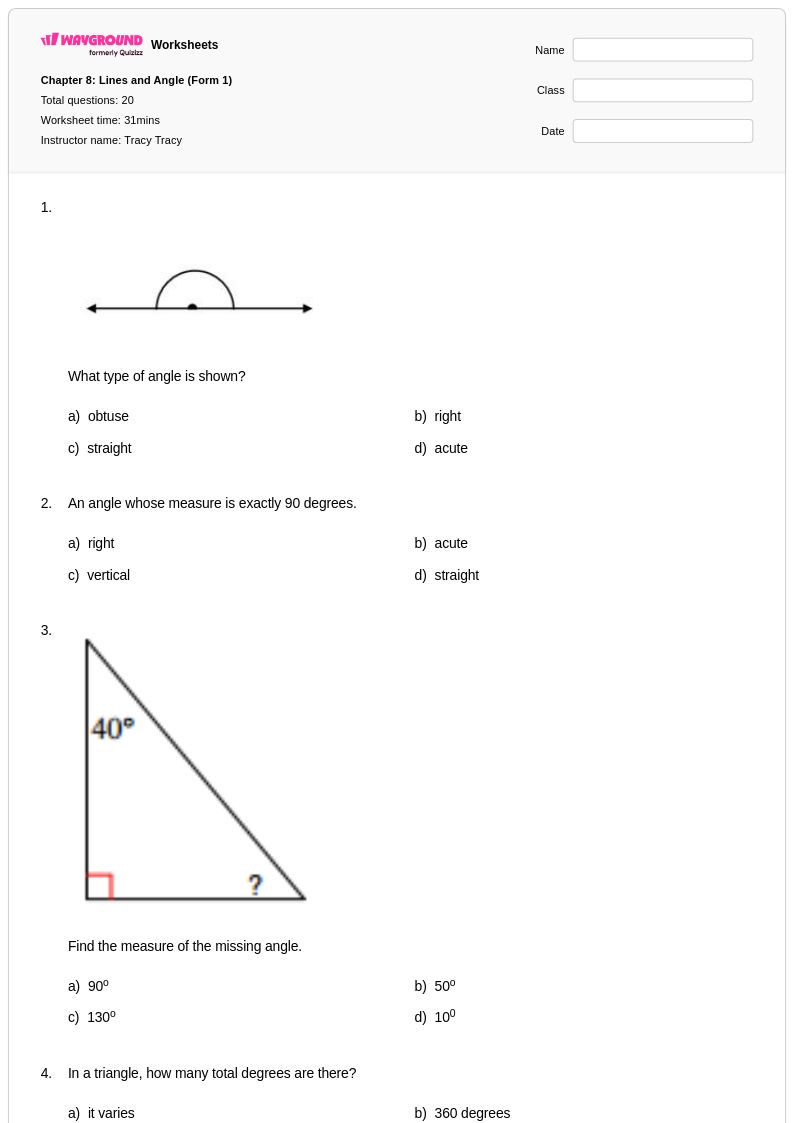
20 Q
1st - 5th
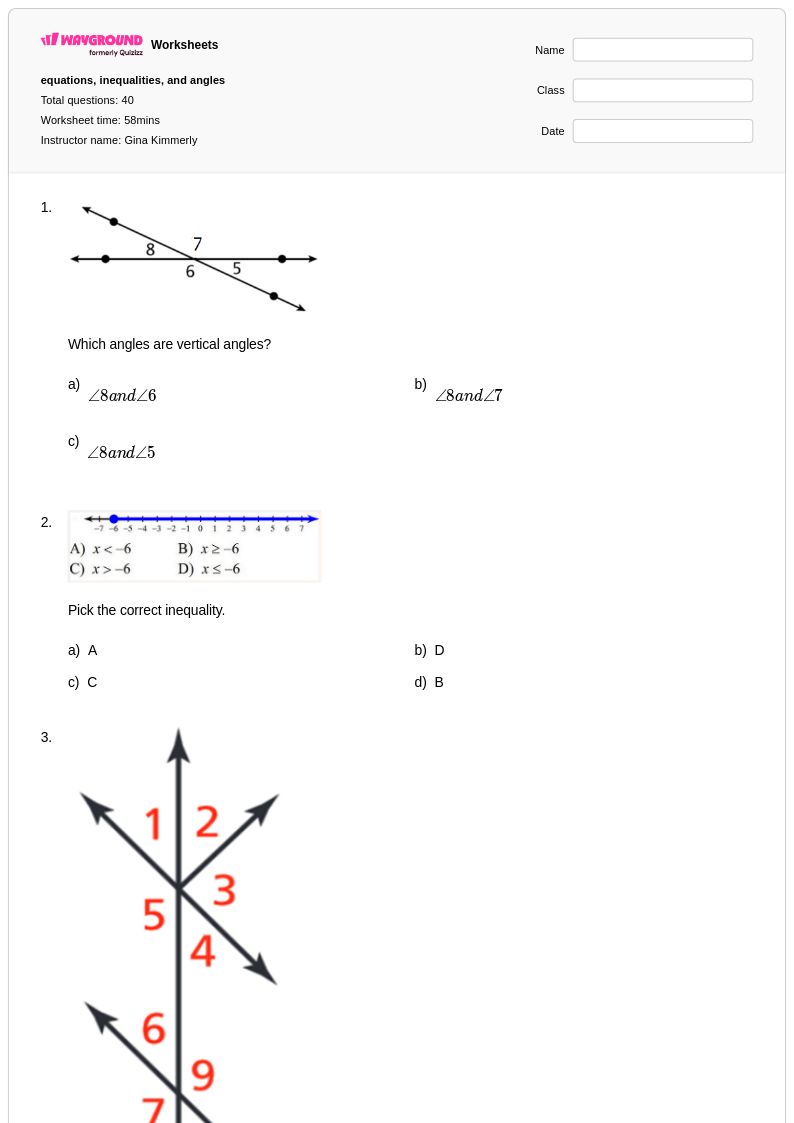
40 Q
1st - 5th
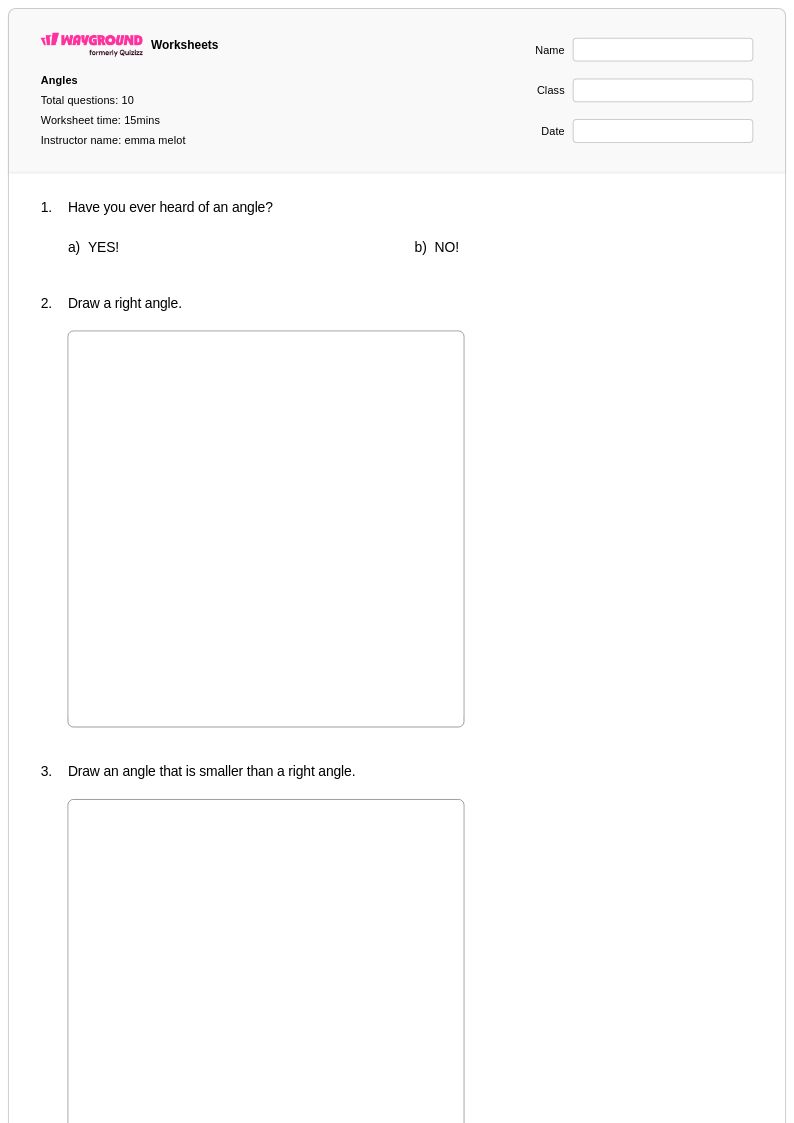
10 Q
2nd
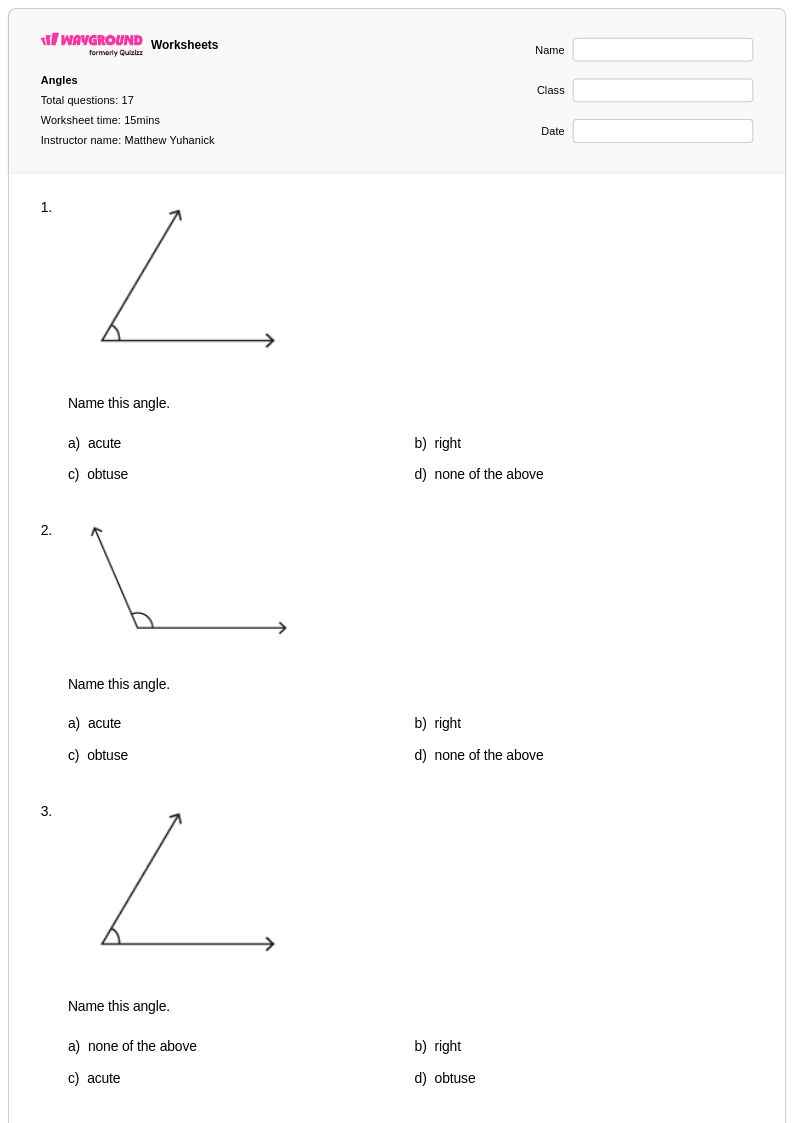
17 Q
2nd - 11th
10 Q
1st - 5th
20 Q
1st - 7th
17 Q
2nd
15 Q
1st - 12th
10 Q
2nd
10 Q
1st - 4th
5 Q
2nd
15 Q
2nd
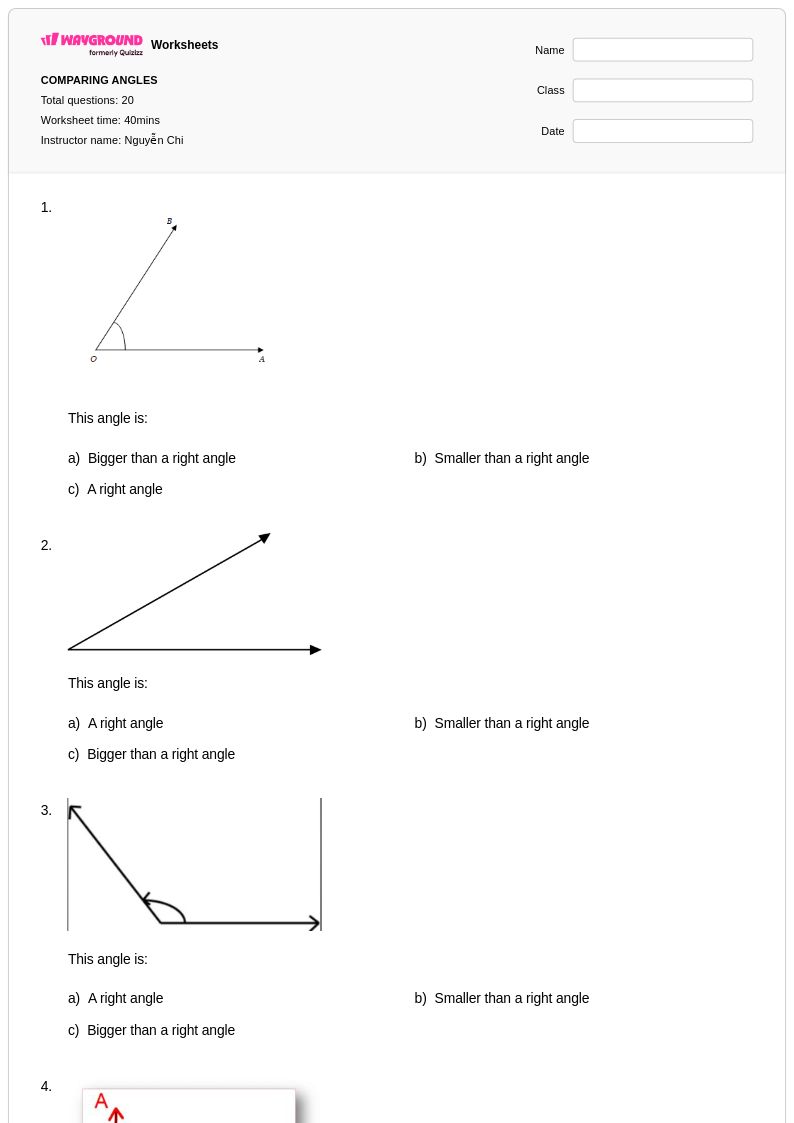
20 Q
1st - 3rd
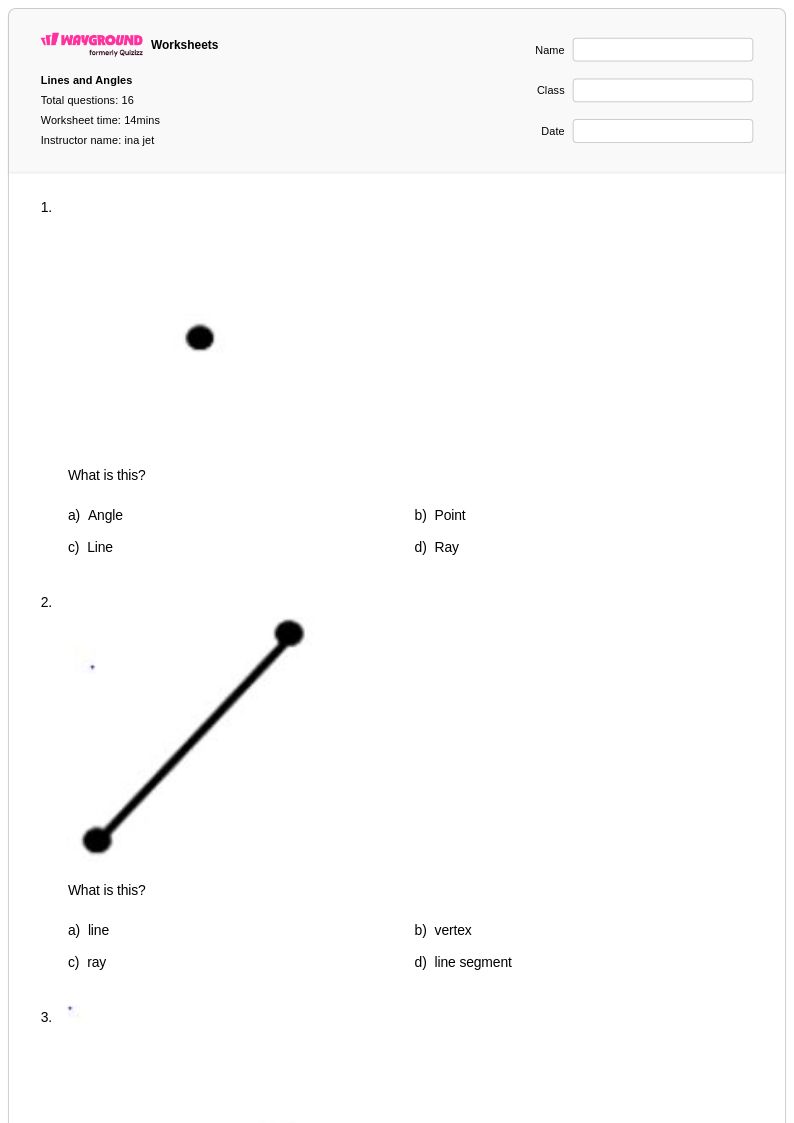
16 Q
1st - 5th
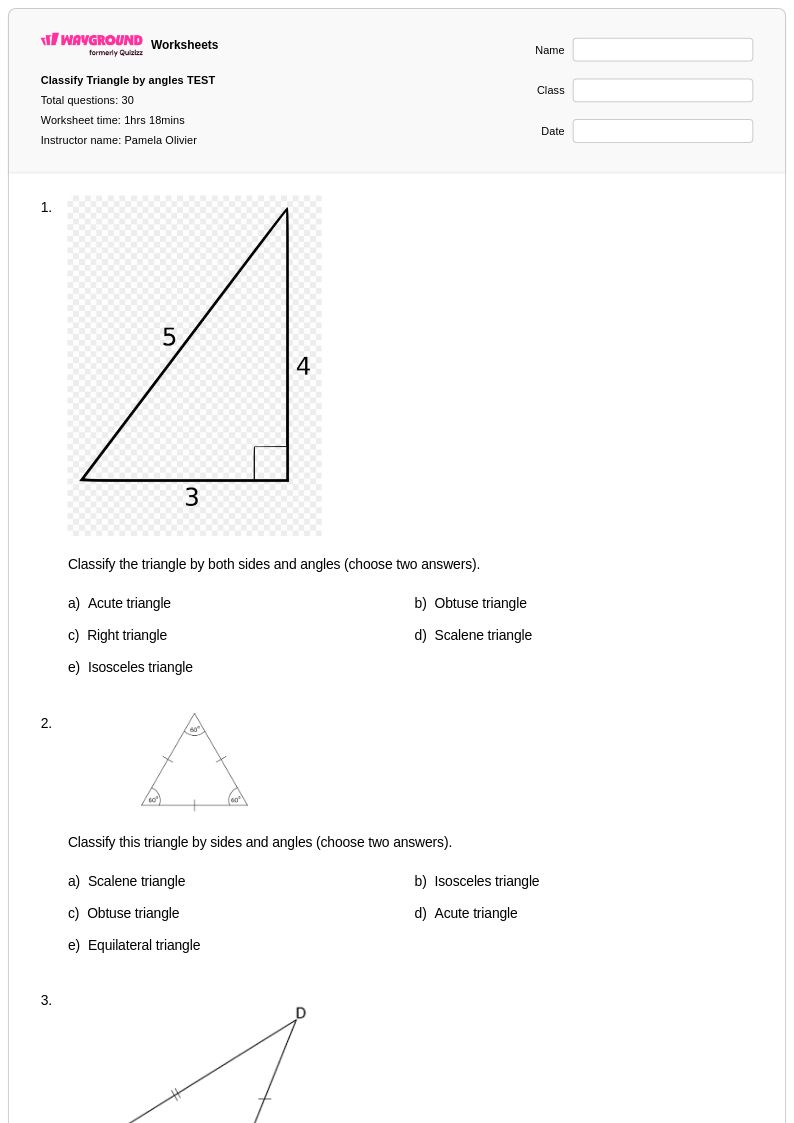
30 Q
2nd
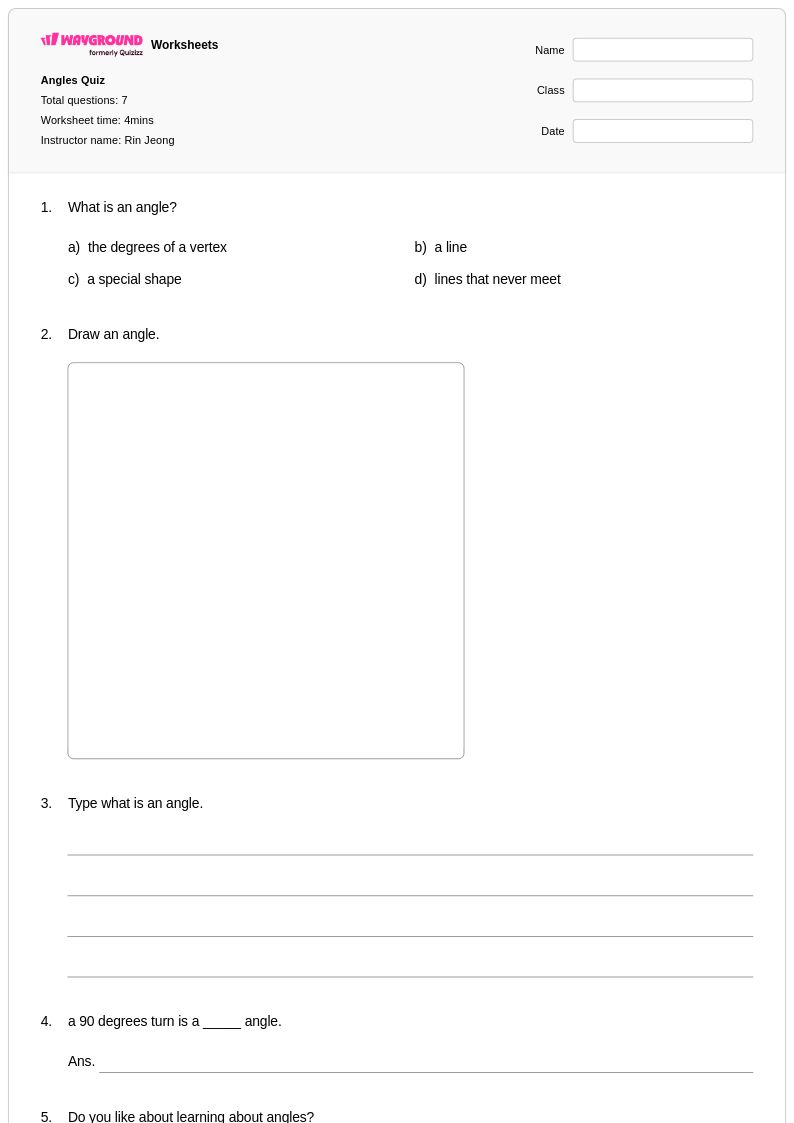
7 Q
1st - 3rd

15 Q
2nd
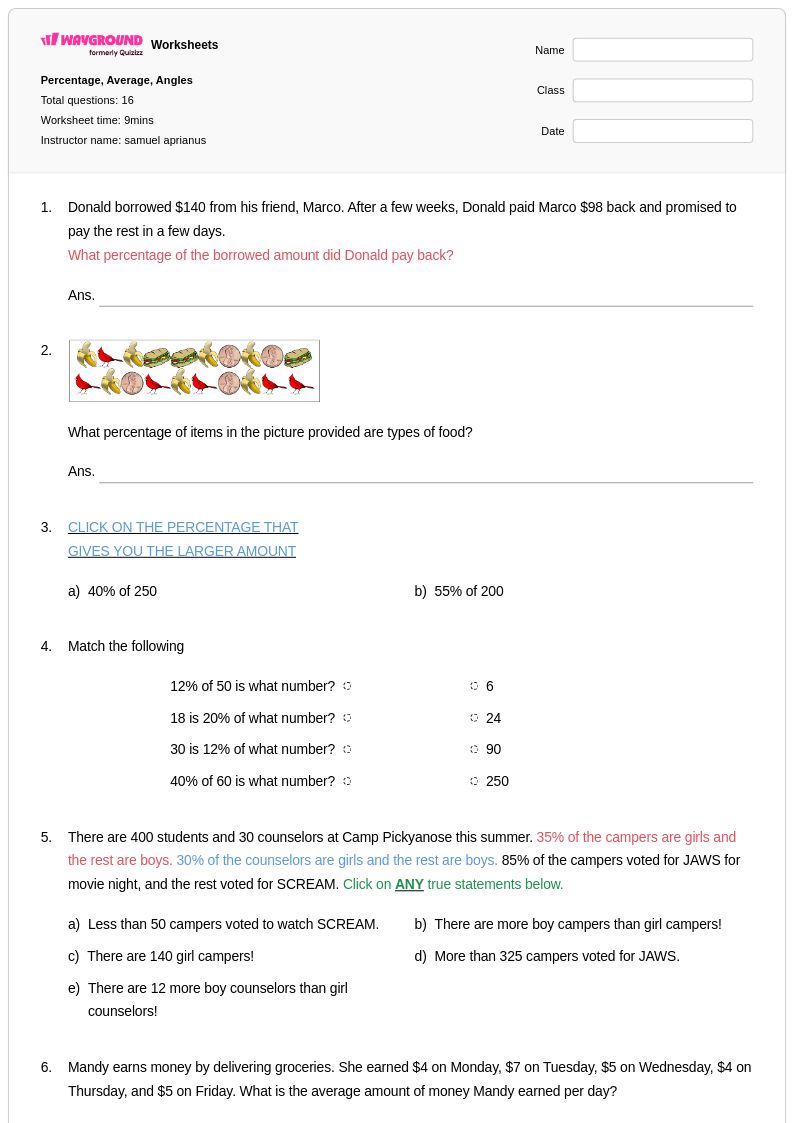
16 Q
1st - 5th
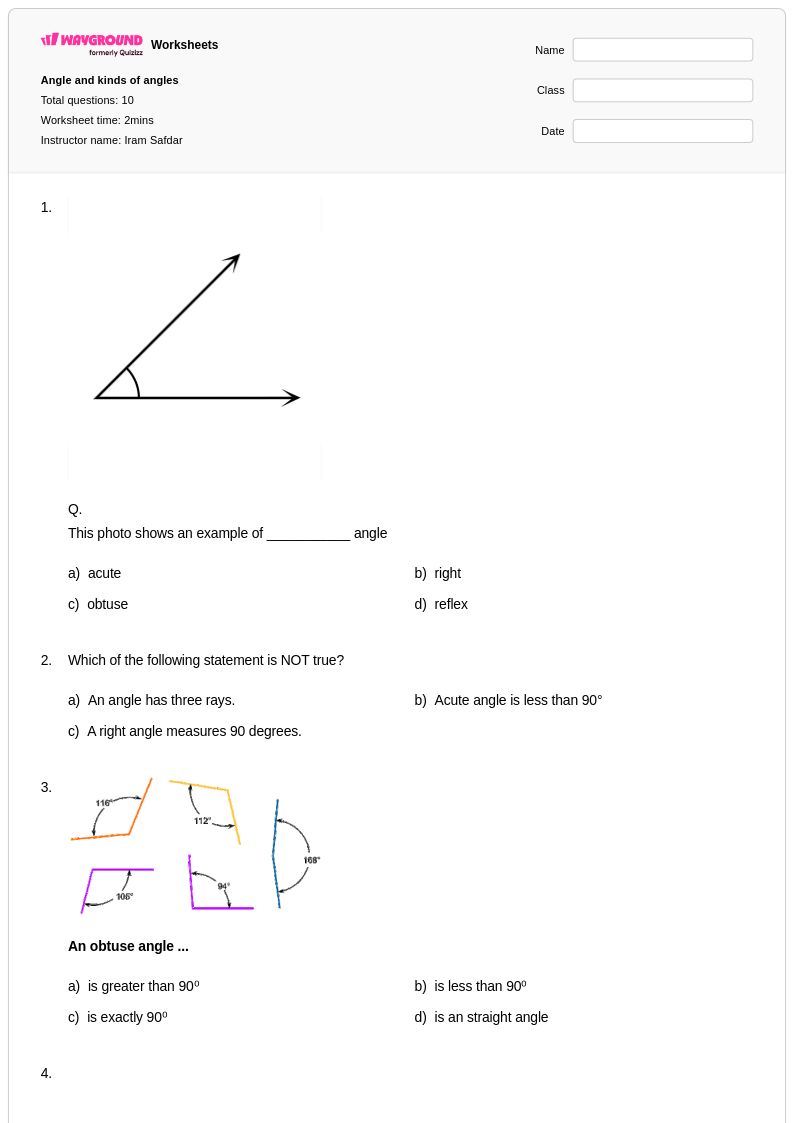
10 Q
1st - 10th
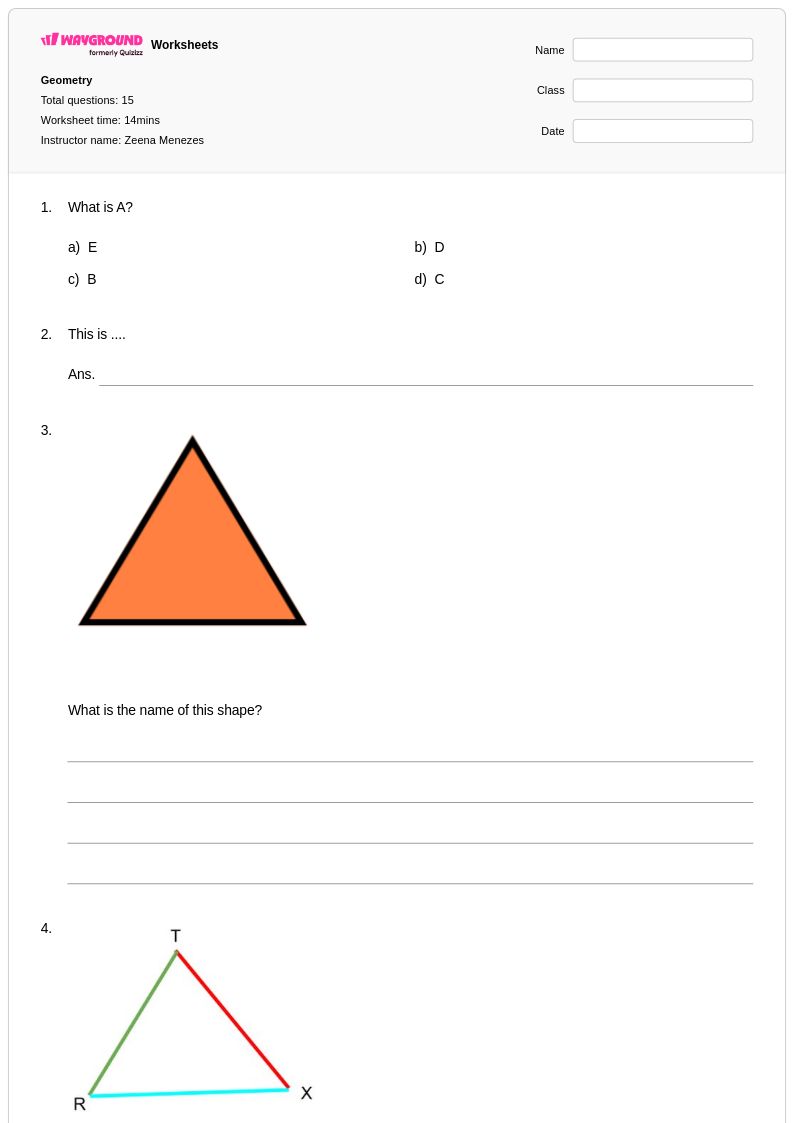
15 Q
2nd
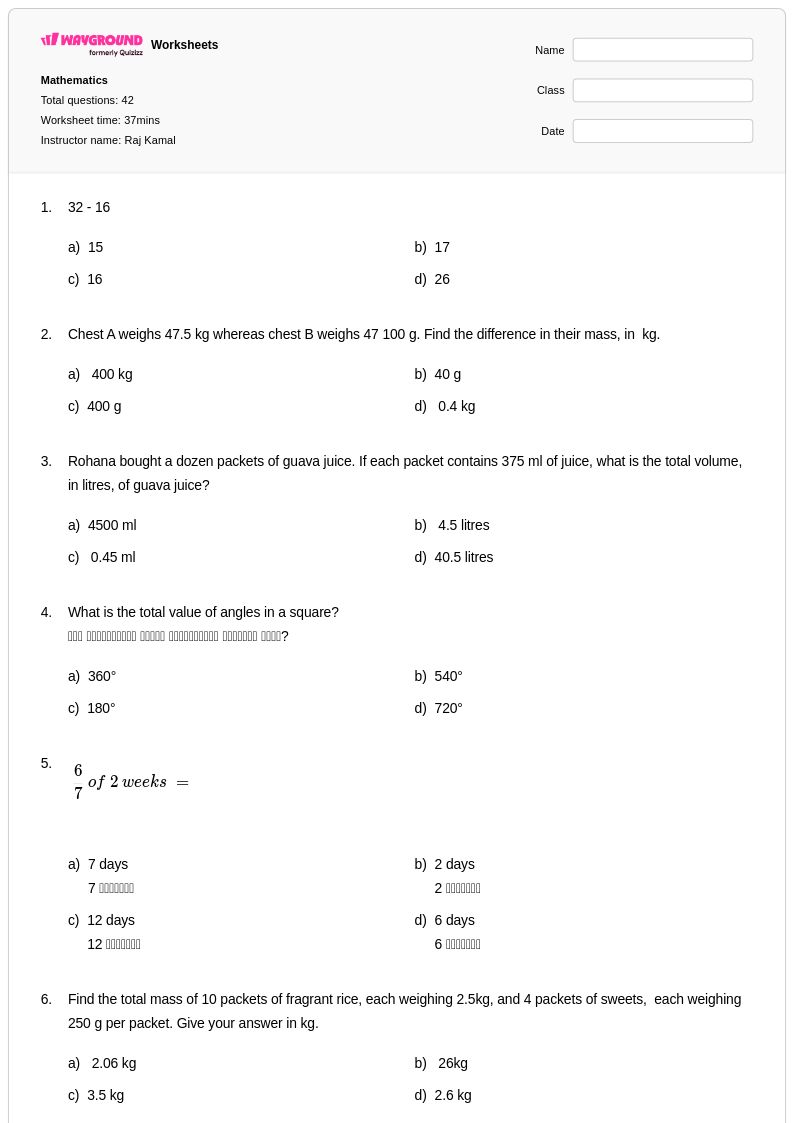
42 Q
1st - 9th
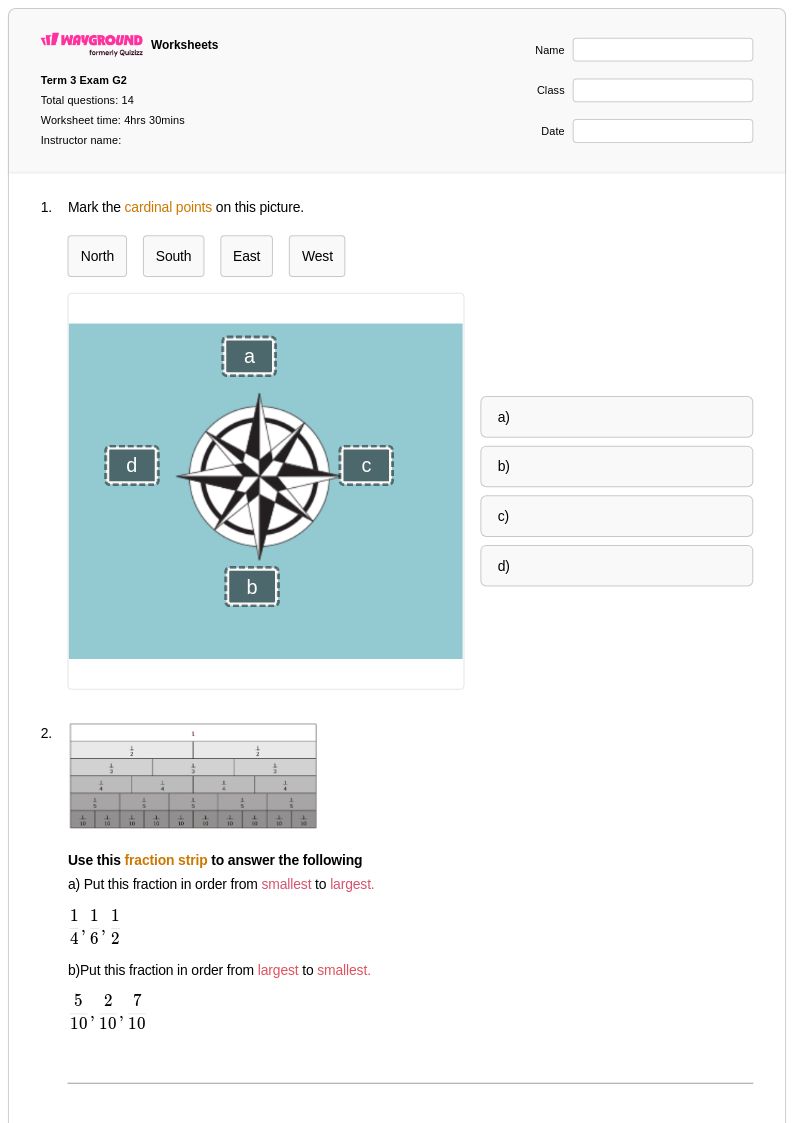
14 Q
2nd
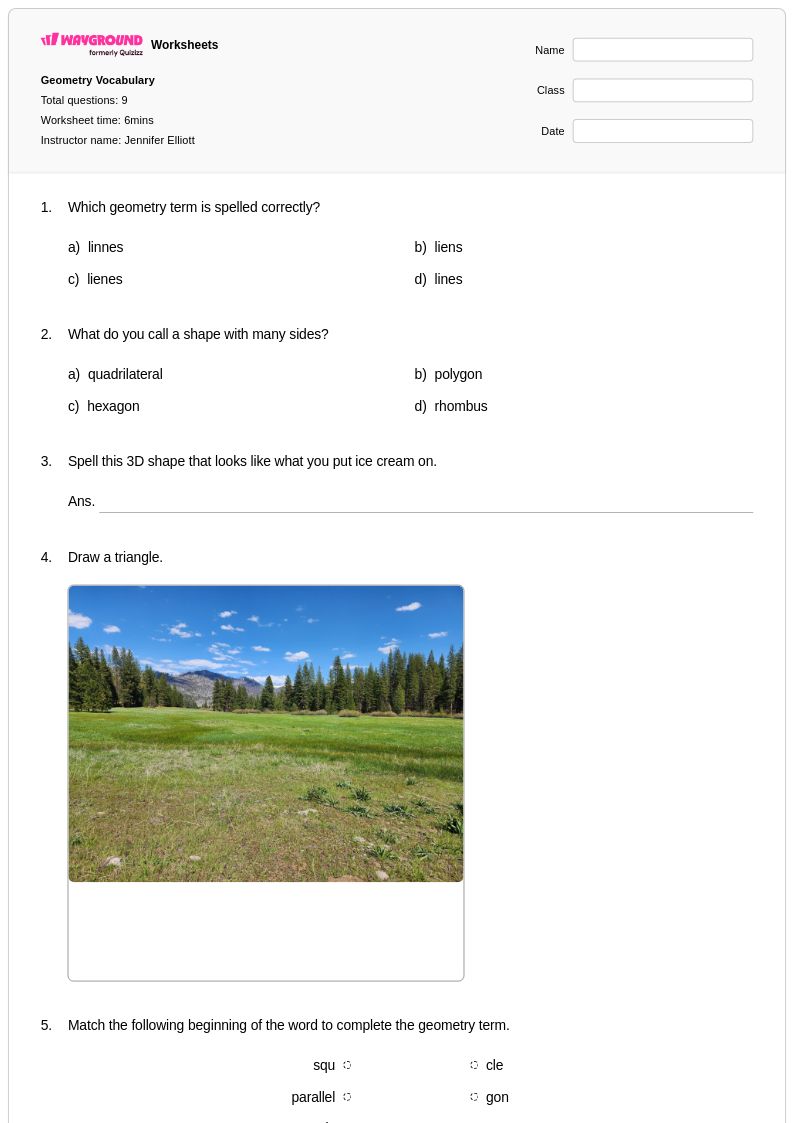
9 Q
2nd
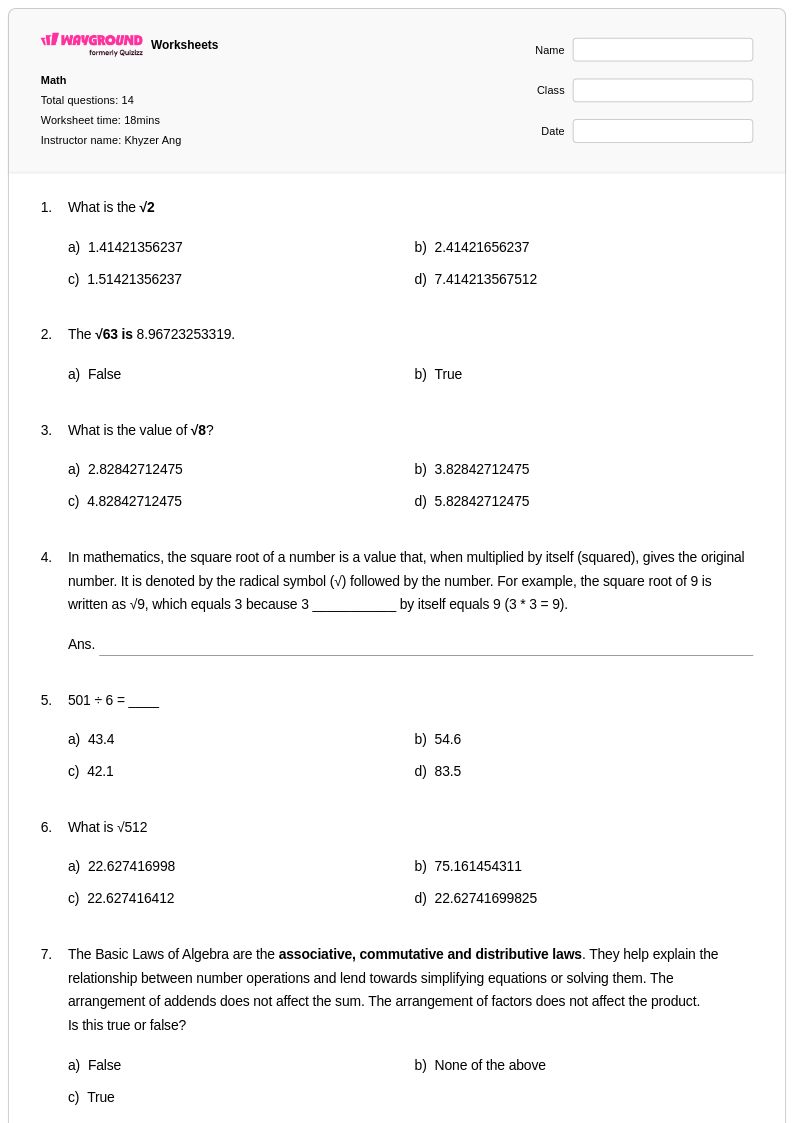
19 Q
1st - 5th
Explore Other Subject Worksheets for class 2
Explore printable Angle Calculations worksheets for Class 2
Class 2 angle calculations worksheets available through Wayground (formerly Quizizz) provide young learners with essential foundational experiences in recognizing, comparing, and understanding basic angle concepts. These carefully designed practice problems introduce second-grade students to fundamental geometric relationships through age-appropriate activities that build spatial reasoning skills and mathematical vocabulary. The worksheet collections feature engaging visual exercises where students identify right angles in everyday objects, compare angle sizes using terms like "larger than" and "smaller than," and explore how angles appear in shapes and real-world contexts. Each printable resource includes comprehensive answer keys to support independent learning and self-assessment, while the free pdf format ensures easy classroom distribution and home practice opportunities.
Wayground's extensive library of teacher-created angle calculation worksheets offers educators access to millions of differentiated resources specifically designed for Class 2 geometry instruction. The platform's advanced search and filtering capabilities allow teachers to quickly locate materials that align with state standards and match their students' diverse learning needs, whether for initial skill introduction, targeted remediation, or enrichment activities. These customizable worksheet collections are available in both printable and digital formats, enabling seamless integration into lesson planning and flexible delivery methods that accommodate various classroom environments. Teachers can efficiently modify difficulty levels, select specific angle concepts, and organize practice sessions that systematically build students' geometric understanding while providing multiple opportunities for skill reinforcement and mastery assessment.
FAQs
How do I teach angles to second-grade students?
What exercises are useful for Grade 2 angle practice?
What mistakes do second graders make when comparing angles?
How can I use a Grade 2 angle calculations worksheet for instruction or assessment?
How does Grade 2 angle work connect to Common Core math?
How can I differentiate angle worksheets for second graders?
What angle skills should second graders know?