
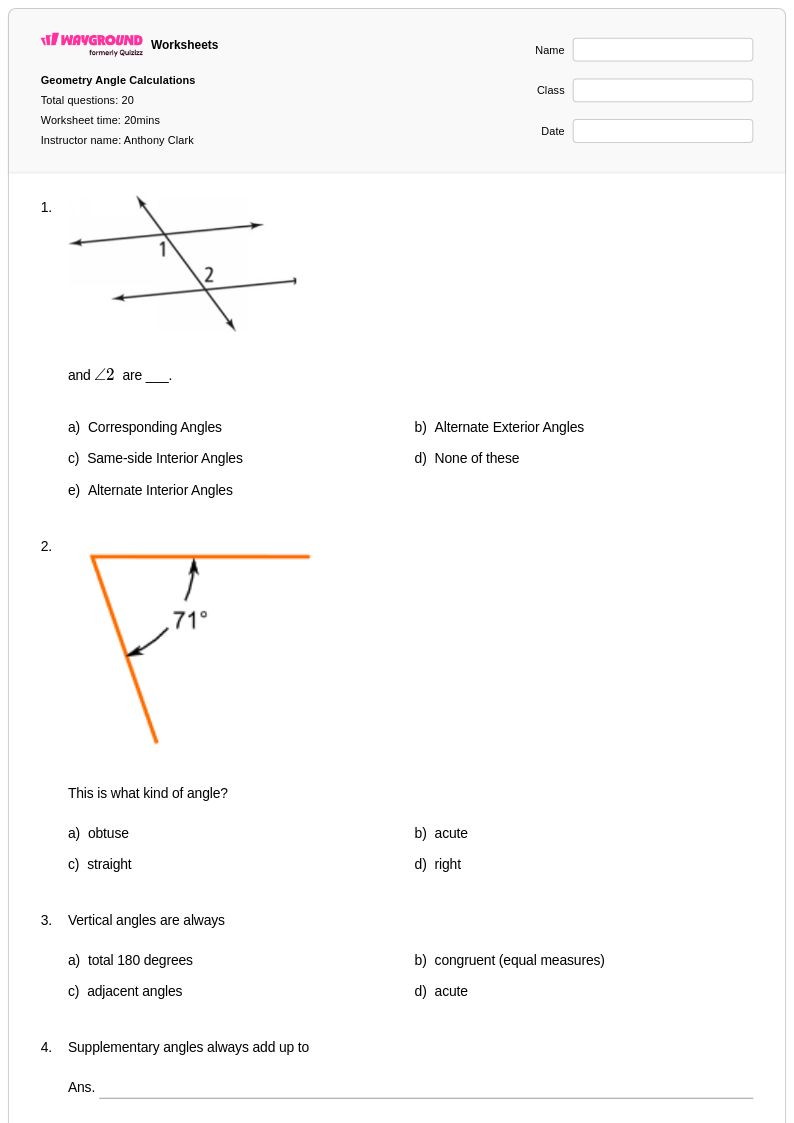
20 Q
9th - Uni
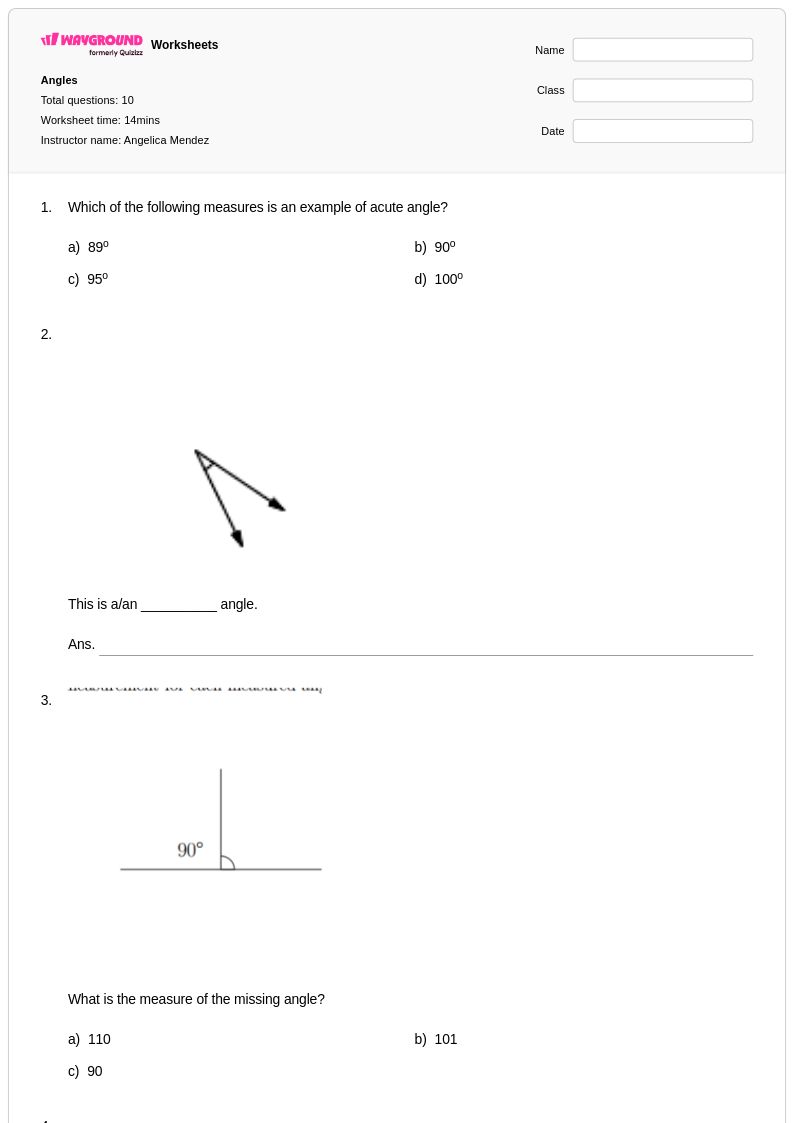
10 Q
4th
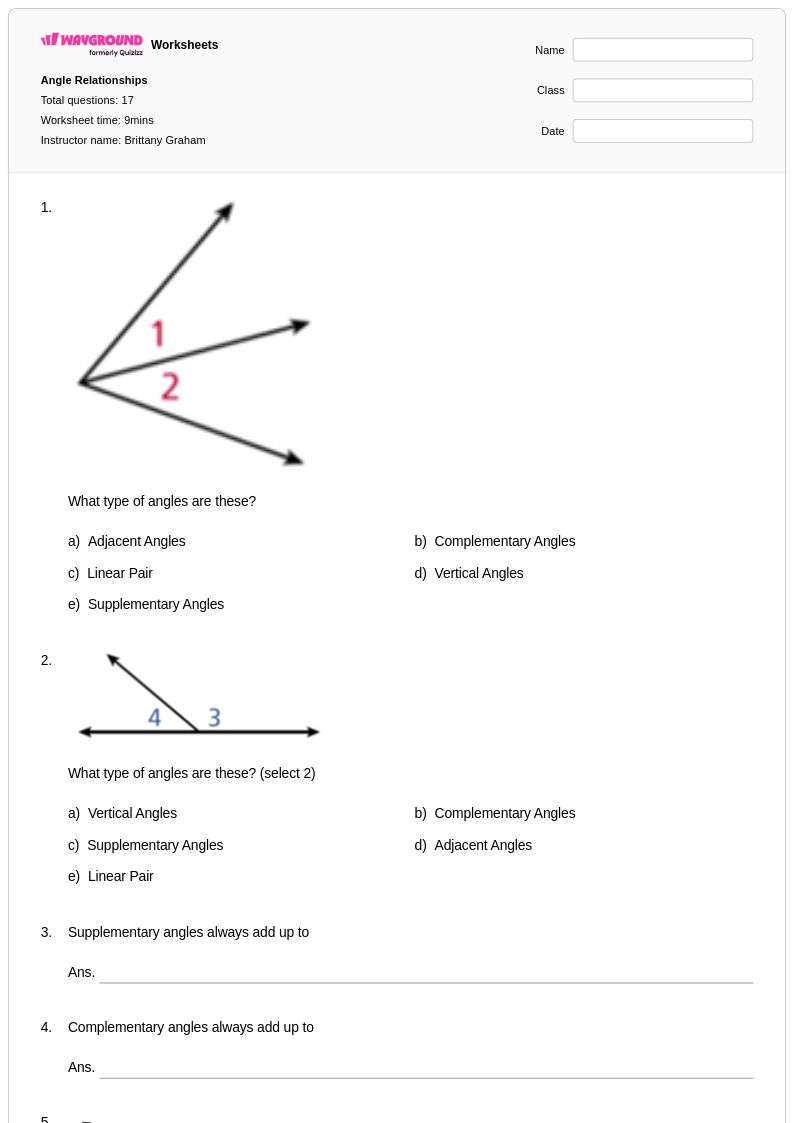
17 Q
9th - 10th
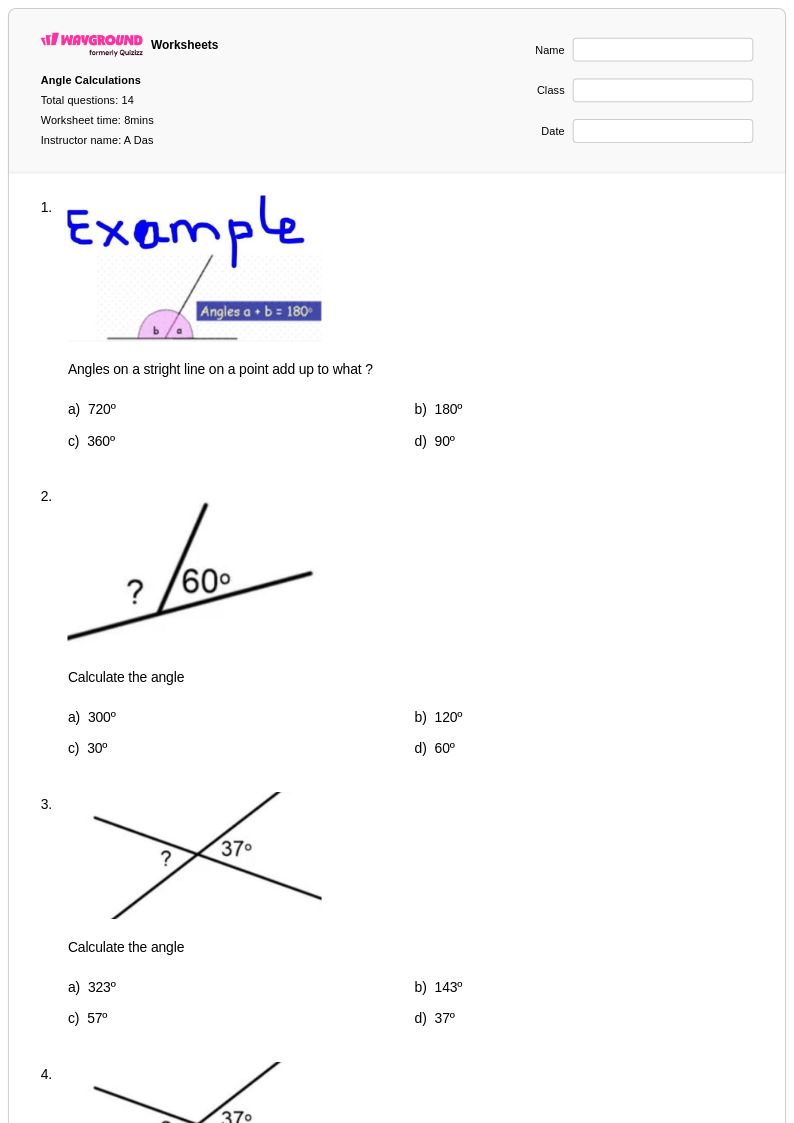
14 Q
4th - 5th
16 Q
3rd - 7th
38 Q
10th
15 Q
9th - Uni
20 Q
7th
20 Q
5th - 8th
23 Q
9th
10 Q
9th - 10th
15 Q
4th - 9th
10 Q
9th
10 Q
4th
15 Q
8th
21 Q
9th - 12th
25 Q
9th
10 Q
9th
20 Q
10th
15 Q
8th
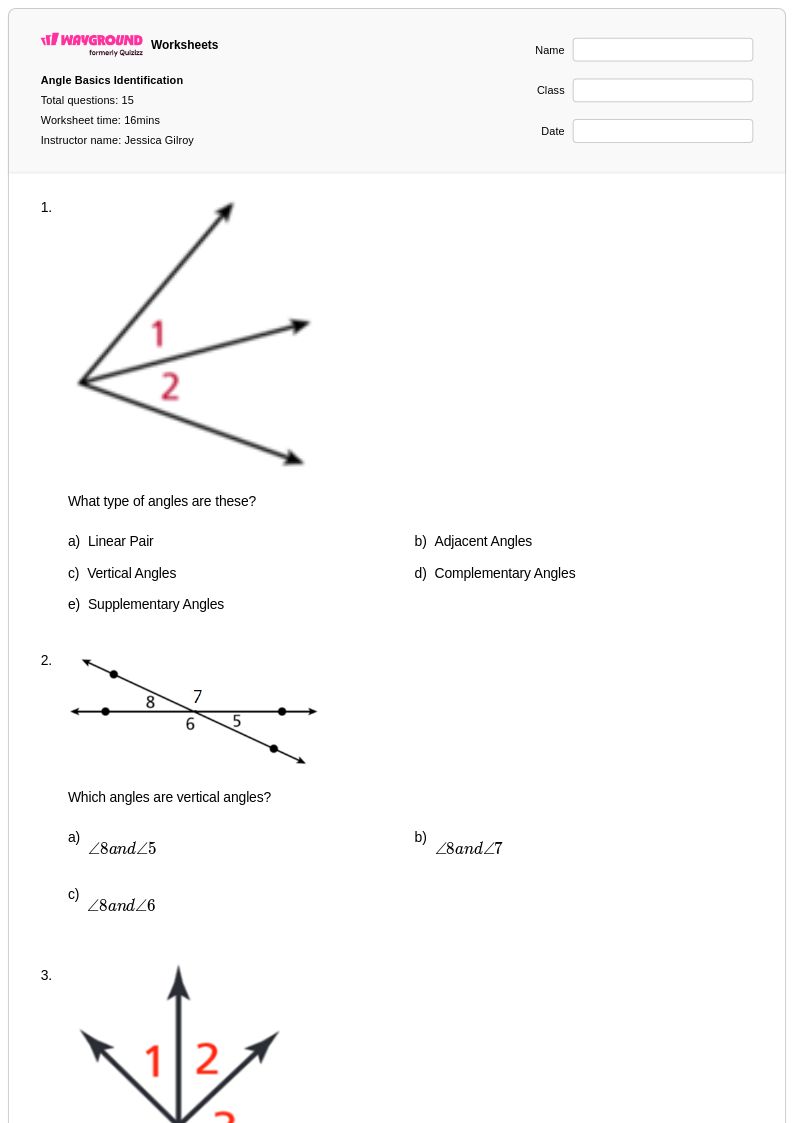
15 Q
9th
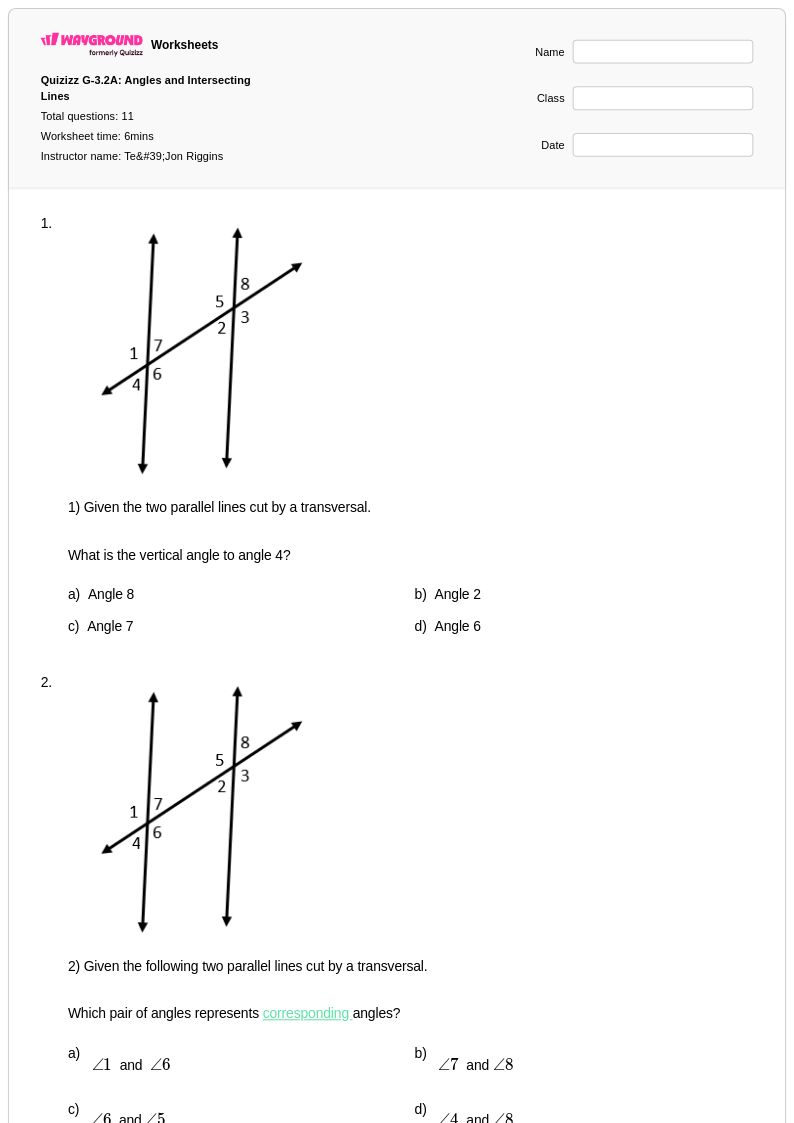
11 Q
9th
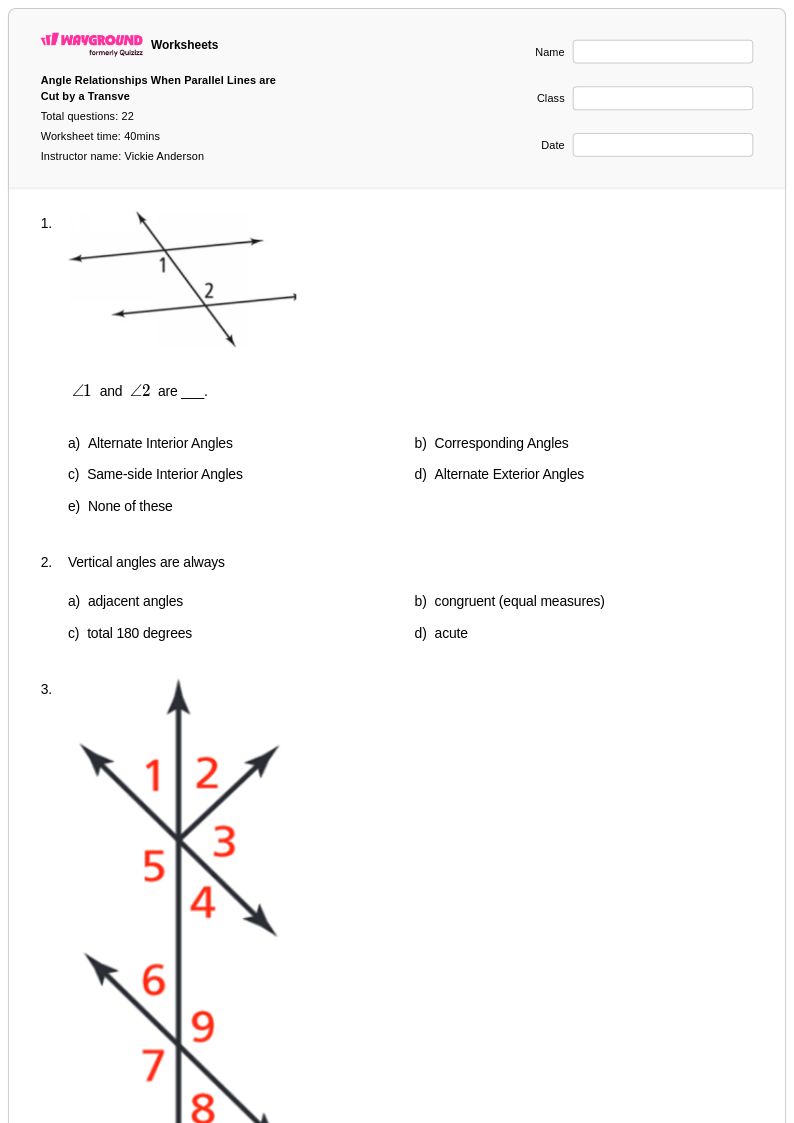
22 Q
8th
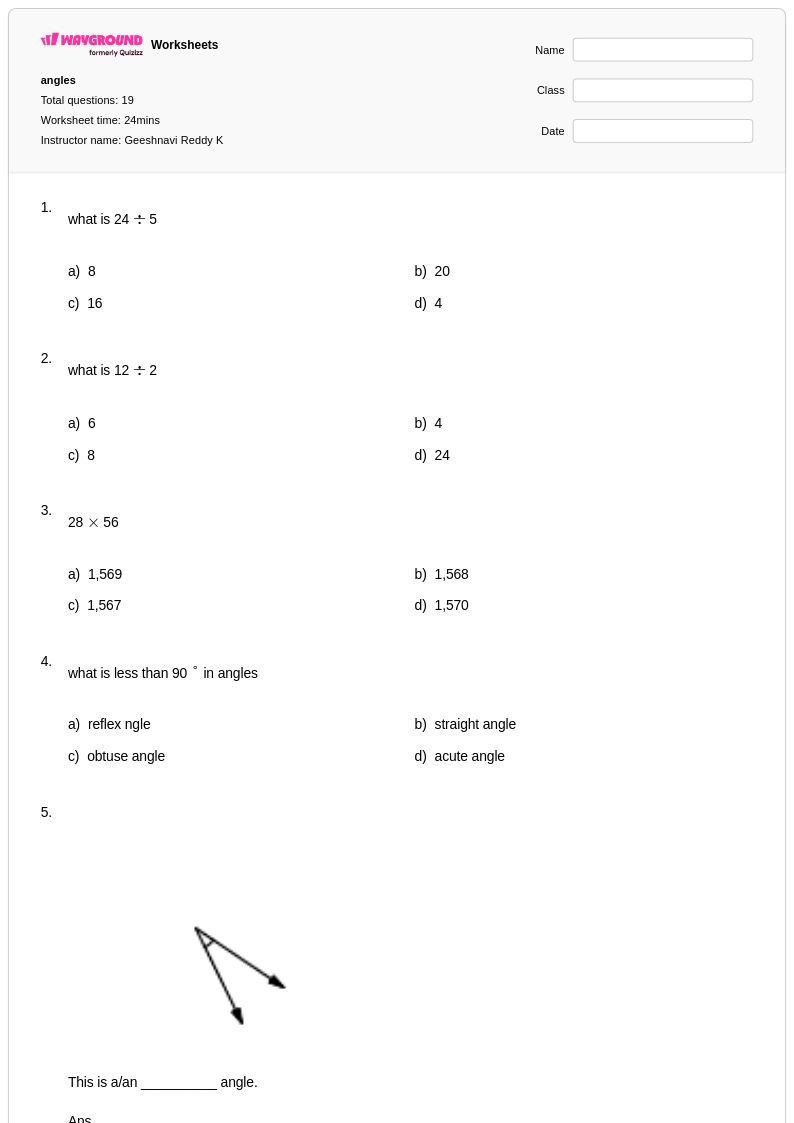
19 Q
4th
Explore Other Subject Worksheets for kindergarten
Explore printable Angle Calculations worksheets for Kindergarten
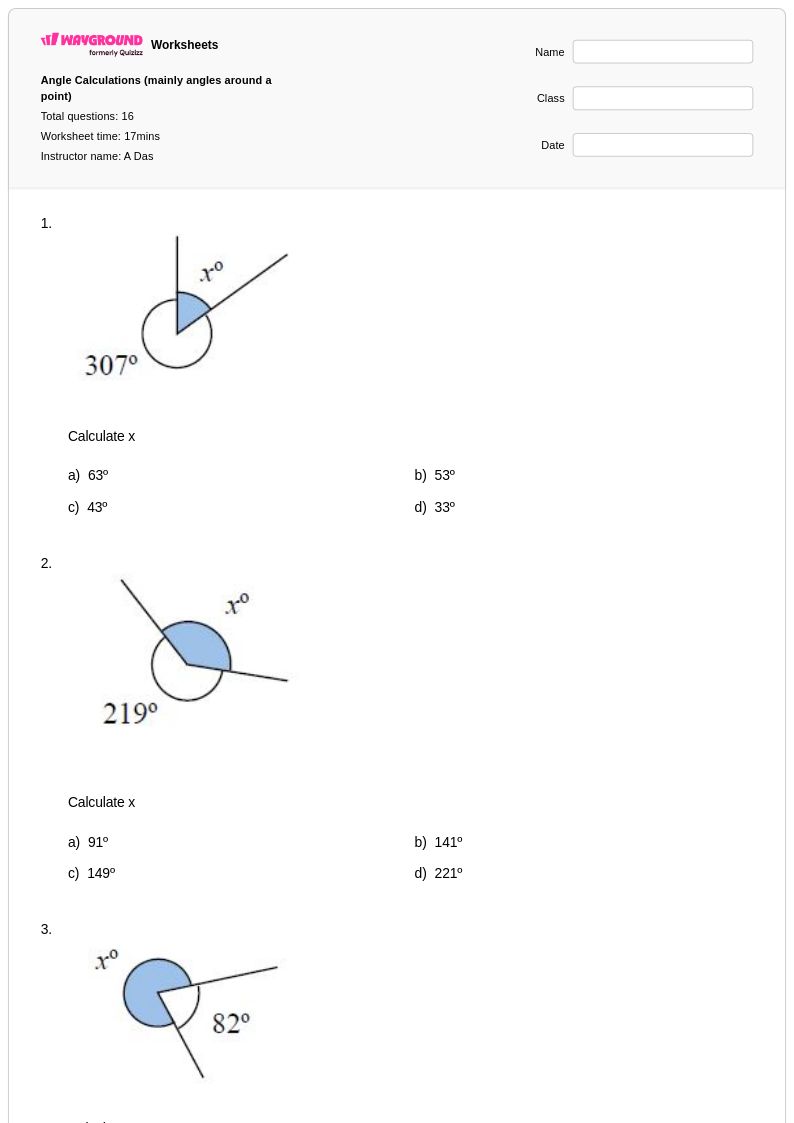
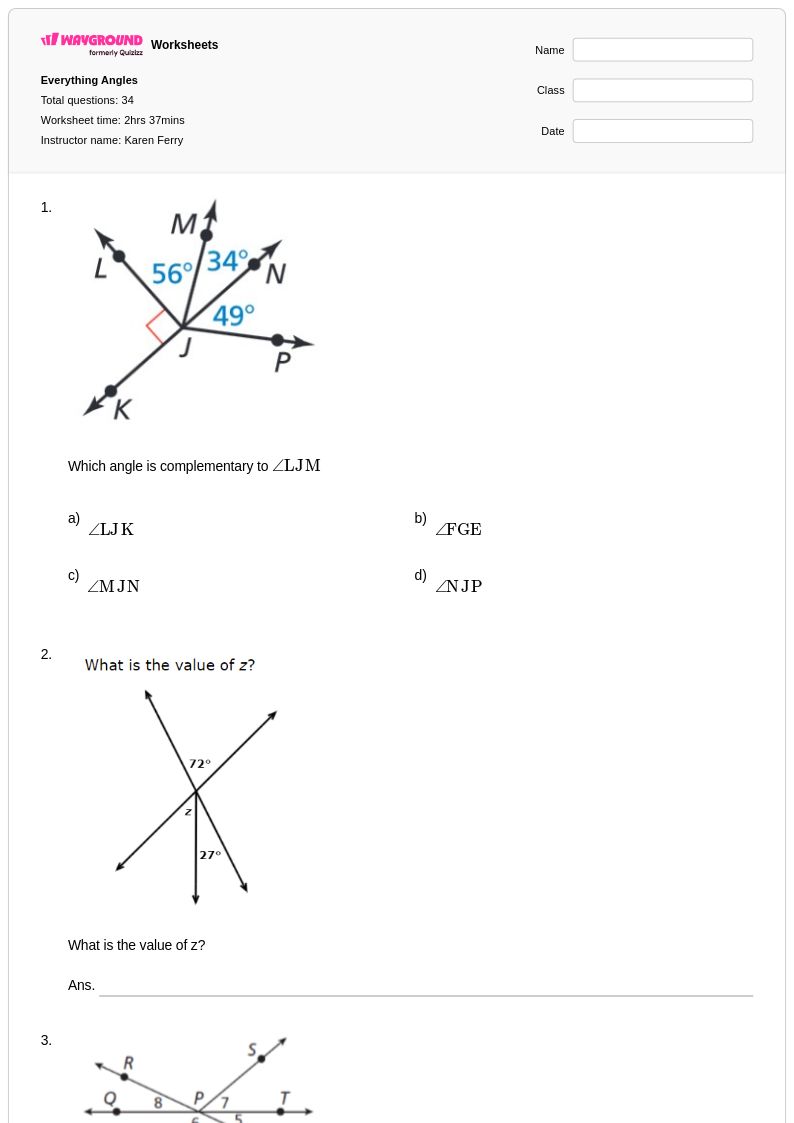
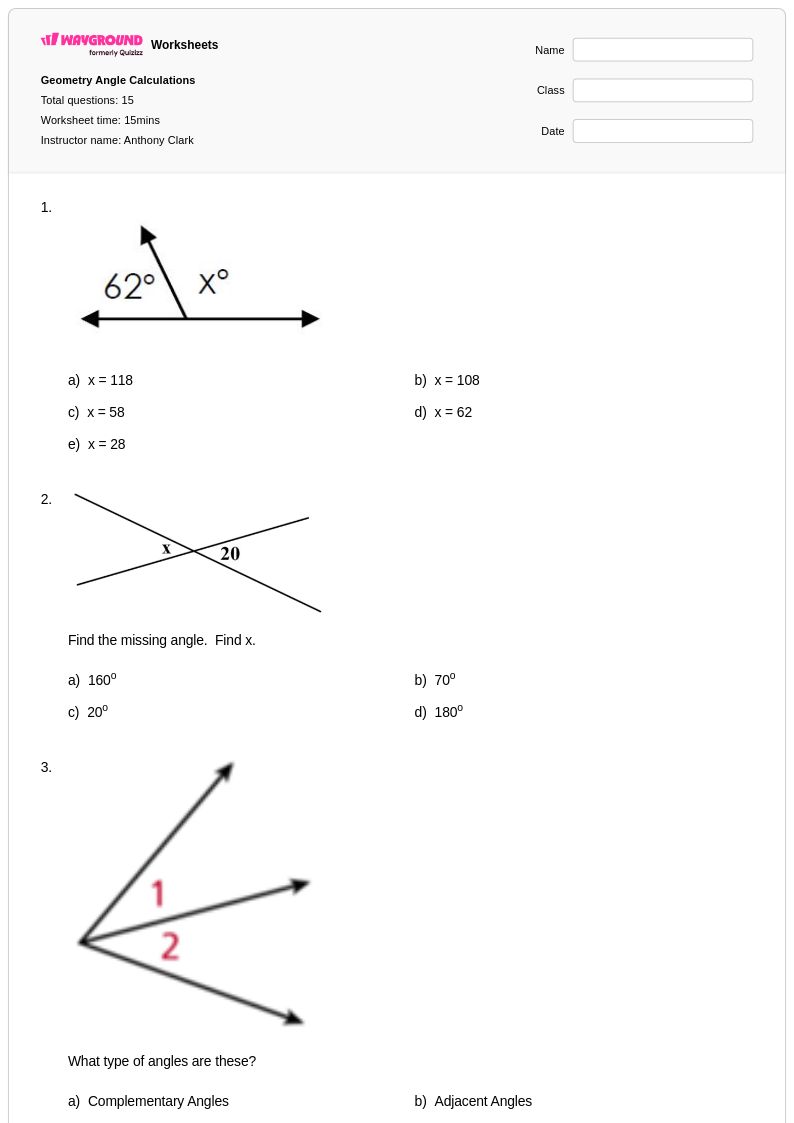
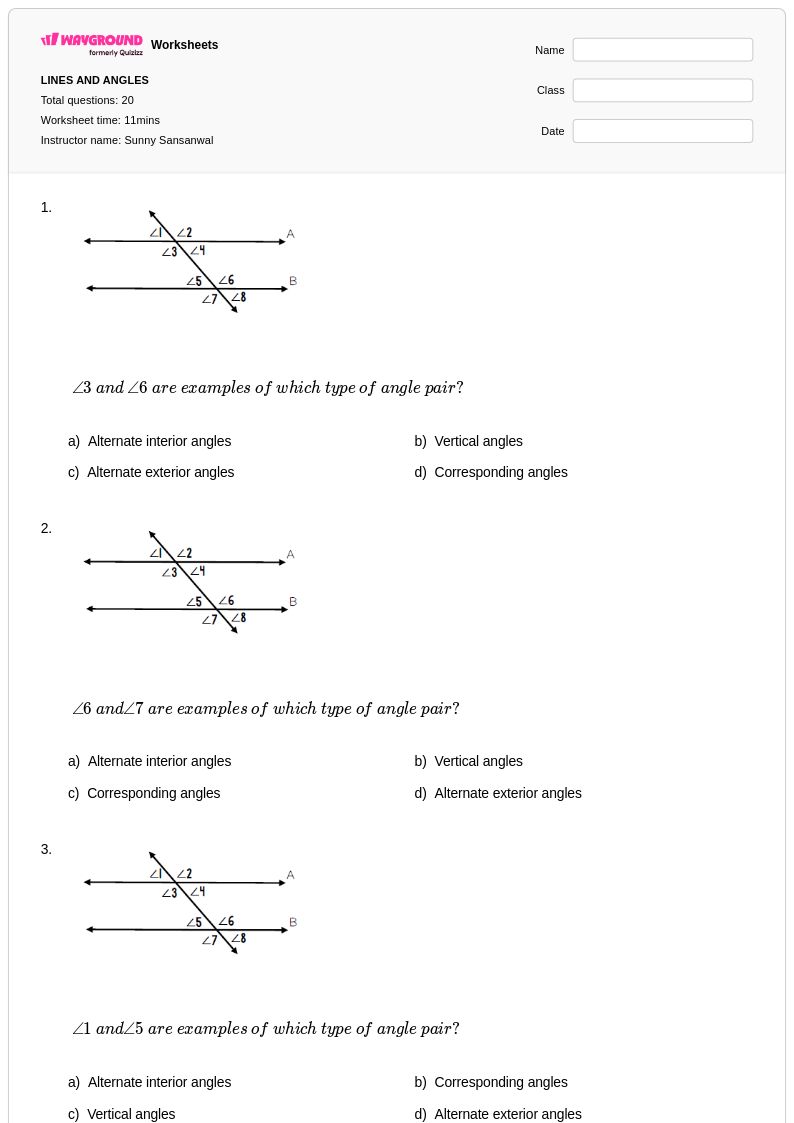
Angle calculations worksheets for kindergarten provide young learners with their first introduction to understanding angles through hands-on geometric exploration and visual recognition activities. These foundational mathematics resources from Wayground help kindergarten students develop spatial reasoning skills by identifying basic angle concepts such as corners, turns, and directional changes in everyday objects and shapes. The worksheets feature age-appropriate practice problems that encourage students to recognize right angles in squares and rectangles, compare wide and narrow angles, and understand basic positional relationships. Each printable resource includes clear visual aids and simple instructions that make abstract geometric concepts accessible to early learners, with comprehensive answer keys that enable teachers and parents to provide immediate feedback during skill-building sessions.
Wayground's extensive collection of kindergarten angle calculations worksheets draws from millions of teacher-created resources specifically designed to meet early childhood mathematics standards and developmental milestones. The platform's advanced search and filtering capabilities allow educators to quickly locate materials that align with specific learning objectives, whether for whole-class instruction, small group work, or individualized practice sessions. Teachers can easily customize these geometry worksheets to accommodate diverse learning needs, creating differentiated assignments that challenge advanced students while providing additional support for those requiring remediation. Available in both digital and printable PDF formats, these versatile resources seamlessly integrate into lesson planning workflows and support flexible instructional approaches, from interactive whiteboard demonstrations to hands-on manipulative activities that reinforce angle recognition and spatial understanding concepts.
FAQs
How do I introduce angles to kindergarten students?
What activities help kindergarten students practice angle concepts?
What mistakes do kindergarten students make when learning about angles?
How can I use a kindergarten angle calculations worksheet in class?
Do kindergarten angle activities align with Common Core math?
How can I differentiate kindergarten angle practice?
Are angle calculations appropriate for kindergarten?