
Free Printable Combining Shapes Worksheets for Kindergarten
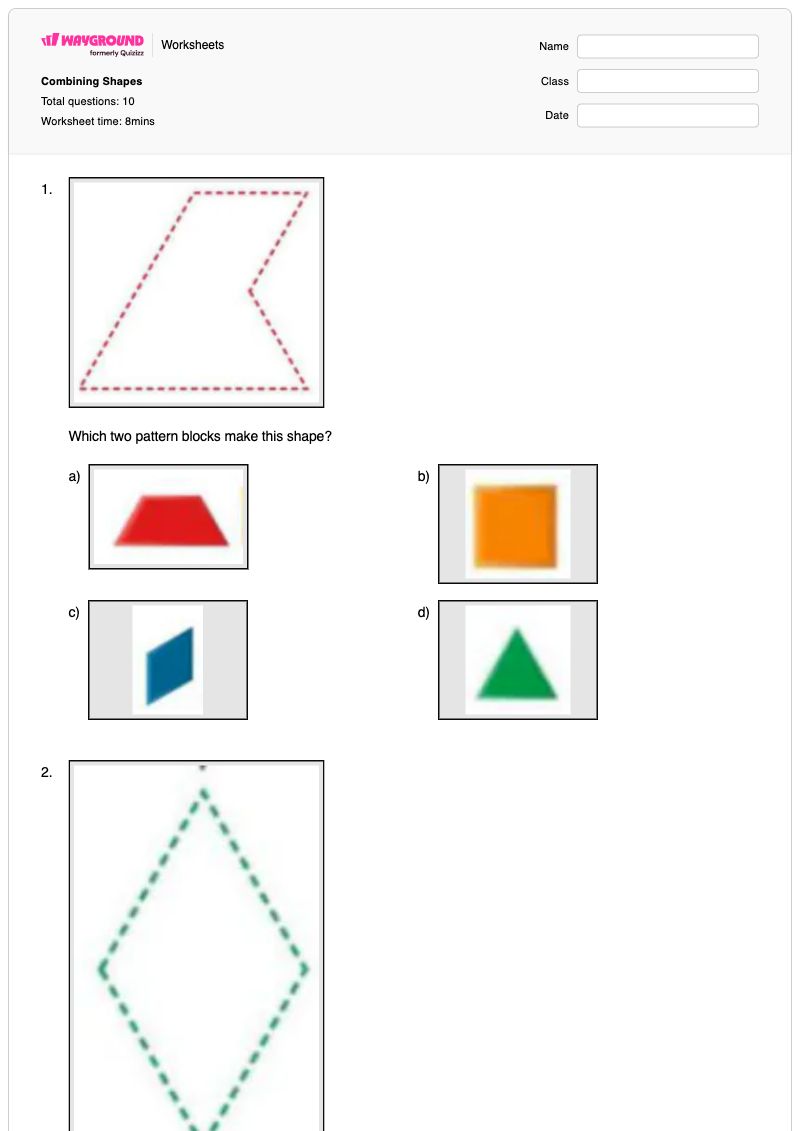
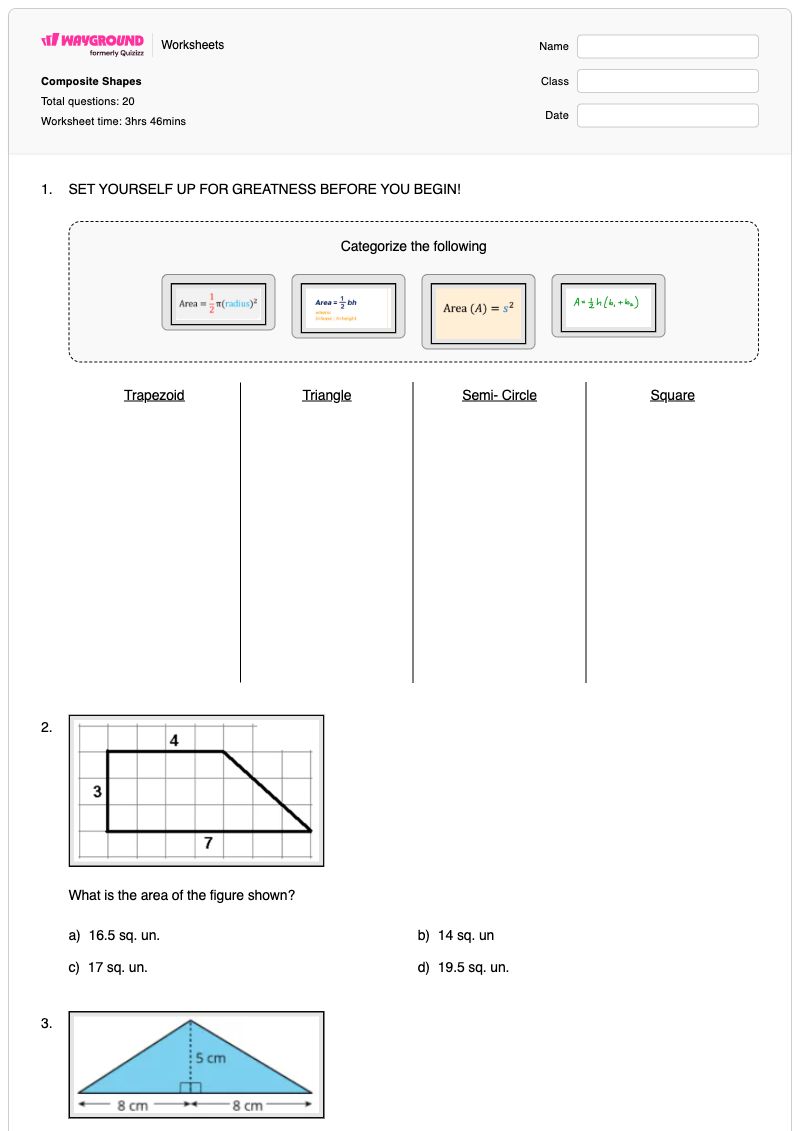
Wayground's free kindergarten combining shapes worksheets offer engaging printables and practice problems that help young learners explore how basic geometric shapes fit together, complete with answer keys for easy assessment.
Keep exploring
Explore printable Combining Shapes worksheets for Kindergarten
Combining shapes worksheets for kindergarten provide young learners with essential foundational experiences in spatial reasoning and geometric understanding through hands-on activities that encourage creative exploration and mathematical thinking. These carefully designed practice problems help students develop critical skills including shape recognition, spatial visualization, pattern creation, and early problem-solving abilities as they learn to join circles, squares, triangles, and rectangles into new configurations. The printable resources available through Wayground include engaging activities where children can physically manipulate shapes to create pictures, buildings, and designs, with each worksheet featuring clear visual instructions and comprehensive answer keys that support both independent work and guided instruction. These free pdf materials strengthen fine motor skills alongside mathematical concepts, making them invaluable tools for developing the spatial awareness that forms the foundation for future geometry learning.
Wayground, formerly Quizizz, empowers kindergarten teachers with access to millions of carefully curated combining shapes resources that streamline lesson planning and enhance classroom instruction through robust search and filtering capabilities. The platform's extensive collection includes worksheets aligned to early learning standards, offering both printable pdf formats for traditional classroom use and digital versions that accommodate diverse learning environments and technology integration needs. Teachers can easily customize materials to match individual student abilities, creating differentiated experiences that support remediation for struggling learners while providing enrichment opportunities for advanced students. The comprehensive filtering system allows educators to quickly locate age-appropriate content that targets specific skills within shape combination activities, enabling efficient planning for skill practice sessions, assessment preparation, and hands-on learning centers that build confidence in early mathematical reasoning.
Explore Other Subject Worksheets for kindergarten
Frequently asked questions
Let children physically arrange circles, squares, triangles, and rectangles to make pictures, buildings, and simple designs before asking them to draw the combinations. Prompt them to name each component and explain where it appears in the new figure, building shape recognition, spatial vocabulary, and visualization together.