
Free Printable Area with Fractional Side Lengths Worksheets for Kindergarten
Wayground's free kindergarten area with fractional side lengths worksheets offer printable PDF practice problems and answer keys to help young students explore basic geometric concepts through hands-on learning activities.
Download any worksheet with a free account
Free PDF downloads, saved to your library.
Keep exploring
Explore printable Area with Fractional Side Lengths worksheets for Kindergarten
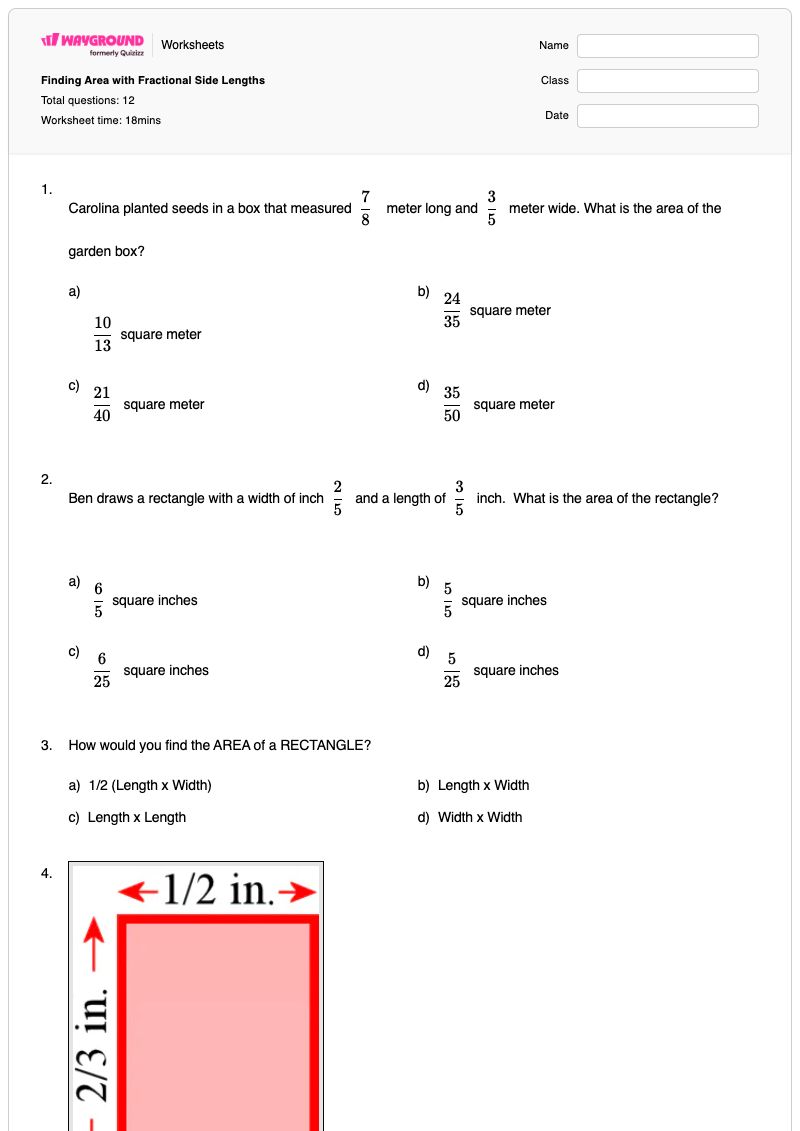
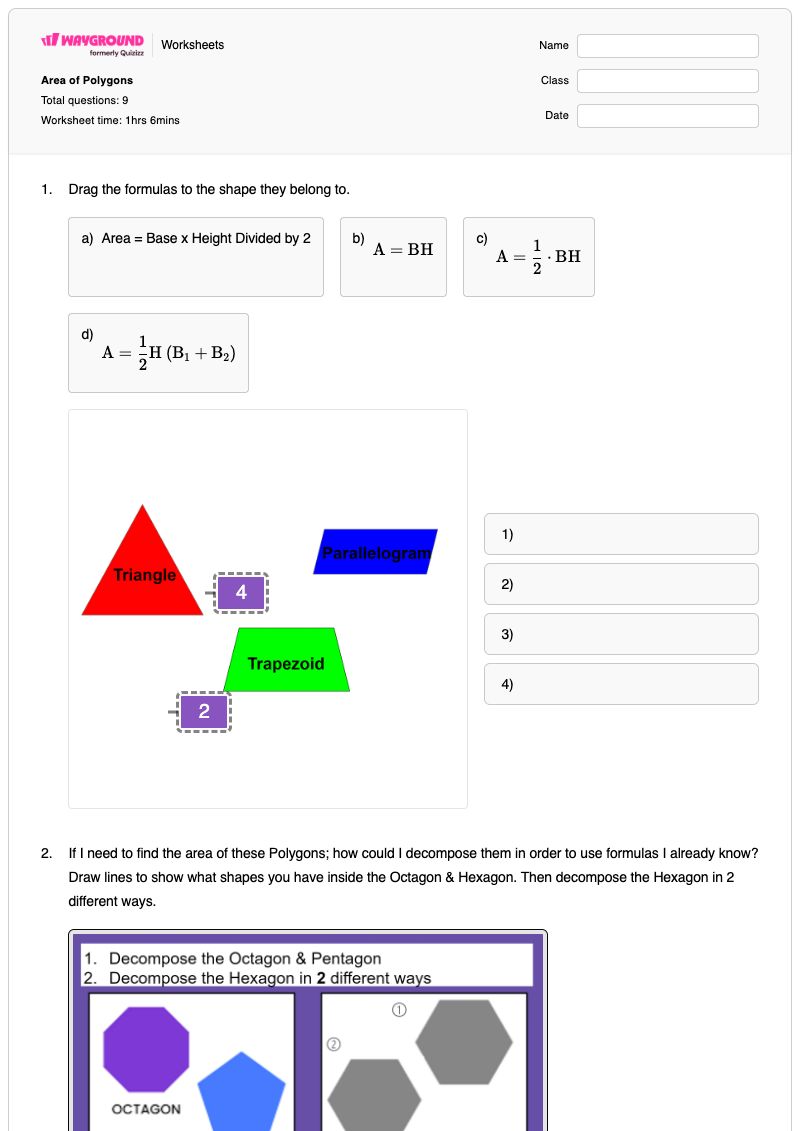
Area with fractional side lengths worksheets available through Wayground (formerly Quizizz) provide kindergarten students with foundational exposure to spatial reasoning concepts that bridge basic geometric understanding with early fraction awareness. These carefully designed practice problems introduce young learners to the concept that shapes can have measurements expressed in parts of a whole, building essential visual-spatial skills through hands-on activities and manipulative-based exercises. The worksheet collections feature age-appropriate illustrations and concrete examples that help kindergarteners begin to understand how areas can be measured using fractional units, with comprehensive answer keys and free printable pdf formats that make implementation seamless for both classroom instruction and home practice.
Wayground (formerly Quizizz) empowers kindergarten teachers with access to millions of educator-created resources specifically designed for introducing complex mathematical concepts like area measurement to young learners. The platform's robust search and filtering capabilities allow teachers to quickly locate worksheets that align with early childhood mathematics standards while providing differentiation tools to accommodate varying developmental levels within the kindergarten classroom. These customizable resources are available in both printable and digital pdf formats, enabling flexible lesson planning that supports remediation for students needing additional concrete experiences with spatial concepts, enrichment for advanced learners ready to explore measurement relationships, and targeted skill practice that builds the foundational understanding necessary for future geometric learning.
Frequently asked questions
Keep the lesson concrete. Let children build or cover shapes with tiles, fold paper shapes into equal parts, and compare a whole unit with a half-unit before using fractional notation. The goal is early spatial reasoning, not formal multiplication.