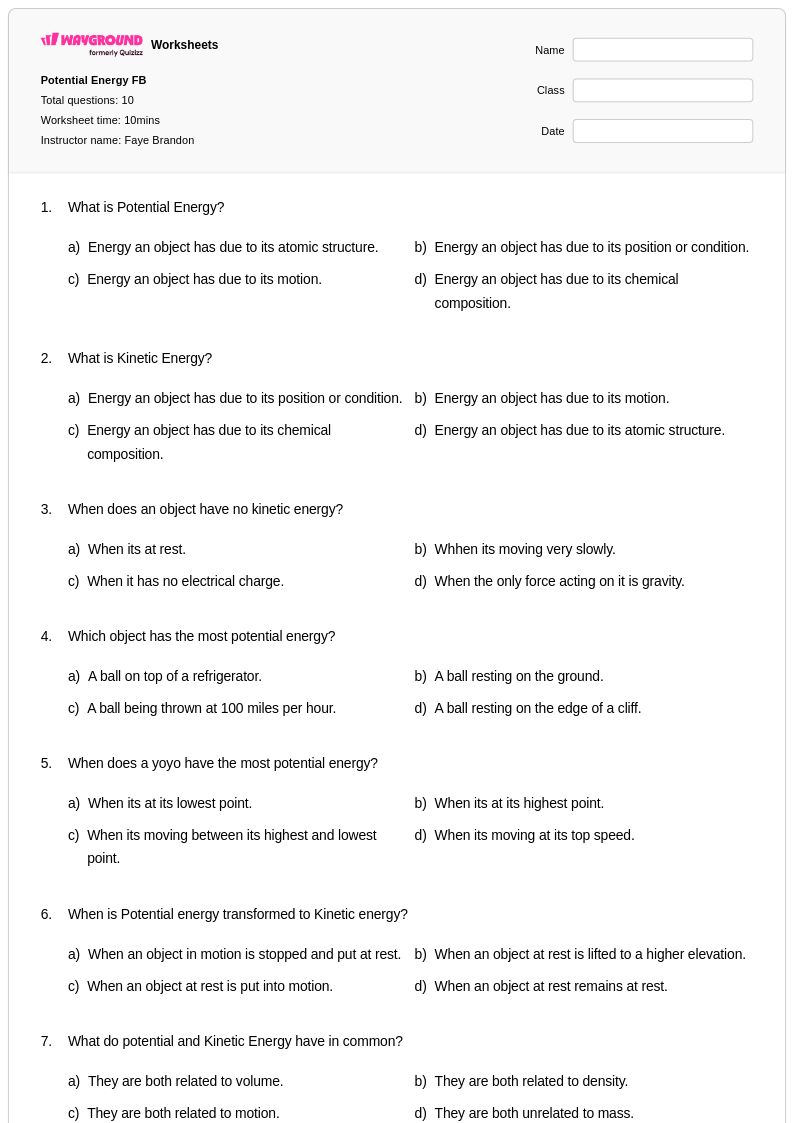
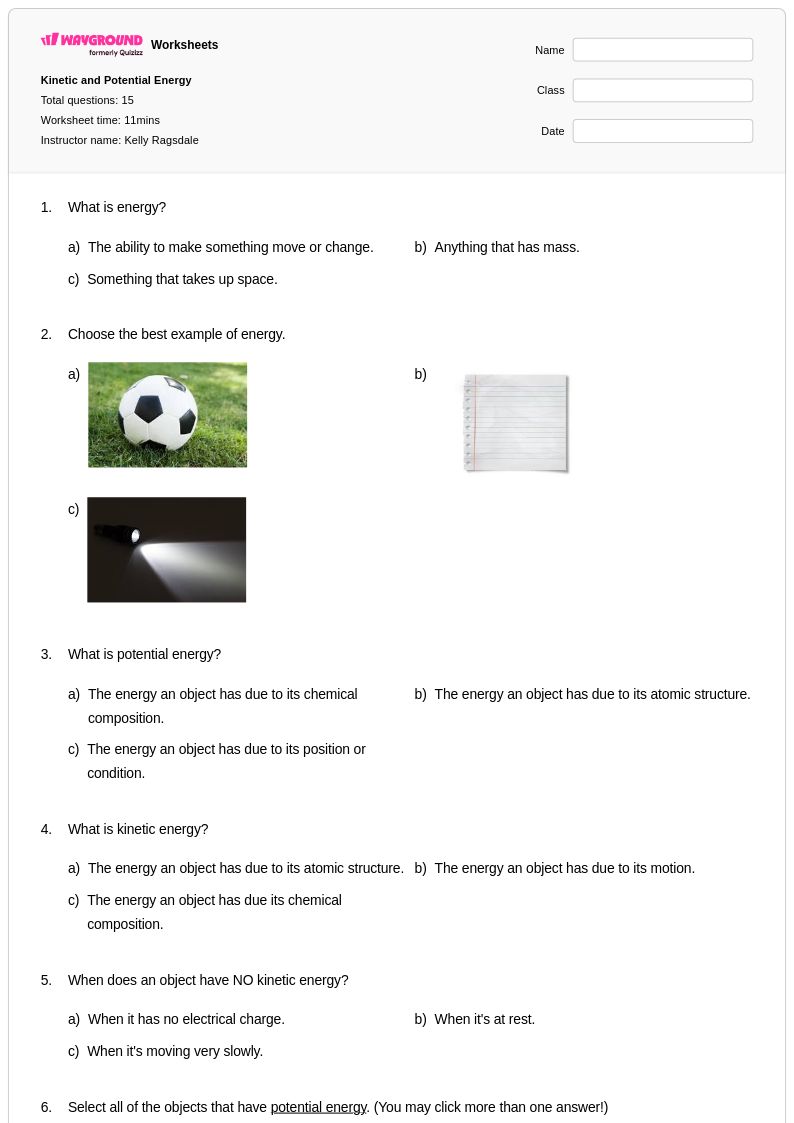
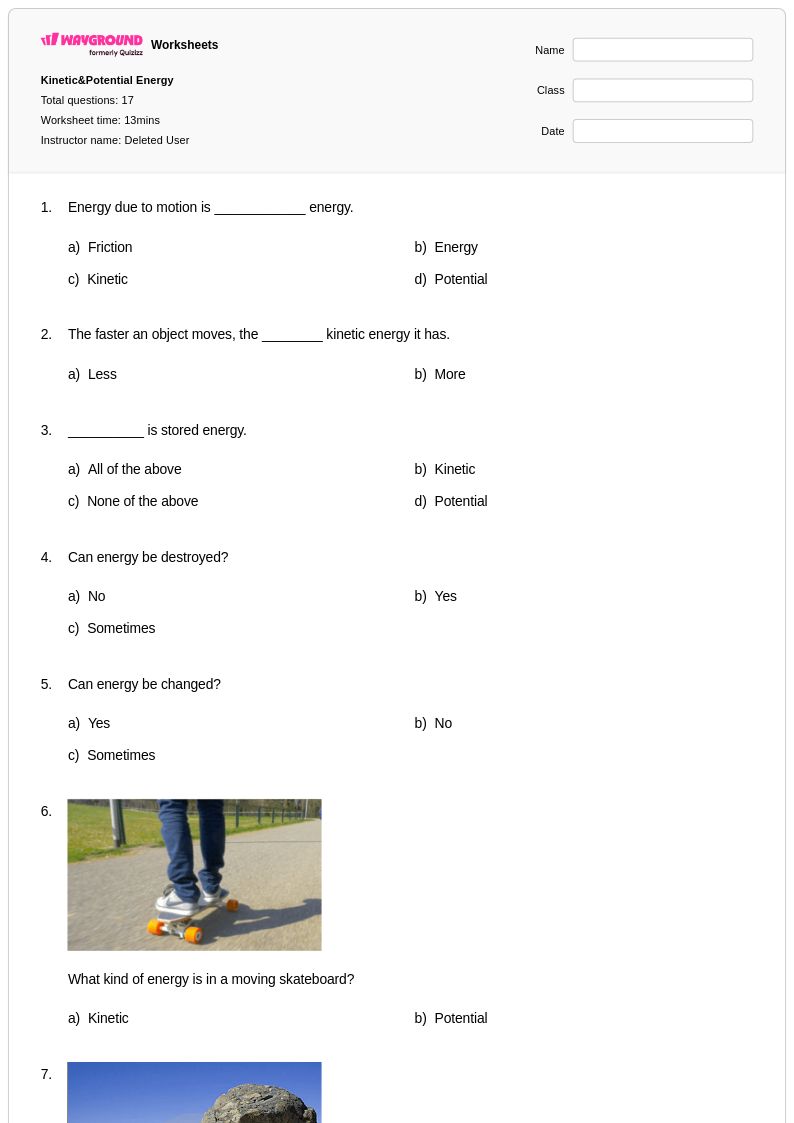
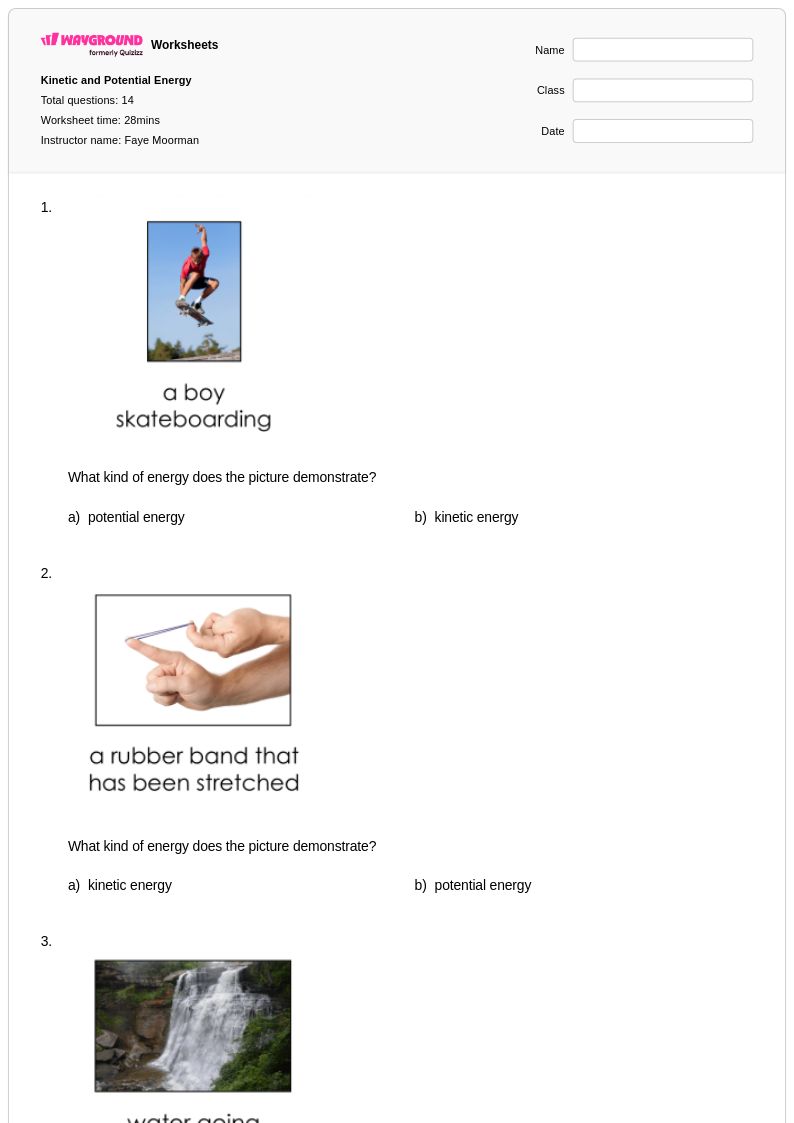
Free Printable Potential Energy Worksheets for Class 5
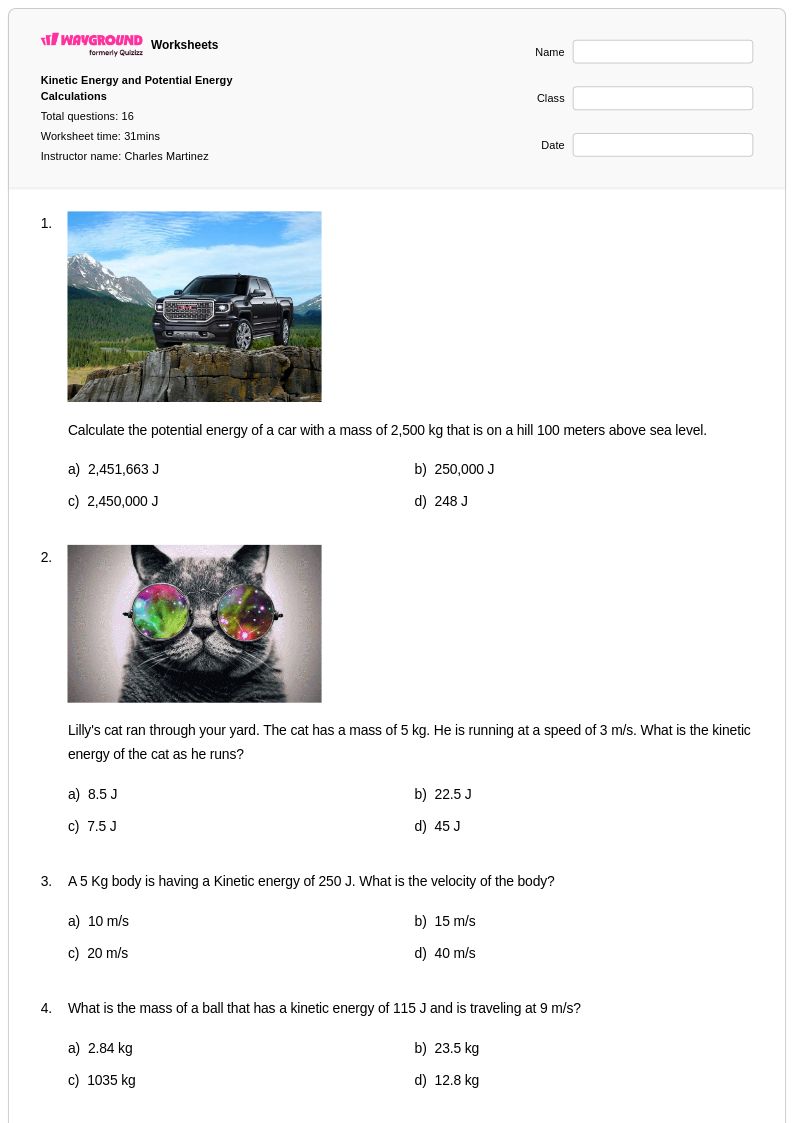
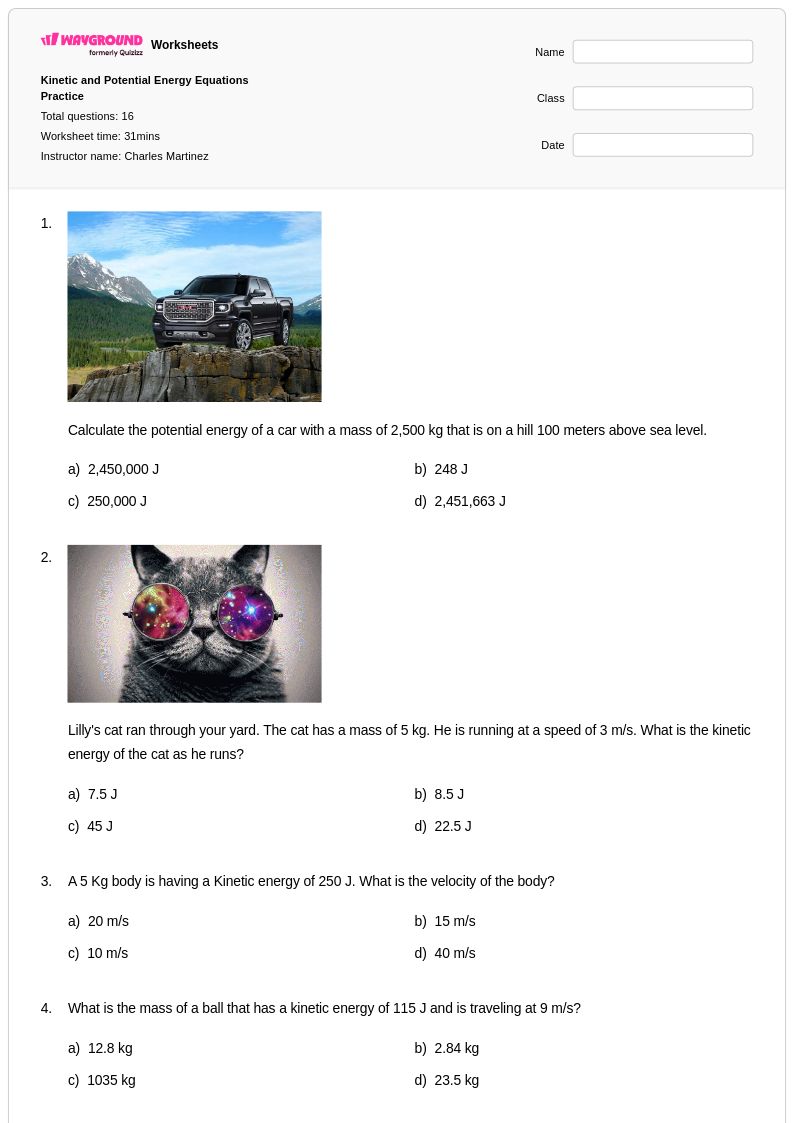
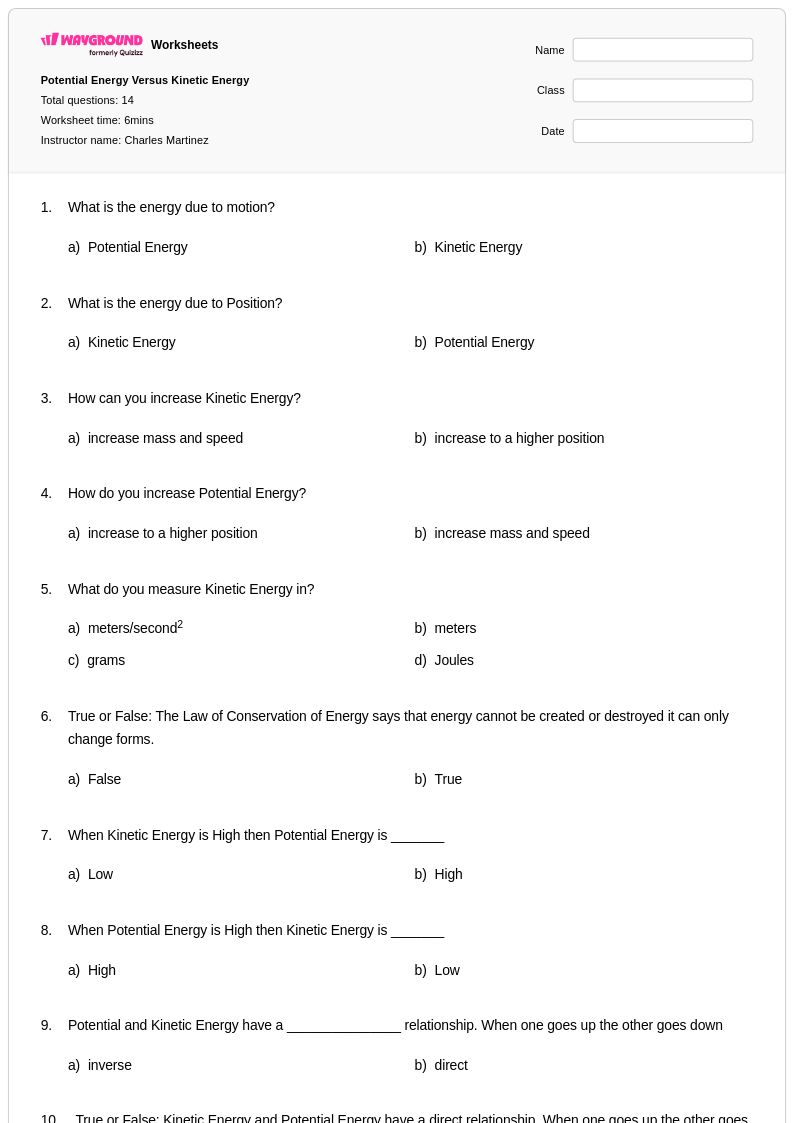
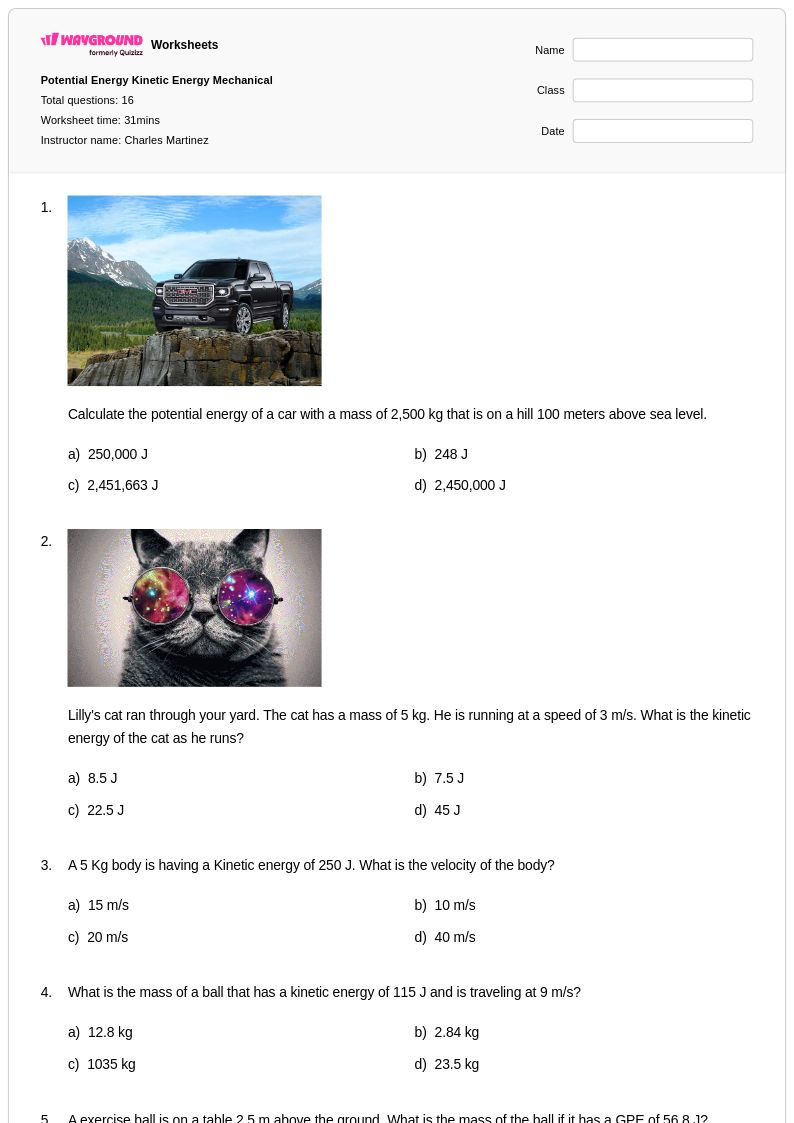
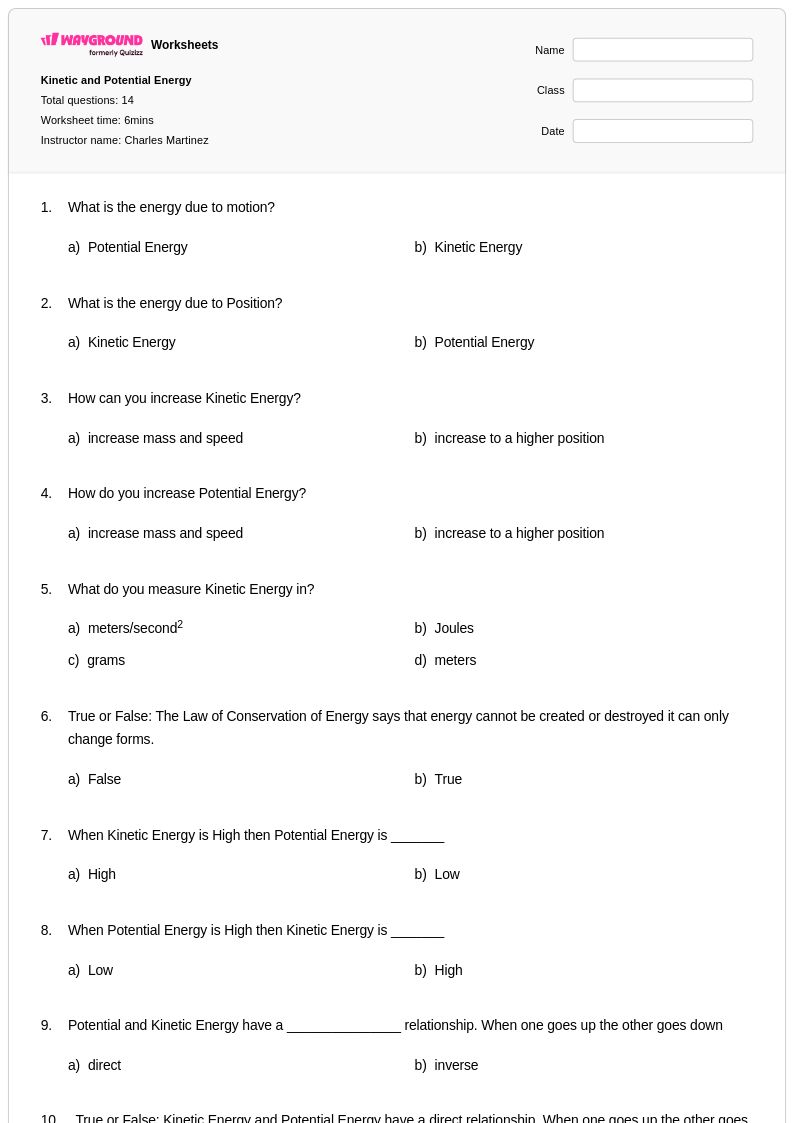
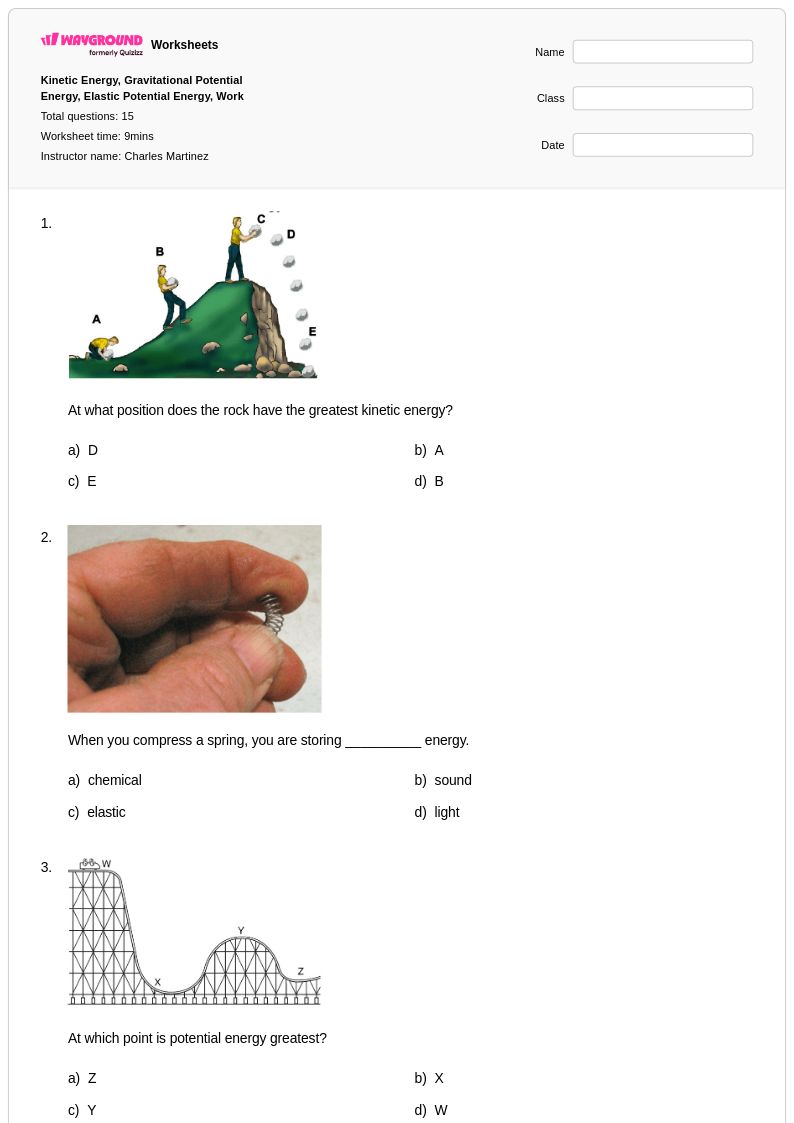
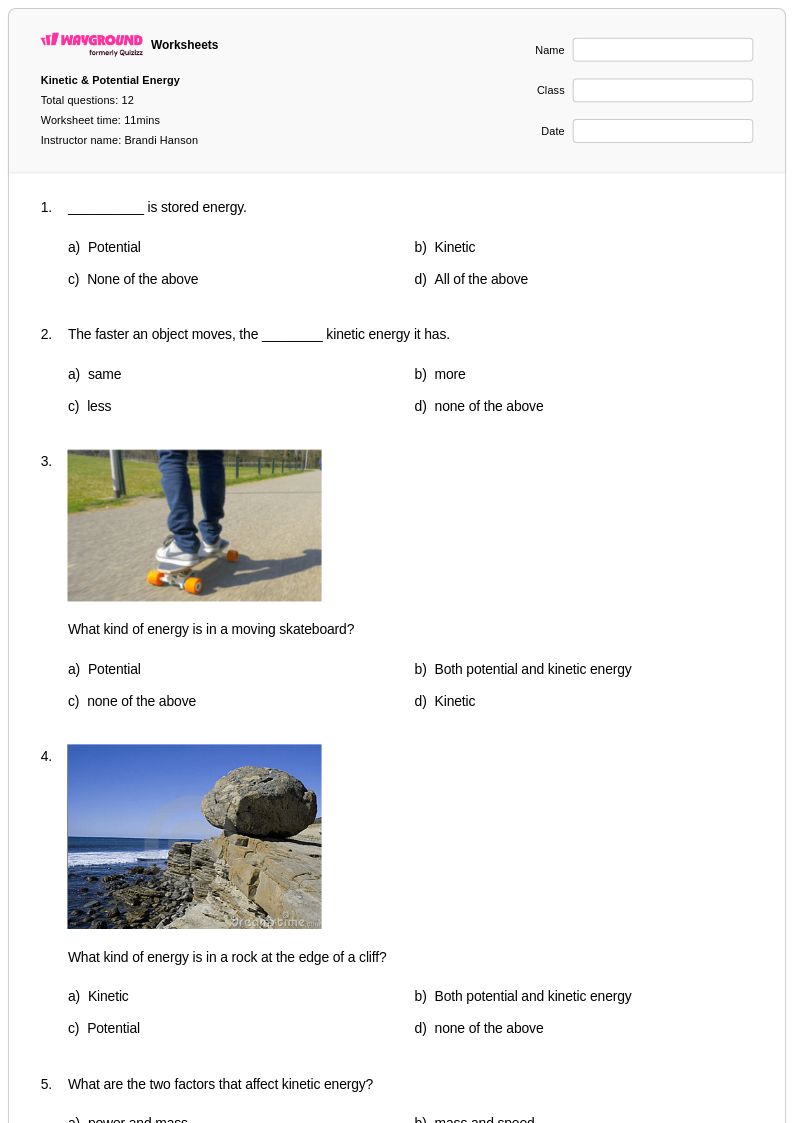
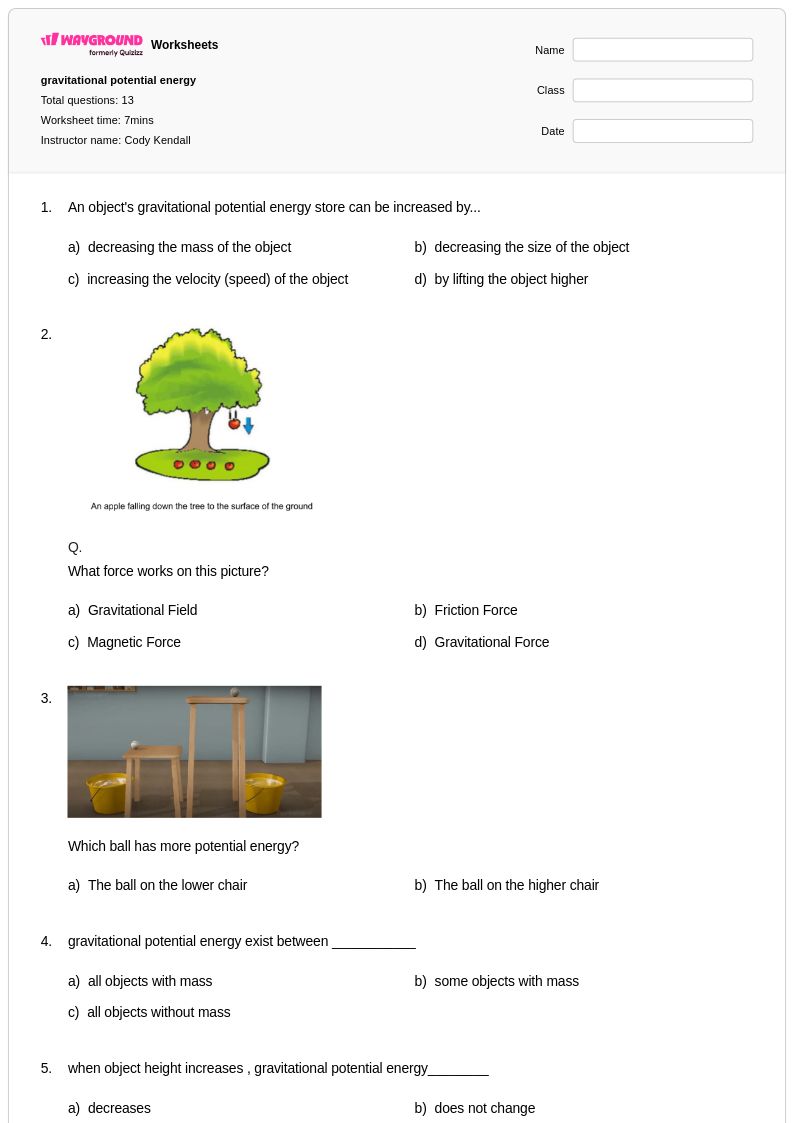
Class 5 potential energy worksheets from Wayground provide free printables and practice problems with answer keys to help students understand stored energy concepts through engaging PDF activities.
Explore printable Potential Energy worksheets for Class 5
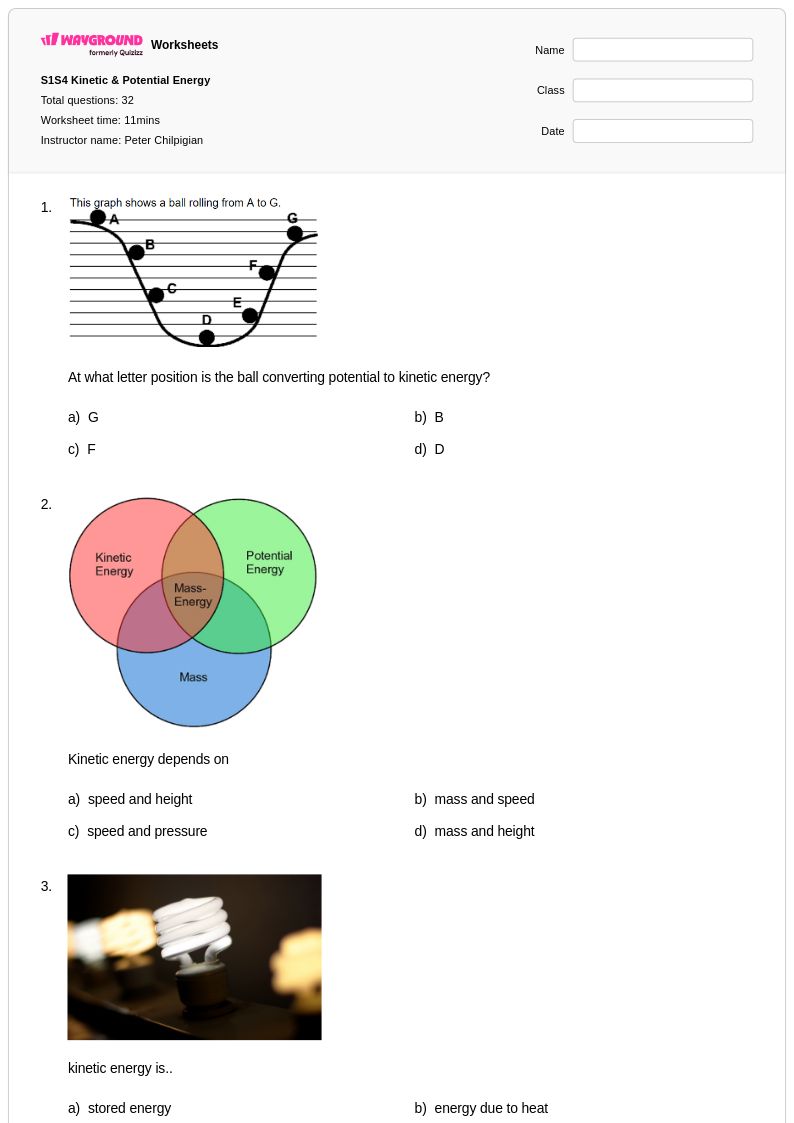
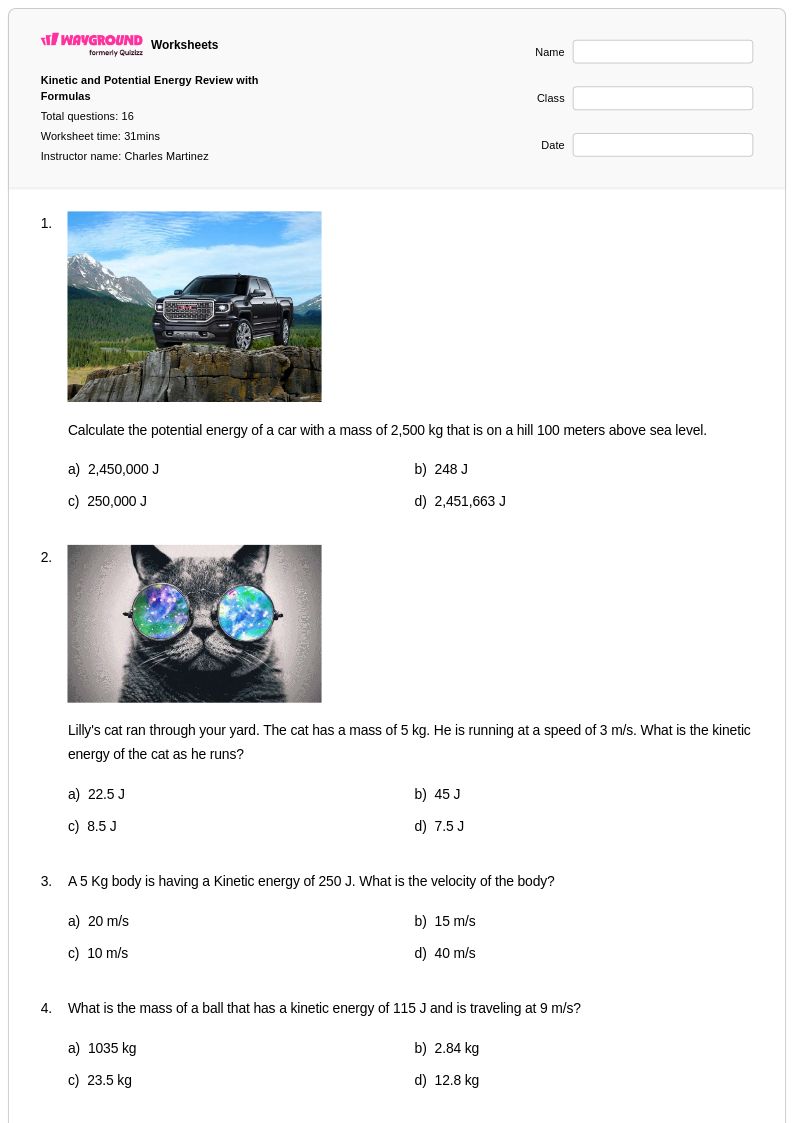
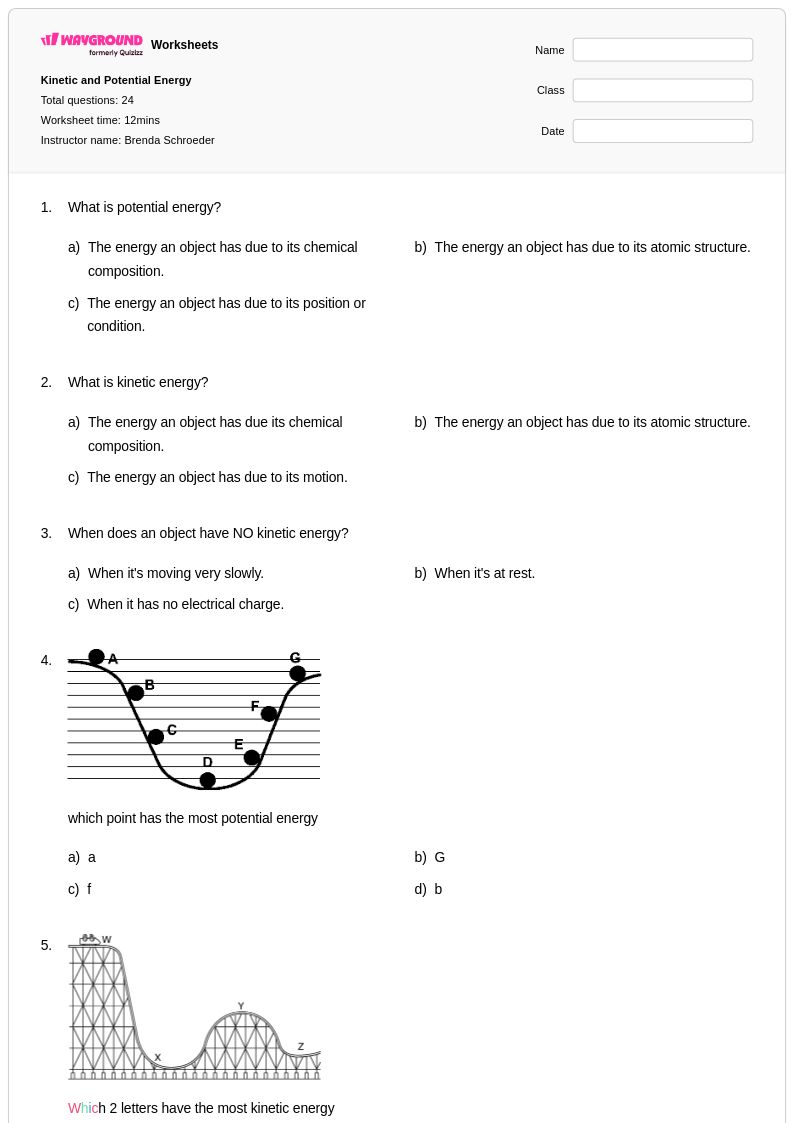
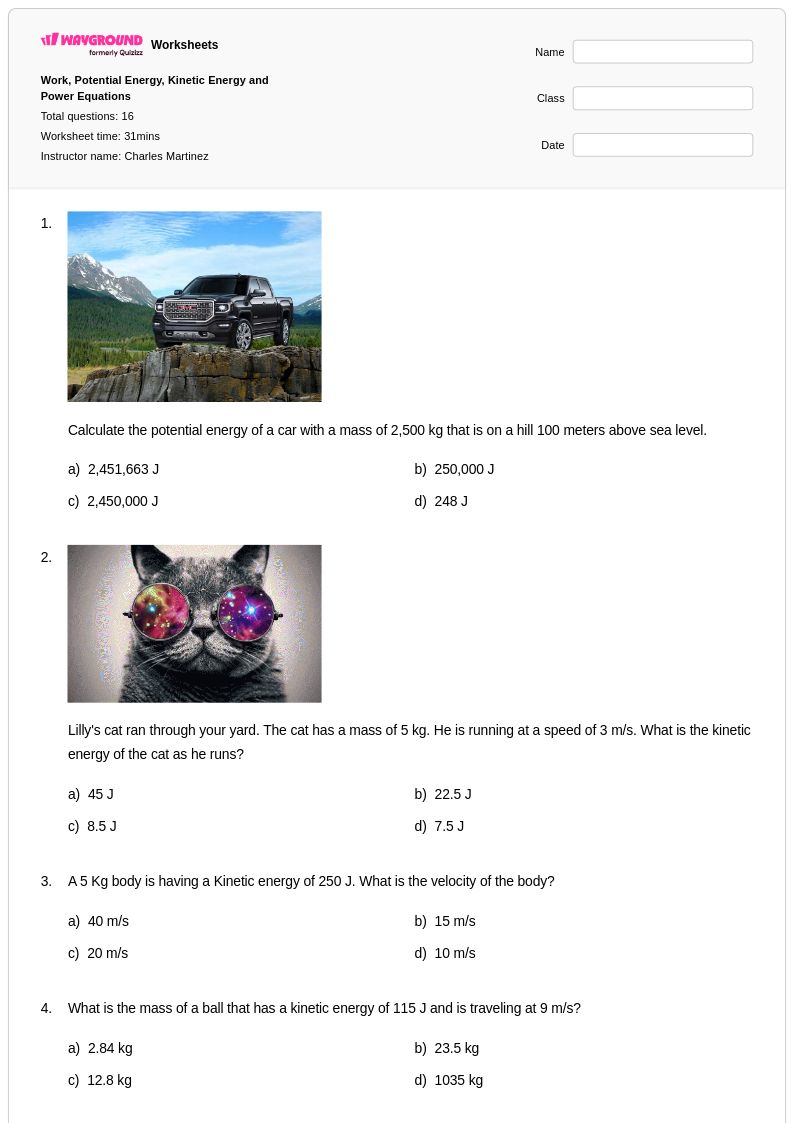
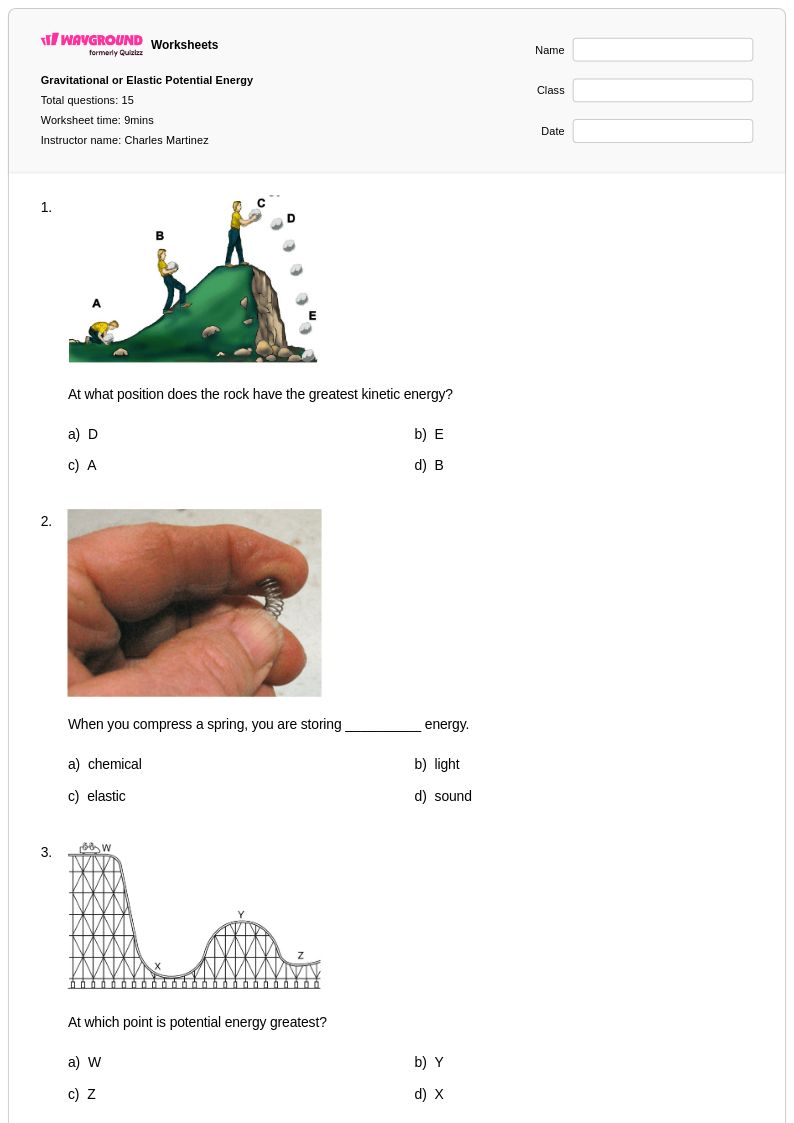
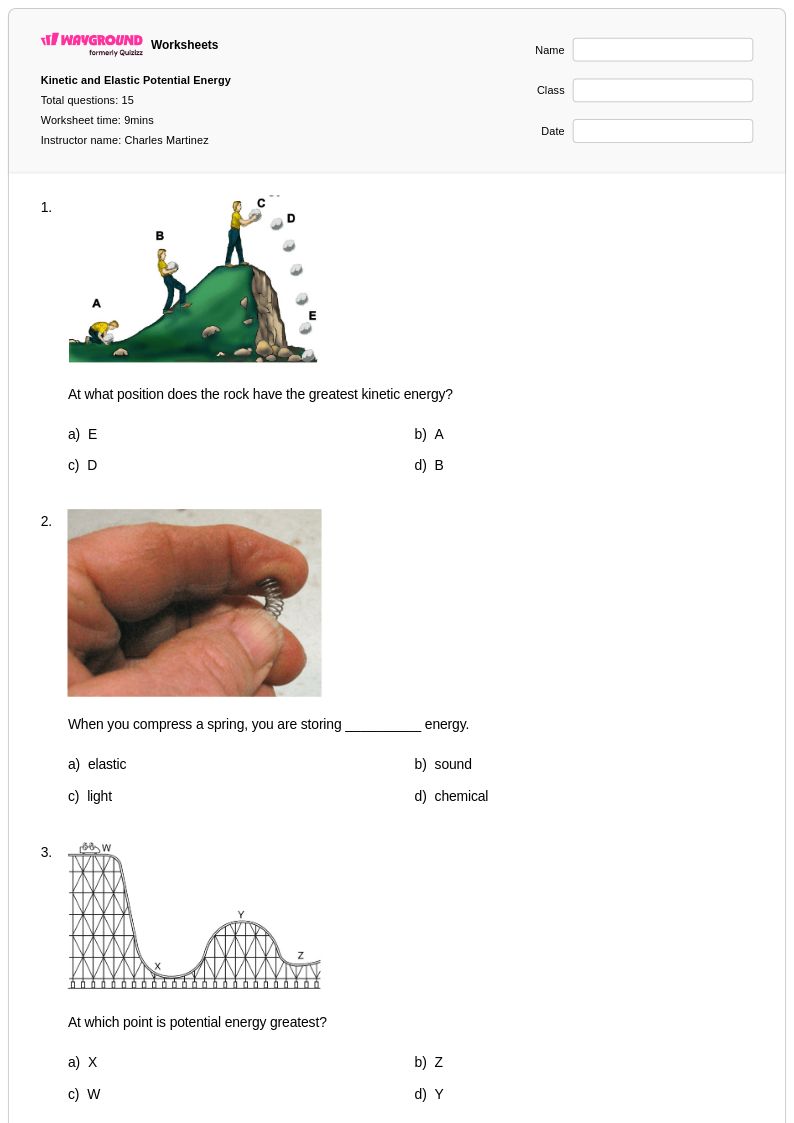
Potential energy worksheets for Class 5 students available through Wayground (formerly Quizizz) provide comprehensive coverage of this fundamental physics concept, helping young learners understand stored energy and its various forms. These carefully designed resources strengthen critical thinking skills as students explore gravitational potential energy, elastic potential energy, and chemical potential energy through engaging practice problems that connect abstract concepts to real-world examples. The worksheet collection includes detailed answer keys that support independent learning and self-assessment, while printable pdf formats ensure accessibility for both classroom instruction and home study. Students develop essential scientific reasoning abilities as they calculate potential energy values, compare energy transformations, and analyze how position and height affect stored energy in everyday objects and systems.
Wayground (formerly Quizizz) empowers educators with millions of teacher-created potential energy resources that streamline lesson planning and enhance Class 5 physics instruction through robust search and filtering capabilities. The platform's extensive worksheet library aligns with educational standards and offers differentiation tools that accommodate diverse learning needs, from remediation support for struggling students to enrichment activities for advanced learners. Teachers can easily customize these digital and printable materials to match their specific curriculum requirements, creating targeted skill practice opportunities that reinforce potential energy concepts through varied problem-solving approaches. The flexible format options enable seamless integration into both traditional classroom settings and remote learning environments, while comprehensive filtering systems help educators quickly locate age-appropriate content that matches their instructional objectives and pacing guidelines.
FAQs
How do I teach potential energy to physics students?
Effective potential energy instruction starts by grounding students in the core idea that stored energy is always relative to position, shape, or chemical state rather than motion. Begin with gravitational potential energy using everyday examples like a raised book or a roller coaster at its peak, then move to elastic potential energy with springs and rubber bands, and finally introduce chemical potential energy through familiar contexts like batteries or food. Connecting each form to real-world scenarios helps students build a conceptual framework before they tackle calculations using formulas like PE = mgh.
What exercises help students practice calculating gravitational potential energy?
Students benefit most from structured practice problems that require them to apply PE = mgh across varying conditions, such as calculating the stored energy of objects at different heights or comparing the potential energy of objects with different masses at the same height. Worked examples followed by scaffolded problems that increase in complexity reinforce the relationship between each variable. Multi-step problems that ask students to calculate potential energy and then determine how much kinetic energy is released during a fall are especially effective for deepening understanding of energy conservation.
What mistakes do students commonly make when solving potential energy problems?
One of the most frequent errors is failing to recognize that gravitational potential energy depends on the reference point chosen, leading to inconsistent height measurements. Students also commonly confuse the units, mixing up joules and newtons or forgetting that mass must be in kilograms when using standard SI values for g. Another persistent misconception is treating potential and kinetic energy as independent quantities rather than understanding that total mechanical energy is conserved as one converts to the other.
How do I differentiate potential energy instruction for students at different skill levels?
For foundational learners, start with single-variable problems where mass and g are held constant so students can isolate the effect of height on stored energy. More advanced students can work through multi-step problems that incorporate energy transformation, conservation of energy, and real-world contexts like pendulums or projectile motion. On Wayground, teachers can apply accommodations such as reduced answer choices or read-aloud support for individual students, and extended time settings can be configured per student without alerting the rest of the class.
How can I use Wayground's potential energy worksheets in my classroom?
Wayground's potential energy worksheets are available as printable PDFs for traditional classroom use and in digital formats for technology-integrated environments, giving teachers flexibility to assign them as in-class practice, homework, or assessments. Teachers can also host worksheets directly as a quiz on Wayground, enabling real-time student responses and immediate feedback. All worksheets include complete answer keys, which support self-assessment and independent practice, whether students are working in a classroom or remotely.
How do I help students understand the difference between gravitational, elastic, and chemical potential energy?
The clearest approach is to anchor each type to its defining condition: gravitational potential energy depends on an object's height and mass, elastic potential energy depends on how much an object like a spring is compressed or stretched, and chemical potential energy is stored in molecular bonds and released through reactions. Comparative problems that present all three forms side by side help students distinguish the conditions under which each type applies. Visual diagrams and energy transformation scenarios, such as a compressed spring launching a ball upward, reinforce how these forms relate to and convert into one another.