Free Printable Preamble of the US Constitution Worksheets for Class 11
Class 11 students can master the Preamble of the US Constitution with Wayground's comprehensive collection of free worksheets, printables, and practice problems featuring detailed answer keys to reinforce constitutional principles.
Explore printable Preamble of the US Constitution worksheets for Class 11
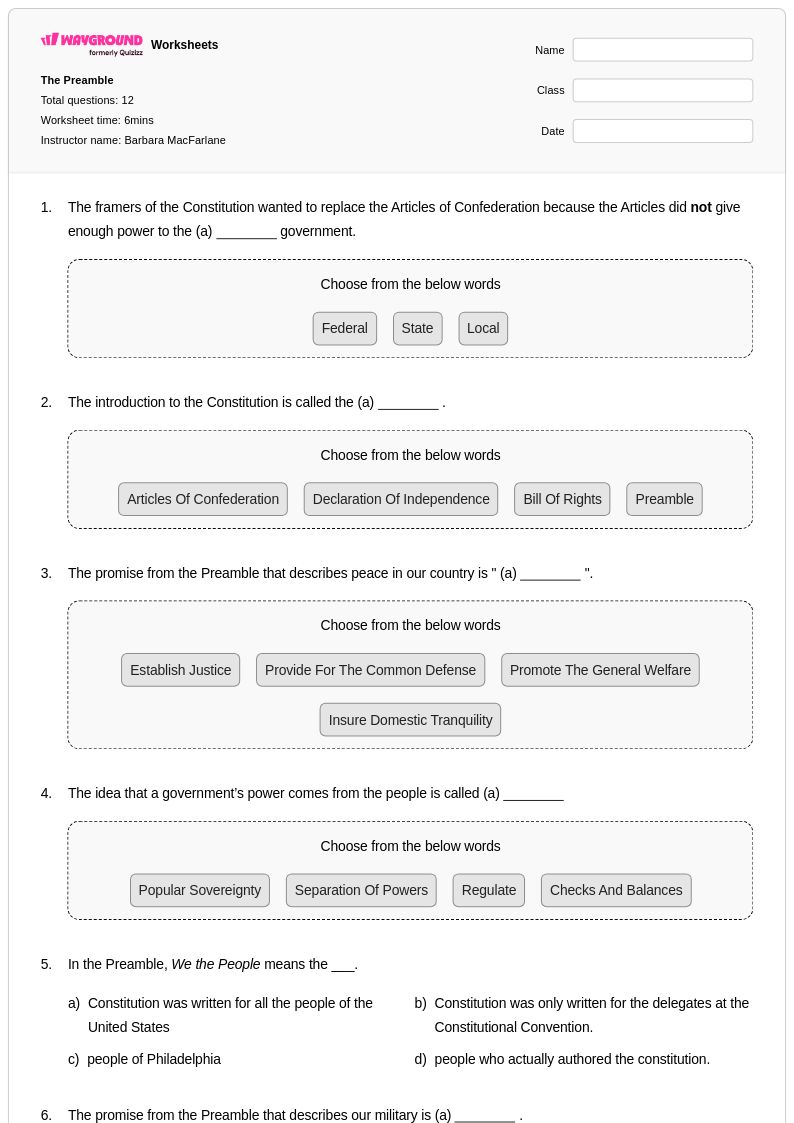
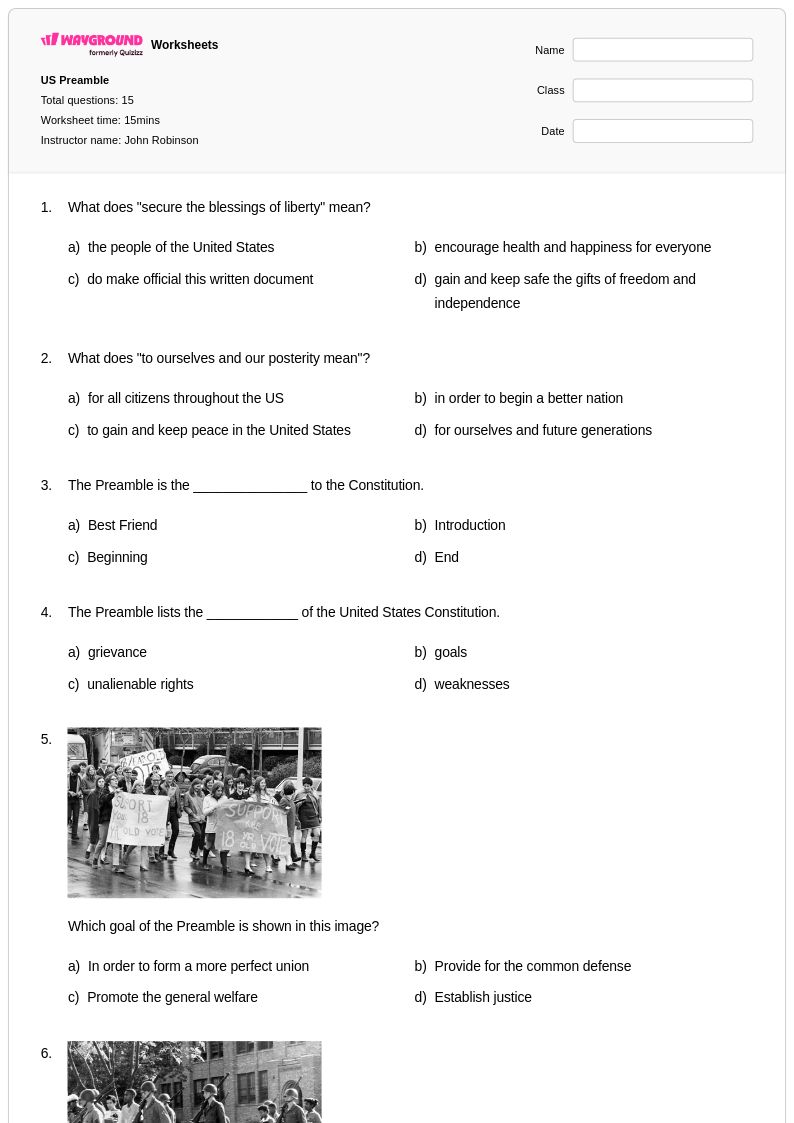
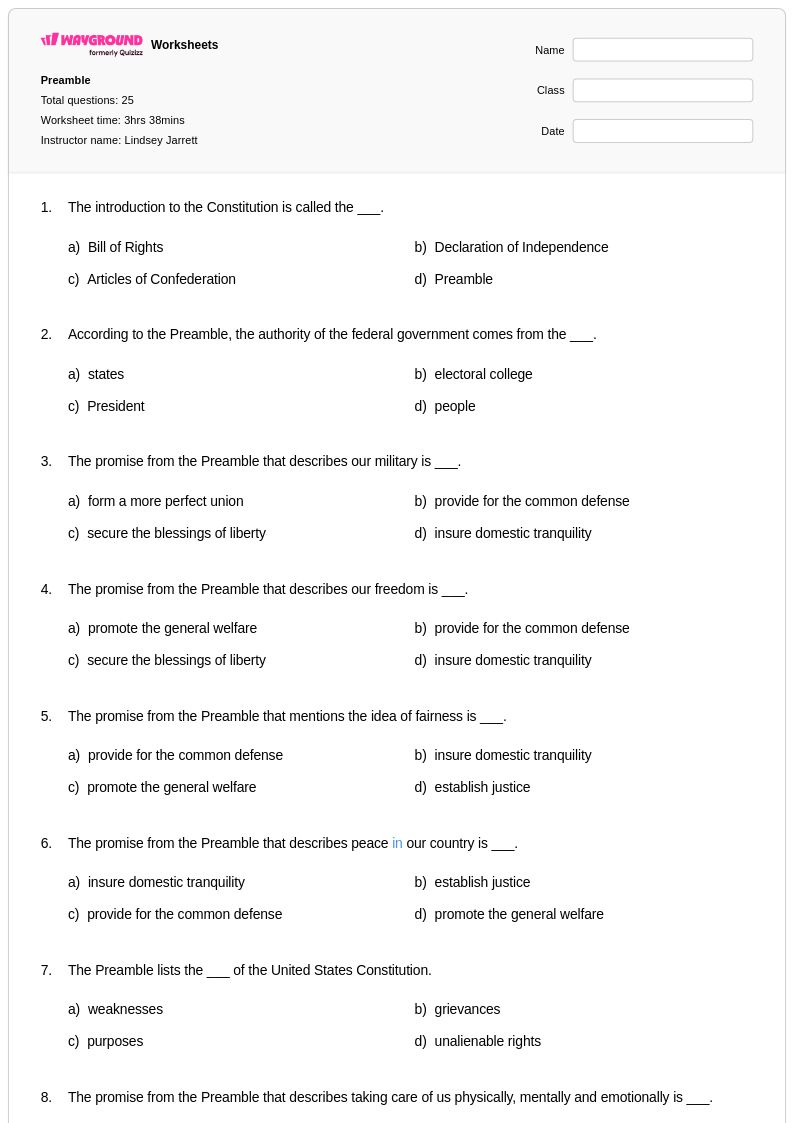
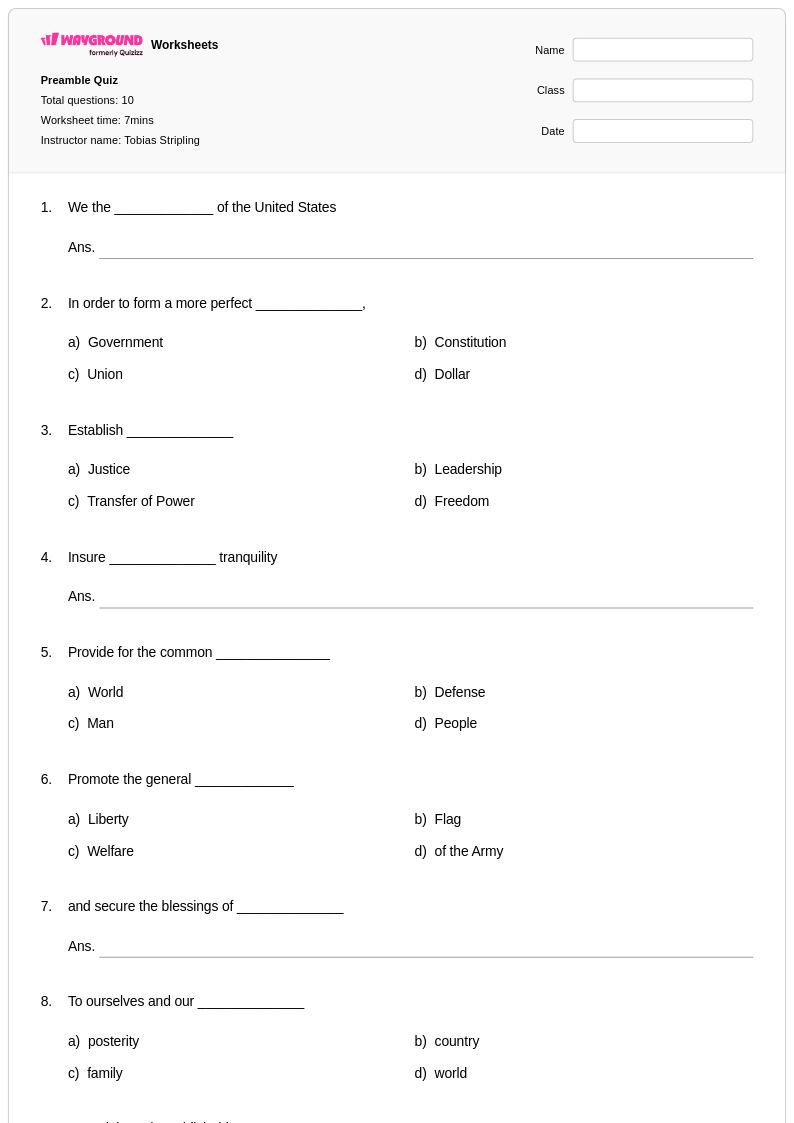
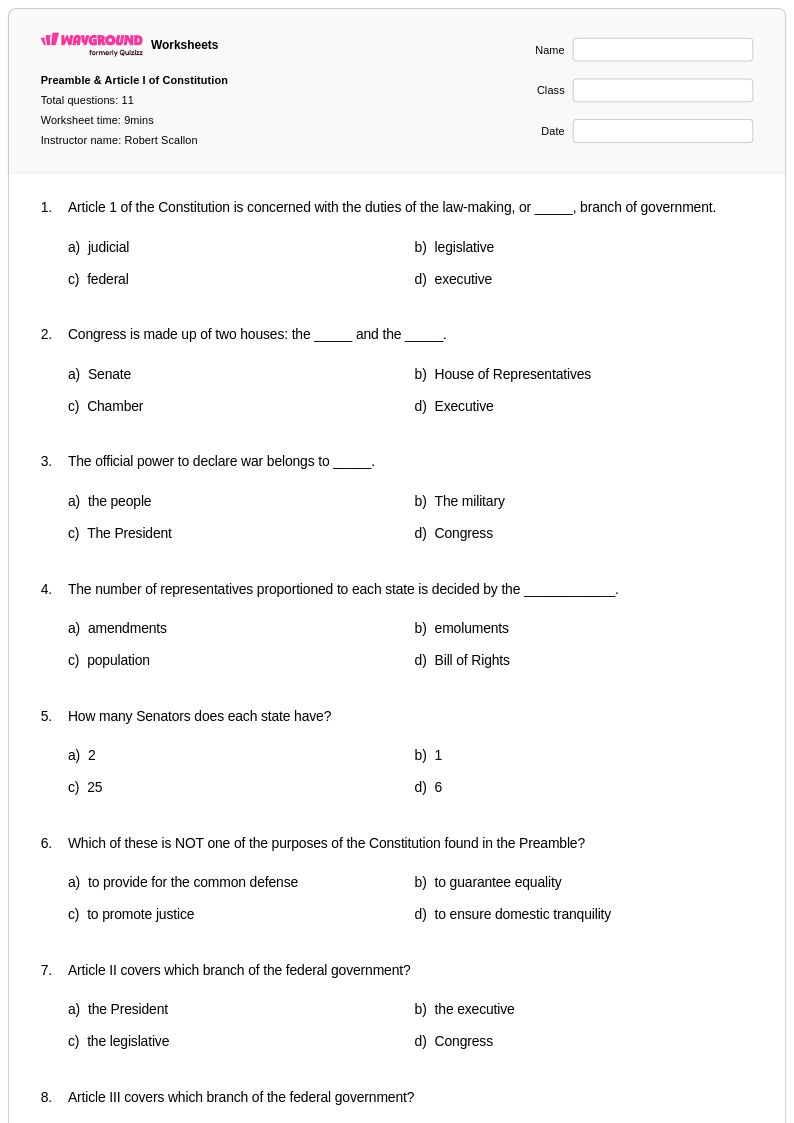
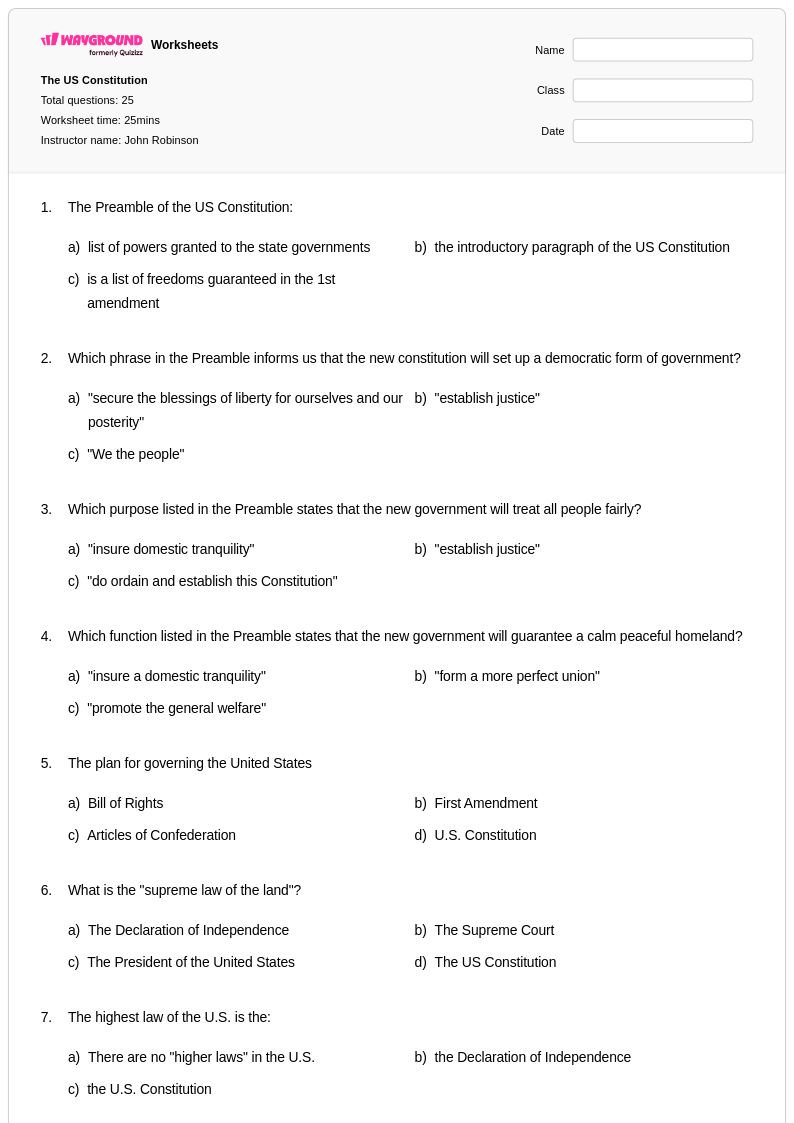
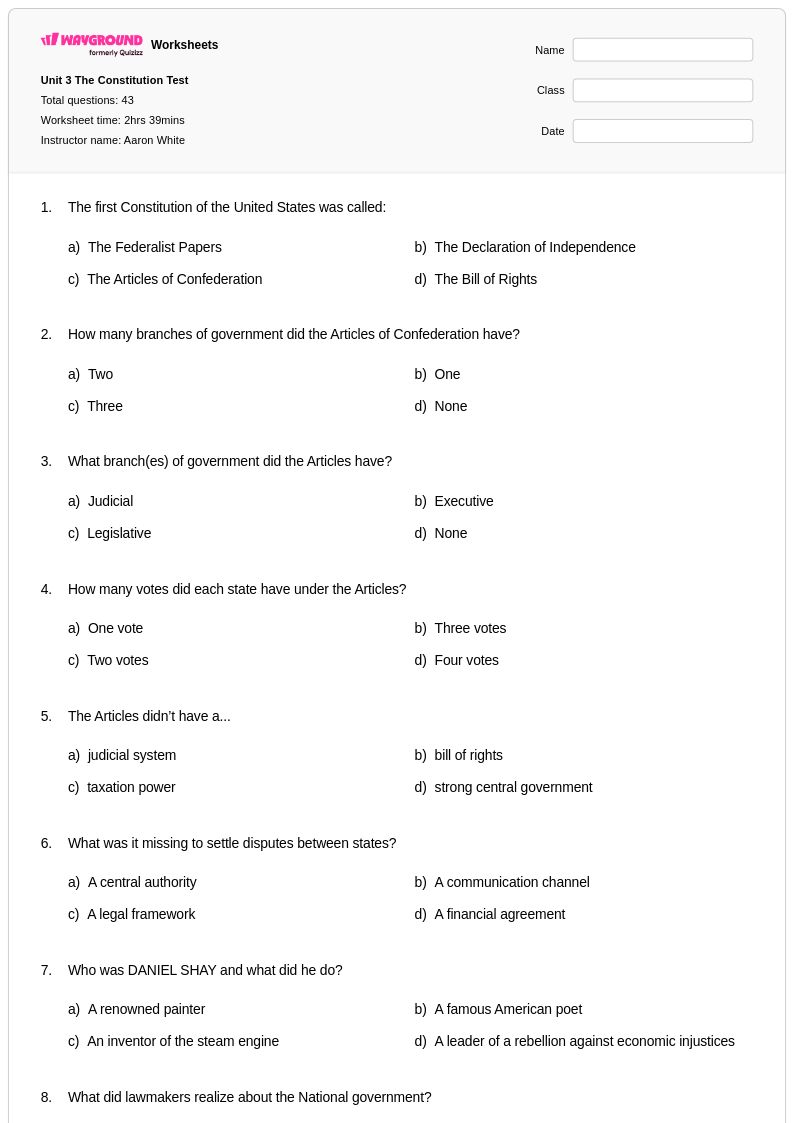
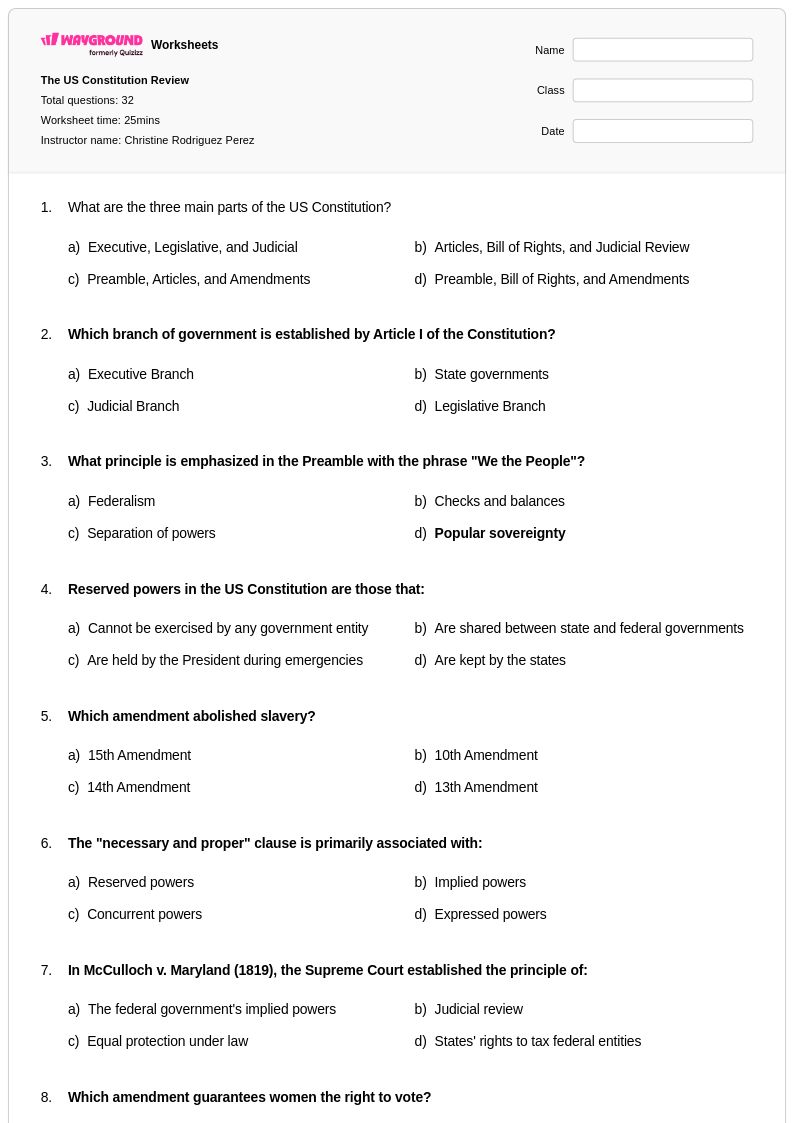
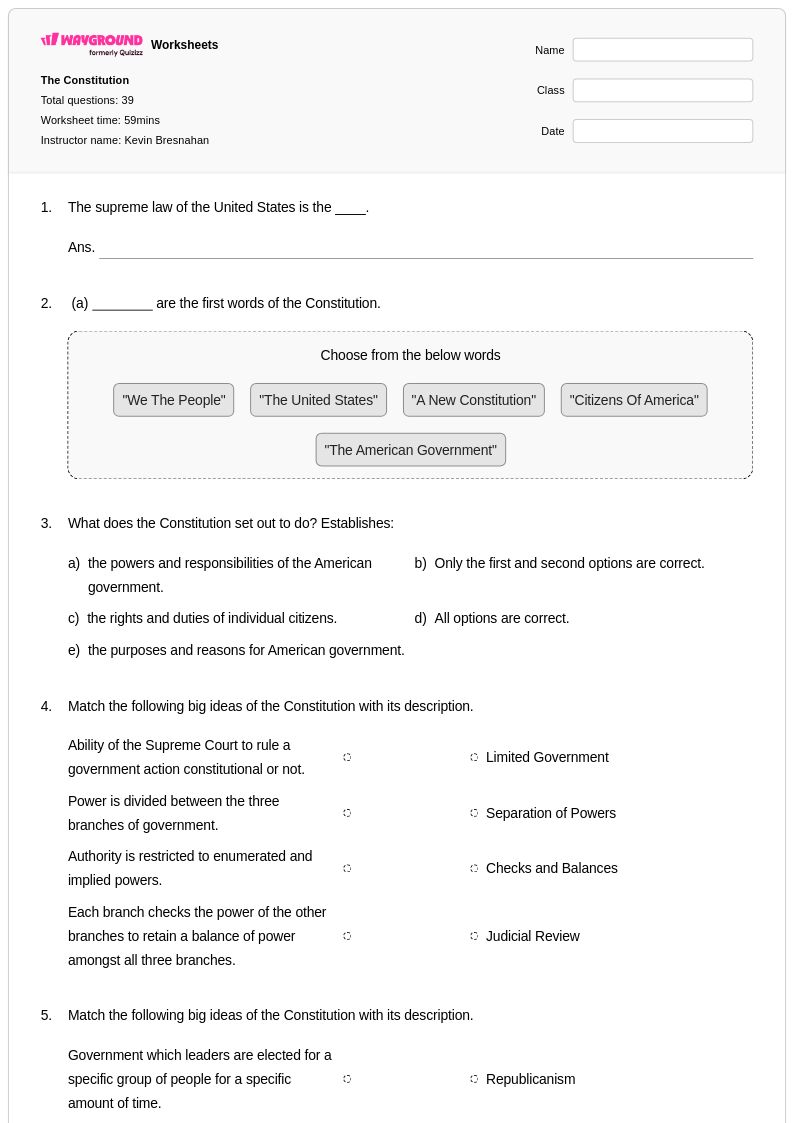
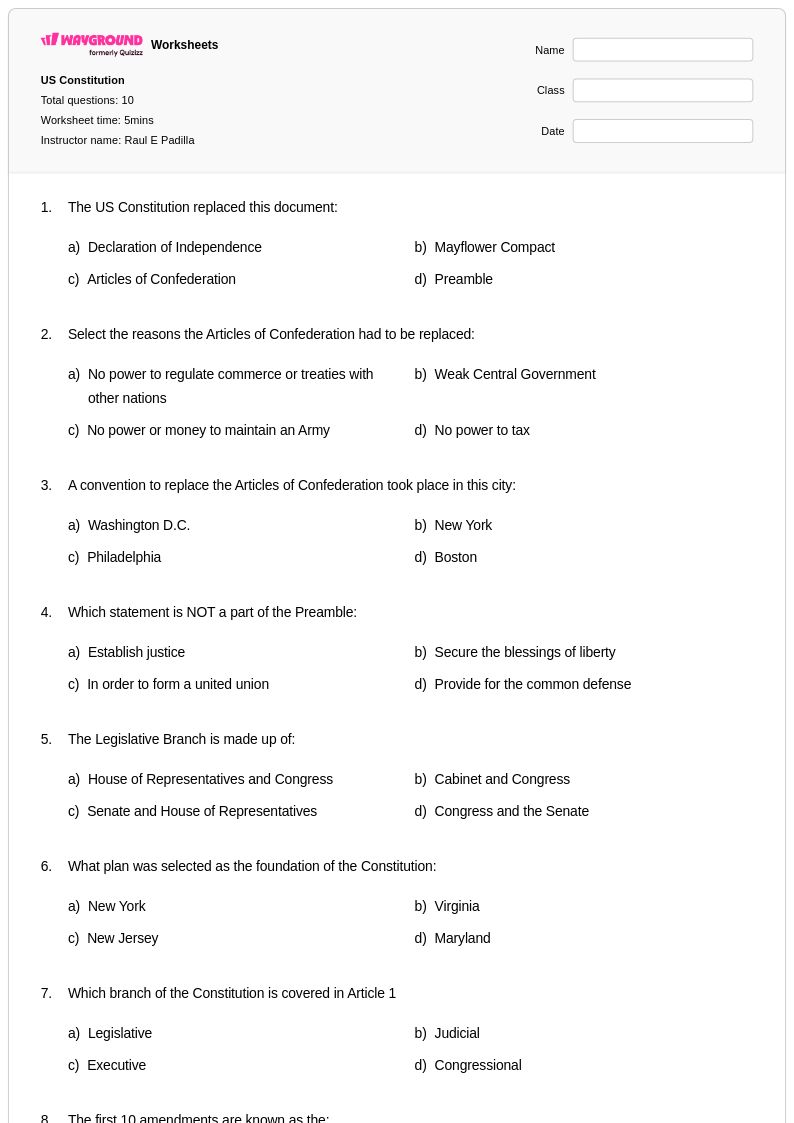
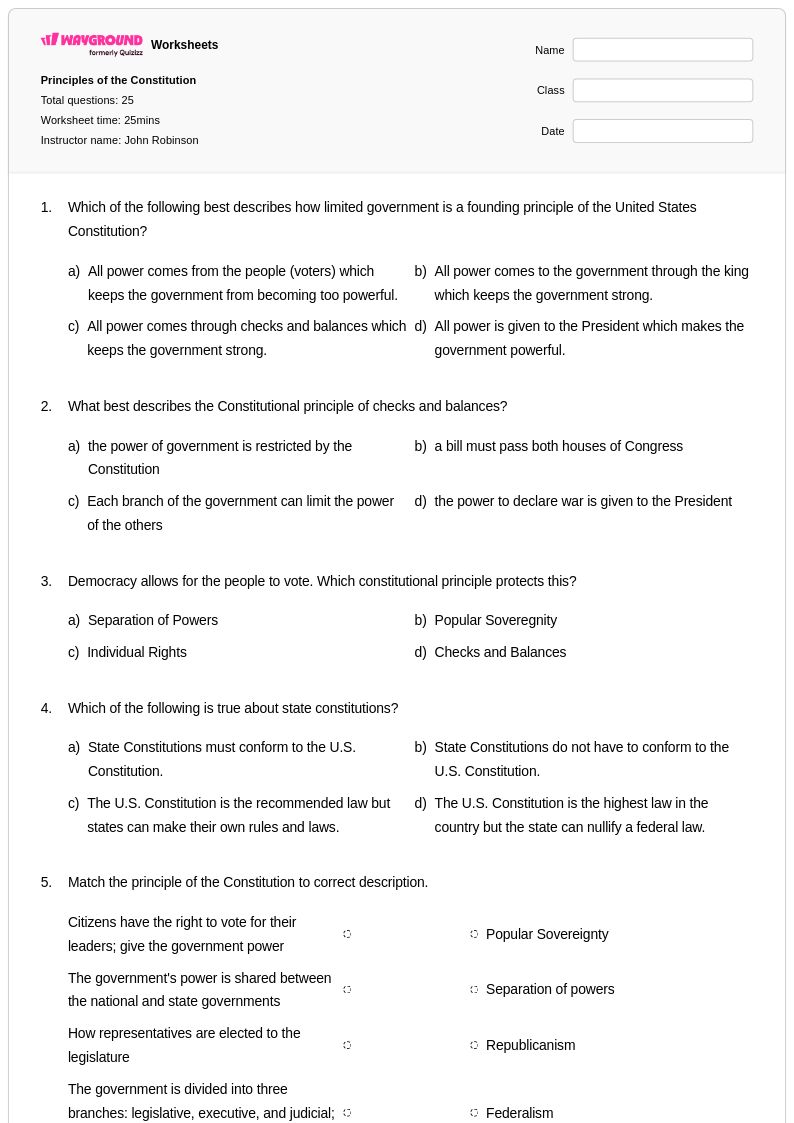
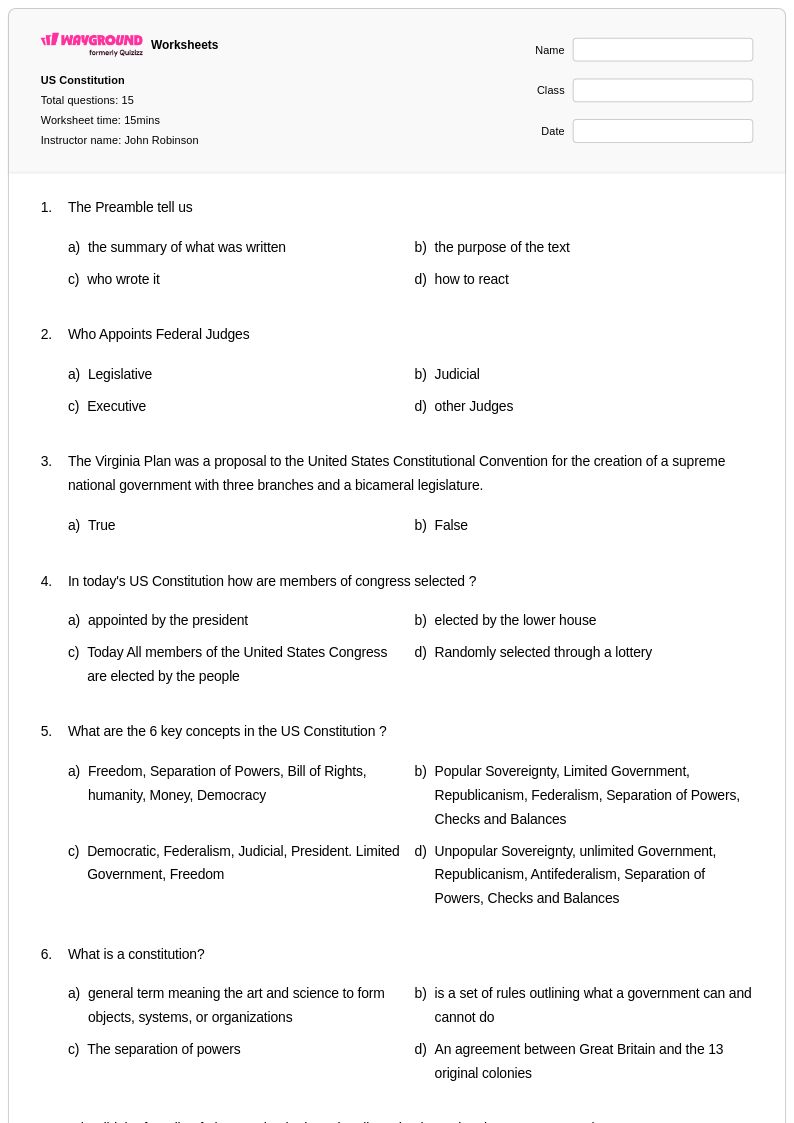
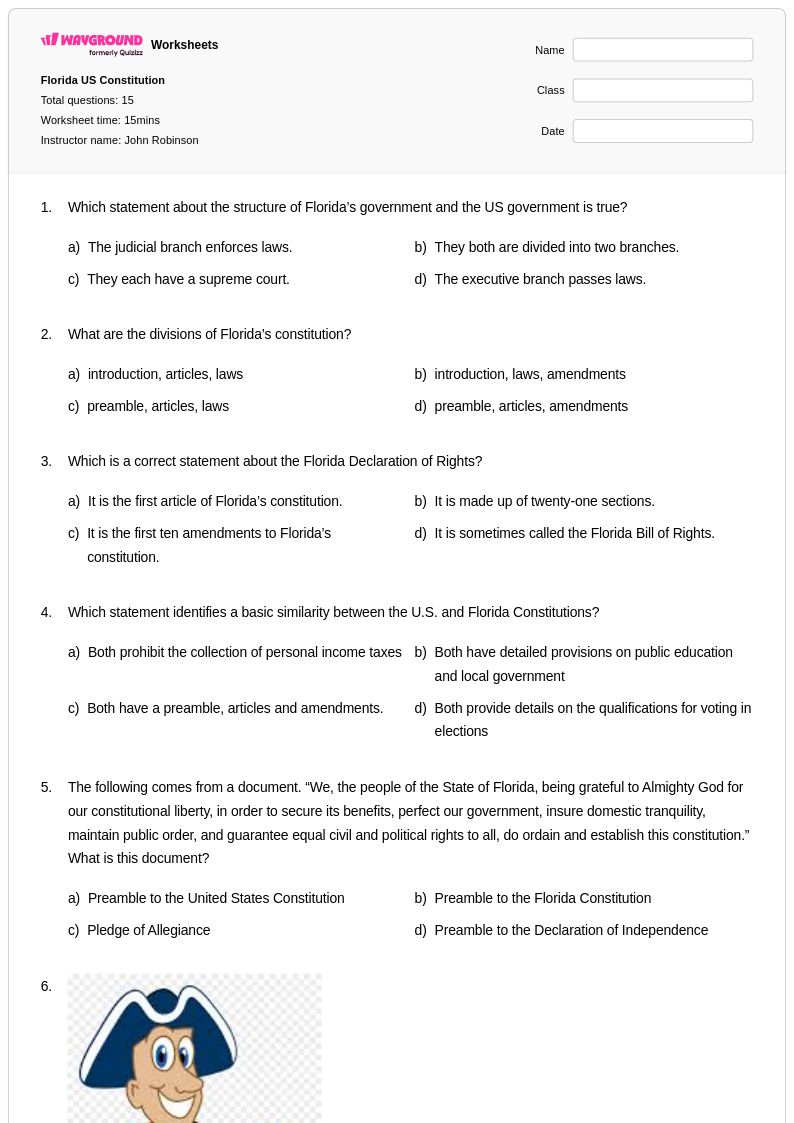
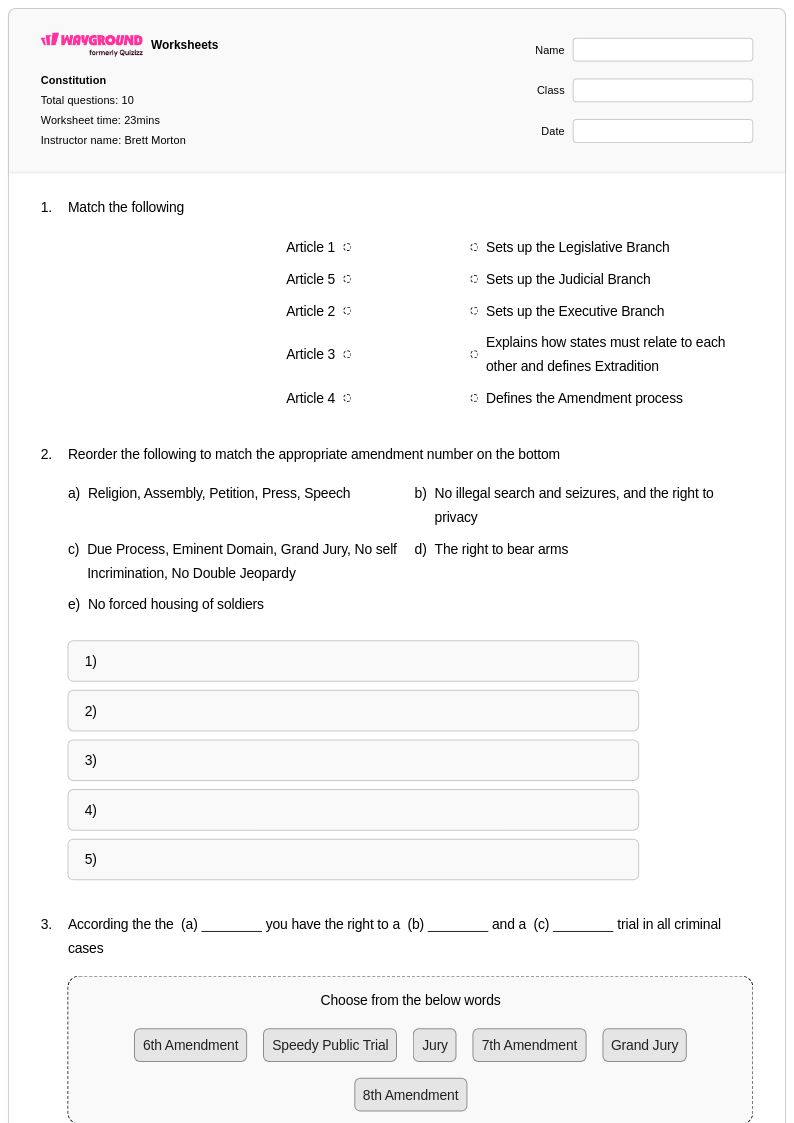
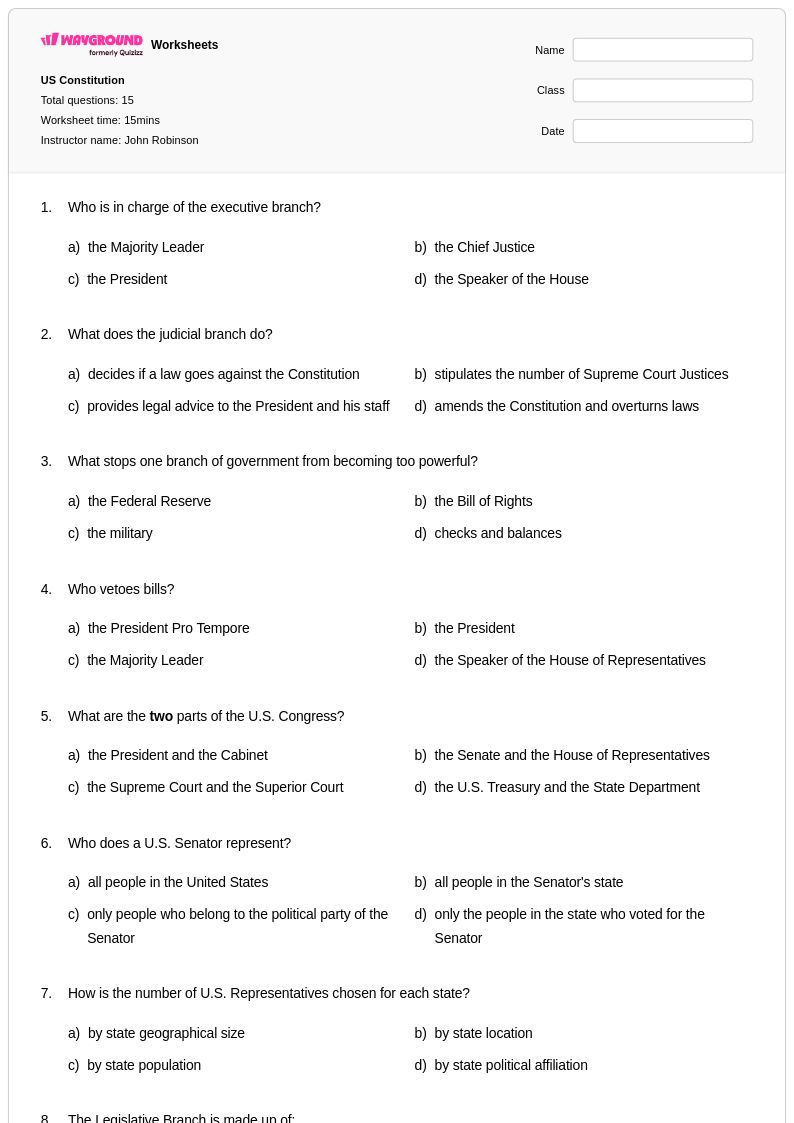
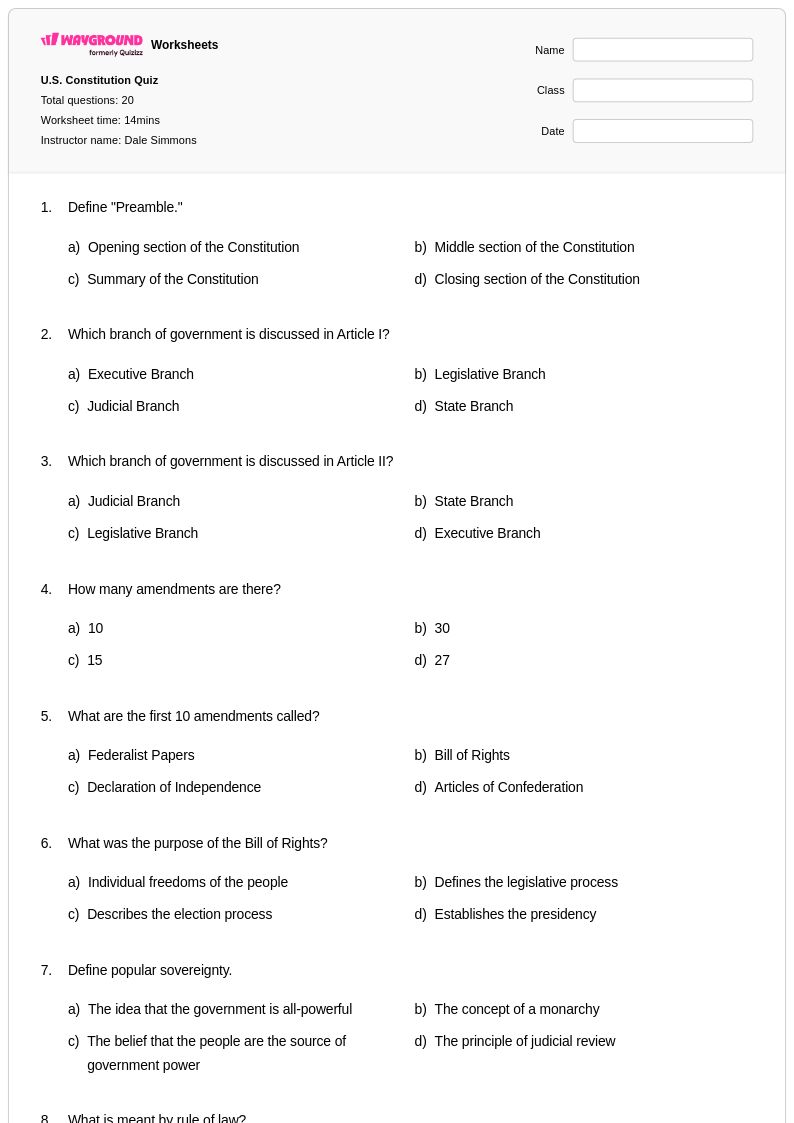
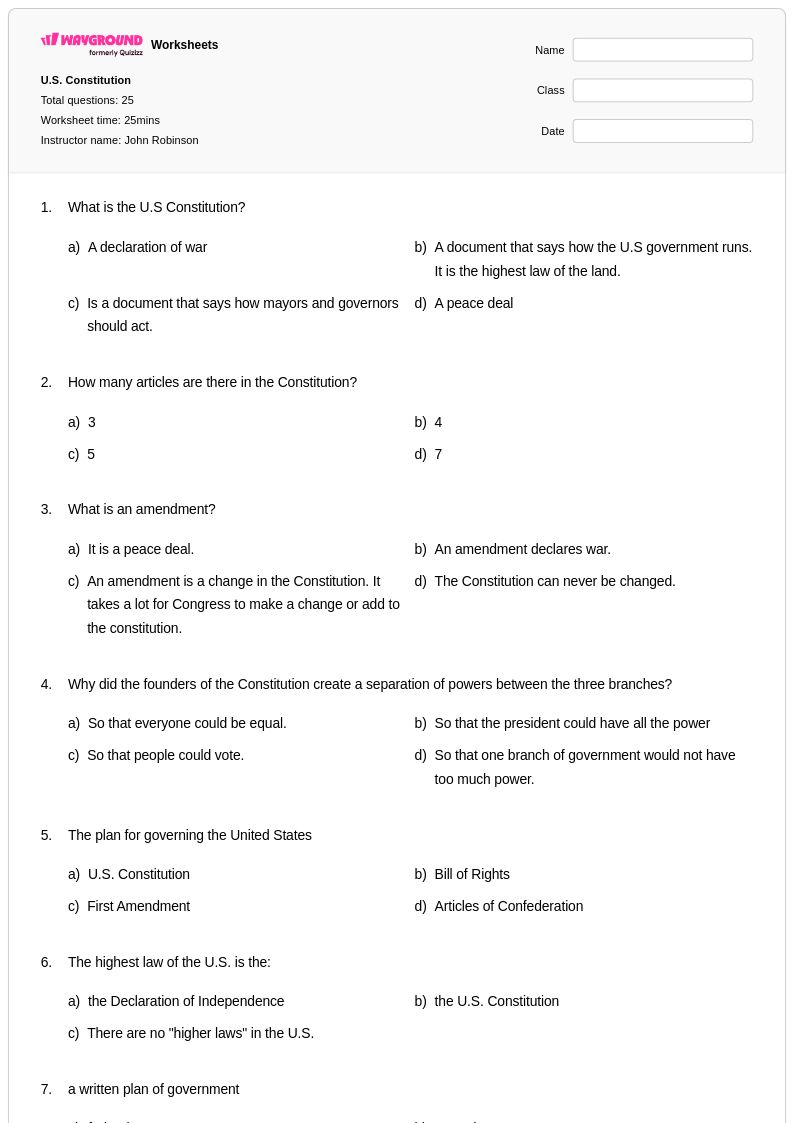
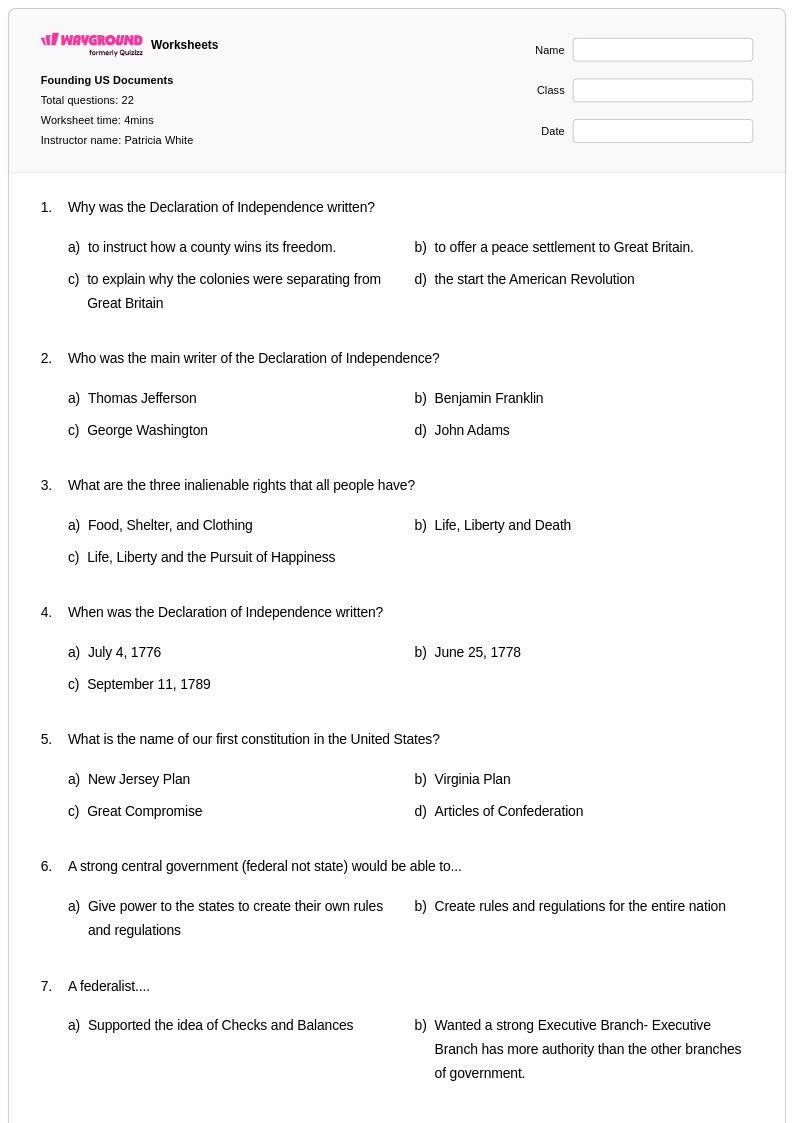
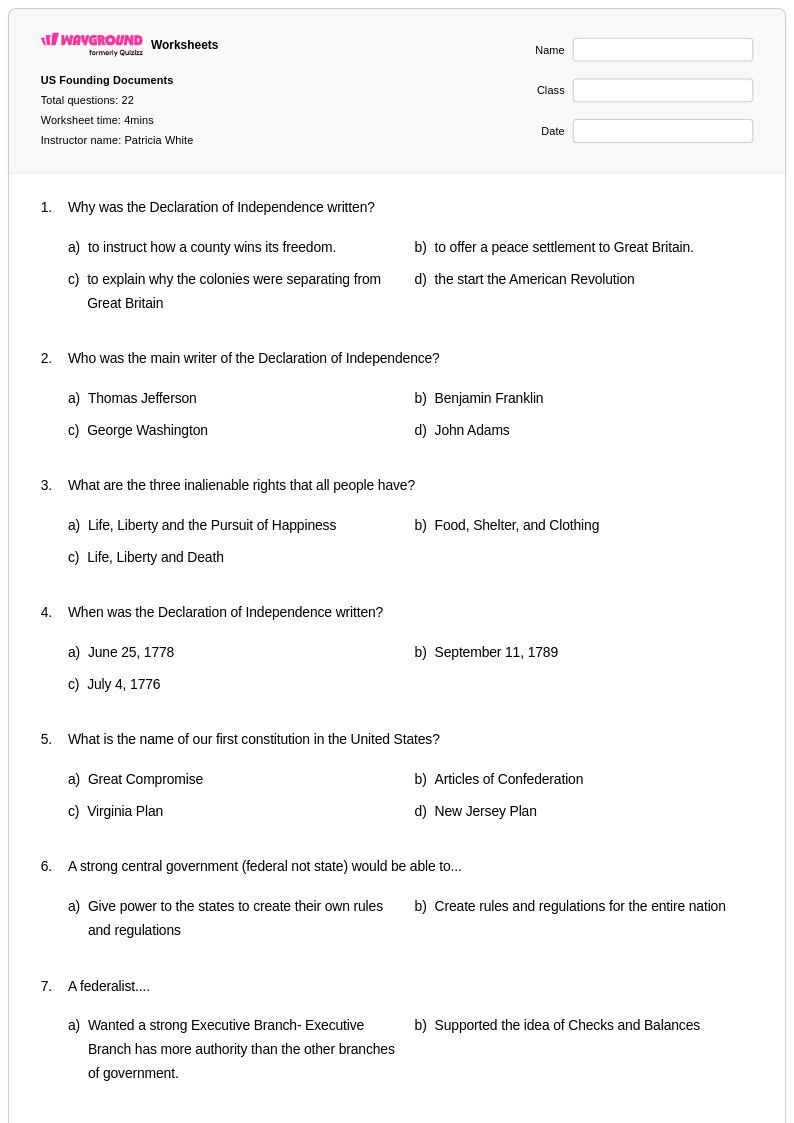
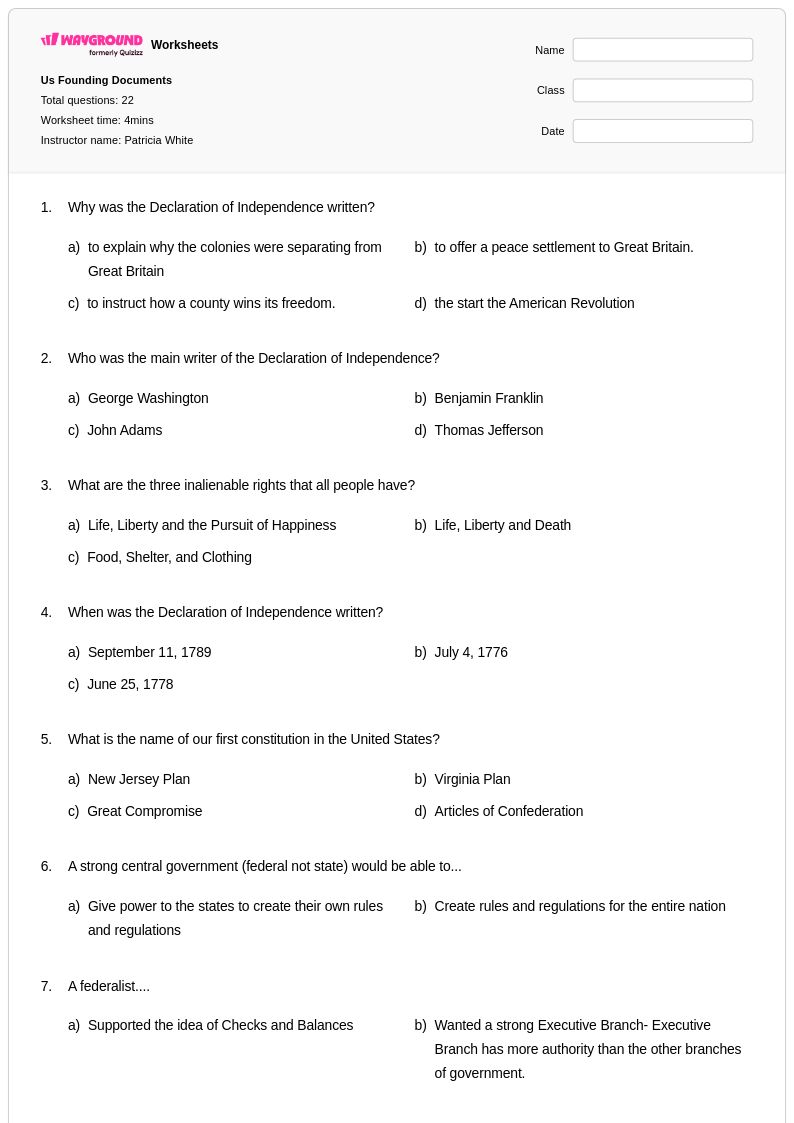
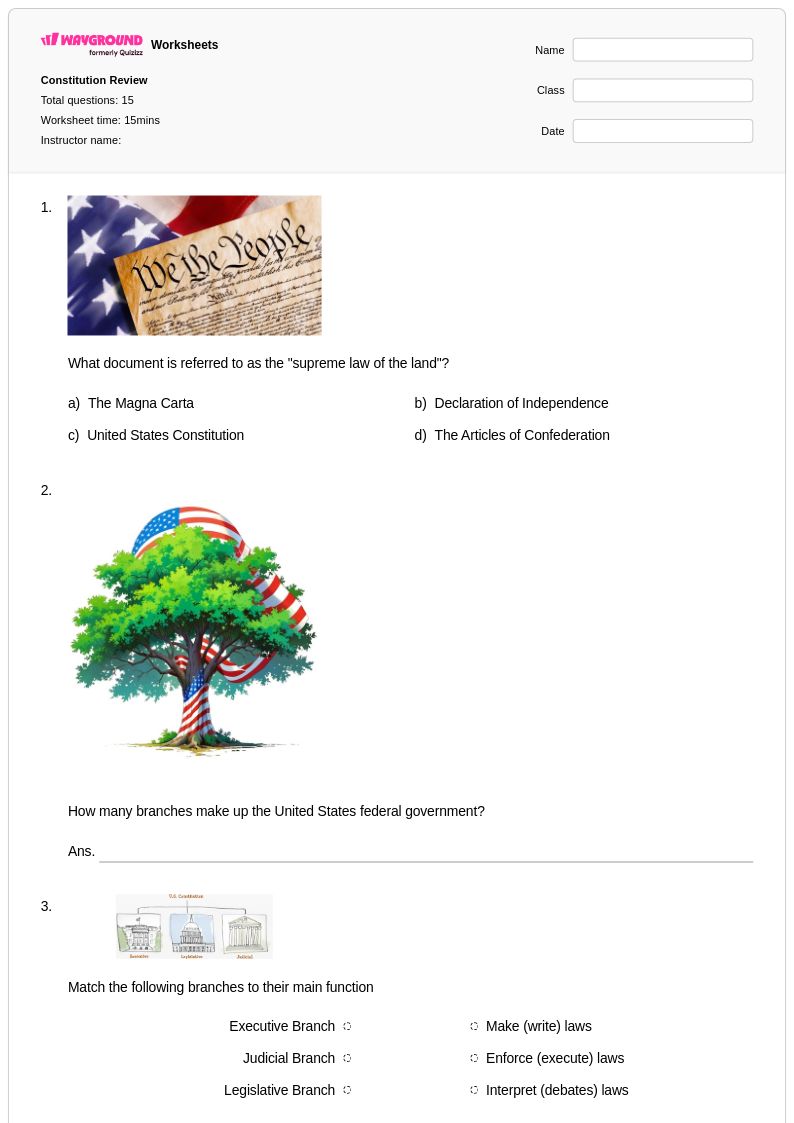
The Preamble of the US Constitution worksheets available through Wayground (formerly Quizizz) provide Class 11 students with comprehensive practice analyzing the foundational principles and language of America's most important governing document. These expertly designed worksheets strengthen critical thinking skills as students examine the six core purposes outlined in the Preamble, from forming a more perfect union to securing the blessings of liberty. Students engage with practice problems that require them to interpret 18th-century language, connect constitutional principles to modern governance, and analyze how the Preamble's goals have evolved throughout American history. Each worksheet includes a detailed answer key to support independent learning, and the free printable pdf format ensures accessibility for all classroom environments while maintaining the rigorous academic standards expected at the junior year level.
Wayground (formerly Quizizz) empowers educators with an extensive collection of millions of teacher-created resources specifically designed for constitutional studies, featuring robust search and filtering capabilities that allow instructors to locate precisely the right Preamble worksheets for their Class 11 Social Studies curriculum. The platform's standards alignment ensures that all materials meet state and national educational requirements, while differentiation tools enable teachers to customize content complexity for diverse learning needs within the same classroom. These flexible resources are available in both printable and digital formats, including downloadable pdfs, making lesson planning seamless whether instruction occurs in-person or remotely. Teachers utilize these comprehensive worksheet collections for initial skill building, targeted remediation for struggling students, enrichment opportunities for advanced learners, and ongoing practice to reinforce constitutional literacy throughout the academic year.
FAQs
How do I teach the Preamble of the US Constitution to students?
Teaching the Preamble effectively starts with breaking it into its six stated purposes: forming a more perfect union, establishing justice, ensuring domestic tranquility, providing for the common defense, promoting the general welfare, and securing the blessings of liberty. Teachers typically begin with a close reading of the original text, then guide students to connect each purpose to specific historical events that motivated the Founders and to contemporary examples of each principle in action. Pairing direct instruction with structured textual analysis activities helps students move from surface-level memorization to genuine constitutional understanding.
What exercises help students practice interpreting the Preamble of the US Constitution?
Close reading exercises that require students to paraphrase eighteenth-century language in modern terms are among the most effective practice activities for the Preamble. Students also benefit from exercises that ask them to match each of the Preamble's six purposes to real-world governmental actions or current events, reinforcing the connection between constitutional principles and living governance. Vocabulary-focused tasks targeting words like 'tranquility,' 'posterity,' and 'ordain' build the language comprehension students need before they can engage in deeper constitutional analysis.
What mistakes do students commonly make when analyzing the Preamble of the US Constitution?
The most frequent misconception is that the Preamble itself grants legal rights or powers — students often confuse its aspirational, introductory language with the binding provisions found in the articles and amendments. A second common error is treating the six purposes as a flat list rather than understanding that they reflect distinct but interconnected goals of the new government. Teachers should explicitly address these distinctions early, as conflating the Preamble's purpose with that of the Bill of Rights is a persistent error that surfaces on assessments.
How do I connect the Preamble of the US Constitution to modern American government in my lessons?
Each of the Preamble's six purposes can be mapped to specific branches, agencies, or policies of modern government — for example, 'providing for the common defense' connects directly to the Department of Defense and Congressional war powers, while 'promoting the general welfare' is often cited in debates over social programs and federal legislation. Asking students to evaluate a current news event through the lens of one Preamble principle is a high-engagement strategy that builds both constitutional literacy and media analysis skills. This approach also reinforces that the Preamble remains a living framework for understanding the government's stated obligations to its citizens.
How can I use Wayground's Preamble of the US Constitution worksheets in my classroom?
Wayground's Preamble worksheets are available as printable PDFs for traditional classroom use and in digital formats for technology-integrated or hybrid learning environments, and teachers can also host them as a quiz directly on the Wayground platform. Each worksheet includes a complete answer key, reducing prep time and making it straightforward to use for guided practice, independent work, or homework. For students who need additional support, Wayground's accommodation tools — including read aloud, reduced answer choices, and extended time — can be configured per student so that all learners can access the same constitutional content at an appropriate level.
How do I differentiate Preamble of the US Constitution instruction for students at different levels?
For students who struggle with primary source language, scaffolding strategies such as annotated versions of the text, sentence frames for paraphrasing, and vocabulary pre-teaching are essential before moving to analysis tasks. Advanced learners can be challenged with comparative analysis — examining how the Preamble's language differs from the Articles of Confederation's stated goals, or evaluating whether modern governance fulfills each of the six purposes. On Wayground, teachers can apply individual accommodations such as read aloud for English language learners or students with reading difficulties, and reduced answer choices for students who need cognitive load support, without disrupting the experience of the rest of the class.