
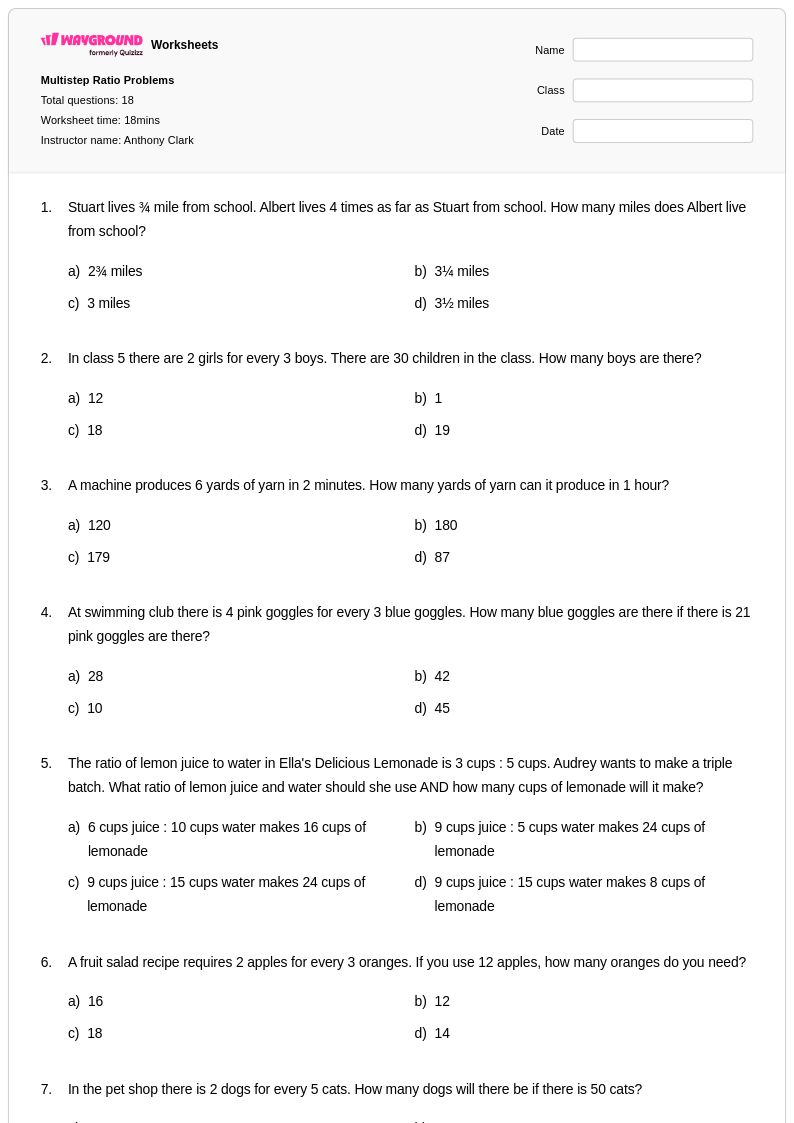
18 Q
4th - Uni
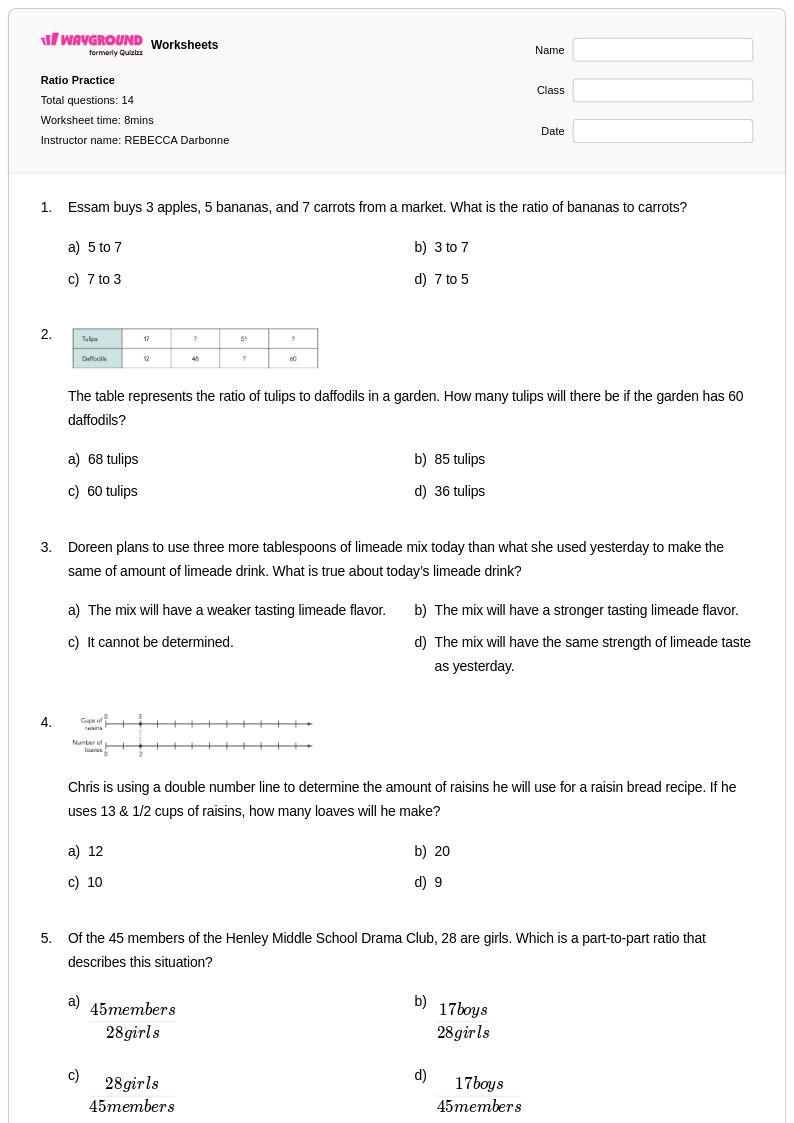
14 Q
4th - 7th
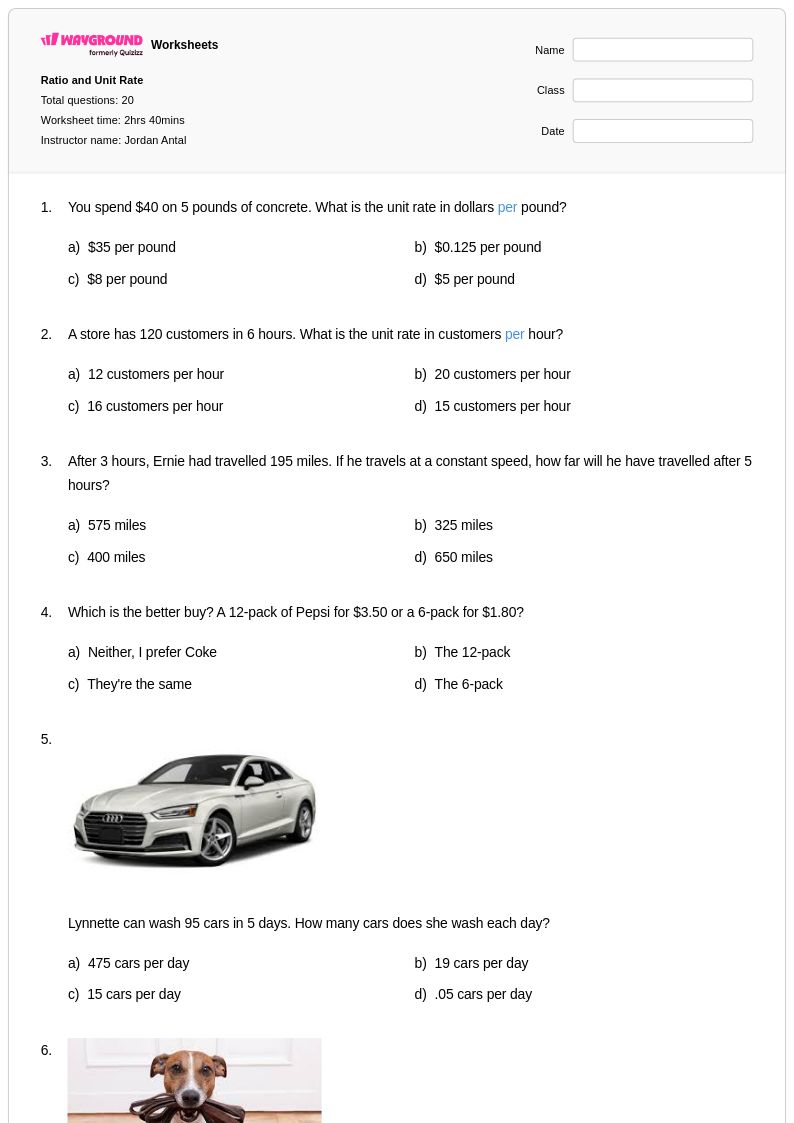
20 Q
4th - 6th
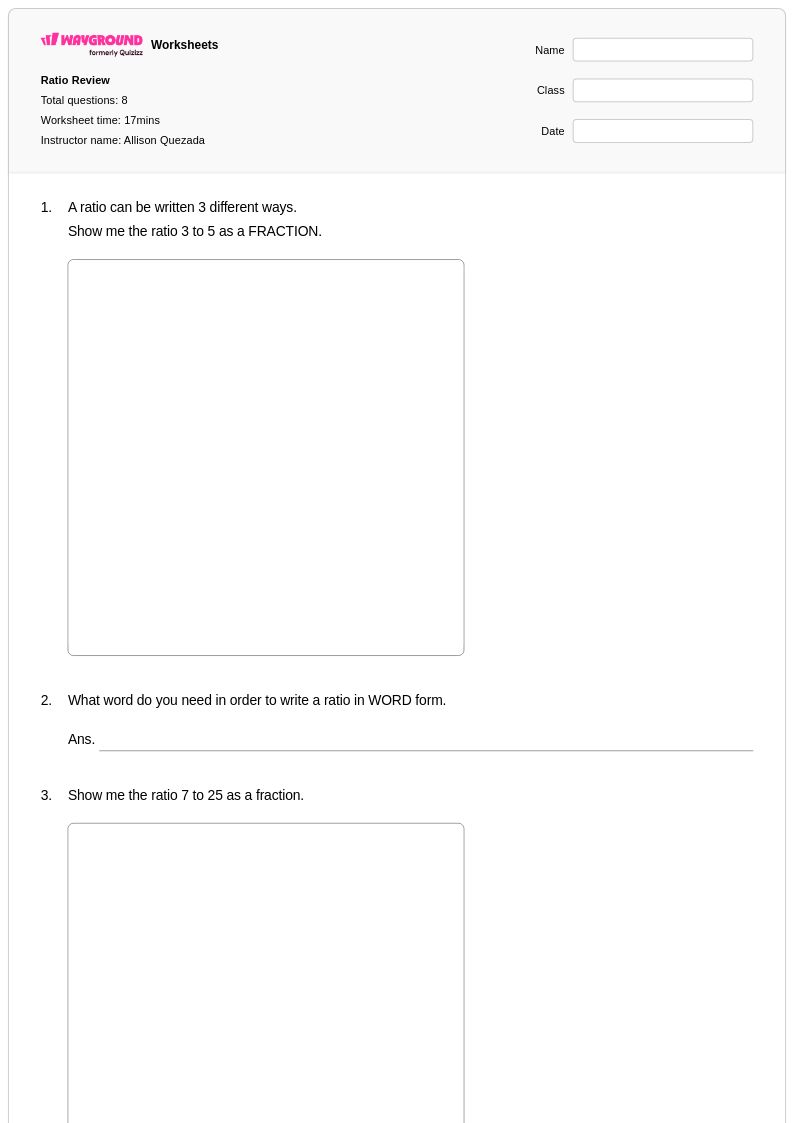
8 Q
4th
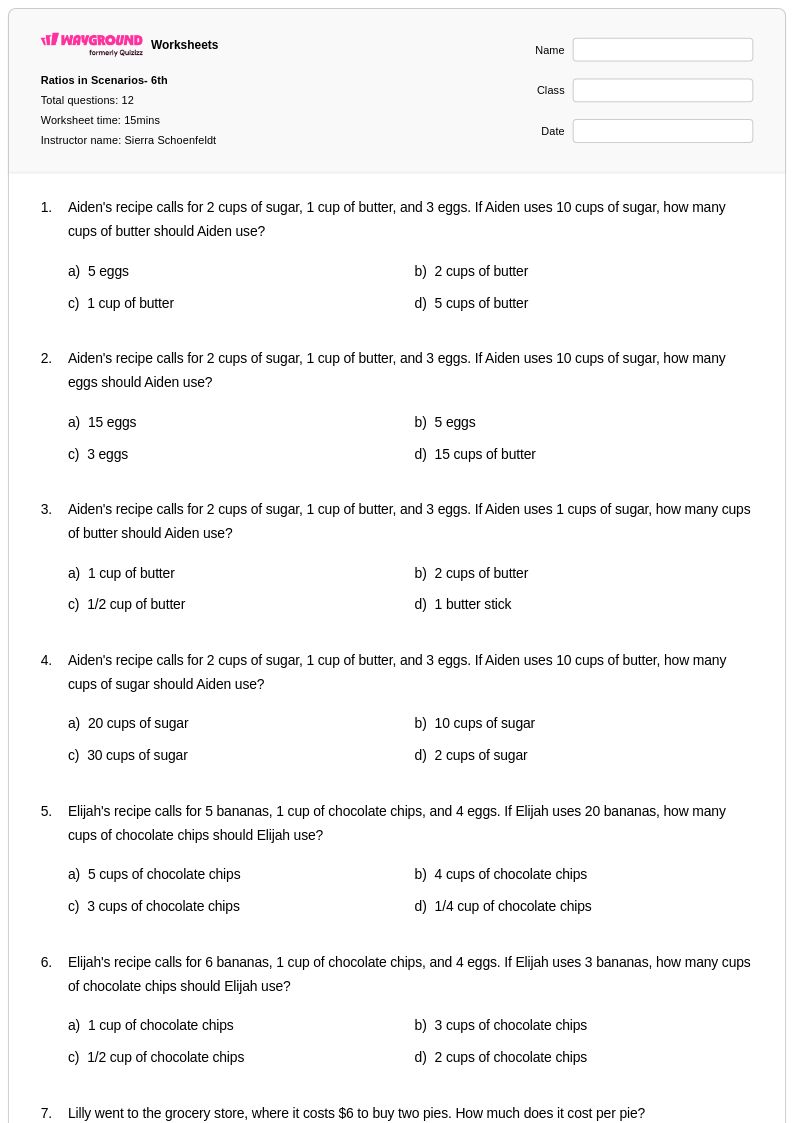
12 Q
4th - 7th
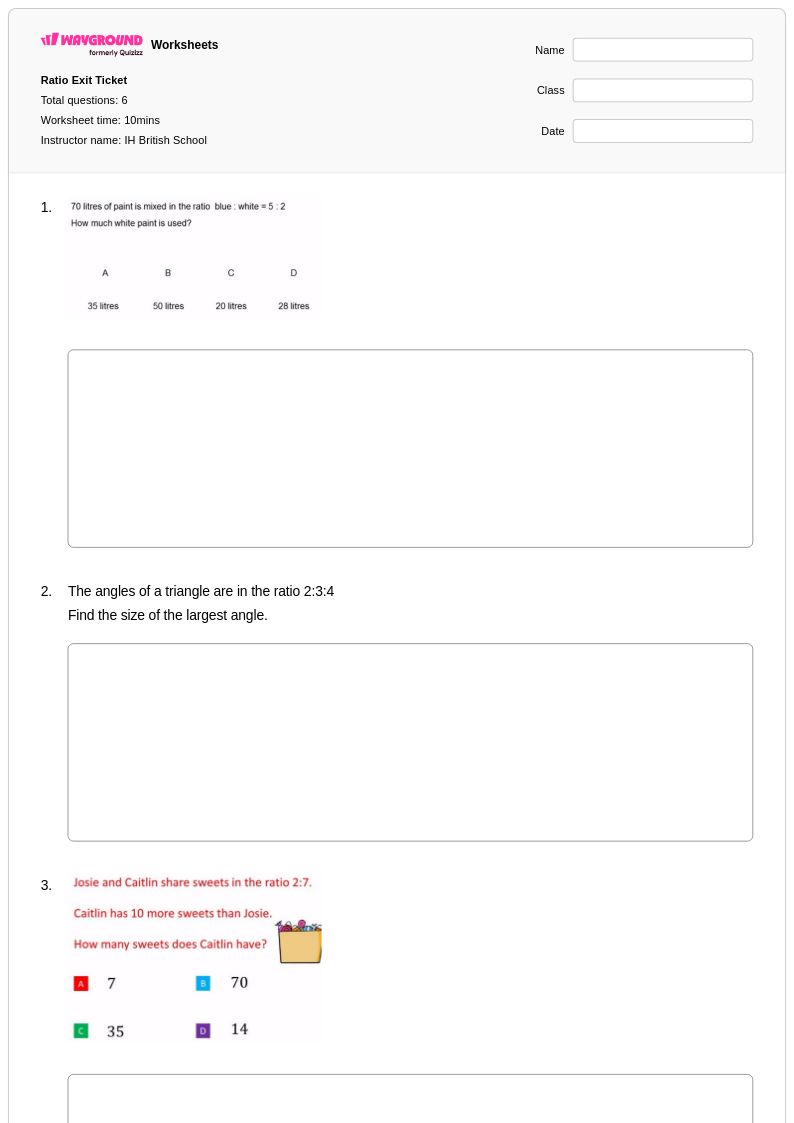
6 Q
2nd - 5th
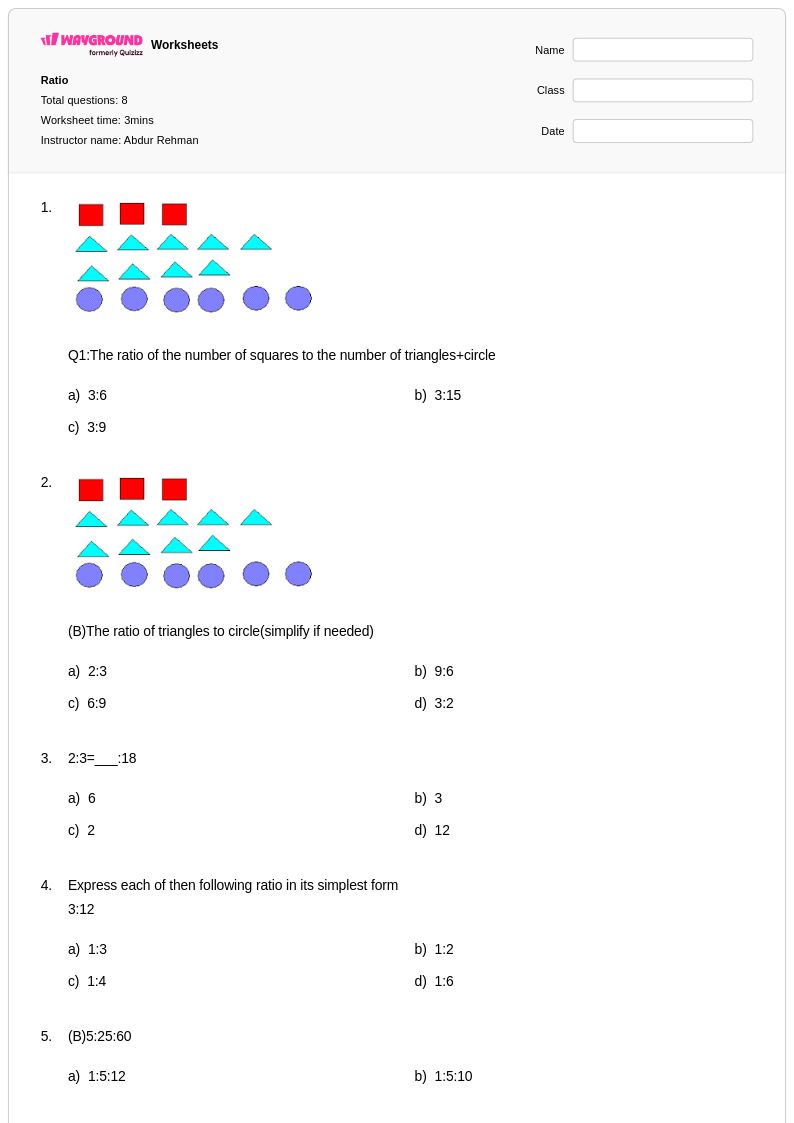
8 Q
4th - 8th
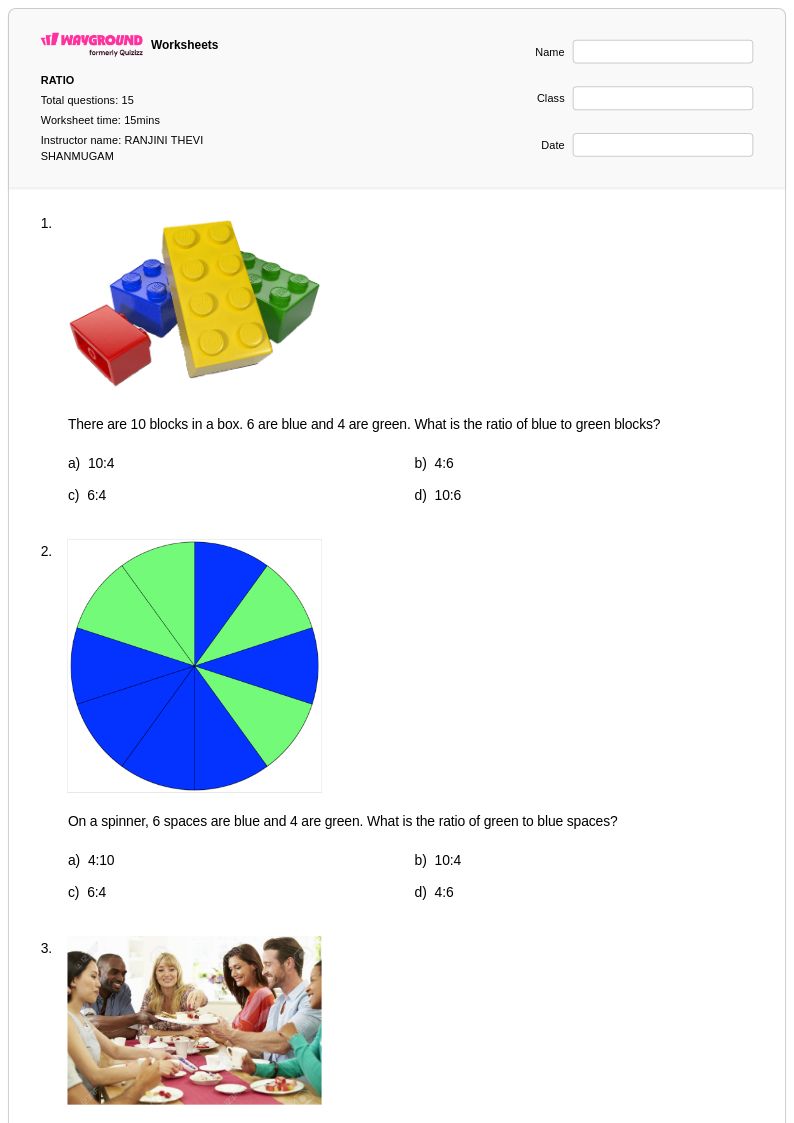
15 Q
4th
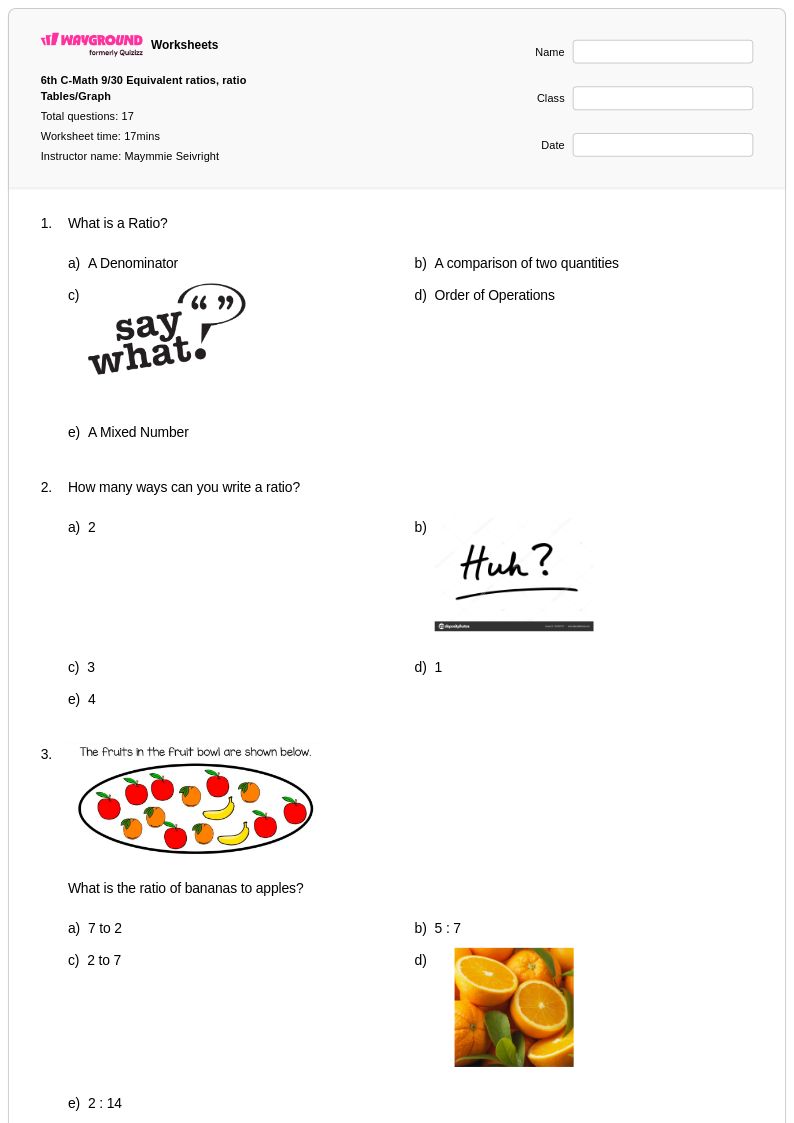
17 Q
1st - 5th
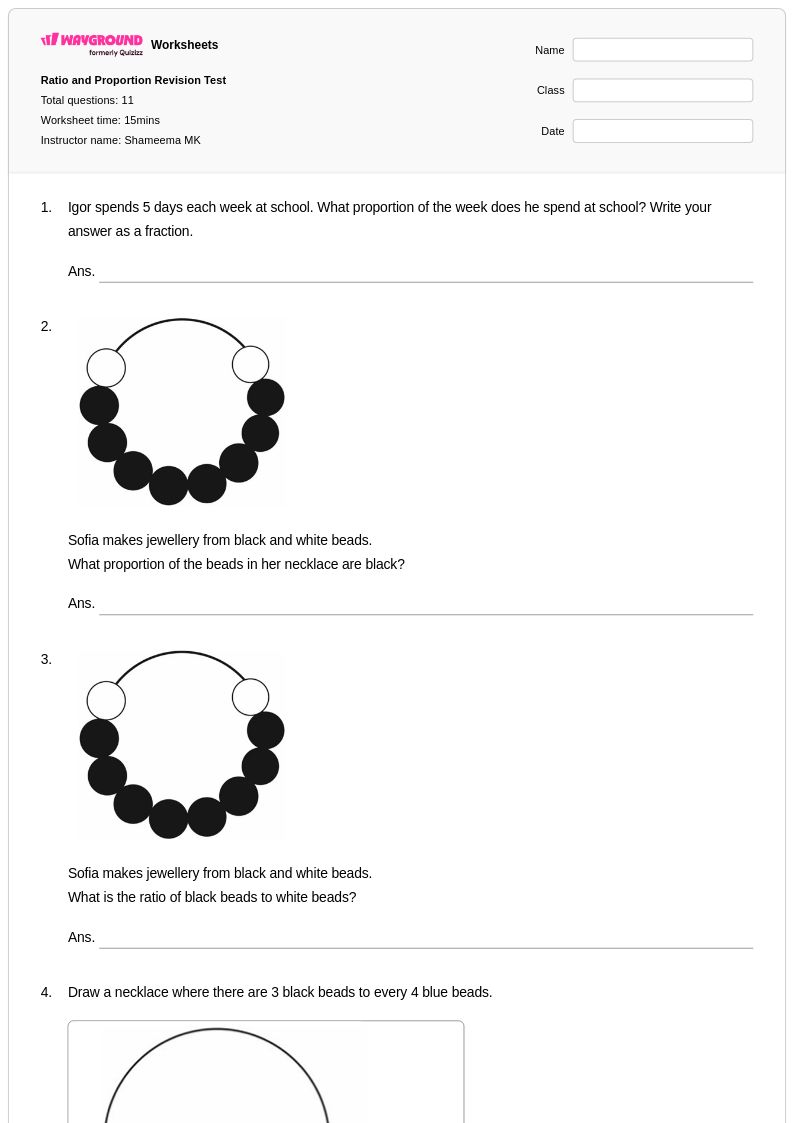
11 Q
4th - Uni
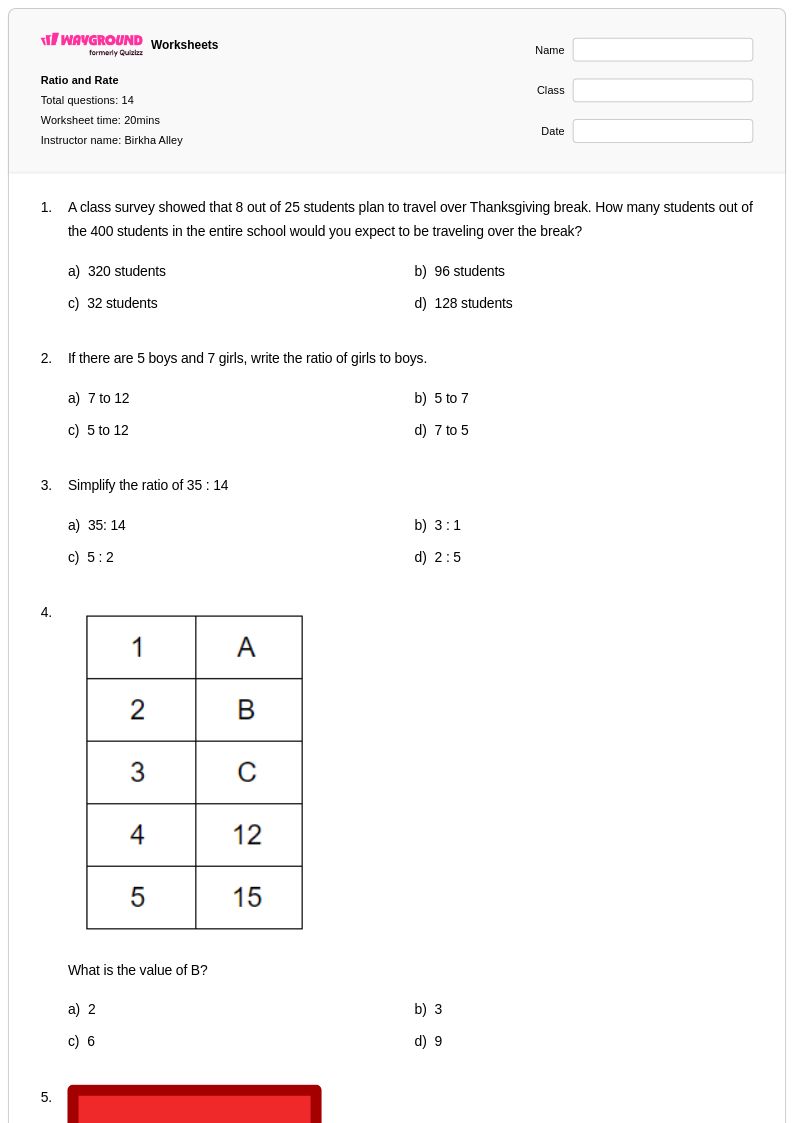
14 Q
4th - 7th
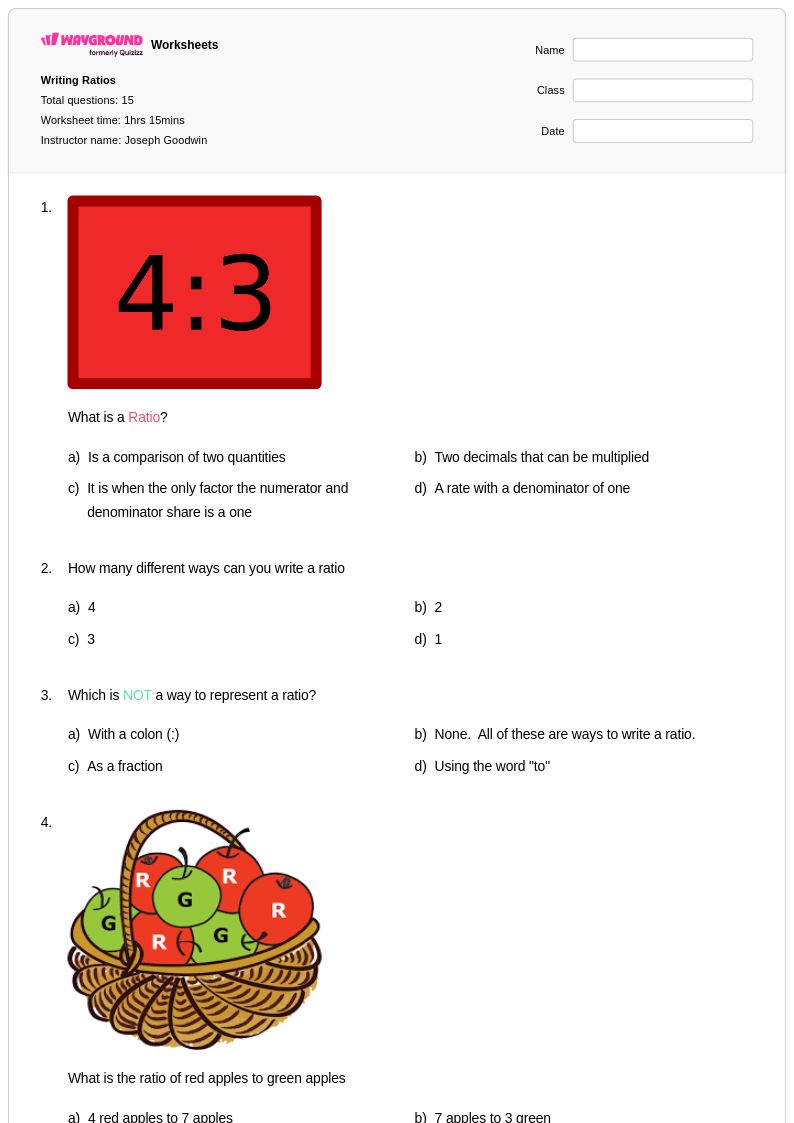
15 Q
3rd - 6th
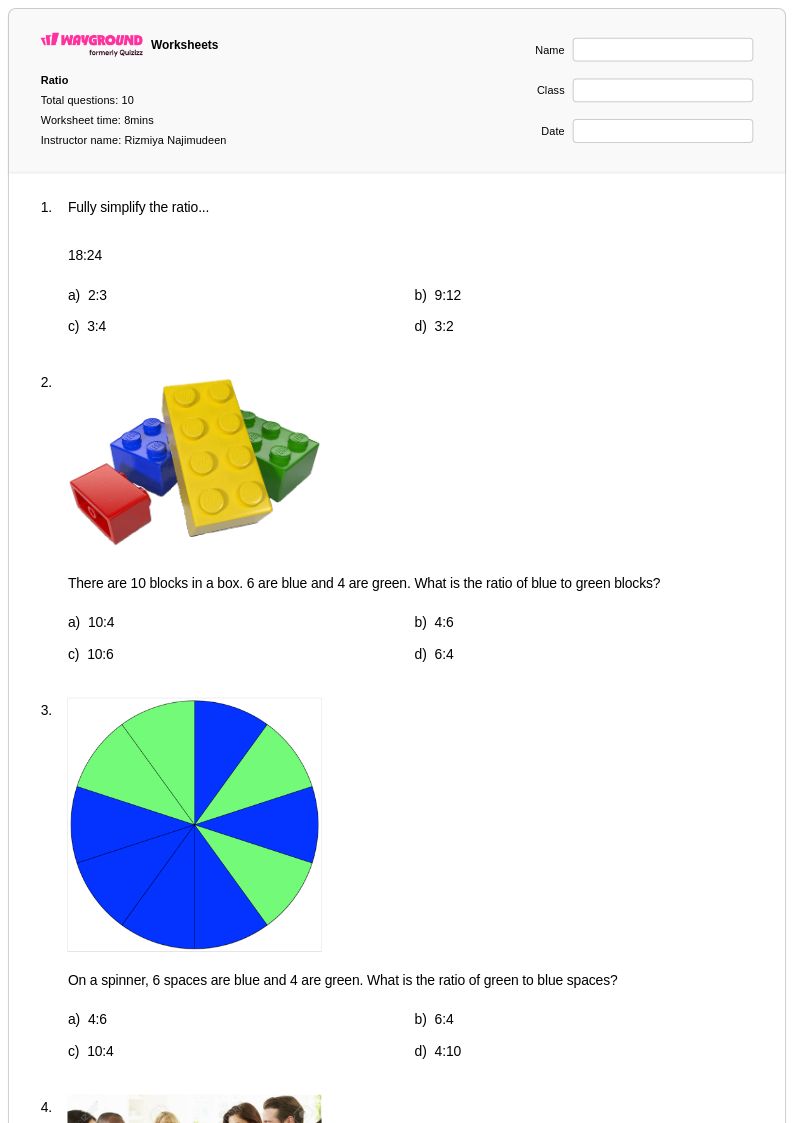
10 Q
4th
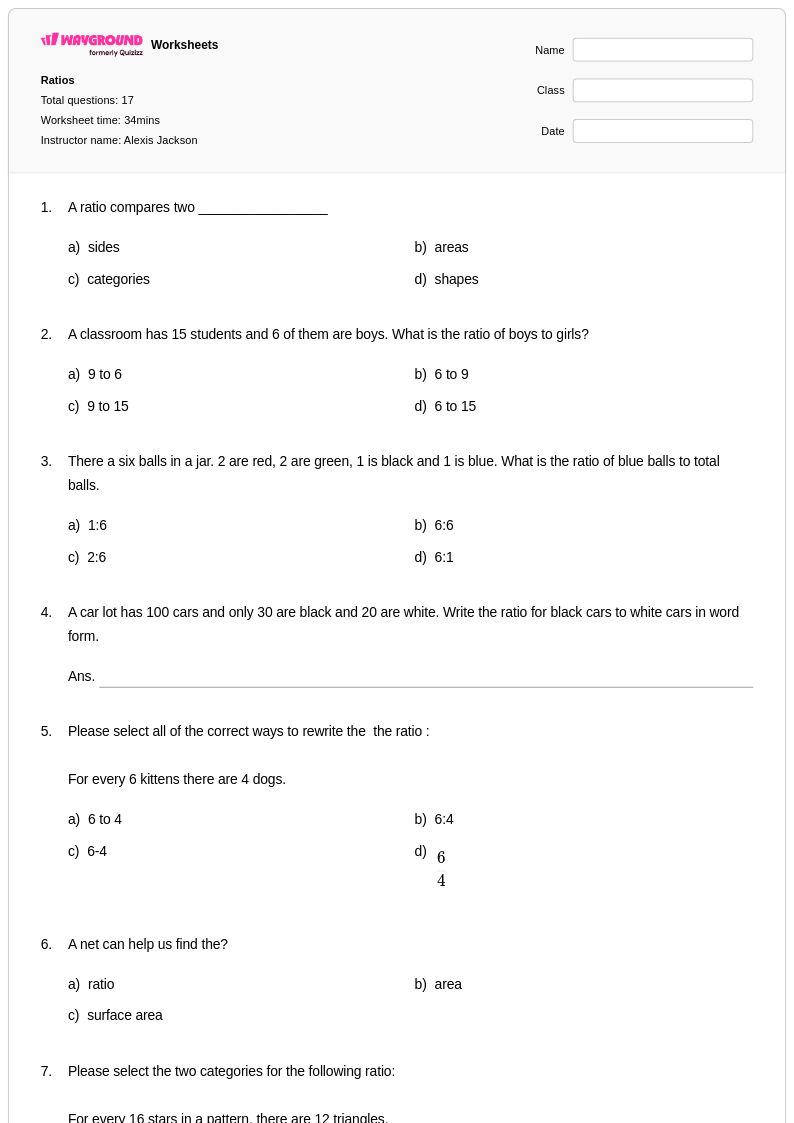
17 Q
4th - 6th
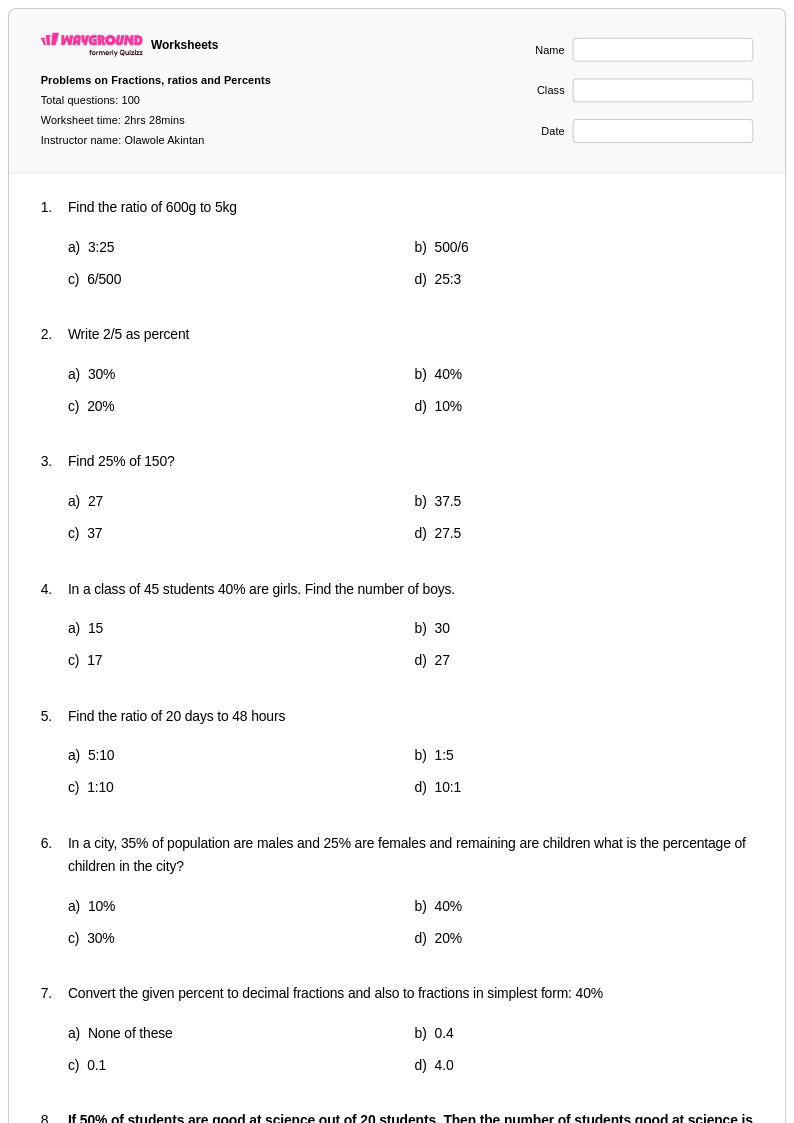
100 Q
4th - 6th
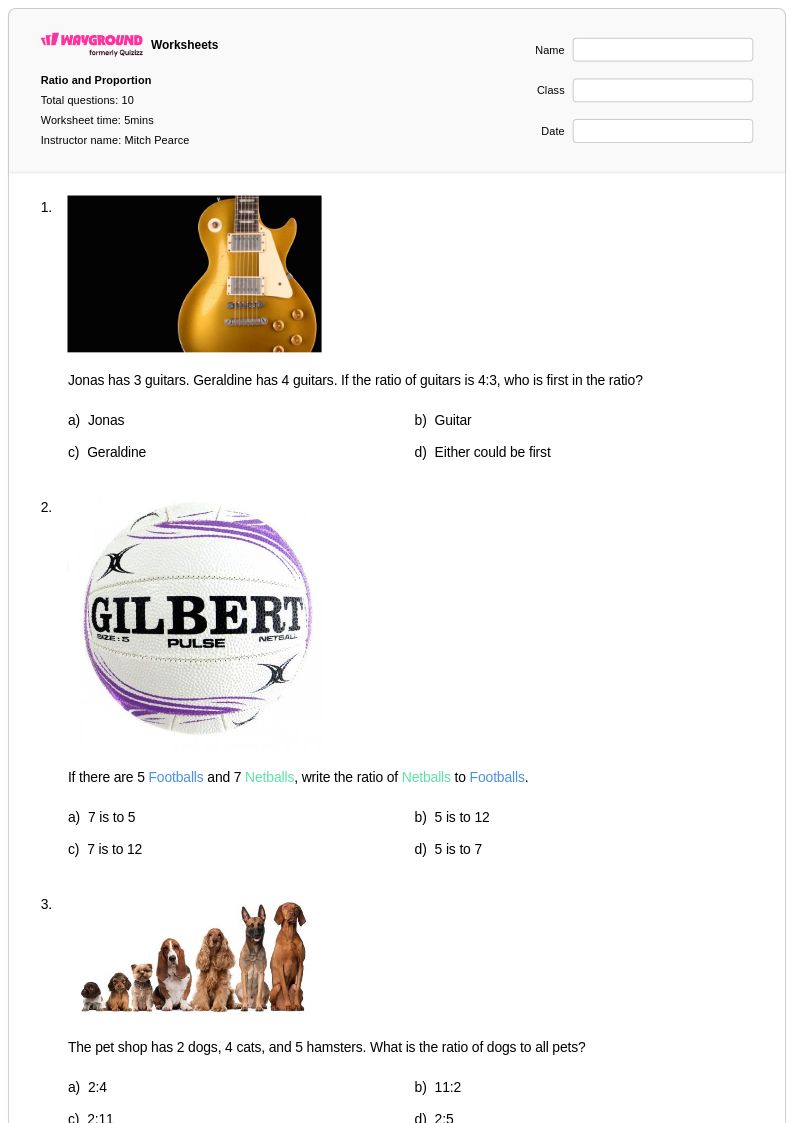
10 Q
KG - 4th
10 Q
4th
20 Q
2nd - 6th
22 Q
4th

15 Q
4th
11 Q
4th - 7th
17 Q
1st - PD
10 Q
3rd - 5th
15 Q
2nd - Uni
Explore Other Subject Worksheets for class 4
Explore printable Ratio Problems worksheets for Class 4
Class 4 ratio problems worksheets from Wayground (formerly Quizizz) provide students with essential practice in understanding and solving mathematical relationships between quantities. These comprehensive printables focus on building foundational skills in comparing numbers, identifying equivalent ratios, and solving real-world problems that involve proportional thinking. Each worksheet includes carefully crafted practice problems that guide fourth-grade students through the process of expressing ratios in multiple ways, simplifying ratios to their lowest terms, and applying ratio concepts to everyday scenarios such as recipes, sports statistics, and classroom situations. The free pdf resources come complete with detailed answer keys that support both independent practice and guided instruction, making them invaluable tools for reinforcing this critical mathematical concept.
Wayground (formerly Quizizz) empowers educators with millions of teacher-created ratio problem worksheets specifically designed for Class 4 mathematics instruction. The platform's robust search and filtering capabilities allow teachers to quickly locate resources that align with their specific curriculum standards and student needs, while advanced differentiation tools enable customization for various learning levels within the classroom. These versatile worksheet collections are available in both printable pdf format and interactive digital versions, providing flexibility for traditional classroom instruction, homework assignments, remediation sessions, and enrichment activities. Teachers can seamlessly integrate these resources into their lesson planning workflow, using them for formative assessment, skill-building practice, and targeted intervention to ensure all students develop strong conceptual understanding of ratio relationships and proportional reasoning.
FAQs
What do 4th graders learn about ratio problems?
What's a good way to teach equivalent ratios in 4th grade?
What kind of practice helps 4th graders with ratios?
What's a common mistake 4th graders make with equivalent ratios?
How can I use this Grade 4 ratio worksheet with my students?
How does this topic connect to 4th grade Common Core standards?