Free Printable Reflexive Pronouns Worksheets for Class 5
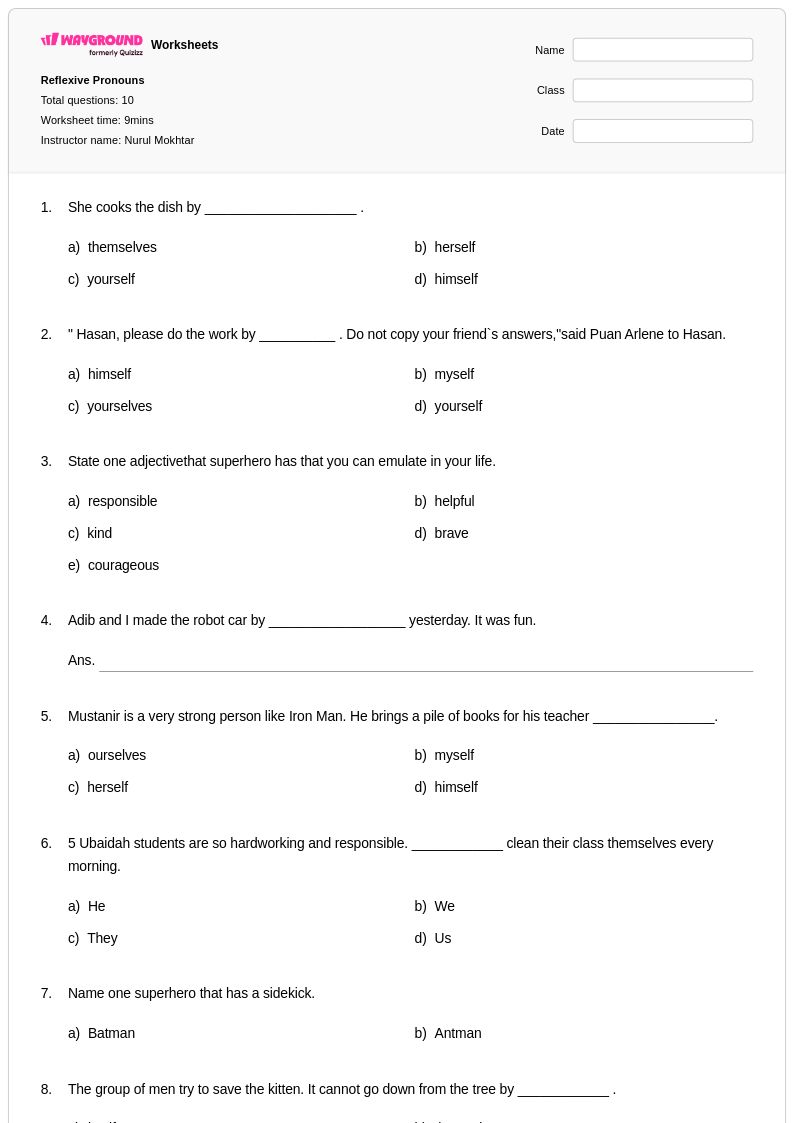
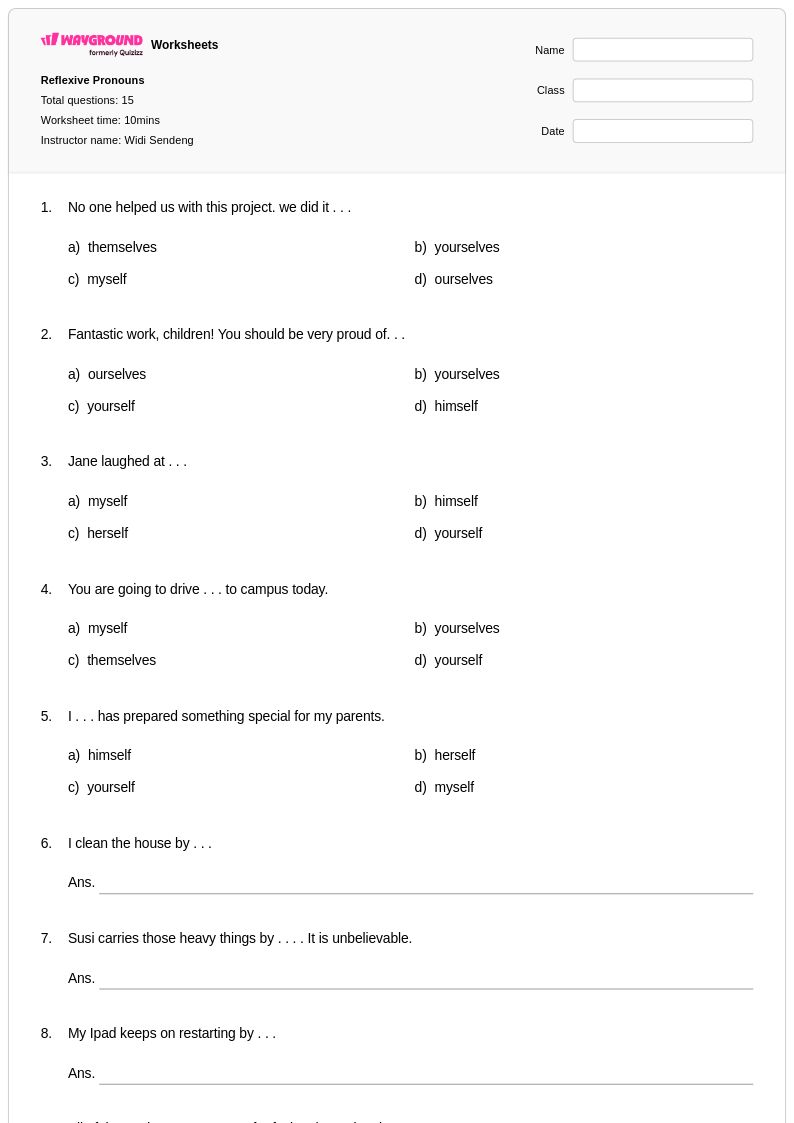
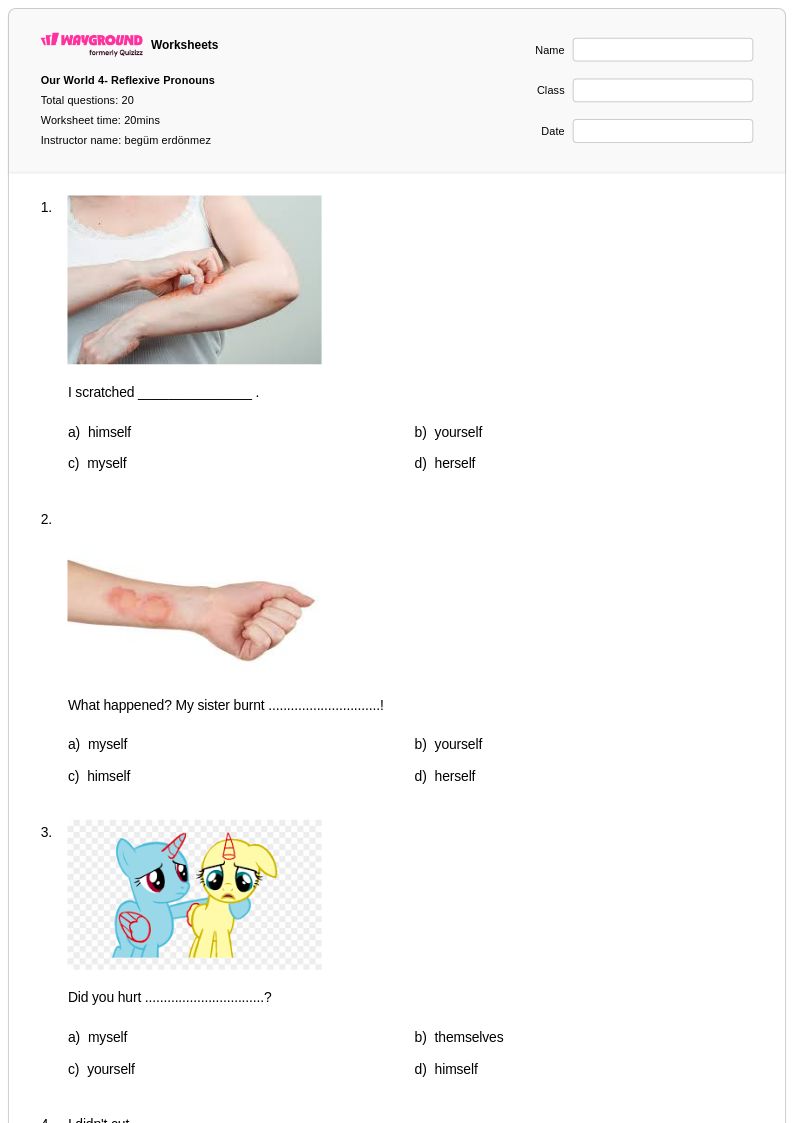
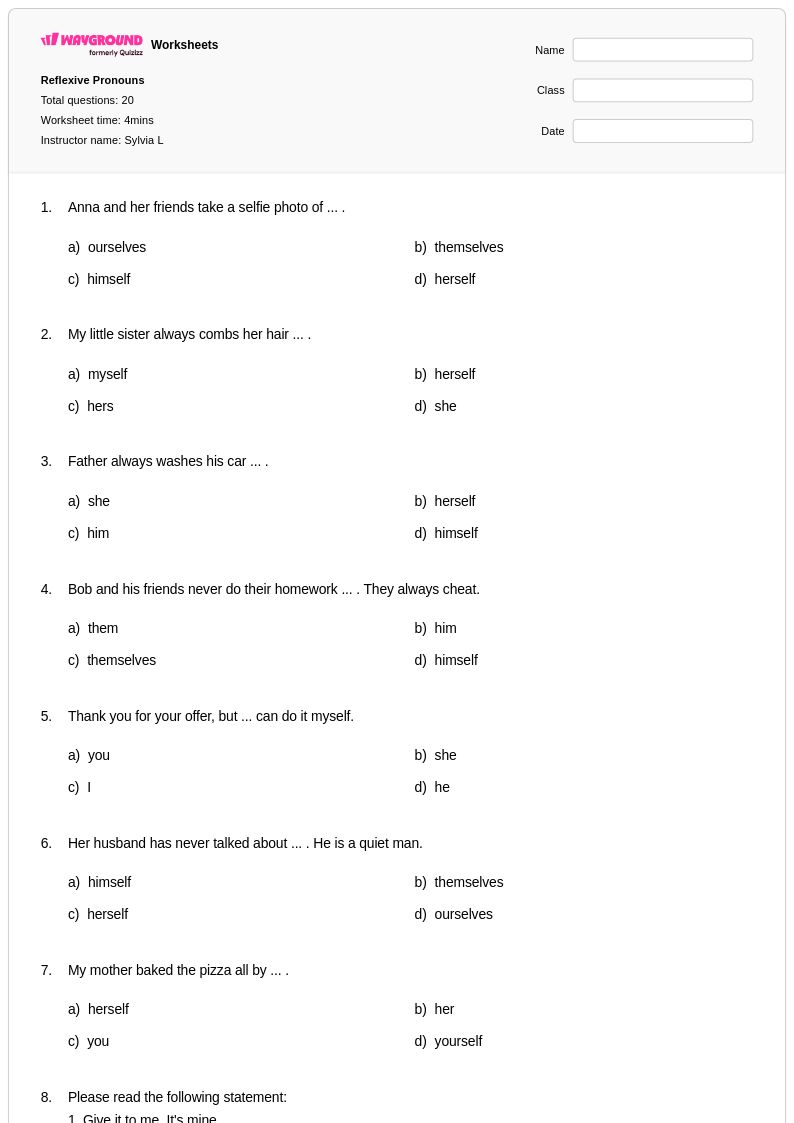
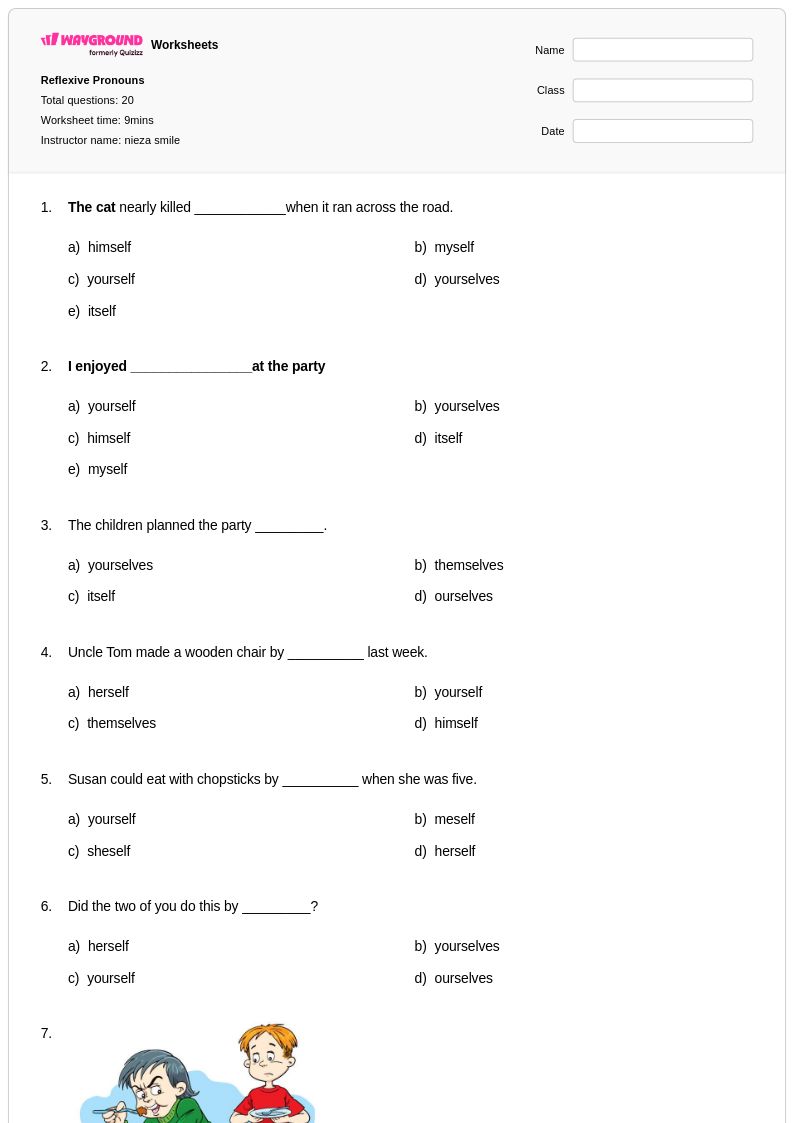
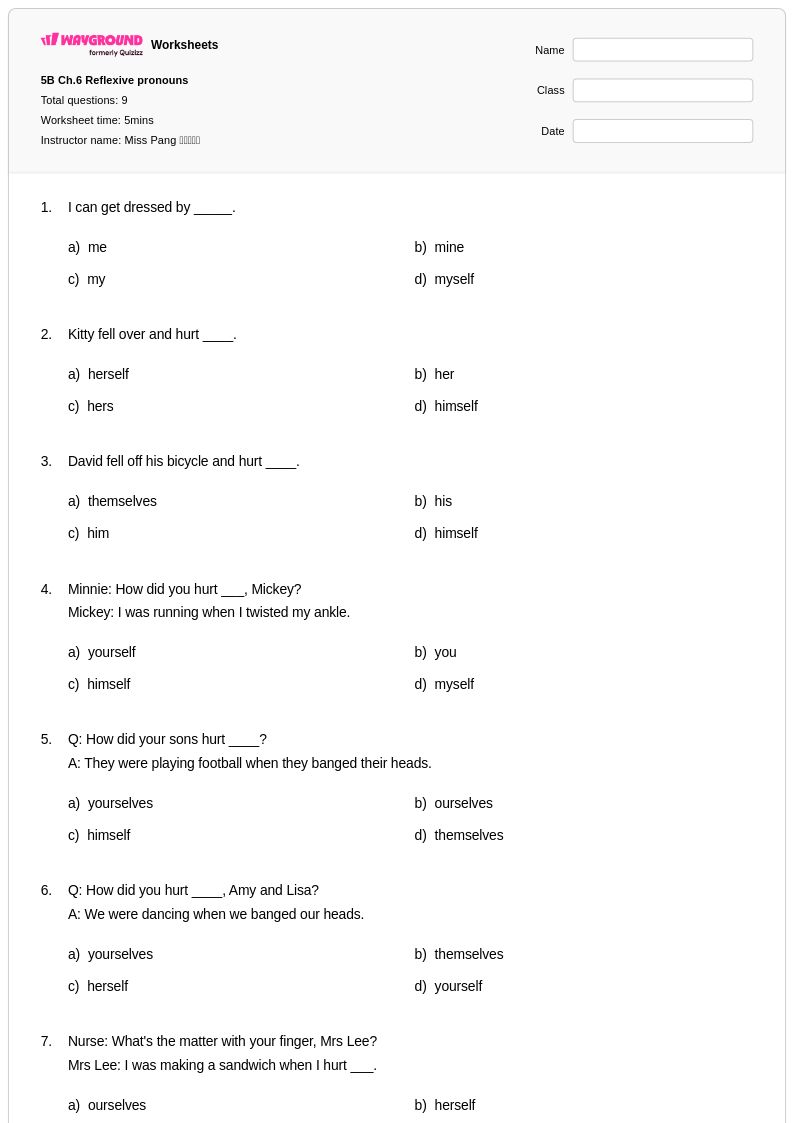
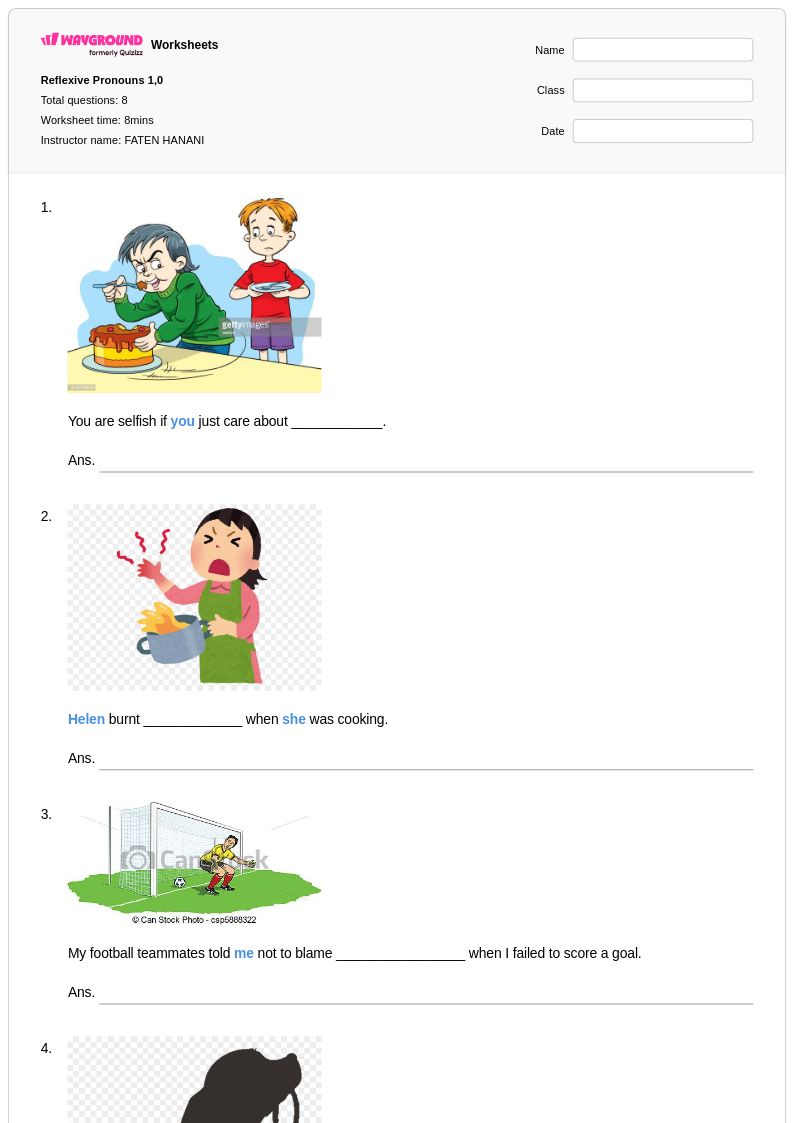
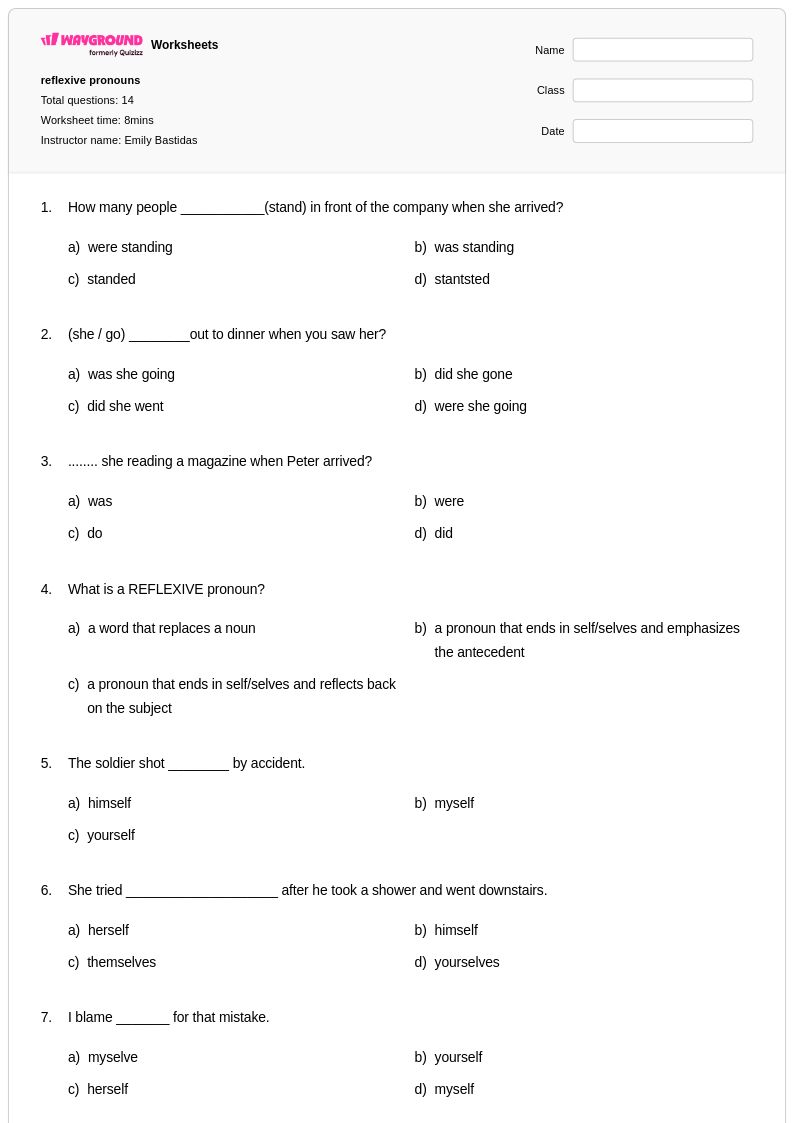
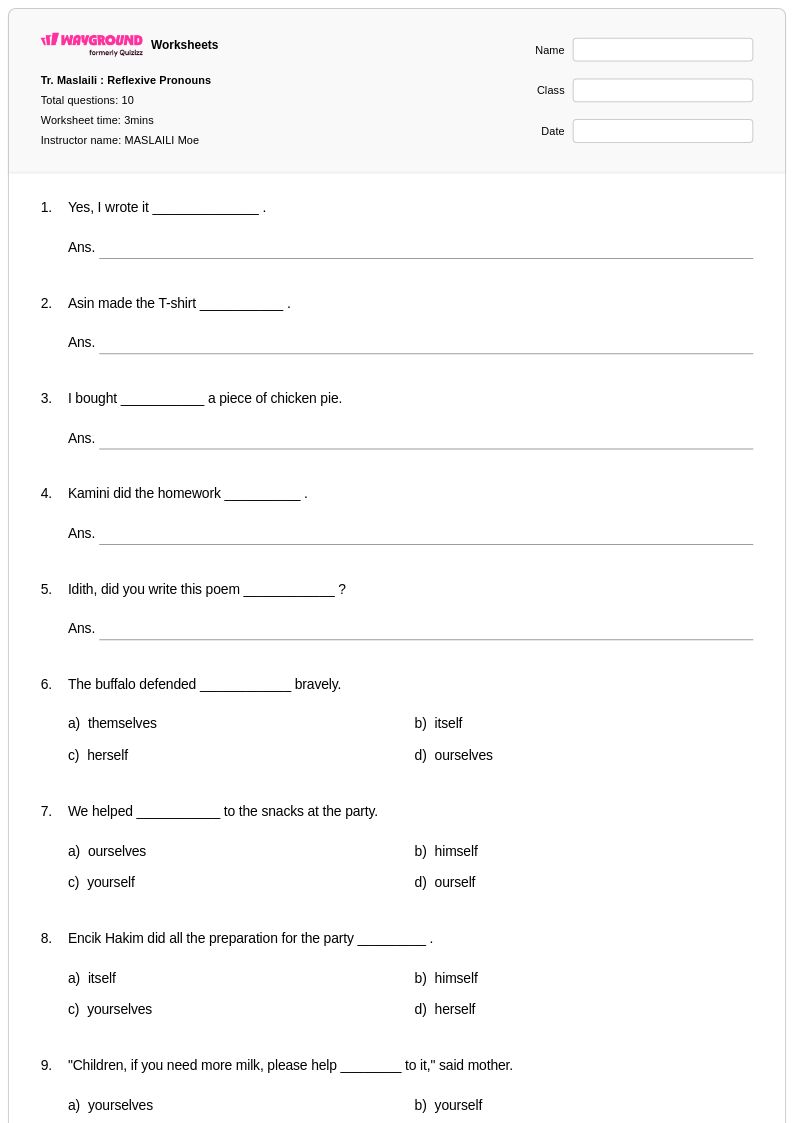
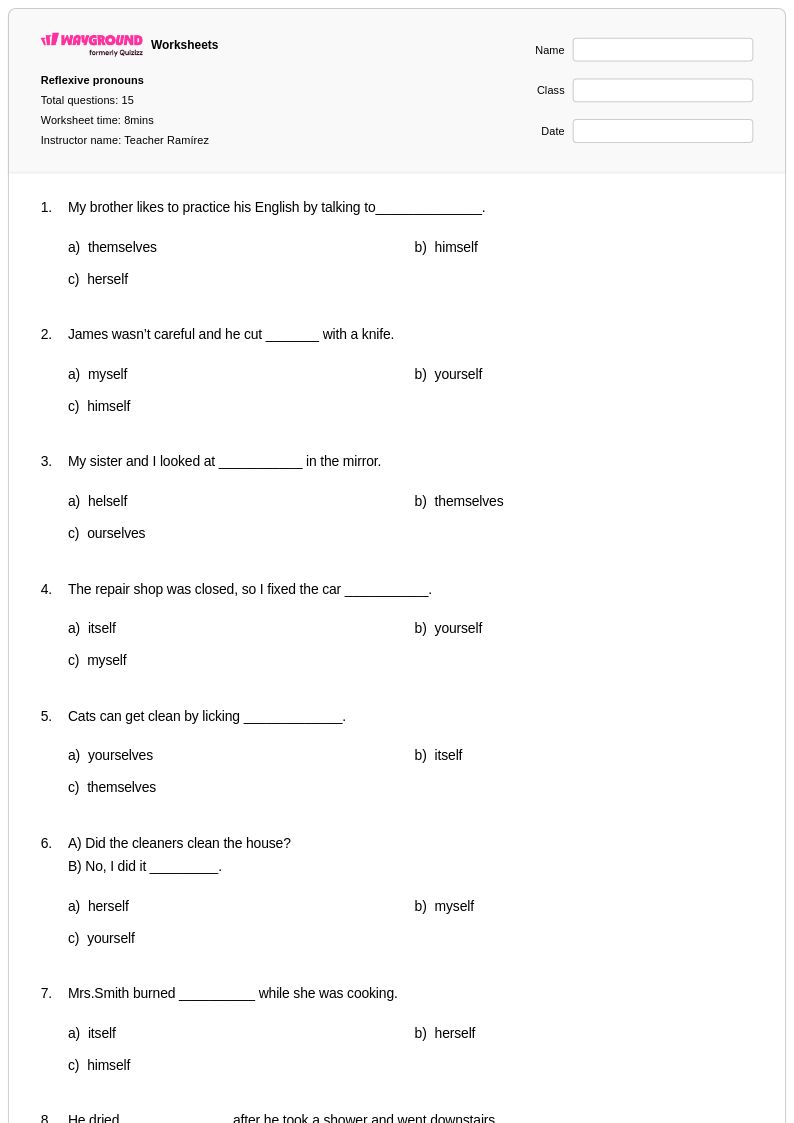
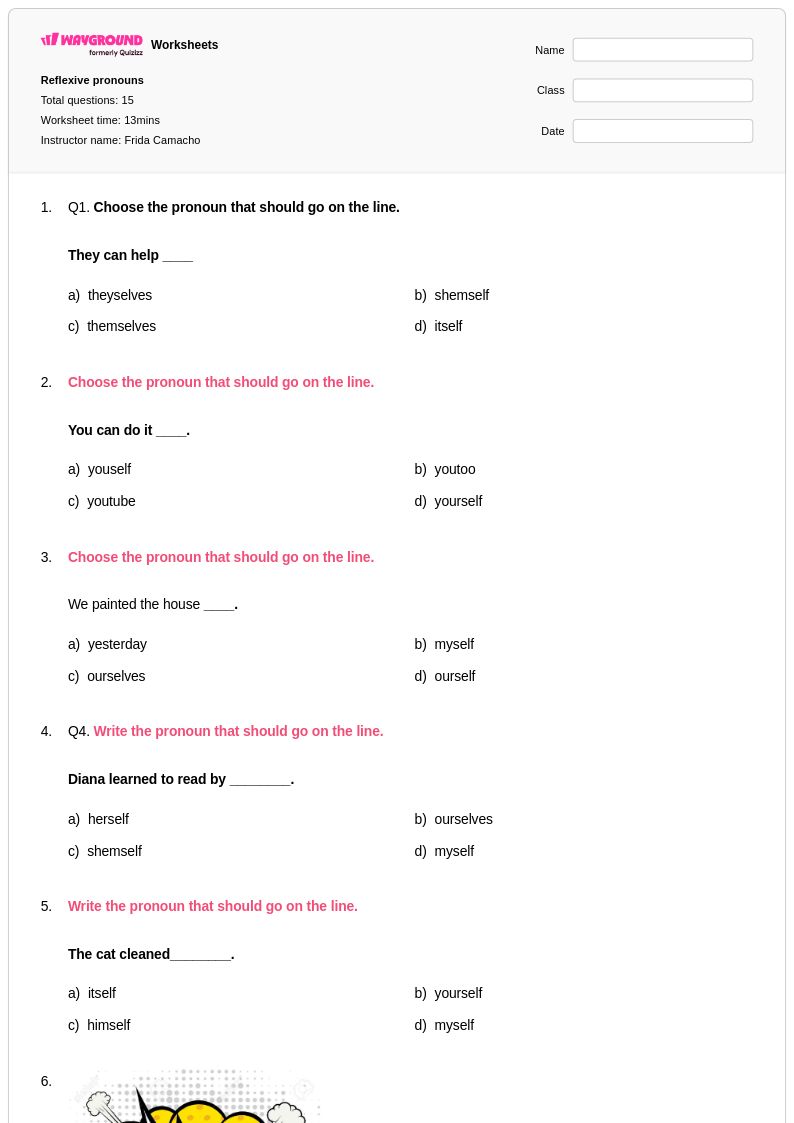
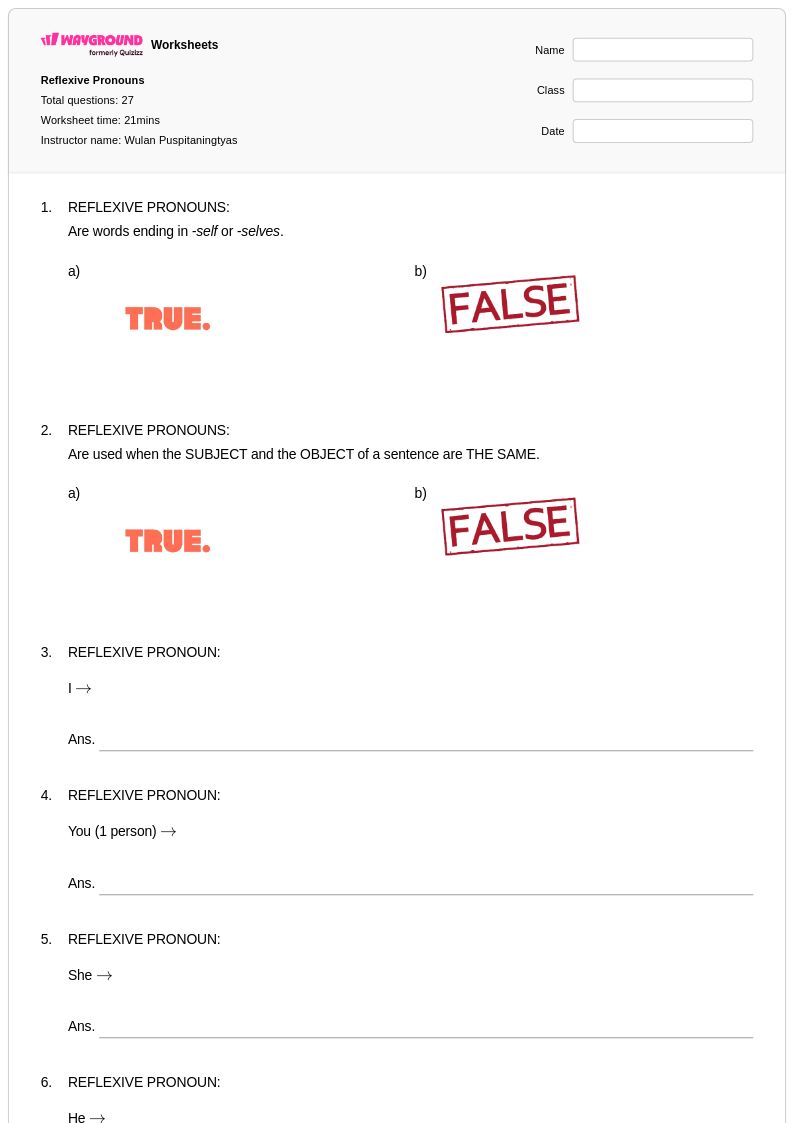
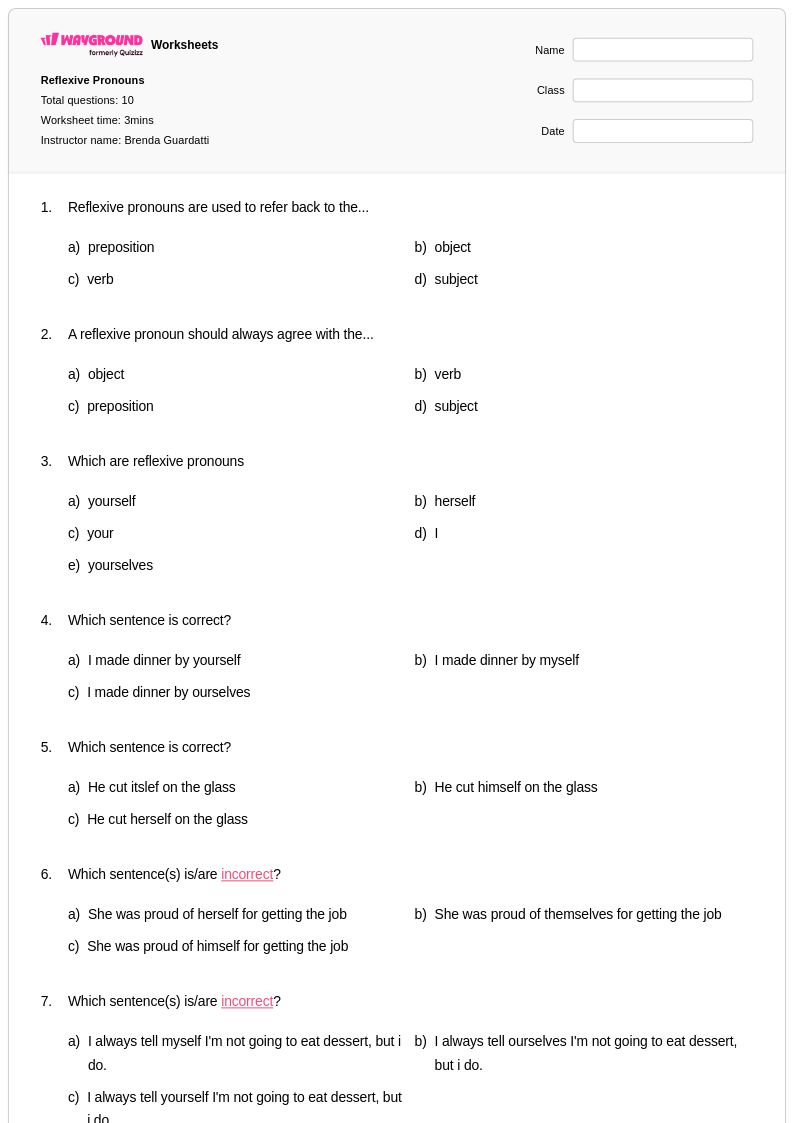
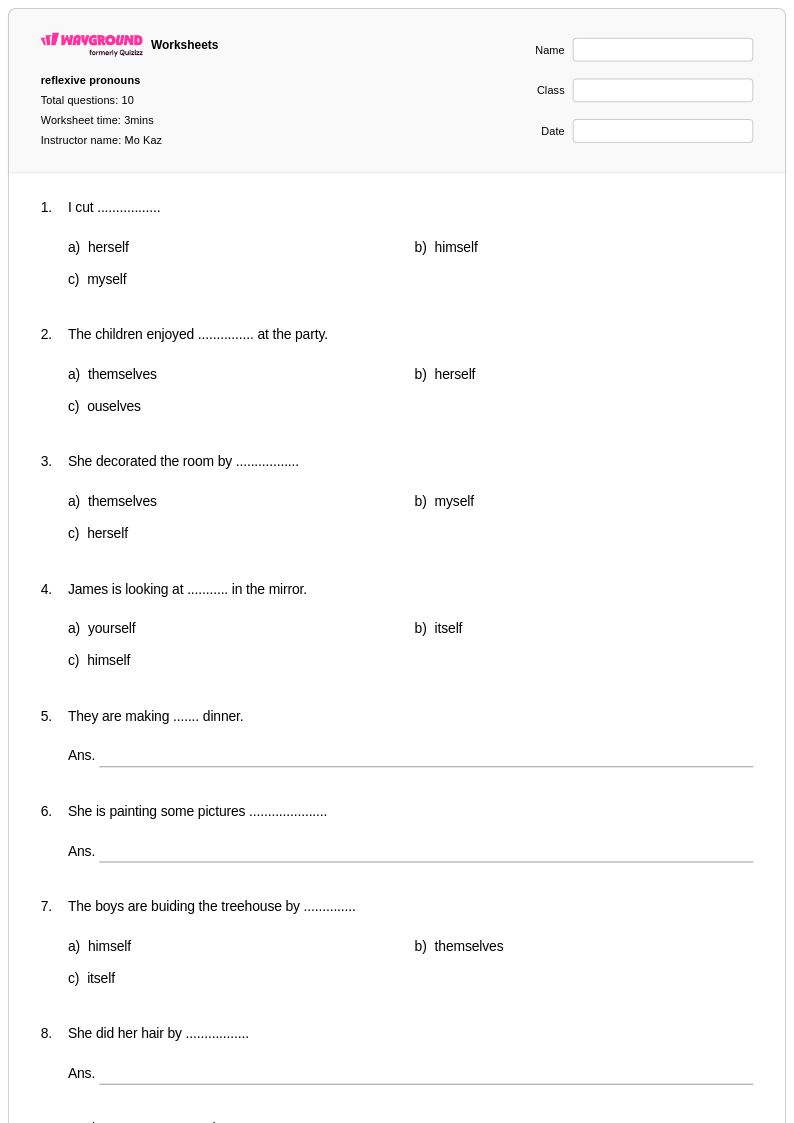
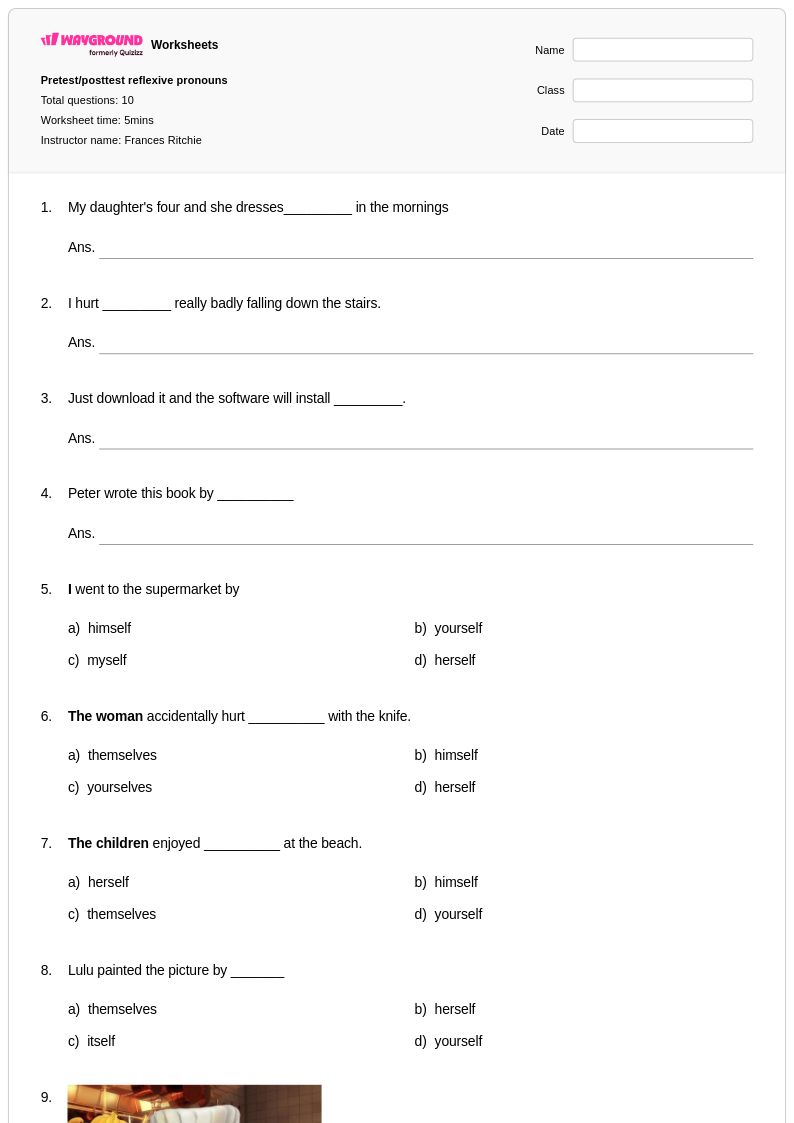
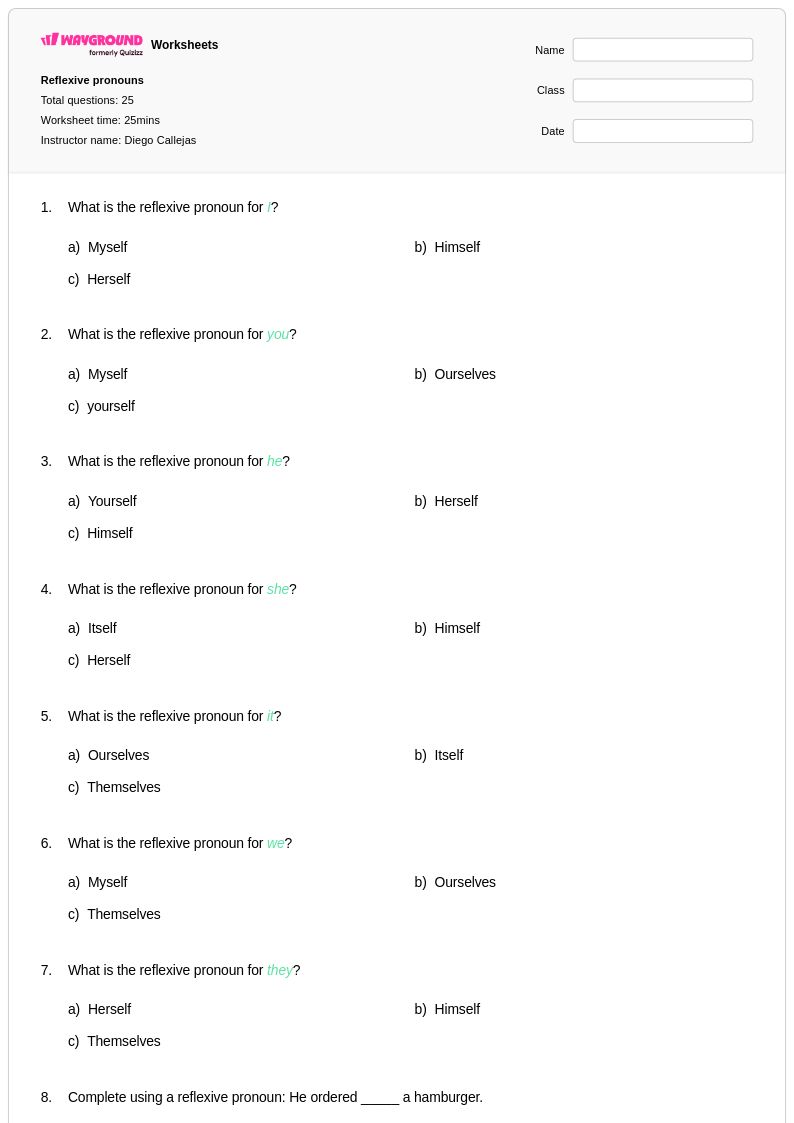
Class 5 reflexive pronouns worksheets help students master using myself, yourself, himself, herself, and other reflexive pronouns through engaging printables, practice problems, and comprehensive answer keys available as free PDF downloads.
Explore printable Reflexive Pronouns worksheets for Class 5
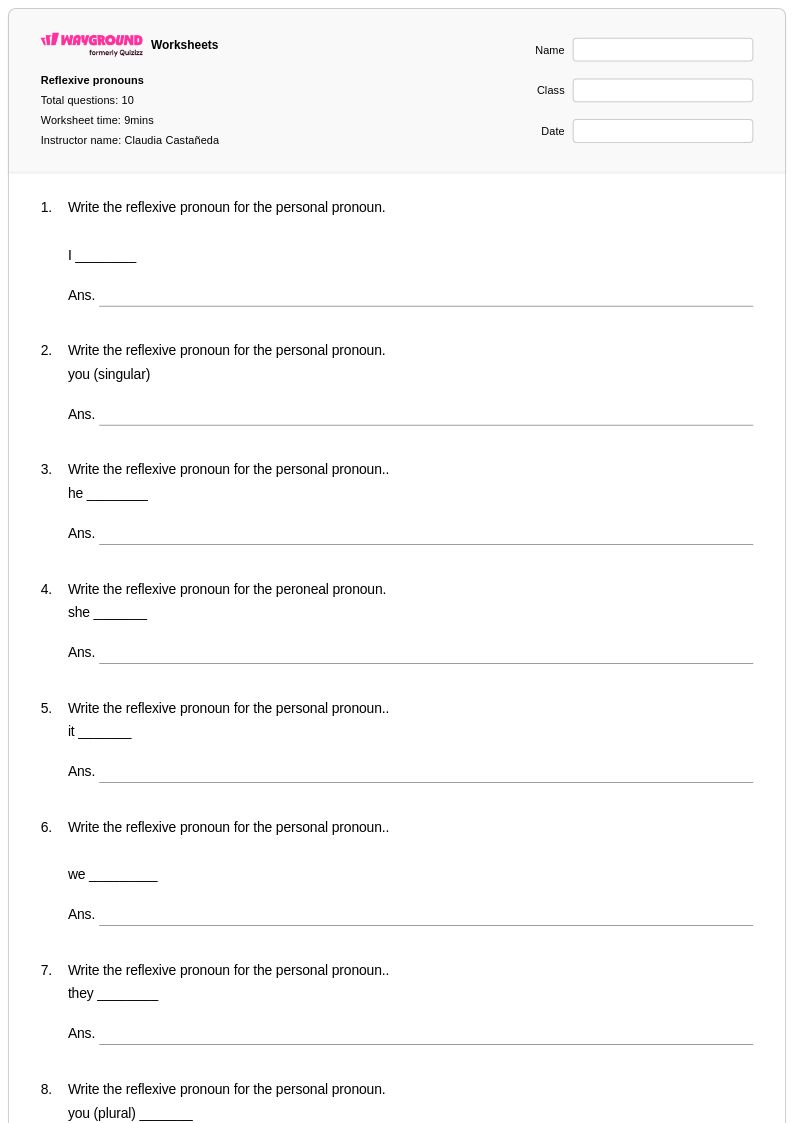
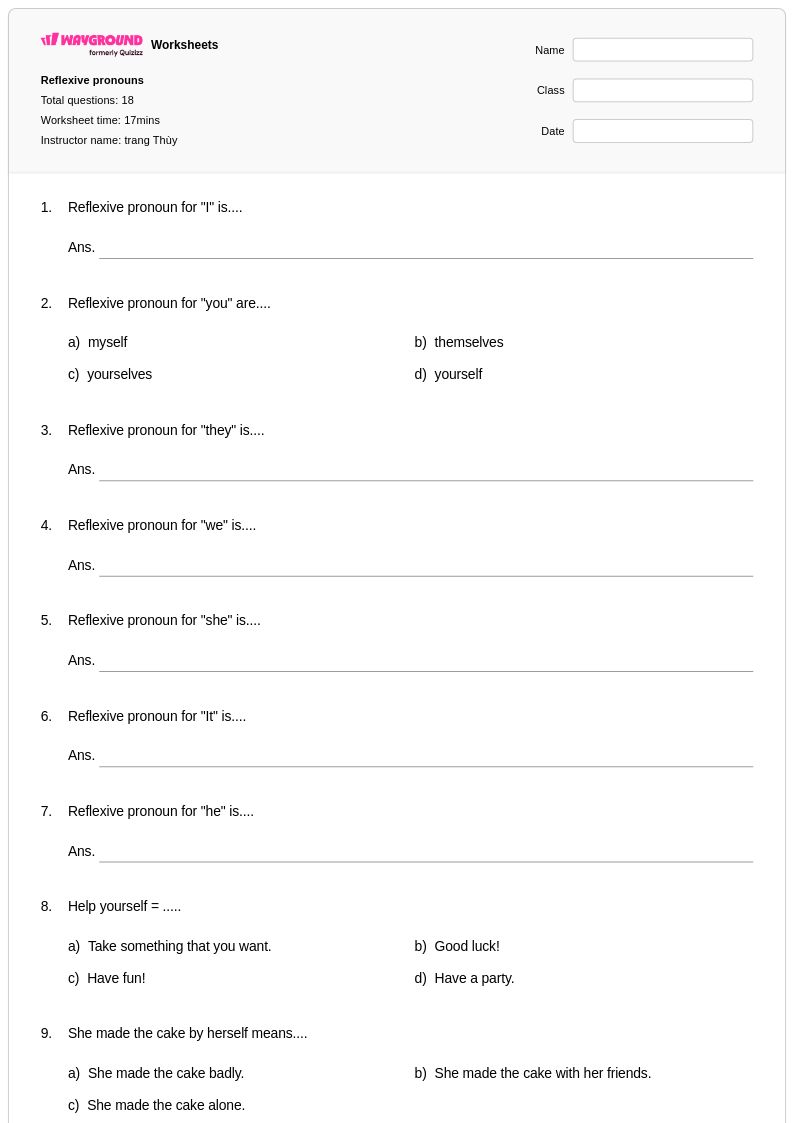
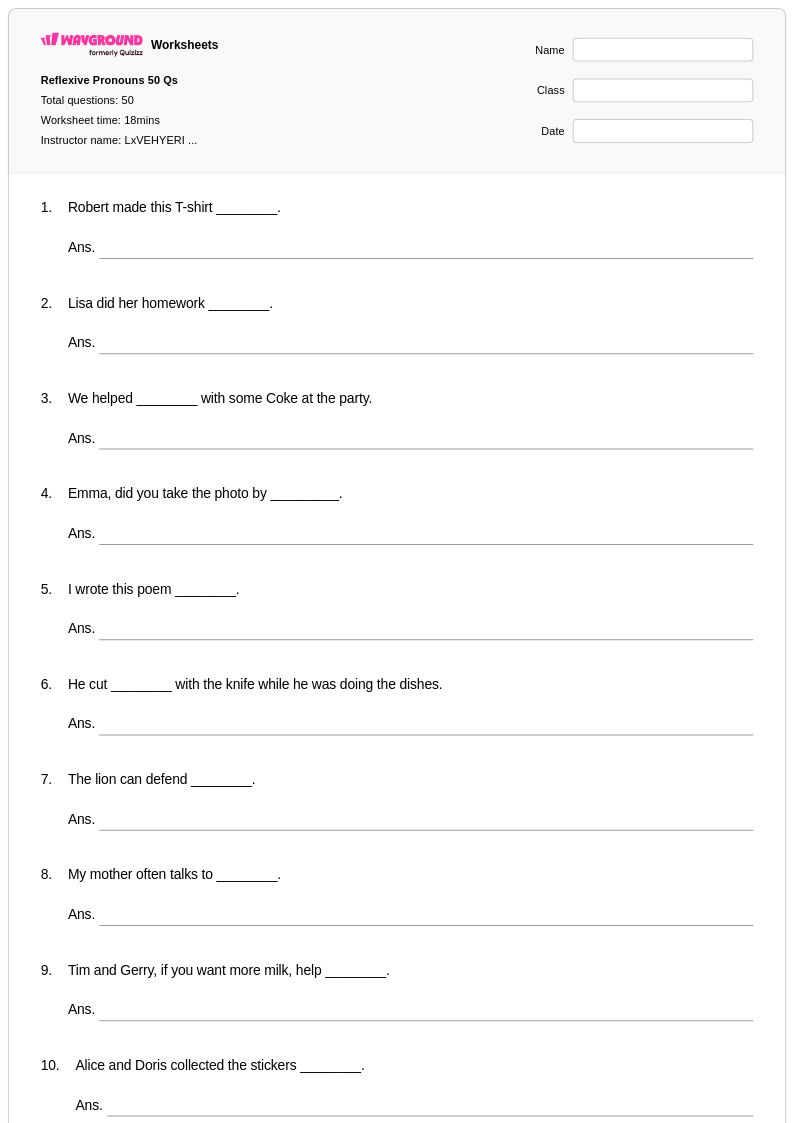
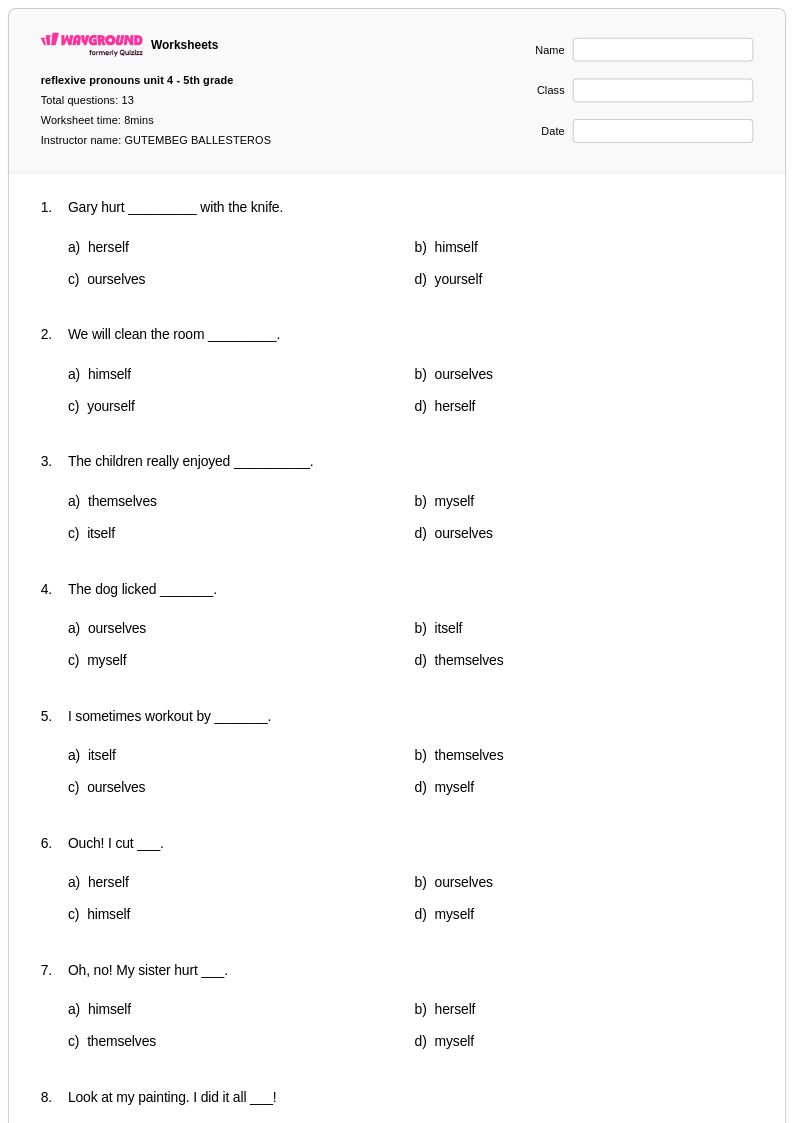
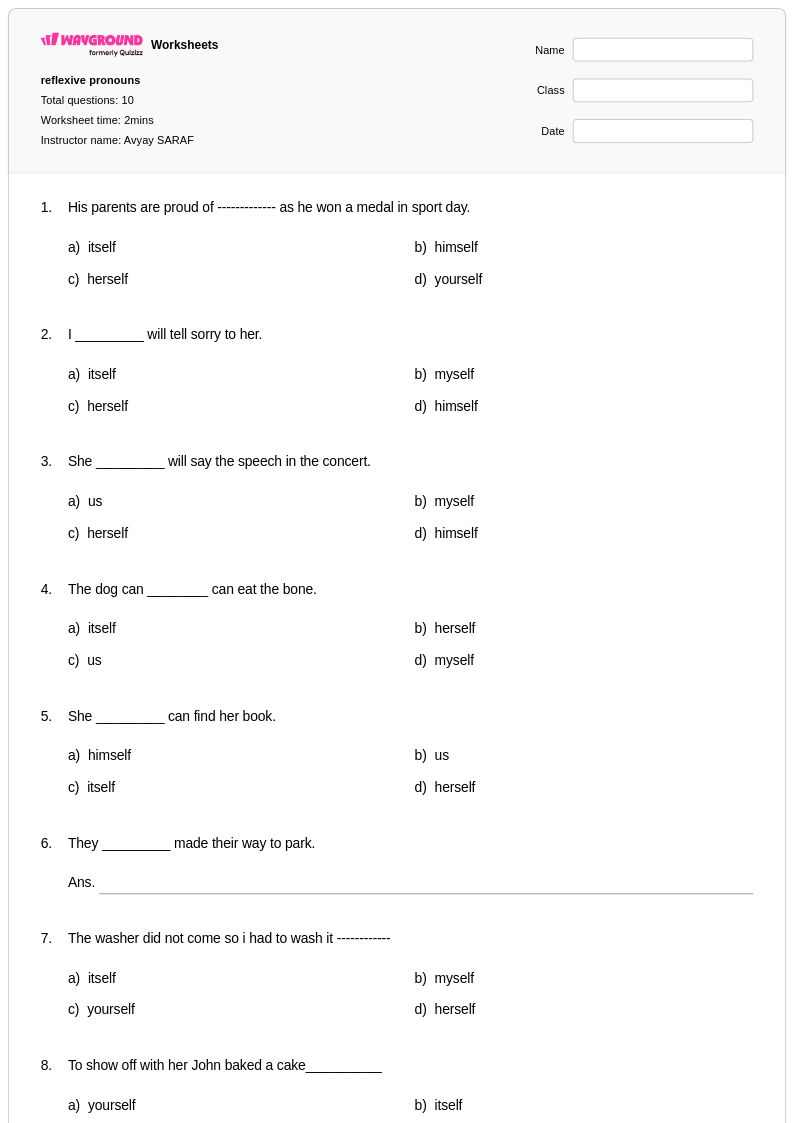
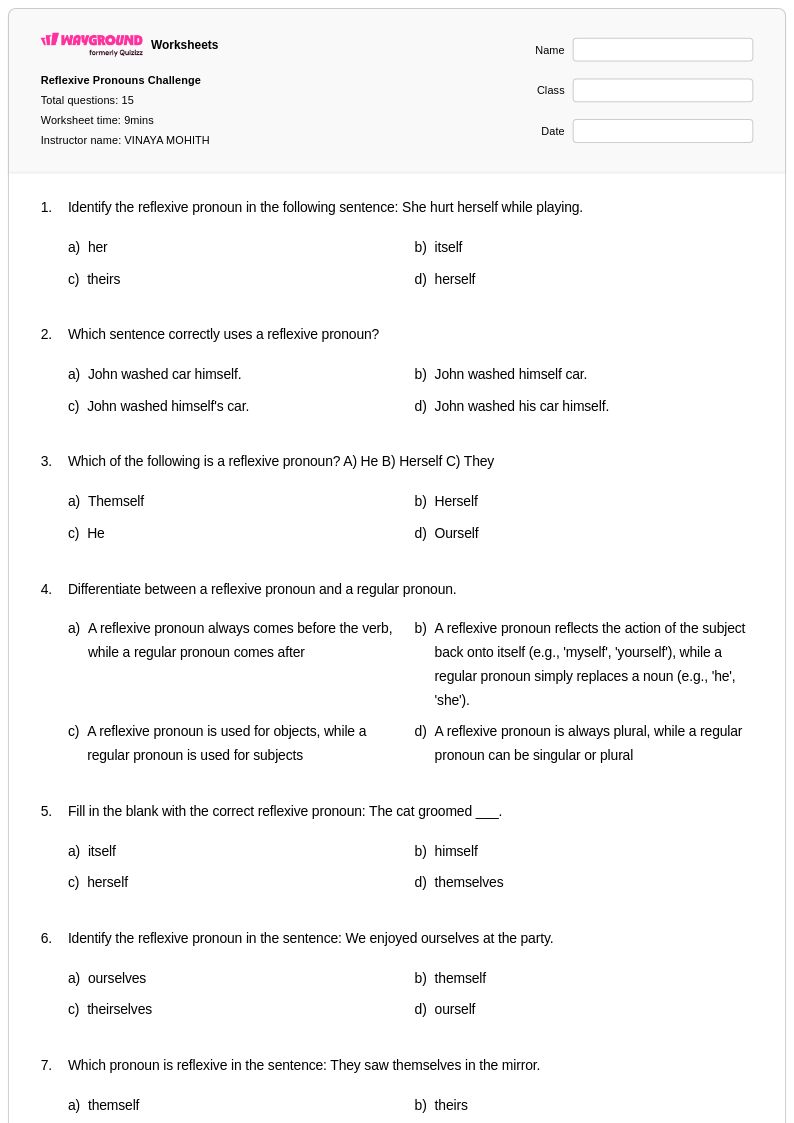
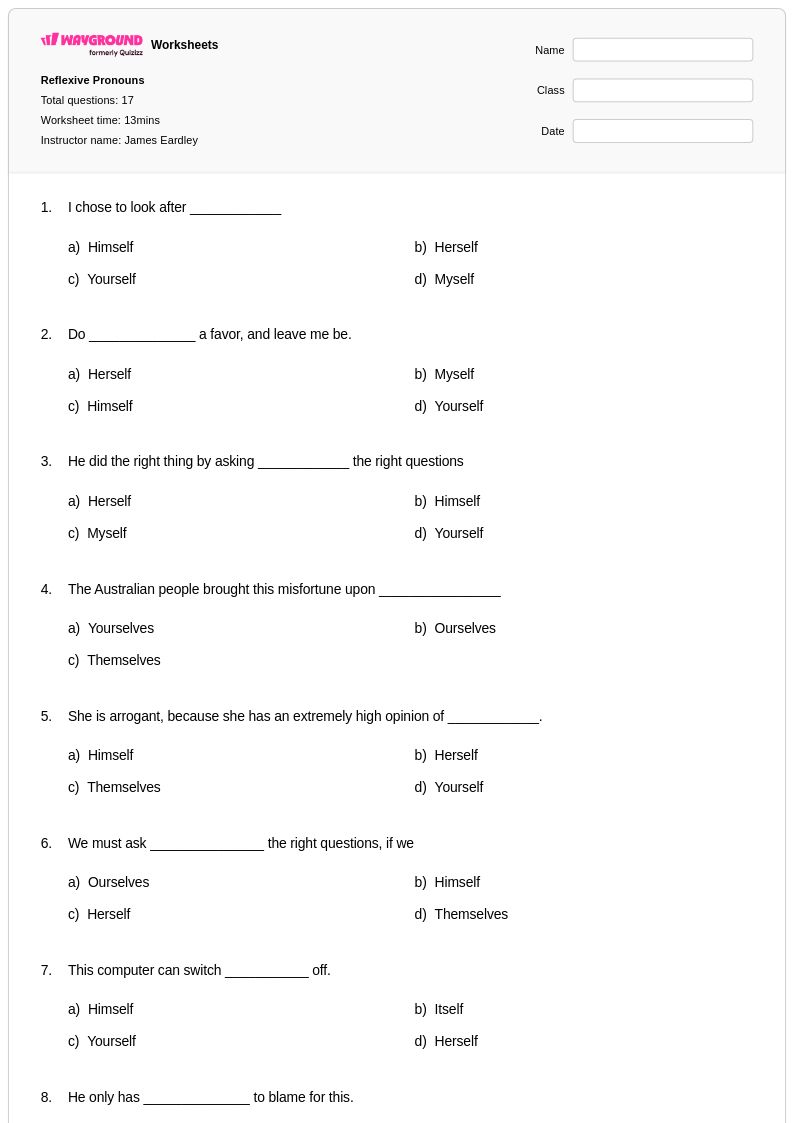
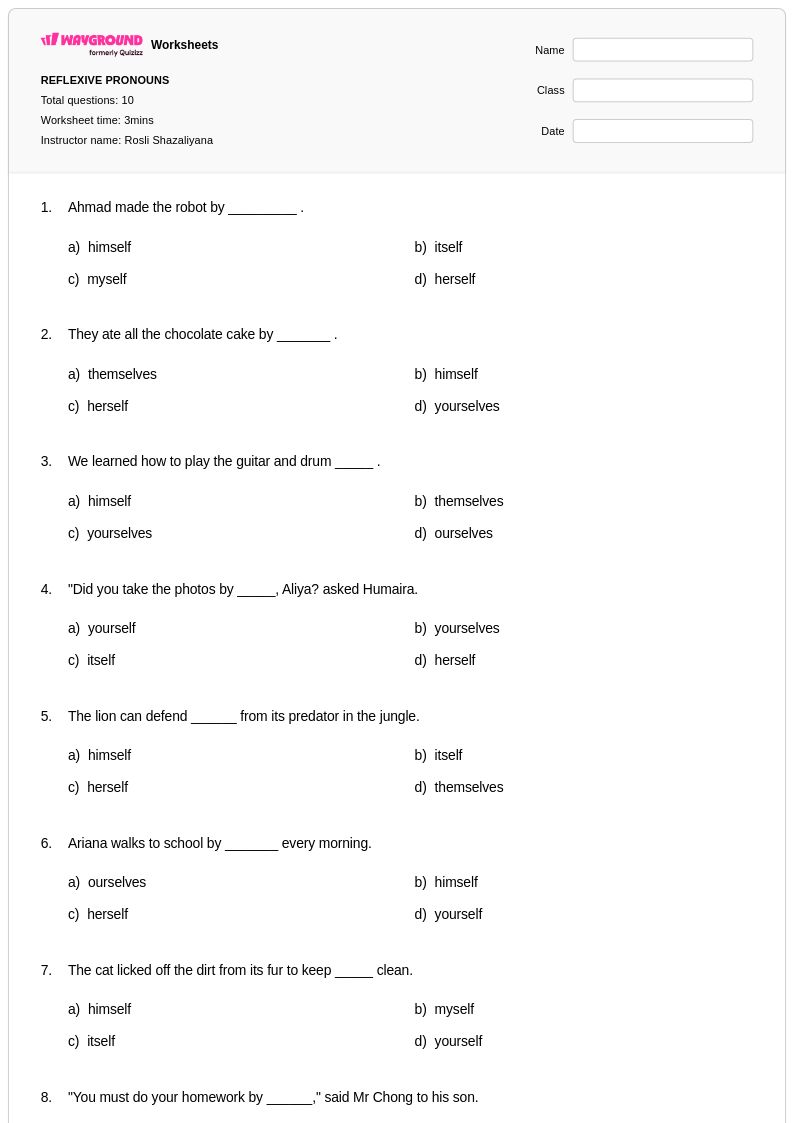
Reflexive pronouns worksheets for Class 5 students available through Wayground provide essential practice for mastering this critical grammar concept. These comprehensive resources help fifth-grade learners understand how reflexive pronouns like myself, yourself, himself, herself, itself, ourselves, yourselves, and themselves function when the subject and object of a sentence refer to the same person or thing. The worksheets strengthen students' ability to identify when reflexive pronouns are appropriate, distinguish them from regular pronouns, and use them correctly in both written and spoken communication. Each printable resource includes carefully crafted practice problems that progress from basic identification exercises to more complex sentence construction tasks, complete with answer keys to support independent learning and teacher assessment.
Wayground's extensive collection of reflexive pronoun worksheets draws from millions of teacher-created resources, ensuring educators have access to diverse, high-quality materials that align with Class 5 English language arts standards. The platform's robust search and filtering capabilities allow teachers to quickly locate worksheets that match their specific instructional needs, whether for initial concept introduction, skill reinforcement, or targeted remediation. These customizable resources are available in both digital and PDF formats, enabling seamless integration into classroom instruction, homework assignments, or independent practice sessions. Teachers can easily differentiate instruction by selecting from worksheets with varying complexity levels, ensuring that all students receive appropriate challenges while building confidence in their understanding of reflexive pronouns and their proper usage in academic and everyday communication.
FAQs
How do I teach reflexive pronouns to students?
Start by distinguishing reflexive pronouns (myself, yourself, himself, herself, itself, ourselves, yourselves, themselves) from personal pronouns, emphasizing that reflexive pronouns are used when the subject and object of a sentence refer to the same person or thing. Use concrete, relatable examples such as 'She made herself a sandwich' versus the incorrect 'She made her a sandwich' to make the distinction visible. From there, move students through identification exercises before asking them to produce reflexive pronouns in original sentences, building from recognition to application.
What exercises help students practice using reflexive pronouns correctly?
Sentence completion activities are especially effective because they require students to select the correct reflexive pronoun based on the subject already present in the sentence, reinforcing the subject-object agreement rule. Identification exercises, where students locate and label reflexive pronouns within a passage, build recognition skills before production is expected. Application practice problems that ask students to rewrite incorrect sentences or compose their own provide the generative practice needed for long-term retention.
What mistakes do students commonly make with reflexive pronouns?
The most common error is using reflexive pronouns as subjects or in place of personal pronouns, such as writing 'Myself and John went to the store' instead of 'John and I went to the store.' Students also frequently confuse reflexive use with emphatic use, not recognizing that 'I did it myself' (emphatic) and 'I hurt myself' (reflexive) function differently. Another recurring mistake is mismatching the pronoun to the subject, such as writing 'He made ourself dinner' instead of 'He made himself dinner.'
When should students use a reflexive pronoun instead of a personal pronoun?
A reflexive pronoun is required when the subject and the object of the verb refer to the same person or thing, as in 'She taught herself to read music.' If the object refers to a different person, a personal pronoun is correct instead. Teaching students to ask 'Is the action coming back to the subject?' is a reliable self-check strategy that works across sentence types.
How can I use Wayground's reflexive pronouns worksheets in my classroom?
Wayground's reflexive pronouns worksheets are available as printable PDFs for traditional classroom use and in digital formats for technology-integrated instruction, including the ability to host them as a quiz on Wayground. This flexibility makes them suitable for whole-class lessons, small group work, independent practice, homework assignments, and remediation sessions. Each worksheet includes a complete answer key, so teachers can use them for self-paced study or streamline grading after in-class activities.
How do I differentiate reflexive pronoun practice for students at different skill levels?
For students who are still building foundational skills, begin with identification-only tasks before introducing sentence completion or production exercises. On Wayground, teachers can apply student-level accommodations such as reduced answer choices to lower cognitive load for struggling learners, or enable Read Aloud so questions are read to students who benefit from audio support. More advanced students can be directed toward application problems that require them to identify and correct grammatical errors involving reflexive pronoun misuse.