
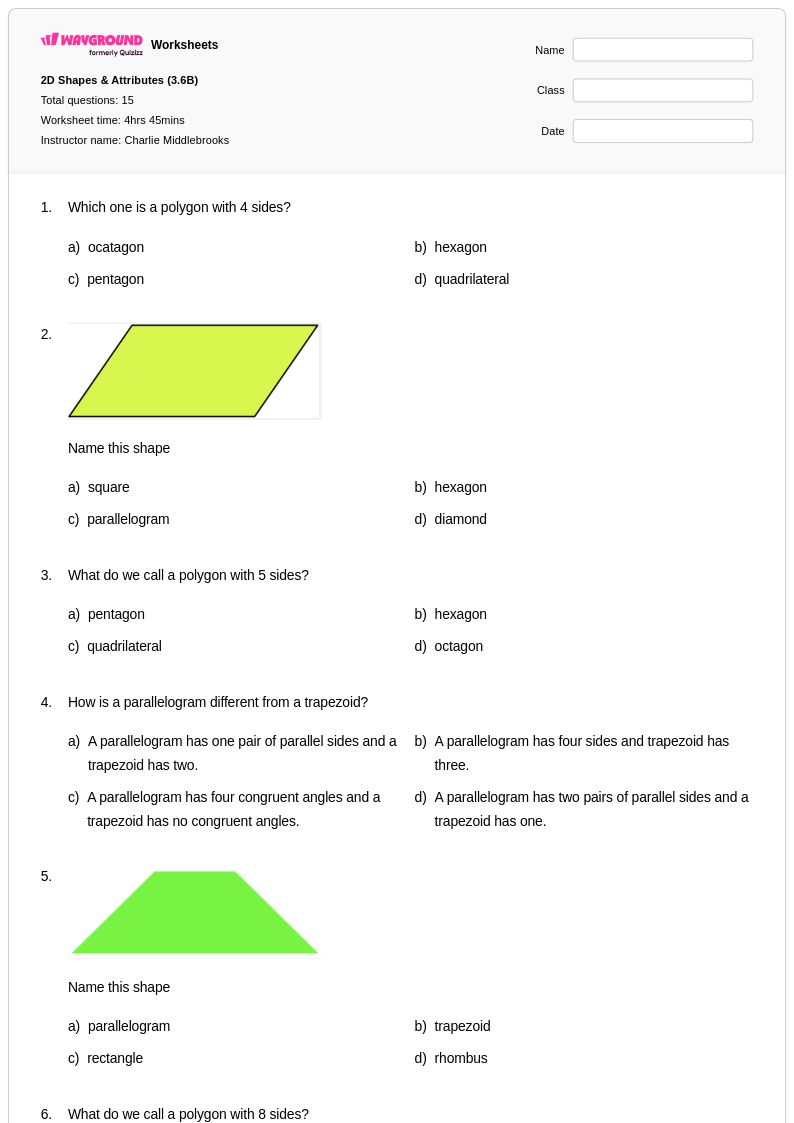
15 Q
3rd
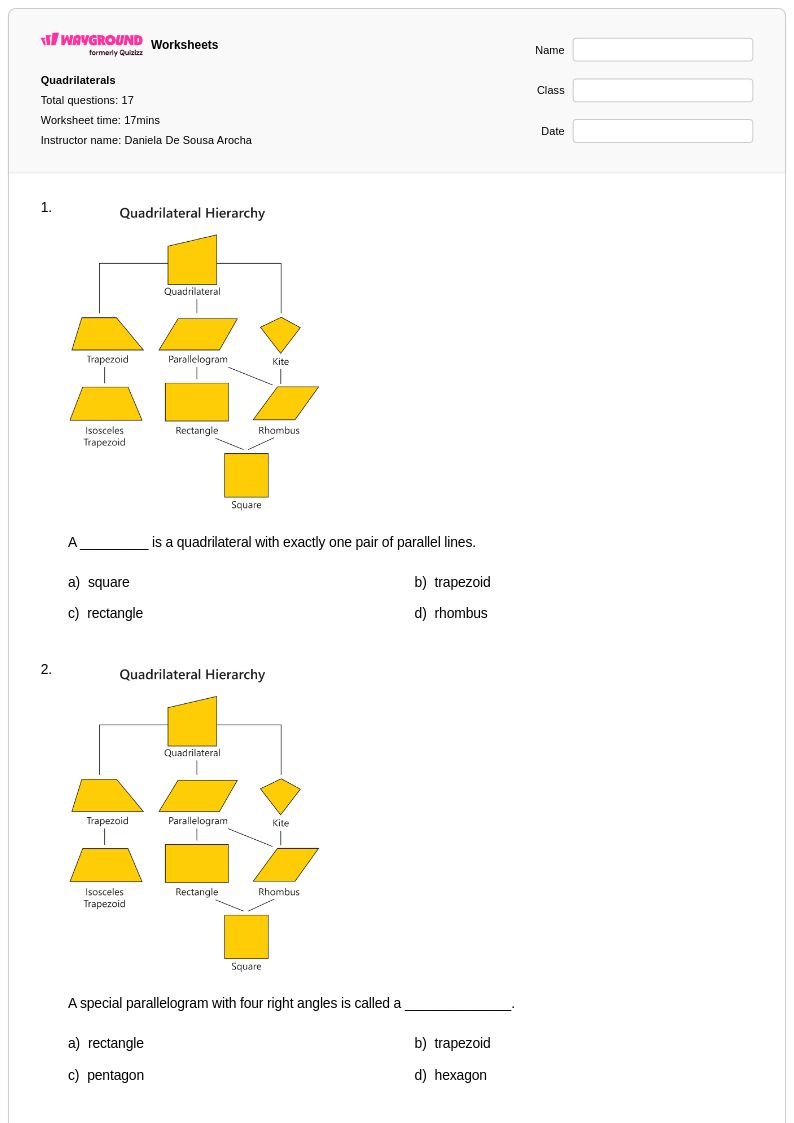
17 Q
3rd
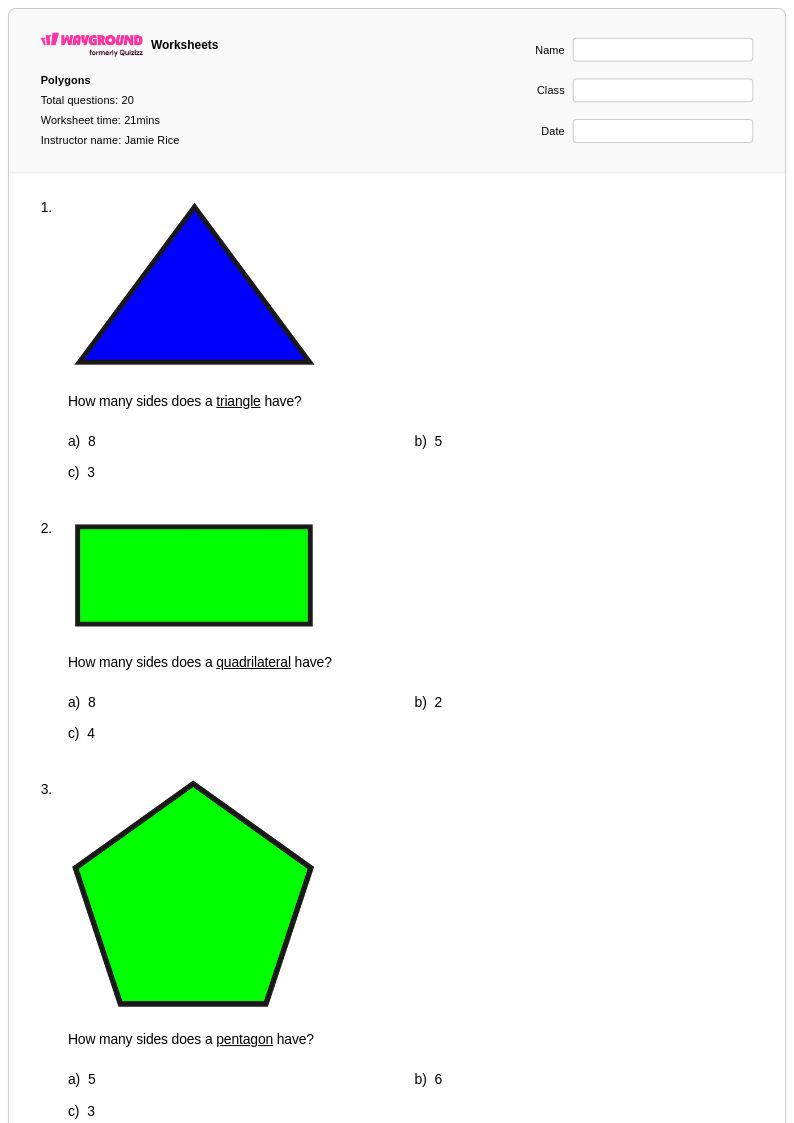
20 Q
3rd - 5th
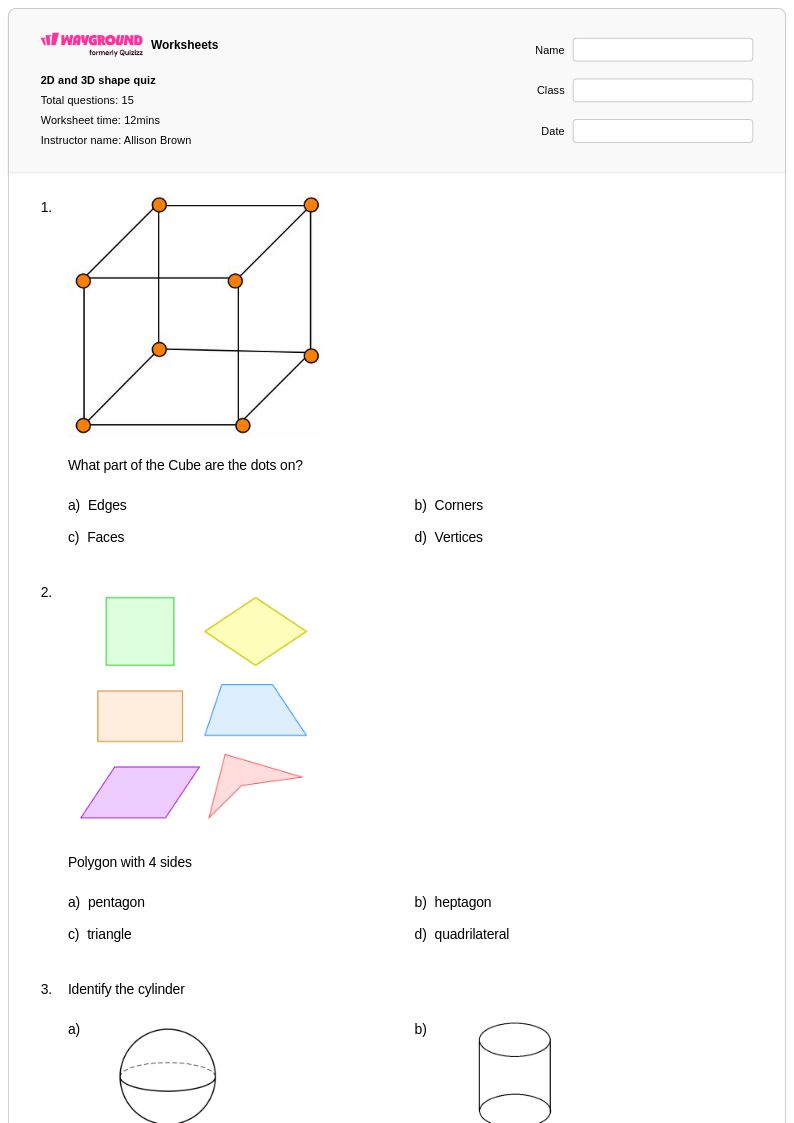
15 Q
3rd
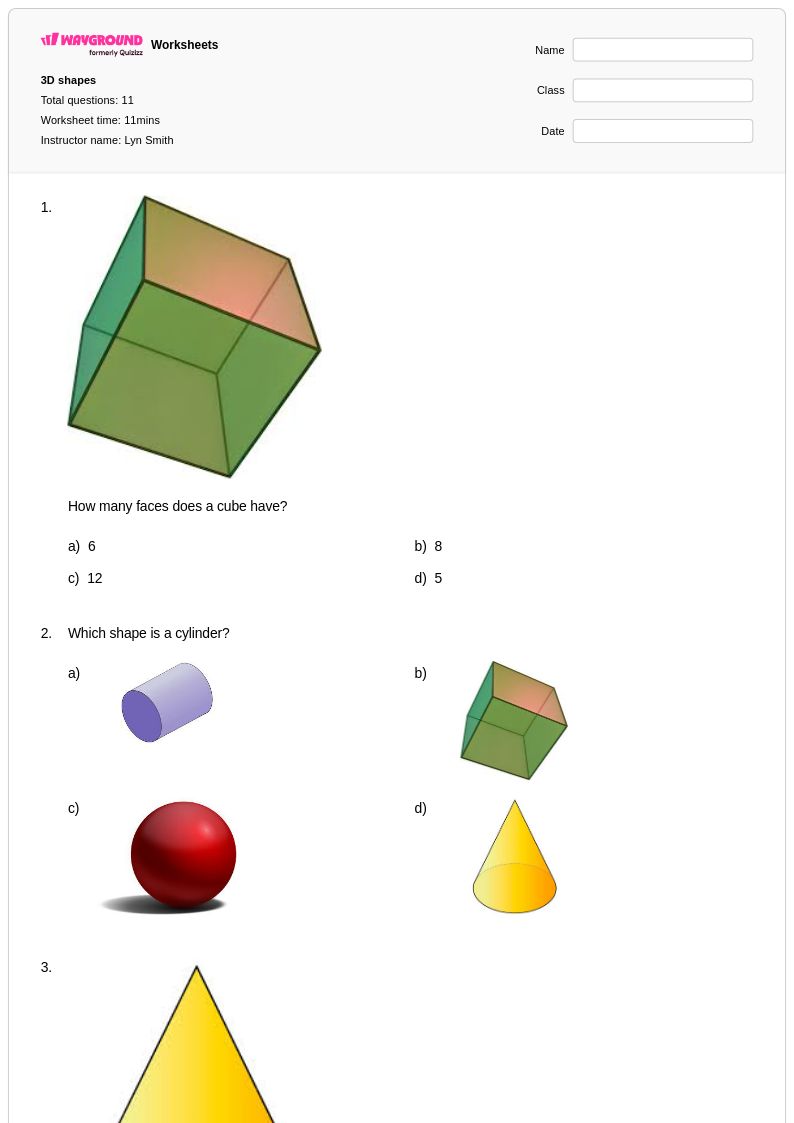
11 Q
3rd
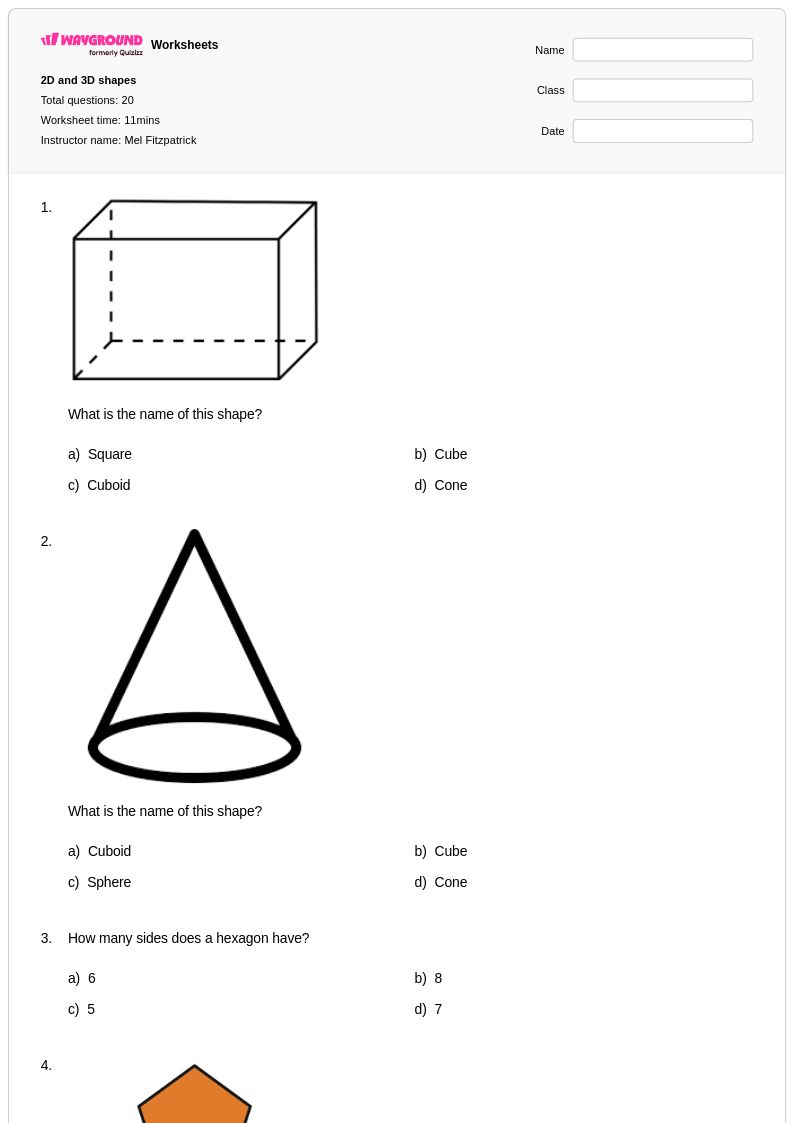
20 Q
3rd - 7th
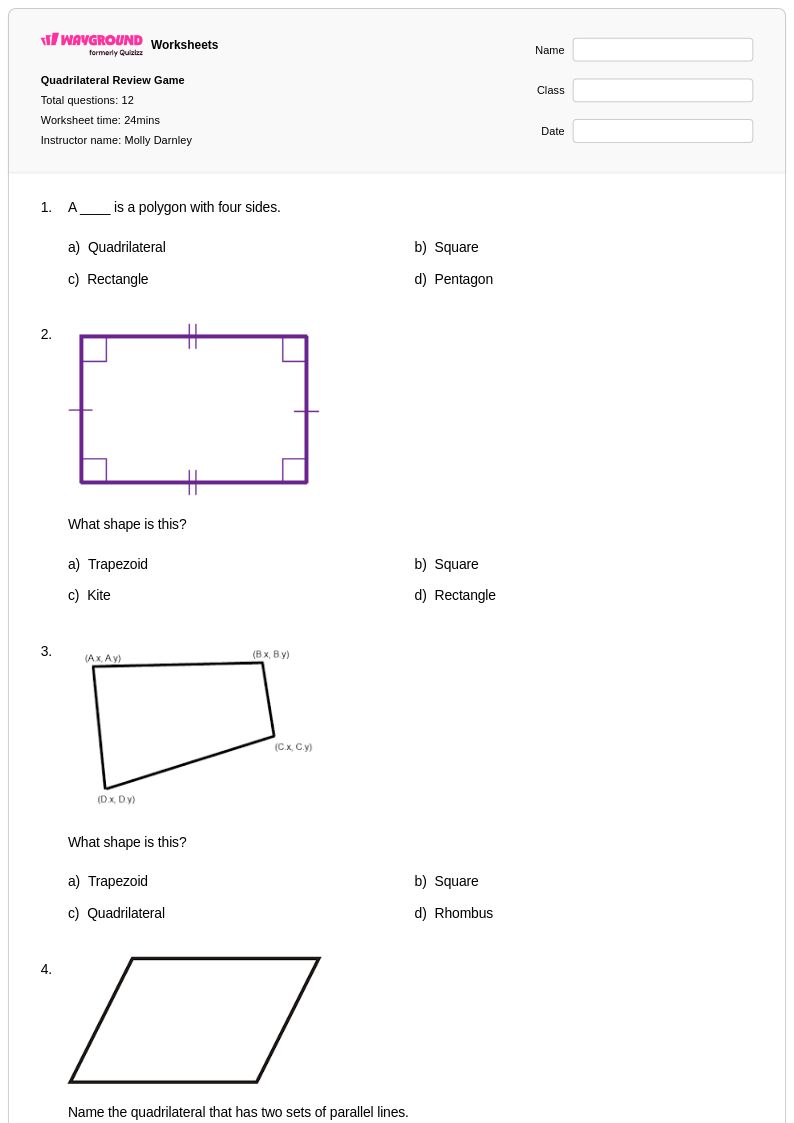
12 Q
3rd
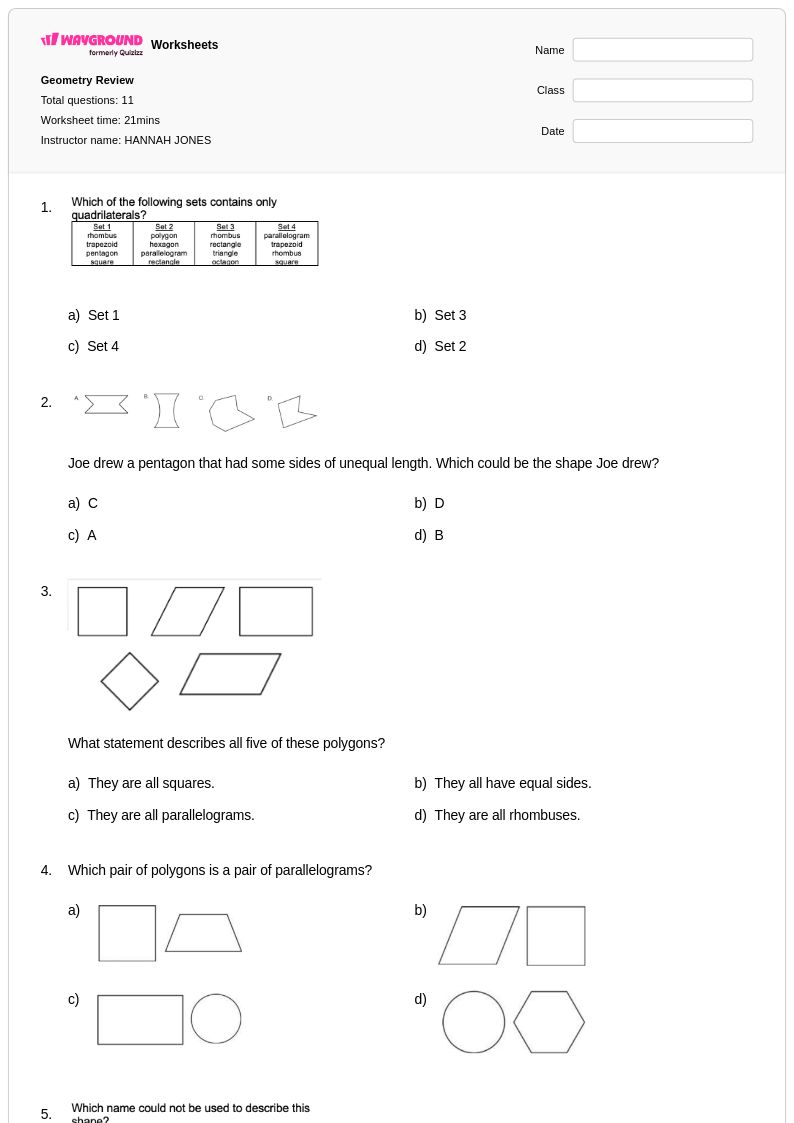
11 Q
3rd
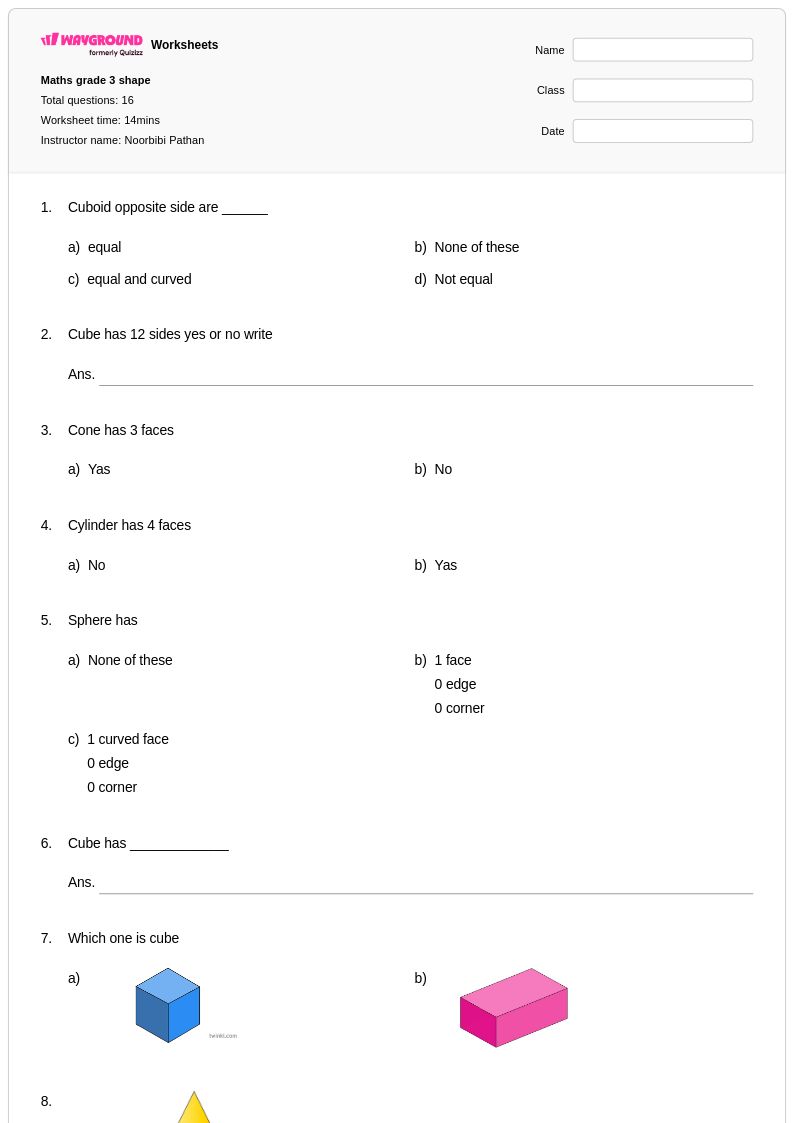
16 Q
3rd
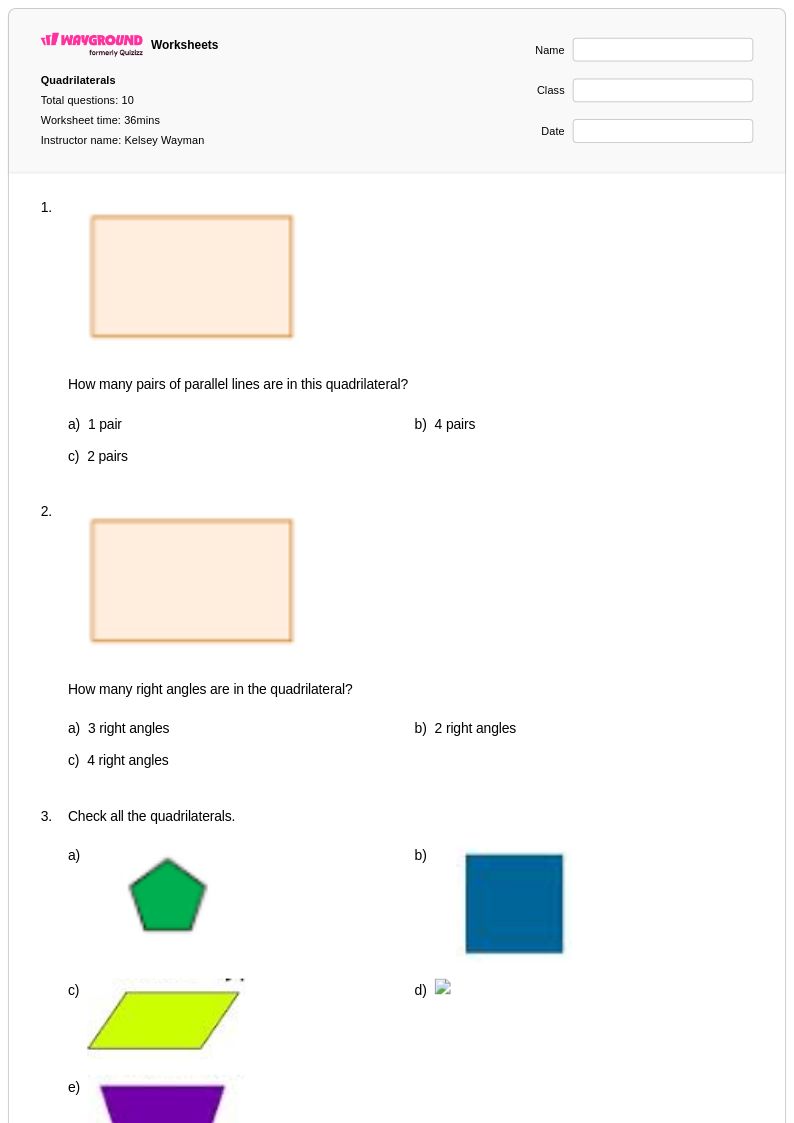
10 Q
3rd
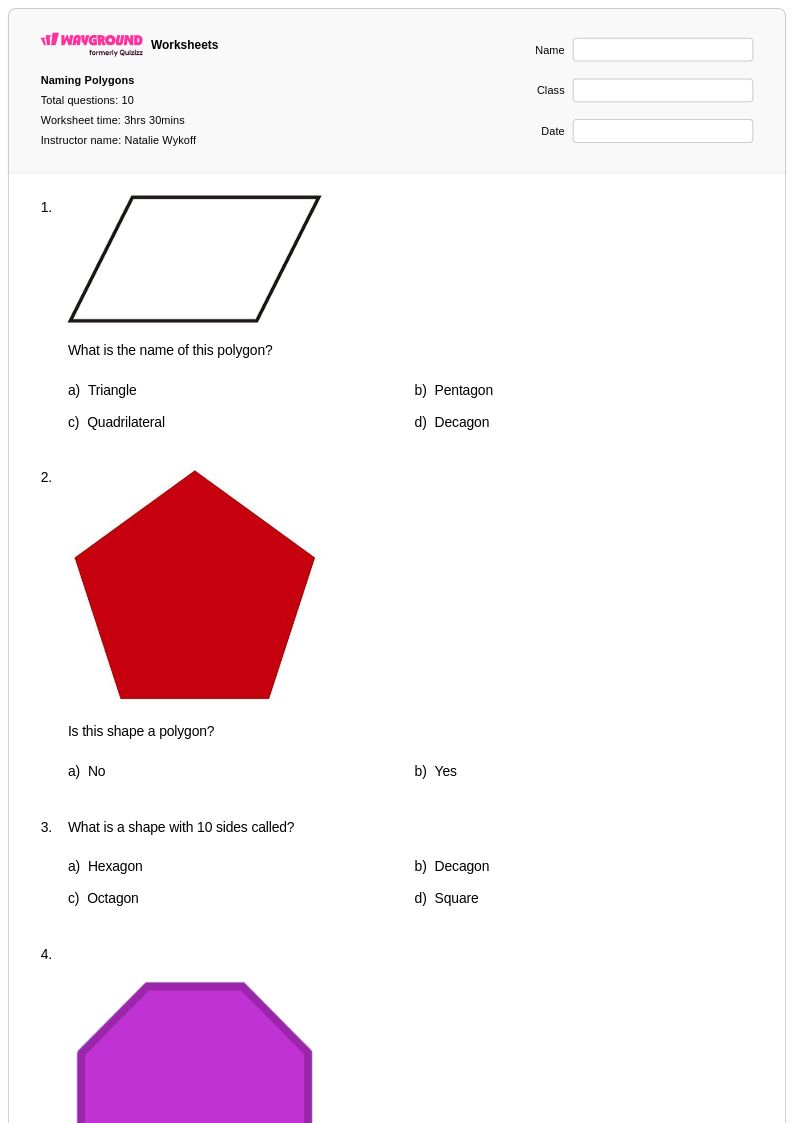
10 Q
3rd
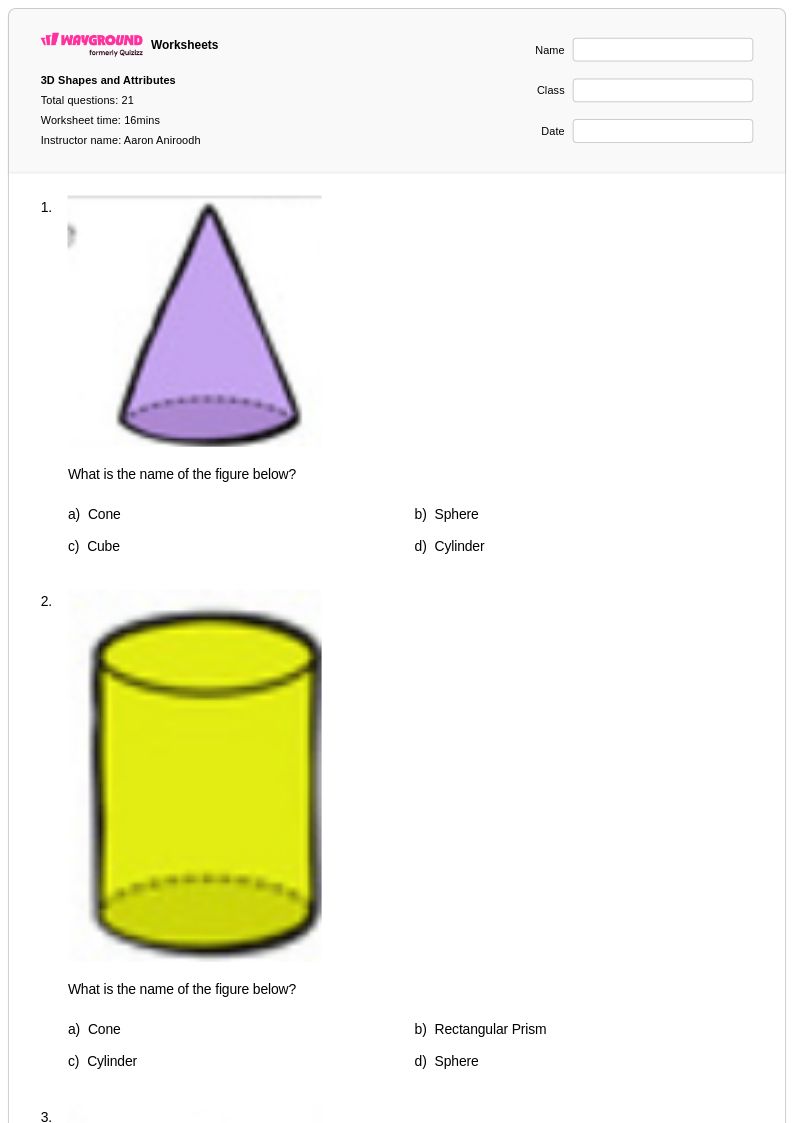
21 Q
3rd
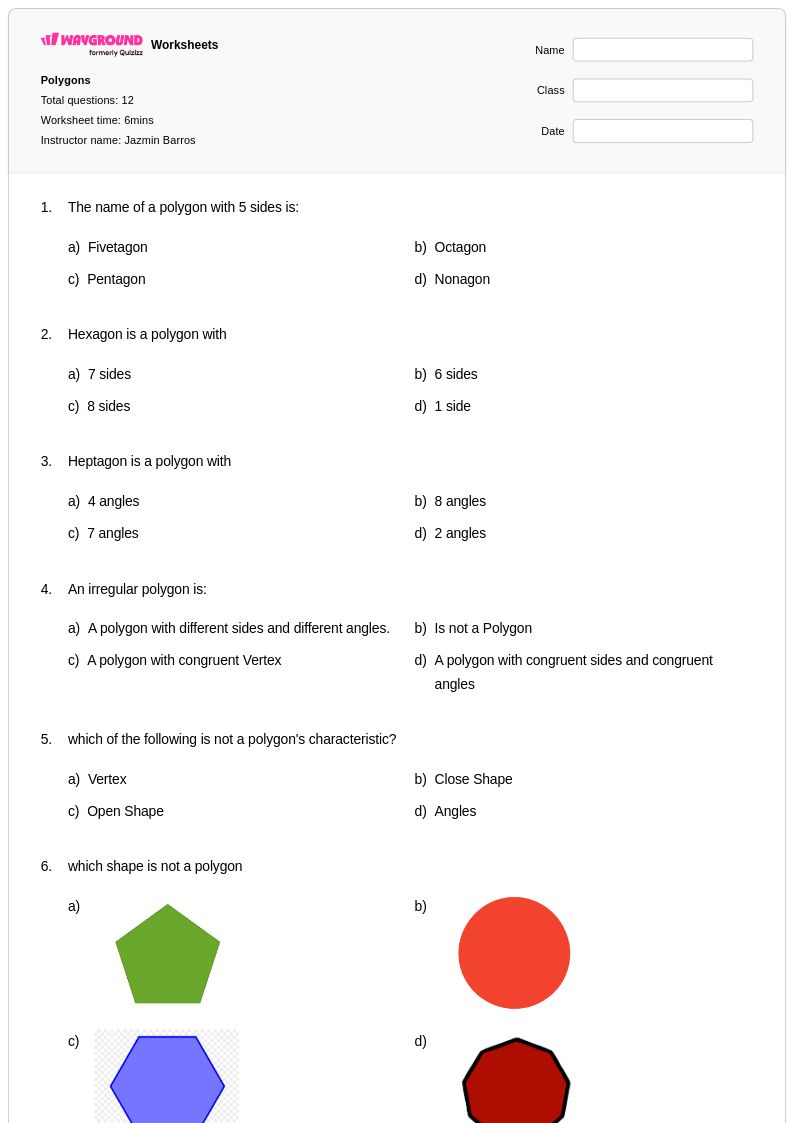
12 Q
3rd
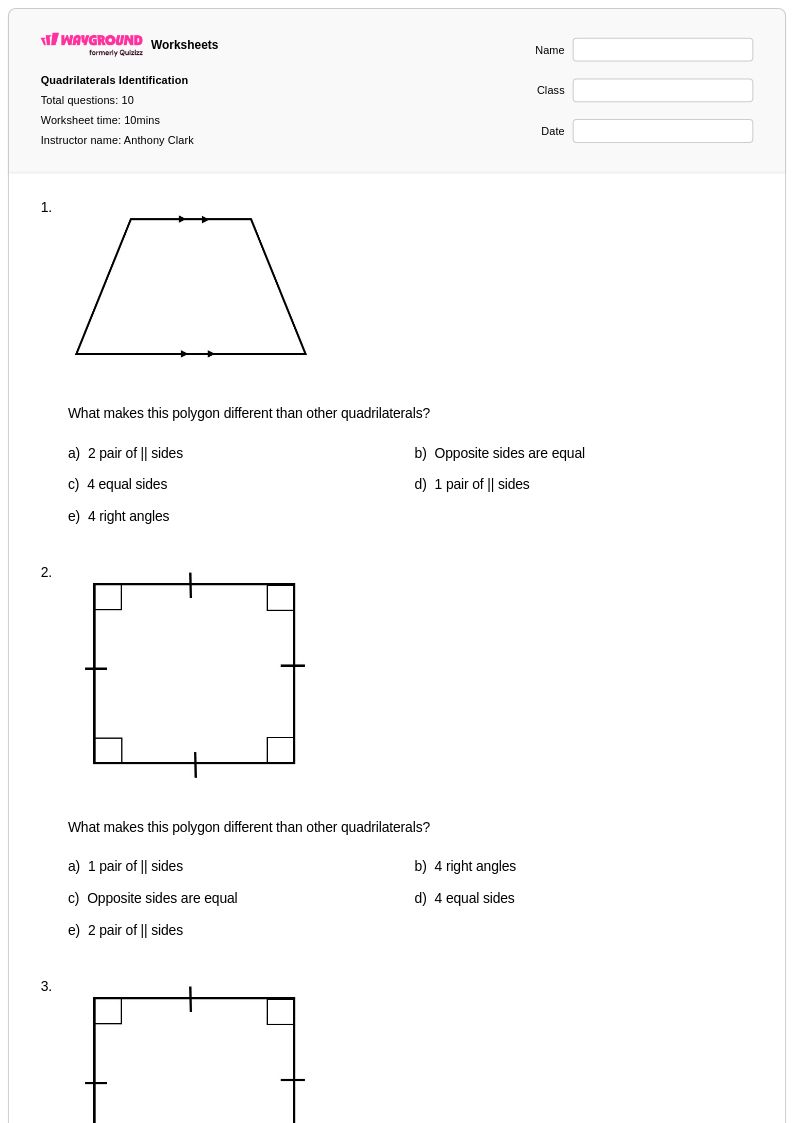
10 Q
3rd - Uni
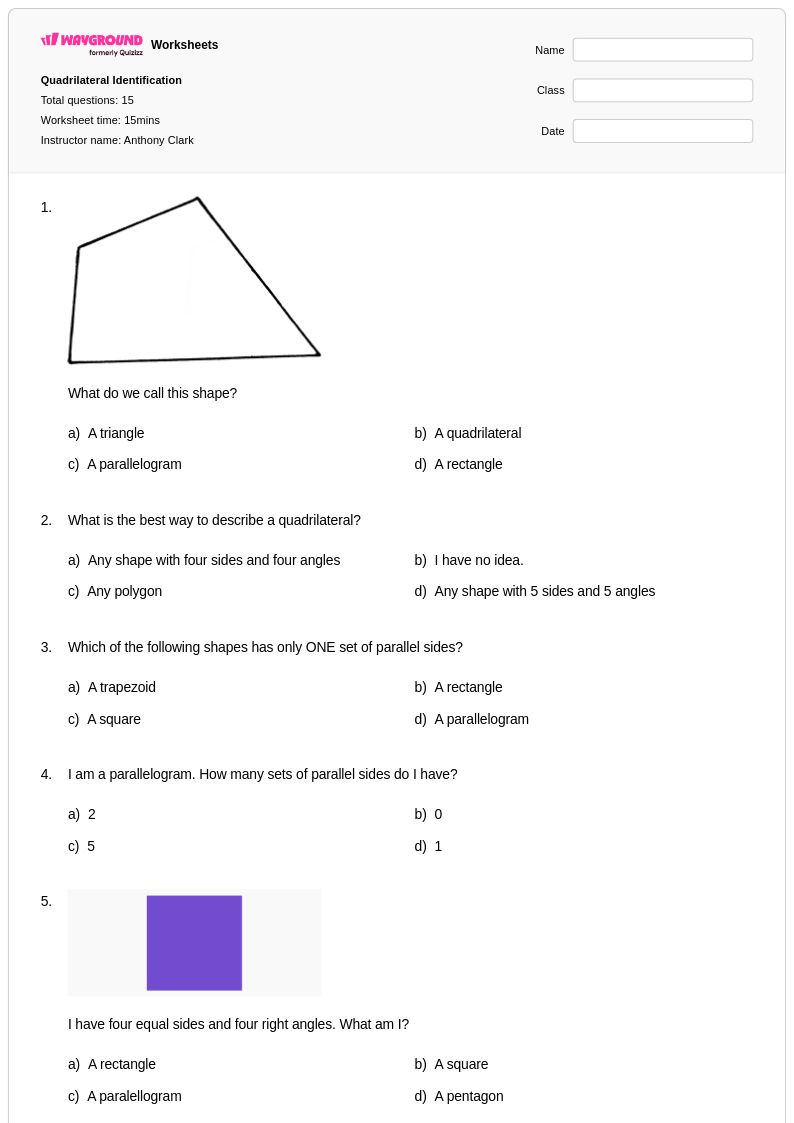
15 Q
3rd - Uni
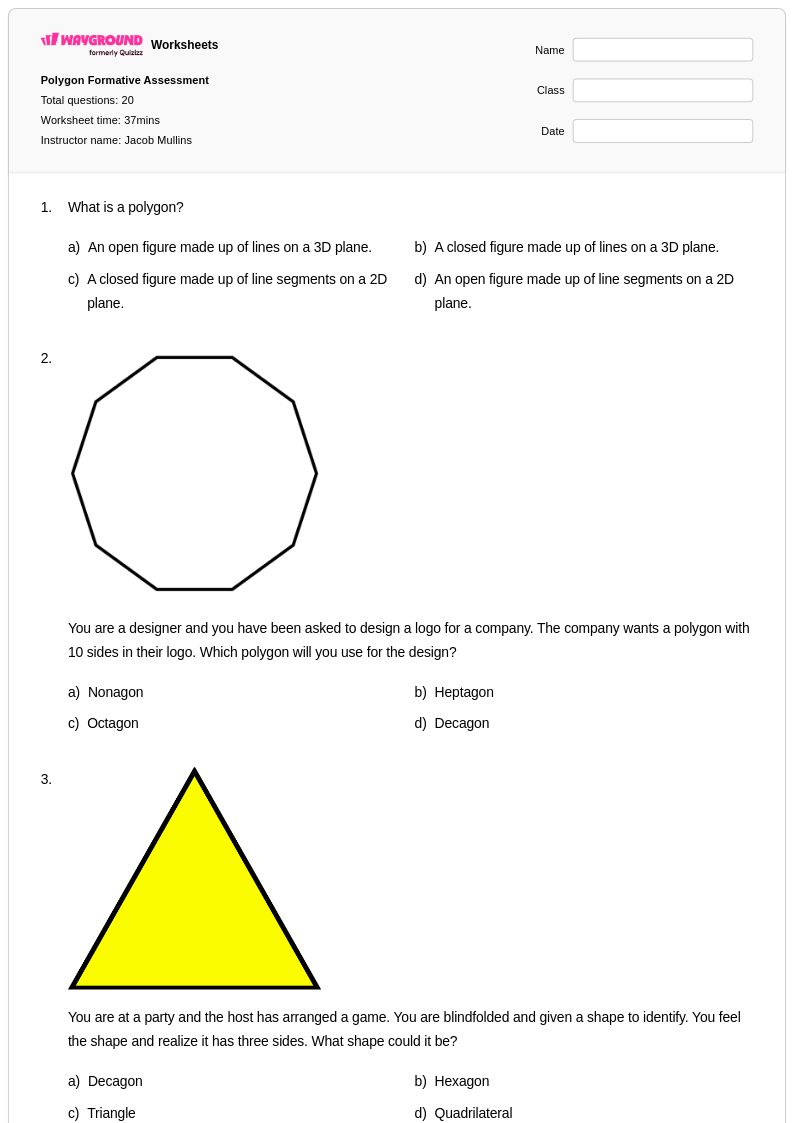
20 Q
3rd
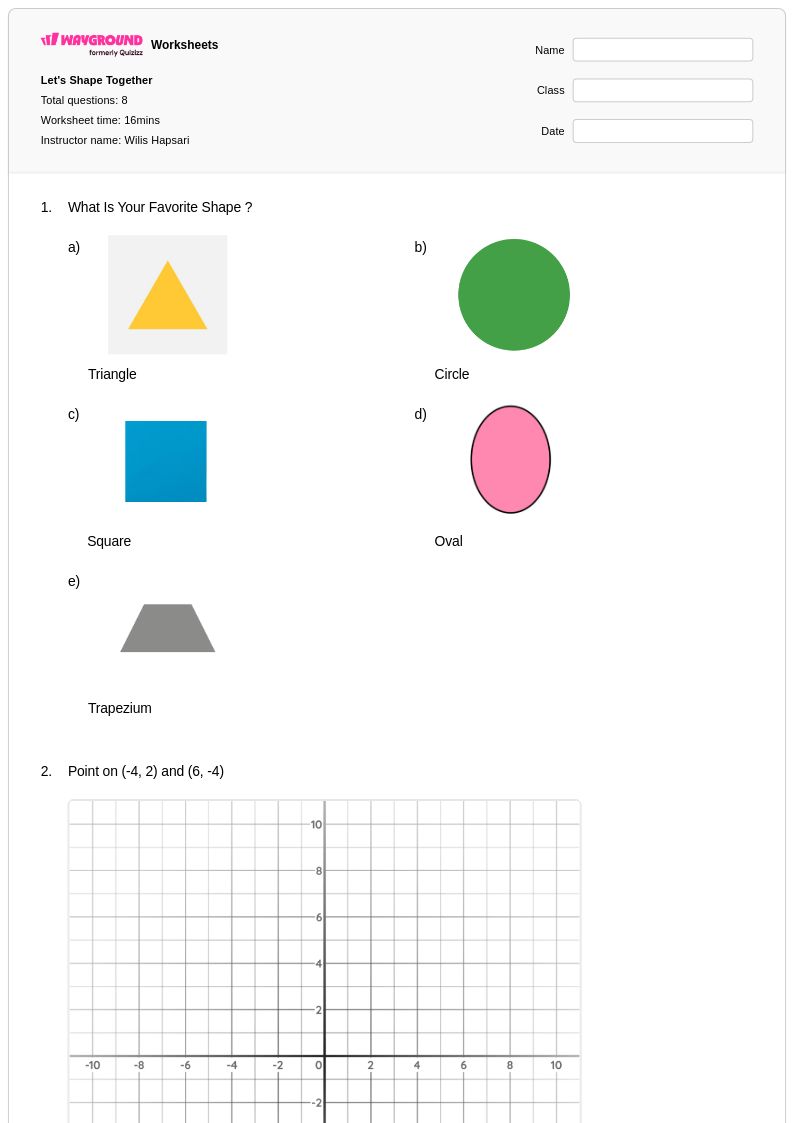
8 Q
1st - 5th
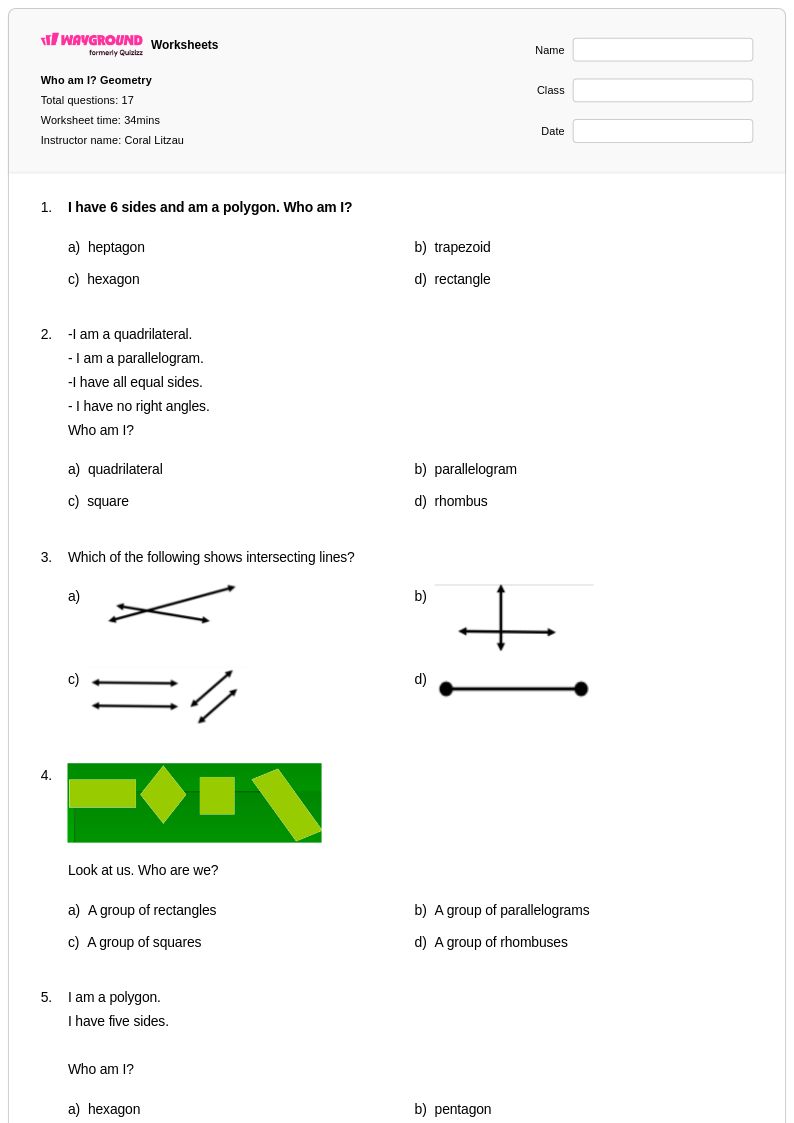
17 Q
3rd
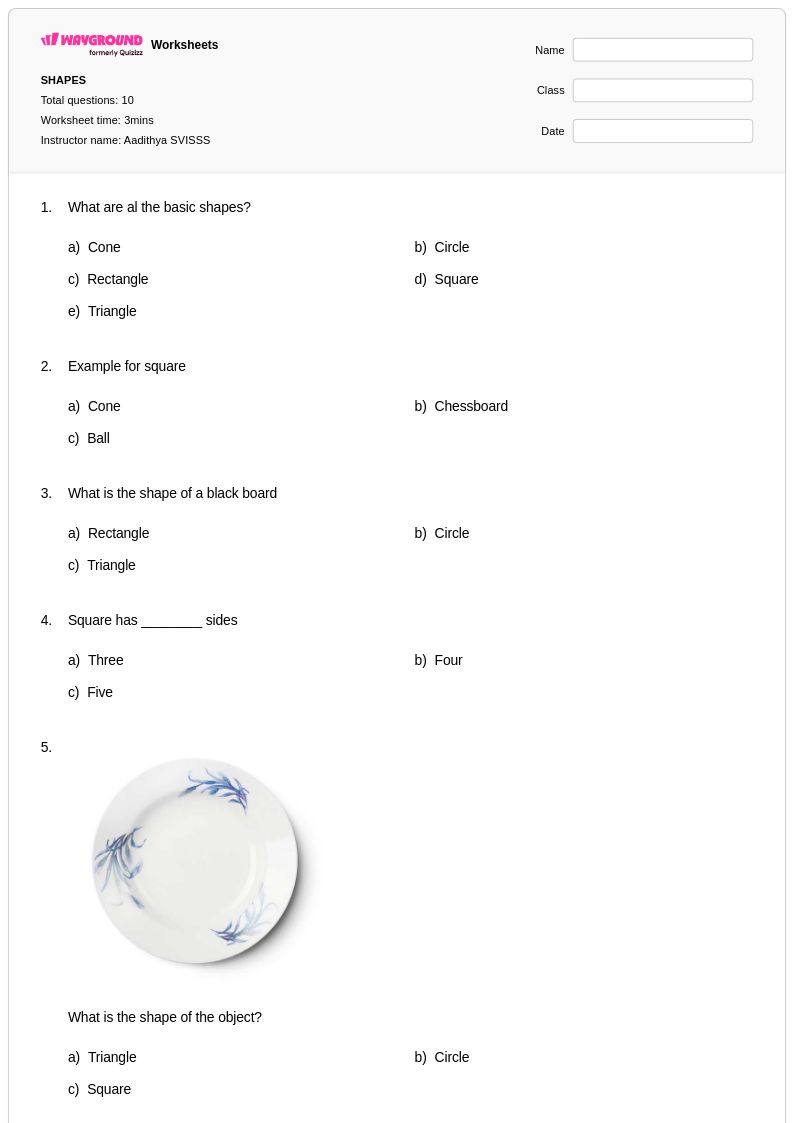
10 Q
3rd - 4th
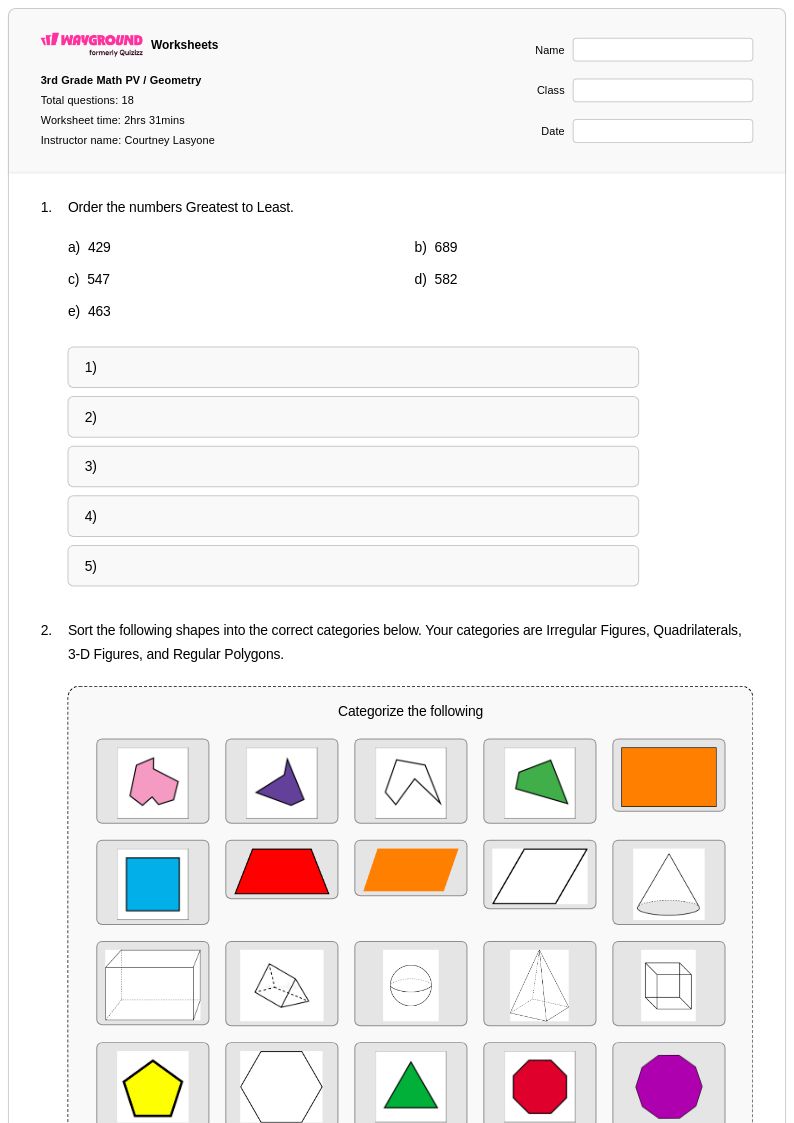
18 Q
3rd
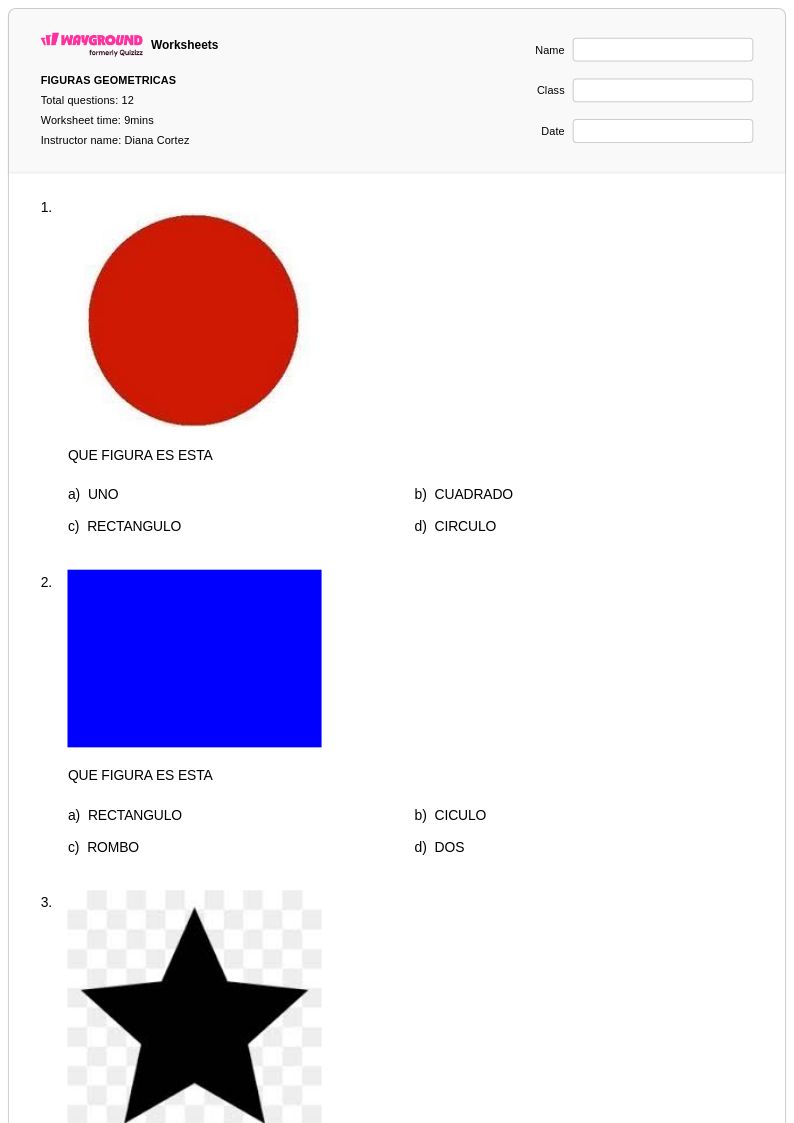
12 Q
3rd
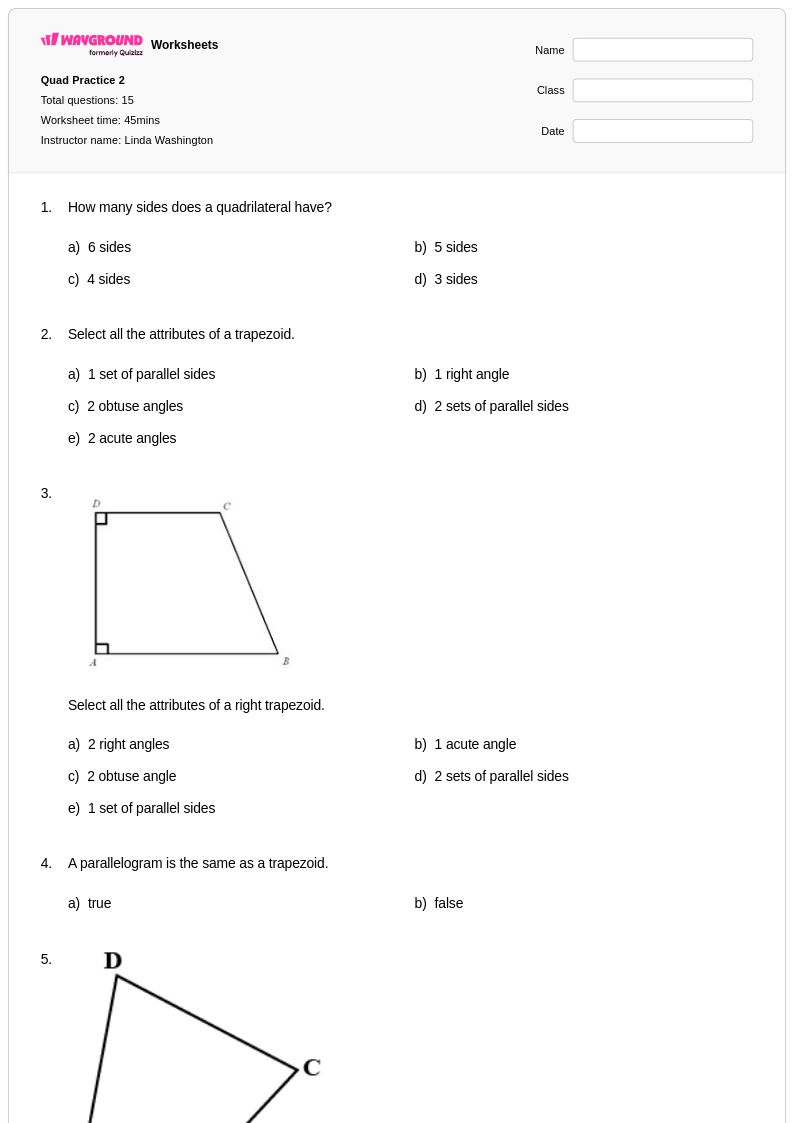
15 Q
3rd
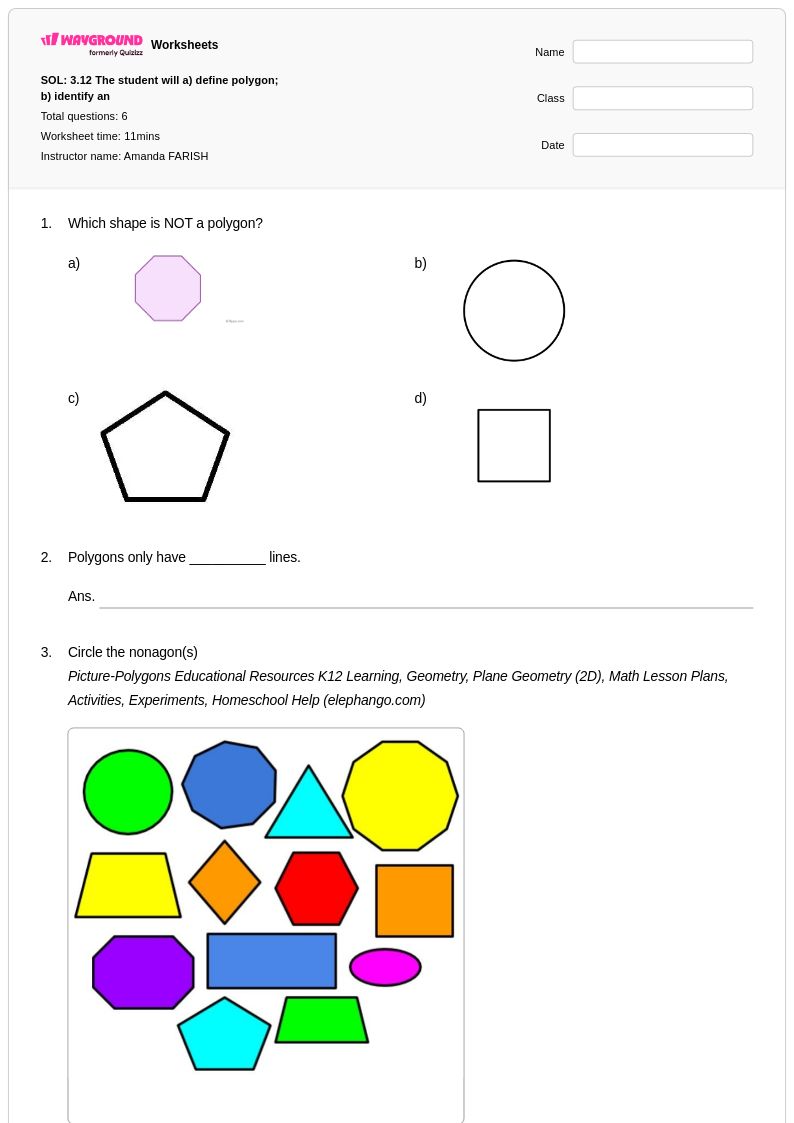
6 Q
3rd
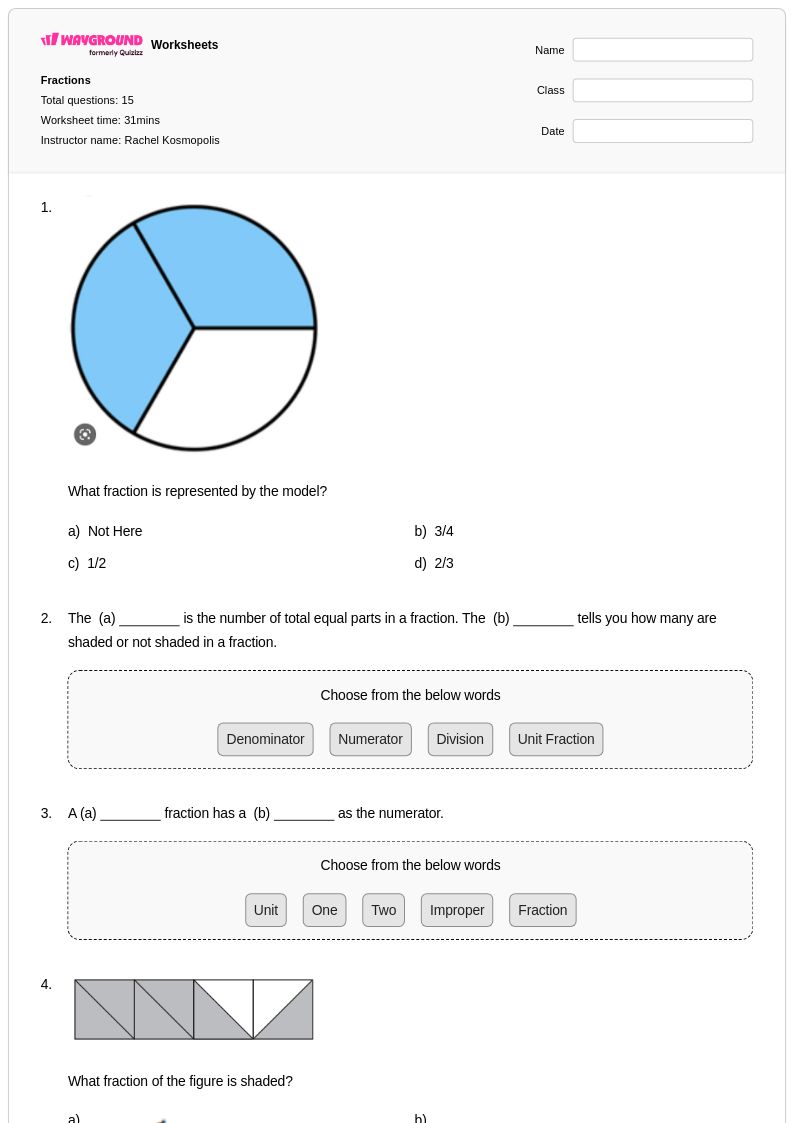
15 Q
3rd
Explore Other Subject Worksheets for class 3
Explore printable Shape Identification worksheets for Class 3
Shape identification worksheets for Class 3 students available through Wayground (formerly Quizizz) provide comprehensive practice in recognizing and categorizing fundamental geometric forms that form the foundation of spatial reasoning skills. These carefully designed printables help third-grade learners master the identification of two-dimensional shapes such as circles, triangles, squares, rectangles, pentagons, and hexagons, while also introducing basic three-dimensional forms like cubes, spheres, and cylinders. Each worksheet includes varied practice problems that challenge students to distinguish between similar shapes, count sides and vertices, and recognize shapes in different orientations and sizes. Teachers benefit from complete answer keys that accompany each pdf, enabling efficient grading and immediate feedback to support student learning and confidence building in geometric concepts.
Wayground (formerly Quizizz) empowers educators with millions of teacher-created shape identification resources specifically tailored for Class 3 mathematics instruction, featuring robust search and filtering capabilities that allow quick access to worksheets aligned with curriculum standards and individual classroom needs. The platform's differentiation tools enable teachers to customize difficulty levels and problem types, ensuring that both struggling learners and advanced students receive appropriate geometric challenges through printable and digital formats. These flexible worksheet collections support comprehensive lesson planning by providing varied practice opportunities for remediation, skill reinforcement, and enrichment activities, while the pdf format ensures easy distribution and consistent formatting across different devices and printing systems, making shape identification instruction both accessible and effective for diverse learning environments.
FAQs
What is the main focus of teaching shapes in 3rd grade?
What activities help 3rd graders with shape classification?
What is the most common misconception about shapes in 3rd grade?
How can I use this 3rd grade shape worksheet?
How does this worksheet support 3rd grade curriculum standards?
How can I differentiate this topic for my 3rd grade class?