
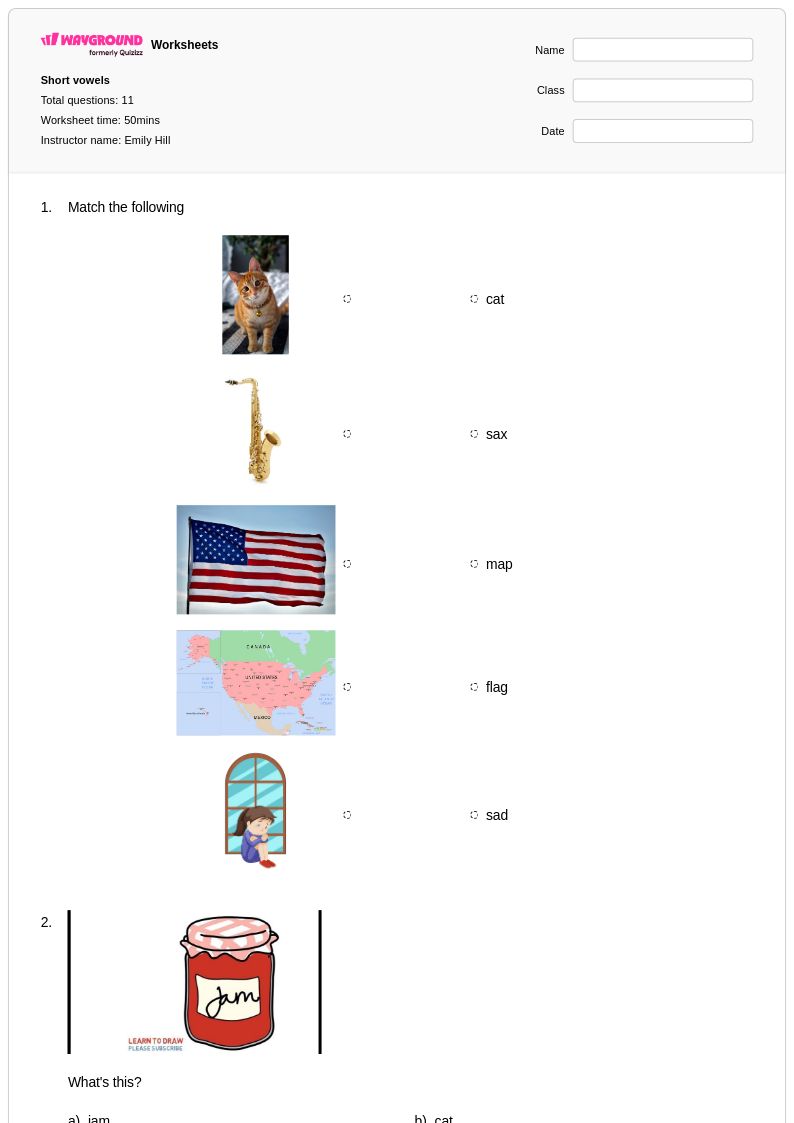
11 Q
1st
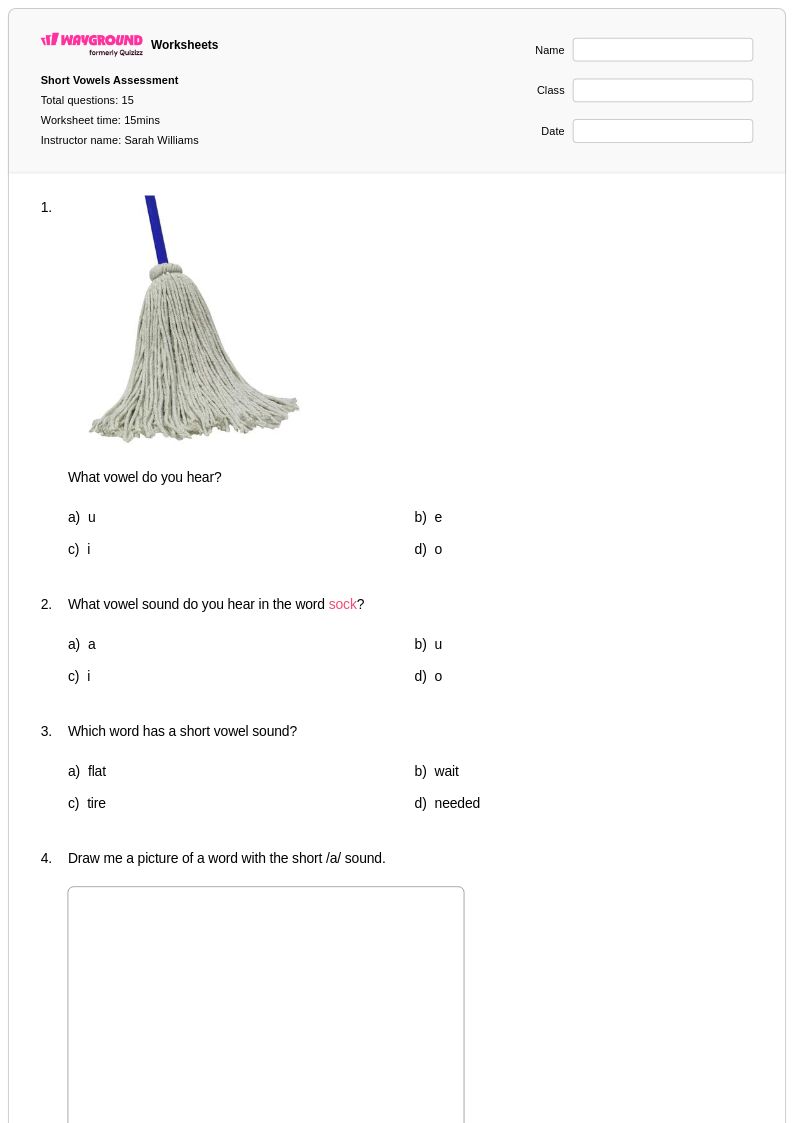
15 Q
1st - Uni
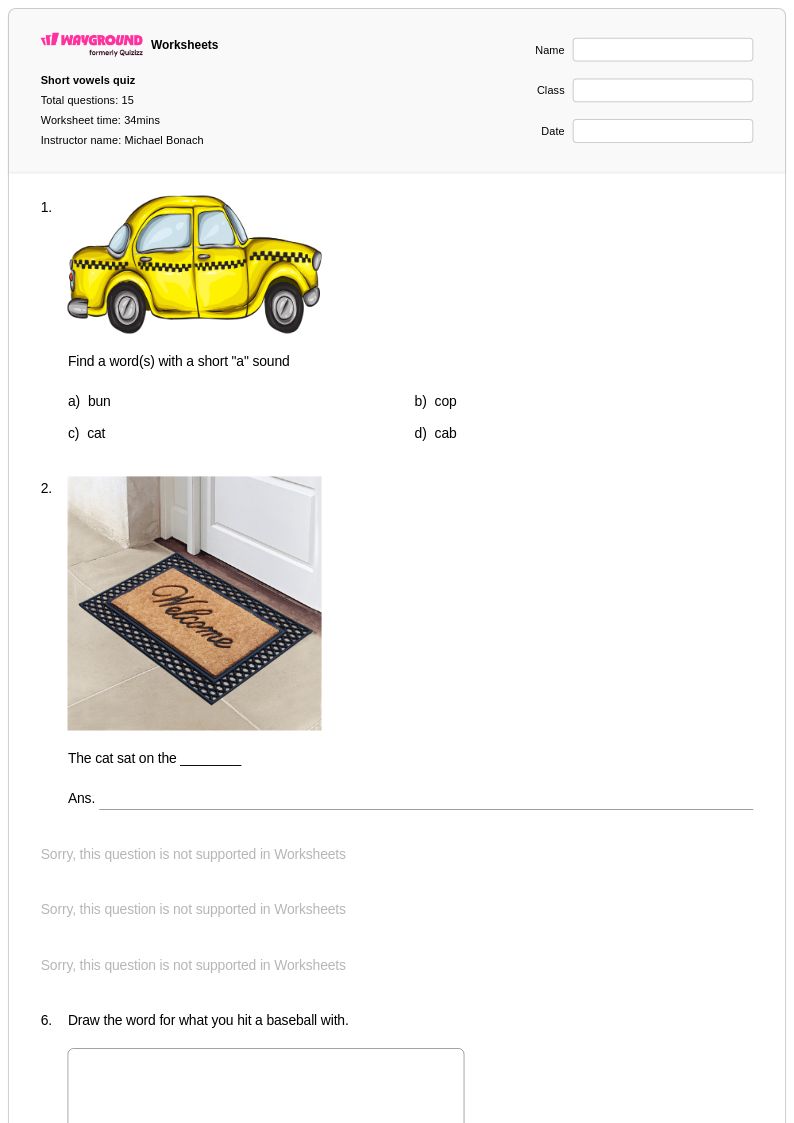
18 Q
1st

25 Q
1st
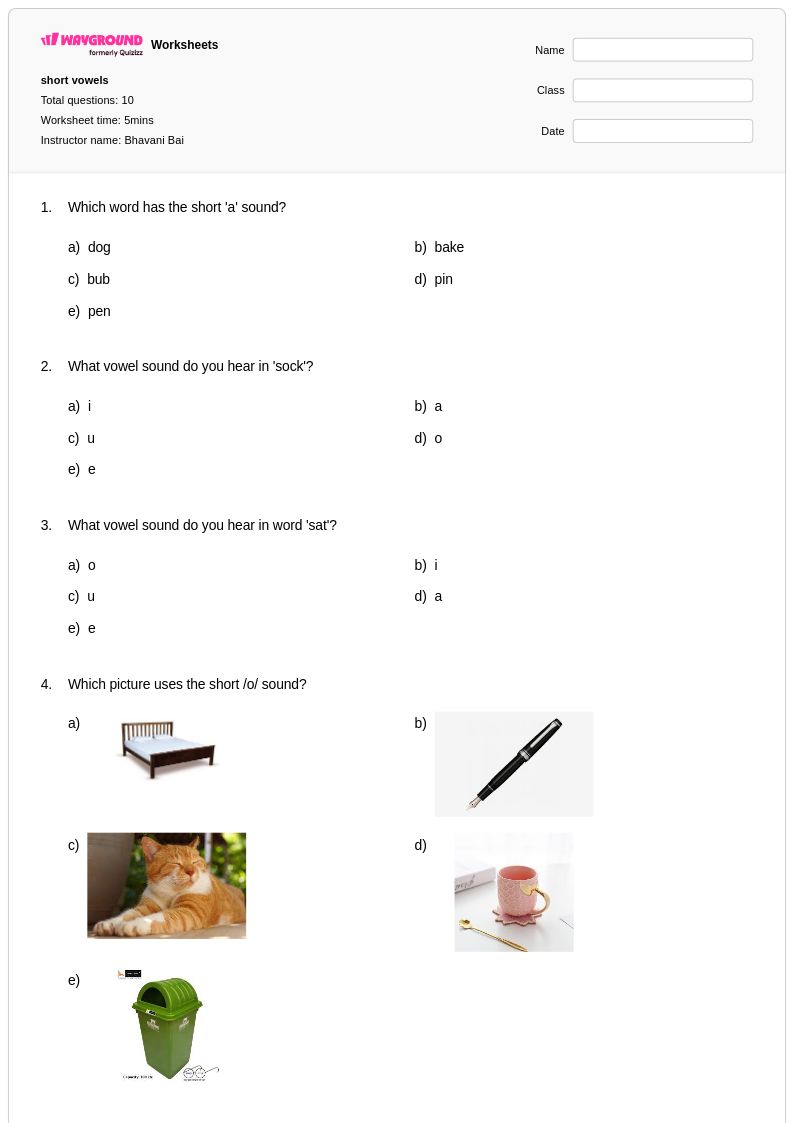
10 Q
KG - 2nd
10 Q
1st - 2nd
20 Q
1st - 2nd
17 Q
1st - 2nd
18 Q
1st - Uni
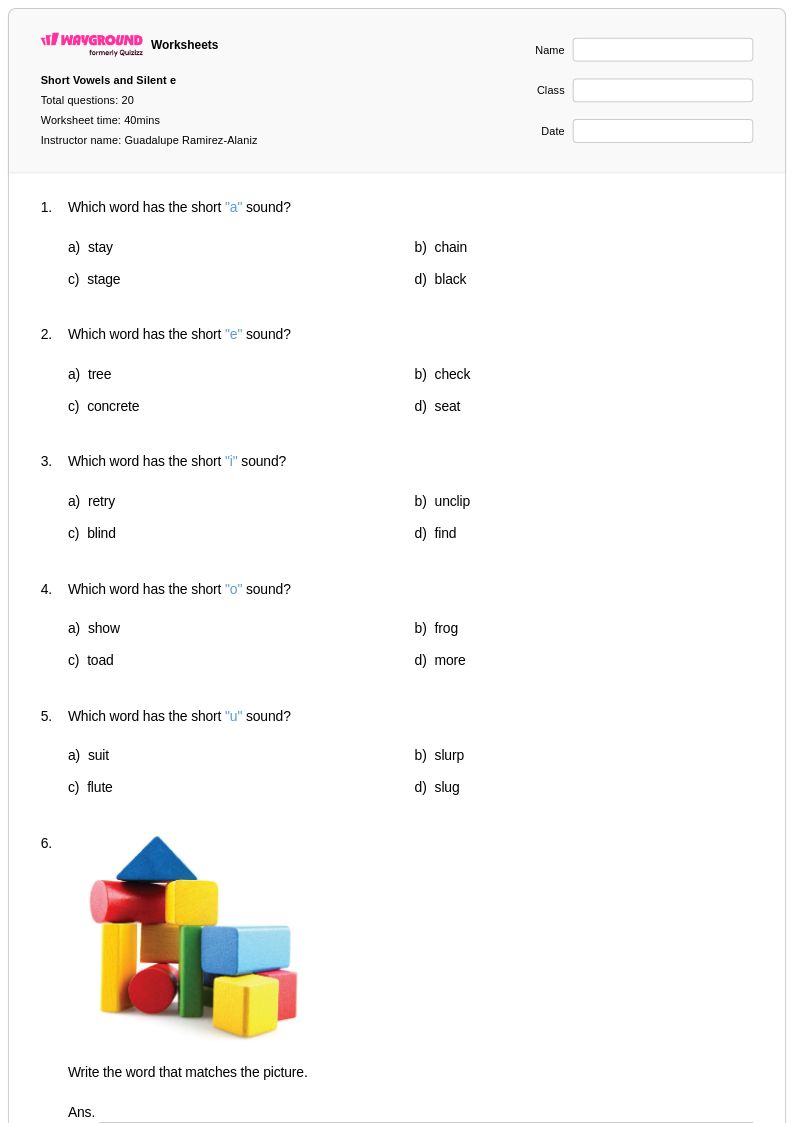
20 Q
KG - 5th
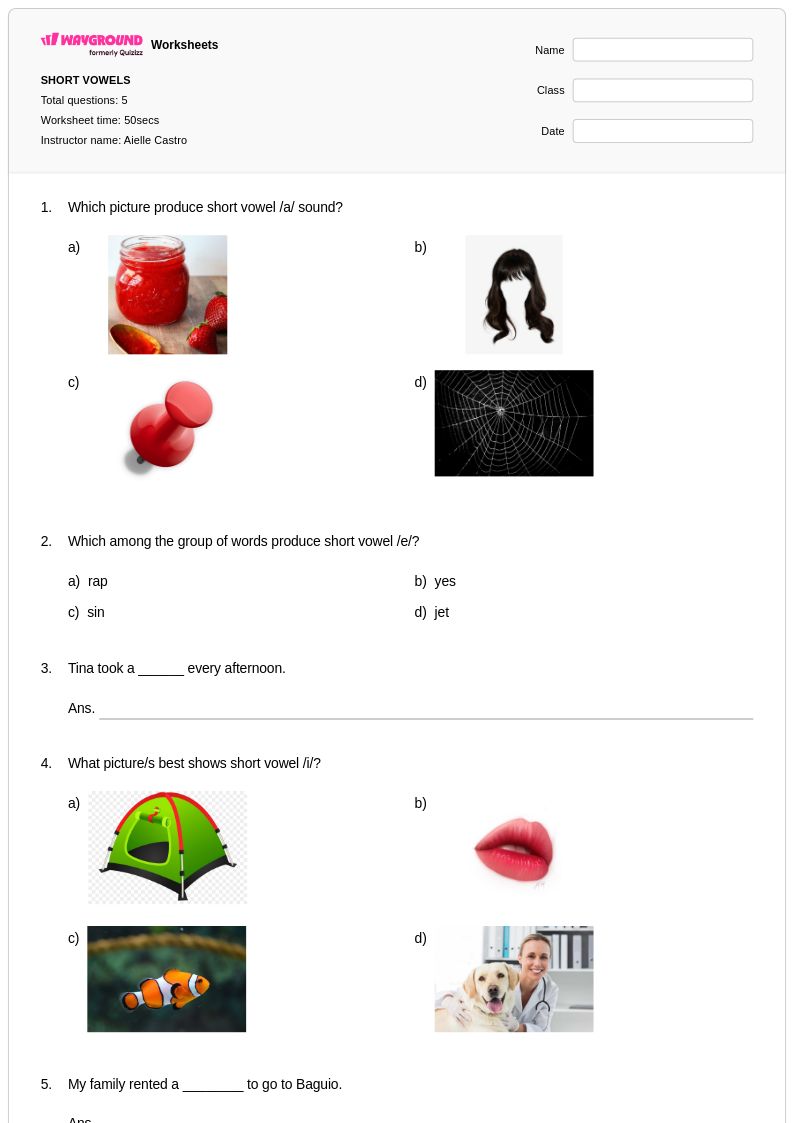
5 Q
KG - 1st
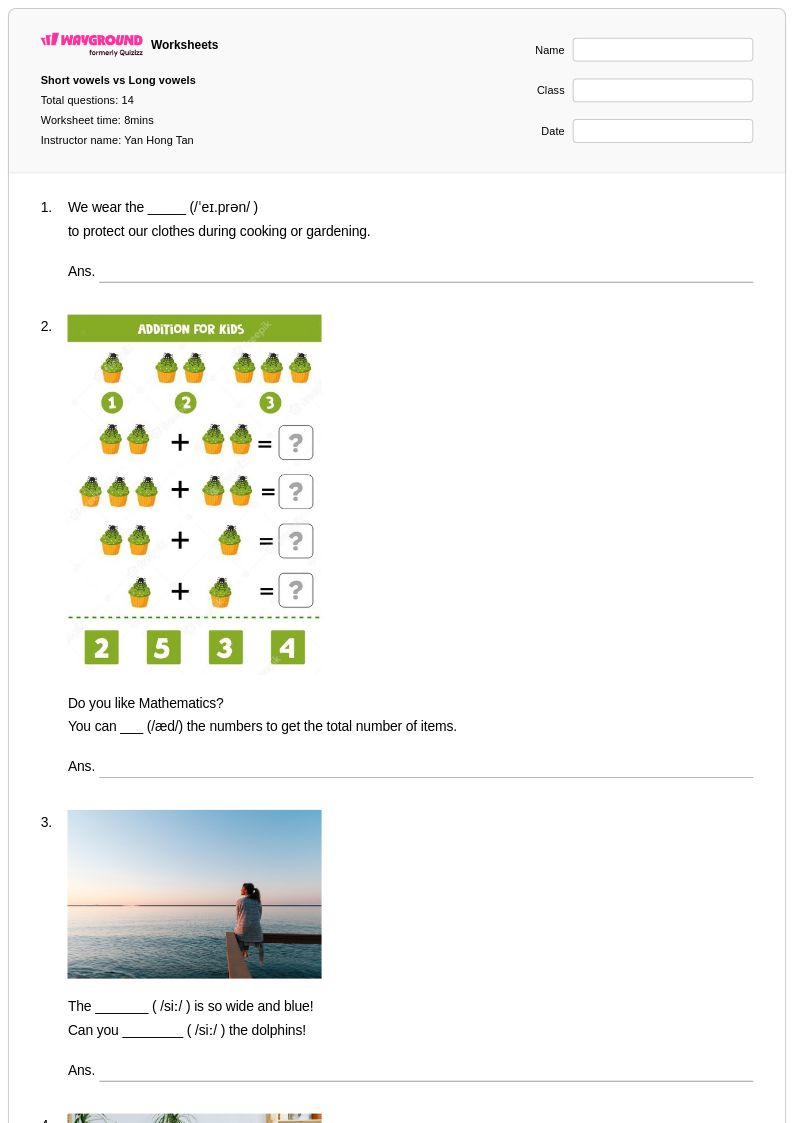
14 Q
1st - 2nd
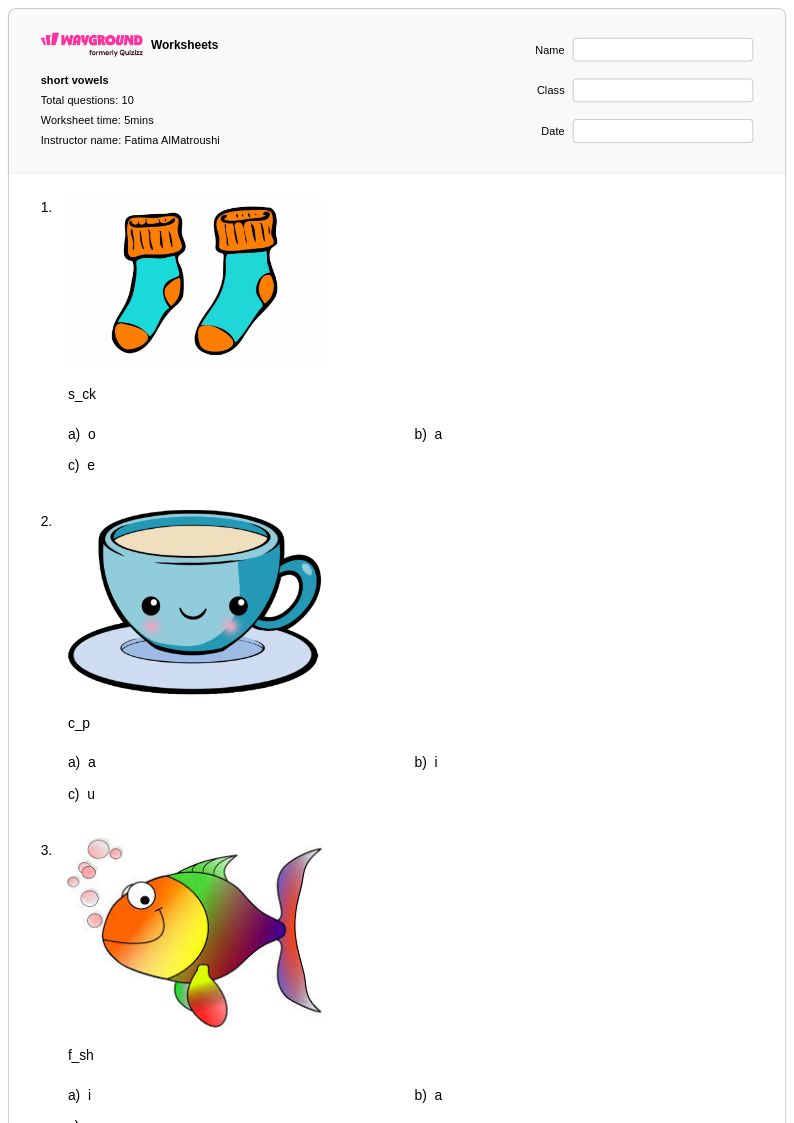
10 Q
1st
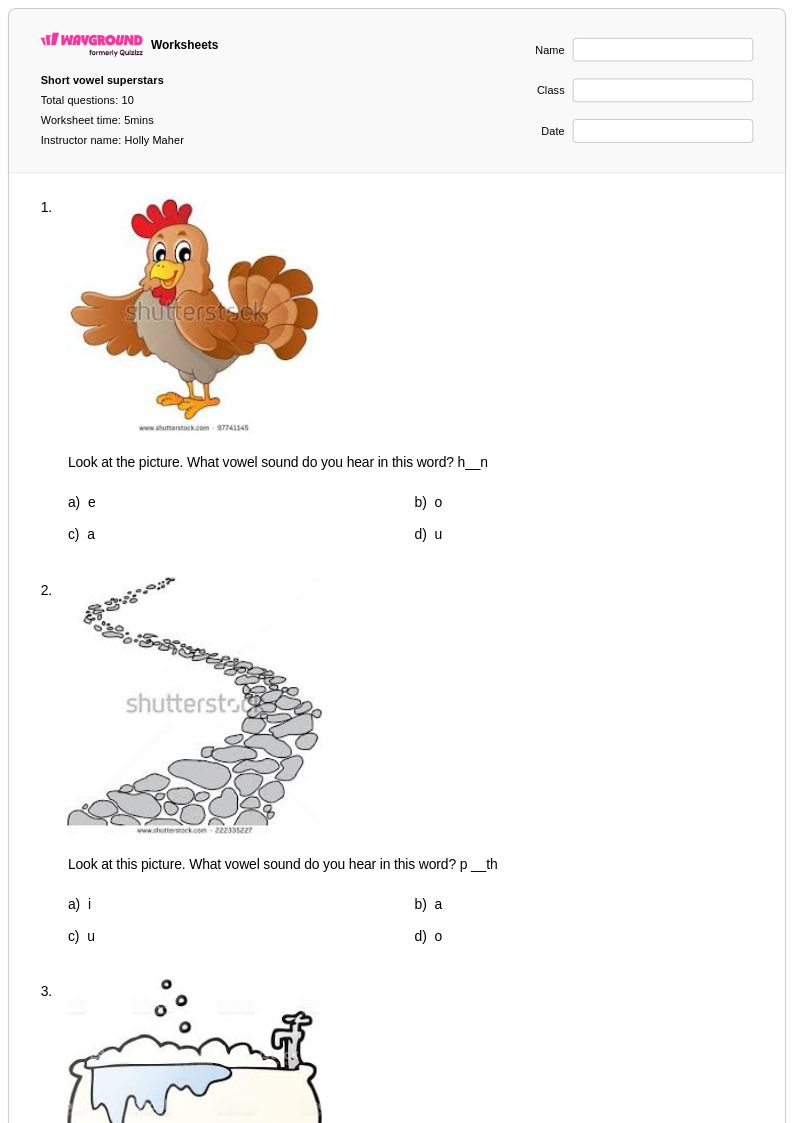
10 Q
1st
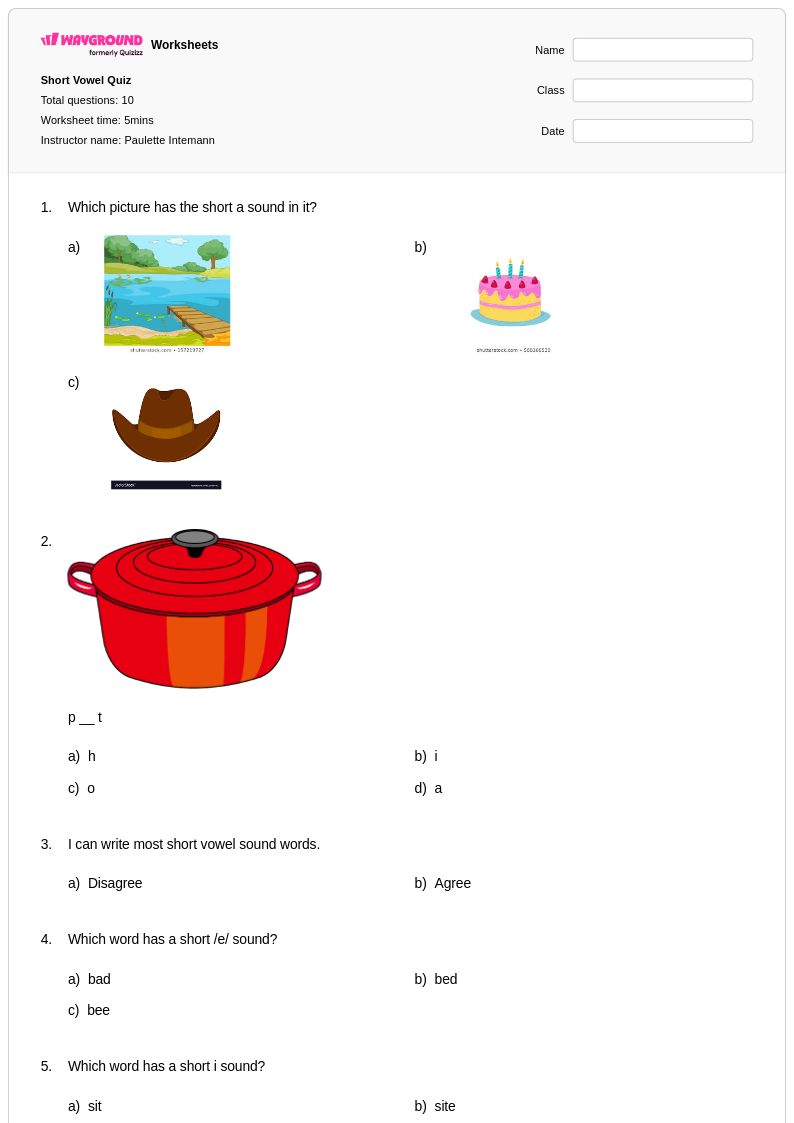
10 Q
KG - 1st
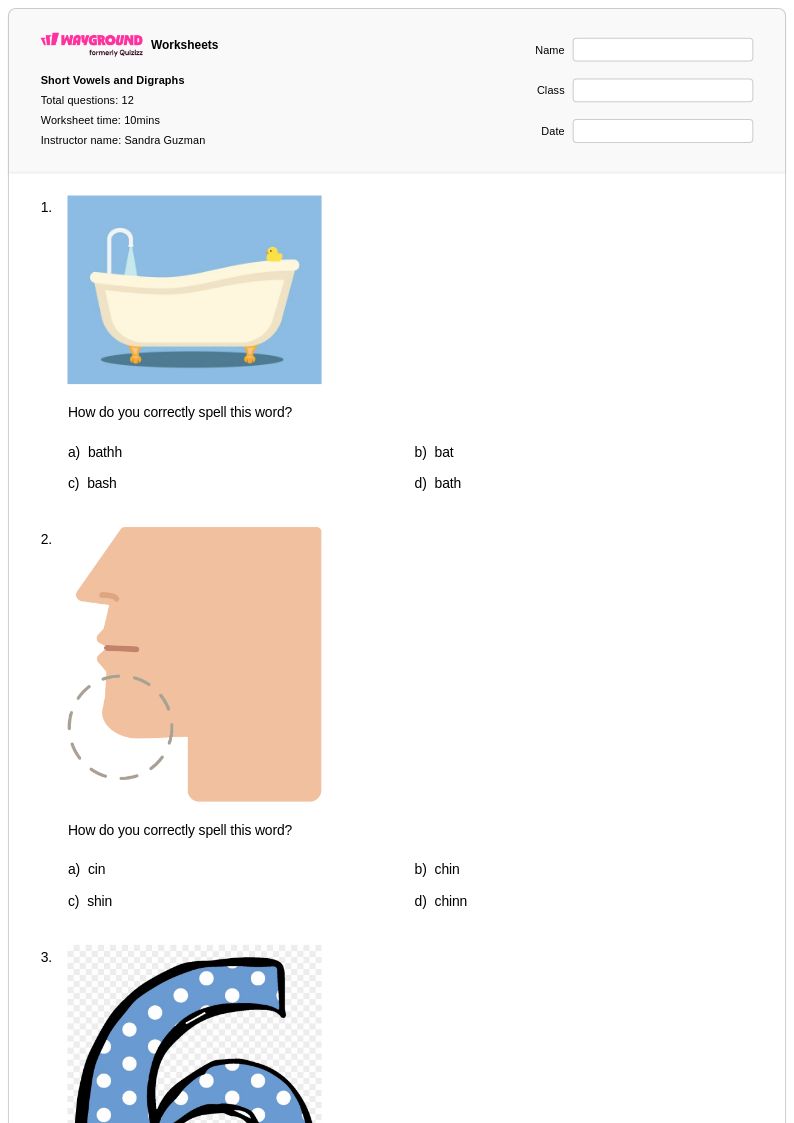
12 Q
1st - 2nd
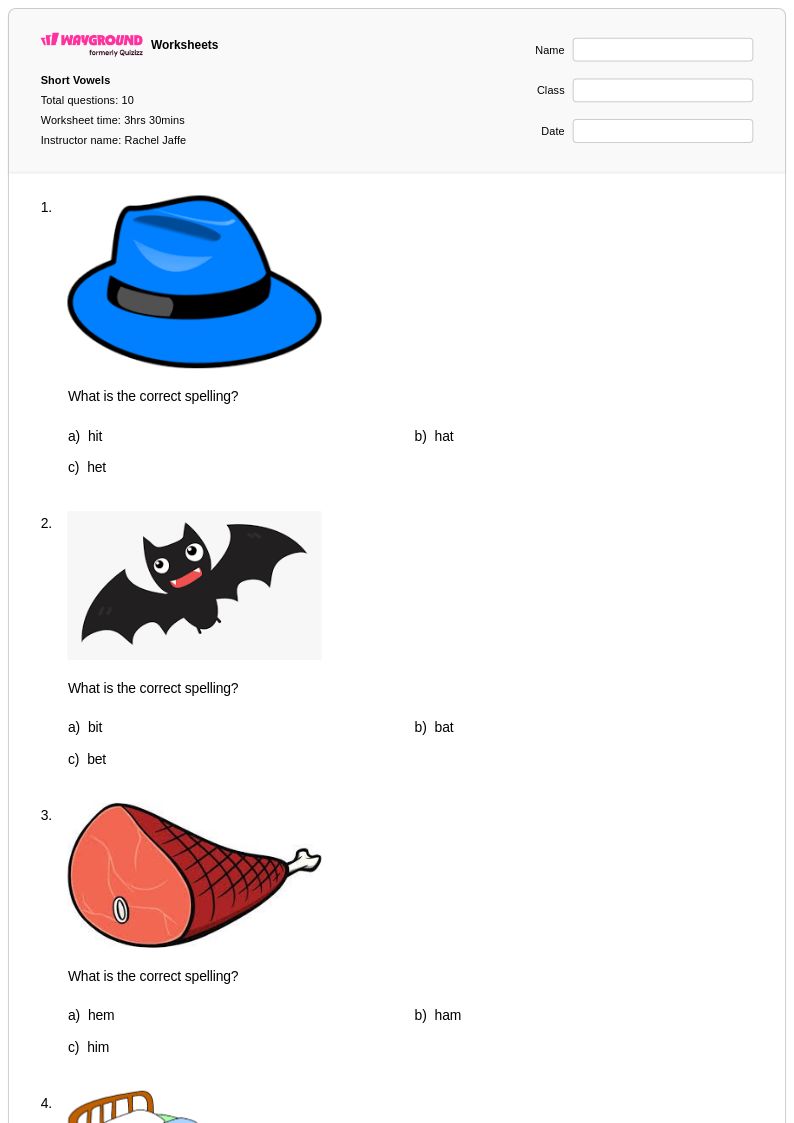
10 Q
KG - 5th
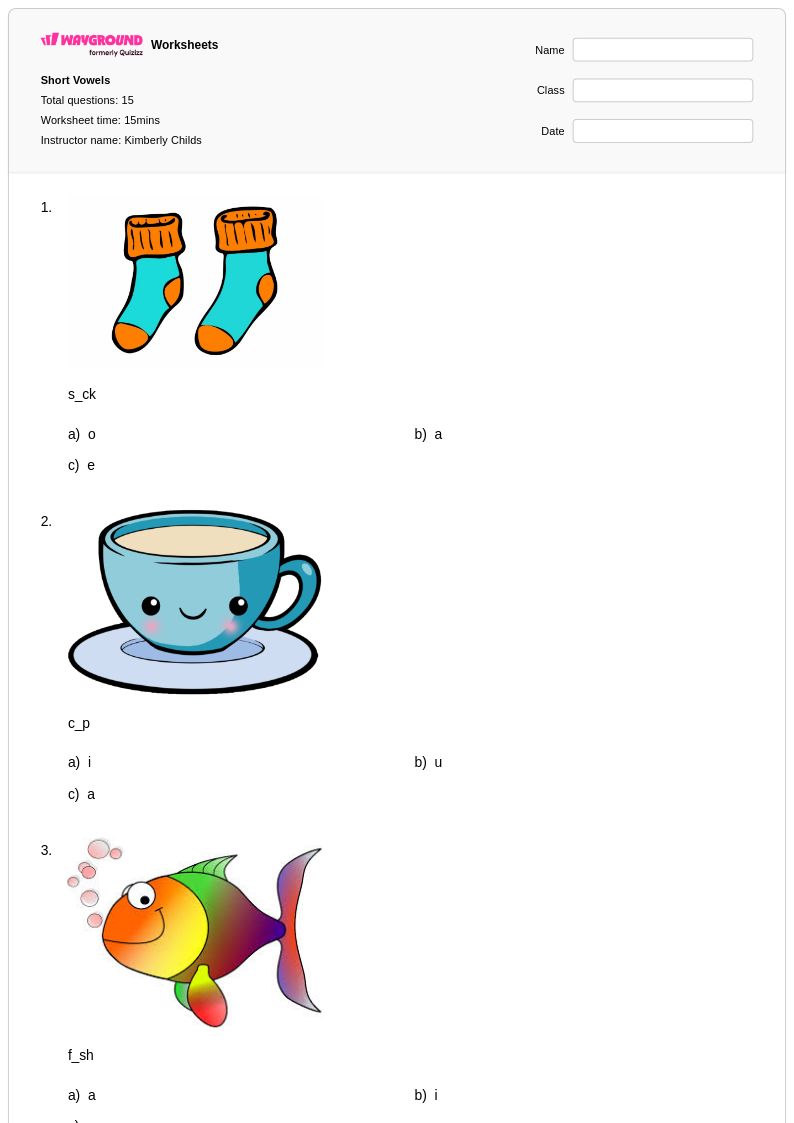
15 Q
1st - 3rd
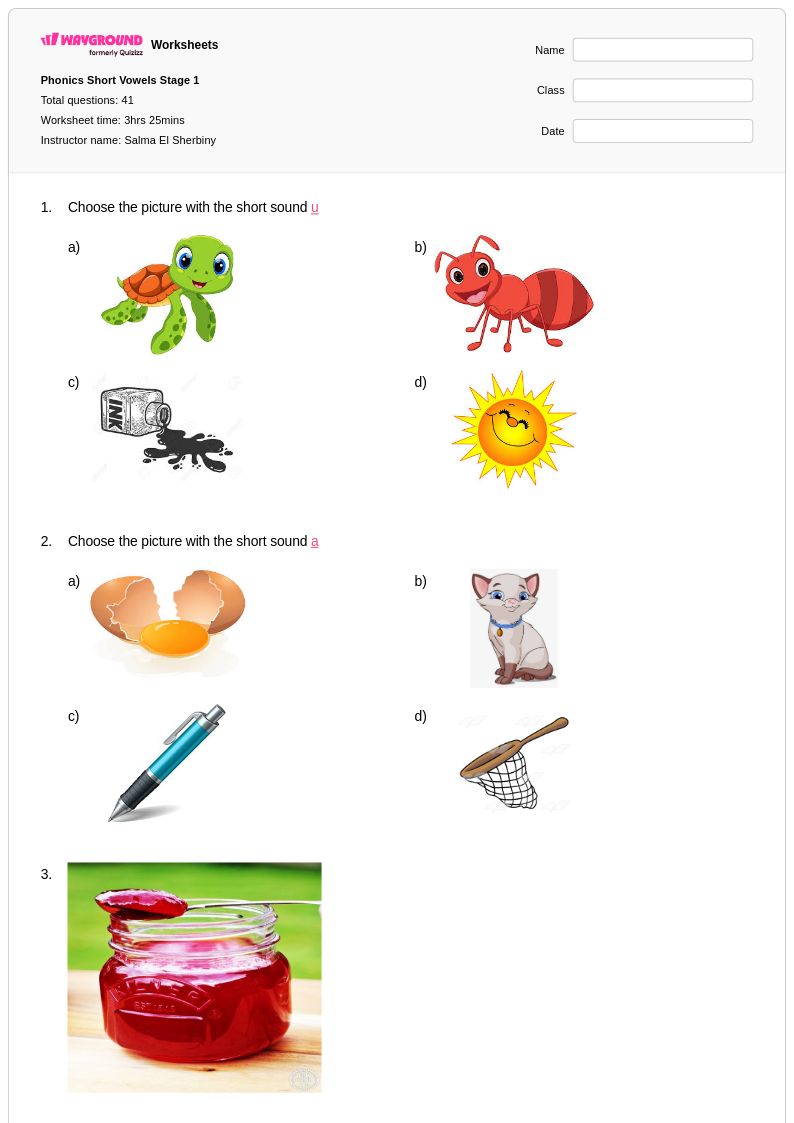
41 Q
KG - 2nd
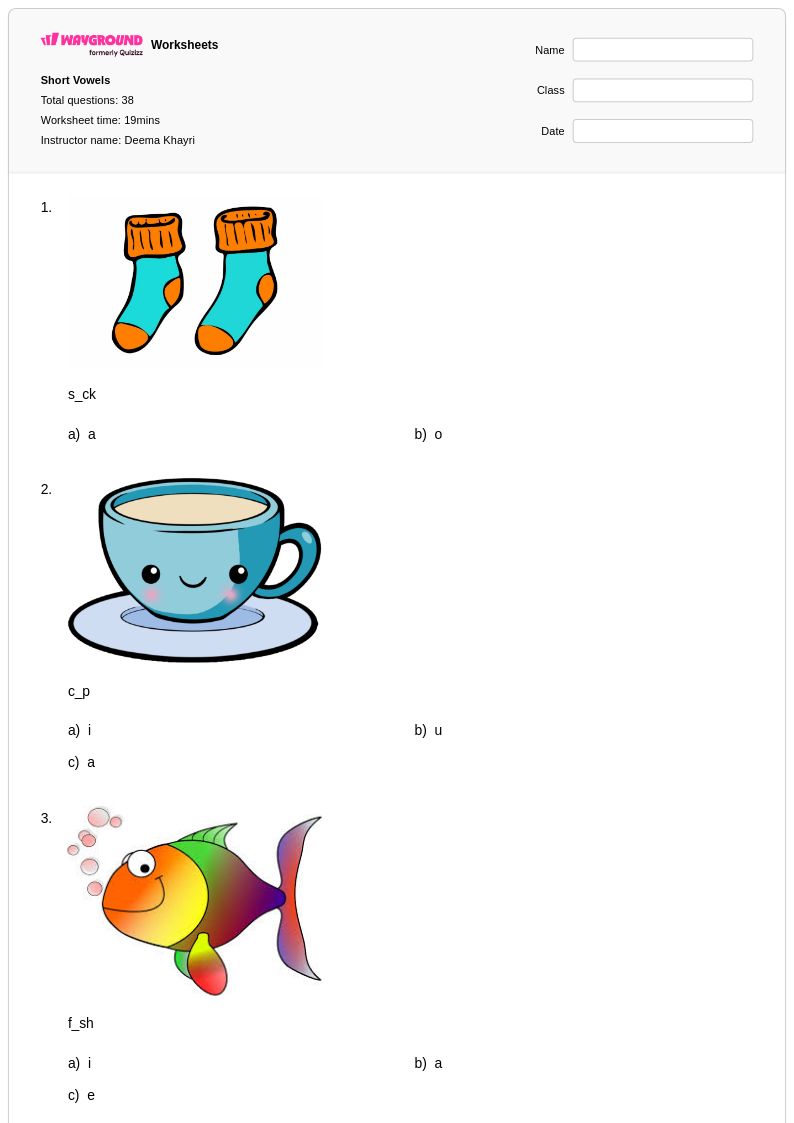
38 Q
1st
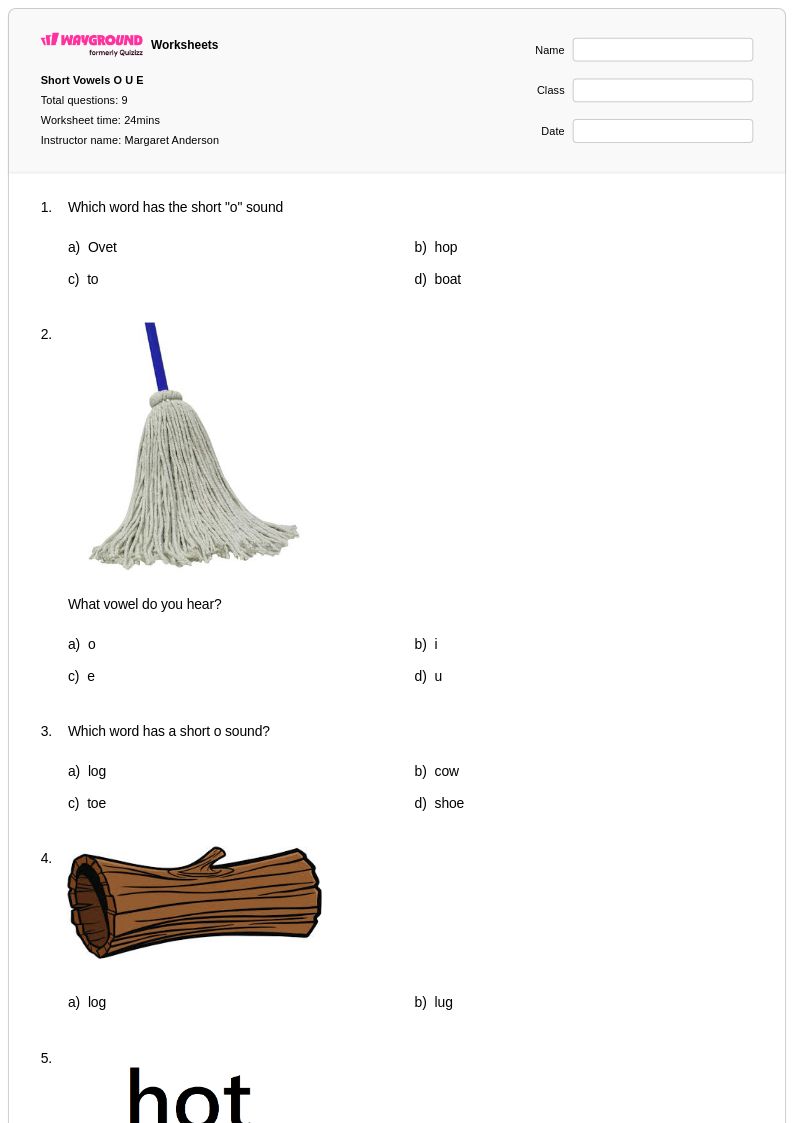
9 Q
1st
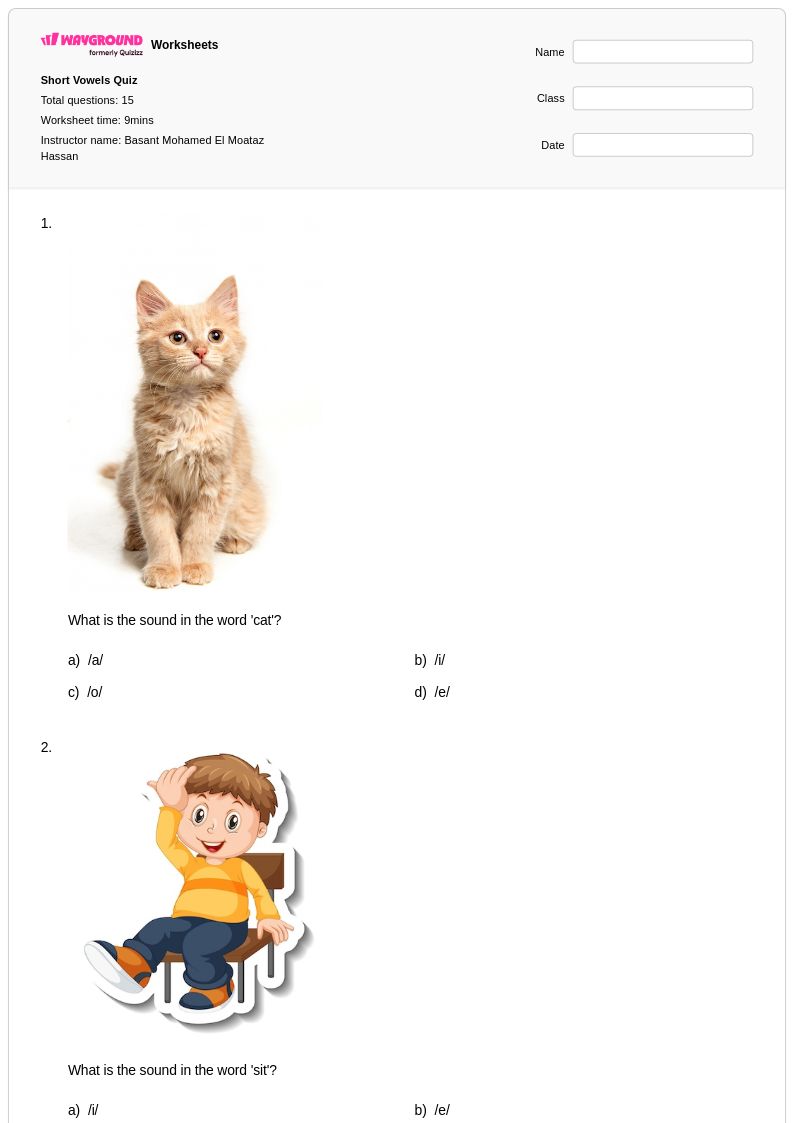
15 Q
1st
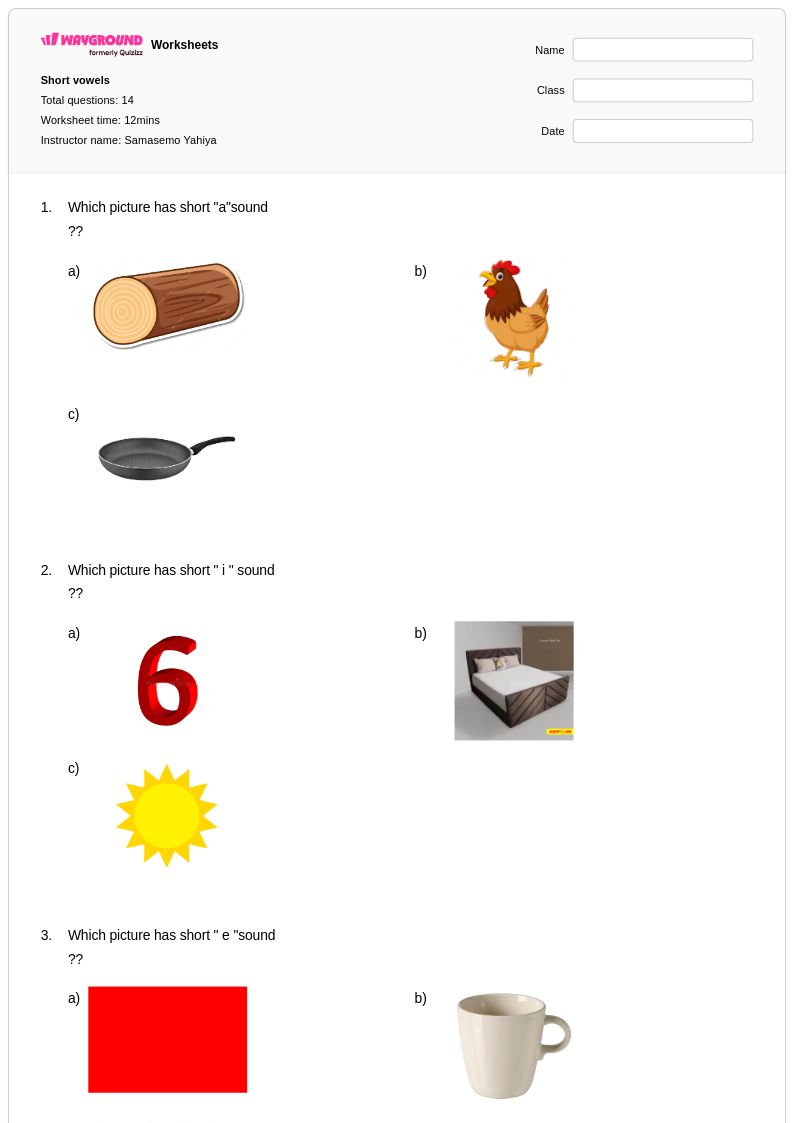
14 Q
1st
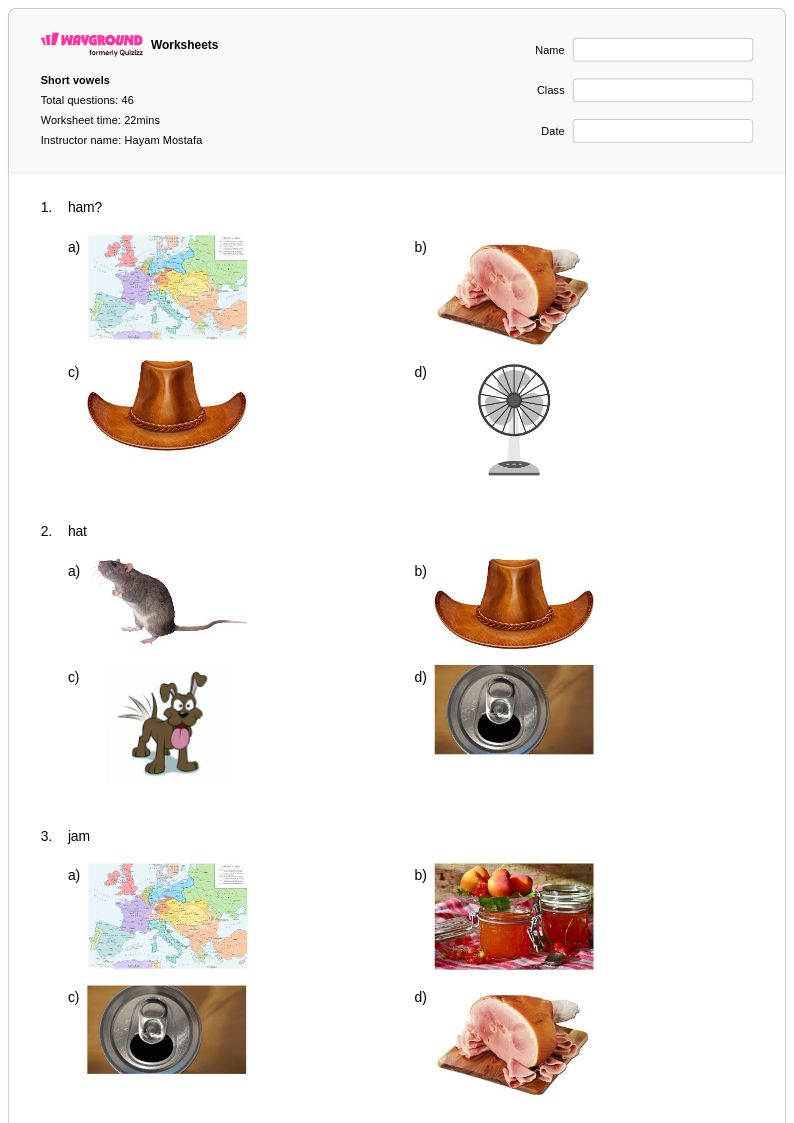
46 Q
KG - 1st
Explore Short Vowels Worksheets by Grades
Explore Other Subject Worksheets for class 1
Explore printable Short Vowels worksheets for Class 1
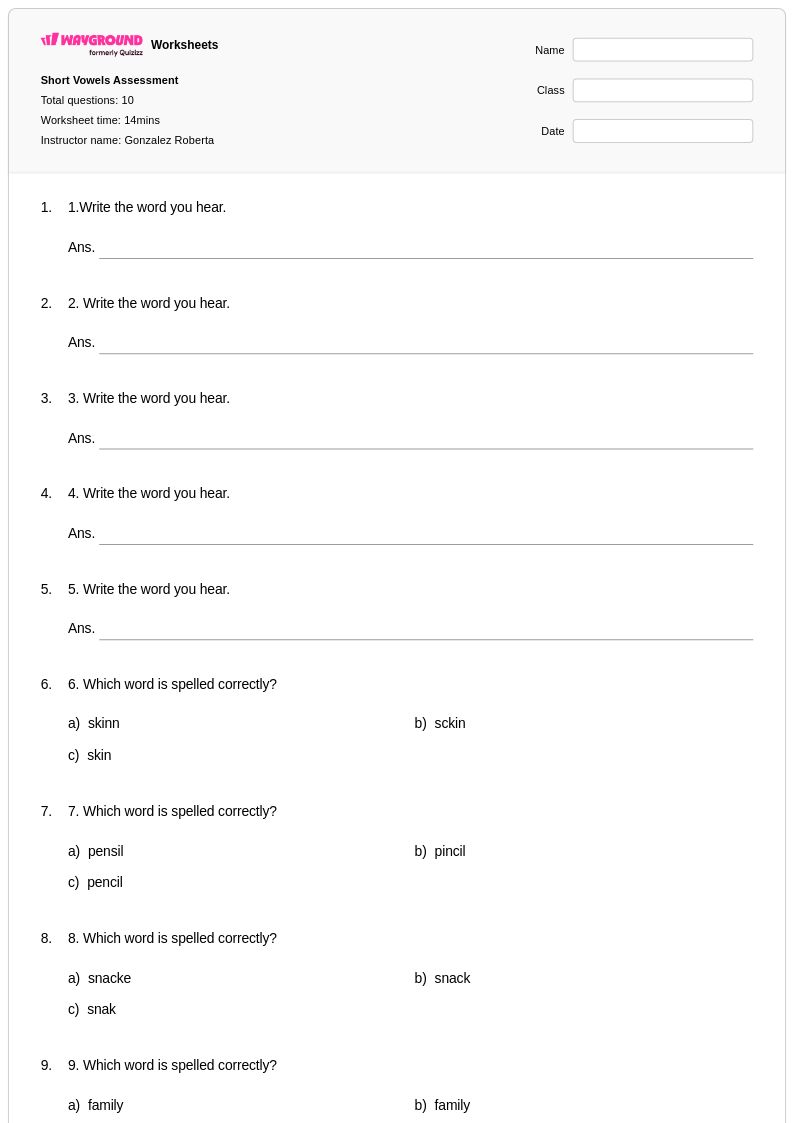
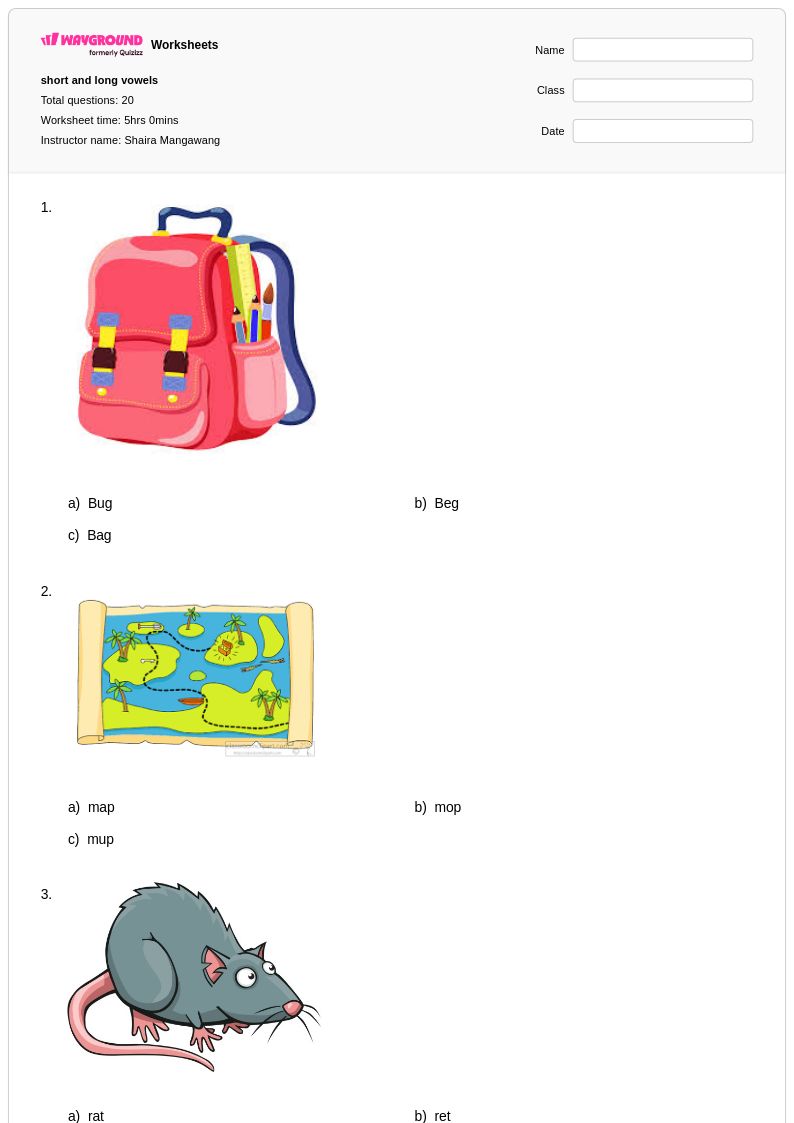
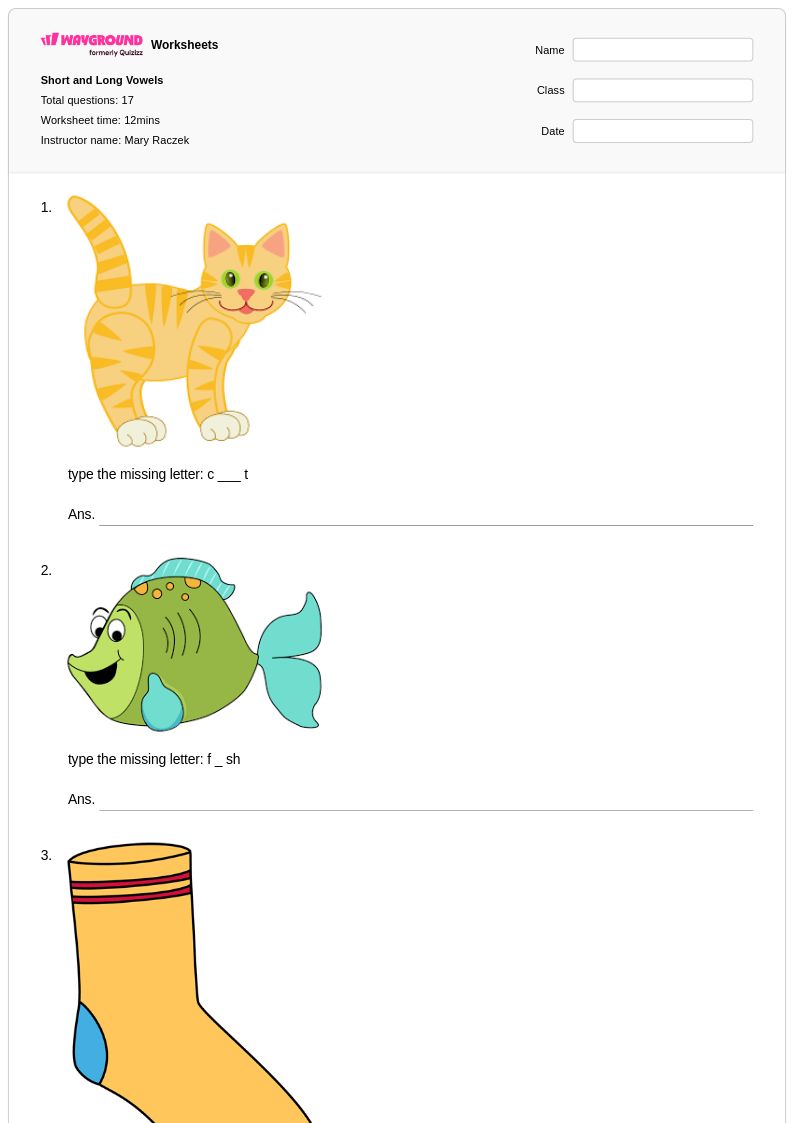
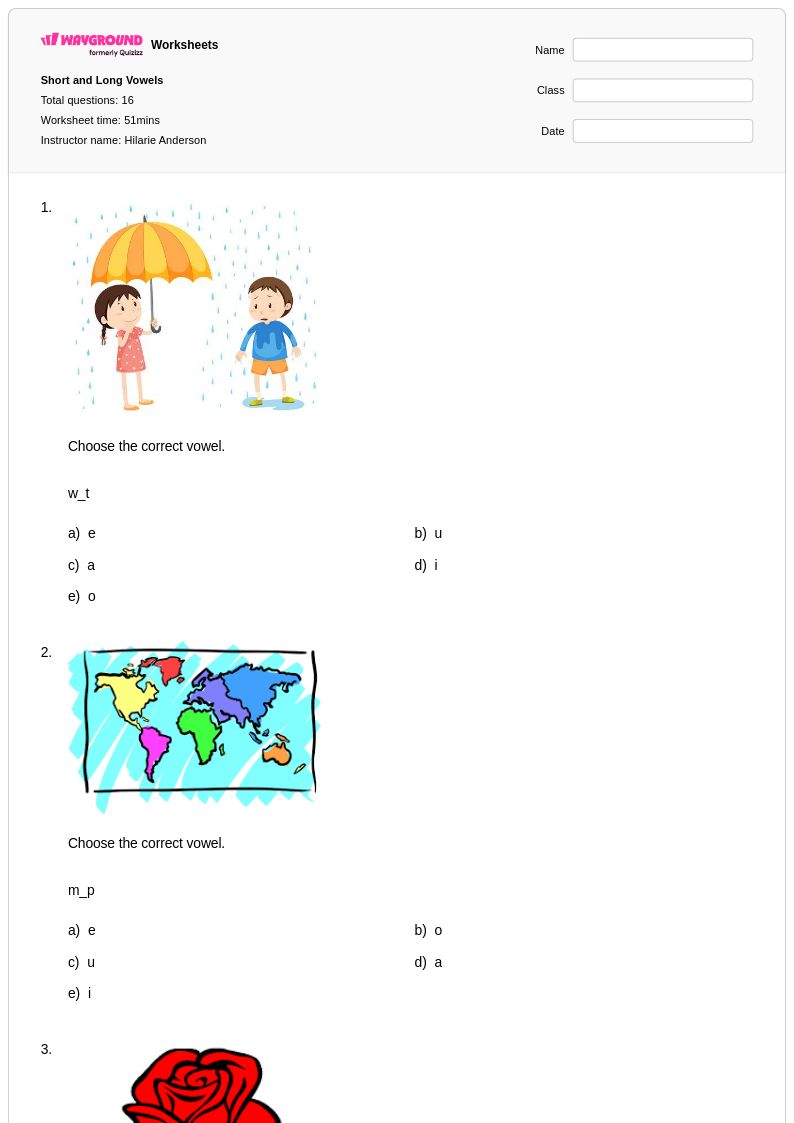
Short vowels form the foundation of early reading instruction for Class 1 students, and Wayground's comprehensive worksheet collection provides educators with expertly designed resources to build these essential phonics skills. These printable worksheets systematically introduce young learners to the five short vowel sounds through engaging activities that include word identification, picture matching, fill-in-the-blank exercises, and sound discrimination tasks. Each worksheet comes with a complete answer key, making assessment and guided practice seamless for both classroom instruction and independent work. The free pdf format ensures accessibility while maintaining high-quality graphics and age-appropriate fonts that support beginning readers as they master the sounds of short a, e, i, o, and u through varied practice problems that reinforce phonemic awareness and decoding abilities.
Wayground, formerly Quizizz, empowers teachers with millions of educator-created short vowel resources that streamline lesson planning and differentiated instruction for Class 1 phonics education. The platform's robust search and filtering capabilities allow teachers to quickly locate worksheets aligned with specific curriculum standards while accessing customization tools that adapt content difficulty to meet diverse learning needs. These digital and printable materials support comprehensive classroom management by providing flexible options for whole-group instruction, small-group remediation, and individual enrichment activities. Teachers can seamlessly integrate these short vowel worksheets into literacy centers, homework assignments, and assessment protocols, ensuring students receive consistent skill practice across multiple learning environments while building the phonetic foundation necessary for successful reading development.
FAQs
How do I teach short vowel sounds to early readers?
What exercises help students practice short vowel sounds?
What mistakes do students commonly make with short vowel sounds?
How can I differentiate short vowel instruction for struggling readers?
How do I use Wayground's short vowel worksheets in my classroom?
At what reading level should students be introduced to short vowel worksheets?