
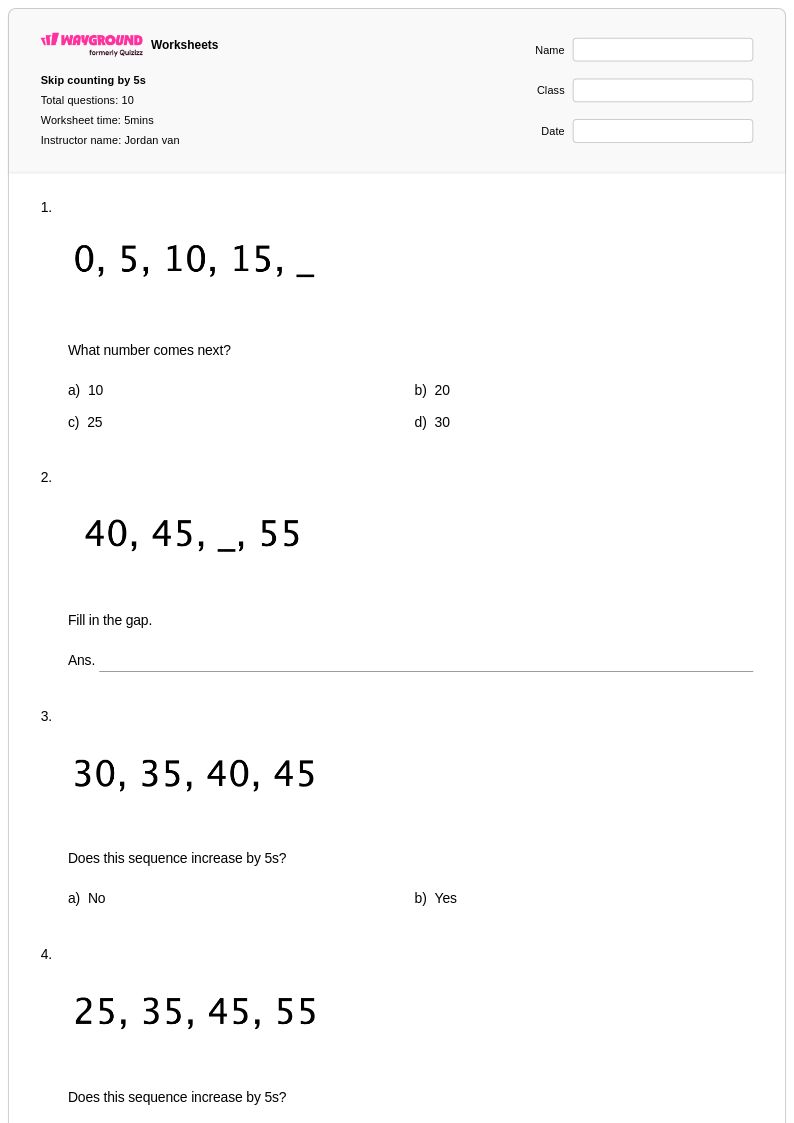
10 Q
1st
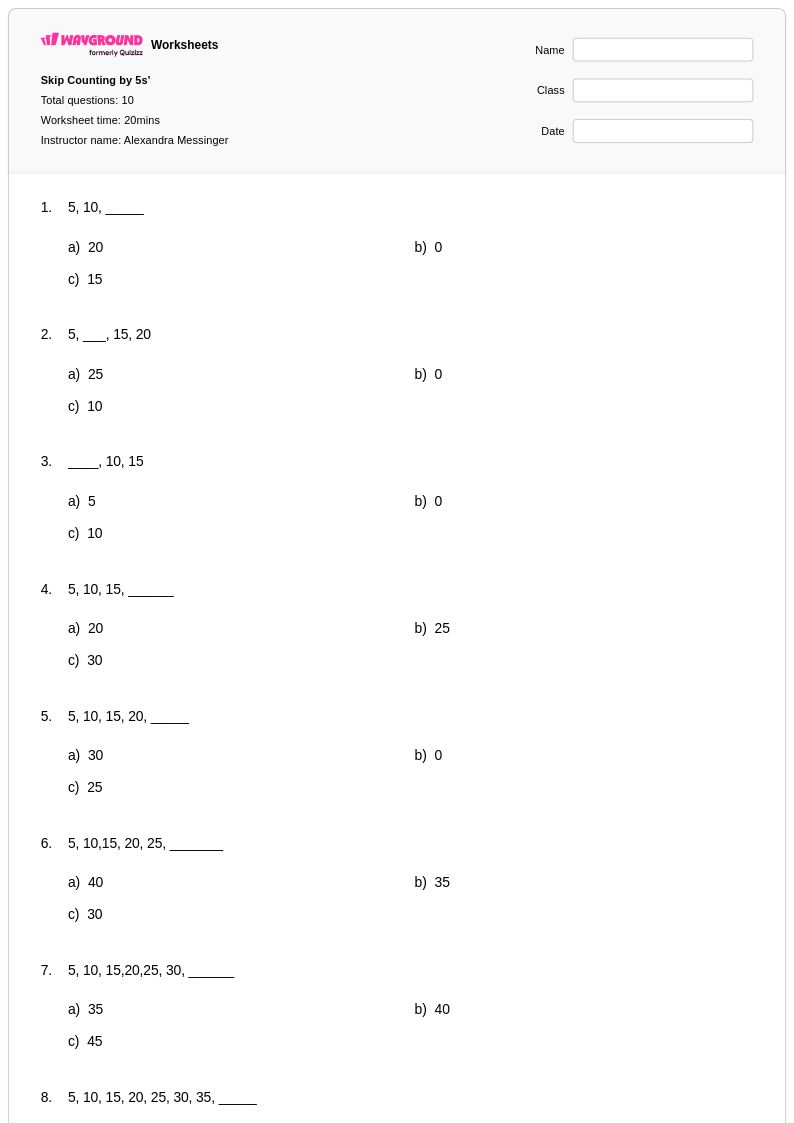
10 Q
KG - 2nd
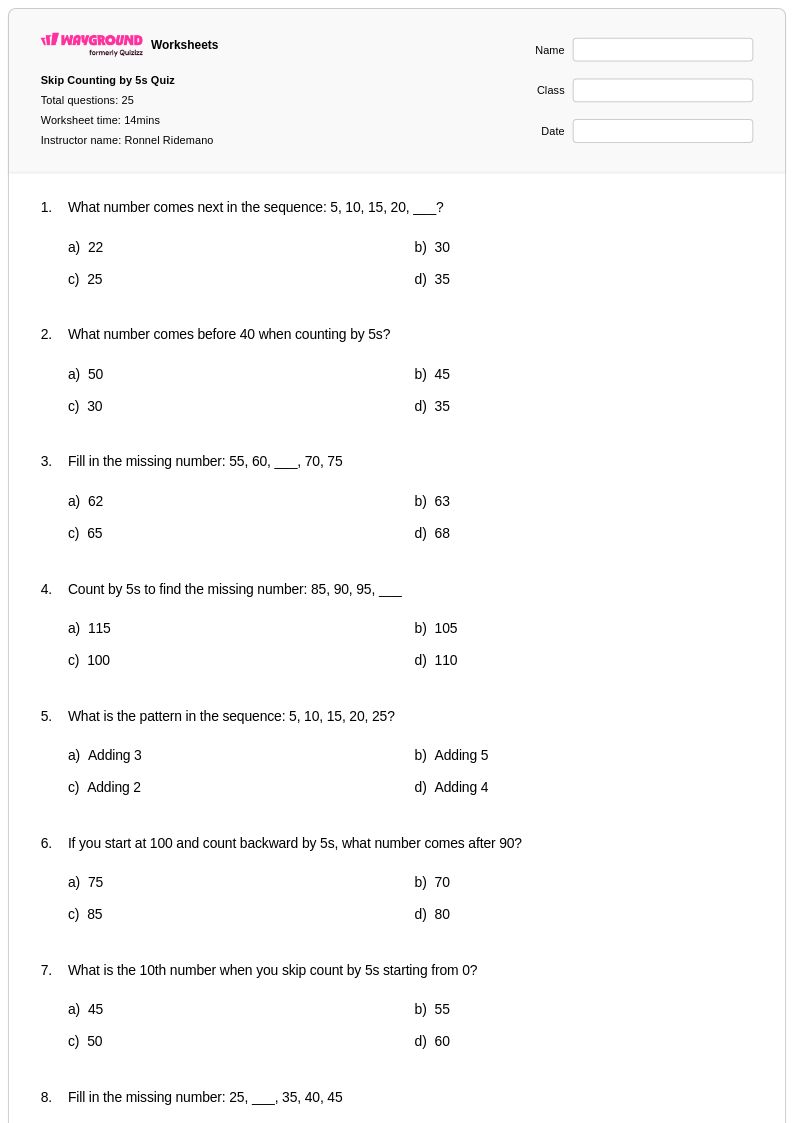
25 Q
1st
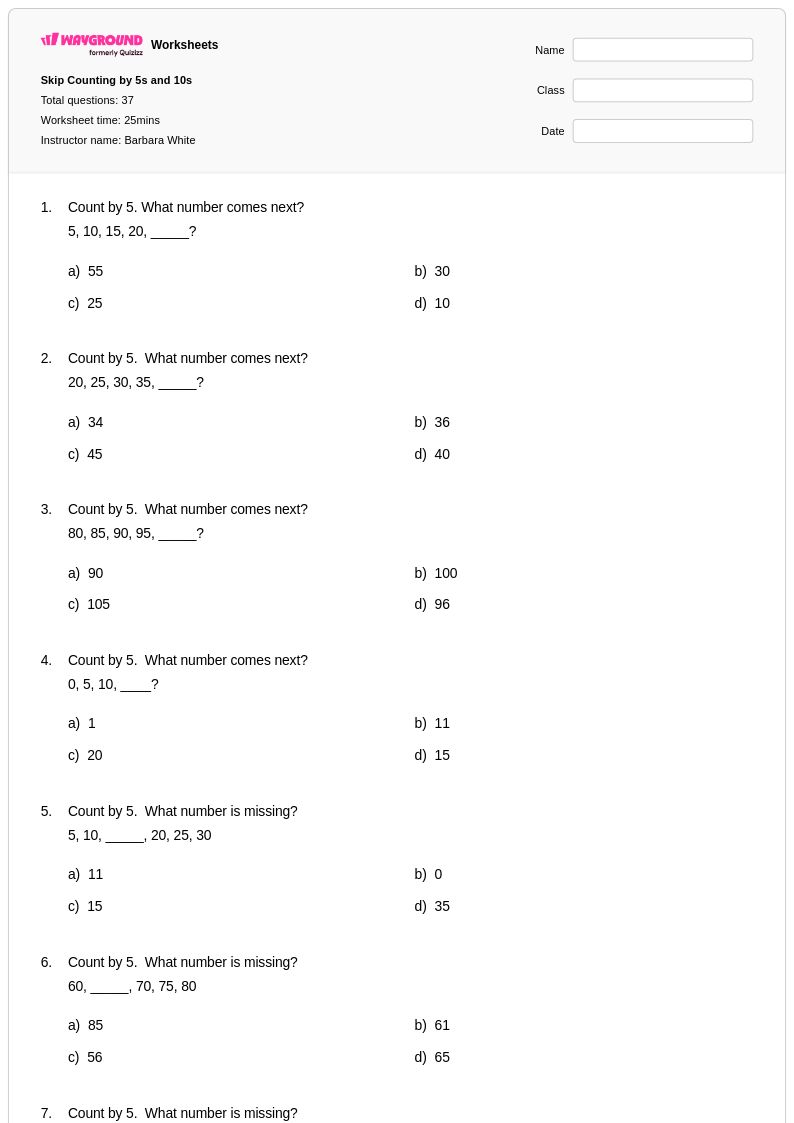
37 Q
1st - 3rd
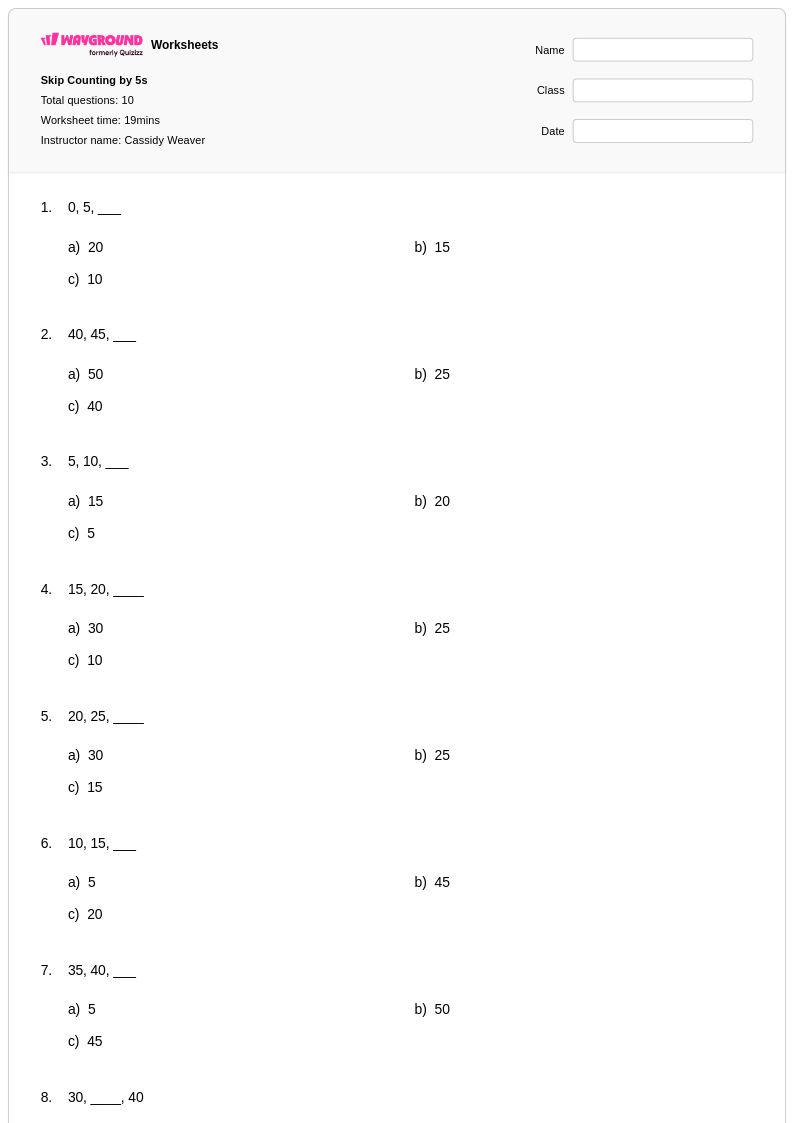
10 Q
KG - 2nd
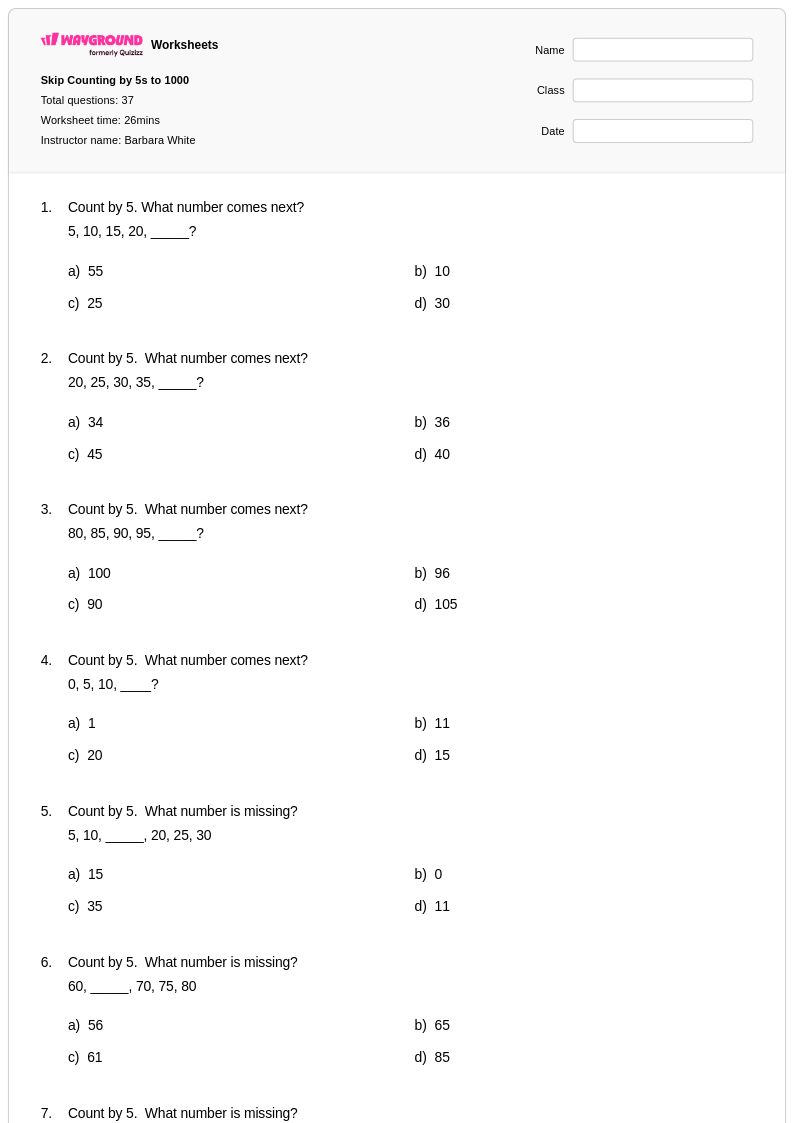
37 Q
1st - 3rd
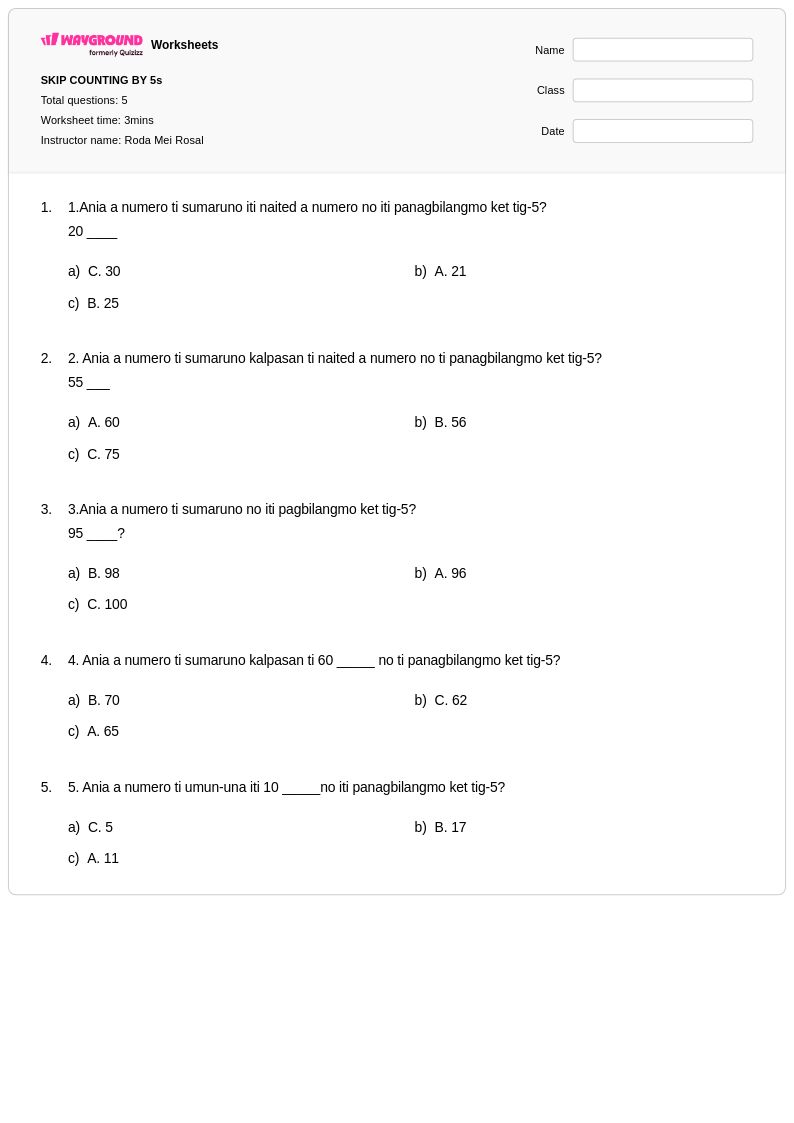
5 Q
1st
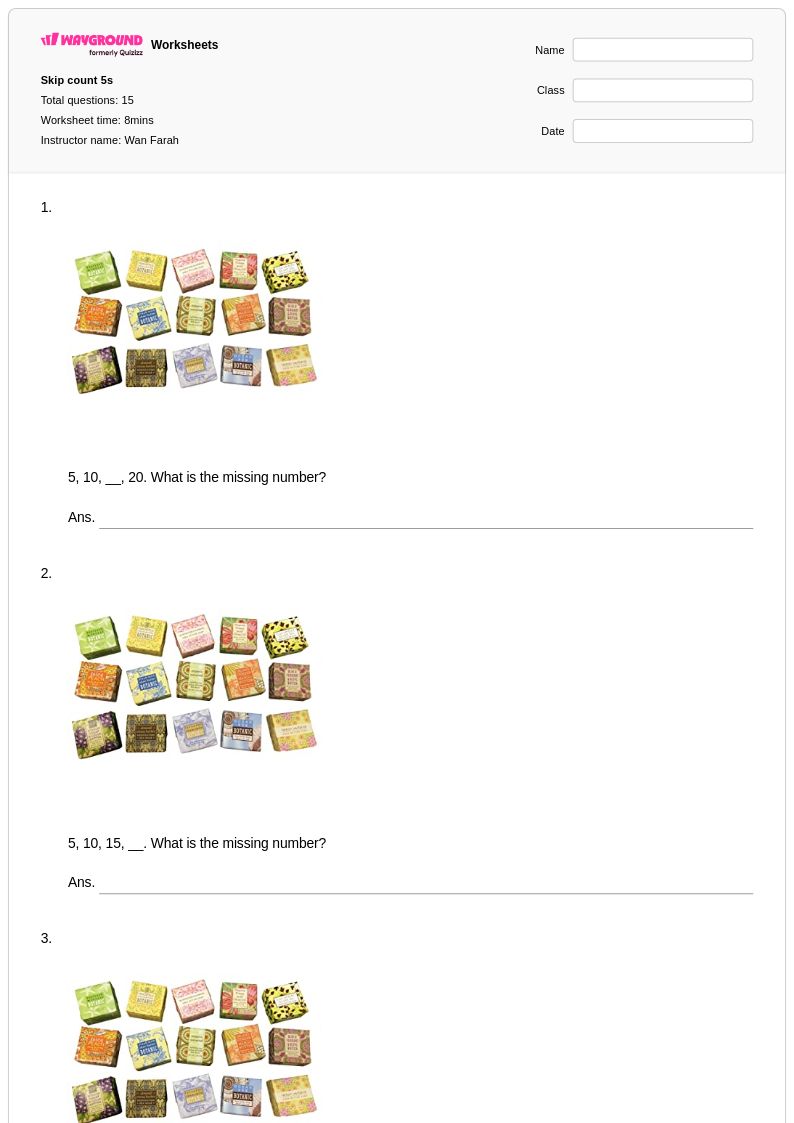
15 Q
KG - 2nd
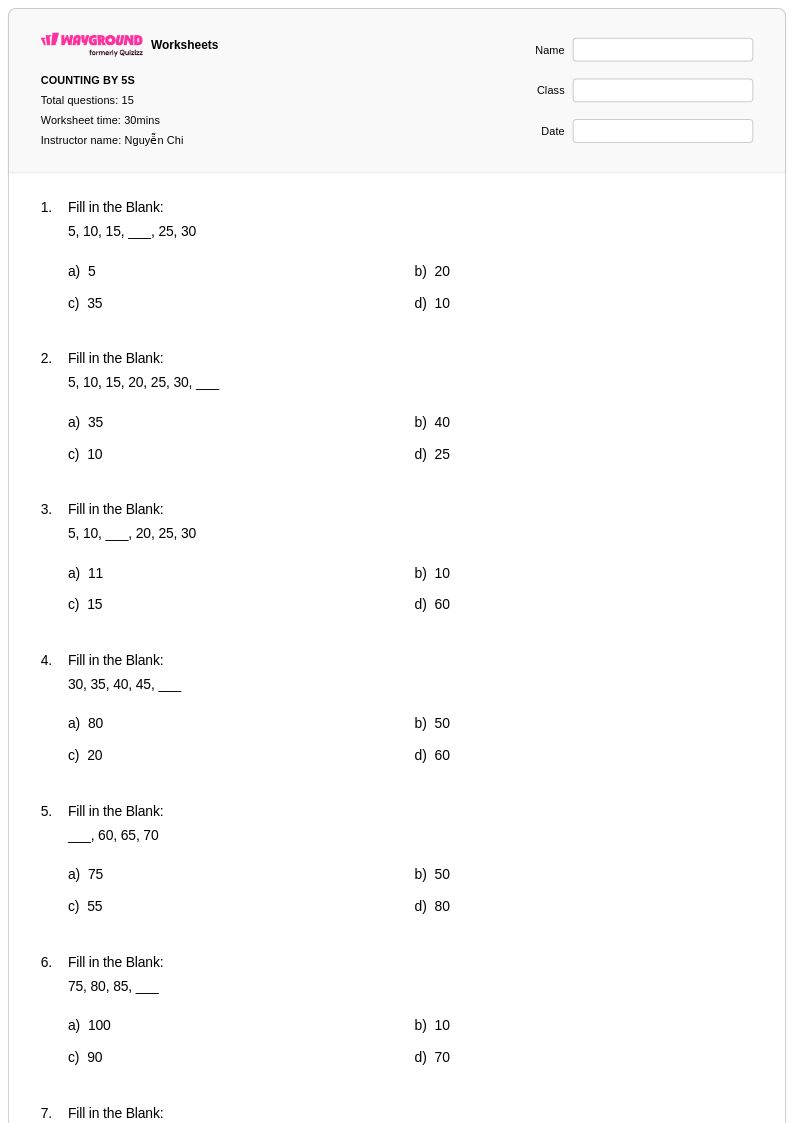
15 Q
1st - 2nd
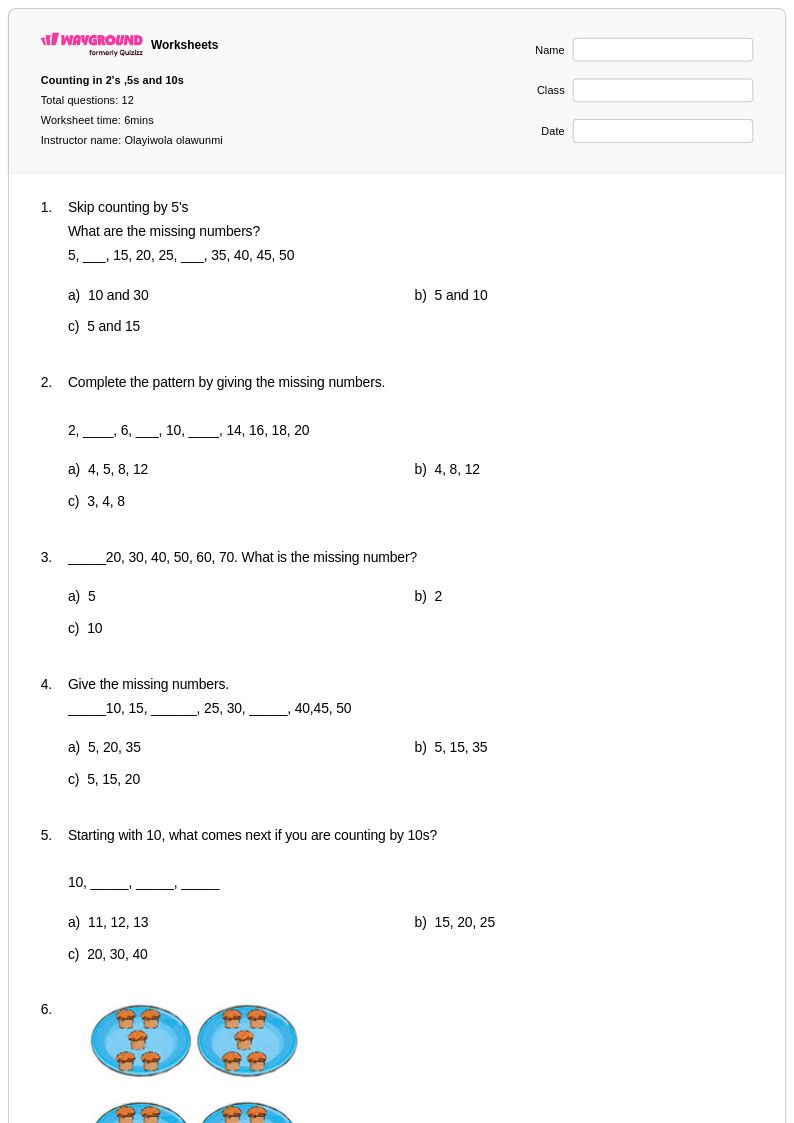
12 Q
1st
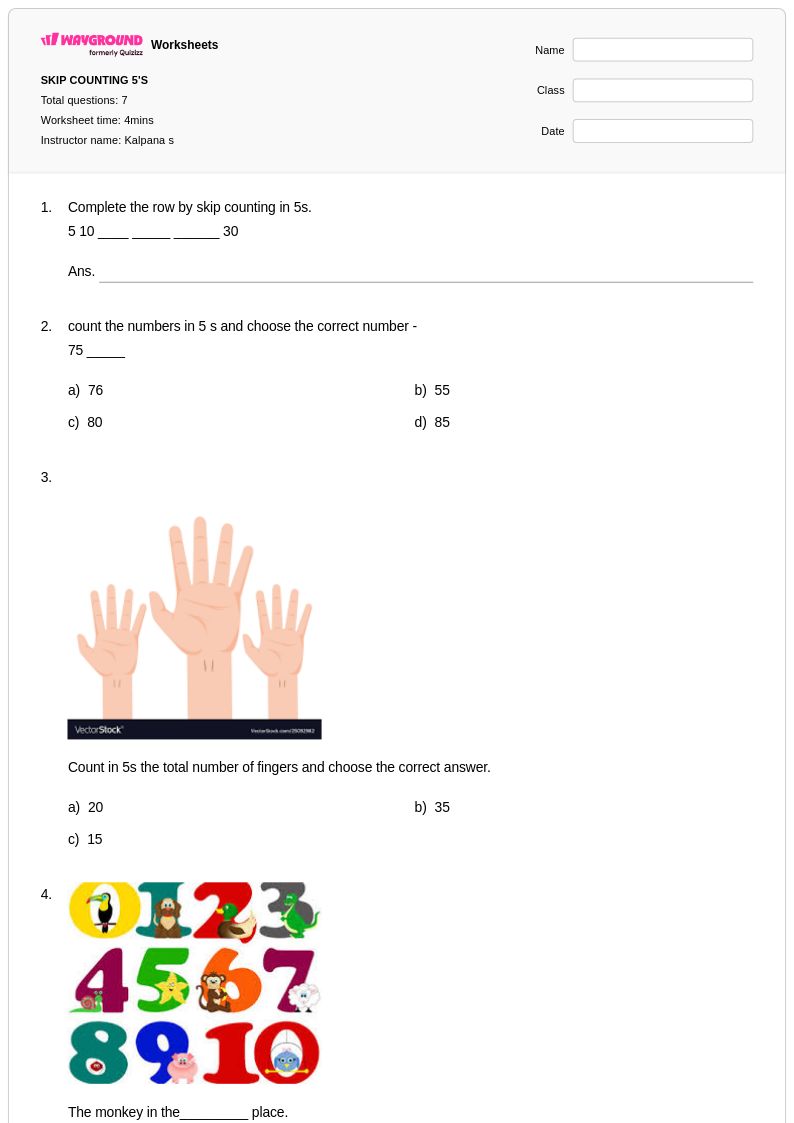
7 Q
KG - 1st
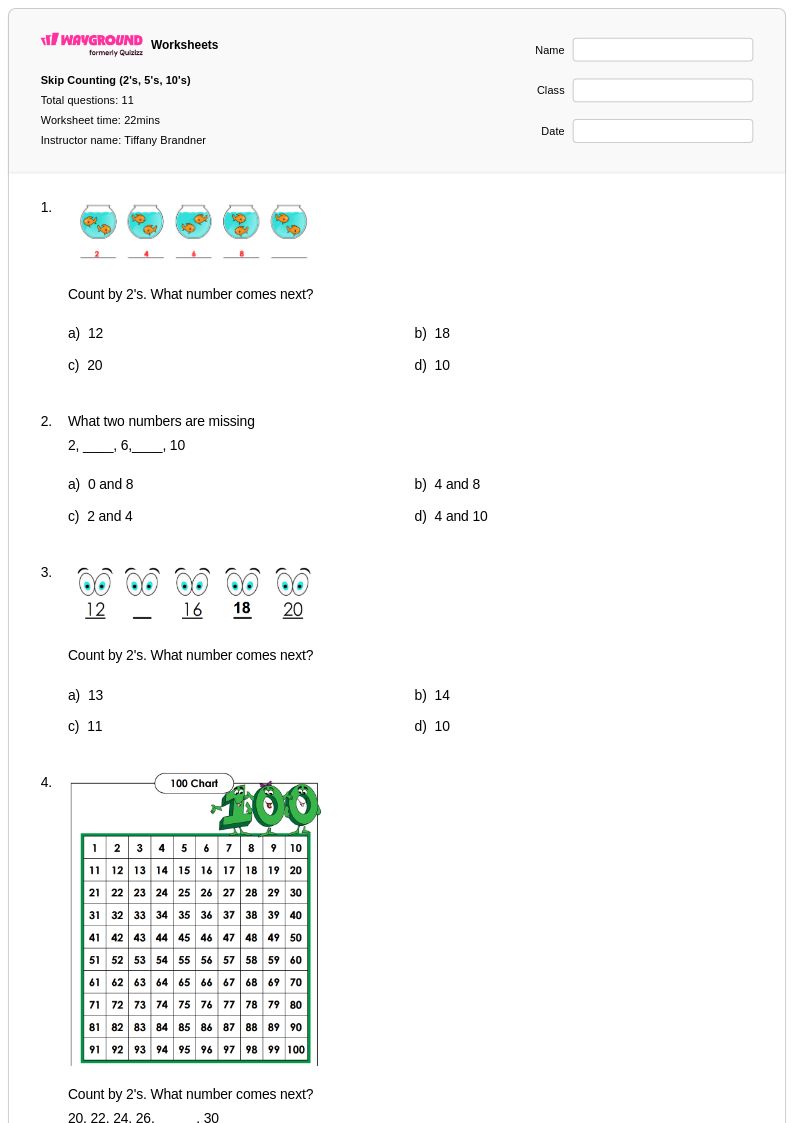
11 Q
1st
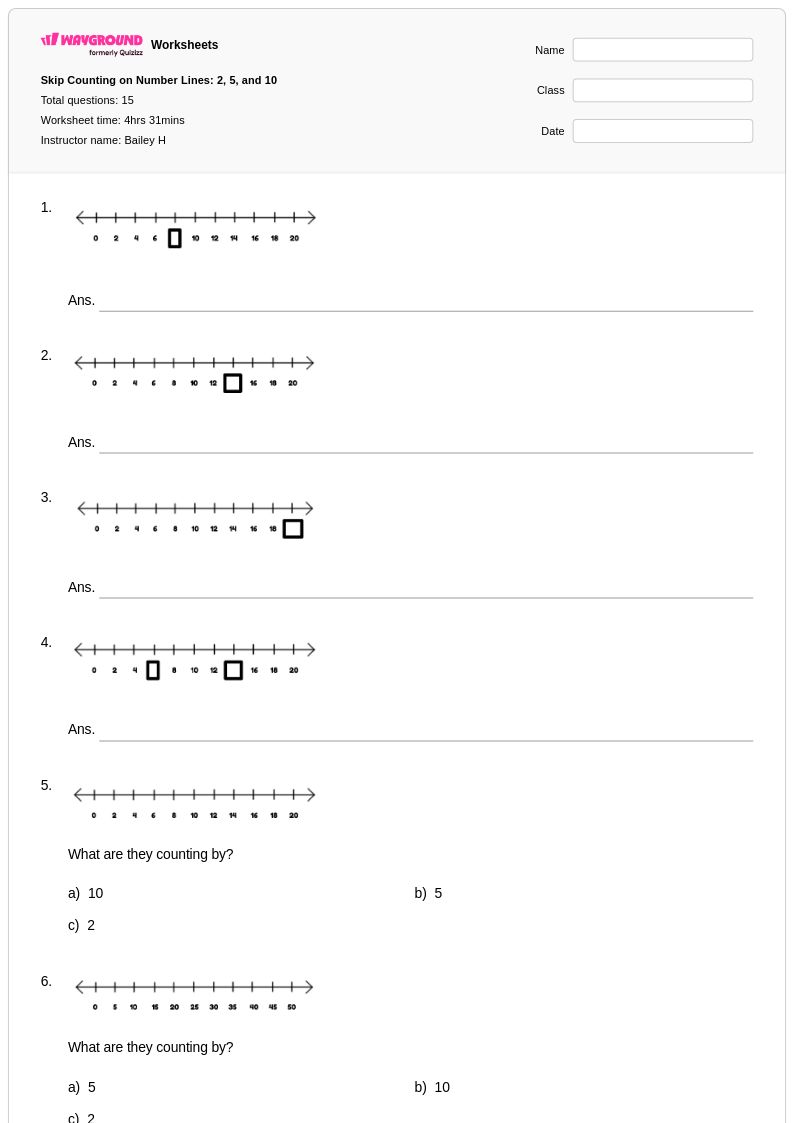
15 Q
KG - 3rd
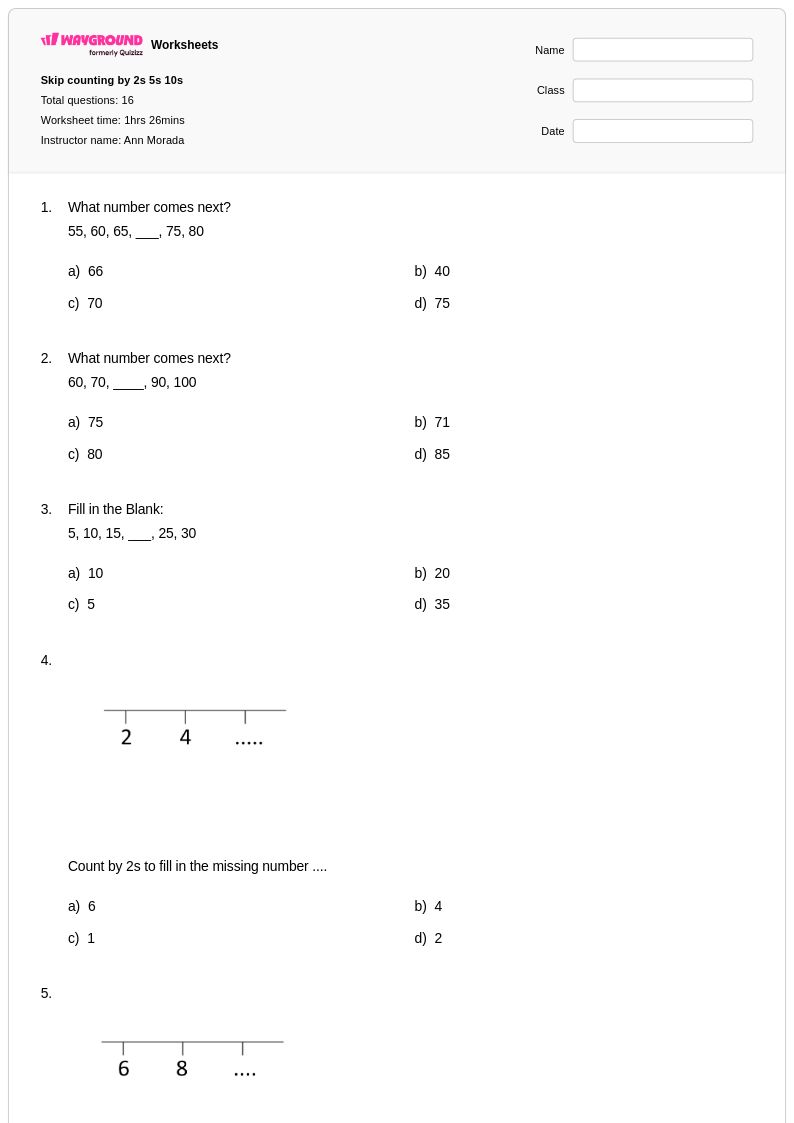
16 Q
1st - 2nd
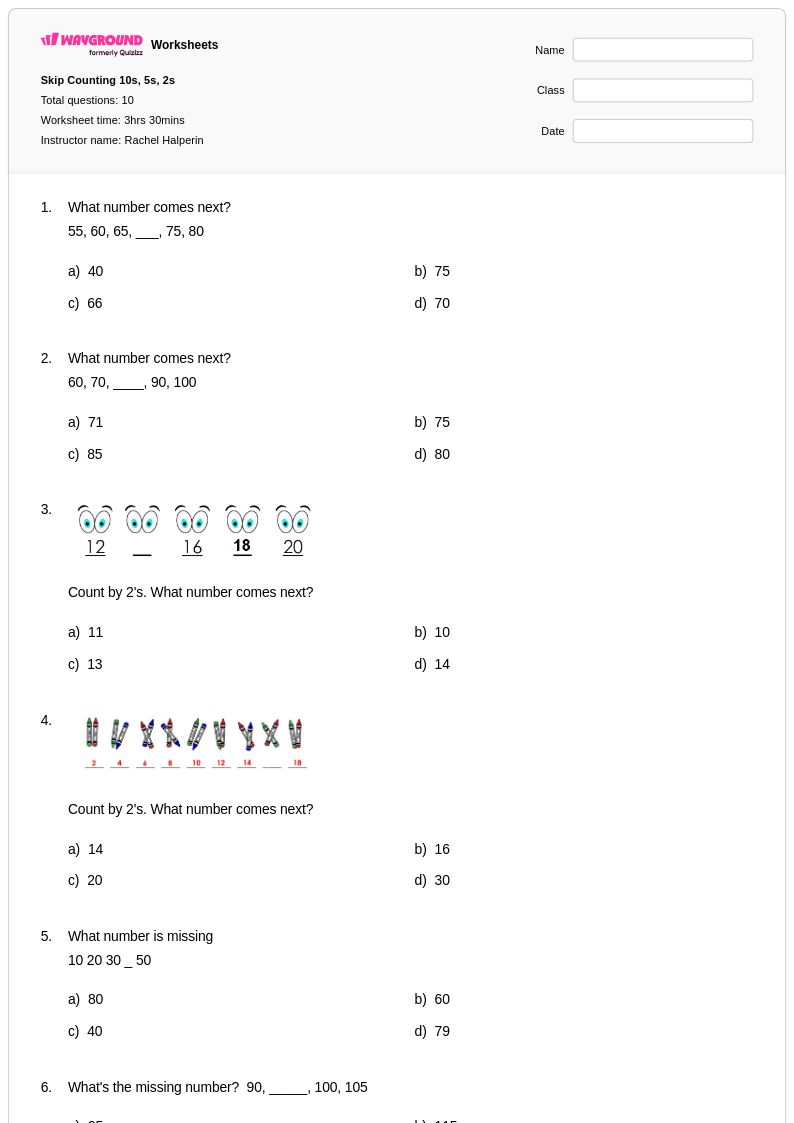
10 Q
KG - 2nd
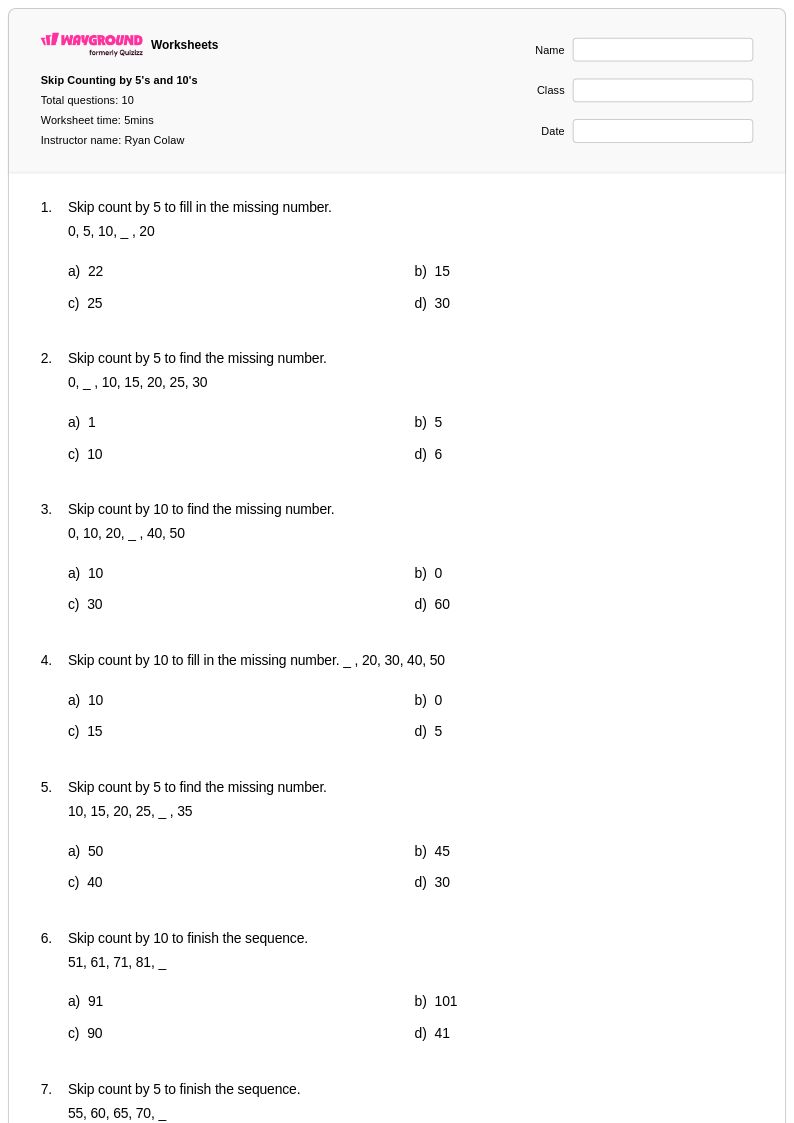
10 Q
1st - 2nd
10 Q
1st - 2nd
15 Q
1st - 5th
18 Q
1st - 2nd
11 Q
KG - 1st
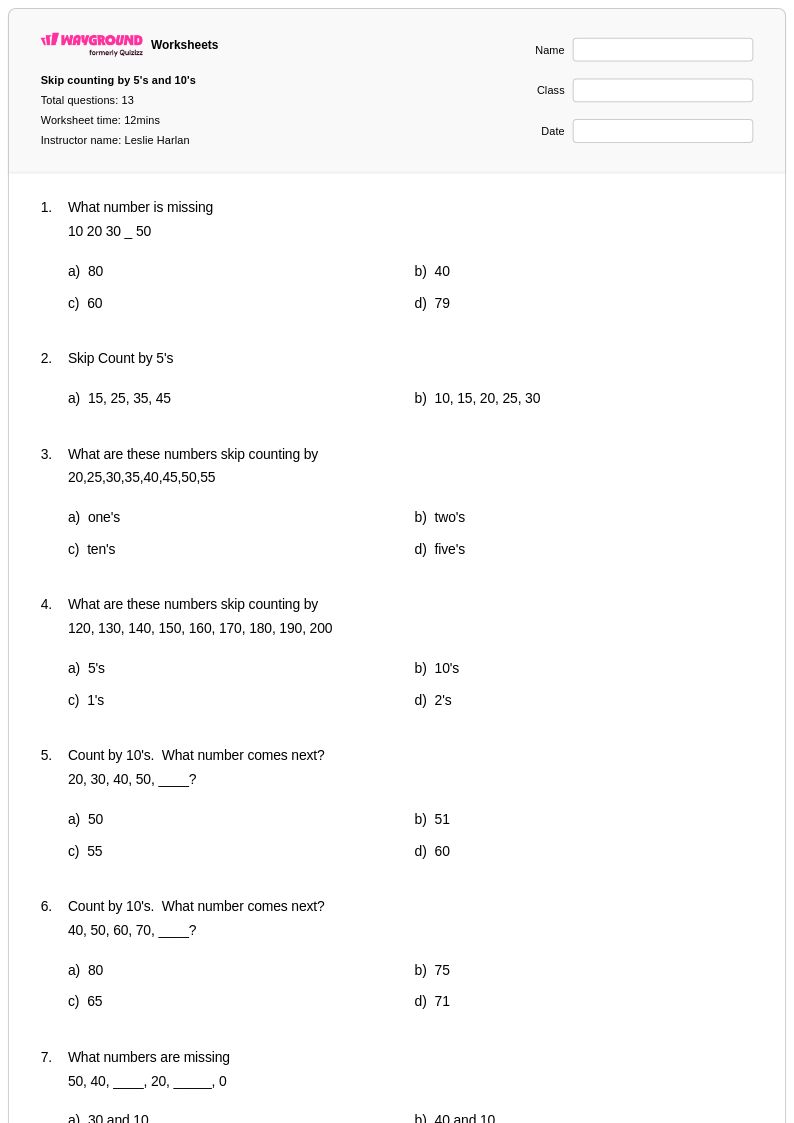
13 Q
KG - 3rd
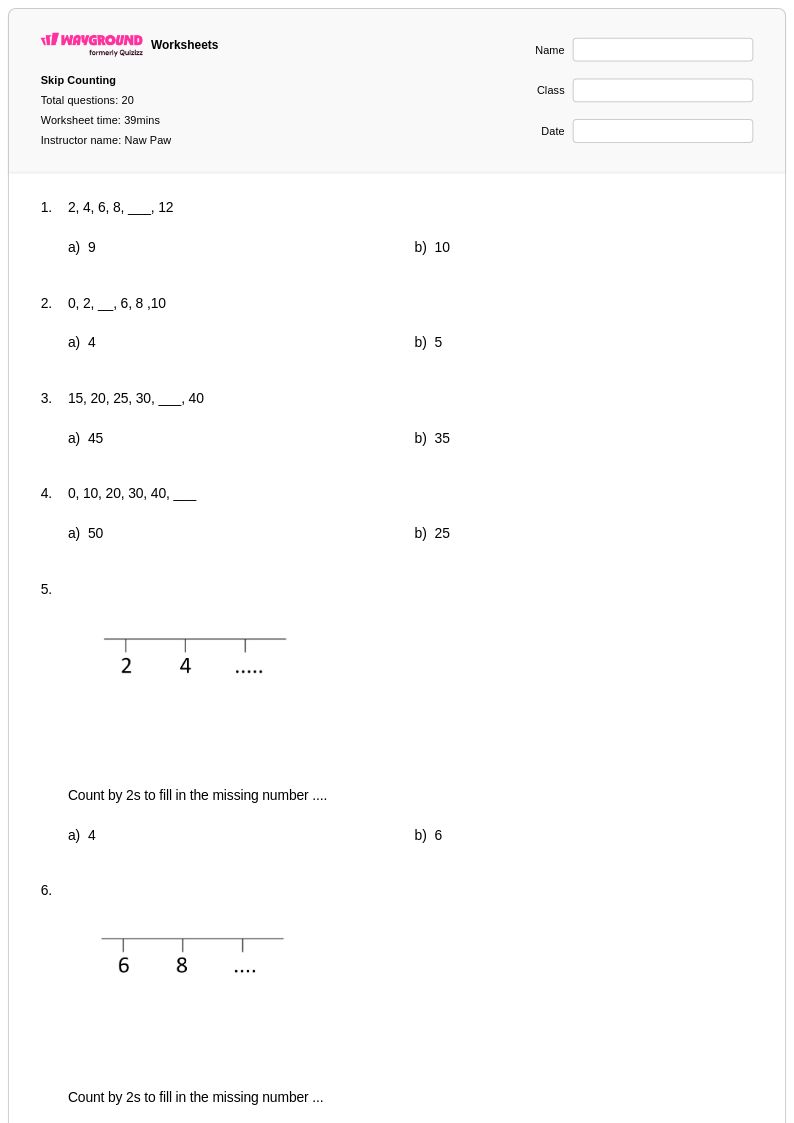
20 Q
1st
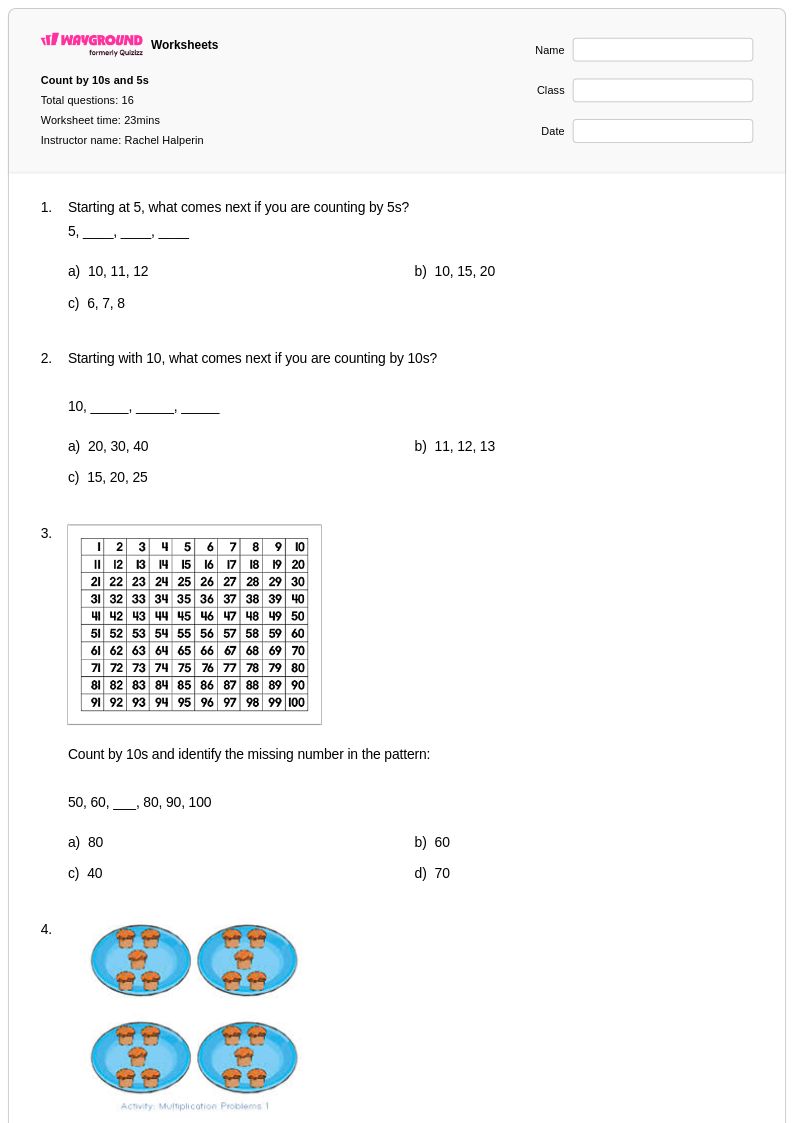
16 Q
1st - 2nd
Explore Other Subject Worksheets for class 1
Explore printable Skip Counting by 5s worksheets for Class 1
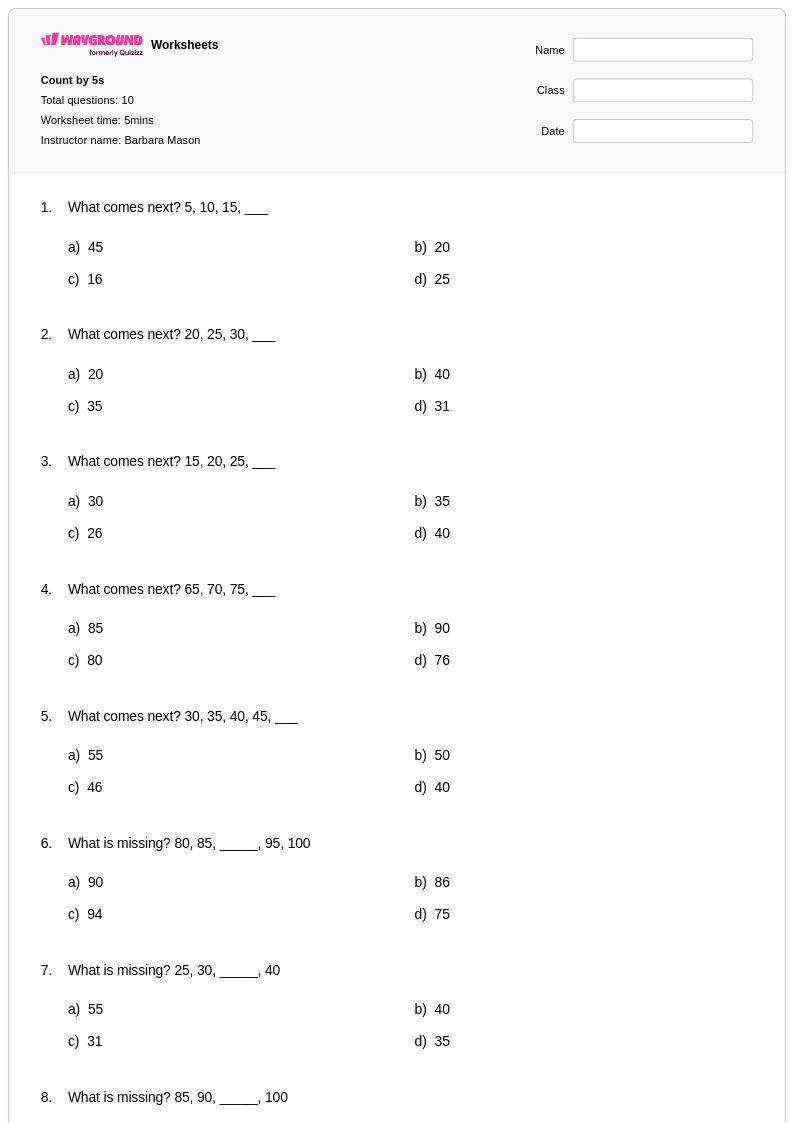
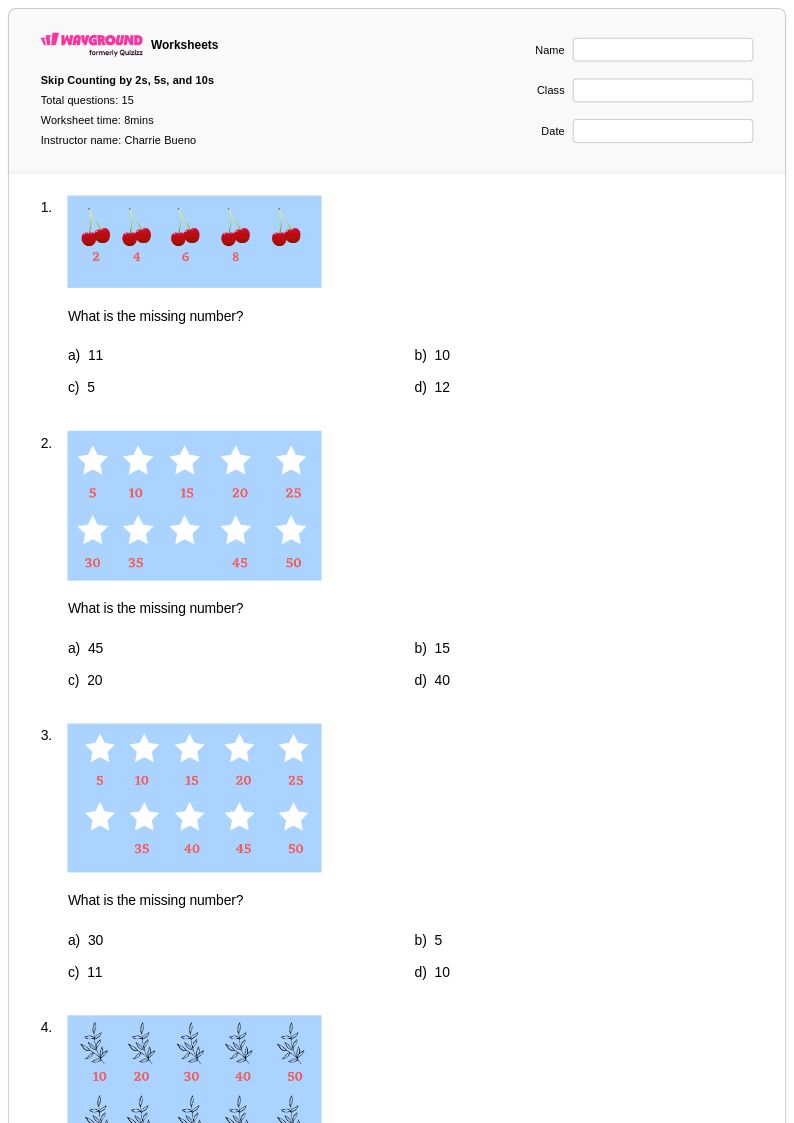
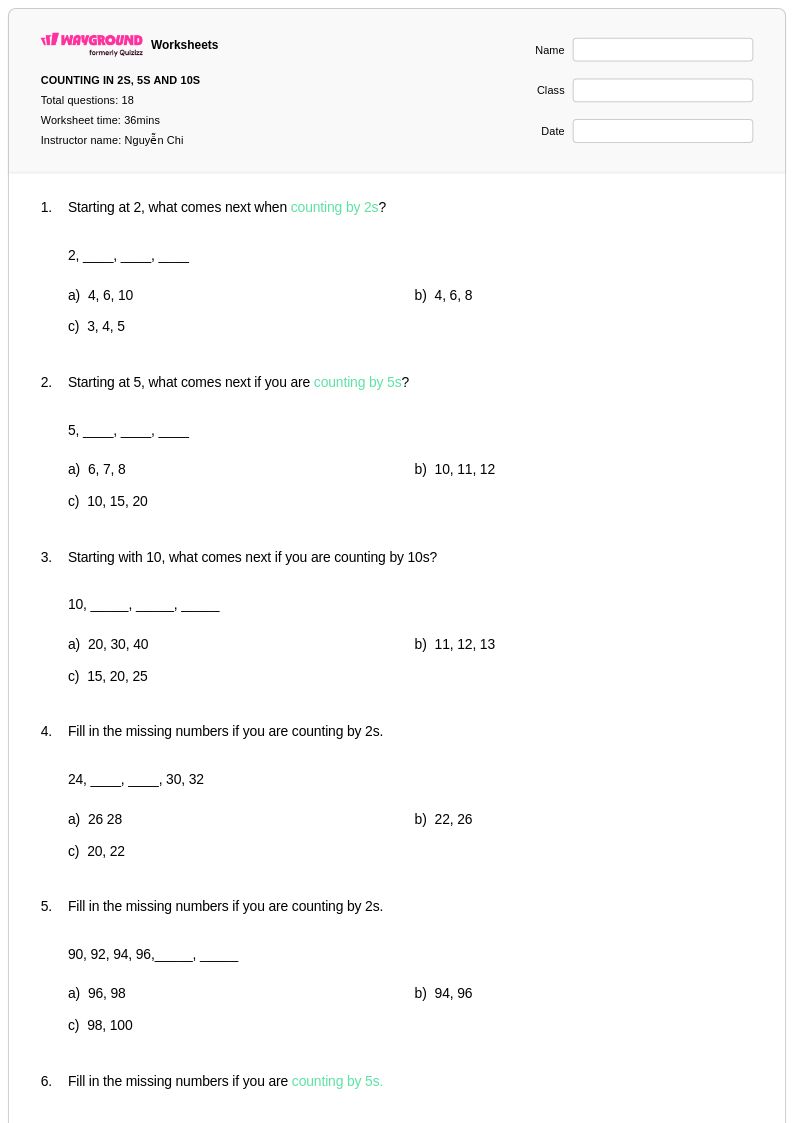
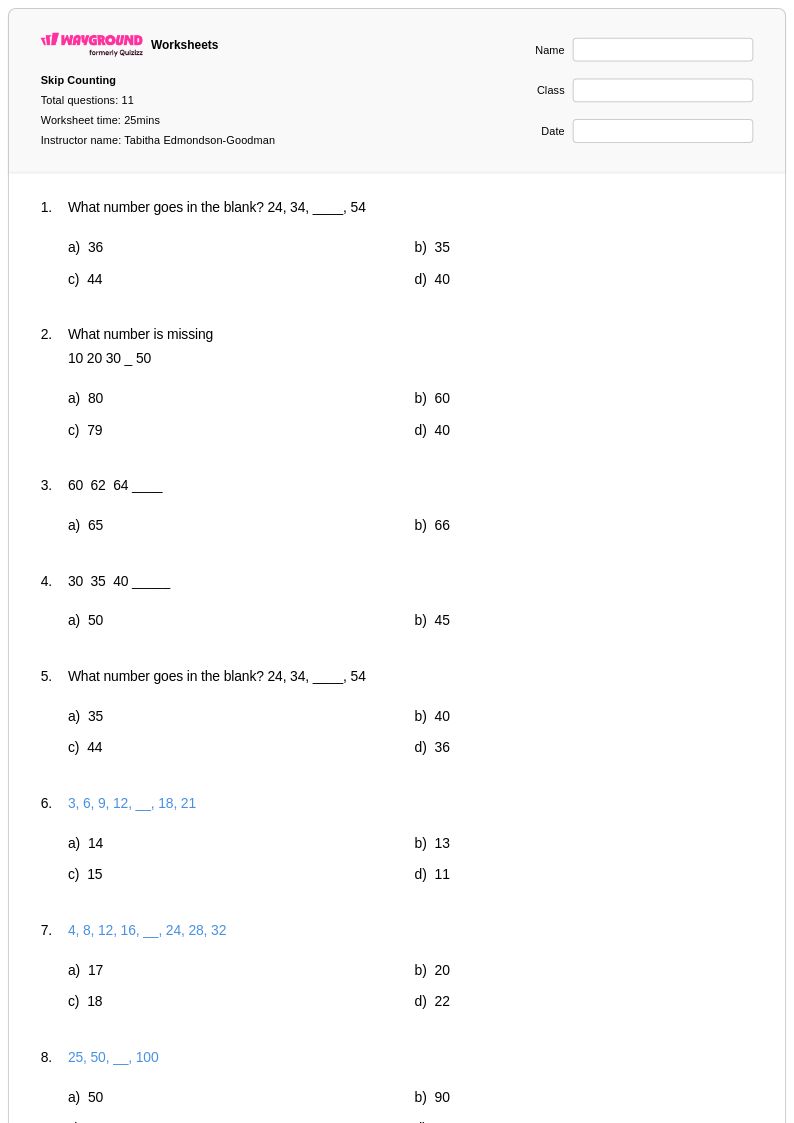
Skip counting by 5s worksheets for Class 1 students available through Wayground (formerly Quizizz) provide essential foundational practice for developing number sense and pattern recognition skills. These comprehensive printables focus specifically on helping young learners identify and continue sequences that increase by five, building the mathematical understanding necessary for multiplication concepts they will encounter in later grades. Each worksheet collection includes carefully structured practice problems that guide students through skip counting exercises, from basic 5, 10, 15 sequences to more complex patterns, with complete answer keys provided to support both independent learning and teacher assessment. The free pdf resources emphasize visual learning approaches, incorporating number lines, counting charts, and engaging activities that make abstract mathematical concepts concrete and accessible for first-grade learners.
Wayground (formerly Quizizz) empowers educators with millions of teacher-created skip counting by 5s resources that streamline lesson planning and provide targeted skill practice opportunities. The platform's robust search and filtering capabilities allow teachers to quickly locate grade-appropriate materials aligned with mathematics standards, while built-in differentiation tools enable customization for diverse learning needs within the classroom. Teachers can seamlessly access these worksheets in both printable and digital pdf formats, facilitating flexible implementation whether for whole-class instruction, small group work, or individual remediation and enrichment activities. The extensive collection ensures educators have multiple options for reinforcing skip counting concepts, supporting systematic skill development, and providing varied practice opportunities that accommodate different learning styles and pacing requirements throughout the academic year.
FAQs
What grade do students learn to skip count by 5s?
What's the best way to teach skip counting by 5s to first graders?
What kind of practice is best for Grade 1 students learning to skip count by 5s?
What errors should I watch for with first graders skip counting by 5s?
How can I use these Grade 1 skip counting worksheets?
How does skip counting by 5s align with 1st grade math standards?