
20 Q
6th - 8th
20 Q
6th - 8th
20 Q
6th - 8th
20 Q
6th - 8th
20 Q
6th - 8th
20 Q
6th - 8th
24 Q
6th - 12th
20 Q
6th - 8th
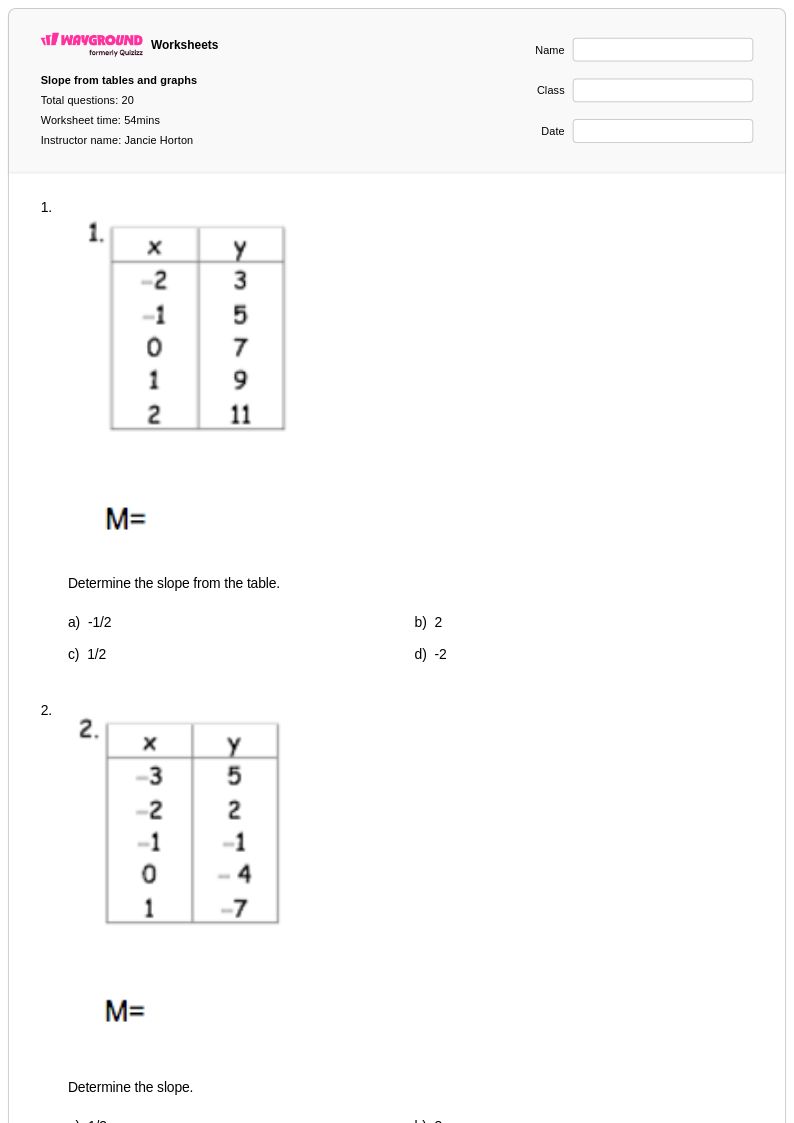
20 Q
6th - 8th
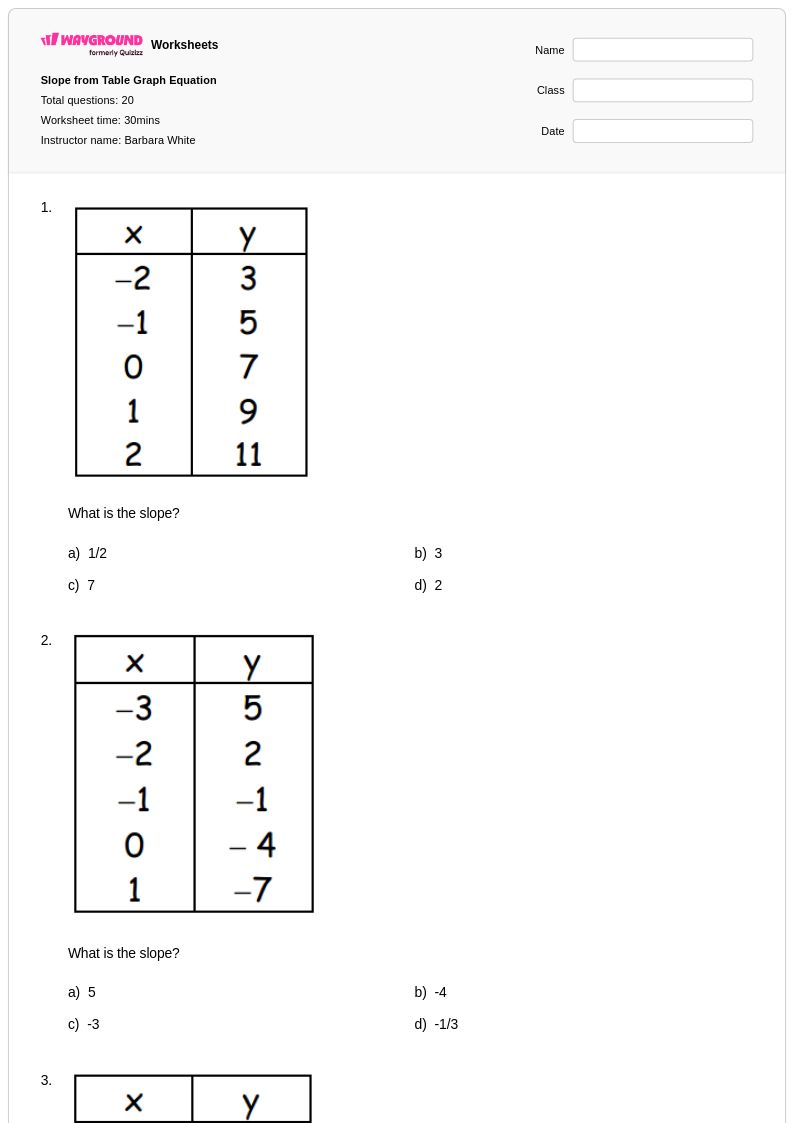
20 Q
6th - 8th
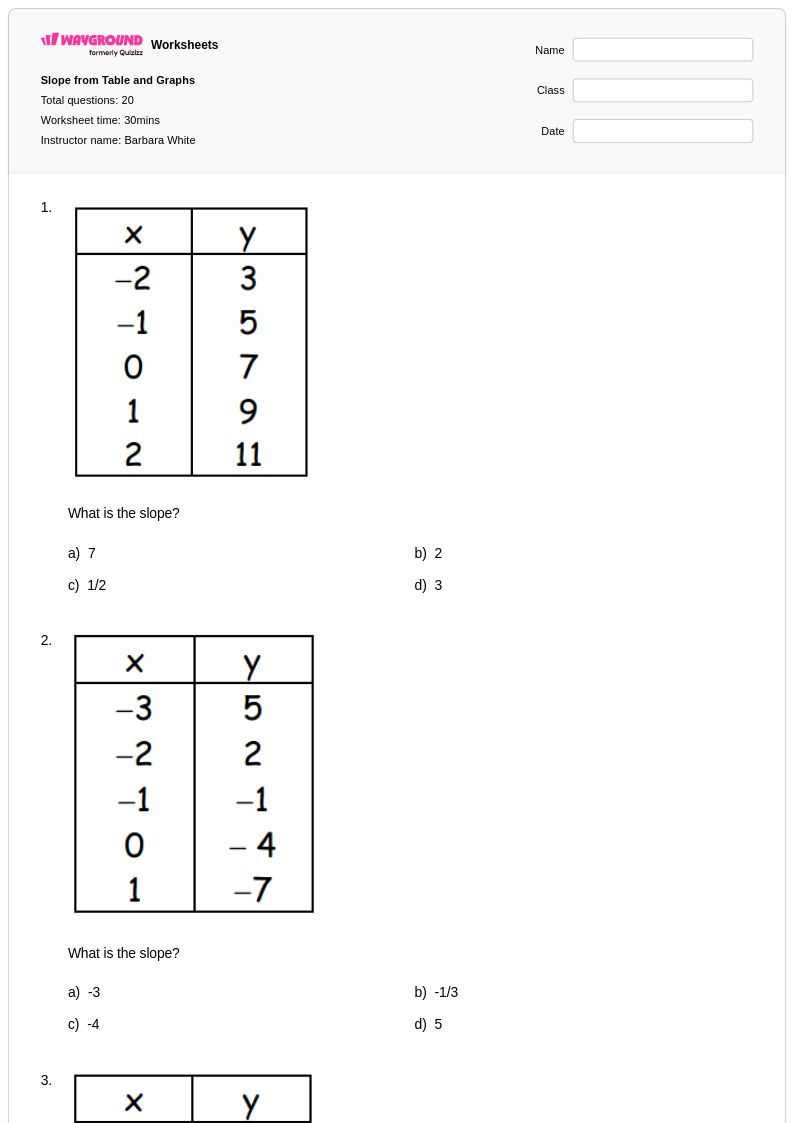
20 Q
6th - 8th
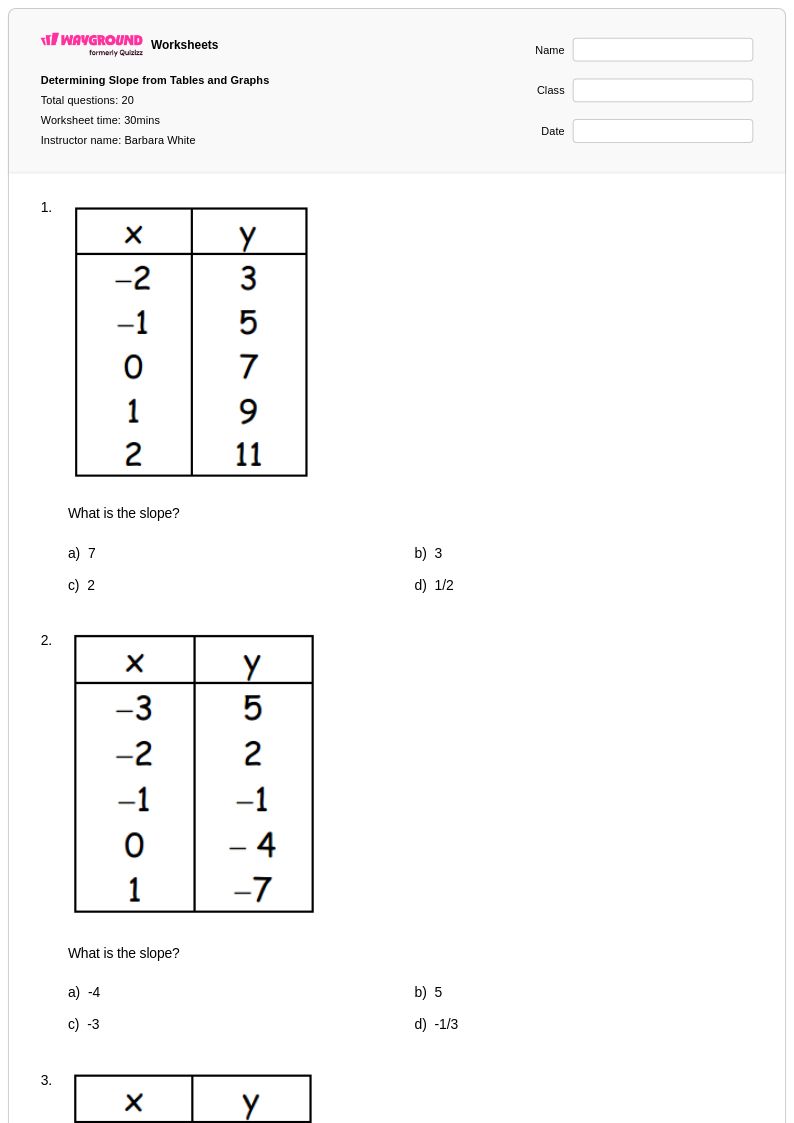
20 Q
6th - 8th
20 Q
6th - 8th
20 Q
6th - 8th
20 Q
6th - 8th
20 Q
6th - 8th
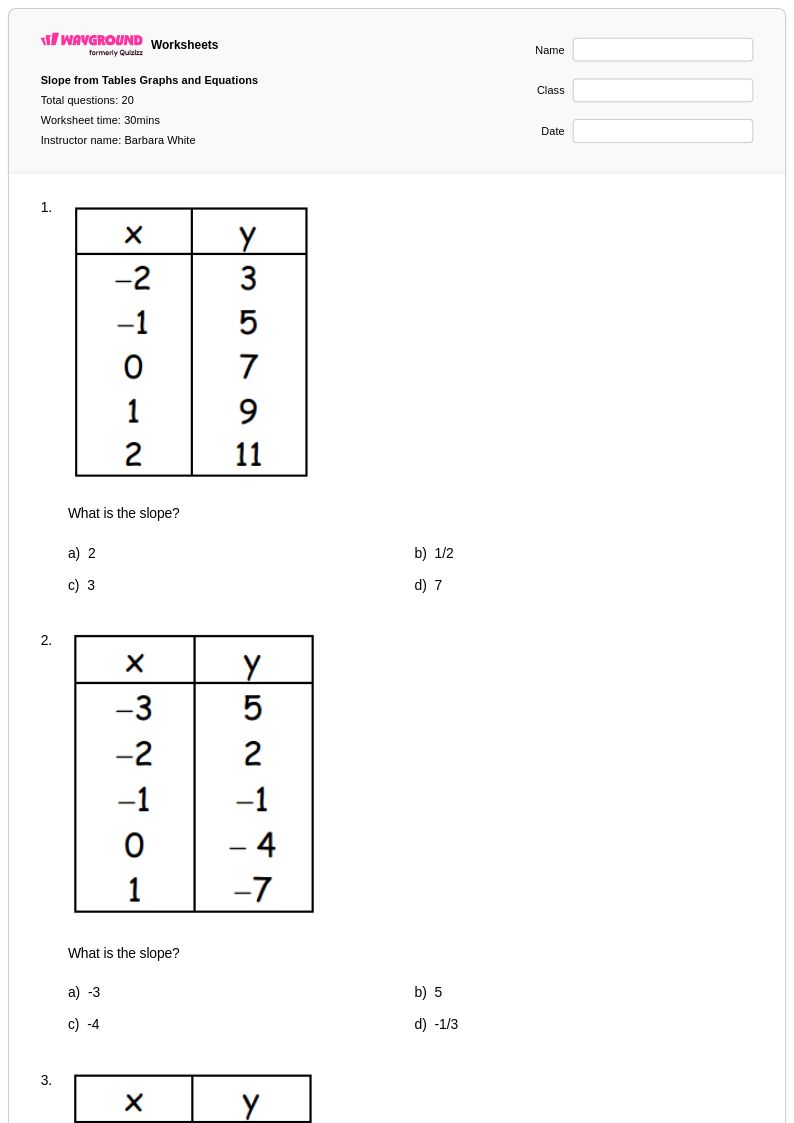
20 Q
6th - 8th
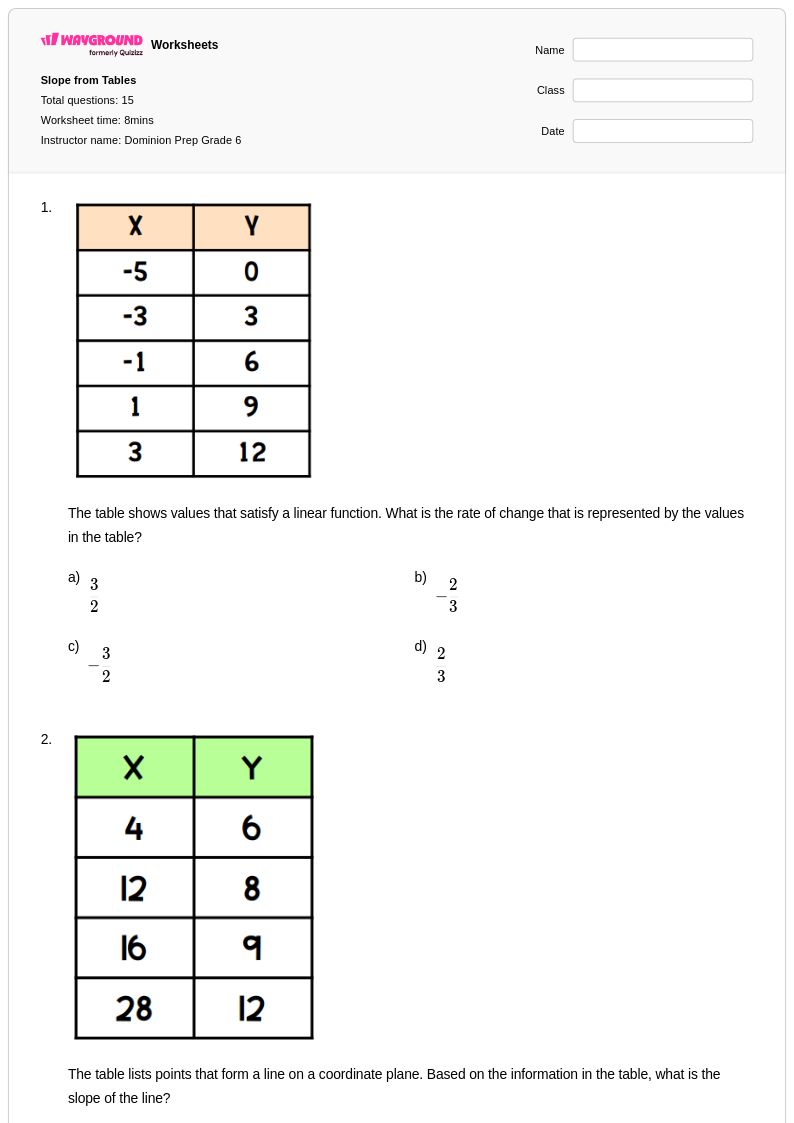
15 Q
6th - 8th
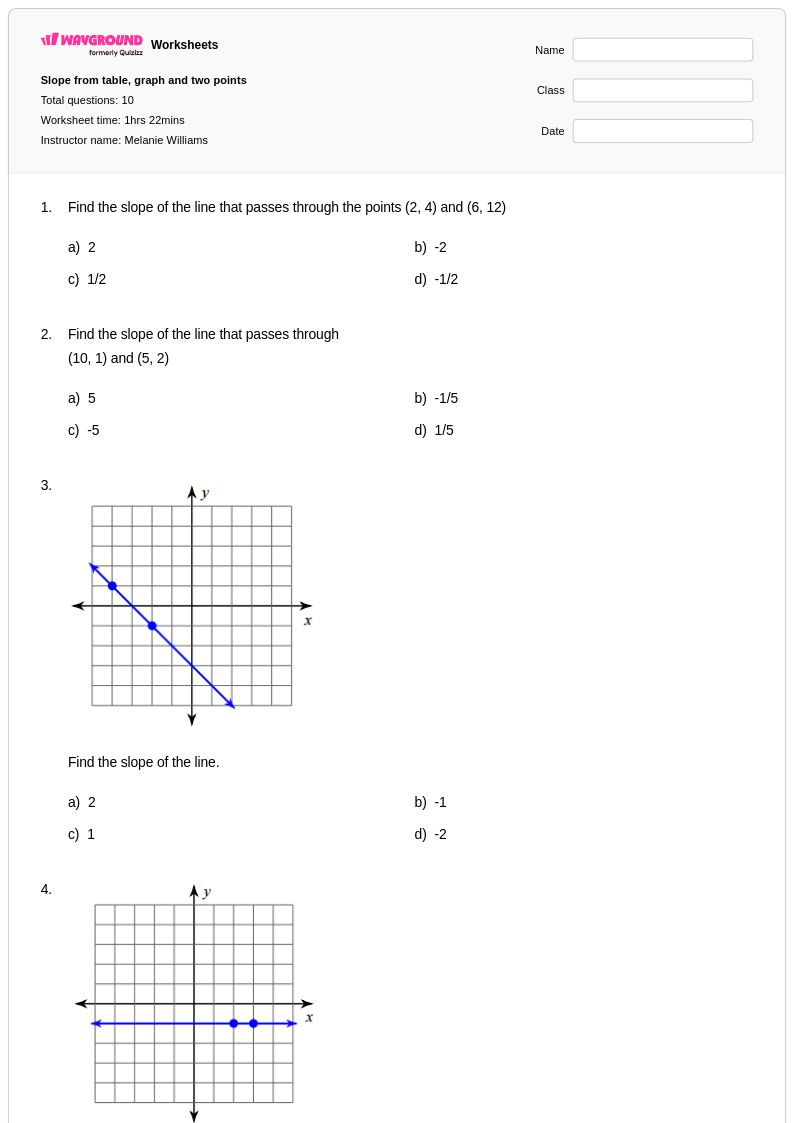
10 Q
6th - 8th
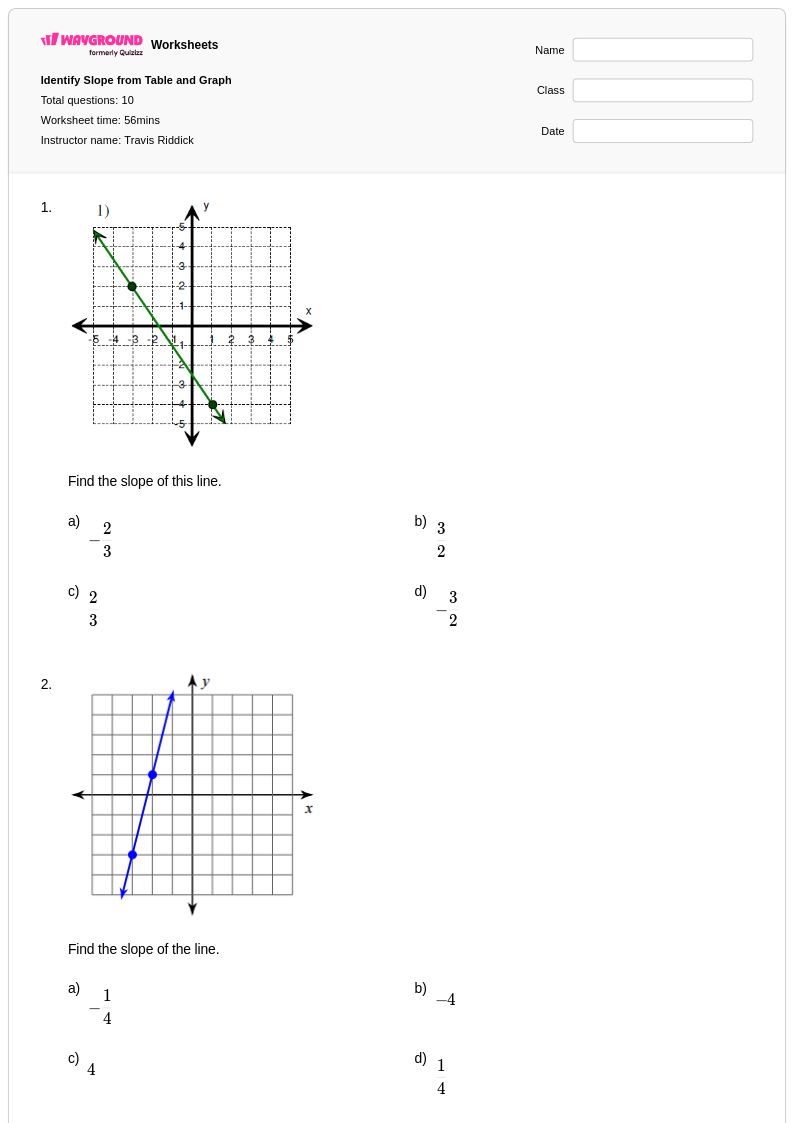
10 Q
6th - 8th
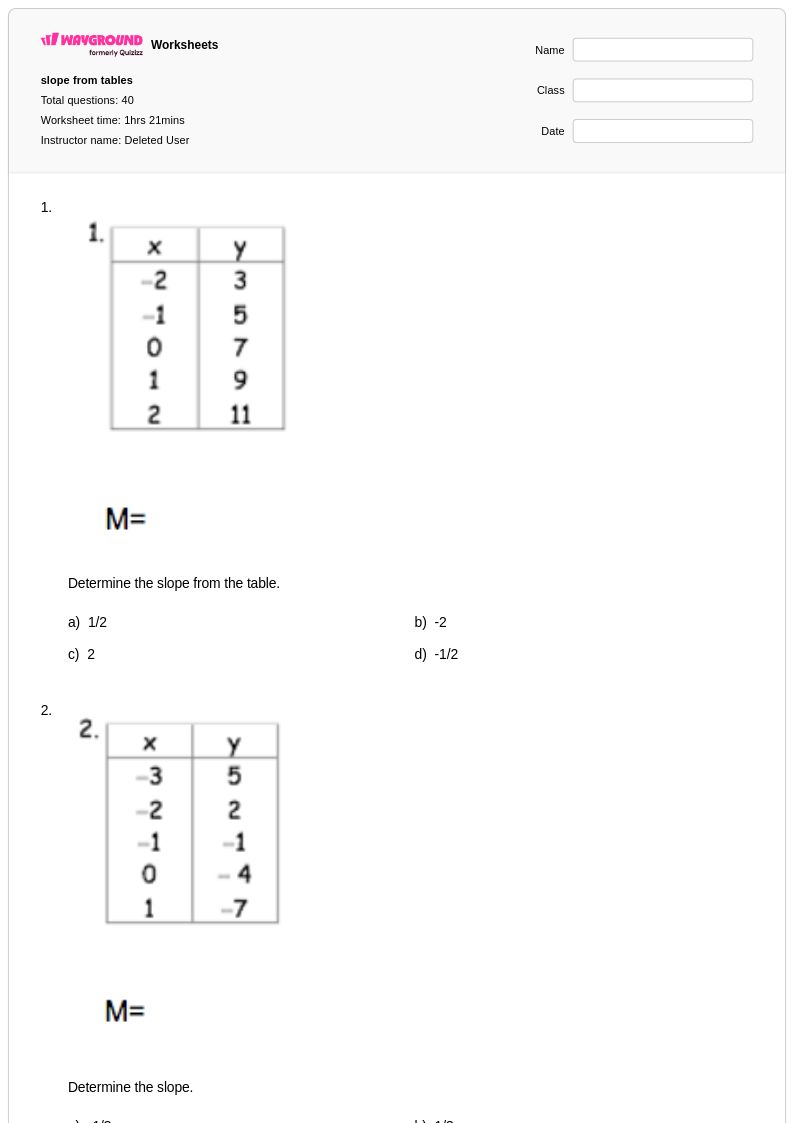
40 Q
6th - 9th
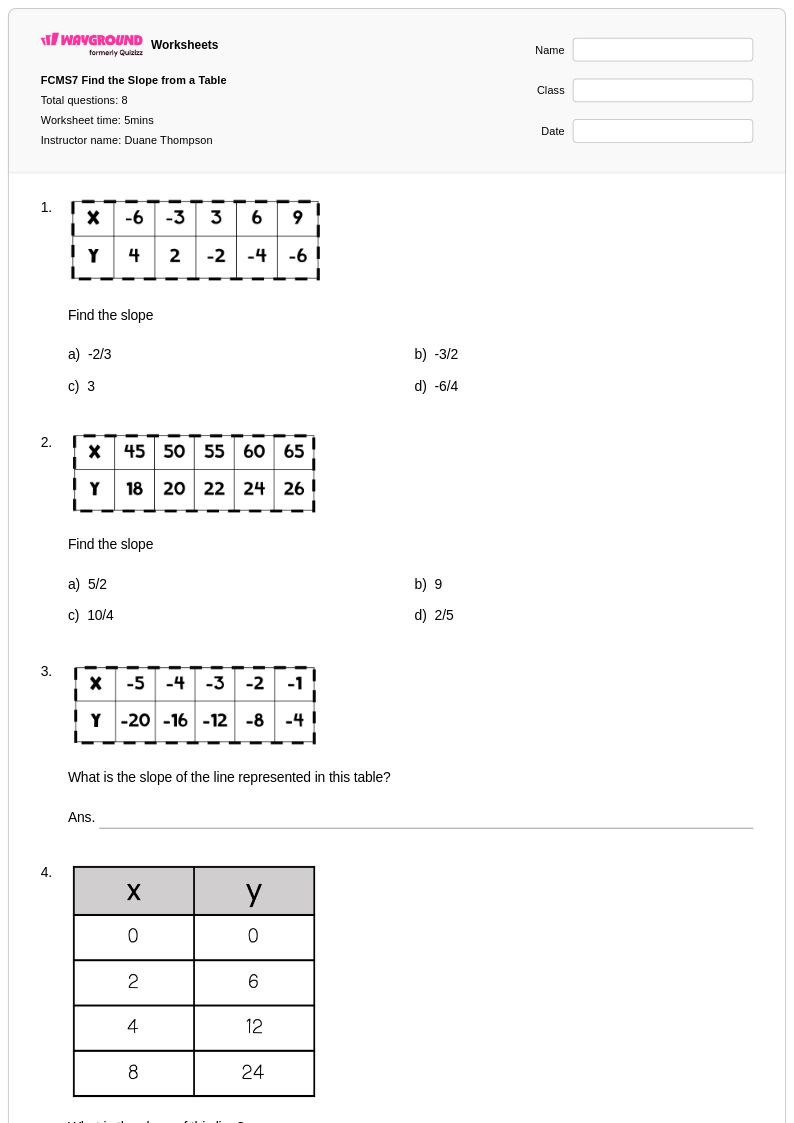
8 Q
6th - 8th
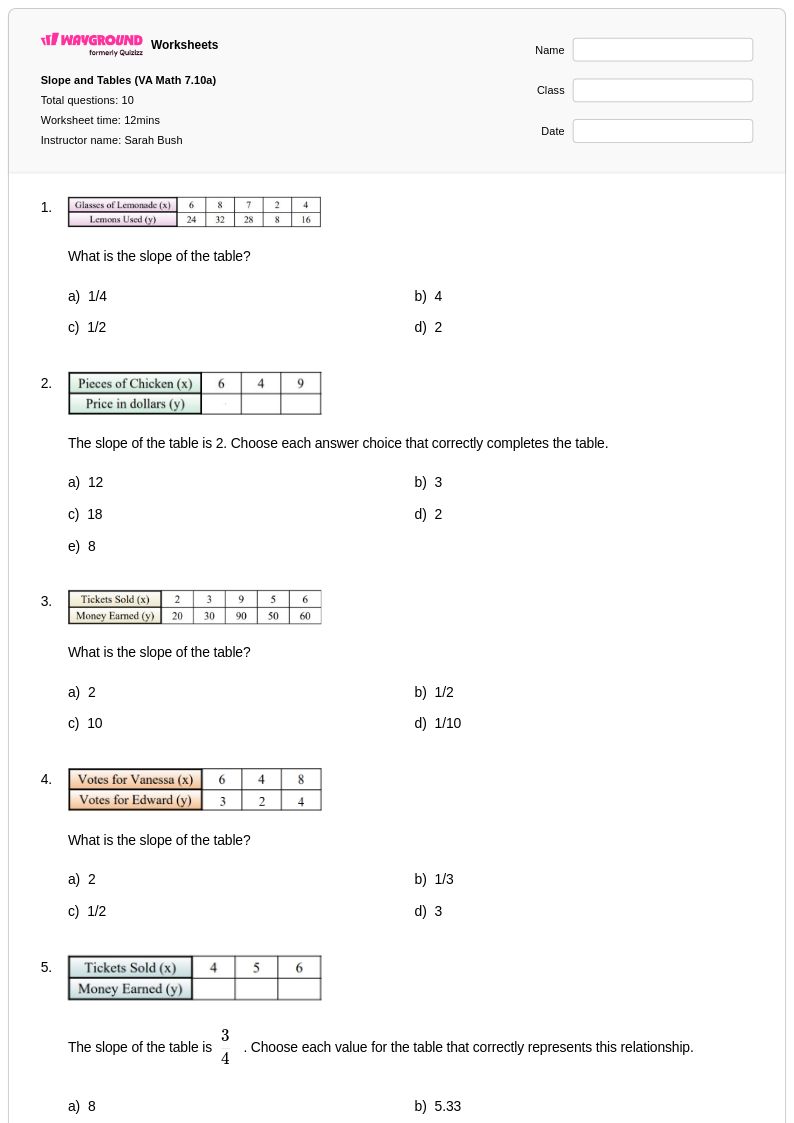
10 Q
6th - 7th
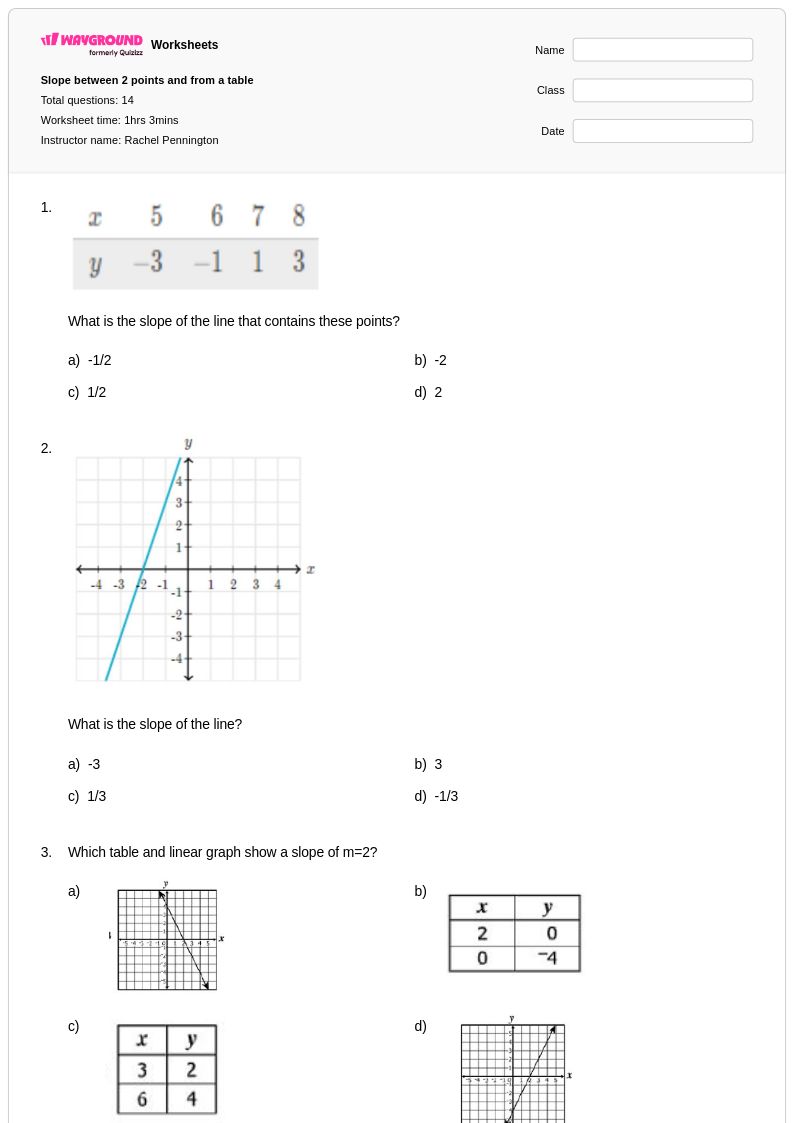
14 Q
6th - 8th
Explore Other Subject Worksheets for class 6
Explore printable Slope from Table worksheets for Class 6
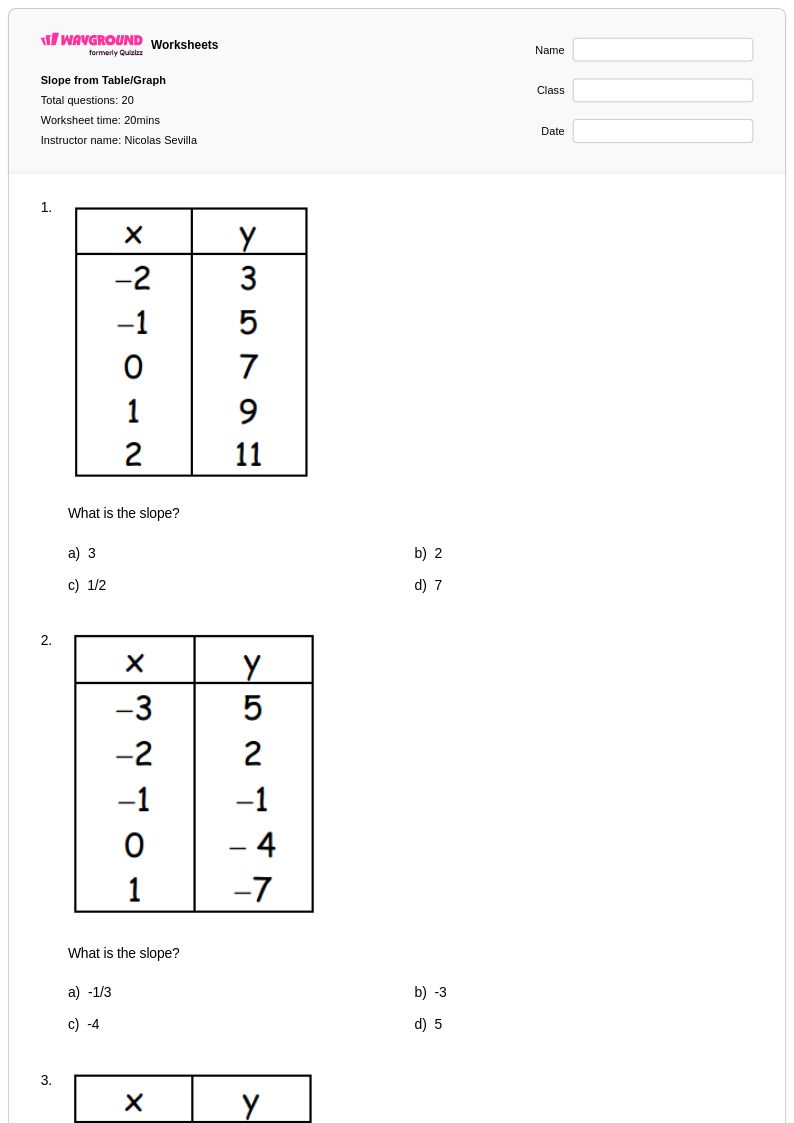
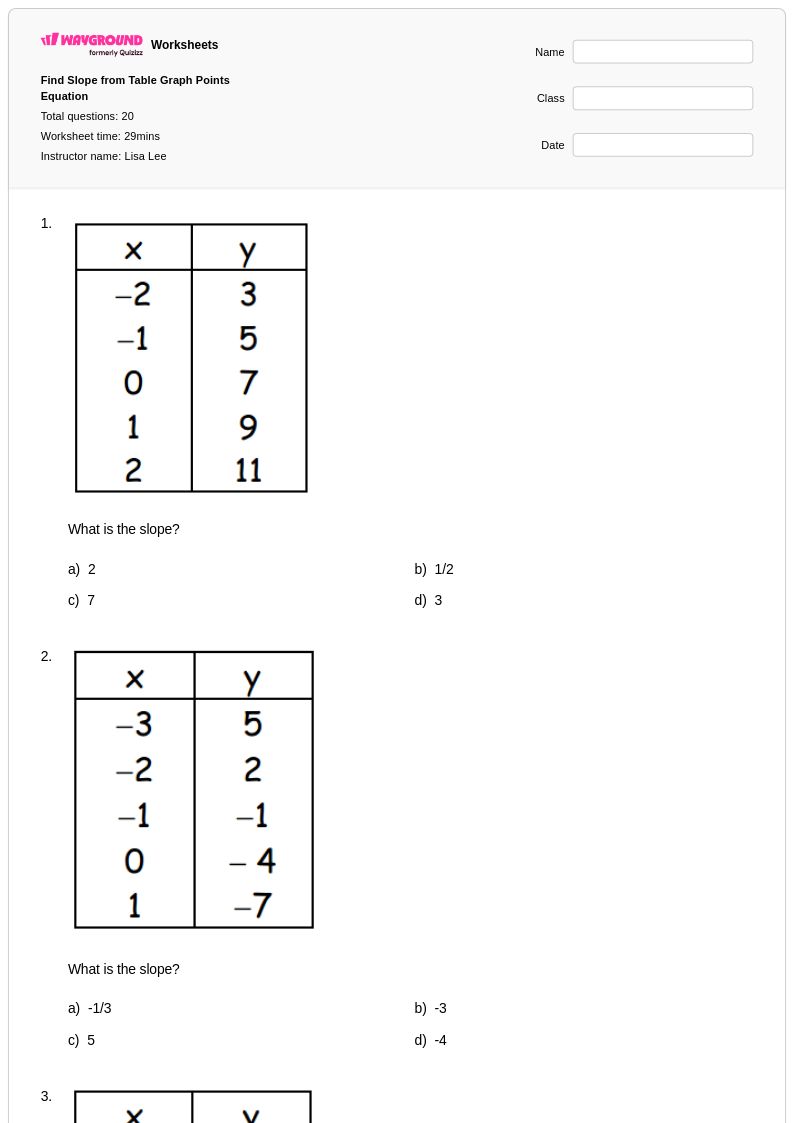
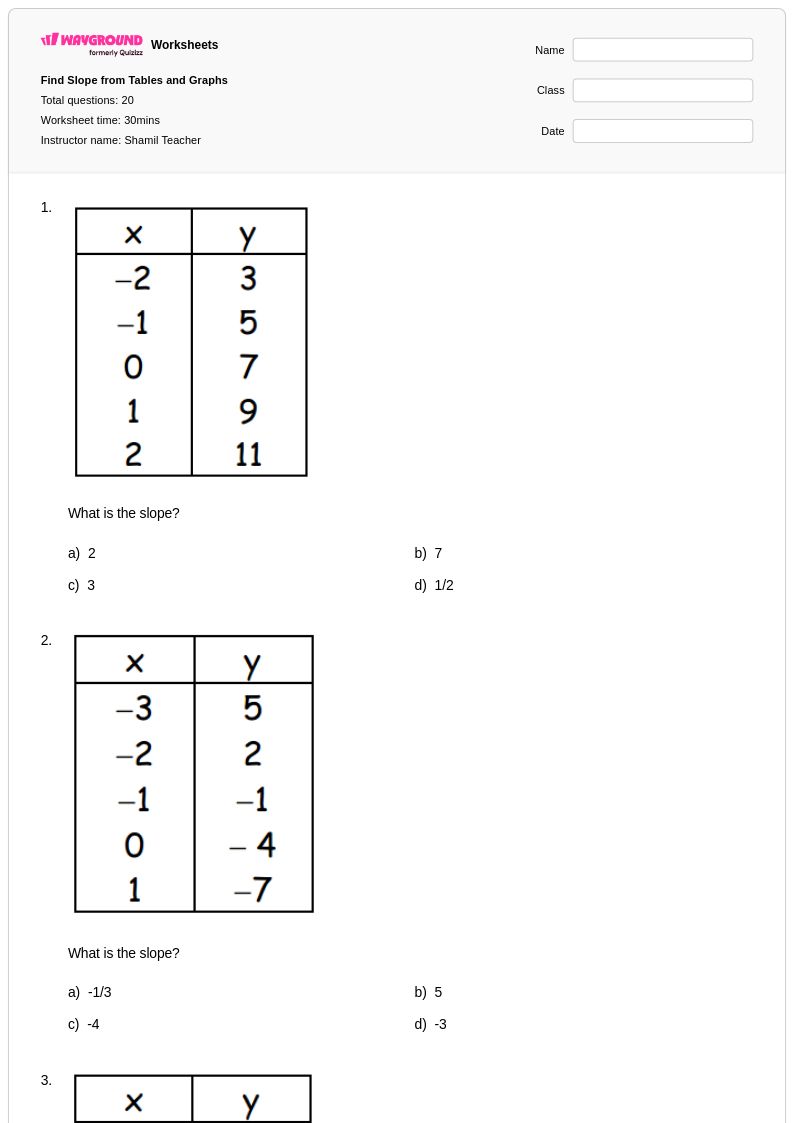
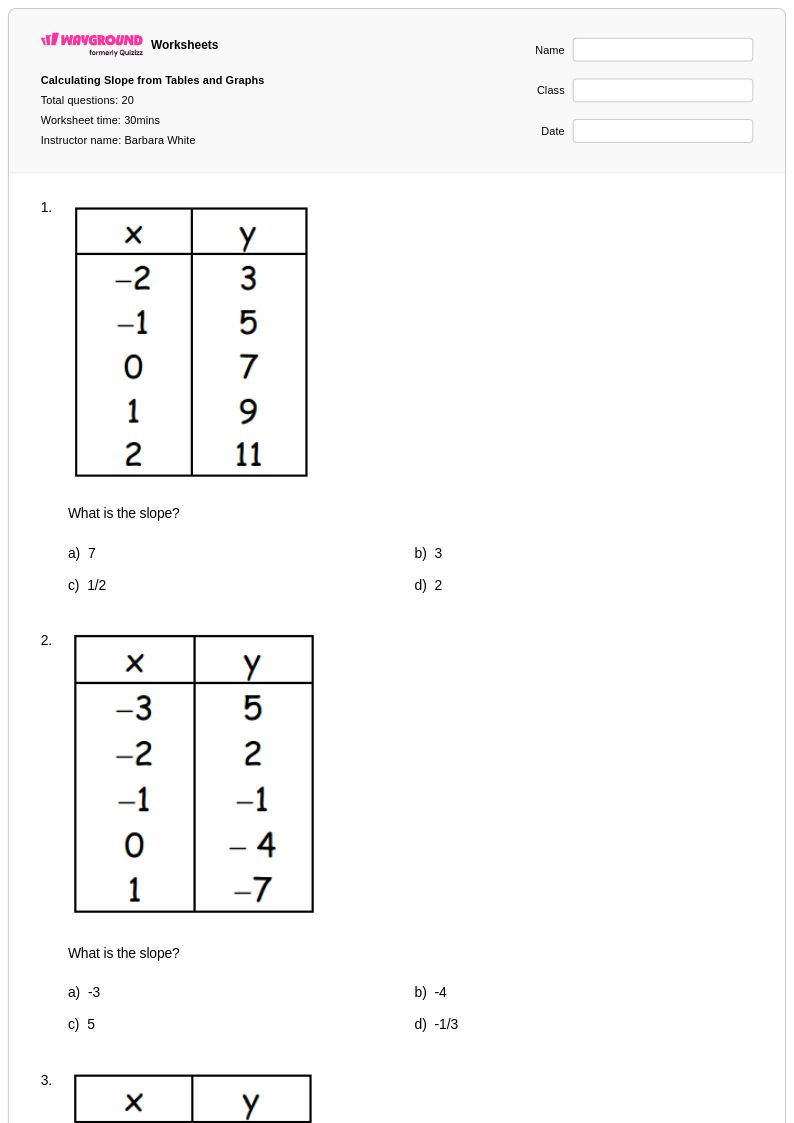
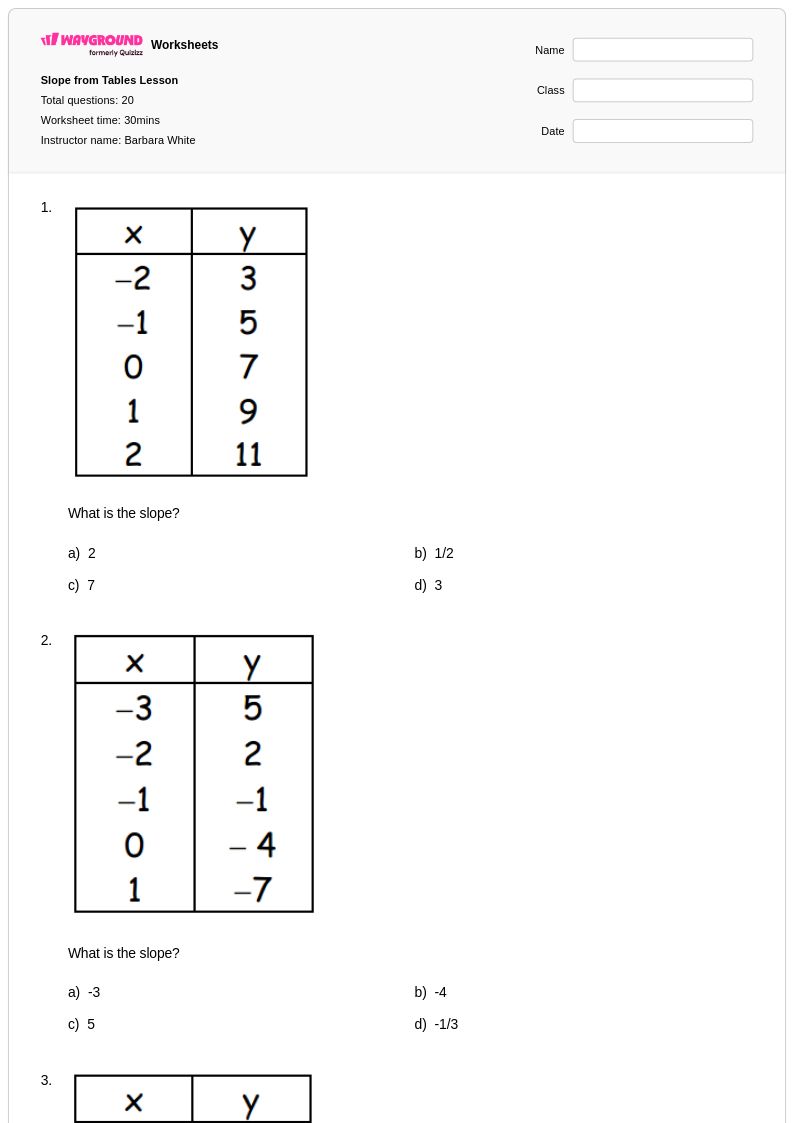
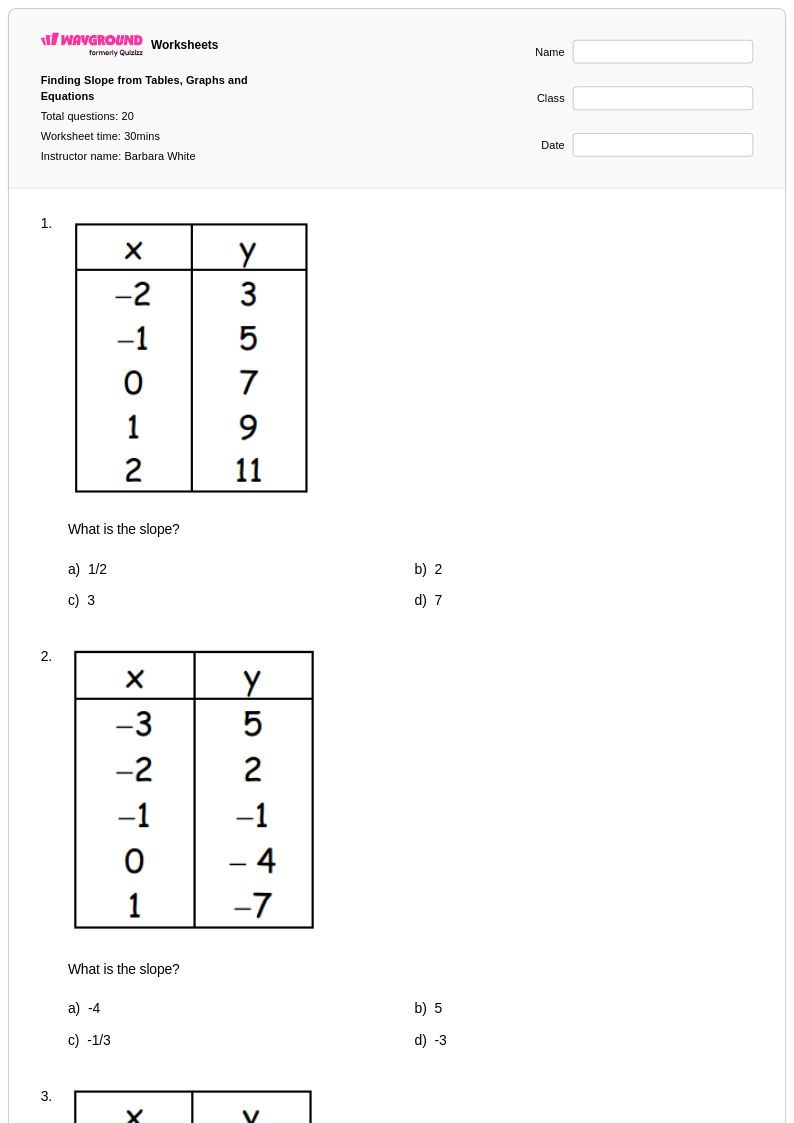
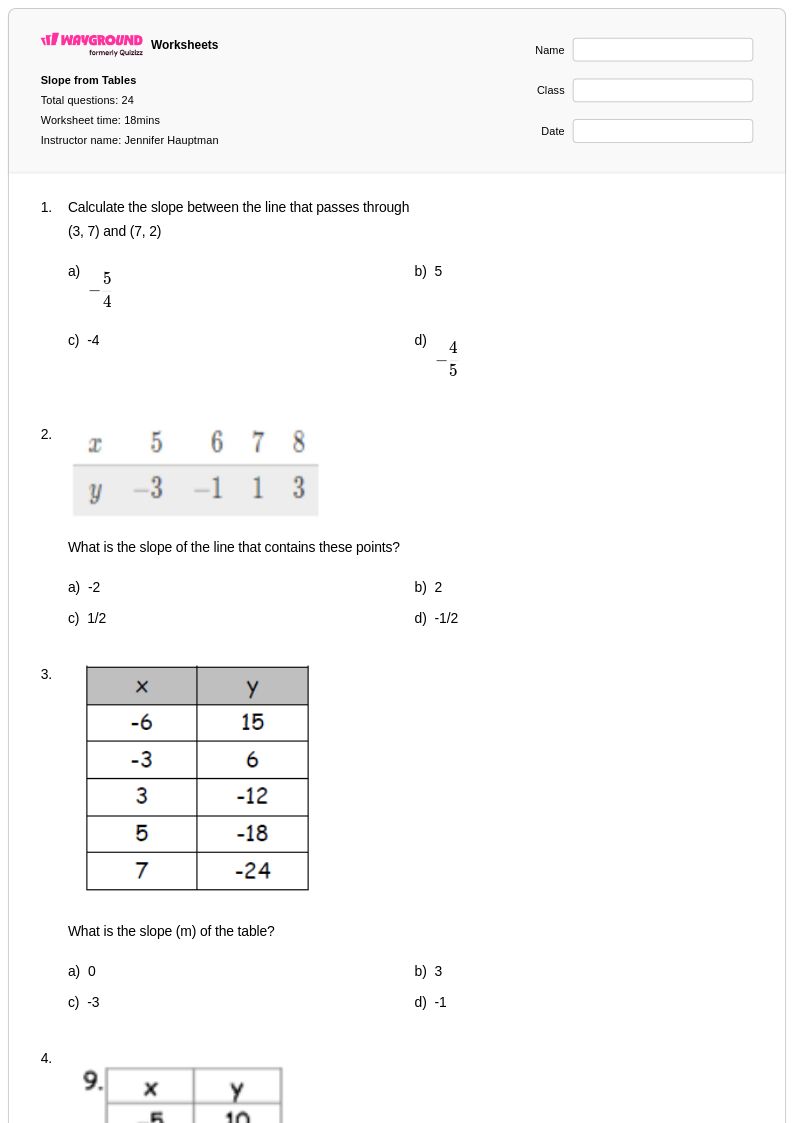
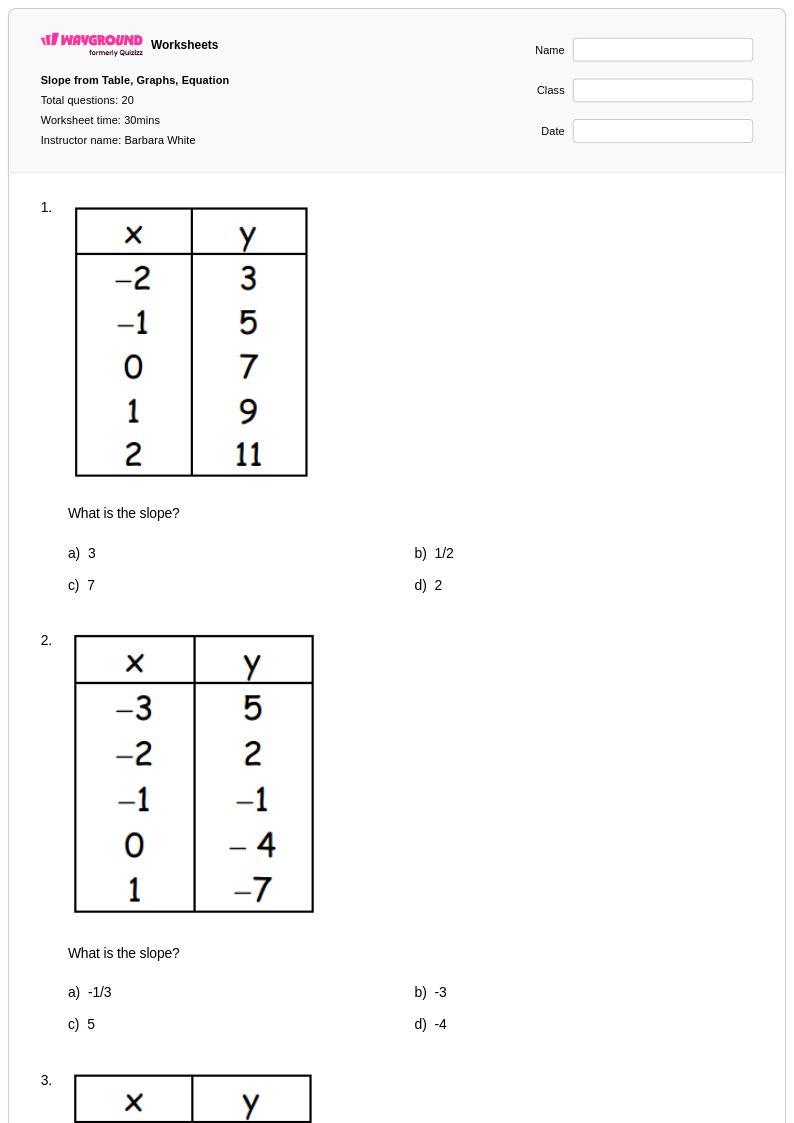
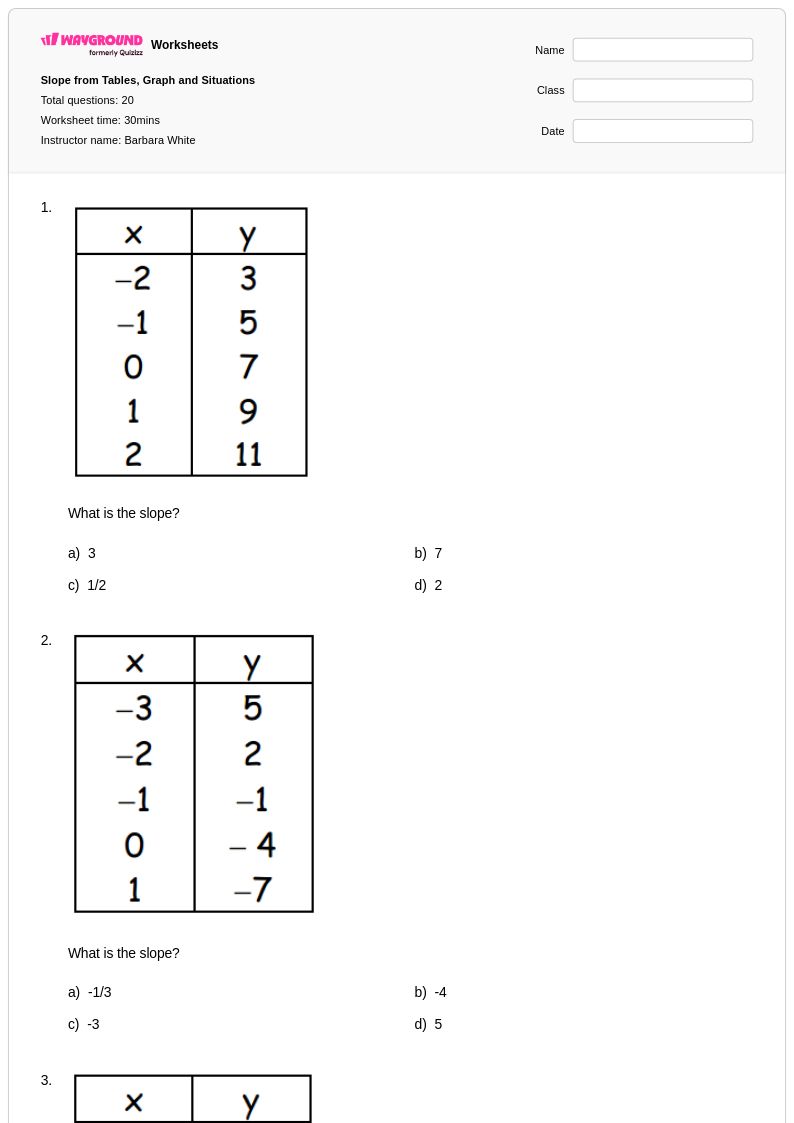
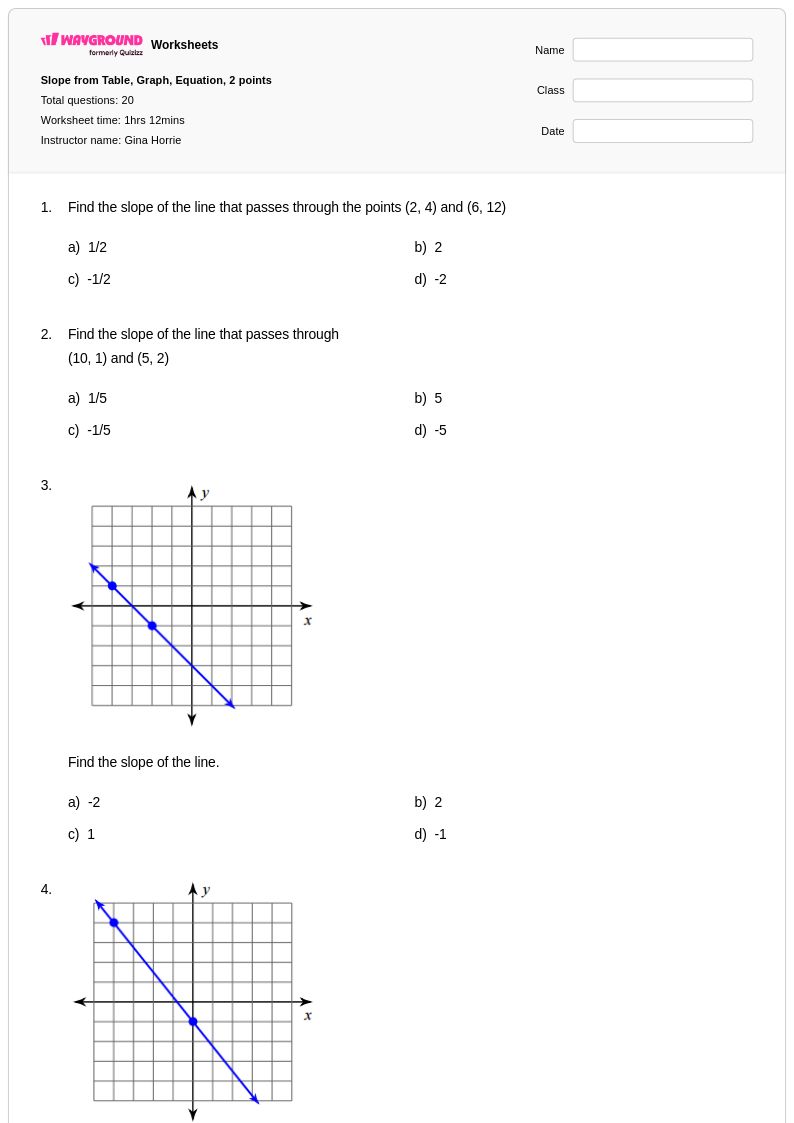
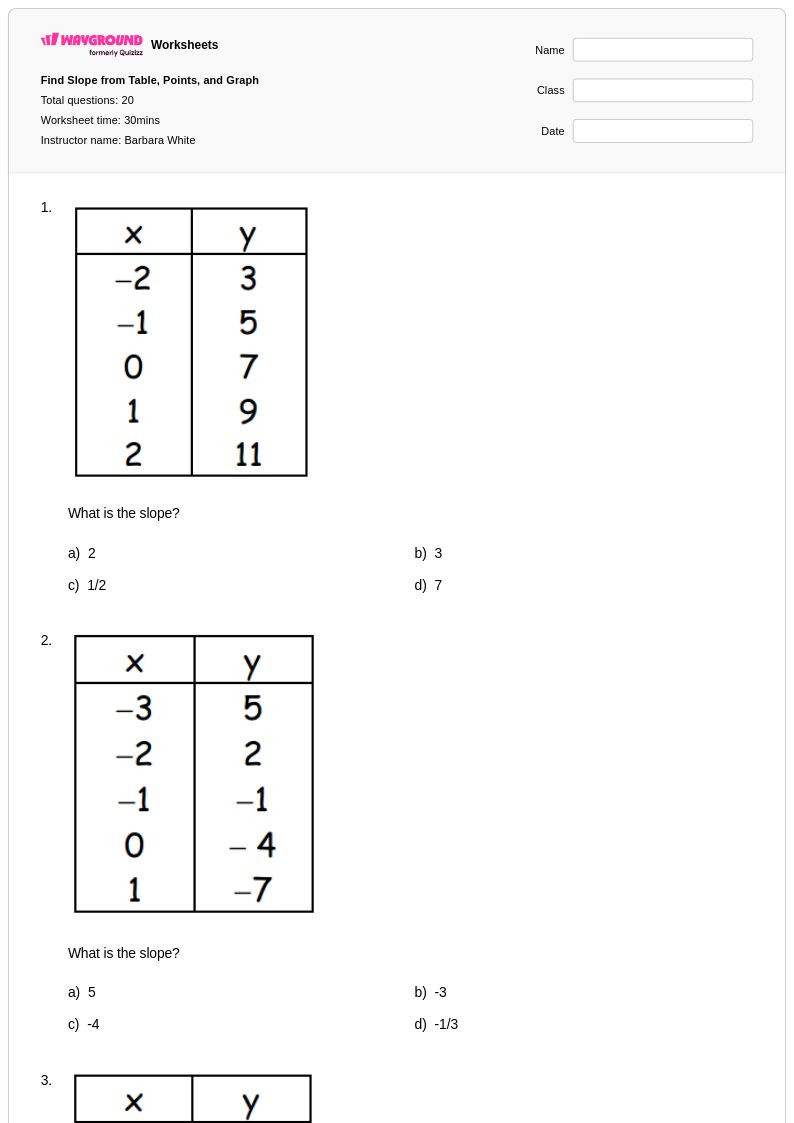
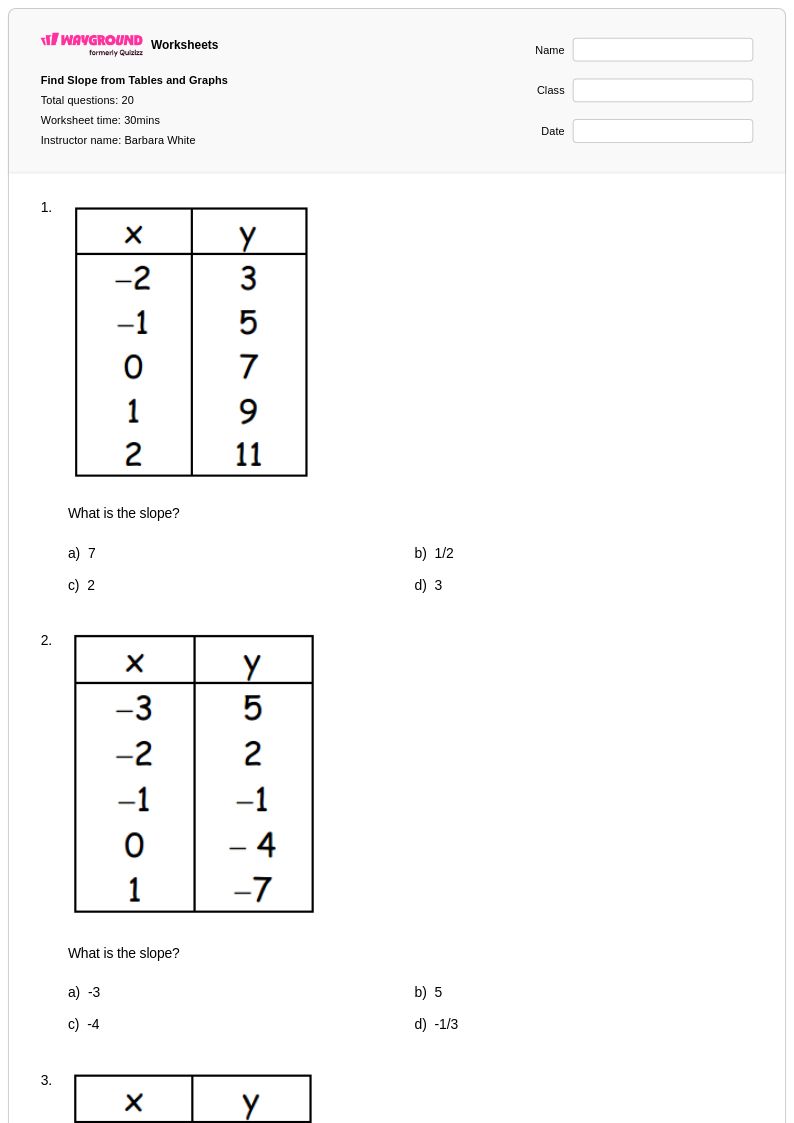
Class 6 slope from table worksheets available through Wayground (formerly Quizizz) provide students with systematic practice in determining the rate of change between two variables using tabular data. These comprehensive worksheets strengthen fundamental algebraic reasoning skills by teaching students to identify consistent patterns in x and y value relationships, calculate rise over run between coordinate pairs, and recognize both positive and negative slopes within organized data sets. Each worksheet collection includes detailed answer keys and step-by-step solutions that help students verify their calculations and understand common mistakes, while the free printable format ensures teachers can easily distribute practice problems for homework, classwork, or assessment preparation without additional costs.
Wayground (formerly Quizizz) supports mathematics educators with an extensive library of millions of teacher-created slope from table resources that can be filtered by difficulty level, problem type, and specific Class 6 standards alignment. The platform's robust search functionality allows teachers to quickly locate worksheets that match their exact instructional needs, whether for initial skill introduction, targeted remediation, or advanced enrichment activities. Teachers can customize existing worksheets by adjusting problem quantities, modifying data sets, or combining multiple concept areas, with all materials available in both digital interactive formats and downloadable pdf versions for seamless classroom integration. These differentiation tools enable educators to provide appropriate challenge levels for diverse learners while maintaining consistent skill practice across varying mathematical abilities.
FAQs
What grade do students learn to find slope from a table?
How should I introduce finding rates from a table in 6th grade?
What kind of practice is best for 6th graders learning rates from tables?
What's a common misconception for 6th graders with this topic?
How does this topic align with 6th-grade standards?
How do I use this worksheet with my 6th-grade class?