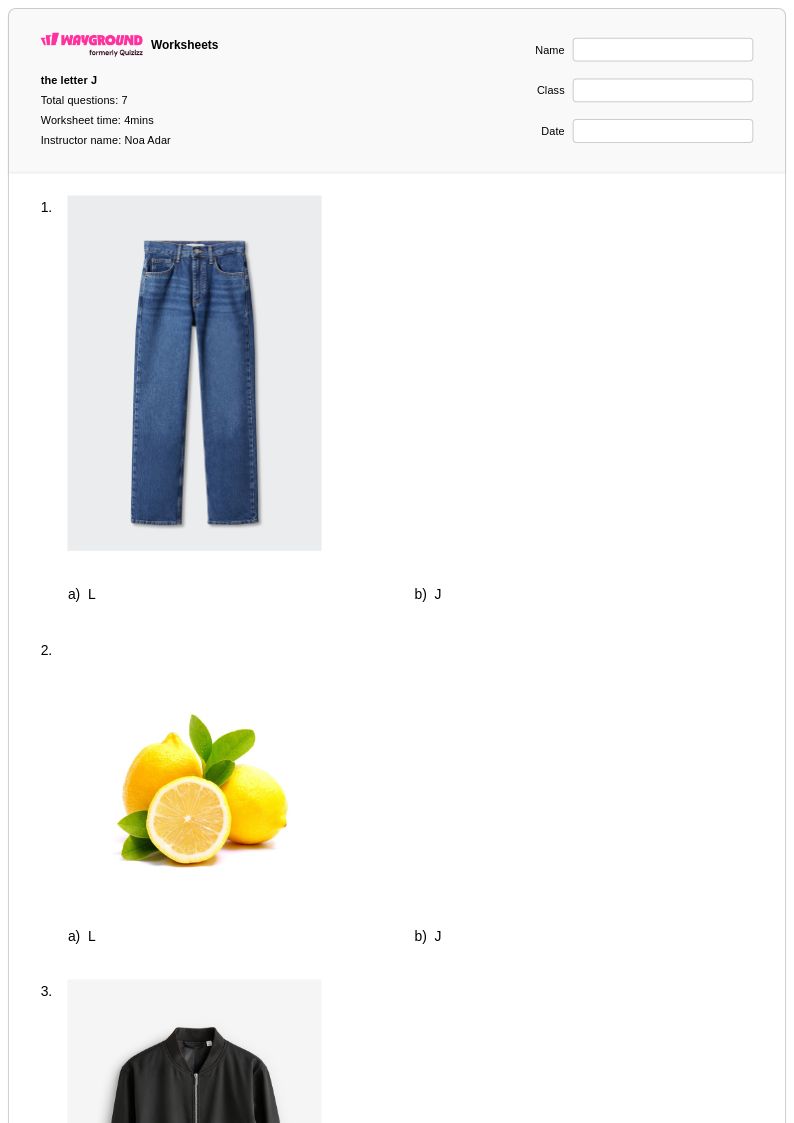
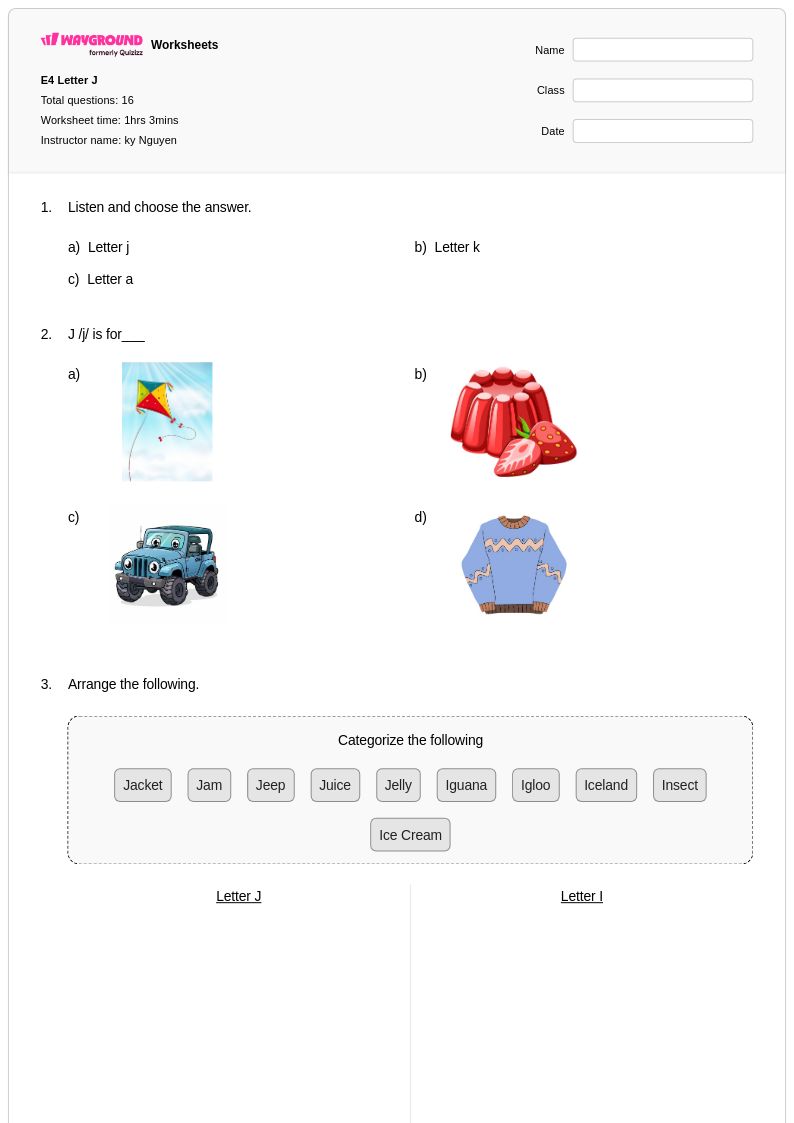
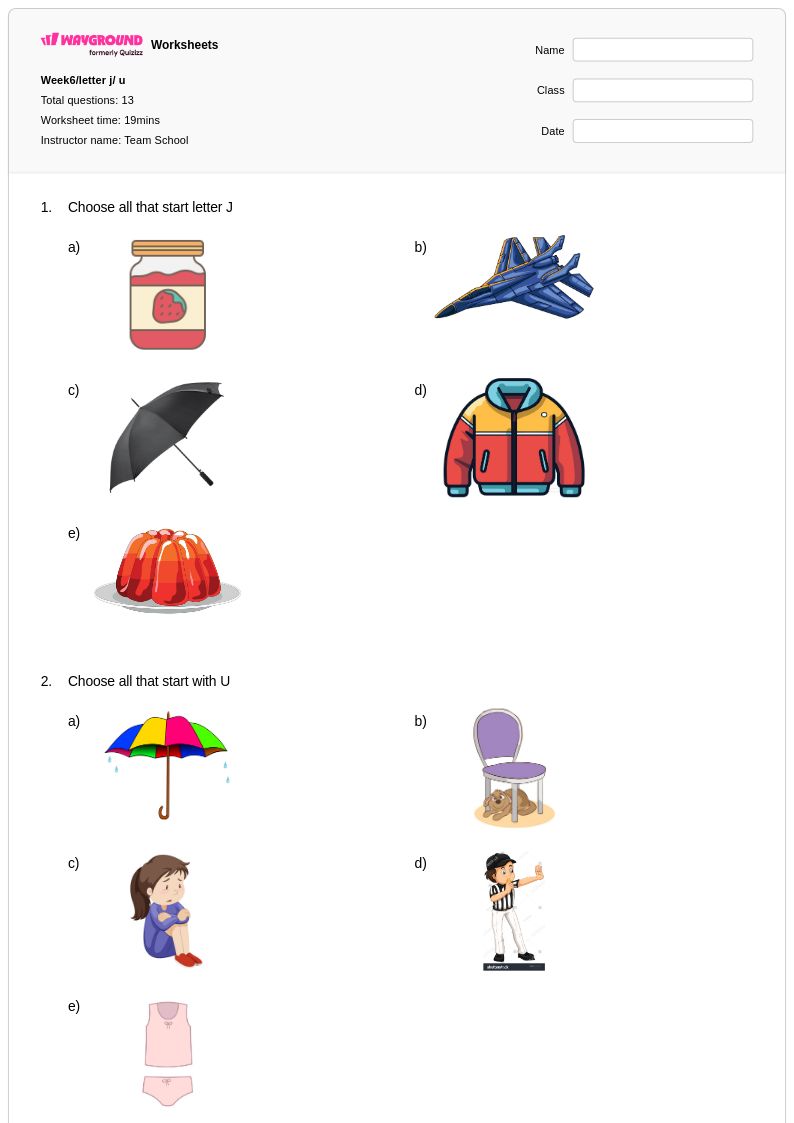
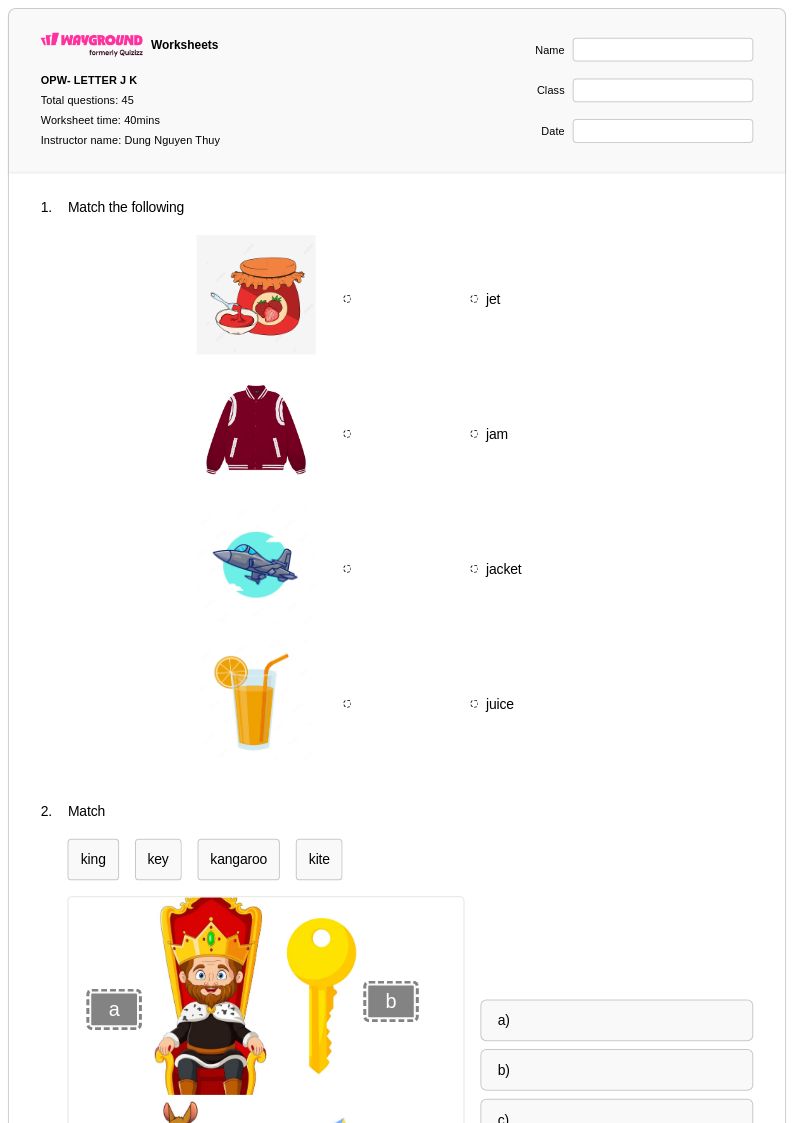
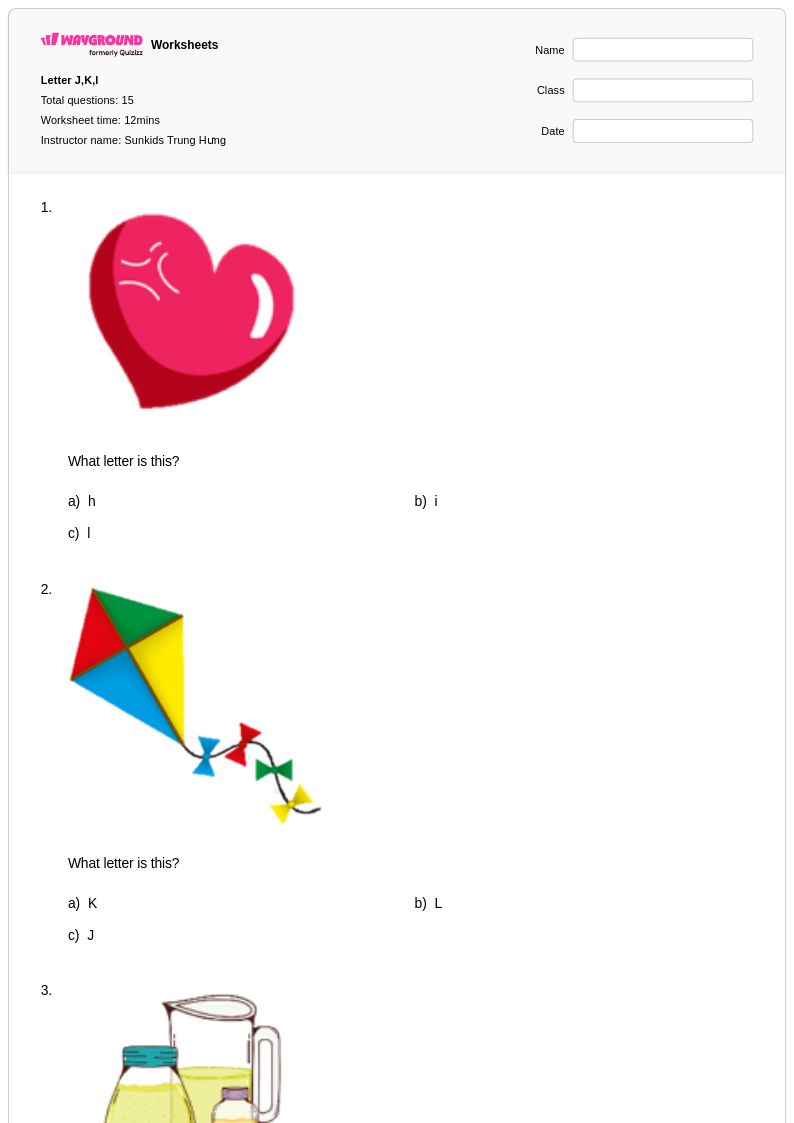
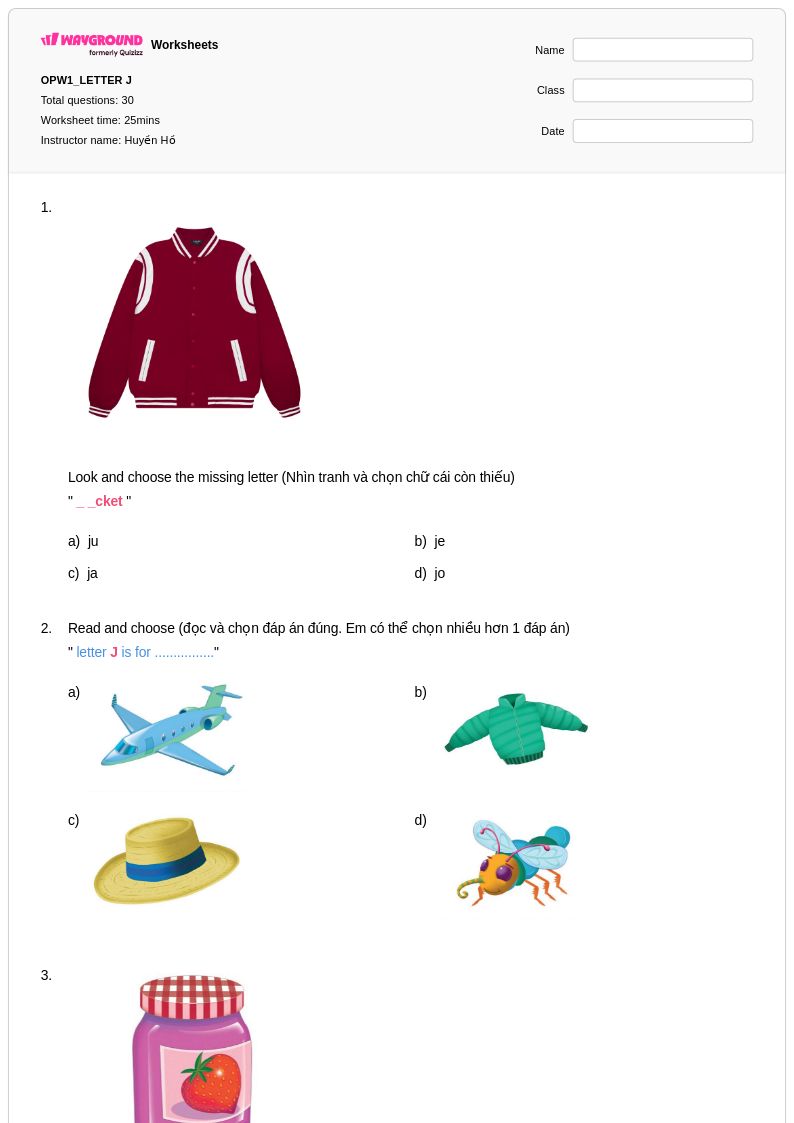
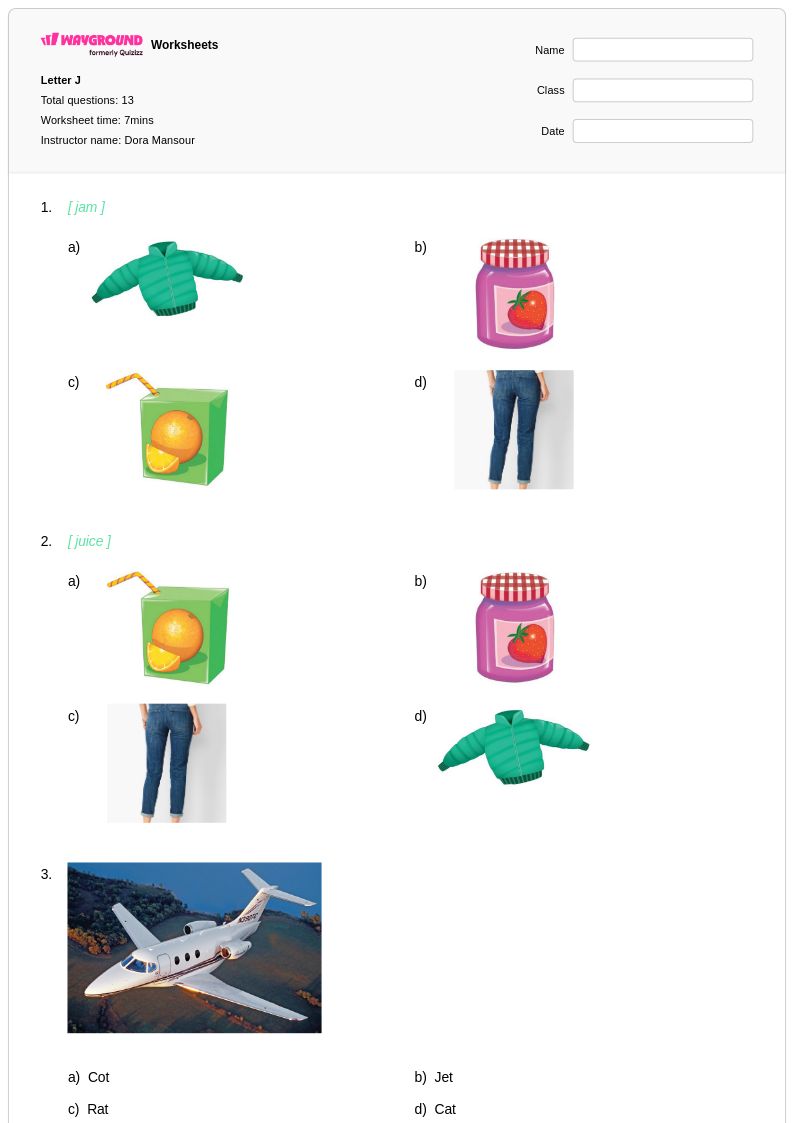
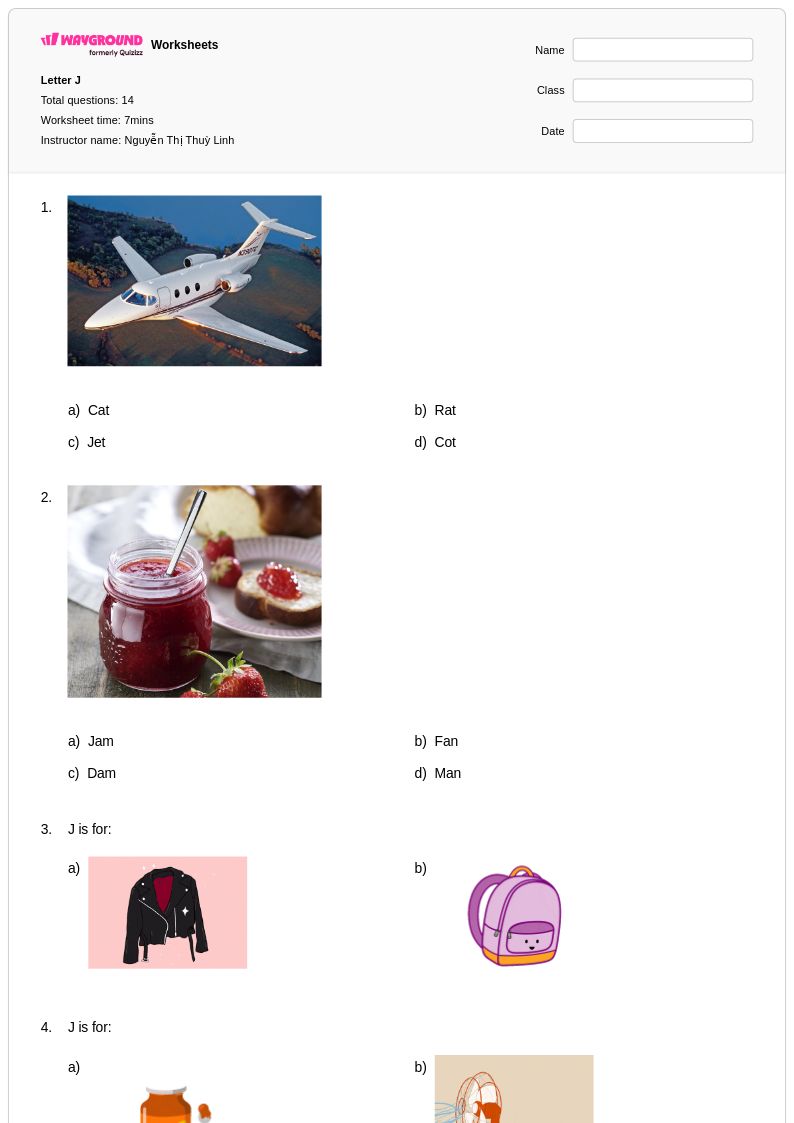
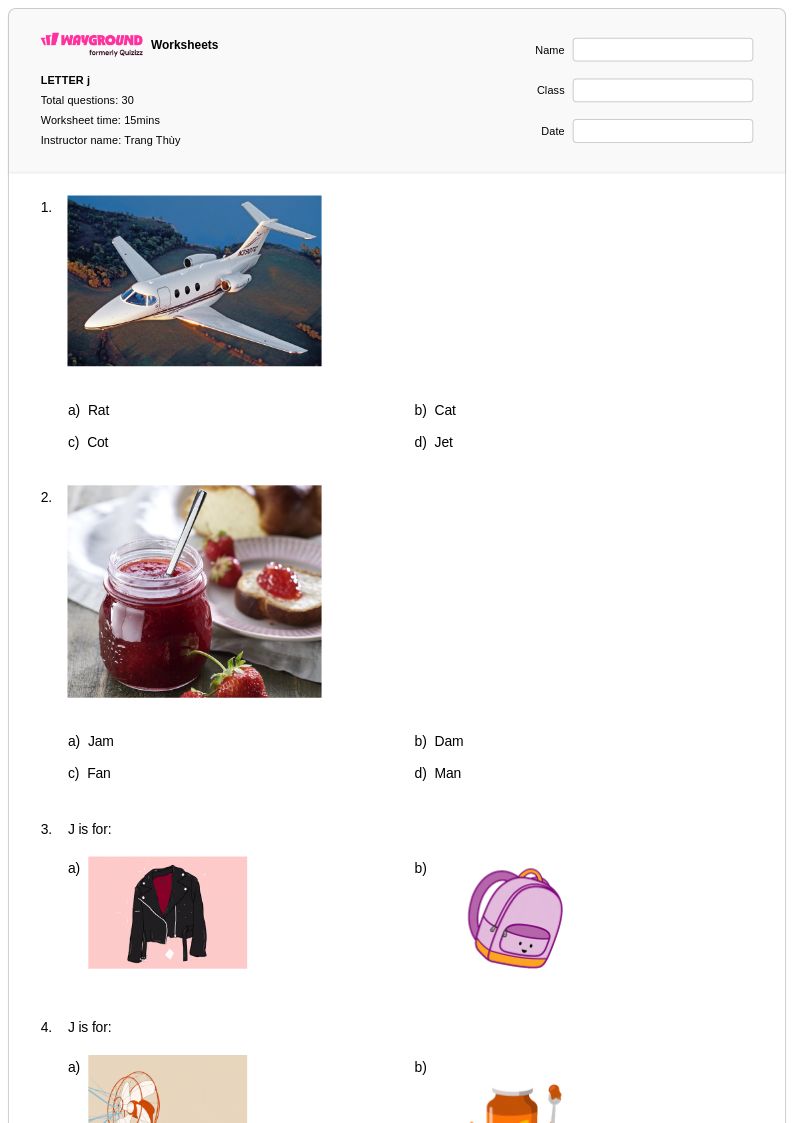
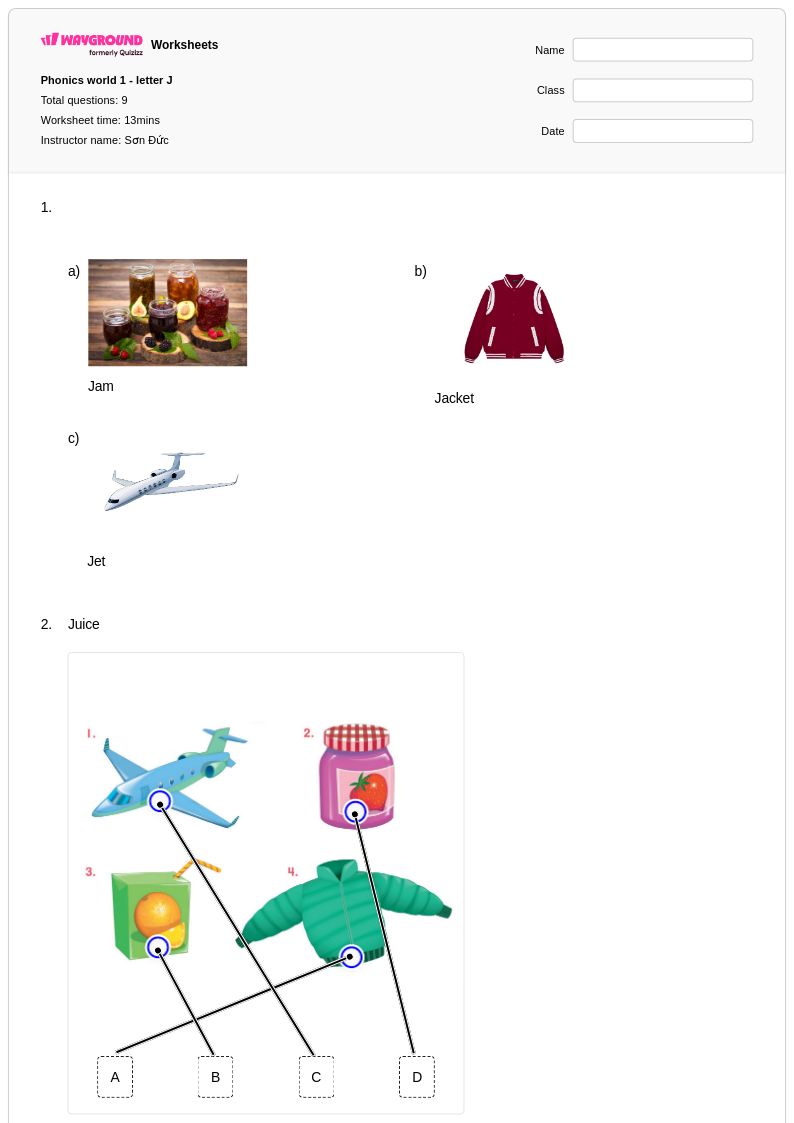
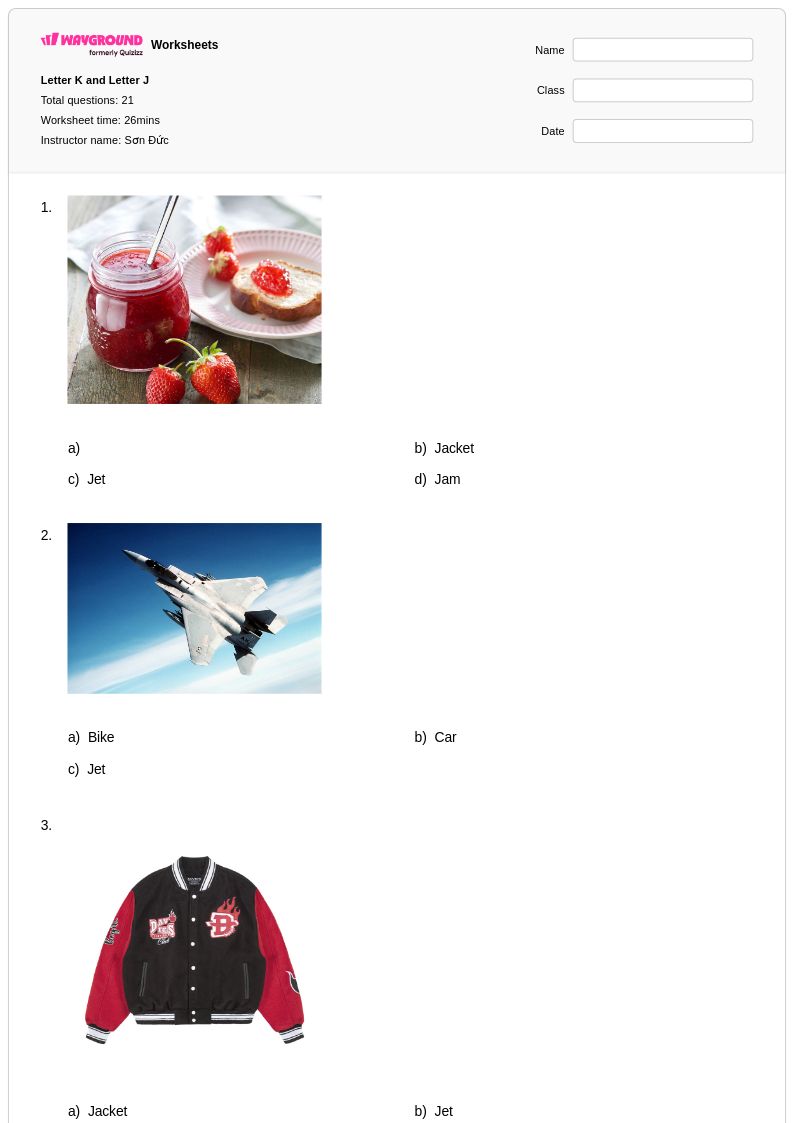
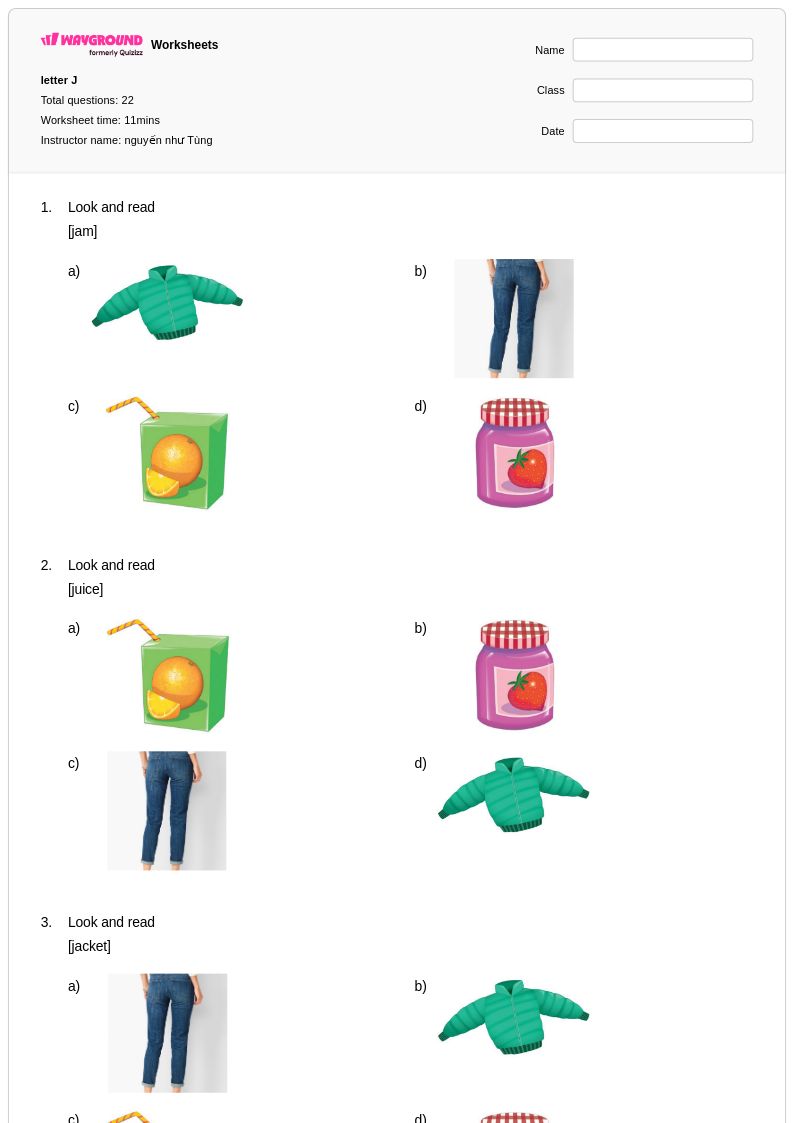
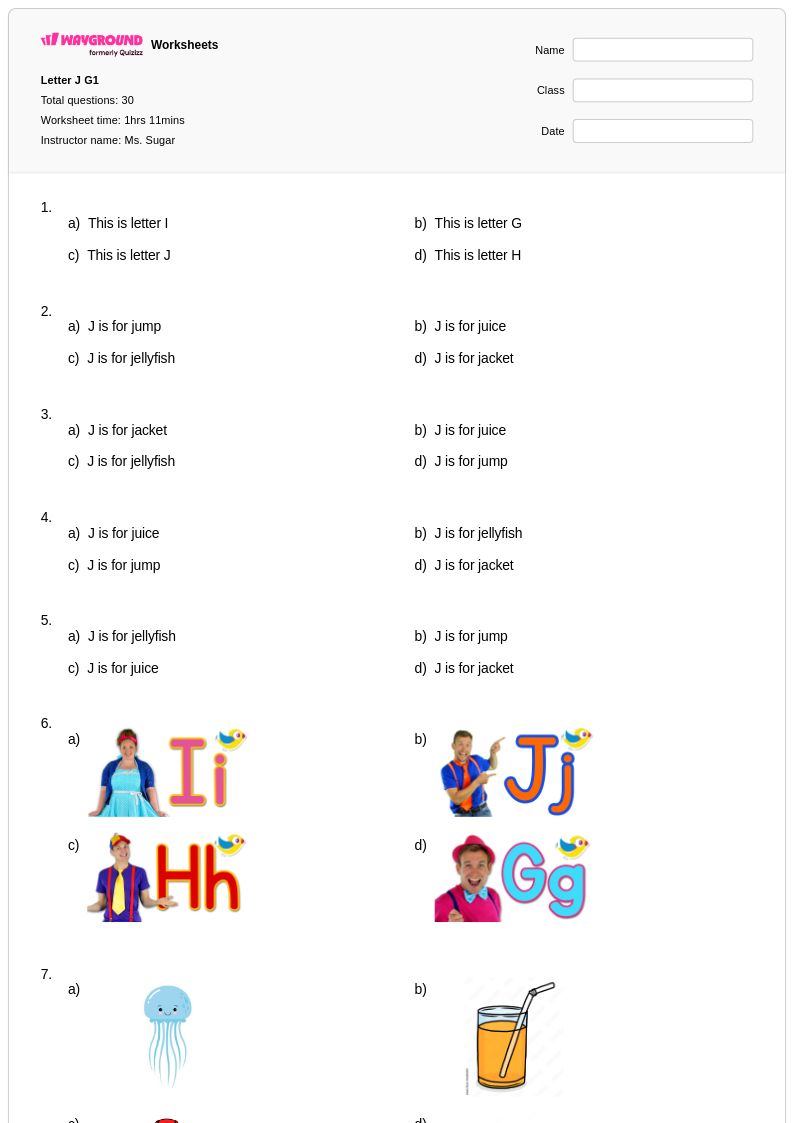
Explore Wayground's comprehensive collection of free Letter J worksheets and printables designed to help students master letter recognition, writing practice, and phonics skills through engaging practice problems with complete answer keys.
The Letter J worksheets available through Wayground (formerly Quizizz) provide comprehensive educational resources designed to help students master this essential consonant through systematic letter recognition and phonetic practice. These expertly crafted materials focus on developing fundamental literacy skills including letter formation, sound identification, and beginning phonics awareness through engaging activities that reinforce proper letter J recognition in various contexts. The collection features diverse practice problems that challenge learners to identify the letter J in different fonts and positions, trace and write the letter with proper stroke order, and connect the letter to its corresponding sound through carefully designed exercises. Each worksheet comes with a complete answer key and is available as free printables in convenient pdf format, making them accessible for both classroom instruction and independent practice sessions.
Wayground (formerly Quizizz) empowers educators with an extensive library of millions of teacher-created Letter J resources that can be easily discovered through robust search and filtering capabilities tailored to specific learning objectives and skill levels. The platform's comprehensive collection supports teachers in planning differentiated instruction by offering worksheets that range from basic letter recognition activities to more advanced phonetic applications, all aligned with early literacy standards and designed to accommodate diverse learning needs. Teachers can seamlessly customize these digital and printable materials to create targeted remediation exercises for struggling learners or enrichment activities for advanced students, while the flexible pdf format ensures easy distribution and implementation across various classroom settings. This extensive resource collection streamlines lesson planning and provides consistent, high-quality practice opportunities that strengthen students' foundational understanding of the letter J and its role in early reading development.
FAQs
How do I teach the letter J to early learners?
Teaching the letter J works best when you connect letter recognition, formation, and sound simultaneously rather than in isolation. Begin by introducing the uppercase and lowercase forms side by side, modeling proper stroke order before students attempt independent writing. Pair the letter with high-frequency J words like 'jump,' 'jar,' and 'jet' so students can anchor the sound to familiar vocabulary. Repeated exposure across varied contexts, such as identifying the letter J in different fonts and word positions, builds durable recognition skills.
What exercises help students practice writing the letter J?
Tracing exercises that emphasize correct stroke order are the most effective starting point for letter J writing practice, as the letter's descending curve can be difficult for early writers to control. After guided tracing, students benefit from copy exercises where they write the letter independently on dotted or lined paper. Connecting writing practice to phonics, such as writing J words alongside the letter itself, reinforces both formation and sound simultaneously.
What mistakes do students commonly make when learning the letter J?
One of the most common errors is confusing the lowercase letter J with the number 1 or the lowercase letter I, particularly when students are still developing letter discrimination skills. Students also frequently omit the hook at the bottom of the J or fail to extend the letter below the baseline. Another common misconception is confusing the J sound with the Y sound, especially for students whose home language treats J differently, such as Spanish speakers.
How can I use Letter J worksheets to support phonics instruction?
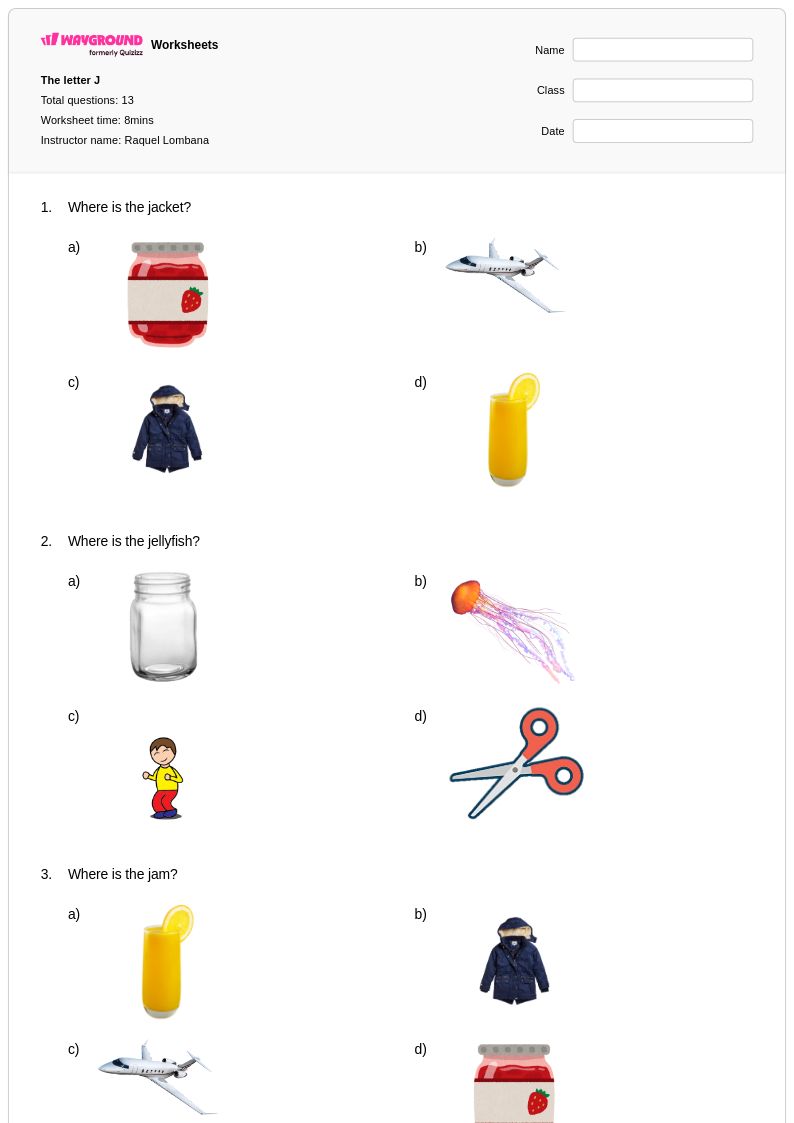
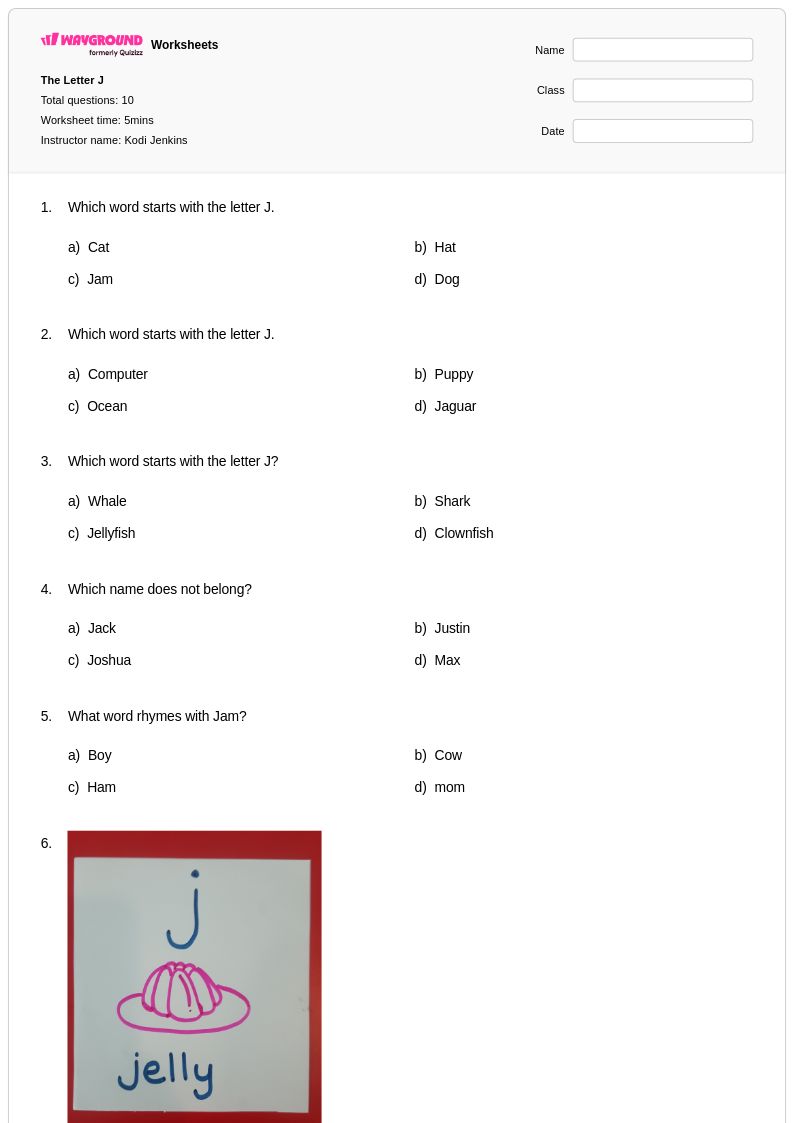
Letter J worksheets are most effective in phonics instruction when they move students through a sequence from recognition to application: first identifying the letter in isolation, then matching it to pictures or words that begin with the J sound, and finally producing J words independently. Exercises that ask students to circle or sort words by their beginning sound build phonemic awareness alongside letter knowledge. Using worksheets as a follow-up to direct phonics instruction ensures students have structured practice to consolidate what was modeled.
How do I use Letter J worksheets on Wayground in my classroom?
Letter J worksheets on Wayground are available as printable PDFs for traditional classroom use and in digital formats for technology-integrated learning environments, giving teachers flexibility depending on their setup. Teachers can also host these worksheets as a quiz directly on Wayground, making it easy to track student responses and identify who needs additional practice with letter recognition or phonics. For students who need accommodations, Wayground supports settings like read aloud, extended time, and reduced answer choices, which can be configured per student without disrupting the rest of the class.
How do I differentiate Letter J practice for students at different skill levels?
For students who are still developing basic recognition, focus on activities that contrast the letter J with visually similar letters like I and L to sharpen discrimination. Students who have mastered recognition can move to writing practice with correct stroke order, while more advanced learners benefit from phonics application tasks such as identifying or generating J words in sentence context. On Wayground, teachers can assign accommodations like reduced answer choices or read aloud to individual students, allowing the same worksheet to serve multiple skill levels without requiring separate materials.