
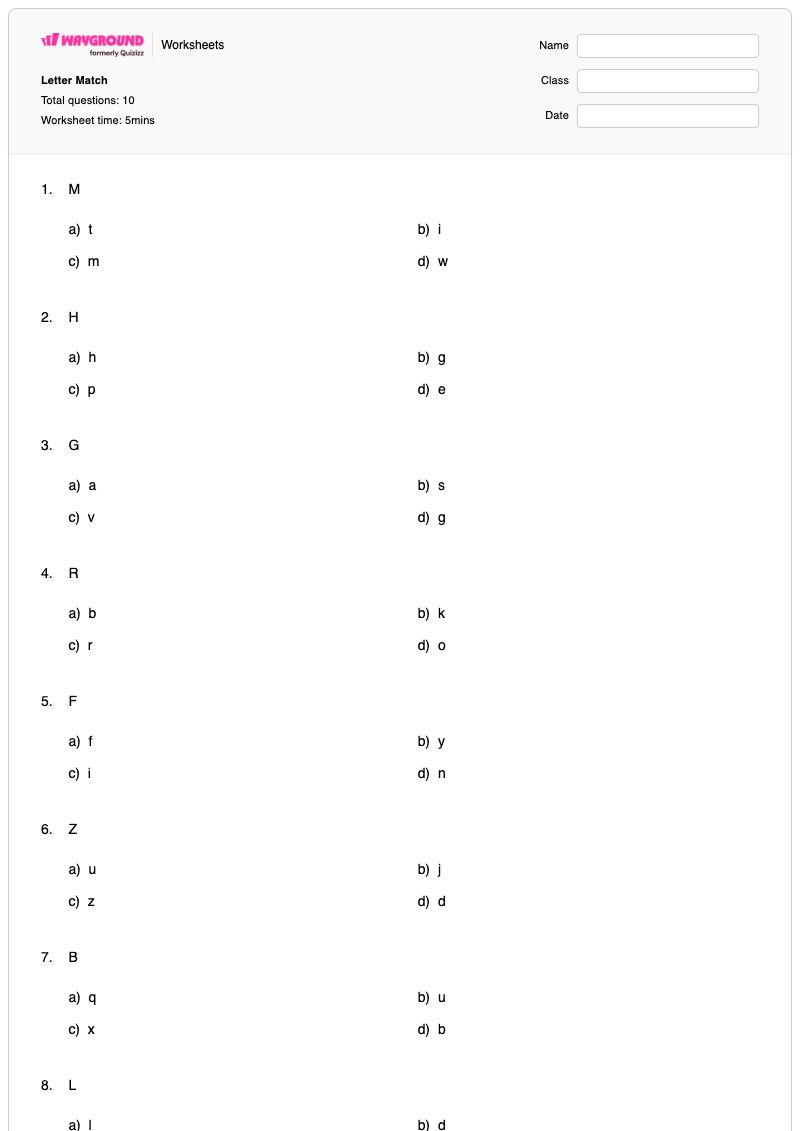
10 Q
KG
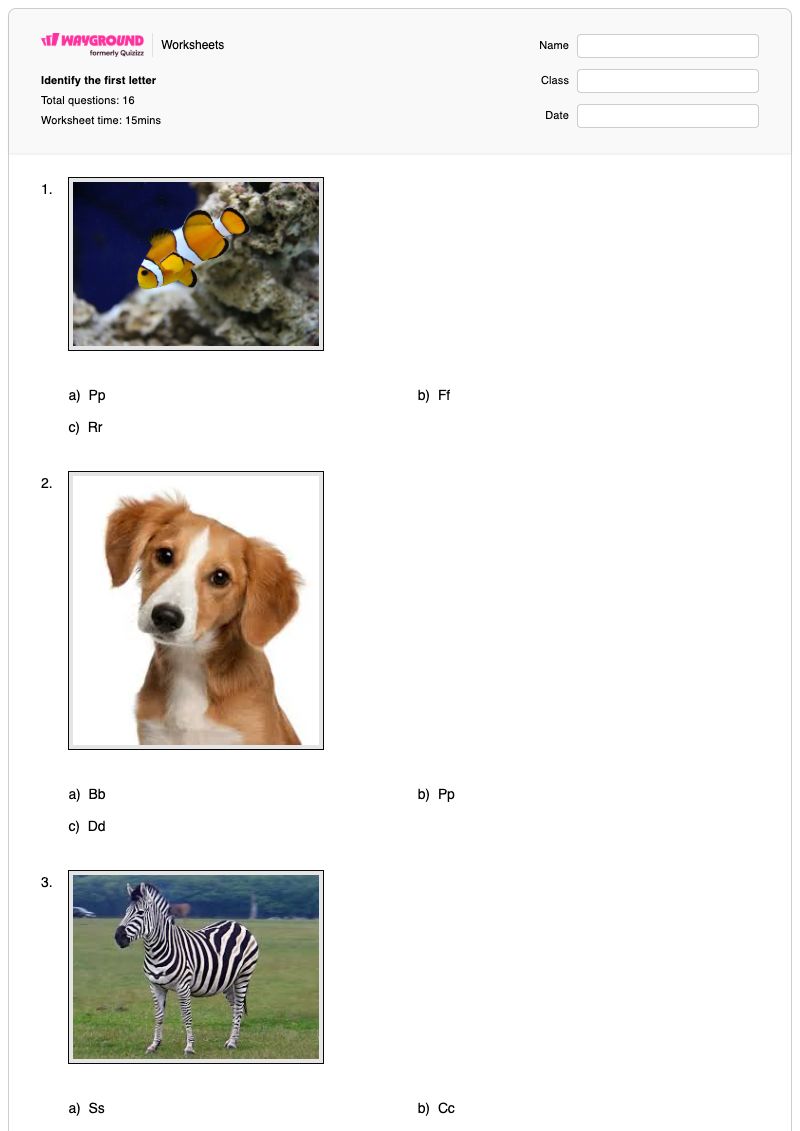
16 Q
KG - 1st
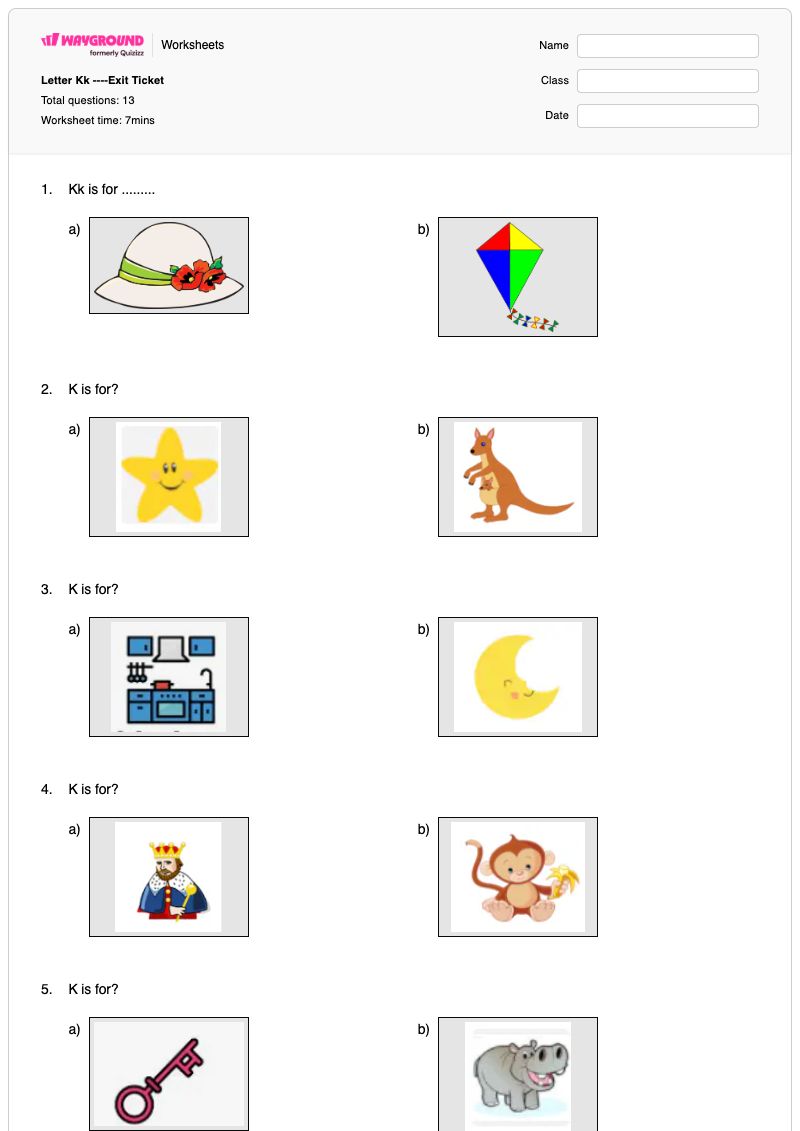
13 Q
KG
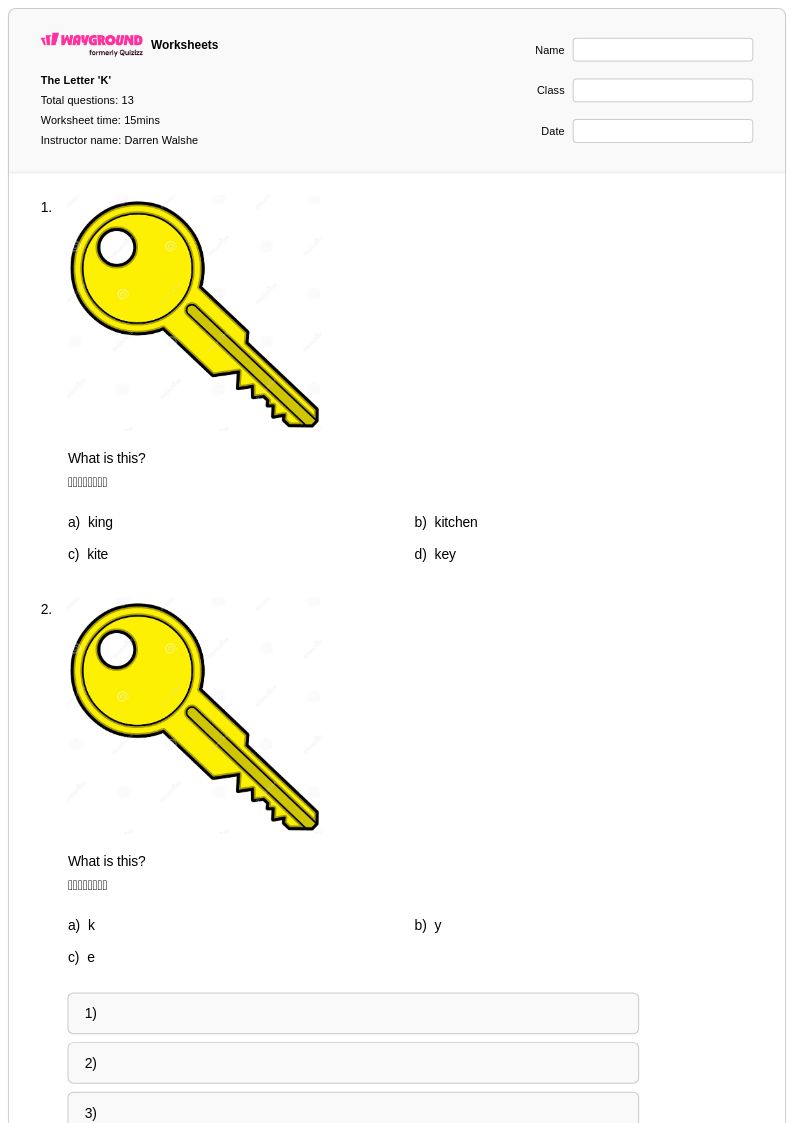
13 Q
KG
20 Q
10th
12 Q
1st
33 Q
1st
32 Q
1st
32 Q
1st
10 Q
KG
5 Q
KG
10 Q
2nd
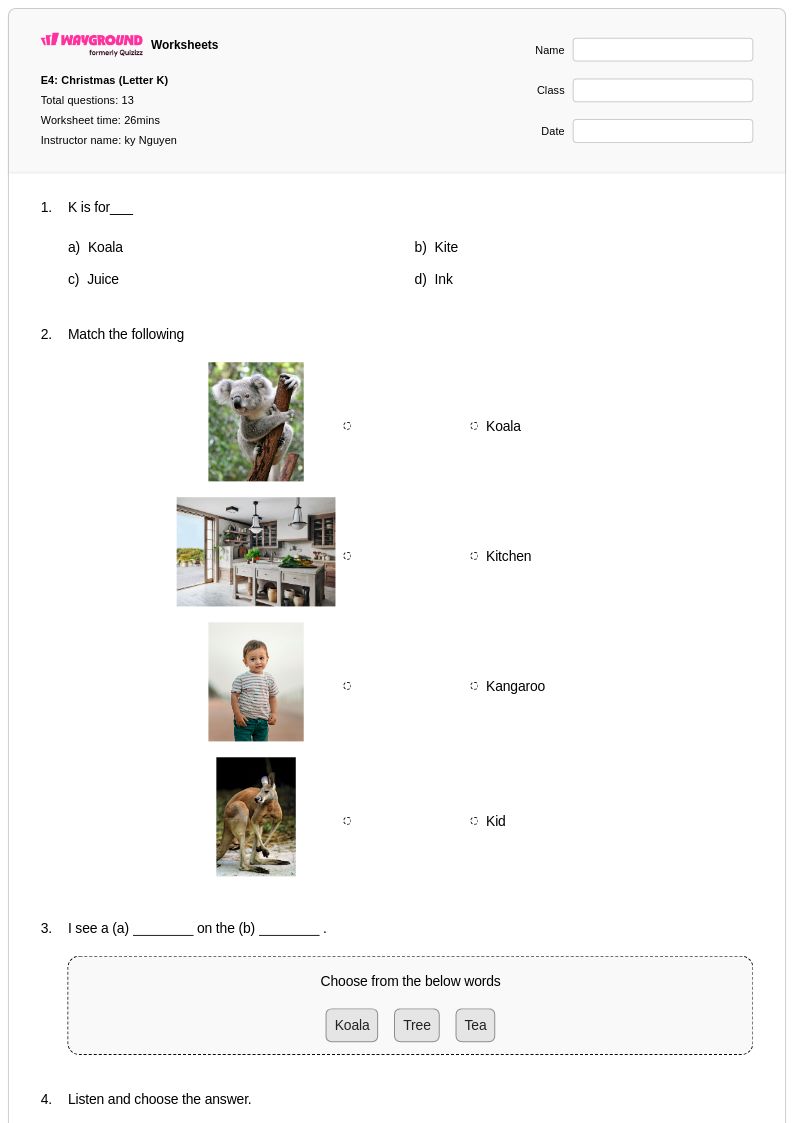
17 Q
2nd

23 Q
1st
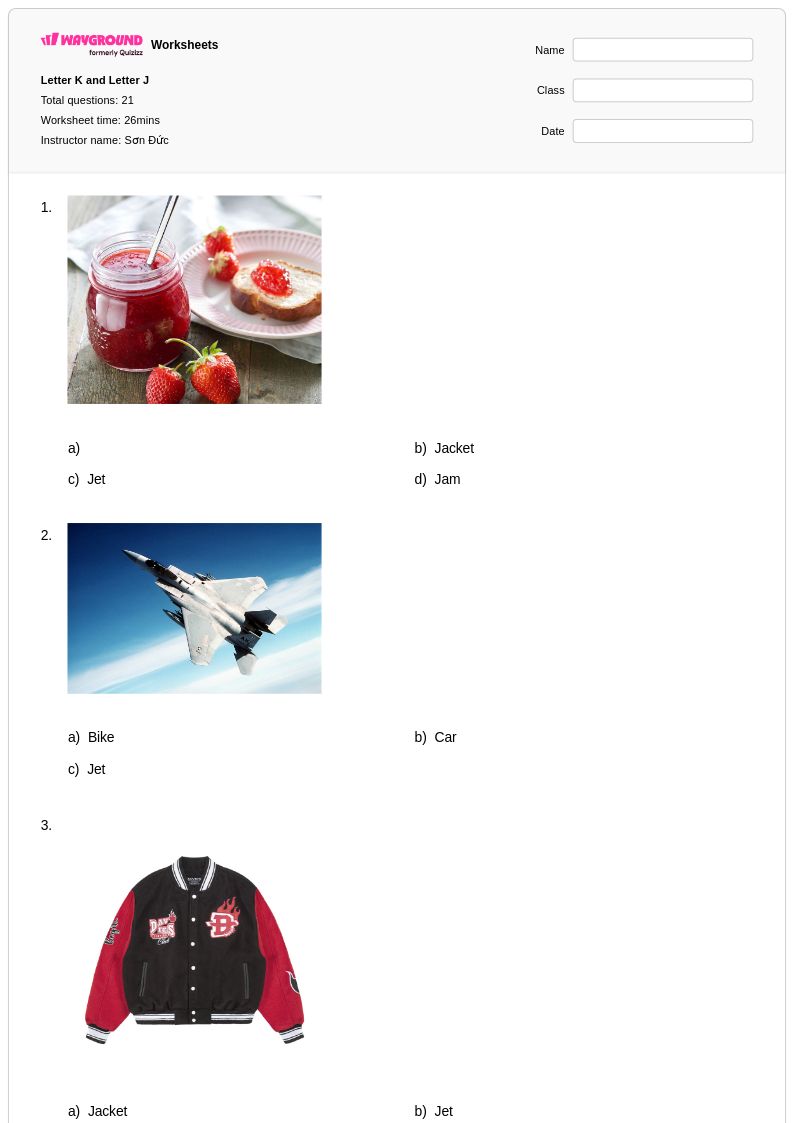
21 Q
1st
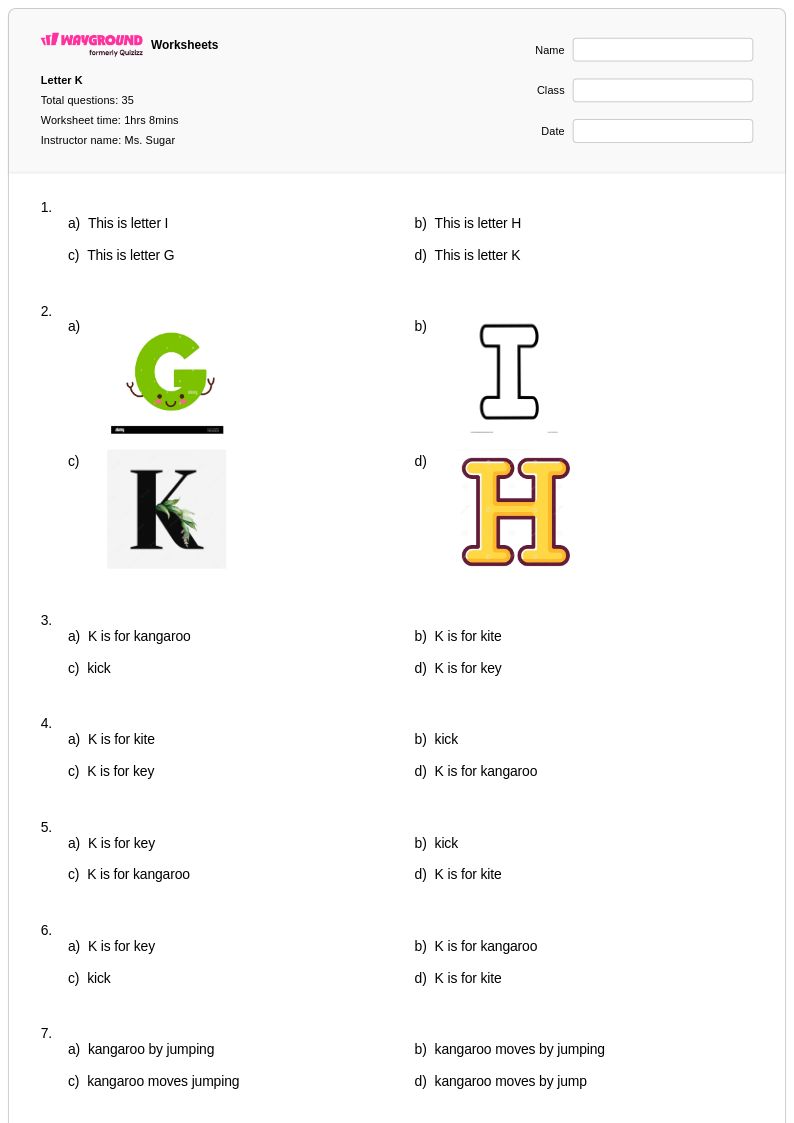
35 Q
1st - 2nd
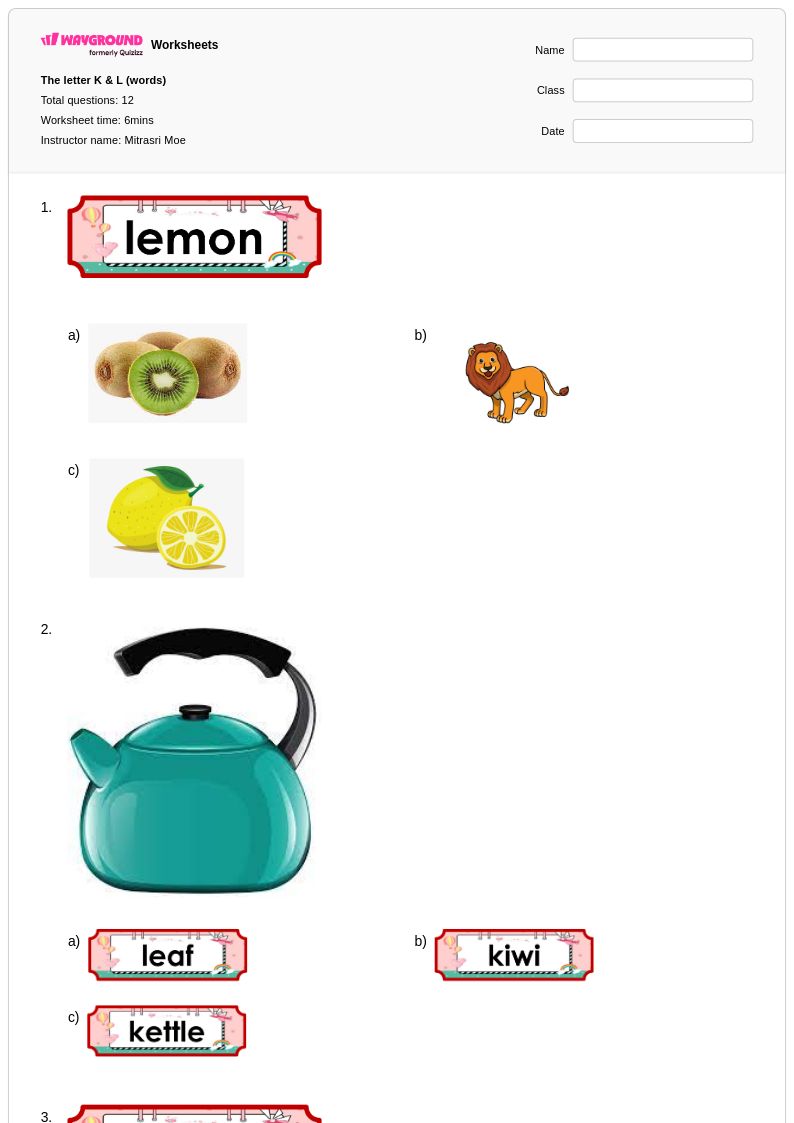
12 Q
KG - 3rd
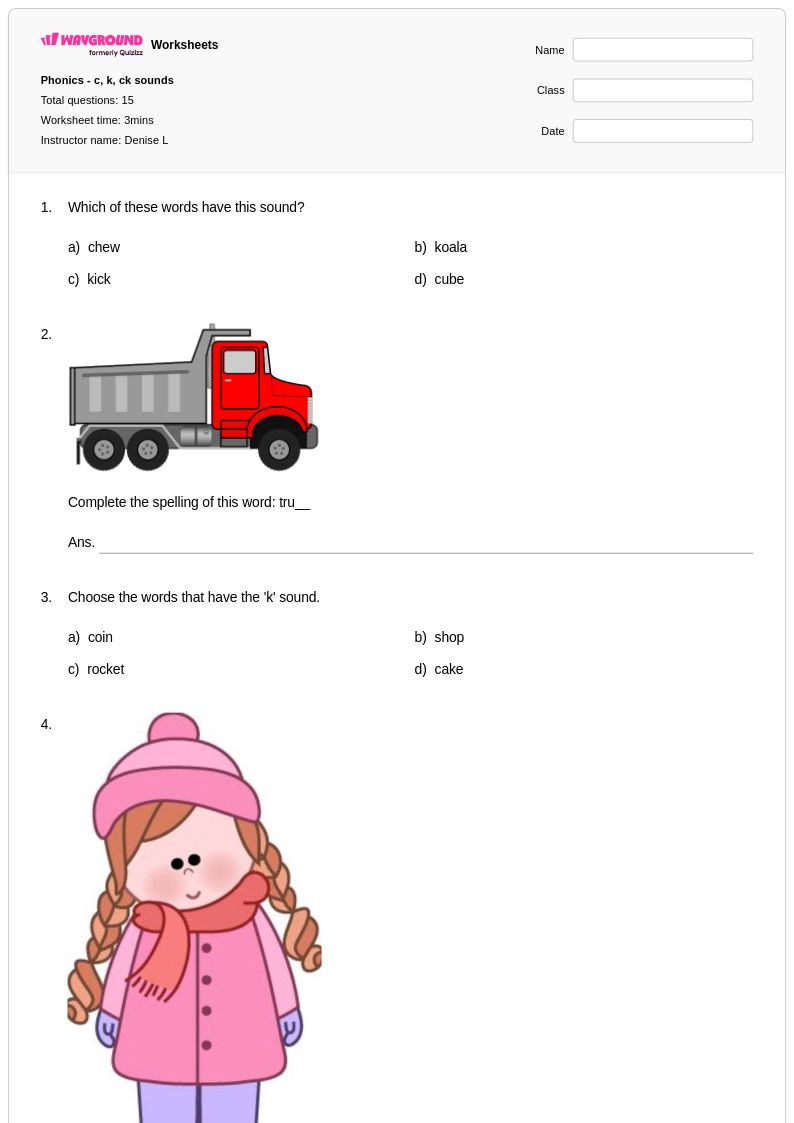
15 Q
KG - 2nd
19 Q
1st
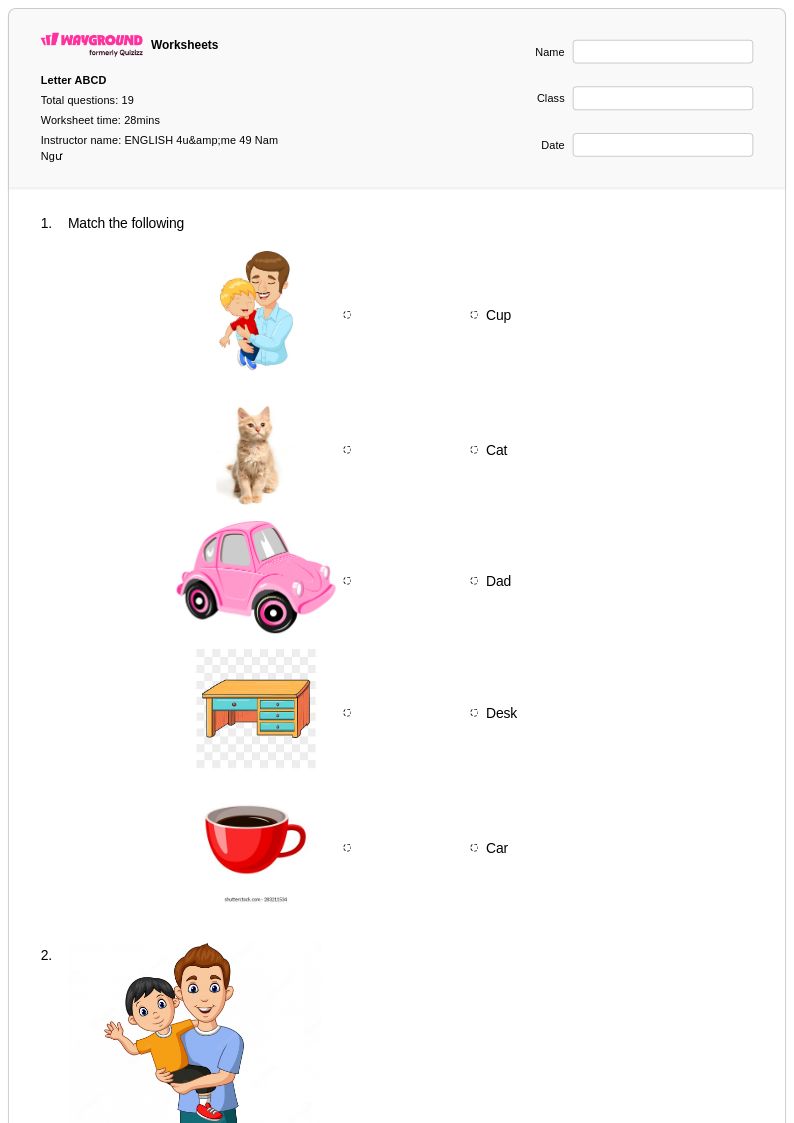
19 Q
1st
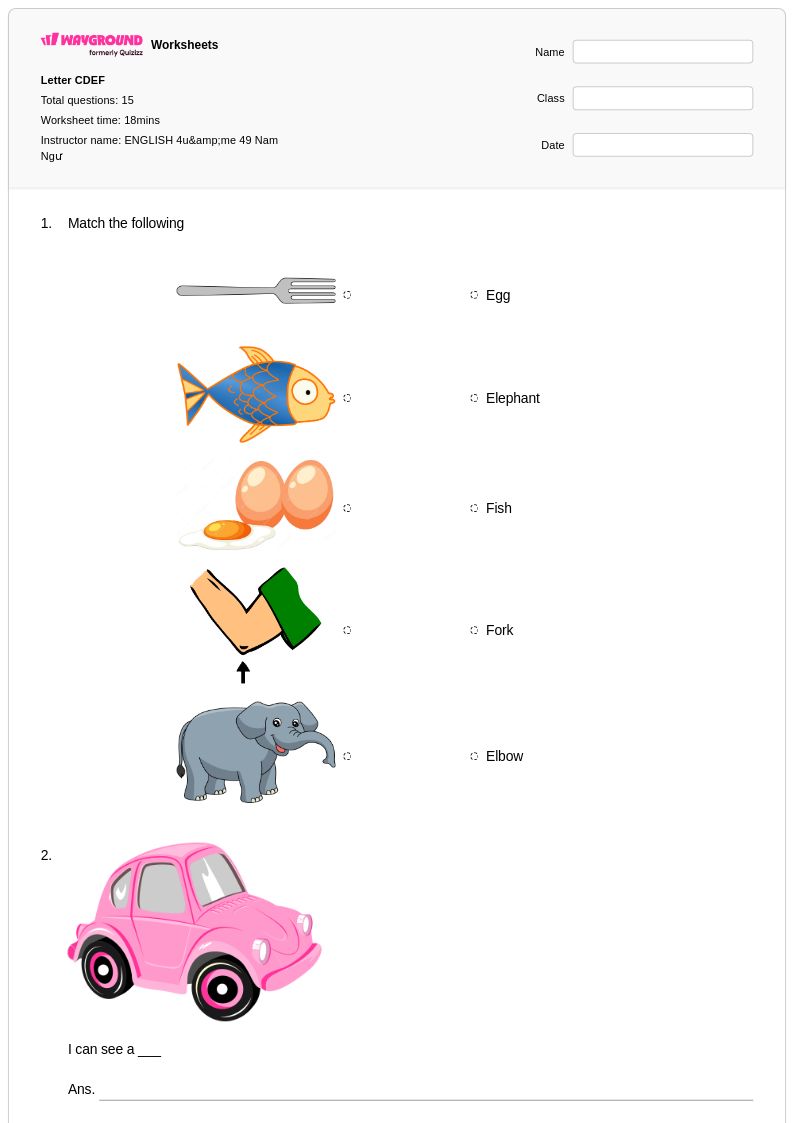
15 Q
1st
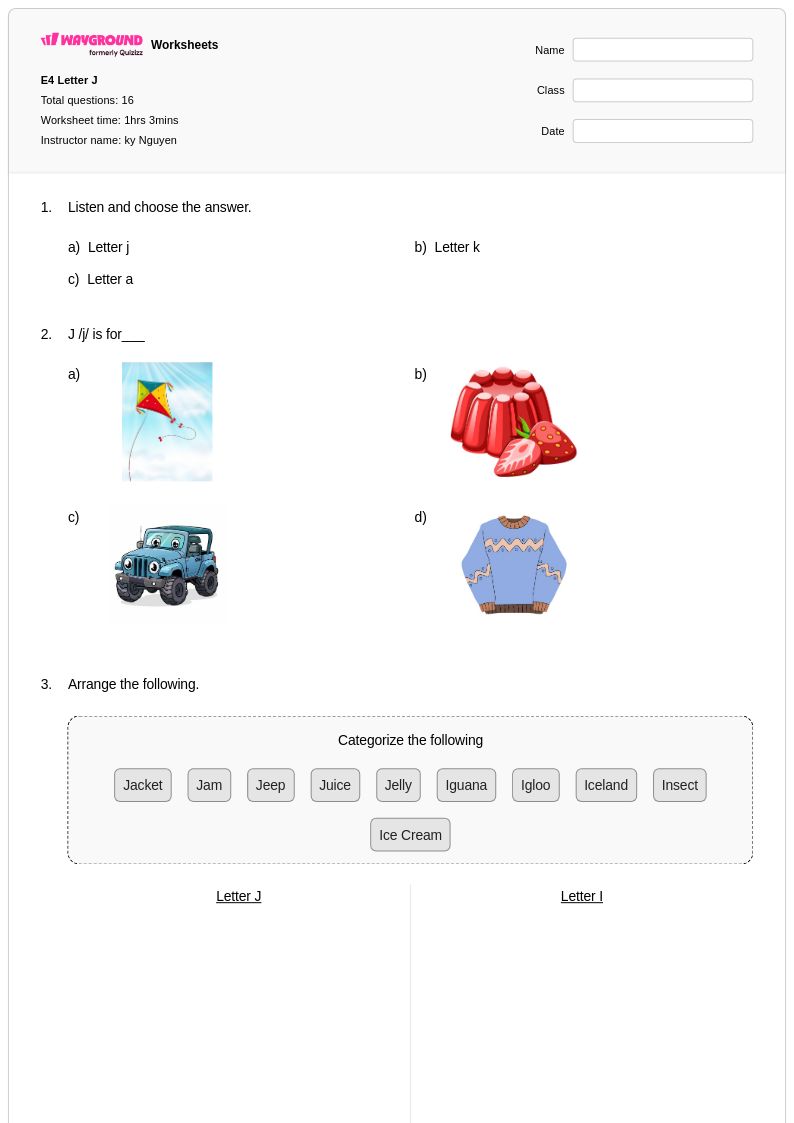
17 Q
1st
10 Q
5th
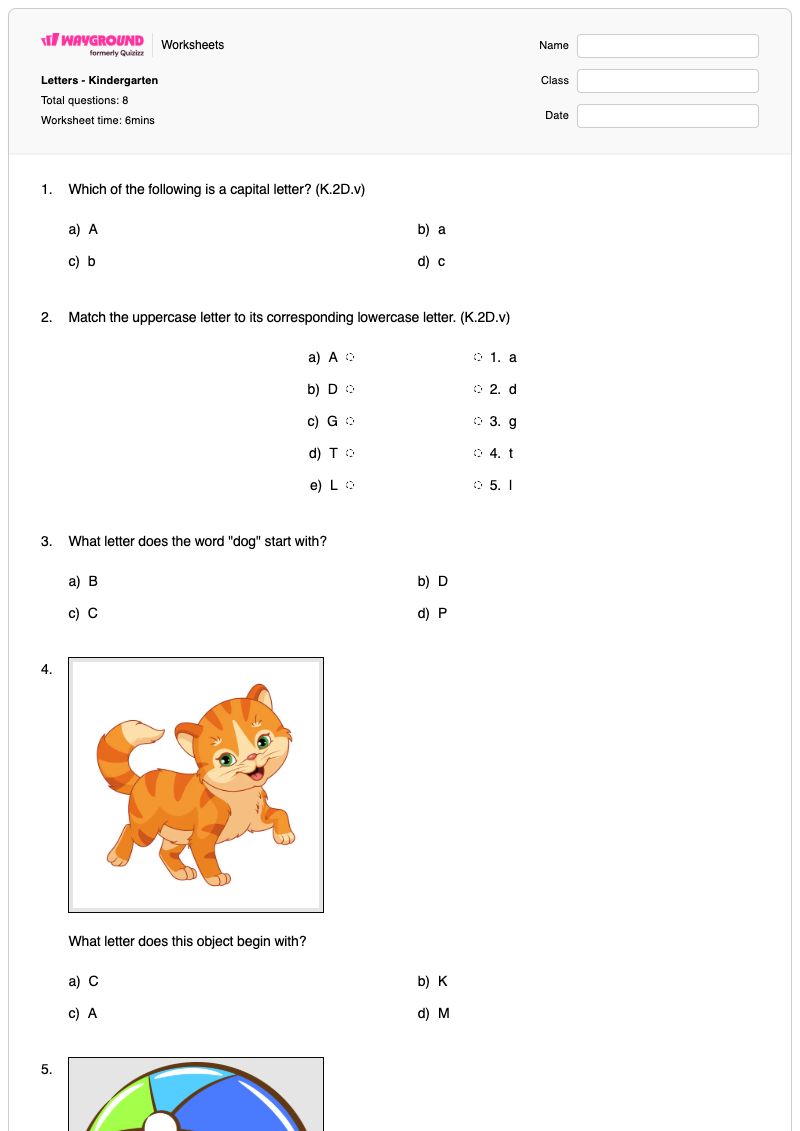
8 Q
KG
Explore Worksheets by Grade
Explore Worksheets by Subjects
Explore printable The Letter K worksheets
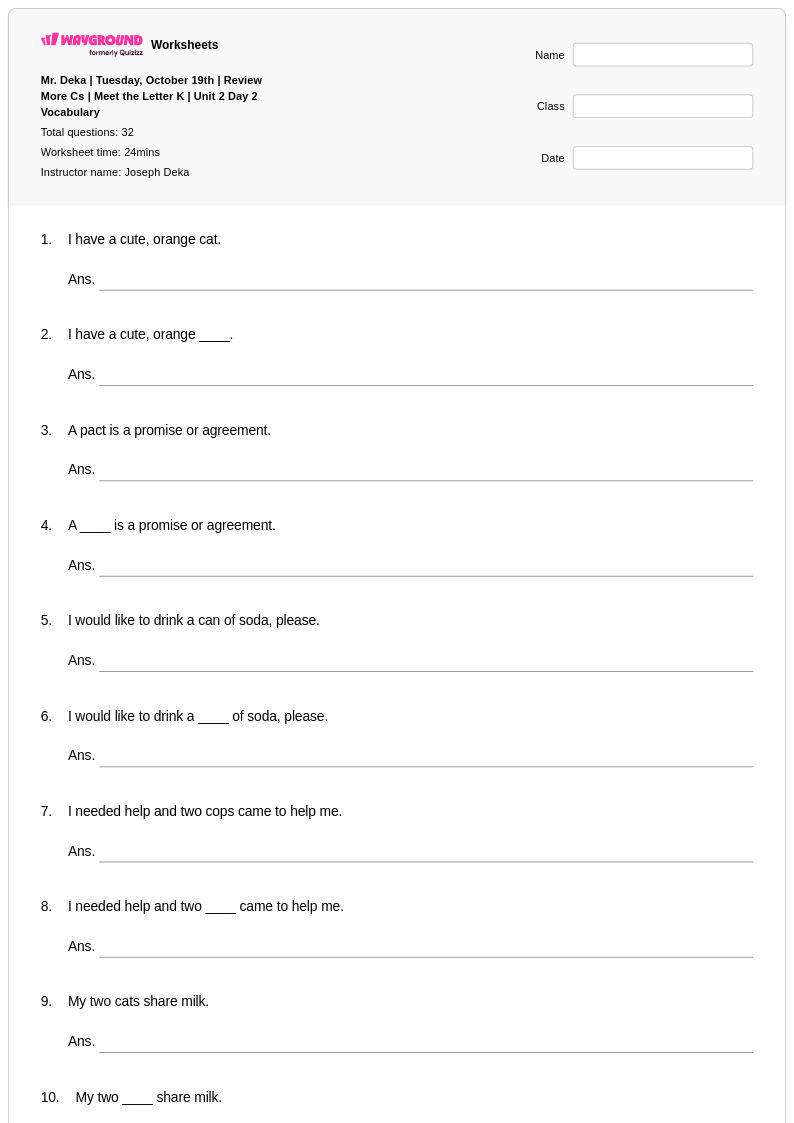
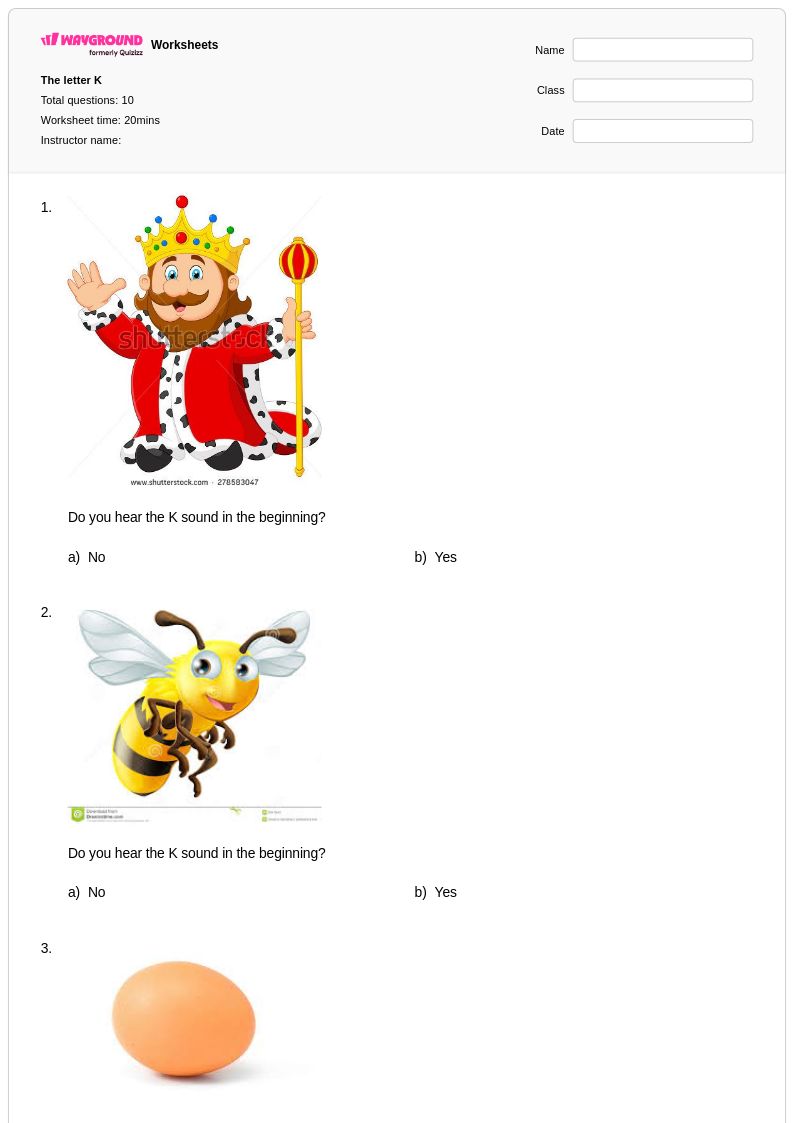
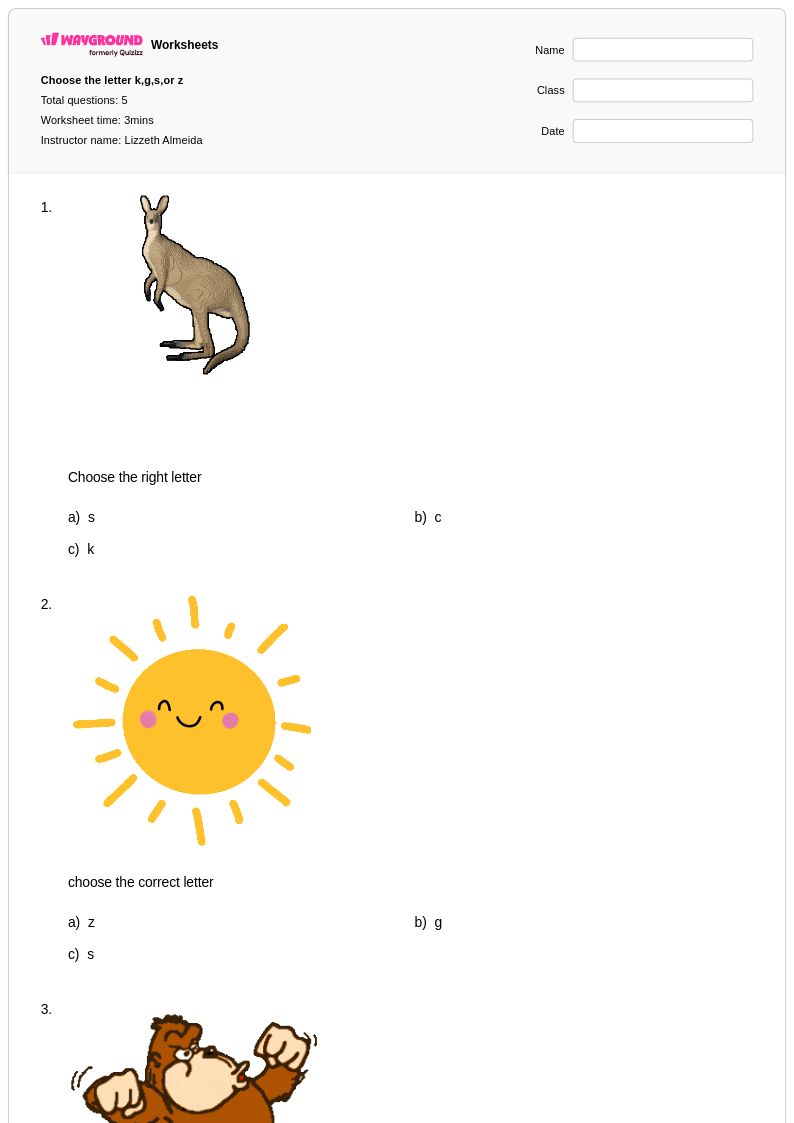
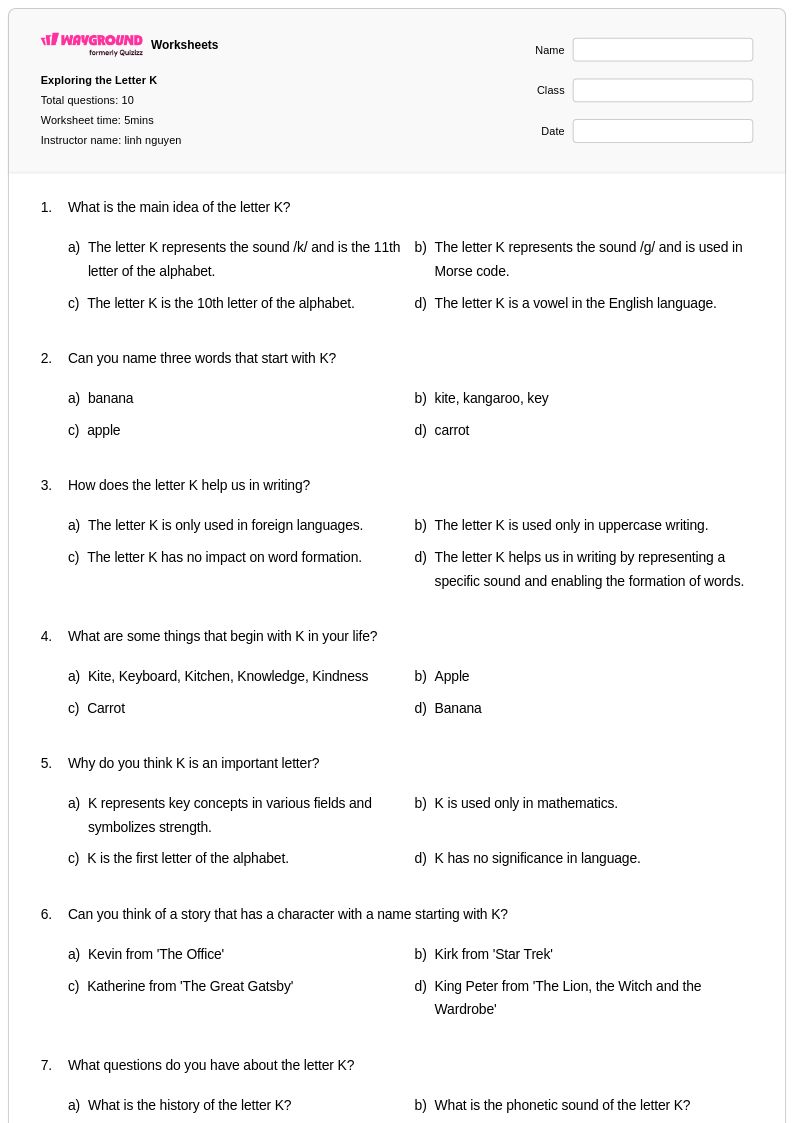
The Letter K worksheets available through Wayground (formerly Quizizz) provide comprehensive practice opportunities for students learning letter recognition, formation, and phonetic understanding. These educational resources focus on developing fundamental literacy skills through engaging activities that help students identify the letter K in both uppercase and lowercase forms, practice proper letter formation through tracing exercises, and connect the letter to its corresponding sound. The collection includes free printable worksheets with answer keys that cover essential concepts such as beginning letter sounds, letter discrimination activities, and vocabulary building with K-words like "kite," "king," and "kitchen." These practice problems are designed to strengthen fine motor skills, visual recognition abilities, and phonemic awareness through systematic repetition and varied exercise formats that make learning both effective and enjoyable.
Wayground (formerly Quizizz) supports educators with an extensive collection of teacher-created Letter K resources that simplify lesson planning and enhance instruction quality. The platform's millions of worksheets offer robust search and filtering capabilities that allow teachers to quickly locate materials aligned with specific learning standards and student needs. These differentiation tools enable instructors to customize content for various skill levels, providing targeted remediation for struggling learners while offering enrichment opportunities for advanced students. Available in both printable pdf format and digital versions, these worksheets facilitate flexible implementation across different classroom settings and learning environments. Teachers can efficiently organize skill practice sessions, track student progress, and adapt materials to support individual learning pathways while maintaining consistent focus on letter recognition and early literacy development.
FAQs
How do I teach the letter K to early learners?
What activities help students practice recognizing and writing the letter K?
What mistakes do students commonly make when learning the letter K?
How can I differentiate letter K practice for students at different skill levels?
How do I use Letter K worksheets from Wayground in my classroom?