
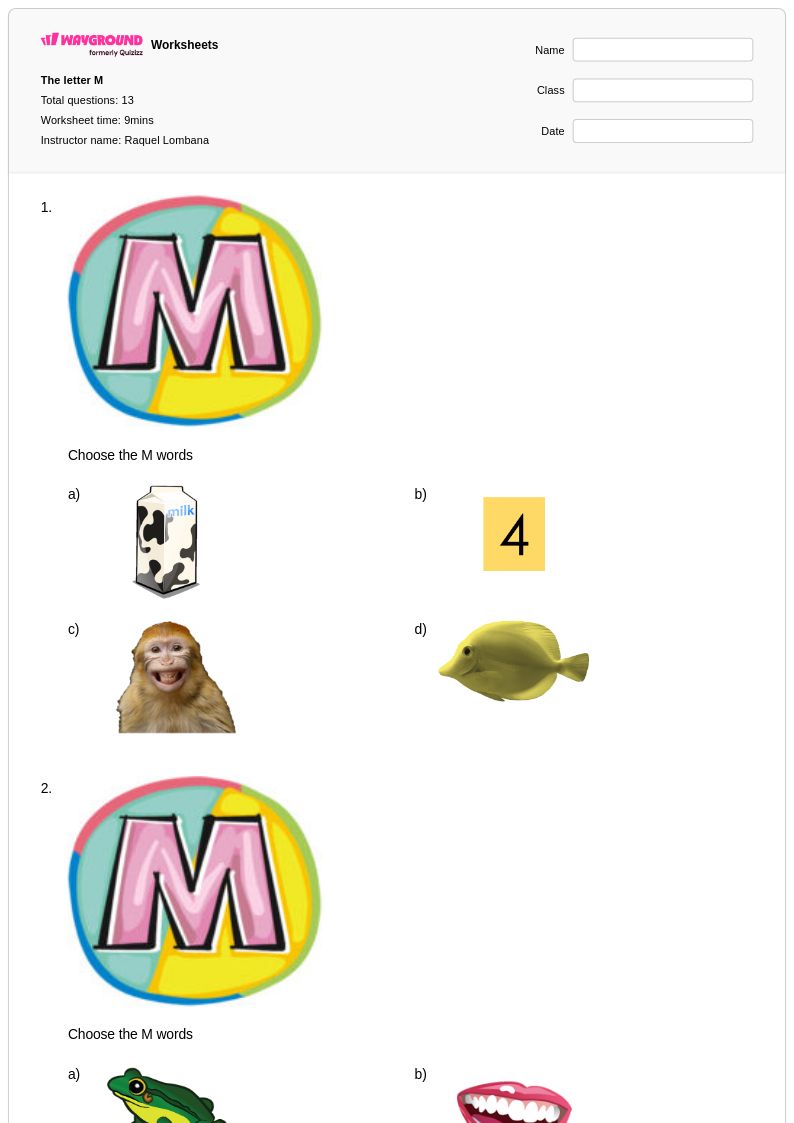
13 Q
1st
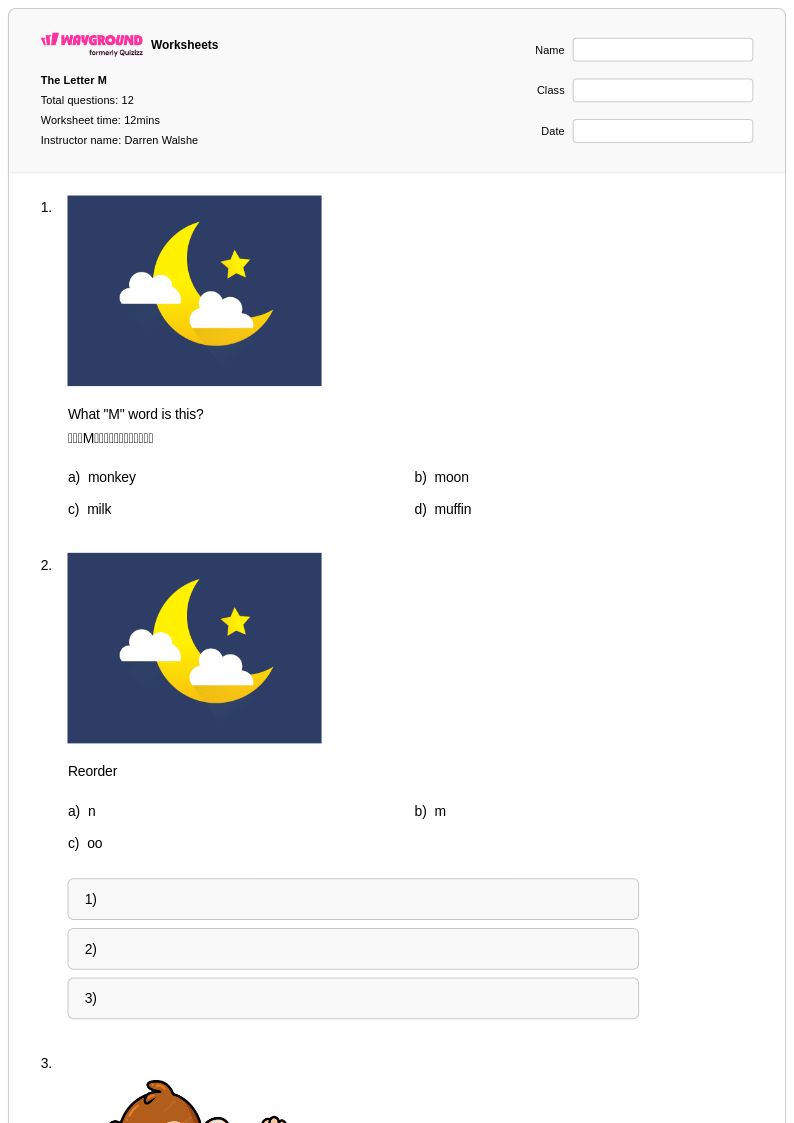
12 Q
KG
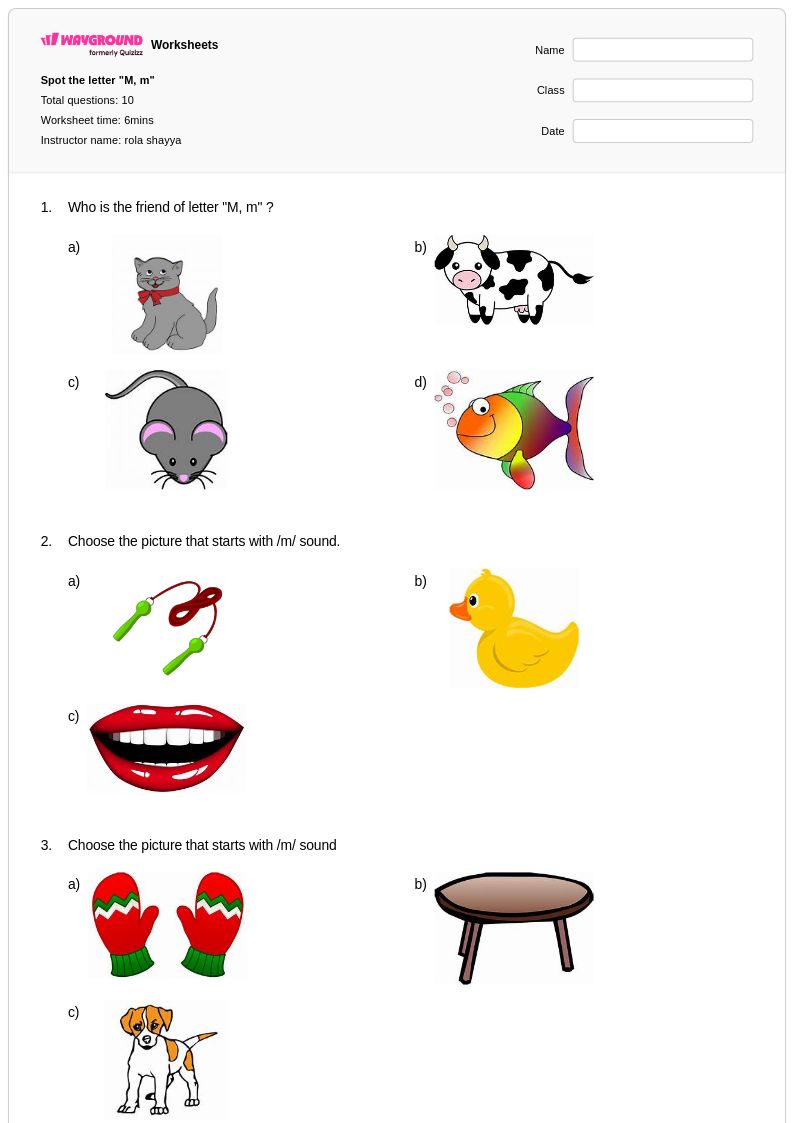
10 Q
KG
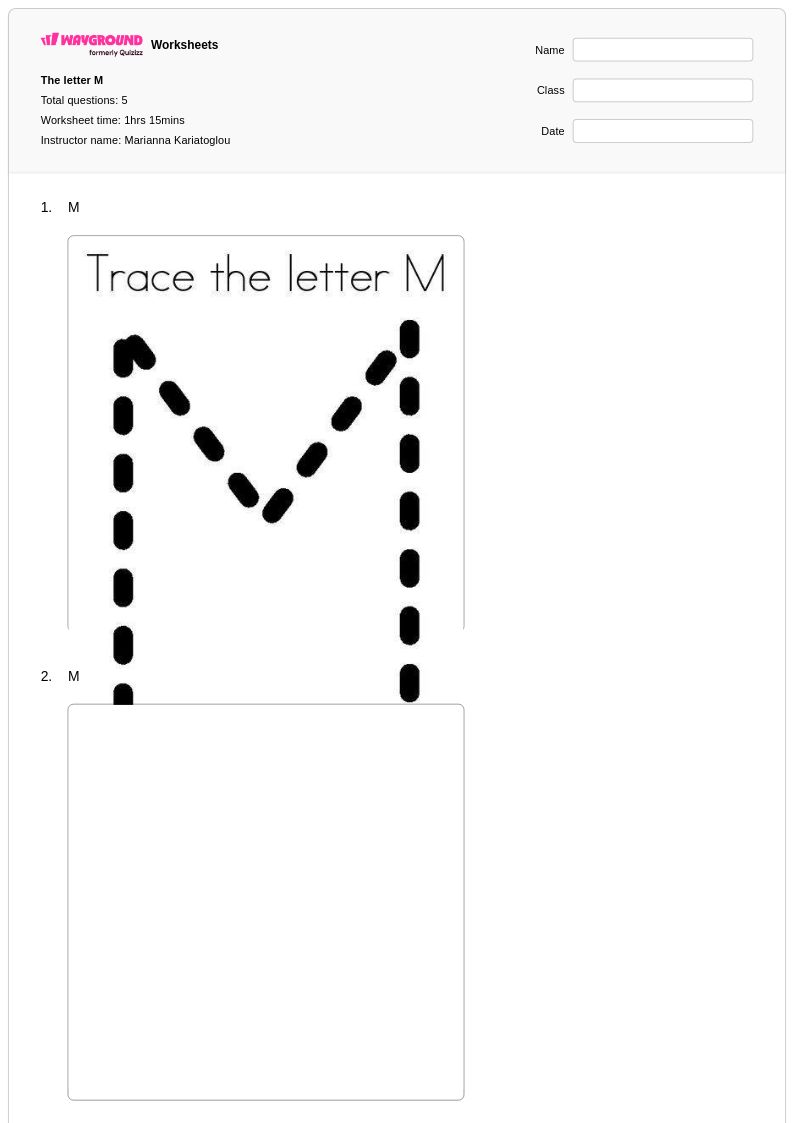
5 Q
KG - 1st
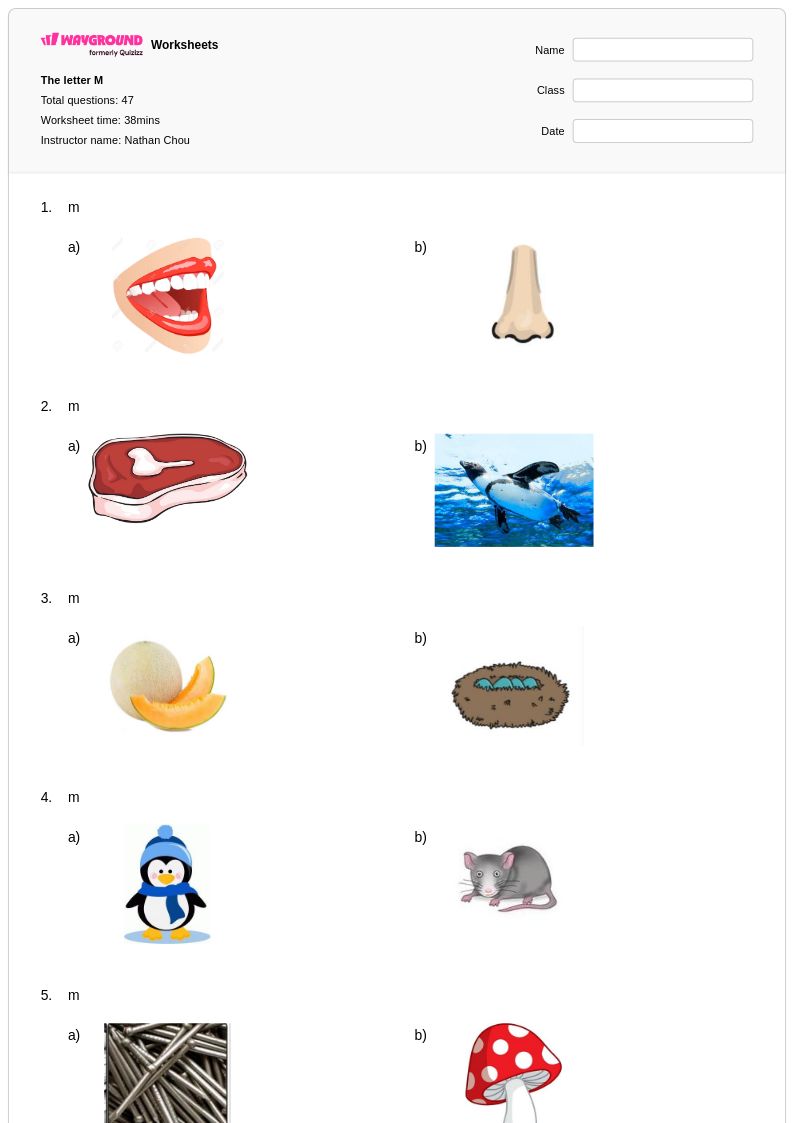
47 Q
1st
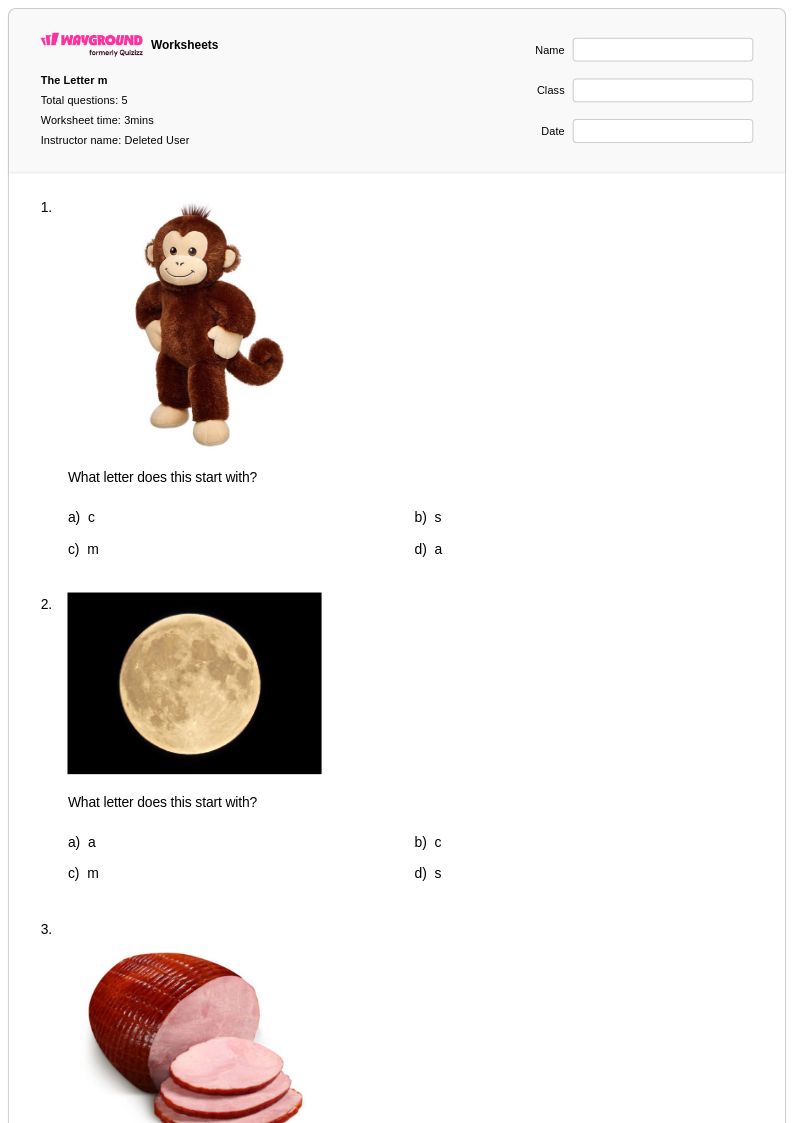
5 Q
KG - 1st
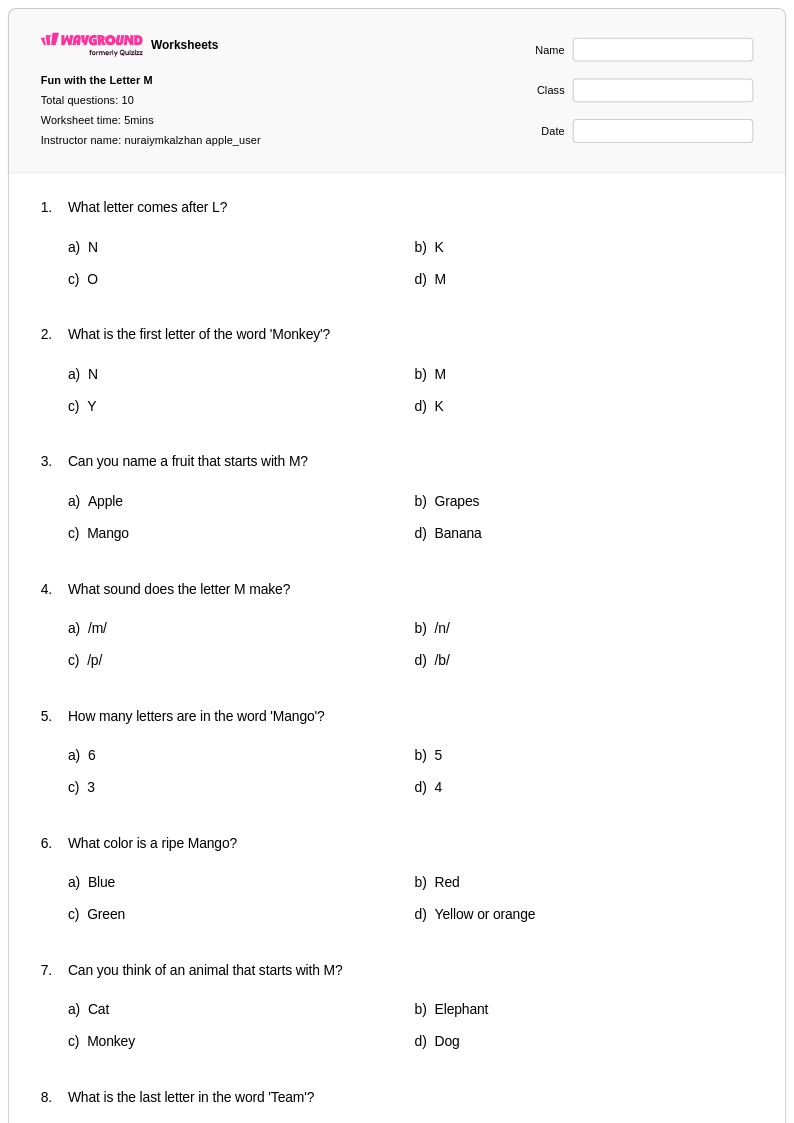
10 Q
1st
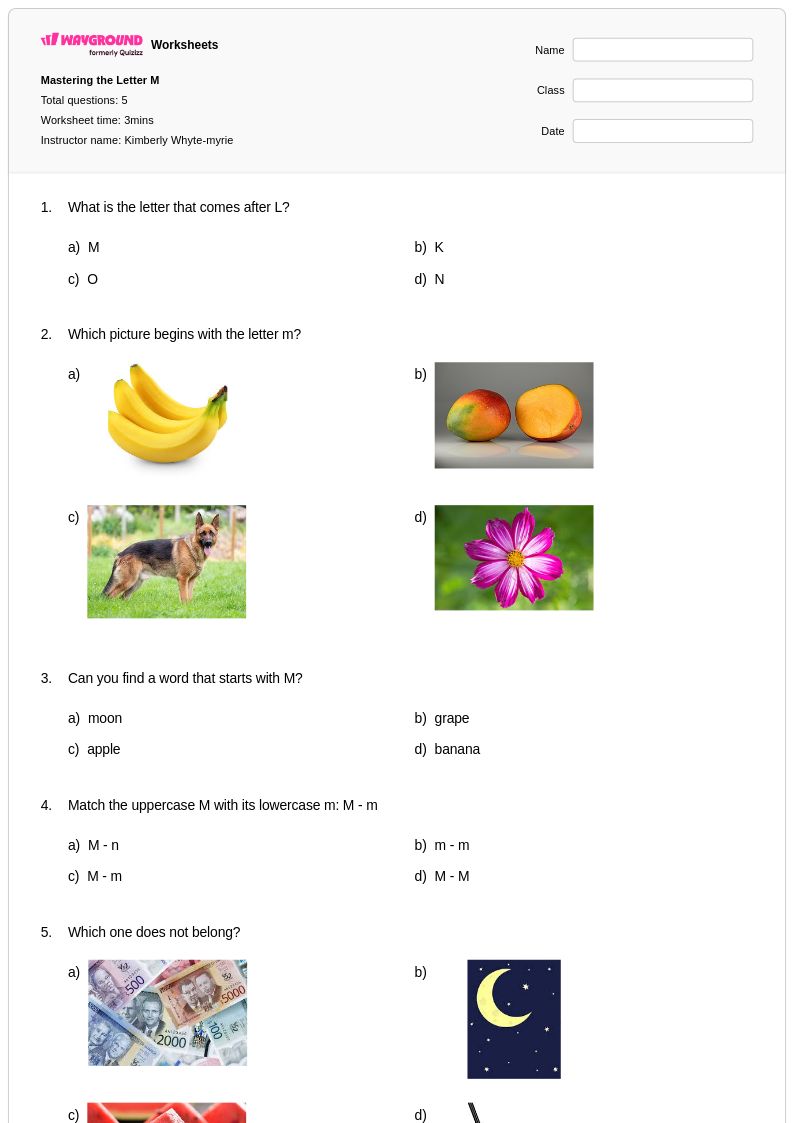
5 Q
KG
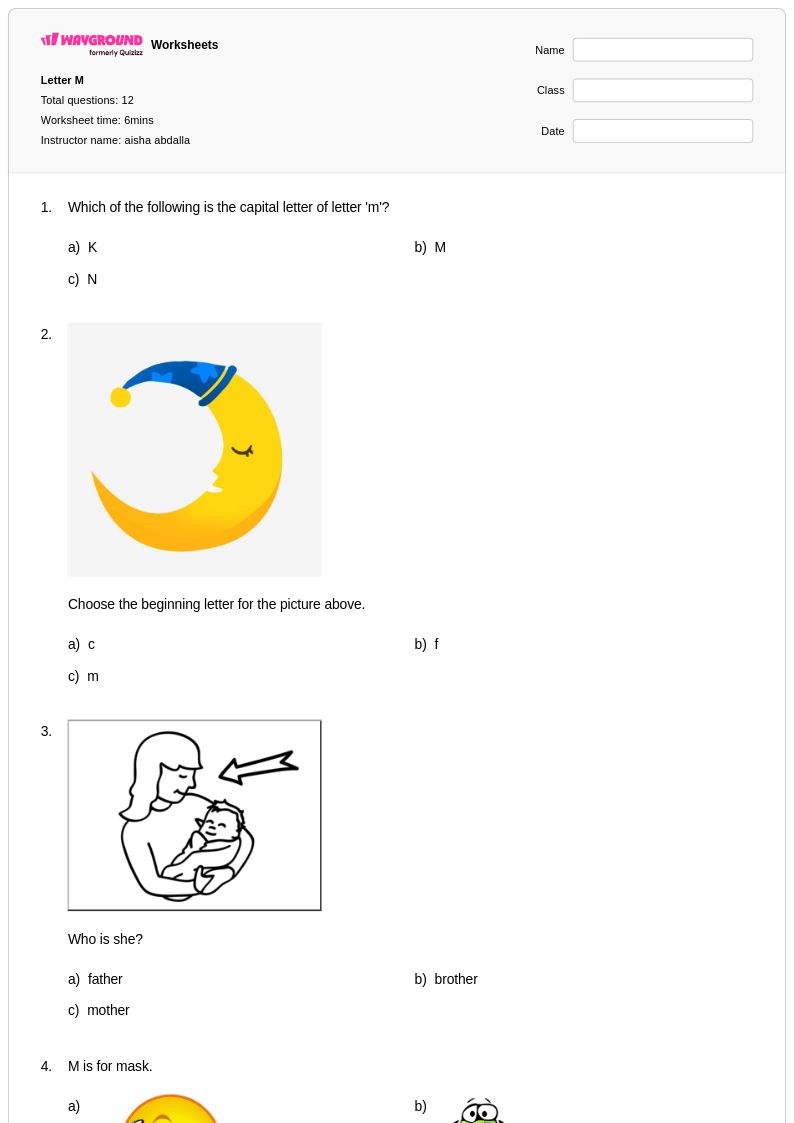
12 Q
2nd
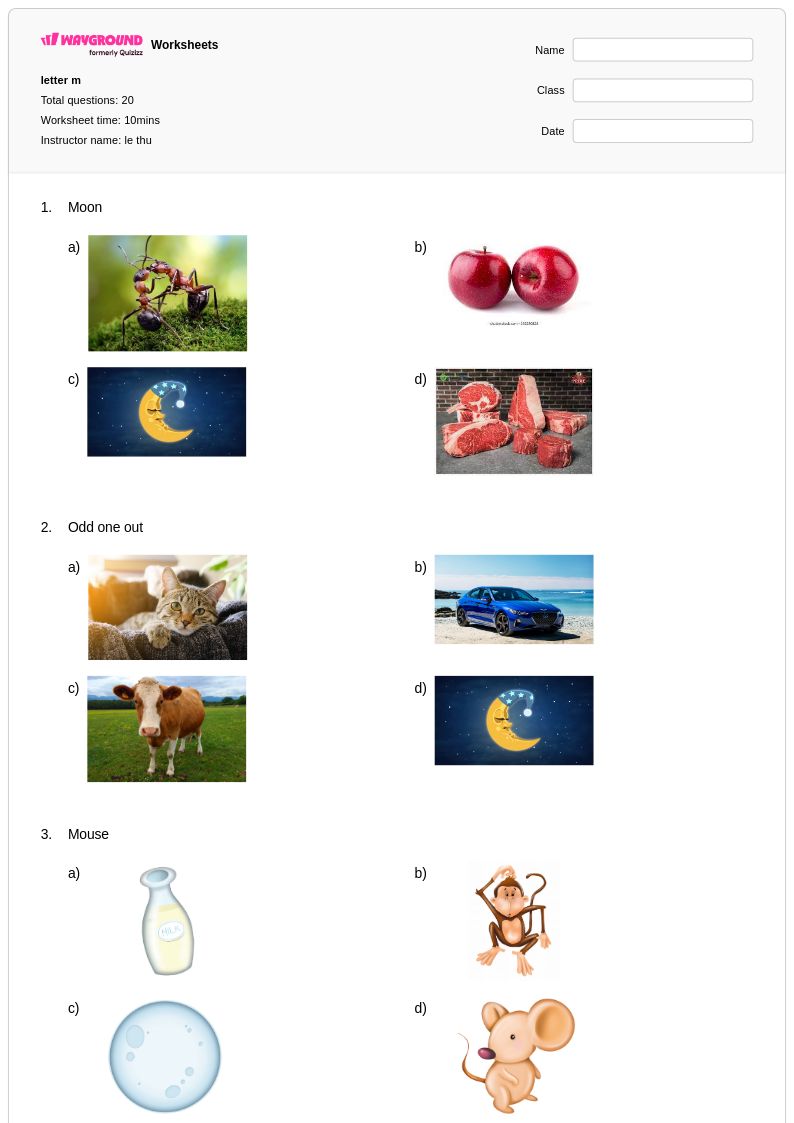
20 Q
1st
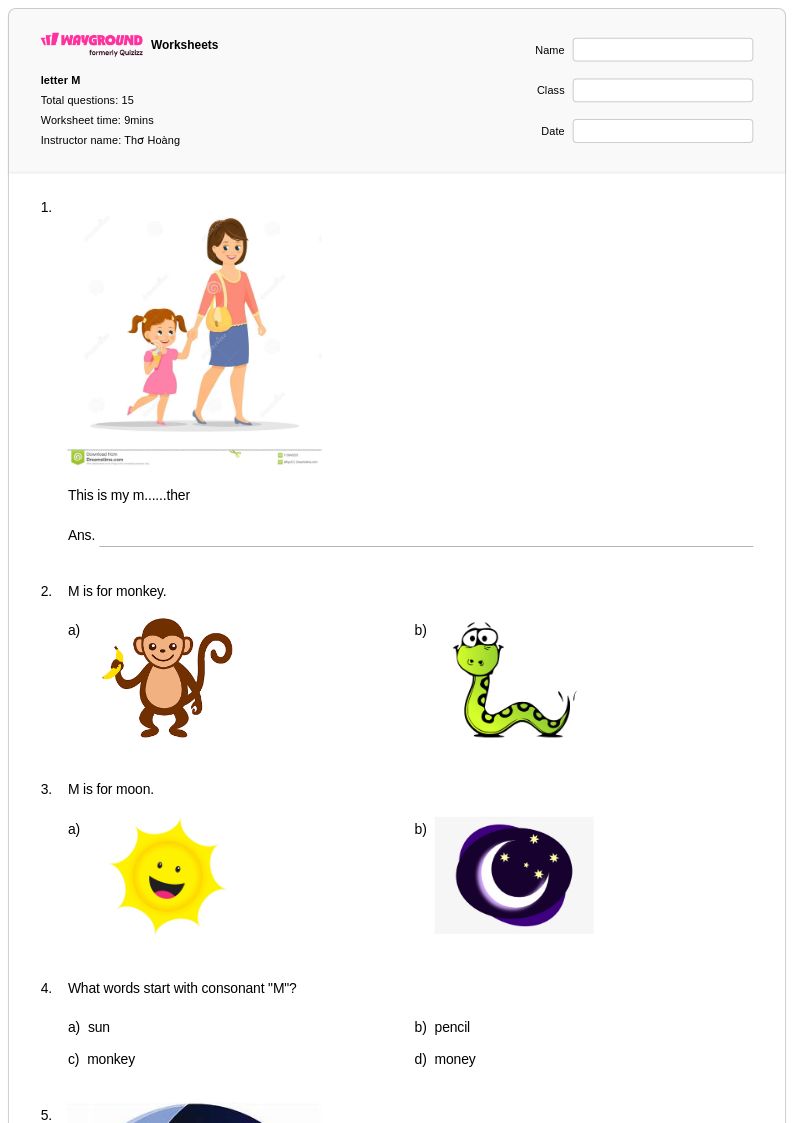
15 Q
2nd
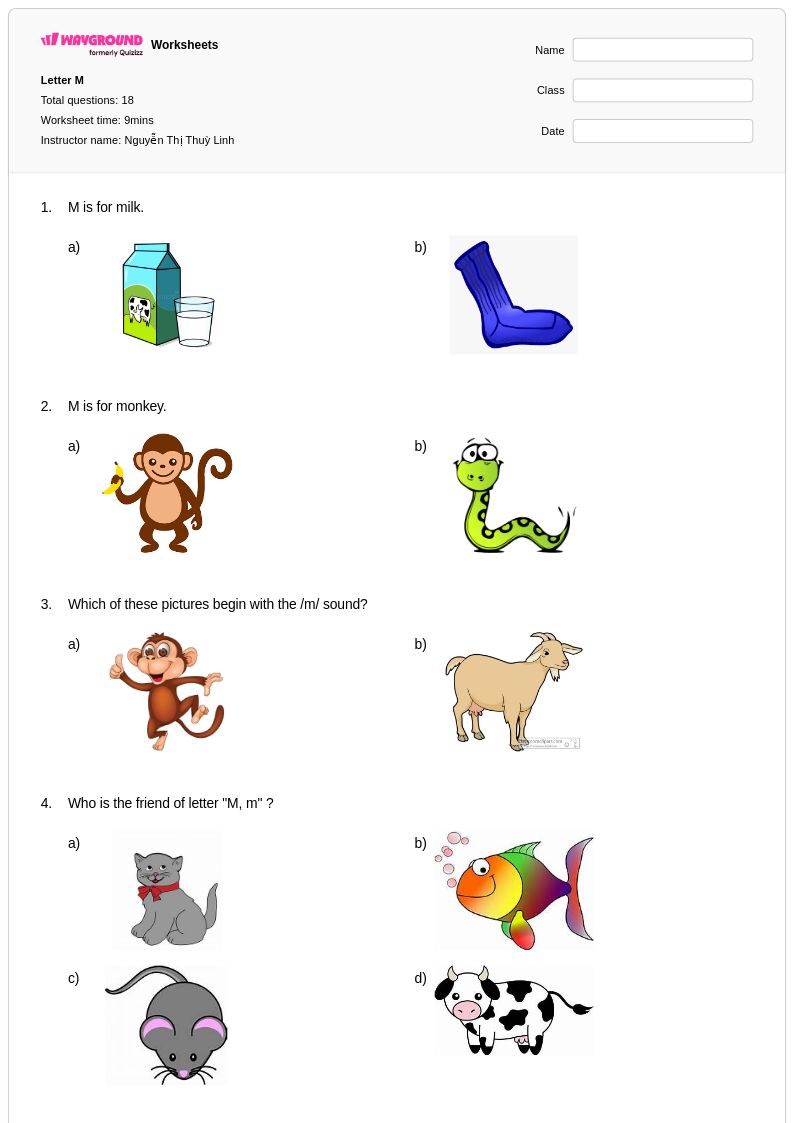
18 Q
KG
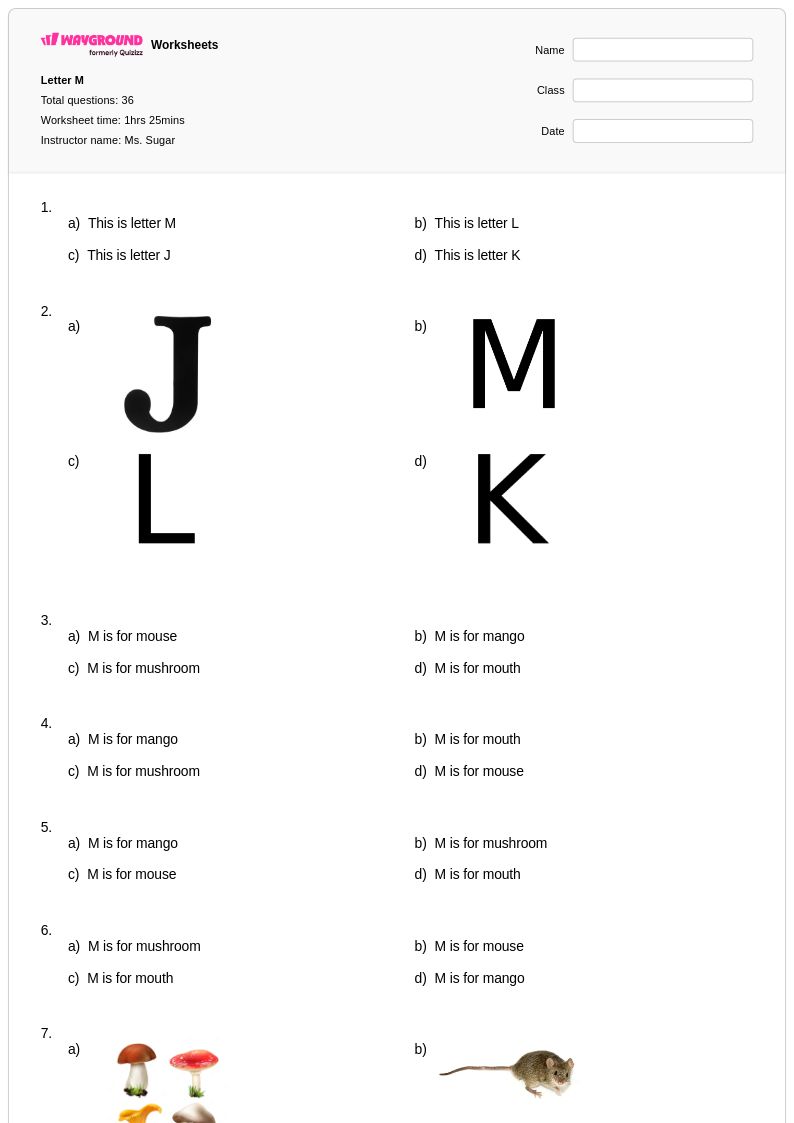
36 Q
1st - 2nd
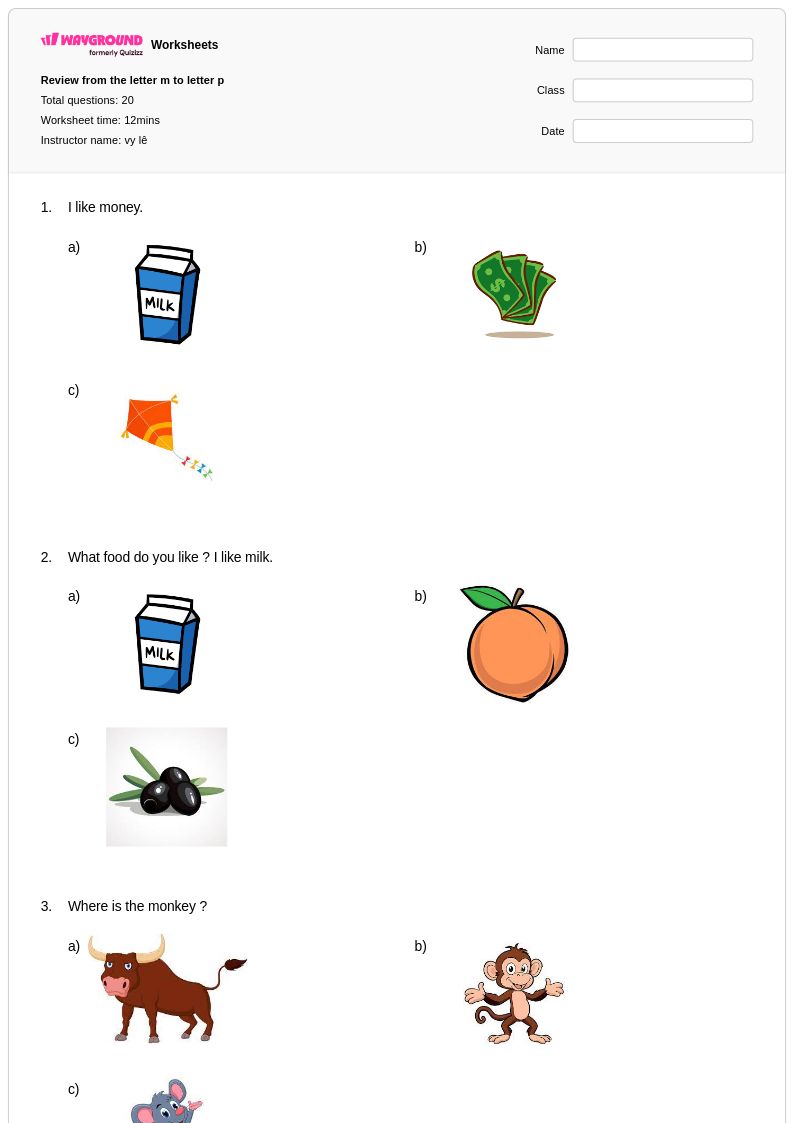
20 Q
1st
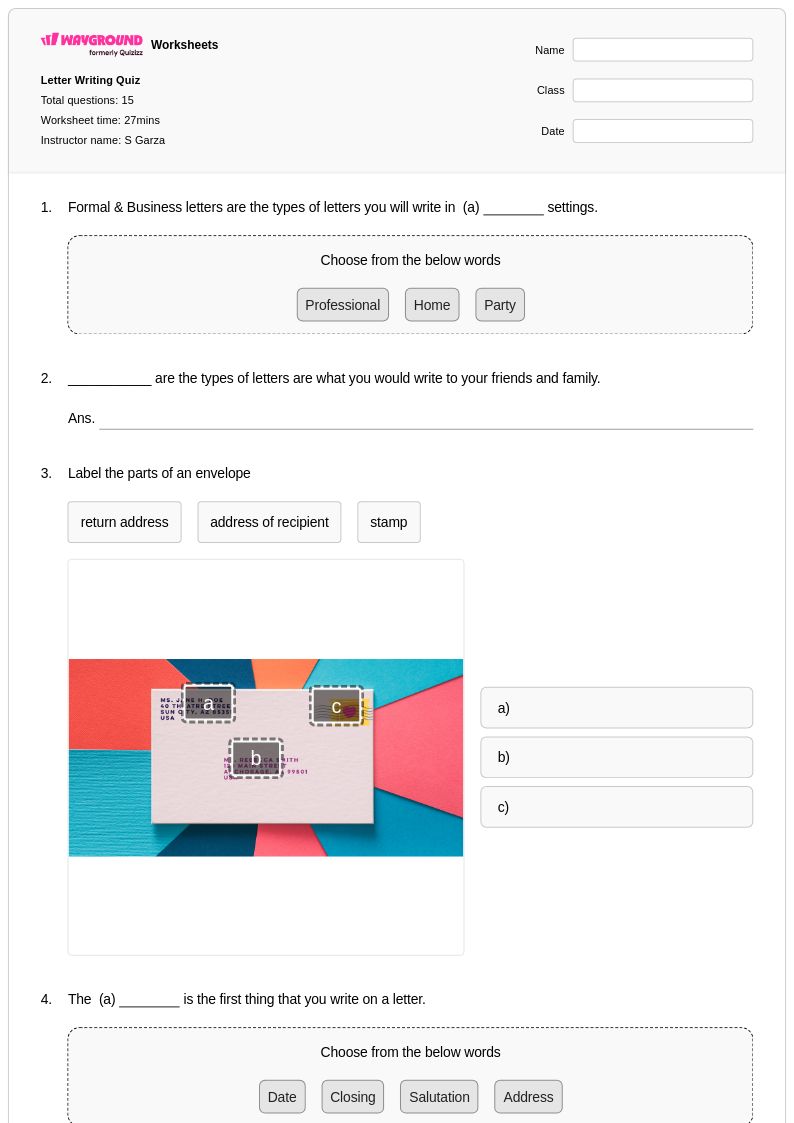
15 Q
10th
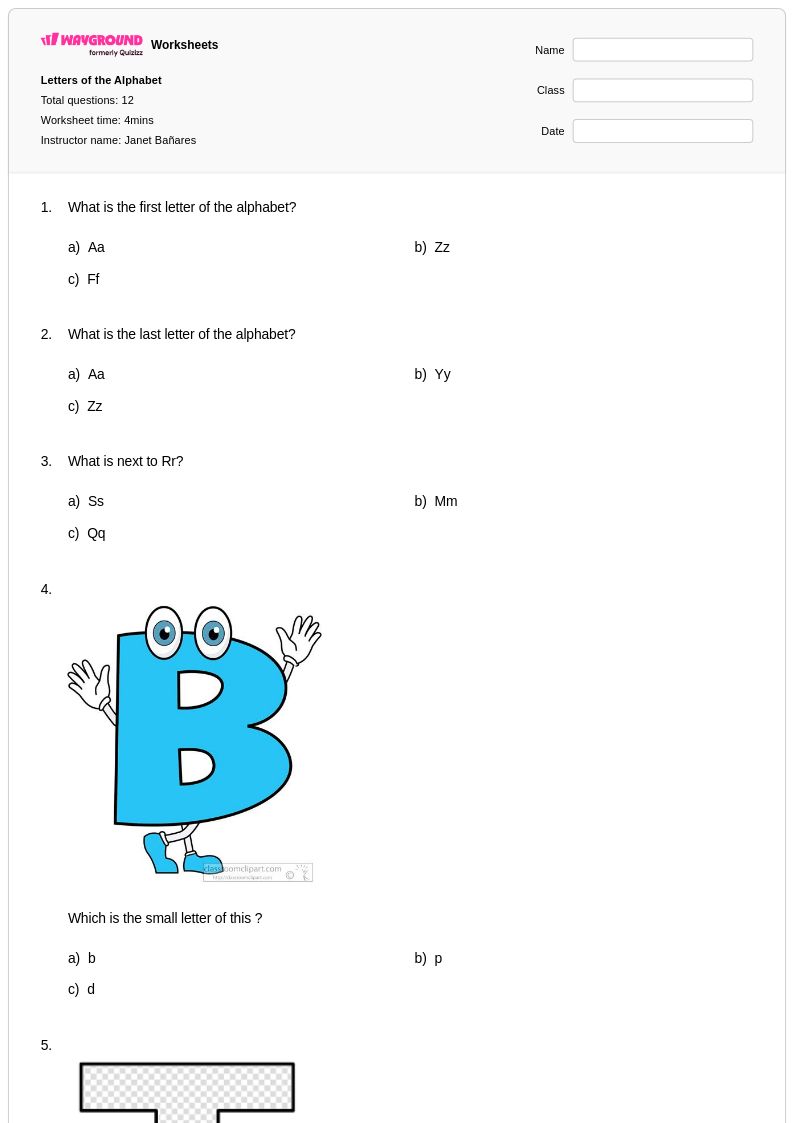
12 Q
KG
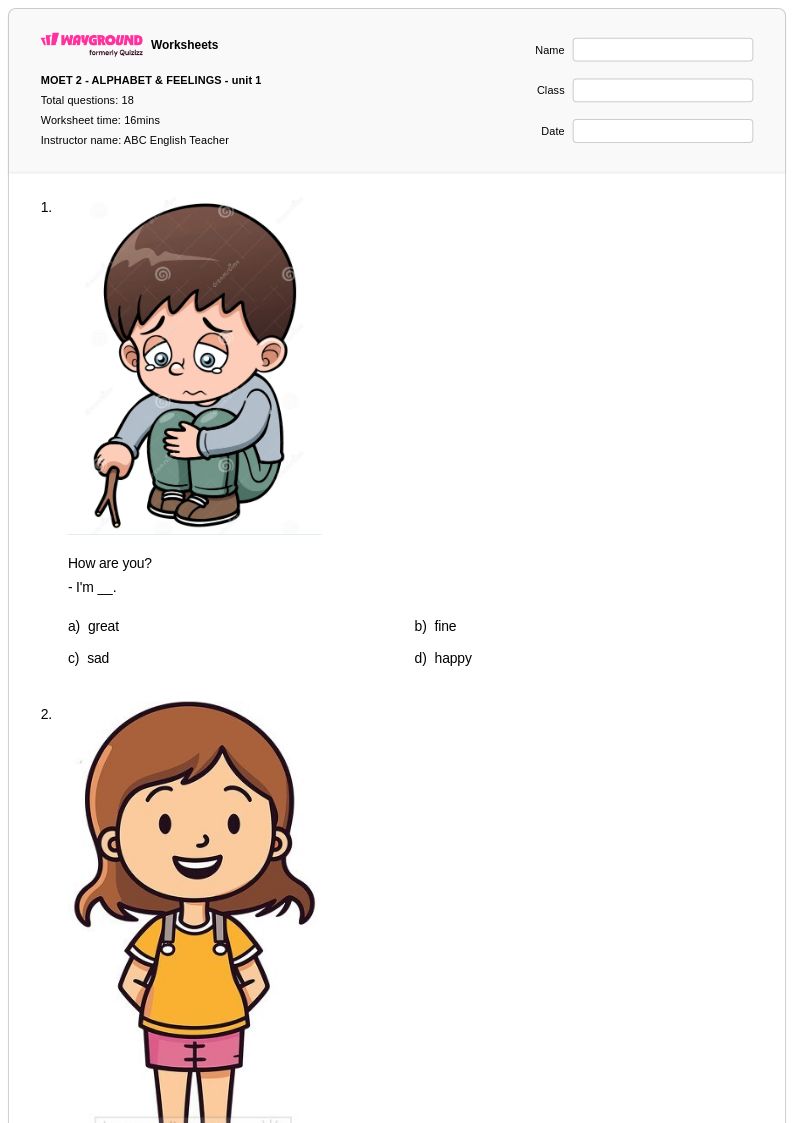
18 Q
2nd
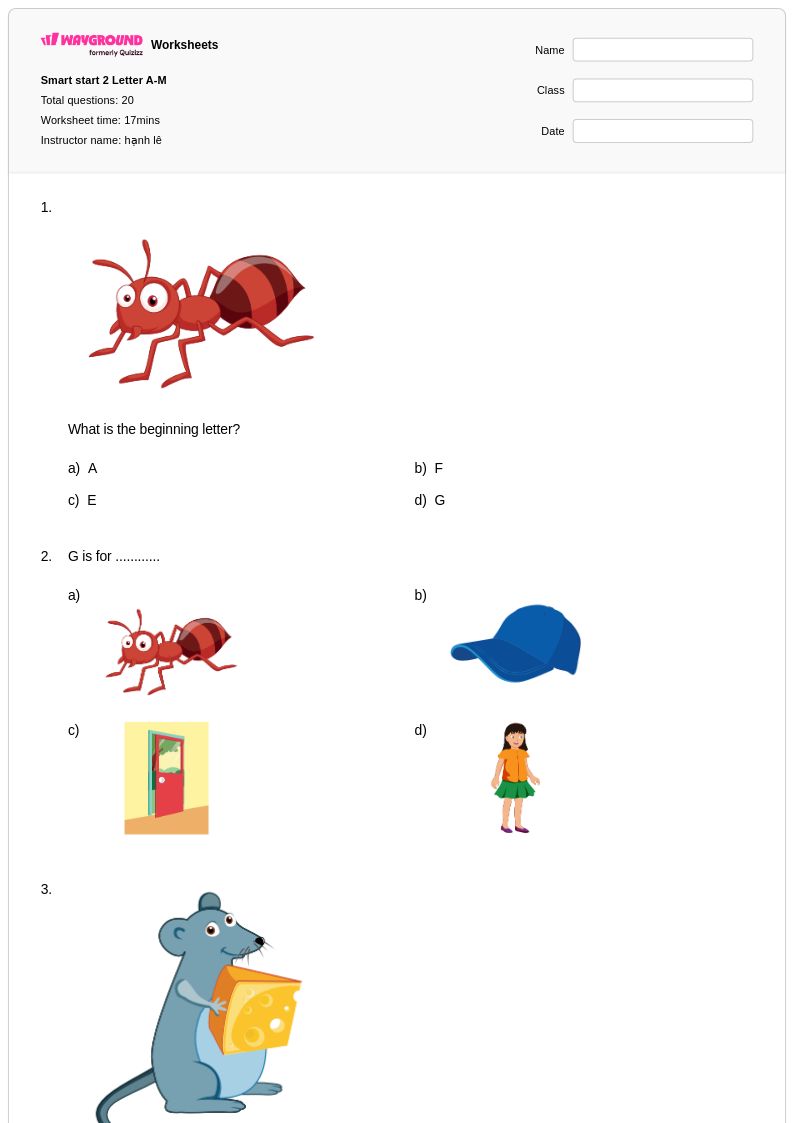
20 Q
2nd
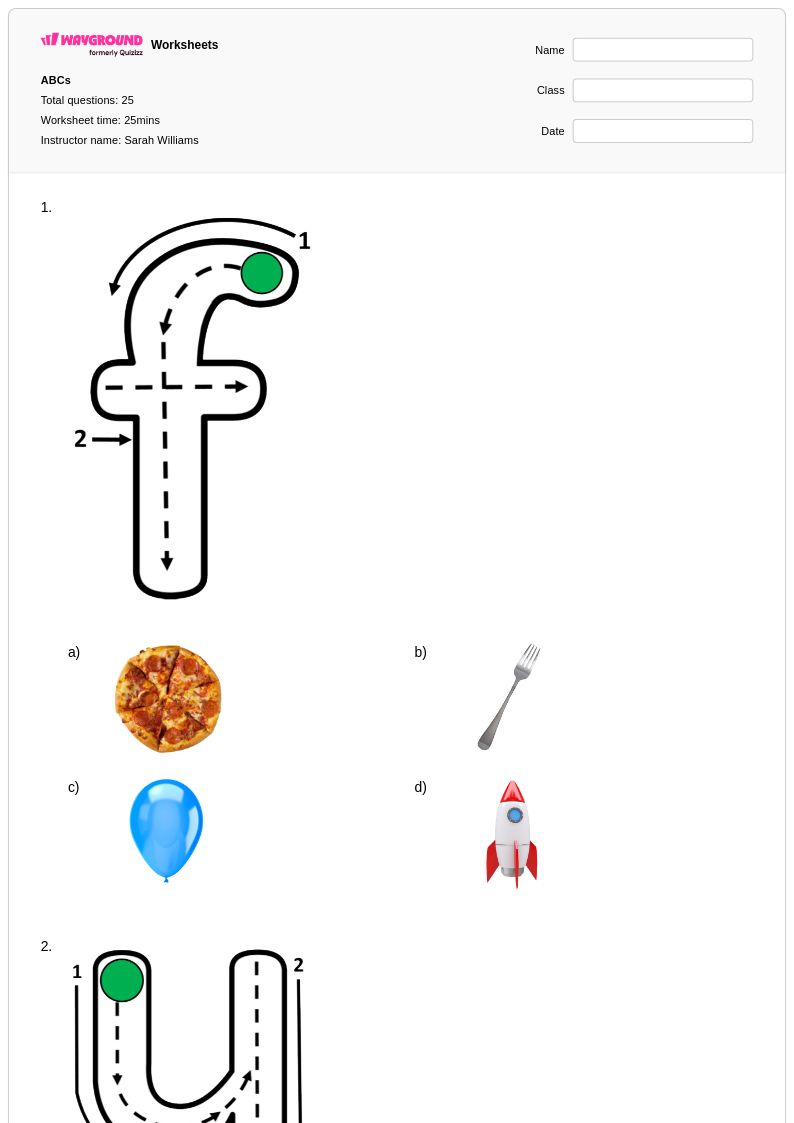
25 Q
KG - Uni

13 Q
1st
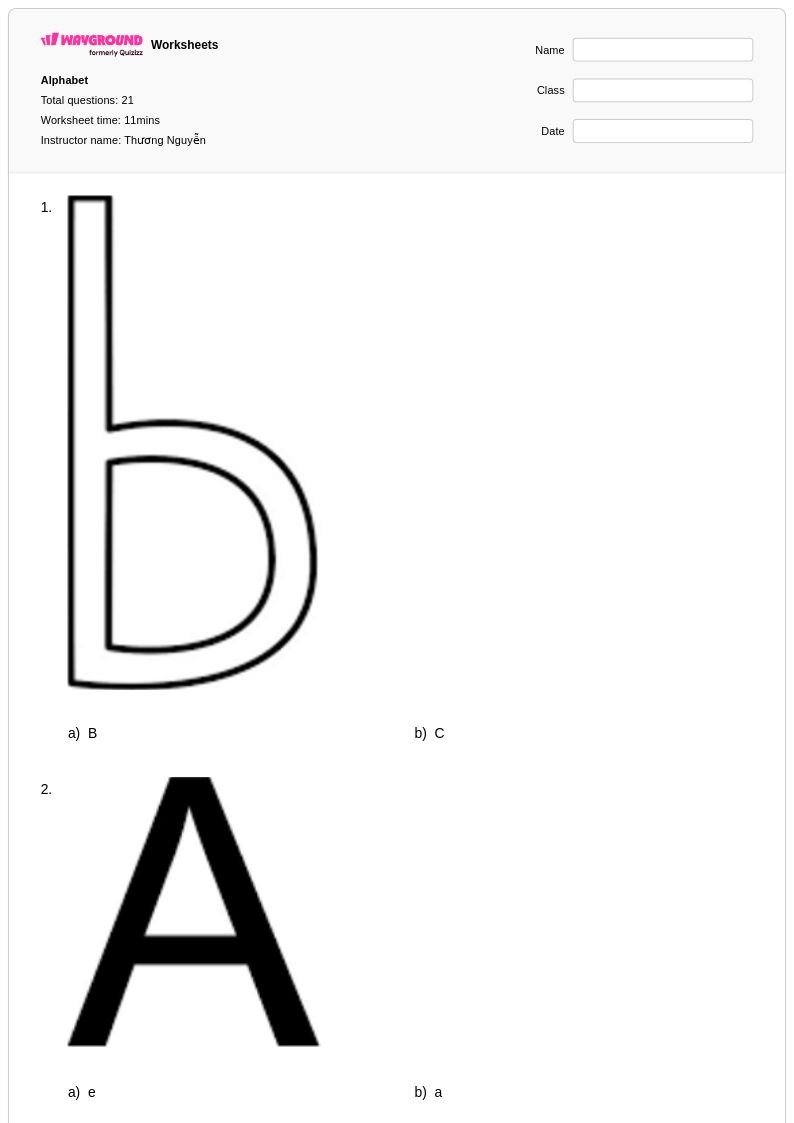
21 Q
3rd
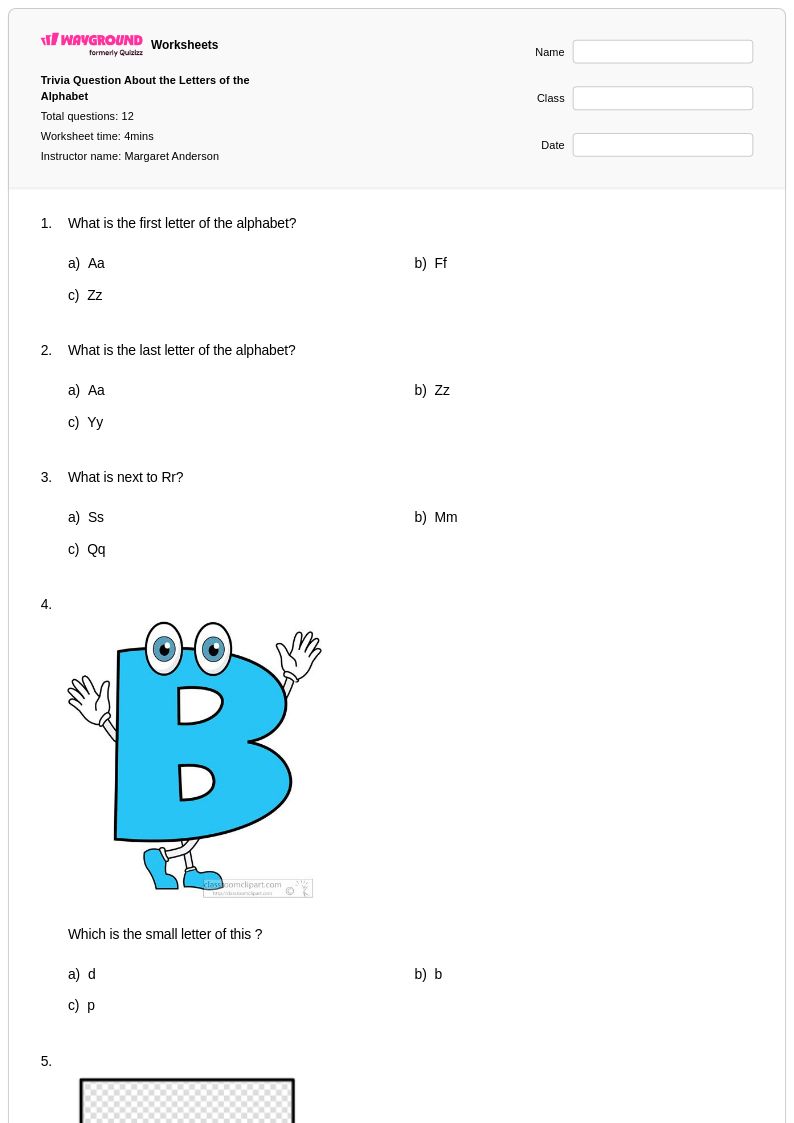
12 Q
KG
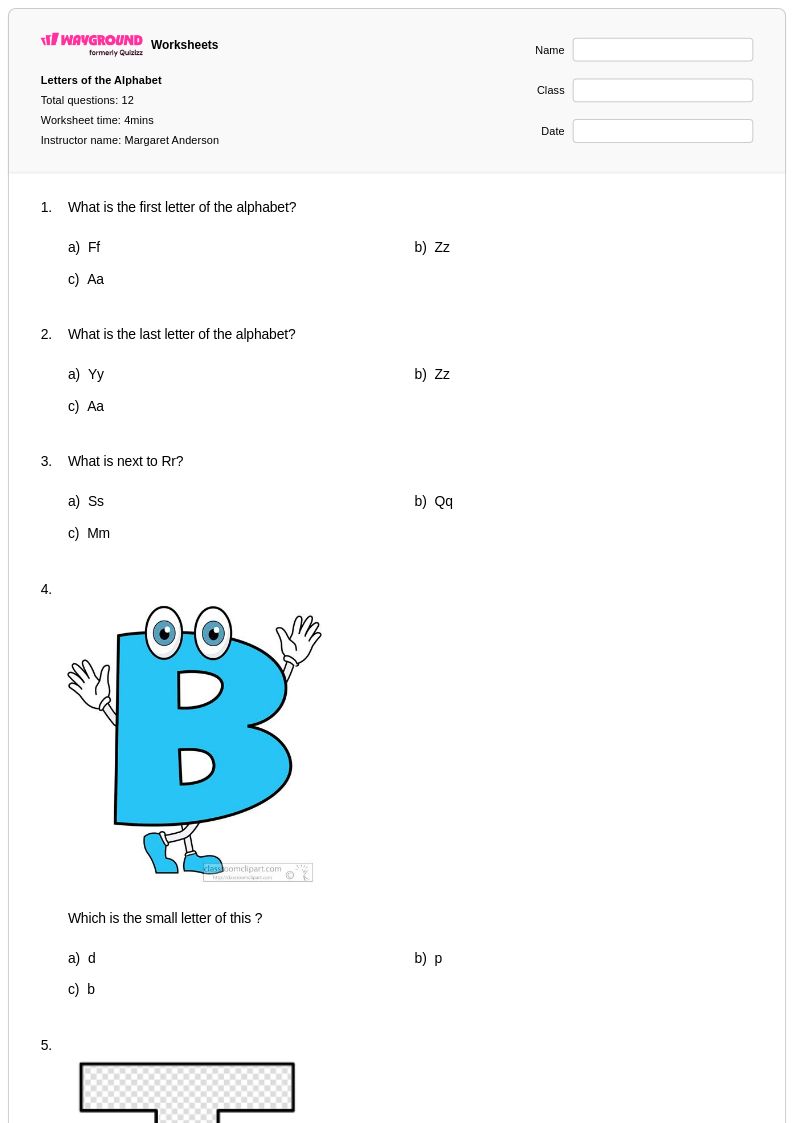
12 Q
KG
19 Q
1st
Explore Worksheets by Grade
Explore Worksheets by Subjects
Explore printable The Letter M worksheets
The Letter M worksheets available through Wayground (formerly Quizizz) provide comprehensive learning opportunities for students developing foundational literacy skills. These educational resources focus specifically on letter recognition, formation, and phonemic awareness for the letter M, helping young learners master both uppercase and lowercase letterforms through systematic practice. The worksheets strengthen essential pre-reading and early reading abilities including visual discrimination, fine motor control for proper letter formation, and phonological processing skills that connect the letter M to its corresponding sound. Teachers can access complete answer keys alongside these free printables, ensuring efficient grading and immediate feedback opportunities that support student progress in alphabet mastery and early literacy development.
Wayground (formerly Quizizz) empowers educators with an extensive collection of teacher-created Letter M resources, drawing from millions of high-quality materials that undergo continuous refinement through classroom implementation. The platform's robust search and filtering capabilities allow teachers to quickly locate worksheets that align with specific learning standards and student developmental needs, while built-in differentiation tools enable seamless customization for diverse learner requirements. These Letter M worksheet collections are available in both printable pdf formats and interactive digital versions, providing instructional flexibility that supports varied classroom environments and learning preferences. Whether used for initial skill introduction, targeted remediation, enrichment activities, or regular practice sessions, these resources streamline lesson planning while ensuring students receive consistent, engaging opportunities to develop alphabet knowledge and phonemic awareness through structured, research-based activities.
FAQs
How do I teach the letter M to early learners?
What exercises help students practice letter M recognition and formation?
What mistakes do students commonly make when learning the letter M?
How can I differentiate letter M practice for students at different skill levels?
How do I use Wayground's letter M worksheets in my classroom?