Free Printable Tone and Mood Worksheets for Class 10
Enhance Class 10 students' understanding of tone and mood with Wayground's comprehensive collection of free worksheets, printables, and practice problems featuring detailed answer keys to master these essential reading comprehension strategies.
Explore printable Tone and Mood worksheets for Class 10
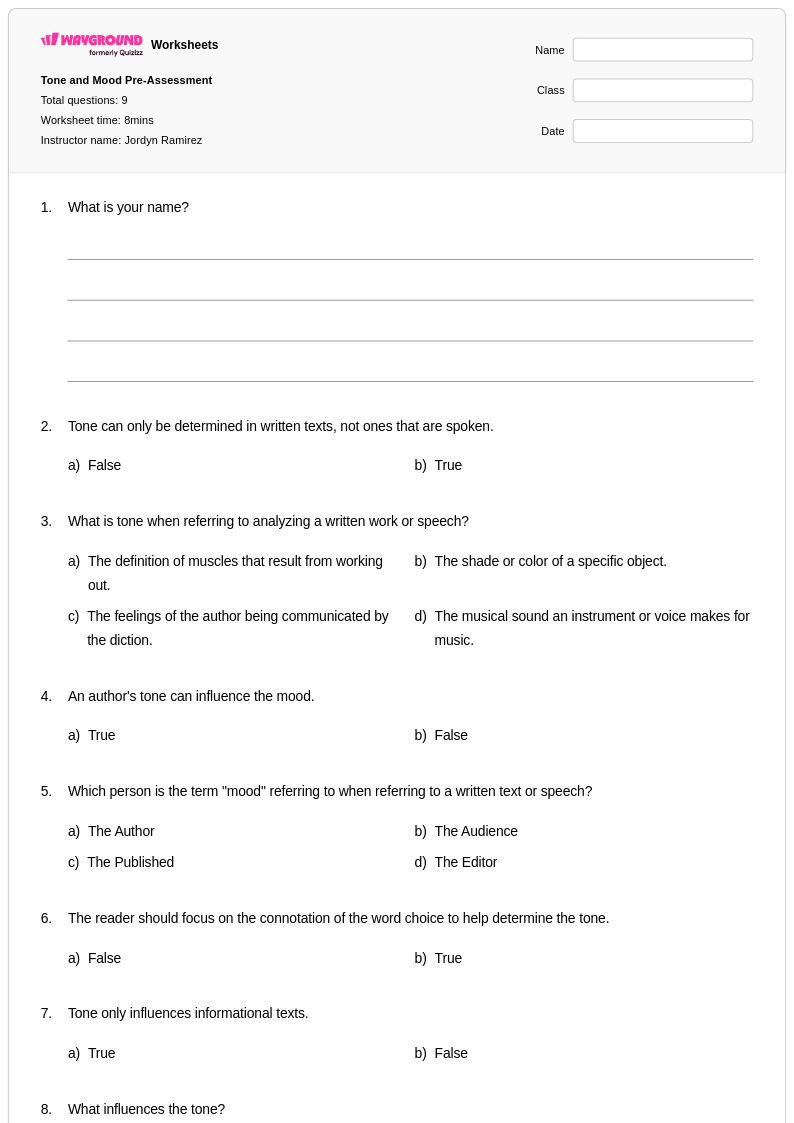
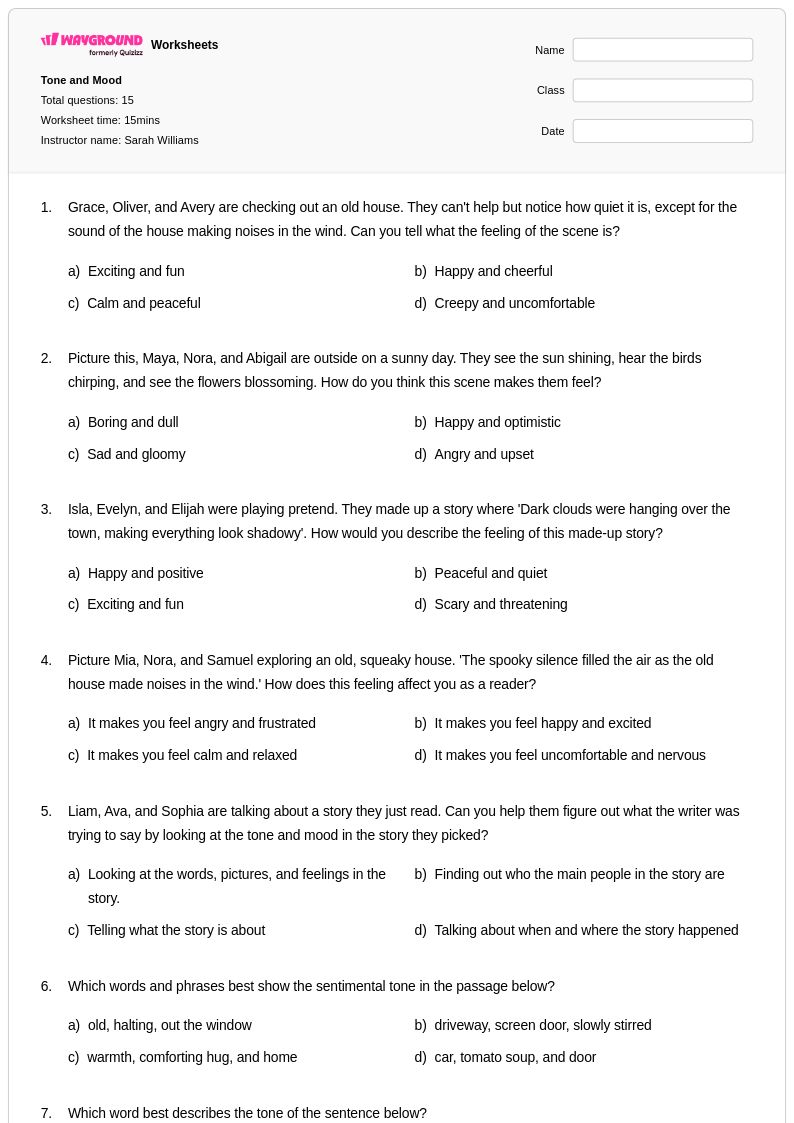
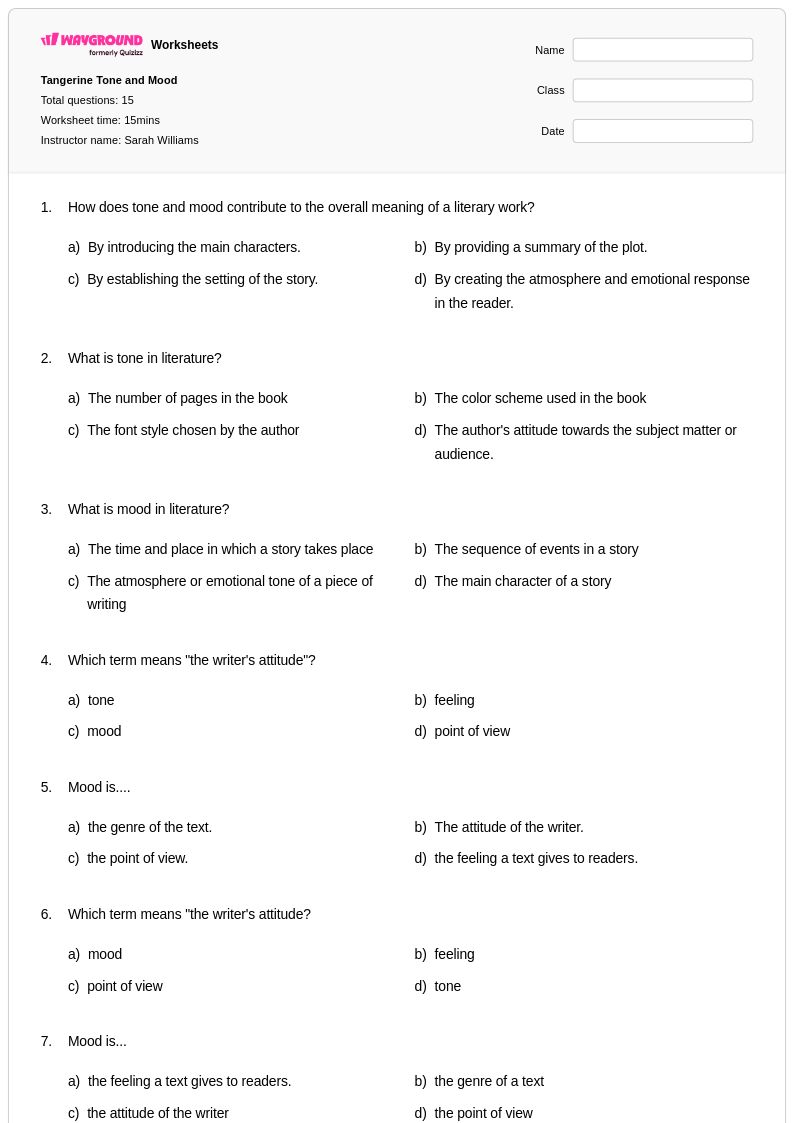
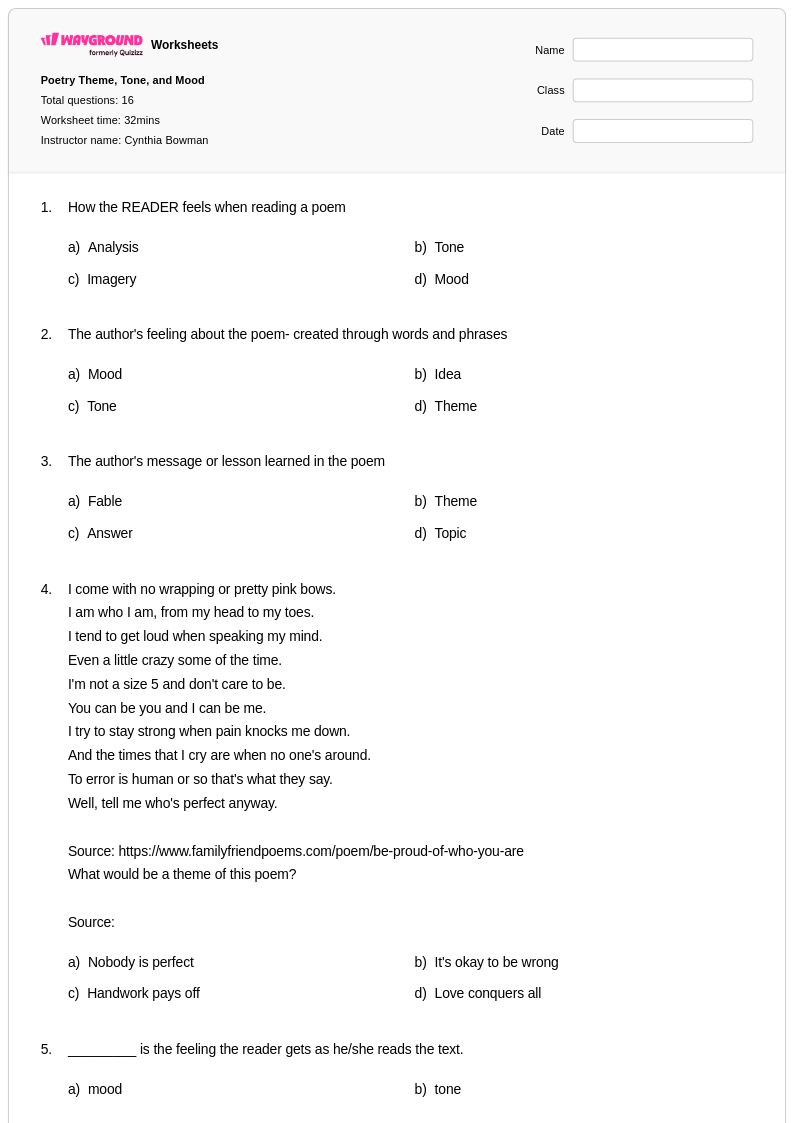
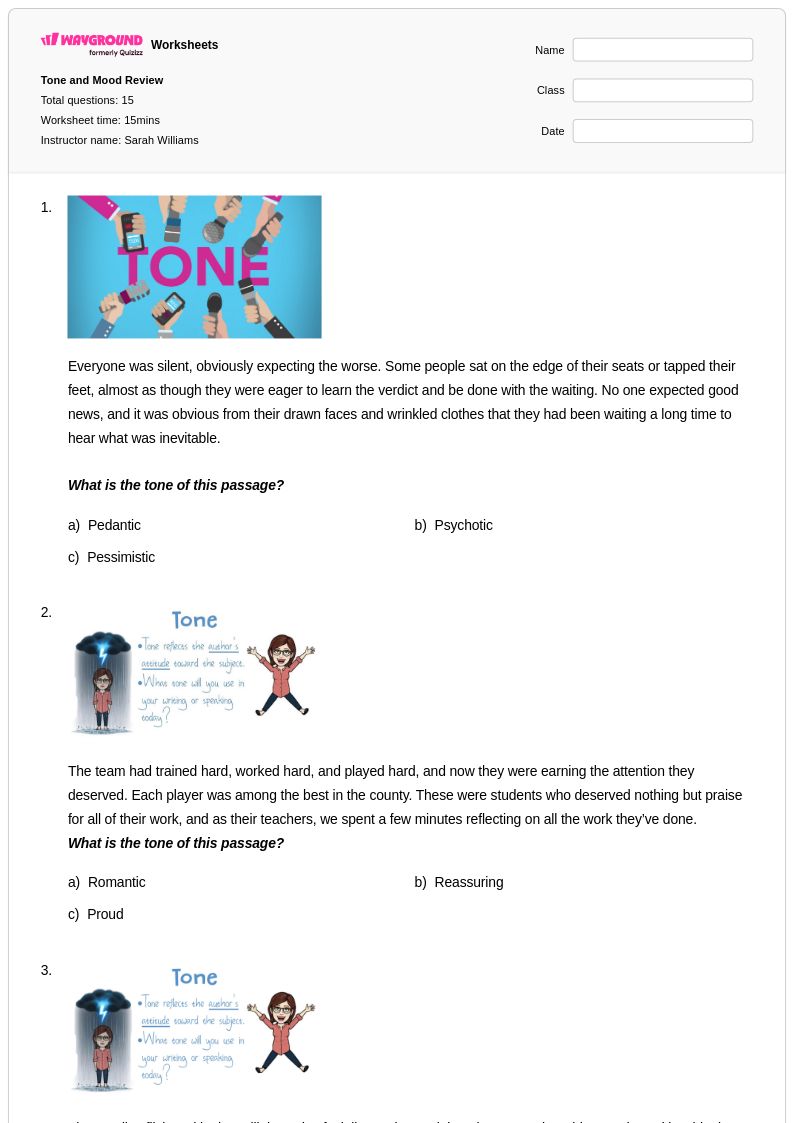
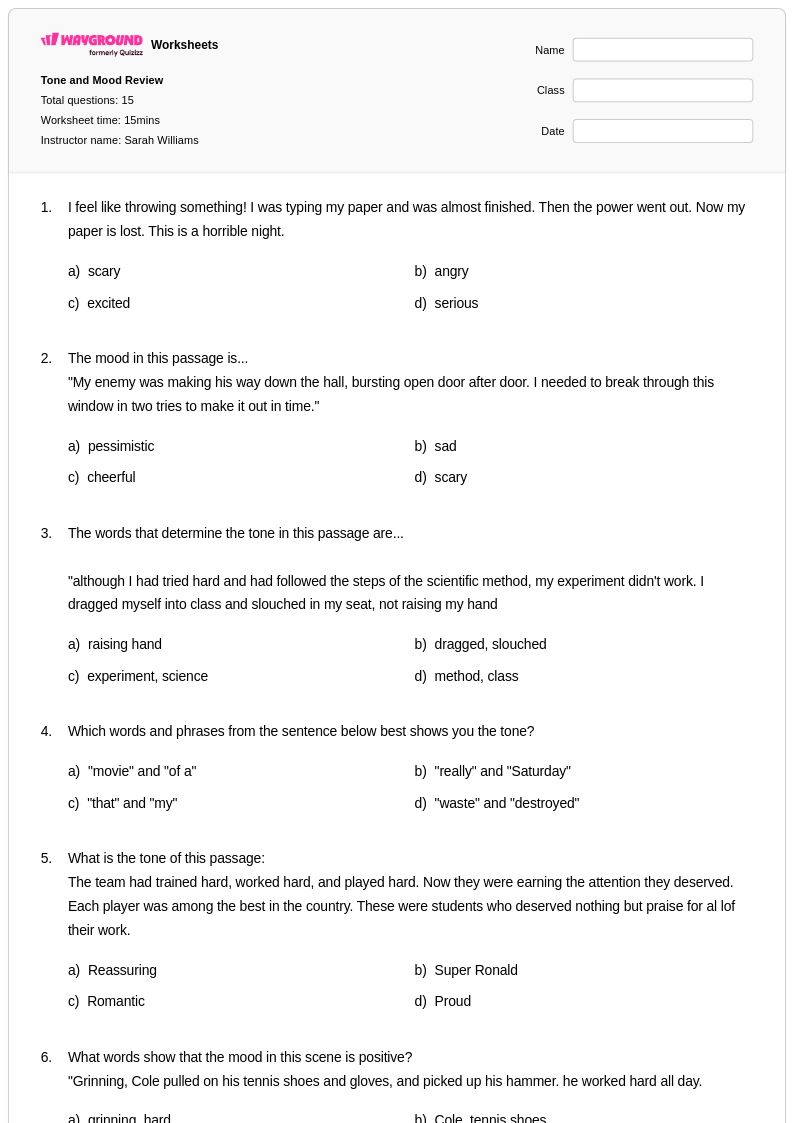
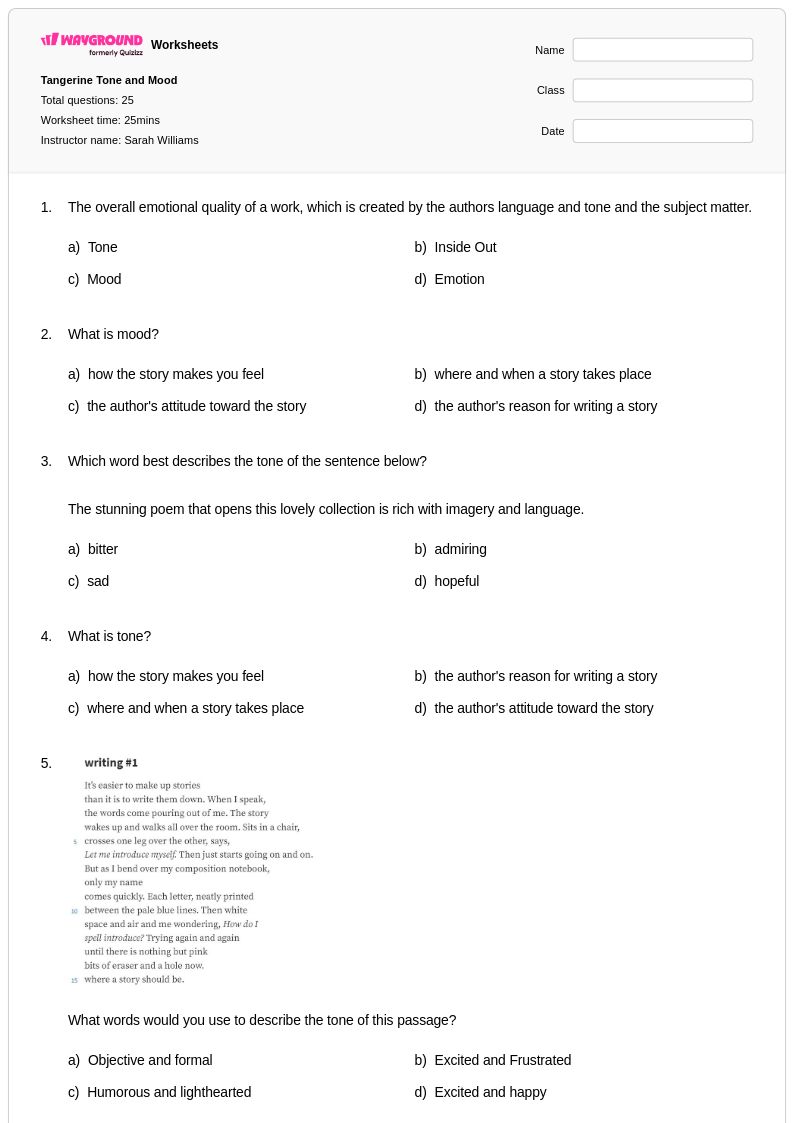
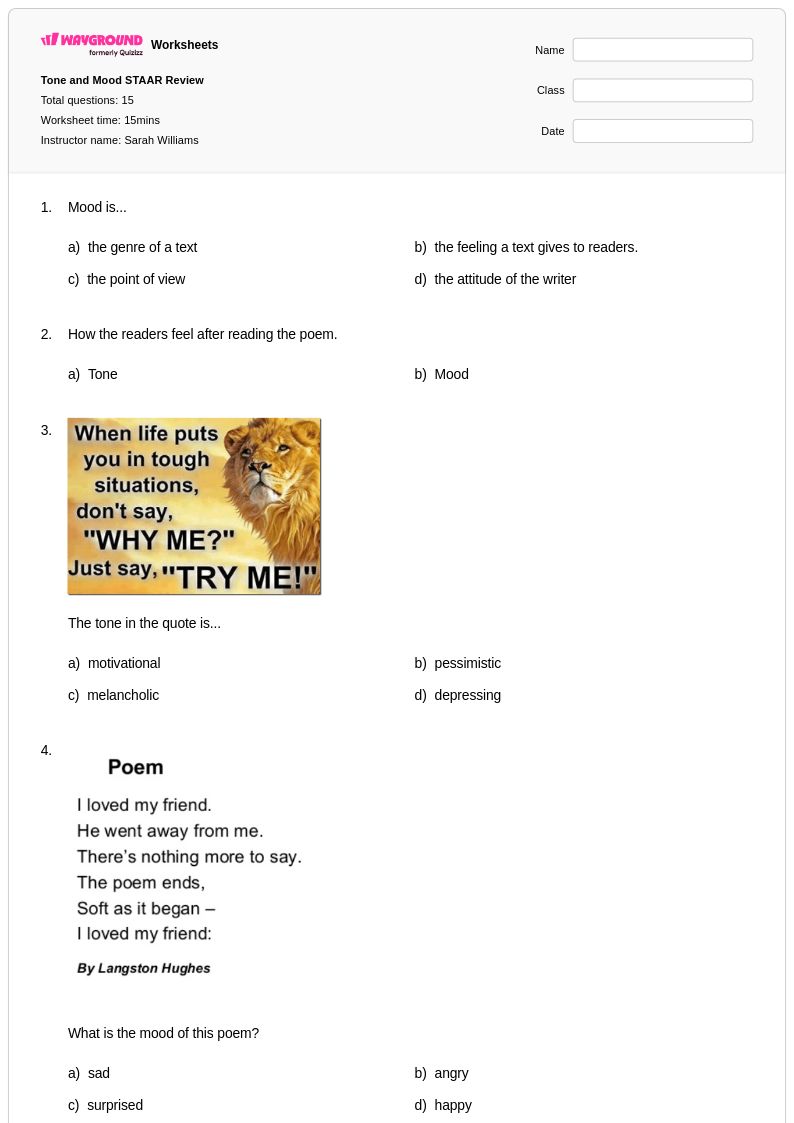
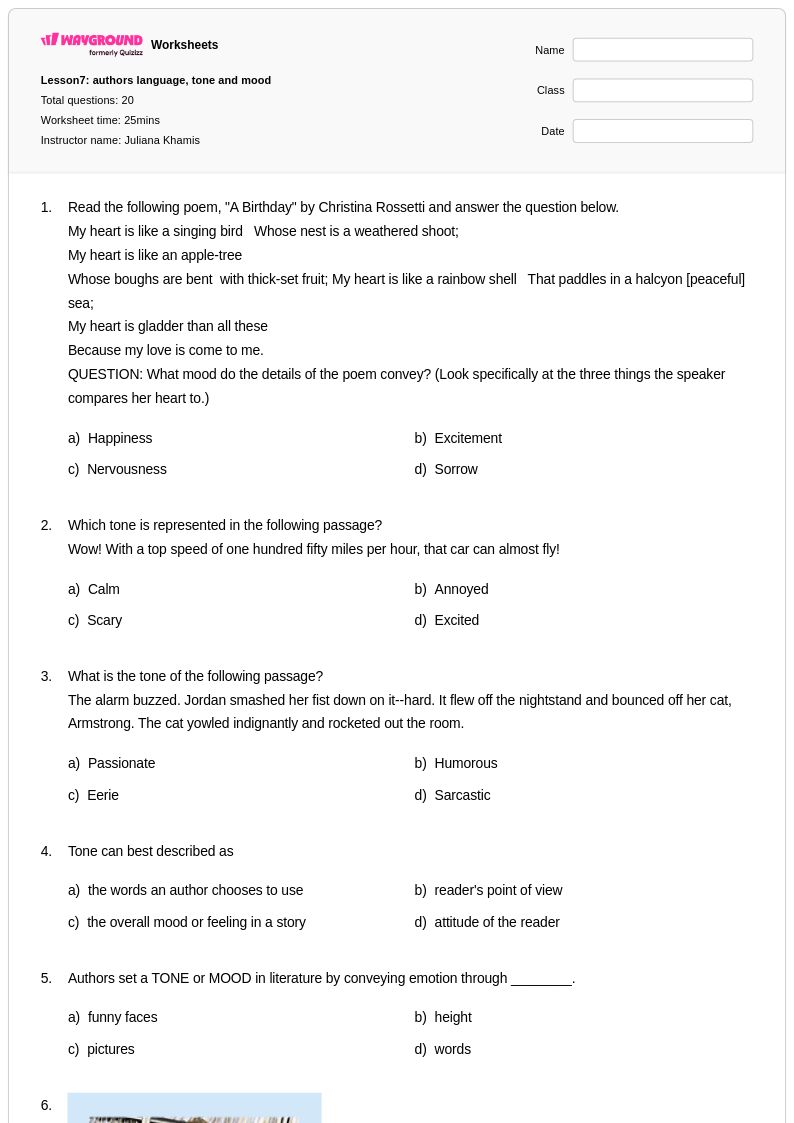
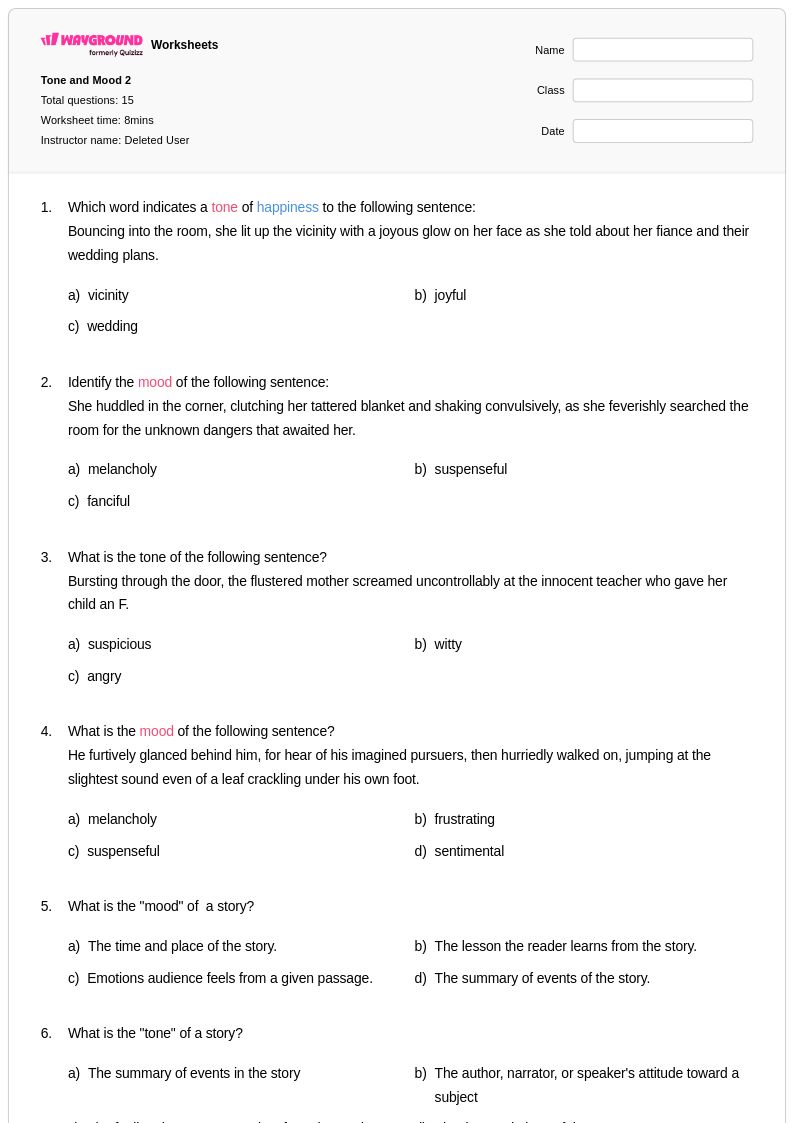
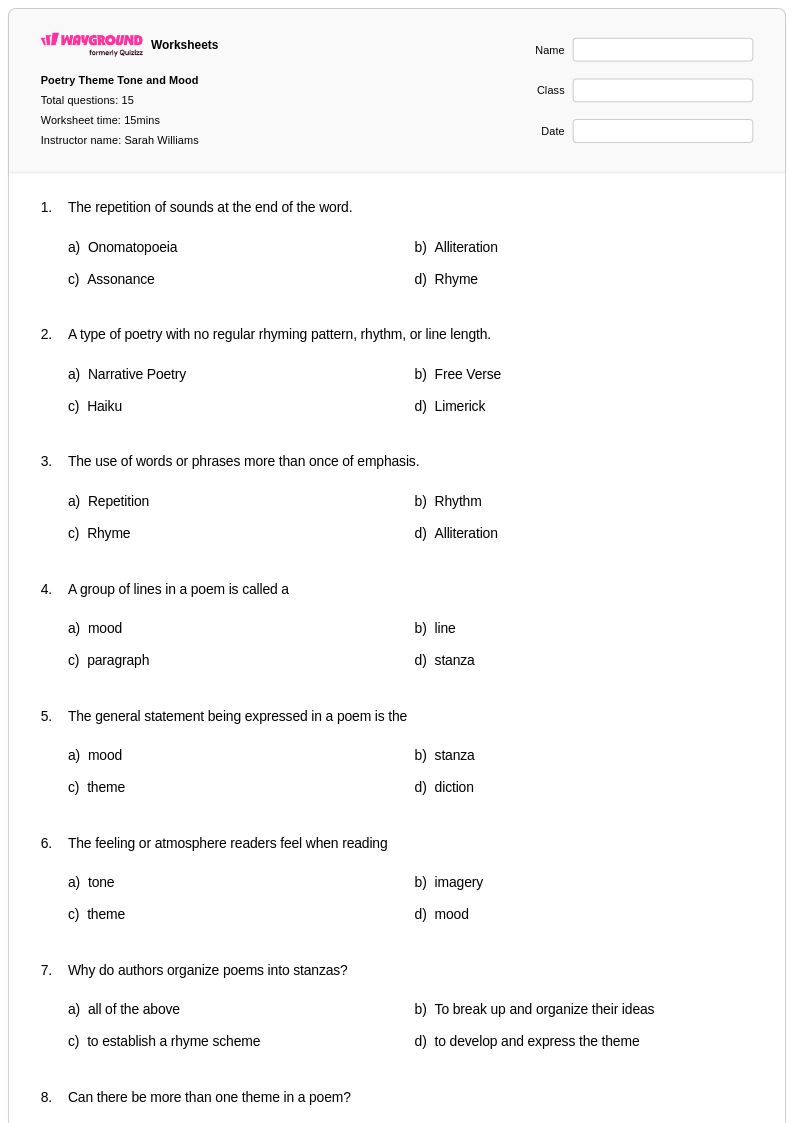
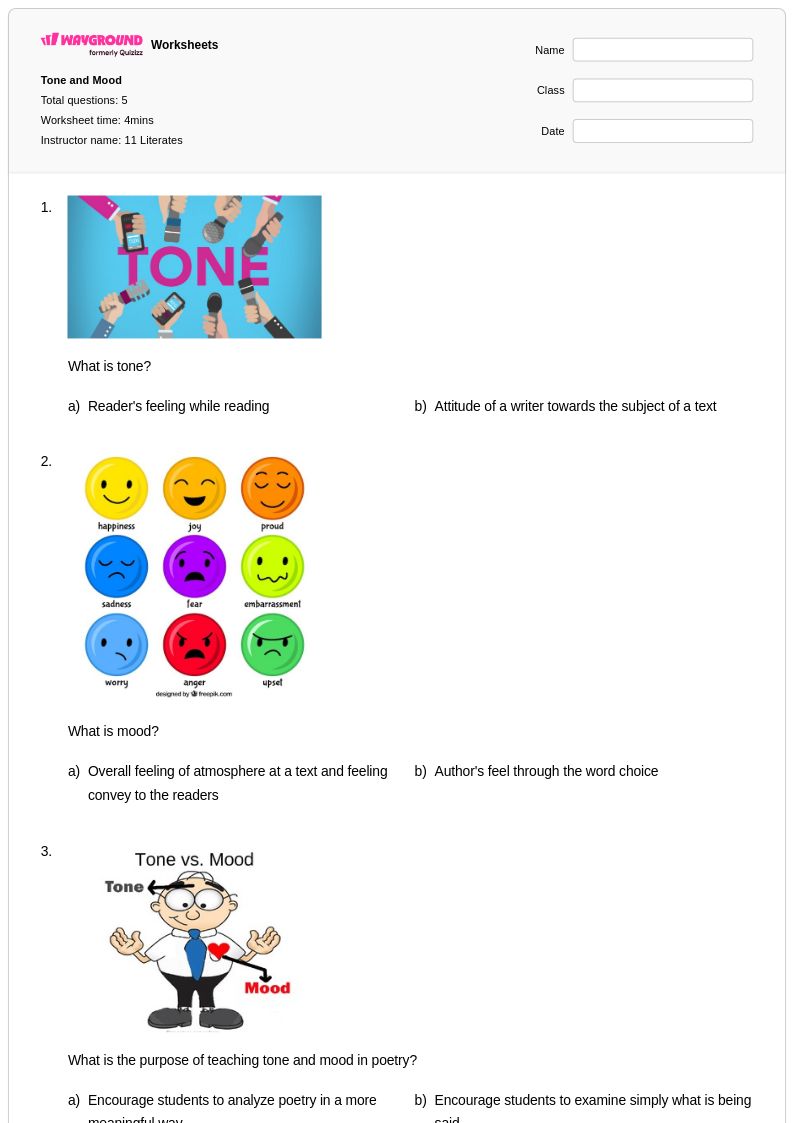
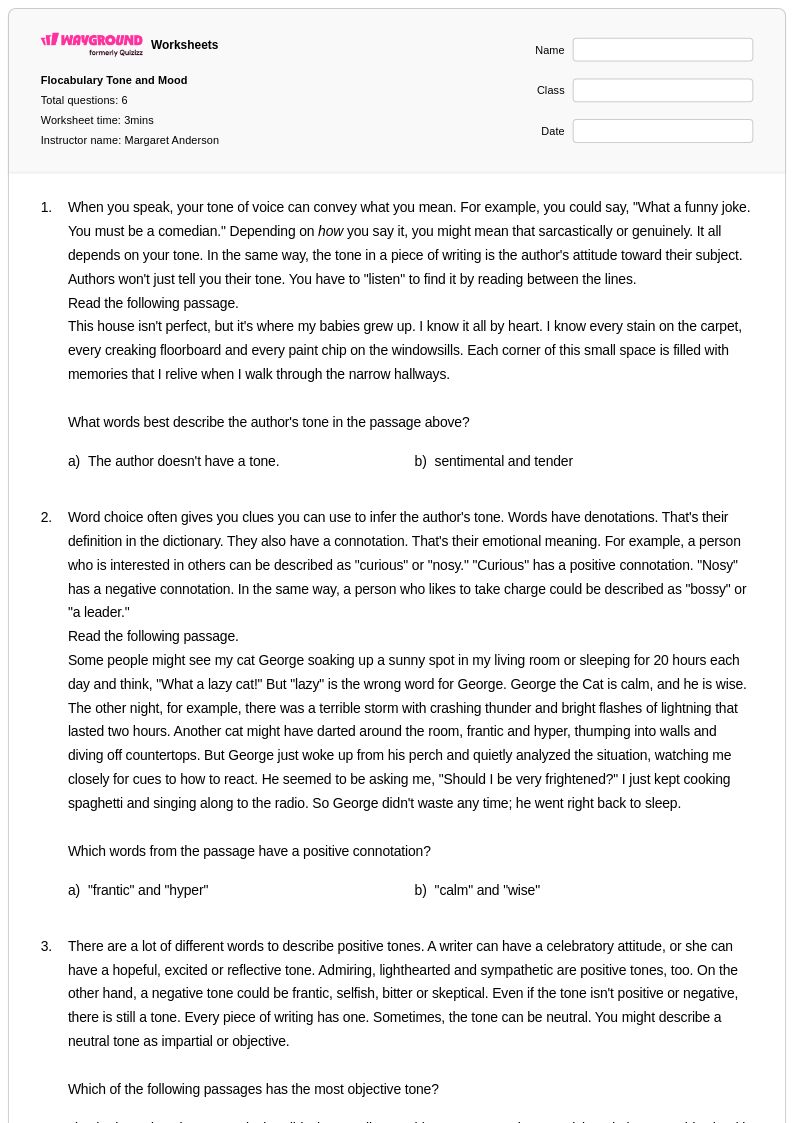
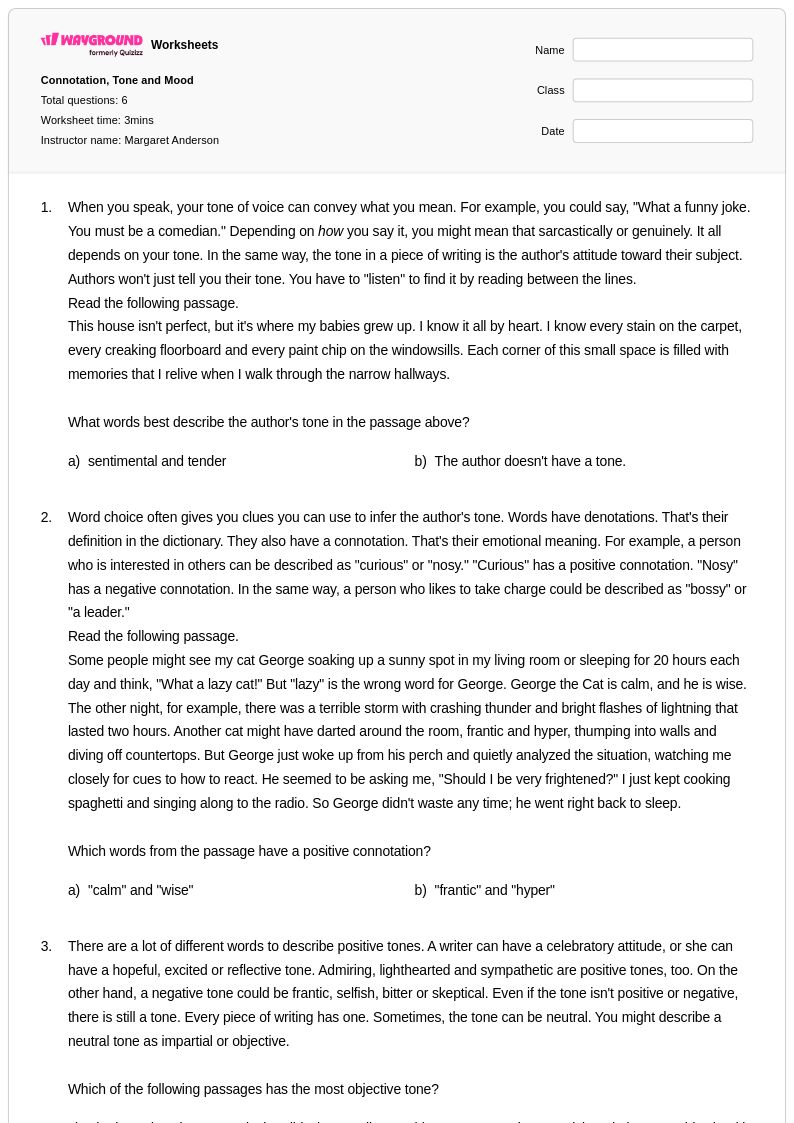
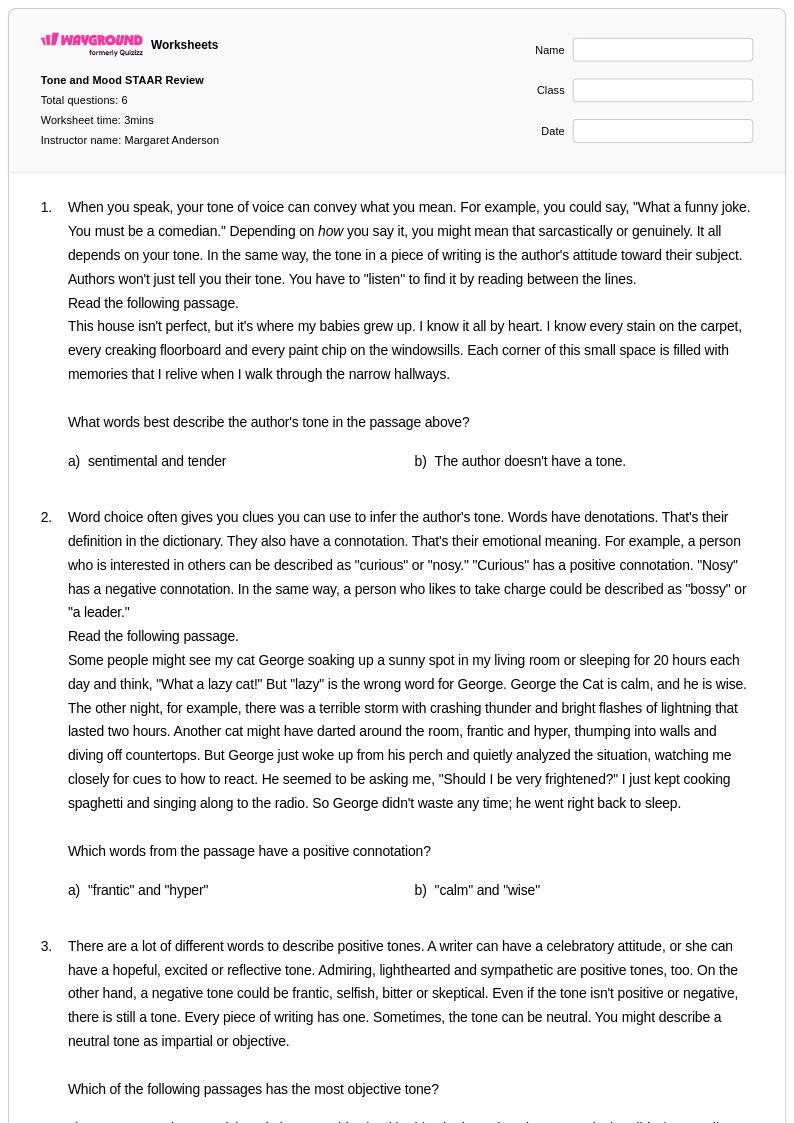
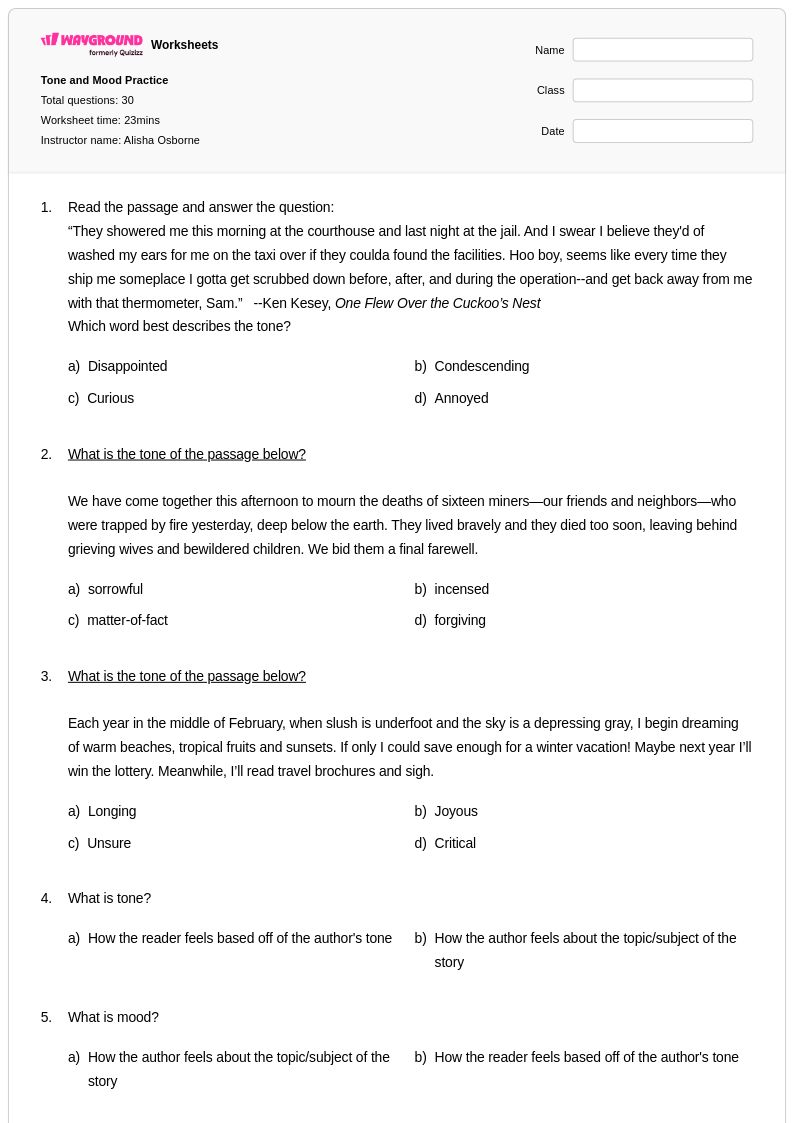
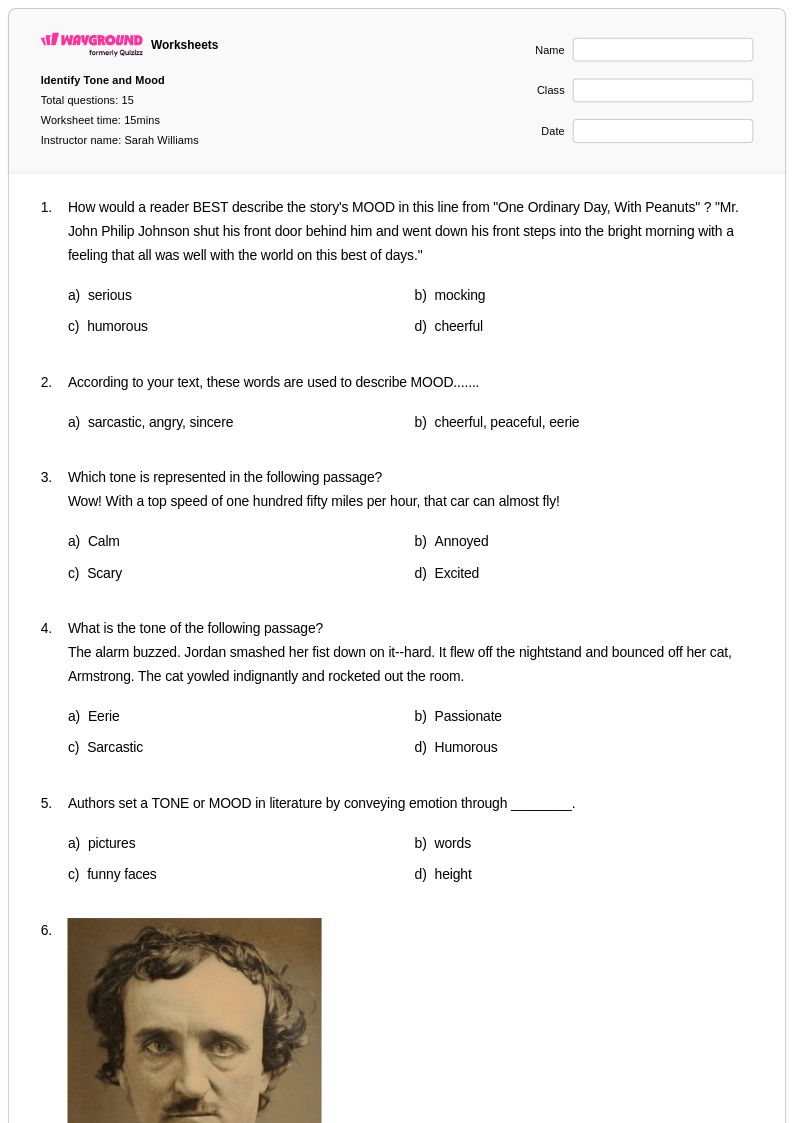
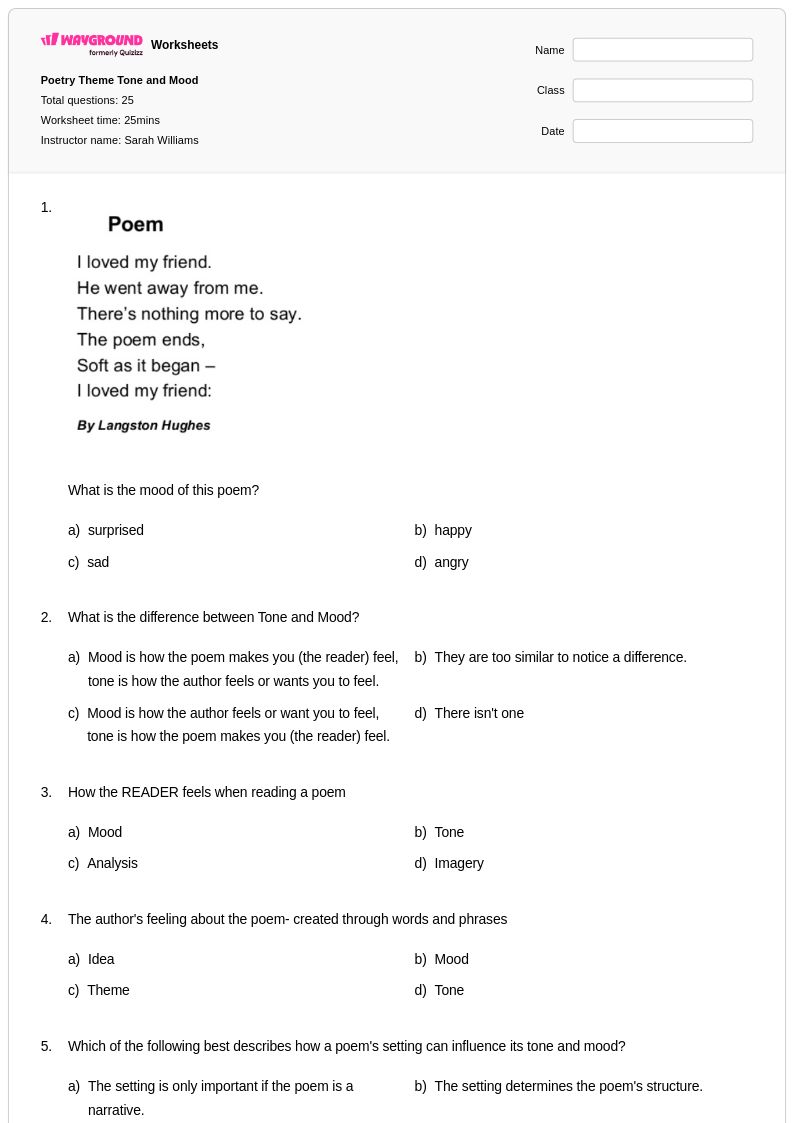
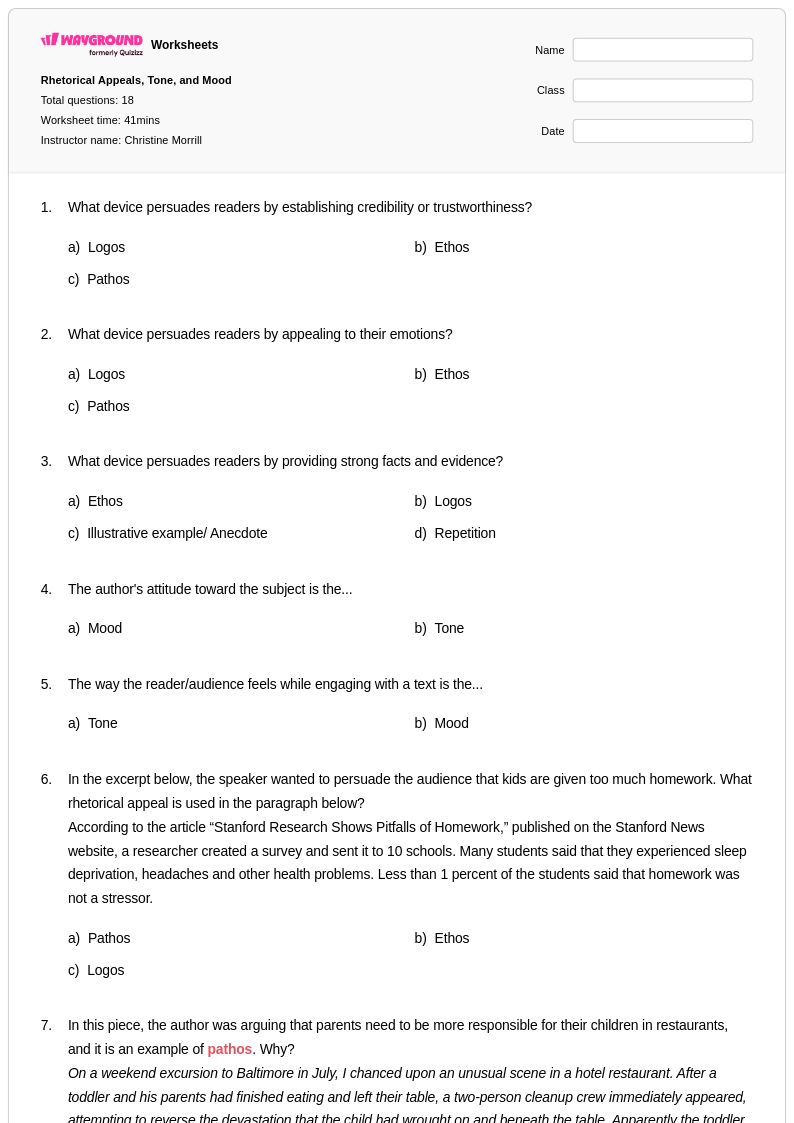
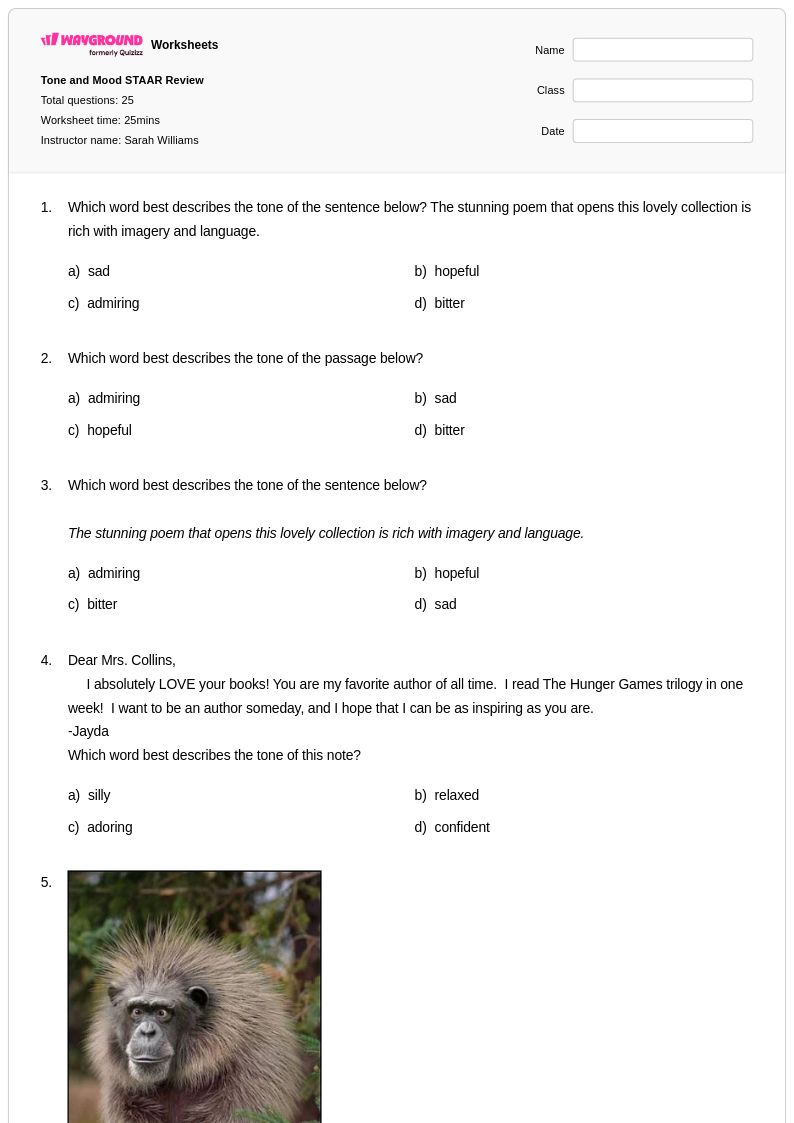
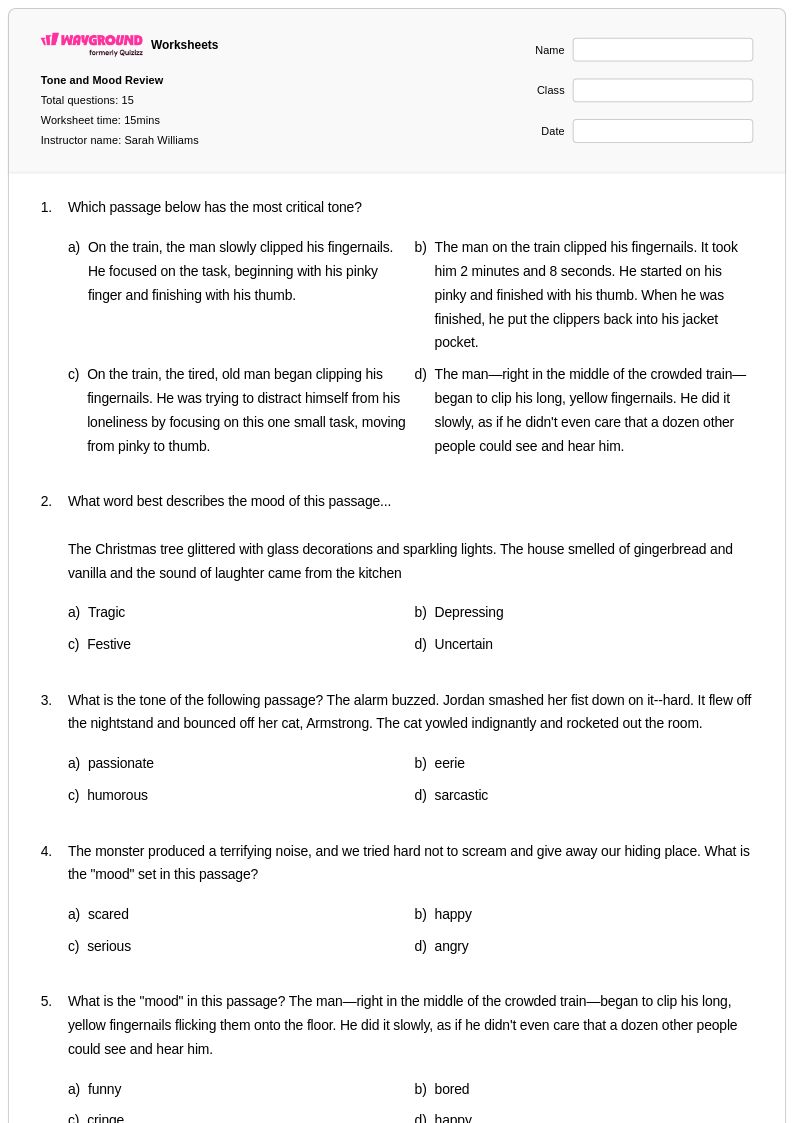
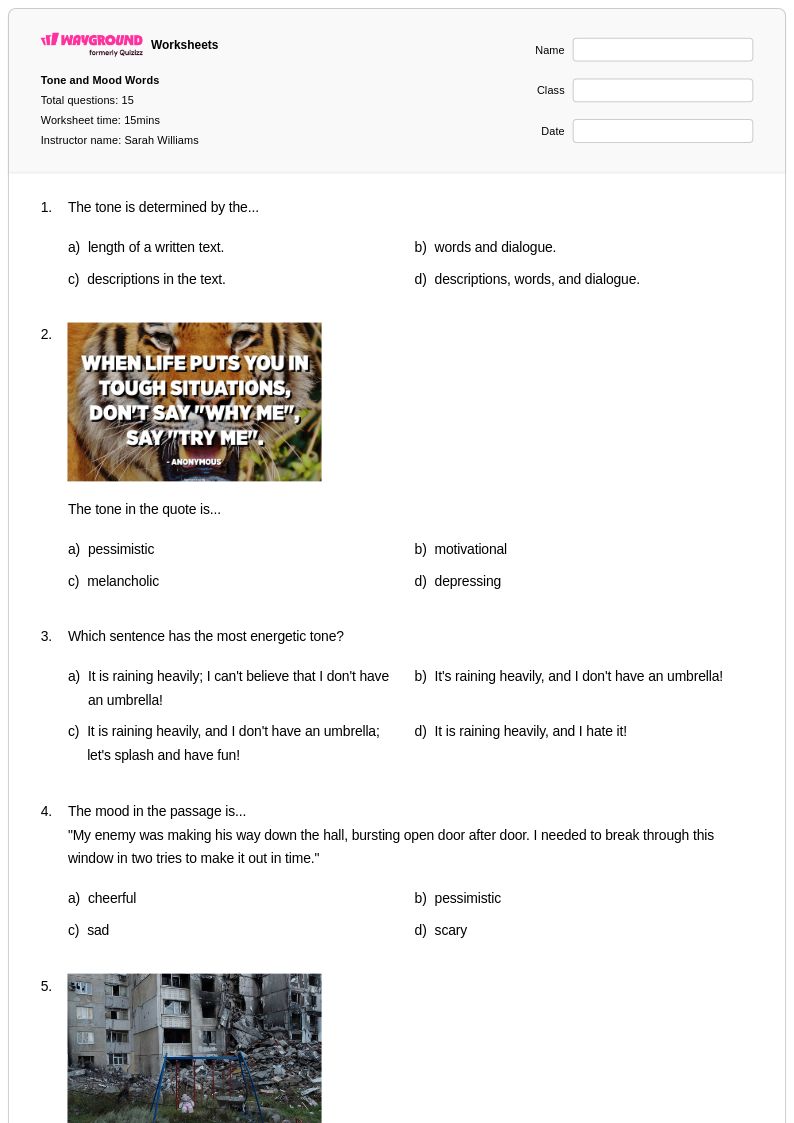
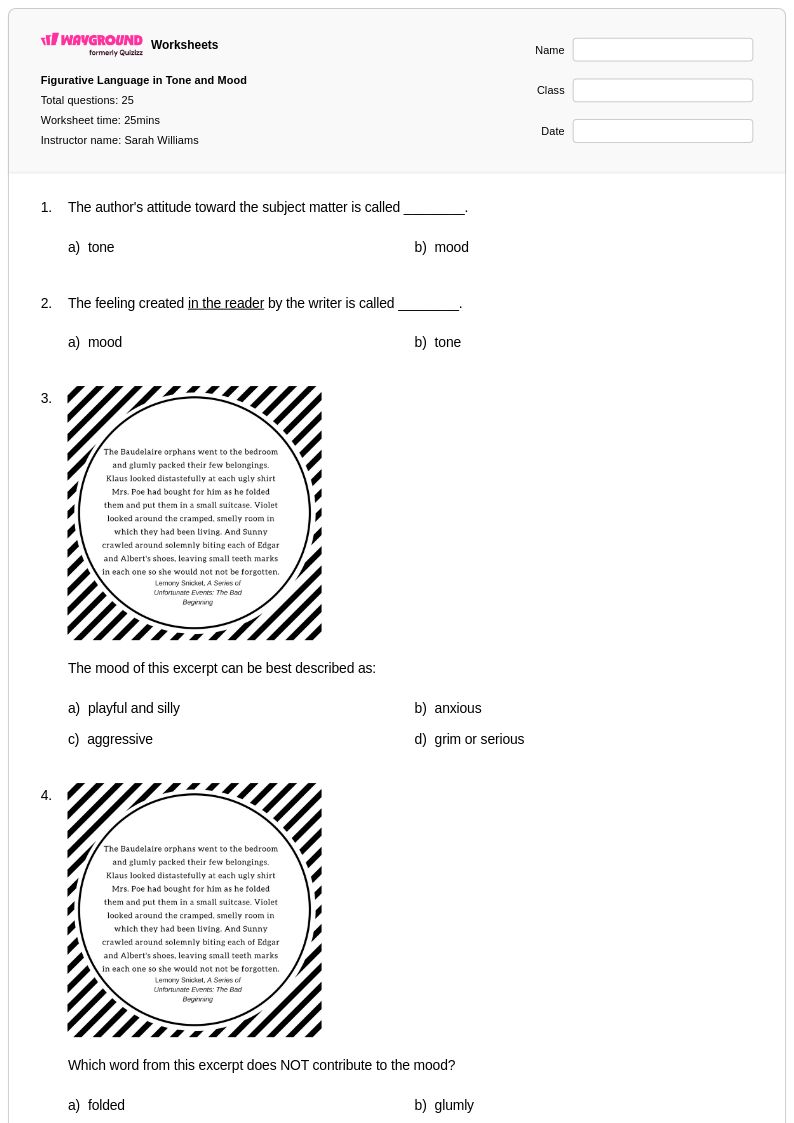
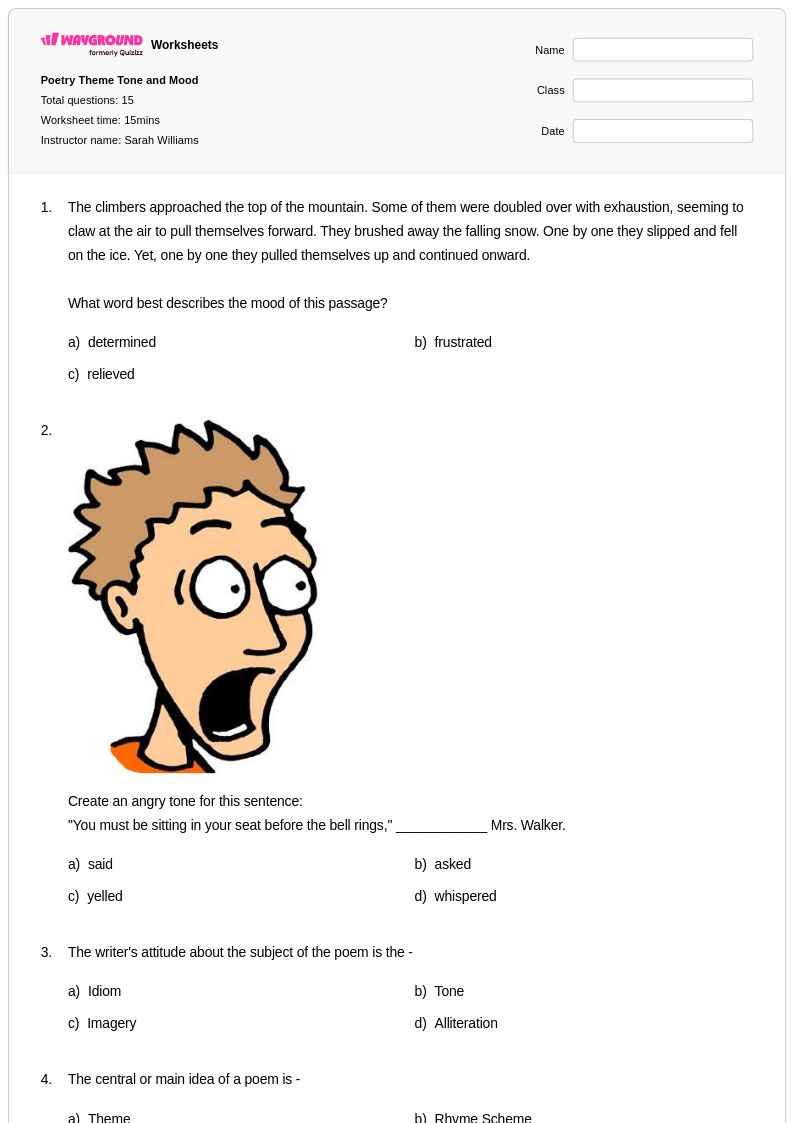
Tone and mood worksheets for Class 10 students available through Wayground (formerly Quizizz) provide comprehensive practice in identifying and analyzing the emotional underpinnings of literary texts. These expertly crafted resources strengthen students' ability to distinguish between an author's attitude toward a subject (tone) and the emotional atmosphere created for readers (mood), essential skills for advanced literary analysis. Students engage with diverse practice problems that challenge them to examine word choice, imagery, and literary devices while developing their analytical vocabulary. Each worksheet includes detailed answer keys that support independent learning and self-assessment, with free printable options available in convenient pdf format for seamless classroom integration.
Wayground (formerly Quizizz) empowers educators with access to millions of teacher-created tone and mood resources specifically designed for Class 10 English instruction. The platform's robust search and filtering capabilities enable teachers to locate materials aligned with curriculum standards and differentiate instruction based on individual student needs. Teachers can customize existing worksheets or create entirely new assessments, with flexible options for both printable pdf distribution and digital delivery. These comprehensive tools support diverse instructional goals, from targeted remediation for students struggling with literary analysis concepts to enrichment activities that challenge advanced readers to explore sophisticated textual nuances, ensuring every student develops critical reading comprehension skills through systematic skill practice.
FAQs
How do I teach the difference between tone and mood to middle school students?
The most effective approach is to anchor both concepts in concrete examples before asking students to analyze independently. Tone is the author's attitude toward the subject, revealed through word choice, imagery, and stylistic decisions, while mood is the emotional atmosphere the reader experiences as a result. A useful classroom strategy is to present two short passages on the same topic written with different tones and ask students to identify which words shift both the author's stance and the reader's emotional response, making the distinction tangible rather than abstract.
What exercises help students practice identifying tone and mood in literature?
Passage-based worksheets that require students to cite specific textual evidence are among the most effective practice formats for tone and mood analysis. Students benefit from exercises that ask them to underline words or phrases that signal the author's attitude, label the tone using precise vocabulary, and then explain how that word choice creates a corresponding emotional effect for the reader. Moving from short excerpts to longer literary passages progressively builds the analytical stamina students need for more complex texts.
What mistakes do students commonly make when analyzing tone and mood?
The most frequent error is conflating tone and mood, treating them as interchangeable rather than as distinct but related literary elements. Students also tend to name a tone without grounding it in textual evidence, labeling a passage as 'sad' without identifying which specific words or images create that effect. A third common misconception is using vague descriptors like 'good' or 'bad' instead of precise tonal vocabulary such as 'melancholic', 'sardonic', or 'reverent', which limits the depth of their literary analysis.
How do I help struggling readers engage with tone and mood analysis?
For students who find abstract literary analysis difficult, starting with high-interest, short texts such as advertisements, song lyrics, or brief news excerpts can lower the entry barrier before moving to traditional literary passages. On Wayground, teachers can enable the Read Aloud accommodation so students hear the passage read to them, which often helps struggling readers catch tonal shifts they miss in silent reading. Reducing answer choices is another available accommodation that can decrease cognitive load while students are still building their analytical vocabulary.
How do I use tone and mood worksheets from Wayground in my classroom?
Tone and mood worksheets on Wayground are available as printable PDFs for traditional classroom use and in digital formats for technology-integrated learning environments, giving teachers flexibility in how they assign practice. Teachers can also host the worksheet as a live quiz on Wayground, enabling real-time monitoring of student responses and immediate identification of which students are misidentifying tone or conflating it with mood. Each worksheet includes an answer key with explanations of the reasoning behind correct responses, making them equally useful for guided instruction, independent practice, or targeted remediation.
How can I align tone and mood worksheets to specific reading standards?
Wayground's search and filtering tools allow teachers to locate tone and mood resources aligned to specific standards and learning objectives, reducing planning time when building standards-based lesson sequences. Because tone and mood analysis maps directly onto reading literature standards that require students to analyze how word choice shapes meaning and tone, filtering by standard ensures the passages and question types match the rigor expected at your grade level. Teachers can also customize existing worksheets or build personalized practice sets to target the specific skill gaps their class data reveals.