
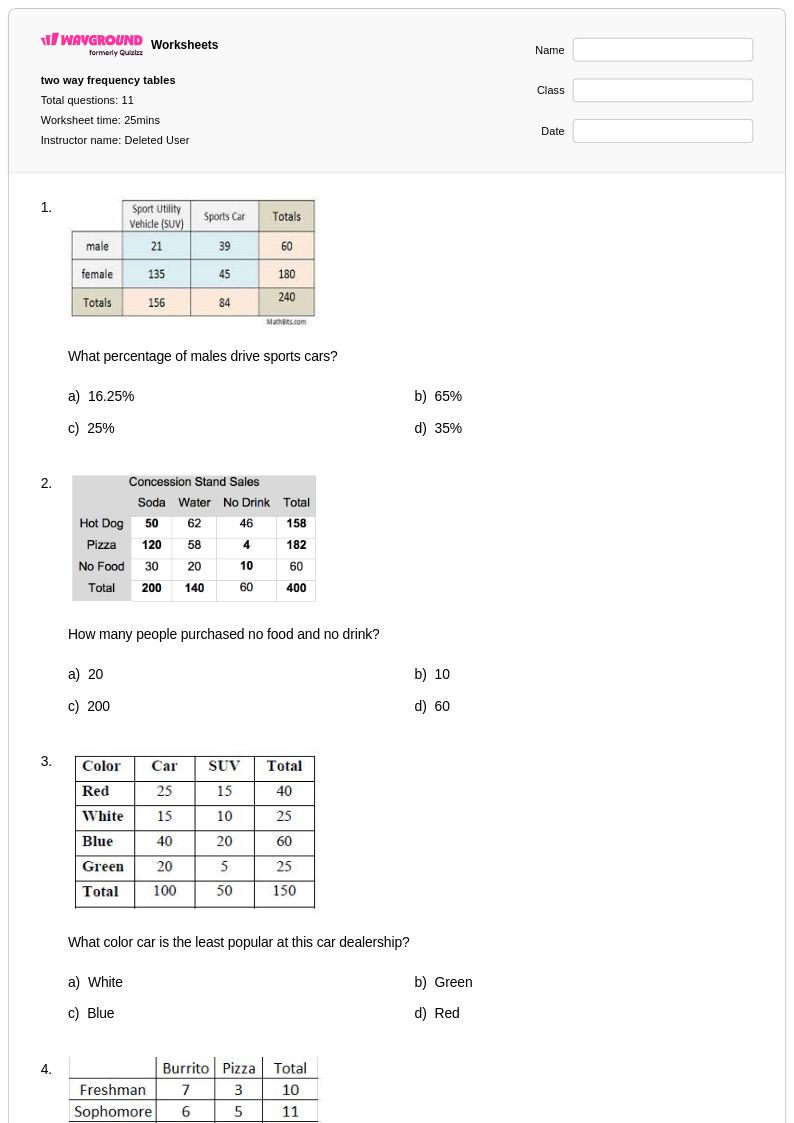
11 Q
8th - 9th
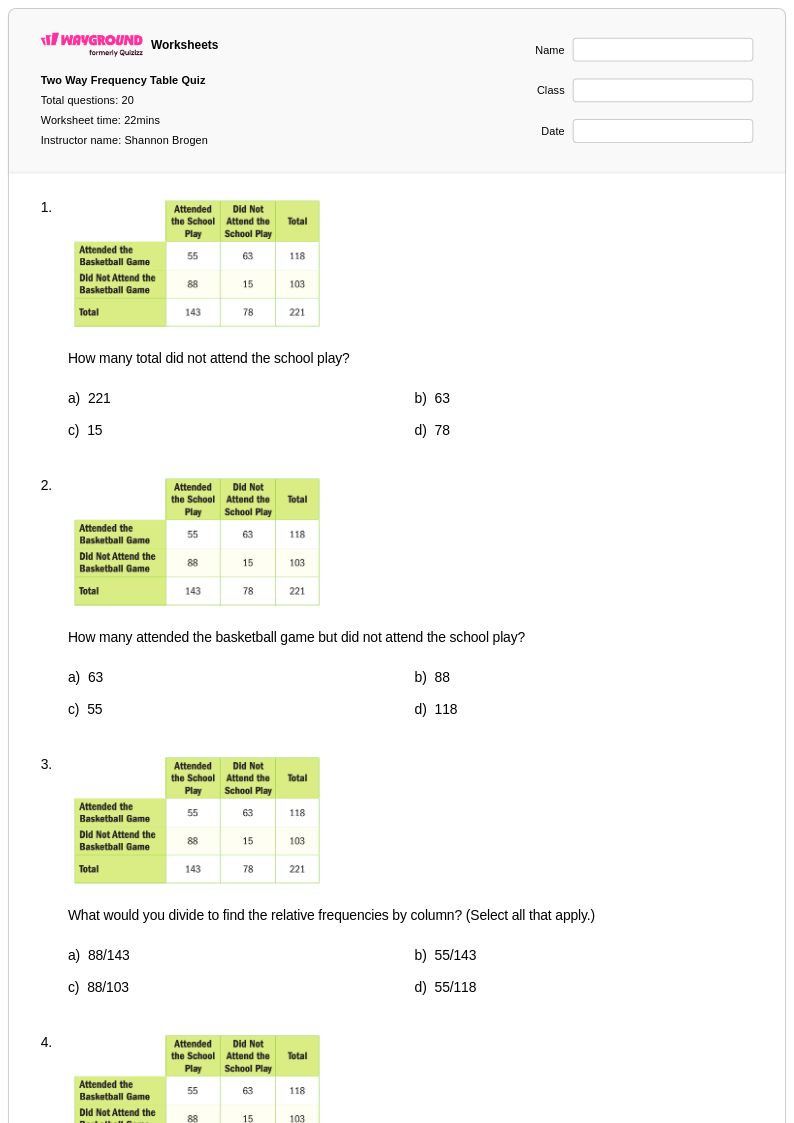
20 Q
8th
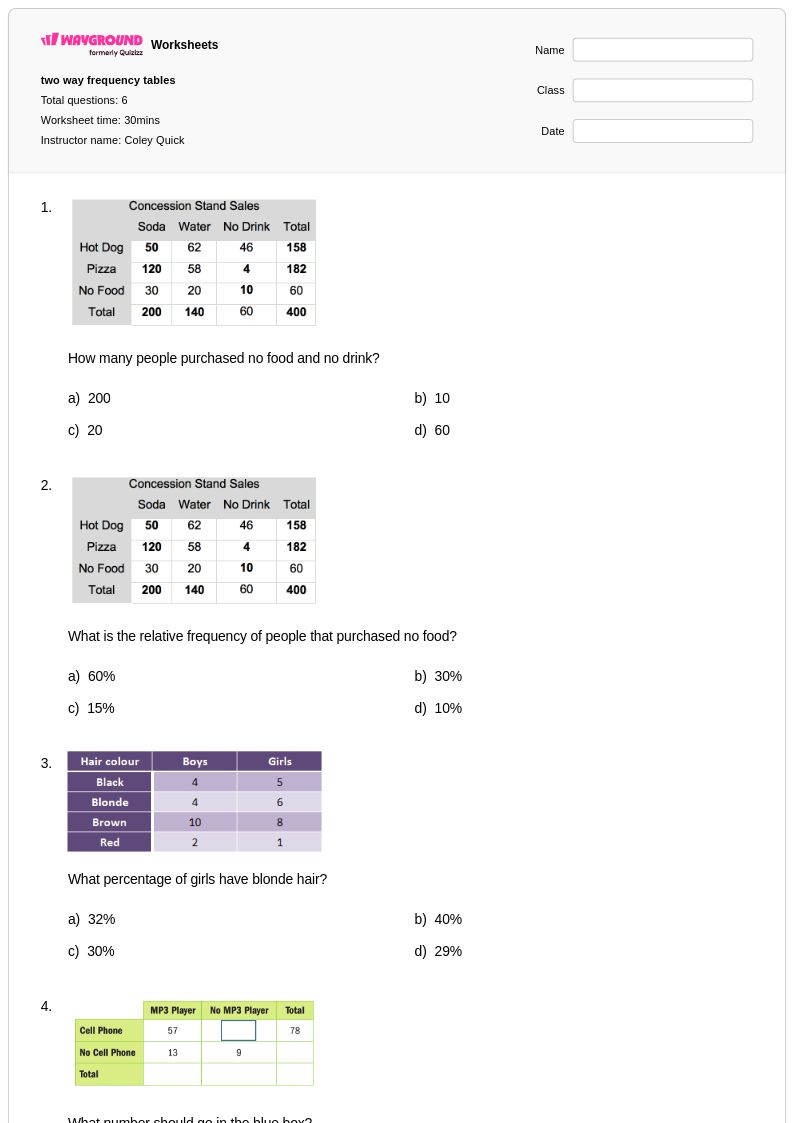
6 Q
8th
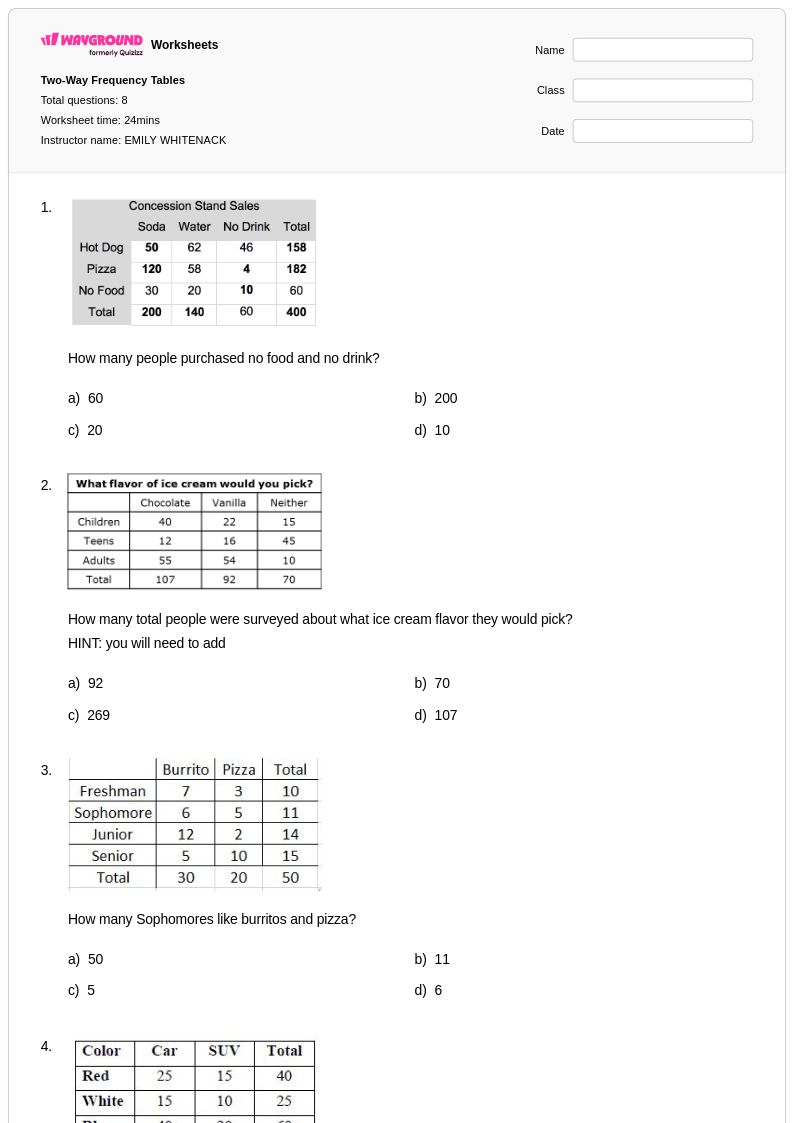
8 Q
6th - 8th
15 Q
8th
11 Q
8th
10 Q
8th
20 Q
8th

20 Q
8th
20 Q
8th
10 Q
8th - Uni
16 Q
8th
19 Q
8th - Uni
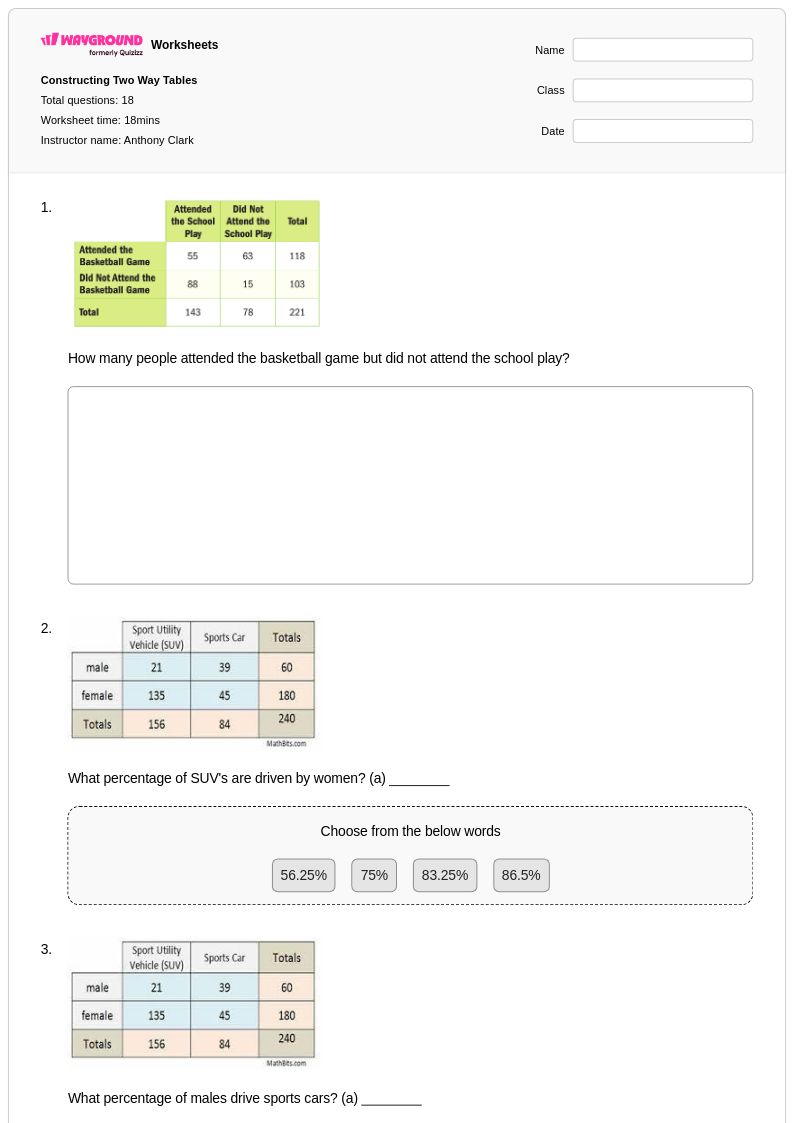
18 Q
8th - Uni
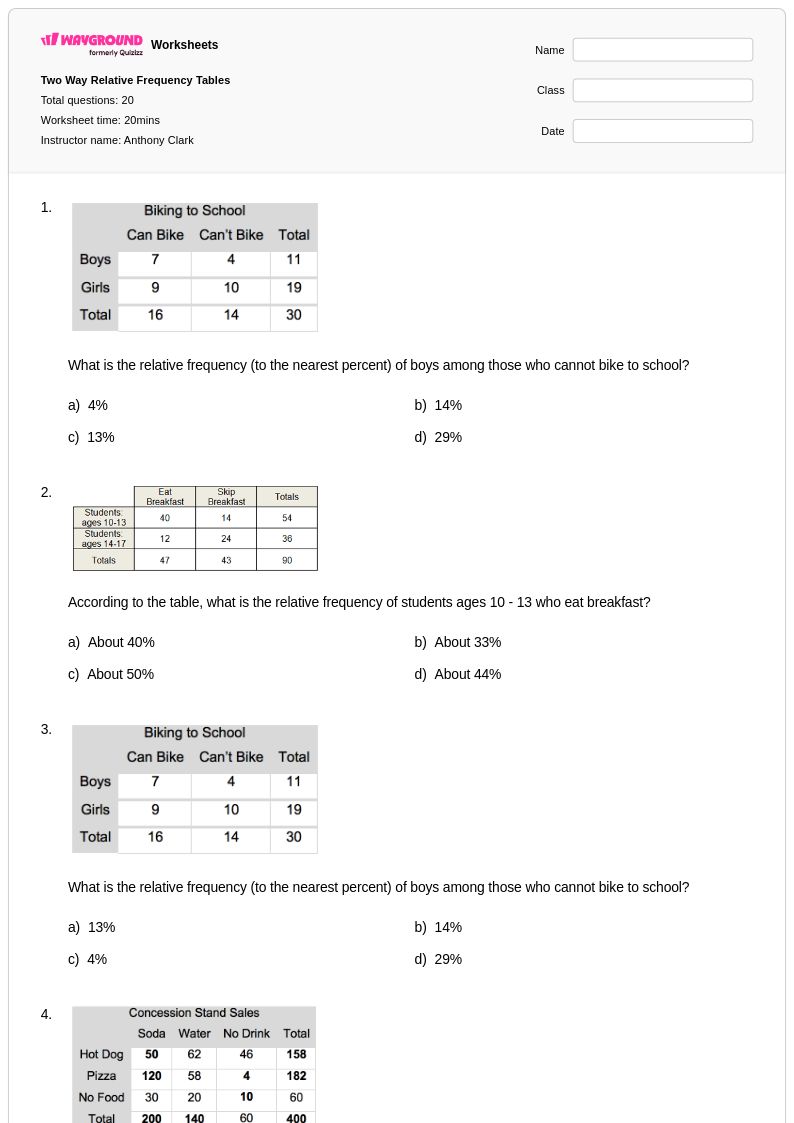
20 Q
8th - Uni
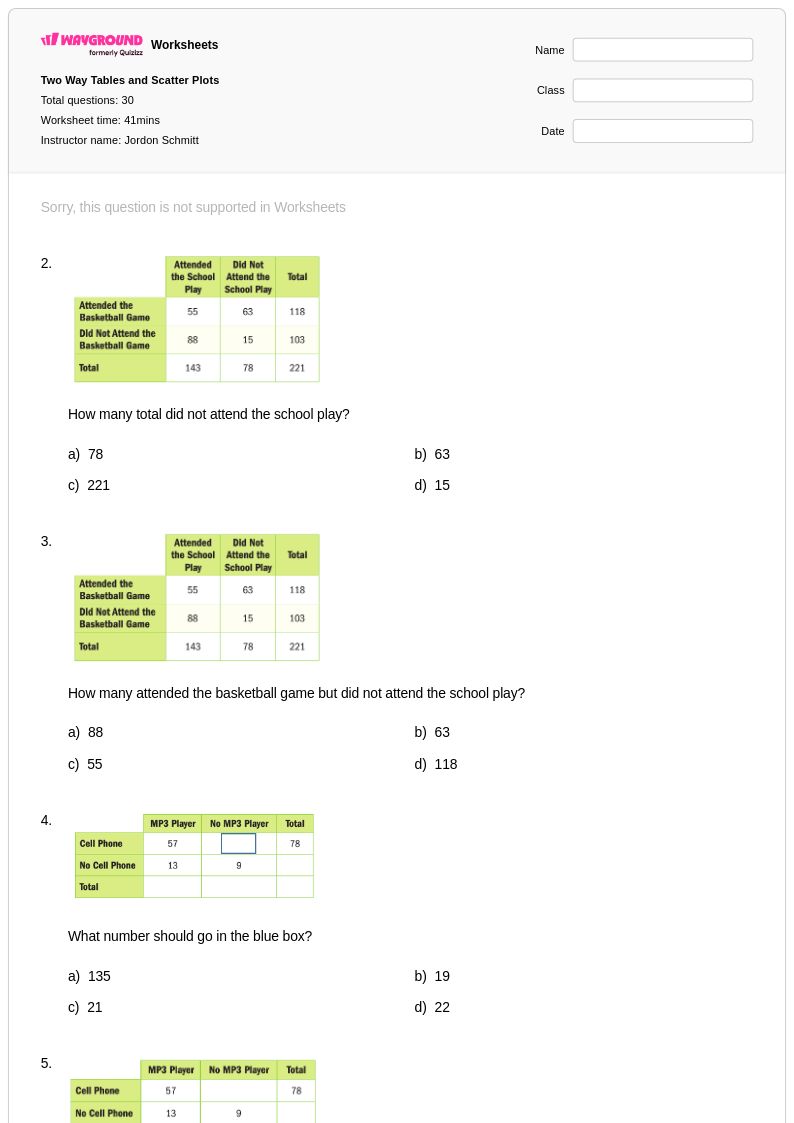
31 Q
8th
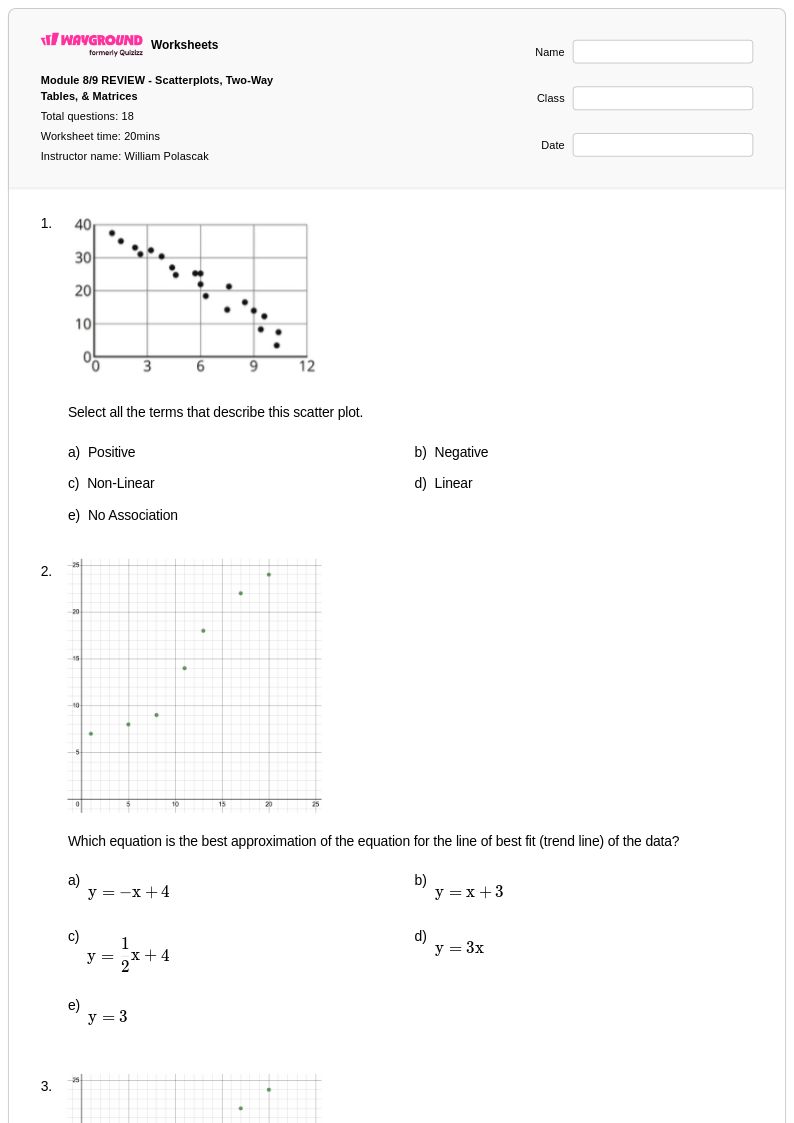
18 Q
8th
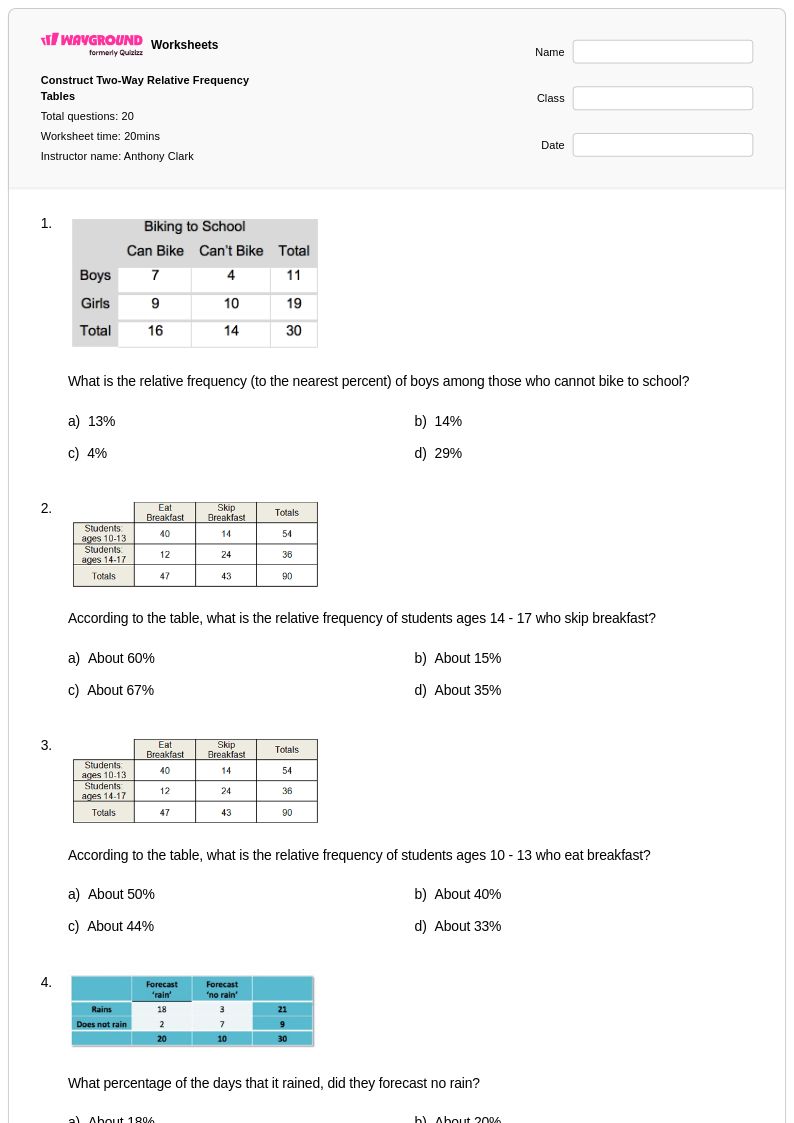
20 Q
8th - Uni
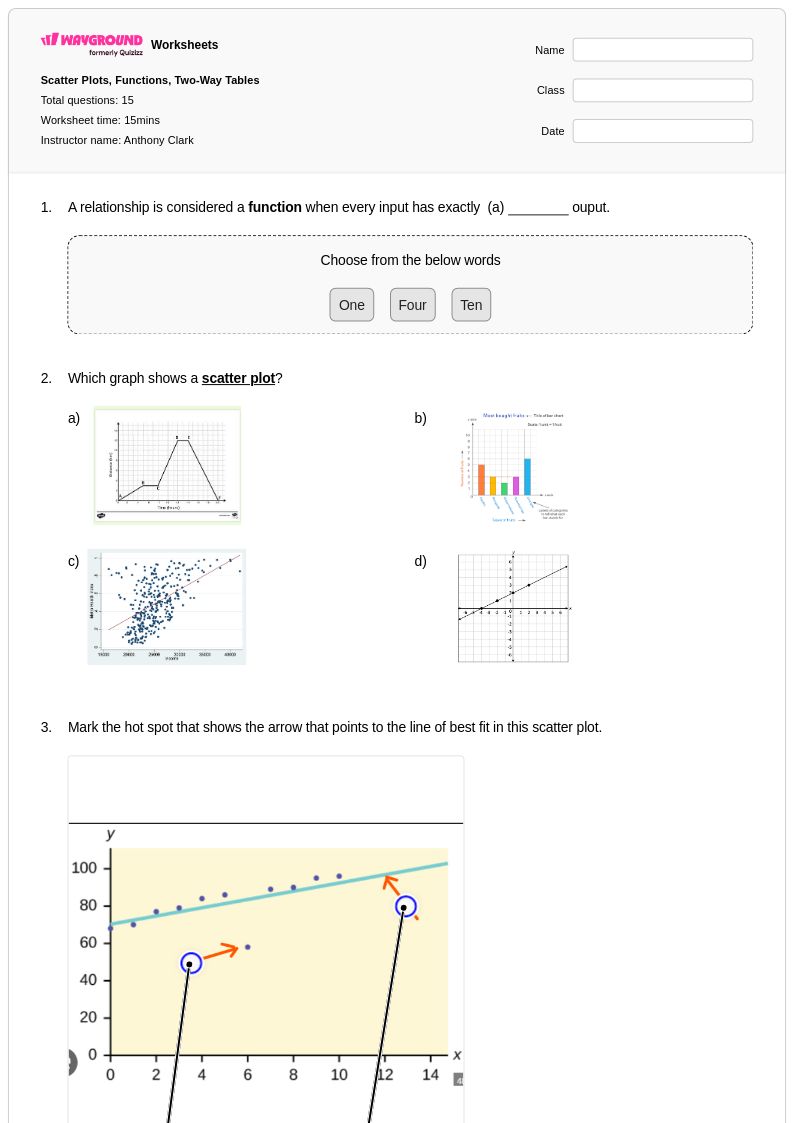
15 Q
8th - Uni
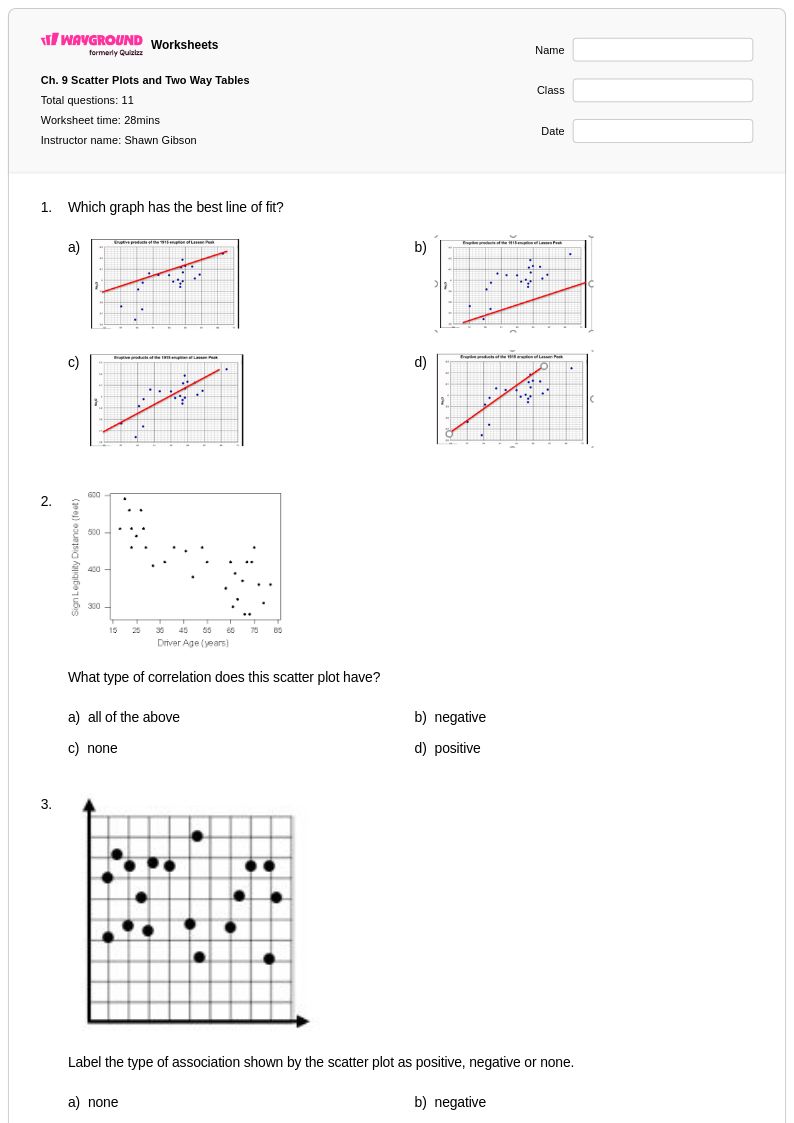
11 Q
8th
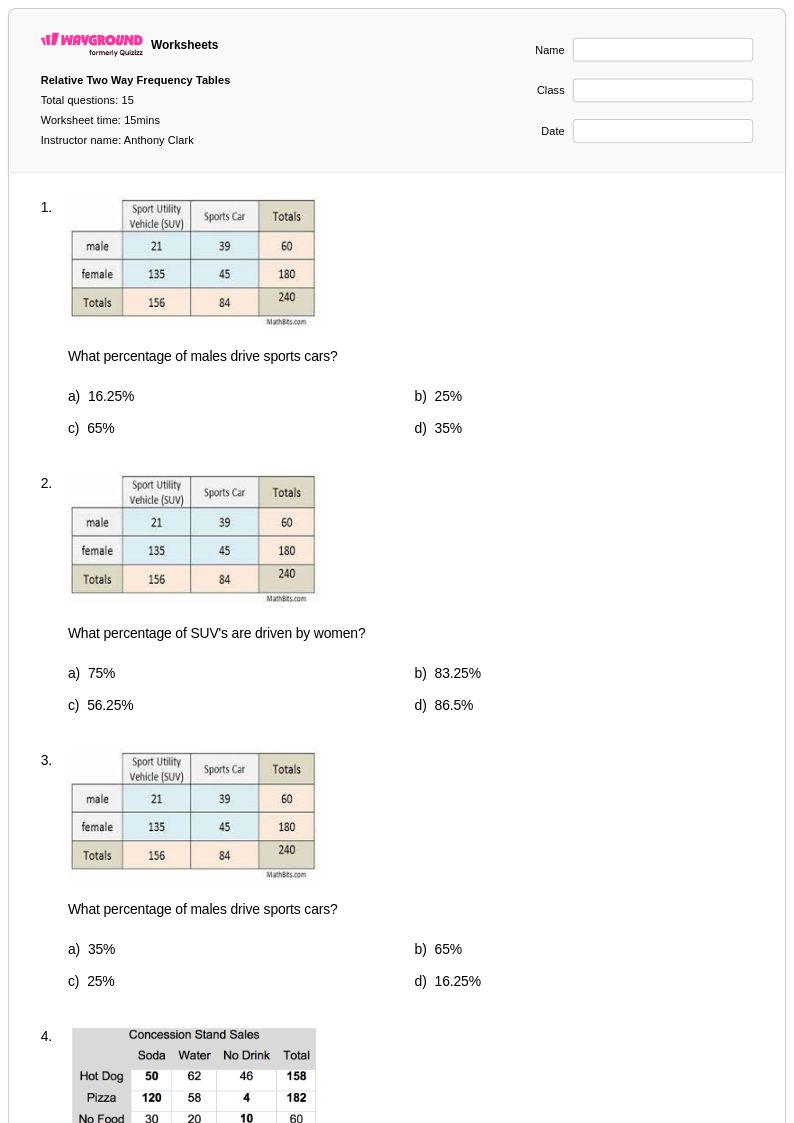
15 Q
8th - Uni
15 Q
8th
20 Q
5th - Uni
22 Q
8th
Explore Two-way Frequency Tables Worksheets by Grades
Explore Other Subject Worksheets for class 8
Explore printable Two-way Frequency Tables worksheets for Class 8
Two-way frequency tables serve as a fundamental tool in Class 8 mathematics, helping students organize, analyze, and interpret categorical data relationships with precision and clarity. Wayground's comprehensive collection of two-way frequency tables worksheets provides educators with expertly designed practice problems that guide students through creating tables from raw data, calculating marginal and joint frequencies, and determining conditional probabilities. These printable resources systematically develop critical thinking skills as students learn to identify patterns, make predictions, and draw meaningful conclusions from bivariate data sets. Each worksheet includes a detailed answer key, ensuring teachers can efficiently assess student understanding while students receive immediate feedback on their analytical reasoning. The free pdf format makes these materials easily accessible for both classroom instruction and independent practice, allowing students to strengthen their statistical literacy through repeated exposure to diverse data scenarios.
Wayground's extensive library draws from millions of teacher-created resources, offering educators an unparalleled selection of two-way frequency tables worksheets that align with Class 8 mathematics standards and accommodate diverse learning needs. The platform's advanced search and filtering capabilities enable teachers to quickly locate materials that match specific skill levels, from introductory table construction to complex probability calculations involving conditional relationships. These differentiation tools support both remediation for struggling learners and enrichment opportunities for advanced students, while flexible customization options allow educators to modify content to reflect real-world contexts relevant to their classrooms. Available in both digital and printable formats, these resources seamlessly integrate into lesson planning workflows, providing teachers with reliable materials for skill practice, formative assessment, and targeted intervention that builds student confidence in statistical analysis and data interpretation.