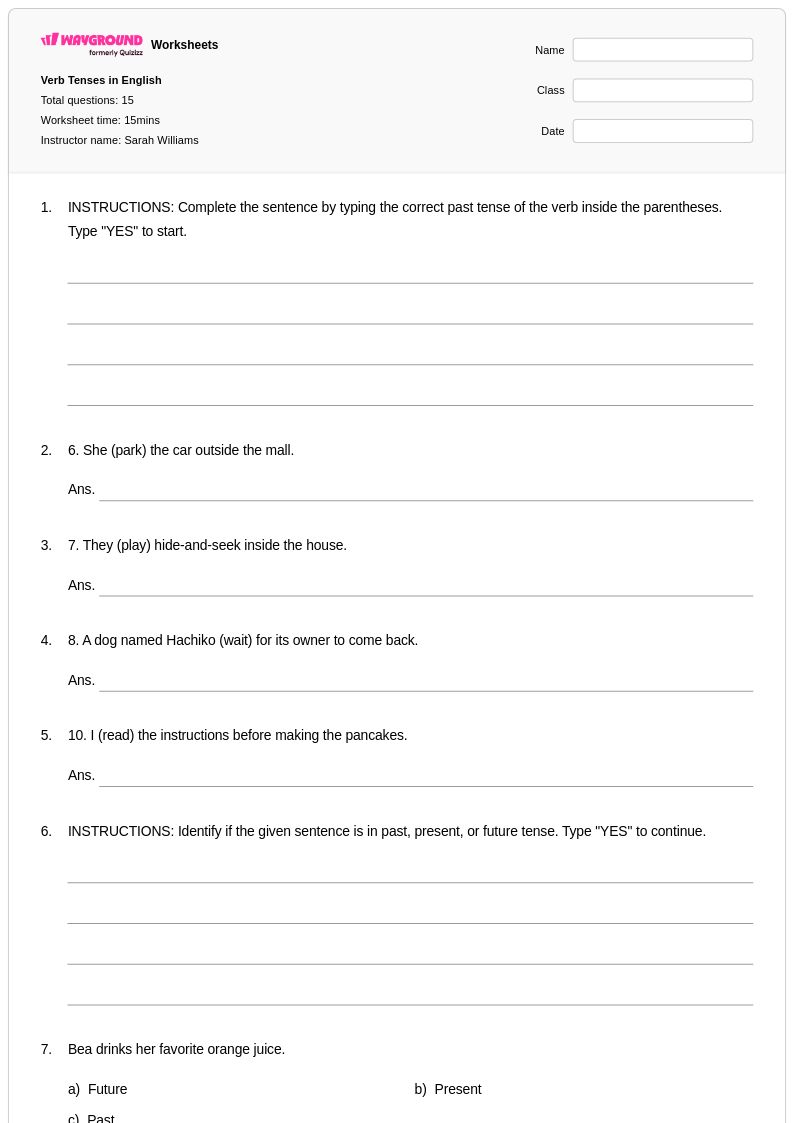
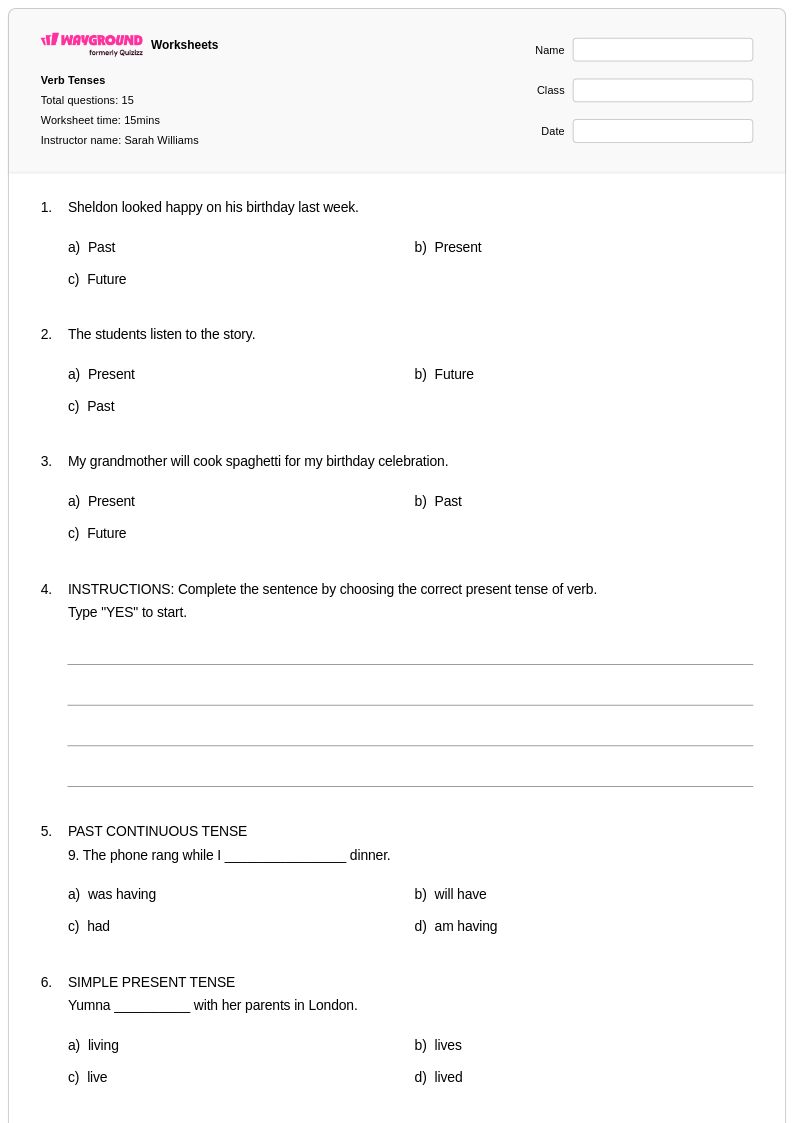
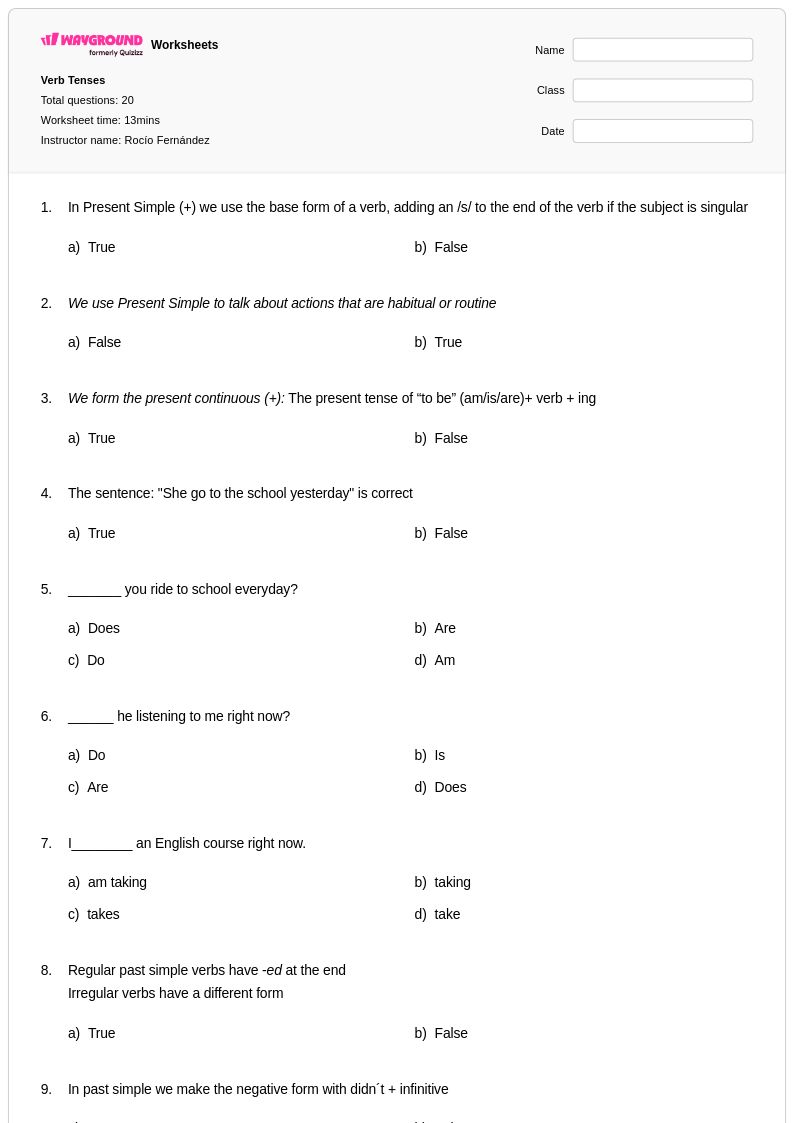
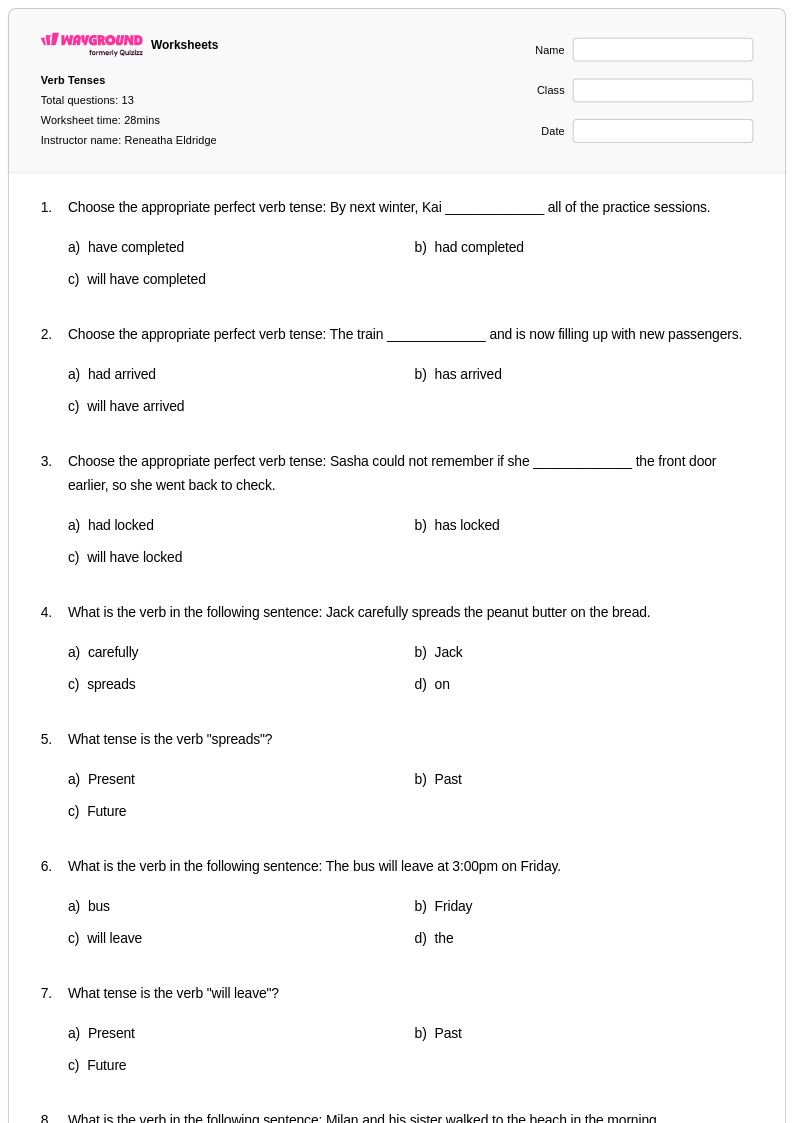
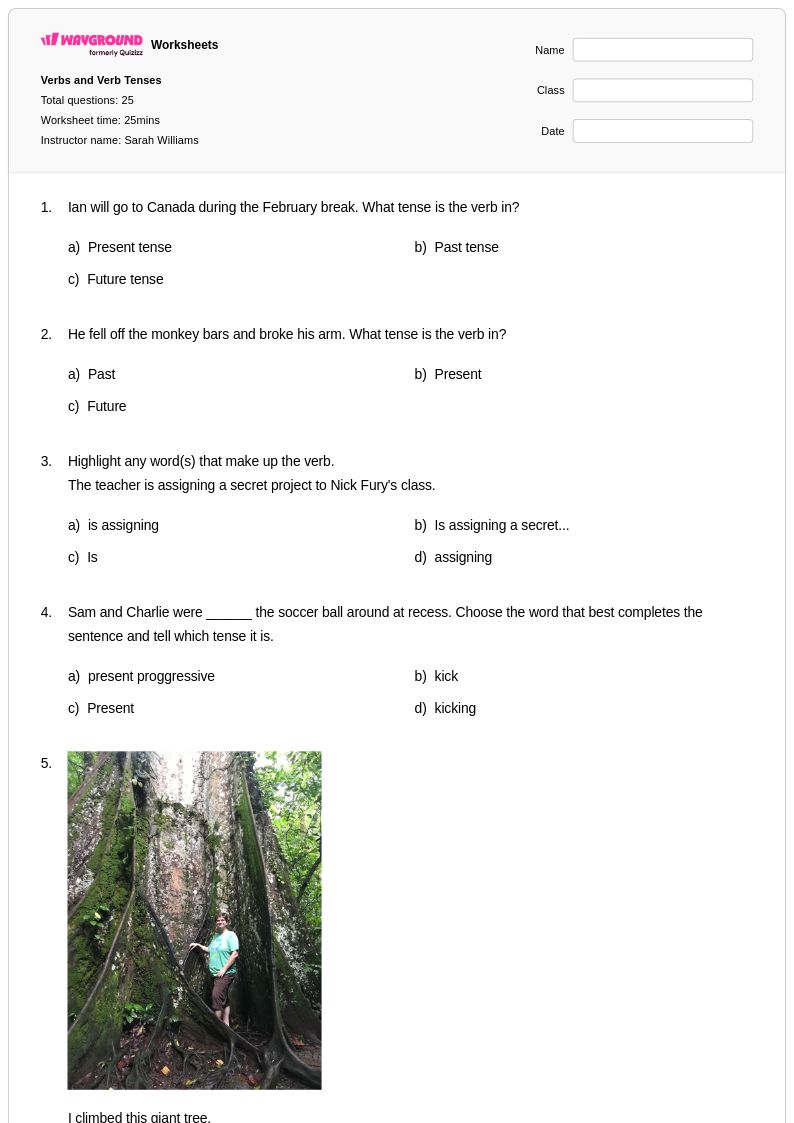
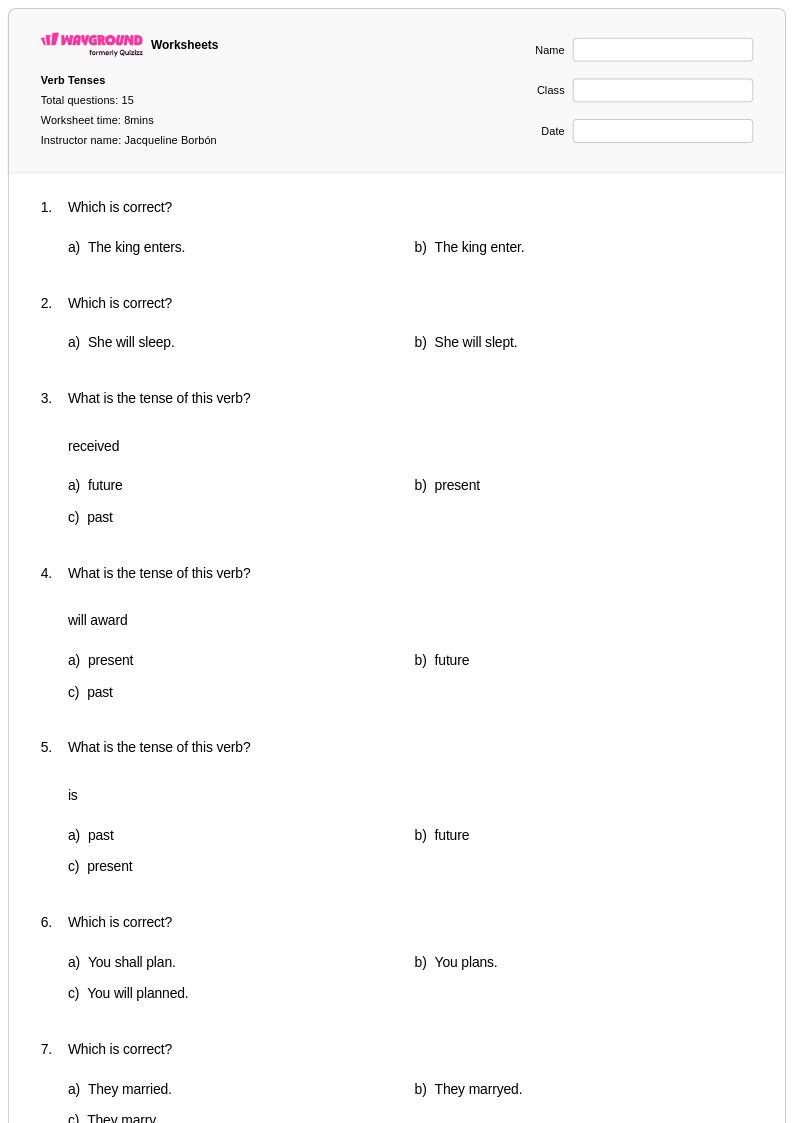
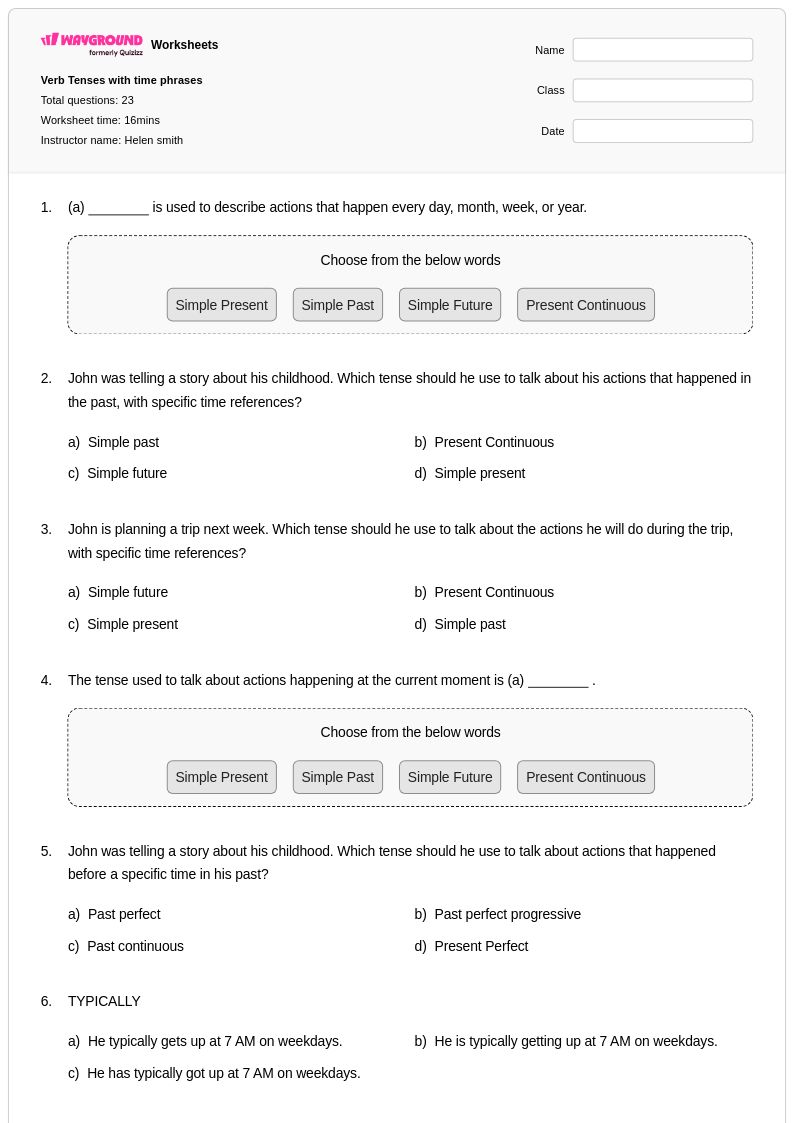
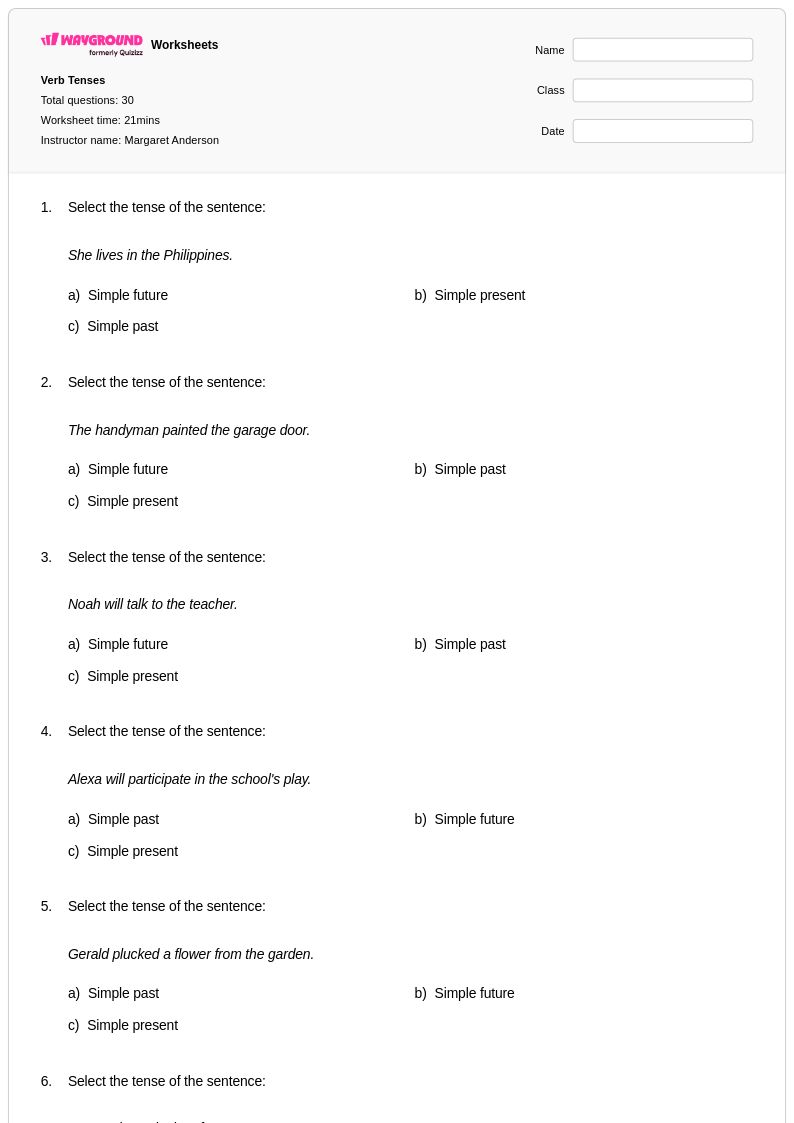
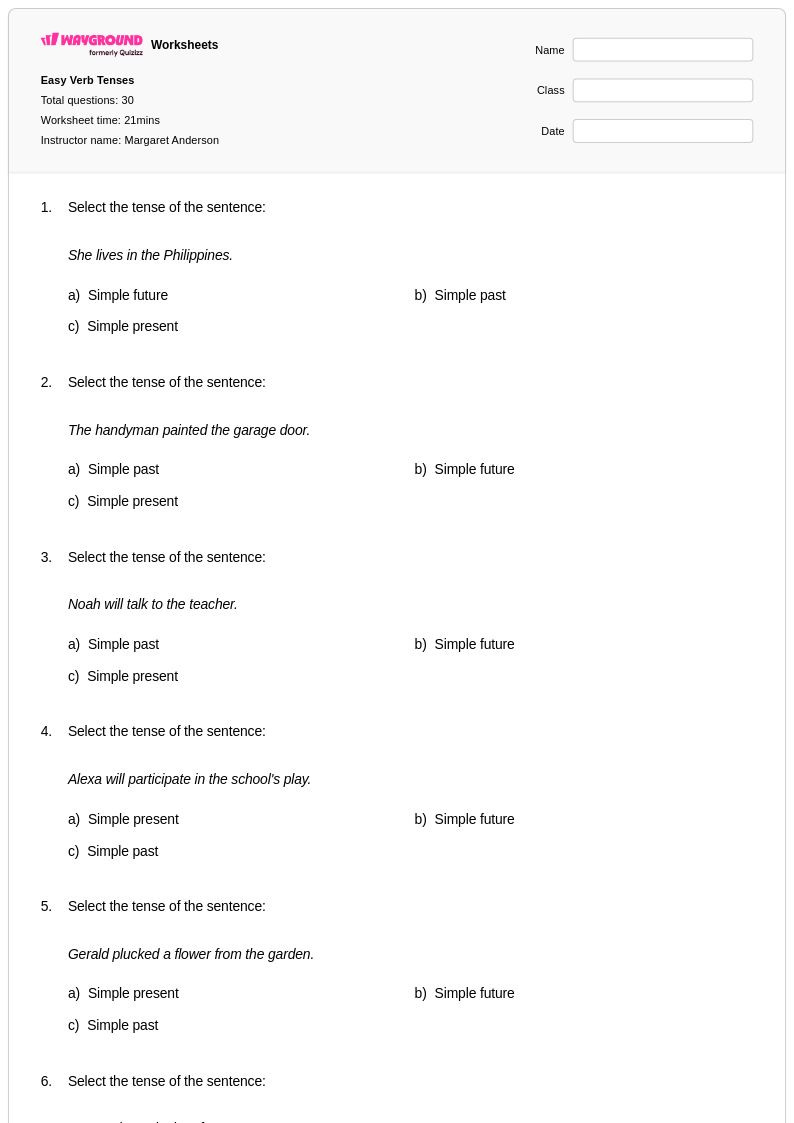
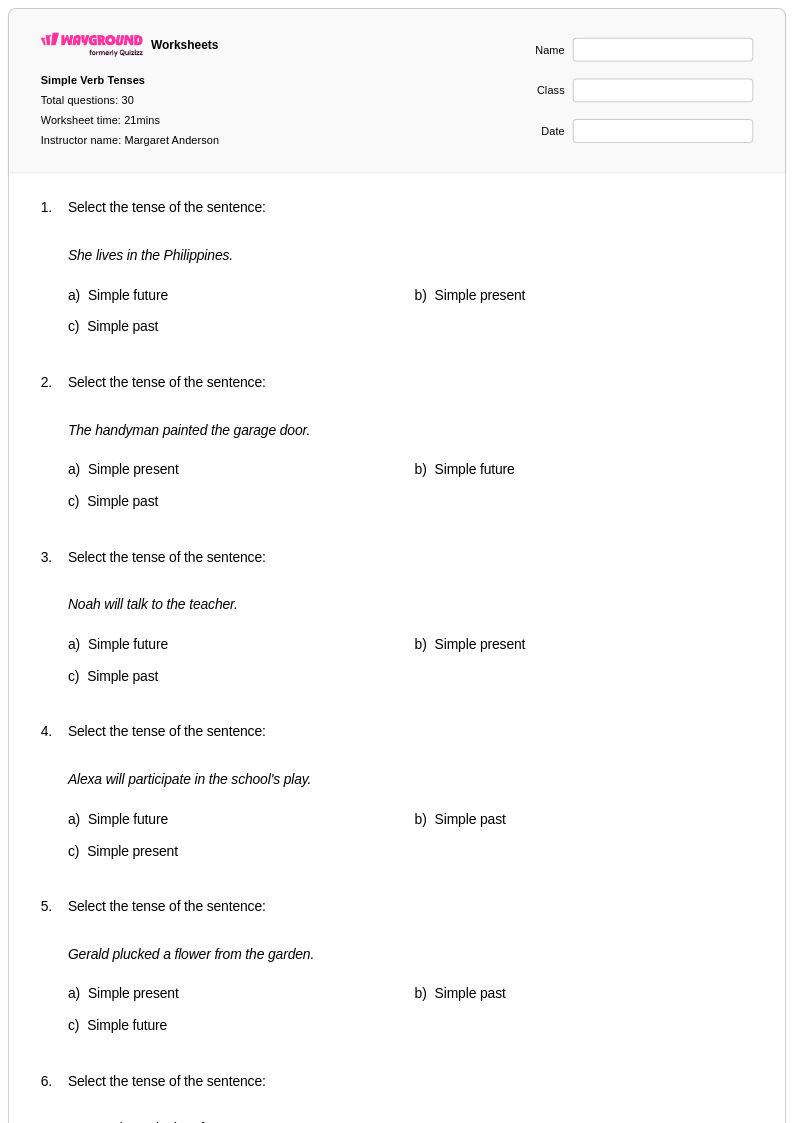
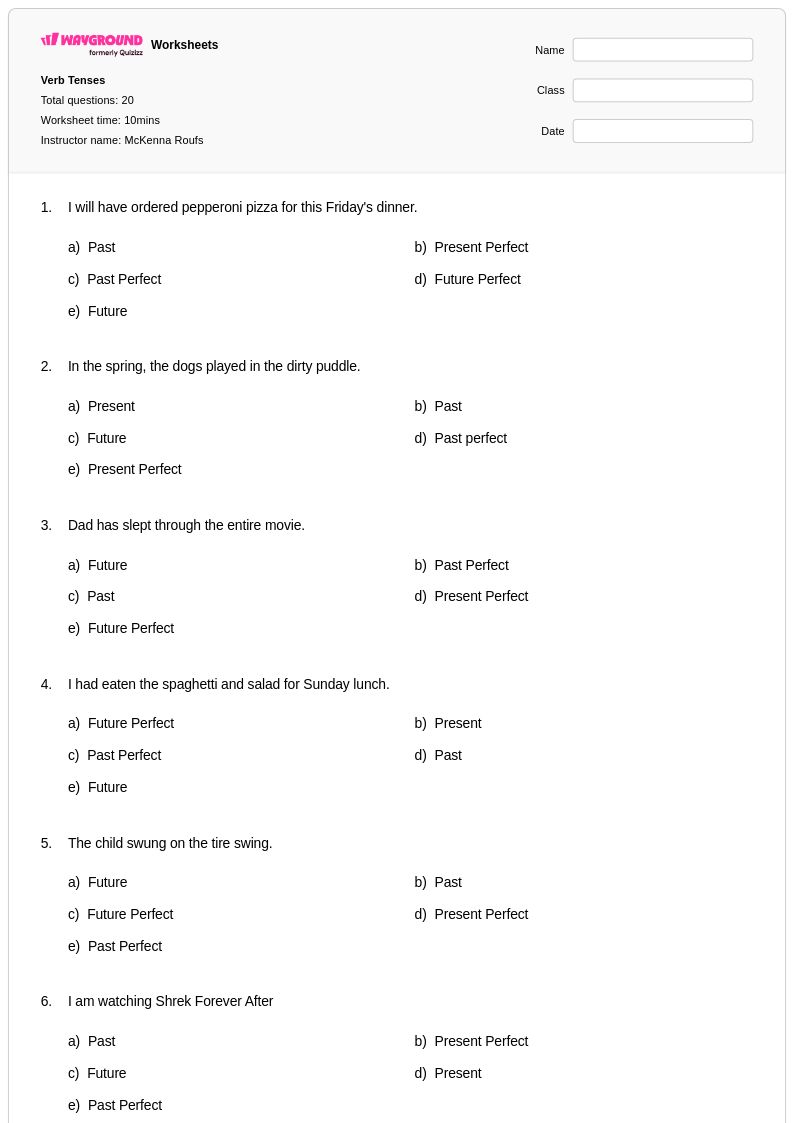
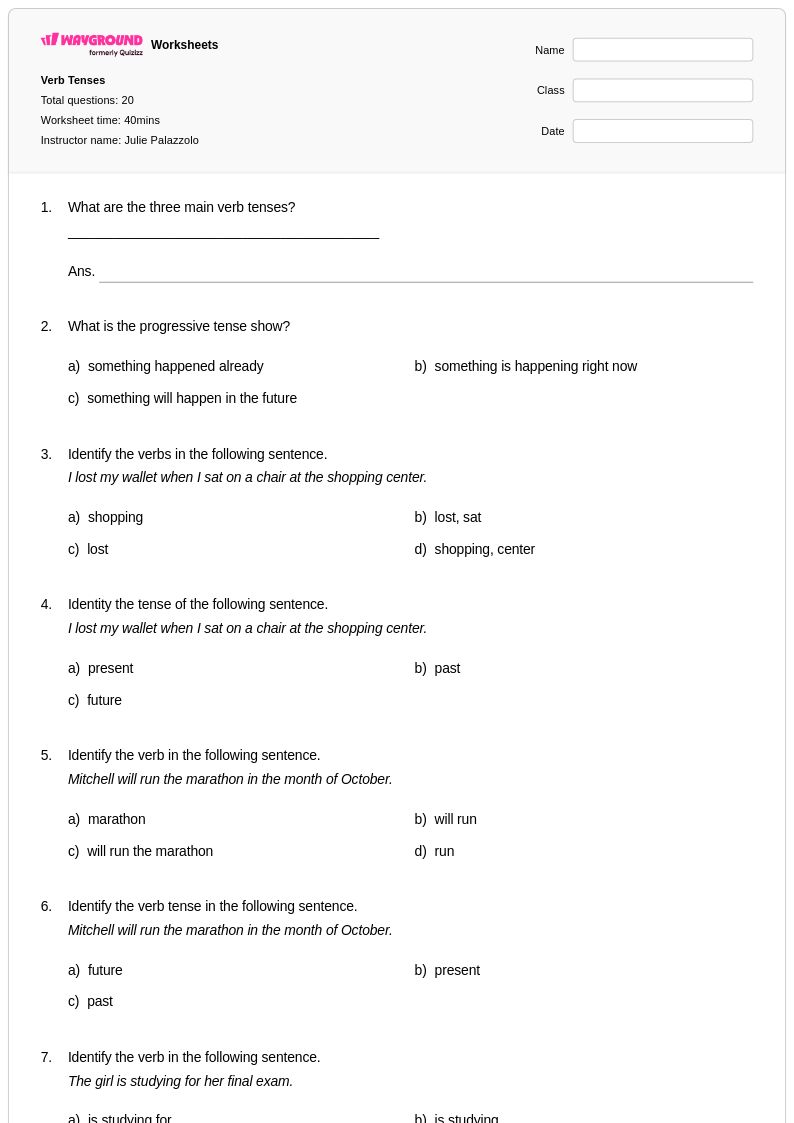
Enhance Class 5 students' understanding of verb tenses with Wayground's comprehensive collection of free worksheets, printables, and practice problems featuring detailed answer keys to master past, present, and future tense usage.
Explore printable Verb Tenses worksheets for Class 5
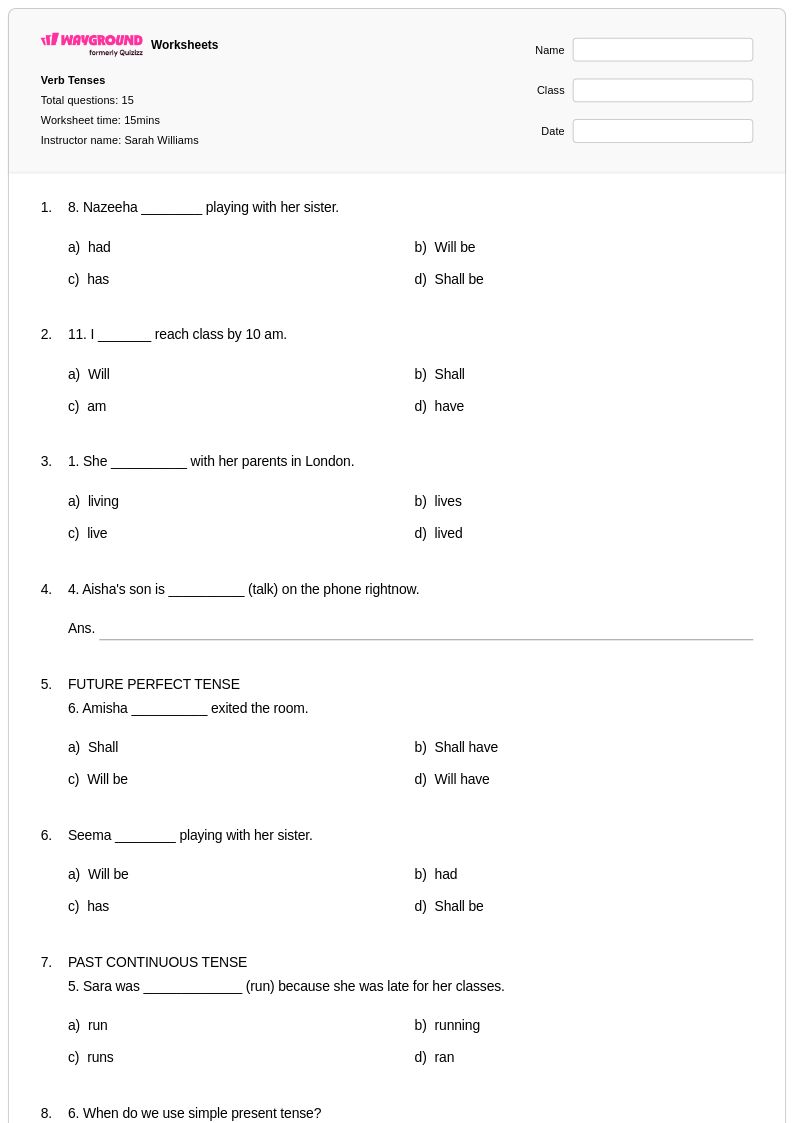
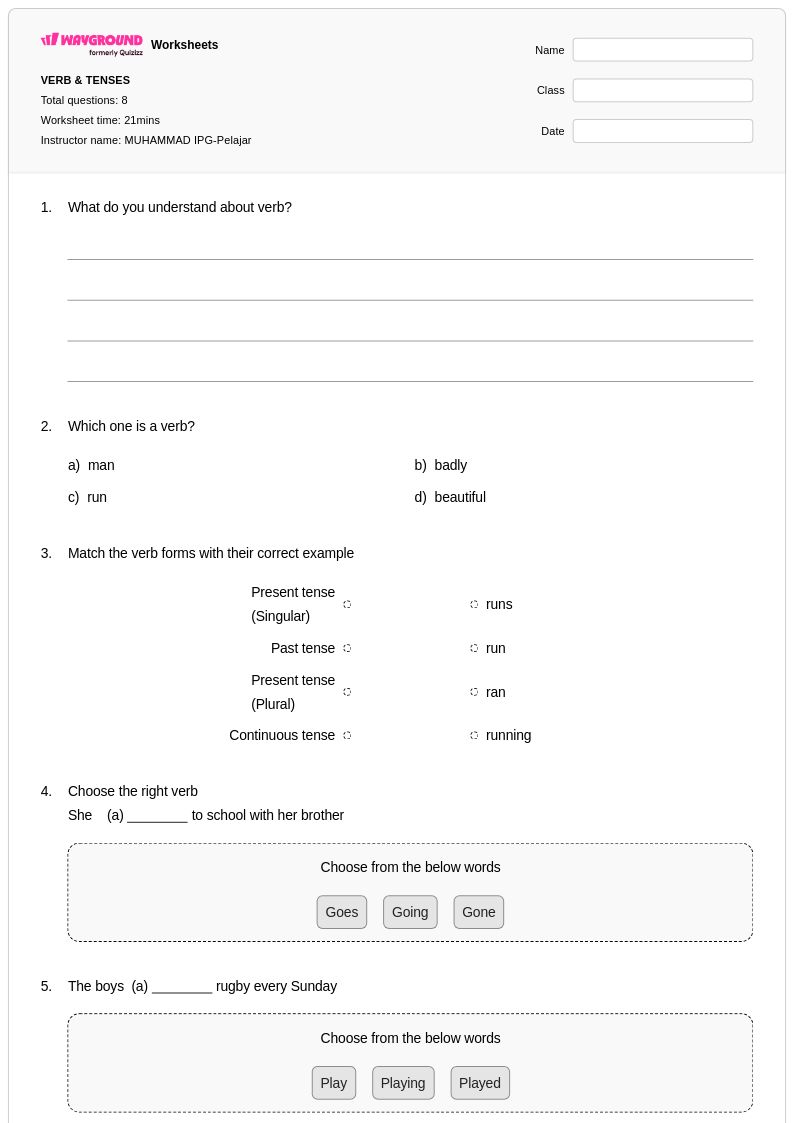
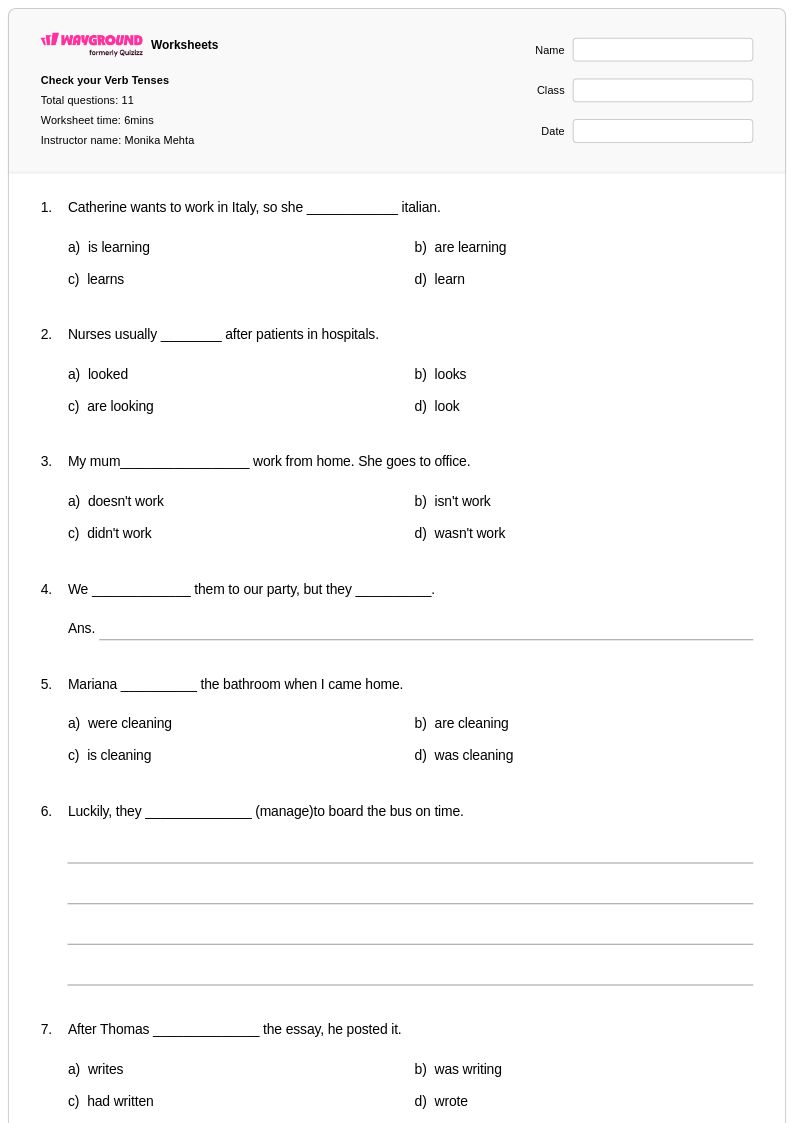
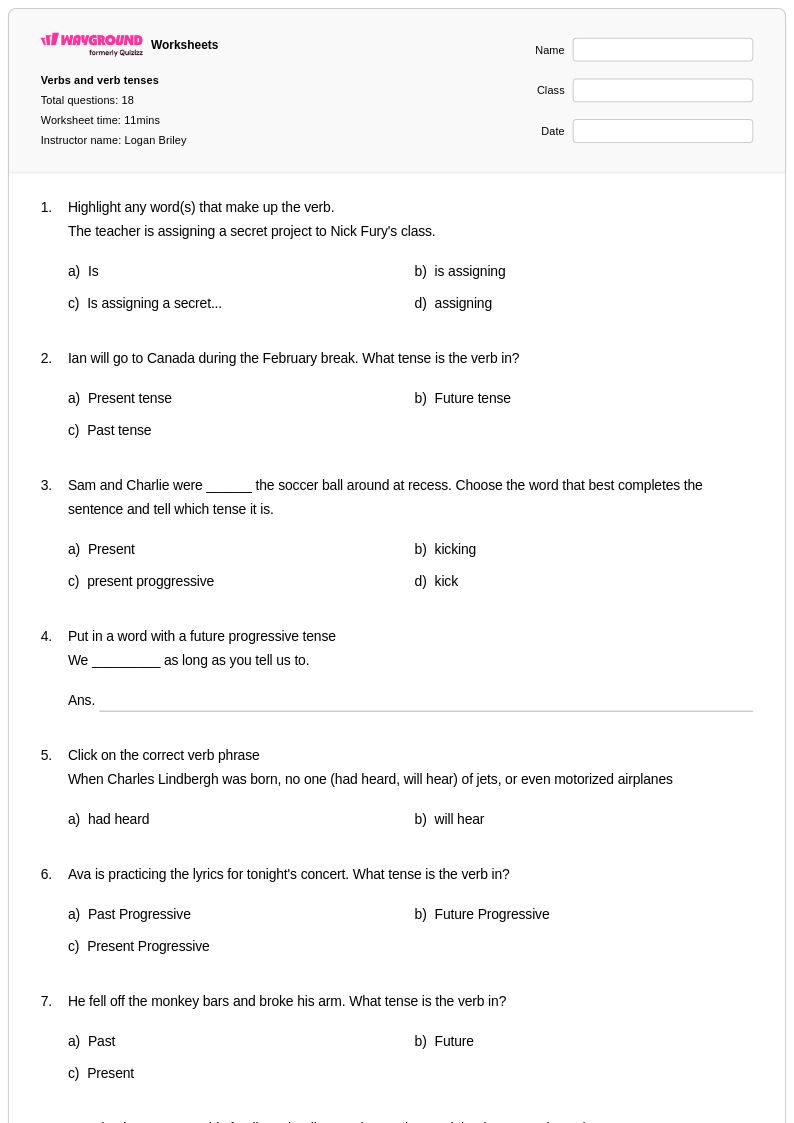
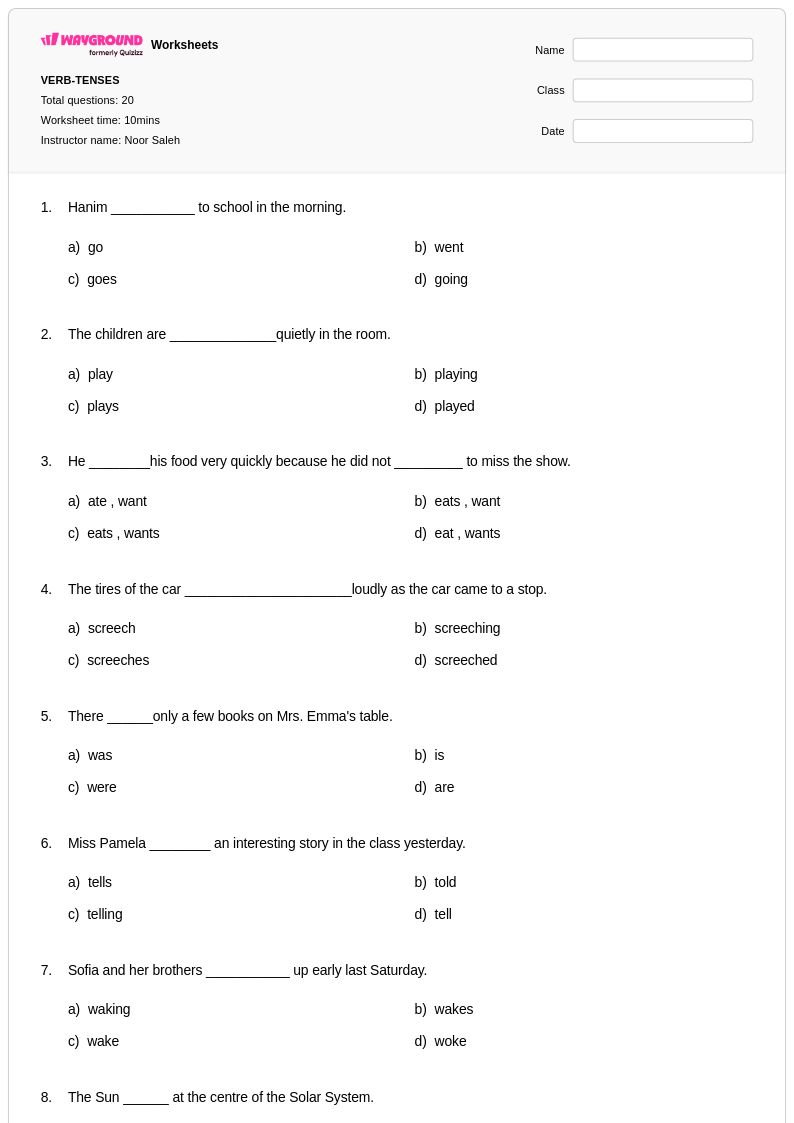
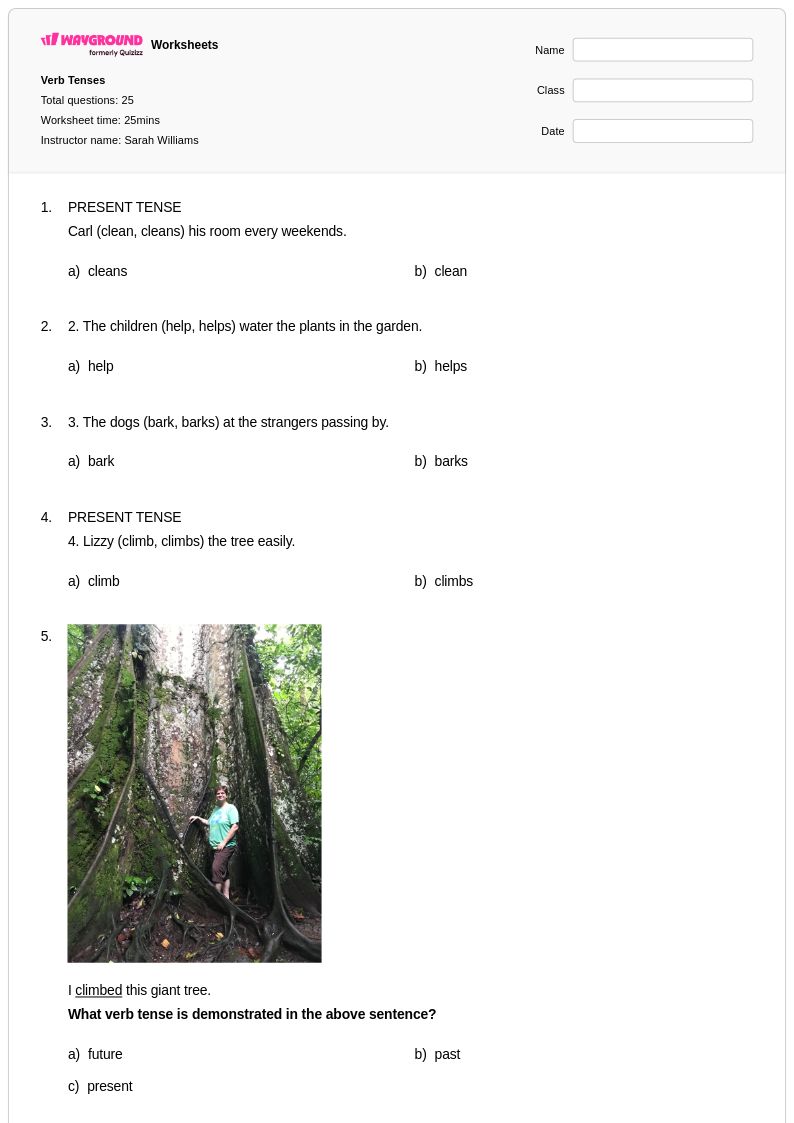
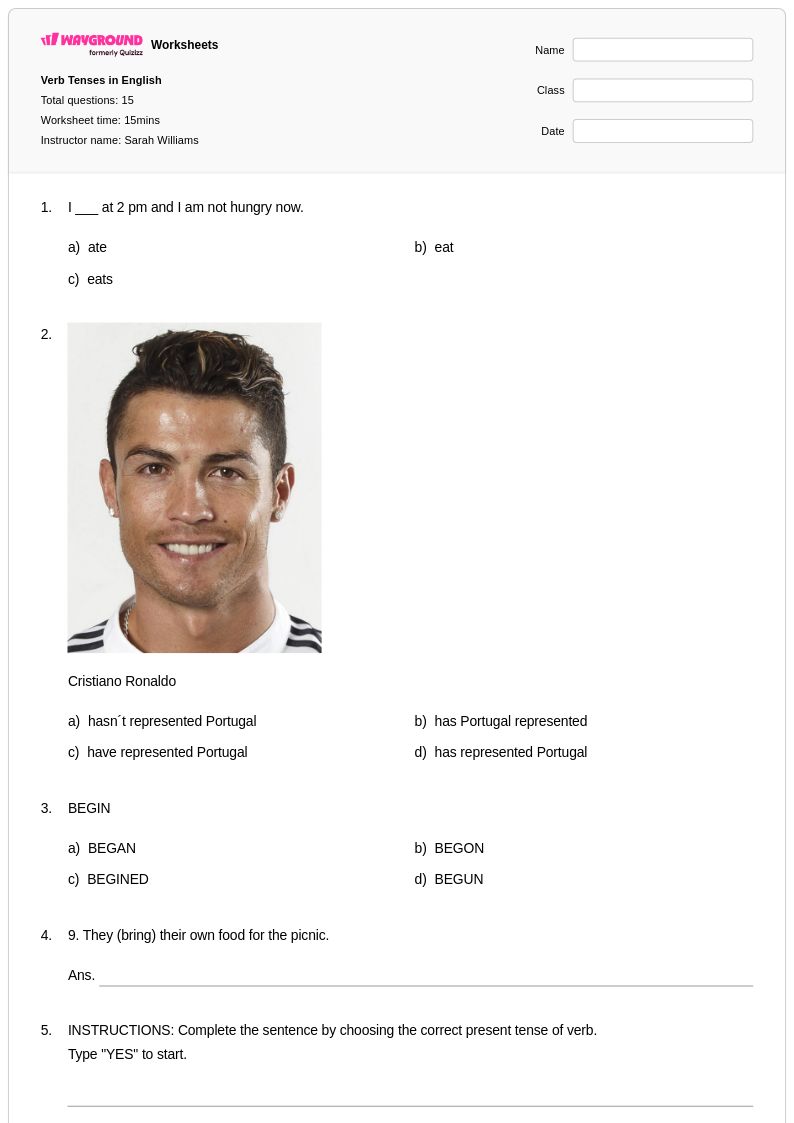
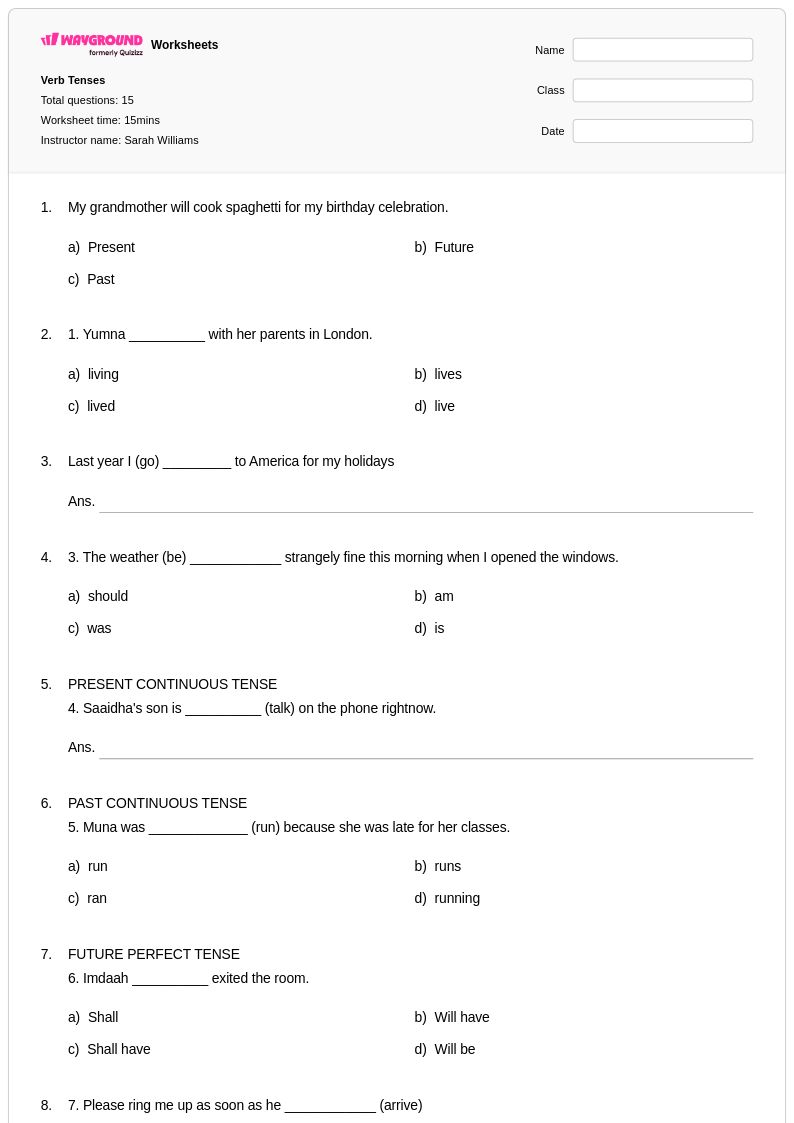
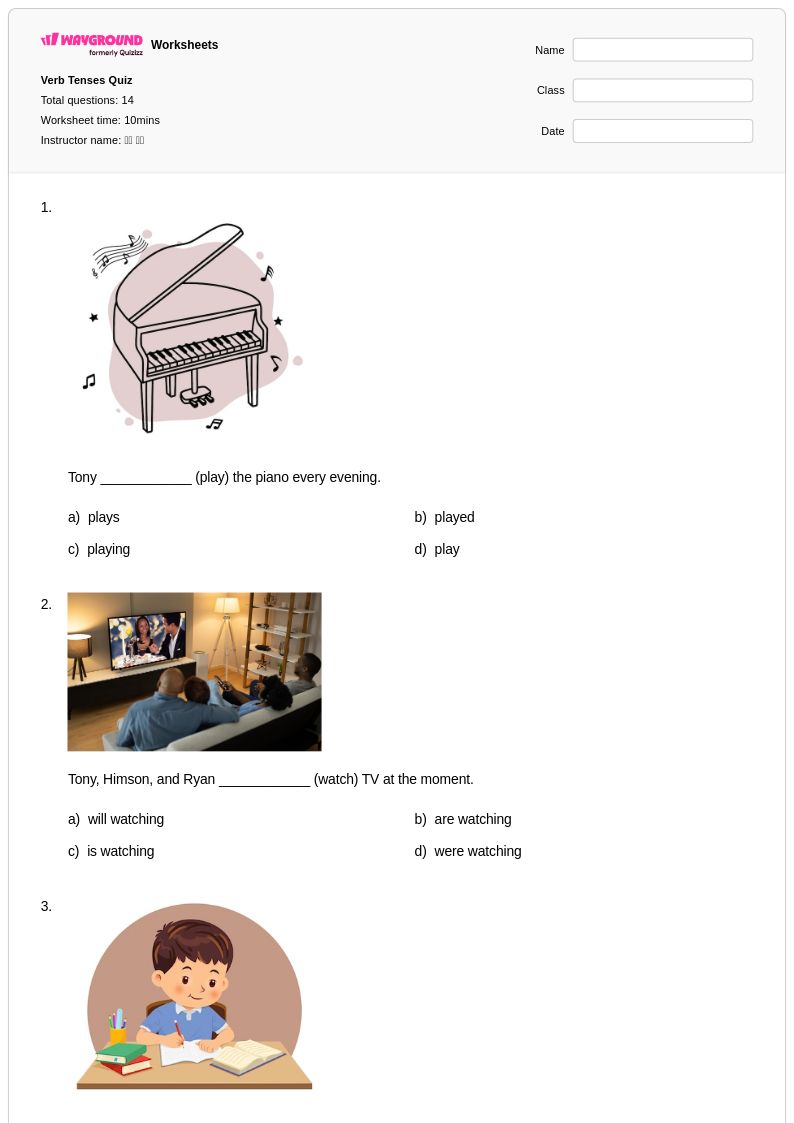
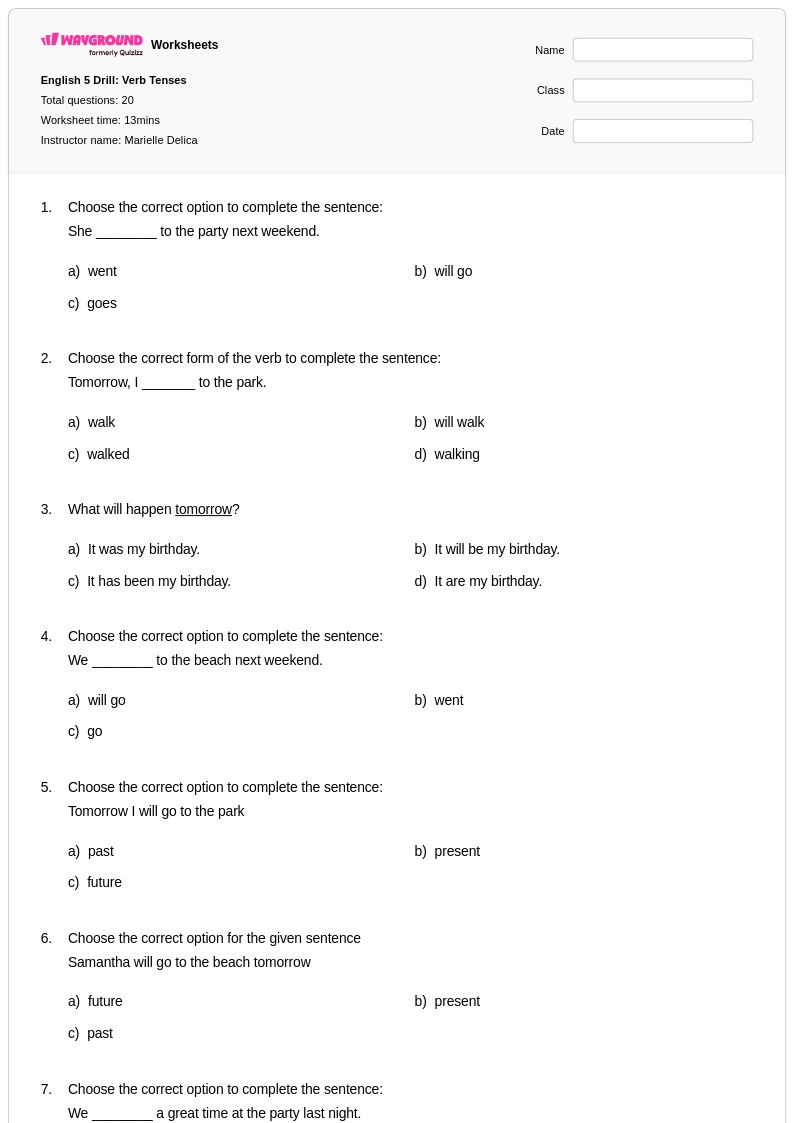
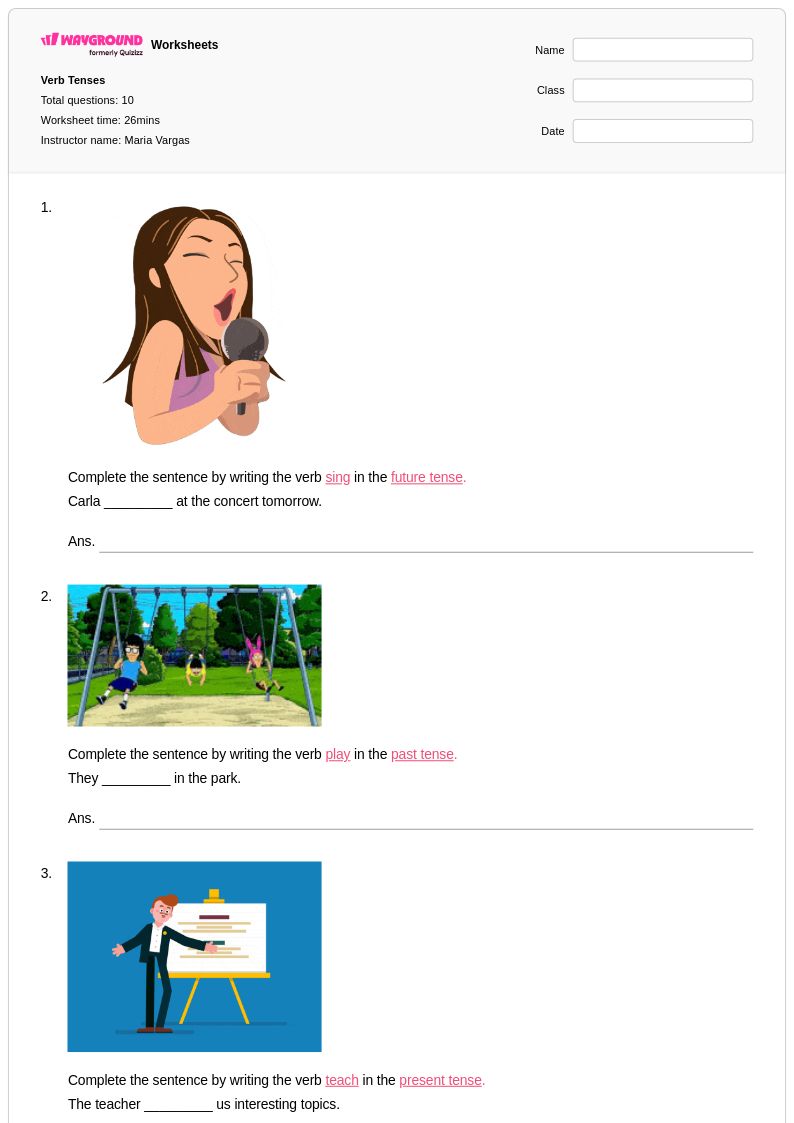
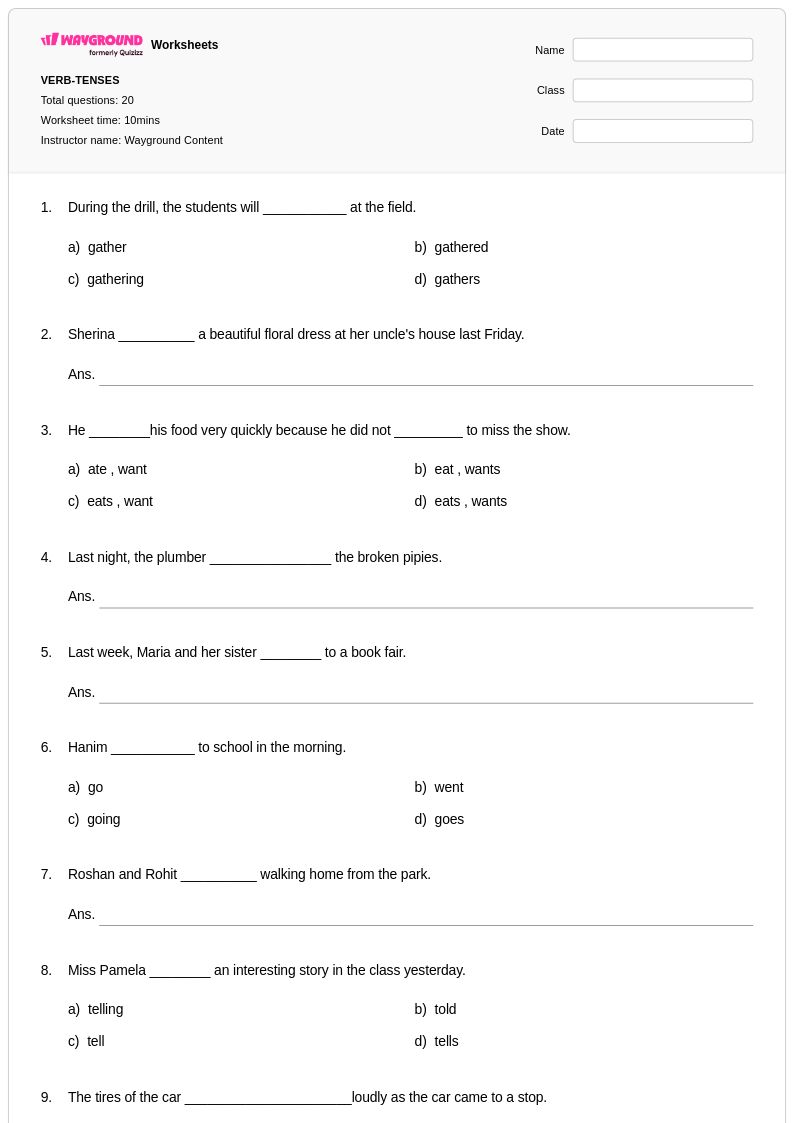
Verb tenses represent a fundamental component of Class 5 English language arts curriculum, and Wayground's comprehensive worksheet collection provides students with targeted practice in understanding and applying past, present, and future verb forms. These carefully crafted worksheets guide fifth-grade learners through the complexities of regular and irregular verb conjugations, helping them master essential skills like identifying verb tenses in context, transforming verbs between different time frames, and using appropriate tenses in their own writing. Each printable resource includes detailed answer keys that support both independent study and classroom instruction, while the free pdf format ensures easy access for teachers seeking to supplement their grammar instruction with focused practice problems that reinforce proper verb usage.
Wayground's extensive library of teacher-created verb tense worksheets draws from millions of educational resources, offering educators powerful search and filtering capabilities to locate materials perfectly aligned with Class 5 standards and individual student needs. The platform's differentiation tools enable teachers to customize worksheets for various skill levels within their classrooms, supporting both remediation for struggling learners and enrichment opportunities for advanced students. Available in both printable and digital formats, these versatile resources streamline lesson planning while providing flexible options for skill practice, homework assignments, and assessment preparation. Teachers can efficiently locate standards-aligned materials that target specific verb tense concepts, ensuring their students receive comprehensive practice with this critical grammar foundation that supports clear and effective communication across all subject areas.
FAQs
How do I teach verb tenses to English language learners?
Start by anchoring each tense to a concrete time reference — a timeline drawn on the board helps students visualize how past, present, and future relate to each other. Introduce one tense at a time, using high-frequency verbs students already know before moving to irregular forms or perfect aspects. Consistent exposure through sentence-level practice, pattern drills, and contextual reading builds the automaticity students need for fluent use.
What exercises help students practice verb tenses effectively?
Fill-in-the-blank sentences, tense transformation tasks (e.g., rewriting a paragraph from past to present), and error correction activities are among the most effective formats for tense practice. Students should also work with contextualized passages rather than isolated sentences so they learn to select the appropriate tense based on meaning and time markers. Regular timed practice helps reinforce tense formation as an automatic skill rather than a deliberate calculation.
What are the most common mistakes students make with verb tenses?
One of the most persistent errors is confusion between the simple past and the present perfect — students frequently use 'I went' and 'I have gone' interchangeably when the distinction matters. Mixing up continuous and simple forms is also common, particularly for actions that are habitual versus in-progress. Students learning English as a second language often transfer tense logic from their native language, which can lead to systematic errors that require explicit correction.
How do I teach the difference between simple, continuous, and perfect tenses?
Frame each aspect around what it communicates: simple tenses describe completed or habitual actions, continuous tenses emphasize ongoing or in-progress actions, and perfect tenses signal a relationship between two points in time. Using sentence pairs that contrast aspects — such as 'She writes reports' versus 'She is writing a report' — makes the functional difference concrete for students. Dedicated practice with each aspect before combining them prevents students from conflating their uses.
How can I use Wayground's verb tenses worksheets in my classroom?
Wayground's verb tenses worksheets are available as printable PDFs for traditional classroom use and in digital formats for technology-integrated environments, giving teachers flexibility for in-class instruction, homework, or independent practice. You can also host a worksheet as a quiz directly on Wayground, enabling real-time student responses and instant feedback. Built-in differentiation tools allow teachers to personalize practice for students at varying proficiency levels, and each worksheet includes a complete answer key to support both guided instruction and self-directed study.
How do I differentiate verb tense instruction for students with different learning needs?
For students who need additional support, reduce the number of tenses introduced at once and provide sentence stems or word banks to lower the production barrier. On Wayground, teachers can apply individual accommodations such as read aloud, reduced answer choices, and extended time to specific students without affecting the experience of the rest of the class. For advanced students, move beyond recognition tasks toward production and error analysis to deepen grammatical understanding.
What verb tenses should I focus on at the middle school level?
By middle school, students should be consolidating their understanding of all simple tenses, both continuous forms, and the present perfect before moving into the past perfect and future perfect aspects. Emphasis on the perfect tenses is especially valuable at this stage because these are the forms most commonly misunderstood and misused in student writing. Targeted practice on tense consistency within paragraphs also addresses a high-frequency writing error at this grade level.